Phantom and Skyray Jet Support Jeeps
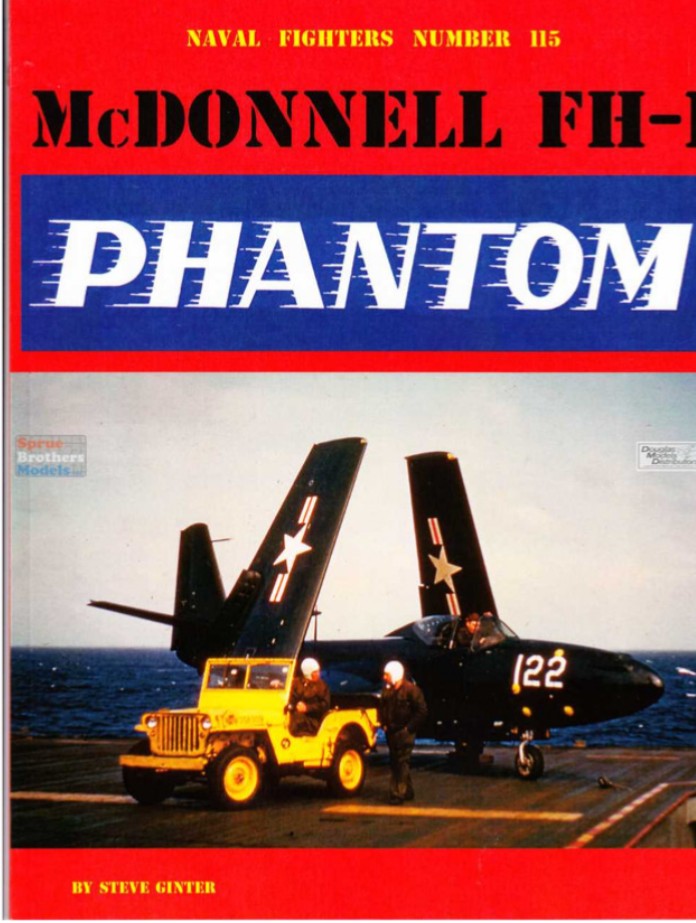
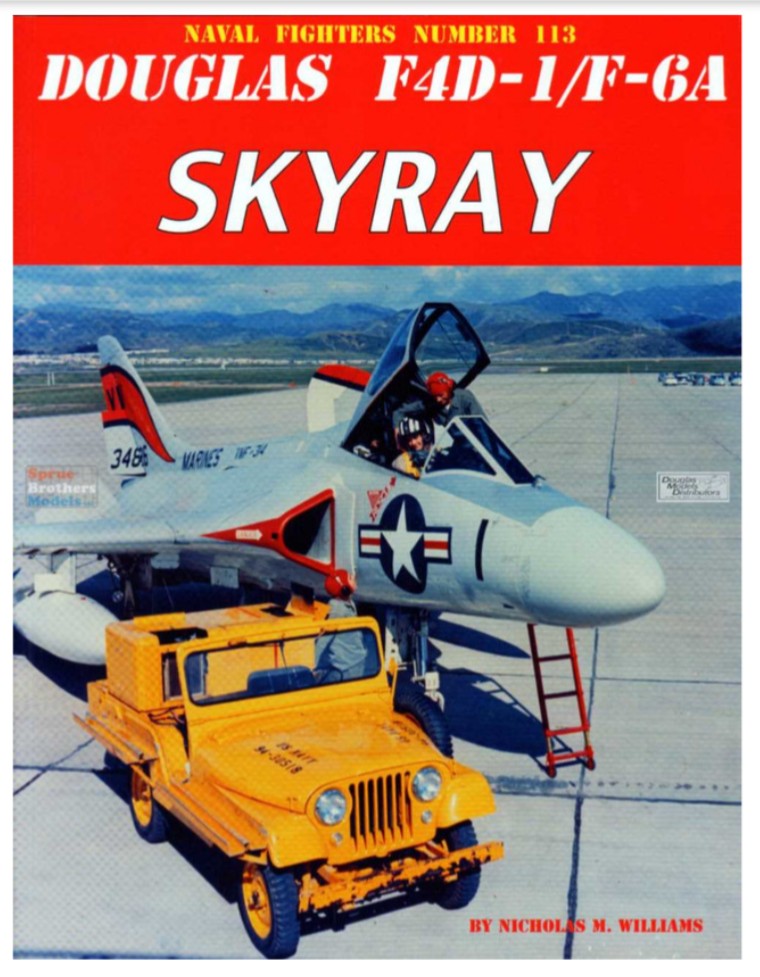
John sent over these two great shots of Jeeps that supported Military Aircraft.
The first one John sent over was referenced as an FD-1 Phantom; but I found a lot of links to the FH-1 Phantom, so down the rabbit hole I go to figure out differences. What it seems to have come down too was a weird reuse of the letter that indicated MFG. From post 1922 to pre 1962 the middle letter typically designated the MFG of the aircraft. Since Douglas had not provided aircraft to the Navy in a long time they reassigned the “D” to McDonnel, later on they moved McDonnel to “H” and reassigned Douglas the “D”. Interesting that in 1967 the two merged and became McDonnel Douglas, that MFG naming convention was no longer used in ’67.
FD-1 Phantom: MFG by McDonnell- Renamed FH-1 was first flight was late 1945, introduced in 1947 then Retired 1949 (used in reserves till 1954)
F4D Skyray: MFG by Douglas- Progressed into the F-6 Skyray was first flight was late 1951, introduced in 1956 then Retired 1964 (used in reserves till end of the ‘60s)
Looking up the F4D Skyray on the web, it started out development in the late 40’s with the Navy accepting the proposal in 1948 and the aircraft continued through the mid ‘60’s. It held some serious records for speed and altitude for a carrier based aircraft. Had a few configurations along the way but a really neat part of early Jet Aircraft.
Information from email:
I’m John, a daily reader. Retired USAF officer and M38A1 owner/restorer.
Attach are photos of Jeeps (presumably Navy) used as aircraft starters.
I suspect the photos are by the US Navy.
As you can see, they’re used as the cover photo for these paperback books about Navy aircraft published by Ginter books.
It looks like a MB/GPW on board a carrier with the old McDonnell FD-1 Phantom (the Navy’s first jet fighter..best remembered as the namesake for the famous 1960-80s Phantom II fighter).
The second book shows one of the CJ-5 conversions the Navy purchased next to a Marine Douglas F4D Skyray.
My guess is the photos were used because of the general lack of period color photos in a vertical format.
Hope you find them interesting.
Common Military Aircraft Naming Convention (post-1922 to pre-1962)
Here is some short information on the naming convention from the post-1922 system to pre-1962 system for naming aircraft. (web search for the lift here)
Pre-1962 U.S. Navy designation system
Under the system in use from 1922 to 1962, the aircraft designation specified the aircraft’s mission, followed by a number indicating the manufacturer’s design number for that mission, and finally a letter for the manufacturer.
For example, an F4U Corsair breaks down as:
- F: Fighter
- 4: The manufacturer’s fourth fighter design
- U: Chance Vought Corporation (the manufacturer)
Some common manufacturer letters under this system include:
- B: Boeing
- C: Curtiss
- D: Douglas
- F: Grumman
- G: Goodyear (for license-built aircraft)
- H: McDonnell (after 1946)
- J: North American Aviation
- M: Glenn L. Martin Company
- S: Sikorsky
- U: Vought (Chance Vought)
- Y: Consolidated
Tim
When I sent the images I didn’t expect you to go into the arcane world of the 1922-62 Navy (Marine and Coast Guard) designation system. A brave man indeed!
I know aviation geeks that are afraid to delve too deeply into the topic because sooner or later there will be an exception to the rules and make a mistake.
So yes, if you look at a photo of a Phantom, it might be a FD-1, or it might be a FH-1 depending on when the photo was taken.
And one other bit of trivia, in service pilots called the F4D the Ford…get it?
An obvious drawback to the system is you’ll end up with several very similar designations…there were several F4s: F4B, F4C, F4D, F4F, F4H, F4U…all very different aircraft made by different companies.
Every so often as a bit of mental exercise I test myself on some of the more obscure designations. it can really get confusing after the manufacturer designation is the model number followed by a modification or use letter. So a later P2V with axillary jets and modified with skis for supporting Antarctic research becomes a P2V-7LP. Easy.
You can see why, in the interest of standardization the change was made in 1962 to switch to the Army and Air Force system of mission prefix and number. So a R4D-5 became the C-47H.
Aviation history is my primary hobby, by comparison, restoring and collecting old cars and Jeeps is something to do on the side. After all, having a Jeep is a bit more practical than flying an antique helicopter. Less expensive, too.
Thanks for going down the rabbit hole!
Yeah it was interesting to me so figure I would share.
It’s funny the things we run into on these posts.
Thanks for sharing the information, I’m sure there is more info on those Jeeps to dig up as well at some point.