emailNeed to contact me and don't have my email? Click on email button.
About eWillys
Welcome to eWillys.com, a website for vintage jeep enthusiasts. I update this website nearly every day with jeep deals, jeep history, interesting reader projects, jeep related info, and more.
These quick searches can help you find things on eBay. People list in the wrong categories all the time, so don't be surprised to see brochures in the parts area for example. This section used to be split into jeeps, parts and other categories, but recent changes to eBay will require this information to be recoded.
The links to posts below show jeeps grouped by models, condition, and other ways. Some of these jeeps are for sale and others have been sold. If you are unsure whether a vehicle is still for sale or not, email me at d [at] ewillys.com for more info.
Importantly, the allure of buying a project jeep can be romantic. The reality of restoring a jeep can be quite different, expensive and overwhelming without the right tools and resources. So, tread carefully when purchasing a "project". If you have any concerns about buying a vintage jeep, or run across a scam, feel free to contact me for help, comments or concerns .
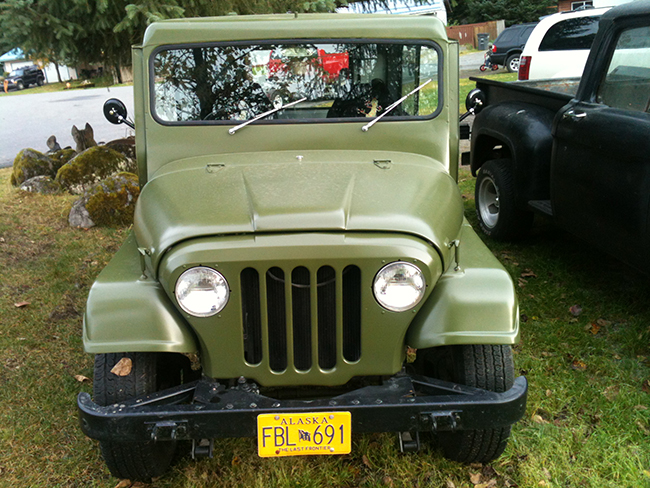
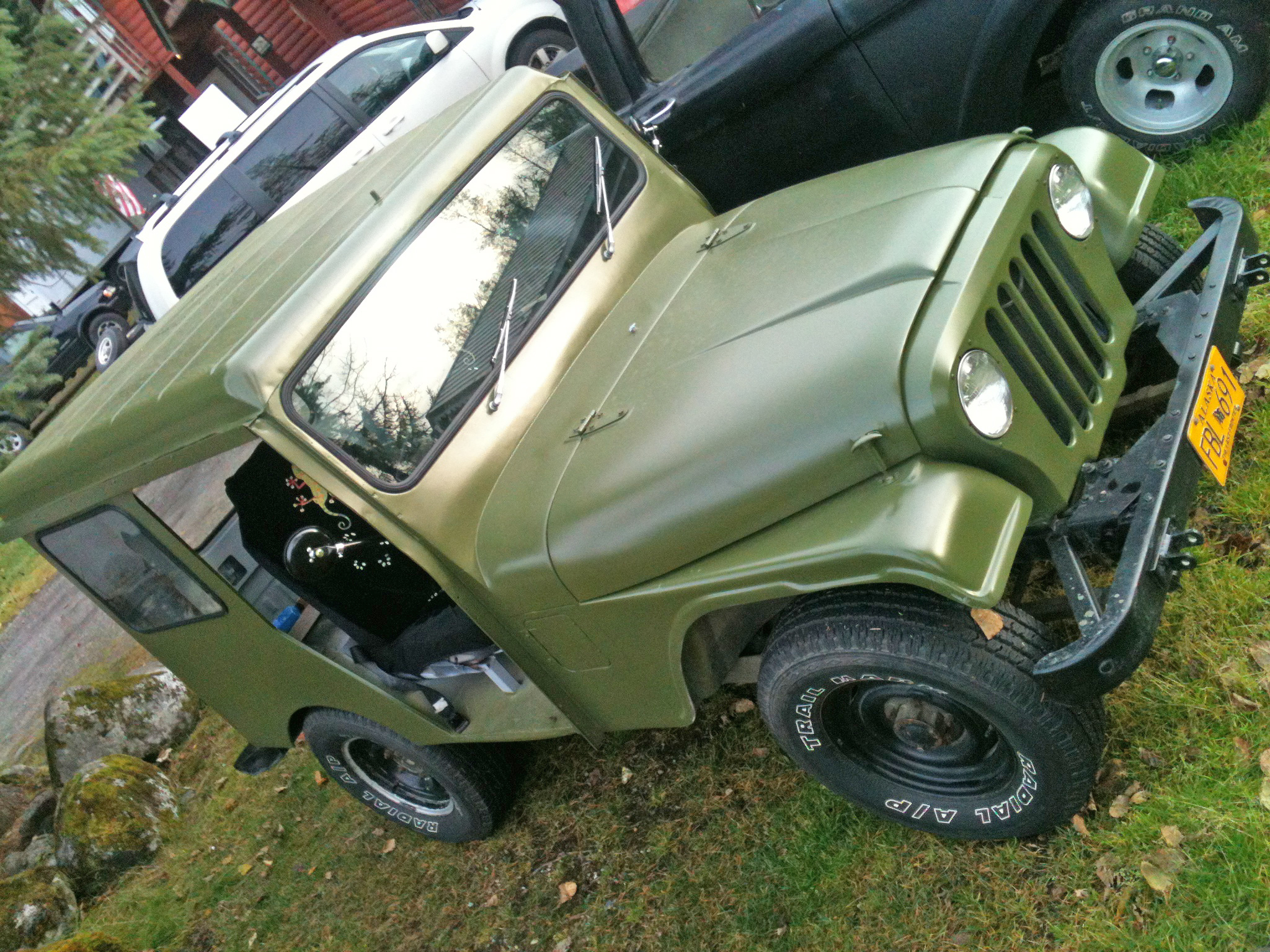
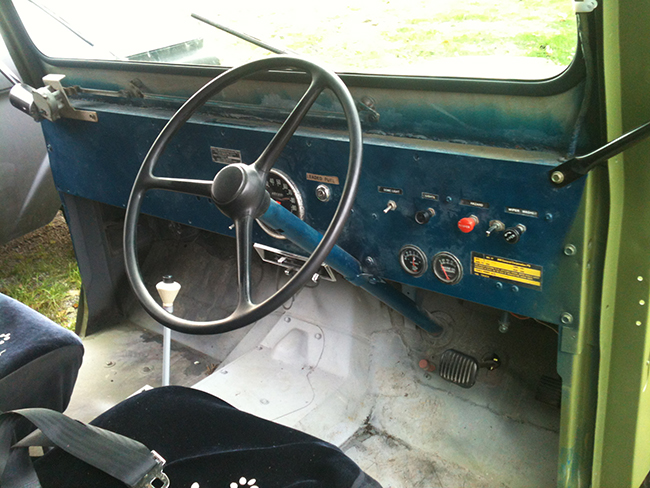
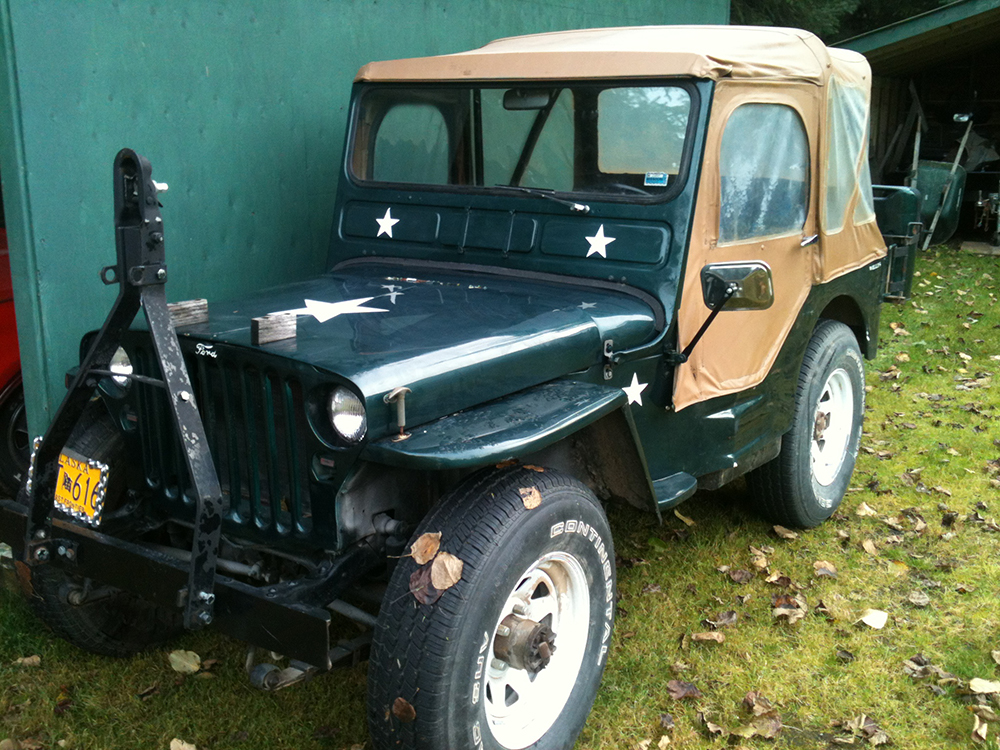
Zack has been a regular reader of eWillys for a while now. Though he comments occasionally, I never got around to asking what kind of jeep he has. So, I asked. Turns out he has two: One a DJ-5 that he uses as a daily driver and the other a nice looking GPW that he hopes to restore to military spec. Here are some photos he sent for us. All in all, it is a good looking DJ-5 that is a very practical vehicle, inexpensive to maintain, cheap on gas, and posi in the rear for bad weather. Thanks for sharing Zack!
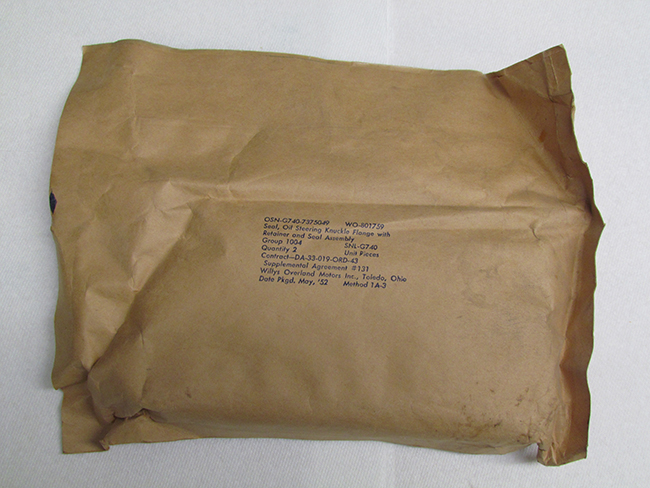
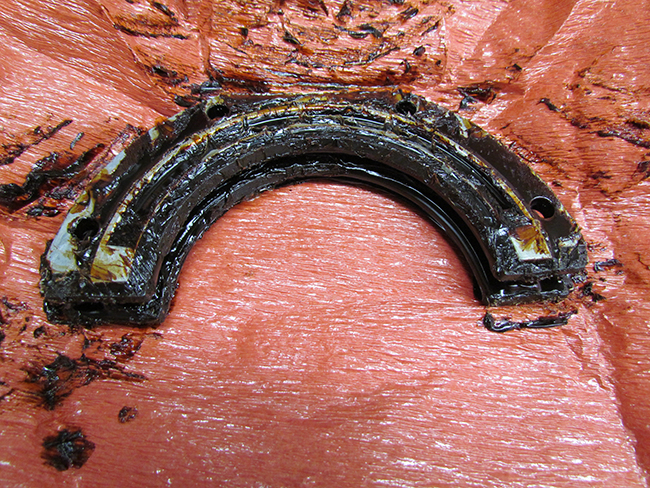
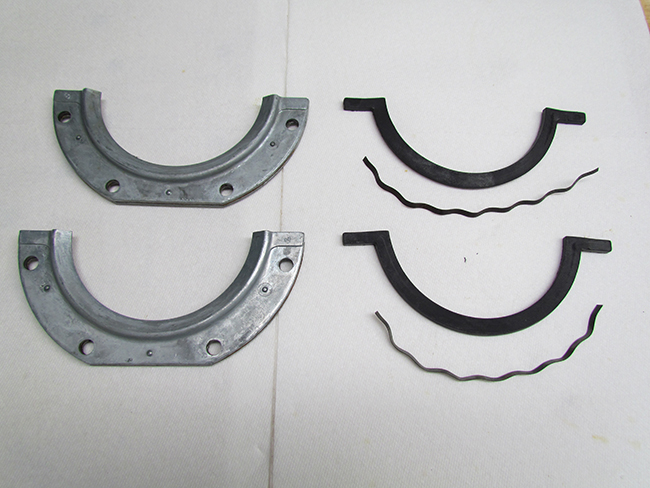
Paul wrote to share his experience unwrapping some old parts as he continues his M-38 rebuild.
Paul wrote, “One of the first jobs on my Willys rebuild list from many years ago was to overhaul the axles. Naturally all bearings and races were replaced with new, new ring and pinion gears with 4.27 ratios were installed along with a complete set of 11 inch backing plates and brake drums. Well, sometime during the past 25 or so years the new steering knuckle seals failed due to old age. Geeze, I haven’t even driven this thing yet and now I’m having to replace the replacement parts which are still new but old.
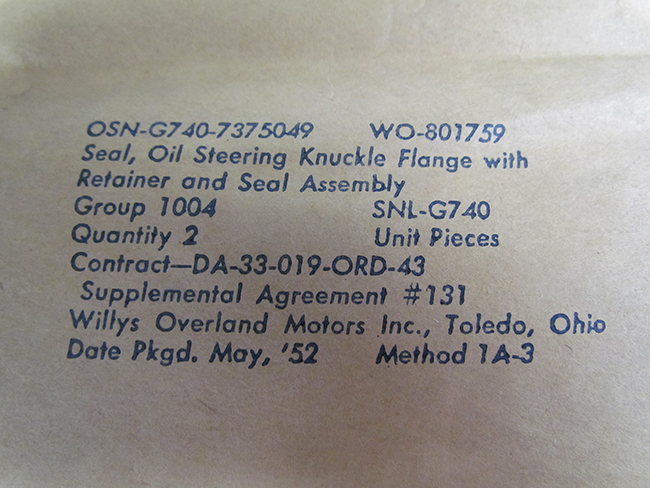
Oh well, it was time to go shopping once again. I was able to purchase a set of heavy duty steering knuckle seals from the local parts store (that can even be rebuilt when necessary) in addition to an extra set of replacement rubber seals for future use. Today I installed one seal kit on the left front knuckle with no problems, everything fit like factory, nothing was missing and the quality was perfect but that’s just what I’d expected. You should understand that these steering knuckle seal kits were packed by Willys Overland Motors for military use in May of 1952. The package had never been opened and all the parts were still coated with a preservative grease like coating, which required lots of paper towels to remove.
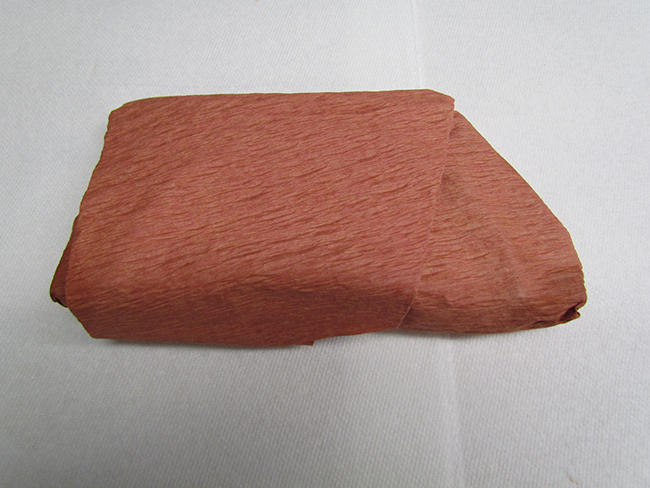
I can’t imagine whoever packed these parts so long ago had any idea that 60 years into the future some guy in Alaska would need these parts for his M-38 but I’m sure pleased the packer did such a good job protecting these seal kits. I took pictures of each step as I opened the package and the final photo shows the clean, new parts visible for the first time in over 60 years.”
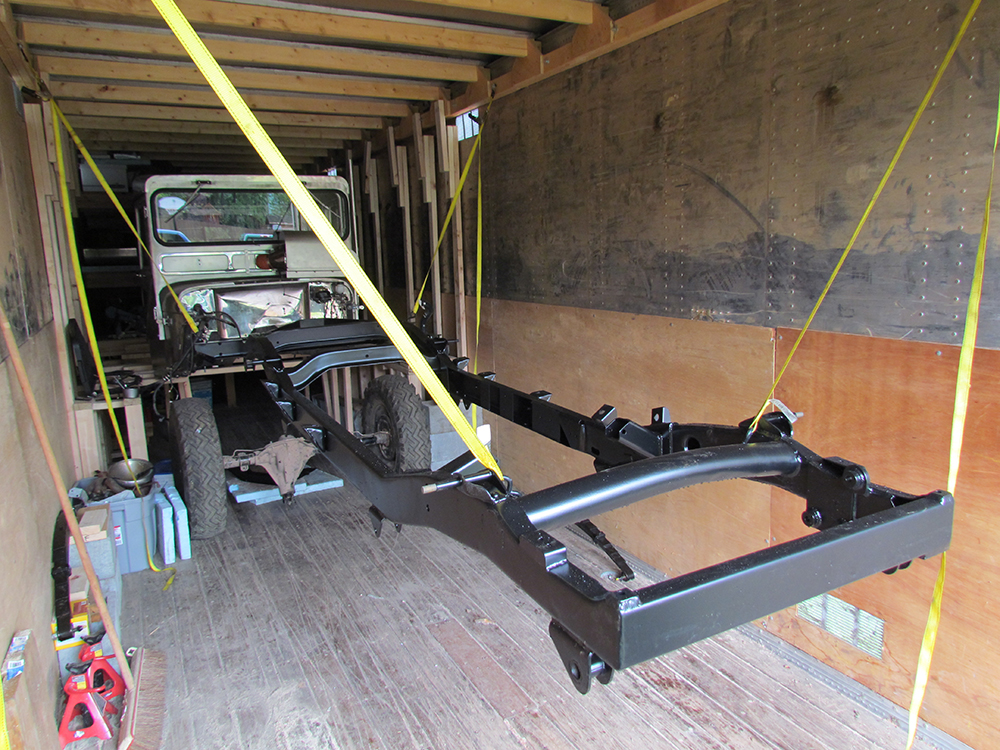
Paul’s been eagerly awaiting the completion of his frame’s powder coating. I told him that it was too pretty to put under the jeep. Instead, he ought to hand it in the house. No response to that idea so far . . .
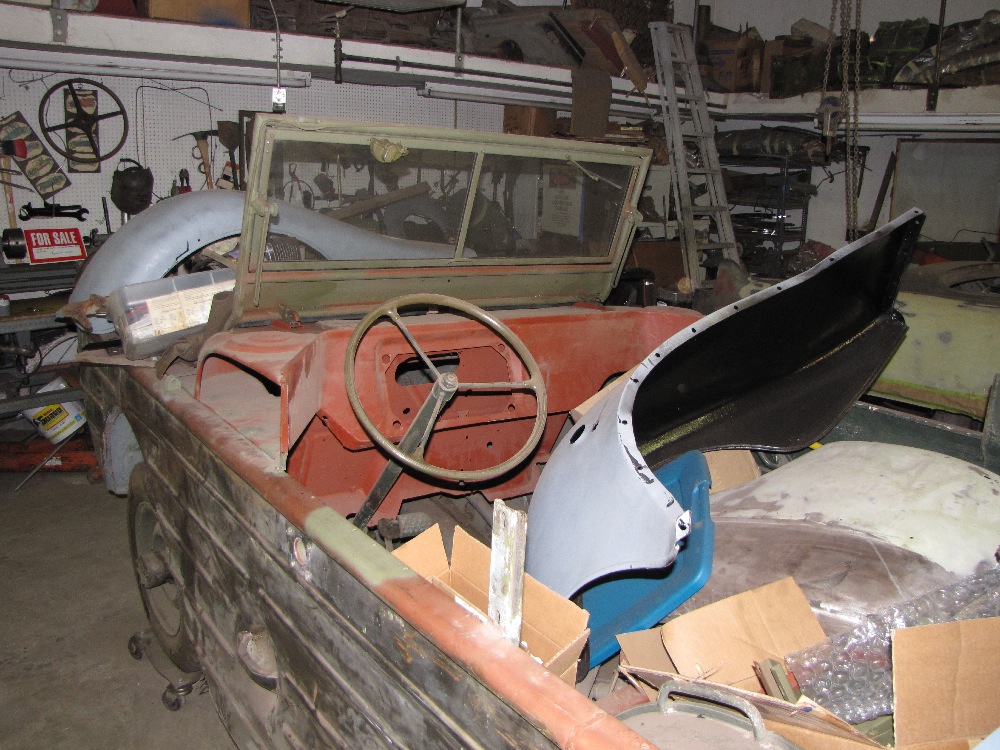
Paul writes, “Early this morning (to retired folks it seemed real early) I traded a fist full of cash to a local businessman and in return I received a beautiful black powdercoated Willys frame fresh from the curing oven complete with that new frame smell. Quickly hauling it home I positioned the frame inside the connex slightly ahead of the body while leaving enough room to safely install the springs and axles. I needed to somehow support the frame high enough to allow the axles to fit underneath while not damaging the new coating and still allow the frame to be easily raised and lowered. Did I mention this proposed support structure had to be cheap?
While the connex is incredibly strong the metal roof is way weaker than the weight of the snow we receive during a normal winter so years ago (to prevent the roof from collapsing) I reinforced the roof structure with full length headers bolted to the connex sides and 2X4 doublers positioned right below the original roof bows. With all this structure just waiting for me to use I attached the ends of four ratchet straps to the headers and hooked the opposite ends to the Willys frame. By adjusting the tension of the straps I was able to position the frame level and at the height necessary for clearance of the wheel and axle combination. I normally carry four ratchet straps in the truck (you never know when you’ll run across something that’s just too good to pass up so I’m ready to load it up, cinch it down and head for home at a high rate of speed before anyone changes their mind) they were quickly removed and became the Poor Folk Deluxe Adjustable Lift. This worked GREAT! Total cost…nothing!”
UPDATE: I’m reposting this February 2010 post in honor of the SEEP that appears in my next book. Ann and I spent Wednesday on a journey to review some of the places I will mention in the book. I’ll report on our research tomorrow.
Apparently, Paul cornered Ralphie in his garage today and refused to leave until he got some pics for us. Ralphie’s GPA is well on its way to being a great looking rebuild. Thanks to Paul and Ralphie!
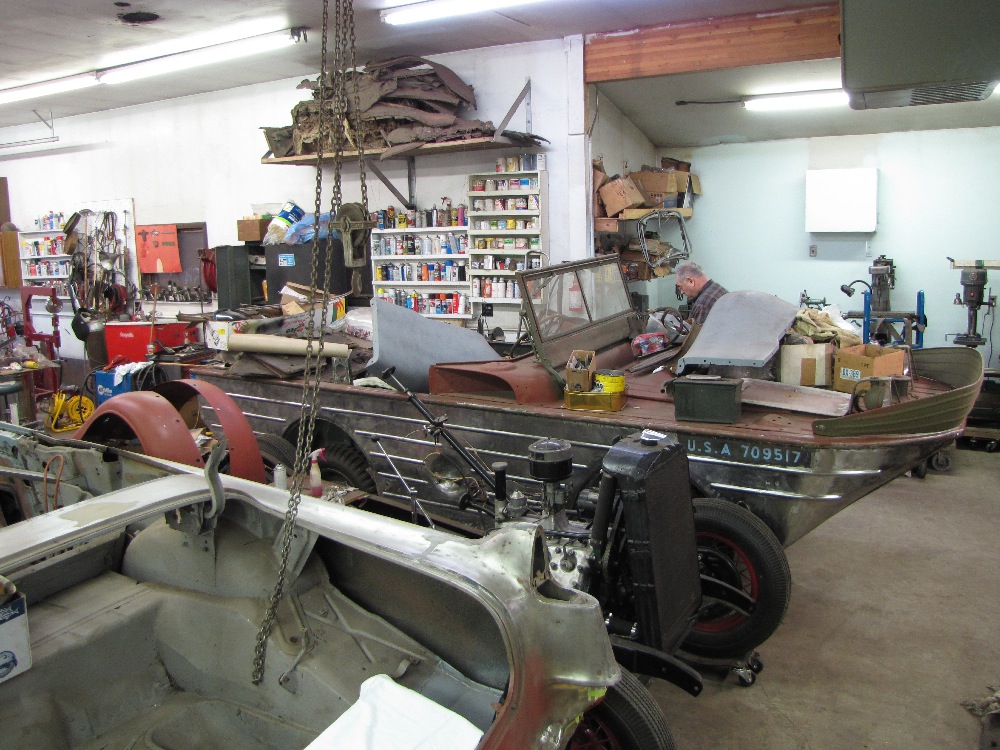
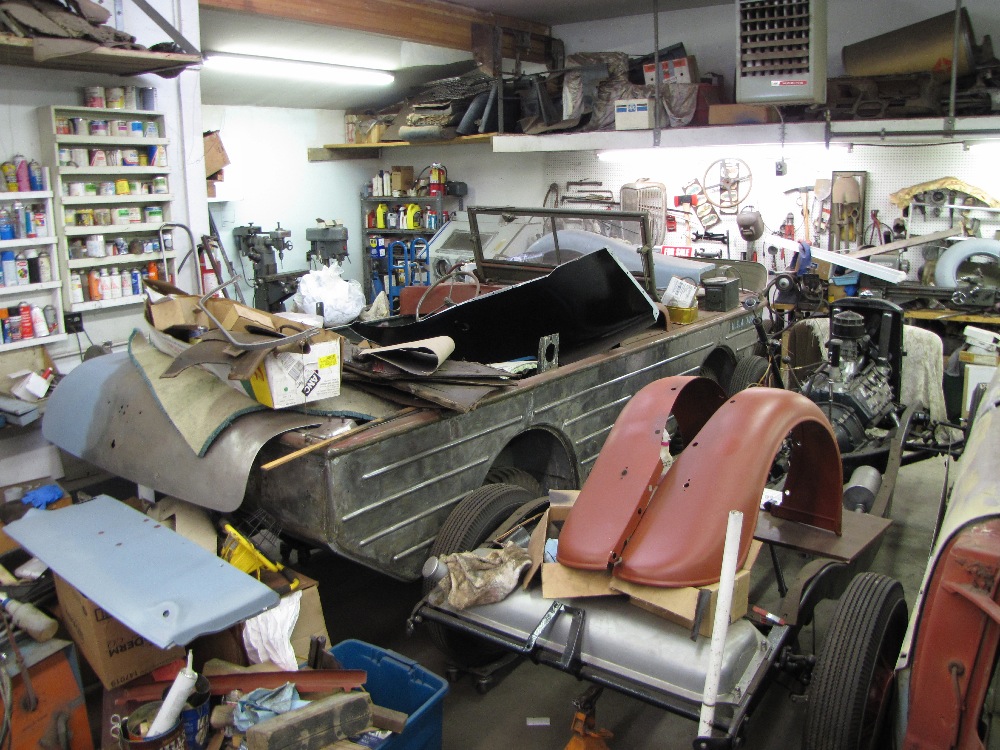
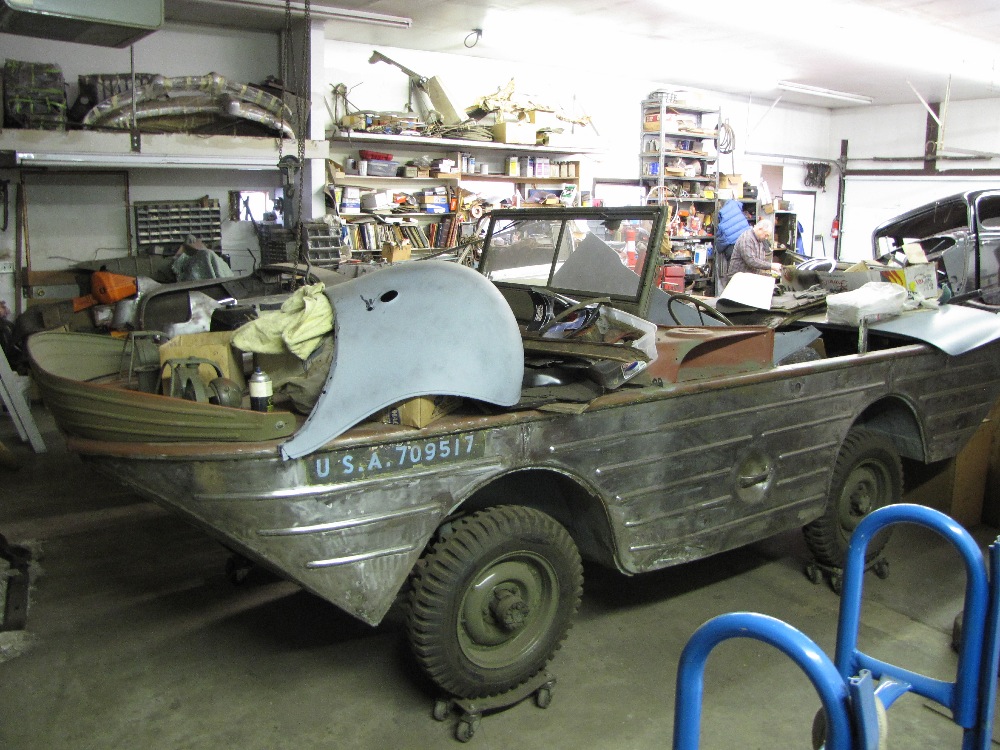
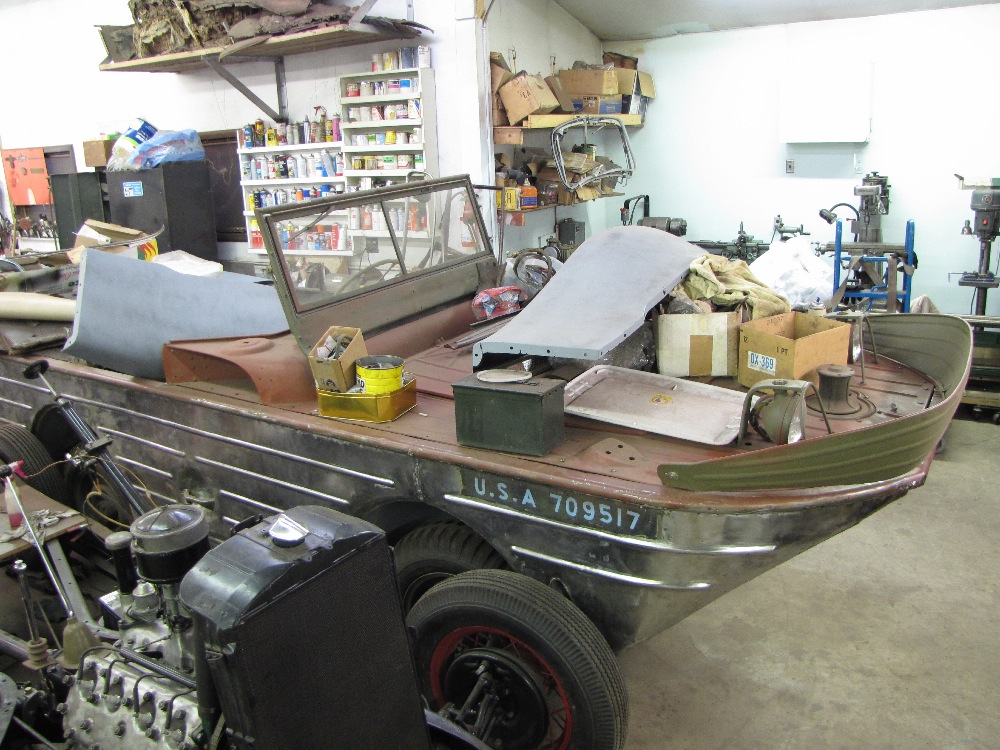
Paul writes, “Crazy Ralphie’s garage suffers from the usual garage problems, no matter how big your garage is it still isn’t big enough to hold all the tools and projects you want to stuff inside so the work area becomes a bit cramped. I’ll be able to get better pictures this summer when things can be moved outside but for now these pictures will have to due. The poor little GPA is sandwiched next to the chassis of a 1934 Ford four door sedan which is tight against a 1956 Caddy convertible undergoing restoration and every flat surface becomes a parts storage shelf until the pile becomes a pyramid towering towards the ceiling.
Crazy Ralphie is in the background of a couple of photos working on the body of the 34 Ford but he’s locating missing parts and doing some work on the GPA in the meantime.
The UPS guy just delivered my new Buick 225 V 6 radiator and I didn’t anticipate it’s arrival until the end of the month so it looks like I’ll have something to work on tomorrow what with building a mount and fabricating brace rod/hood prop combinations. I got my taxes done and Uncle owes me money, it just doesn’t seem right to put that money into a savings account when I could buy Jeep parts instead so I was on the phone ordering and the tax return has been killed.”
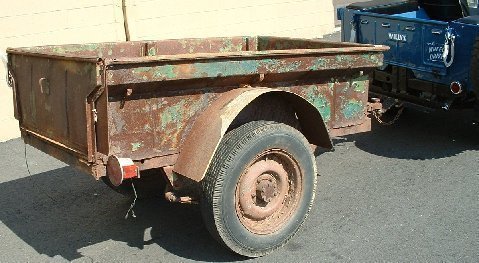
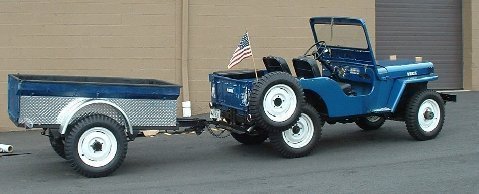
Bruce wanted to share some before and after pictures of a trailer he saved. As you can see, the before picture shows a pretty tired trailer. However, after six weeks of work by Bruce, the trailer looks like a great match for his flattie. Thanks for sharing Bruce.
Bruce wrote, “I purchased this trailer locally (7/2/12) for $600, more than i wanted to spend. however, it was simple to transport so i bought it anyway. they are hard to find.
Every nut, bolt and screw was removed, and all 20 leaves from the springs. All of the u-bolts and one shackle were replaced. All rust was removed. The floor had a few rust holes on the side that i duct taped over and then rhino guarded (black spray) the interior. I picked up a 3×6 rubber floor mat from u-line that fits nicely inside.
The trailer had home made fenders that were welded on. Once i removed them, gaping holes were left. I found new fenders at ‘tractor supply’.
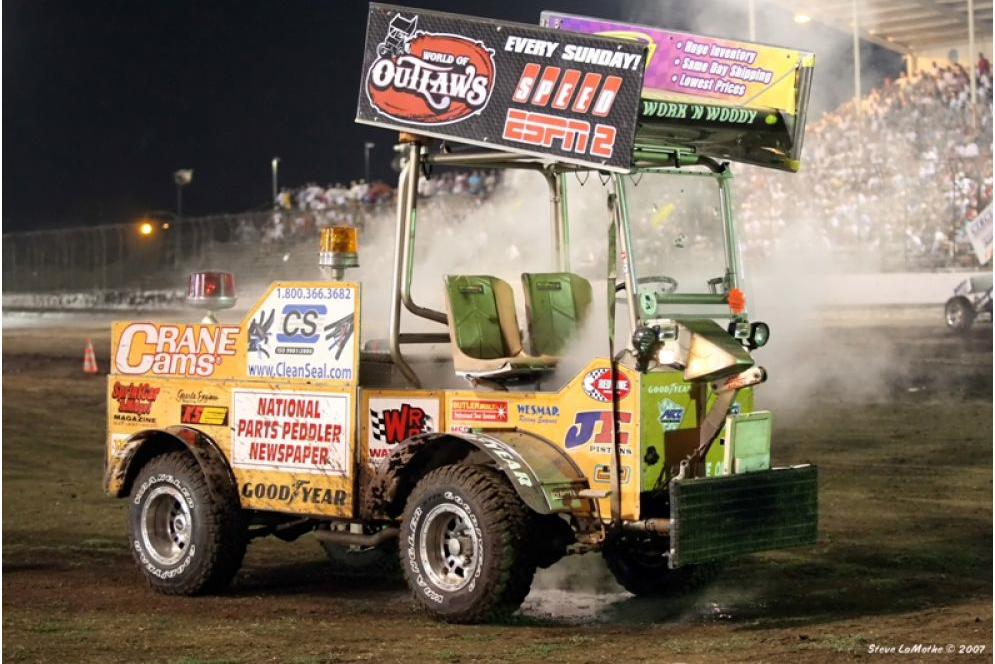
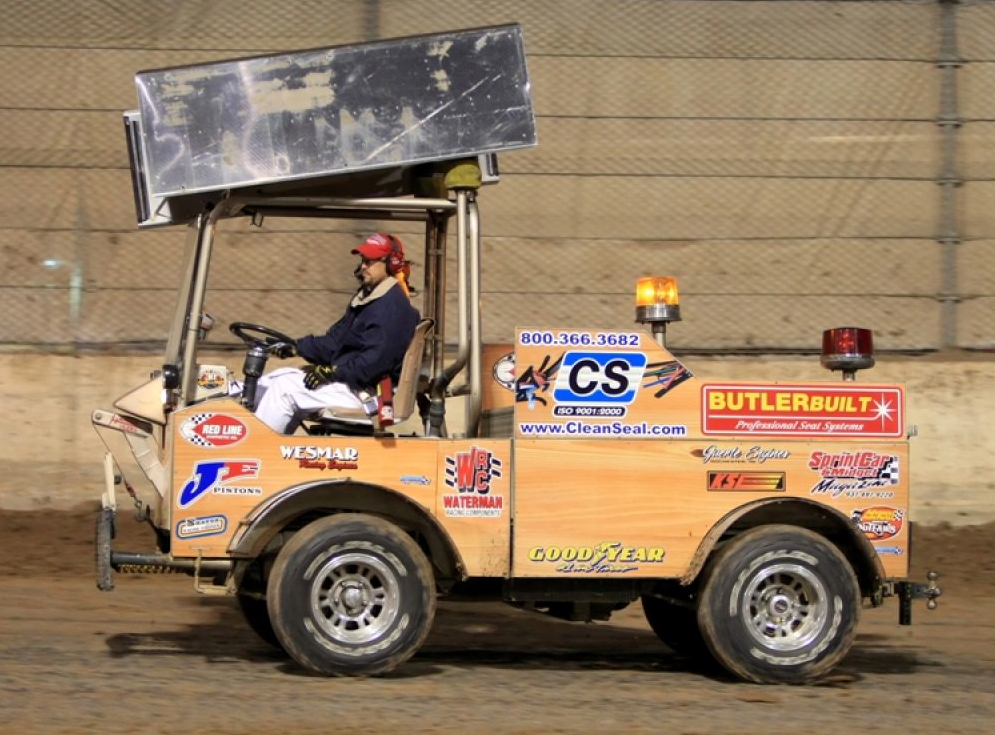
I ran across this unusually modified FC named Work’N Woody. According to this website, it’s a modified FC that has been a fixture at race tracks since 1978. It even has its own website. You can see a gallery of pictures here. Pretty cool! It must be a great place to watch a race.
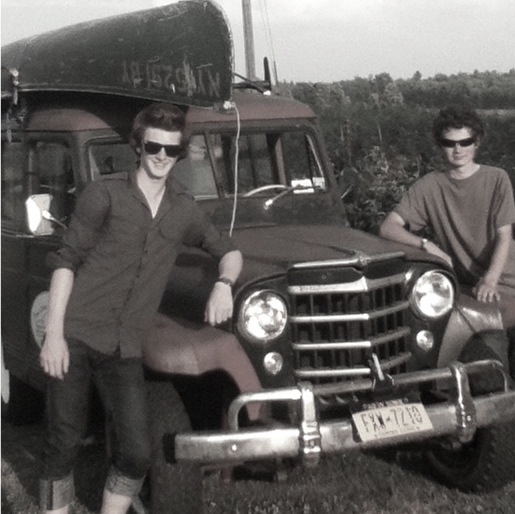
After searching around the NY area, Wayne finally spotted a wagon he wanted. Here’s a pic of it.
Wayne writes, “I am spreading the Willys disease; here is my 16 year old son and his friend after a canoe trip. The jeep gets used as a backdrop for quite a few pics around here.”
Bought new by his grandfather, Rich’s CJ-2A is still serves the family.
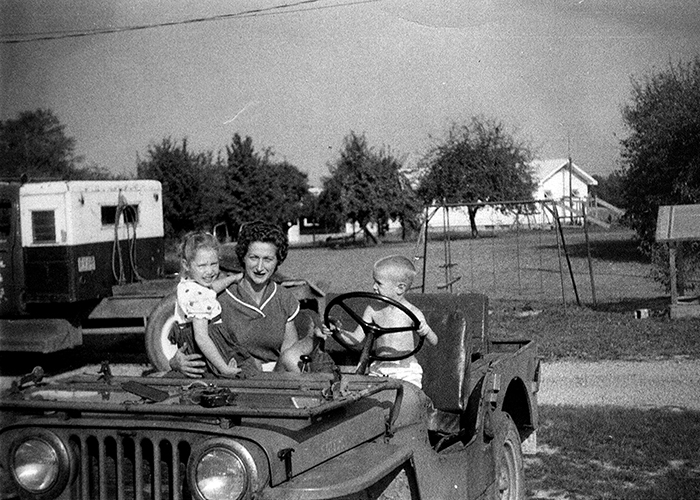
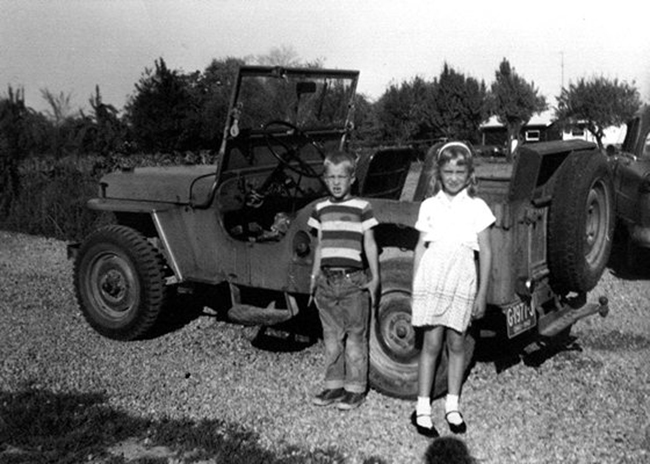
Rich writes, “The 48 CJ2A was bought new by grandfather. My dad got it in 1956 and I got it in 73. Someday my son will be the owner. Here are a few old pic’s from back in the 50’s . Me and my sister are in a few shots.”
Paul wrote to say that a friend of his brought this GPW by for a look.
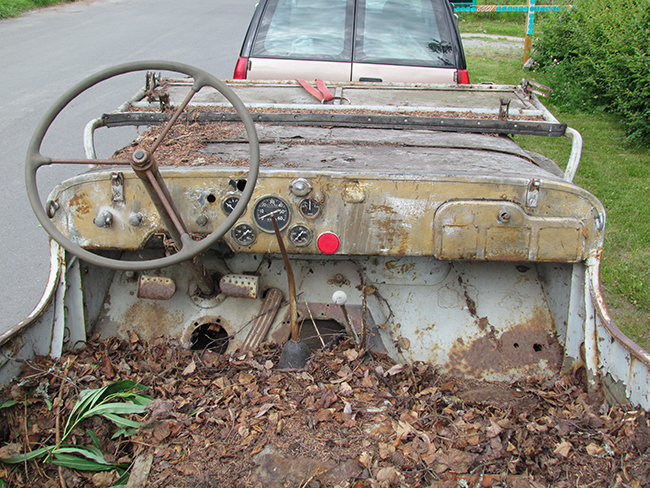
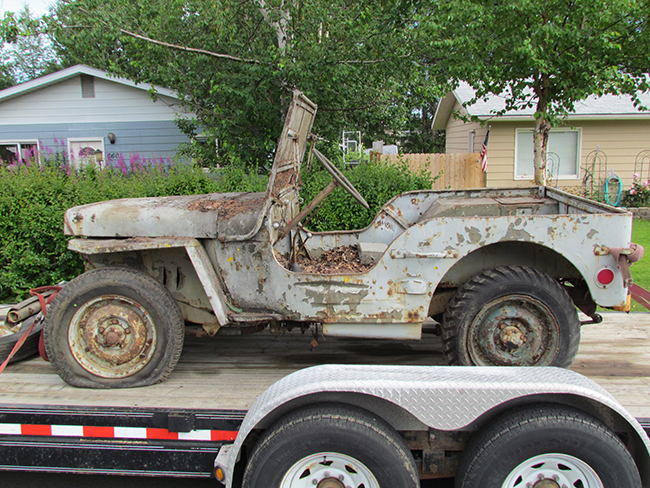
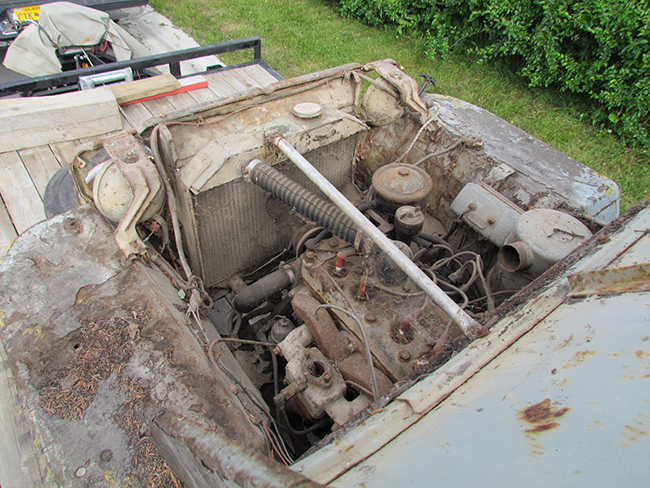
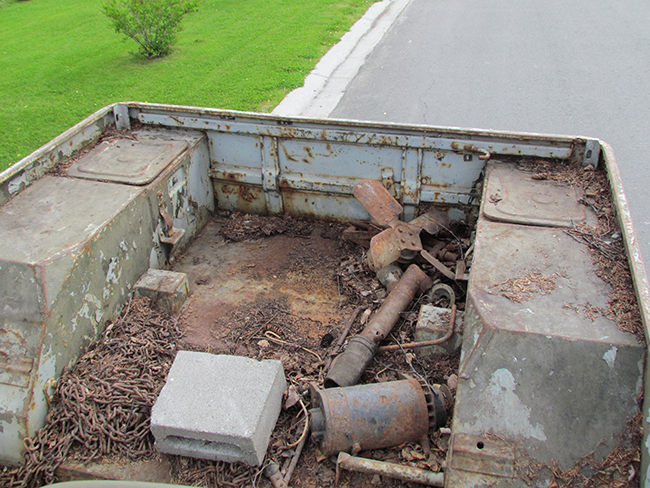
Paul writes, “My friend Lynn stopped by a few days ago to show me his most recently purchased Jeep. It’s a 1943 Ford, in pretty solid shape considering the fact it’s been parked outside under a spruce tree for many years. Lots of spruce needles covering the inside of the tub, the usual rust in the floors along with dents and dings but a pretty darn complete 69 year old Jeep. Also included with this Jeep (but stored in the tow vehicle for the trip home) were both front seats and the folding rear seat. Numerous parts are stamped with the letter F and all three data plates are still attached to the glove box door. Not only did the neighbors come over to eyeball the Jeep when it was parked in front of the house but Lynn mentioned on the way home while stopped in traffic and while in a parking lot folks were wanting to look the Jeep over and some even tried to buy it. Anyway, this old Ford arrived safely at it’s new home where a pressure wash will remove the grime and plant residue and allow a more in depth inspection of this steel soldier.”
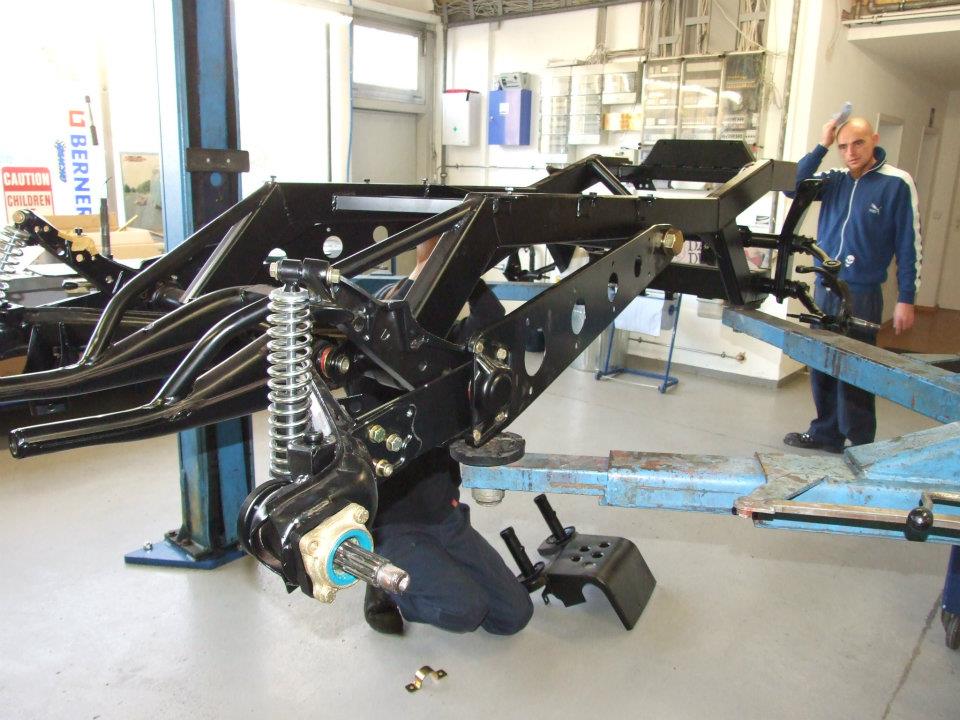
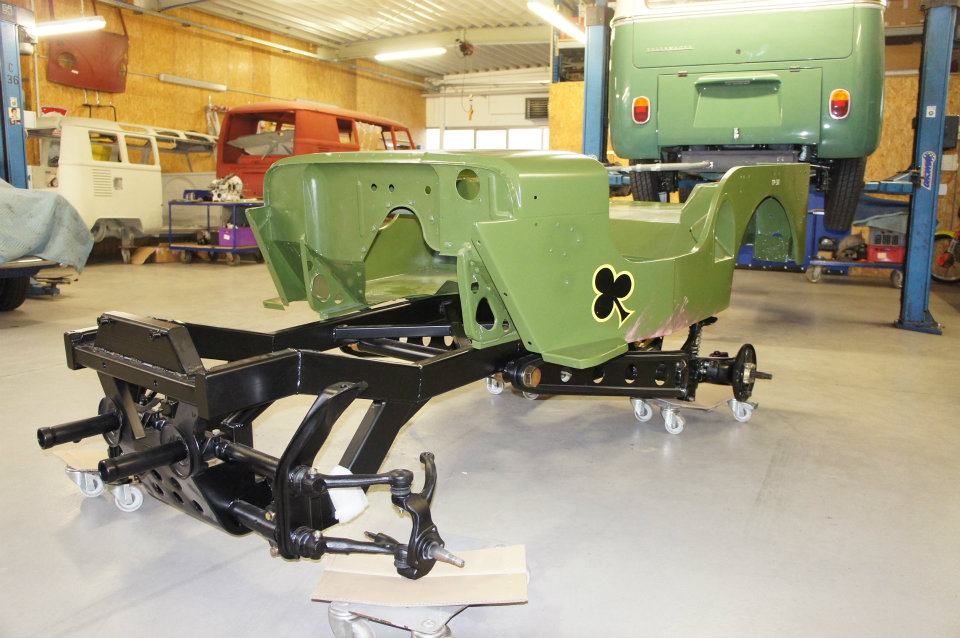
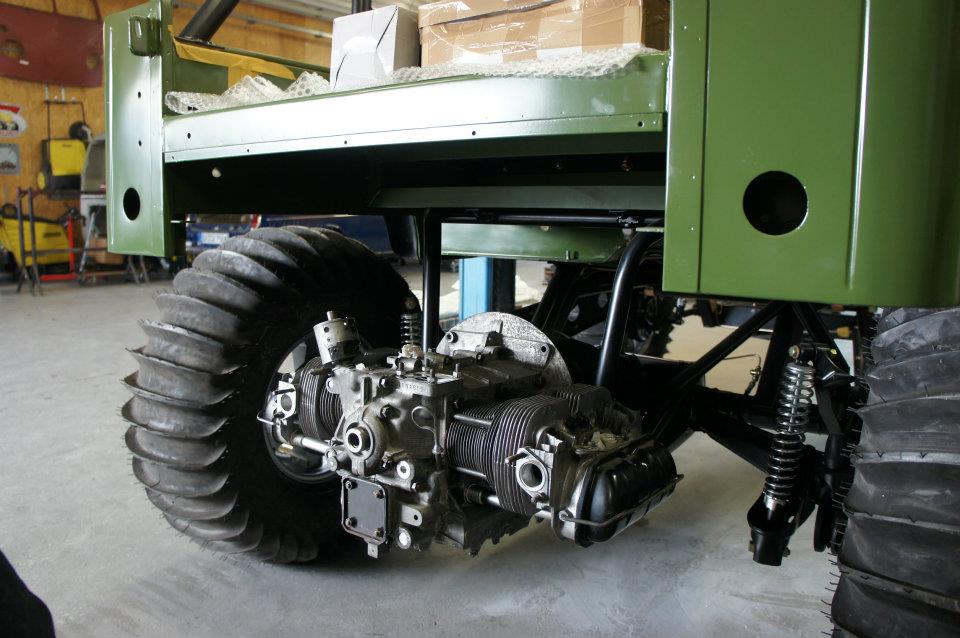
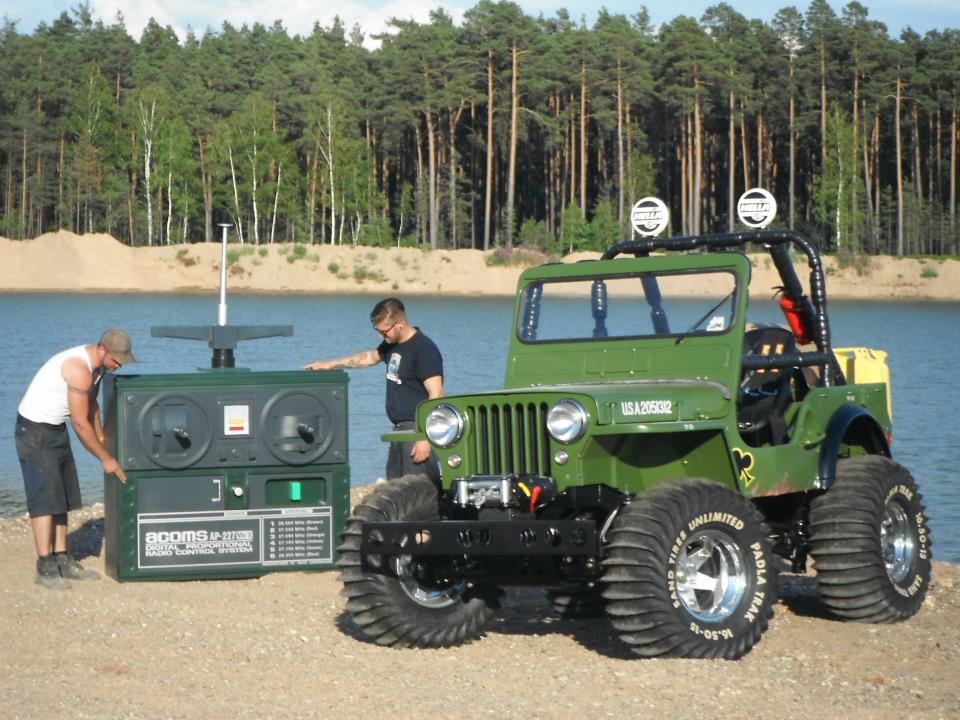
Matt spotted this gem. Not satisfied with the toy-sized, remote control version of the Tamiya Wild Willys Jeep, the people over at The Bug Box, a German company, decided to build a life size version. They documented the process. Very cool.
William, the President of the Tennessee Flat Fender Club, recently contacted me with some kind notes about my book. I told him I had been planning to do a post about the club, so he provided me some information.
The Tennessee Flat Fender Club is an unofficial association with no dues, no rules, no mandatory meetings or rites of passage. You don’t even need to own a flat fender ‘jeep’ to call yourself a member. Only need to have an interest in these classic vehicles.
The Club is an affiliate of the International Flat Fender Club. There is a club for most states and the ones where there isn’t a club they are looking for people to lead one.
You can learn more about the club at these websites:
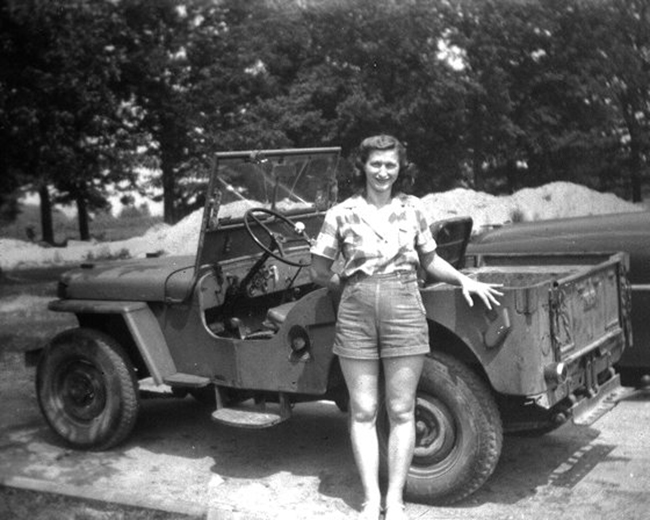
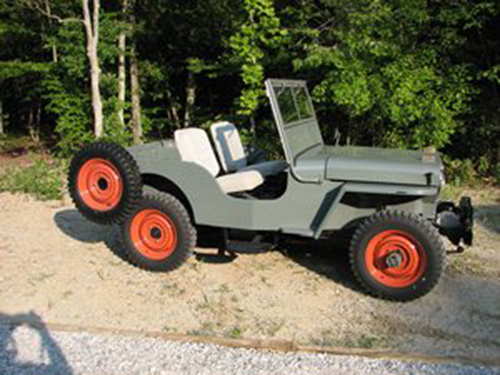
If you are curious about William’s build, you can read all about it at the CJ-2A page. The very first picture is an image of the engine sitting in the house next to an open tool box. This picture underscores the support of Wiliam’s family; so, it only seems natural that his mother, wife, and grandmother should have their pictures taken in front of it (shown below).