emailNeed to contact me and don't have my email? Click on email button.
About eWillys
Welcome to eWillys.com, a website for vintage jeep enthusiasts. I update this website nearly every day with jeep deals, jeep history, interesting reader projects, jeep related info, and more.
These quick searches can help you find things on eBay. People list in the wrong categories all the time, so don't be surprised to see brochures in the parts area for example. This section used to be split into jeeps, parts and other categories, but recent changes to eBay will require this information to be recoded.
The links to posts below show jeeps grouped by models, condition, and other ways. Some of these jeeps are for sale and others have been sold. If you are unsure whether a vehicle is still for sale or not, email me at d [at] ewillys.com for more info.
Importantly, the allure of buying a project jeep can be romantic. The reality of restoring a jeep can be quite different, expensive and overwhelming without the right tools and resources. So, tread carefully when purchasing a "project". If you have any concerns about buying a vintage jeep, or run across a scam, feel free to contact me for help, comments or concerns .
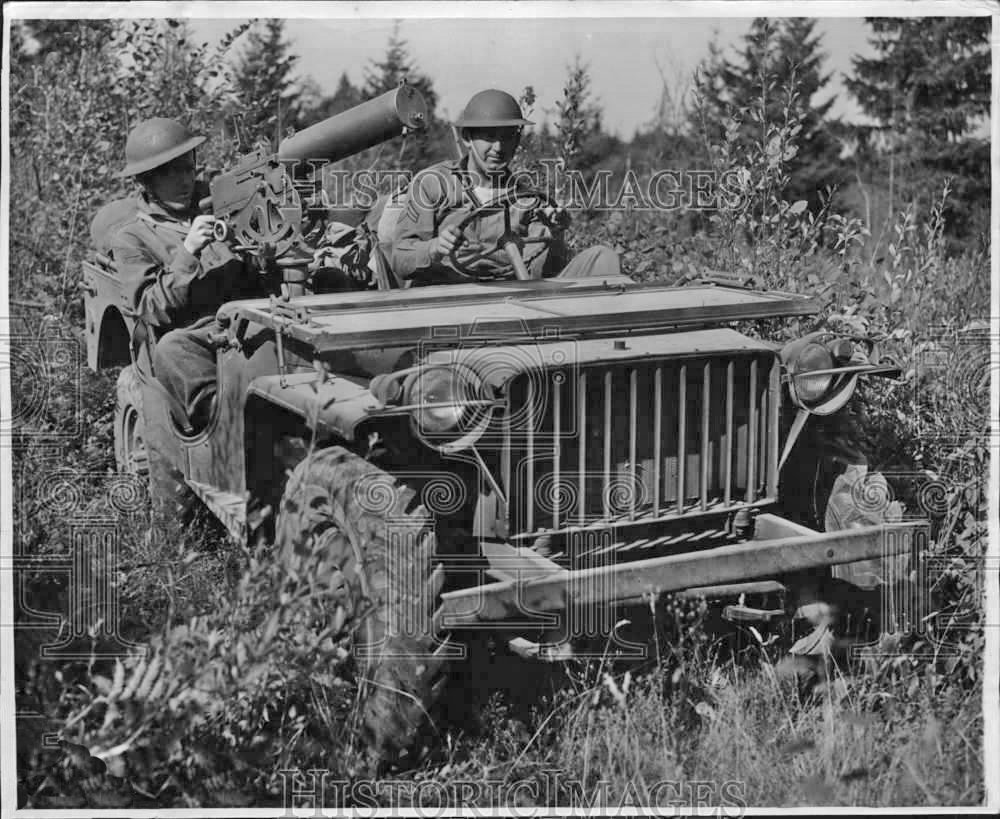
Good photo of a Bantam BRC-40 laying in wait during some war games in Longview, Washington.
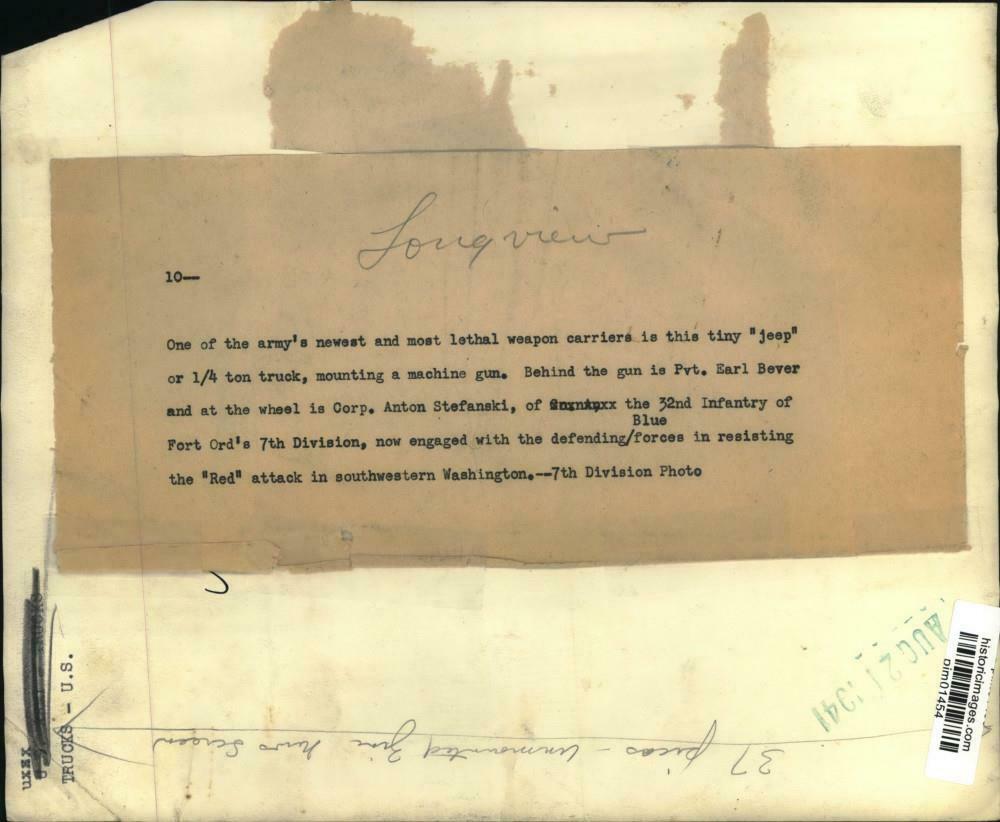
“This is an original press photo. Trucks – United States. One of the army’s newest and most lethal weapon carriers is this tiny “jeep” or 1/4 ton truck, mounting a machine gun. Behind the gun is Private Earl Bever and at the wheel is Corporal Anton Stefanski, of the 32nd Infantry of Fort Ord’s 7th Division, now engaged with the defending/Blue forces in resisting the “Red” attack in southwestern Washington. Longview. Photo measures 10 x 8.25 inches. Photo is dated 8-21-1941.”
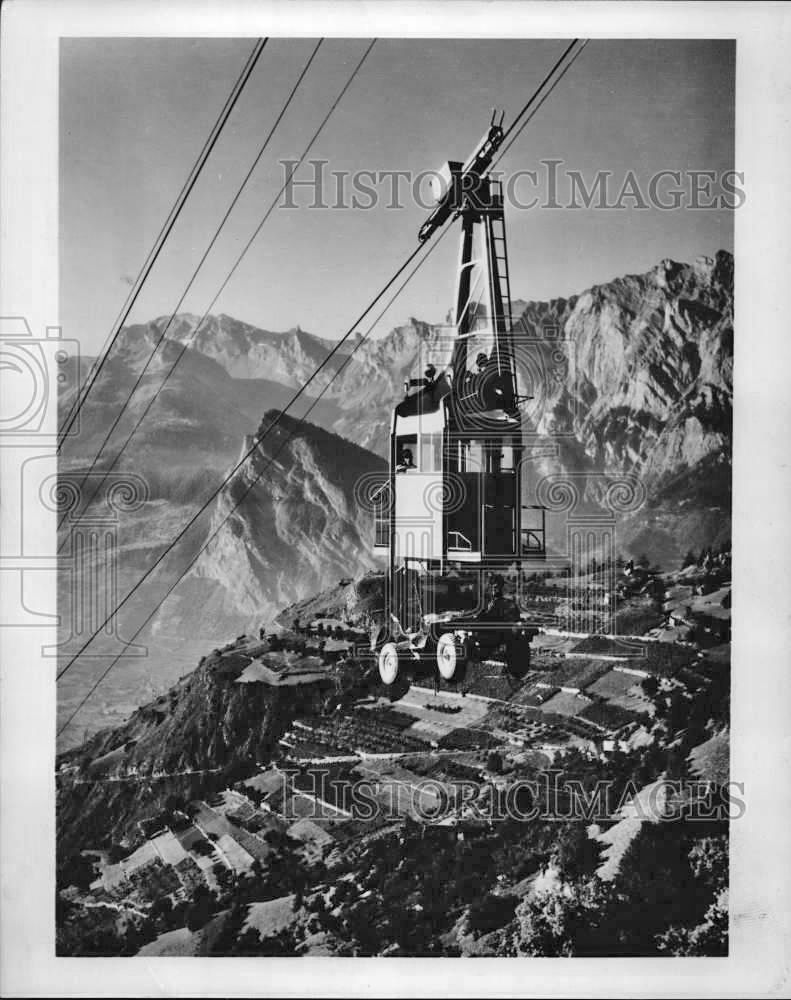
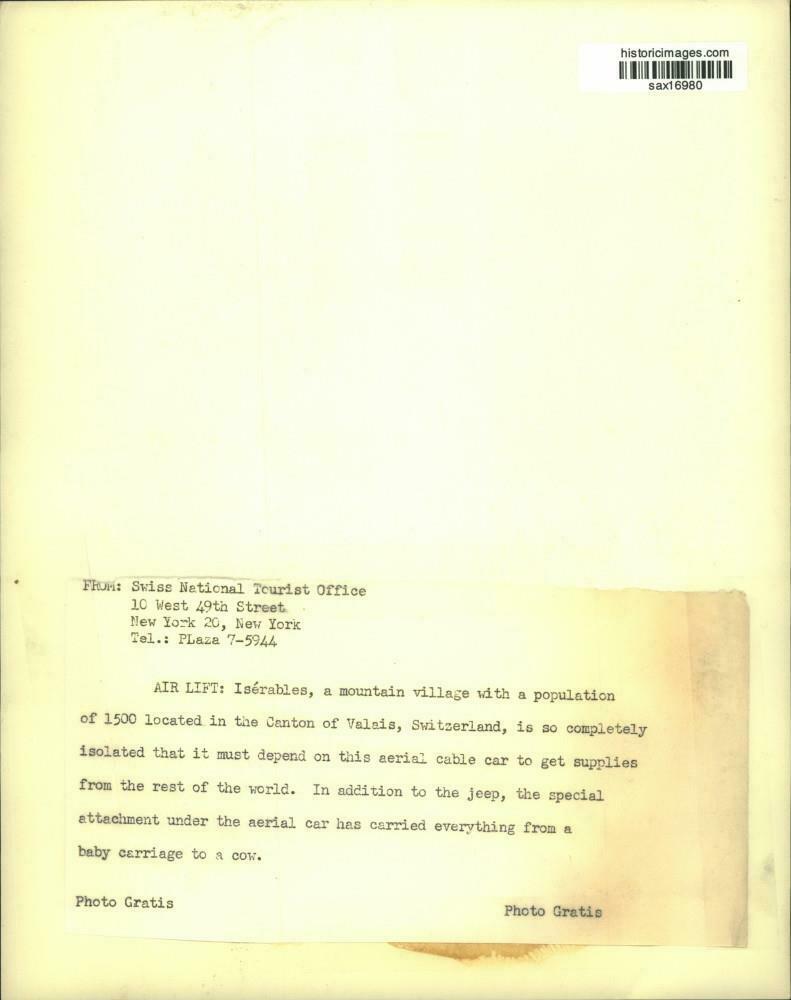
“This is an original press photo. Air Lift: Iserables, a mountain village with a population of 1500 located in the Canton of Valais, Switzerland, is so completely isolated that it must depend on this aerial cable car to get supplies from the rest of the world. In addition to the jeep, the special attachment under the aerial car has carried everything from a baby carriage to a cow. Photo measures 8.25 x 10.25 inches. Photo is dated –none.”
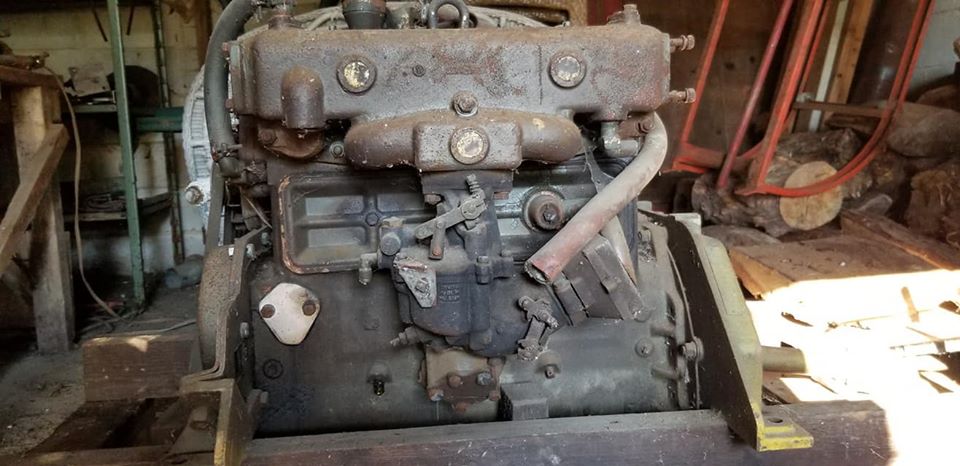
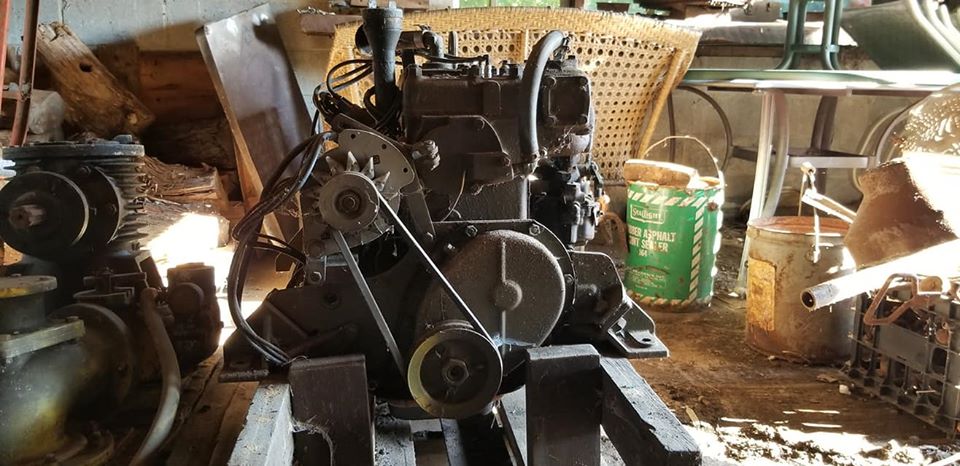
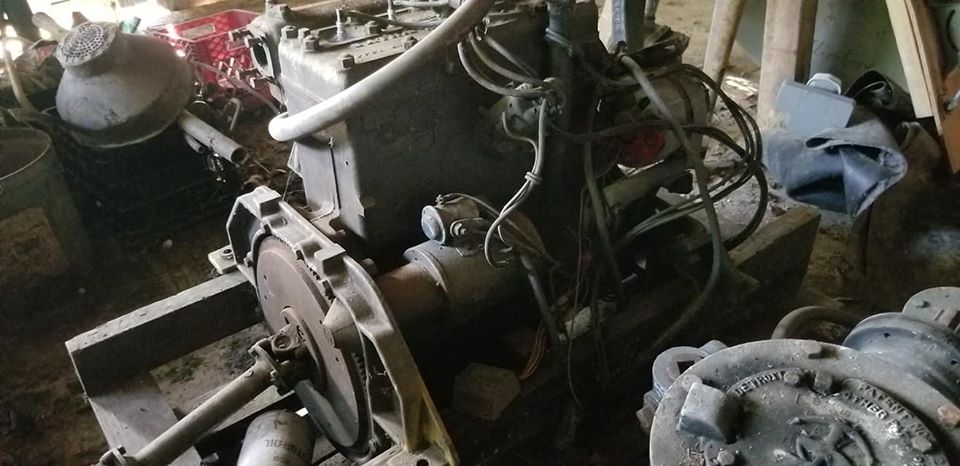
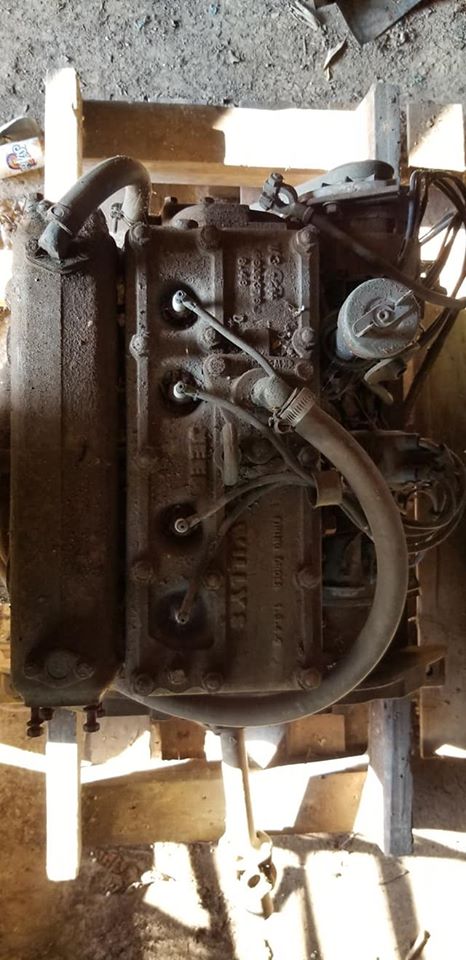
Jordan spotted this unusual combo. This package creates an early jet powered boat using a Kermath modified L-134 and a Hanley Hydrojet. I’ve included a Kermath brochure and links to the development of the Hydrojet by Keenan Hanley at the bottom of the post.
“Willys Jeep engine block casting number 804380, and Hanley Kermath HydroJet. I’ve never attempted to start. $500”
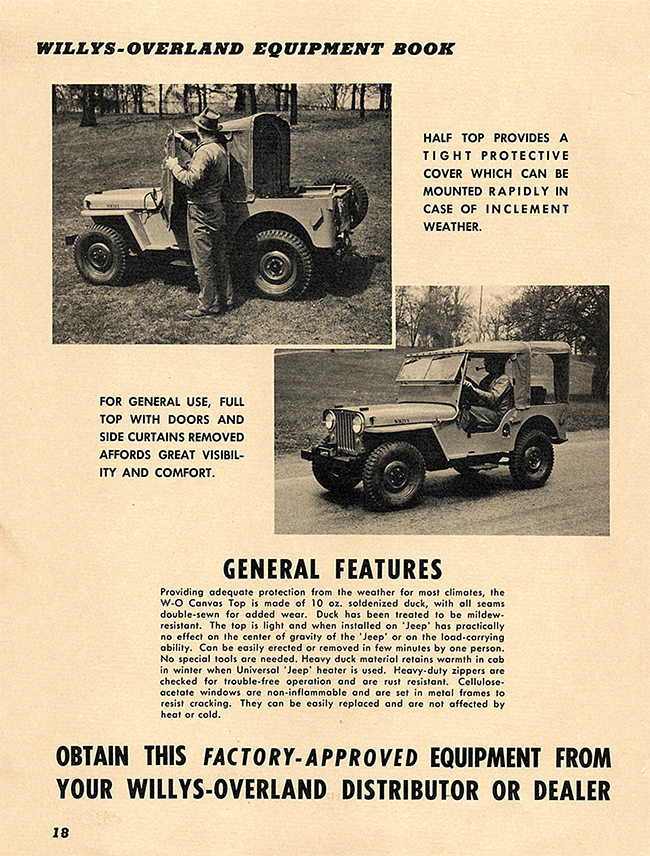
UPDATE II: I’ve added a second version of the W-O Canvas Top brochure (tan brochures). they come from a Willys-Overland Equipment Book that, based on other brochures contained in that book, was likely published earlier than the brochures that appeared in the original version of the post.
This jeep brochure from an early Willys-Overland Special Equipment catalog highlights the first production soft top for the CJ-2A. It was labeled a W-O Canvas Top. The material used wasn’t your average canvas, at least according to the brochure. Instead, it was 10oz soldenized duck. That description meant nothing to me, so I attempted to decipher it.
These two brochures were published in a Willys Industrial Equipment book. It appears Willys-Overland changed up the name slightly to the Willys Canvas Top, though in the text the W-O Canvas Top name remains the same as above.
The biggest mystery was the term “soldenized”. Not even the internet knows what “soldenized” means. The fact that the term probably describes a means of mildew or waterproofing makes sense, and Robert Ackerson described it similarly in his jeep book, but that’s more a description of the result of the process, not a description of the process itself.
I suppose the timing of this article is appropriate, given those of us in the north half of the blue ball are plunging into winter quickly (at least the weather in Washington State feels wintery), as a recent Smithsonian Magazine article on the Zamboni Company featured several photos I hadn’t seen of Jeep-based Zamboni vehicles. Here’s the article: https://www.smithsonianmag.com/innovation/how-zamboni-changed-game-ice-rinks-180973352/
The article also included this ad featuring the CJ-3B as Model D from the Zamboni Company’s archives:
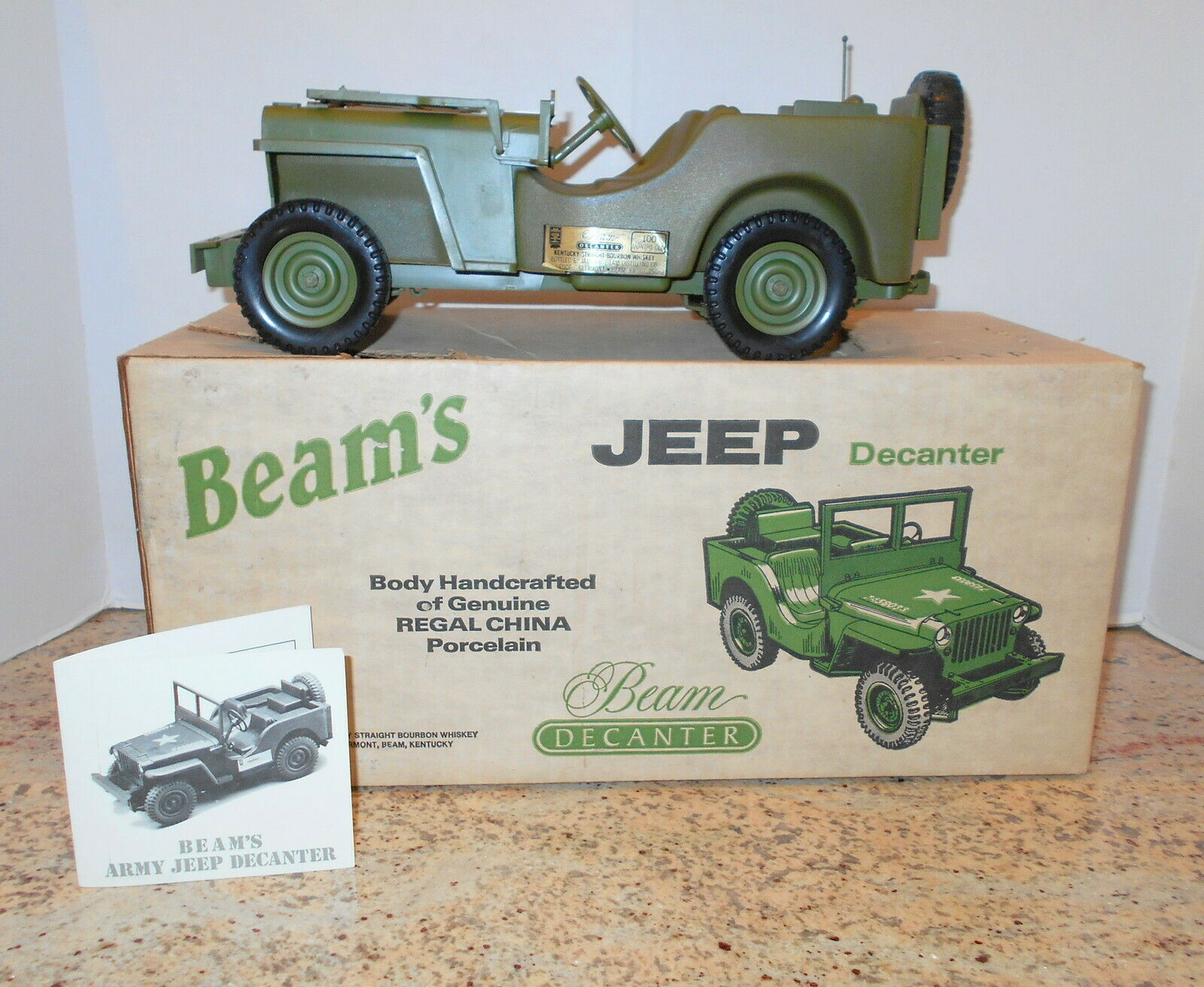
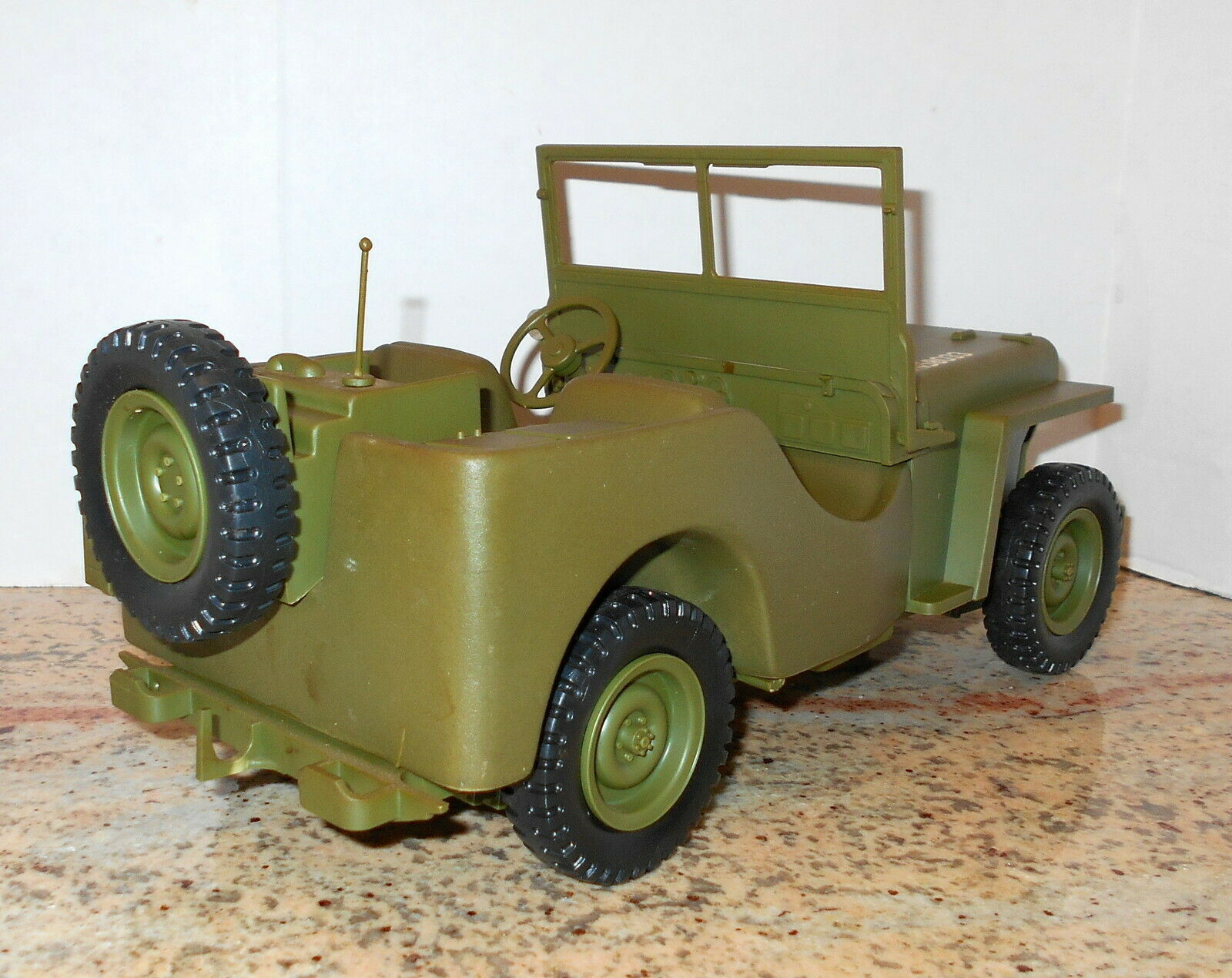
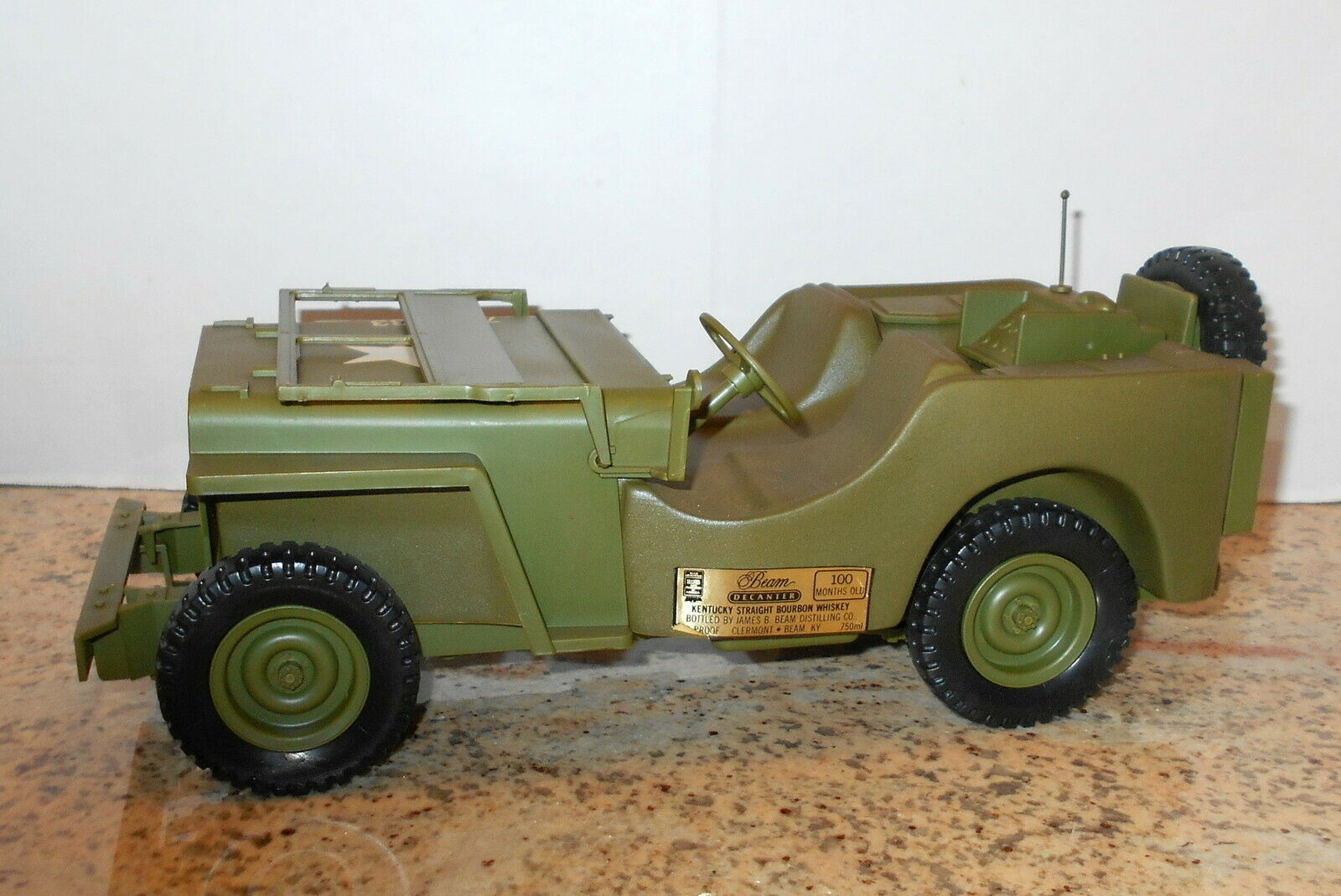
This mid 1980s Decanter looks to be in great condition and includes the box, also in really nice condition.
“THIS JIM BEAM REGAL CHINA DECANTER IS IN GOOD CONDITION FOR ITS AGE. IT WAS PRODUCED IN 1986.
NO CHIPS OR CRACKS AND THE DECANTER
IS STILL MINT IN THE ORIGINAL BOX.
IN LIKE NEW CONDITION…..”
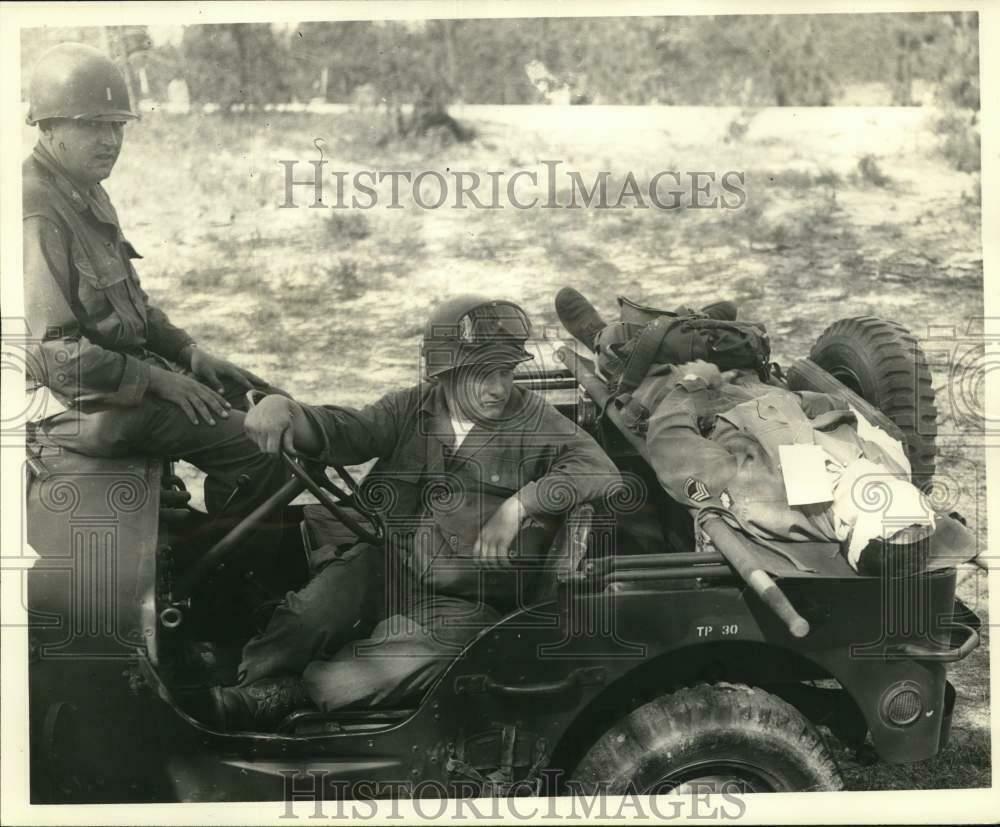
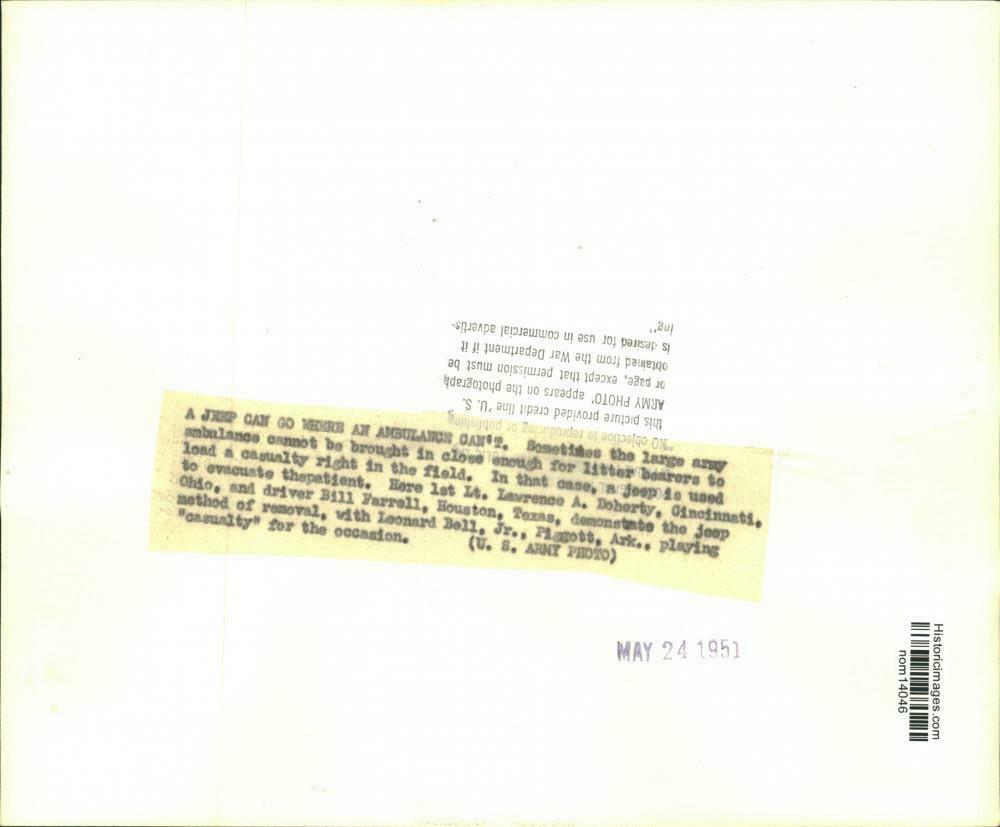
What I like best about these images is that the eBay seller takes the time to include the names of the soldiers. You never know when some offspring will search and find the photo and write in the comments, “Hey, that’s my [insert relative affiliation]”.
“1951 Press Photo Jeep driver and soldier show how jeep can evacuate casualties. This is an original press photo. A jeep can go where an ambulance can’t. Sometimes the large army ambulance cannot be brought in close enough for litter bearers to load a casualty right in the field. In that case, a jeep is used to evacuate the patient. Here 1st Lieutenant Lawrence a. Doherty, Cincinnati, Ohio, and driver Bill Farrell, Houston, Texas, demonstrate the jeep method of removal, with Leonard Bell, Jr., Pigott, Arkansas playing “casualty” for the occasion.Photo measures 10 x 8.25inches. Photo is dated 05-24-1951.”
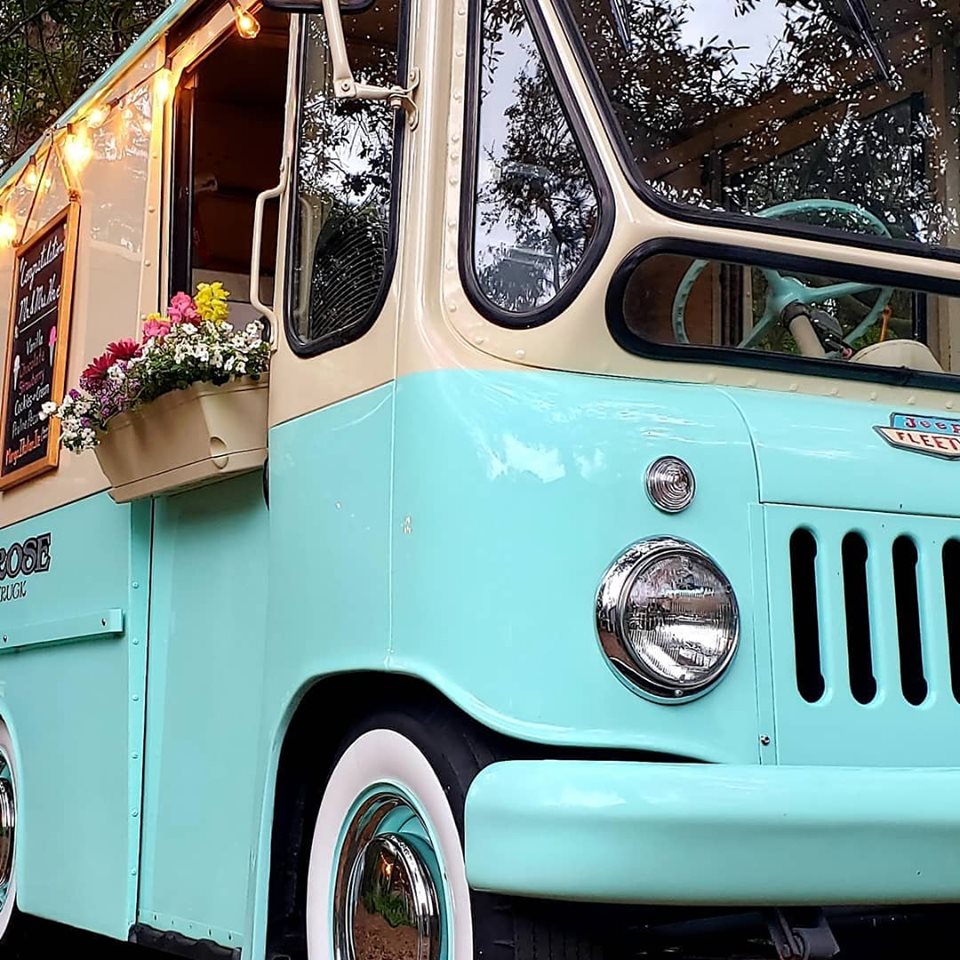
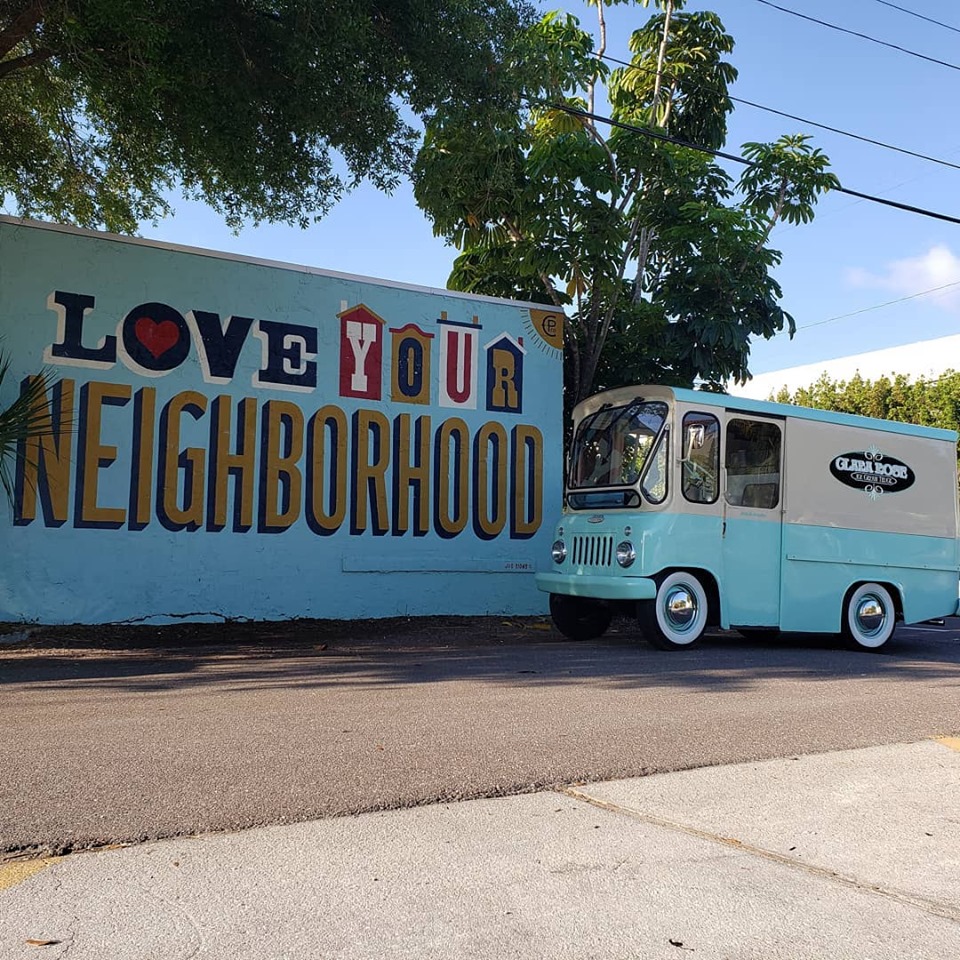
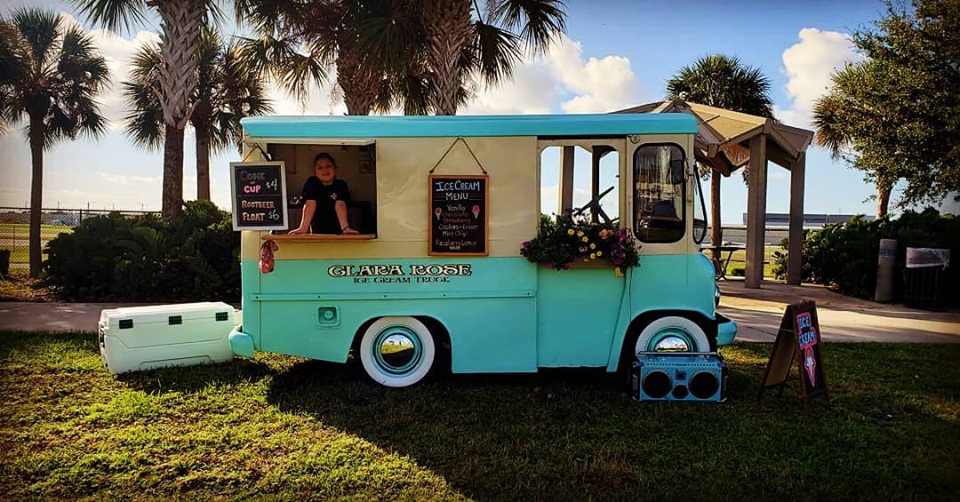
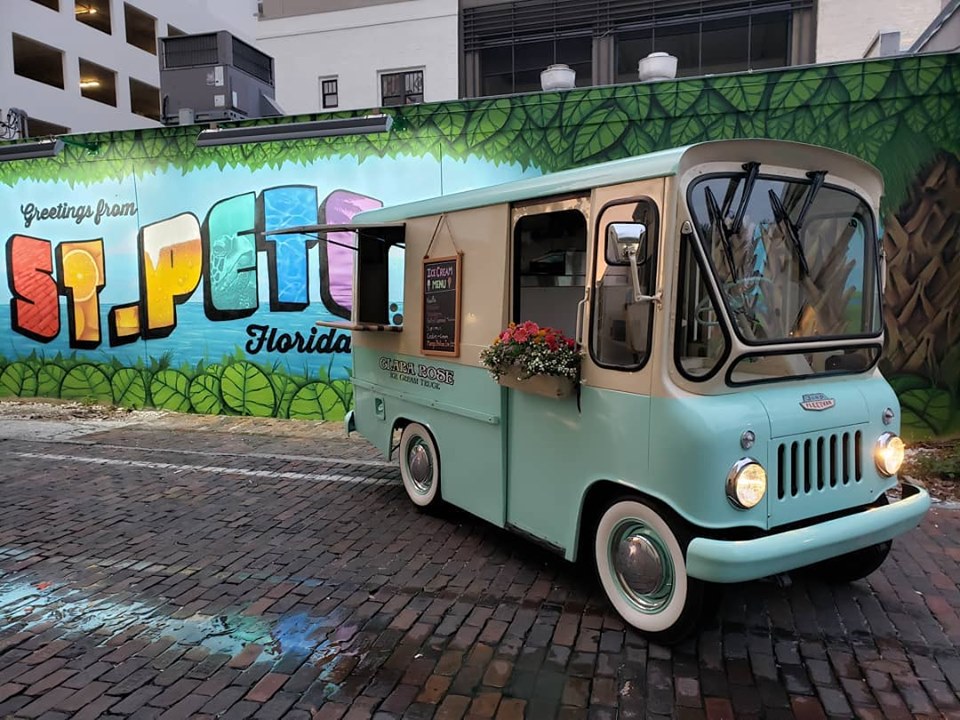
Florida’s Tampa Bay Times published an article about local mobile businesses a couple weeks ago. One of those businesses included a beautiful 1964 FJ-3A ice cream truck, run by Carlos Velez: The Clara Rose Ice Cream Truck.
Before he opened his business, Carlos worked as a Sheriff’s deputy at a maximum security jail. Wanting a change of life, he decided to open an ice cream business, but one that was of a better quality than the standard ice cream distributors. That led him to search for an FJ. He found the perfect one and it’s a beautiful rig as you can see below.
There’s a proposal to create a national registry for unique or historically significant vehicles (and boats and planes) with documented stories. Importantly, such a registry would not keep the owners of such vehicles from being sold, driven or even modified. The Library of Congress would be the keeper of the documents, specs, photos, and other information.