emailNeed to contact me and don't have my email? Click on email button.
About eWillys
Welcome to eWillys.com, a website for vintage jeep enthusiasts. I update this website nearly every day with jeep deals, jeep history, interesting reader projects, jeep related info, and more.
These quick searches can help you find things on eBay. People list in the wrong categories all the time, so don't be surprised to see brochures in the parts area for example. This section used to be split into jeeps, parts and other categories, but recent changes to eBay will require this information to be recoded.
The links to posts below show jeeps grouped by models, condition, and other ways. Some of these jeeps are for sale and others have been sold. If you are unsure whether a vehicle is still for sale or not, email me at d [at] ewillys.com for more info.
Importantly, the allure of buying a project jeep can be romantic. The reality of restoring a jeep can be quite different, expensive and overwhelming without the right tools and resources. So, tread carefully when purchasing a "project". If you have any concerns about buying a vintage jeep, or run across a scam, feel free to contact me for help, comments or concerns .
Short update. On Tuesday, after buying some parts and fixing some wiring, I got mom’s riding lawn mower running. She’s happy. I am happy.
On Wednesday, after buying a new motor and then upgrading the wiring to 230 … (It sure wasn’t plug and play) … I got the compressor working. I am even happier!
Just a couple posts for today … I spent yesterday morning working on my parents’ mower (an annual event). There was cursing and cussing (don’t know that there is a difference, but i uttered enough to fill both categories). After fixing a highly corroded wire and testing other parts, I finally concluded the solenoid needed replacing. I’ll be picking that up today.
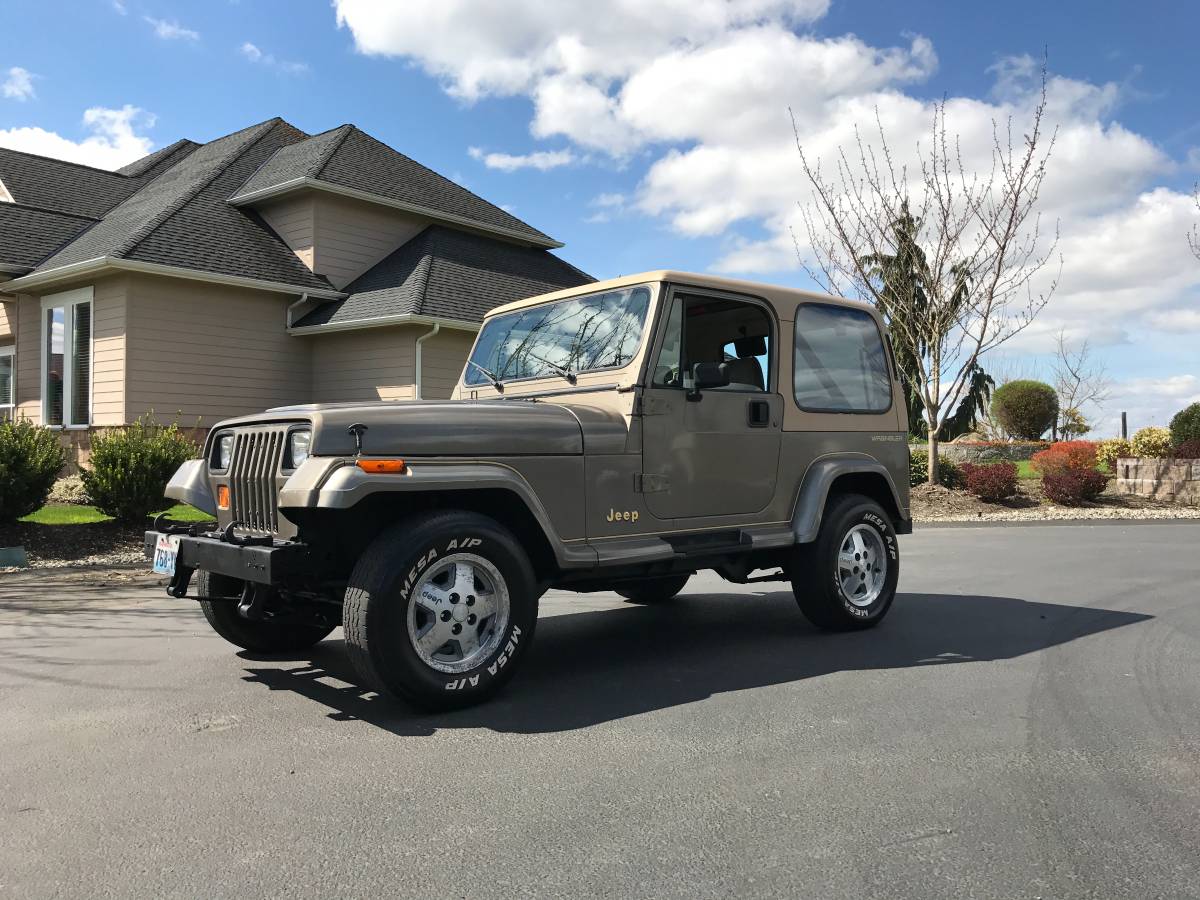
I left that project for a trip to Edgewood, Washington, where I met Ron, a man selling his father-in-law’s 1991 Jeep Wrangler. Why was I looking a Wrangler? I’m helping the Vidal’s locate a newer jeep for their trip to Alaska. The price on this one was pretty good and the pictures showed well, such as this example photo:
But, in person, there were dings, scratches, and plenty of imperfections. The man I met claimed the jeep was well-cared for, yet the shift boot was sticky all over with something, the floor was very black, as if it had just been painted (and their was overspray onto the roll bar), and the battery tie down was hanging from some wires across the engine compartment from where the battery was located. Something didn’t sit well with me about the deal (the seller was even ready to drop the price, despite all the calls he said he had on it), so I passed.
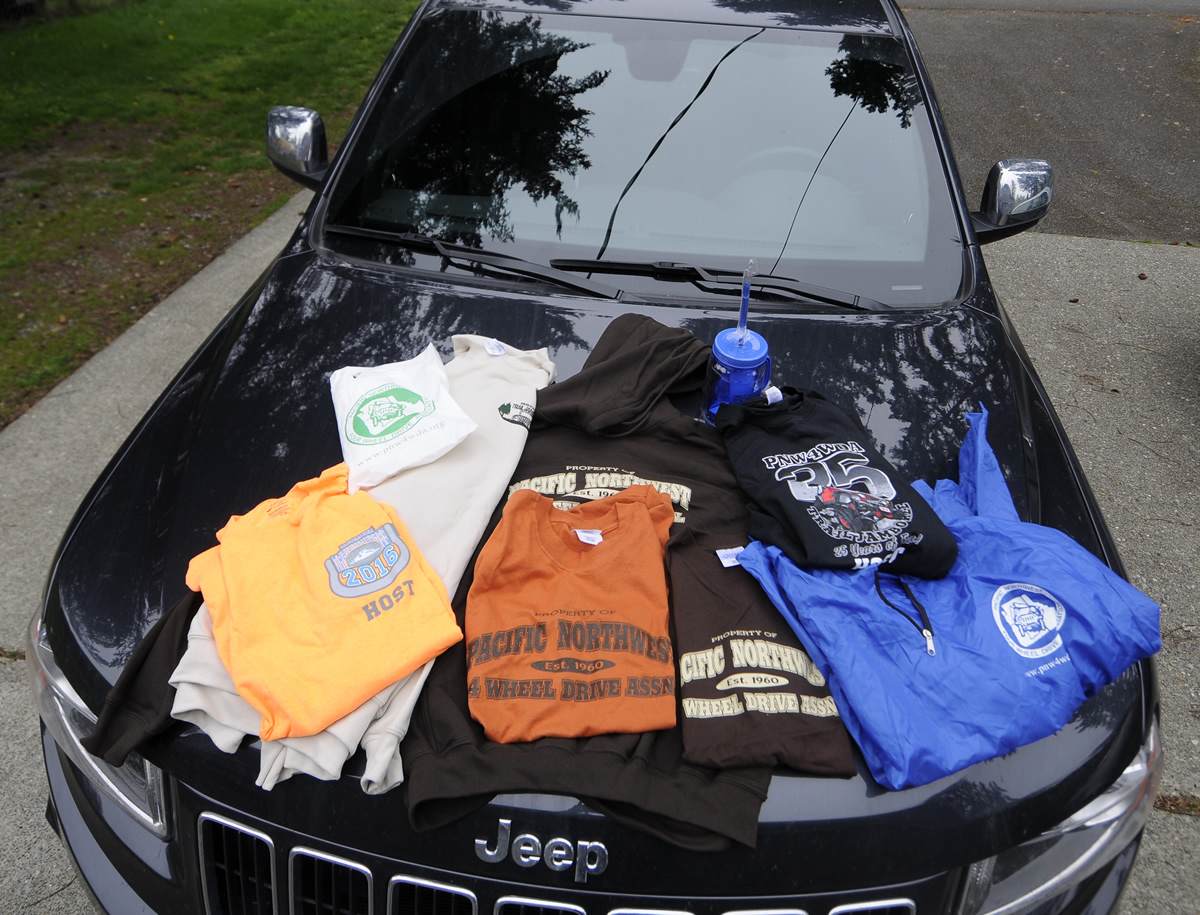
From there, I dropped by Rob and Diana Stafford’s place, where I looked through some of the giveaway items that the PNW4WDA, which will become an official sponsor, donated to the Alaska Or Rust venture. There were all kinds of t-shits, sweatshirts, hoodies, drink containers, and more.
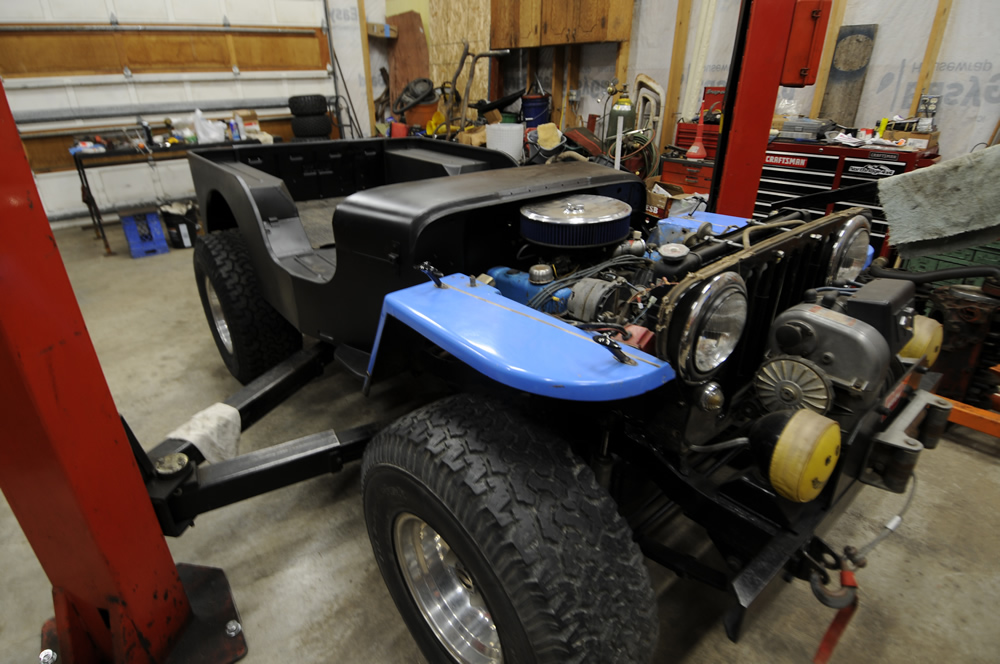
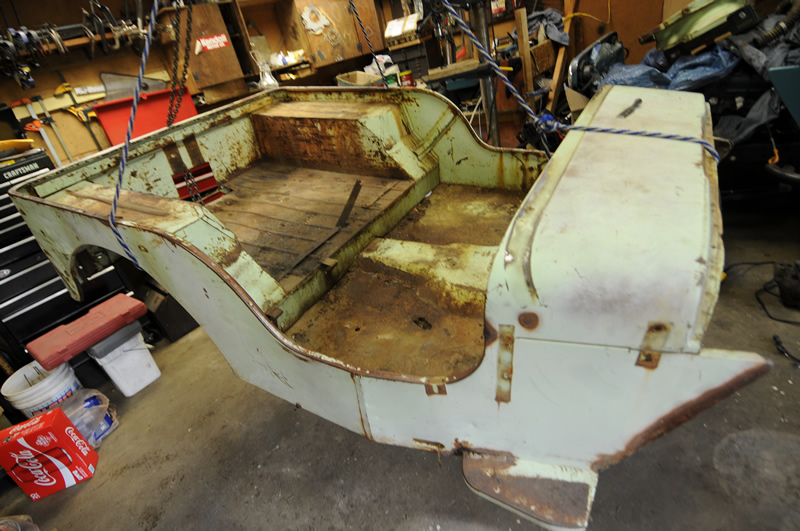
Then Diana showed me Rob’s progress on his flat fender rebuild. He was just going to do a few things to the flattie for the Alaska trip, but when he looked under the body, he realized his trail jeep needed a new one. I took a closeup look at the body’s old floor and I have to say that it was worse than Rusty’s floor! But now, with that new body, he’s definitely ahead of me!
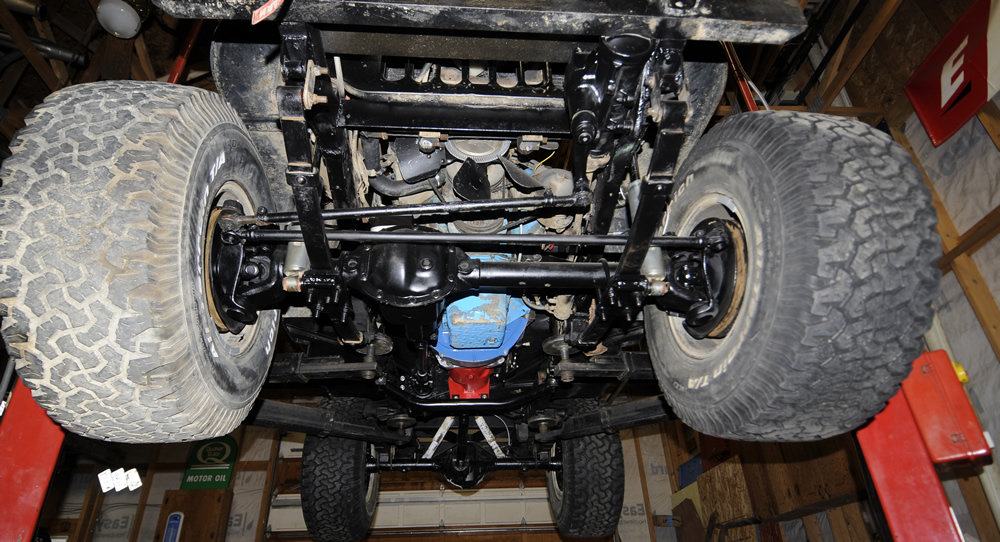
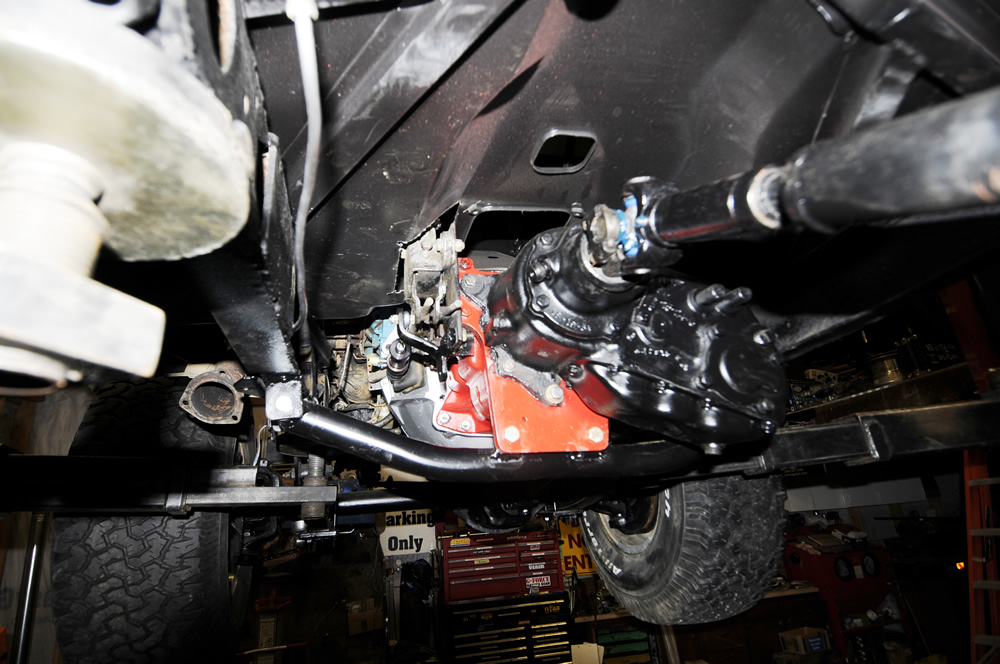
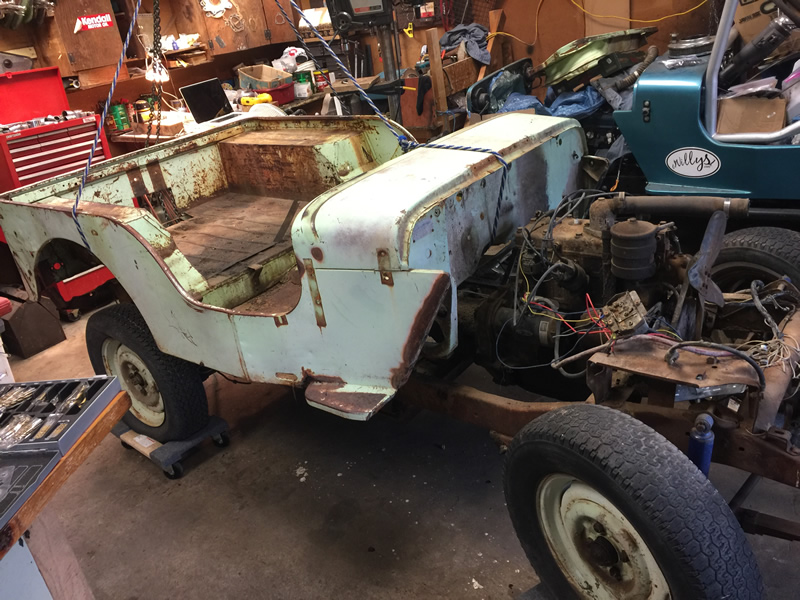
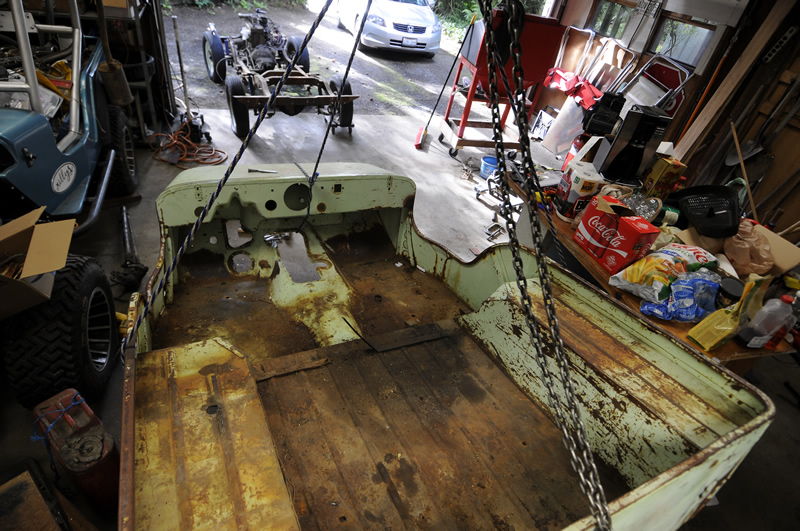
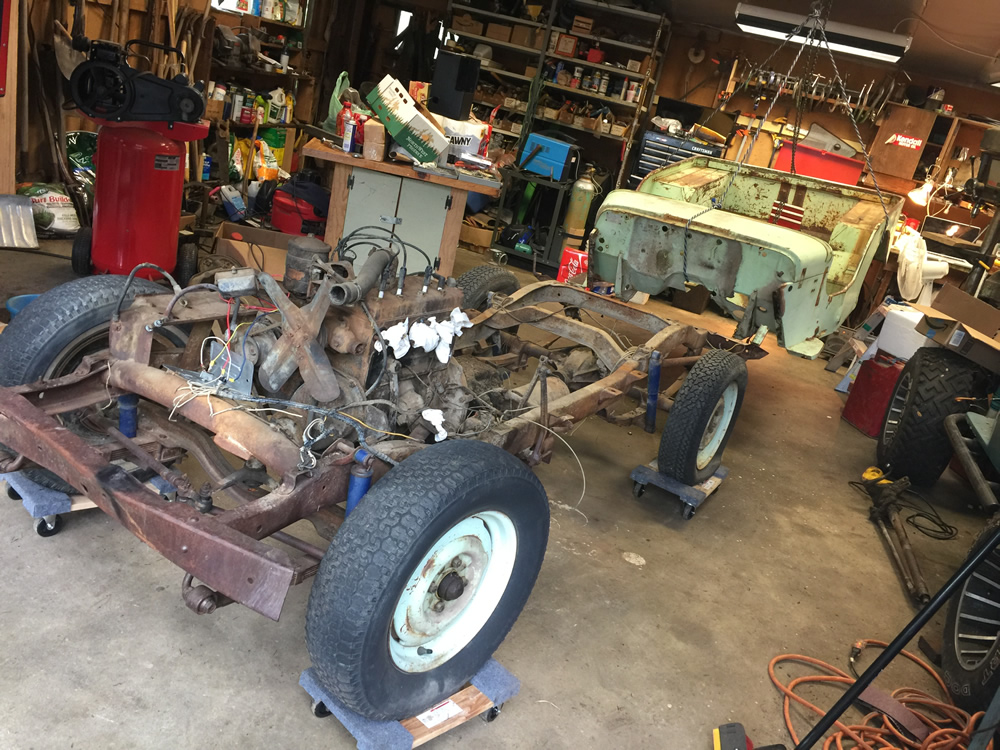
There’s nothing like disassembly to reveal all the problems that remained unseen. Once the body came off, the realities revealed themselves.
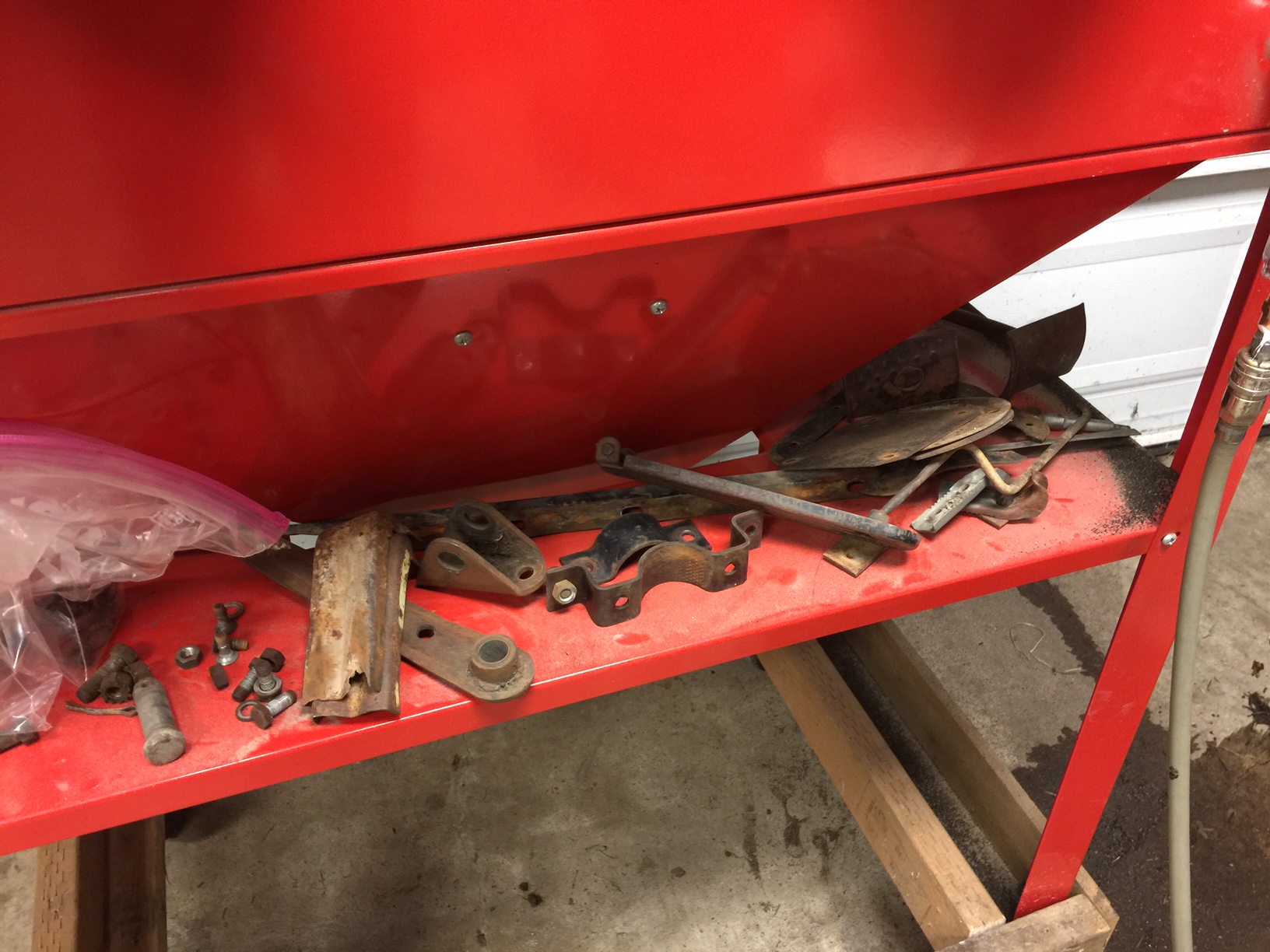
The front cross member is cracked on the driver’s side (no surprise there — funny how I didn’t notice it with the body on it). The transmission is so packed with muck that I doubt any oil could leak through it. There are also some odd bends, like the mid cross member, which had something hit it with enough force to bend one side. Maybe the driveline broke at some point and flew up into it? Of course, there were rusty bolts, too, some which not even PB Blaster could save. At least it is getting closer to being disassembled.
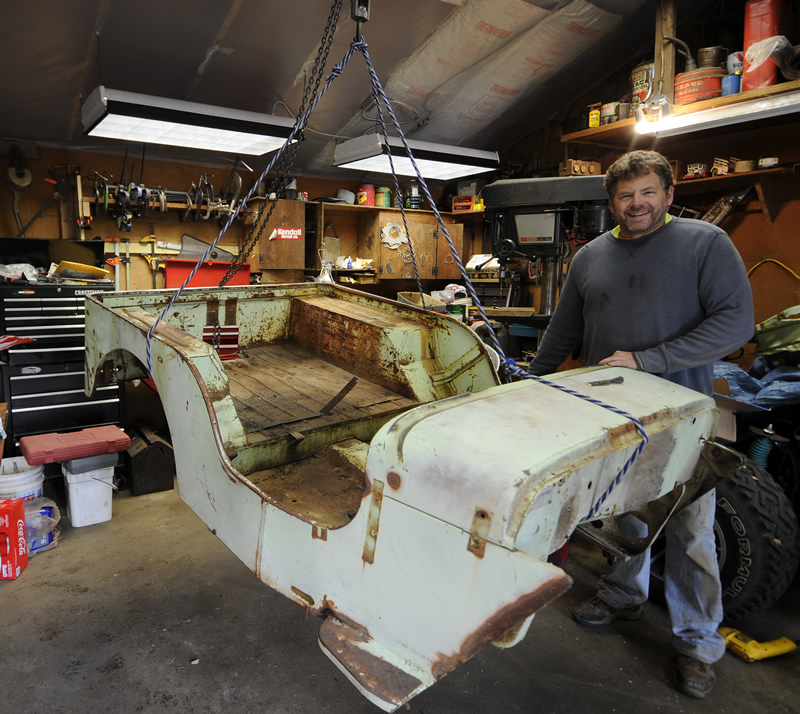
The first big event was the removal of the body. I used a block and tackle to pull the body off:
With the rain staying away for a few days, I booked it over to Renton for a few days to work on Rusty. Here are a few of the things I did today.
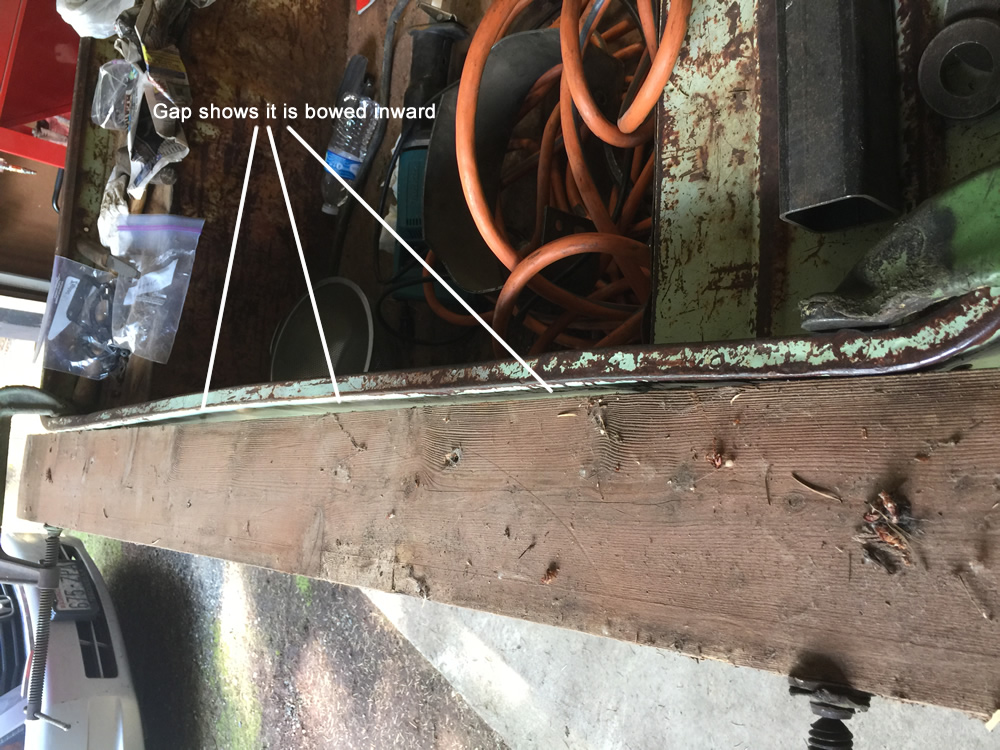
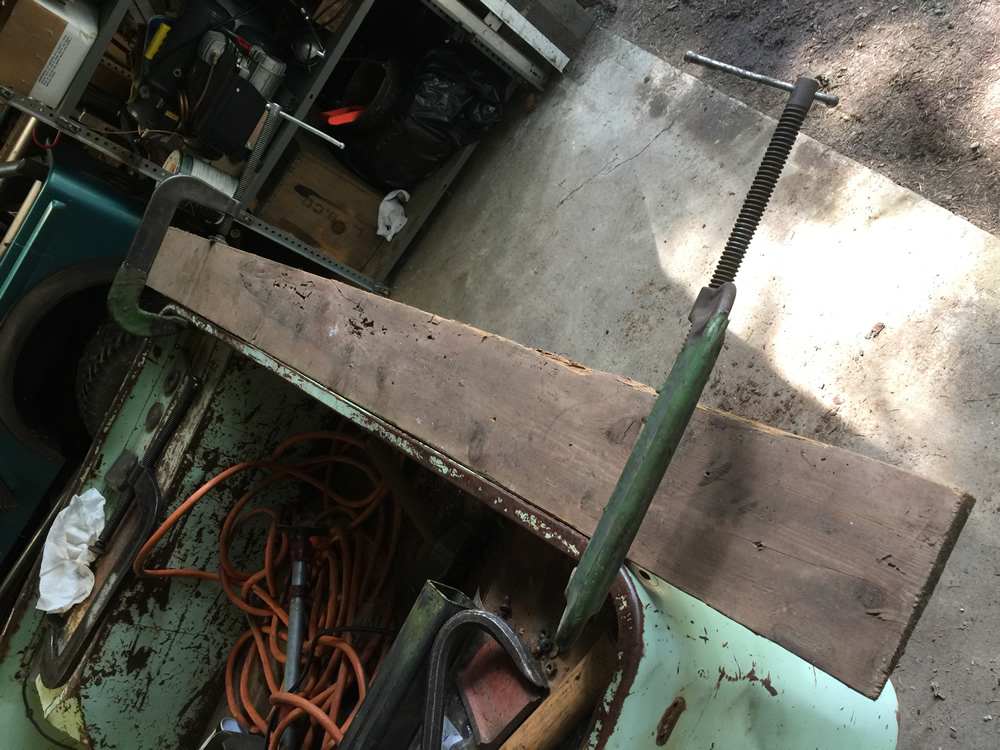
I did a little more straightening to the body. This time I wanted to remove a bow along the top back. I’ve mounted a board as a straight edge. You can see the cancer in the rear.
You can see there’s a gap between the board and the back.
After some clamps and some sweet talking with a 5lb sledge, I coaxed the back into line.
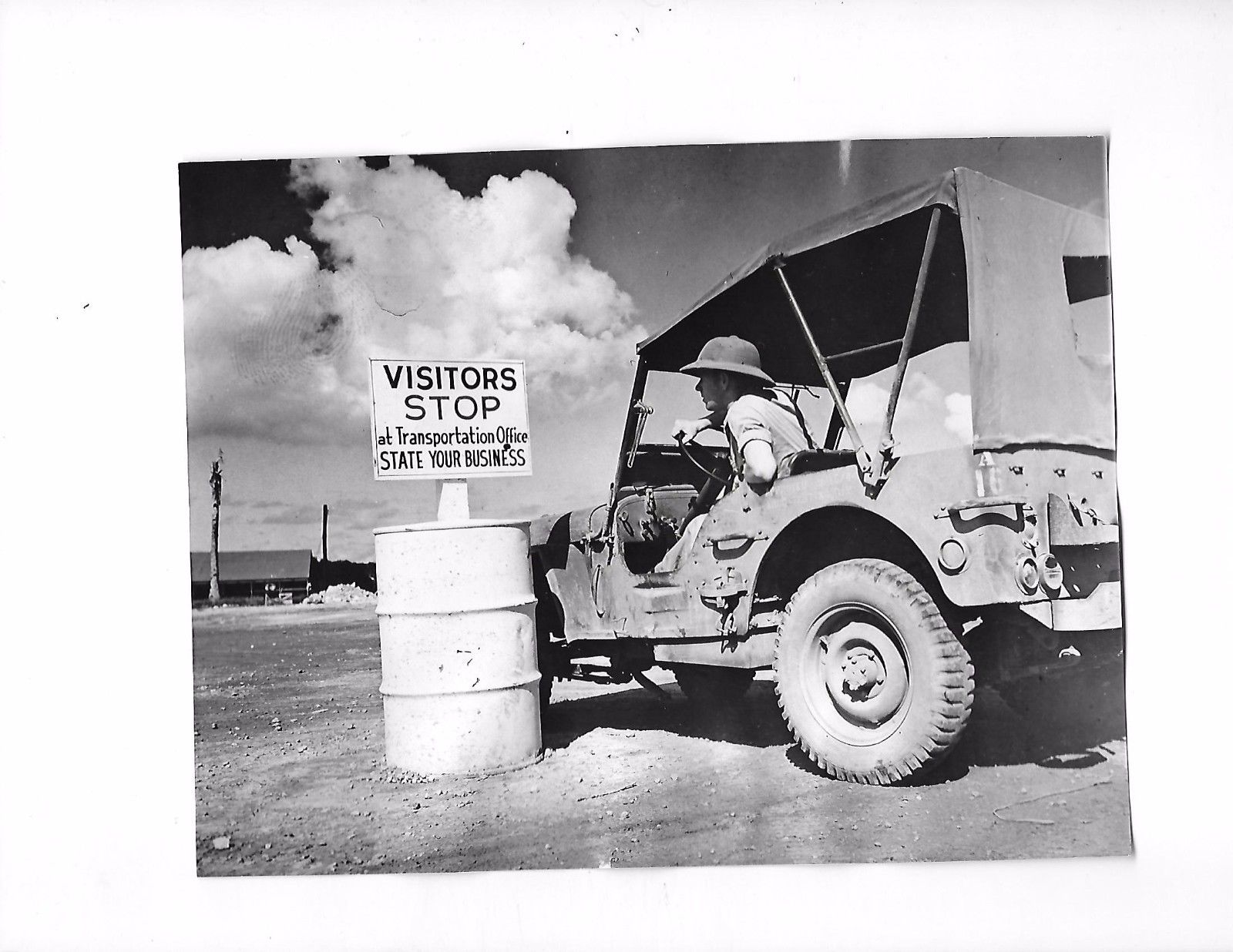
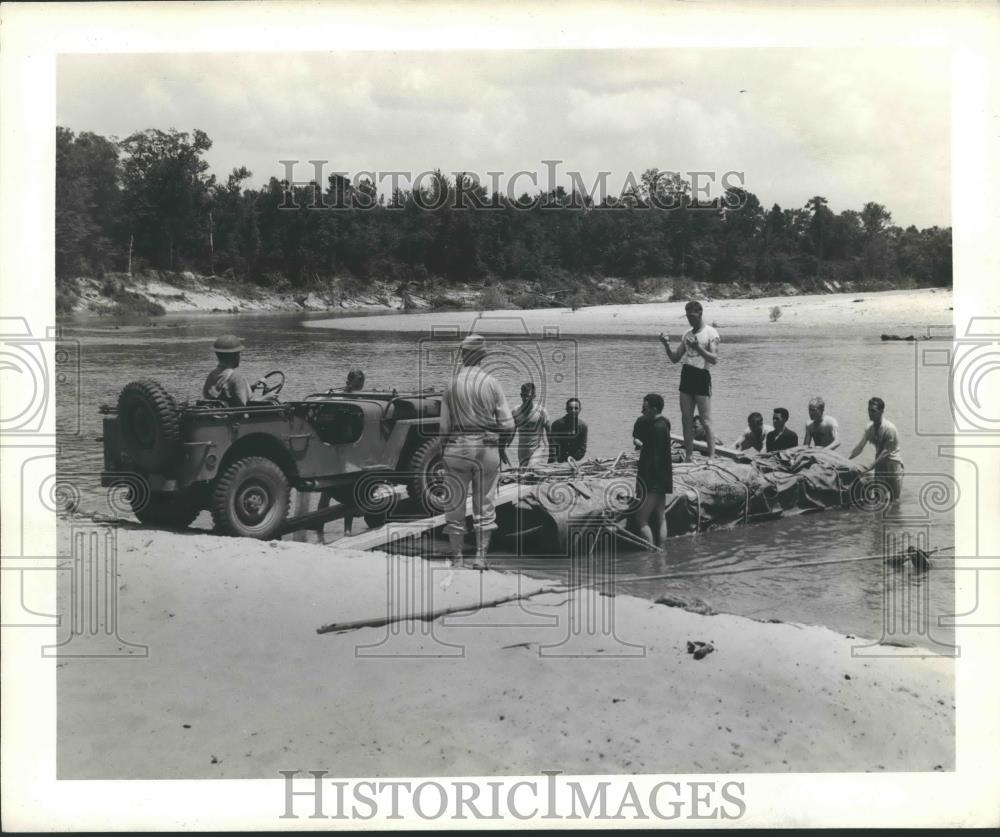
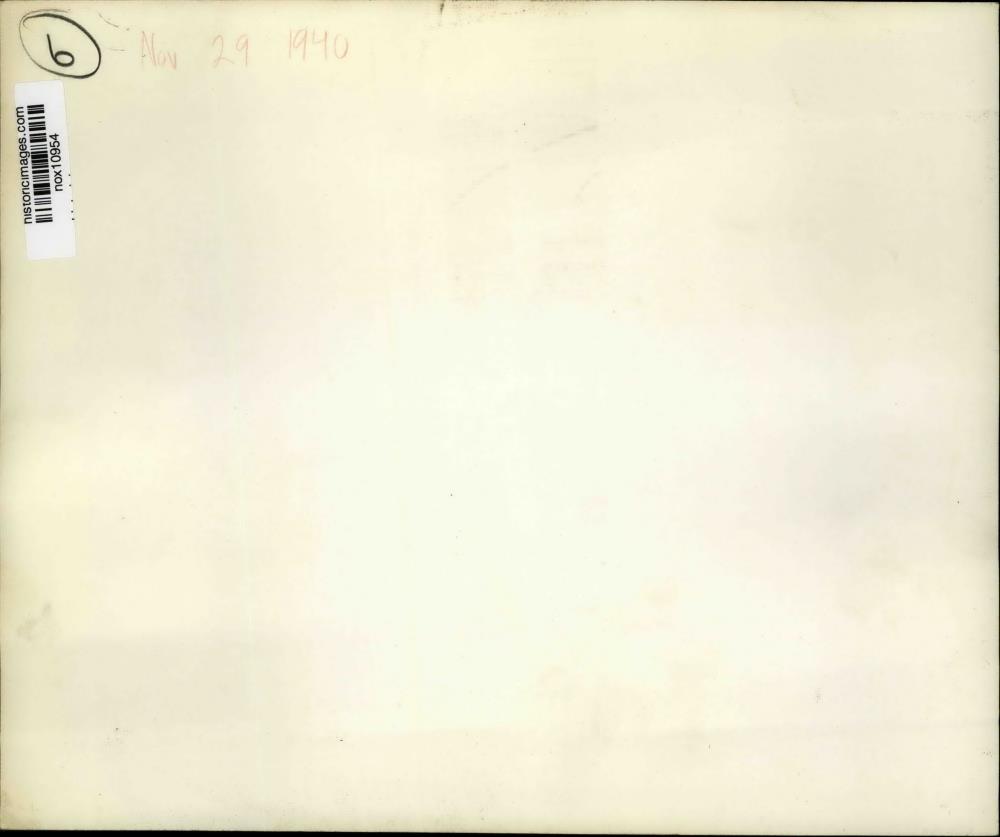
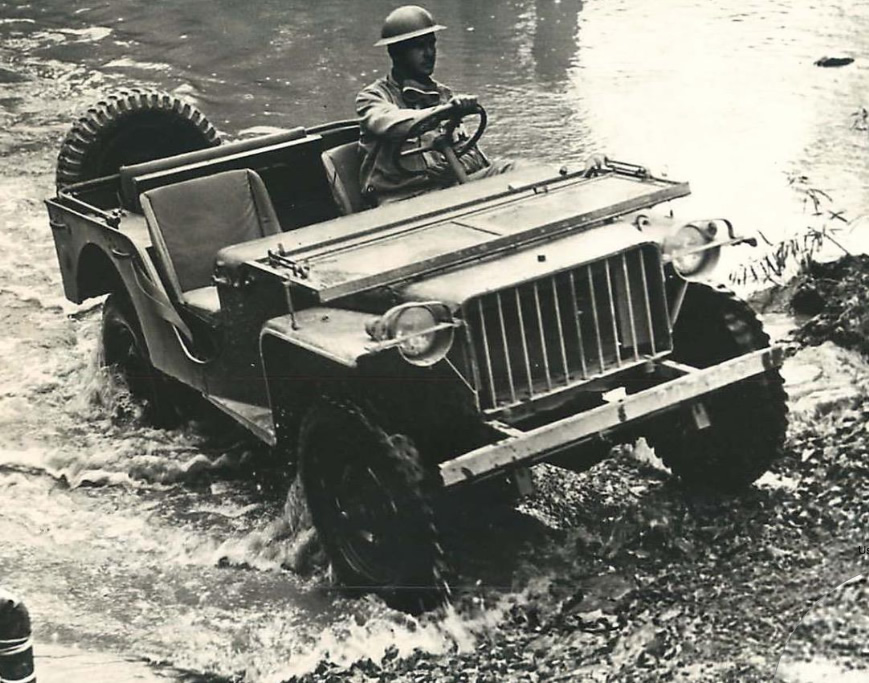
It’s dated Nov 29, 1940, which is highly unlikely given this version of the jeep hadn’t been built yet. I’d guess more like late Nov 29, 1942 is more likely.
“1940 Press Photo US Military Men Directing Jeep on a Float. This is an original press photo. US Military men directing jeep on a float.Photo measures 10 x 8.25inches. Photo is dated 11-29-1940.”