UPDATE: Currently no comments allowed.
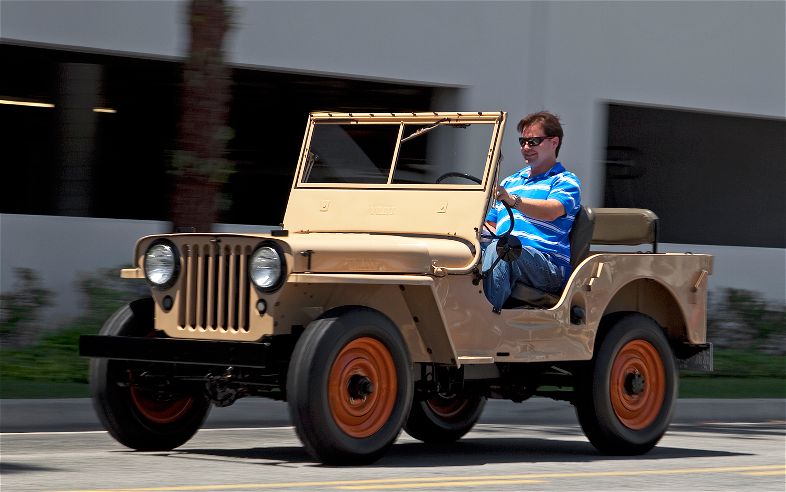
As editor of eWillys, one question readers often ask is how to differentiate between a Very Early CJ-2A (VEC) and a regular CJ-2A. The visual and timeline explanations herein should help reader better understand how the VEC evolved into the more recognizeable CJ-2A.
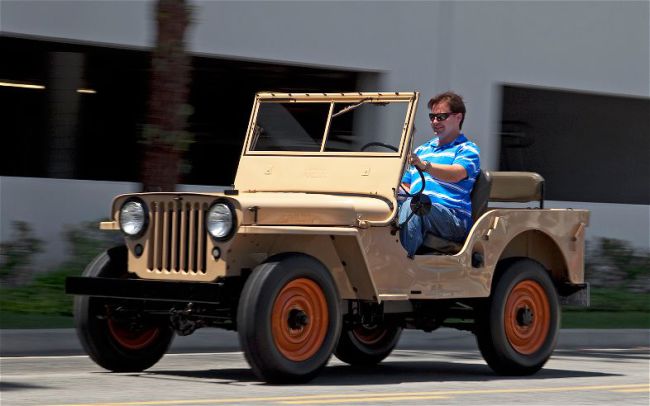
Claus’ 1945 VEC CJ-2A — exported to South Africa
Over the five year life of the CJ-2A (1945-1949) the CJ-2A underwent changes from time to time. Some were very noticable, such as the disappearance of the driver’s side tool indents, while others were less noticible, such as the mid-1947 parking light change.
The biggest changes were made during the first year of production (roughtly 08/45 – 08/46), hence these early CJs developed a reputation for being different from later CJ-2As. At some point, these early CJs were designated VEC CJ-2As, though who crowned as such is not known. Because Willys-Overland never officially identified the VEC as a specific model, the term does not have a precise definition nor an exact serial number. For example, I’ve seen an ending serial number of #34530 labeled the last VEC, yet the column shift wasn’t abandoned on the 2A until #38221, so maybe that’s a more natural end point? However, I’m not here to debate the proper ending point for VEC production. Instead, I just want to highlight what people new to VECs should consider when trying to identify them.
One great source of information regarding the CJ-2A alteration history is at the CJ-2A History Page. I’ve found that page very helpful in my research. While I highlight six items below, there are many other subtle changes that occur over the life of the CJ-2A. For example, this CJ-2A.com link highlights how the windshield adjusters changed. And this link from the CJ-2A Page provides a long list of minor changes and their associated part numbers.
SIX MAJOR VEC-ITEMS YOU WILL WANT TO WATCH FOR WHEN LOOKING AT CJ-2As:
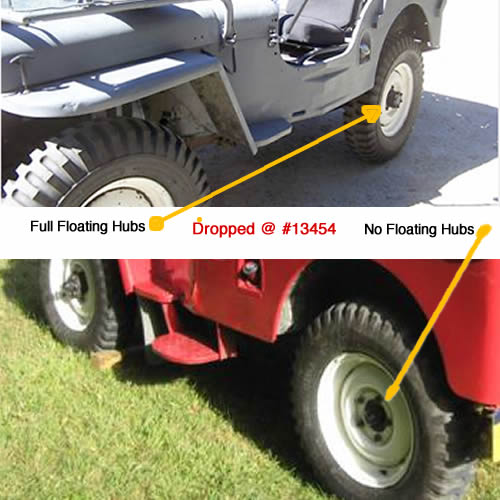
1. Floating Hubs Dropped: In early 1946 at serial number #13454 Willys-Overland switched from full floating rear ends to the standard rear end. Of course, sometimes people have replaced later CJ-2A rear end with WWII military rear ends OR added aftermarket full floating axle packages to standard CJ-2A rear ends. Thus, this identifier is never a conclusive indication of a VEC.
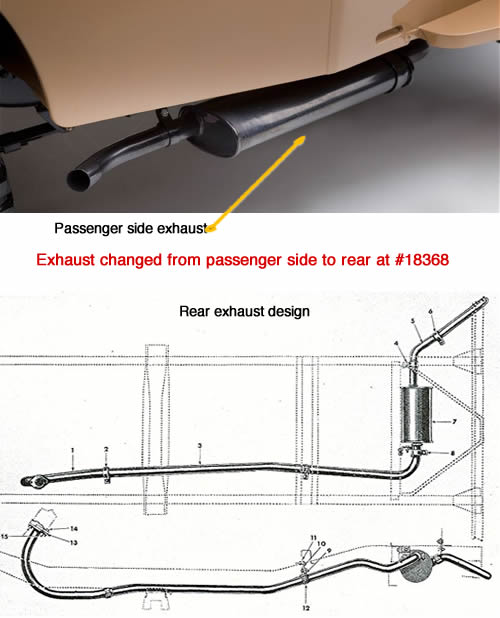
strong>2. Exhaust changed: The first VEC was reportedly built with the muffler under the driver’s seat. The muffler was switched to the passenger side from #10002 – #18638. After that, the exhaust was routed to the rear of the jeep, with the muffler located under the rear cargo area.
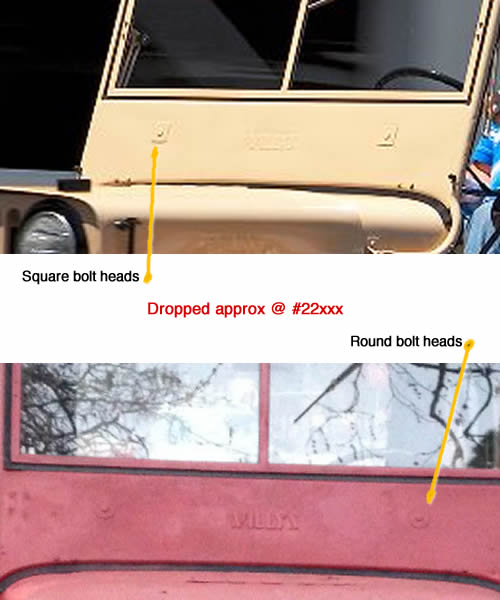
3. Square bow holder bolts on the windshield: Bolts were inserted through the windshield to afix small hangers to the windshield. These hangers were used to carry the straight portions of the soft top bows (the curved portions were intended to be stored on the side of the jeep). The bow holder bolts changed from square to round about 22XXX.
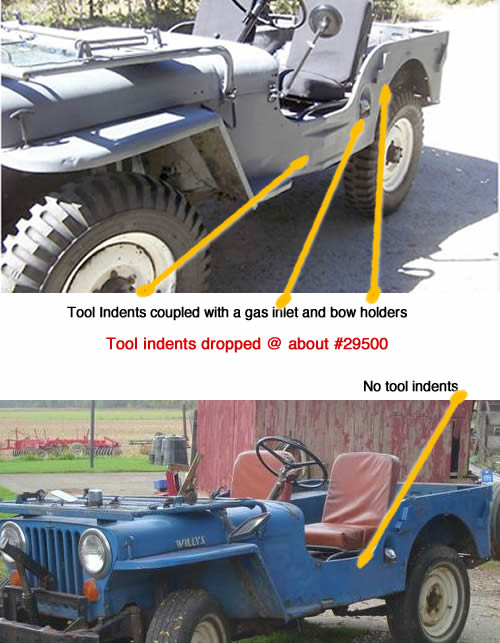
4. Tool indents dropped: At about serial number #29500 the tool indents were eliminated from the CJ-2A design. The tool indents can be confusing for some new jeep folks, as they are often used to identify WWII jeeps. However, most anytime you see tool indents AND a gas inlet, it’s a sign of a VEC CJ-2A. If there are bow holders (not always there), the body is just that much easier to spot.
5. Column shift dropped: At #38221 the column shift was changed to a floor shift, though apparently a column shift option was available(?).

6. Steering wheel switched from spoke to resin (the photo above illustrates this change): Willys-Overland changed the steering wheel from the metal spoked version commonly found on WWII jeeps for a solid resin steering wheel. However, this wasn’t the same wheel, as WWII wheels were green, while the CJ-2As were black.
There is some debate about when the switch occurred (see this CJ-2A Page forum discussion), but it seems to have been after #18092 and before roughly #26xxx. While an official document puts the changeover at #38070, the anecdotal evidence suggests it happened earlier. No matter when it happened, if you see a spoked wheel on a CJ-2A, look closer for other VEC elements.
(Bonus) 7. Data plate changes: Anytime you see three data plates on the dash instead of one take a closer look at the jeep. The three dash system was a hold over from the WWII jeeps. Over the early life of CJ-2As there were several variations of the three plate design. Then sometime around #46xxx the three plate system gave way to the one plate motif, though that design also changed a few times. The CJ-2A.com site has a nice overview of the different plate types:
http://www.cj-2a.com/oldsite/marks/dataplates/survey
Of course, one of the greatest challenges in looking at old jeeps is the problem of part interchangeability. The replacment of later parts on early jeeps, along with additional modifications, can make identifying VECs a challenging task. Hopefully, this essay helps make the task a little easier.
[fb_button]
 I took the day off yesterday from ewillys, enjoying an 8 hour drive with my children from Seattle back to Boise. My own father was in the hospital for a couple days after what appeared to be small stroke, though the doctors could not find anything. By yesterday he was back to his normal self and back home from the hospital. I teased him that if he thought we were to noisy, he could have asked us to quiet down rather than checking himself into the hospital.