Paul-M38 Research Archives

To Top

Paul’s Putting on Powder

• CATEGORIES: Builds, Features • TAGS: This site contains affiliate links for which I may be compensated.

Take it away Paul ….

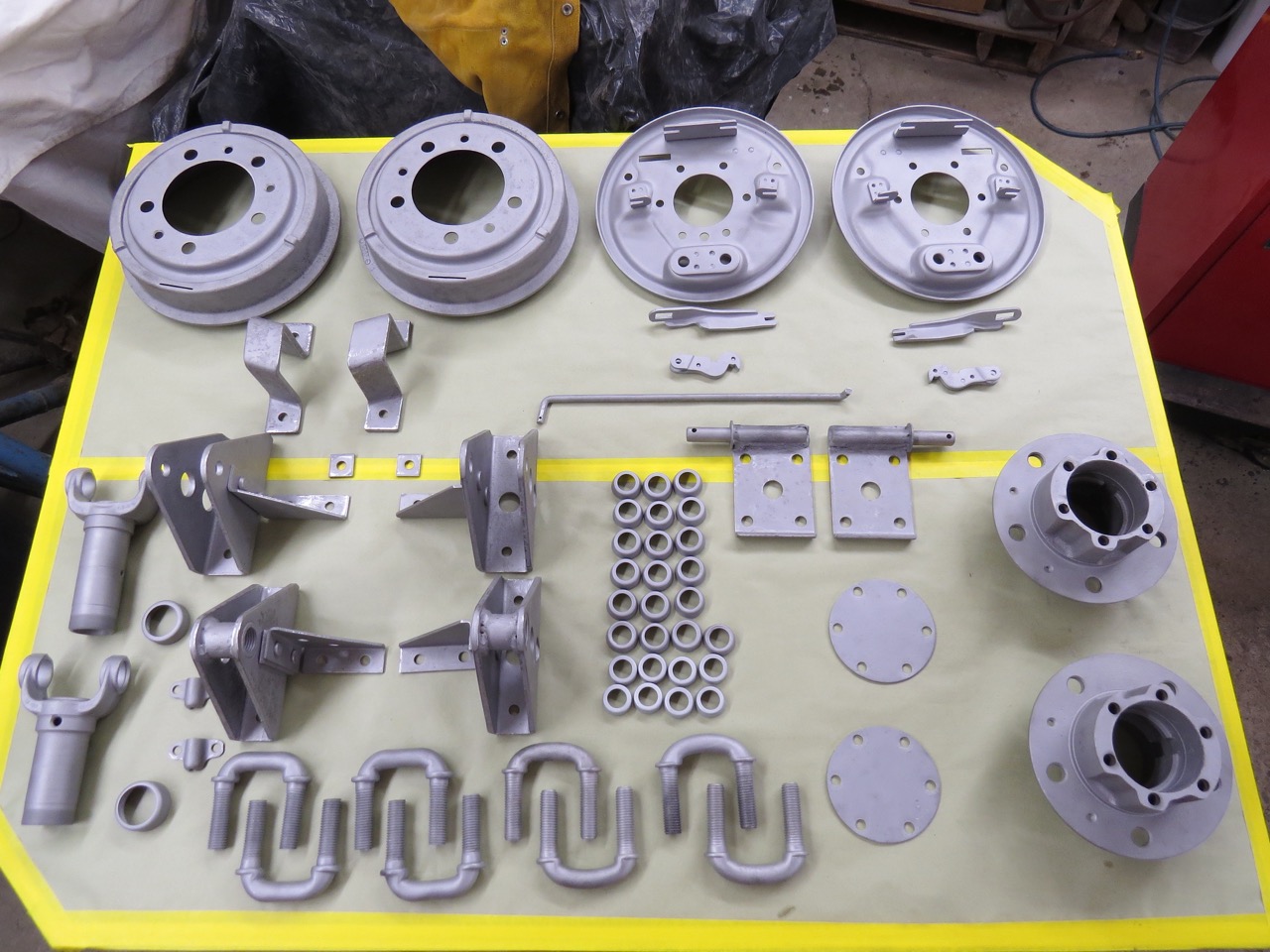
For the past couple of weeks I’ve been disassembling, cleaning, bead blasting and repairing parts for the little Willys and the M100 trailer so they would be ready to be powder coated.  I still need to install new wheel studs in the hub flanges along with pressing in the new bearing races but that task should be finished tomorrow.  The driveshafts need one to be shortened and one to be lengthened before they’ll go to the powder coater but progress is being made.
paul-powder-coating7

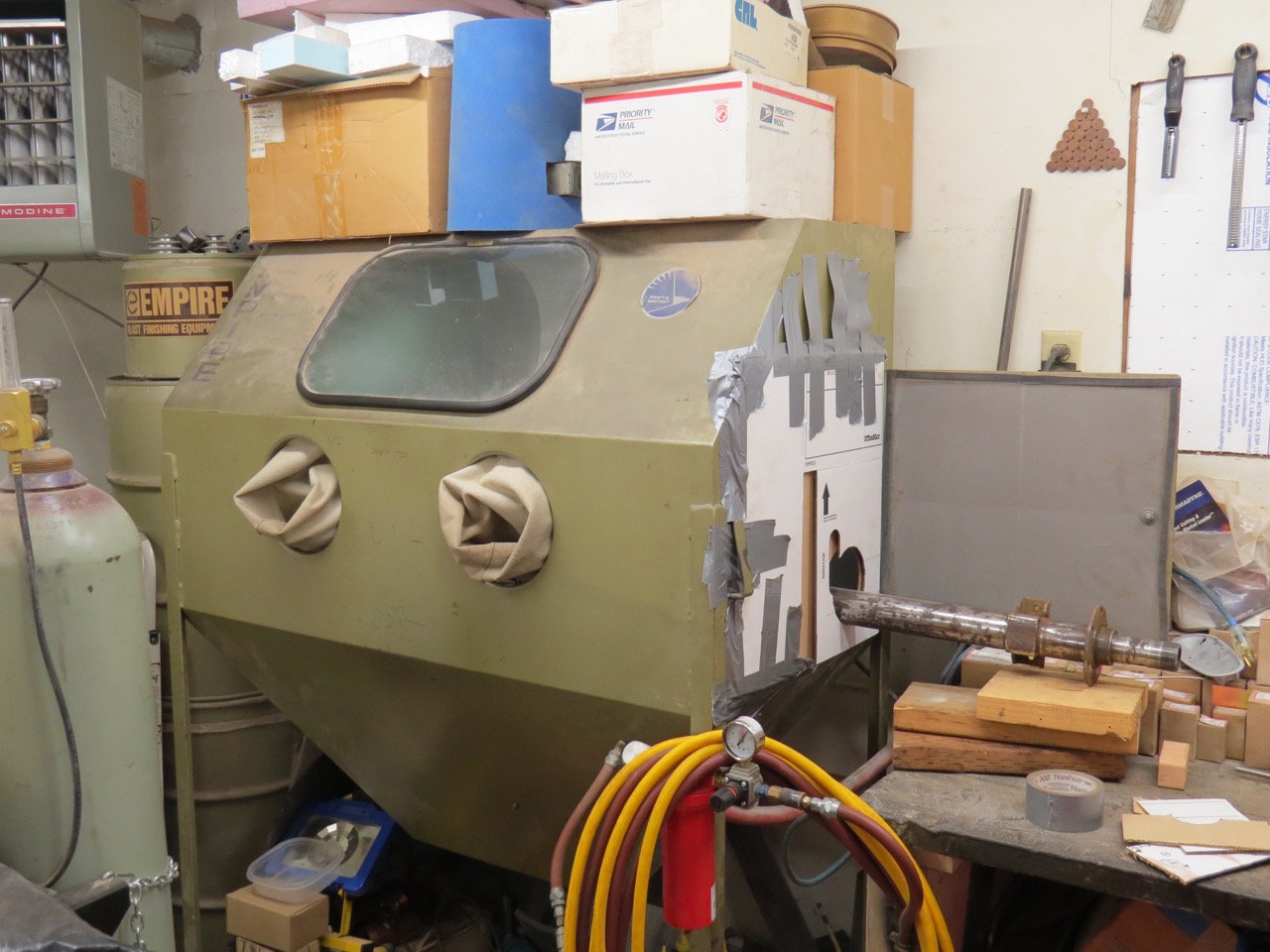
The blast cabinet is 48 inches wide overall and the axle is slightly over 53 inches long so I had a bit of a problem fitting the axle in the blaster and still having room to clean the rusty steel.  My solution was to leave the side door open and block the opening with multiple layers of cardboard (taped to the cabinet)  with a hole cut slightly larger in diameter than the brake backing plate mount on the axle to allow movement of the axle during blasting.  

Before I began blasting I added two more pieces of cardboard (cut to fit snug around the axle tube) to cover the larger hole in the cardboard end cover.  With this cardboard and duct tape combination I was able to carefully blast two thirds of the axle without filling the air with glass bead dust.  Once the axle section in the cabinet was clean I removed the axle, turned it end for end and inserted the rusty end into the cabinet to finish cleaning the metal.  This photo shows the low tech cardboard and cheap duct tape alteration of the blast cabinet so the axle blasting could begin.
paul-powder-coating6

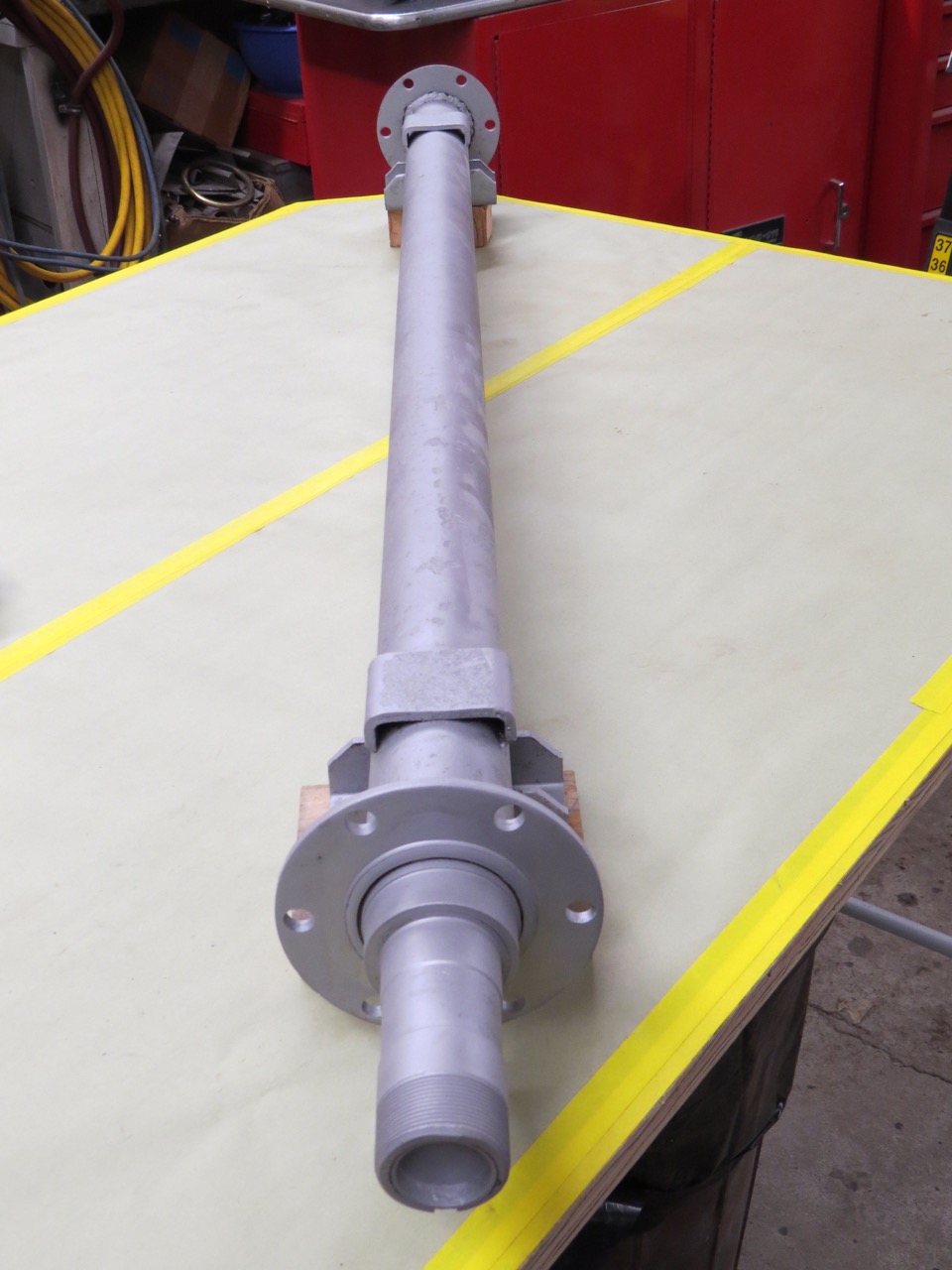
The air compressor was blowing lots of air but the glass beads still had to work pretty hard to clean all of the rust off this 65 year old axle.  The metal is lightly pitted (especially on the forward side) but I don’t feel the original strength of the axle has been weakened in any way.  I checked the axle and the spindles with a straight edge and a level every 90 degrees of rotation to see if it was bent but the axle tube and the spindles are straight.
paul-powder-coating5

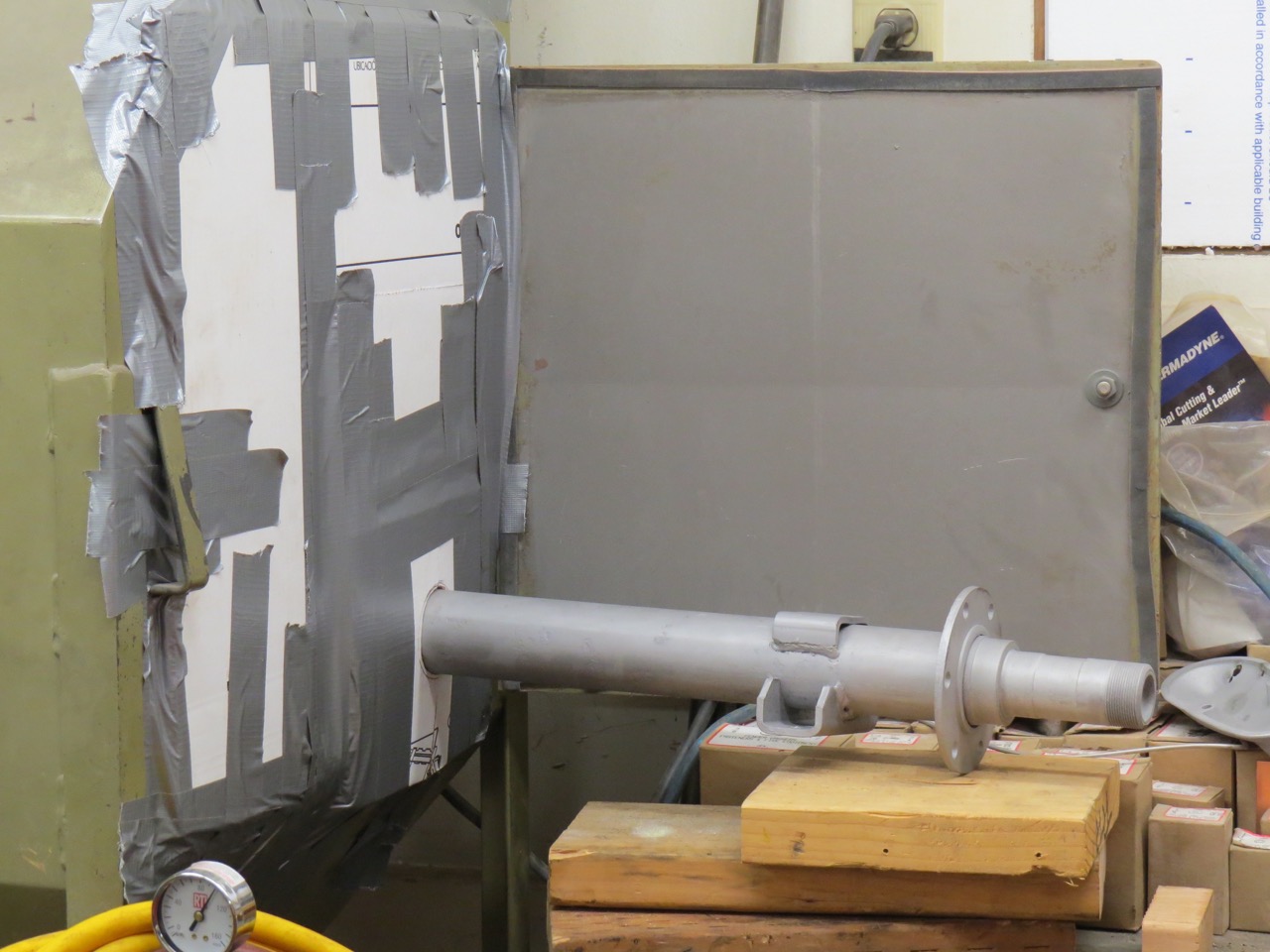
Here’s the axle just out of the blast cabinet ready to visit the powder coaters where it will receive a nice satin black coating.
paul-powder-coating4

Continue reading

[fb_button]
 
To Top

Alaska WWII Jeep Hardtops & the YL-15

• CATEGORIES: Builds, Features • TAGS: , This site contains affiliate links for which I may be compensated.

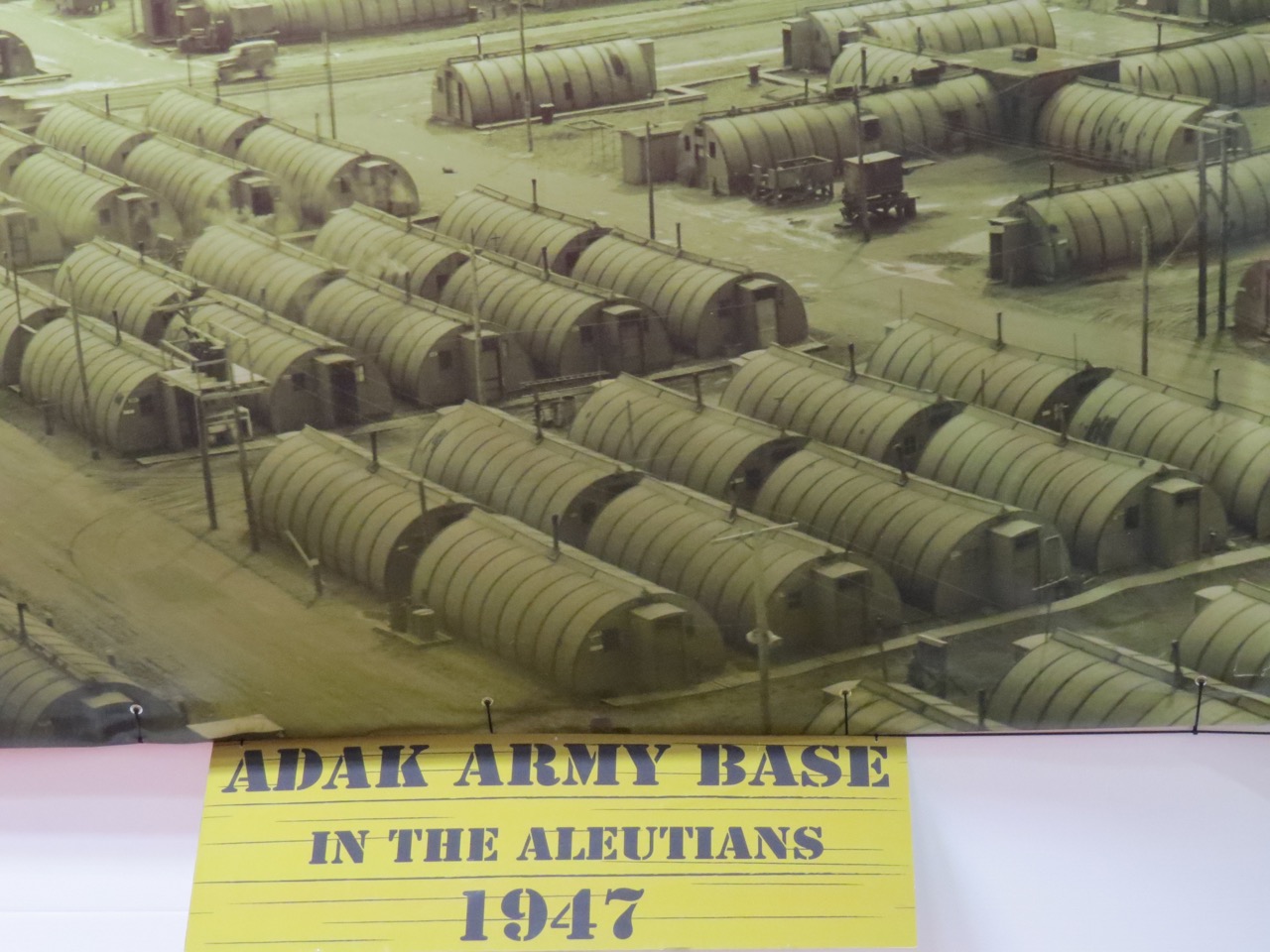
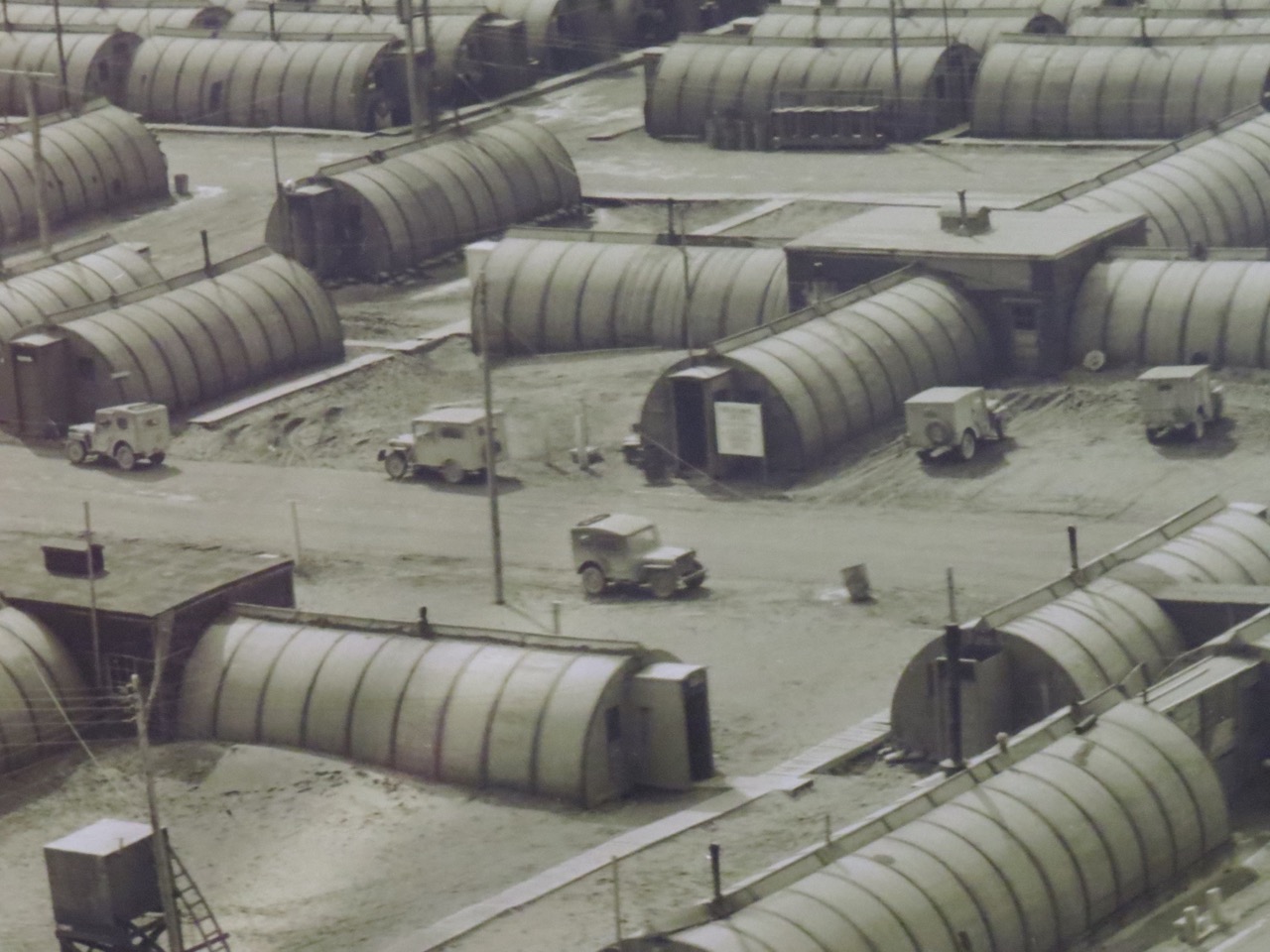
Paul from Alaska wrote, “Recently I was at the Alaska Aviation Museum helping a friend assemble his plane when I noticed a very large photo displayed on the wall of the hanger.  As you can see this photo was taken in 1947 at Adak but what really caught my attention were the numerous flat fender Jeeps with hardtops driving on the base.  I took a close up photo of a cluster of these Jeeps even though the image is rather grainy but I thought you’d like to see it anyway.”

alaska-aviation-museum2

Labeling these 1 – 5 starting from the left, jeeps #1 and #3 look to have the same top. #2’s top is extended in the rear. #4 has no side windows. #5 I can’t see as well.

alaska-aviation-museum3

There’s a jeep near the top, again with a hardtop.

alaska-aviation-museum1

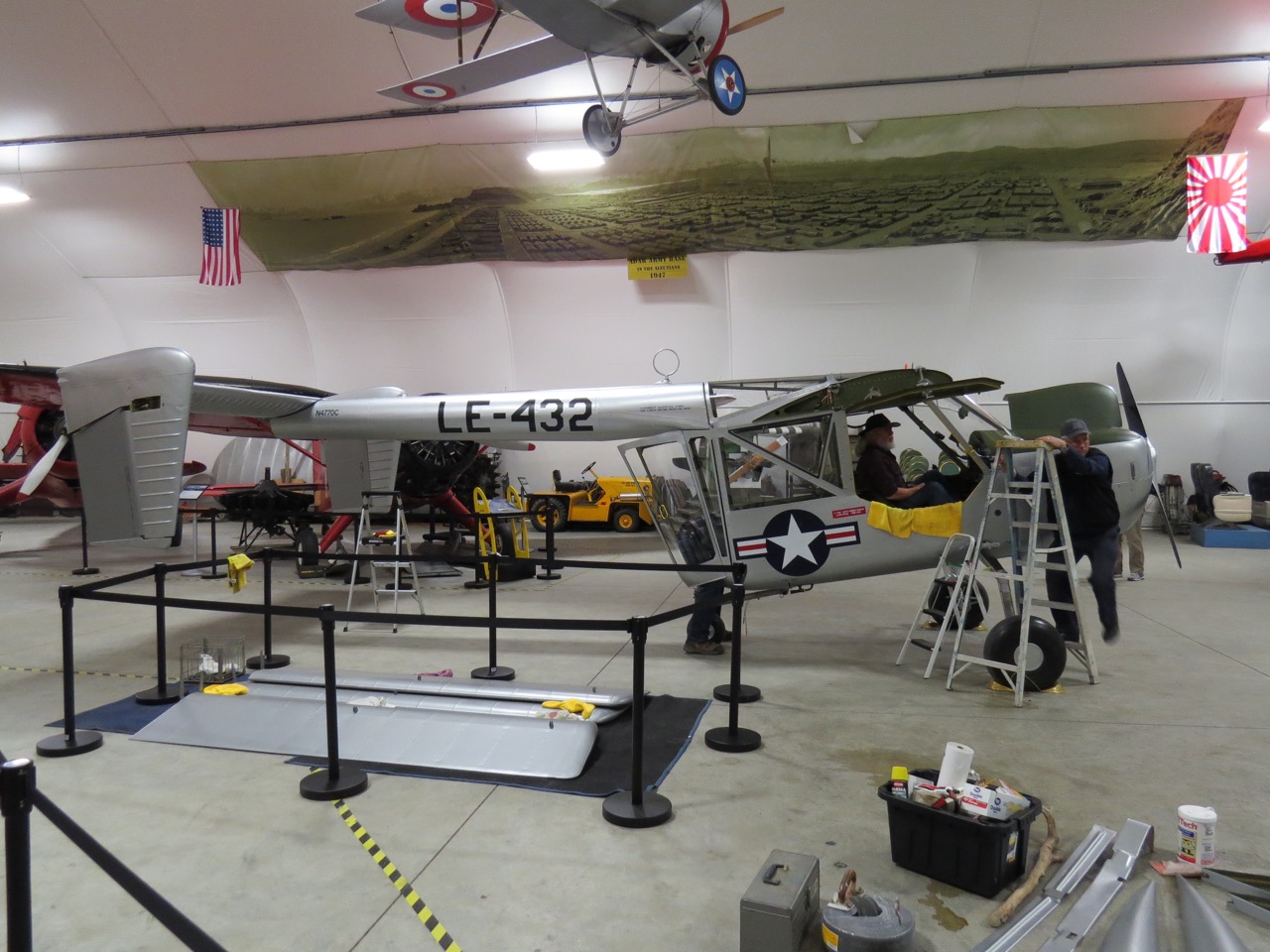
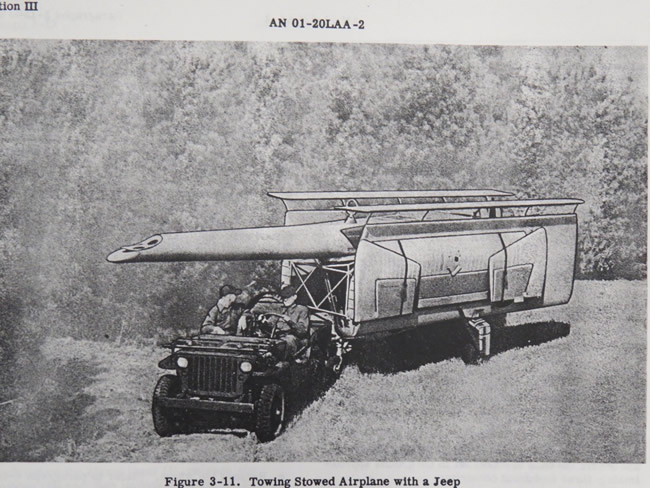
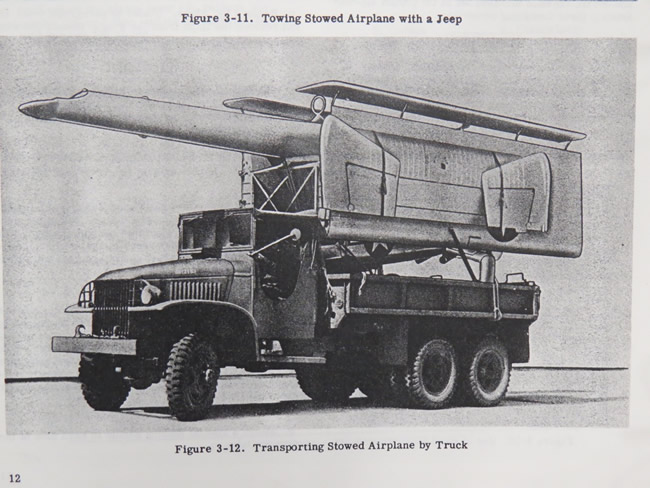
The full photo is in the background above the rare Boeing YL-15, which Paul’s friend has restored. The plane was built to win a military contract. The wings, tail and flaps come off quickly so the plane can be carried by a 6 by or towed by a Jeep.

Here’s an mocked-up example of a jeep pulling the plane:

jeep-hauling-yl-15-lores

And this shows a truck carrying it:truck-hauling-yl-15-lores

[fb_button]
 
To Top

Another Update From Paul

• CATEGORIES: Builds, Features • TAGS: This site contains affiliate links for which I may be compensated.

If I ever step into Paul’s jeep, I’m going to bring some surgical scrub footies.

Paul wrote, I felt the gray marine carpet in the footwells was too dark so I installed some stainless steel scuff plates on top of the carpet. I put a brushed finish on the stainless plates before I screwed them to the carpet and I’m happy with the results. The carpet is still visible, the stainless makes the footwell area brighter and I think the cutout design goes well with the Willys.

Just another crazy thing I never imagined I’d want for this Willys rebuild.

left-side-scuff-plates right-side-scuff-plates

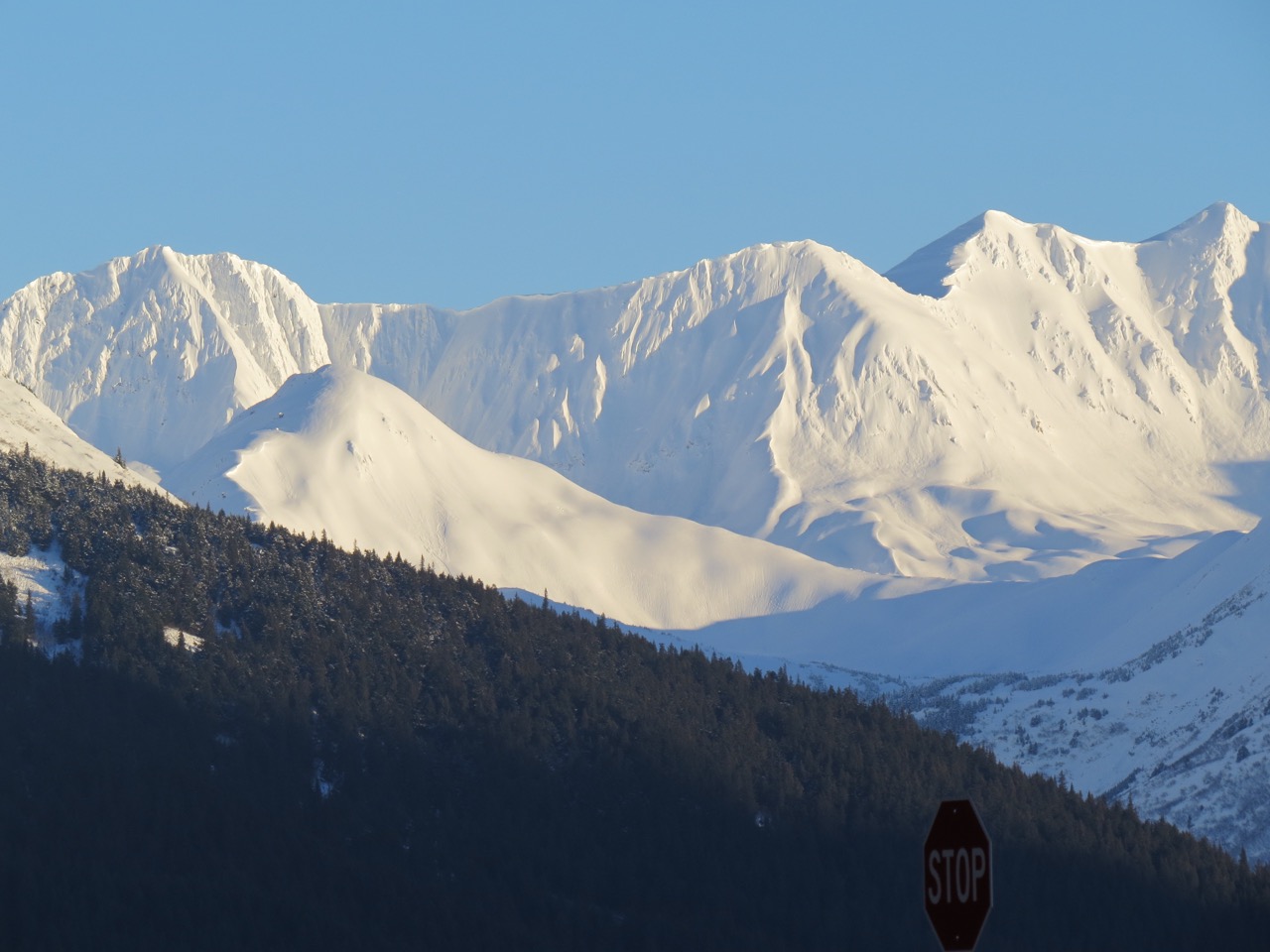
2016-01-31-alaska

Those are some clear, blue skies!

[fb_button]
 
To Top

Leaks & Fenders

• CATEGORIES: Builds, Features • TAGS: This site contains affiliate links for which I may be compensated.

Two bits of good news from Paul. One, his jeep was NOT affected by Alaska’s recent earthquake. He had the sense to bolt things to the wall that could potentially fall onto his jeep. Two, he’s made some more updates to Knardly Rolls! So, read on . . .

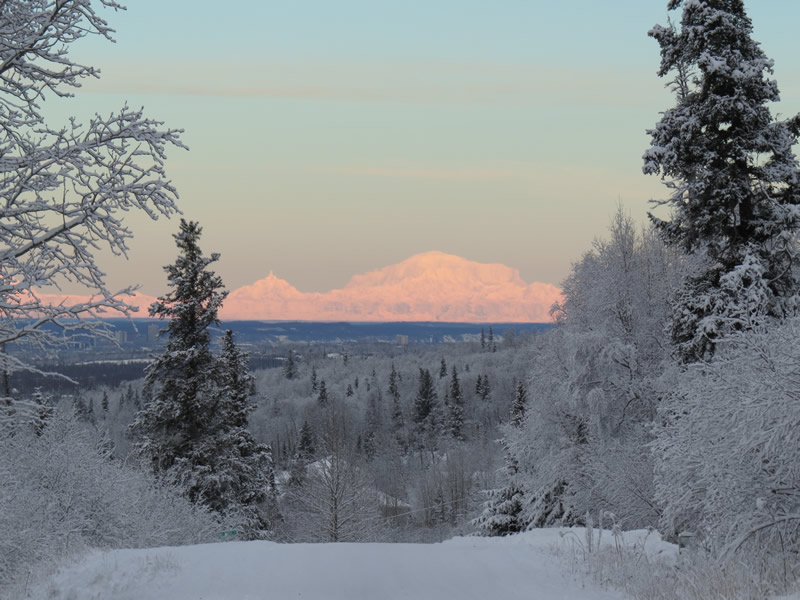
alaska-january-20162

Looking towards Anchorage and the mountains beyond, January 2016. This was pre-earthquake, though it pretty much looks the same after the earthquake.

Paul writes, the progress so far this winter season on the Willys has been a little weird. Things started to get strange when I decided to fill the cooling system for the first time in 30 years. I’m an optimist but I like to think I’m based in reality so I told myself there’s always the possibility of leaks in the cooling system and having a couple of empty buckets ready to catch dripping antifreeze might be a good idea. With the empty buckets cleaned and placed nearby I poured the first gallon of antifreeze into the radiator.

After a short pause to inspect the hoses and connections for system integrity I began pouring the second gallon of coolant into the radiator and I quickly noticed my feet were getting quite wet. I managed to wedge the empty but rapidly filling buckets under the front axle where most of the escaping antifreeze could be captured since the leak appeared to be from the front of the engine by  the timing chain cover. Oh well, it looks like yet another unexpected repair or modification needs my attention.

After the leak slowed down to a slight drip I repositioned one of the buckets directly below the radiator drain and began transferring the antifreeze from the cooling system into the bucket and then back into the gallon containers which is where this green fluid came from about 15 minutes earlier. When no more fluid flowed from the radiator drain and the recaptured antifreeze was safely back into the gallon containers I decided to call it a day and leave the heavy thinking for the tomorrow.

After having strange dreams throughout the night concerning the coolant leaks on the Willys, by the next morning I ready to start pulling components off the front of the engine so the timing cover could be removed for troubleshooting. Since the engine has never been run after being rebuilt this was a fairly quick and easy task.
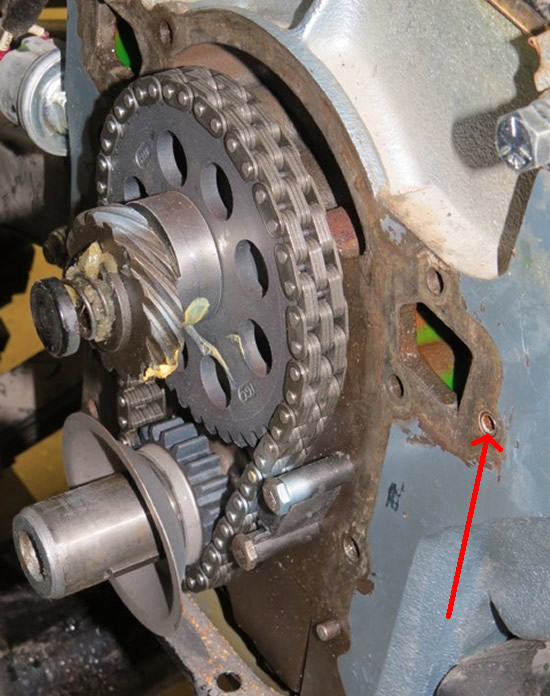
Once the timing cover was out of the way and the front of the cylinder block could be inspected I learned an interesting bit of information about the Buick V-6 engine. The front of the block has 4 bolt holes (2 on the left and 2 on the right) for the timing cover to attach, BUT the timing cover is manufactured as either a 2 or a 4 bolt type.

paul-engine-plug2

The plugged bolt hole is the one closest to the right edge of the photo, it was left unplugged and partially exposed by the timing cover so the antifreeze flowed out quickly.

The timing cover on my engine is a 2 bolt type (where the coolant passage flows into the water pump) so the two unnecessary threaded holes in the block should’ve been plugged to prevent antifreeze from leaking. The unused threaded hole on the block is drilled into the coolant passage but the unused hole to the right is a blind hole and not open to the cooling system.
To prevent anymore leaks and to make me feel better I installed internal wrenching hex plugs in the unused holes . These plugs were screwed into position after the threads were cleaned and dried and the threads on the plugs were coated with gasket compound, then it was time for reassembly. Things were going pretty well until I noticed the rubber on the crank pulley damper was cracked and bulging out along the seam so this project came to a halt until the damper made a trip south to the Damper Doctor for a rebuild. 

[editors note. I *think* it was in one of those holes that, during my very first engine rebuild, I put too long of bolt into one of the holes. I tightened it down, though it got difficult near the end. Imagine my surprise when the #1 cylinder piston kept hitting something while i tried spinning the crank. OOPS, I’d damaged the cylinder wall!!]

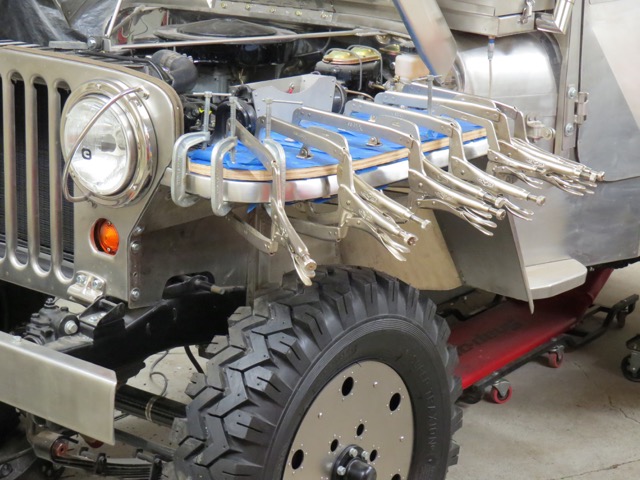
paul-clamps-fender

Two pieces of 3/4 inch plywood spread the clamping pressure and prevent damage to the metal when installing the abrasion panels to the underside of the fender.

Continue reading

[fb_button]
 
To Top

Knardly Rolls is Close to Road Ready

• CATEGORIES: Features • TAGS: This site contains affiliate links for which I may be compensated.

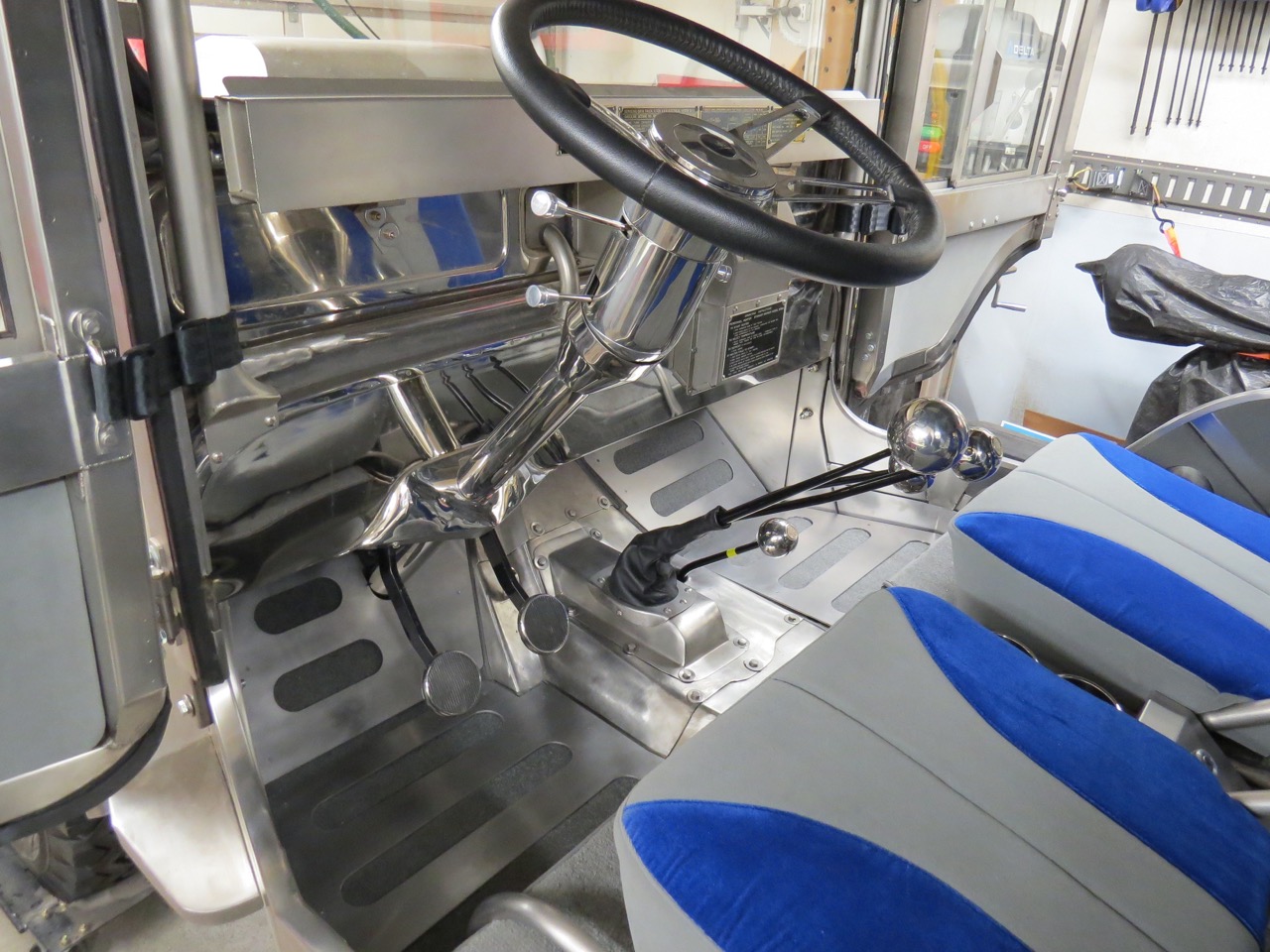
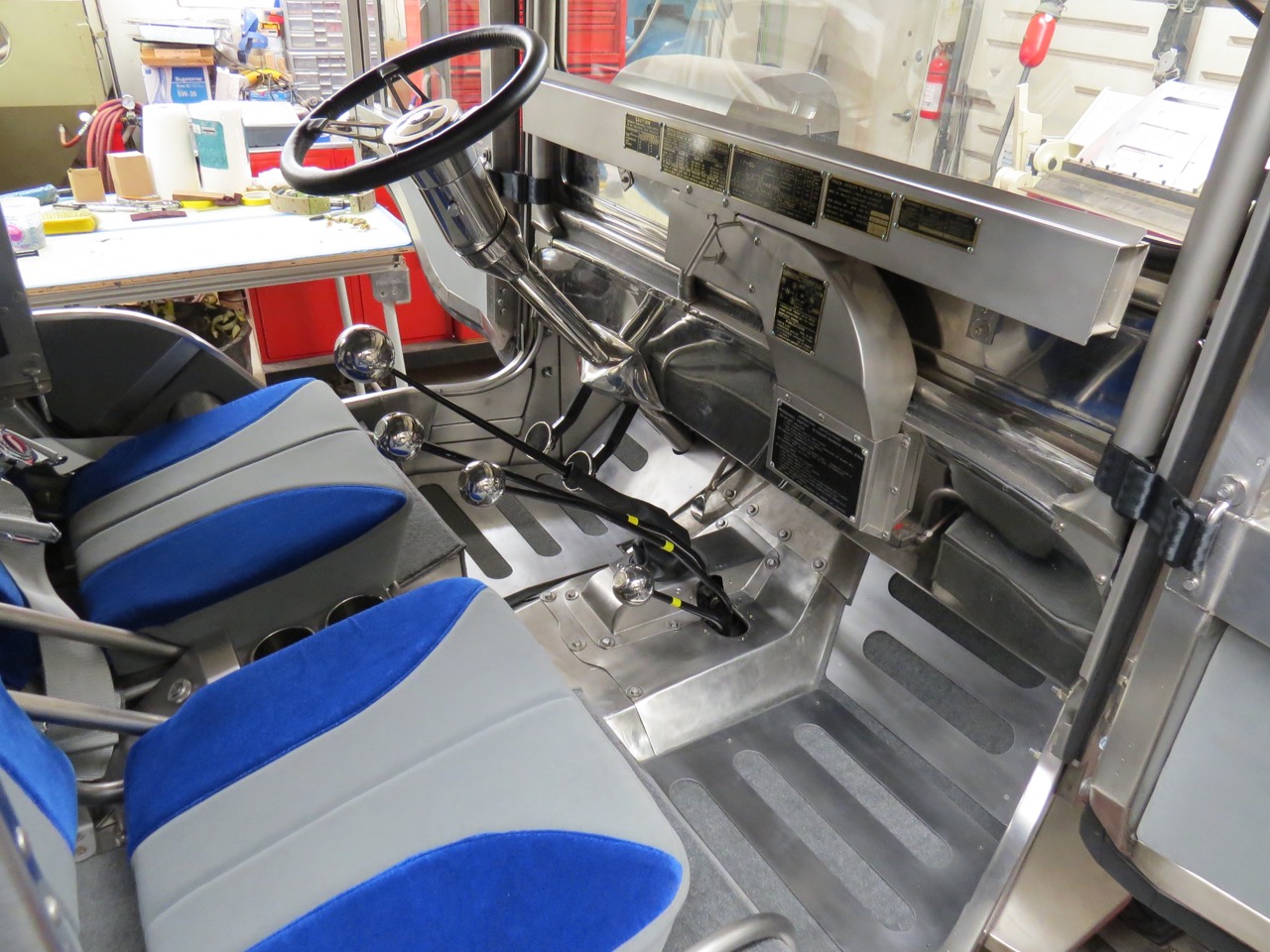
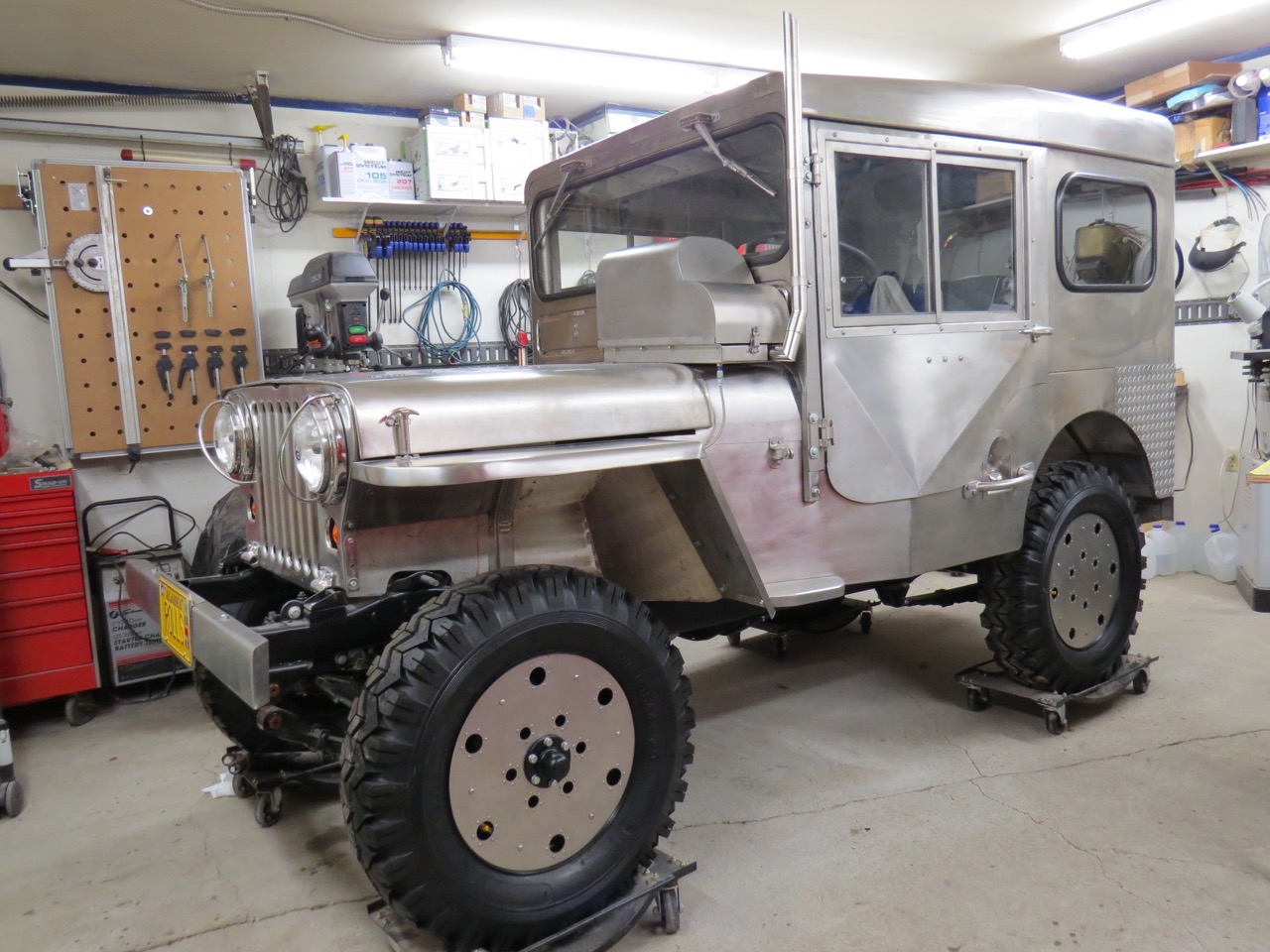
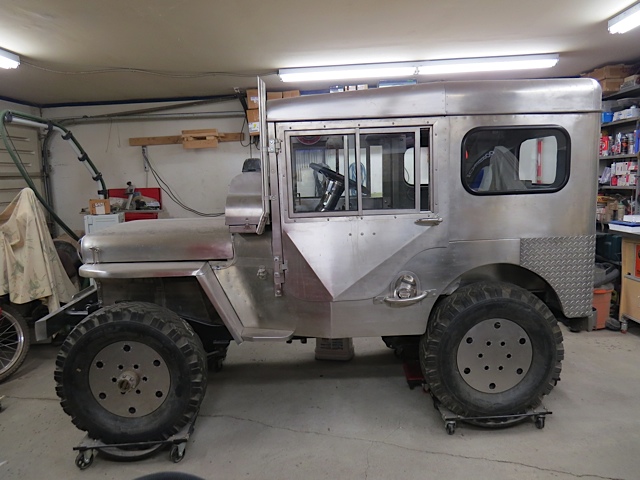
Paul’s getting close. Over the last six years we’ve watched him build this stainless monument to jeeps. Just some little things to be completed. Maybe 2020????

paul-m38-1 paul-m38-2 paul-m38-3

[fb_button]
 
To Top

Paul’s Stainless Wheel Covers

• CATEGORIES: Builds, Features • TAGS: This site contains affiliate links for which I may be compensated.

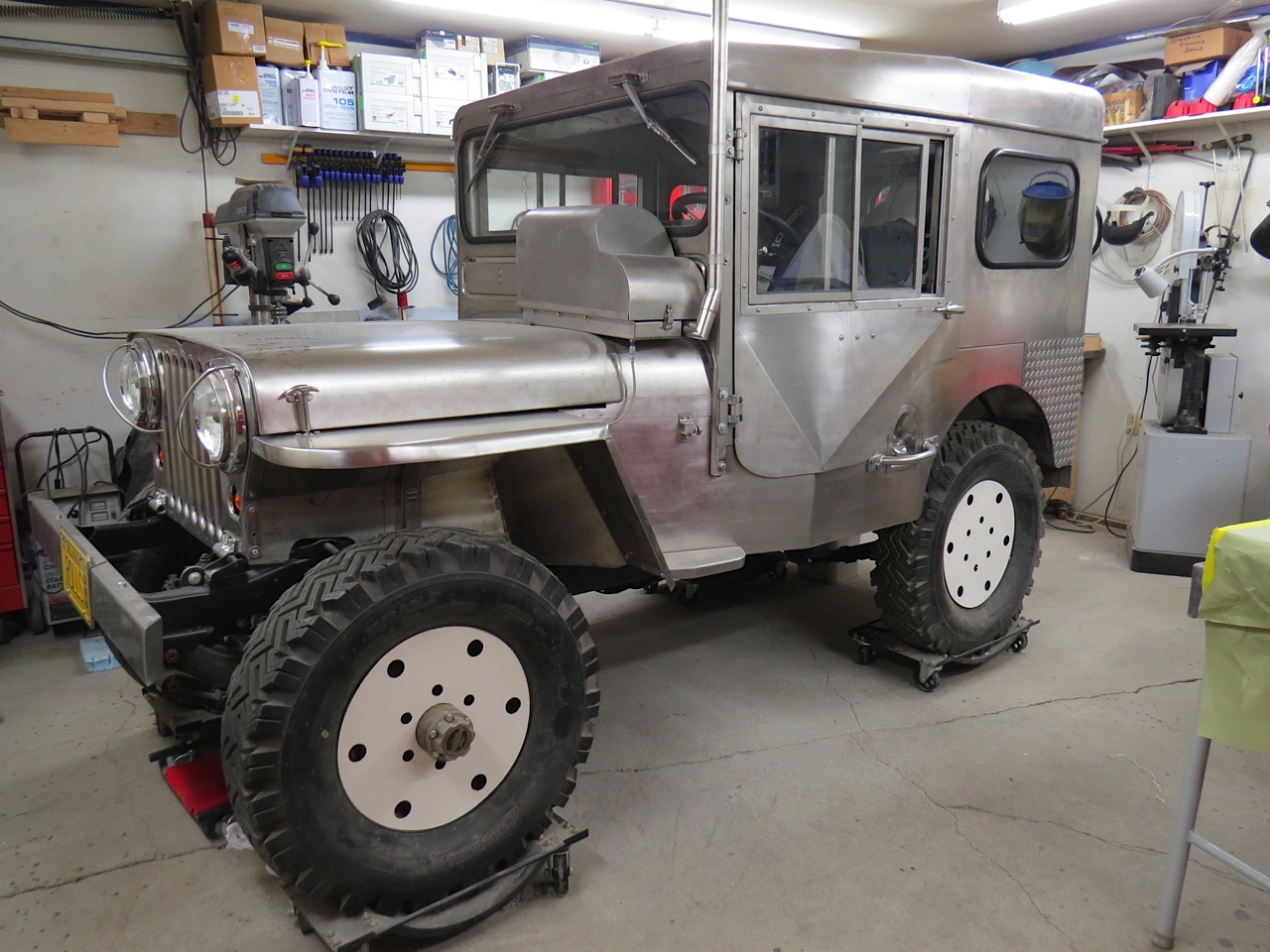
With winter settling into Alaska, Paul has returned to continue work on his Stainless M-38 (and a matching stainless trailer). I believe this is the 28th year of the project? Thanks for sharing Paul!

paul-wheels8

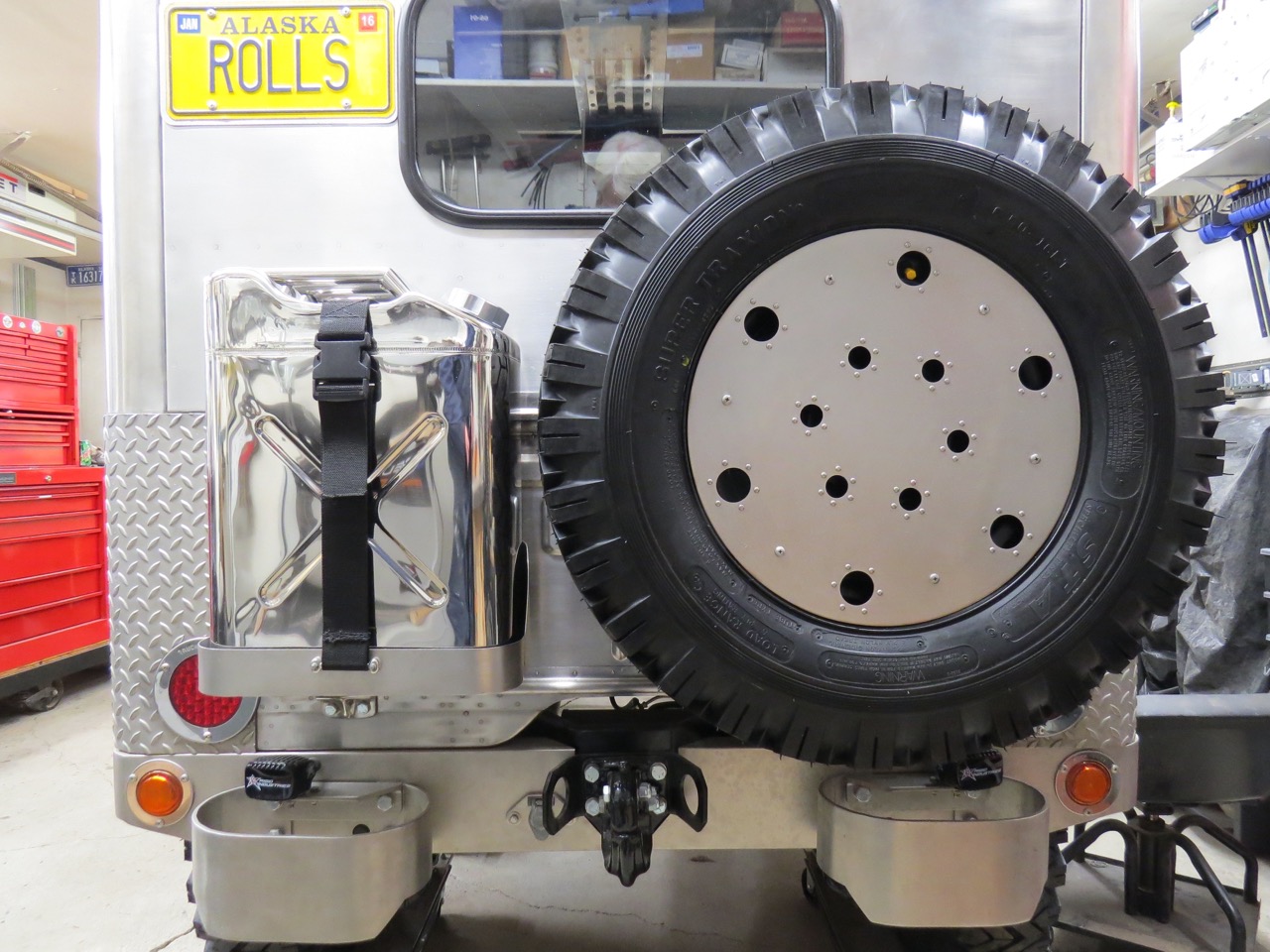
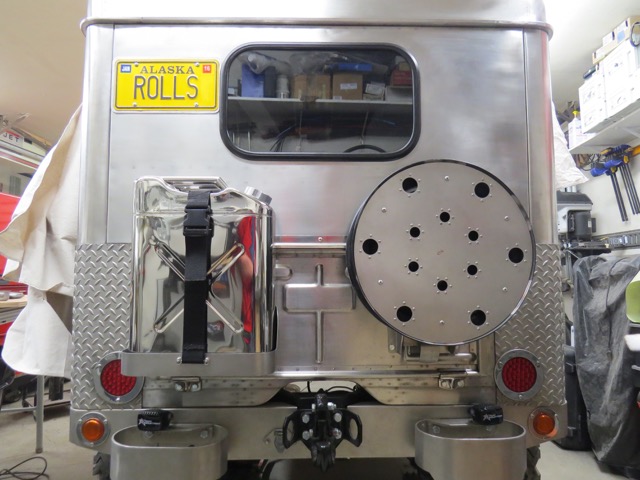
Knarley Rolls, Paul’s M-38. The spare with its cover is attached to the back of the jeep.

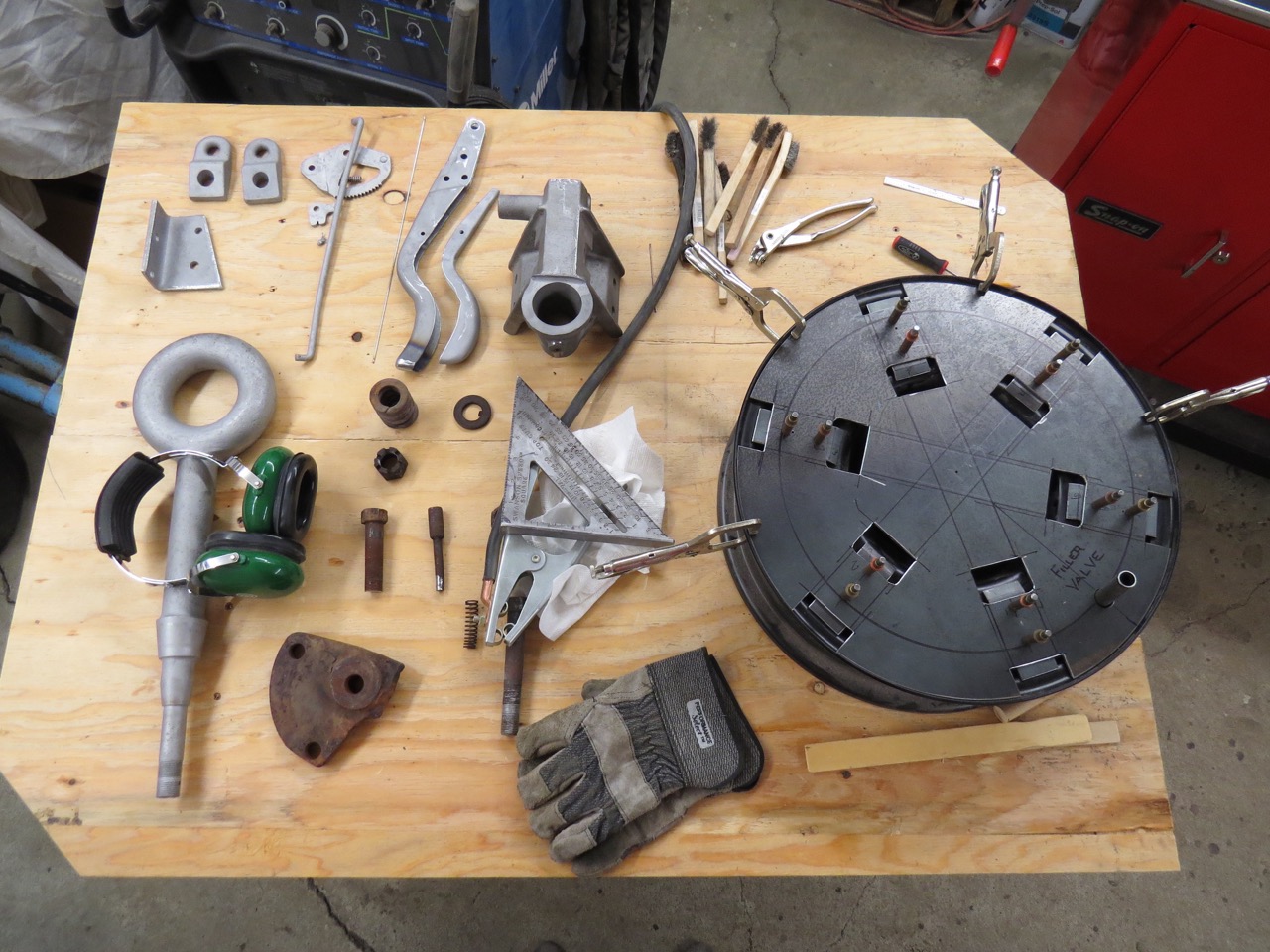
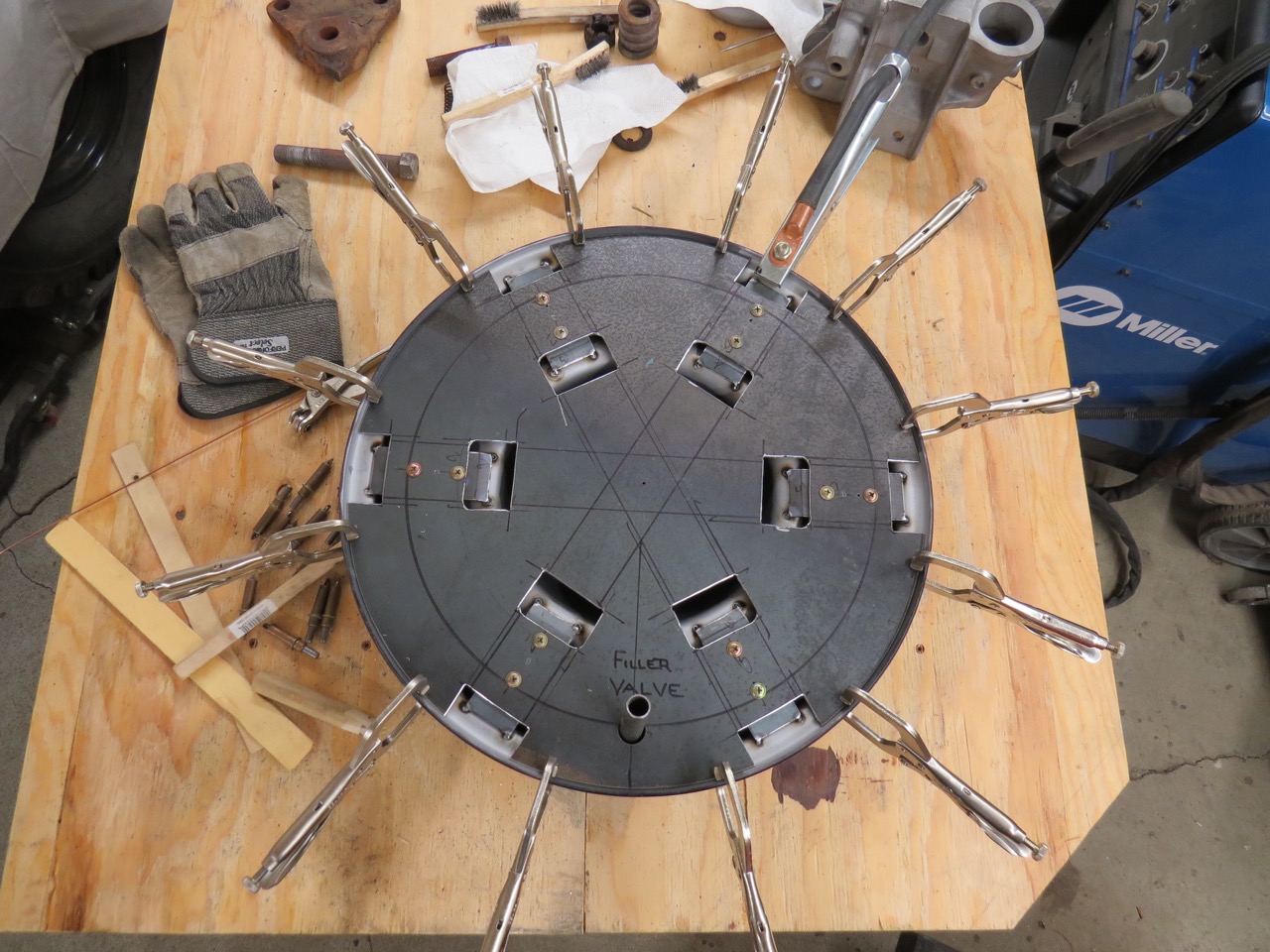
The black steel wheel in the photo below is one of 8 new wheels I purchased for the Willys (4 and a spare) and the M100 trailer (2 and a spare) so I need to modify these wheels to accept the stainless wheel discs I previously made. Each wheel will have 6 metal tabs (evenly spaced) welded to the outer face of the wheel with the tabs running from the outer bead flange to the raised inner ring around the lug nut area and each tab will have two nuts welded to the inner surface. These nuts will line up with holes drilled thru the stainless wheel discs to accept the wheel disc attach hardware and the tabs will provide additional support to hold the wheel discs while driving.
paul-wheels1

The black rim is to the right covered by a template. The other parts are trailer pieces from the disassembly of his trailer.

My original plan was to have only one nut per tab (so the wheel disc would be held on with six machine screws) but it’s much easier to weld two nuts to each tab while I’m making the parts than to have to add additional nuts and attach screws after the wheels have been powder coated just in case the discs wobble during rotation. I’ll try the 6 attach screws per wheel first and if the wheel discs stay smooth during driving I’ll leave the extra 6 nuts empty. If the disc shows any sign of instability while driving I’ll use all 12 screws to attach the disc for extra support.

paul-wheels2 paul-wheels3

Continue reading

[fb_button]
 
To Top

Paul’s Shielding the Heat

• CATEGORIES: Builds, Features • TAGS: This site contains affiliate links for which I may be compensated.

Paul built a heat shield to protect his steering assembly. I believe it’s his last project of the winter. Paul’s putting ‘Knardly Rolls’ to rest until Fall. It’s now time for him and the Goddess to drop the top on the Miata and explore the melting tundra.

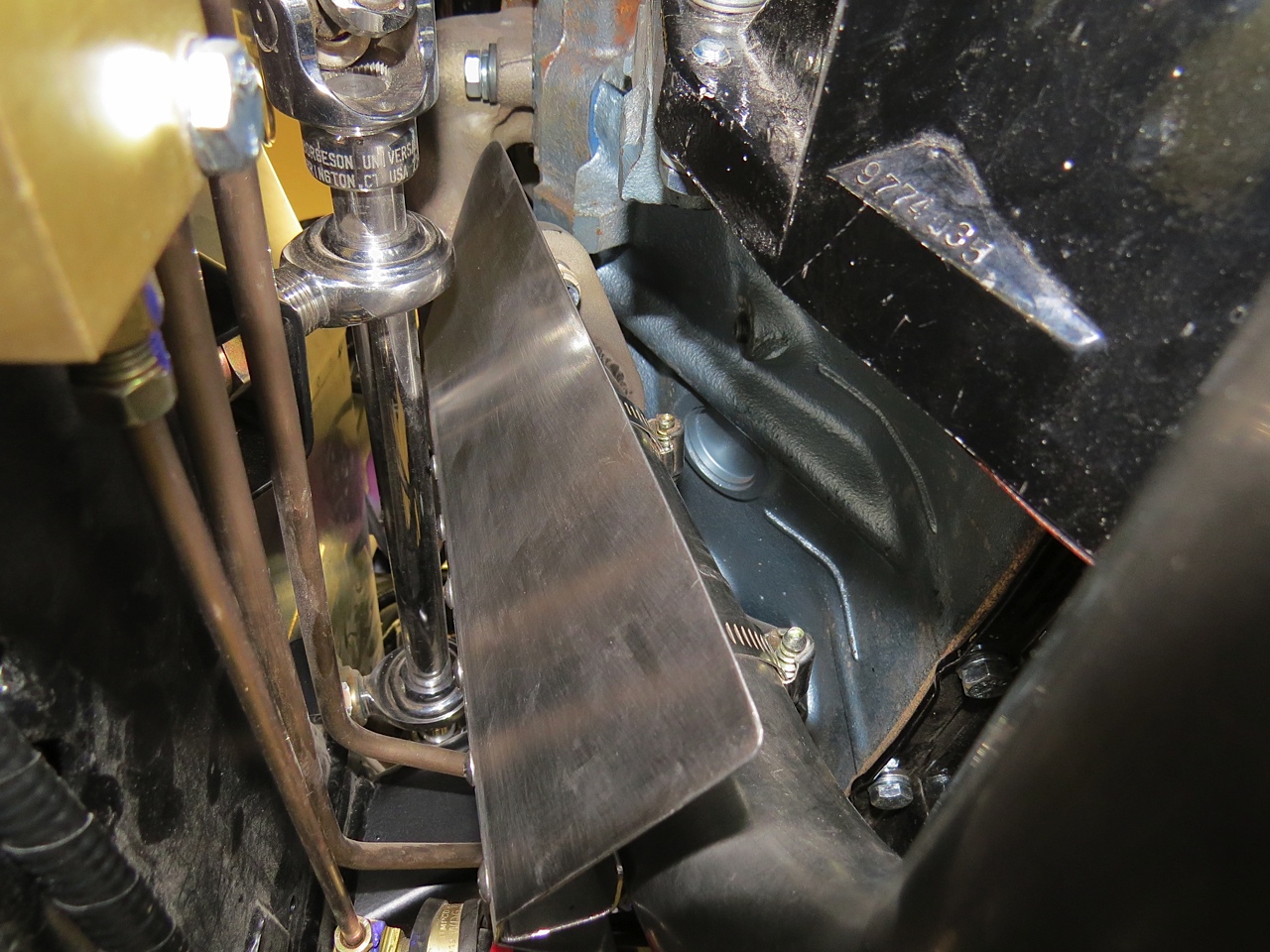
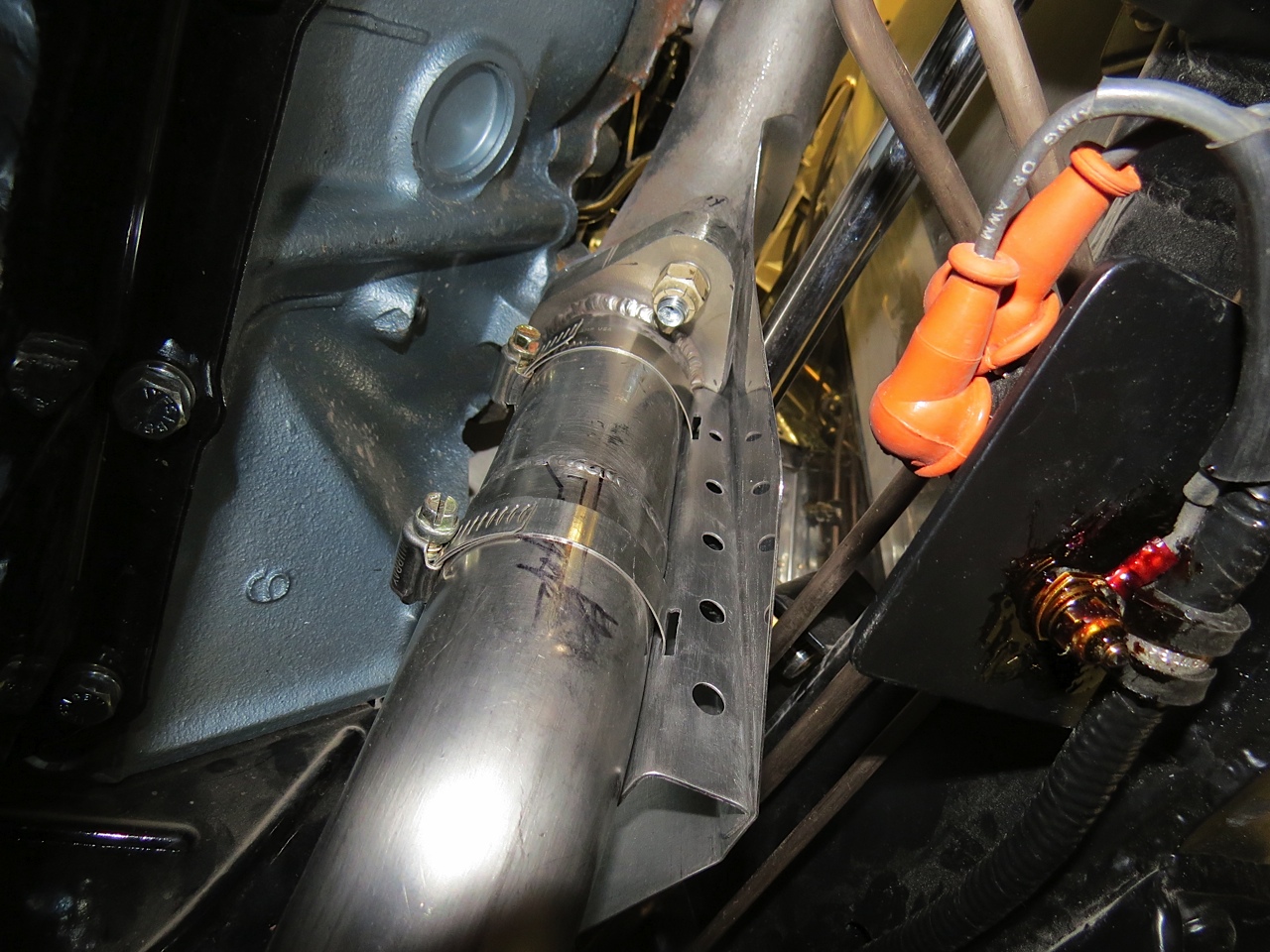
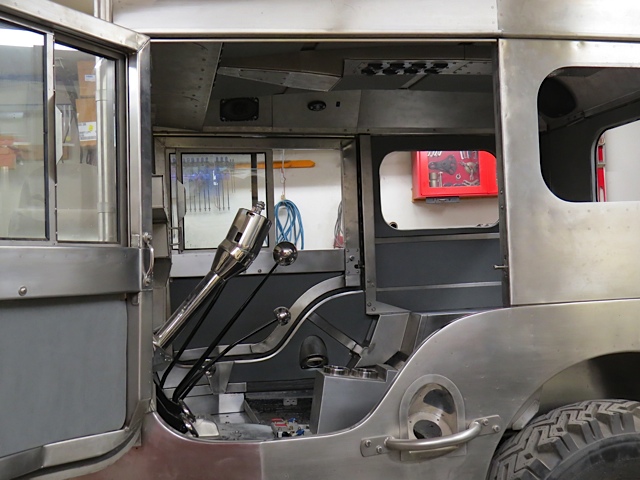
He writes, Here’s the heat shield I made to protect the steering assembly from the heat given off by the left exhaust manifold and exhaust tubing. As you might have noticed there’s very little clearance between the heat shield and the steering shaft.  A penny will not fit between the heat shield and the steering shaft. The heat shield is .020” stainless and the attach bracket which clamps to the exhaust pipe is .050” stainless.
paul-heatshield2

The decreasing diameter holes drilled thru the attach bracket will allow cooling air to pass behind the heat shield which will help keep the steering linkage from getting too hot. I hope. The brown coating on the brake light switch ground wire attach bolt is a gasket shellac that should prevent water from seeping between the ground wire connection to the bare frame so corrosion is prevented. The exhaust is held to the manifold by silver plated high temperature steel self locking nuts.

paul-heatshield1


[fb_button]
 
To Top

Wheeling Discs and New Tires

• CATEGORIES: Builds, Features, stainless/jewels • TAGS: This site contains affiliate links for which I may be compensated.

Paul continues to make progress on his jeep. He received his tires and has made some custom stainless rim discs.

tires

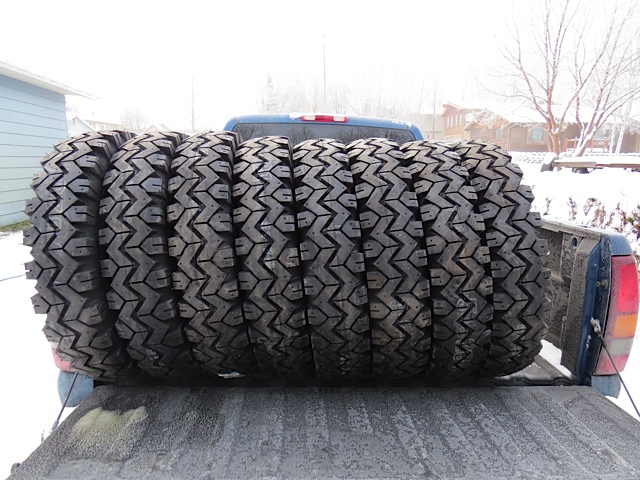
Paul’s new tires

TIRES:

He writes, “The New Tire Fairy arrived at the house today with eight brand new STA Super Traxion 6.50-16 tires along with eight new inner tubes for the little Willys. I’d been searching the internet for a vintage looking narrow tire with an aggressive tread design that would look good on the Willys so shortly after I discovered these tires I put my credit card to work and placed my order.

I wanted to replace the brand new but 30 year old tires on the Willys so that accounted for 5 tires and I needed 3 more tires for the military trailer (I want the trailer to have it’s own spare tire) so that’s why I bought eight. Shipping wasn’t too expensive since I wasn’t in a hurry and compared to Coker tire who wanted to ship their tires 2nd day air ($1,100 for the tires and an additional $900 for shipping) it was down right reasonable by Alaska standards.”

WHEEL DISCS:

wheel-discs-test

In this photo he’s testing out the disc concept with poster board.

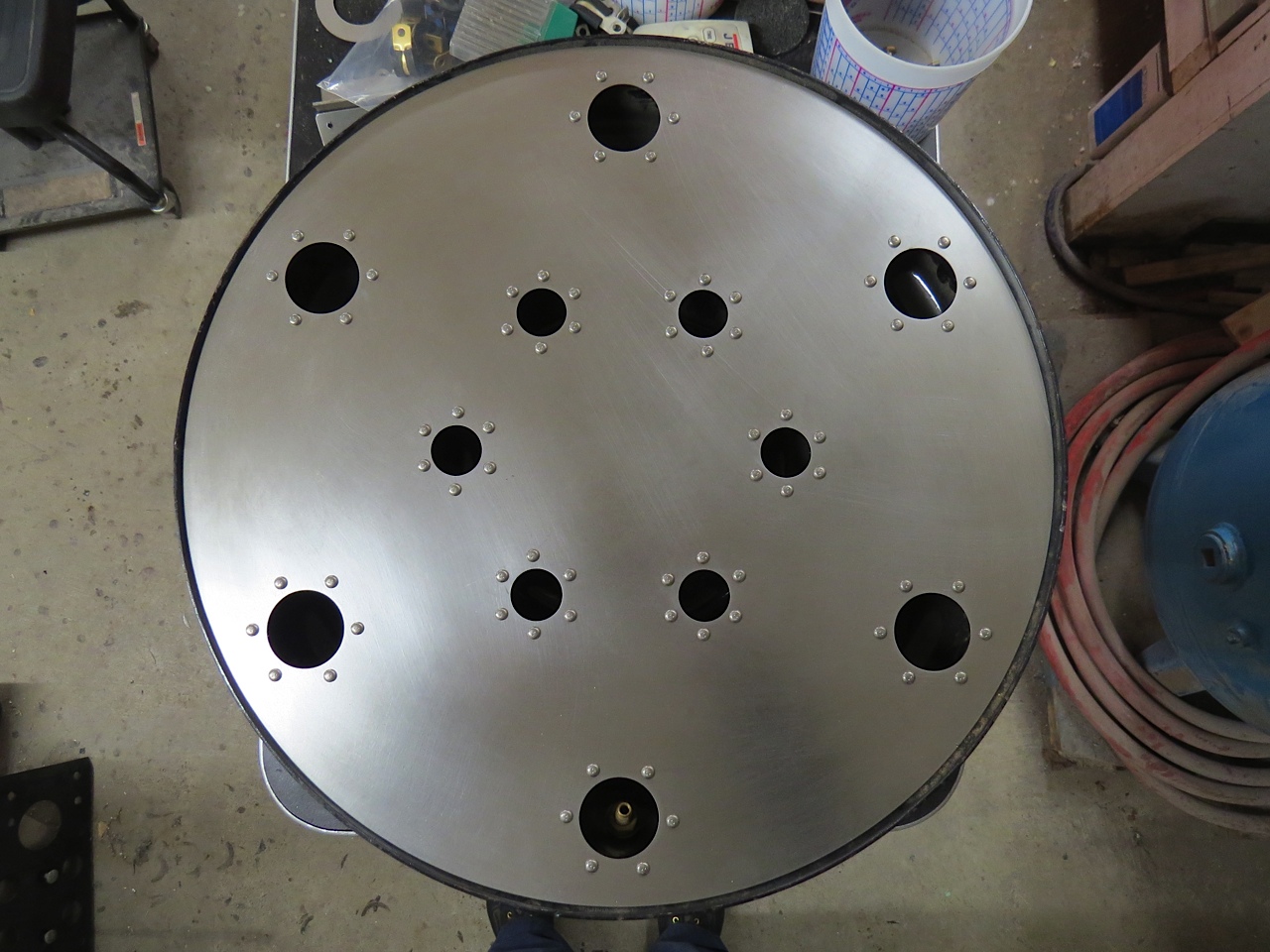
He writes, “I bought some poster board that was large enough to make full size mock ups of the stainless steel wheel covers I’m thinking of making to cover the plain steel wheels I’ll be using on the Willys. The six larger holes are 1 & 1/2 “ diameter and the smaller holes are 1 “ in diameter. I’ve made other discs, some with more holes and some with less holes on each disc in various patterns but I keep coming back to this design. It’s simple, the spacing of the holes is easy on my eyes and the wheel covers make the tires appear larger and more heavy duty.

Each hole will have a reinforcing ring fastened to the back side of the disc either by 1/8th inch diameter monel raised head style rivets or 3/16” dimeter stainless steel machine screws (the size of the machine screws used on the door just below the window). These doublers and rivets are for style only and not necessary for strength. Each disc will be attached to a wheel by six stainless machine screws and these screws will thread into steel mounts welded to the wheels.”

wheel-disc1

A completed disc.

“Above is the first wheel disc with the holes drilled and the rivets installed. I gave the plain disc a brushed finish to see what it would look like … I think it’s about as close as I can come to matching the body finish. These wheel discs need to be easy to clean and easy to touch up the finish so a mirror polished disc would require lots of maintenance to keep the metal shiny. I don’t have enough energy to keep up with the mirror finish. 

I finished riveting the last two wheel discs today then I cut a hole thru the center of the front wheel disc slightly larger than the Warn hub so these discs could be test fitted to the wheels on the Willys. The tires on the Willys are still the old new ones and not the new, new ones I recently received since the steel wheels currently on the Willys have the wrong offset and will be replaced with the correct wheels in the near future. Anyway, I think these discs match the Willys much better than the aluminum wheels I was originally planning on using.”

wheel-disc2

The wheel discs attached. The discs came out a little darker, but that’s probably because of the angle. The discs are made of the same stainless as the rest of the jeep. These are the old tires, not the new ones.


[fb_button]
 
To Top

Paul’s Getting All Charged Up

• CATEGORIES: Builds, Features • TAGS: This site contains affiliate links for which I may be compensated.

Paul’s made some additional progress over the last month on his stainless jeep.

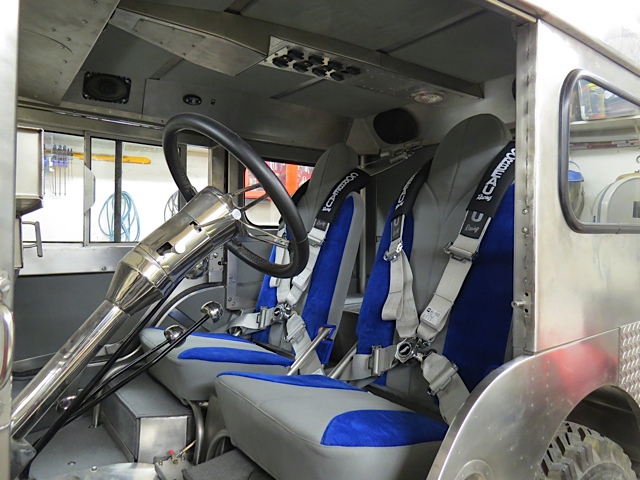
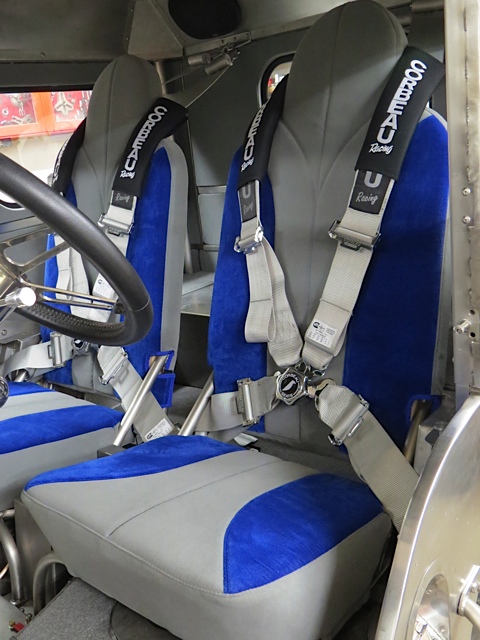
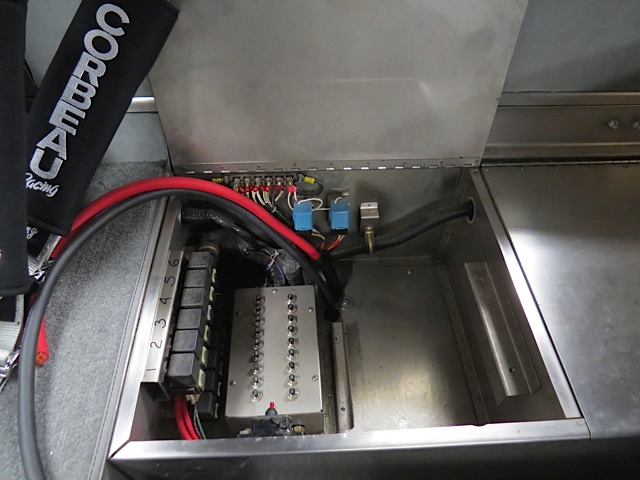
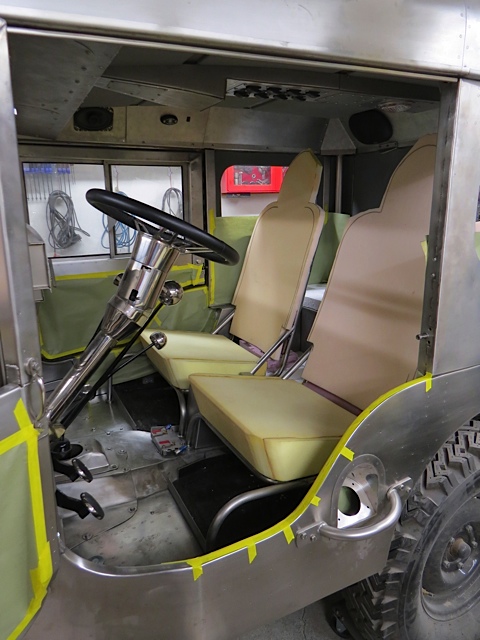
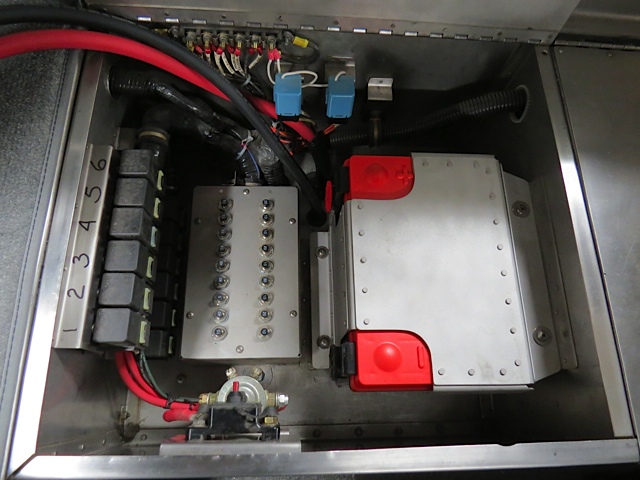
Paul writes, The upholstery is done, the driver’s seat has been installed and the seat belt/shoulder harness combos have been adjusted for length and bolted in place. The passenger seat will still need to be removed to allow access to the battery mount and cable connections in the electrical box but progress is being made.

interior-stainless-paul

Corbeau three inch wide belts with a cam lock release and in a color that goes well with the upholstery and stainless steel.

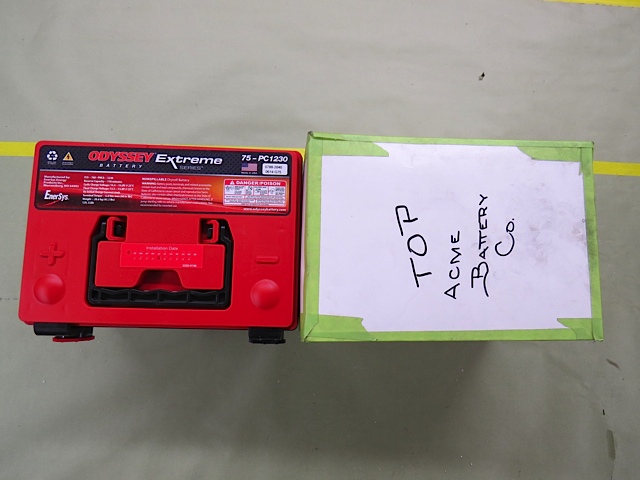
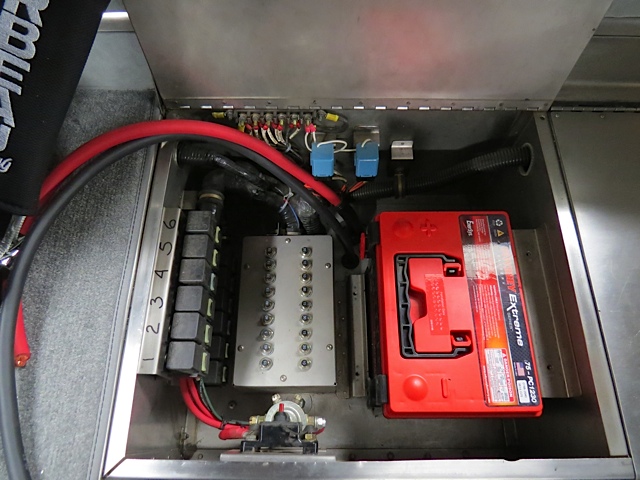
interior-stainless-paul2Paul has also been working on the battery installation. He continues, The open space on the right side of the electrical junction box should be filled with a new Odyssey AGM side post battery

battery-box1

Here I’m comparing the size of the Odyssey battery to the mockup battery I taped together out of poster board. I used the mockup battery to locate the attach points for the battery hold down bracket in the electrical junction box.

battery-box2

The battery fits and there’s even room for a longer battery. This small battery weighs 45 pounds so I don’t believe there’s any need to get a larger and heavier battery anytime in the future.

battery-box3

This hold down bracket is slightly bigger than the battery but the battery is firmly held when the attach hardware is tightened. The bracket consists of eight separate pieces of stainless held together by 40 rivets.
battery-box4

Now it’s time to start smoke testing the wiring and that might take a while.

[fb_button]
 
To Top

Paul’s Getting Serious

• CATEGORIES: Features, stainless/jewels • TAGS: This site contains affiliate links for which I may be compensated.

Paul really seems serious about finishing his jeep! Below he shares photos and updates:

All sidewall and top upholstery panels have been installed so I began cutting foam for the front seats.

2014-10-15-paul1

Still waiting on the carpet for the rear wheel well tops, the rear floor and the front seat footwell areas.

2014-10-15-paul2

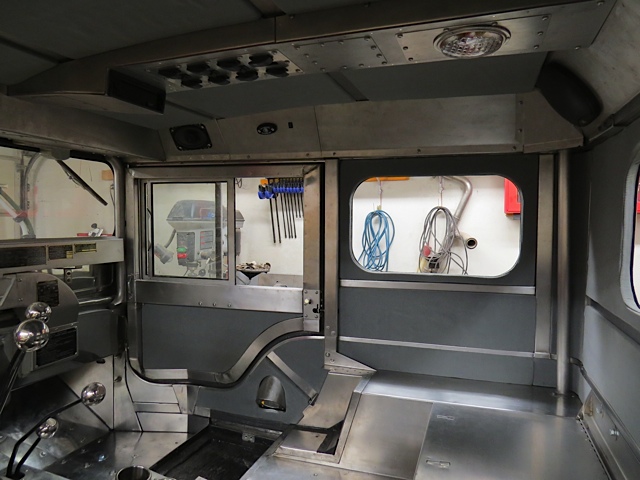
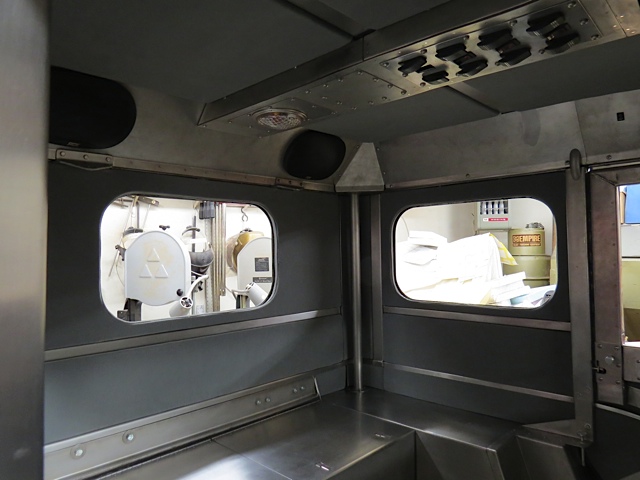
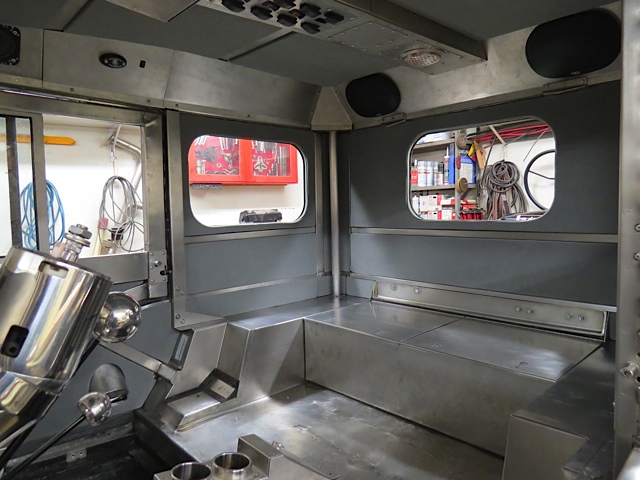
Here you’re looking at the rear window panel and the left rear wheel well. I think the gray fabric and the stainless steel look pretty good together.

2014-10-15-paul3

I’m looking forward to getting the seats upholstered. The gray and blue seat colors should add a bit of color to the interior.

2014-10-15-paul4

Front seats reinstalled, the foam is rough cut and the combination of thick foam for the bottom and thin foam for the back will allow enough room for me to reach all of the controls and still see out the windshield. The side windows are another matter. I should have Sumo-sized my Willys.

2014-10-15-paul5

[fb_button]
 
To Top

More Progress From Paul

• CATEGORIES: Features • TAGS: This site contains affiliate links for which I may be compensated.

Paul’s added more panels to his M-38. The gray panels look real nice inside. Somehow, he managed to arrange an earthquake in Alaska just to test the design!

paul-upholstery-m38-6

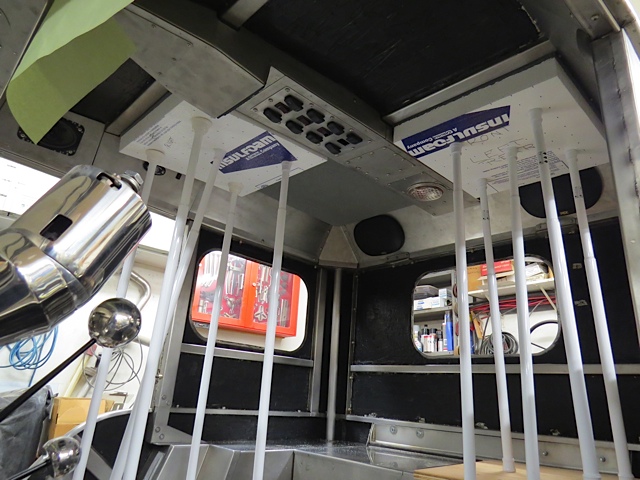
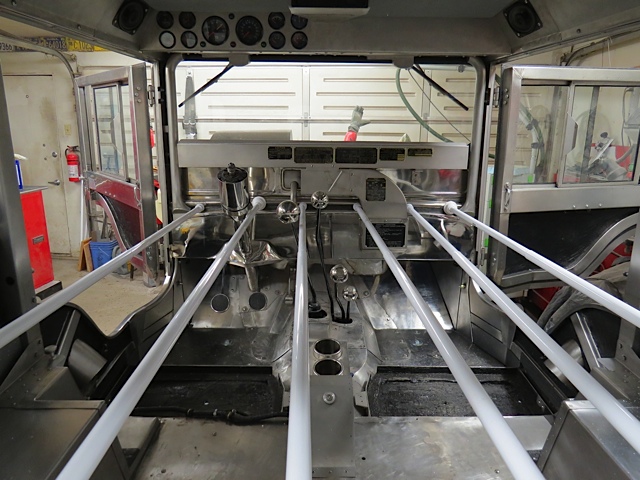
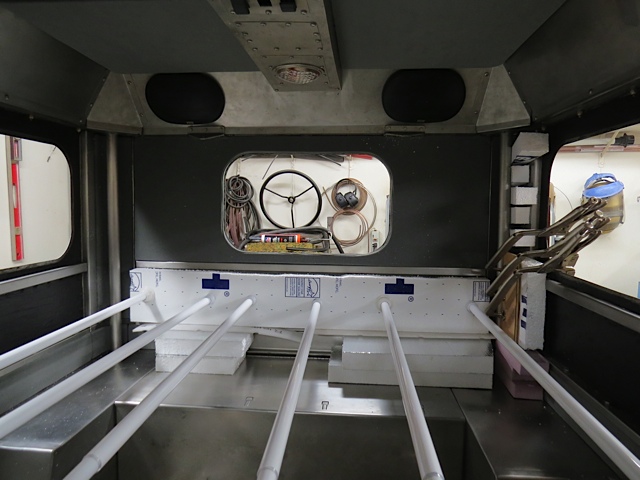
I purchased more shower curtain rods so I could speed up my progress on installing the Willys interior panels. I’m excited seeing the improvement the fabric panels make over the bare stainless and it seems Mother Nature is excited also. Yesterday (Sept. 25th) we had a 6.2 earthquake rumble thru town and this evening we had another smaller earthquake measuring only 5.0. The 6.2 quake managed to knock some stuff off the shelves in the garage and some items stored in the crawlspace were broken but we had no damage to the house or the Willys so I’m a happy guy. Here’s a picture of two more interior panels being held in place by 10 curtain rods (upholstery tensioning devices) and you can see the gray fabric panel slightly above the center of this photo. Tomorrow I’ll install two more overhead panels and prep the two vertical corner pieces if the earth quits moving long enough for me to reposition the tension rods.

paul-upholstery-m38-5

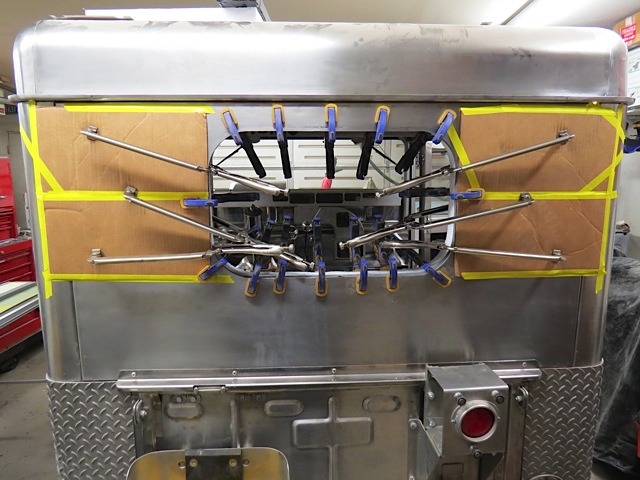
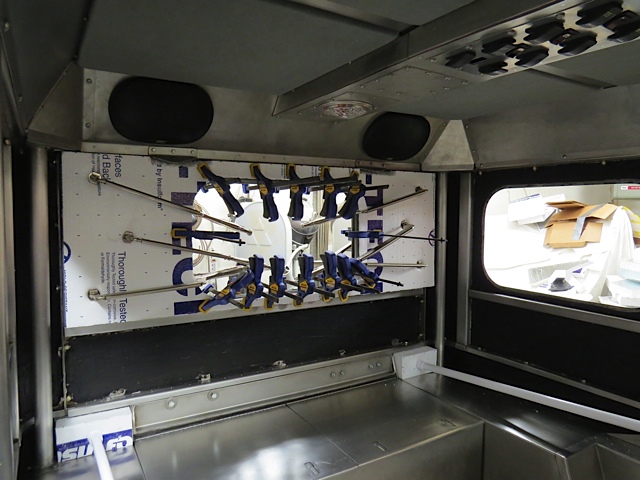
As you might have noticed, I clamped the rear window upholstery panel into position this morning. The interior panel is protected by a 2 inch thick white foam overlay and cardboard taped to the stainless protects the surface from scratches from the vise grip clamps. paul-upholstery-m38-4

Two inch thick foam overlay protects the upholstery panel and spreads the clamping force. Two smaller finished pieces are installed and clamped by the famous adjustable tension rods. I’ve used 34 tubes (12.9 ounces each) of black silicone to attach 15 interior panels and I still have 18 panels left to install.

paul-upholstery-m38-2

I never expected shower curtain rods and foam insulation were necessary tools for installing upholstery in the Willys. As you can see on the right Vise Grips, thin plywood and pink foam are also needed. Yes, we embrace diversity here in the northland. paul-upholstery-m38-1


[fb_button]