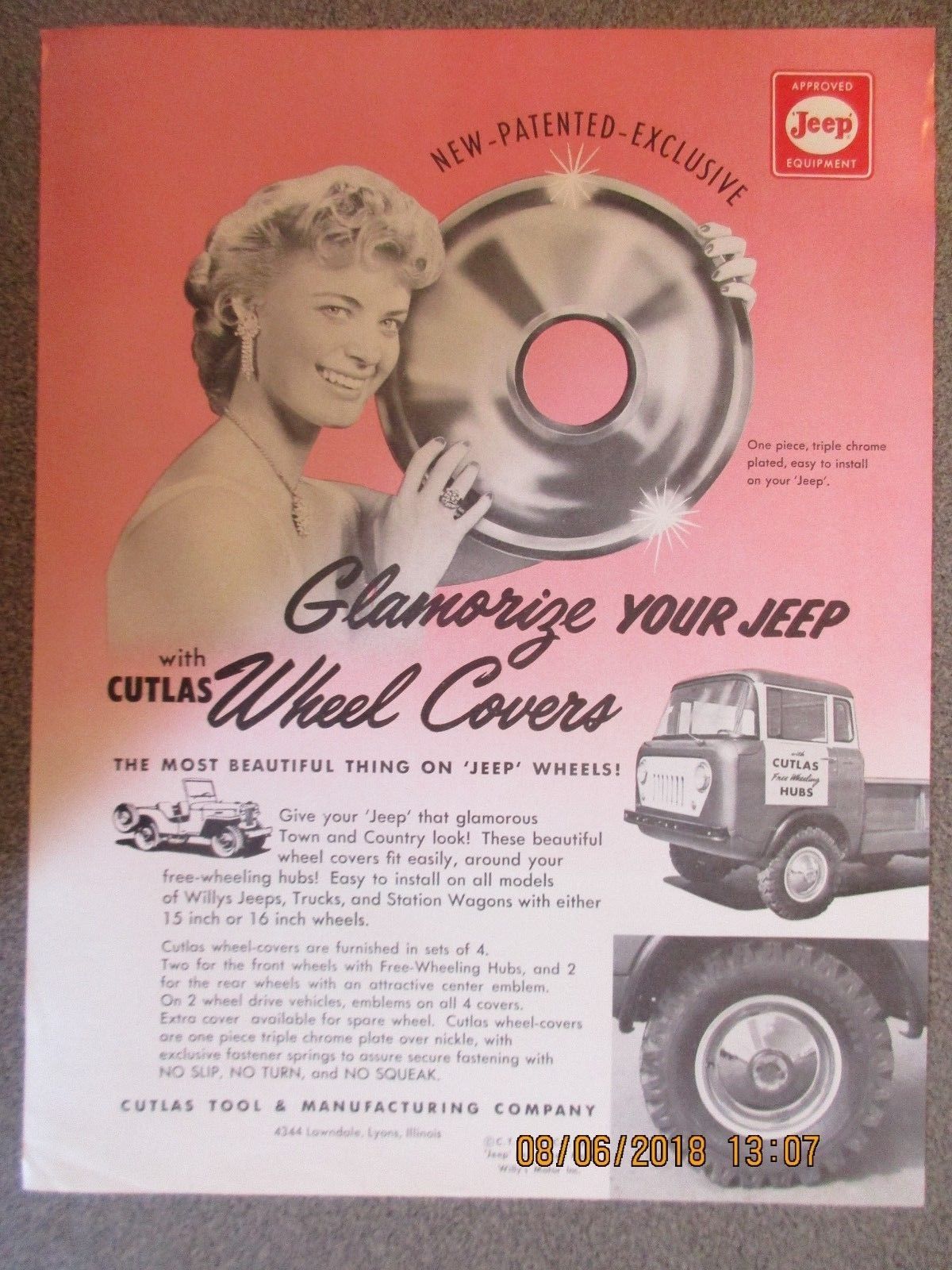
UPDATE: **SOLD** Was on eBay.
I can’t remember seeing this ad for a Cutlas Wheel cover that included an FC-170.
“ORIGINAL RARE 1960 JEEP Cutlas Wheel Covers Fact Spec Sheet Folder Brochure, 8-1/2′ x 11″, one page”
emailNeed to contact me and don't have my email? Click on email button.
Welcome to eWillys.com, a website for vintage jeep enthusiasts. I update this website nearly every day with jeep deals, jeep history, interesting reader projects, jeep related info, and more.
These quick searches can help you find things on eBay. People list in the wrong categories all the time, so don't be surprised to see brochures in the parts area for example. This section used to be split into jeeps, parts and other categories, but recent changes to eBay will require this information to be recoded.
The links to posts below show jeeps grouped by models, condition, and other ways. Some of these jeeps are for sale and others have been sold. If you are unsure whether a vehicle is still for sale or not, email me at d [at] ewillys.com for more info.
There are plenty of interesting, unusual, historic and surprising stories related to Jeeps and their owners. In addition, some of these features have nothing to do with jeeps. This link will display all featured stories starting from the latest.
Looking for parts and not sure where to go? There are a variety of large and small new and used parts sellers both online and offline.
Importantly, the allure of buying a project jeep can be romantic. The reality of restoring a jeep can be quite different, expensive and overwhelming without the right tools and resources. So, tread carefully when purchasing a "project". If you have any concerns about buying a vintage jeep, or run across a scam, feel free to contact me for help, comments or concerns .
UPDATE: **SOLD** Was on eBay.
I can’t remember seeing this ad for a Cutlas Wheel cover that included an FC-170.
“ORIGINAL RARE 1960 JEEP Cutlas Wheel Covers Fact Spec Sheet Folder Brochure, 8-1/2′ x 11″, one page”
UPDATE: This 2008 post is incomplete. I will update it with the full story when I get a chance.
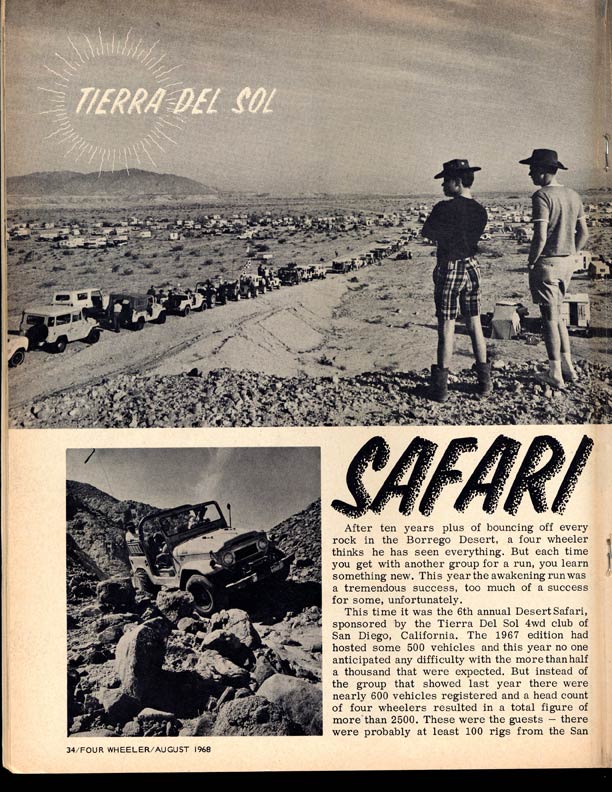
The 1968 issue had an article that underscores how popular jeeping had become. One event in California, the Desert Safari, organized by the Tierra Del Sol 4wd club, brought in 600 jeeps and over 2500 people. Below is the cover story’s picture.
The documents come from to late 1940s binders. Both refer to the Newgren Hi-Speed Weeder.
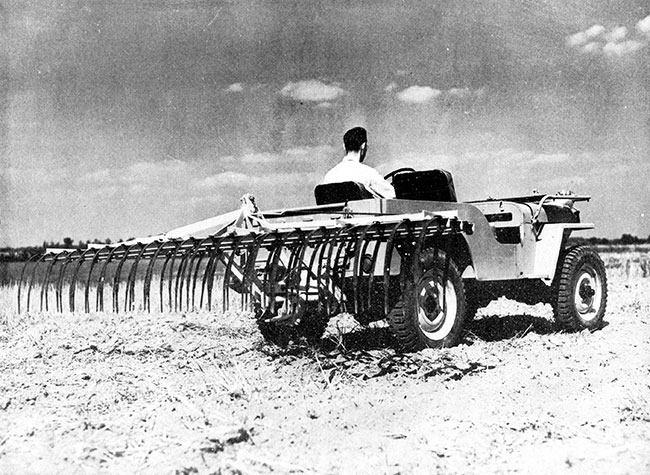
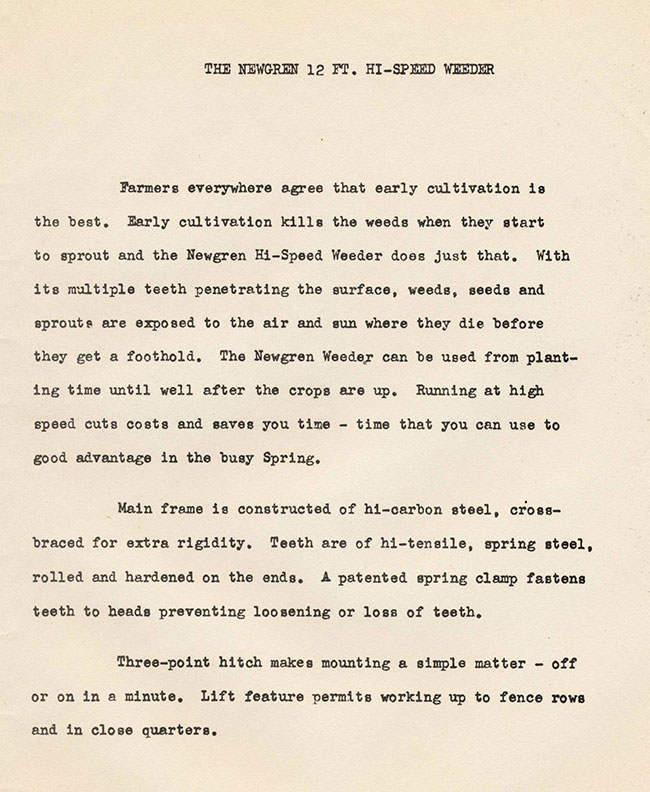
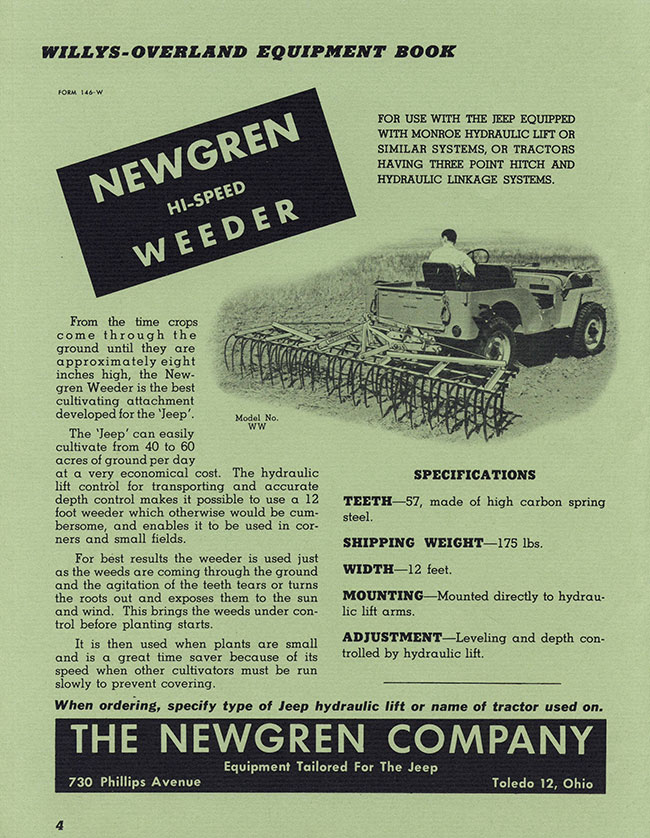
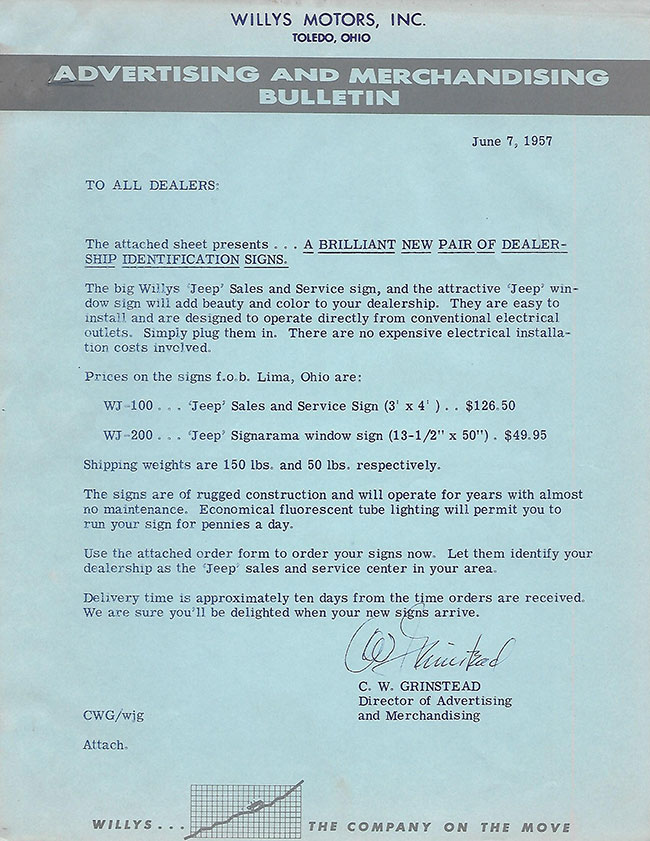
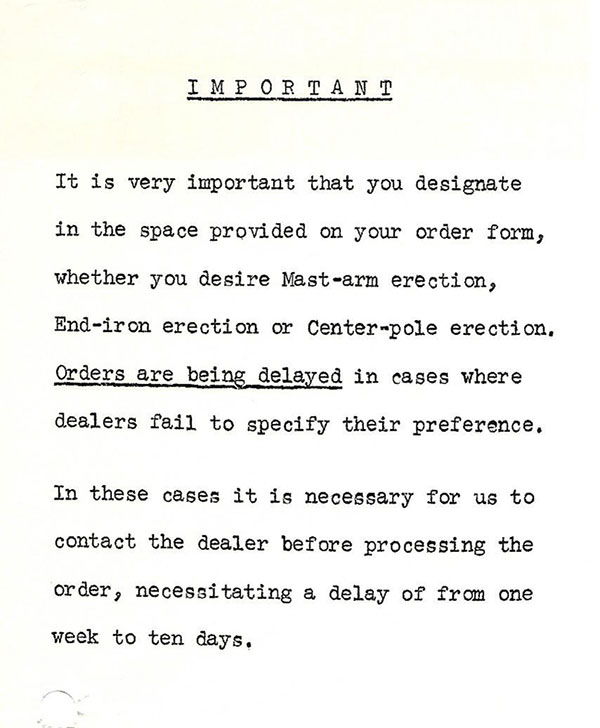
An anonymous reader we shall call “Mr. Packrat” has offered to share from time to time a collection of documents he’s gathered. So, many thanks to him for his ‘donation’ to our collective educational efforts!
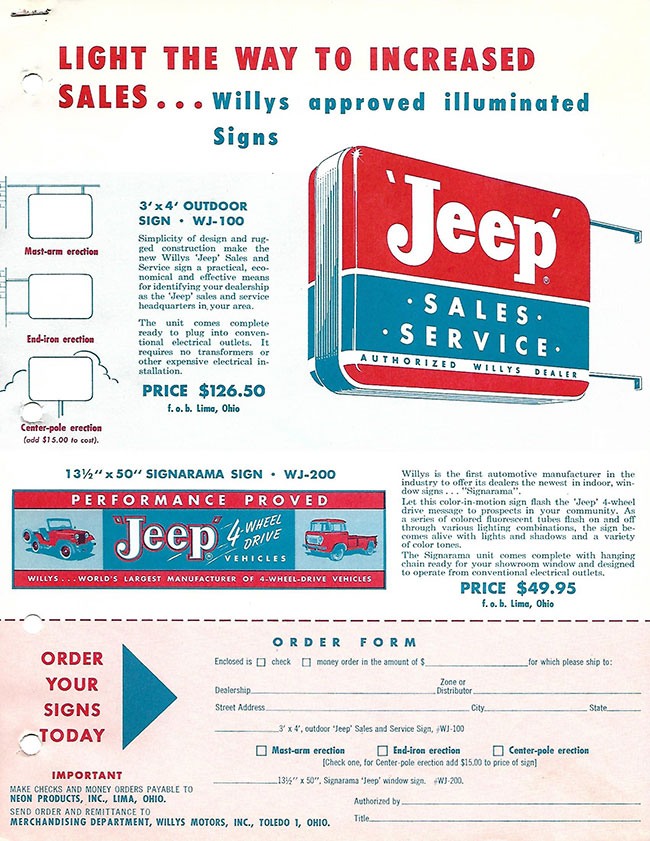
This is the first item, an interesting look at the selling of signs to dealers by Willys Motors.
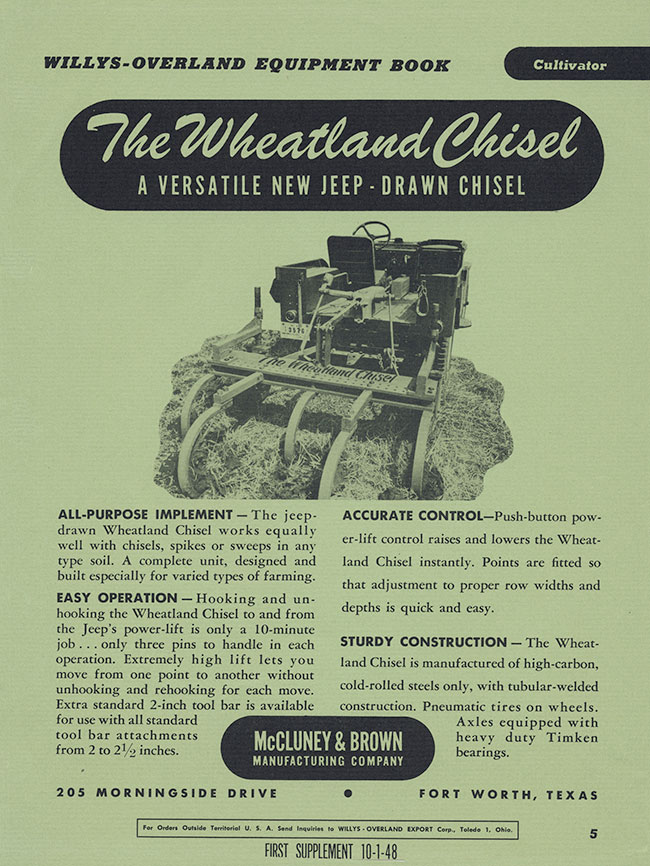
This farming equipment was manufactured out of Texas by the Mcluney & Brown Manufacturing Company and included in a circa 1948 Willys Equipment Book.

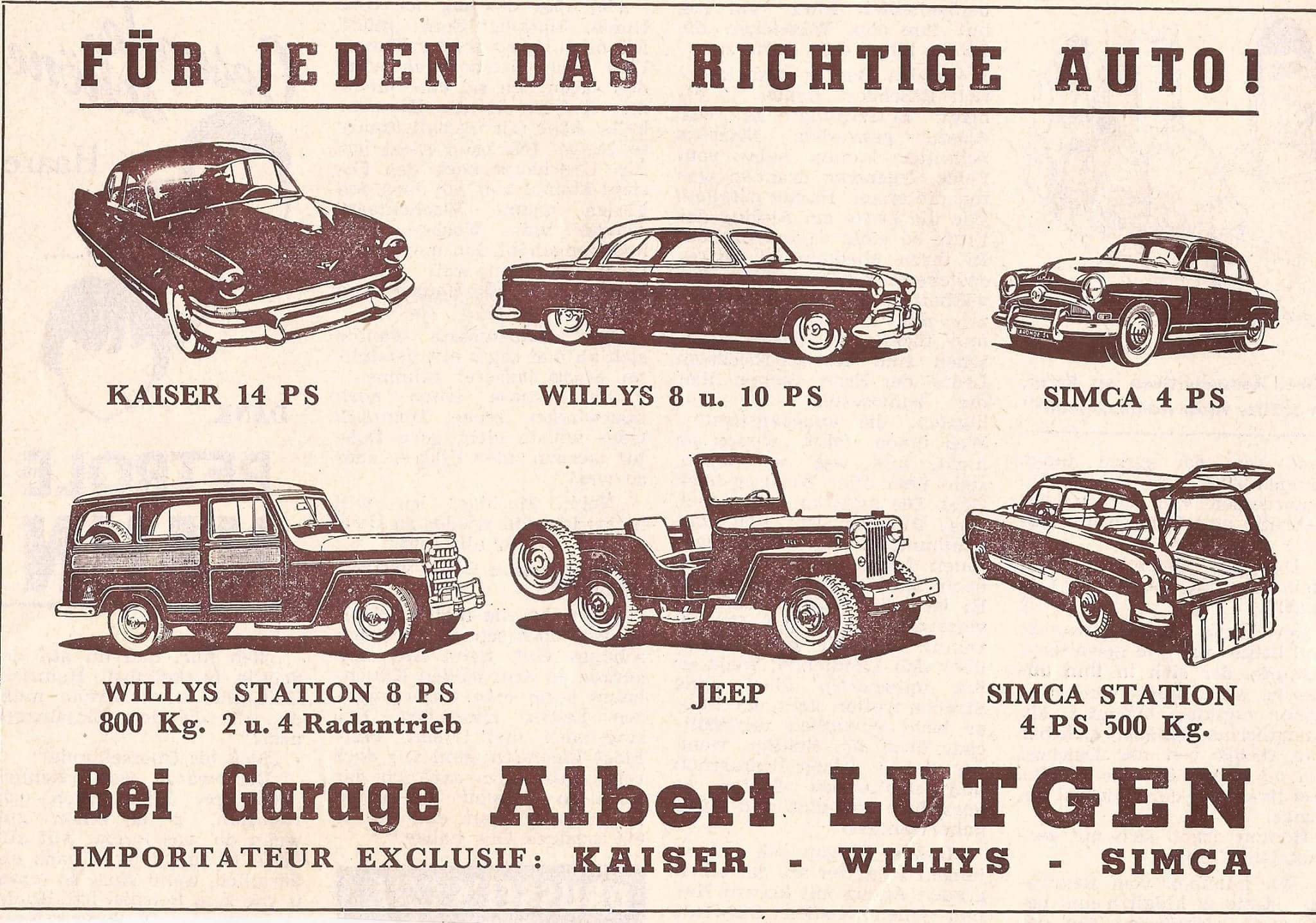
Buz spotted this interesting advertisement on a Facebook post.
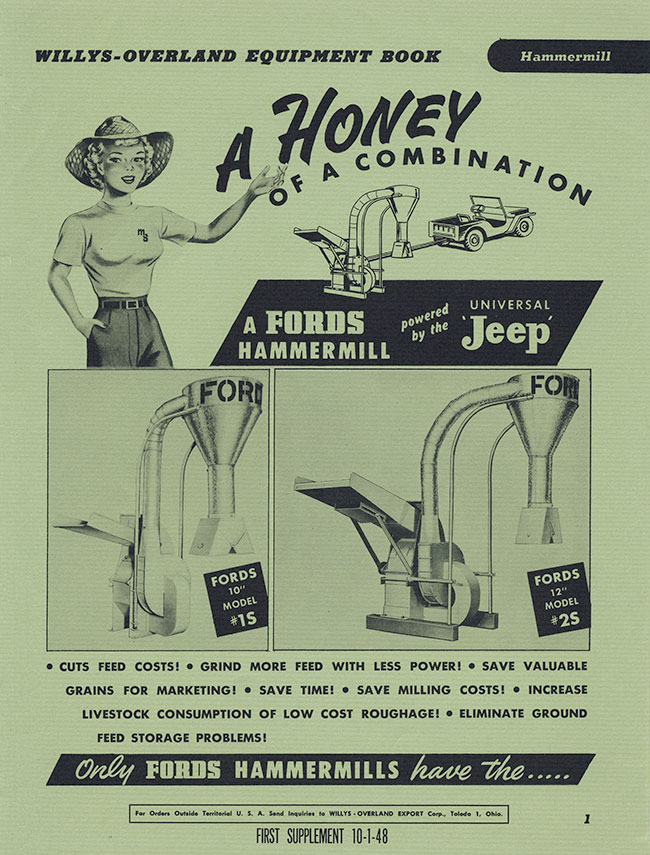
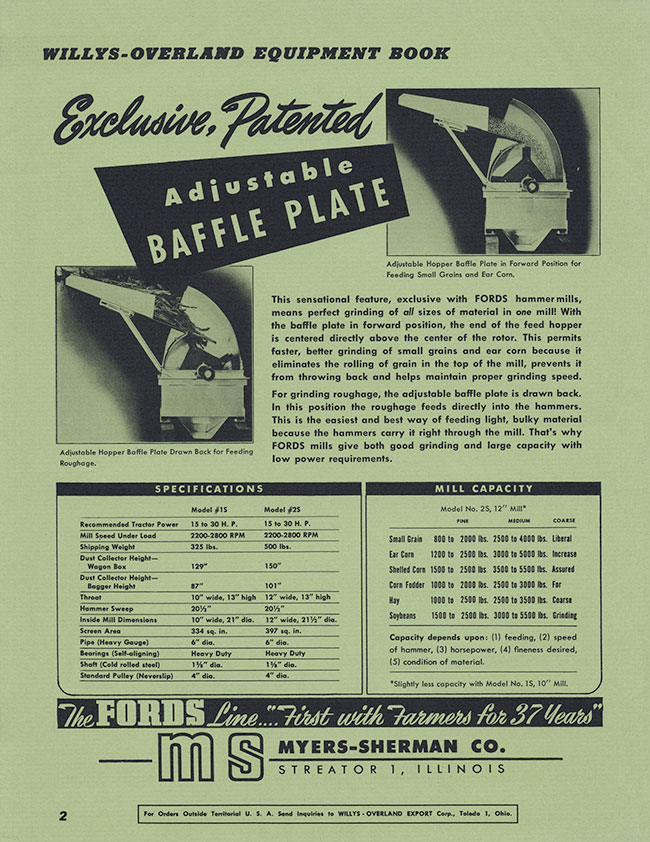
It’s a “honey” of a combination, a Ford hammermill and a jeep.
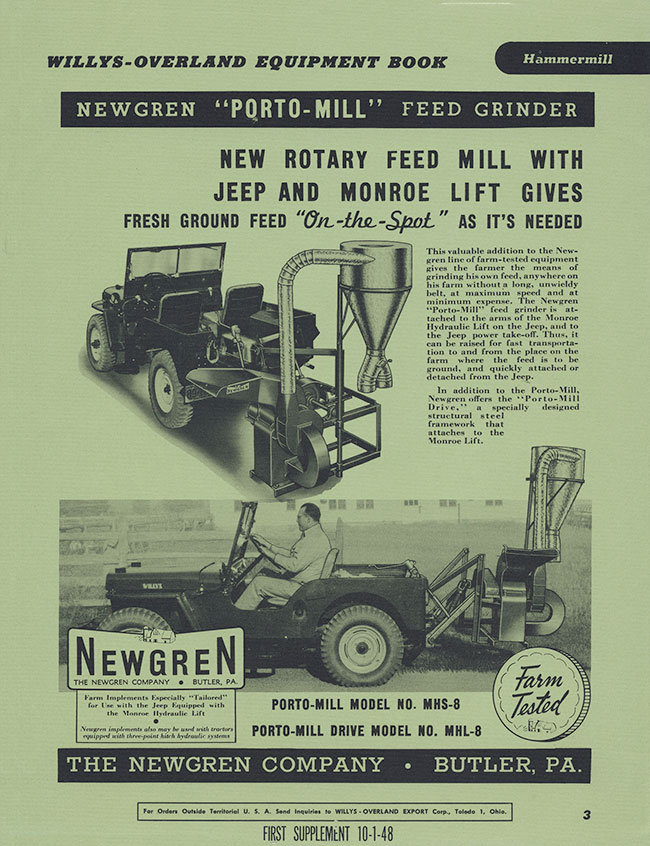
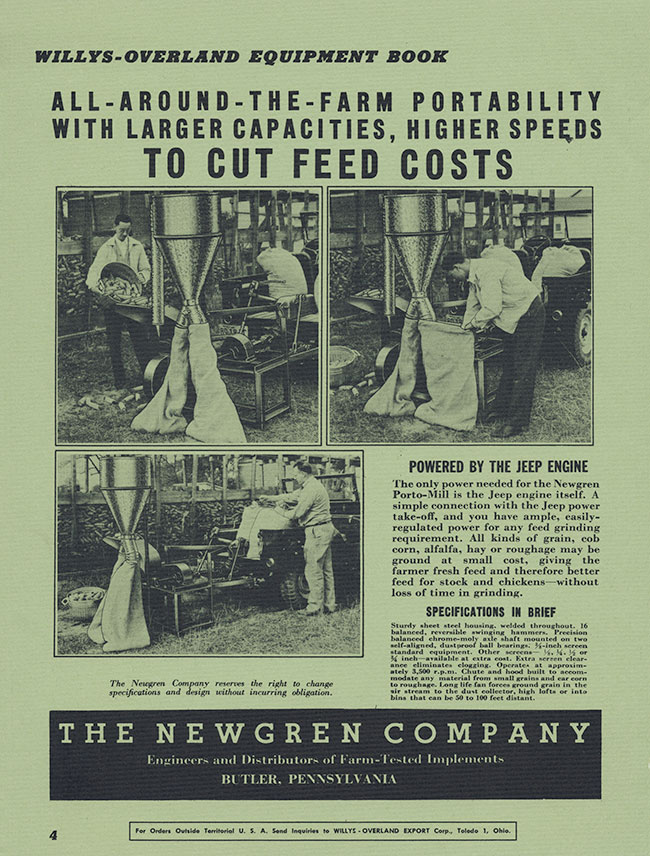
Did any of these Porto-Mills survive?
Barry asked about Newgren pull plows, so there are some examples that I have (I hope this is what you were seeking).
Newgren 16″ Single Bottom Plow
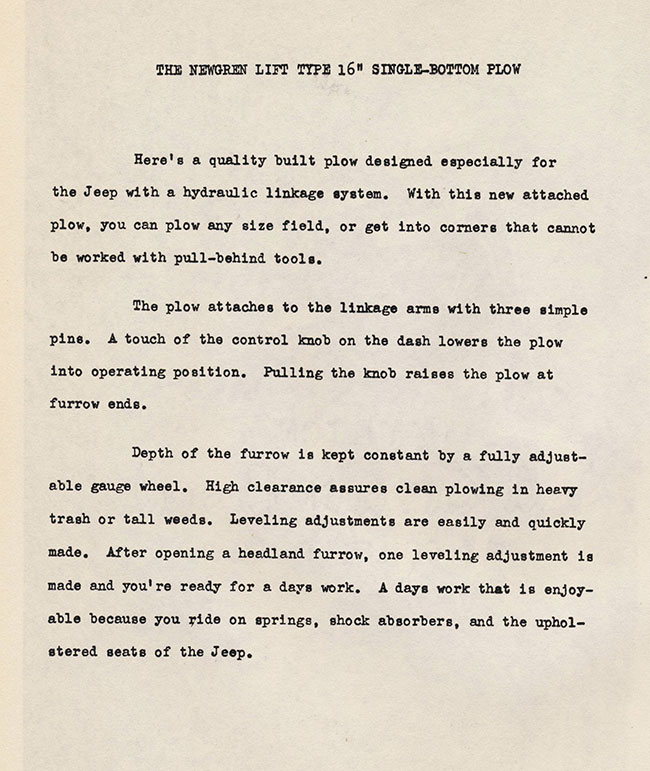
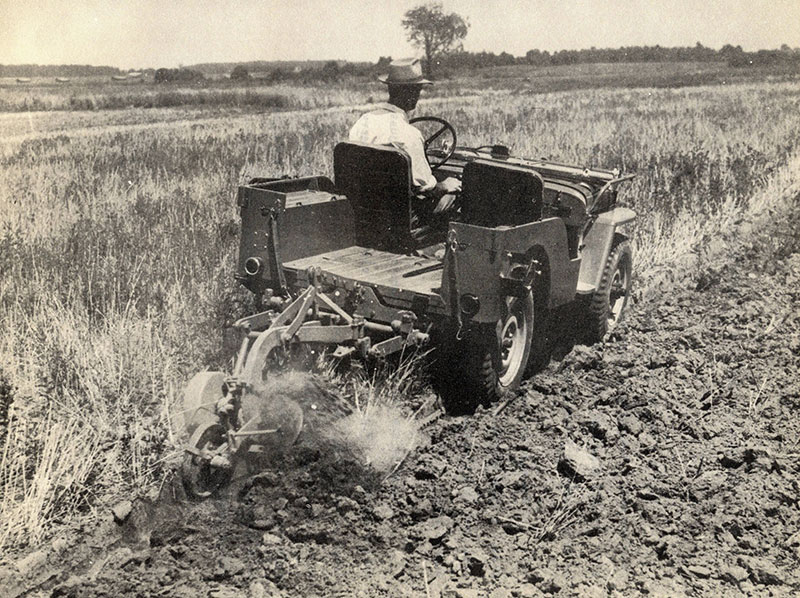

Newgren 12-14 Inch Double Bottom Lift Type Plow: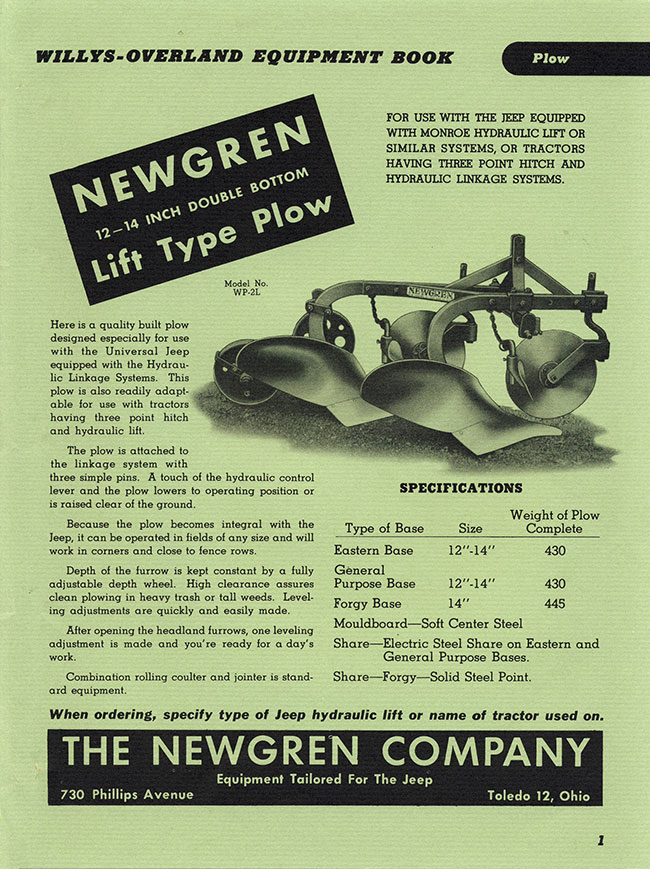
UPDATE: **SOLD** Was on ebay
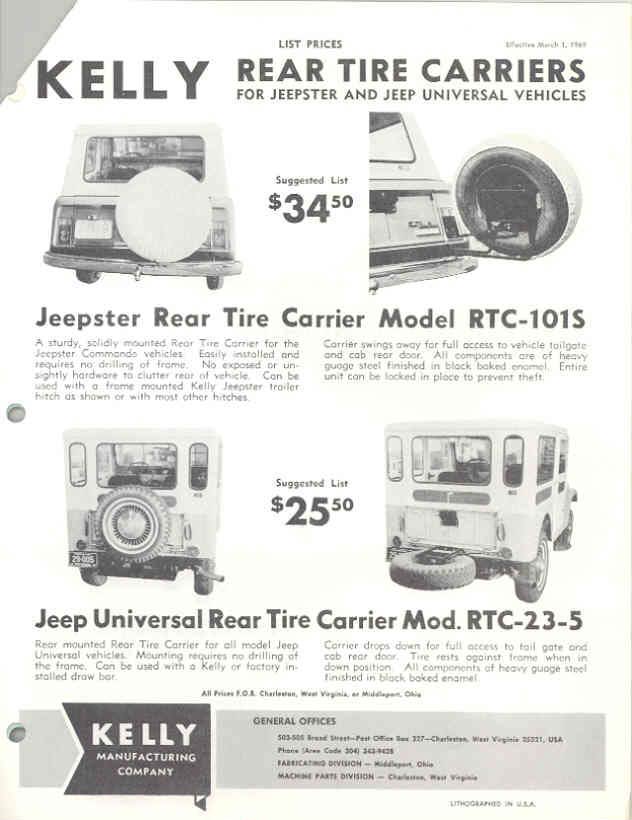
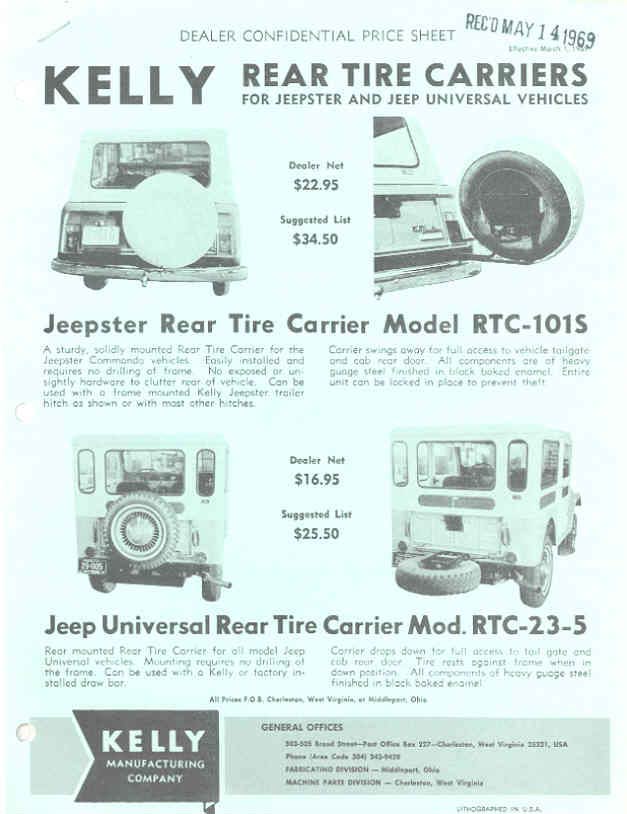
(02/09/2018) This brochure includes a dealer confidential price list. Note the flip down style of tire carrier.
“original Non Color Sheet , 8.5 x 11 , 2 Sheets , 3 File Holes At Left Edge , Kelly Rear Tire Carriers”
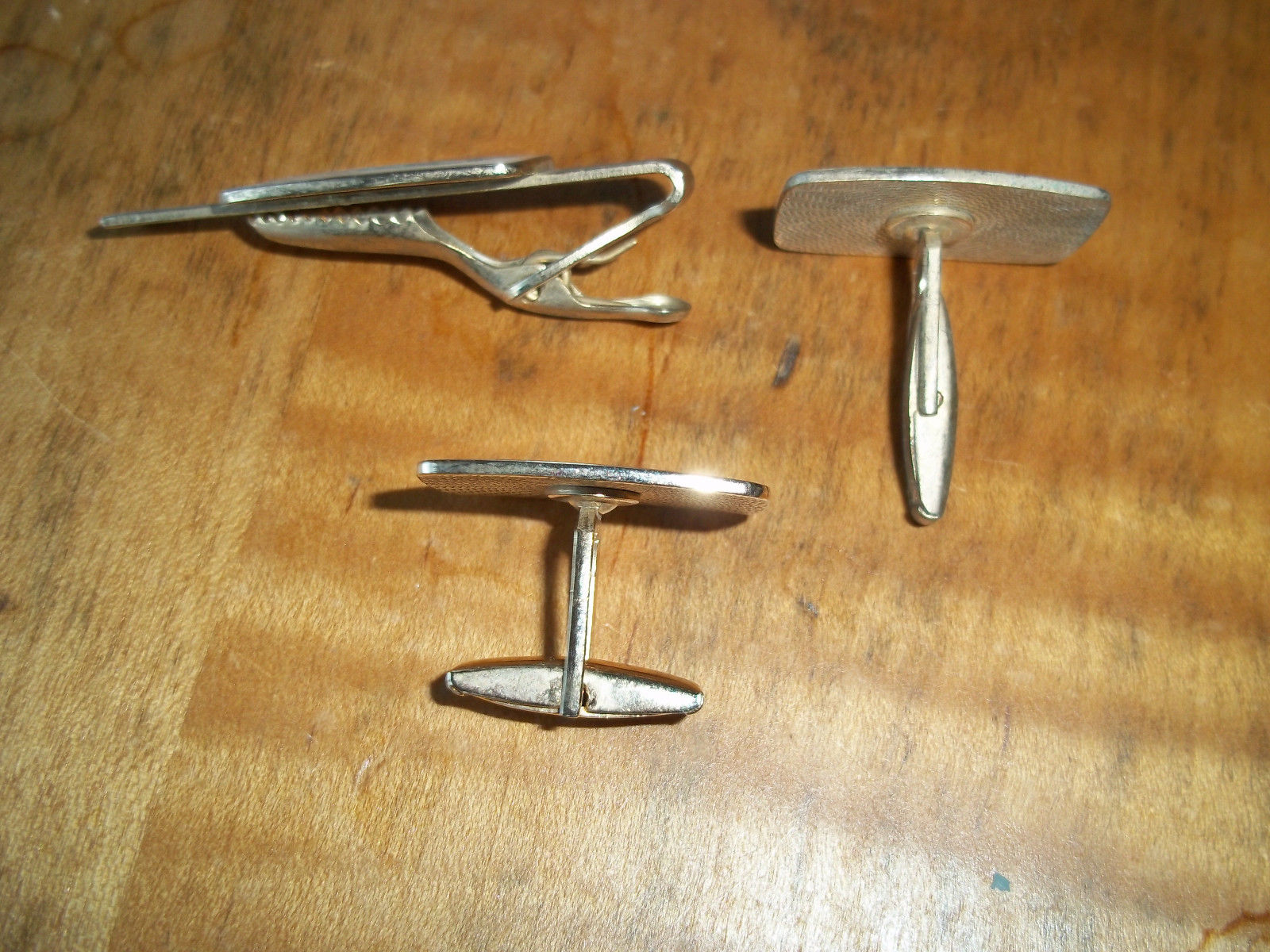
UPDATE: These sold on eBay for $35.
https://www.ebay.com/itm/KAISER-WILLYS-TRUCK-CUFFLINKS-1950s-1960s/192589233444
“Promotional cuff links and tie bar
Late 50’s – early 60’s”

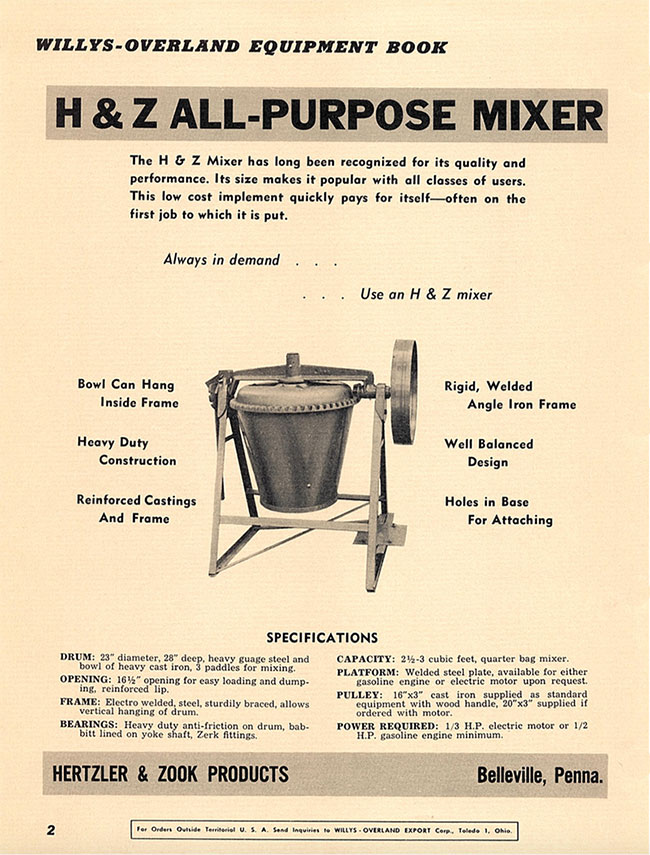
This mixer was featured in the 1949 Willys Overland Equipment Book. It was manufactured by Hertzler and Zook, a company established in 1899 out of Belleville, Pennsylvania, that manufactured an array of machinery and farm implements. There are still a few catalogs left out there, such as this 1926-27 catalog for sale at Abe Books.
Read more about the company here: http://vintagemachinery.org/mfgindex/detail.aspx?id=439&tab=0