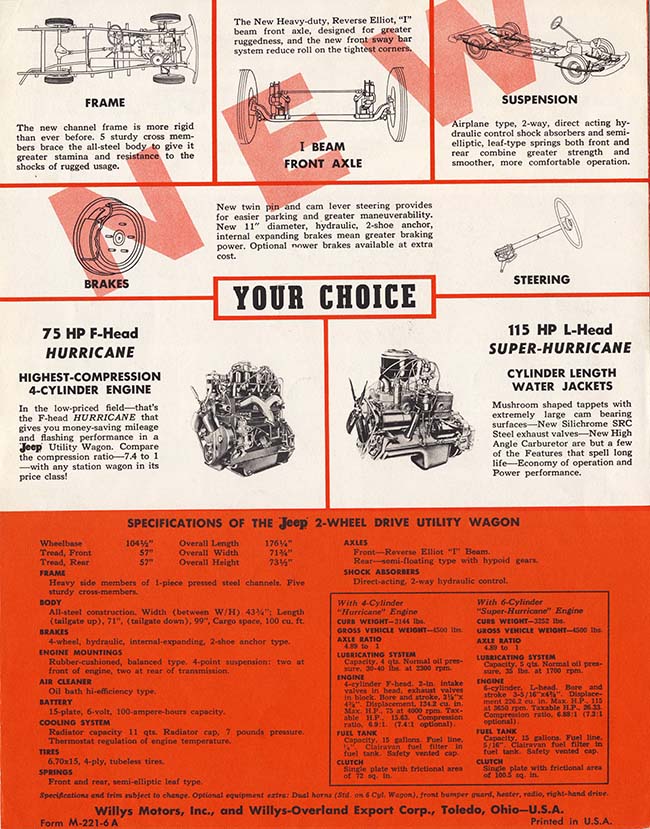
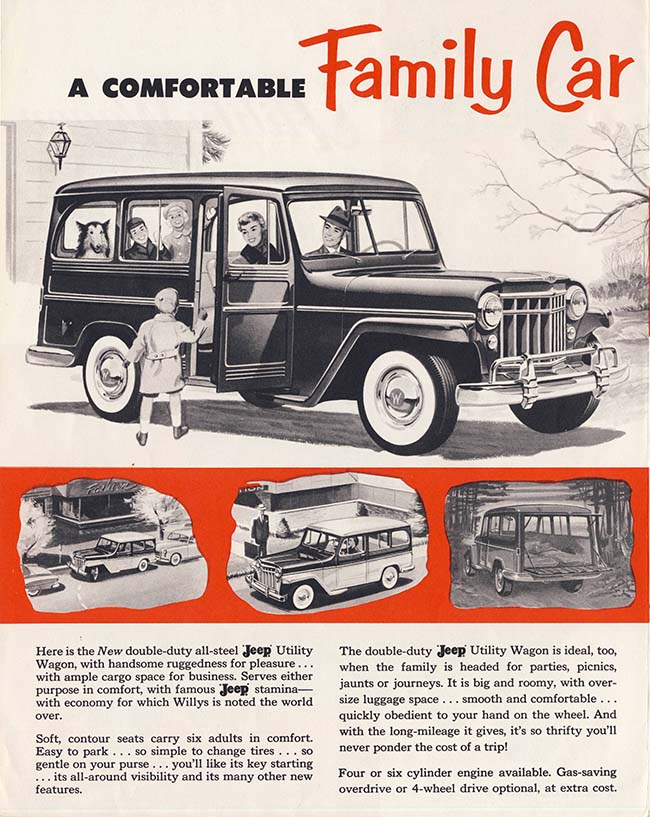
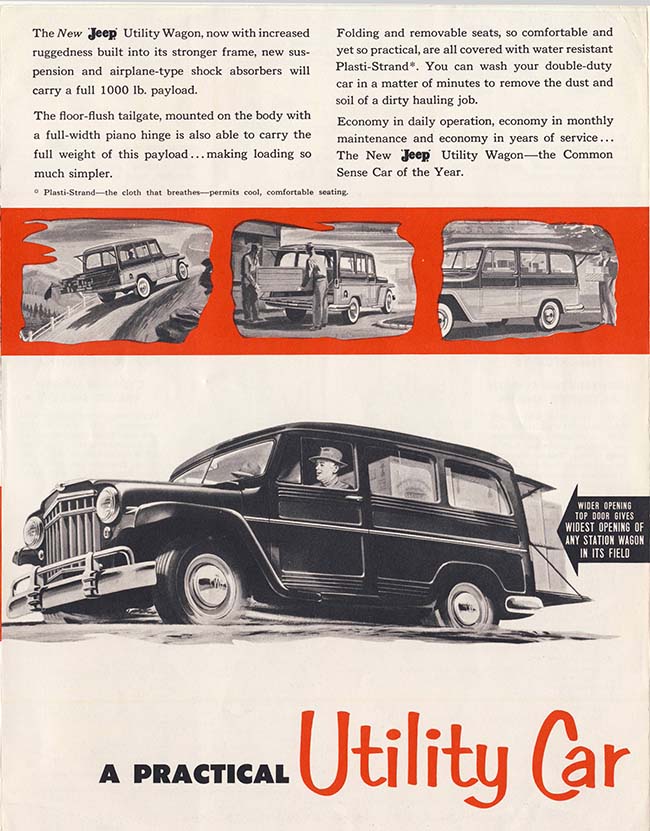
I snagged this early 1950s Jeep Utility Wagon brochure off eBay. It took some time to find an inexpensive one. It came with a small bundle of other brochures.

emailNeed to contact me and don't have my email? Click on email button.
Welcome to eWillys.com, a website for vintage jeep enthusiasts. I update this website nearly every day with jeep deals, jeep history, interesting reader projects, jeep related info, and more.
These quick searches can help you find things on eBay. People list in the wrong categories all the time, so don't be surprised to see brochures in the parts area for example. This section used to be split into jeeps, parts and other categories, but recent changes to eBay will require this information to be recoded.
The links to posts below show jeeps grouped by models, condition, and other ways. Some of these jeeps are for sale and others have been sold. If you are unsure whether a vehicle is still for sale or not, email me at d [at] ewillys.com for more info.
There are plenty of interesting, unusual, historic and surprising stories related to Jeeps and their owners. In addition, some of these features have nothing to do with jeeps. This link will display all featured stories starting from the latest.
Looking for parts and not sure where to go? There are a variety of large and small new and used parts sellers both online and offline.
Importantly, the allure of buying a project jeep can be romantic. The reality of restoring a jeep can be quite different, expensive and overwhelming without the right tools and resources. So, tread carefully when purchasing a "project". If you have any concerns about buying a vintage jeep, or run across a scam, feel free to contact me for help, comments or concerns .
I snagged this early 1950s Jeep Utility Wagon brochure off eBay. It took some time to find an inexpensive one. It came with a small bundle of other brochures.
This October 1954 photo and caption from Kaiser Willys News underscores how confident Willys Motors was about the coming year and their new CJ-5 model. About this time there was an explosion of new brochures and mailers, so Willys Motors did what it could to generate excitement about the commercial and utility market.

This is a neat piece.
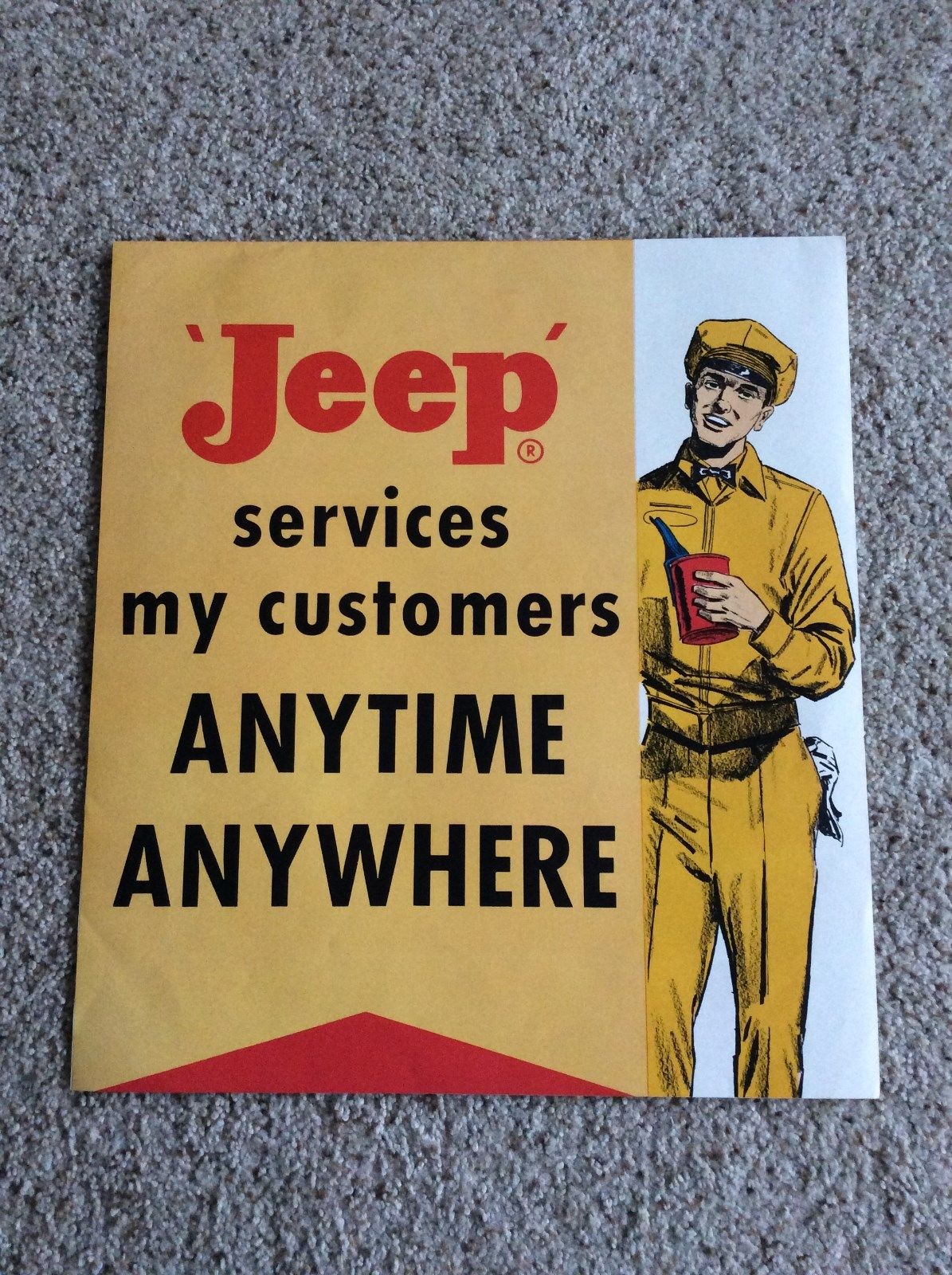
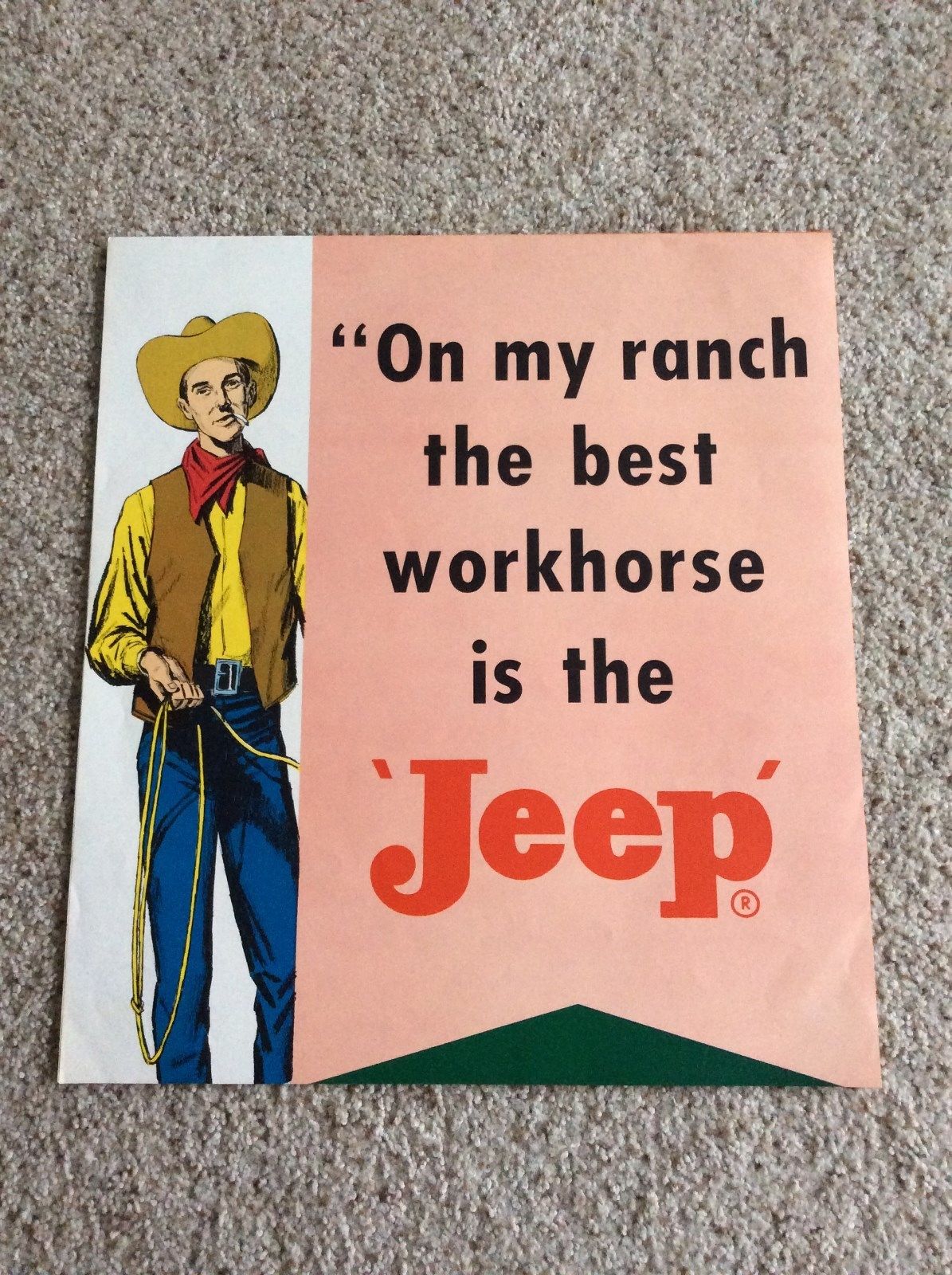
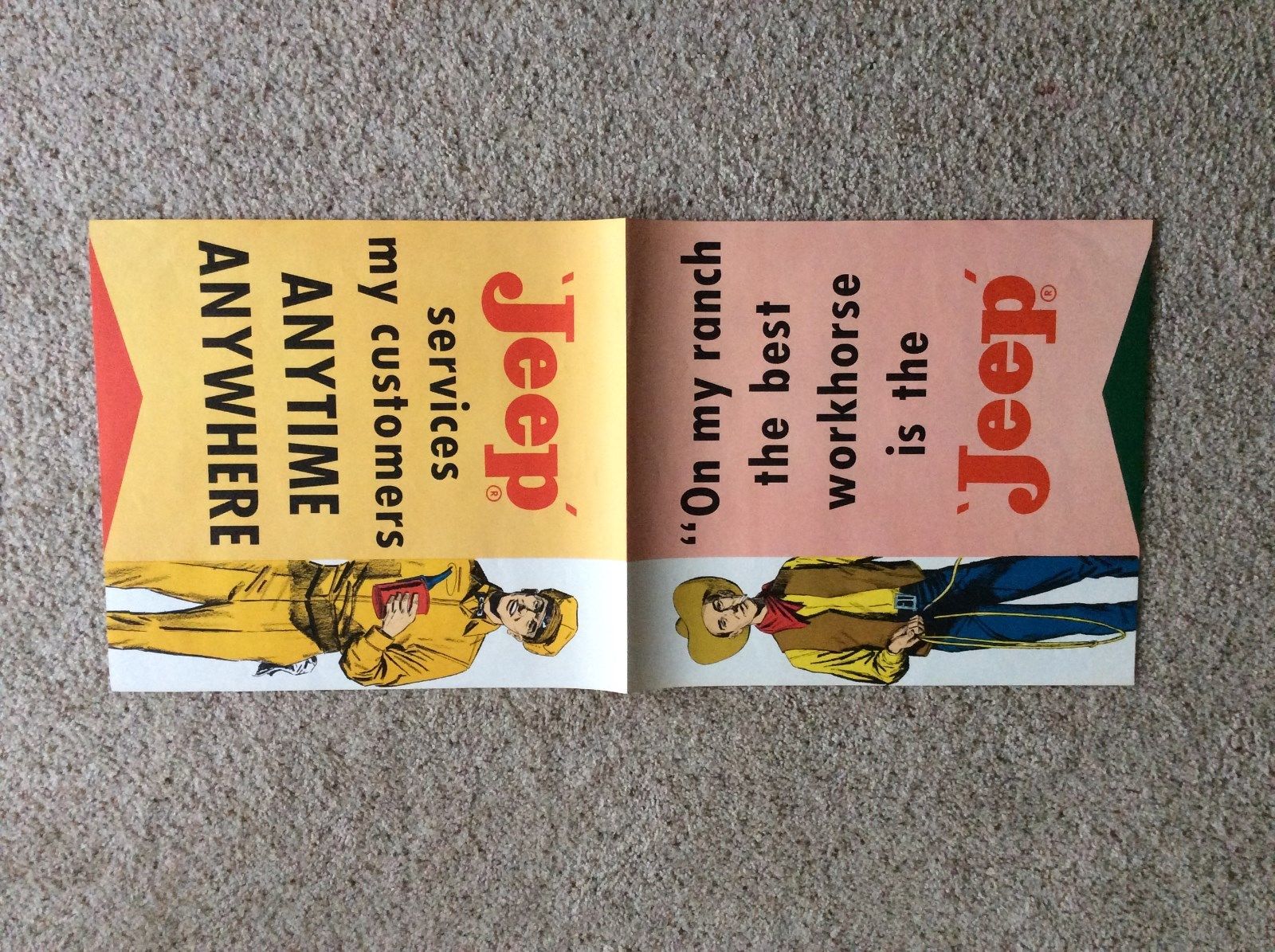
“1960s Jeep original dealership showroom two sided paper sign, size 15 by 17 inches, condition is good, any questions please send an e-mail, USA shipping will be $8.00, overseas at extra cost.”
View all the information on eBay
This is some kind of award related to dealers and the Jeep-Maverick partnership. Anyone know more? Seller describes it as a “Maverick Sponsorship ERA”
View all the information on eBay
UPDATE: **SOLD** on eBay.
Cool sign. Bidding is up to $307 already. No description or size estimate provided.
Check out this article from the Heinz History Center. It’s even pretty accurate (I have my quibbles, but you can’t explain everything in a short blog article). Thanks to Mike for pointing me toward the article.
http://www.heinzhistorycenter.org/blog/western-pennsylvania-history/see-the-jeep-as-a-lady
Here’s a neat magazine cover that I hadn’t seen previously:

This one you may have seen. It was going around Facebook:
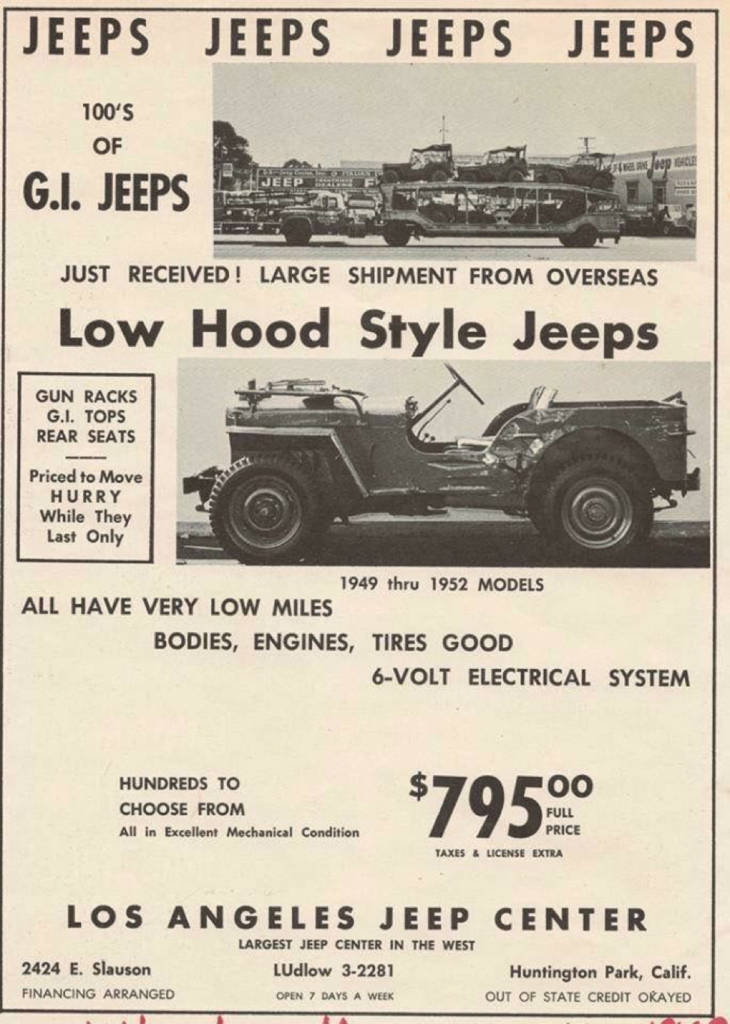
These two pages from a 1946 magazine ad are likely for sale, since it appears the image came from here: http://www.thejumpingfrog.com/?page=shop/flypage&product_id=1088408&keyword=tomboy&searchby=title&offset=0&fs=1
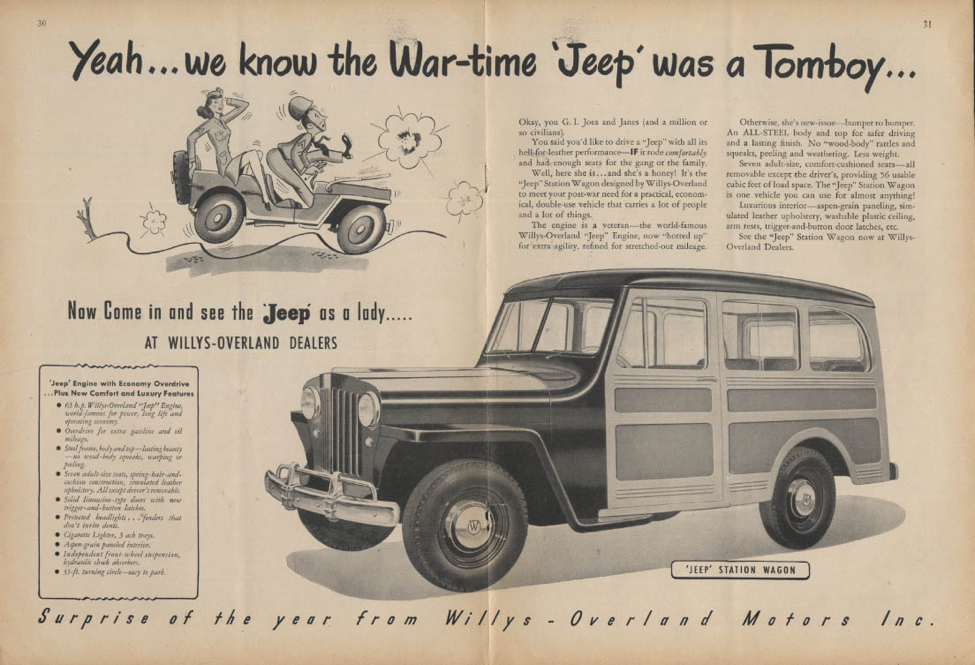
UPDATE: Heres a photo showing a CJ-3A with a Mobile Drill, before it was branded a “Jeep-A-Drill”:
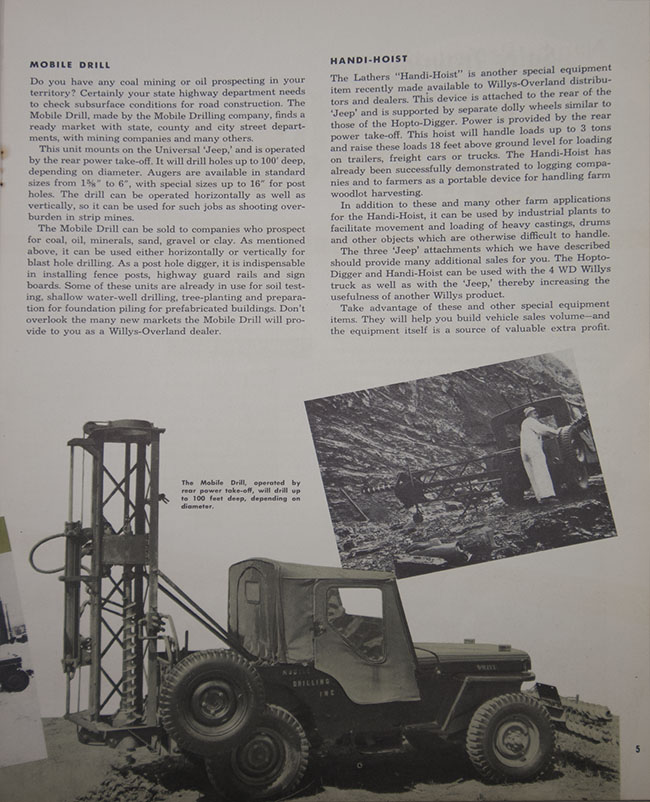
A page from Dave Antram’s collection.
=============================
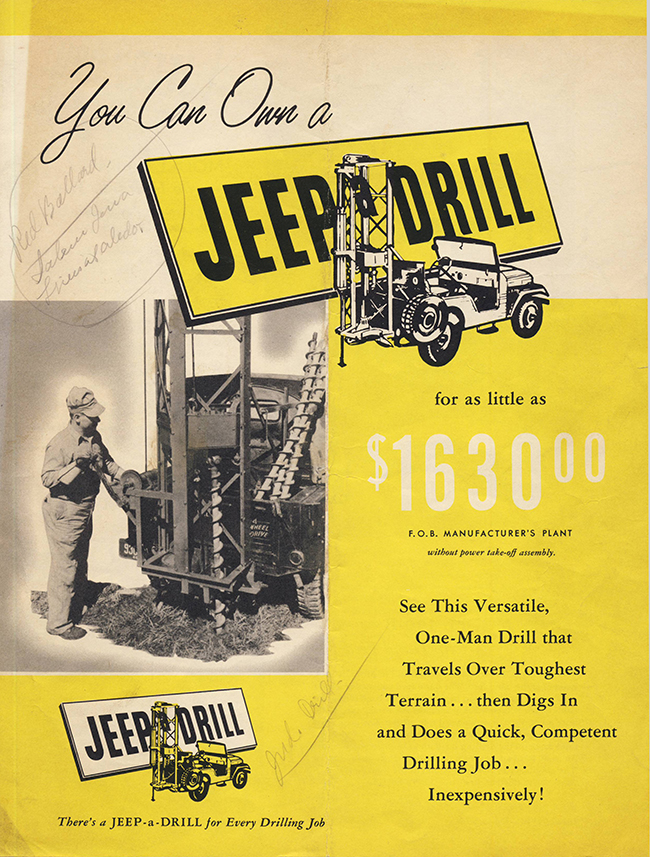
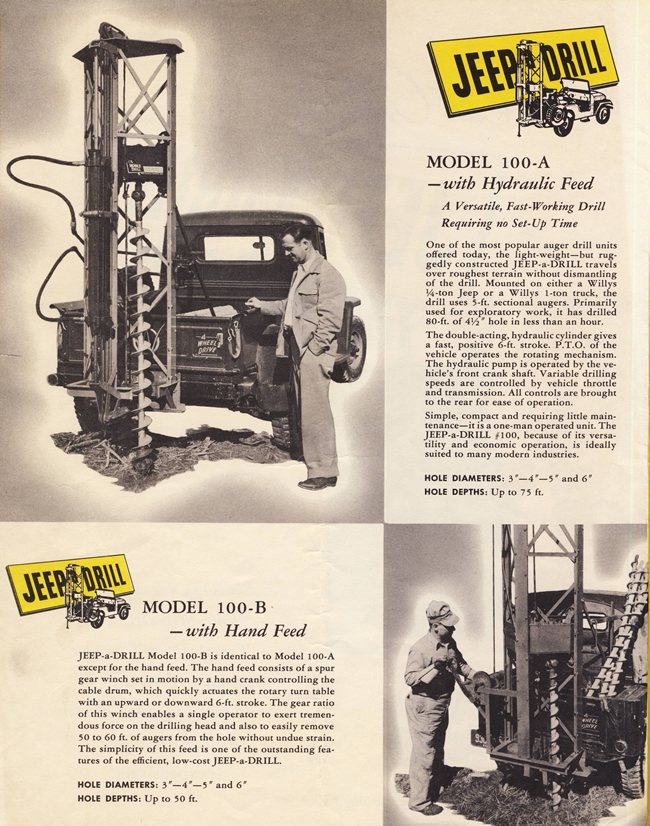
Originally posted October 2017: Mobile Drilling, Inc., produced this brochure about their Jeep-A-Drill product. there were there models (100-A, 100-b, 200), two powered by hydraulics and the cheapest one, the 100-A, powered by a hand crank.

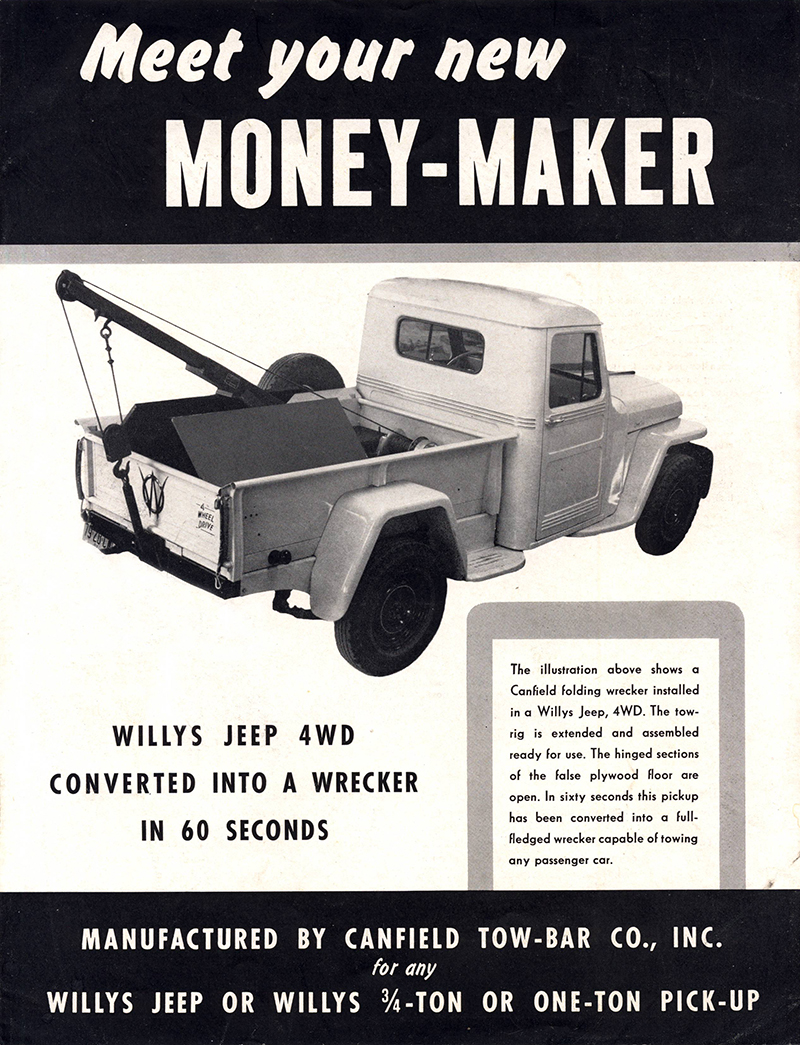
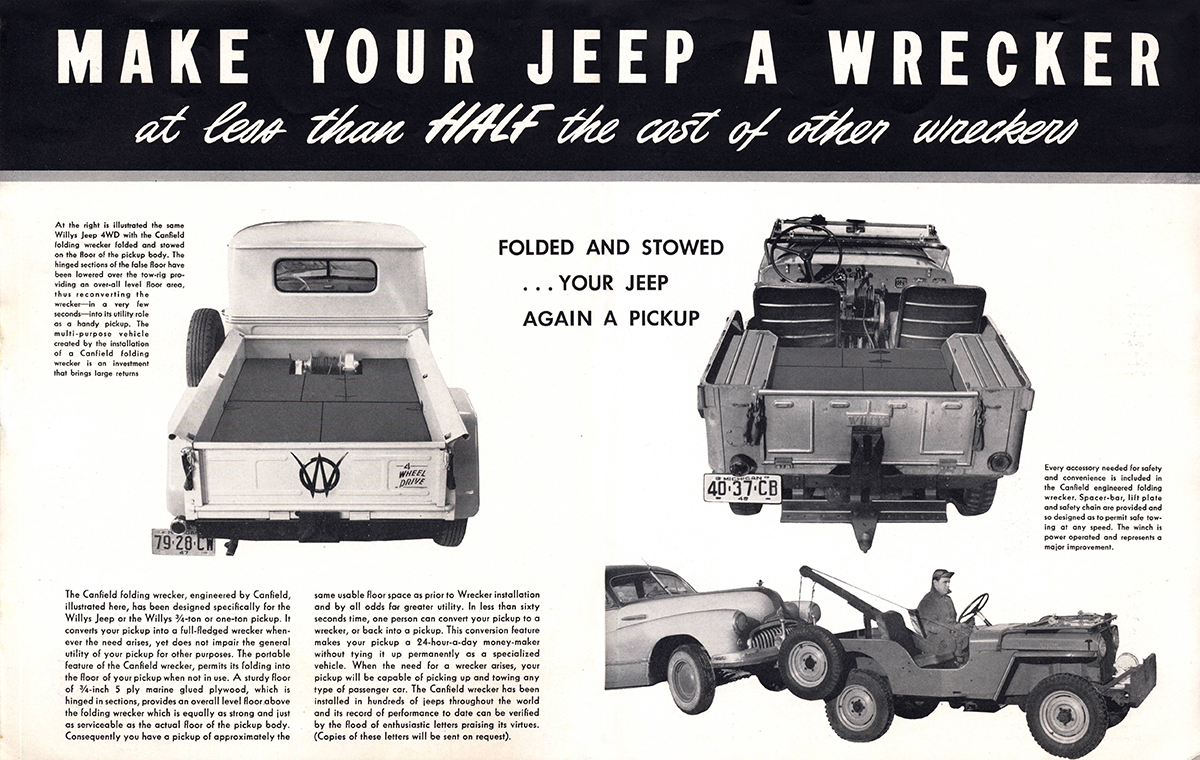
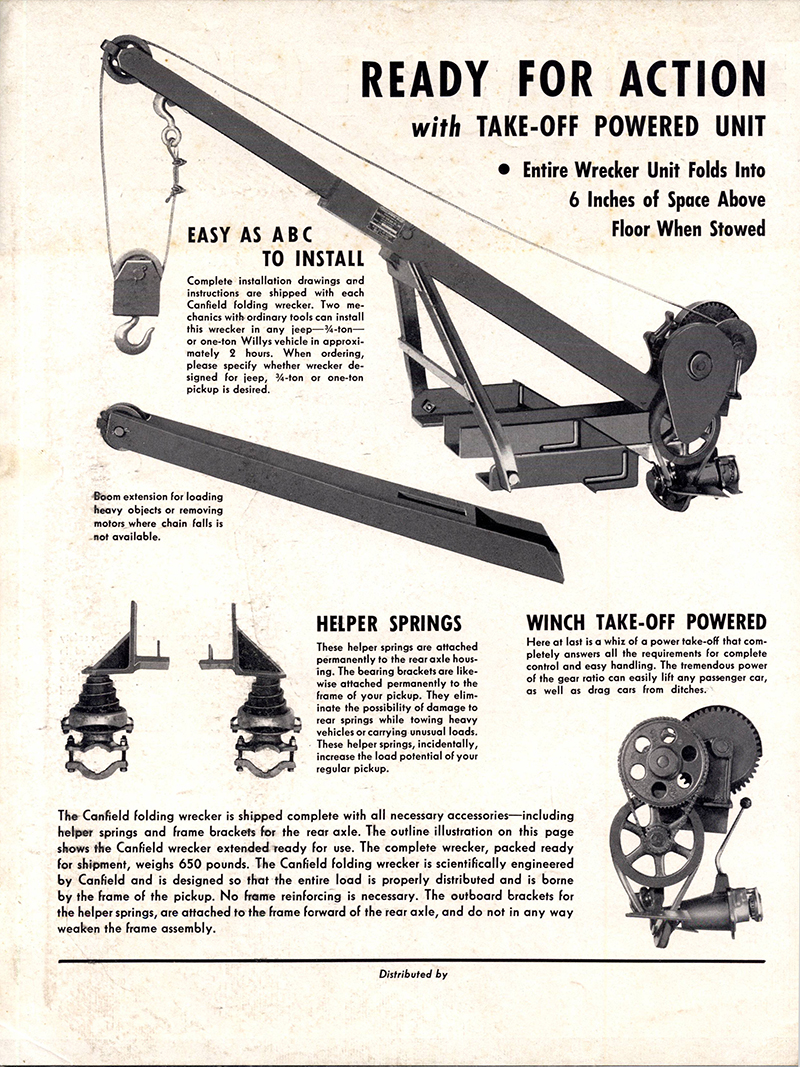
I like this brochure. It includes some nice visuals of the Canfield Wrecker stowed in the back of the truck and jeep.
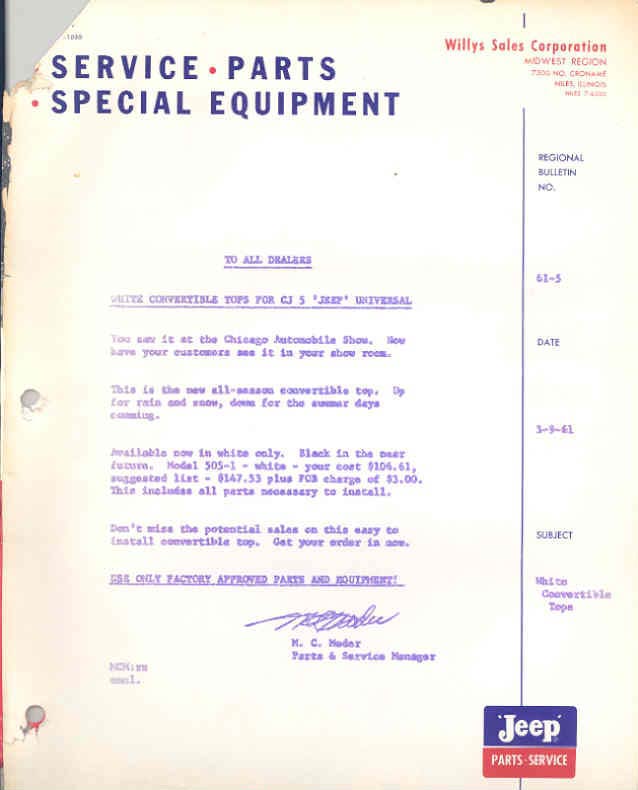
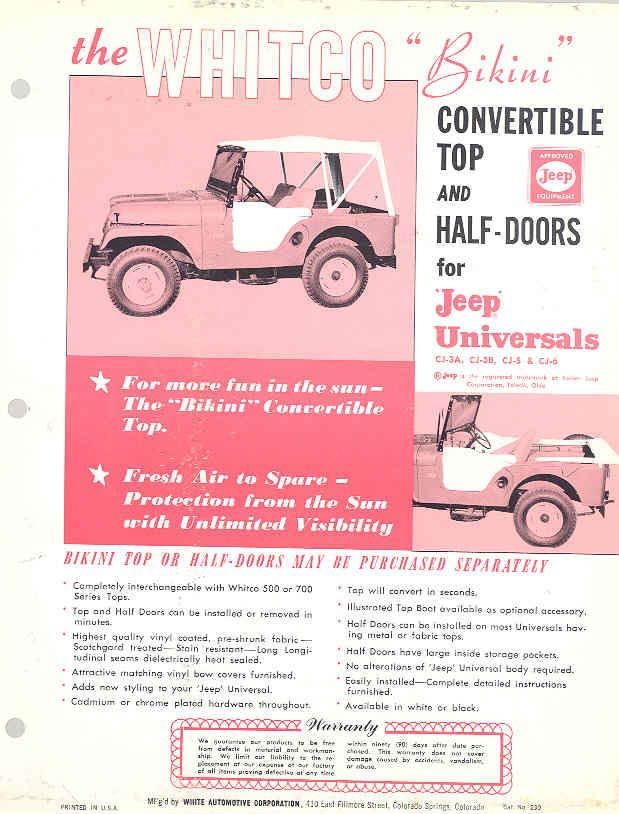
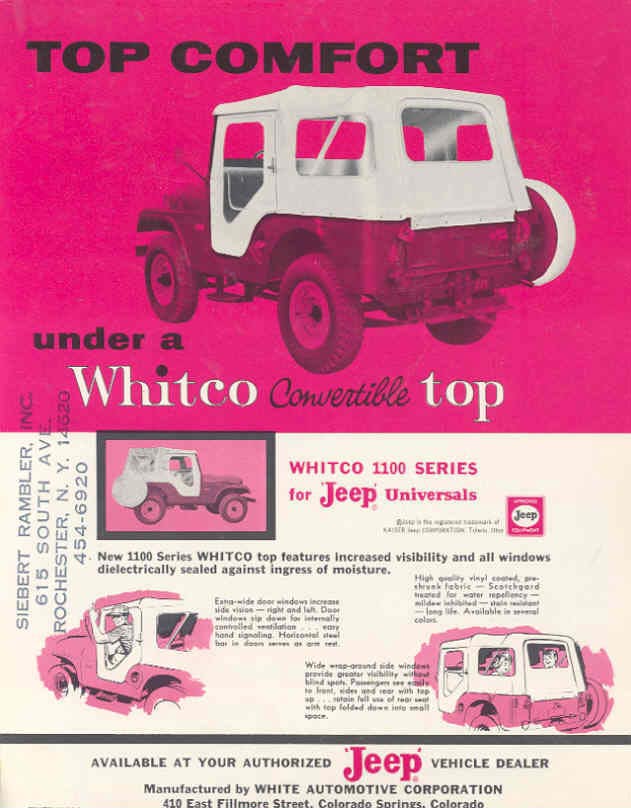
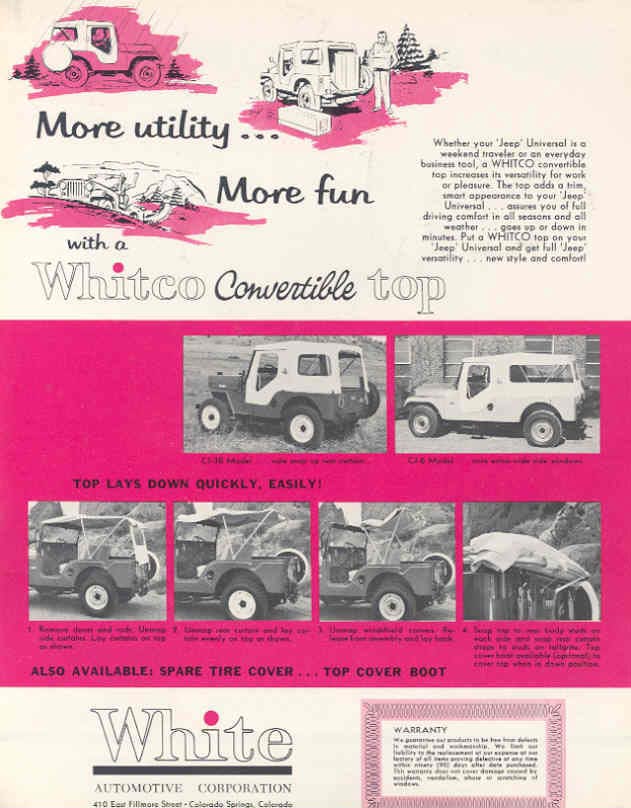
White Automotive was based out of Colorado Springs, Colorado. The company sold different types of soft tops for a wide range of jeeps. They also sold tire covers, half-doors, spare-tire carriers, and other items. The brochures below are currently on eBay. The company also used the brand name Whitco and/or White Mfg. at times.
1. This one page brochure includes a dealer’s note.
View all the information on eBay
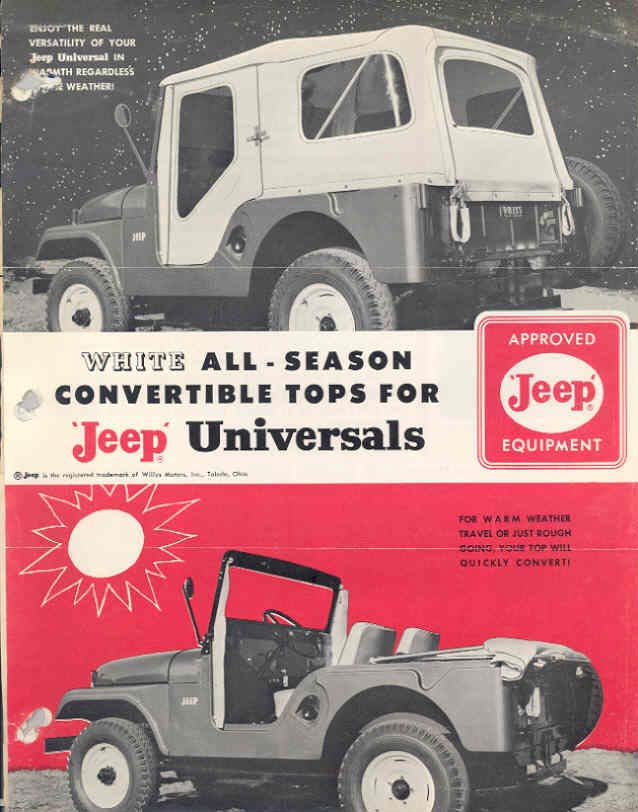
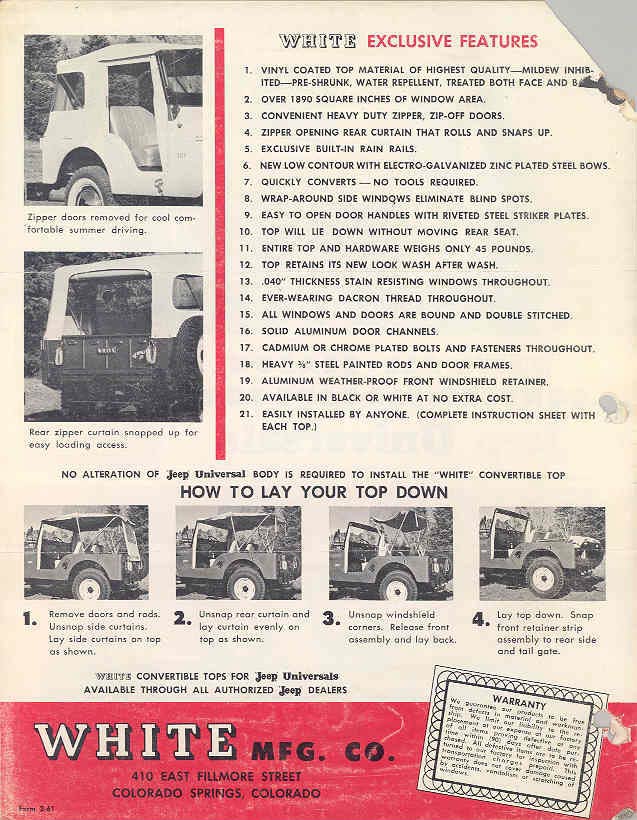
2. White Automotive’s bikini top and half doors.
View all the information on eBay
3. This is an example of a brochure that uses the brand name “Whitco”.
View all the information on eBay
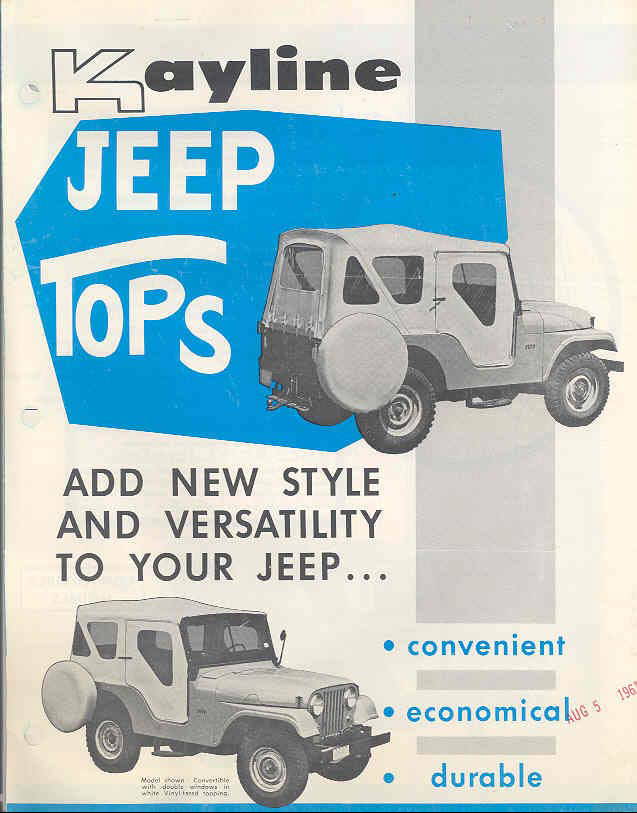
1.. These hardtops were produced out of Colorado, but also marketed by Kelly Manufacturing east of the Mississippi.

I stumbled upon some more Worman brochures in my archives. I’d meant to include these in my Dispatcher article, but my not so organized organizational methods thwarted my best intentions. These are from either 1947 or 1948. It’s possible that these tops still exist, but are easily mistaken for the later Sears tops (at least, i could have easily made the mistake).
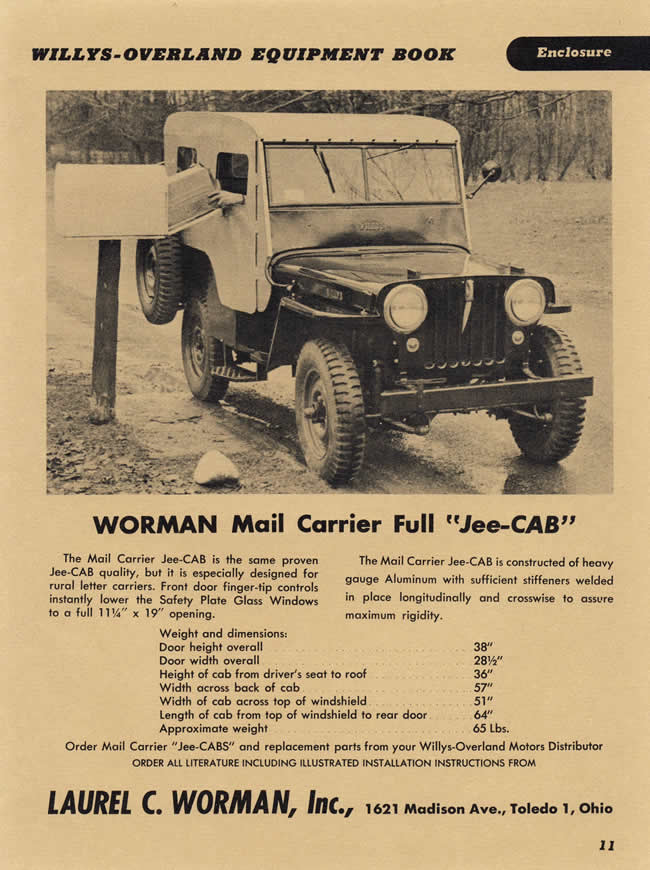
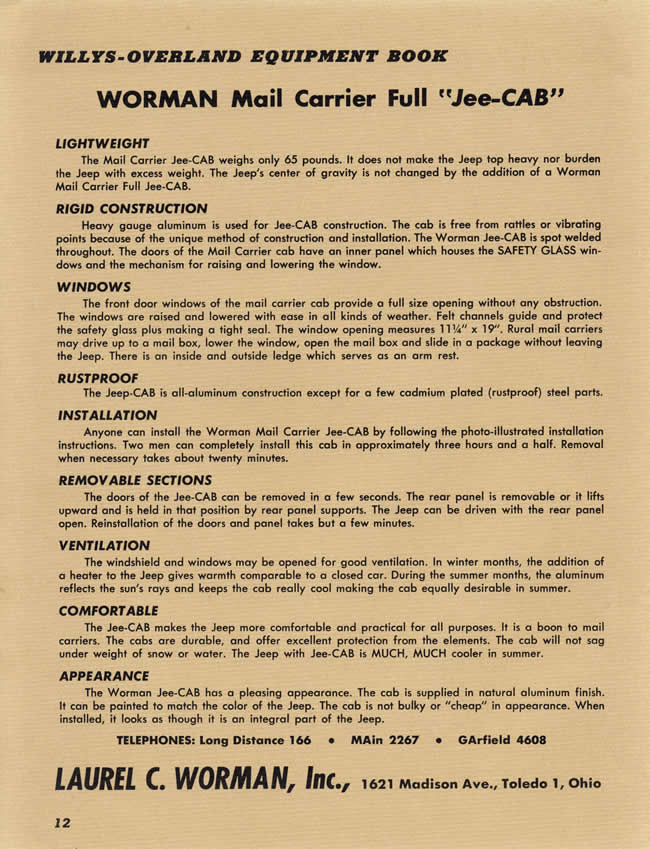
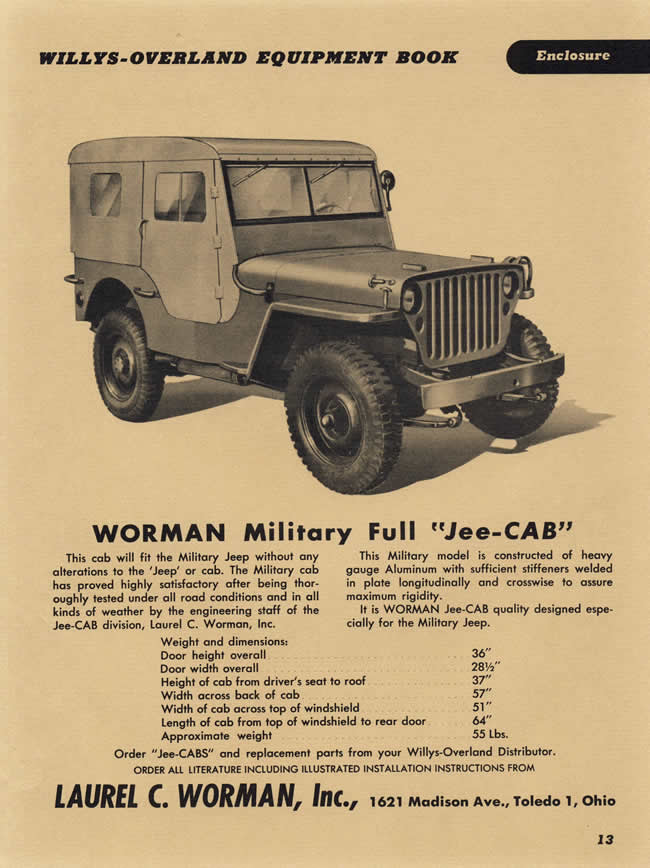
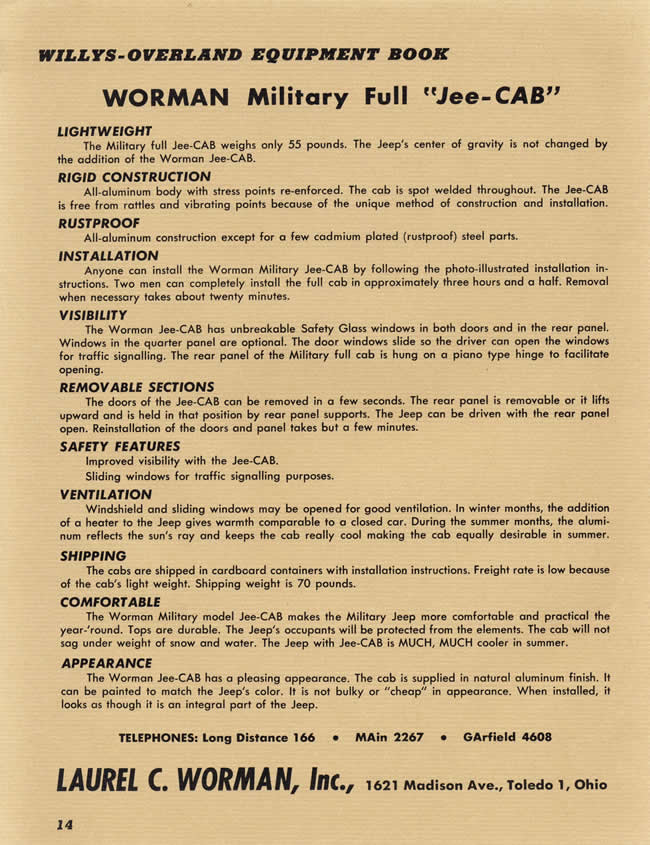
UPDATE II: More history on the Worman company in the January 1948 issue of Wilys Overland Sales News.
UPDATE: This article appeared in the 2016 Winter edition of Dispatcher Magazine. The original of this was posted in October of 2106 as a series of notes, but is now updated with text from that article along with some additional photos.
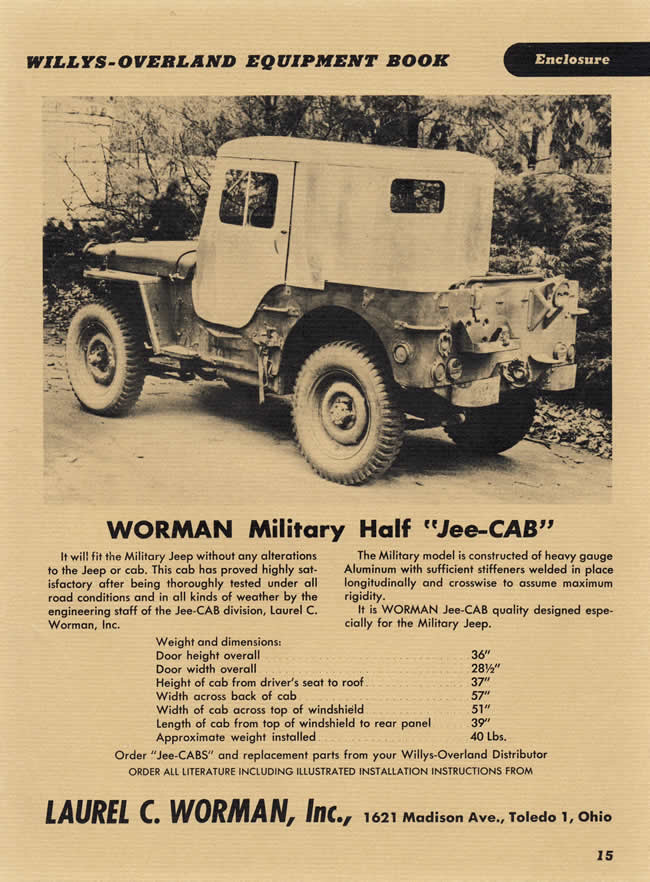
Willys-Overland equipment manufacturers experienced a range of successes and failures. One of those who entered the market at the dawn of the CJ-2A to achieve the former was Laurel C. Worman, a businessman who created the first set of jeep hardtops for different applications, most sold under the brand Jee-Cab.

Early Willys-Overland branded Laurel C. Worman built hardtop.
EARLY YEARS OF LAUREL C. WORMAN:
Laurel C. Worman was born in 1898 in Toledo, Ohio, to Ernest and Clara Worman. He was the younger of two children. The boy’s father Ernest was a self-made man, who developed a large hardwood lumber business, something Laurel must have watched with fascination. When he was old enough, Laurel married Muriel Florence Jackson. The pair had two sons, Ernest “Ernie” William and Lester Lee Worman. The couple later divorced. By 1940, Laurel had remarried a woman named Ruth.
Perhaps Laurel’s father’s entrepreneurial influence led him to become a self-made man himself. While his early employment history has yet to be unearthed, by 1941, Laurel was president of Packard Toledo, Inc. Well known in Toledo automotive circles, Laurel later that year became a northwestern Ohio distributor for the new Willys Americar. It may have been the car that interested him most, but more likely it was the potential of the jeep, which had garnered automotive interest for more than a year.
About this time in 1941, Laurel C. Worman incorporated a company by the same name, under which he placed the Willys dealership. It was only one of several companies he would co-found. In December 1941, he went to Washington, D. C., as a dealer representative and gathered with other auto industry to reps to establish a ceiling on car prices, perhaps in anticipation of war. Four days after returning from his D. C. meeting, the Japanese struck Pearl Harbor.
The war doesn’t appear to have slowed Worman down. By 1942, he was placing ads in the Toledo Blade, arguing how “Willys Truck Owners Are Lucky!” Laurel noted that Willys-Overland had produced the most economical line of trucks. He told potential customers they would be well-served by the truck’s low use of gasoline and their rugged nature, two characteristics important for enduring war time challenges. Worman also made sure to note that Willys was the producer of the jeep, already famous by September of 1942.

As an automotive dealer seemingly in the thick of things in Toledo during WWII, there’s no evidence he formed plans for any jeep equipment. But, as a Willys dealer in Toledo, he certainly would have stayed abreast of the CJ’s progress and must have saw potential in the jeep following the war.
THE CJ-2A ARRIVES:
When the CJ-2A was introduced to the public in July of 1945, options included a front soft top ($55) and rear soft top ($39). The first civilian hardtop half-cab, according to Fred Coldwell in his Preproduction Civilian Jeep book, didn’t go into production until the fall of 1945. Somewhere around that time, the Army asked Willys-Overland to design a full steel cab for the late 1945 MBs. The result was a stretched version of the half cab, but it never went into production. One probable reason was that steel was in short supply. Another reason was that they were heavy.
In August 1945, Worman invited prospective buyers to visit his dealership and see the new “Universal ‘Jeep’” for themselves. The amazing “4-in-1” vehicle was advertised as a light truck, a light tractor, a runabout, and a mobile power unit. But, it still lacked the comfort of a full cab, a fact that must have been apparent to Worman as he engaged customers and sold jeeps through ’45 and into ’46.

Perhaps after hearing from dealers and customers that they’d prefer a hard top over the canvas front and rear tops, the Willys-Overland decided to contract with Laurel C. Worman to produce a line of hardtops. The hardtops would be made of aluminum, which, unlike steel, was amply available and light.