emailNeed to contact me and don't have my email? Click on email button.
About eWillys
Welcome to eWillys.com, a website for vintage jeep enthusiasts. I update this website nearly every day with jeep deals, jeep history, interesting reader projects, jeep related info, and more.
These quick searches can help you find things on eBay. People list in the wrong categories all the time, so don't be surprised to see brochures in the parts area for example. This section used to be split into jeeps, parts and other categories, but recent changes to eBay will require this information to be recoded.
The links to posts below show jeeps grouped by models, condition, and other ways. Some of these jeeps are for sale and others have been sold. If you are unsure whether a vehicle is still for sale or not, email me at d [at] ewillys.com for more info.
Importantly, the allure of buying a project jeep can be romantic. The reality of restoring a jeep can be quite different, expensive and overwhelming without the right tools and resources. So, tread carefully when purchasing a "project". If you have any concerns about buying a vintage jeep, or run across a scam, feel free to contact me for help, comments or concerns .
Thanks to Chris Rutherford for shooting this video showing Friday morning at the Willys Rally. In the video I saw a few familiar folks, including Cowboy near his Jeep truck and Russ’ wagon, along with Barney manning his parts booth.
For some reason, when Chris spins the camera part way through, the video doesn’t spin, so some of the video you have to tilt your head to see. No matter, the effort is greatly appreciated!
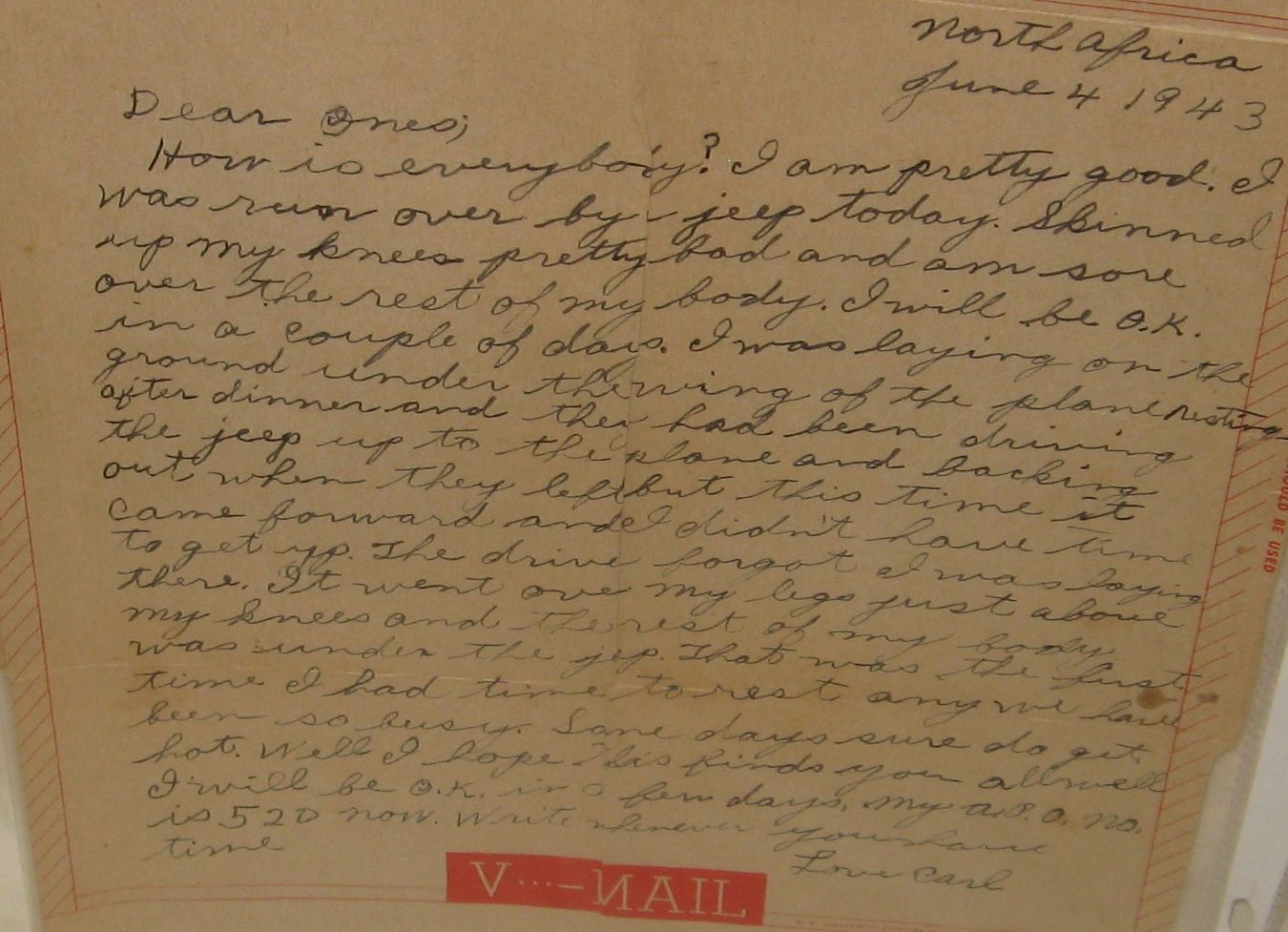
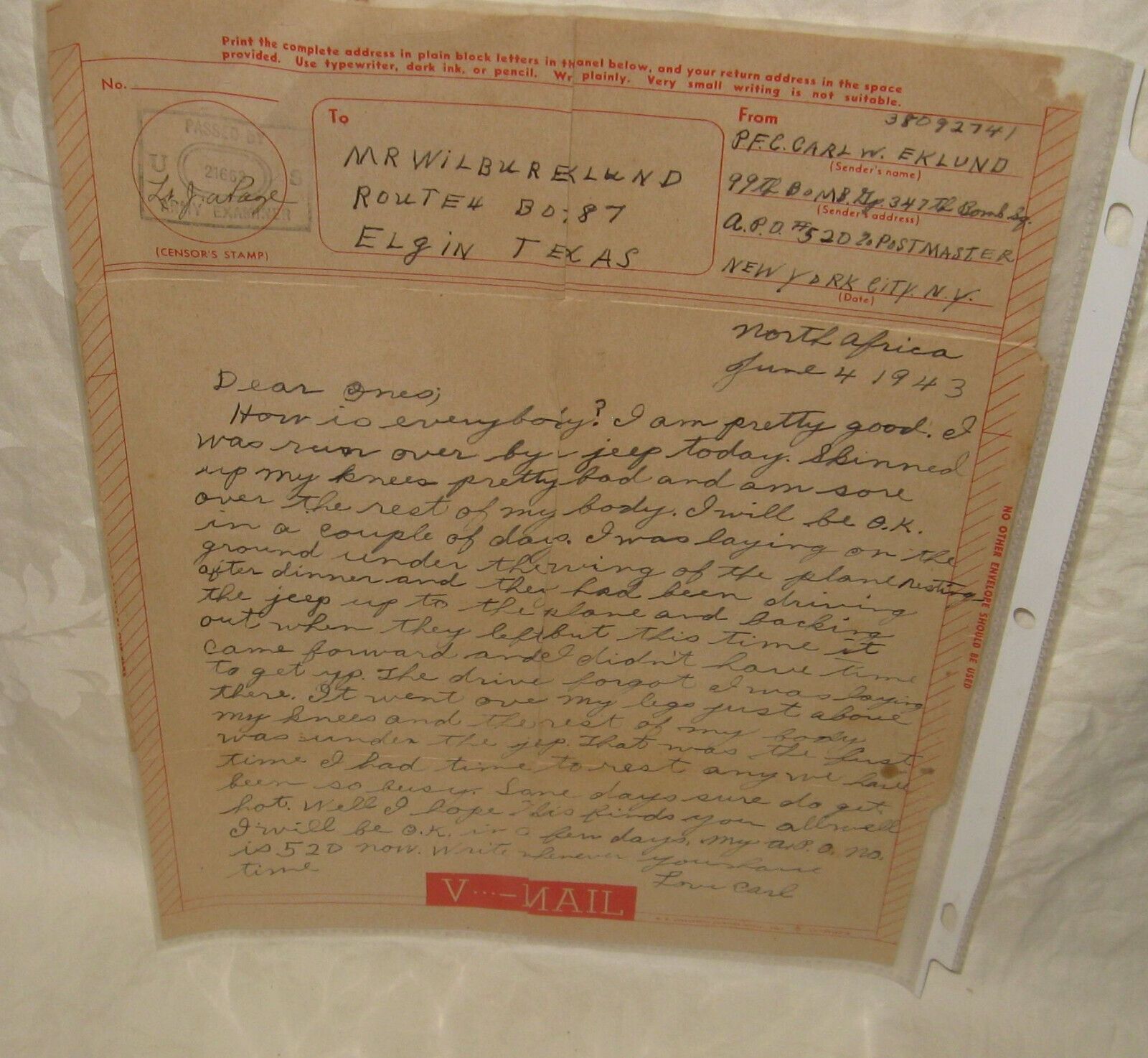
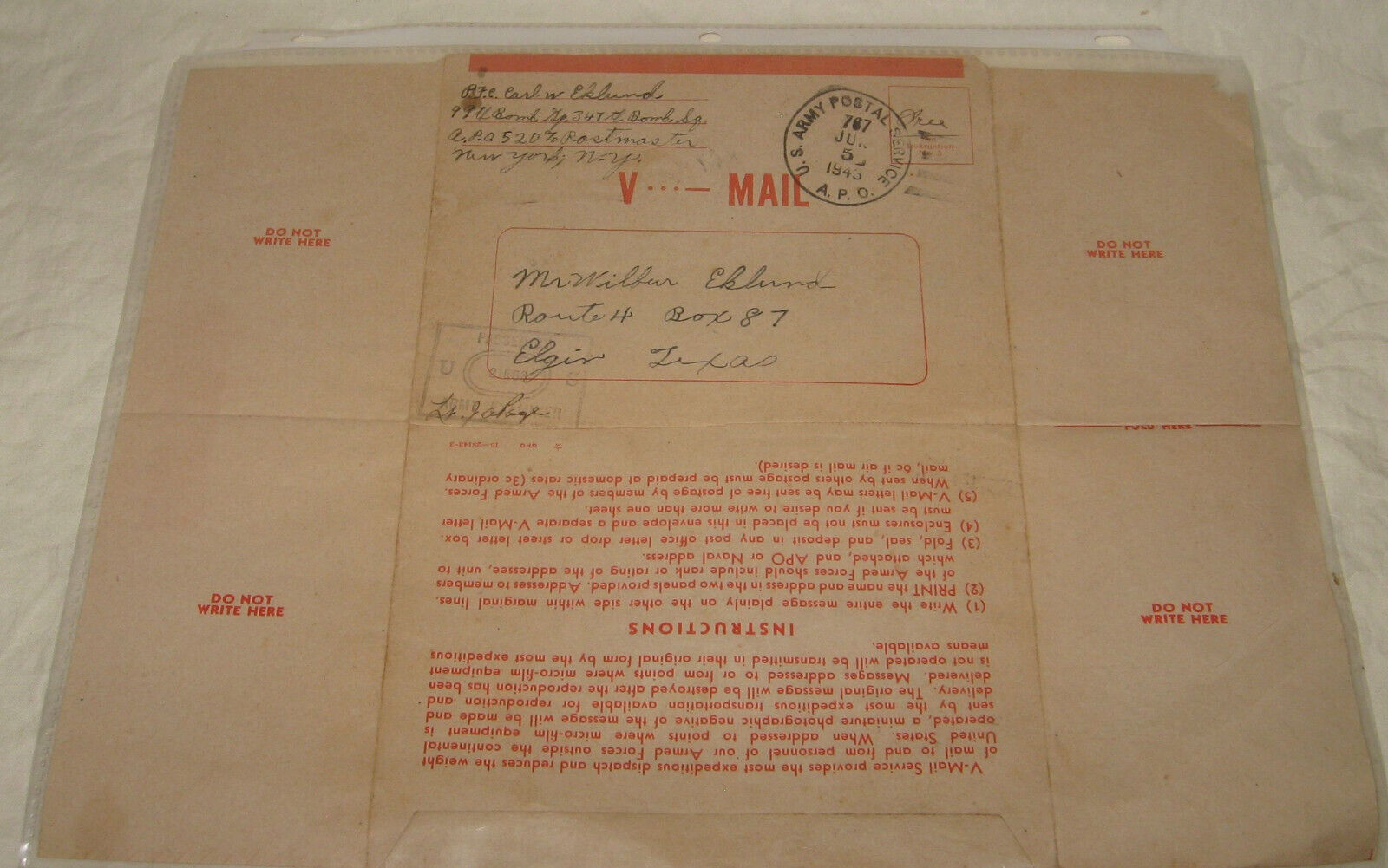
This letter, written by PFC Carl W. Eklund in 1943, describes how he was lying under a plane, trying to get some rare rest, when a jeep ran over his legs just above the knees. The injuries weren’t very severe and he felt he’d be recovered after a few days of rest.
Carl went on to serve as an aircraft mechanic in North Africa, then in Italy. In 1945, he received an honorable discharge and returned to Texas. Unfortunately, his brother Rudolph, who was captured in Java in 1942, died in Burma in 1944 while still in captivity.
Carl was living in Kenedy, Texas, as of 1969. I could find no updates about him after that.
Barry published three rare Newgren Lift Service Bulletins created in 1947 by the Newgren Company, sent to him by Keith Buckley. Learn more at Farmjeep.com.
Brian shared this video. I don’t have away to embed it here, so you’ll have to view it on FB. The narrator notes that the jeep has been sitting since 1994, but it only required a little oil to make them work again. The narrator concludes that because of this the design was a good one.
My only caveat on that compliment is that near the end there’s a closeup that shows how bent one of the arms is. For better or worse, the bending of the levers has been one of the weak spots of these of this design.
UPDATE: Don’t forget the Willys Rally this weekend!
This year’s Midwest Willys Rally is June 03-04 this year. This event takes place at Heuston Woods State Lodge in College Corner, Ohio. Learn more here: http://www.mw-willysjeep.com.
Ann has dubbed the yellow racer “Little Miss Sunshine”, due to the yellow color. I don’t know if that’s the end-all name, but it’s a fine name for now.
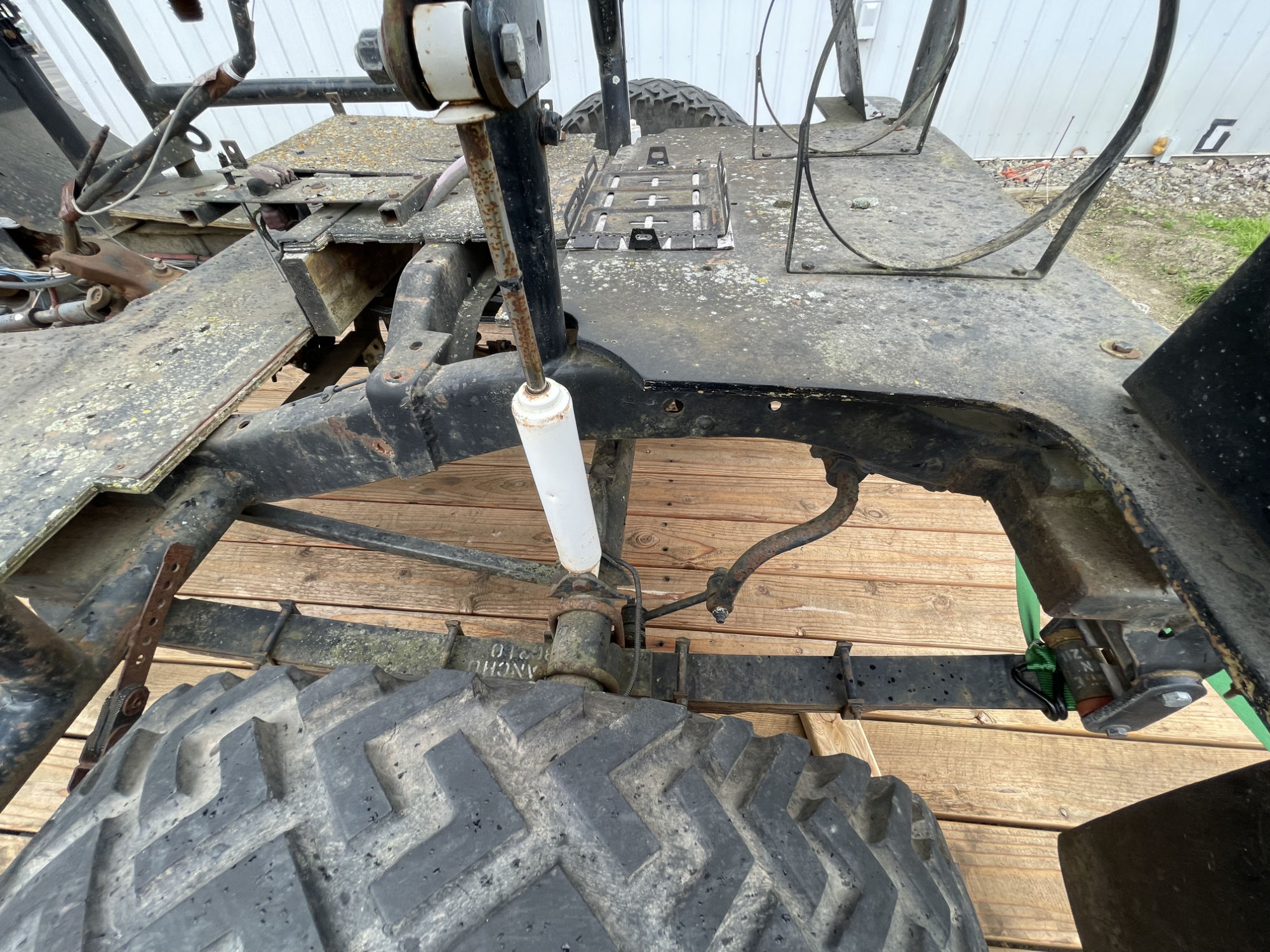
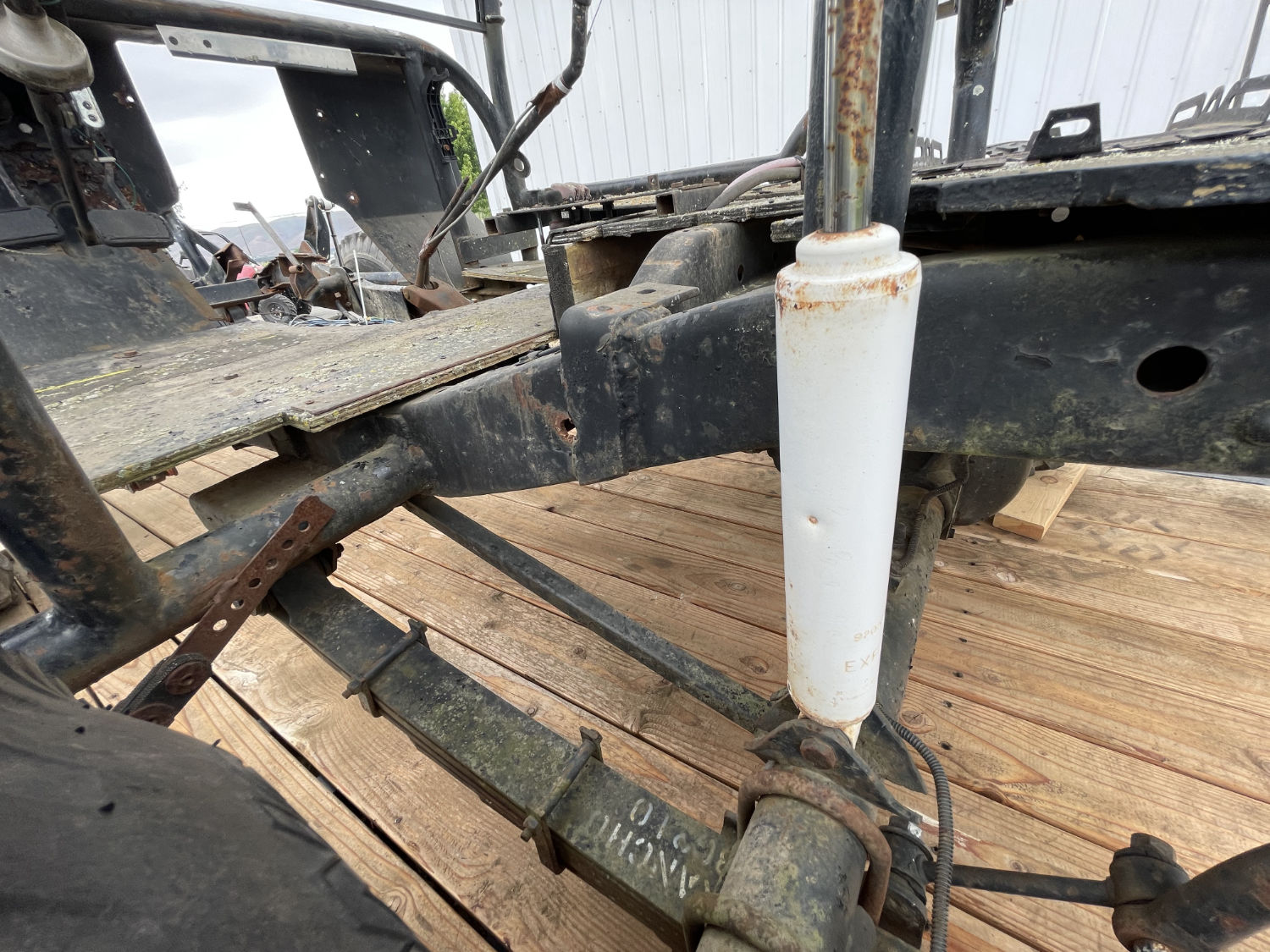
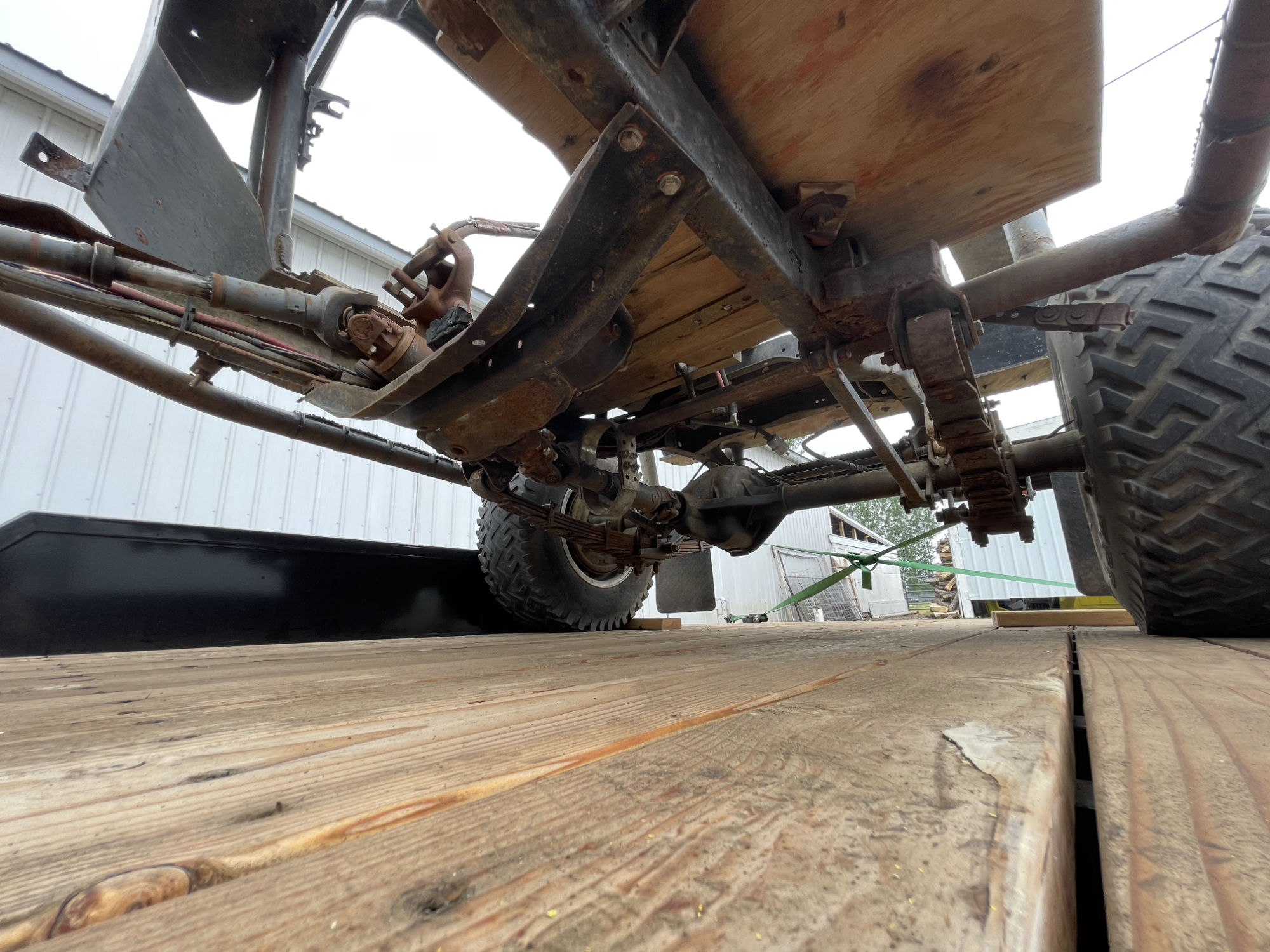
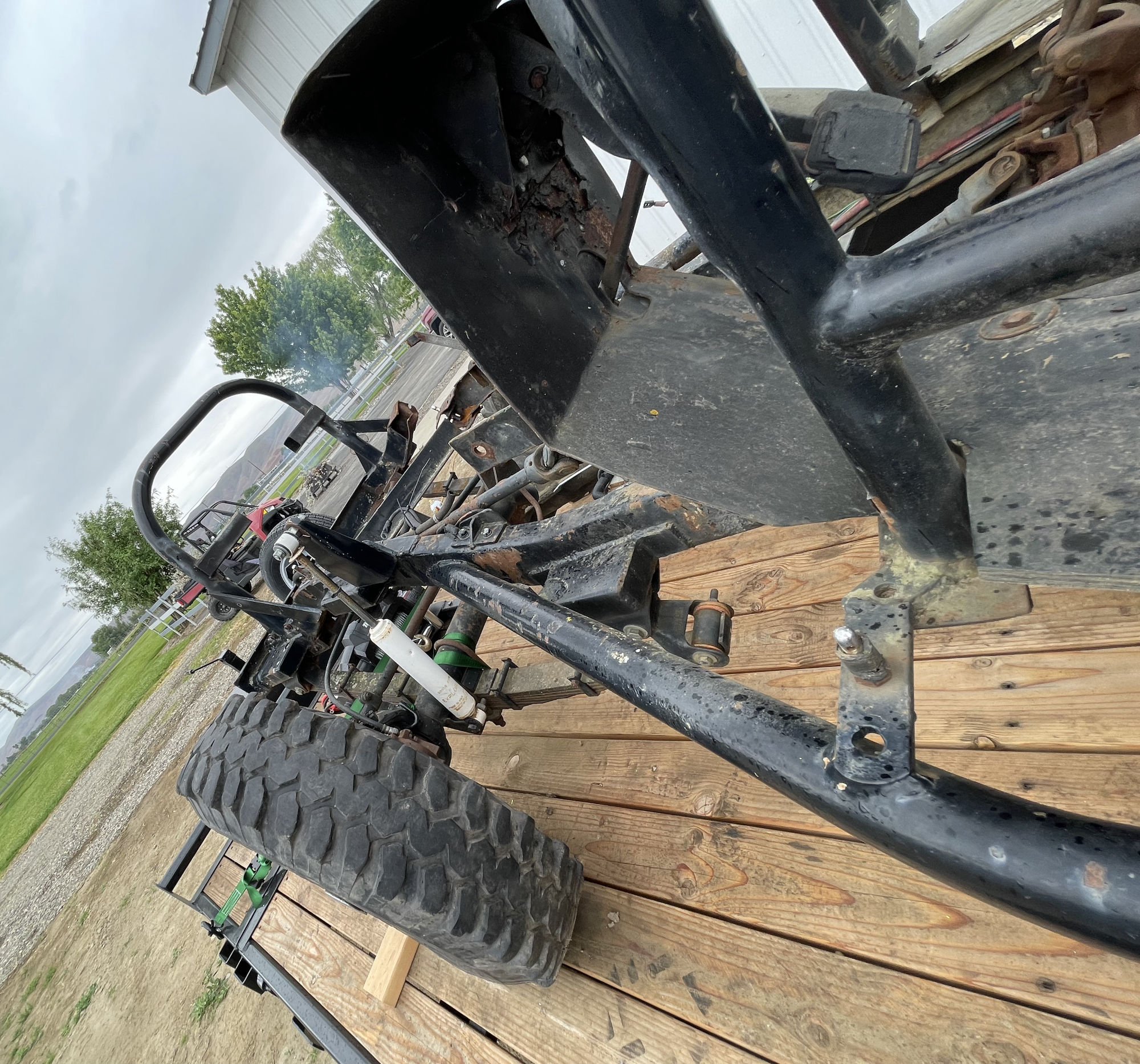
Yesterday, I decided to remove the body so I could get a better look at the condition of the cage and the suspension.
Let’s take a look first at the rear suspension. The suspension in the rear consists of 2.5″ ranch springs that have been outboarded, to which a sway bar and arms have been added. In the pic below you can see the sway bar behind the axle and the arms in front, connected under the frame. The springs are outboarded six inches. For example, the spring holder in the back consists of a 2×4 rectangular tube, positioned horizontally (under which the spring holder is welded), was welded to a 2×3 tube positioned vertically, which was welded to a 1/4″ plate that was then welded to the frame.
The front of this rear setup is similar, only for additional strength, a 2.5″ tube was welded to the spring holder and frame, which is then welded to the side bar that sits outside and under the body.
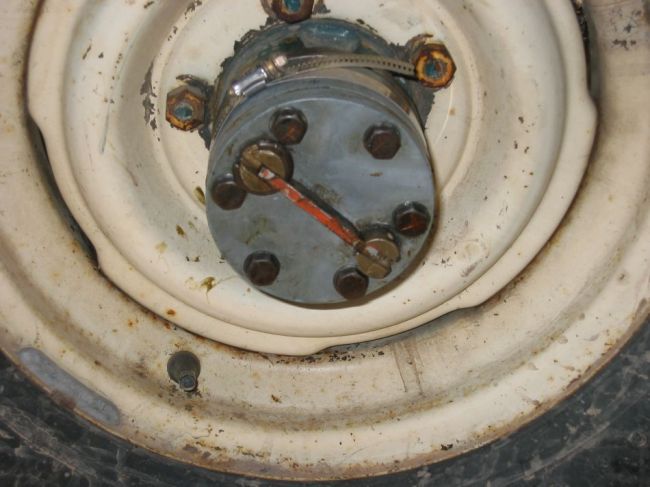
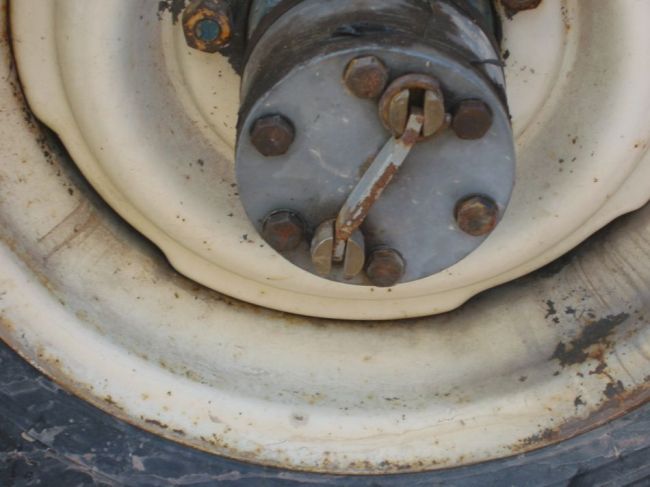
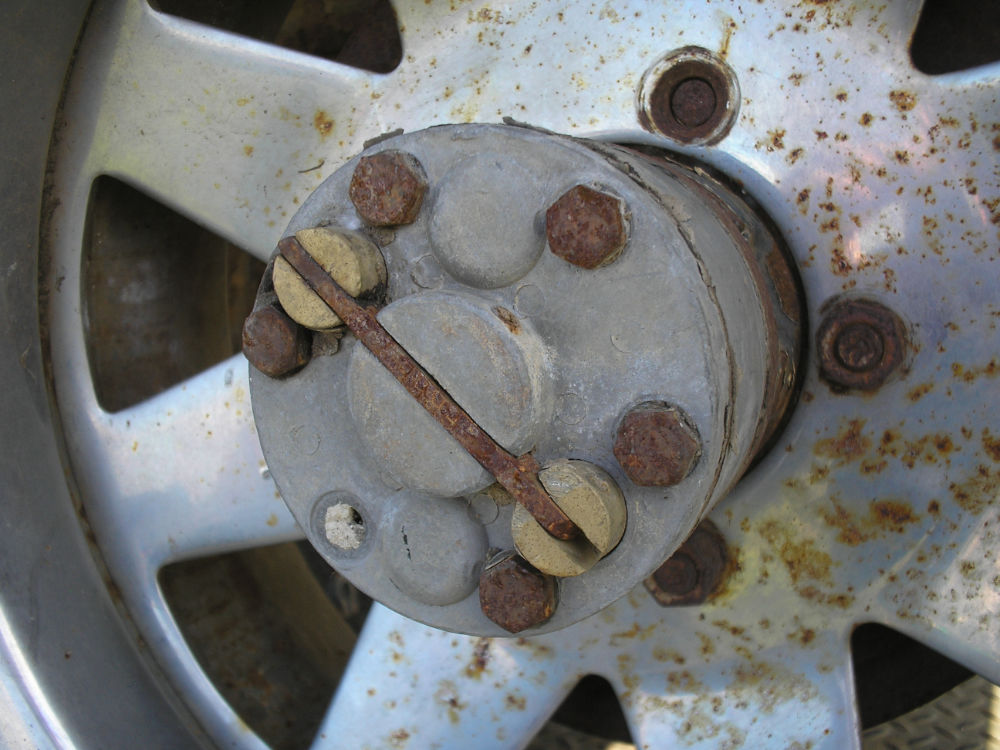
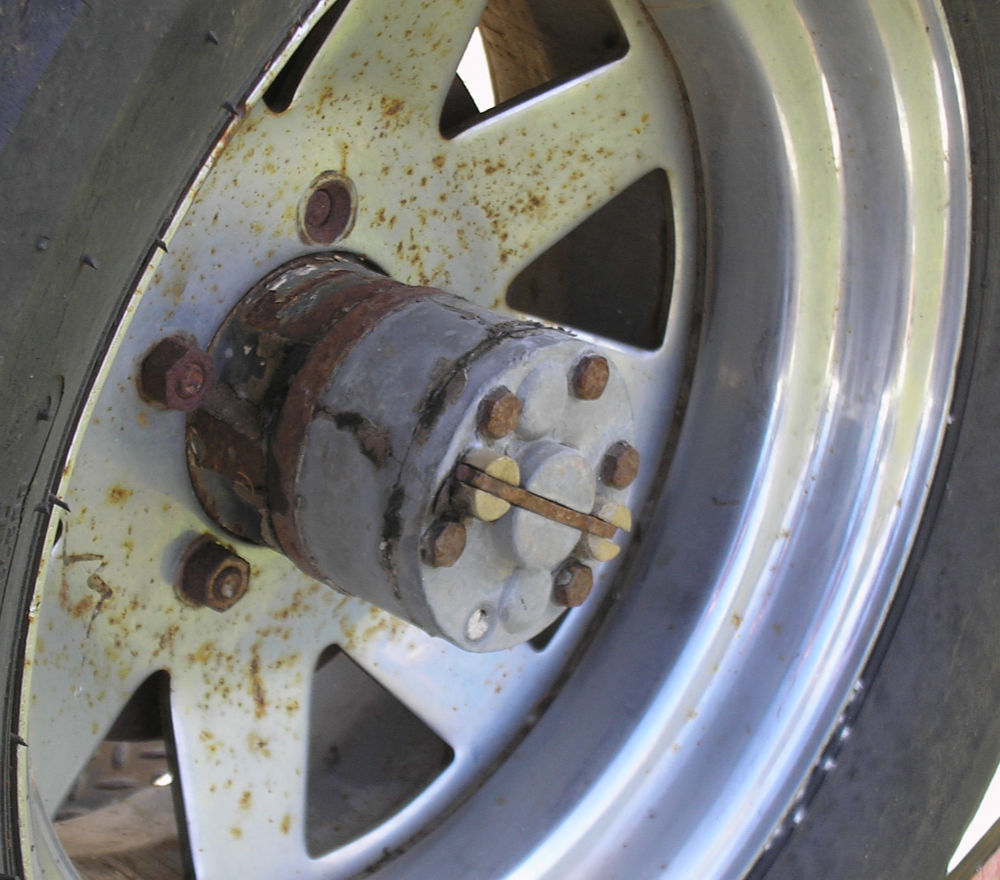
Blaine forwarded photos of a Willys Wagon with the one-lever-style Dualmatic hubs that include a center bump. I don’t have docs that conclusive identify this one-lever hub as a Dualmatic, but it seems highly probable. Given the design, an attempt to secure the lever with a bump to keep it from shifting, it is likely it was an iteration of the original Dualmatic one-lever hub.
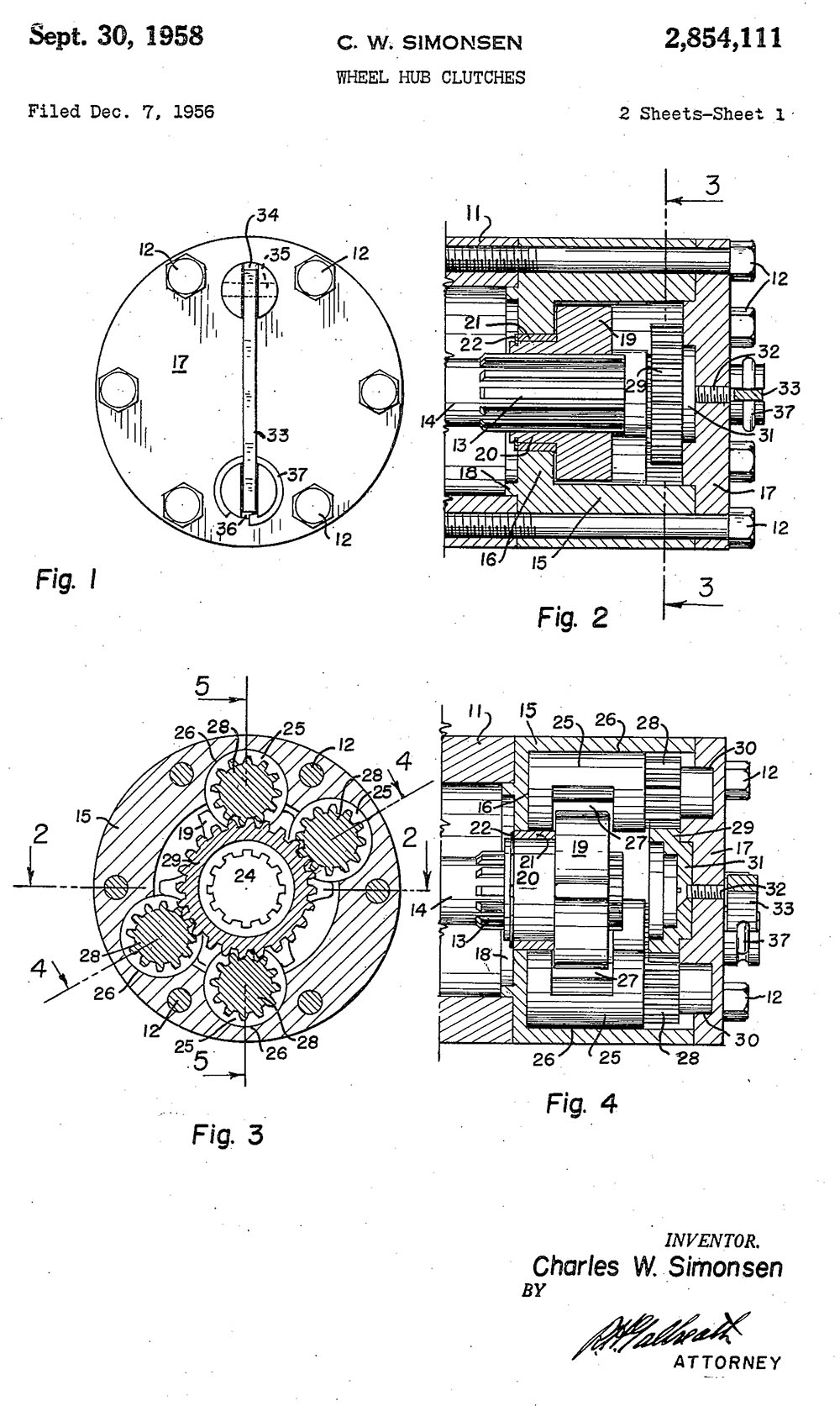
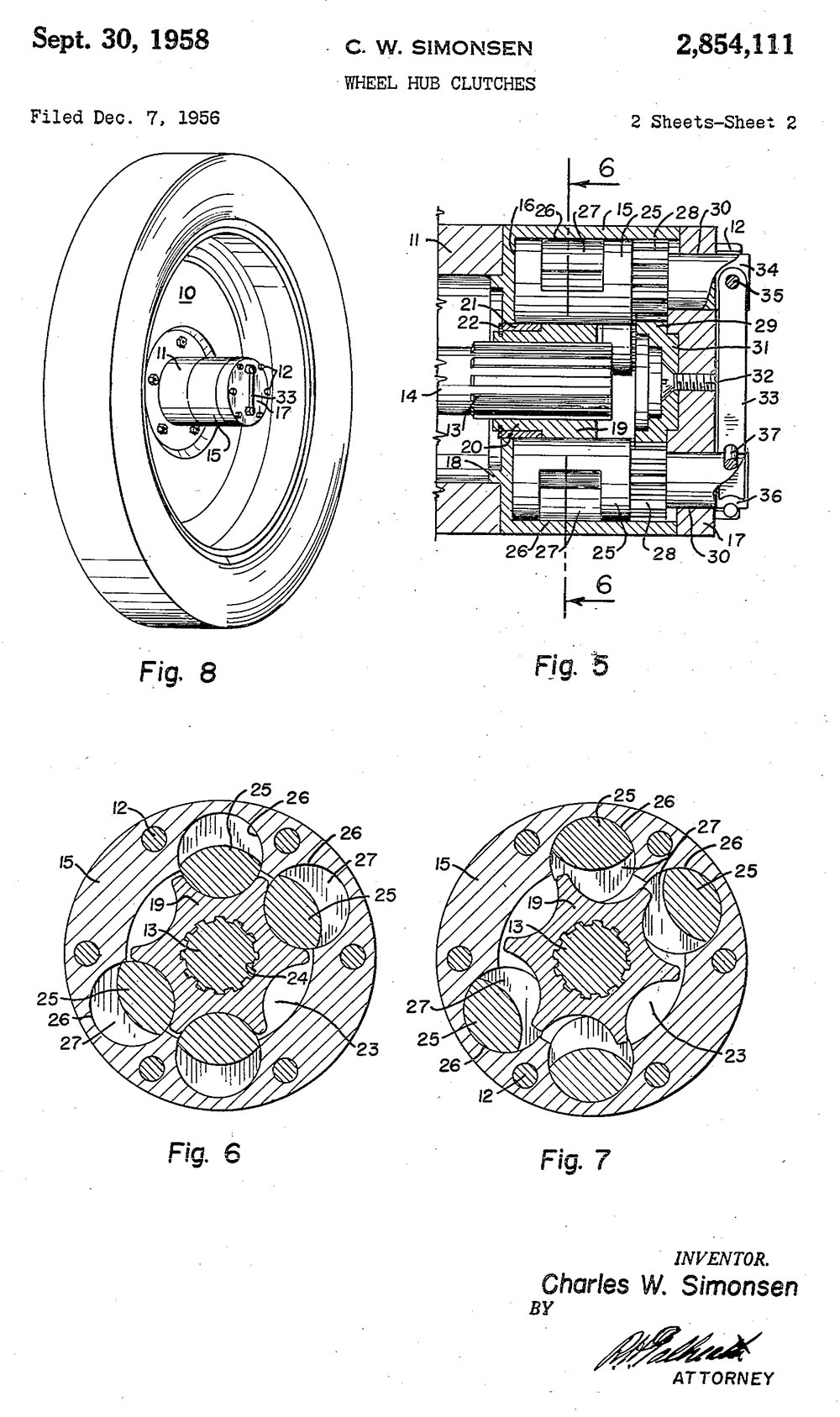
As a reminder, here is the original patent by Simonsen for the Dualmatic:
Here’s what I believe that original hub looked like:
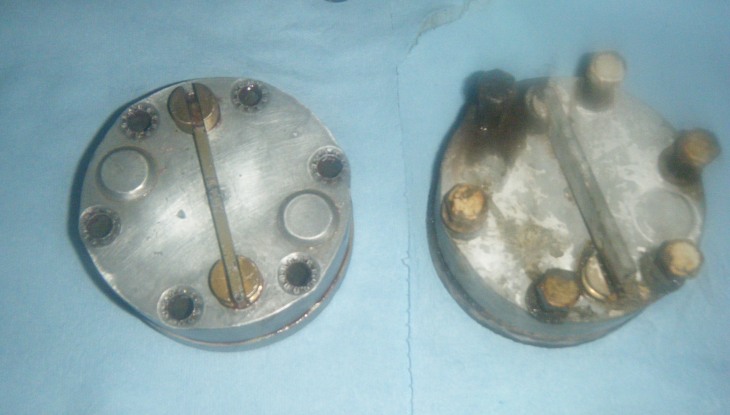
This was likely the second version, this time with two circular bumps:
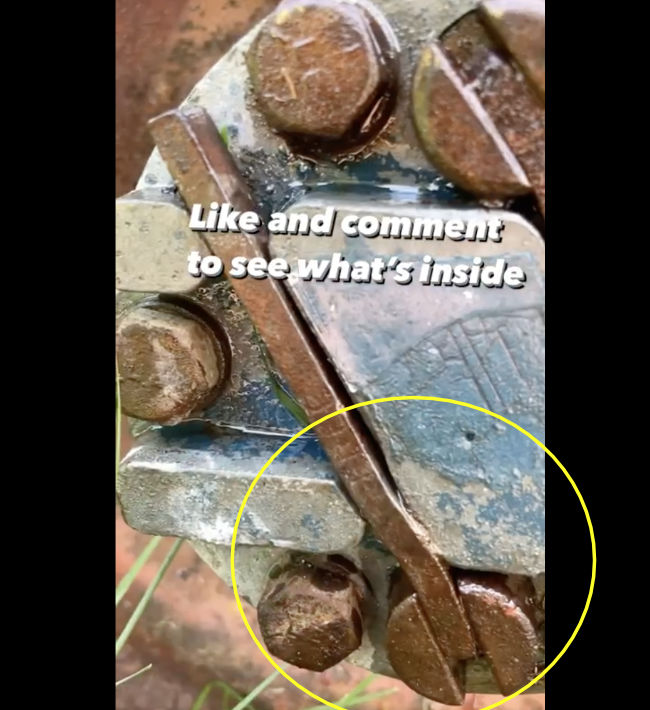
One of the issues with both of the early versions was that the internal forces apparently could cause the lever to bend. Here’s an example:
To halt that from happening, as photographed by Blaine on a Willys wagon, Dualmatic may have gone with this design:
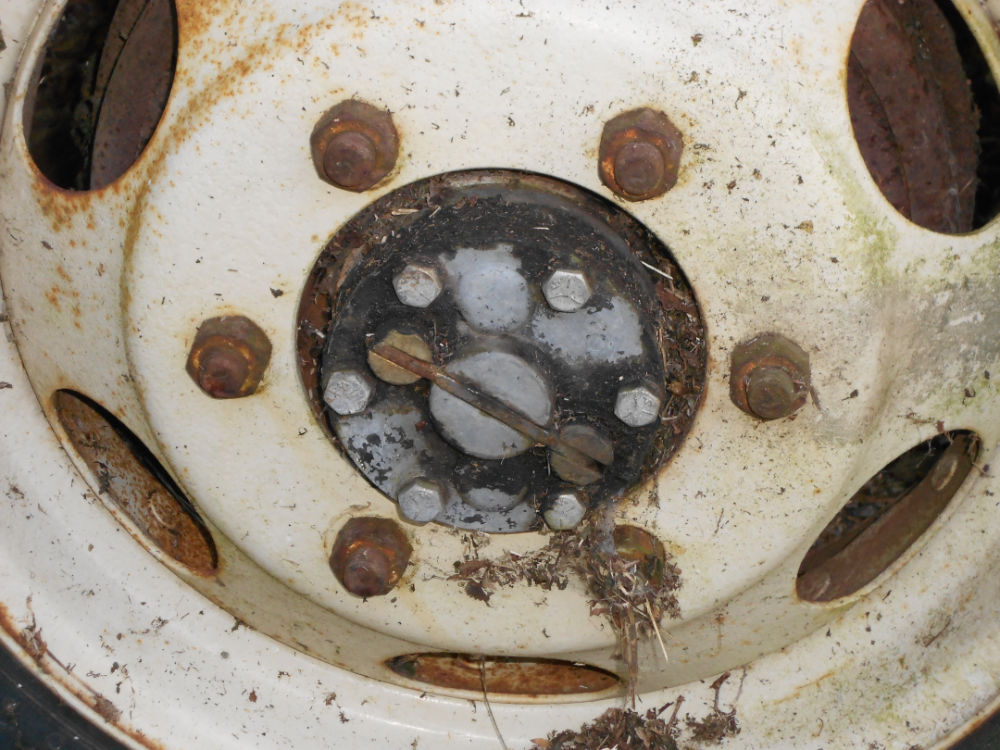
A similar design was photographed on a Dodge truck (or I was told it was a Dodge truck):
Perhaps Dualmatic concluded that the simple one lever design simply didn’t hold up, so the company shifted to a two lever design. This is the point where it would be good to compare the internals of the one-lever vs. two-lever design.
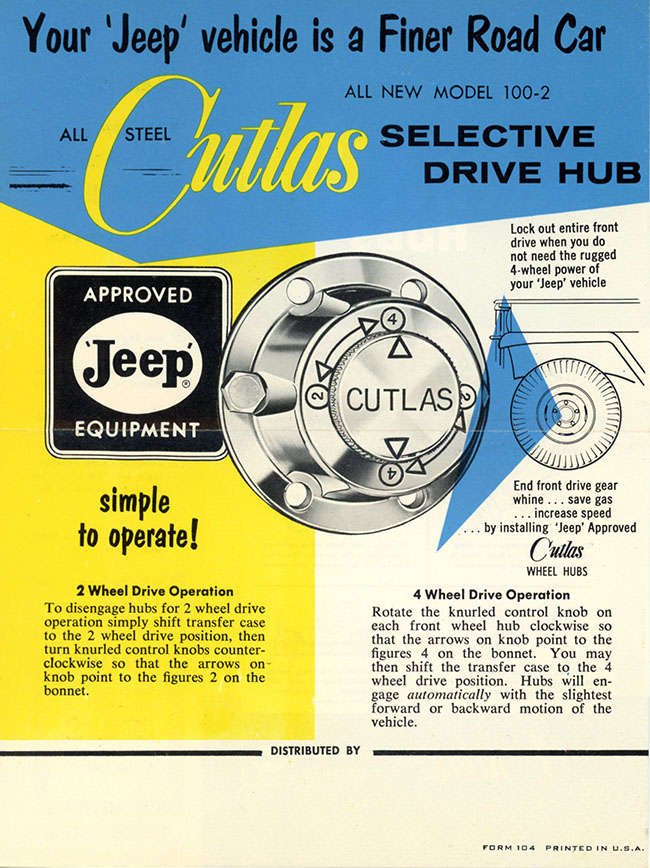
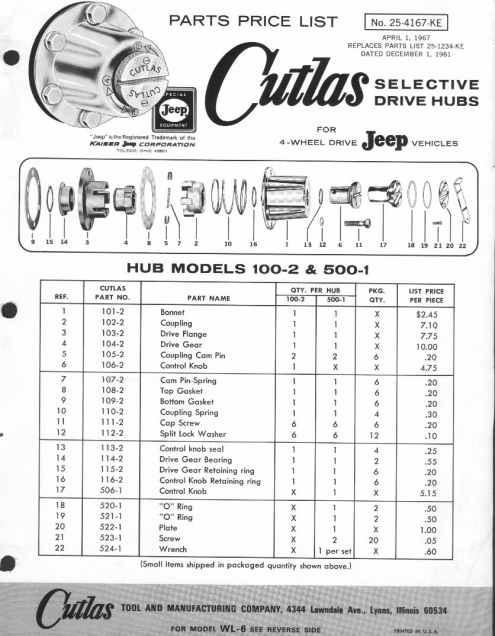
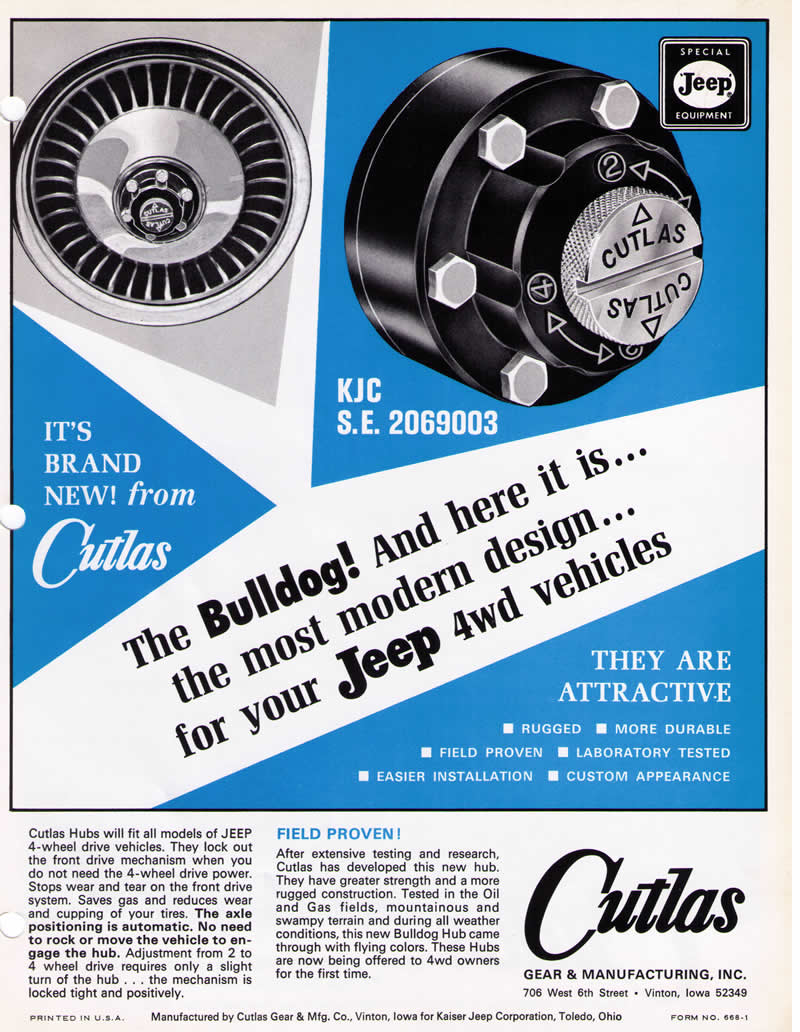
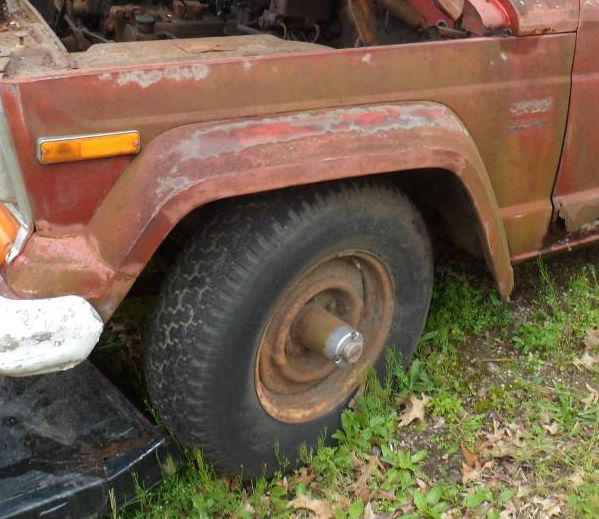
Bob shared the photo at the bottom that appeared on a Craigslist Ad for a 1977-J10. It shows what appears to be a Cutlas hub, but it’s a design I don’t have documented. Let’s review the Cutlas Selective Drive Hubs:
The first design was model 100-2 and had no slot:
Later, Cutlas came out with the slotted form of the hub. Note that the slated knob has a “506-1” part number, suggesting that this whole hub was model 500-1.
Arguably, the Bulldog was the next iteration of this general design. It too has the slotted knob, but lacks a model number:
The hub Bob spotted was on a later model jeep, so maybe Cutlas offered this version of the hub for a short time? It seems to be an further iteration of the Bulldog; unfortunately, I have no brochures that document it.