emailNeed to contact me and don't have my email? Click on email button.
About eWillys
Welcome to eWillys.com, a website for vintage jeep enthusiasts. I update this website nearly every day with jeep deals, jeep history, interesting reader projects, jeep related info, and more.
These quick searches can help you find things on eBay. People list in the wrong categories all the time, so don't be surprised to see brochures in the parts area for example. This section used to be split into jeeps, parts and other categories, but recent changes to eBay will require this information to be recoded.
The links to posts below show jeeps grouped by models, condition, and other ways. Some of these jeeps are for sale and others have been sold. If you are unsure whether a vehicle is still for sale or not, email me at d [at] ewillys.com for more info.
Importantly, the allure of buying a project jeep can be romantic. The reality of restoring a jeep can be quite different, expensive and overwhelming without the right tools and resources. So, tread carefully when purchasing a "project". If you have any concerns about buying a vintage jeep, or run across a scam, feel free to contact me for help, comments or concerns .
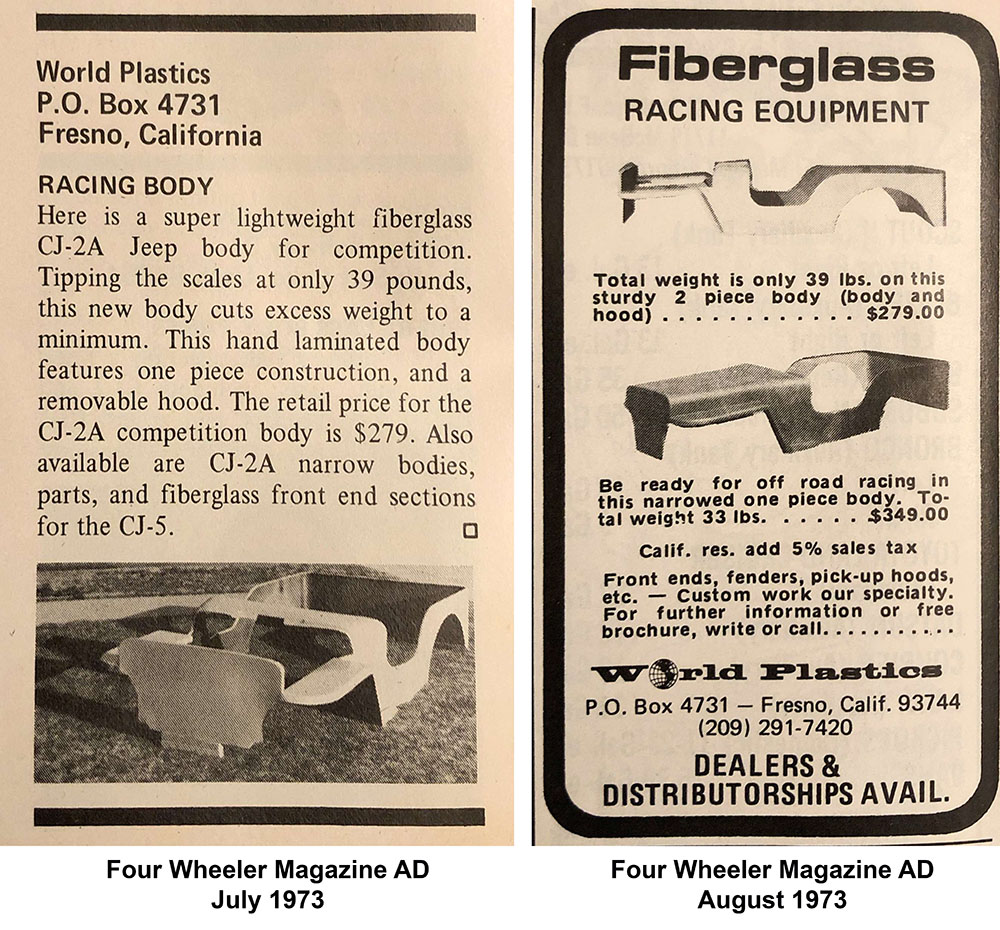
The July 1973 and August 1973 issues of Four Wheeler Magazine included these two ads for fiberglass racing shells. I’m not sure when World Plastics began advertising in the magazine, but I doubt it had been for very long. The ad on the right shows a full-body size flat fender shell, while the ad on the right shows a narrow body shell (both Bobcat and Parkette also produced racing shells).
I don’t know how long these were offered, what happened to the shells, or what happened to the World Plastic’s company.
Maury shared this video from Collins Brothers Jeep (out of Wylie, Texas) of a 1970 CJ-5 with only 882 miles. (In case the video doesn’t work correctly, the 1970 CJ-5 portion begins near the 5:20 mark).
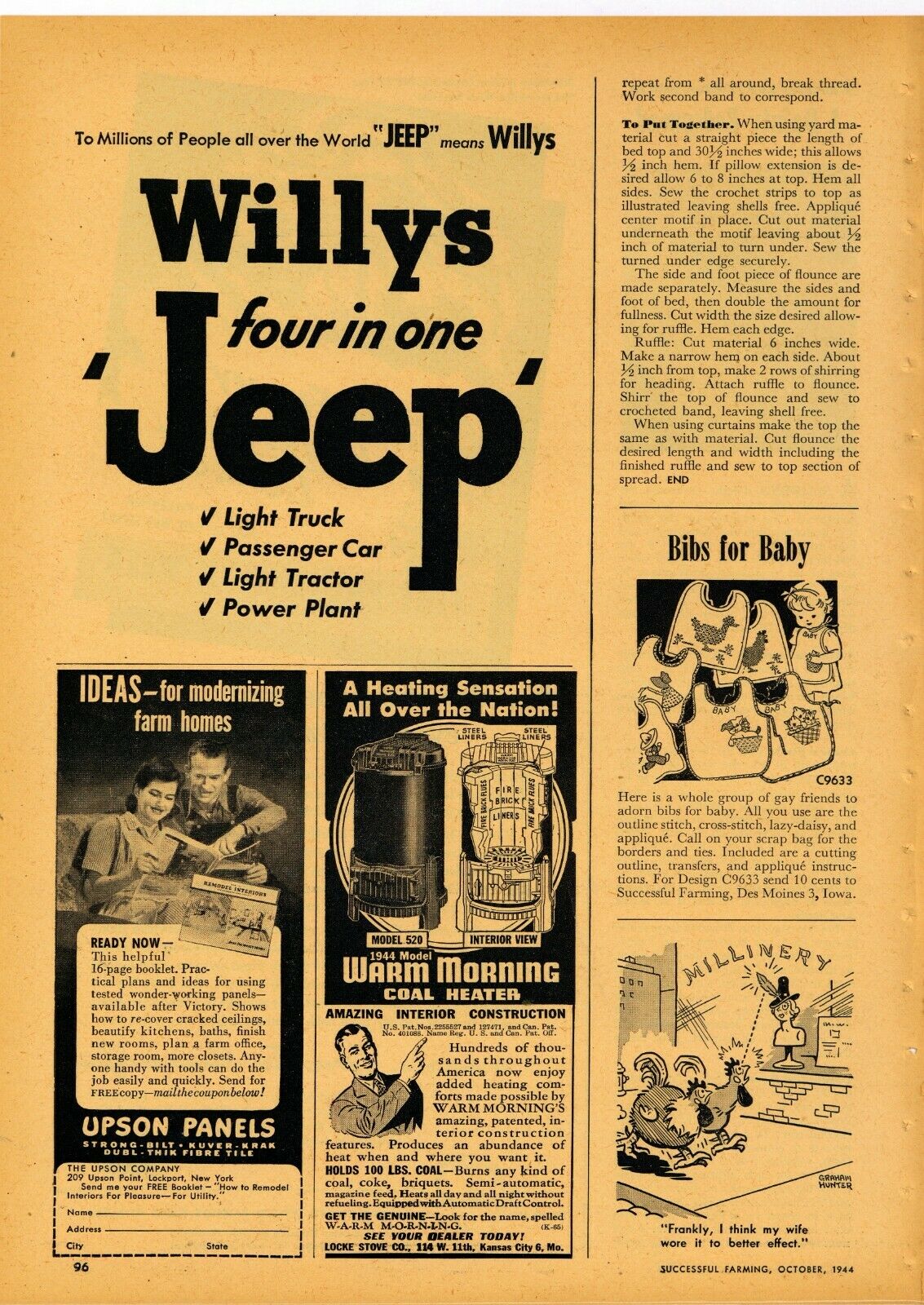
UPDATE: Maury shared a magazine page on eBay that contains a similar ad to the one shown at the bottom of this page. It’s almost identical, except that Jeep now appears with single-quotes.
The use of single quotes outside of a set of double quotes is uncommon. One editor summed it up best by describing it’s use this way: If a phrase or a word is uncommon or you are highlighting it to the reader for a particular reason – for example, as a neologism or a conscious use of jargon – use single quotation marks. Any punctuation sits outside single quotation marks. Thus, I suspect Willys-Overland felt they could defend the use of ‘JEEP’ by describing it’s presence as a descriptive use of jargon, rather than an attempt to back into the trademarking of the name. However, backing into the trademark using single quotes was exactly what the company was doing.
To answer the question I asked in the original post (was the bottom ad a local dealer or national corporate campaign), given these two ads appeared in two different national magazines, it seems likely this simple ad construction was part of a national campaign by Willys-Overland to begin prepping the public for post war jeep sales, This particular ad appeared in the October 1944 issue of Successful Farming.
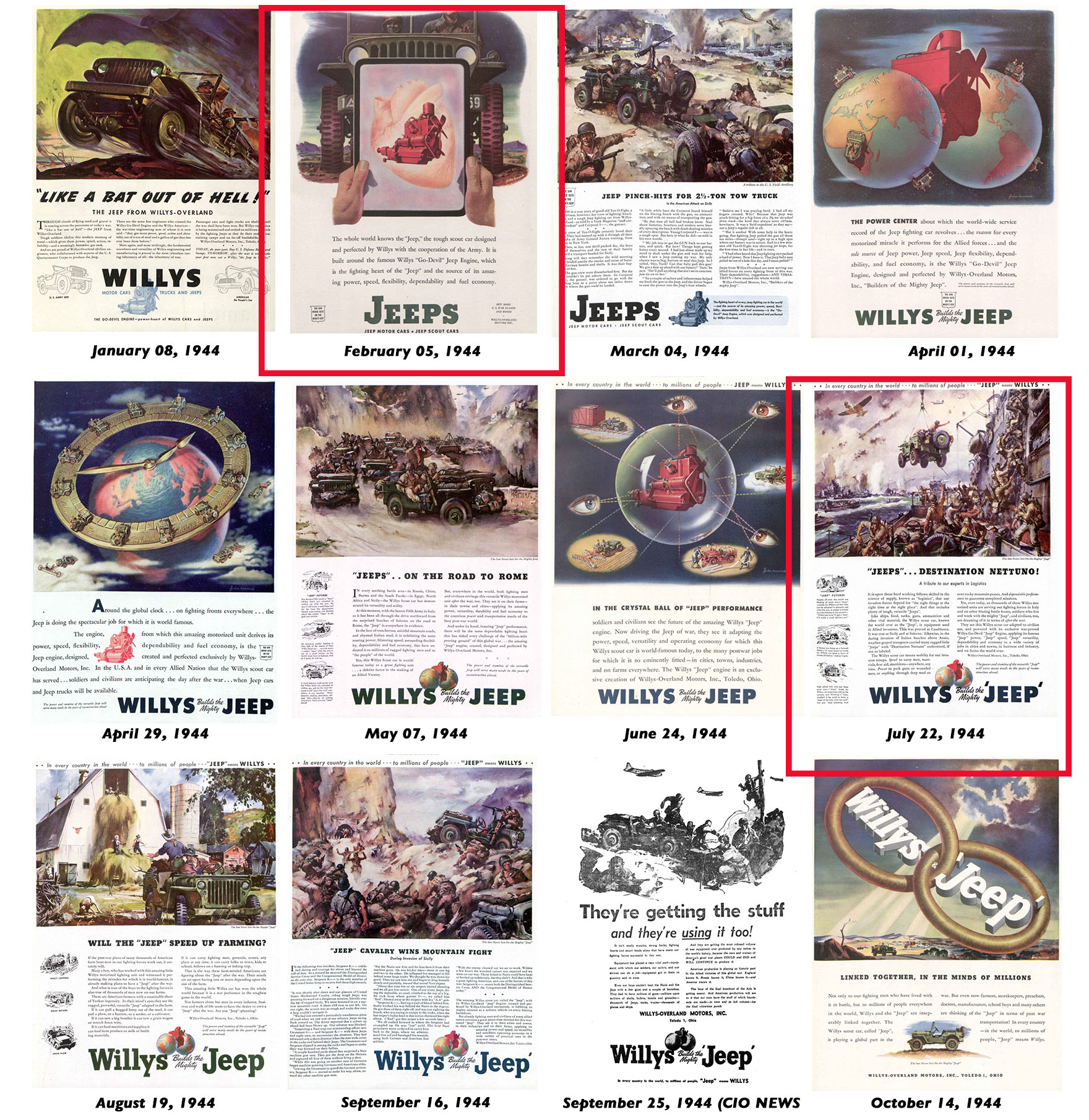
The purposeful addition of the single quotes reflects a similar change seen in the iconic Saturday Evening Posts during 1944, as demonstrated in these ads. The first highlighted ad of February 05, 1944, was the first time Willys-Overland replaced the prominent WILLYS stamp on the Post ads with JEEP (or in this case JEEPS) with no single quotes.
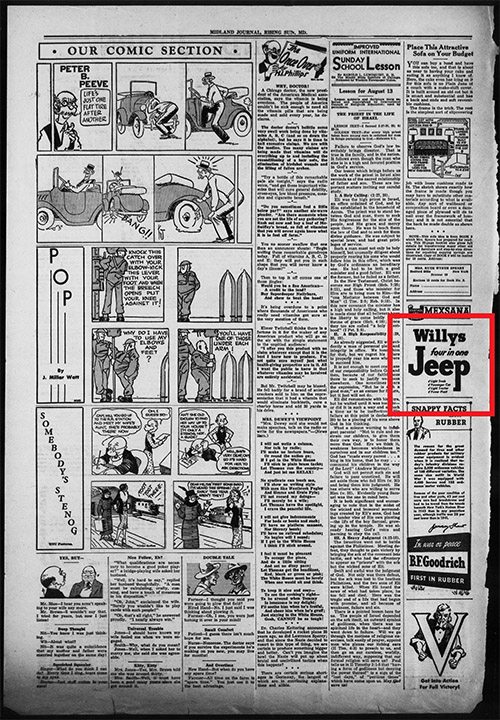
What isn’t quite the same is that the Midland Journal ad below without the single quotes lasted longer (through October 6 1944) than the Saturday Evening Post ads. Perhaps Willys-Overland purchased several months of ads beginning in June of 1944 right before the addition of the single quotes too place? However it happened, what the ad above shows is that Willys was correcting the single quotes’ issue across its advertising.
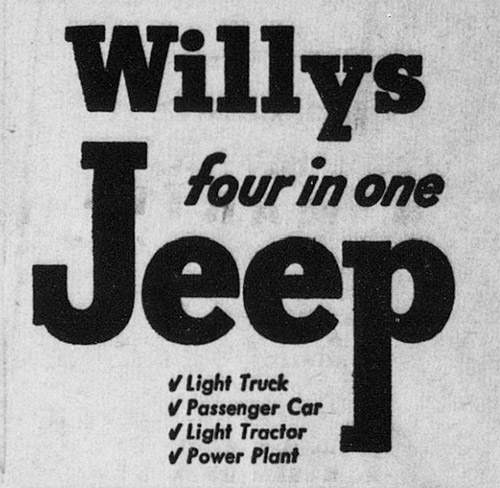
Originally published March 29, 2020: Here’s an unusually small and succinct ad that appeared seven times in the Midland Journal out of Rising Sun, Maryland, from June 30, 1944, through October 6, 1944. I’ve yet to run across this specific ad elsewhere.
One thing to note is that in July of 1944, Willys-Overland began using single quotes around the word Jeep like this ‘Jeep’ major magazine ads, yet that was not done in any of the newspaper ads in the Midland Journal, as shown below. (Ed note …. Yeah, I know, not earth shattering news, but I never know when little details like this will add up to some insight).
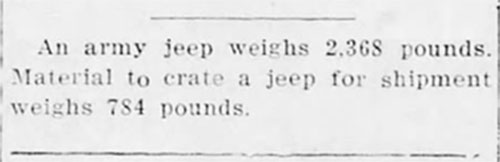
In the miscellaneous-facts-that-probably-weren’t-accurate-at-all …. According to the July 05, 1944, issue of the Conneautville Courier (Conneautville, Pennsylvania), the standard jeep weighed 2,368lbs, while the crates used to box jeeps weighted 784lbs. I wonder how many jeeps and how many crates actually weight those amounts?
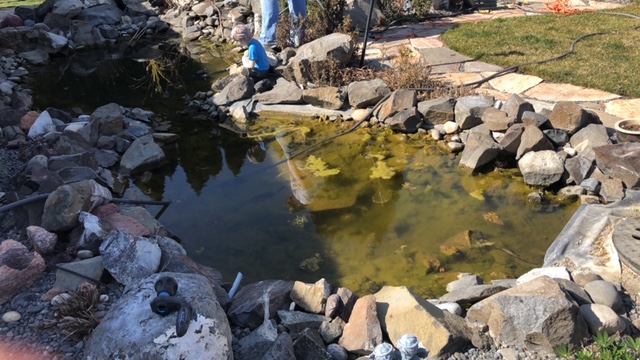
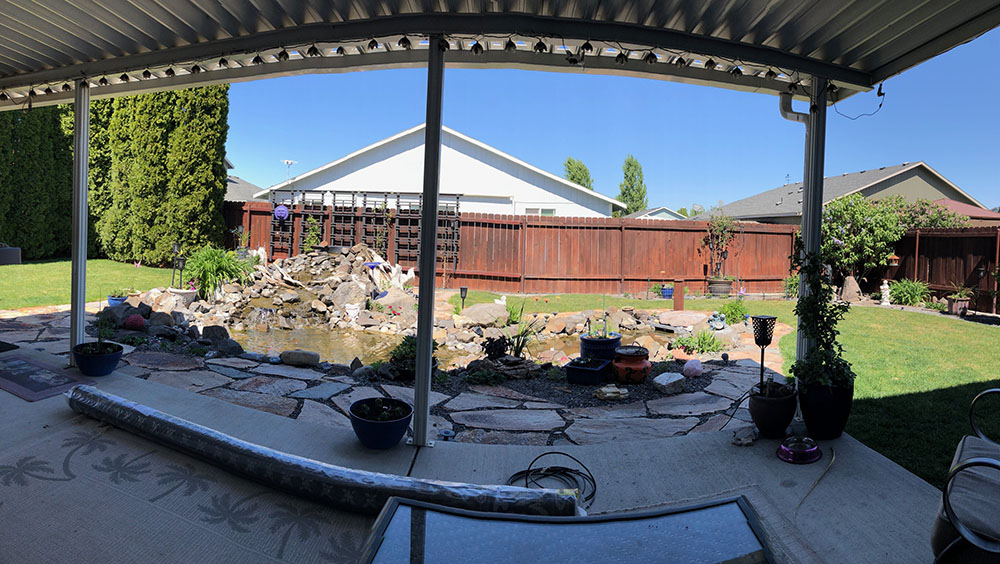
Only 17 more days until we close on the new place. We’ve packed most of our stuff and are now doing minor repairs and maintenance, such as some trim painting, light landscaping, and, one of the biggest tasks, cleaning out our backyard waterfall and pond. It can be a pain to clean every spring, but it sure is nice to listen to on the back porch on a sunny day. It will also help sell this place.
Our rather warm winter meant more green growth in the pond. So, we have to empty it, pull out some large rocks, scrub it, and fill it back up. No doubt we will lose some fish in the process. It all looks a bit dreary in back right now.
Here is how it usually looks (though this was taken in April, prior to many of the flowers blooming):
As we approach the closing date, I plan to take at least one, if not two weeks off to get the new place ready, move our stuff, and finish details on the old house to ready it for sale. But, don’t fret, there will still be new daily content (and some retread of older feature posts). One person who is responsible for providing new content is a dedicated researcher named John Hamrin, who has taken the time to go through the British Pathe video site to locate any videos with jeeps in it. He has now sent me over 100 links to videos, with more arriving as I type this post. So far, most appear to be WWII related. So, a HUGE thanks to him for his painstaking research and generosity!!
Finally, a word to one of our newest and most passionate readers, almost-two-year-old Miranda Tilford, who, has become a passionate viewer of eWillys. On Saturday morning (yesterday), Marty wrote to tell me that shortly before messaging me, Miranda came up to him and said, “Jeep, jeep, jeep”. At first he was confused at what she wanted, so she repeated, “jeep, jeep, jeep”. About that time, Marty realized that she wanted to sit down with him and go through eWillys. Sure enough, they sat down and scrolled through some jeeps. That poor, poor young lady has been afflicted with the Willys sickness already; there is no hope for her!!
So, in Miranda’s honor, with a nod to John’s video efforts, here are some WAACs trying out their driving skills with jeeps and trucks:
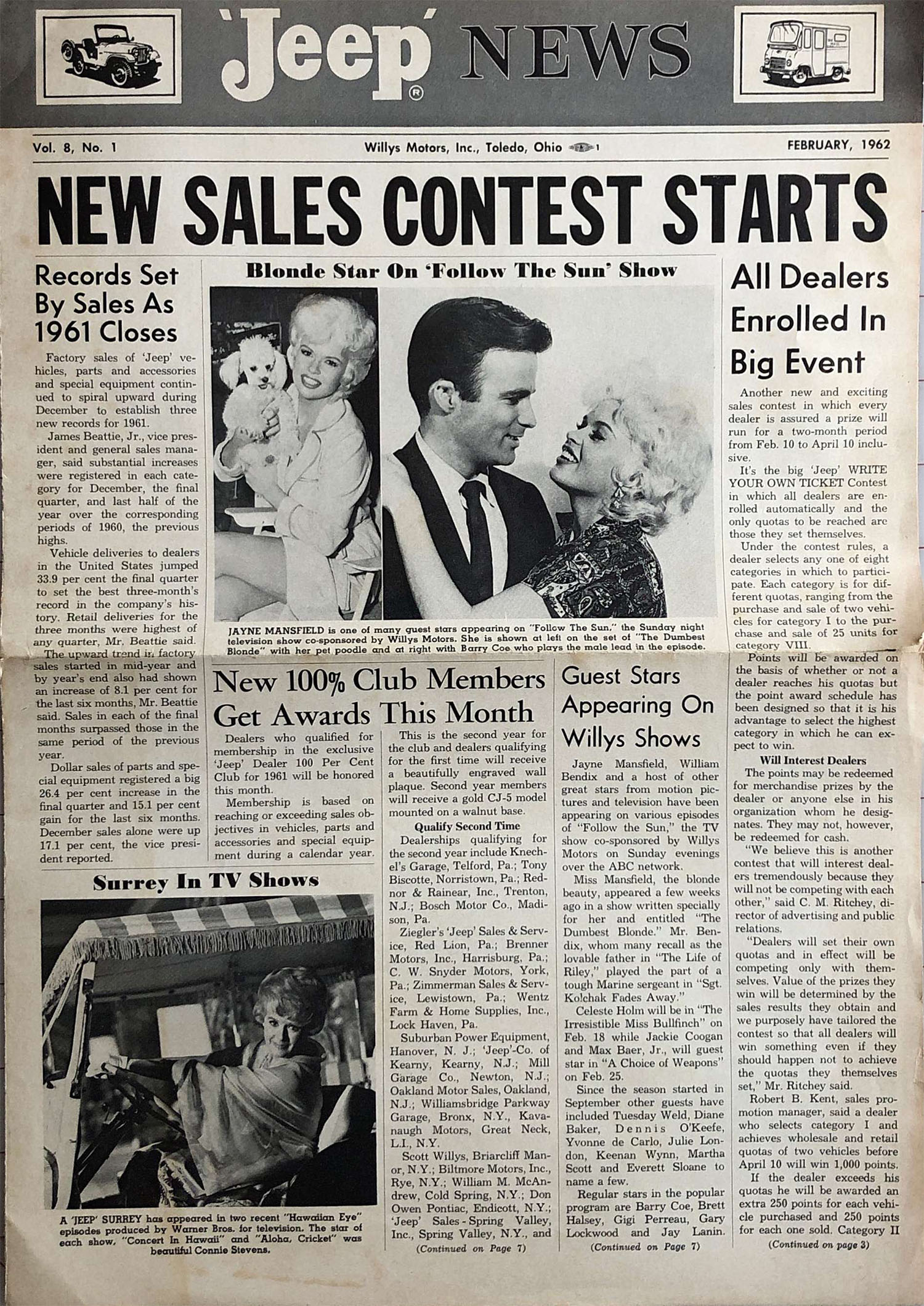
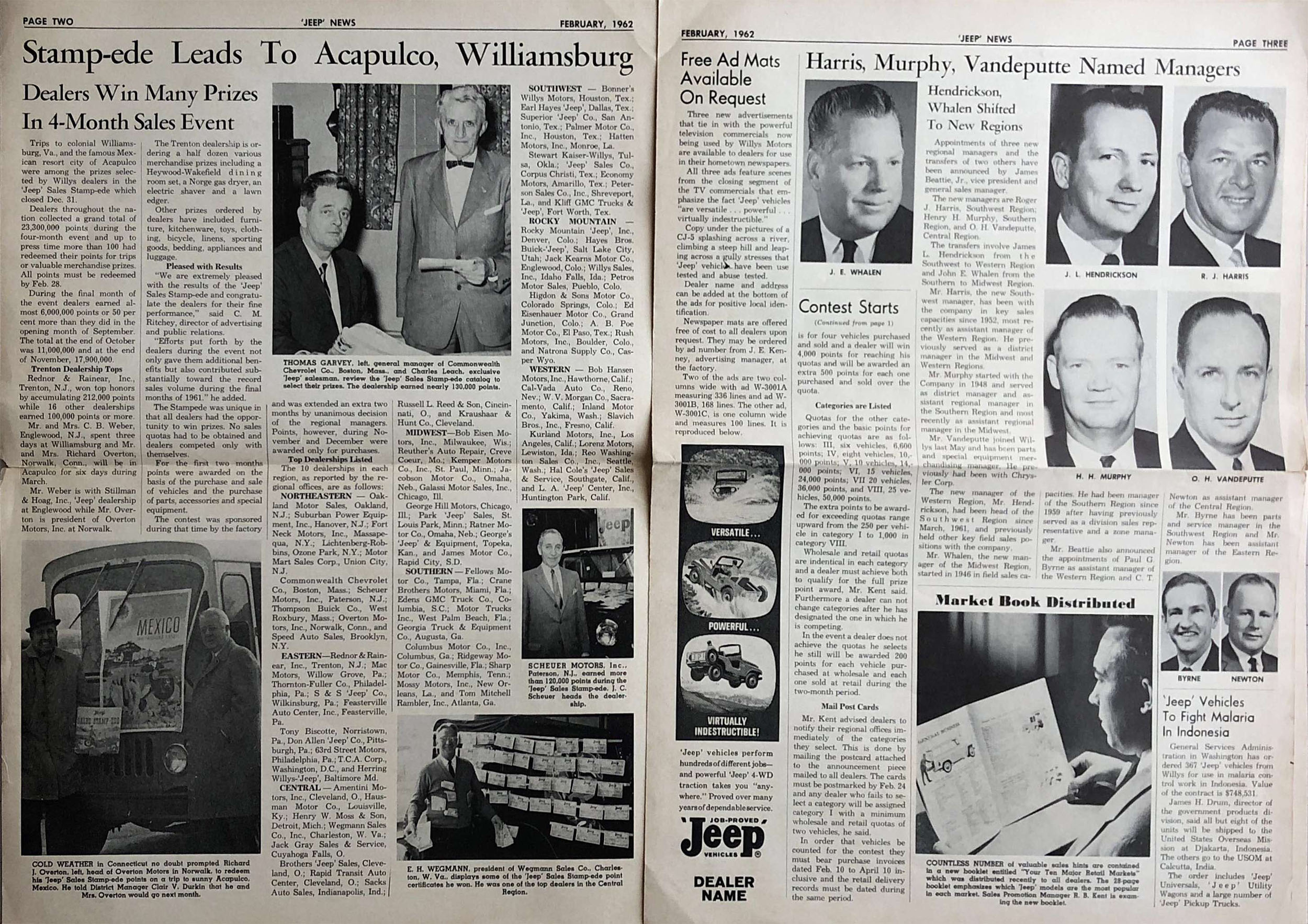
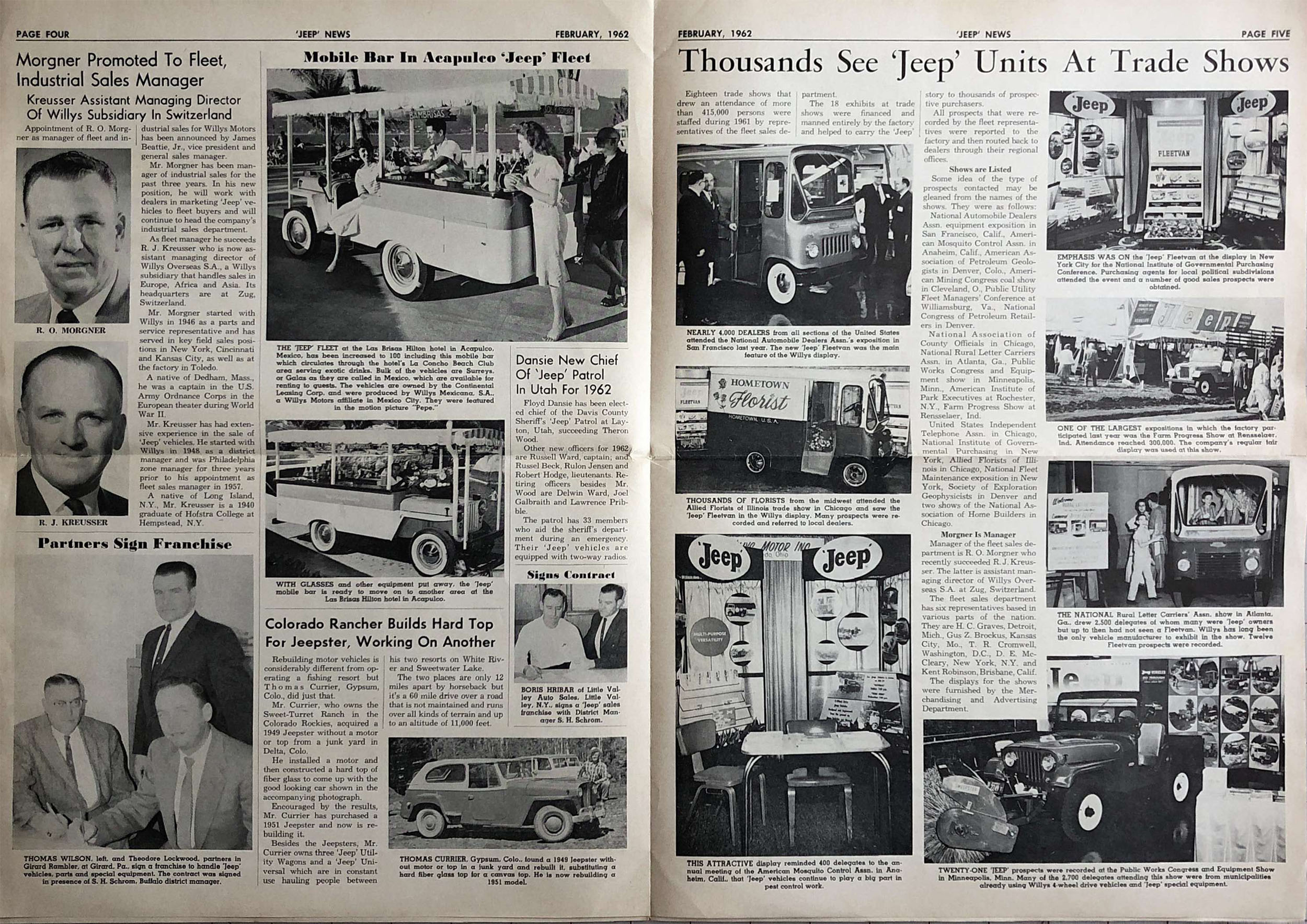
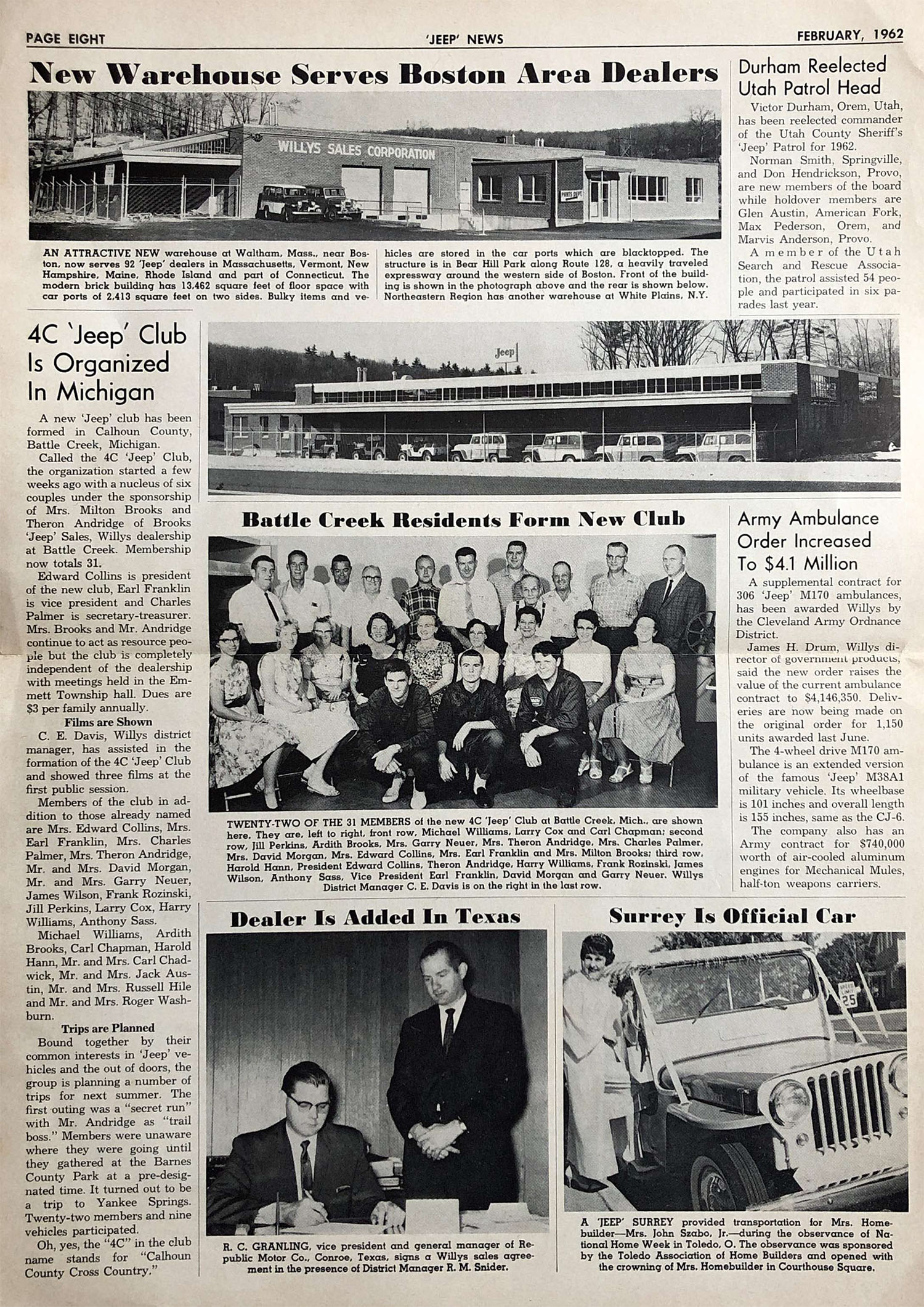
This February 1962 issue of Jeep News includes two good photos on page four of the DJ-3A-based mobile bar that was at the Las Brisas resort in Mexico. I have a color photo of that, too. It might be fun to recreate one of those.
Page three shares a little info on a twenty-eight page dealer booklet entitled, “Your Ten Major Retail Markets”. That’s a book I’ve yet to see anywhere.
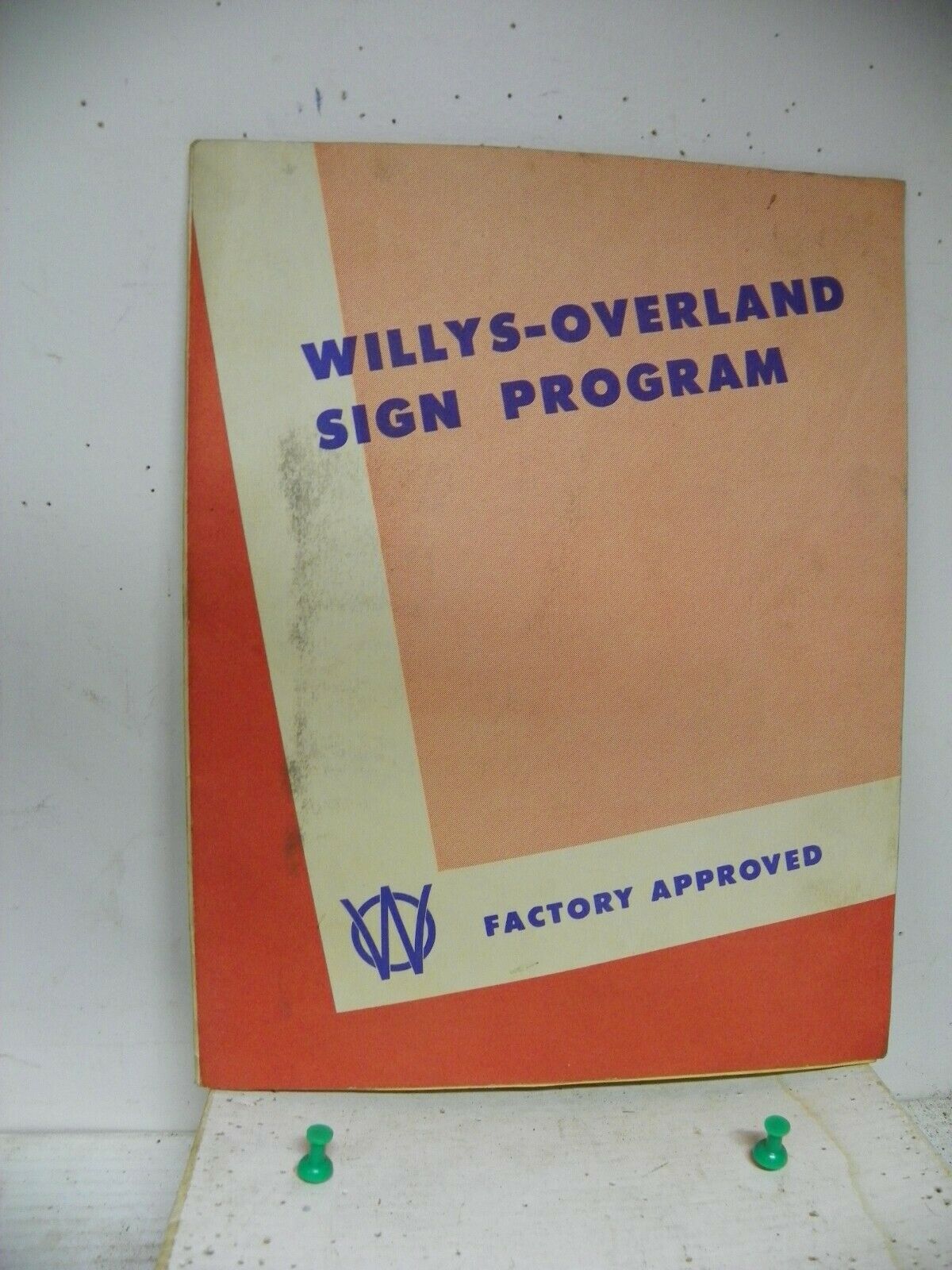
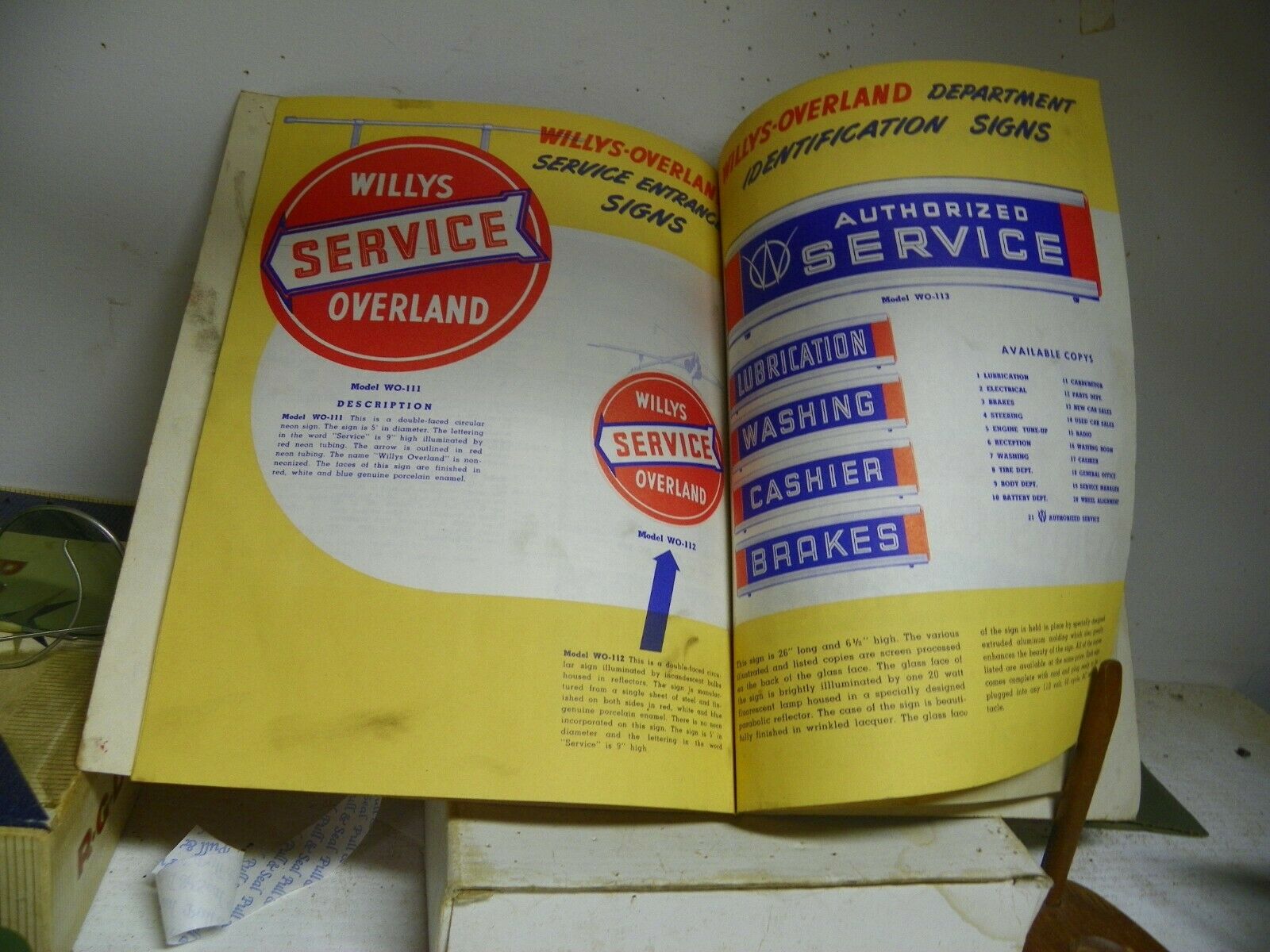
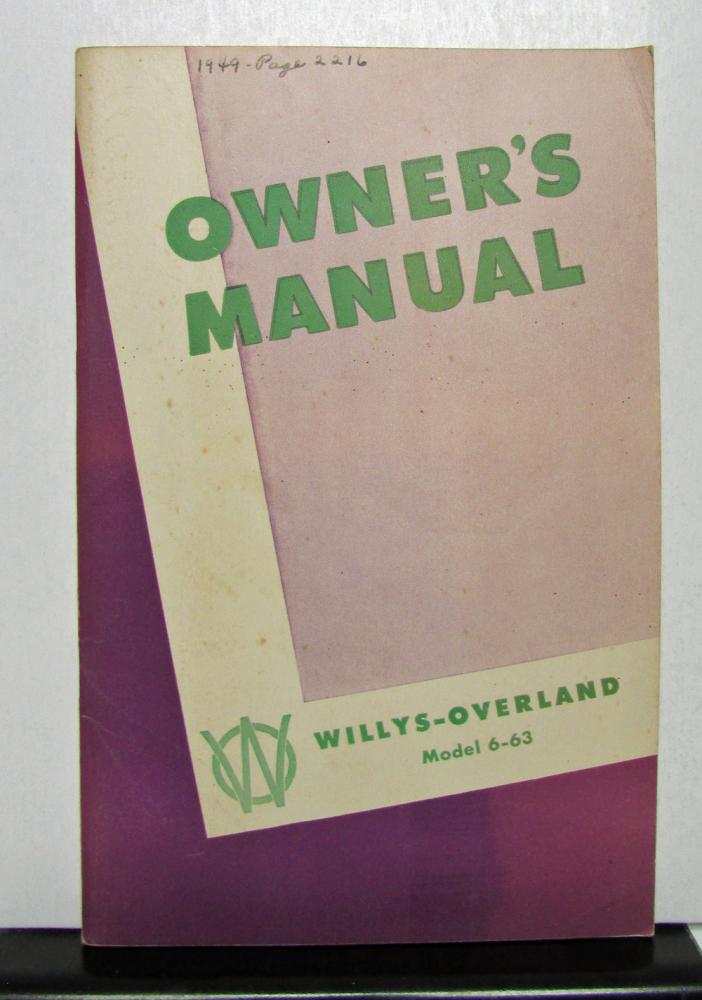
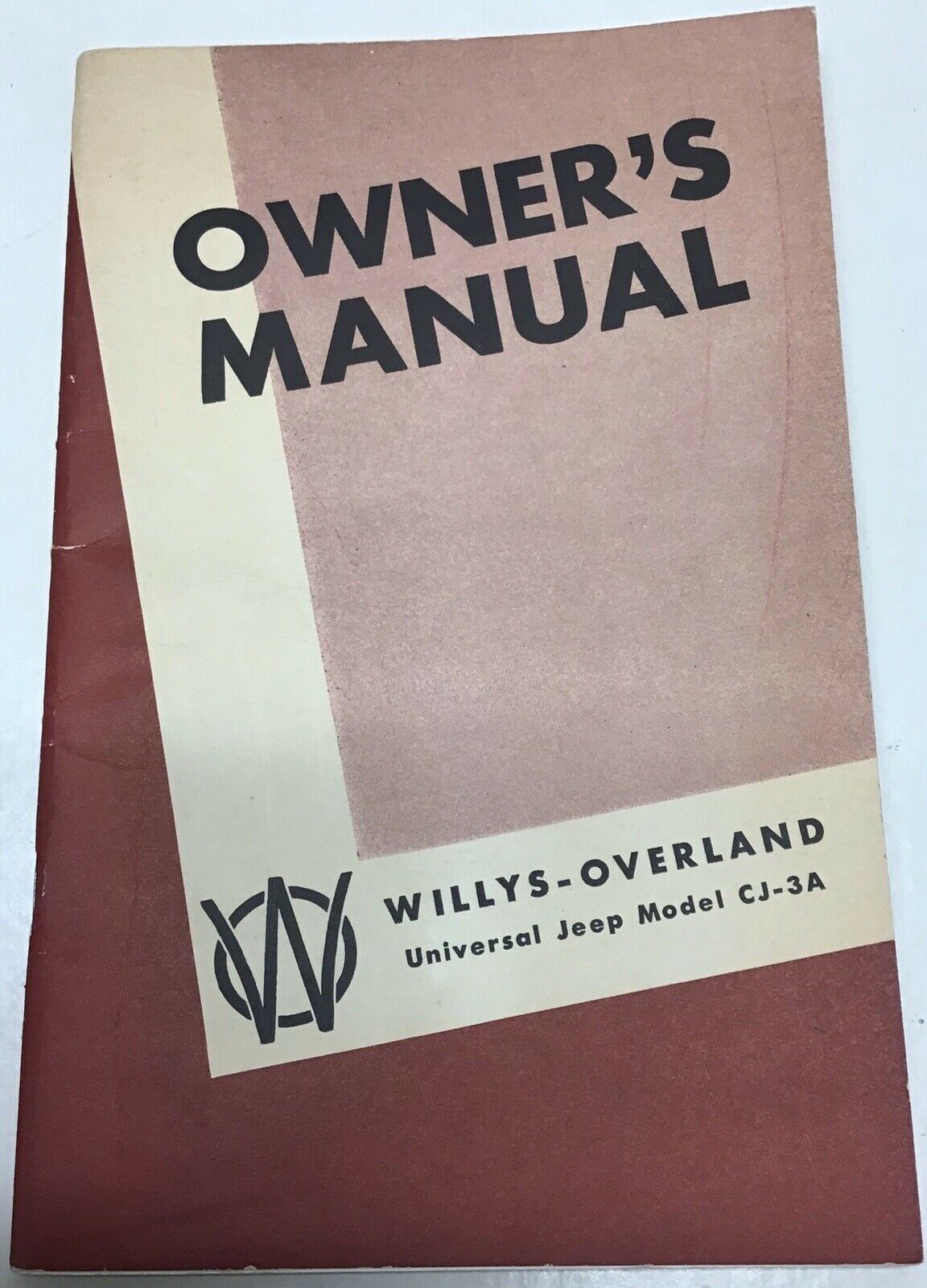
This eight-page Willys-Overland Sign Program sold on eBay for $38 (plus $4 shipping) late night. The seller only provided two pics, so I was unsure if this would be worth the money. Given the front-page design of the brochure, I’d guess this was produced around 1949. The design is reminiscent of other Willys-Overland catalogs of the era (see examples at the bottom).
“This is a 9 X 11 8 page brochure of WILLYS -OVERLAND SIGN PROGRAM FACTORY APPROVED shows products offered to dealers from Neon Products of Lima Ohio some slight scuffing on the covers…also has a order blank”
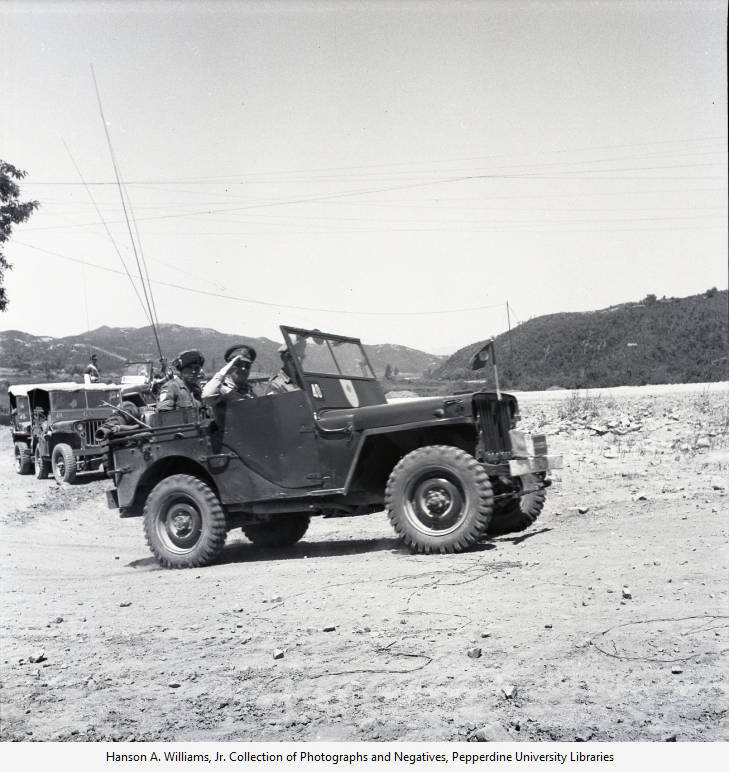
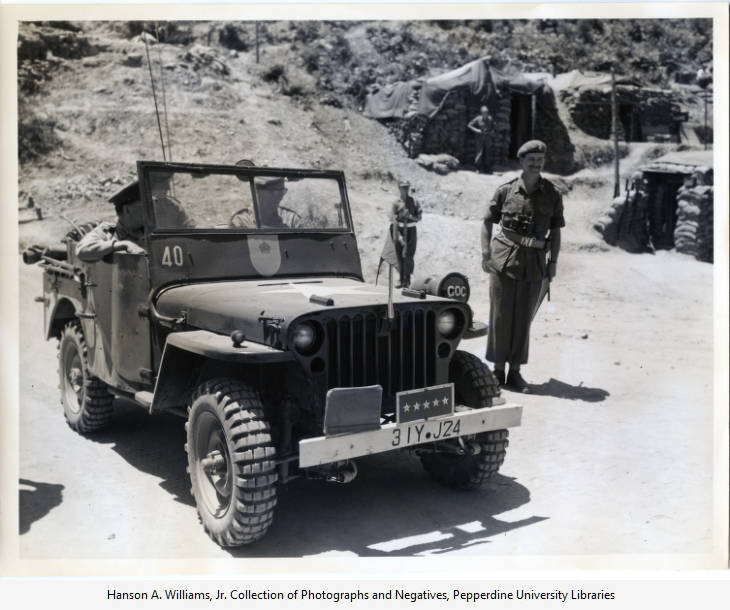
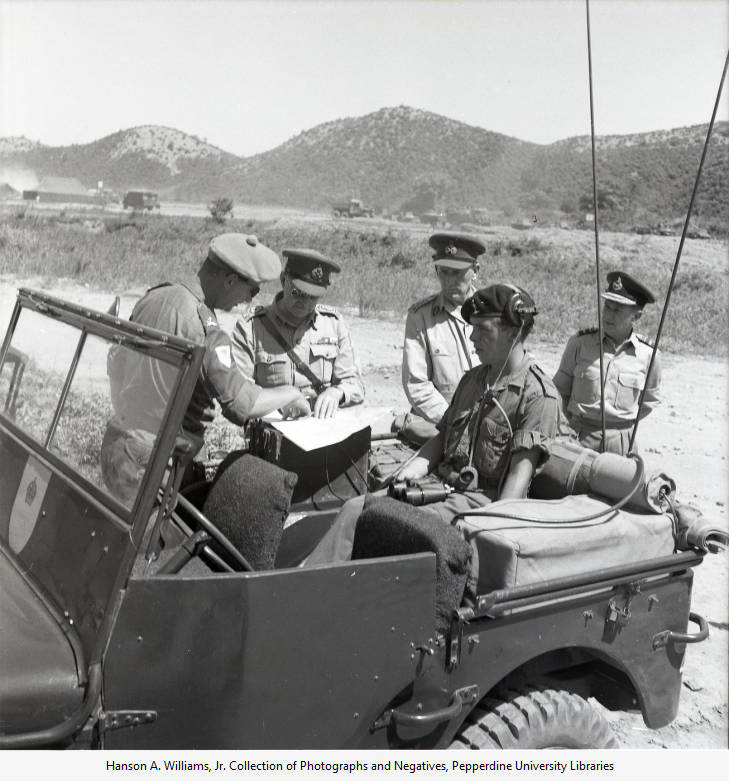
These two photos show the jeep (likely a Ford GPW) of Defense Field Marshal Harold Alexander, the first Earl Alexander of Tunis (technically, Alexander of Tunis, Harold Rupert Leofric George Alexander, Earl, 1891-1969). The second photo is dated June 27, 1952. The jeep’s tires look much more aggressive than the standard NDTs. The windshield looks more like a 2A than an MB/GPW. Those doors look awfully thick. I wonder how heavy they were.
According to the post, captions, these are “Part of a series that Williams shot on assignment documenting the visit to Korea of British Minister of Defence Field Marshal Harold Alexander, the first Earl Alexander of Tunis. Here, Earl Alexander salutes as he leaves a Common Wealth Division bunker in his jeep.”
All three of these photos are part of the Pepperdine University Digital Collections.
John helped me locate this short video from 1963 showing one of Cornwall’s surf rescue teams. In it, these brave young men demonstrate how they utilize their specially modified jeep to perform rescues. Baywatch it aint!
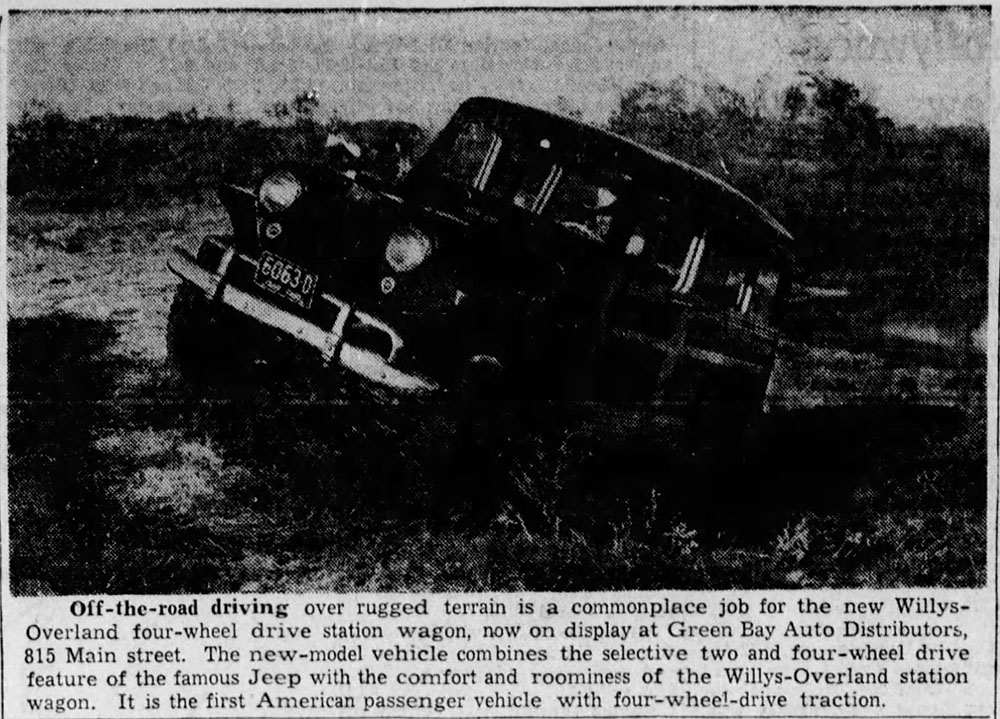
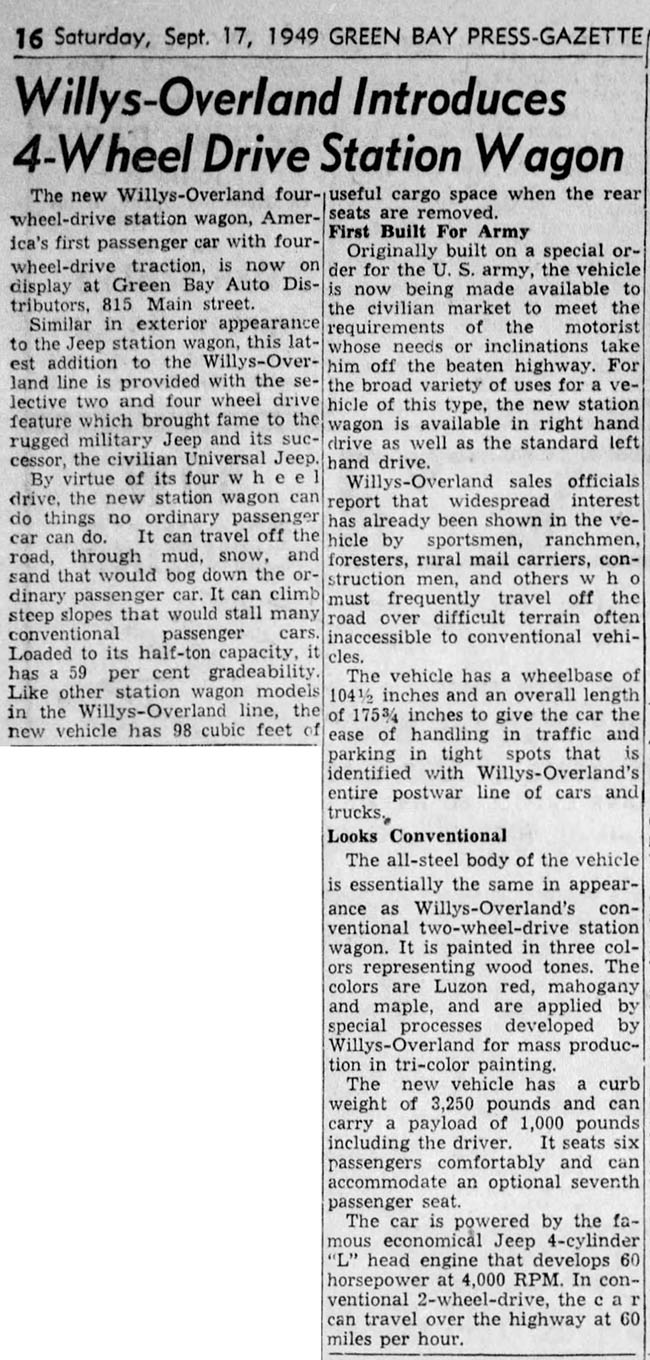
This September 17, 1949, article in the Green Bay Press-Gazette states that the four-wheel-drive wagon evolved out of a military special order for four-wheel-drive-wagons. I’ve run across that fact previously, maybe on a brochure?