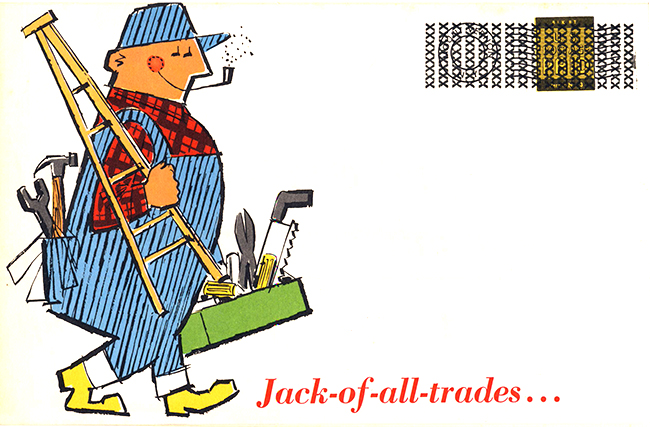
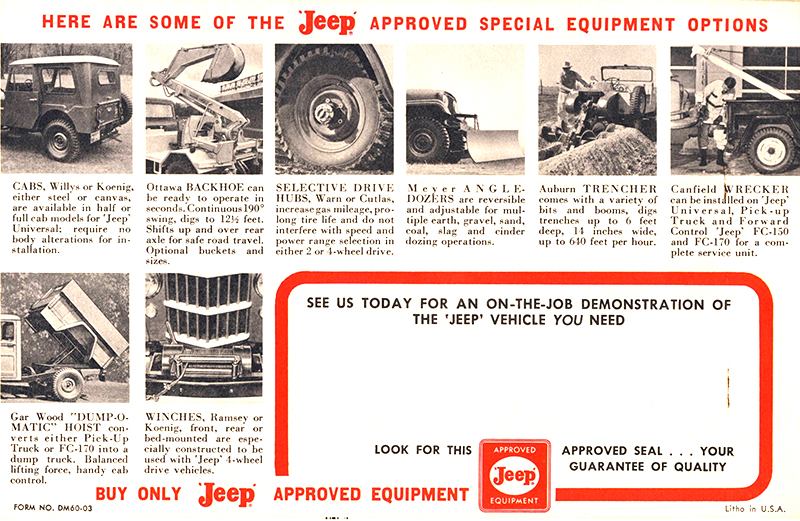
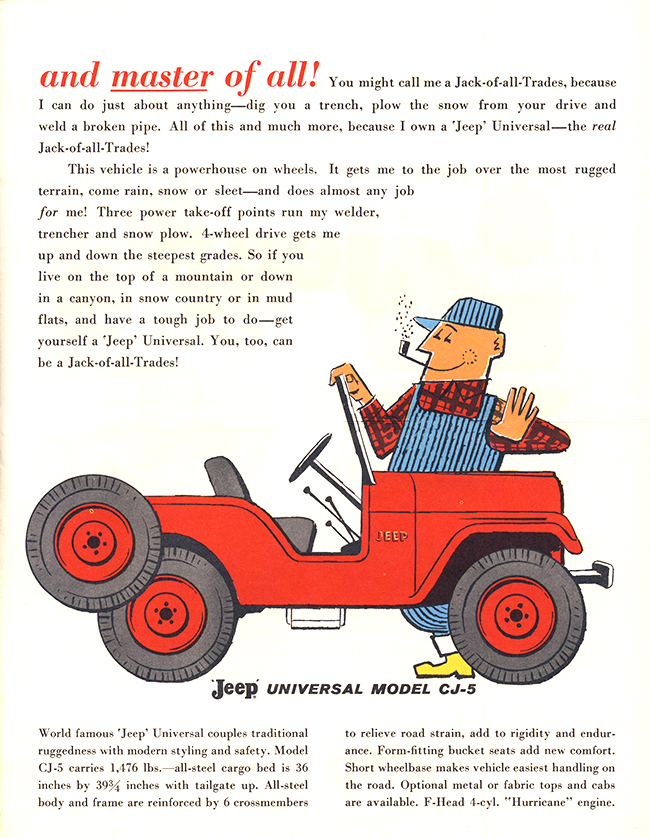
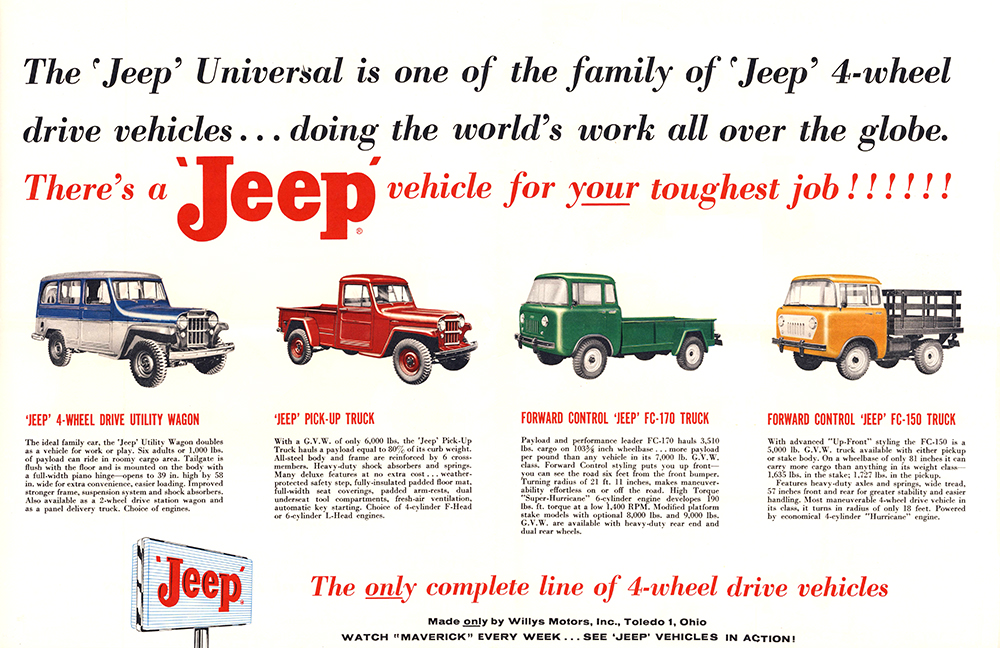
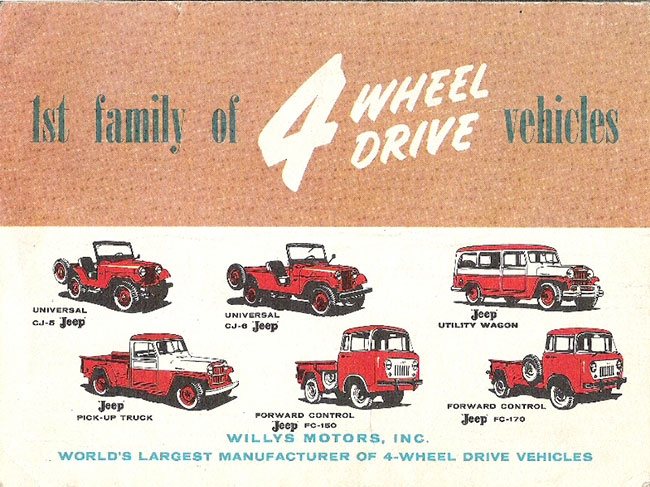
This Jack of All Trade Jeep brochure was published in March of 1963.
emailNeed to contact me and don't have my email? Click on email button.
Welcome to eWillys.com, a website for vintage jeep enthusiasts. I update this website nearly every day with jeep deals, jeep history, interesting reader projects, jeep related info, and more.
These quick searches can help you find things on eBay. People list in the wrong categories all the time, so don't be surprised to see brochures in the parts area for example. This section used to be split into jeeps, parts and other categories, but recent changes to eBay will require this information to be recoded.
The links to posts below show jeeps grouped by models, condition, and other ways. Some of these jeeps are for sale and others have been sold. If you are unsure whether a vehicle is still for sale or not, email me at d [at] ewillys.com for more info.
There are plenty of interesting, unusual, historic and surprising stories related to Jeeps and their owners. In addition, some of these features have nothing to do with jeeps. This link will display all featured stories starting from the latest.
Looking for parts and not sure where to go? There are a variety of large and small new and used parts sellers both online and offline.
Importantly, the allure of buying a project jeep can be romantic. The reality of restoring a jeep can be quite different, expensive and overwhelming without the right tools and resources. So, tread carefully when purchasing a "project". If you have any concerns about buying a vintage jeep, or run across a scam, feel free to contact me for help, comments or concerns .
This Jack of All Trade Jeep brochure was published in March of 1963.
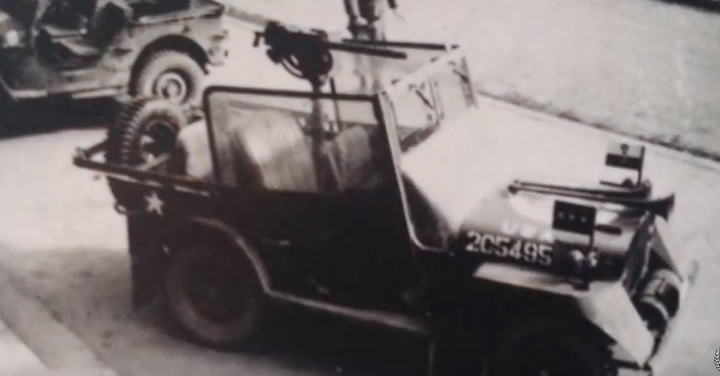
David Tracy at Jalopnik wrote a nice piece about the death of Vernal Patton’s Driver during WWII, Francis ‘Jeep’ Sanza. It includes the following video clip and a shot of one of the vehicles Sanza drove, one with a variety of mods.
Read more here: https://jalopnik.com/general-pattons-driver-during-world-war-ii-francis-jeep-1822777372
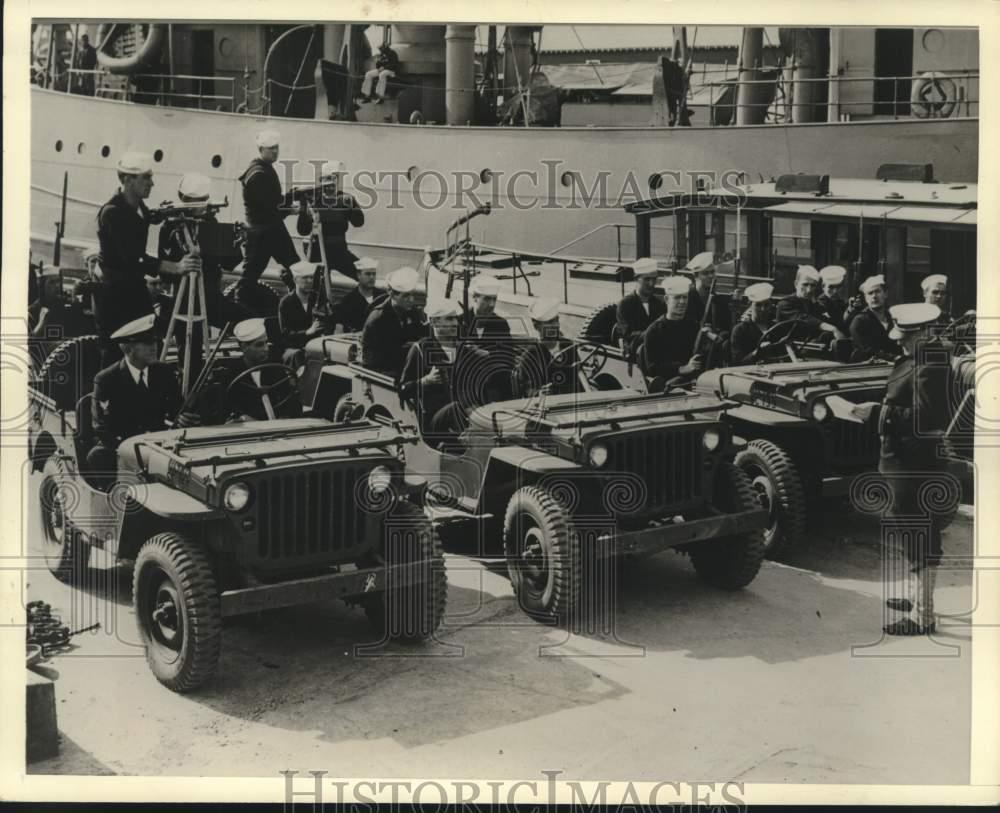
UPDATE: Here’s an original press photo used in the article at the bottom of the post.
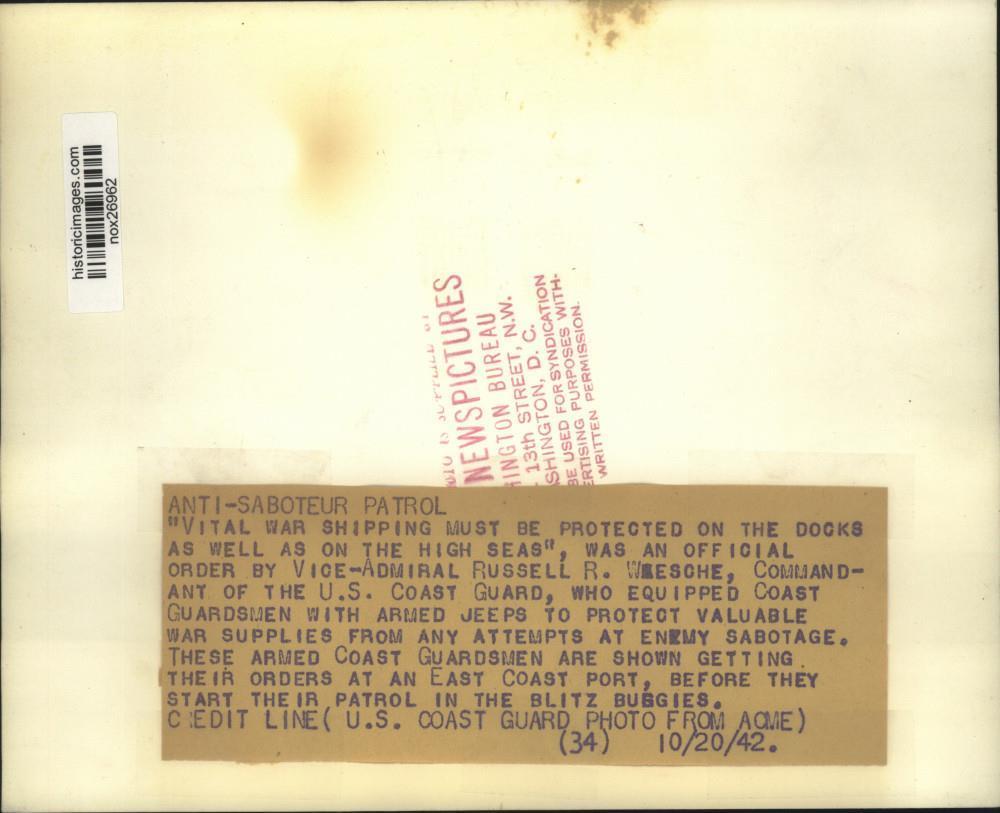
“1942 Press Photo U.S. Coast Guardsmen in Armed Jeeps at East Coast Port. This is an original press photo. Anti-saboteur patrol “Vital war shipping must be protected on the docks as well as on the high seas,” was an official order by Vice-Admiral Russell R. Wesche, Commandant of the U.S. Coast Guard, who equipped Coast Guardsmen with armed jeeps to protect valuable war supplies from any attempts at enemy sabotage. These armed Coast Guardsmen are shown getting their orders at an East Coast port before they start their patrol in the blitz buggies. Photo measures 9 x 7.25 inches. Photo is dated 10-20-1942.”
View all the information on eBay
========================
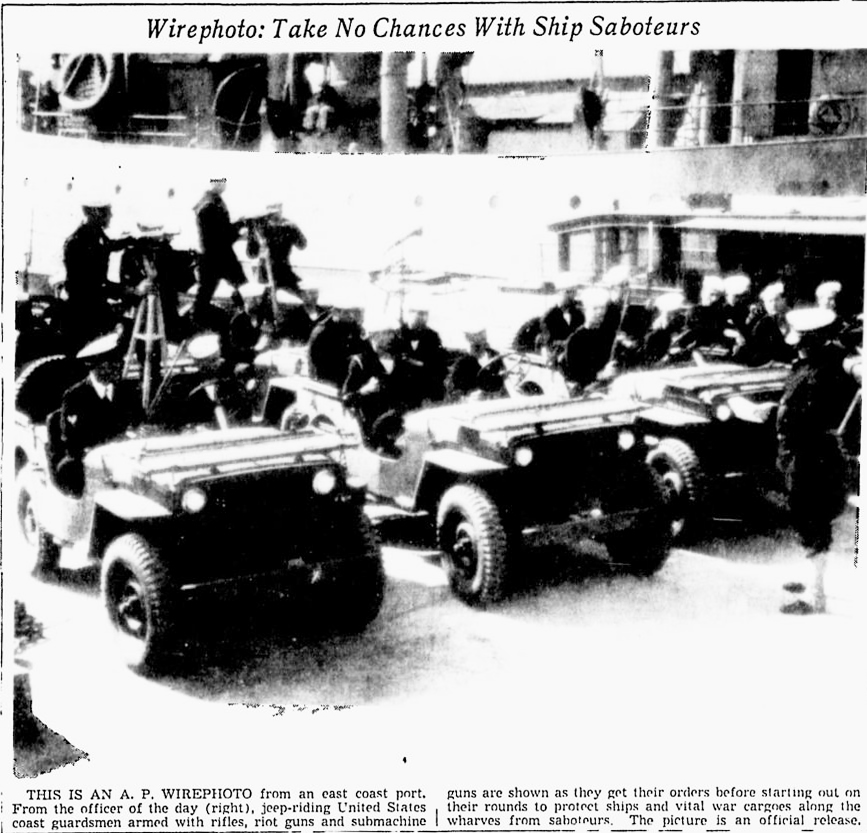
(From a March 20, 2015 post) These Coast Guard men are protecting the ships and shipyards from saboteurs. The photo was published in the October, 22, 1942 issue of the Spokesman-Review.
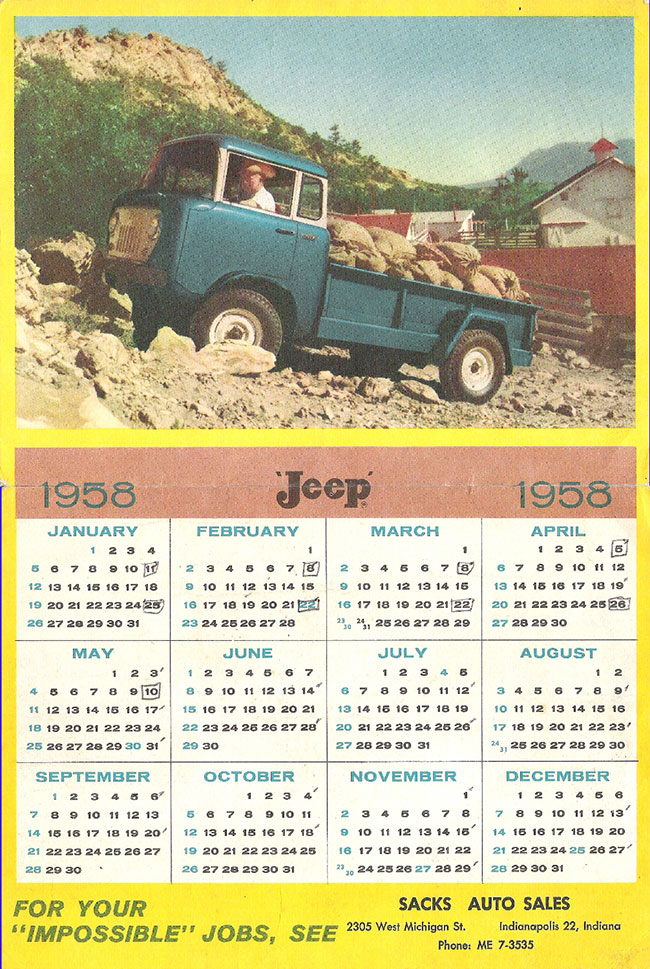
Niel shared a scan of his 1958 Jeep calendar. He says it puts a smile on his face every time he sees it. The only other calendar I have scanned is the 1961 calendar. Anyone know when these Jeep calendars first began and when (if) they ended?
Art forwarded this local (for me) news segment about the Upton’s story of completing the last mile of their around-the-world trip. More information and links here.
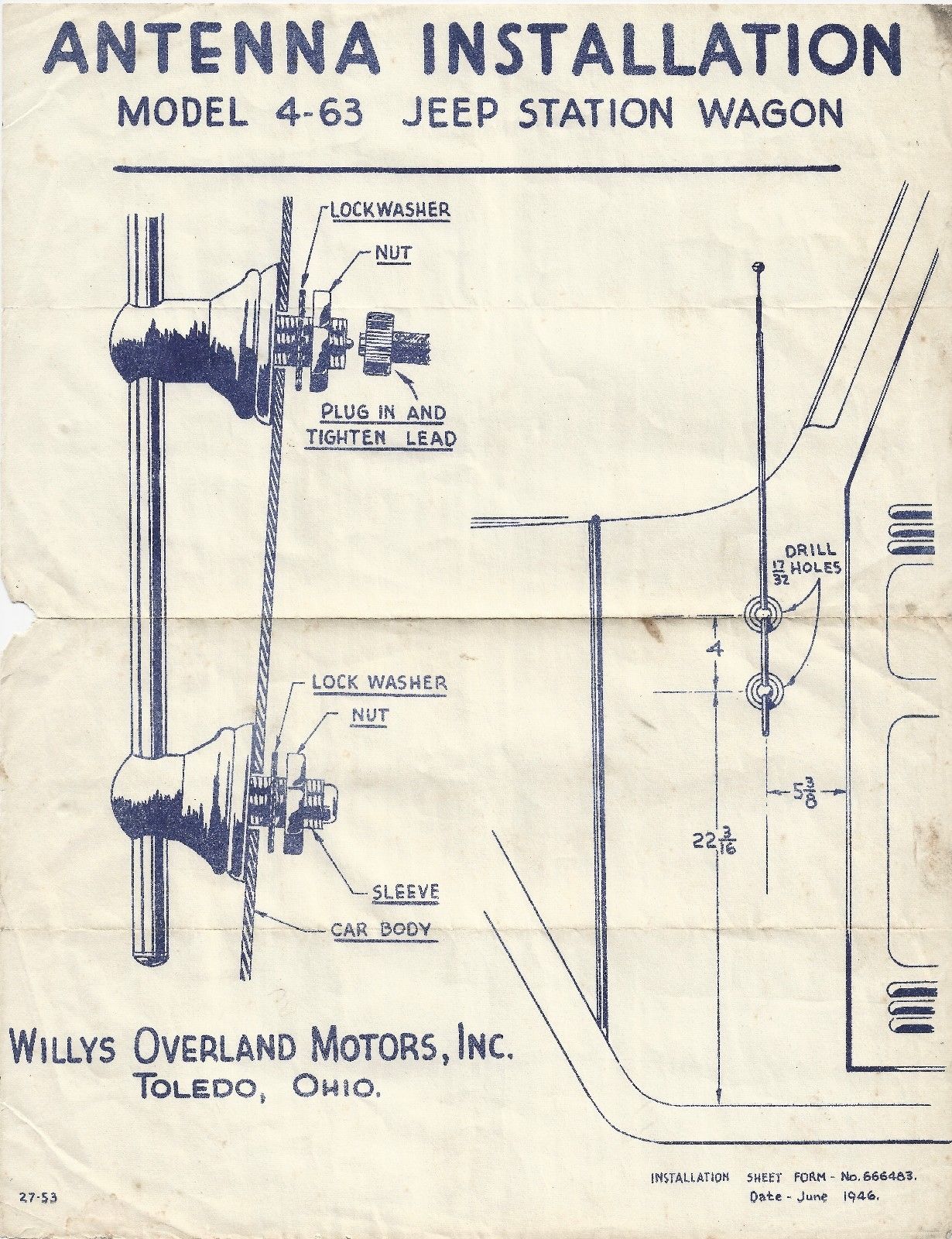
Here’s an oddball document for installing an antenna on early jeep station wagons.
View all the information on eBay
Everyone once in a while readers have forwarded Facebook Marketplace ads with a jeep for sale. But, for the most part I have ignored this resource. I just didn’t think there was much there. I was wrong.
There are a large number of vintage jeeps for sale that I haven’t seen listed elsewhere. I’ve listed a number of them in posts for today. However, I know not everyone has a FB account, so that doesn’t create a dilemma for some folks. I don’t have an answer of that just yet. I also don’t have a system yet for efficiently searching the Marketplace on a national basis, so I don’t know how using the Marketplace will effect my time.
To see what is possible, I plan to do research into the Marketplace platform. It would be great if I could automate some of this stuff, making less work for me and more jeeps for readers. We’ll see how it goes!

This is an example from the Dallas Craigslist with a simple “Willys” search. Hopefully, FB will be allow complex searches like I do on Craigslist.
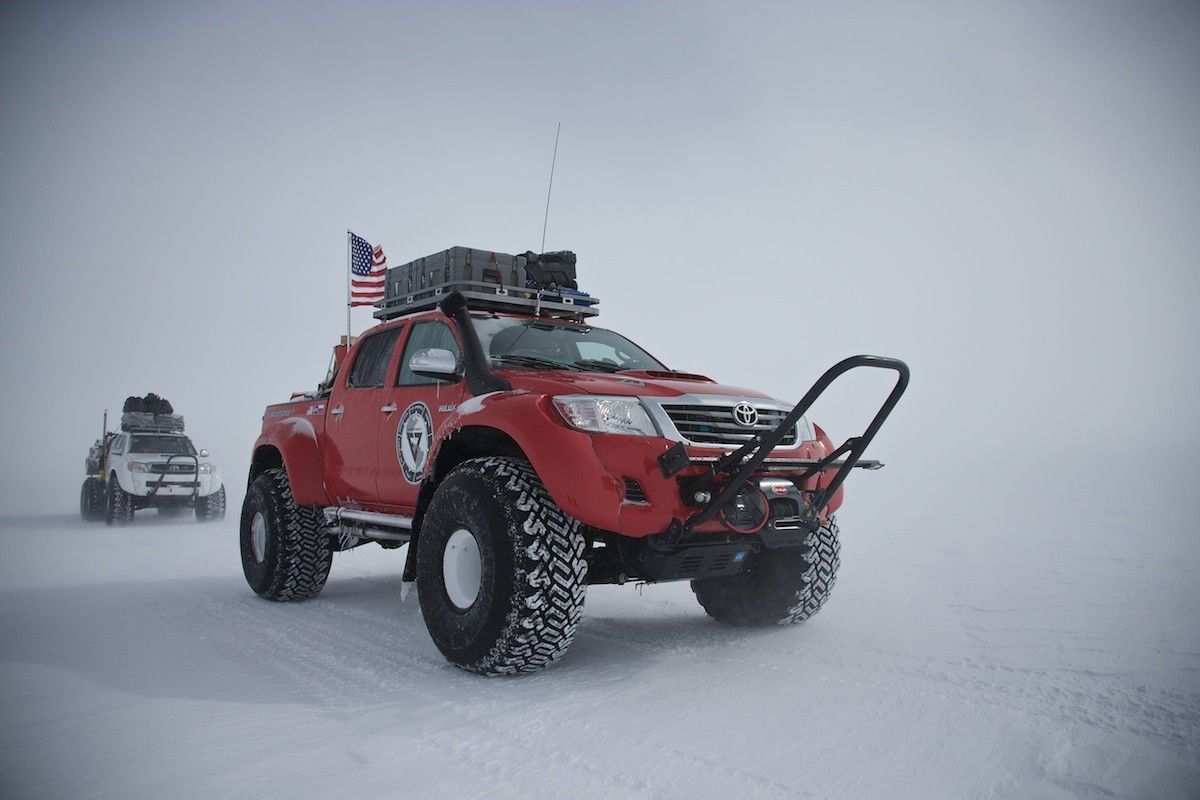
Seth shared this unusual opportunity. This Spring a group is crossing Greenland. The event is auctioning off a seat. The price starts at a meager $25k. Learn more on eBay
https://www.ebay.com/itm/202211917676
Yesterday morning, SteveK asked to know more about the Bobcat products. Were they race products or something else? The terminology is so second hand, that I thought everyone knew it by now. I decided to send him a link to an article I thought I had published about Fred Weis and the Bobcat body from the February 1970 issue of Four Wheeler Magazine. It turns out I never published that article!
So, I’d like to publish (perhaps I am republishing it) to better explain the Bobcat body and products. At the post’s bottom I’ve included a number of additional examples and information about the Bobcat. Then, on the next post, I discuss the Bobcat & Parkette fiberglass body histories.
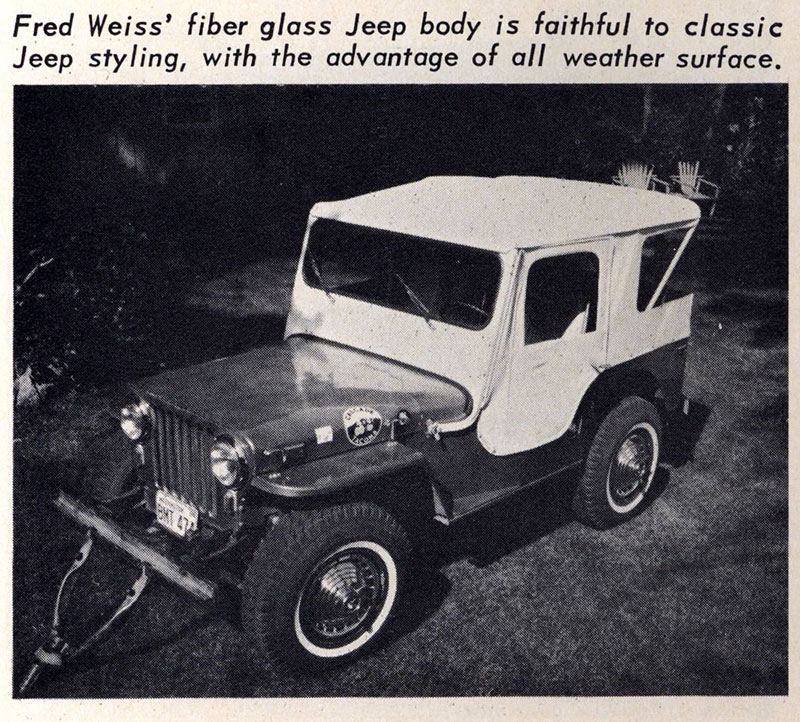
Note the Cascade 4×4 club sticker on the hood.
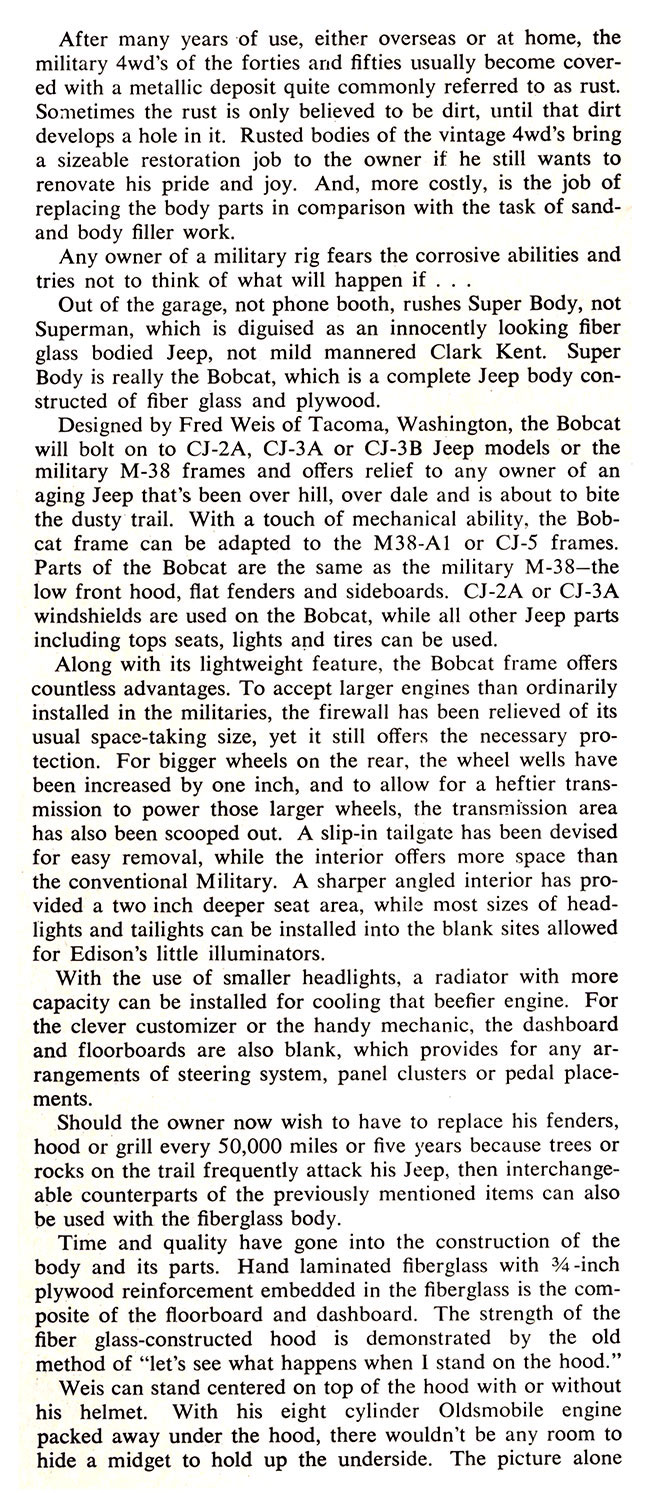

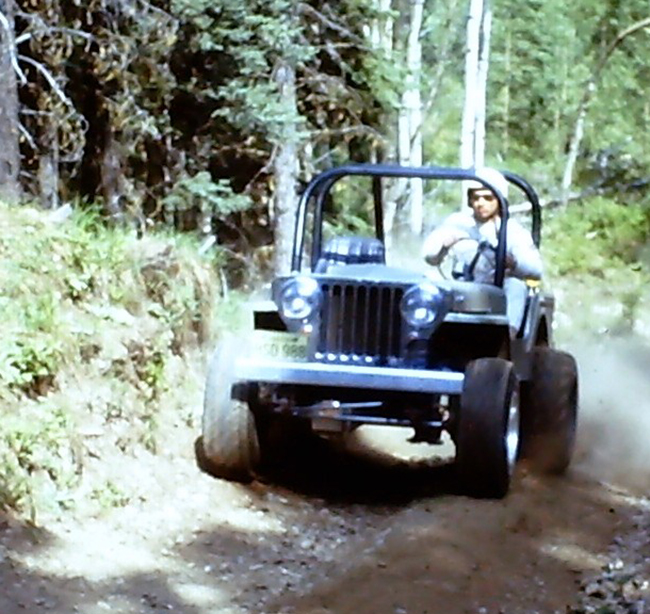
Paul Parker, maker of the Parkette bodies, racing up a hill climb in Calgary in the summer of 1970. Photo courtesy of Ed Bray.
This is a companion article for the Fred Weis and Bobcat Body post. Much of this history is built from conversations, emails and comments on eWillys. I welcome corrections and additions.
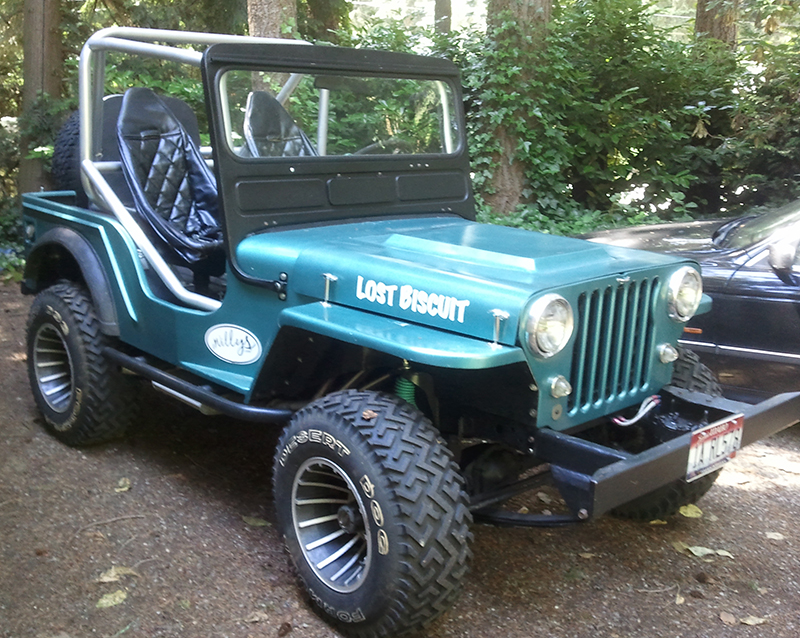
In the late 1960s Fred Weis, who I understand ran a fiberglass products company, experimented with a fiberglass jeep design until he found one he liked. At the time he had been jeeping and jeep racing for a decade as part of the Cascade 4×4 Jeep Club. His first complete body was completed in 1969. By 1970, he was ready to produce them for resale. Fred’s bodies were built to be rugged, using fiberglass and wood.
The body was not intended to be an exact replica of the original body; instead, it met the needs outlined by Fred, who styled them (i would guess) to make them a little cooler. For example, the side steps reached the length of the body bend. The rim around the body edge was wider. The dash came with no holes. At some point, the body could be purchased with or without a tailgate and with or without a floor.
Fred also came up with two custom fiberglass raised hoods that provided more room in the engine compartment. One was a teardrop design (few were made) and the other was highly recognizable.
Long time jeeper Paul Parker decided to get into the fiberglass body business about the same time as Fred, so according to Ed Bray, Paul joked about buying Fred’s bodies, adding a side stripe, and calling them Parkettes. Another source told me that Paul did indeed do this, which led to a falling out to some degree between Fred and Paul.
Paul, who had been in the jeep parts business with his brother in Georgia before moving to the Tacoma area, began to build his own Parkette fiberglass tubs out of molds he built. They were very similar to Fred’s body. The biggest difference was that Paul’s jeep included a side stripe, similar to a hockey stick, that was designed to make the body side more rigid and set it apart from Fred’s body. Besides the side stripe, the body of the Parkette was better designed to fit the curve of the CJ-3A windshield. Fred’s body did not support the windshield well at all (I know this from personal experience with my Bobcat body).
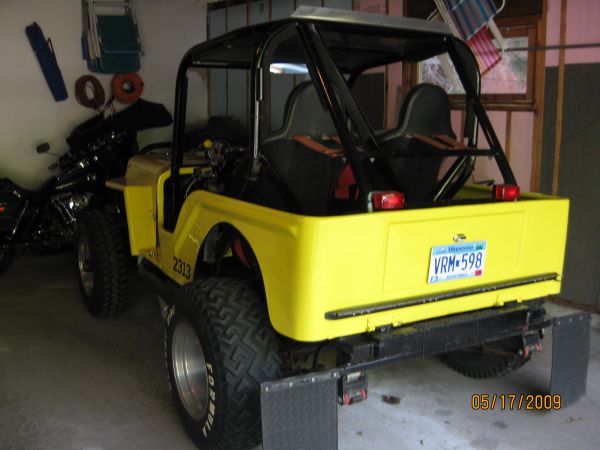
You can see the Parkette stripe “hockey stick” on the side of the body. This was likely just a racing shell, given the lack of a tailgate.
A family friend ran into the windshield issue as well. Jim Carter bought a Bobcat body in the early 70s. The body arrived rough. The Carter’s sanded and primered the body, but when it came time to mount the windshield, Jim discovered it didn’t fit. He was angry. Many phone calls ensued. Next, Jim turned to Paul Parker, eventually buying a Parkette body. Jim, Pattie, and their two boys raced, trailed and streeted the jeep for years.
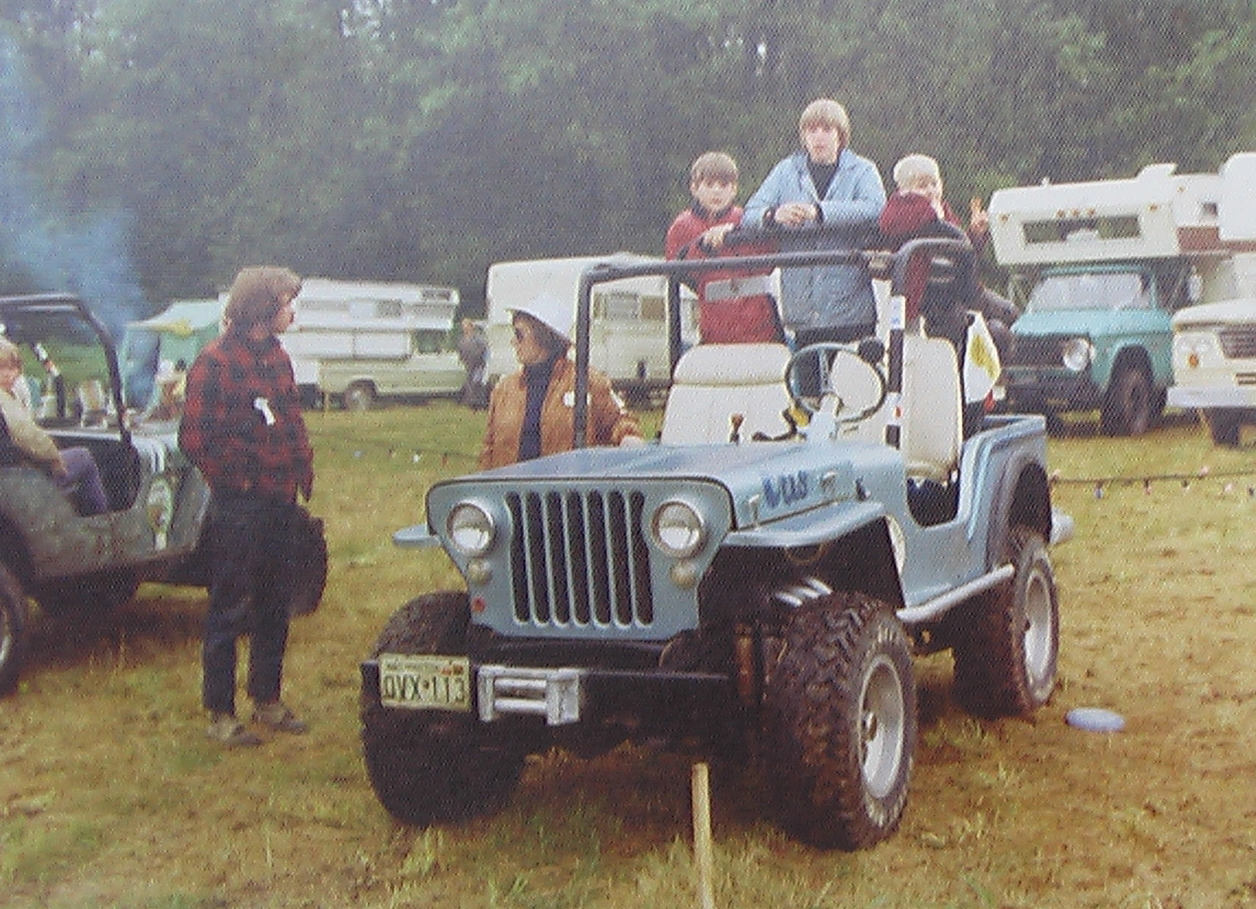
Early 70s photo of the Carter family’s “Otis” not long after the new Parkette body was installed.
At some point, Fred passed the business and molds on to someone else. The Bobcat molds were divided into at least two groups. I have some of the molds. I hope some day to make my own Parkette body.
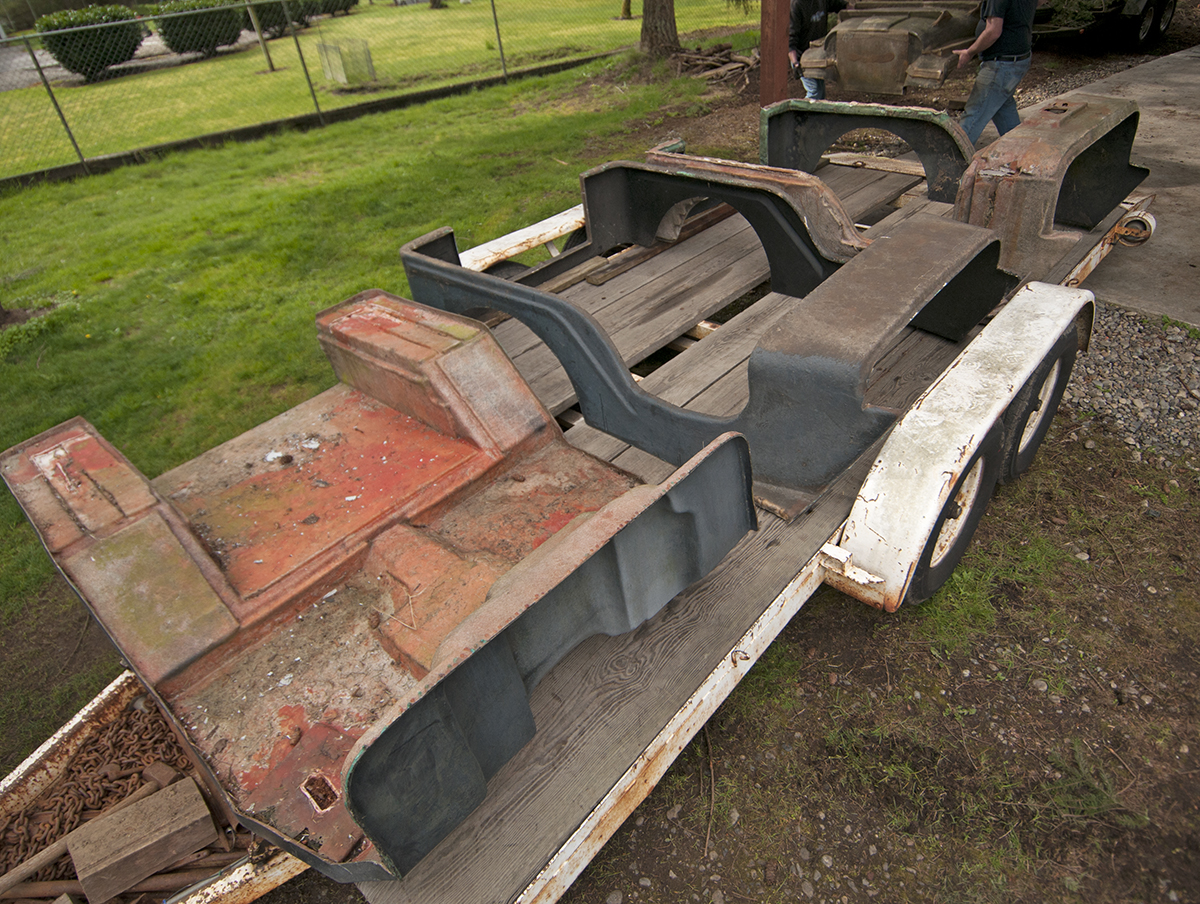
A Parkette racing shell mold sits in the middle. A CJ-3B shell is at the far side. A floor is shown in the foreground (I believe that’s a 3B floor).
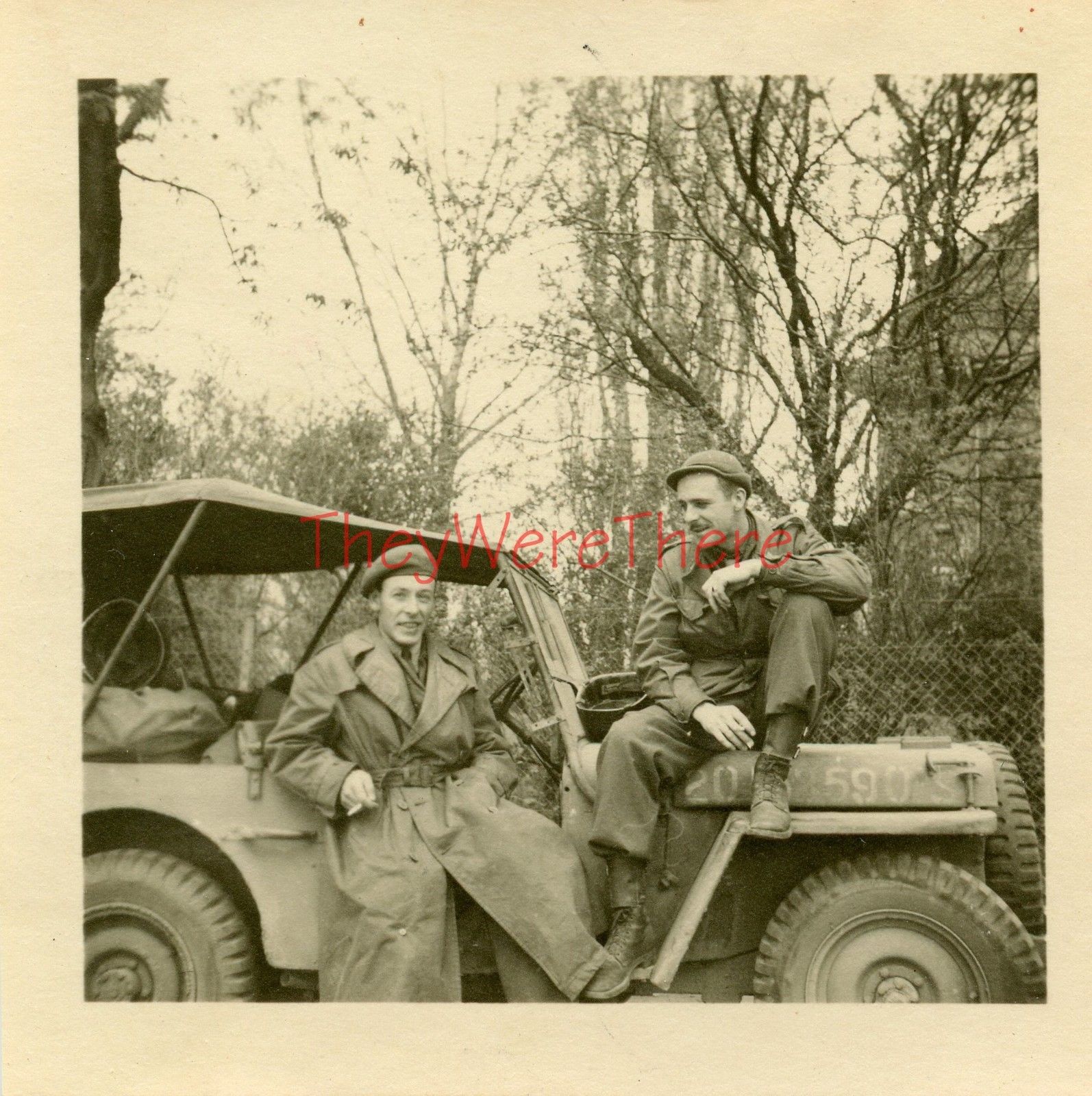
UPDATE: Here’s another photo with Robert Massell in it.
“An original to the WWII time period photograph. Measures approximately 2.5″ x 2.5″ inches. This photo belonged to US War Correspondent Robert Massell who reported on the war from overseas for ABC’s Blue Network Company. He traveled throughout Germany with reporters such as Howard K. Smith-CBS, Robert Barr-BBC, Noel Monks- London Daily Express, Frank Conniff INS, and Bjorn Bjornson-NBC. ”
View all the information on eBay
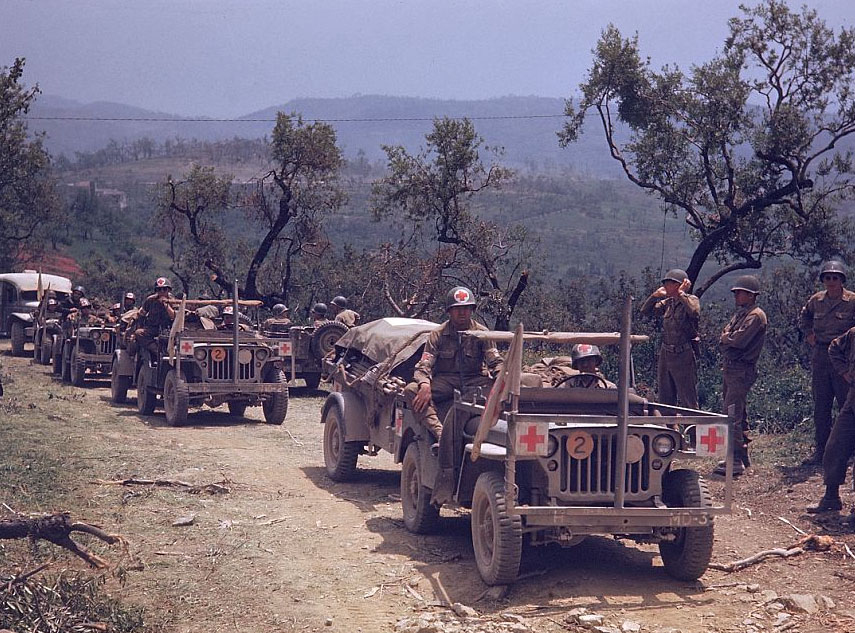
Blaine shared two links that show color WWII photos from 1943 Italy, including the one below.