Derek Redmond wants everyone to know that the CJ-3B Page has moved domain names. So, update your bookmarks if you haven’t.
emailNeed to contact me and don't have my email? Click on email button.
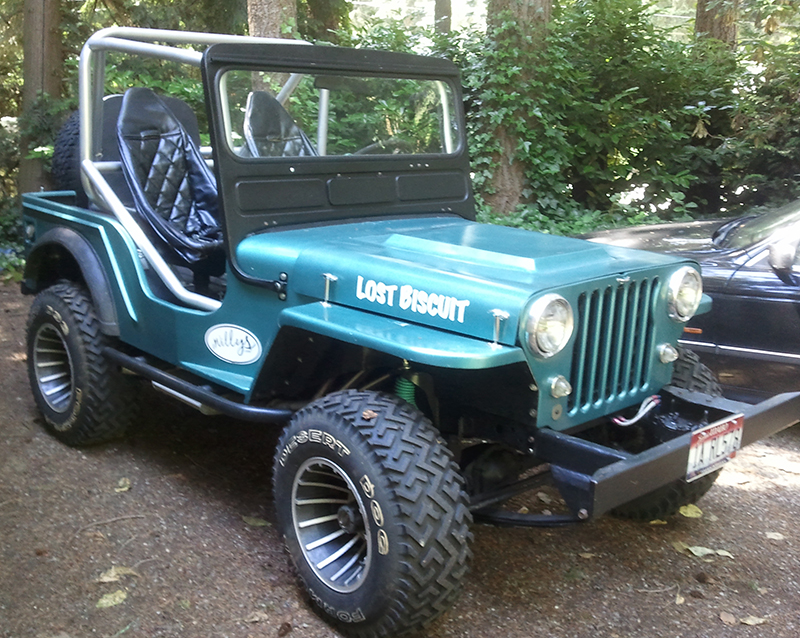
Welcome to eWillys.com, a website for vintage jeep enthusiasts. I update this website nearly every day with jeep deals, jeep history, interesting reader projects, jeep related info, and more.
These quick searches can help you find things on eBay. People list in the wrong categories all the time, so don't be surprised to see brochures in the parts area for example. This section used to be split into jeeps, parts and other categories, but recent changes to eBay will require this information to be recoded.
The links to posts below show jeeps grouped by models, condition, and other ways. Some of these jeeps are for sale and others have been sold. If you are unsure whether a vehicle is still for sale or not, email me at d [at] ewillys.com for more info.
There are plenty of interesting, unusual, historic and surprising stories related to Jeeps and their owners. In addition, some of these features have nothing to do with jeeps. This link will display all featured stories starting from the latest.
Looking for parts and not sure where to go? There are a variety of large and small new and used parts sellers both online and offline.
Importantly, the allure of buying a project jeep can be romantic. The reality of restoring a jeep can be quite different, expensive and overwhelming without the right tools and resources. So, tread carefully when purchasing a "project". If you have any concerns about buying a vintage jeep, or run across a scam, feel free to contact me for help, comments or concerns .
Derek Redmond wants everyone to know that the CJ-3B Page has moved domain names. So, update your bookmarks if you haven’t.
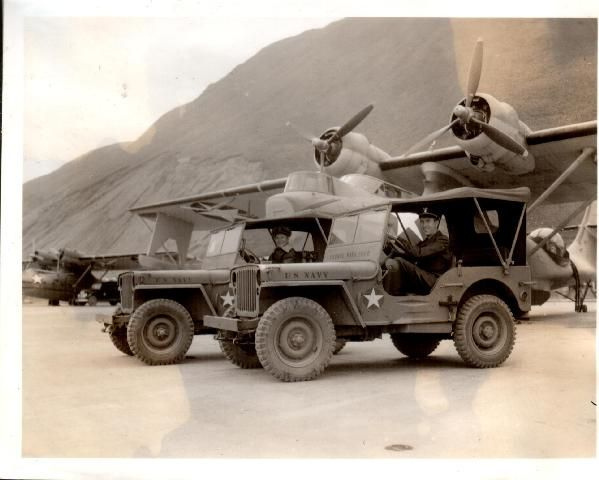
Charles forwarded these two photos of Navy Jeeps. These photos were posted at Flickr.
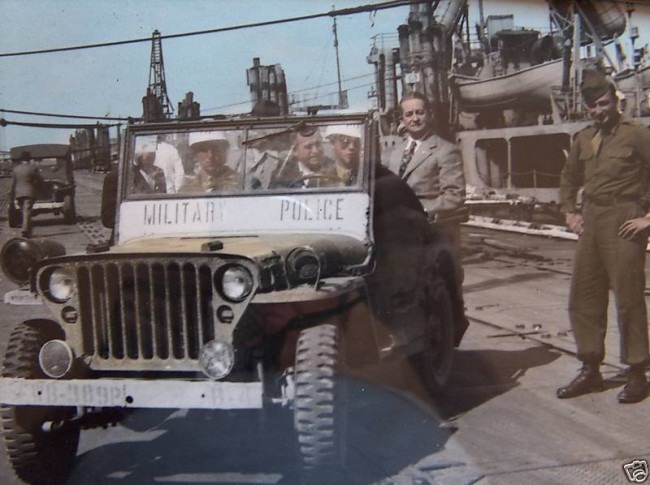
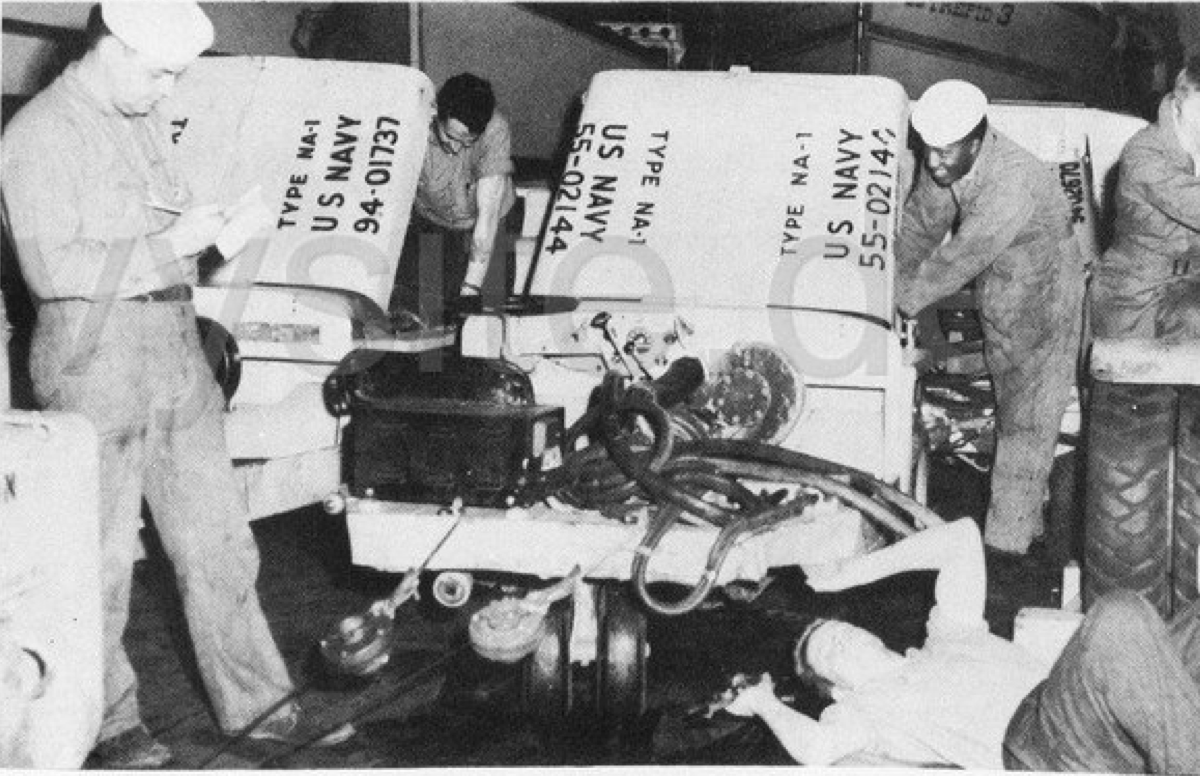
Tom Sterndale was wondering if any knows the numbering system behind these Navy APU Hood numbers. Thanks to Aron for this great photo.
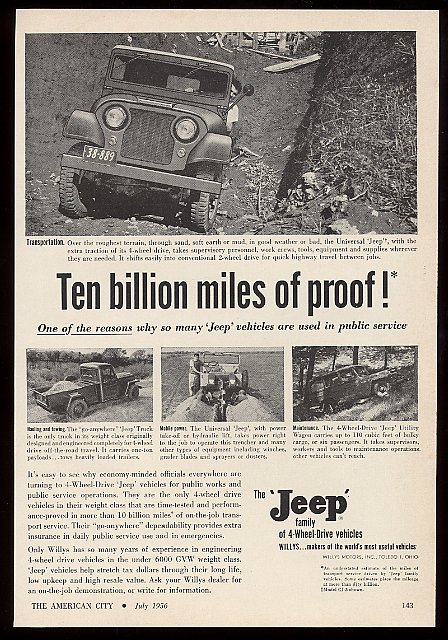
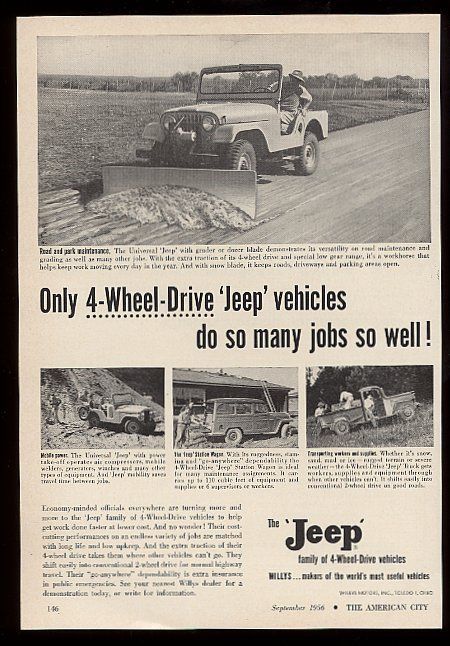
These ads appeared in different issues of ‘TheAmerican City Magazine’.
1) From July 1956 Issue:
“This is an original 1956 trade-publication print ad for Willys Jeep– a very unusual ad! It measures approximately 11″ x 7.5″ overall, has no tears or stains, comes from a dry, high-altitude, smoke-free environment, and is strictly graded”
View all the information on eBay
2) From July 1956 Issue:
“This is an original 1956 trade-publication print ad for Willys Jeep– a very unusual ad! It measures approximately 11″ x 7.5″ overall, has no tears or stains, comes from a dry, high-altitude, smoke-free environment, and is strictly graded”
View all the information on eBay
UPDATE: **SOLD** Was on eBay
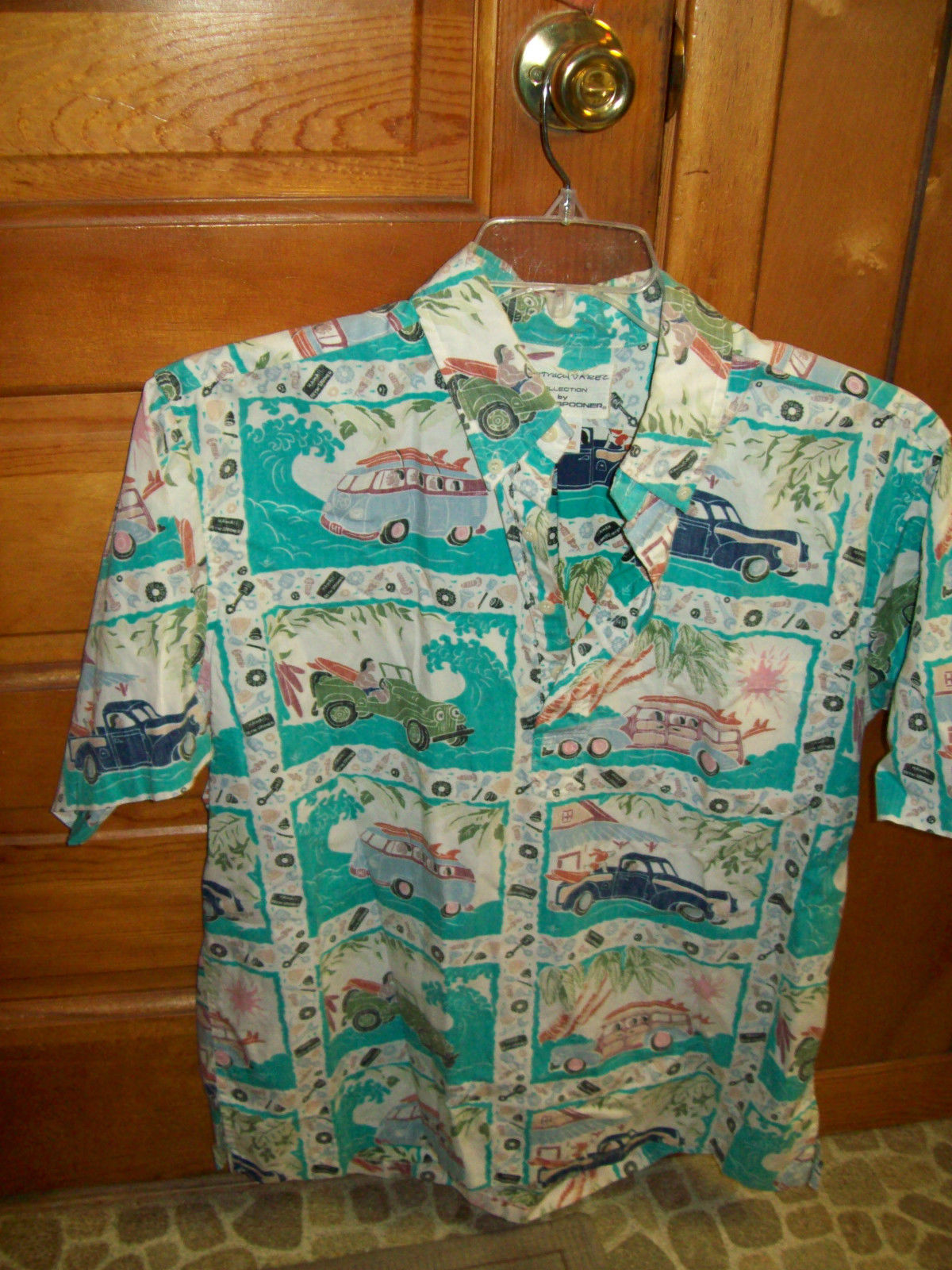
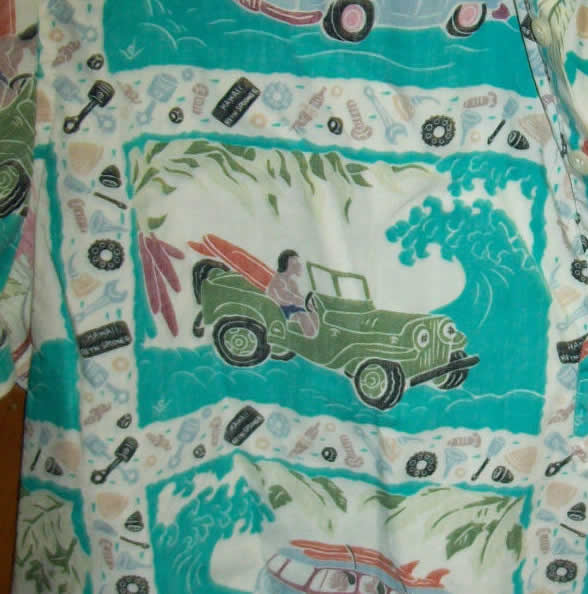
This is not in the best of condition, but it is unusual.
“Up for auction is a brightly patterned tropical shirt featuring images of Jeeps, vans, trucks and woody wagons. There are palm trees, surfboards and smiling dogs also featured. The shirt is used and made of 100% cotton, so it is faded from washing and may have shrunk even though the tag says Size Large. It has short sleeves and a polo-shirt like button-up front opening. This shirt will look equally good worn by a man or a woman. ”
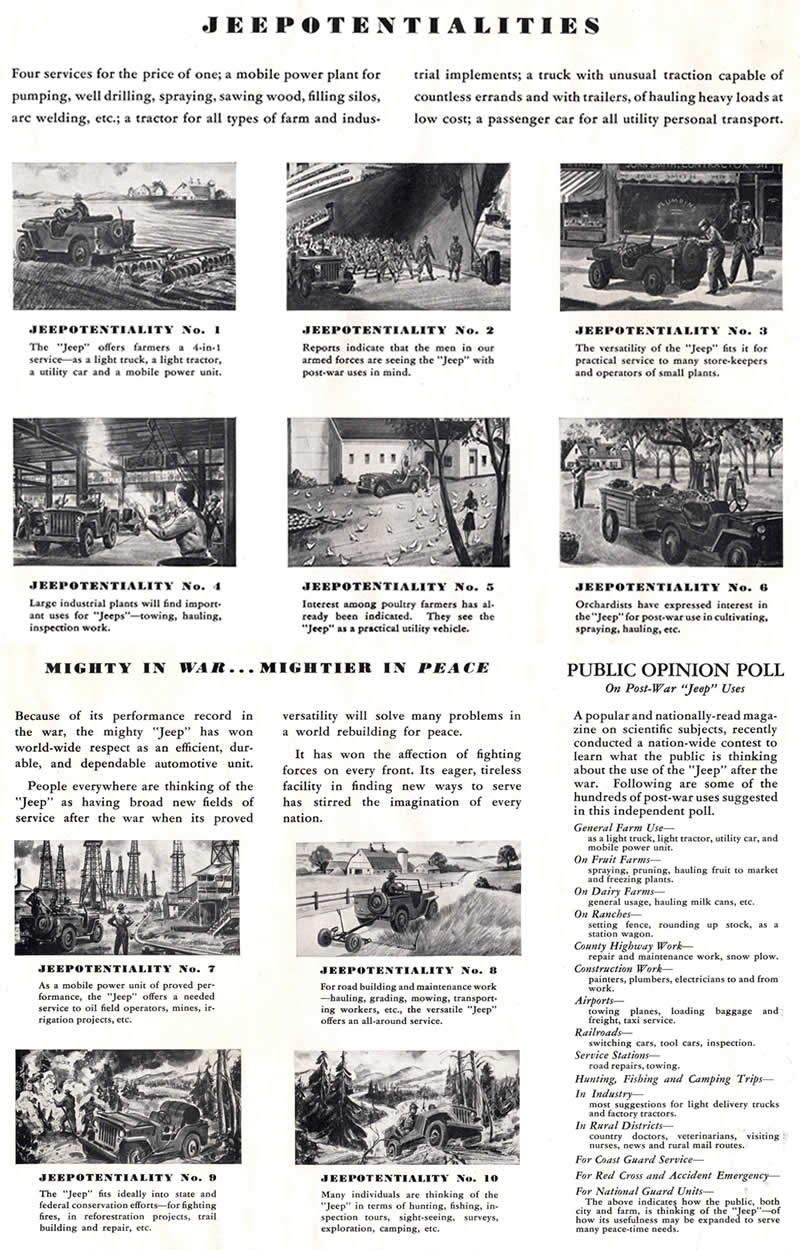
I’ll provide some more information on the 1944 Willys Overland Annual Report that I’ve scanned, but I don’t have time tonight. Instead, here’s some fun reading from the report. I’ve combined two of the pages into one image. This comes from an anonymous donor kind enough to share this (and other) documents so I can scan and share them with you.
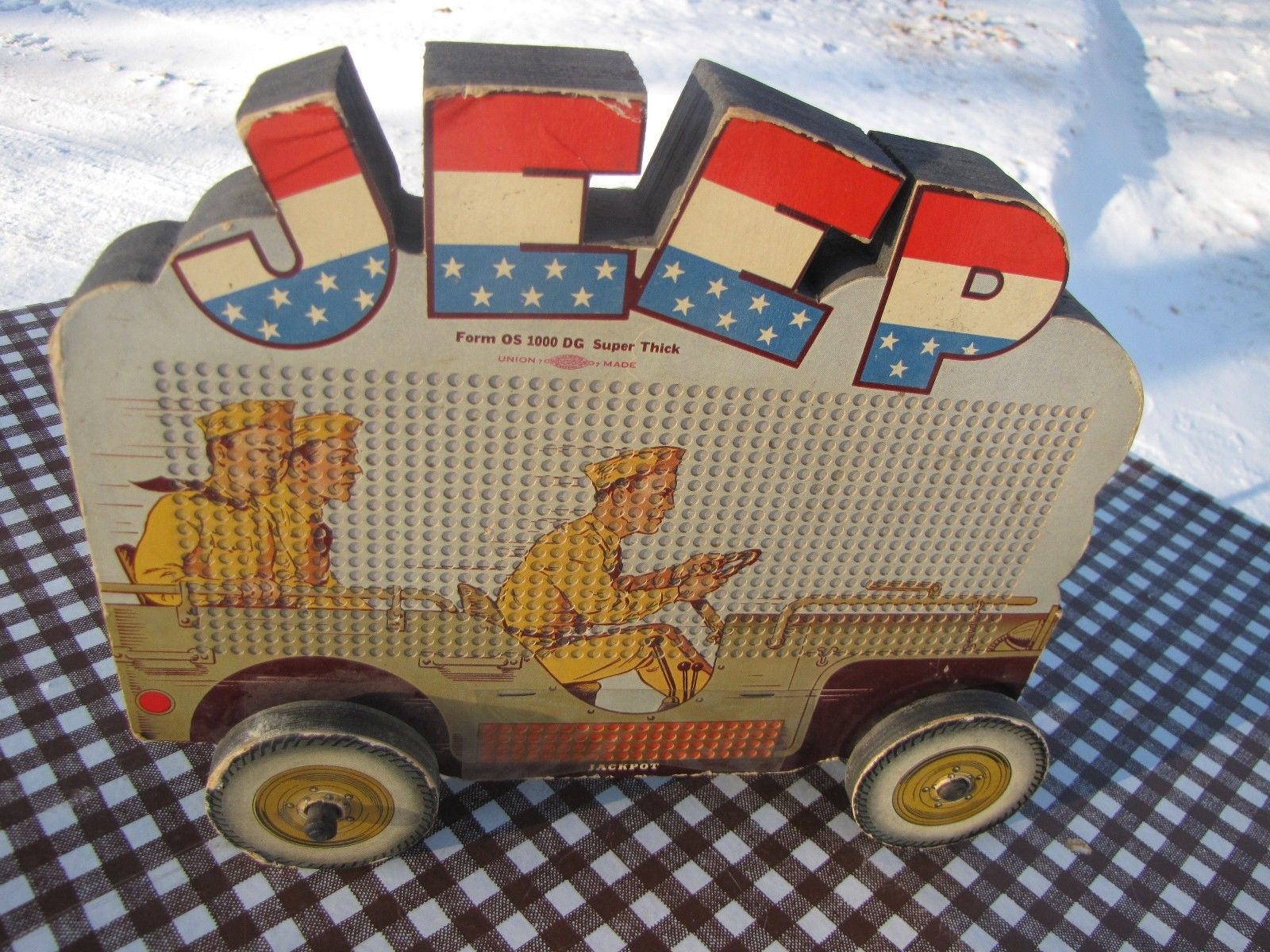
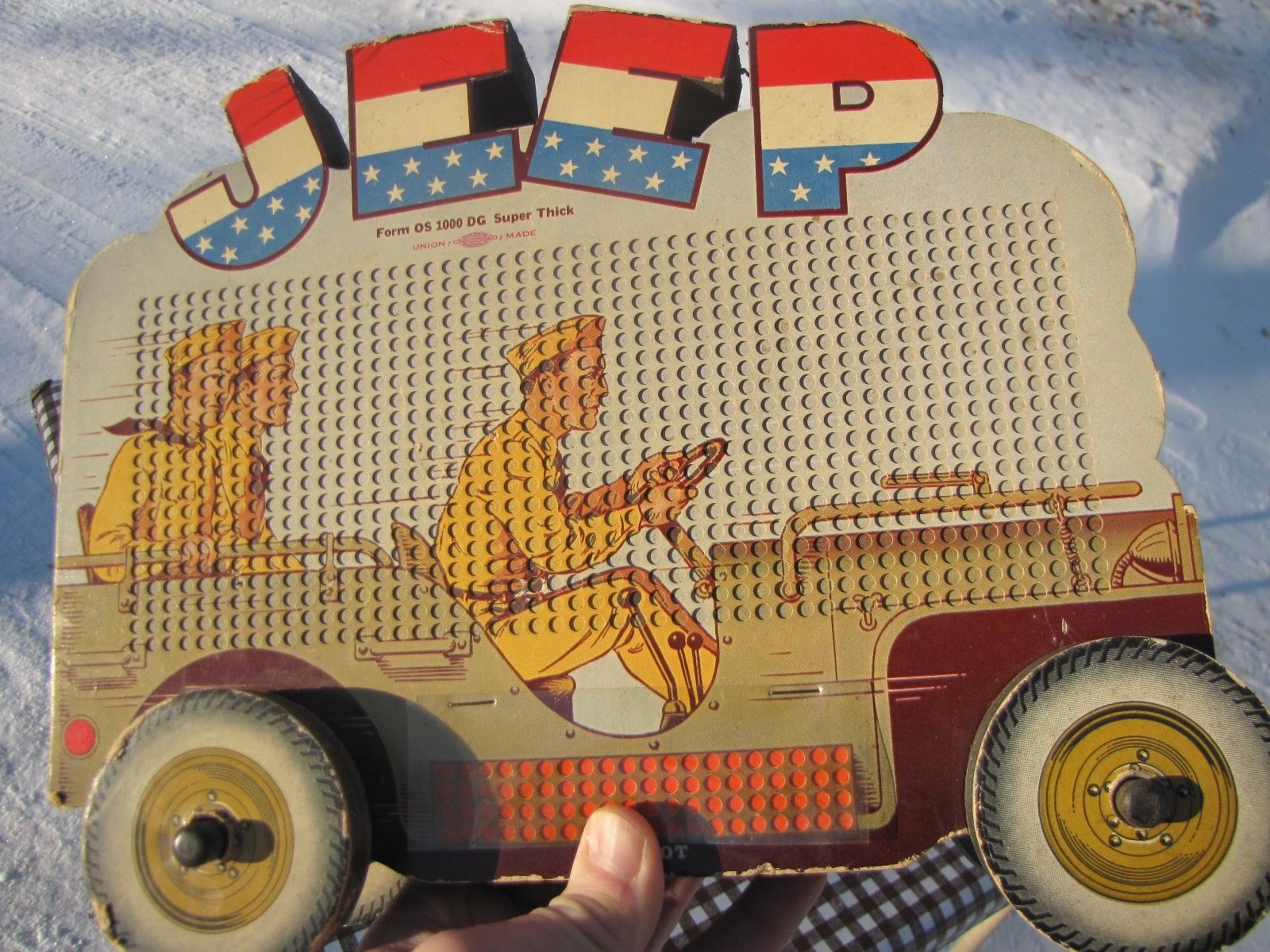
Given these were designed to be punched, this is likely a pretty rare item. The seller certainly believes it is! Great piece. You can see other types of punchcards here: http://www.ebay.com/bhp/punch-board
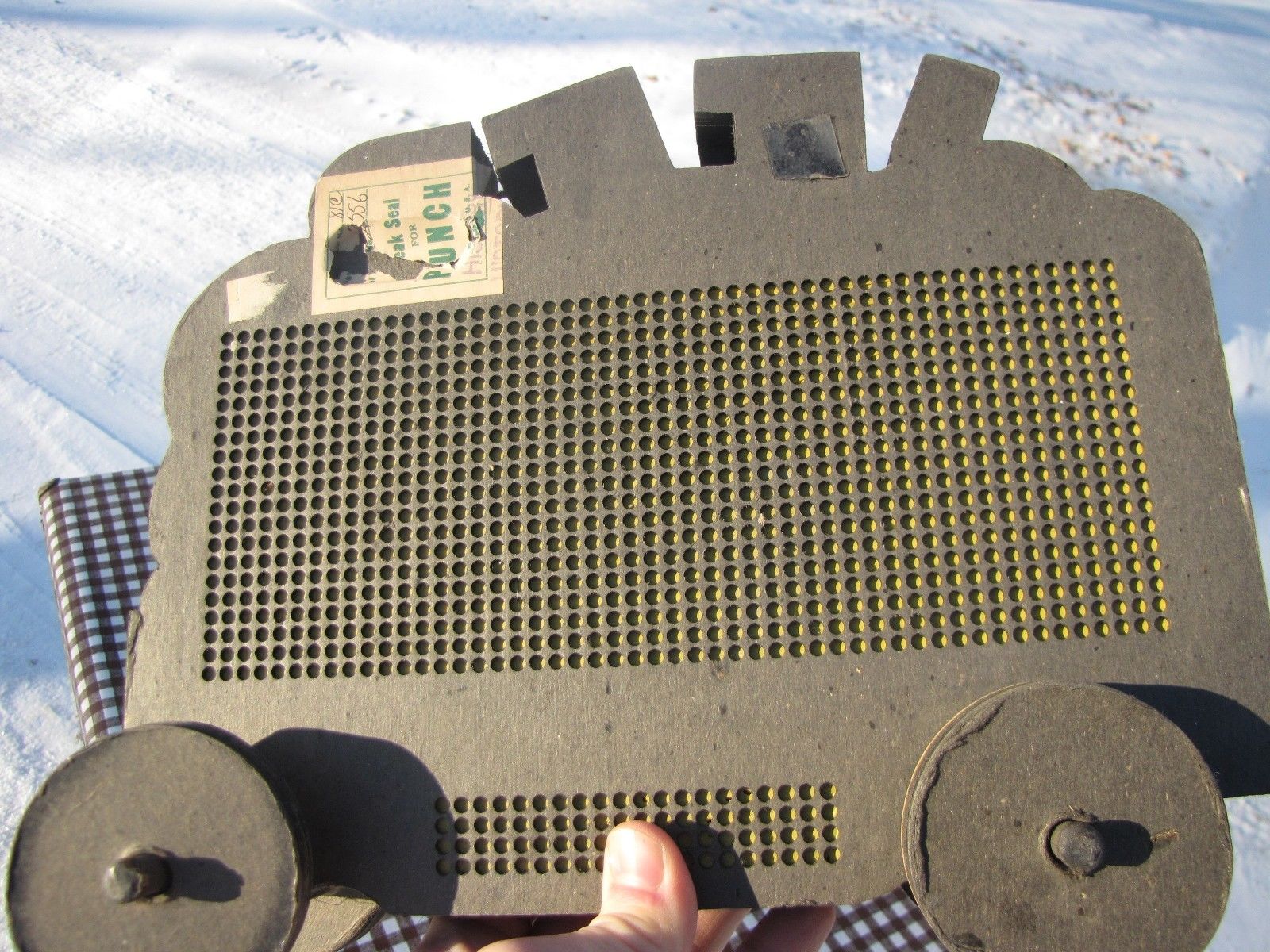
“WONDERFUL WWII JEEP PUNCH BOARD.
PIECE IS UNUSED, BUT PUNCH IS MISSING FROM THE BACK.
THIS WILL STAND UPRIGHT WITH THE WHEELS TURNING WHEN ROLLED.
IT MEASURES APPX. 9 1/2 TALL 11 1/4 WIDE & 3 1/2 INCHES DEEP.
GREAT ESTATE FIND!!!!!”
View all the information on eBay
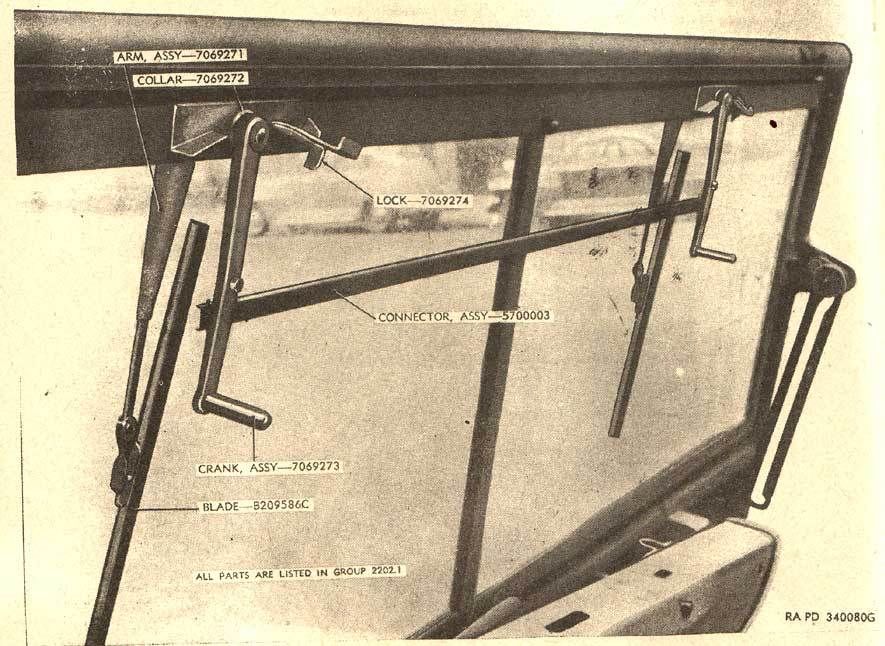
This part is located in France, so keep that in mind.
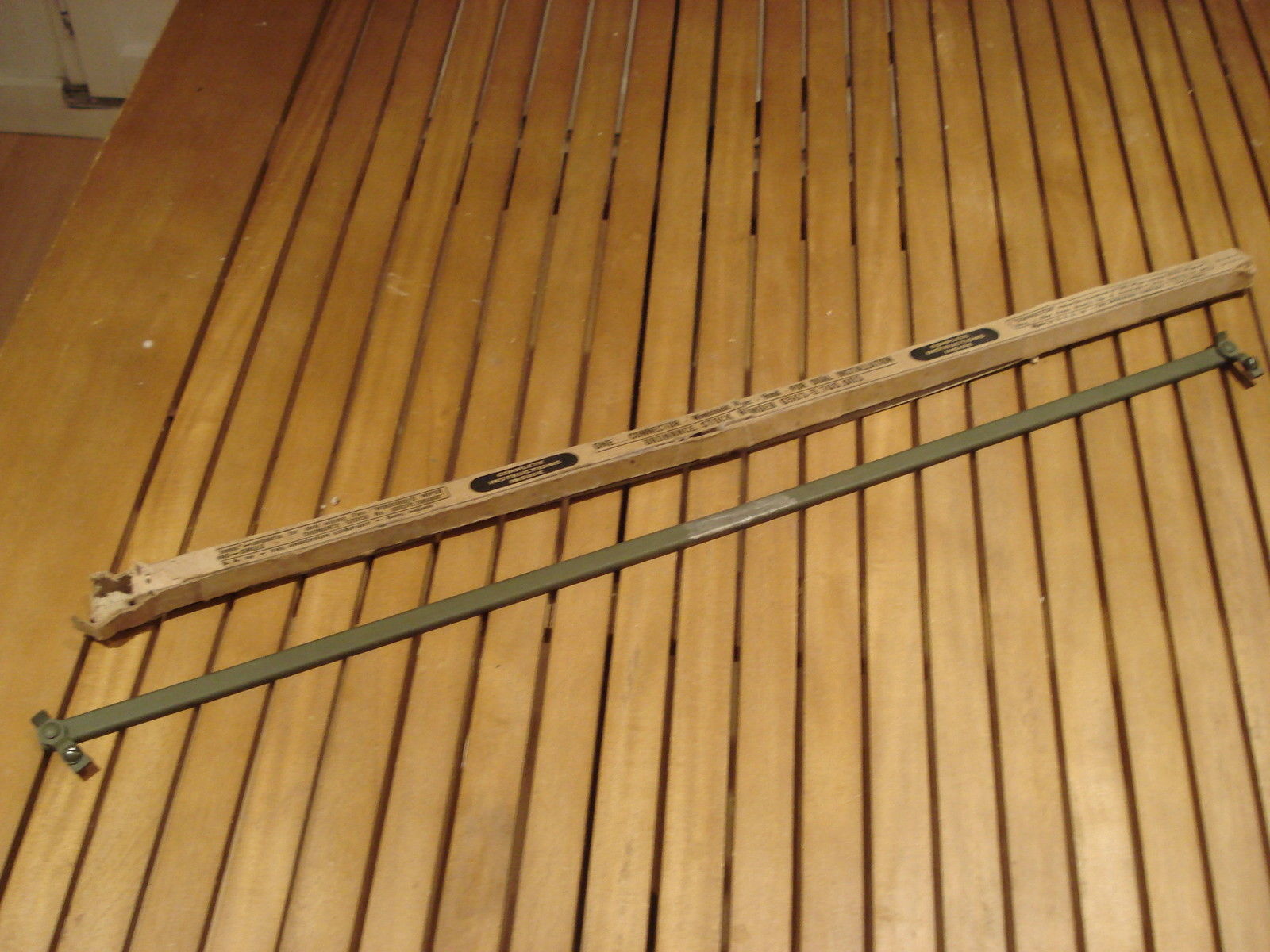
“ULTRA RARE BARRE DE CONNECTION POUR ESSUIE GLACES !!
ETAT NEUF, D’ORIGINE (NOS WWII)
PEINTURE D’ORIGINE (ORIGINAL OLIVE DRAB PAINT)
ORIGINAL BOX INCLUDED !
LA BOITE D’ORIGINE EST INCLUSE
TRES TRES RARE AUJOURD’HUI !!!
DON’T MISS IT ..”
View all the information on eBay
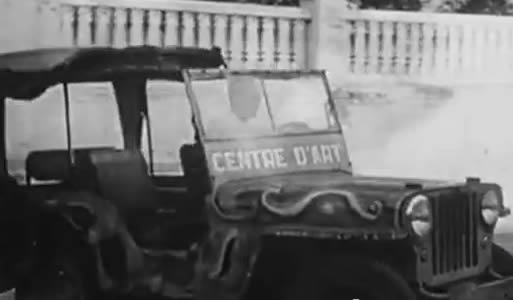
1950 photo of the Centre D’Art CJ-2A. This is a snapshot from the US Information Service video shown below.
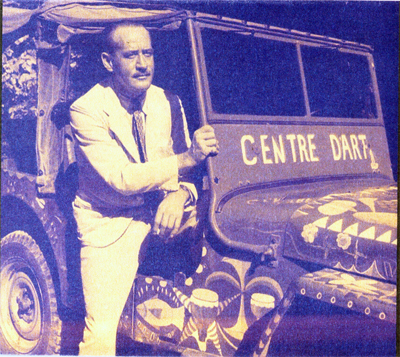
Note how much more complex the art looks in this photo than in the video. This is DeWitt Peters with his Centre D’Art CJ-2A. http://www.haitipolicy.org/Vernisage.htm?PHPSESSID=
In 1943, WWII conscientious objector and artist American DeWitt Peters chose to go to Haiti to teach English. After a year, he wrote to the Haiti’s Ministry of Education and suggested he could do more for Haiti by establishing a school of painting. Using some of his own money, along with US State Department and Haitian funds, he helped launch the LE CENTRE D’ART. The goal of the center was to encourage the development of Haiti artists and folk art.
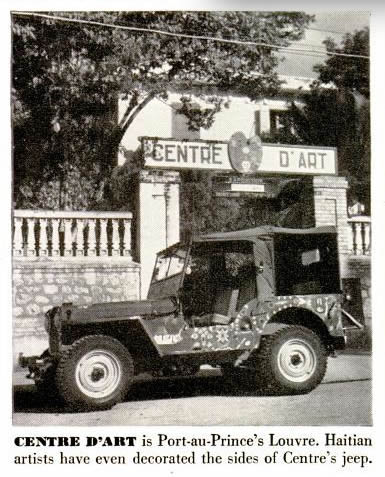
Image is from Life Magazine circa 1947. This looks different from the other photos. It is possible the jeep was repainted regularly.
To help advertise the Center’s work, Dewitt Peters used his jeep as a rolling mural. As you can imagine, this color jeep must have been quite a sight motoring around Port-au-Prince. Dewitt also used the jeep to deliver art supplies to rural painters. The video below from the United States Information Service shows his jeep from timestamps 5:17 to about 8:00. Too bad it isn’t in color.
http://www.youtube.com/watch?v=5Mr1USFY3mY
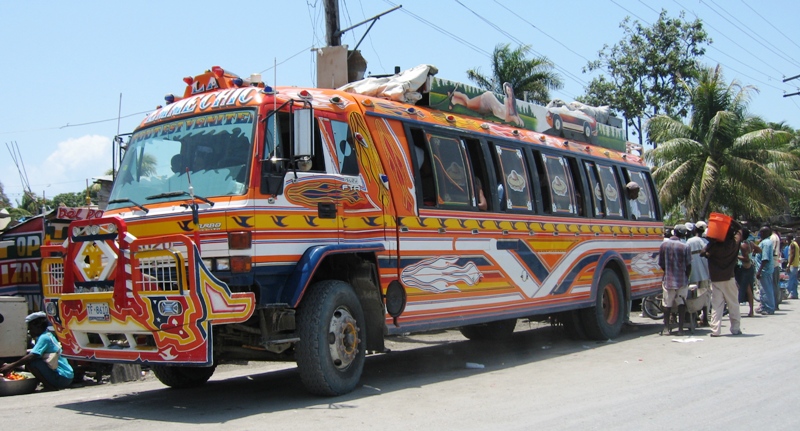
Many publications credit DeWitt for launching a renaissance in Haitian folk art, however some historians question his overall impact. However, one thing he might have launched is the Tap Tap Buses and Taxis, whose outsides are highly colorful and continue to shuffle riders to this day. Unfortunately, the Centre’ d’Art’s building was completely demolished in the Haitiian Earthquake.
Here are a few links of interest:
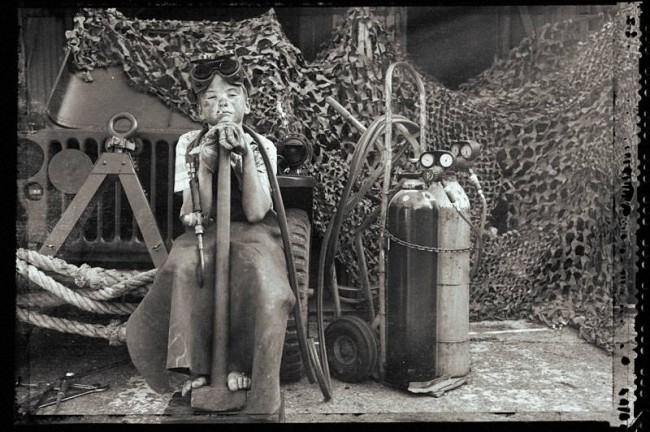
Charles spotted this unusual photographic story essay by Reinfried Marass that features a child and a couple of different jeeps.
http://www.reinfriedmarass.com/war-child-labor-photo-essay-visual-storytelling-photography