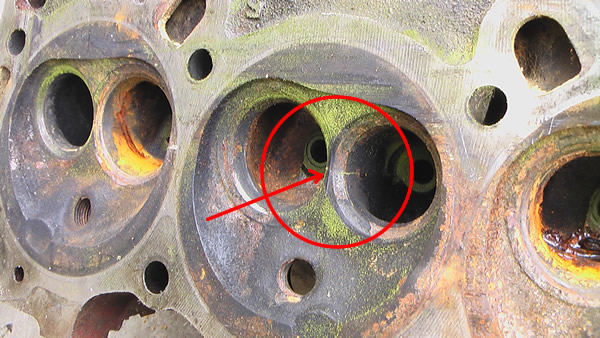
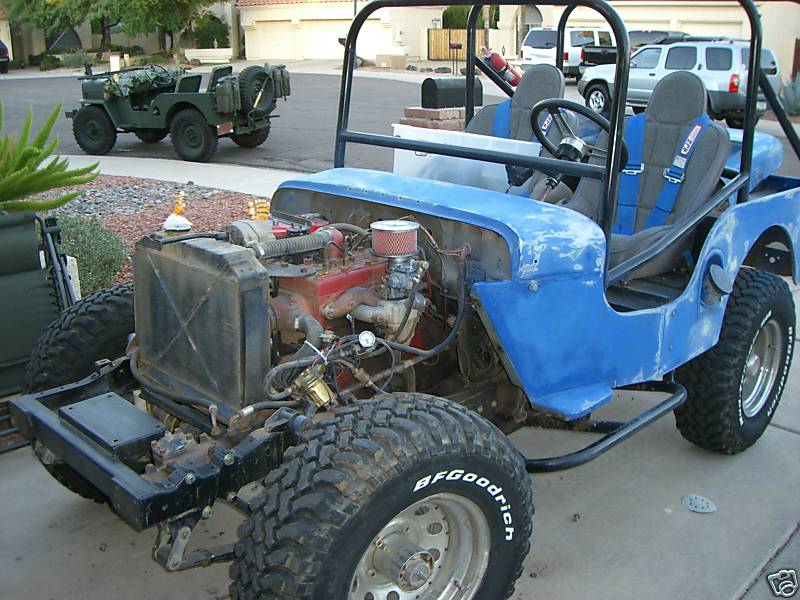
Fortunately, my $50 engine had 2 good heads, though these heads weren't ported nor did they have their valve guides machined, they did have better seats. Best $50 I've spent so far!

Fortunately, my $50 engine had 2 good heads, though these heads weren't ported nor did they have their valve guides machined, they did have better seats. Best $50 I've spent so far!
The American Sand Association operates a nice website with plenty of information about sand dunes across the United States. Here’s their bulletin board.
“The mission of the American Sand Association is simple: “Unite, Inform and Mobilize: We accomplish that mission throught the use of the volunteers. We believe in responsible resource management for the people. The American Sand Assotiation supports a national cooperation of local and regonal sand sport organization and shares with them ideas and infomration to help them Unite, Inform and Mobilize.”


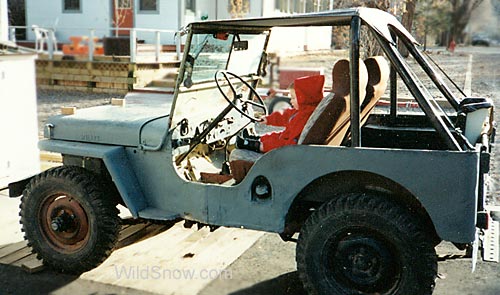
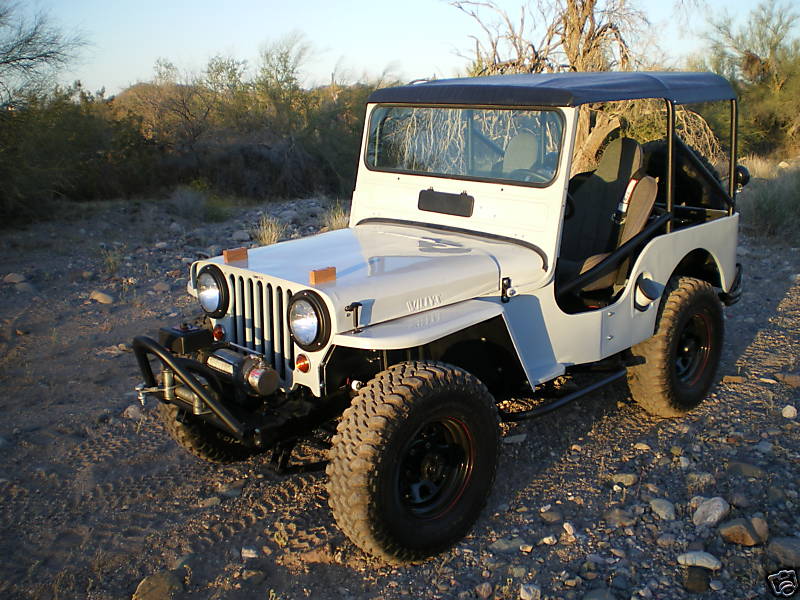
"At first glance, Chris Olson's 1948 CJ2A Willys looks rather plain next to his brother's LJ80 Suzuki. Your first impression would be that it's another flat fender Jeep with big tires and a spring-over-axle conversion. But like his brother's Suzuki, Chris' Jeep isn't what it appears to be. In fact, it is more Toyota than Jeep. This flat fender reflects Chris' pragmatic attitude toward building a 4×4. Choices were made due to cost, availability and functionality. He has no loyalty to any make or model of vehicle and because of that, he has ended up with a very unique vehicle.
When Chris first set eyes upon the Willys in 1997, it was sitting in a backyard, partially hidden by knee-height grass. It had a seized engine, the front axle housing was gutted, all four tires were useless, the interior was a rat home, and it sported a rollbar made of old driveshafts (including the yokes!). The important thing to Chris was that the body was in pretty good condition, especially for a vehicle built half a century earlier. For $400, it was his."
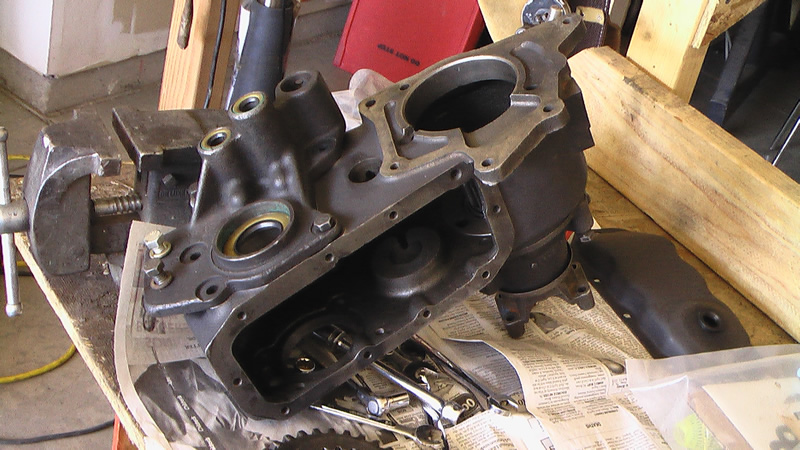
One of the minor fixes on my list of things to repair (a never ending list it seems) was to replace the seals on the input shaft of my power steering unit to stop a small fluid leak. At $15 (from my local NAPA dealer) for replacement seals this is an inexpensive fix. So, to make the fix more interesting, I taped my efforts for your viewing amusement and edification.

The video is hardly a complete document on how to rebuild a transfercase properly. Clearly, I won’t be quitting my day job to go into TV! However, I hope it’s educational and a little amusing.
A few related links:
This is a low resolution video, but is still 49mb. It runs approx a half hour.
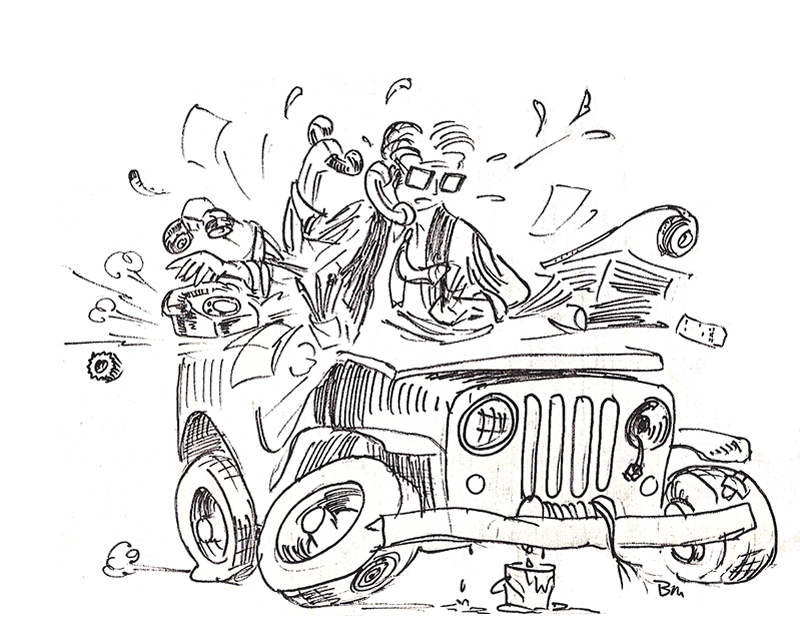
This is a drawing a Boeing co-worker of dad’s drew of and for him many years ago (in the 80s I believe). We believe the artist was Bill Mandeville or Manderville (dad can’t quite remember any more).
Every once in a while my dad will start talking and he'll talk about some event in his past I knew nothing about. You'd think, for example, that I would have known my dad's first vehicle was a jeep — a CJ-2A — he got it when he was 16 as his first car. But, no, today was the first day I've heard of it. There are several reasons for this, mostly, I suppose, having to do with our father/son dynamic. Though I wish I had heard about some of these stories earlier in my life, there is something nice about continuing to hear new stories.
As dad tells it, the year was 1949 and he was 16, living with his parents and two brothers in Holladay, Utah, now just a suburb of Salt Lake City. The city of Holladay is south of Salt Lake City, laid out underneath Olympus mountain. When dad lived there, off of Walker Lane, there was only wasatch blvd and 5000 vertical feet between his house and the top of Olympus mountain. Now, I-215 with its six lanes of traffic has added a much bigger divide between the two. Of course, there are many more houses and fences in the way as well.
One day, Dad decides to take his jeep and 5 passengers jeeping up the hill towards the base of Olympus Mountain. Today this area is known as Olympus Cove, but at the time, I'm sure it was the great unknown.
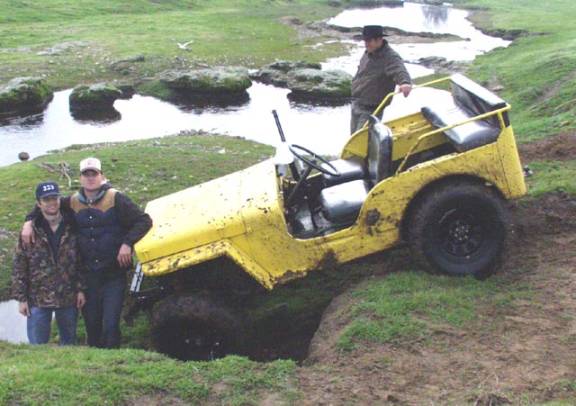
As best I can interpret from Dad, he was driving his CJ-2A with his brother B.B in the passenger seat, and four other kids in the back (one was his other brother Tony and one was Jim Carter). Dad was driving very slowly, crawling along when his left front wheel started over a bump or rise. As they slowly moved forward the rise grew, shifting the jeep slowly toward the passenger side until the jeep tipped over onto the passenger side, dumping the four kids in the back onto the ground. Miraculously, the jeep didn't tip all the way over and hurt anyone severely. The worst damage was to Jim Carter, who suffered a cut on his knee or leg. Apparently, Jim fell the furthest, I guess he must have been on the driver's side back wheel well (dad couldn't quite explain this to me — sometimes dad's stroke makes these explanations more difficult).
After getting off the ground and checking out the jeep, they decided to tip it back onto its wheels and head back home.
Whatever physical damage the semi-roll caused Jim Carter, I guess he must have enjoyed himself, because he became a life long jeeper, a jeep club co-founder with dad, jeep racer, and President of the PNW4WDA for a year. Perhaps we should all fall out of a jeep 🙂
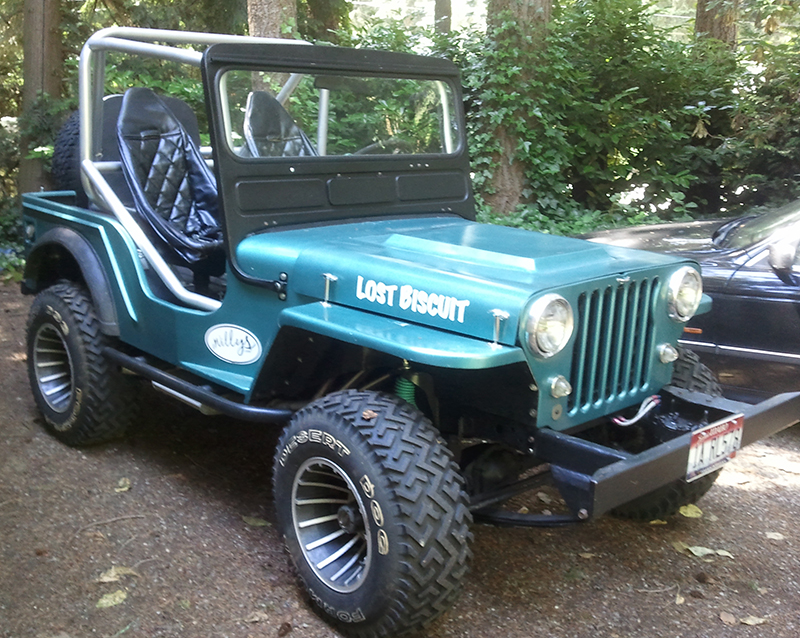
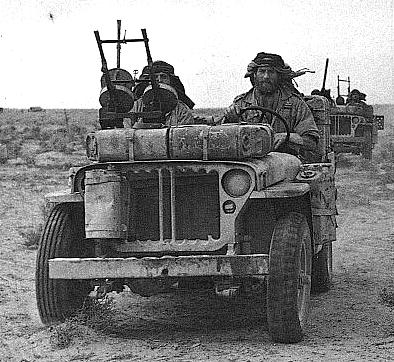
Here's an excerpt from the website about SAS Jeeps:
"The jeeps were stripped of all non-essential parts including the windscreen, most of the radiator grille bars and even sometimes the front bumper to increase the effective load carrying capacity of the vehicle. Thus the large amount of fuel and water needed for fast long-range raids could be carried avoiding the need for slower support vehicles. A water condensing unit was fitted to the front to reduce loss from the radiator which would otherwise have had to be topped up from the limited drinking water supplies…"


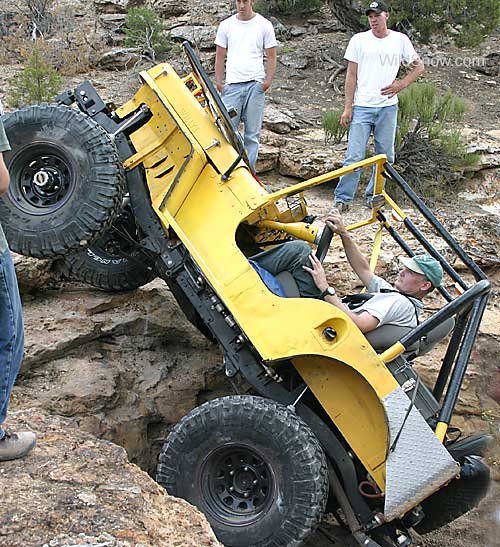
Louis sums up the experience with the following quote: "Our ensuing 12-year restomod of "Rumble Bee" includes a huge amount of fun, plentiful stupid and expensive decisions on my part, and a final result that retains the flat fender look and feel, while being competent and safe enough on the trail to peg the fun meter. This "retro" project includes little of the latest tech — it's mostly older solutions that reached their peak a number of years ago, but it works."
On additional feature I like is the "what we did right" and "what we did wrong" on page 4 of the article.
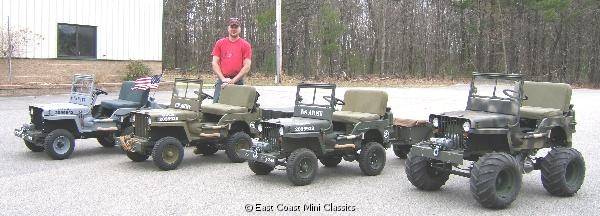
UPDATE: It appears east coast mini classics is no longer making the mini jeeps shown below. they can be found occasionally for sale on Craigslist.
This build is for sale on eBay. There are plenty of pics. Note the m606 in the background of one of the ebay pics.
“This is a really unique combination of old and new and we’ve had a ton of fun in it. This rig started it’s life as a military M38 until the previous owner started modifying it as a back country rock crawler. When we got it, it had wasn’t much to look at, was missing a windshield but ran and drove so well we had to have it. It is heavily modified to be a safe, comfortable, go anywhere ride. We call it The Rhino Hunter as it has effortlessly shamed a few ORVs in the mud and rocks…”