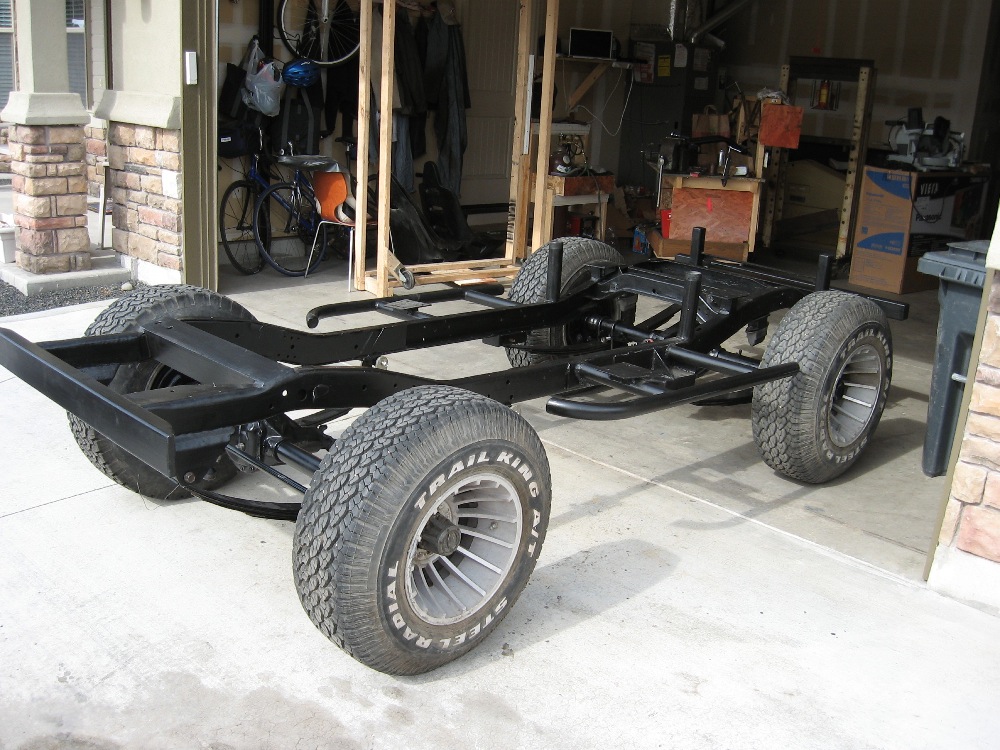
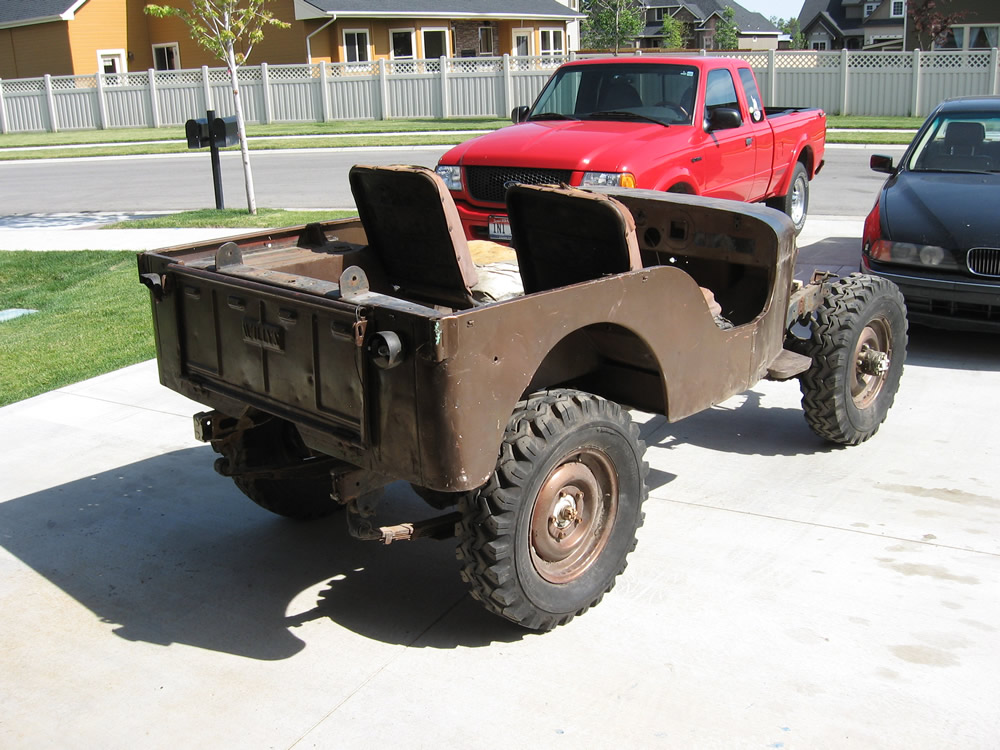
These shots show the painted frame with the Dana 44 rear and Dana 30 front painted and attached.
emailNeed to contact me and don't have my email? Click on email button.
Welcome to eWillys.com, a website for vintage jeep enthusiasts. I update this website nearly every day with jeep deals, jeep history, interesting reader projects, jeep related info, and more.
These quick searches can help you find things on eBay. People list in the wrong categories all the time, so don't be surprised to see brochures in the parts area for example. This section used to be split into jeeps, parts and other categories, but recent changes to eBay will require this information to be recoded.
The links to posts below show jeeps grouped by models, condition, and other ways. Some of these jeeps are for sale and others have been sold. If you are unsure whether a vehicle is still for sale or not, email me at d [at] ewillys.com for more info.
There are plenty of interesting, unusual, historic and surprising stories related to Jeeps and their owners. In addition, some of these features have nothing to do with jeeps. This link will display all featured stories starting from the latest.
Looking for parts and not sure where to go? There are a variety of large and small new and used parts sellers both online and offline.
Importantly, the allure of buying a project jeep can be romantic. The reality of restoring a jeep can be quite different, expensive and overwhelming without the right tools and resources. So, tread carefully when purchasing a "project". If you have any concerns about buying a vintage jeep, or run across a scam, feel free to contact me for help, comments or concerns .
These shots show the painted frame with the Dana 44 rear and Dana 30 front painted and attached.
With my Dana 44 all taken apart (See article below), it was time to put everything back together. One aspect I have left out of the rebuild process is the importance I placed on using the appropriate language to assemble and disassemble the R&P properly; lets just say I'm glad my children weren't about.
Gathering tools and parts
In terms of parts, I needed to gather a rebuild kit, a locker, and axle kits. Using Craigslist, I found a locker for 3:73 gearing locally for $325. The rebuild kit I got at half price from a jeeper in Bend, Oregon. The axle bearings, cones, and outer seals were purchased online through Tellico4x4.com. The inner axle seals I purchased at Schucks. At first, when I realized I had forgotten to order these (oops), I went to tellico's website. The seals themselves were around $5 a piece, but the cost for shipping was going to more than double the price. I thought that was ridiculous. So, I dropped by the local Schucks to see what it would cost to get the seals (I figured they would have to order them). Well, to my surprise, they had them in stock! $10 later, I was out the door with them.
The Goal .. take apart my Dana 44 housing and install a Detroit Locker along with new bearings and seals. Sounds easy enough, right?
When building my last jeep, I did not have to rebuild either of the axle housings. In the rear I had a Dana 44 from a mail jeep. Mail jeeps come with detroit lockers: note that the housing is a little narrower than a standard jeep by approx 2". To fix this, you can have some shims machined that will allow you to use standard flanged jeep axles.
Fast forward to the new jeep. I had a Dana 44 I knew nothing about and a detroit locker I wanted to install inside it. I figured this would be a good opportunity to learn about ring and pinions; and, learn a thing or two I did!
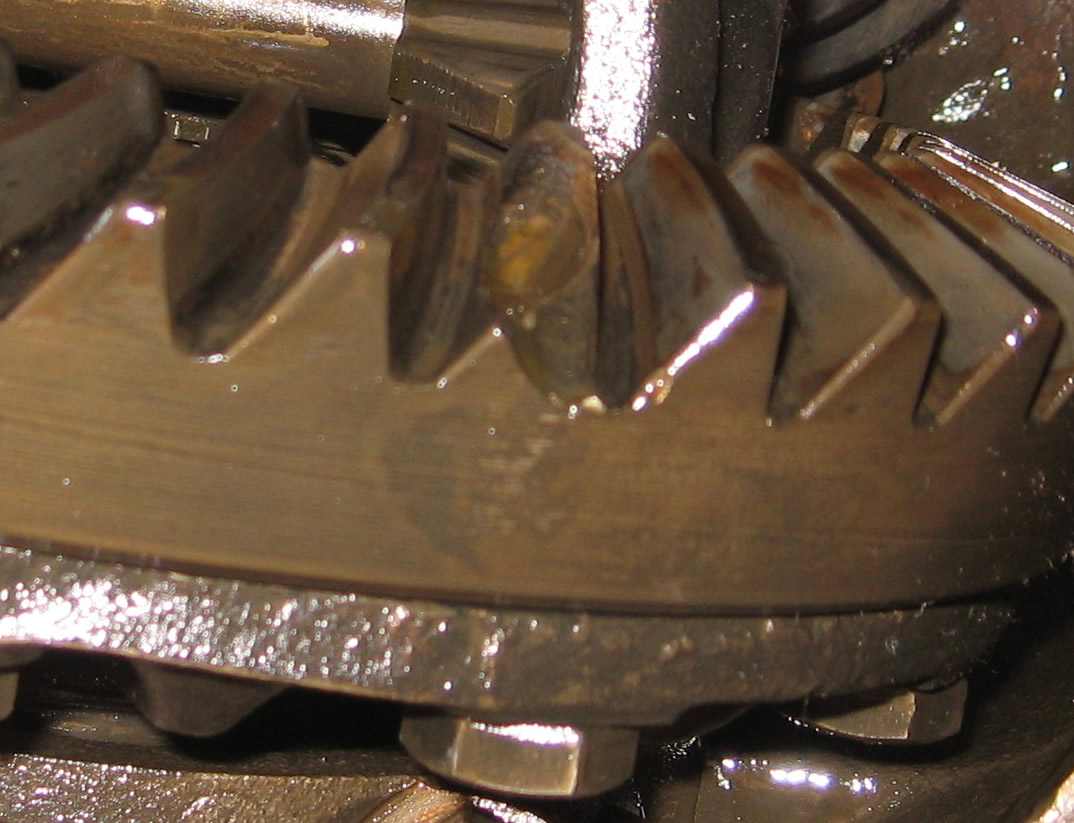
Naturally, the first step was to pull off the housing cover and examine the condition of the gears. Unfortunately, the news was not good. I quickly discovered that I had a very broken tooth on the ring gear.
Interestingly, there was no evidence of broken pieces in the oil. This lead me to suspect that the previous owner may have discovered the damage while changing the gear oil and 'forgotten' to mention it to me. Also, once I pulled everything apart, I would also find the pinion gear broken as well.
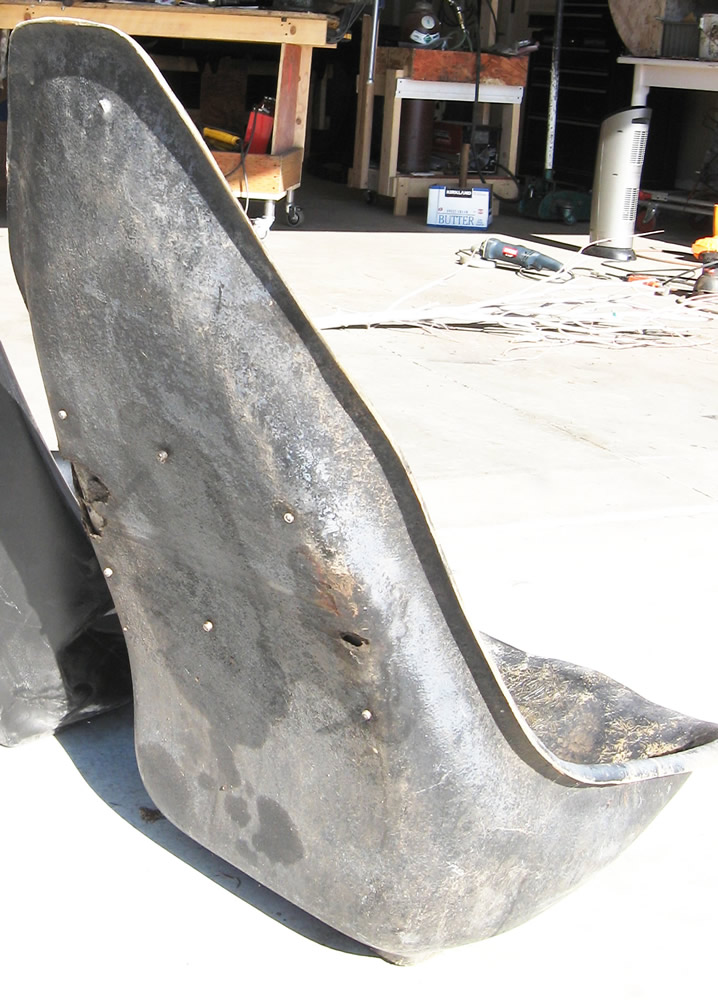
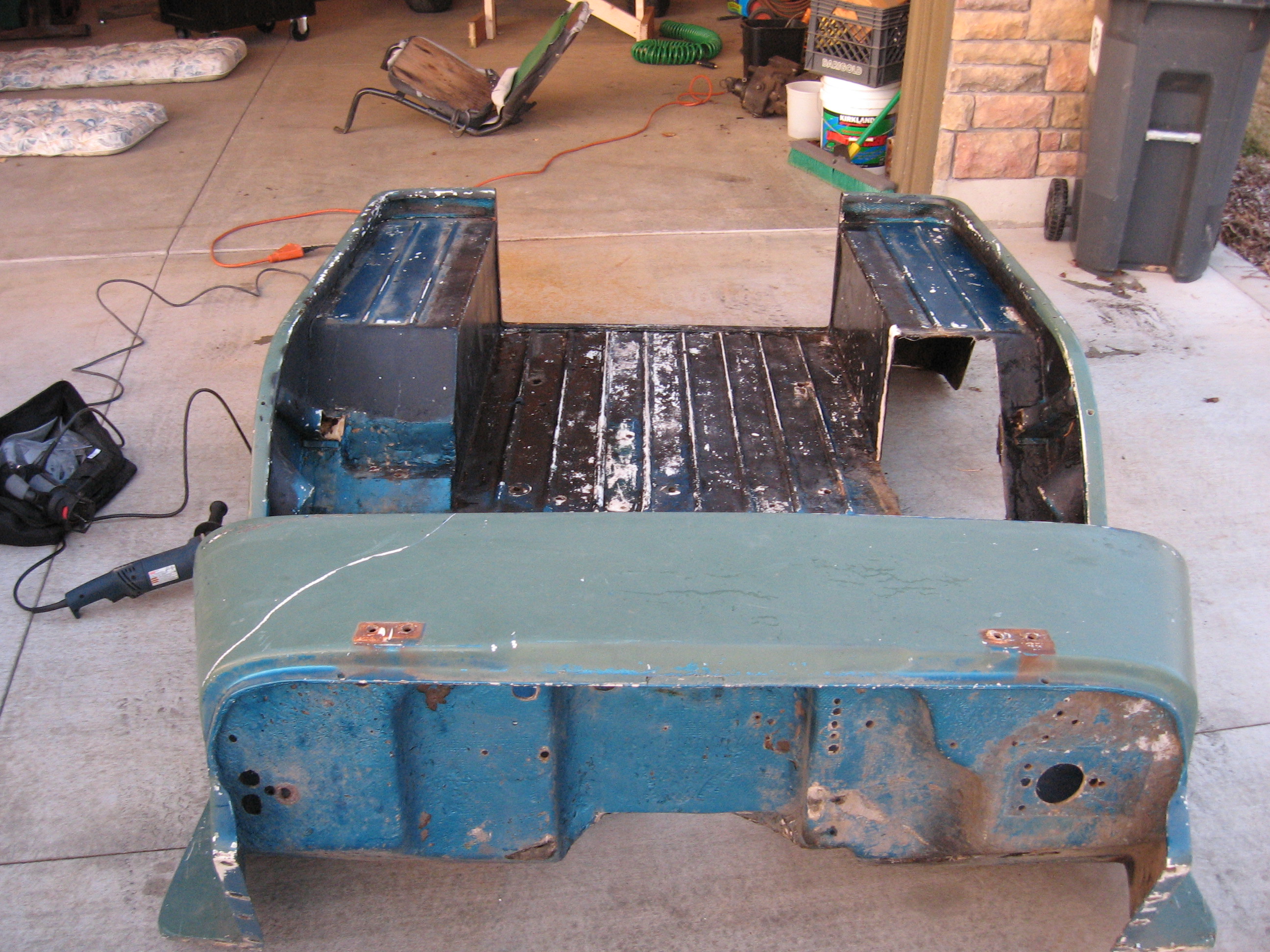
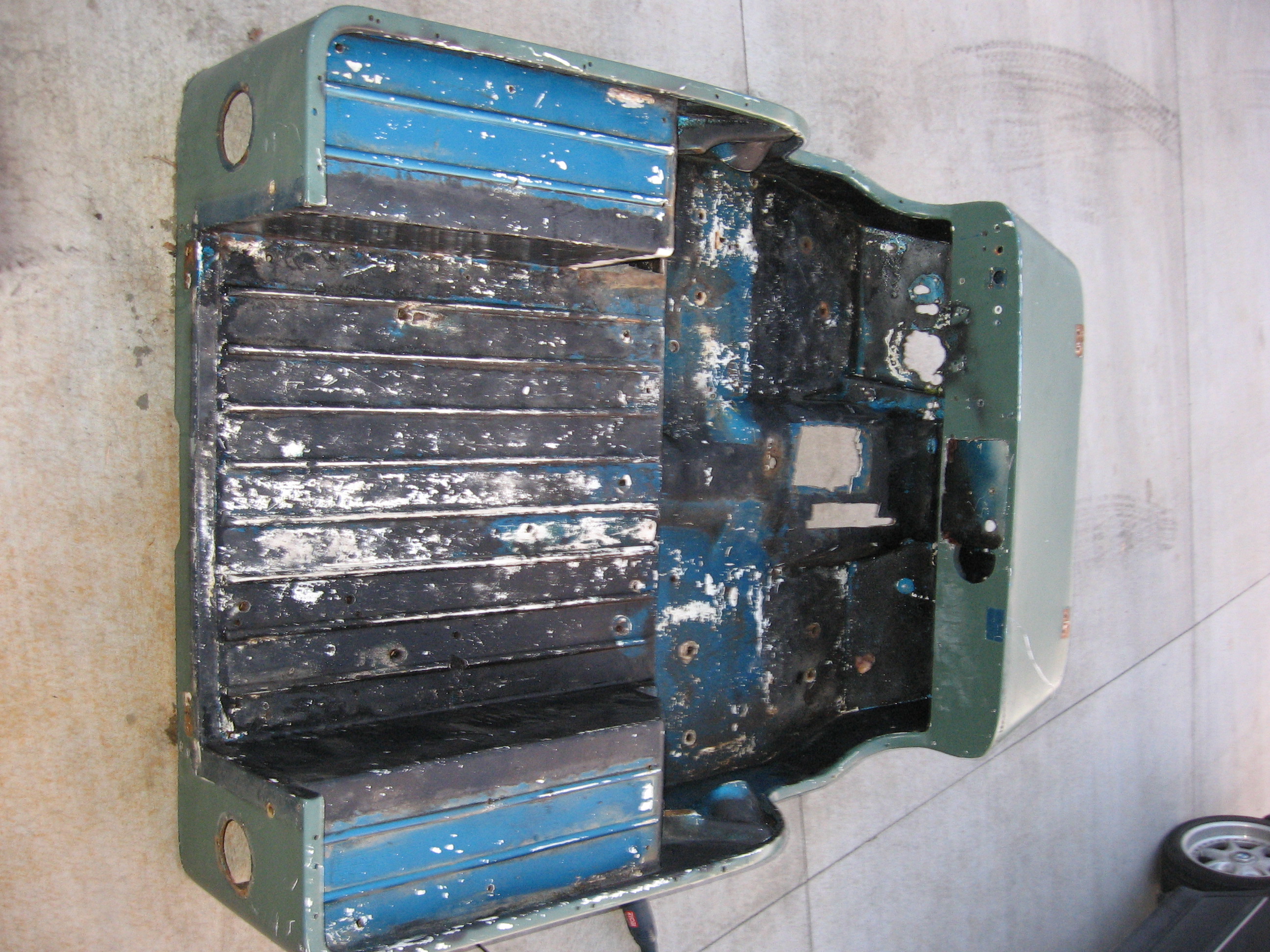
To get them to meet my my needs, I needed to repair the fiberglass (extensive holes and cracks) and then drill holes for side belts and shoulder belts.

 At left is a pretty stock CJ-5 frame. There were some cracks where the front crossmember attached to the passenger side frame rail. Because of this, I felt the crossmember had to go so I could box in the front of the frame.
At the back of the frame, the driver’s side was slightly lower than the passenger side. Also, because I wanted to outboard the back springs, I needed to add a bracket onto the side of the frame to help support both the front and the back of the springs.
To make all these changes meant a great deal of work .. welding, grinding (and welding and grinding again) and painting. I am pleased with the results.
Click here to see many more pics of the frame transformation.

Jeeping 1 (Click link and scroll down to Jeeping 1)
This DVD features 3 episodes:
1. The Meeker Trail: "Join this spine-rattling trip with the Yakima Ridge Runners Jeep Club as they retrace the oldest route across the Cascades: Naches Pass. Filmed in black-and-white in 1965, it is based on Ezra Meeker's book "Pioneer Reminiscences of Puget Sound", which recounts traversing this old Indian trail with the first immigrant wagon train of 148 people in 1853."
2. The Doe Run: "The female members of the Seattle Jeep Club leave their families at home and enjoy a weekend 'Doe Run' on the rugged backcountry roads of the Cle Elum and Salmon La Sac area in the Cascade Mountains." (The WWJC club did something similar about this time – my mom and grandma went)
3. The Mud Race: " Yakima Ridge Runners Jeep Club race their specially-equipped jeeps through a mud-hole track in central Washington."
The Desert Races DVD (Click link and scroll down to Desert Races)
This DVD features 3 episodes
1. Mattawa 100: "The 1975 Mattawa 100 features 750 dirt bikes racing across 100 miles of sand and sagebrush near the eastern Washington town of Mattawa. Aerial and slow-motion photography offers an exciting view along with comments by contestants. The Everett Highriders Jeep Club and the Stump Jumpers Motorcycle Club assisted in the event". (I think I was at this race. Our jeep club was helping run a checkpoint. Guys were coming to the checkpoint bloody from falling. Very memorable).
2. The Sunfair 300: "Sponsored by the Washington Off-Road Racing Association, the Sunfair 300 is a desert race with 4-wheel-drive vehicles and rails (dune buggies) on a 225-mile course near Yakima that ranks as one of the toughest in the nation! Members of the Yakima Ridge Runners staff the race course check points." (I believe this was what my original racing jeep — that I purchased for $600 — was built to compete in).
3. A retrospective of the life of the host, Don McCune.
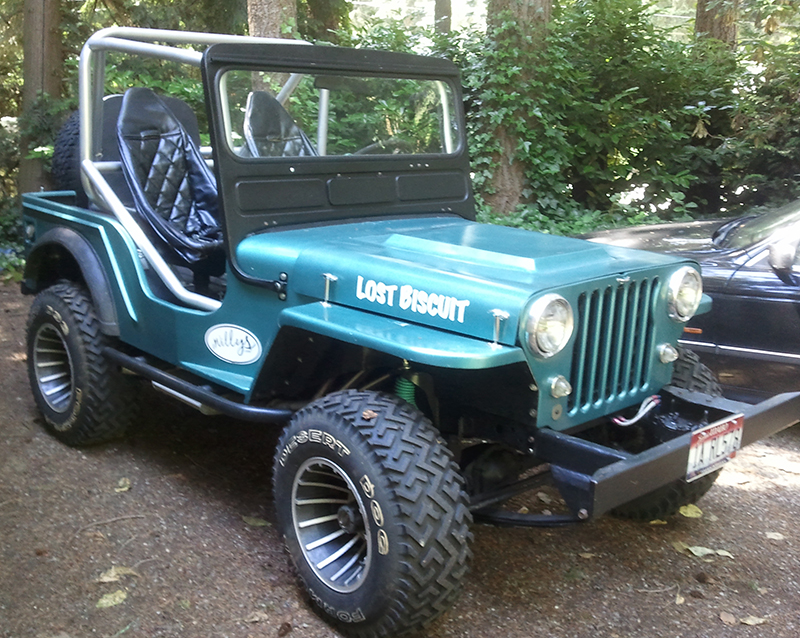
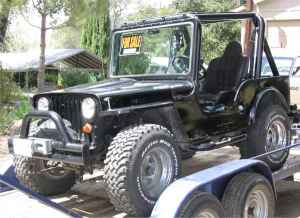 I find this jeep slightly puzzling. I love the nice detail and old school upgrades — the full roll cage, the extra large windshield, a good front bumper mod, the nice paint job, updated seats — yet it still sports an F-head? This jeep looks like it should go fast, but can’t.
“Fresh F-Head 4 Cyl., new exaust, 3 speed w/overdrive, 8000# Winch, full roll cage, front disc brakes, custom tall windshield, custom seats, rock bars, custom bumpers — $4,500 o.b.o.,”
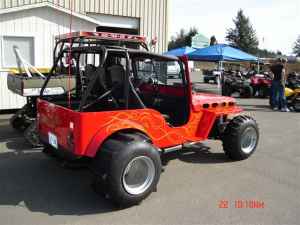
“Selling my toy. 1946 Willys Jeep .The only thing on the jeep that is a 46 Willys is the Tub and Title. Motor is a Pontiac 468 with 1970 Ram Air heads 500+ HP, New narrowed 9″ 31 spline axels with limited slip,frame lengthened 12”,aluminum hood,aluminum fenders and tail gate.Turbo 400,new transfer case,new paint,custom headers. Have full canvas and doors.two sets tires sand and street. street legal, Jeep is at the dunes at Coos Bay until April then will be in Grants Pass …. “
I purchased this jeep CJ-3A body and parts for $450. It came without running gear, but with a recently rebuilt engine and transmission. I just happened to have a rolling frame without a body, so I put all the parts I didn’t want on the rolling frame and sold that. I ended up making all my money back from this purchase and was left with the fenders, hood, windshield and the data plate that goes on the dashboard 🙂
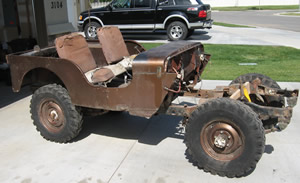
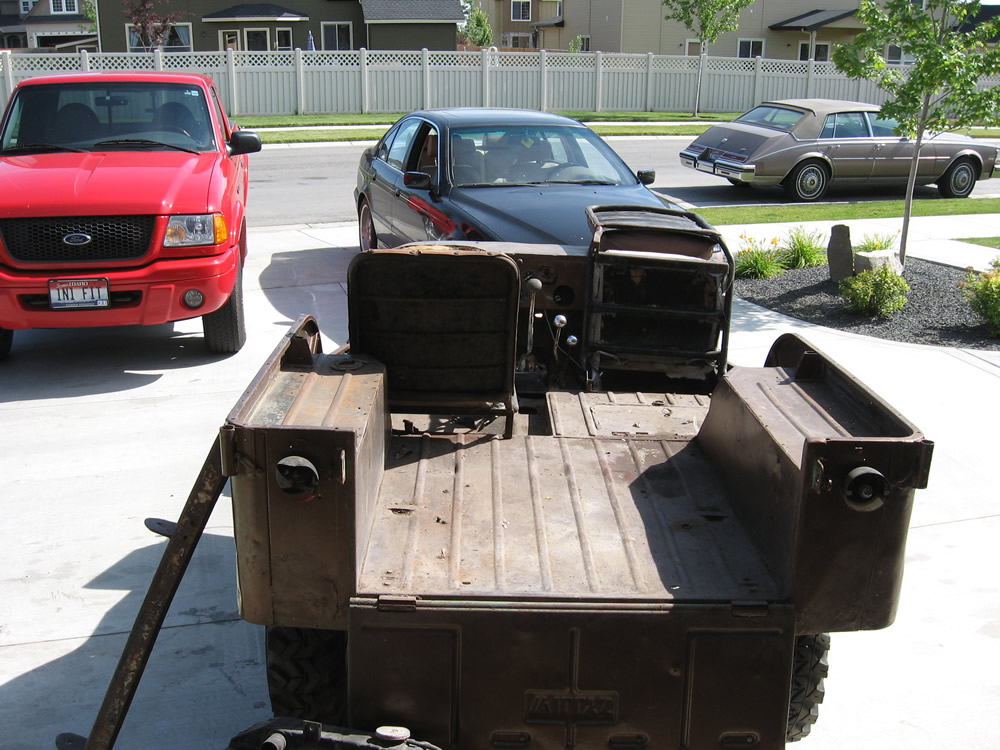
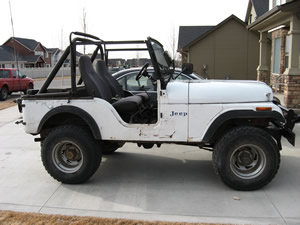
I decided to purchase a CJ-5 to get a better frame and running gear. Here's some pics of it. It's a 1973 CJ-5 with a Chev 350, a sm420 tranny, center rear differential with the dana 20. I ended up parting out most of it.
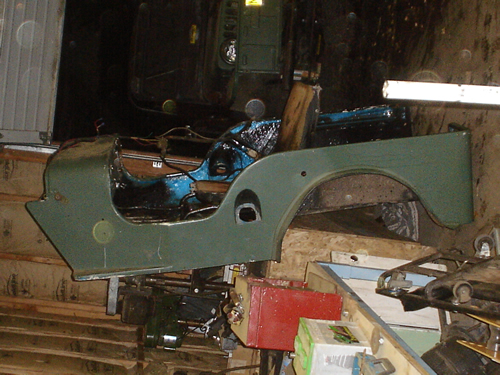
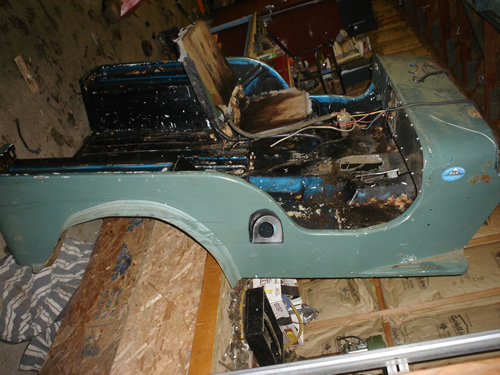
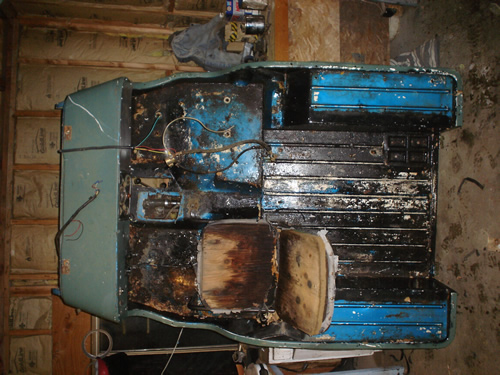
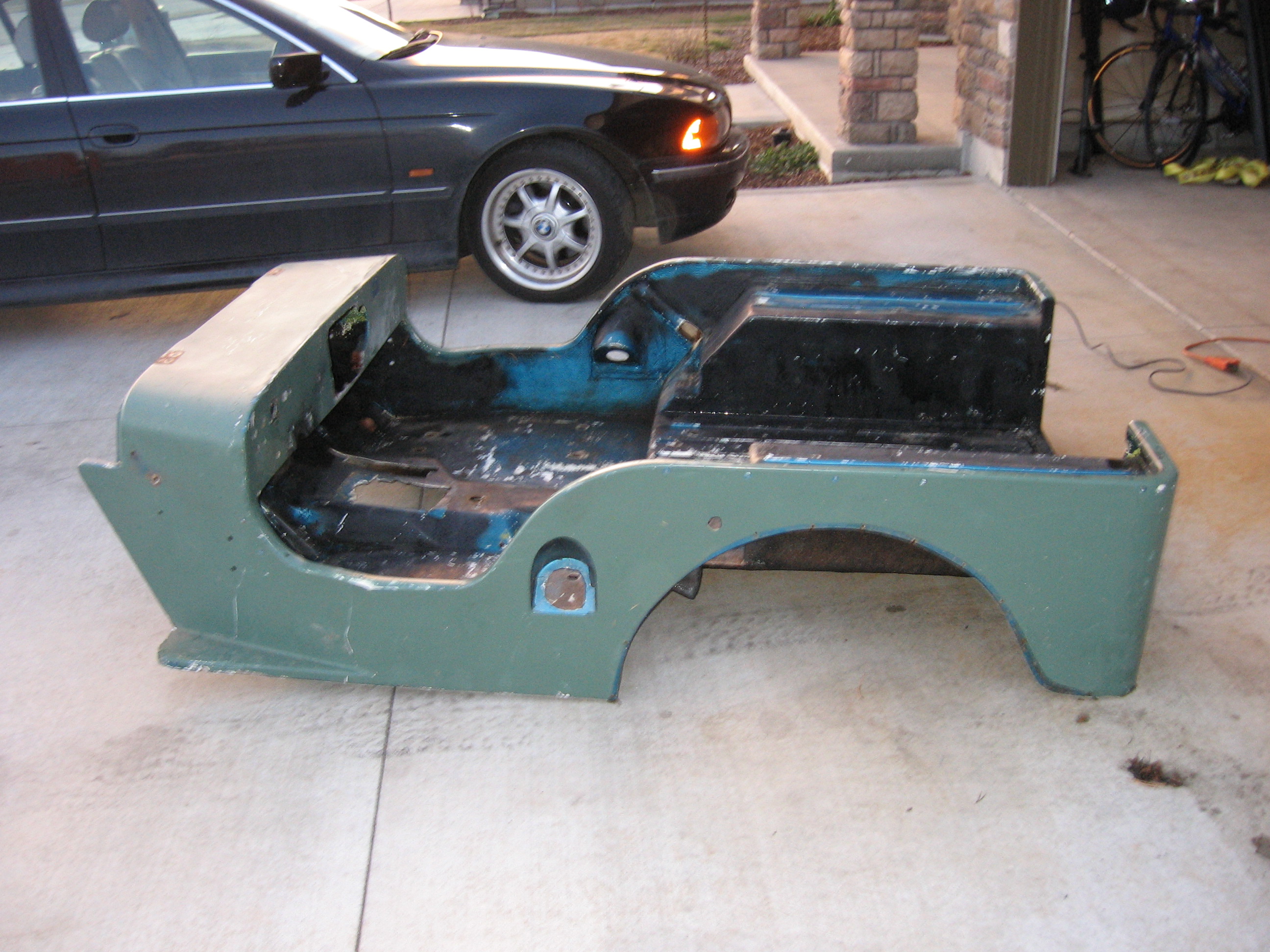
In January of 2007 I traded some cherokee axles for a Bobcat fiberglass body. It was a bit hacked up, but after many hours I revived it. Here’s an accounting of some of the work.
The body before any work was done:
Body after some trimming:
In Memory of Dave Eilers (1965–2026), founder of eWillys.com.
Dave Eilers launched eWillys in November 2008 to fill a critical void in the off-road community. The inspiration hit him in 2006 when he decided to build a flatfender Jeep 15 years after selling his first one. While searching for components on Craigslist, he discovered there was no useful central resource that highlighted vintage parts, vehicle listings, or fair deals. Consequently, eWillys was born as a dedicated web hub designed to track, preserve, and share early Jeep information as well as to help people find the Jeep they are looking for.
The platform quickly grew into an invaluable digital archive focused almost exclusively on pre-1984 Jeeps, with a primary emphasis on flatfenders. This included vital historical tracking for military models like the MB, GPW, M-38, and M606, alongside classic civilian versions like the CJ-2A, CJ-3A, and CJ-3B. To build this exhaustive repository, Dave curated daily content by scanning Craigslist and eBay advertisements, organizing them by category so readers could easily research project builds, list their own vehicles for sale, and identify authentic vintage components. Because his roots and the strongest market for rust-free vintage Jeeps remained in the Pacific Northwest and the broader American West, the site heavily documented listings from those regions.
Running the site for over a decade provided Dave with deep insights into the Willys legacy. He frequently noted that the global interest in vintage Jeeps remained fiercely active, with rare prototype models and unearthing “barn finds” continually surfacing to surprise the community. He observed that while pristine, completely restored Jeeps could fetch premium prices, the cost of average, accessible project flatfenders remained remarkably stable over a twenty-year span, keeping the hobby approachable for everyday mechanics.
Dave made friends around the world through the comments section and by private conversations with buyers and sellers of Jeeps.
Dave managed eWillys single-handedly with immense dedication until December 2024. In early 2025, the platform successfully transitioned to a new caretaker and host platform. This transition ensured that Dave’s monumental body of work, historical insights, and parts data would be fully preserved for future generations. Today, eWillys stands as an enduring monument to Dave’s passion, education, and his invaluable service to the global Jeep community.