History Research Archives

To Top

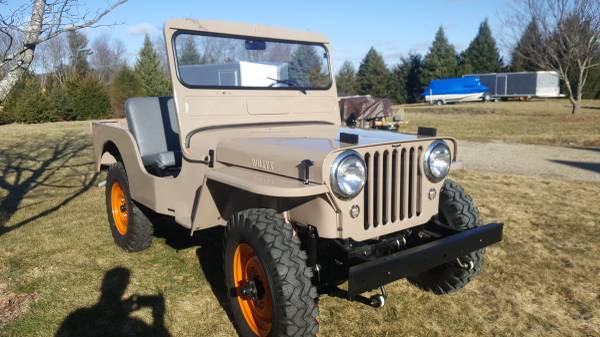
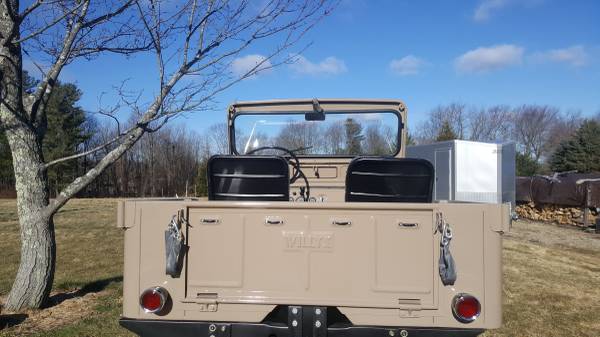
1950 Cj-3A Worcester, MA **SOLD**

• CATEGORIES: CJ-2A • TAGS: , This site contains affiliate links for which I may be compensated.

UPDATE: **SOLD** Was $9300.

Travis spotted this nice looking 3A.

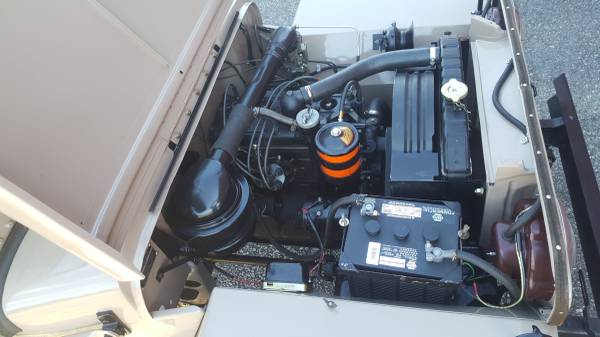
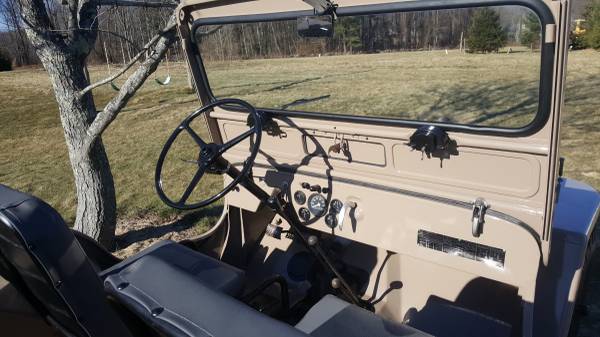
1950-cj3a-worcester-ma1 1950-cj3a-worcester-ma2 1950-cj3a-worcester-ma3 1950-cj3a-worcester-ma4

“Willys CJ 3A Jeep with original L134 4-cylinder engine, 3 speed transmission with hi low transfer case. The body is new. Rebuilt engine, transmission and transfer case. All new wiring, still 6v.  New tires, new brakes, new seat upholstery, no top but I do have the bows and door frames.  Original odometer shows just over 44,000 miles.

Here is a link of it running
https://youtu.be/sZHoijFGXNQ

I purchased this Willys to rebuild and use around my property mainly as a plow jeep. I ended up buying a 4 door Jeep to plow with and I need the garage space so I’m now selling this one. I have owned it for 5 years and has been stored inside.

I do have a clear title in my name but I have never registered it. I have only driven it around my property

The horn and vacuum wipers have not been hooked up and therefore do not work. It will need some tinkering to get it road ready, if that’s your intention. Please do your research . This jeep is now 68 years old and as such will be sold as is.

Let me know if you have questions. Please text or call to discuss.”

[fb_button]
 
To Top

The Glidden Tours — Early Convoys to Promote Automobiles

• CATEGORIES: Features • TAGS: This site contains affiliate links for which I may be compensated.

(This is an updated of a 2009 post, which was a very condensed history of the Glidden Tours.)

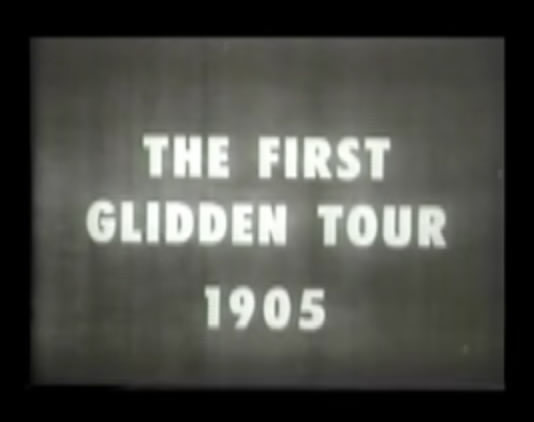
I ran across an early video from a 1905 Glidden Tour. It was fun to watch, but the information claimed that 1905 was the first Glidden Tour. That confused me, because I’d also seen the 1904 tour from Boston to St. Louis (World’s Fair) listed as the first Glidden Tour. In fact, that was only the “First Annual Tour”. Technically, the first Glidden Tour didn’t take place until, as stated by the movie, 1905. Which you consider first, their purposes were all designed to call attention to the poor roads and confusing interstate issues of the time. Here’s what that 1905 First Glidden Tour looked like (click here or on image to see video)
1905-first-glidden-tour-image

THE ROADS PROBLEM:

The AAA website describes the turn of the century road situation:

“… There were no paved highways between cities and no maps of existing wagon roads. Automobiles were not dependable for trips of any length,and motoring laws and regulations reflected the general public’s attitude that automobiles were toys of the idle rich and should be severely restricted,if not totally banned. Fortunately, there were small numbers of those who owned and believed in the automobile. Sharing a common interest, they began forming motor clubs to combat the mounting number of unjust motoring laws and regulations being enacted against them and their automobiles and to fight for better roads….”

EARLY SPEED TRAPS:

Early automobile owners faced forgotten challenges. For example, there was no reciprocity between states, so if you planned to drive your new horseless carriage over state lines, you had to have registered and paid a state tax in both states.  Here’s more from the Short History of Highway and Vehicle Regulations:

“…. Actually, the turn of the century did not mark the beginning of political regulation of conveyances. Local and municipal governments were already regulating and licensing bicycle usage within their jurisdictions during the 1880s and 1890s. (Mason 42) For example, the city of Chicago had a “Wheel Tax” ordinance in effect in 1898, which required an annual license fee from all wagons, carriages, coaches, buggies, and bicycles. The year 1901 marked the first attempt at levying a registration fee specifically on autos (New York State-annual revenue for the year -was $954), and at the same time the first law regulating the speed of an automobile was passed in Connecticut (12 mph in the country, 8 mph in the cities). (Labatut 95, 99) By 1907, 31 States required registration of men-or vehicles, the fees vary ing from 25 cents to $25 per vehicle. (Dearing 250) The first traffic code in the world was adopted by New York City in 1903. (Labatut 454) Many “municipalities had their own ordinances regulating speeds, parking, the use of bells, horns and gongs, the making of unnecessary exhaust noise and the emission of noxious gas, smoke or steam, and they imposed fines for violations. These regulations varied widely from city to city and, especially in the smaller municipalities were often enforced in a discriminatory way.” (AMER. HWYS. 57, 60) “Speed traps” were often operated by local police officers in rural communities “with fines going into the local treasury or the pockets of the police, justice, or magistrate. The speed trap racket was so bad in New York prior to 1910, that the Legislature passed an act that year requiring all fines imposed for violations of the motor vehicle laws to be turned over to the State treasurer. This reduced the fines collected from motorists to a mere trickle….”

THE GLIDDEN TOURS

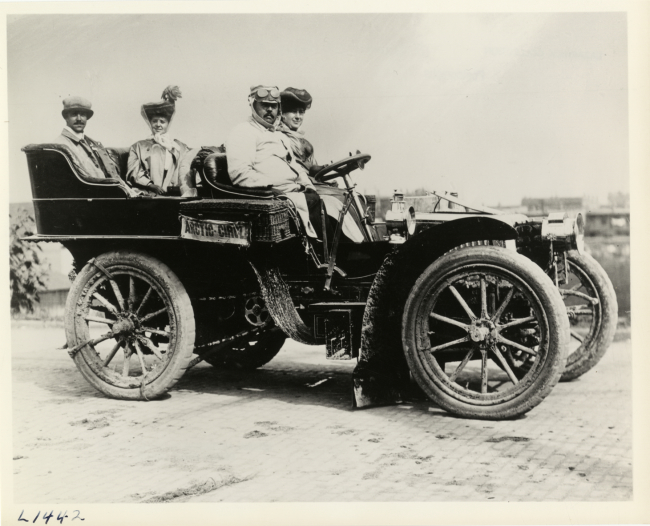
To address and call attention to the issues described above, and more, in 1902 the AAA was formed in Chicago by nine automobile clubs. In 1904 the AAA organized an automobile rally that started in New York, went north to Boston, and ended 18 days and 1,350 miles later in St. Louis at the 1904 St. Louis World’s Fair. Here’s a 1904 photo from that first tour:
1904-glidden-tour-detroit-public-library

View of Mr. and Mrs. Charles Glidden and motorists posing in Napier car during the 1904 St. Louis Tour. The tour covered a route across five states from New York, New York to St. Louis, Missouri. Handwritten on back: “Tours–St. Louis Tour, 1904.” – See more at: http://digitalcollections.detroitpubliclibrary.org/islandora/object/islandora%3A198273#sthash.gG76AREM.dpuf

THE GREAT ARROW & PIERCE ARROW:

The company that became Pierce Arrow used the Glidden Tours to demonstrate how well its cars performed. Here’s a list of accomplishments from The Old Motor website.
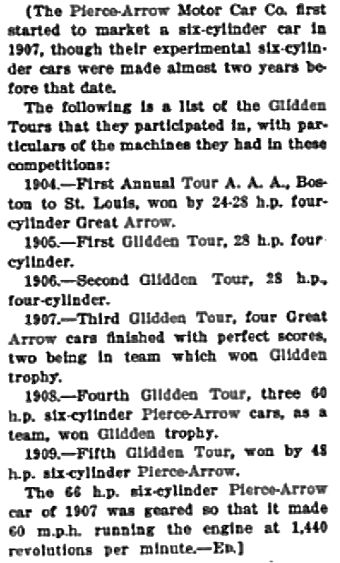
Pierce-arrow-glidden-tour-list

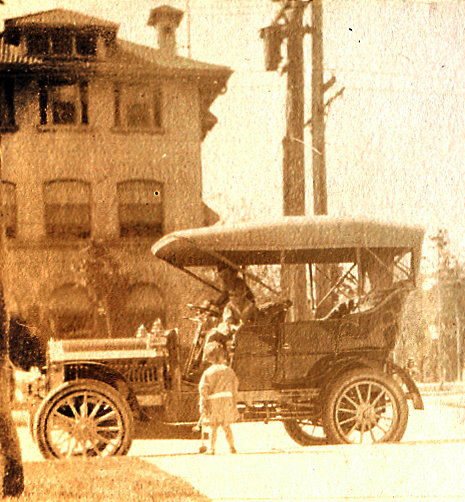
These facts are particularly interesting to me as my great grandfather had a Great Arrow delivered to him in Salt Lake in 1905, the first one in the valley. Here’s a photo and article about it.
1905-pierce-arrow-fritz-farny-grady

1905 Salt Lake City. Fritz Eilers (my grandfather) is in the passenger seat. Farny Eilers is standing with his back to the camera. Their driver’s name was Grady. . . .  and, NOPE, the car is no longer in the family :-(.
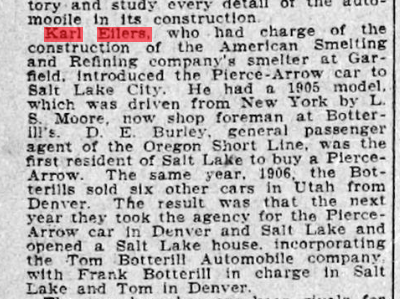
1905-karl-introduces-piercearrow-article-sltrib

1909 GLIDDEN TOUR:

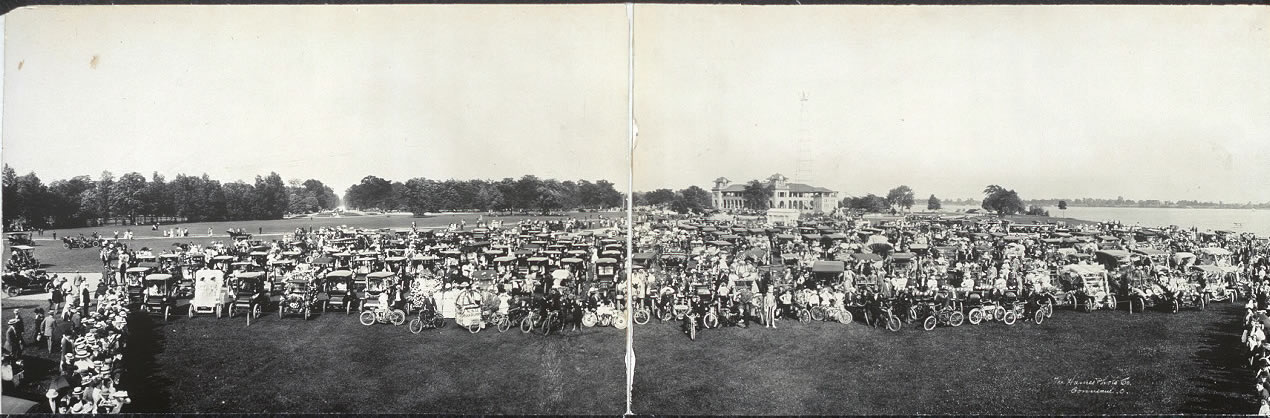
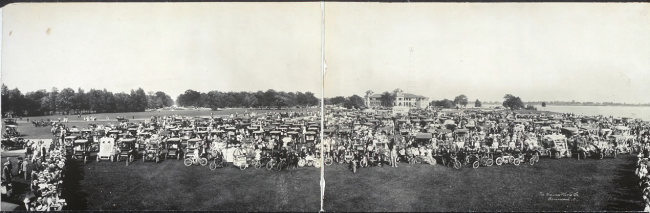
The Glidden Tours were popular for a short time. The photo below shows a huge gathering of automobiles. Below that is a map of their tour.
1909-glidden-tour-panorama

http://www.loc.gov/pictures/item/2007663496/ Library of Congress. Photo Circa 1909.
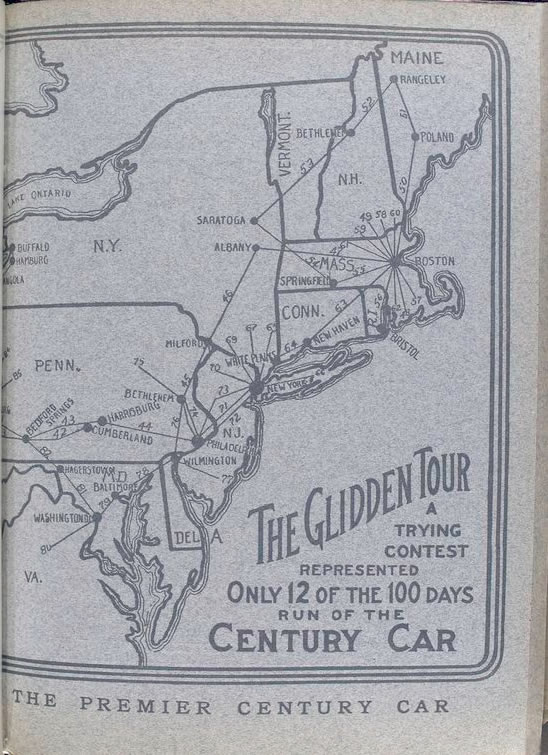
1909-glidden-tour-map
Continue reading

[fb_button]
 
To Top

Kempner Power Wagon Museum

• CATEGORIES: Features, Museums • TAGS: This site contains affiliate links for which I may be compensated.

Originally posted June 15, 2009 (See, there is even a Power Wagon Museum!)

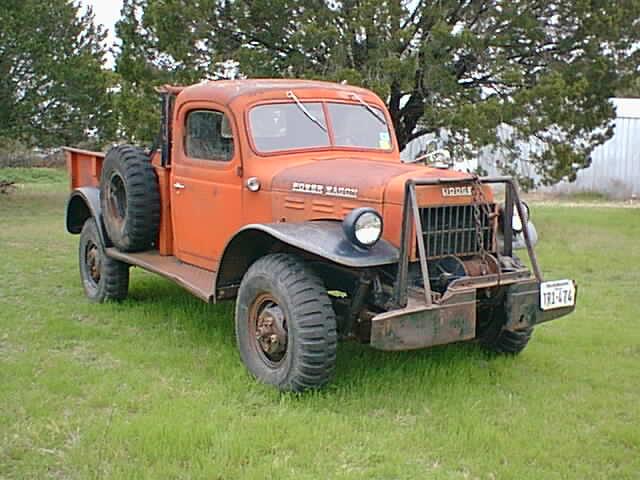
At some point early in his driving life, my dad owned a red Dodge Power Wagon.  I’ve never ridden in one myself, however I found a place where I can explore several different models: The Kempner Power Wagon Museum.

The Kempner Museum is an owner-owned museum, with the owner displaying vehicles and other items he has collected over the years.  Recently, the owner, with his wife’s blessing he notes, built a building to house the trucks and other related materials.

This museum does not take a ‘hands off’ approach, rather people can climb into these vehicles, touch and explore them.

The museum is located in Kempner, Texas (museum info), which is roughly 150 miles south of Dallas.  I’m adding to my list of places to visit soon.

[fb_button]
 
To Top

Around the World in a SEEP called Half Safe

• CATEGORIES: Books, Builds, Features, GPA (SEEP), Unusual • TAGS: This site contains affiliate links for which I may be compensated.

half_safe_9FEATURED IN MAY 2009

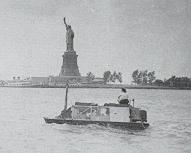
The next time you are in Perth, Australia, make sure you stop by and see Ben Carlin’s SEEP named Half Safe.  Ben Carlin and his wife navigated their SEEP around the world back in the 1950s.  I found two website’s that chronicle the adventure:  David Brooks shows pictures along with the story and Leisure Wheels has a large article with a single pic.  Below is the beginning of the story and below that are a few pictures.  Ben Carlin also wrote two books about his adventure “Half Safe” and later ““The Other Half of Half-Safe”.

half_safe_8FROM DAVID BROOKS WEBSITE:  “Ben Carlin (1912 – 1981) was born and attended school in Western Australia. While awaiting demobilisation after service in India in World War II, Ben noticed a US amphibious jeep among other war debris, and remarked “You know, Mac, with a bit of titivation you could go around the world in one of these things”. For some never-explained reason, Ben was not certified insane on the spot, and eventually fulfilled his dream ….”

>>CLICK HERE TO READ MORE OF THE STORY<<

Half Safe Pages

SEEP Pages:

[fb_button]
 
To Top

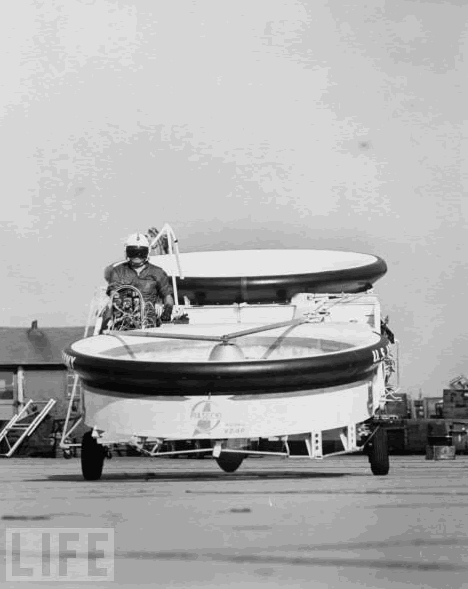
Aerial Jeep from Life Magazine

• CATEGORIES: Features, Magazine, Unusual • TAGS: , This site contains affiliate links for which I may be compensated.

FEATURED IN MAY 2009

UPDATE:  I found a long discussion, details and the pic below at this website:

From this website, vectorsite.net, I’ll put some of the content just to make sure it isn’t lost.

flying_jeep

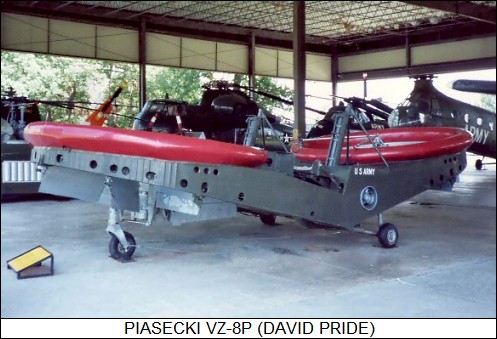
“The AirGeep was first flown on 12 October 1958. Apparently it proved grossly underpowered, barely able to fly over a fence, and it was sent back to the shop, where the piston engines were replaced by a single 317 kW (425 HP) Turbomeca Artouste IIB turbine engine. The upgraded AirGeep flew in late June 1959. It weighed 1.1 tonnes (2,500 pounds) and could carry a payload of 550 kilograms (1,200 pounds), including the pilot.

The AirGeep was put through trials for both the Army and the Navy over the next few years. The engine was upgraded again to a Garrett / Airesearch 331-6 engine, which had a higher power-to-weight ratio. For Navy trials, which began in June 1961, the rotorcraft was fitted with floats, and redesignated the “PA-59 SeaGeep”.

* Piasecki wanted to build a bigger and better AirGeep, and the Army Transportation Research Command obliged them by issuing a contract for what Piasecki called the “Model 59K” and what the Army called the “VZ-8P(B) AirGeep II”, which made its first flight in the summer of 1962.

The AirGeep II was similar to the AirGeep, except that the aircraft was “bent” in the middle so that the rotors were tilted fore and aft, it seems to improve forward flight characteristics. The AirGeep II used twin 298 kW (400 SHP) Turbomeca Artouste IIC turboshaft engines, once again linked so that if one failed the other would drive both rotors. One engine could also be coupled to the landing wheels to drive the machine on the ground. The increased power allowed a maximum take-off weight of 2.2 tonnes (4,800 pounds). The pilot and observer had “zero-zero” ejection seats, allowing safe escape if the machine was on the ground and standing still, and there were apparently seats for additional passengers.

As we learned, the rotabuggy was a bit of a failure. However that didn’t stop the military from investigating some type of ‘flying jeep’.  Now, I don’t know if the military really called it the Aerial Jeep or whether it was Life Magazine’s attempt to sell magazines, but the result is a pretty unusual flying machine:

life_magazine_aerialjeep

[fb_button]
 
To Top

Wayback Machine: Old Jeeping Photos from late 70s

• CATEGORIES: Features, Racing • TAGS: , , This site contains affiliate links for which I may be compensated.

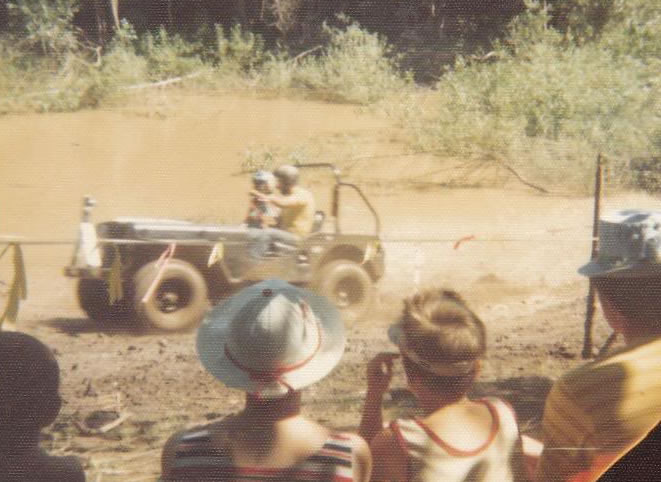
Here’s some great old photographs from the 1970s.  They document some of the events attended by the Good Time Four Wheelers.  The image below was from the 3rd Annual Green River Valley Jeepers in 1976.  I attended one of their playdays in 1981 (I think).  It was located between Black Diamond and Enumclaw;  I wouldn’t be surprised if the area is full of homes now.

I’m suprised that as late as ’76 they weren’t requiring cages to race.  It wouldn’t be too long before they were required.  View all the pics (lots of desert dogs) at the pnw4wda forum.

oldracing_grvjc_1976

[fb_button]
 
To Top

M-38 Pilot models from the CJ-3A info site

• CATEGORIES: Features, M-38 • TAGS: This site contains affiliate links for which I may be compensated.

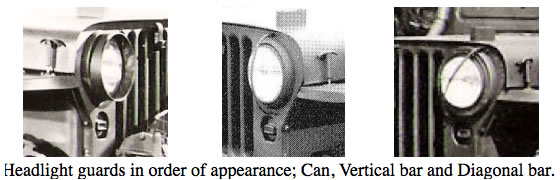
Bob Westerman has written a detailed overview of the M-38 pilot models.

From the website, Bob writes:  “NEW: 1/1/2009 In the time since this web-page was published some new photos of the Pilot Models have surfaced. The photos reveal that the pilot models were in a constant state of change as different features were implemented and tested. The new information shows that some previous assumptions are no longer valid. See the MVPA’s magazine Army Motors #126 for the latest information.

Visit the CJ-3A.Info website to learn more about the M-38 Pilot model history.

headlight_m38_prototype

[fb_button]
 
To Top

The German Schwimmwagen

• CATEGORIES: Features, GPA (SEEP), International, Other 4x4s, Unusual • TAGS: This site contains affiliate links for which I may be compensated.

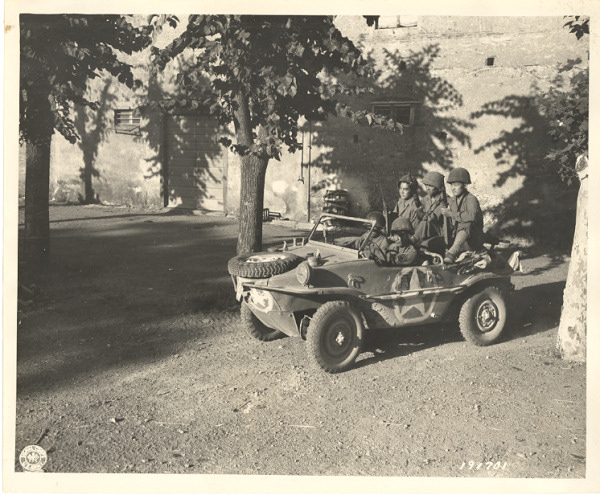
On the heals of yesterday’s GPA, I thought I’d do a brief shout out to the Schwimmwagen.  You can read more and see more pics about the Schwimmwagen at Brian’s site. Here’s a pic (below) from July 12 1944 (from Brian’s site as well).  Here’s some youtube videos.

schwimmwagen2

[fb_button]
 
To Top

Rotabuggy or Blitz Buggy — The Flying Jeep

• CATEGORIES: Features, Unusual • TAGS: This site contains affiliate links for which I may be compensated.

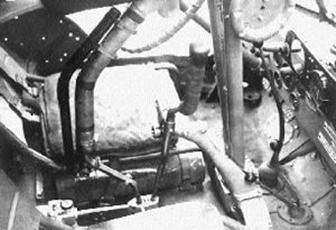
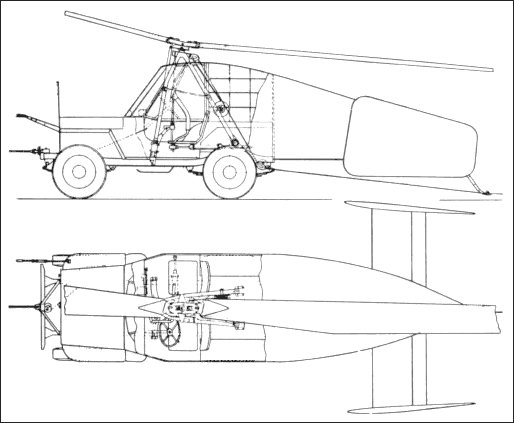
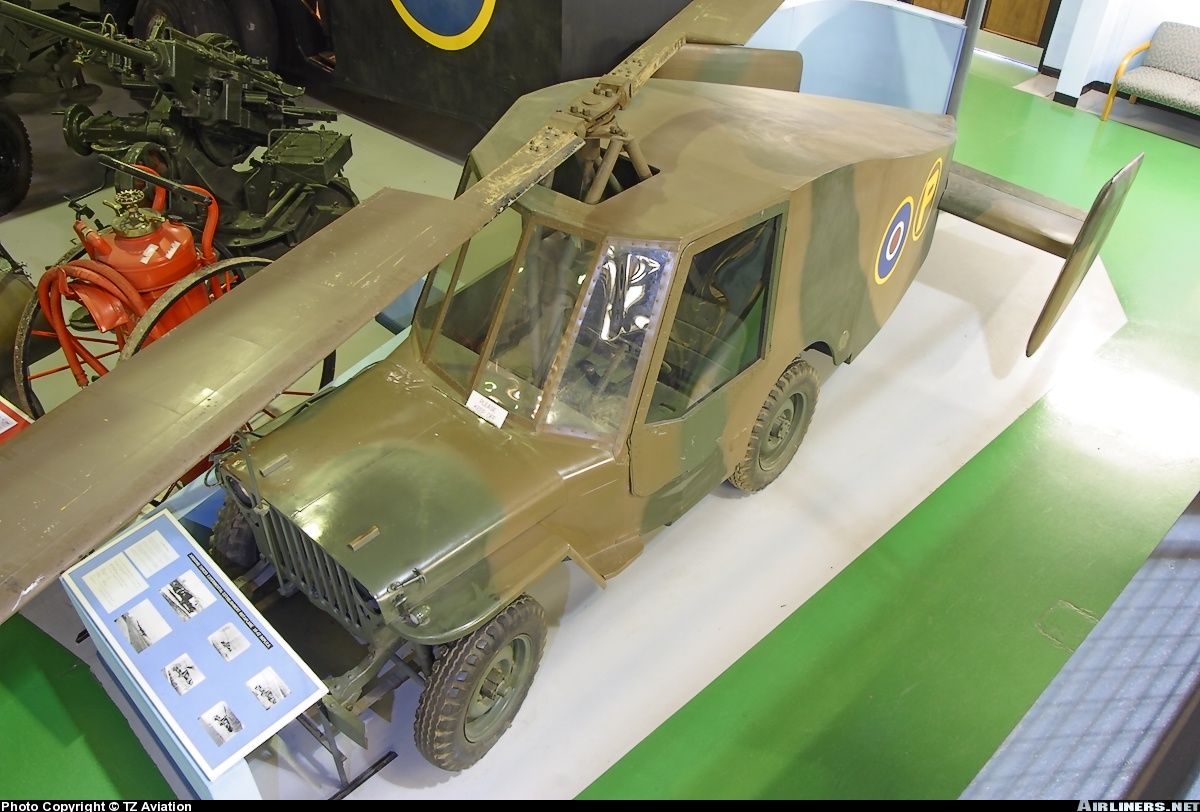
interior_rotabuggyOn some post somewhere I have an image of the flying jeep.  I recently found a trove of information and images of the Rotabuggy, (actually, I just did a google image search of a rotabuggy) including pictures of a recreated model.  One of the more unusual images is an interior shot, which I show to the right.

From the willys-mb.ru website:

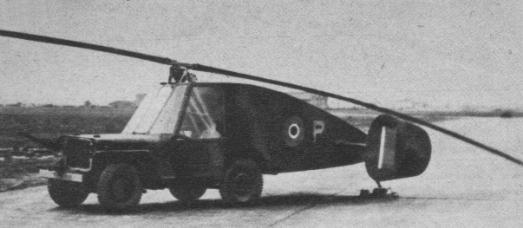
In the early 1940s flight tests had been carried out on a number of one-man gliders known as Rotachutes. During this time Raoul Hafner decided to apply the same principle on a larger-scale military vehicle. On 3 April 1942 the Rotary Wing Section of the Airborne Forces Experimental Establishment AFEE) at Ringway, Manchester, submitted a proposal for the application of the system to the Blitz Buggy or Jeep.

The Unreal Aircraft website records an eye witness account of one flight, which left the driver exhausted.

rotabuggy_jp

rotabuggy_jp3

rotabuggy_jp4

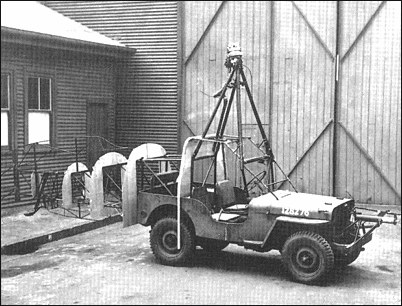
Here’s an image of the Rotabuggy Replica

rotabuggy_replica

[fb_button]