emailNeed to contact me and don't have my email? Click on email button.
About eWillys
Welcome to eWillys.com, a website for vintage jeep enthusiasts. I update this website nearly every day with jeep deals, jeep history, interesting reader projects, jeep related info, and more.
These quick searches can help you find things on eBay. People list in the wrong categories all the time, so don't be surprised to see brochures in the parts area for example. This section used to be split into jeeps, parts and other categories, but recent changes to eBay will require this information to be recoded.
The links to posts below show jeeps grouped by models, condition, and other ways. Some of these jeeps are for sale and others have been sold. If you are unsure whether a vehicle is still for sale or not, email me at d [at] ewillys.com for more info.
Importantly, the allure of buying a project jeep can be romantic. The reality of restoring a jeep can be quite different, expensive and overwhelming without the right tools and resources. So, tread carefully when purchasing a "project". If you have any concerns about buying a vintage jeep, or run across a scam, feel free to contact me for help, comments or concerns .
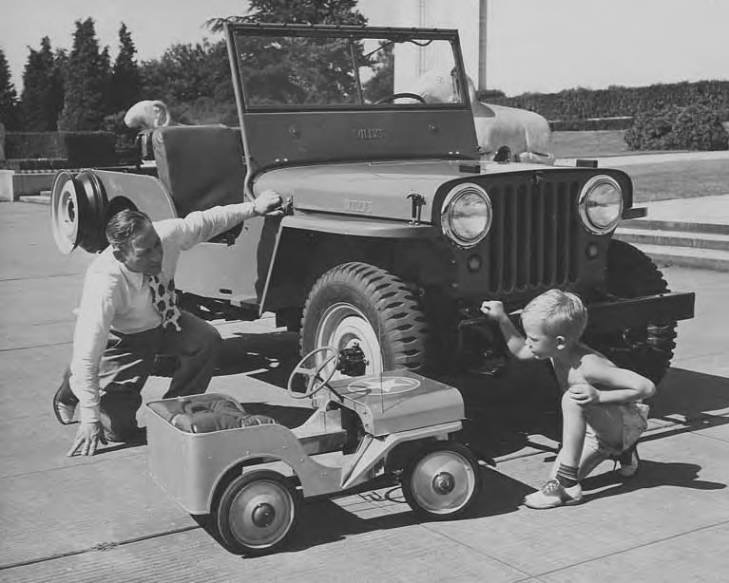
UPDATE: The University of Washington’s Digital Collections includes the below photo with a more accurate date (1947) and description. According to the UW Library, pictured in the top photo is Joe Woolfe and his grandson,
=====================
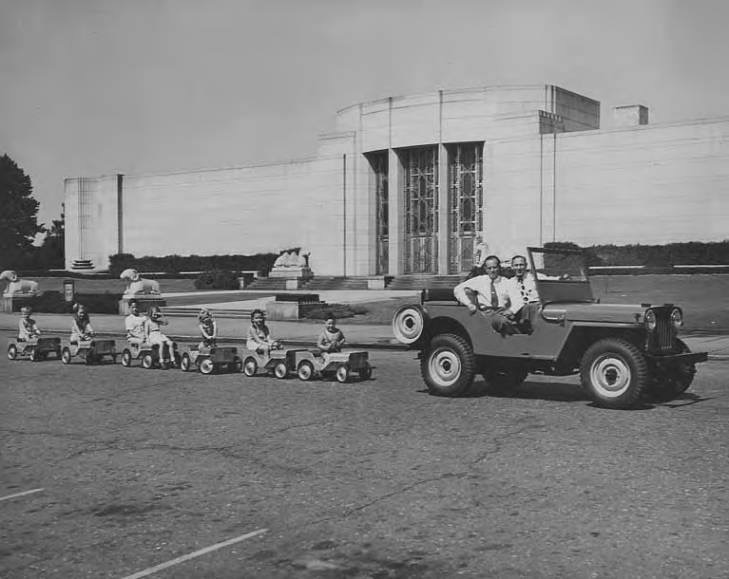
Previously Posted February 11, 2019: These images were posted on Facebook and the toy jeeps attributed to Boeing. However, as a commenter pointed out below, these were actually produced by Western Toy Company in 1959. Here are some other examples.
(02/11/2019) These jeeps are pictured in front of the old Seattle Art Museum (we did field trips there in high school) which is inside Volunteer Park in Seattle, Washington.
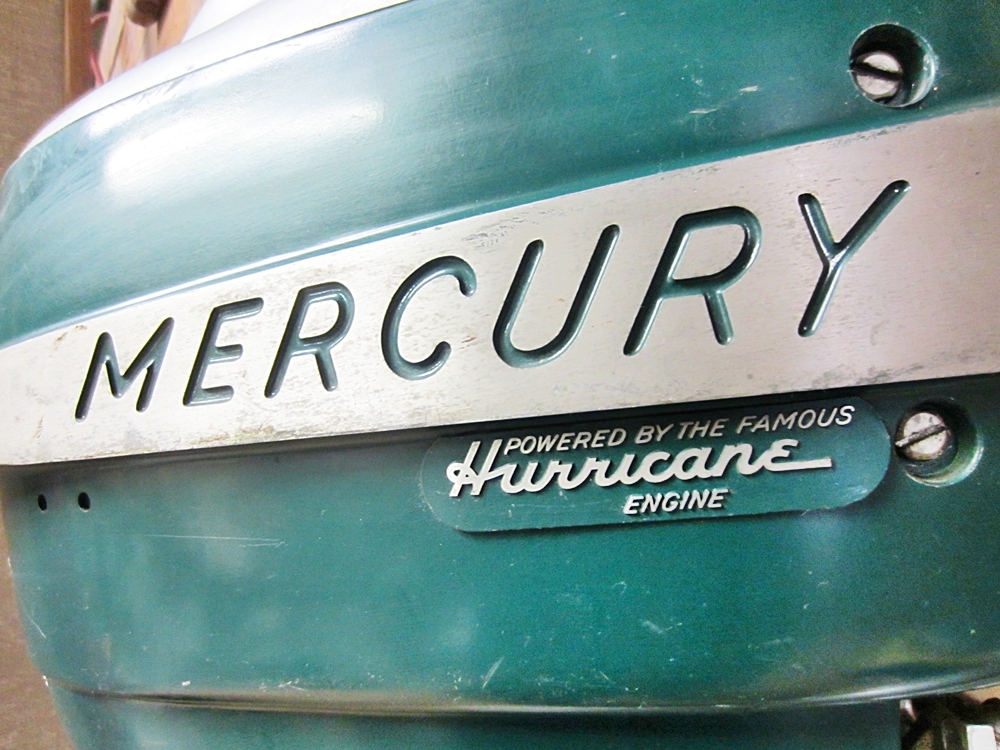
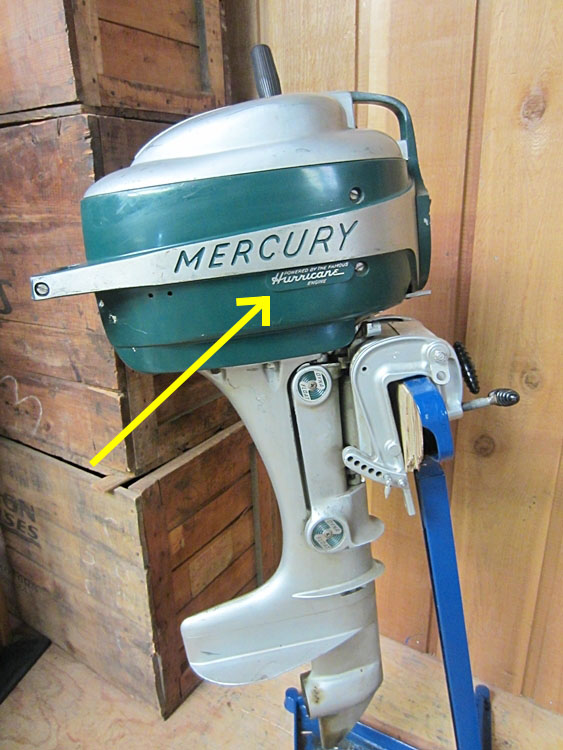
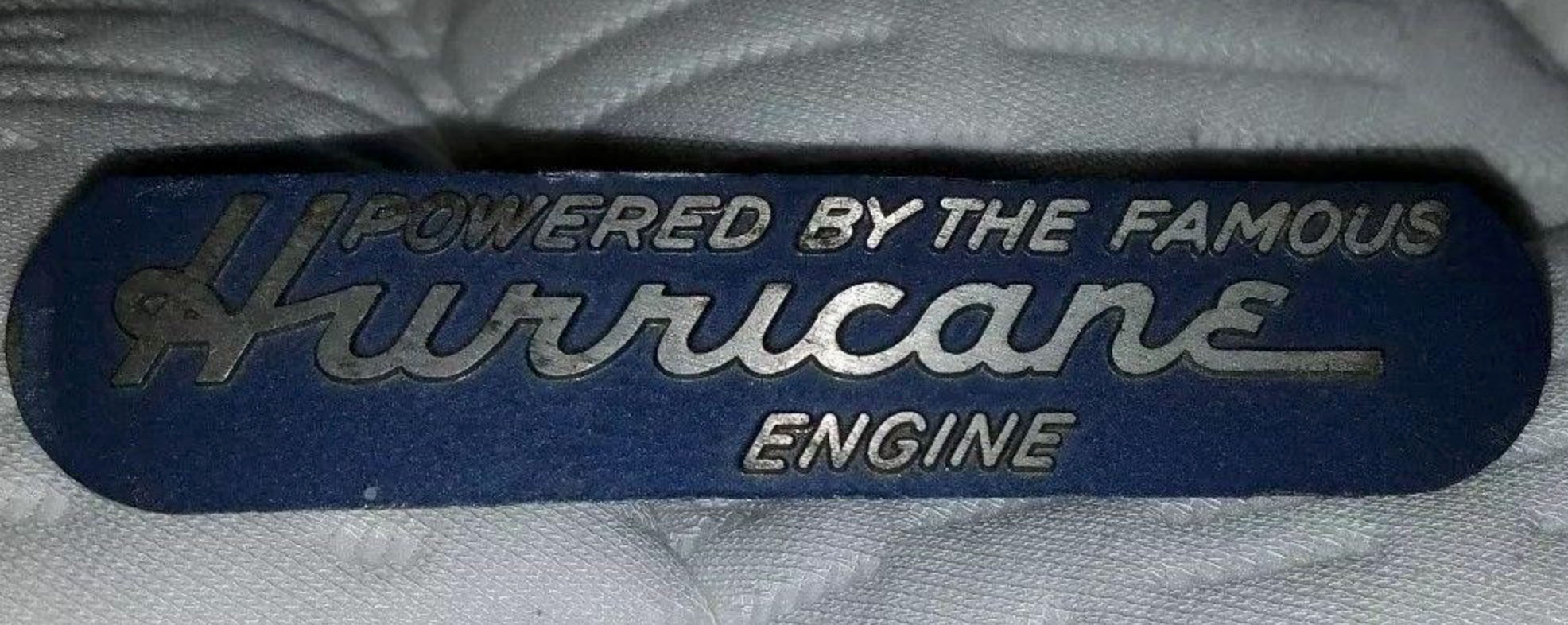
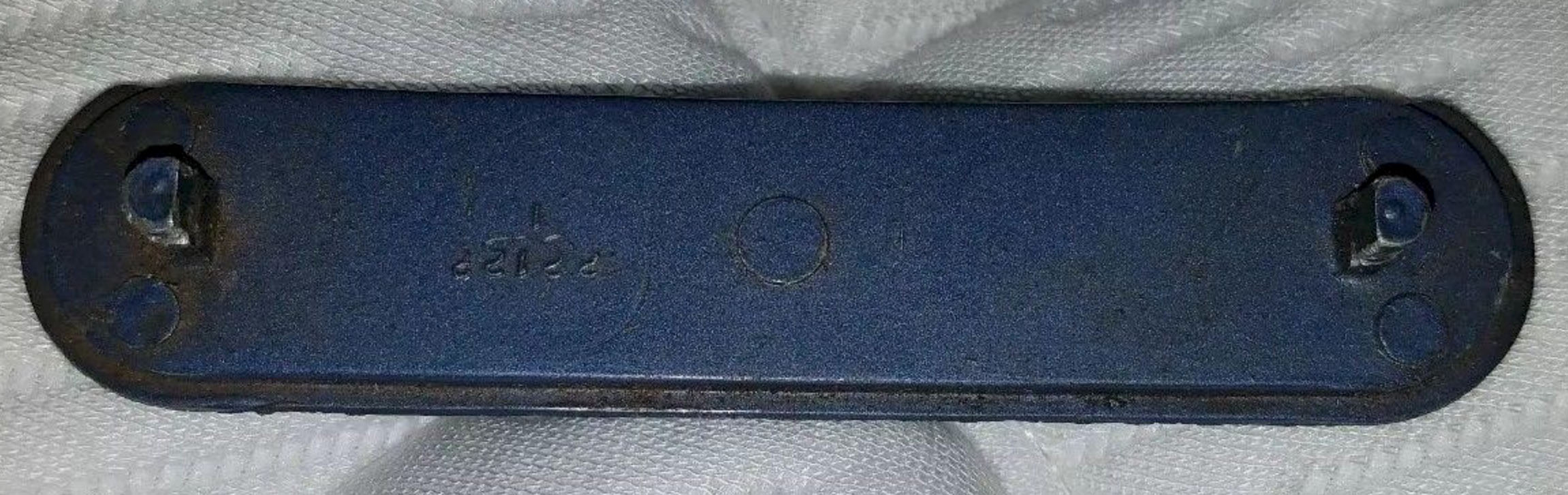
UPDATE: The mystery is solved. These badges were used on mid-1905s Mercury Kiedhaefer outboard motors (and possibly other models). Thanks to Mike for greatly helping solve this issue.
Originally Posted March 24, 2021:I’d hoped to explore this topic a little more, but life had other plans in store last night … Hopefully, someone can shed some light on this topic …..
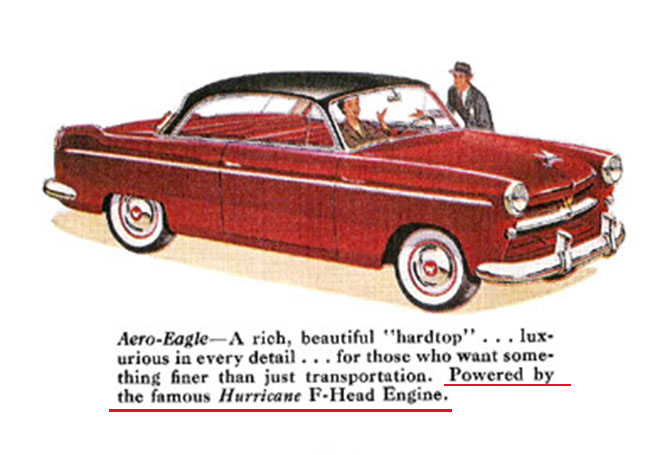
The first reference I found to that phrase was from a Willys-Overland 50th Anniversary Ad, which included an image of a Willys Aero-Eagle and, underneath, a reference to that phrase as seen here. In 1953, the Aero-Eagle was powered by the F-161 Hurricane Engine:
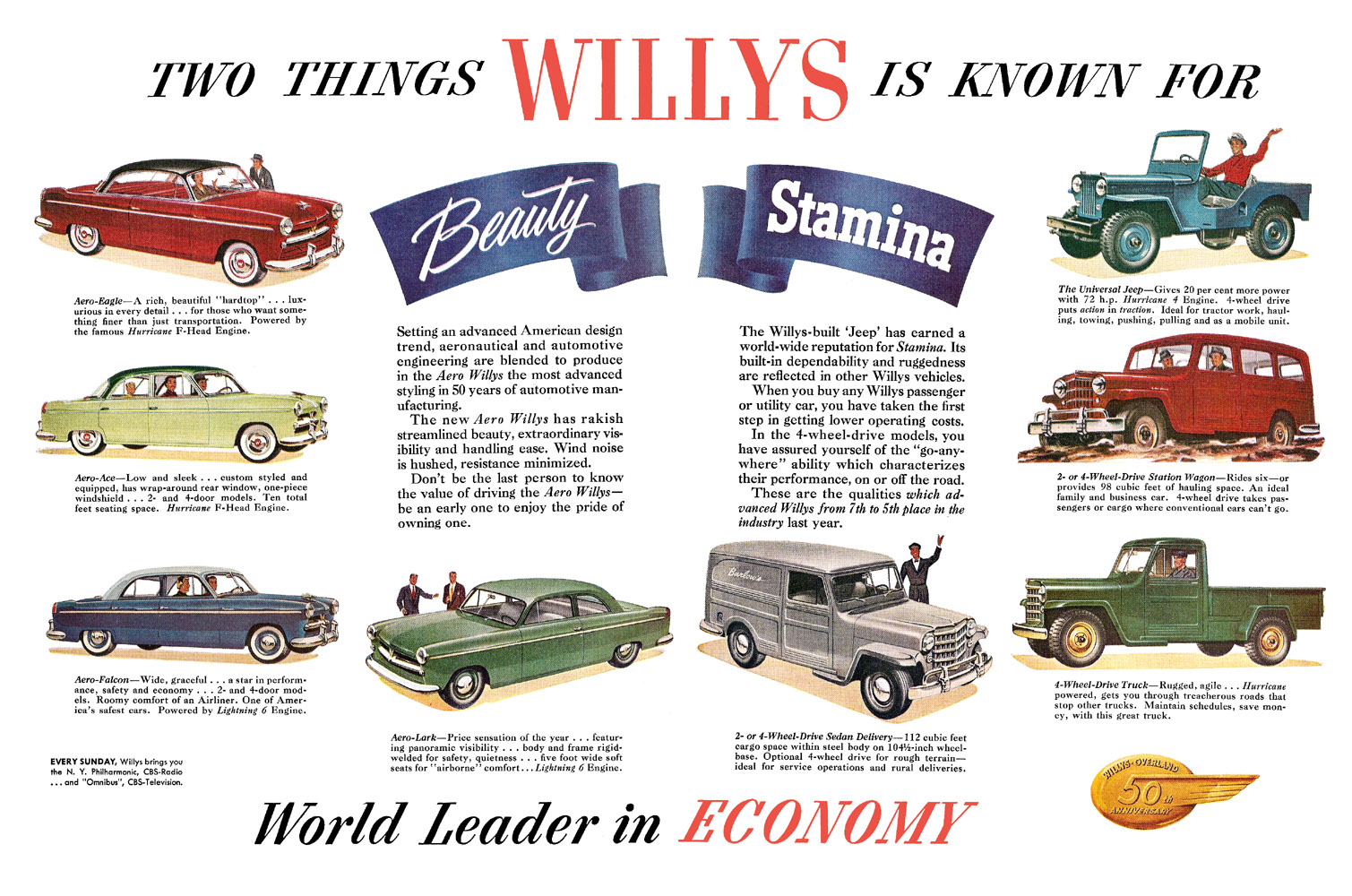
From this 1953 ad showing the Willys-Overland models:
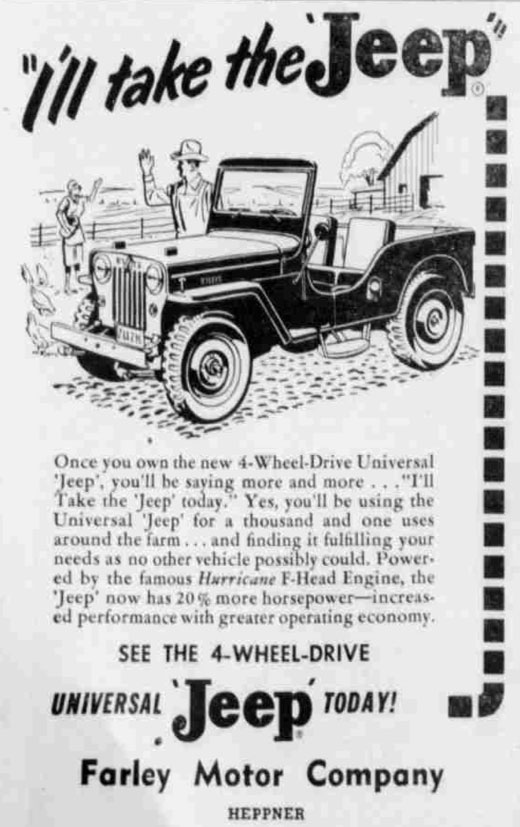
Next, I found the phrase in this newspaper Ad:
My theory is that maybe it was a emblem that was added to some Hurricane engines of the era?? But, I just can’t get any research traction on the issue.
OTHER EMBLEMS:
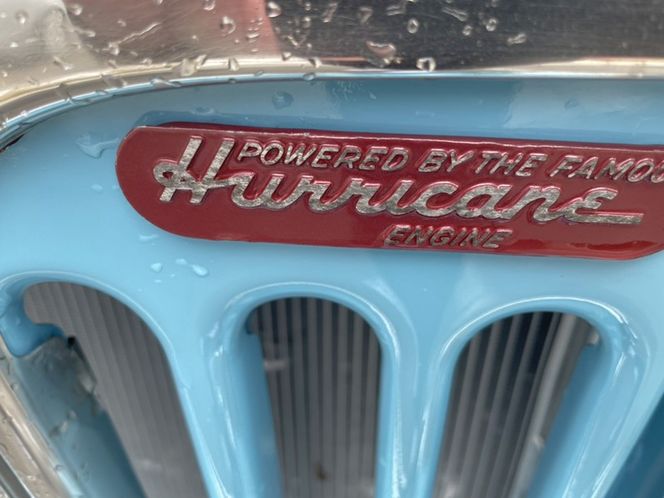
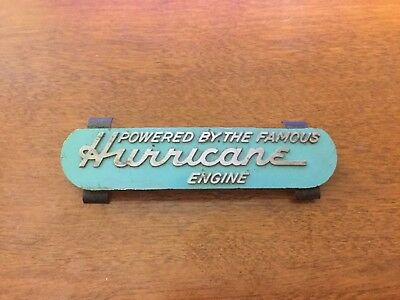
Here are pics of two other similar emblems. This dark blue one was sold at some auction:
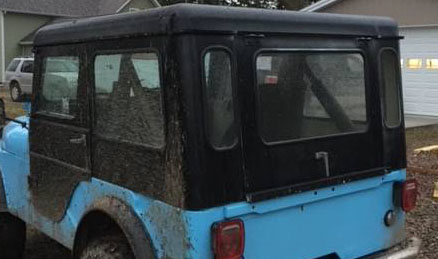
A couple days ago a reader named Jeremy asked me about his top (above), referring to it as an “Orville Meyers” top. As I read that, I thought … hmmm … I’d never heard of an “Orville Meyers” hardtop.
While I had heard of a Meyer (without an “s”) hardtop (like the one above) and I’d heard of a Meyers (with an s) hardtop, better known as the manufacturer of the Allstate/Sears hardtops, I had never encountered a “Orville Meyers” top. I thought I’d better do a search, because I figure Jeremy must have gotten the name from somewhere.
The search results revealed that some of the folks over at the earlyCJ5 forum use various iterations of Orville Meyer(s) to describe what was marketed in the 60s as a Meyer hardtop. The addition of Orville made me think that the Orville connection must have originated from somewhere given its prevalence over there.
Several searches later, I learned how Orrville (2 “r”s and 2 “l”s) Body Company, was connected with the Meyer Products company.
At some point in the late 1950s or early 1960s, the Meyer Products company, from Cleveland, Ohio, chose to enter the hardtop market for the jeep. Up to that point, Meyer was known more for its snow plows, a product Meyer had built for vehicles before the jeep ever existed.
The Short History of Orrville Body Works (read the long history here): The Orrville Body Works seems to have gotten it’s name from the city of Orrville, Ohio, a city southwest of Akron. Started as a small cabinet shop under a different name, by 1925 it had become the Orrville Body Works that produced a variety of truck cabs. Soon the name changed to the Oroville Body Company.
Meyer buys Orrville: Fast forwarding to the early 1960s, at some unknown time, Meyer contracted with Orrville to build custom jeeps cabs, though it’s not clear what tops Orrville initially built. What we do know is that the president and owner of Oroville died in September of 1964. A year later, in late 1965, Orrville was purchased by Meyer and was made a subsidiary of Meyer for the purpose of adding a line of jeep hardtops to Orrville’s portfolio of product, but with the tops marketed under the Meyer brand. The name of the company was changed from the Orrville Body Company to Orrville products, Inc.
The Meyer Mark III jeep cab on a Meyer CJ-5, possibly a tux park.
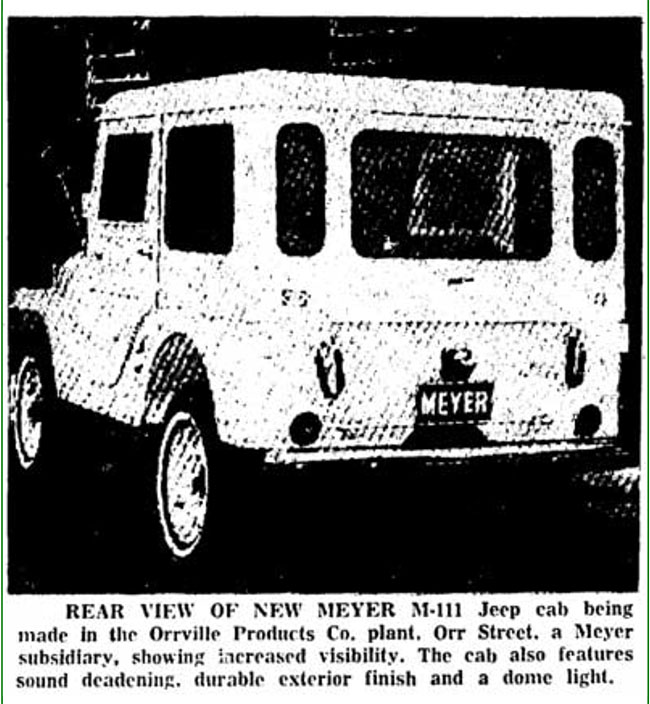
Meyer introduces the new hardtops: A year after the purchase, Meyer introduced it’s new line of hardtops. According to the December 16, 1966, issue of the Orrville Courier Crescent,
“Jeep News, a publication of the Kaiser-Jeep Corp. of Toledo, is featuring in its current issue a new all-steel ‘M-III’ cab designed especially for its famous four-wheel vehicle by the Meyer Products Co., Inc., of Cleveland which is now being built here in the Orrville Products Co. plant, a subsidiary of Meyer Products.
“Built-in standard features of the cab include sound deadening, streamlined appearance, almost complete visibility in every direction and snug cold-weather comfort for owners of Jeep Universal. Two styles are available; each custom engineered for either the CJ 5 or CJ 6 model.
“The ‘owner-designed’ Meyer cab has welded and sealed drip moldings for maximum water run-off, and a four-step baked enamel finish for utmost durability. All components are steam cleaned, phosphate – coated and primed with a special rust-preventing coating before painting. The hard enamel finish coat is precision-baked in a special oven under close temperature control. Lustrous glacier white enamel is standard but other colors are available on quantity orders.
“Optional accessories provide Meyer cab users additional comfort and convenience. A two-position air vent gives the driver finger-tip control for drawing in fresh air or exhausting stale air. A roof-mounted tire rack assembly puts the spare tire up out of the way, yet easily accessible when needed.Continue reading →
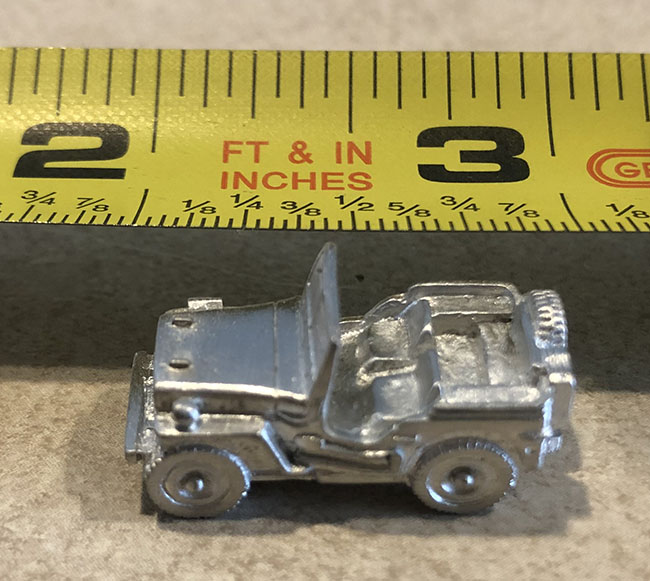
I picked up this tiny little jeep on eBay. It was made in France, most likely recently. I bought it because it seemed a perfect size for a Monopoly piece, a game my kids and I still play on occasion. Unfortunately, they’ve figured out some of my strategies for beating them, so I don’t win as often!
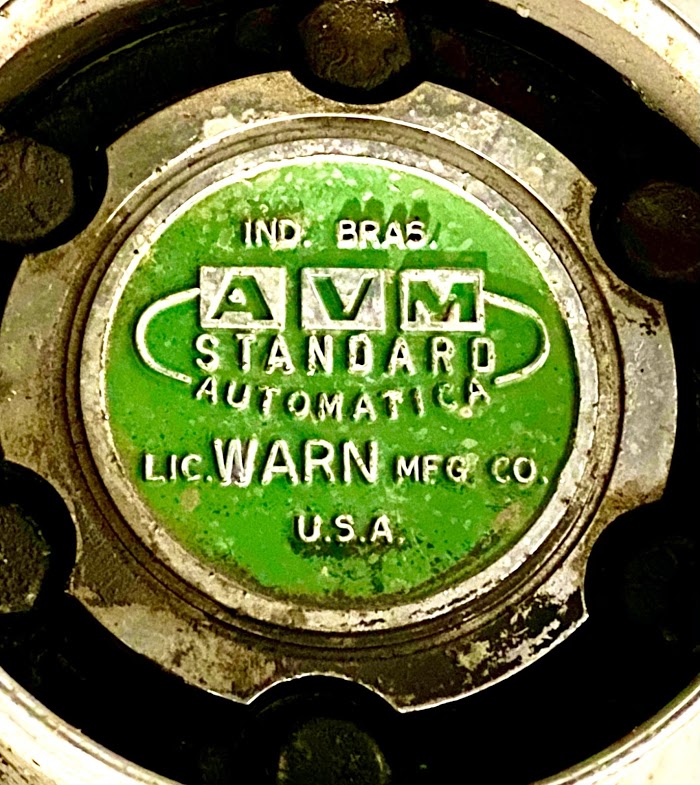
This photo showing an AVM Automatic hub popped up on the ECJ5 forum the other day. You’ll note it makes a reference to Warn. While I’ve yet to confirm this with Hugo Vidal, this looks to be a great example of an AVM automatic hub that was patterned after the Warn automatic hub, a brief and failed experiment by Warn to have hubs that didn’t require manual engagement.
For those that don’t know, AVM was started by Hugo Vidal in 1957 (AVM) after a handshake-deal with Arthur Warn while Hugo and his two friends were driving a CJ-3B around the Americas (Brasil to Alaska, 1955 on CJ3B.info). Using Warn’s specs, Hugo was able to resell Warn tech under the AVM brand. Eventually, AVM expanded outside of Brazil. After 50 years, Hugo retired from AVM. Hugo and Warn (and his son) never had an actual contract. It was always a handshake deal built on trust.
These two Jeepster patches are on eBay. According to the seller, they may be from the 1980s, but someone else might be able to give a more accurate date.
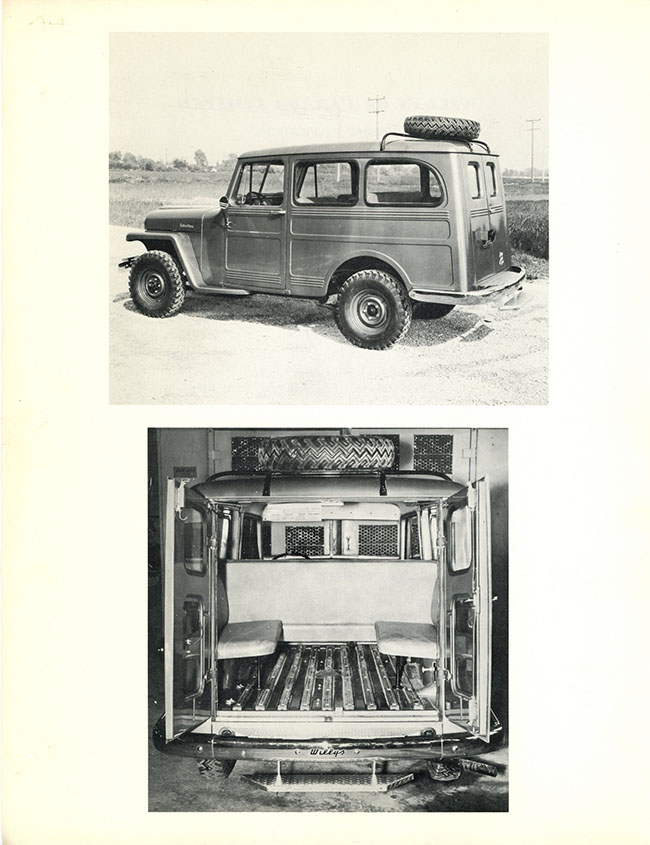
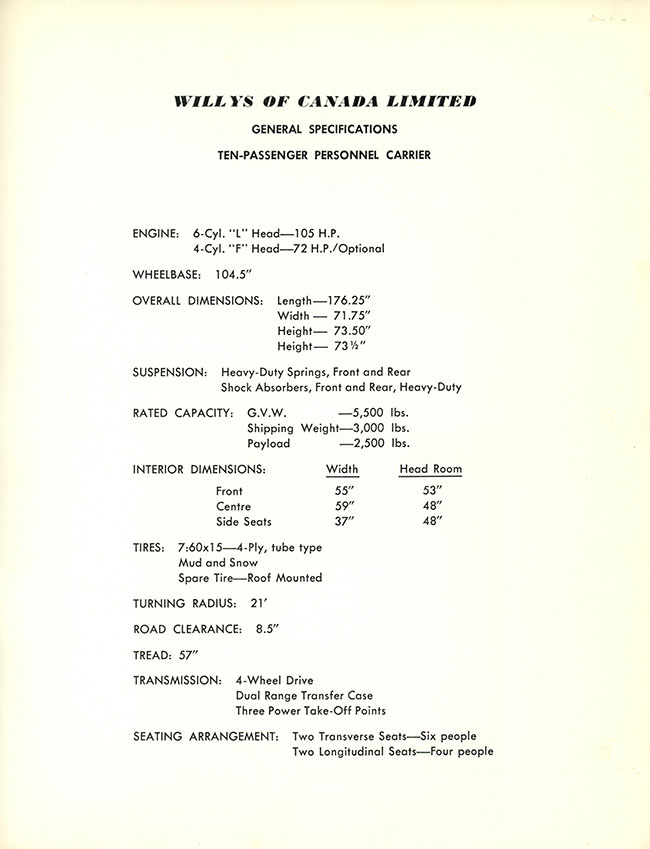
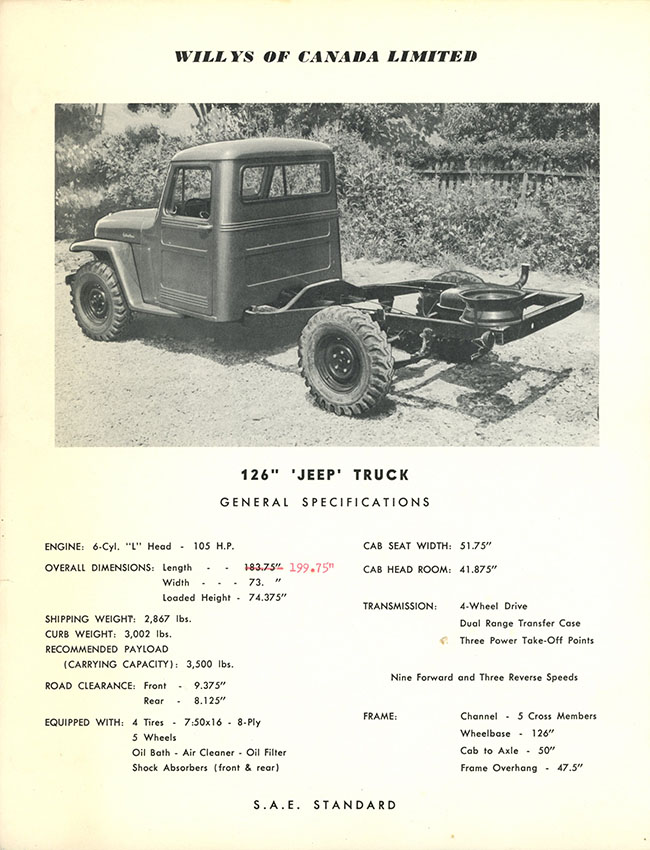
On eBay the other day there were these two different technical sheets from Willys of Canada Limited. The truck spec seems pretty straight forward, though the company labeled it a 126″ Jeep Truck (named for the wheelbase length … why wasn’t it the standard 118″ wheelbase?). But, the wagon had me scratching my head. Given the split windshield of wagon (I can’t tell if the truck has it), my instant thought was that these were both pre-1960 vehicles, especially given they both used the Superhurricane L-head.
As we learned yesterday, Canada didn’t have it’s own production plant until mid-1959, so if these personnel carriers are earlier than that, then they must have been made in the US and imported into Canada. The lack of the ‘hockey stick’ trim suggests they were earlier than the Traveller. Are they a precursor to the Traveller or were they concurrent to the Traveller? If the latter, why the split windshield and why wouldn’t they have been named ‘Traveller’?
Meanwhile, searches for any reference to the 126″ Jeep Truck or the Ten-Passenger Personnel Carrier haven’t yielded any newspaper ads or brochures.
Here is the Ten-Passenger Personnel Carrier spect sheet:
Here is the 126″ Jeep Truck spec sheet. Was it a coincidence that the J-300 truck introduced in 1962 was also had a 126″ wheel base?
Over the years I’ve heard about two Willys truck bed sizes, a shorter one and a longer one, but all the info I’ve read indicated the Willys Jeep truck beds were all the same size. If a bed was made to fit this longer wheelbase, it may have meant the creation of a longer bed. This might explain the rumor of the longer beds?
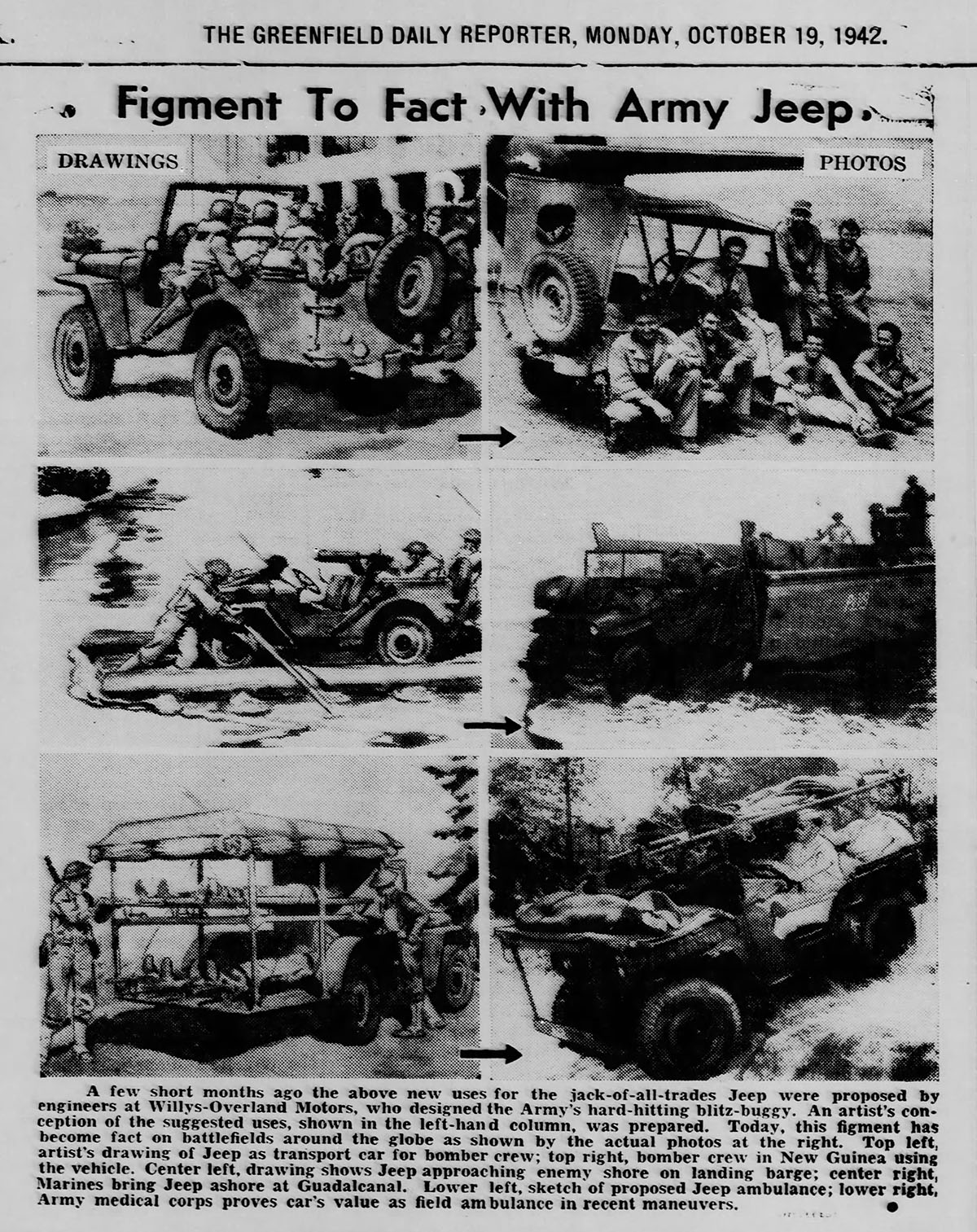
This “Figment to Face” article about the jeep’s conception-to-reality story landed in a variety of newspapers across the US, though this is the best scan of it so far (which doesn’t speak too highly of the other scans, as it shouldn’t). I wondered how many other drawings were made that weren’t realized with the standardization of the jeep.
The article appeared in the Daily Reporter out of Greenfield, Indiana, on October 19, 1942:
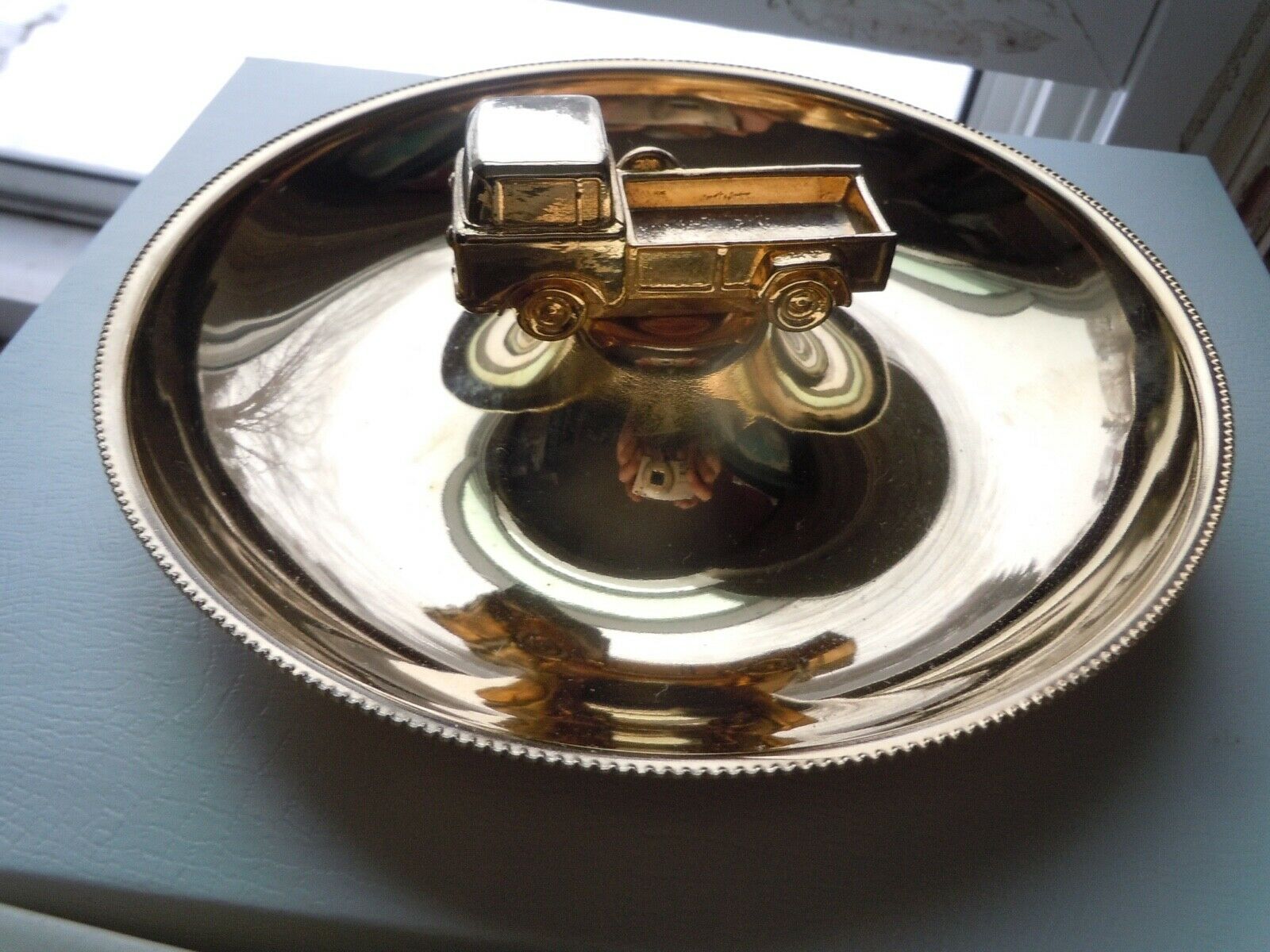
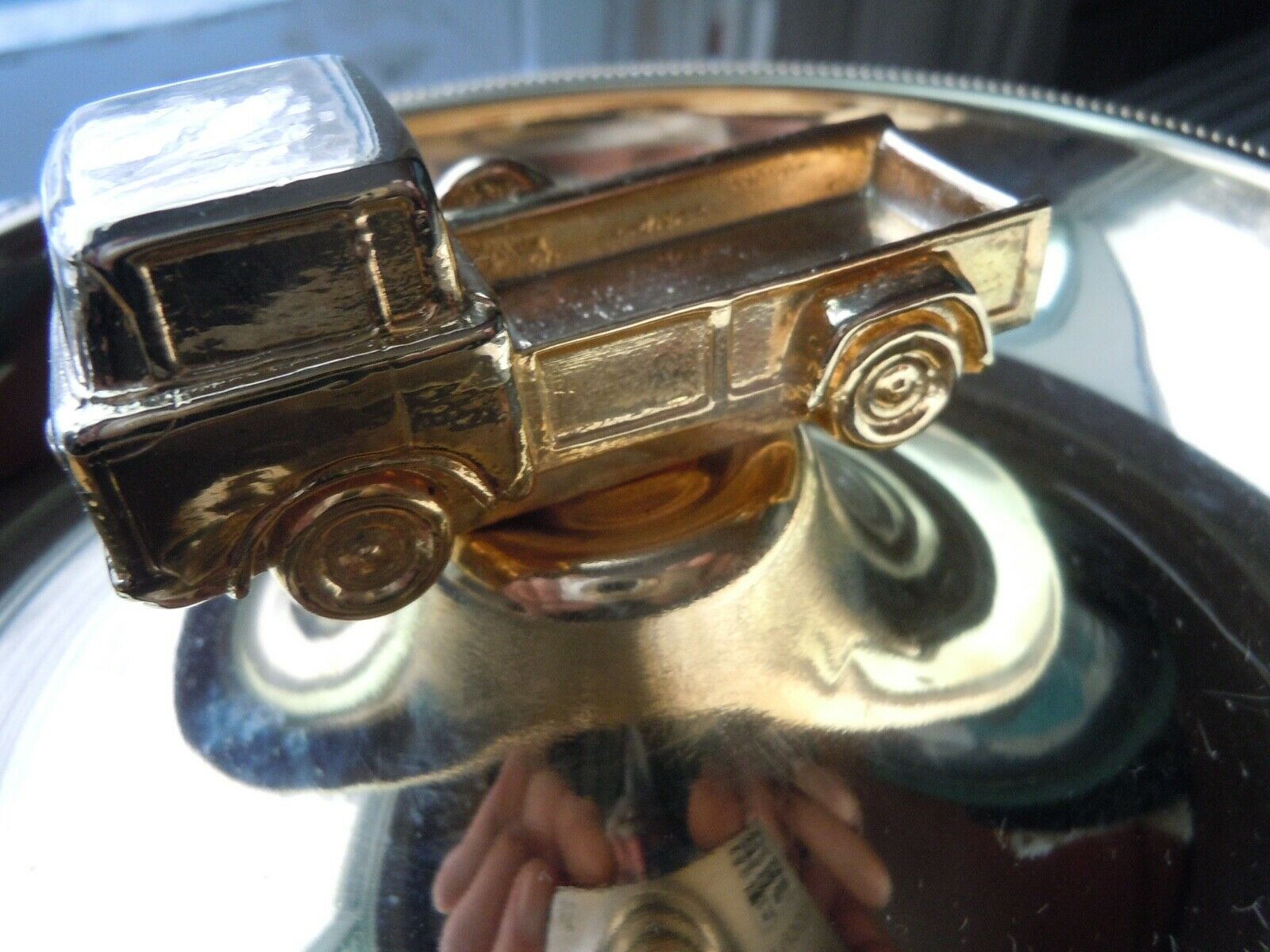
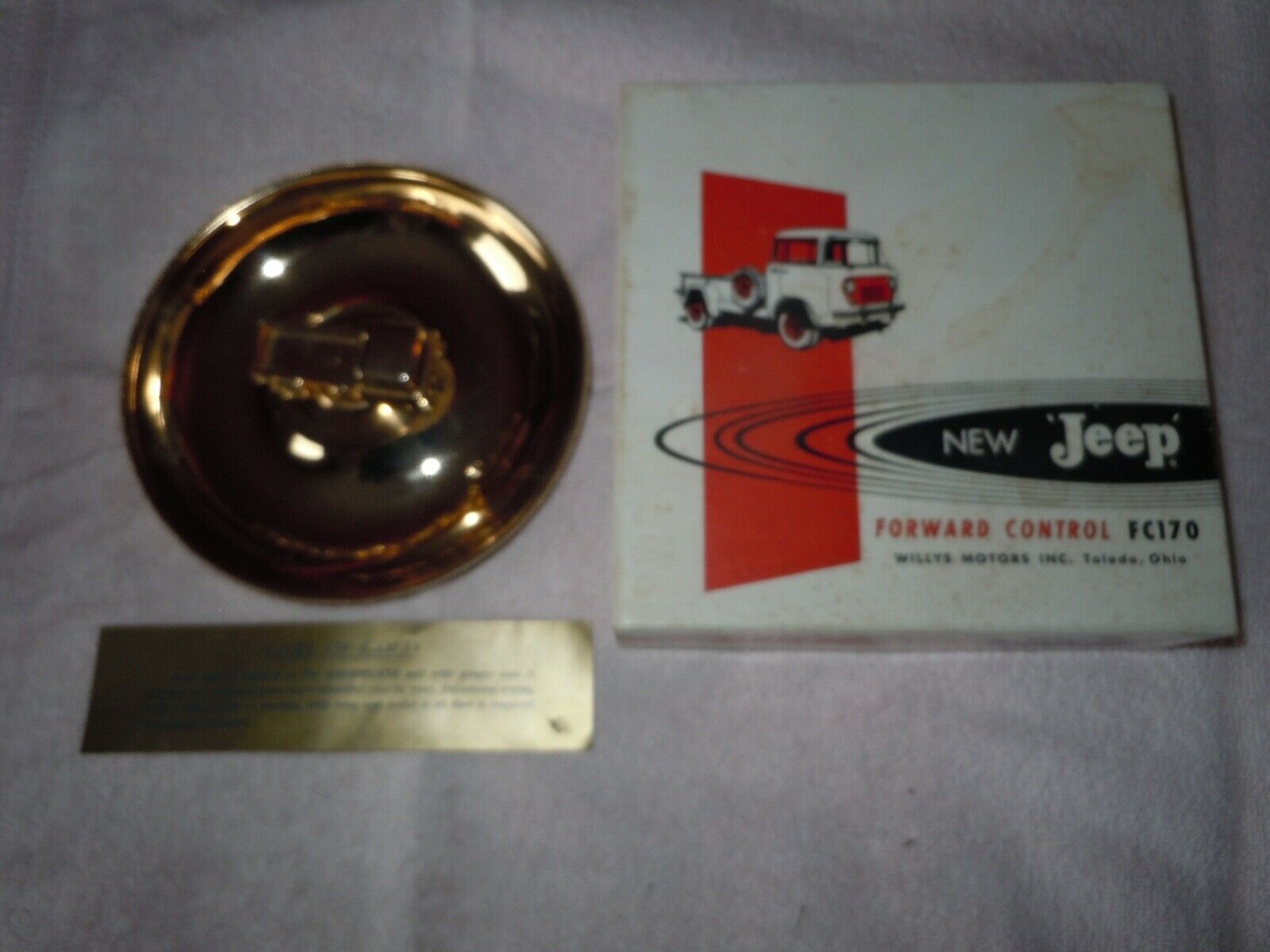
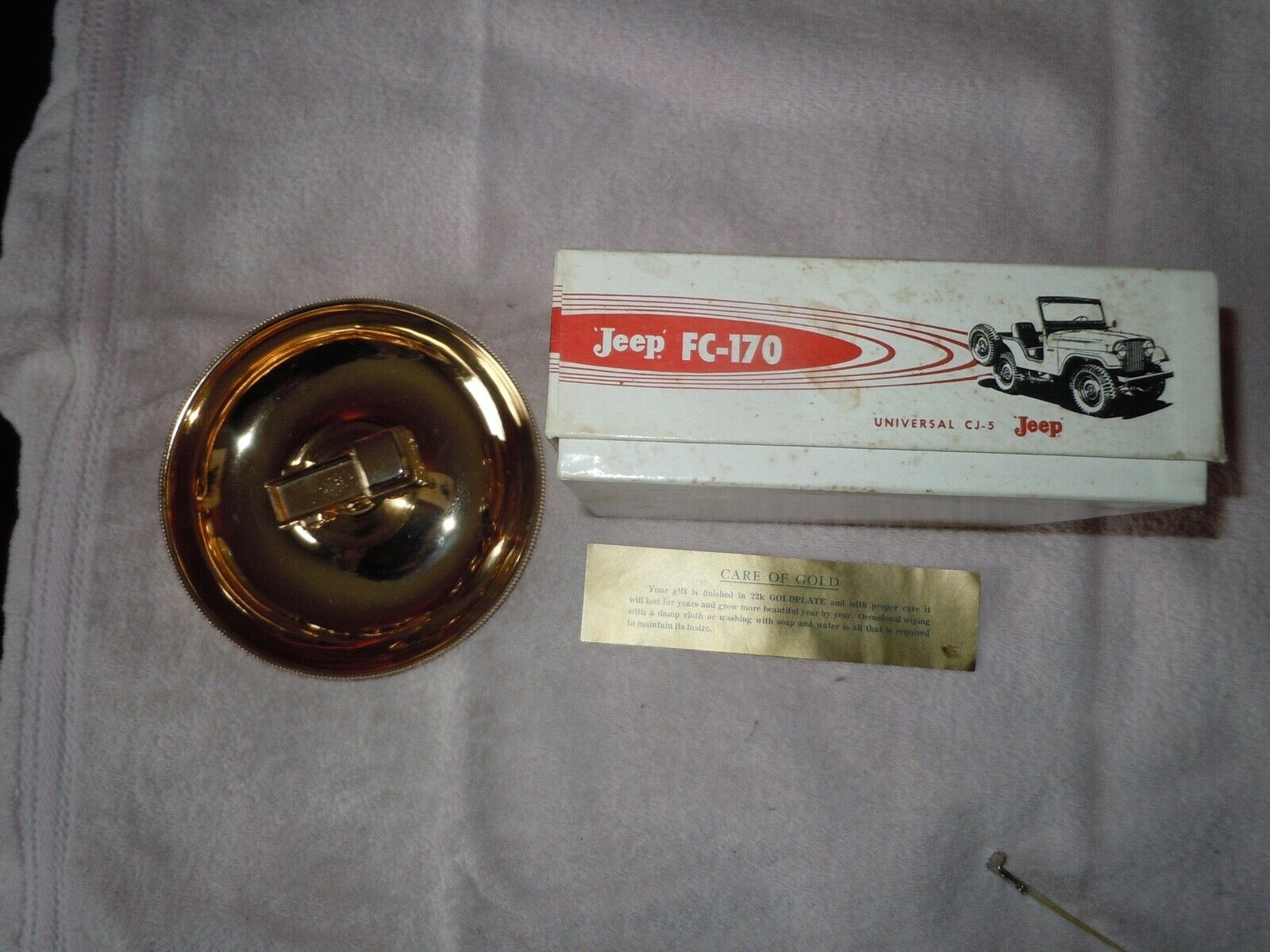
(03/01/2021) This rare package includes a plaque and the original box (pretty cool box). The starting bid is $175.
“THIS AUCTION IS FOR A WILLYS JEEP MODEL FC 170 GOLD PLATED ASH TRAY IN ITS ORIGINAL BOX AND INCLUDES “CARE” INSERT.
WILLYS MOTORS INC. OF TOLEDO, OHIO
GOLD PLATED WITH 22K GOLD PLATE
THE ASHTRAY IS IN GREAT SHAPE WITH MINIMAL WEAR.
THE BOX IS IN GODD SHAPE ALSO WITH GOOD COLOR AND GRAPHICS.
50’S VINTAGE
A NICE, RARE, JEEP TOY”