emailNeed to contact me and don't have my email? Click on email button.
About eWillys
Welcome to eWillys.com, a website for vintage jeep enthusiasts. I update this website nearly every day with jeep deals, jeep history, interesting reader projects, jeep related info, and more.
These quick searches can help you find things on eBay. People list in the wrong categories all the time, so don't be surprised to see brochures in the parts area for example. This section used to be split into jeeps, parts and other categories, but recent changes to eBay will require this information to be recoded.
The links to posts below show jeeps grouped by models, condition, and other ways. Some of these jeeps are for sale and others have been sold. If you are unsure whether a vehicle is still for sale or not, email me at d [at] ewillys.com for more info.
Importantly, the allure of buying a project jeep can be romantic. The reality of restoring a jeep can be quite different, expensive and overwhelming without the right tools and resources. So, tread carefully when purchasing a "project". If you have any concerns about buying a vintage jeep, or run across a scam, feel free to contact me for help, comments or concerns .
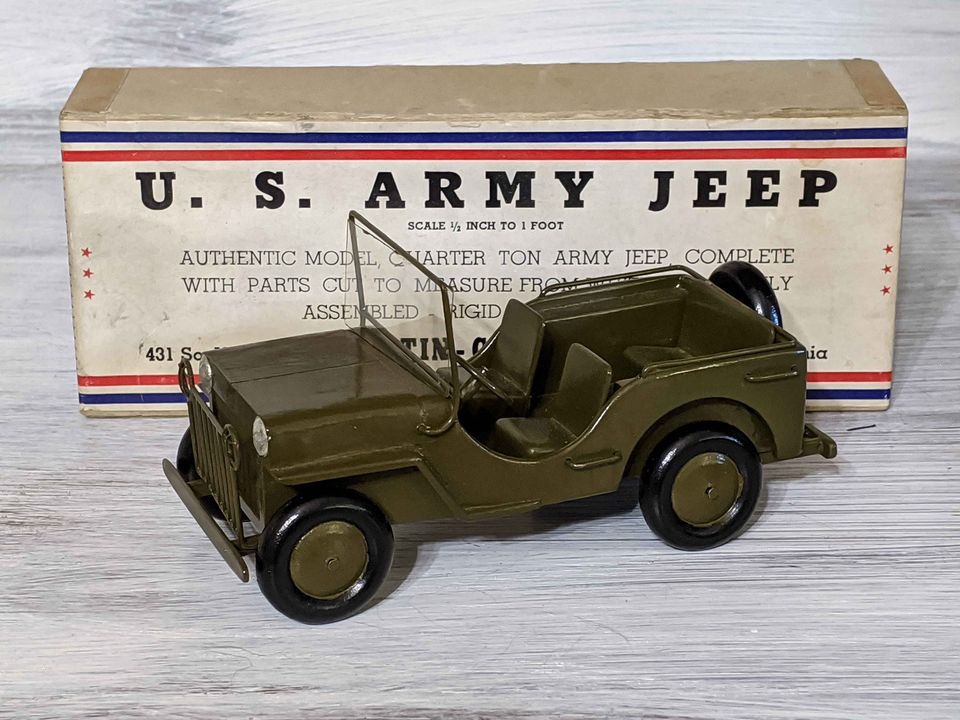
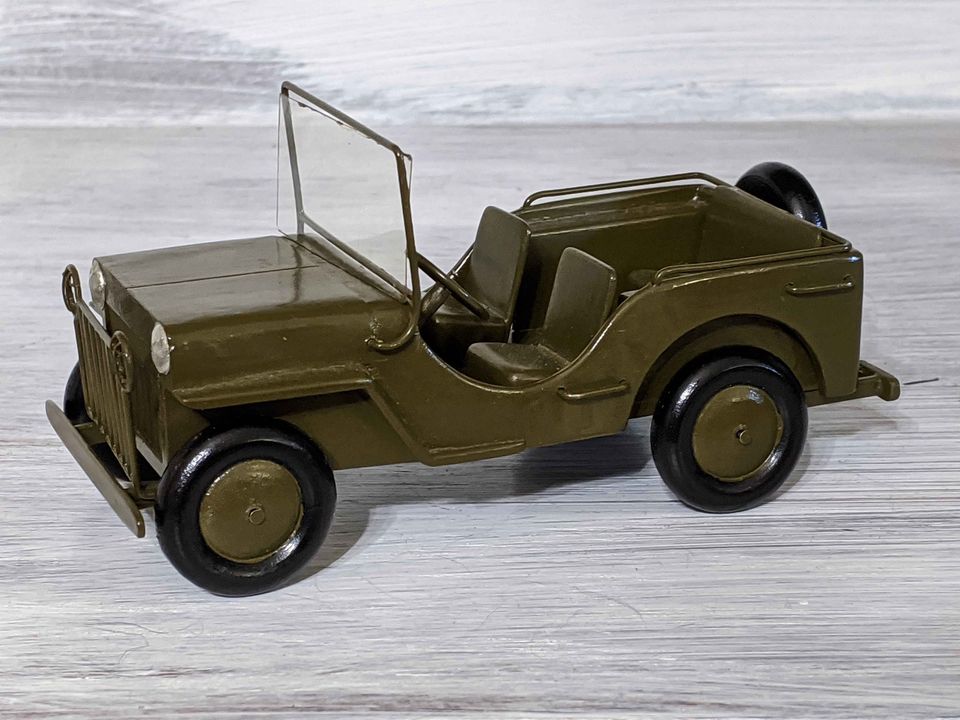
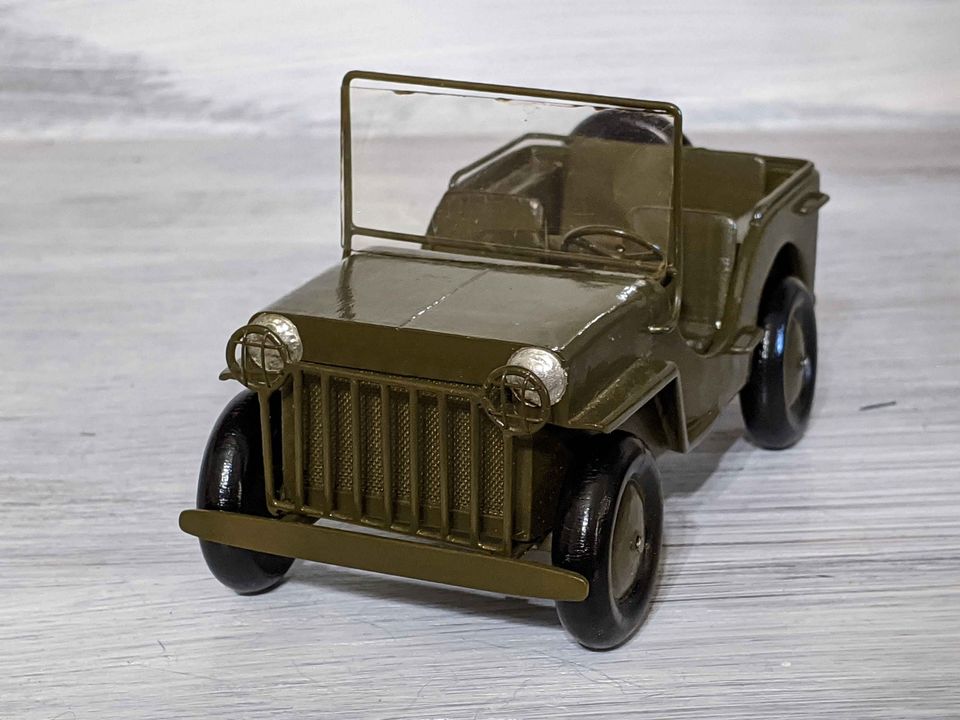
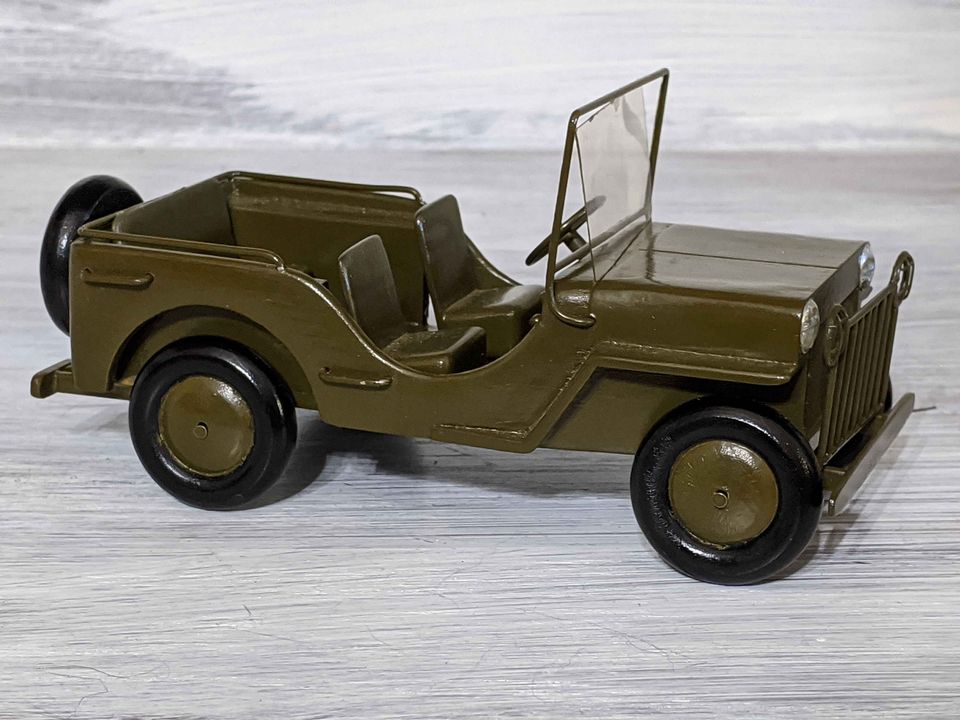
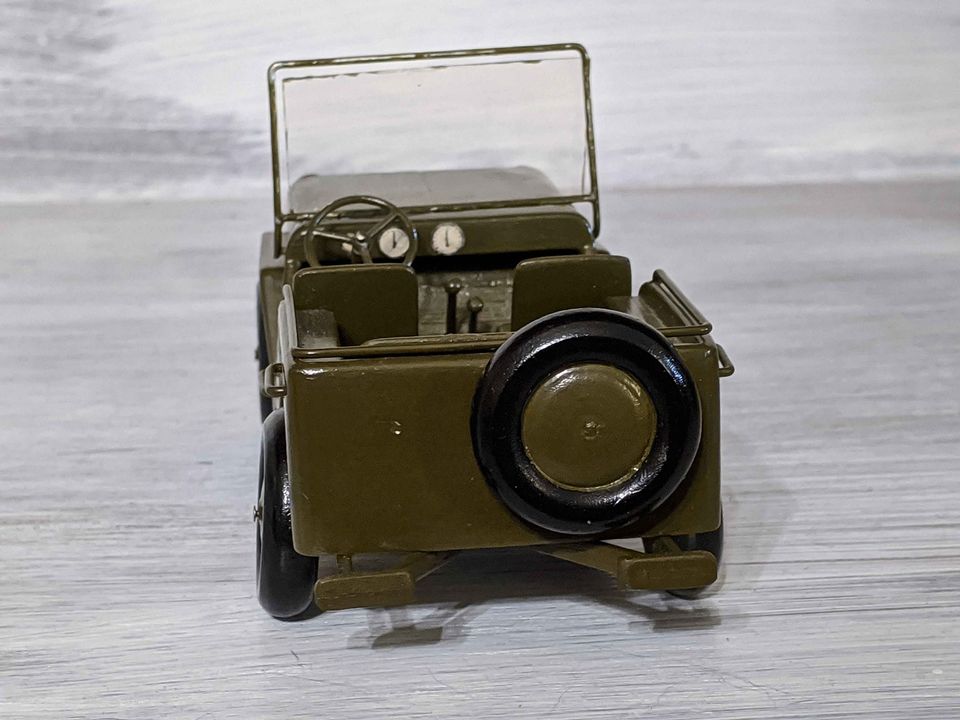
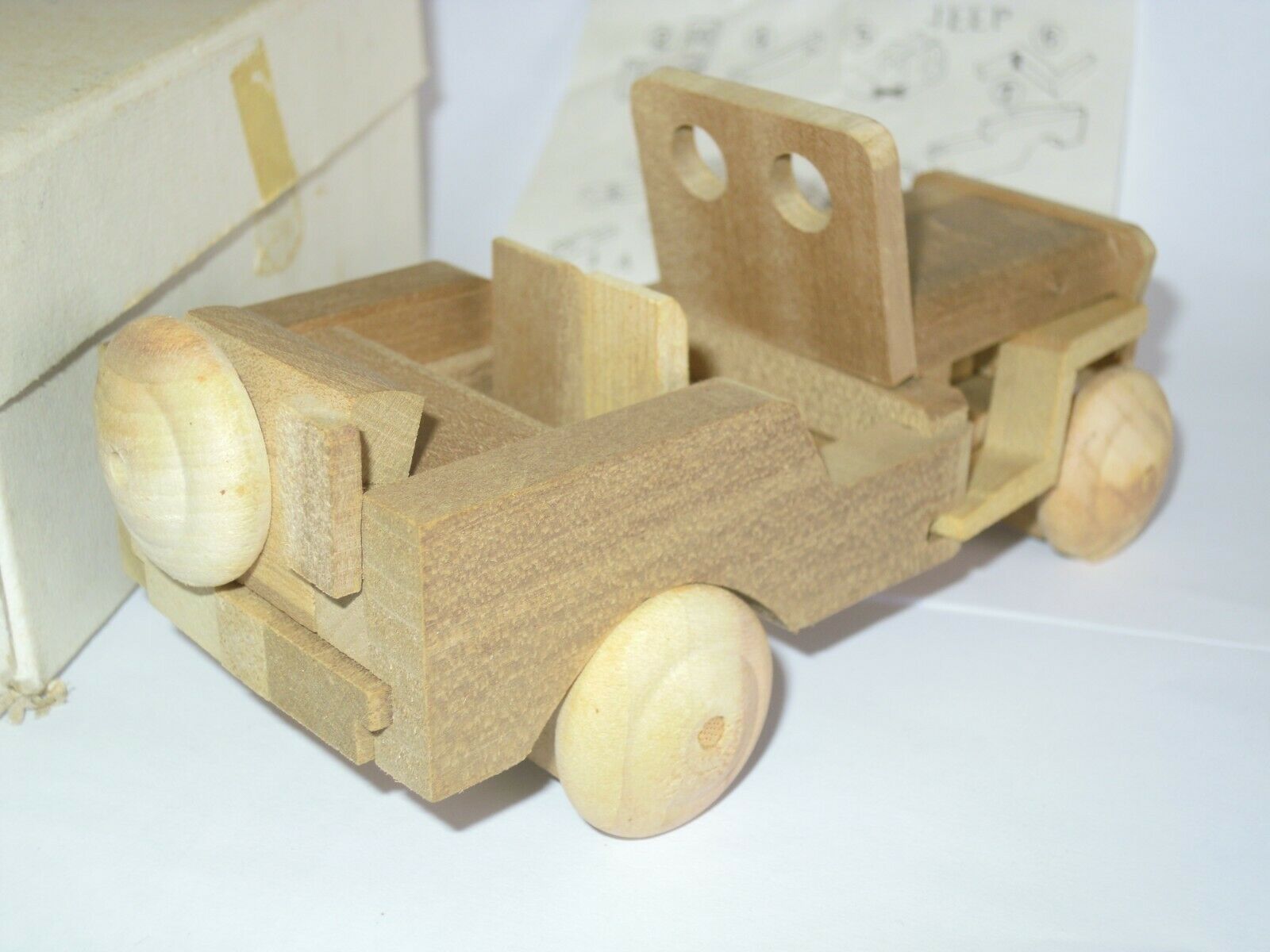
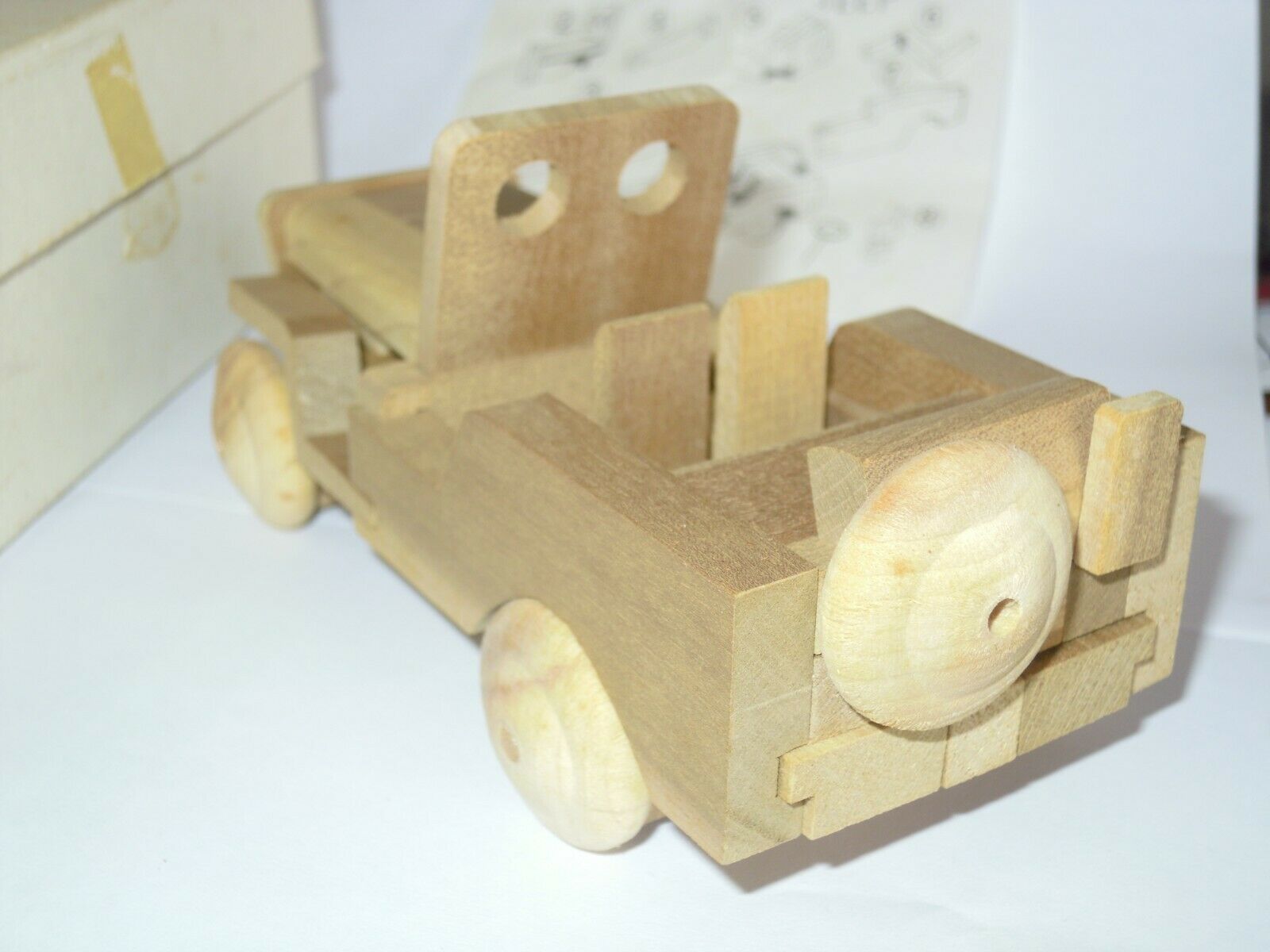
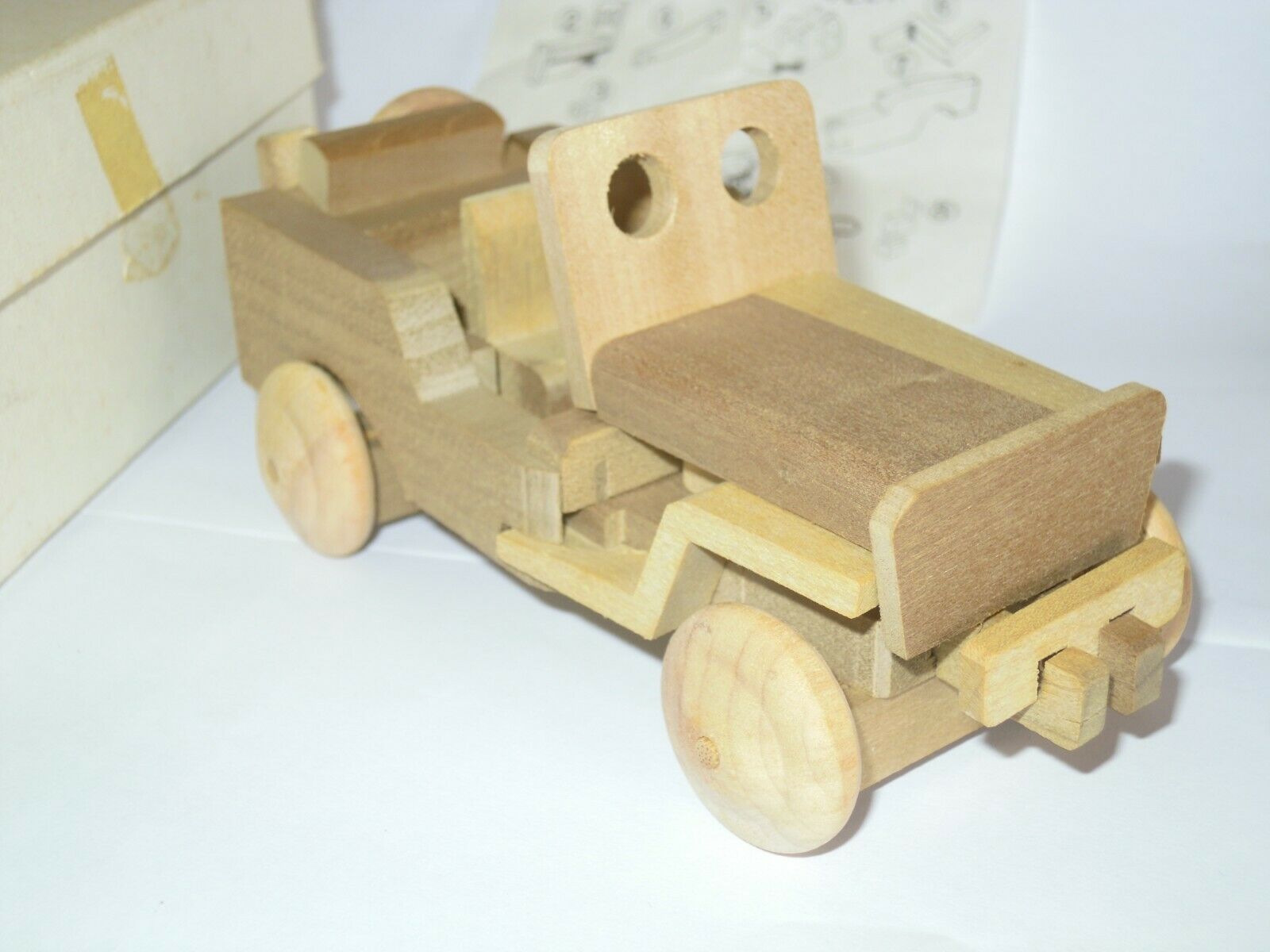
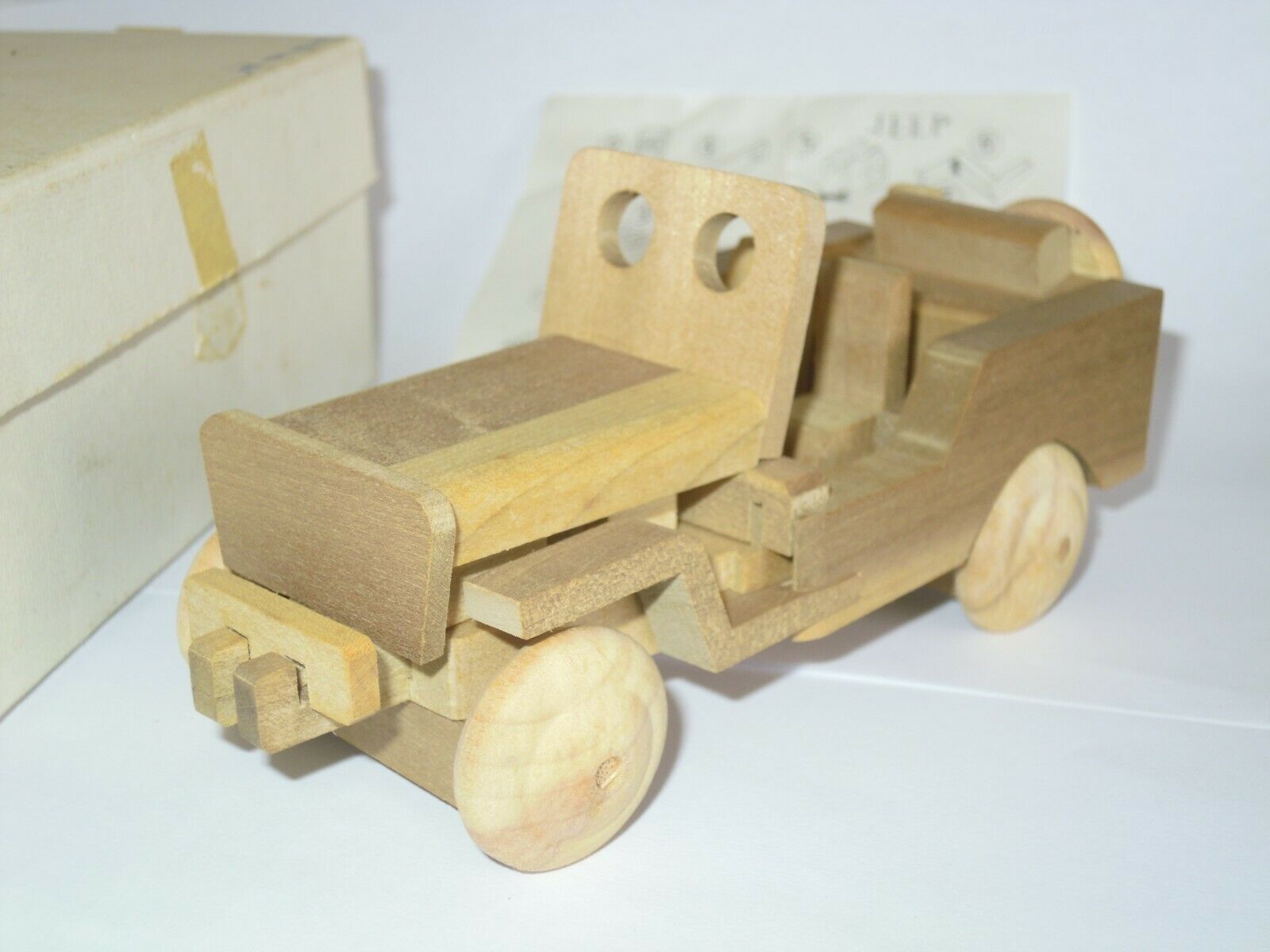
“Vintage 1940’s US Army Jeep Toy. This was a wood model assembled and painted very well. The windshield isn’t attached but kind of just sits on the frame. Awesome display piece.”
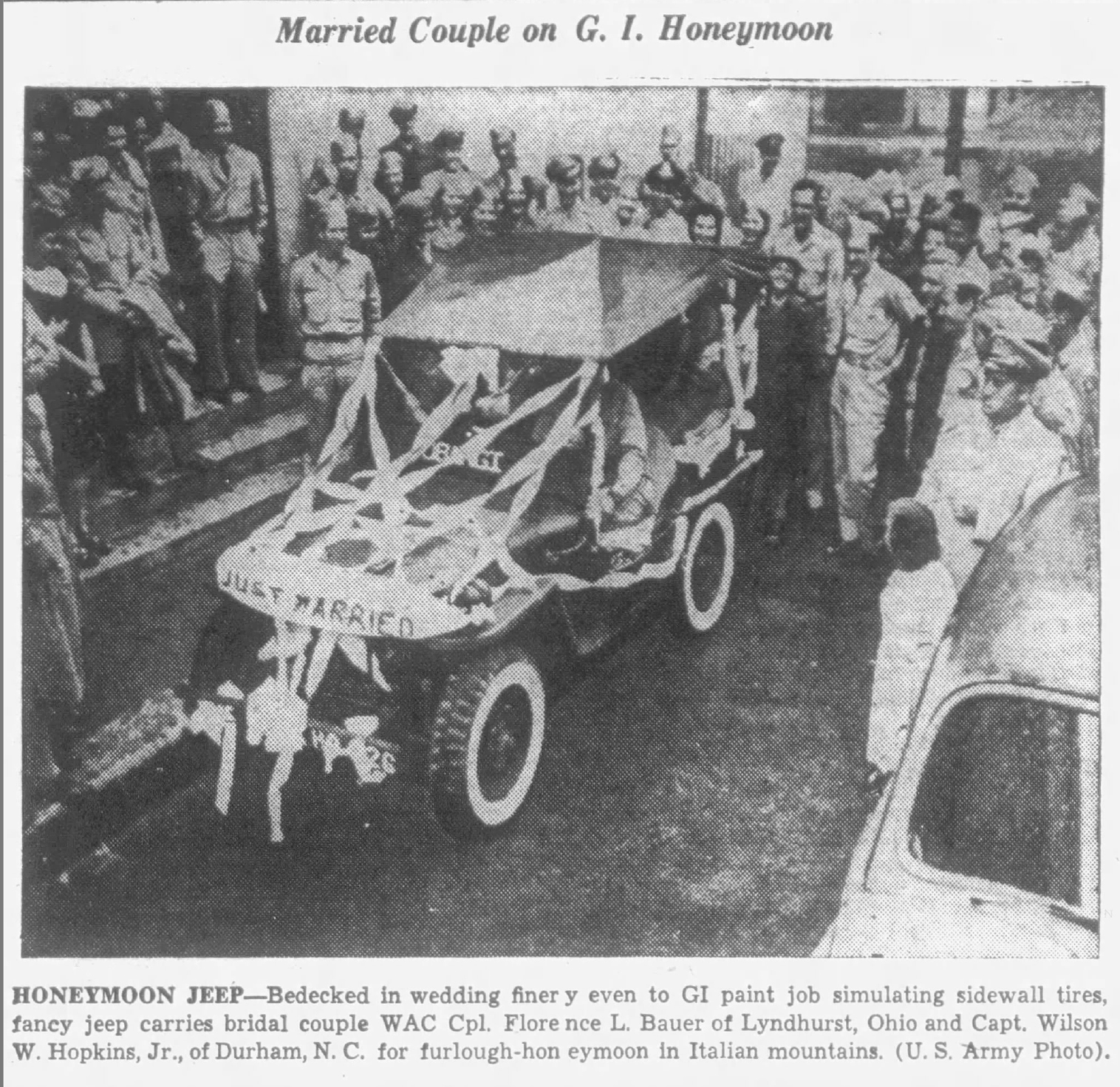
This “honeymoon” jeep was bedecked with whitewall (painted) tires and plenty of wedding finery. Inside the jeep was the price, WAC Cpl. Forence L. Bauer of Lyndhurst, Ohio, and Capt. Wilson W. Hopkins, Jr., of Durham, North Carolina. They spent their honeymoon in the Italian mountains during the late August of 1944.
This photo appeared in the August 20, 1944, in the Sunday News out of Ridgewood New Jersey.
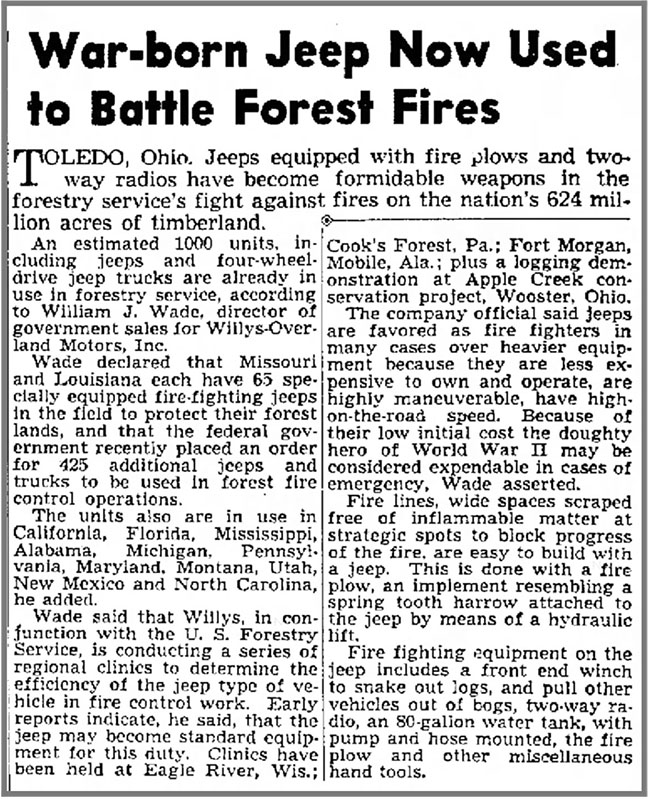
This first article from January 22, 1950, in the Independent Press-Telegram (Long Beach, California) provides purchase numbers and eventual destinations for some Forest Service Jeeps.
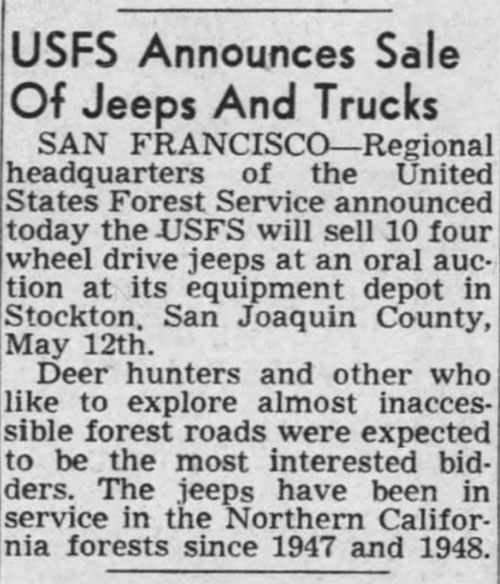
This second article, from May 05, 1954, in the Sacramento Bee, notes the sale of 10 USFS jeeps that had been part of the Forest Service since 1947 and 1948.
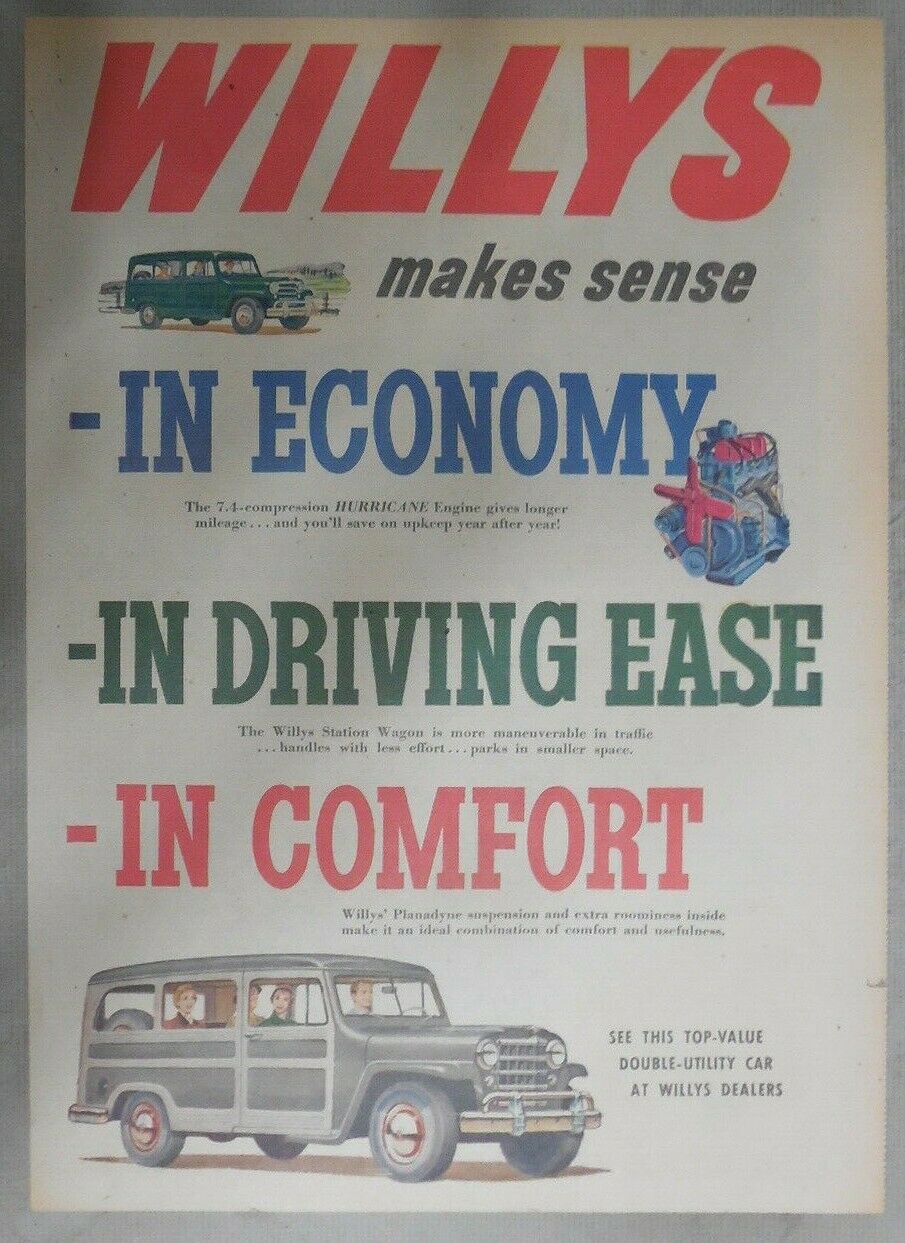
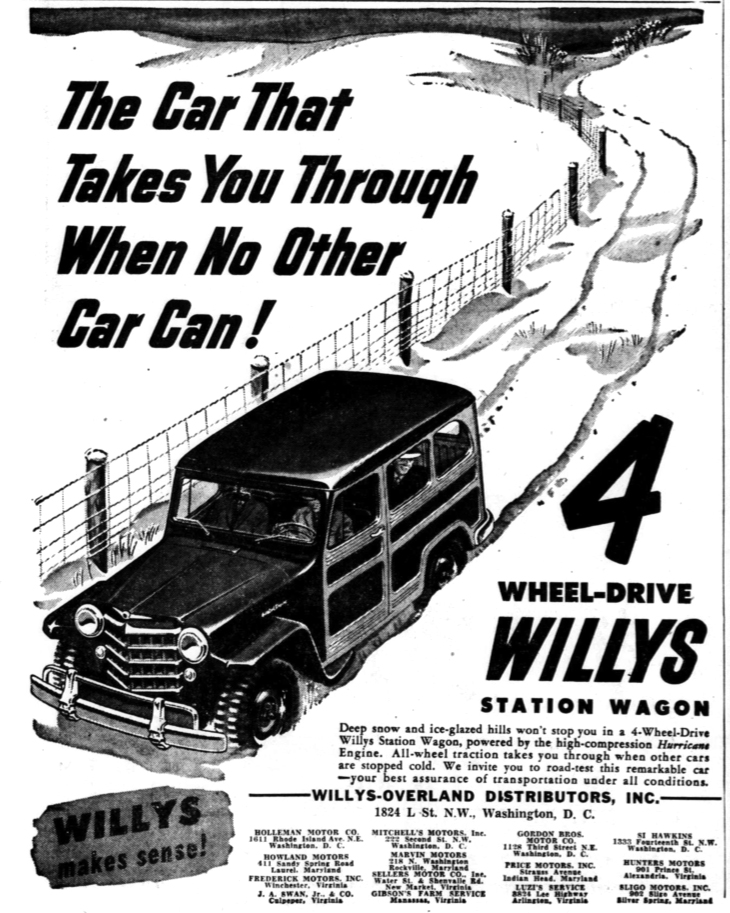
Originally posted May 29, 2019: Here’s another Willys Makes Sense ad from the February 13, 1951, issue of the Evening Star newspaper that differed from the others.
==================
Original Post: May 21, 2019:
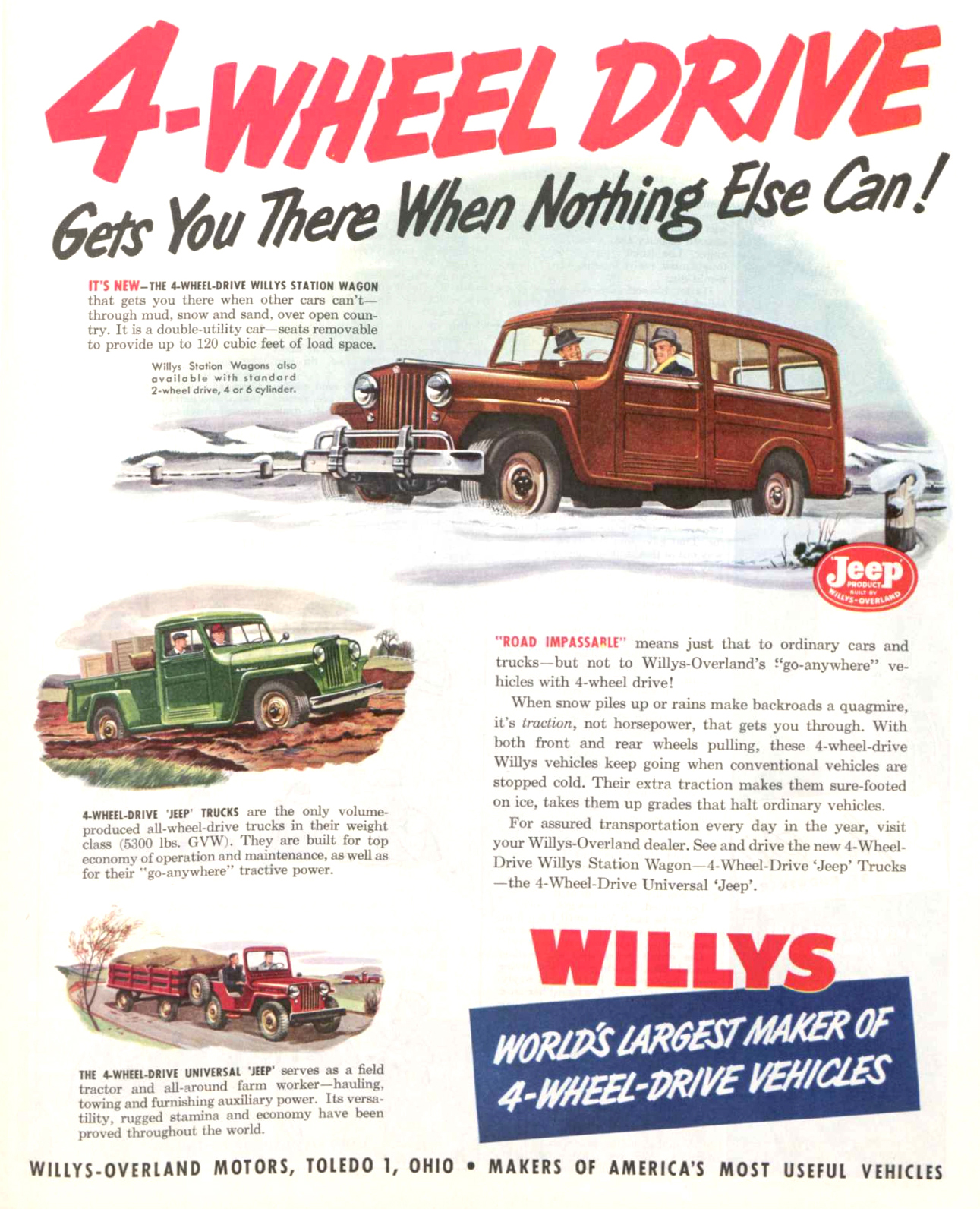
In 1950, Willys-Overland launched a Willys Makes Sense advertising campaign. Unlike past campaigns, such as the 1948 City and City ads, which were about encouraging the sales of wagons and positioning the wagon as a luxury vehicle, the Willys Makes Sense appears to have been organized to re-imagine how the public should view the brand.
Before I get too deeply into this, I’d like to note that the way I’d prefer to write this article is to document specific reasons behind Willys-Overland’s decision to make such a big change. Unfortunately, I don’t have access to enough financial material as I’d like (especially annual reports). So, conjecture and theory will have to do for now.
BACKGROUND: After WWII, pent up demand meant lots of sales for automakers. That could explain, in part, why post-war sales were pretty good for Willys-Overland. For example, sales increased from almost 79,000 jeeps in 1946 to 159,000 jeeps in 1948. But, in 1949, sales plunged to almost half, coming in at 86,000. I don’t have details into why sales dropped so much, but likely parts or material shortages or labor disputes could have had an impact. Certainly, the recession of late 1948 – late 1949 didn’t help sales at all!
Future sales might not have looked too good for 1950 and beyond either. As of 1950 the US produced 76% of automobiles, but given the post-war rebuilding/resurging of industry world-wide, I expect automakers must have realized that international competition would return soon (by 1955 US market share would drop to 67%). This may have stimulated management to clean up their branding as soon as possible to protect against increasing competition (remember that Willys-Overland had expected to sell 25% of their autos internationally, based on the 1946 Fortunate Magazine article).
Another issue Willys-Overland was facing was that going into 1950 the company still didn’t have a registered trademark for the term JEEP (wouldn’t get it until June of 1950). Added to that, the company was not only producing 4WD 1/4 ton jeeps, trucks, and wagons, but also 2WD trucks, wagons, Jeepsters, and an upcoming automobile. Such a portfolio of non-4WD vehicles must have concerned management that it wasn’t just a “jeep” company; so the challenge of how the company should represent itself to dealers and consumers had to have become an issue.
Finally, in a similar vein, up until 1950, the company had been positioning itself as the ‘Jeep’ company, with ads that emphasized the Universal ‘Jeep’, the ‘Jeep’ Truck and the ‘Jeep’ Wagon. Perhaps with the introduction of the Jeepster (note that the company did not call it the ‘Jeep’ Jeepster nor was there any ‘Jeep’ branding on the introductory brochure), the branding issue must have really came to a head. Because of the entrenched nature of Willys-Overland’s efforts to become ‘Jeep’, management may have felt that a company-wide retooling of the company’s branding was in order.
Perhaps one, two, or all of these issues resulted in the 1950 rebrand of the company as a WILLYS manufacturer with a wide range of 2WD and 4WD vehicles for sale. (For a look back at 1952, see Derek’s post “When the CJ-3B Was New“).
NON-JEEP BRANDED ADS:
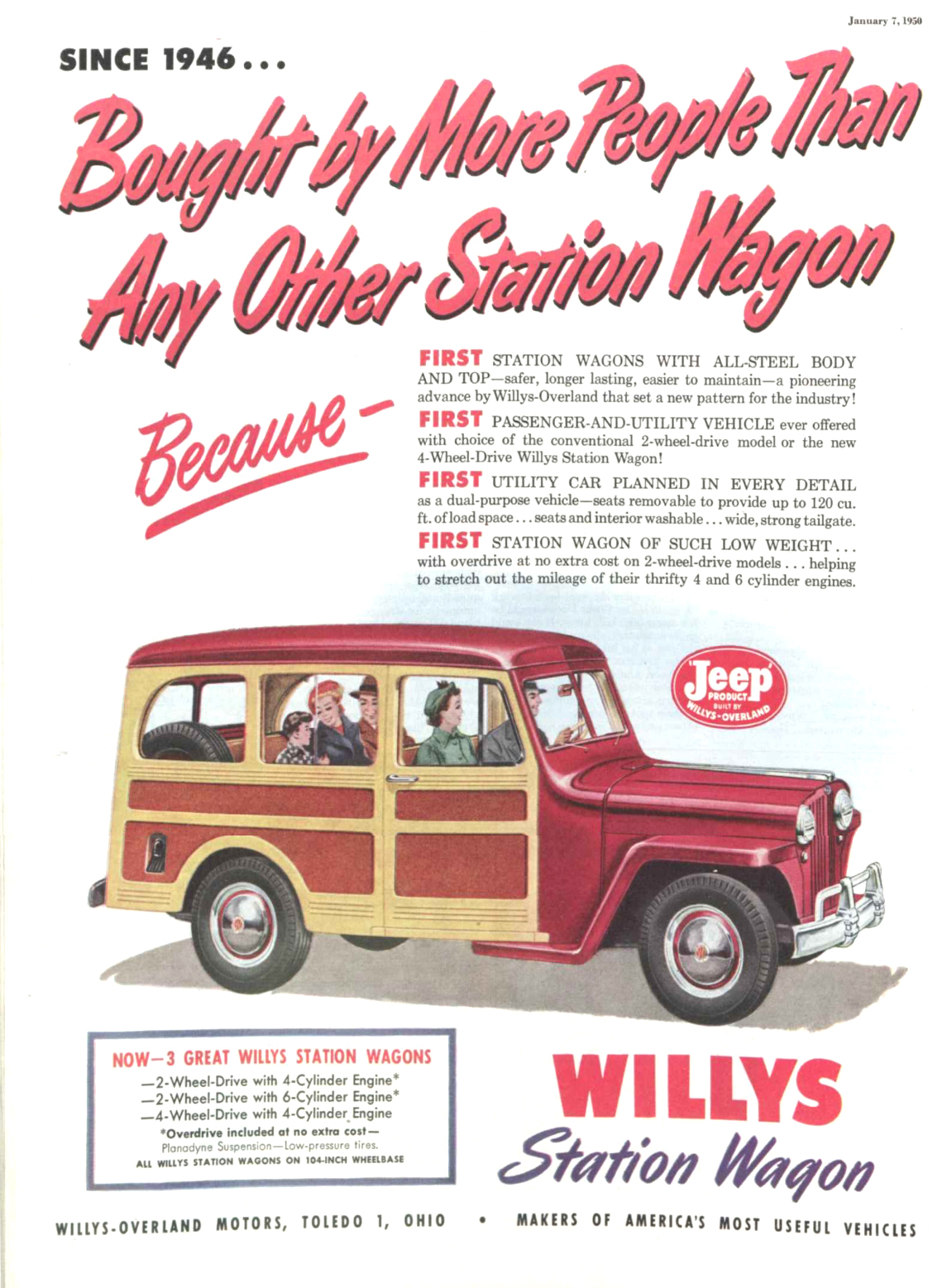
Willys-Overland began 1950 with an ad that felt similar to past ads, but excluded the ‘Jeep’ brand. For example, in January of 1950 Willys published this ad in the Saturday Evening Post. Note the reference to ‘Jeep’ has been replaced with a small ‘Jeep’ badge.
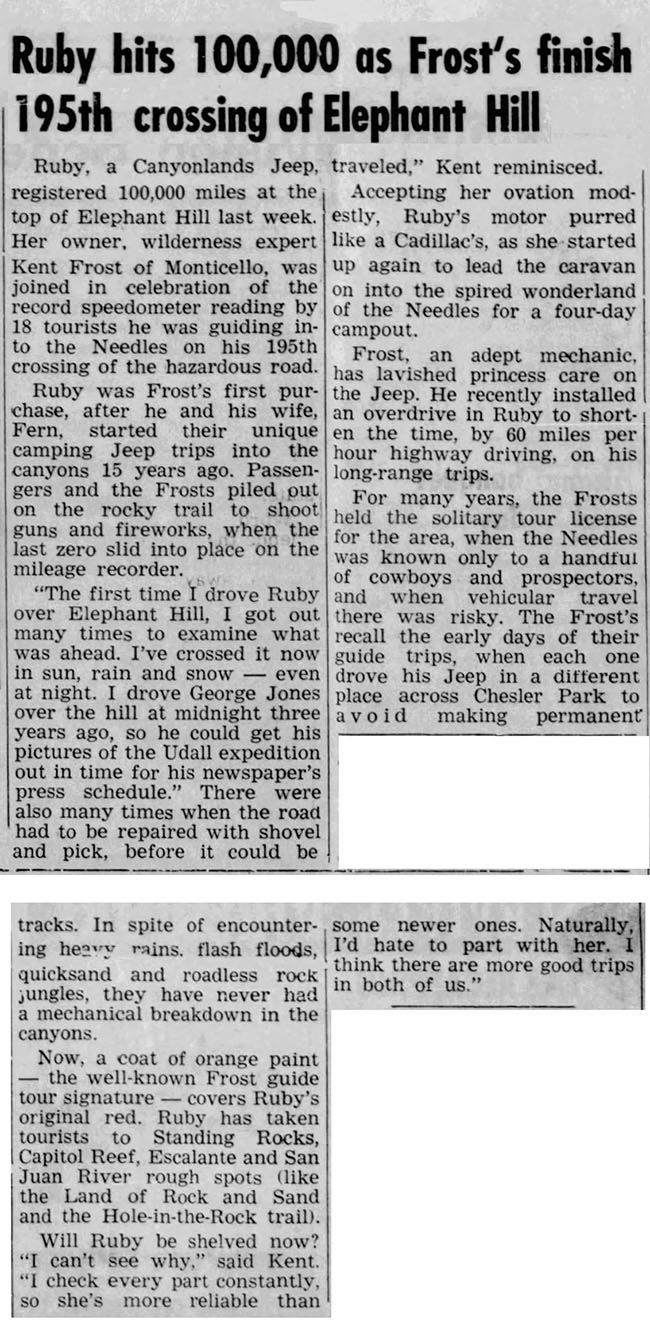
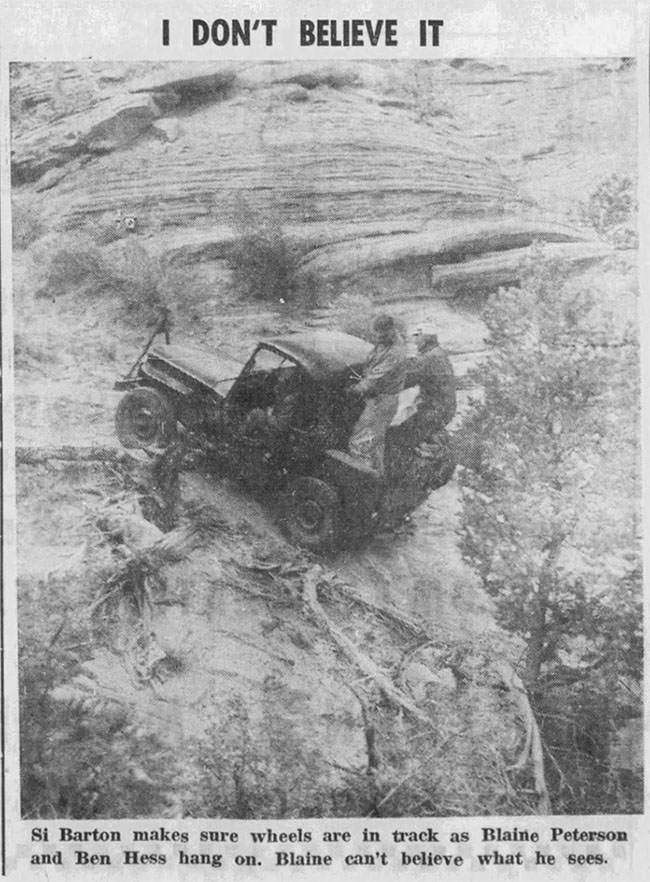
UPDATE: This article from the San Juan Record dated October 22, 1965, provides more information on Kent Frost’s jeep Ruby and his treks over Elephant Hill.
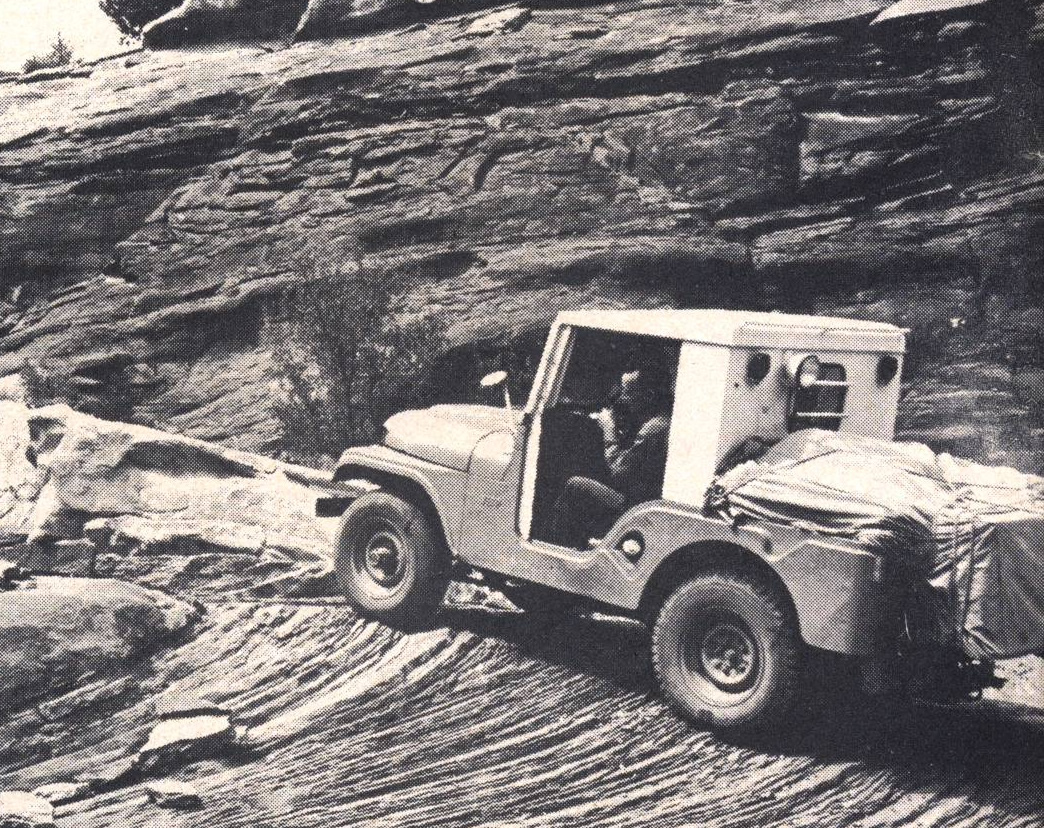
A better example of the photo appeared in the January 1966 Four Wheeler Magazine
=========================
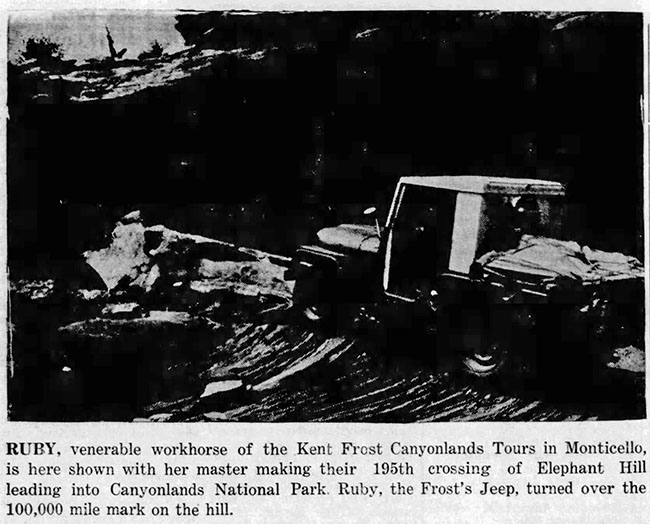
Original Post November 08, 2016: In January of 1966, Four Wheeler Magazine reported that Kent Frost’s CJ-5 Ruby had surpassed 100,00 miles. During that time Frost estimated he had crossed Elephant Hill 195 times through all kinds of weather, both day and night. Fittingly, the birthday celebration was held at the top of the hill. Here are a few pics of Ruby: Continue reading →
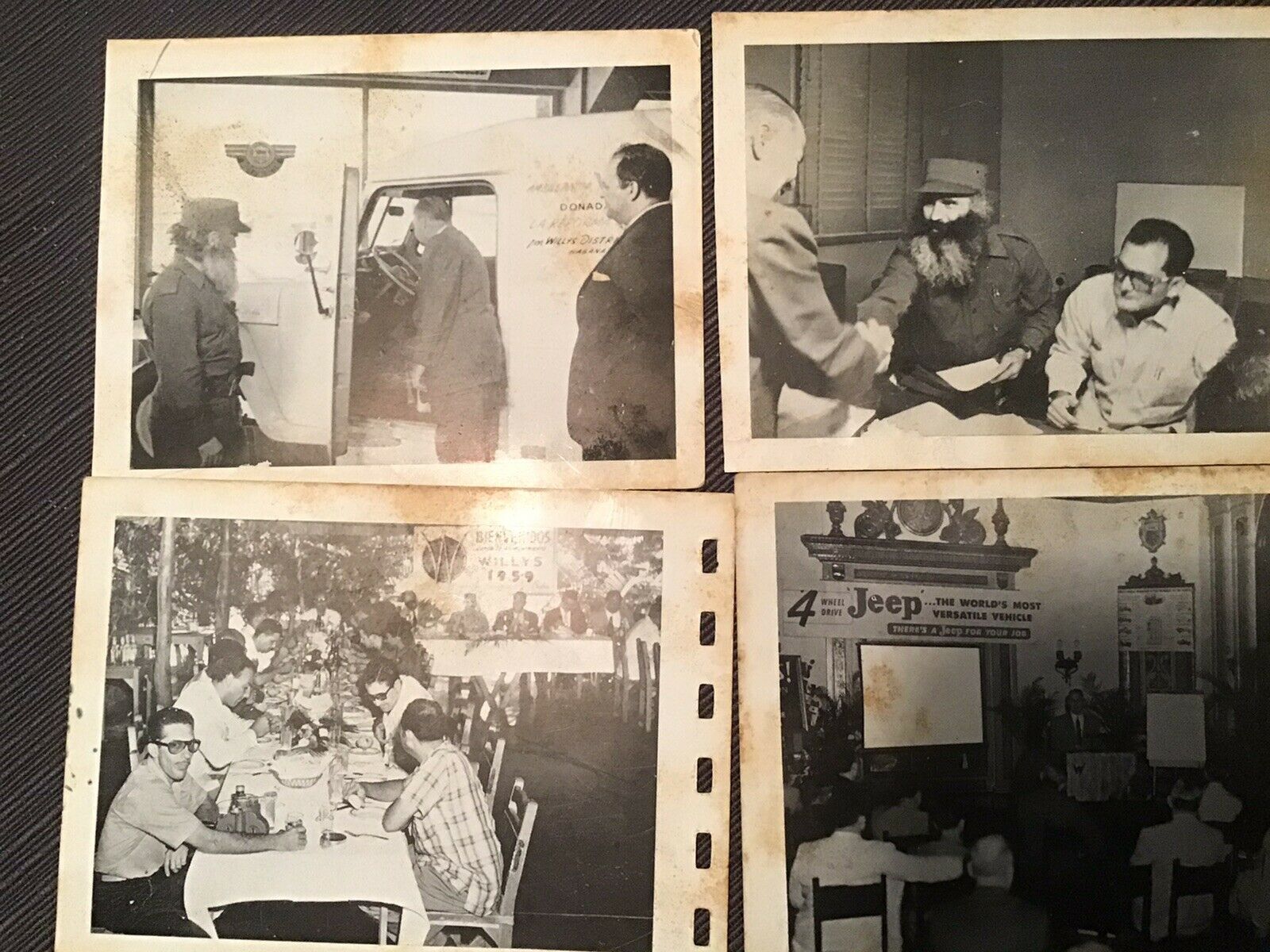
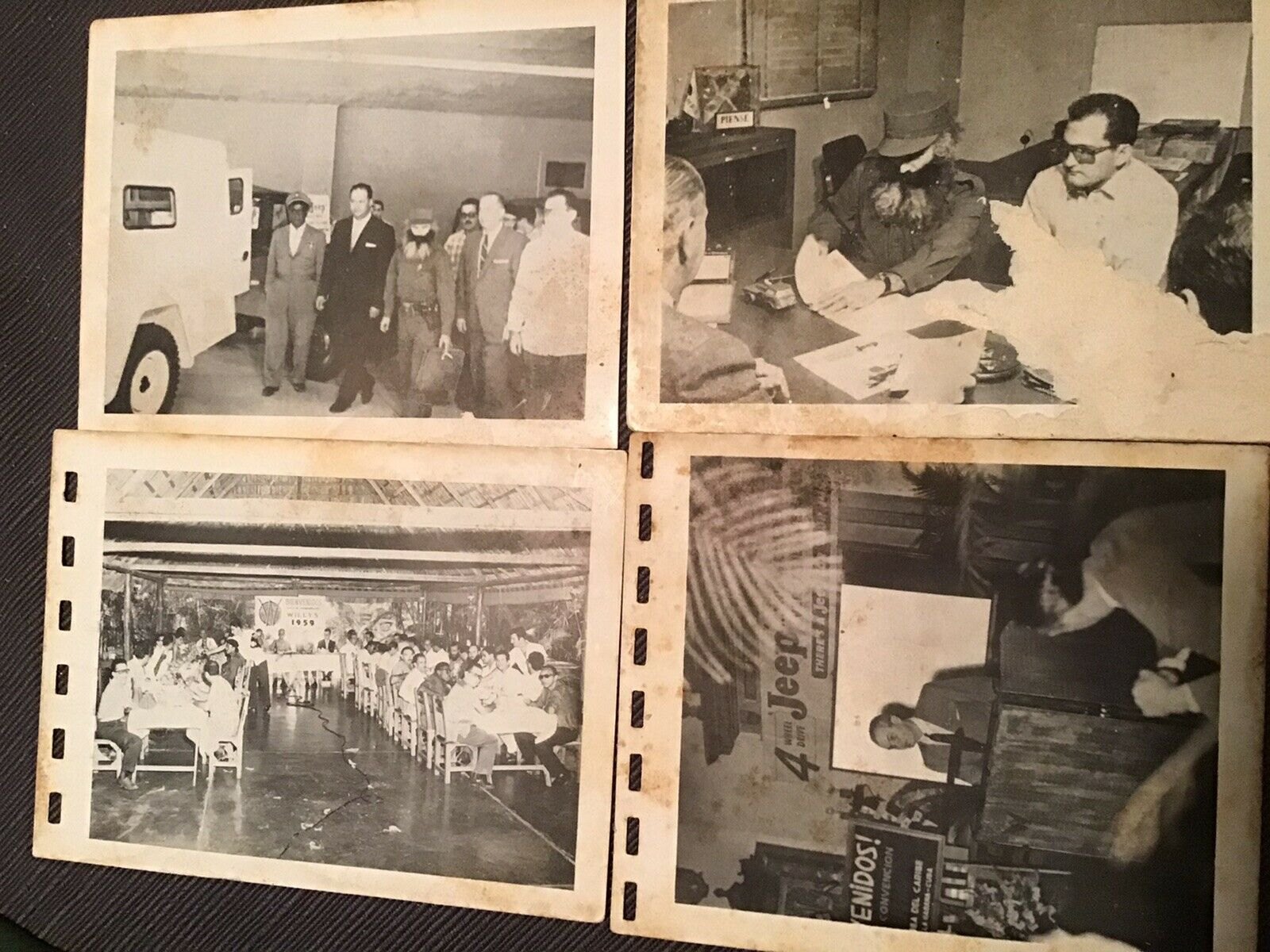
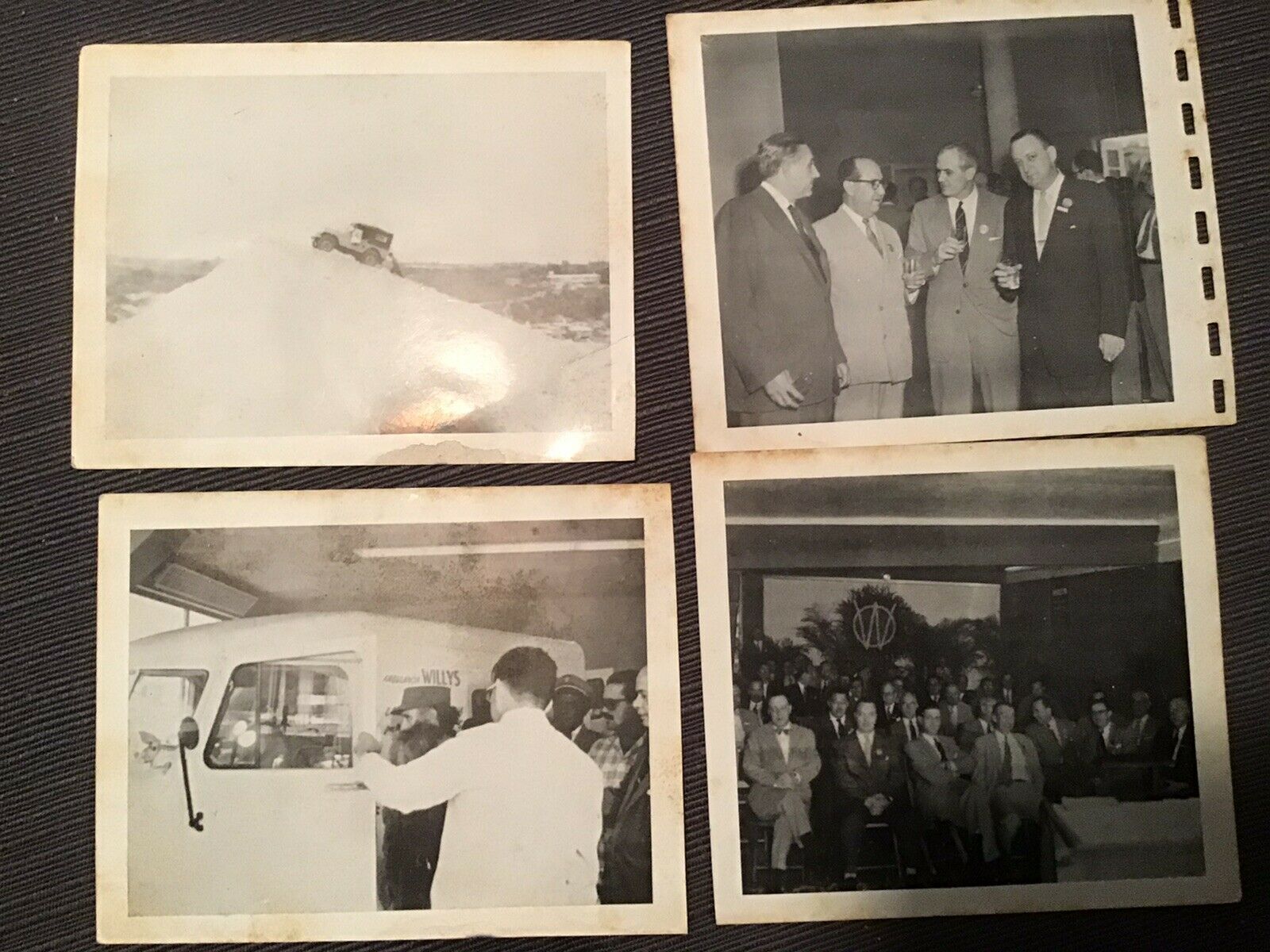
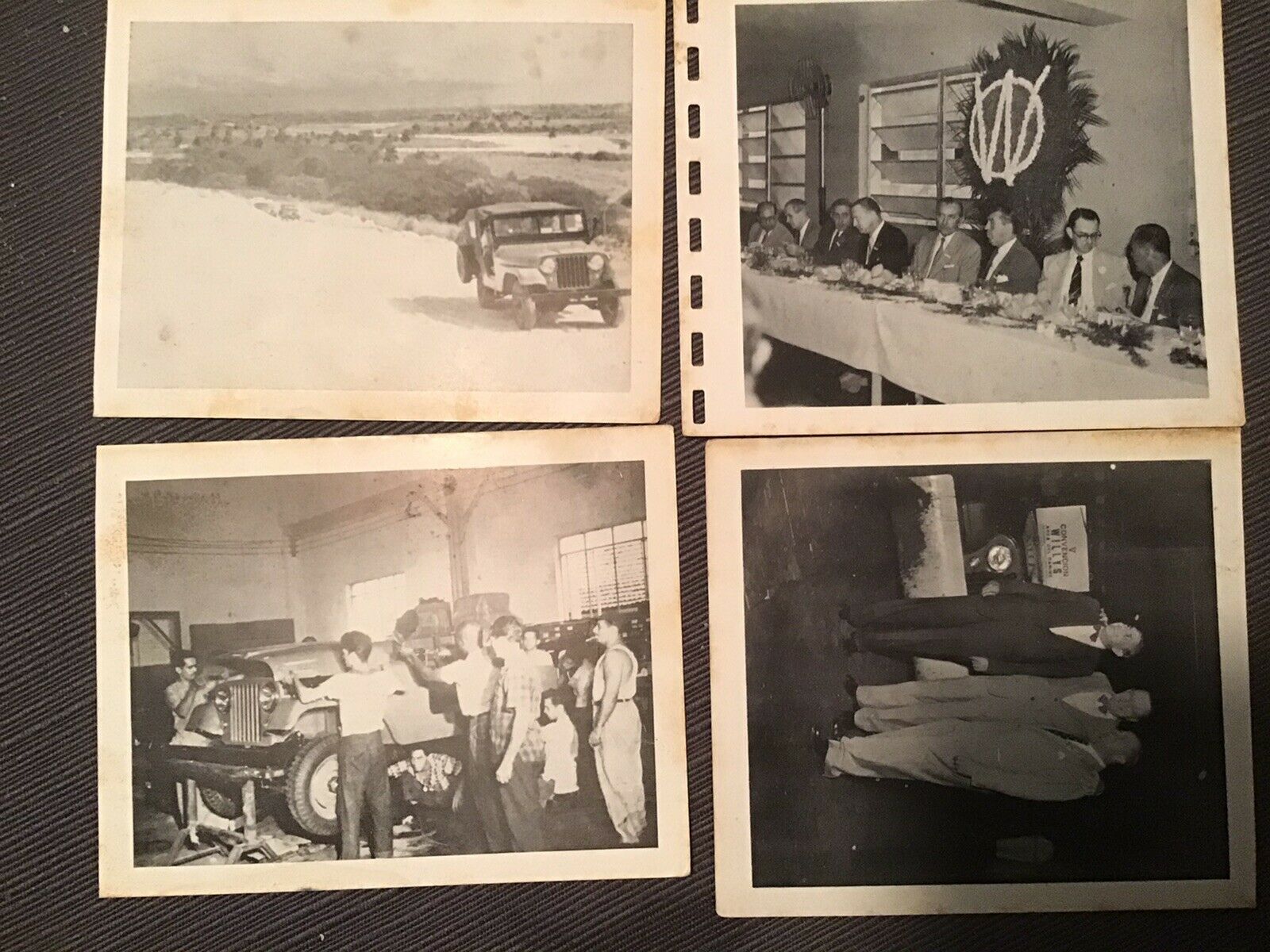
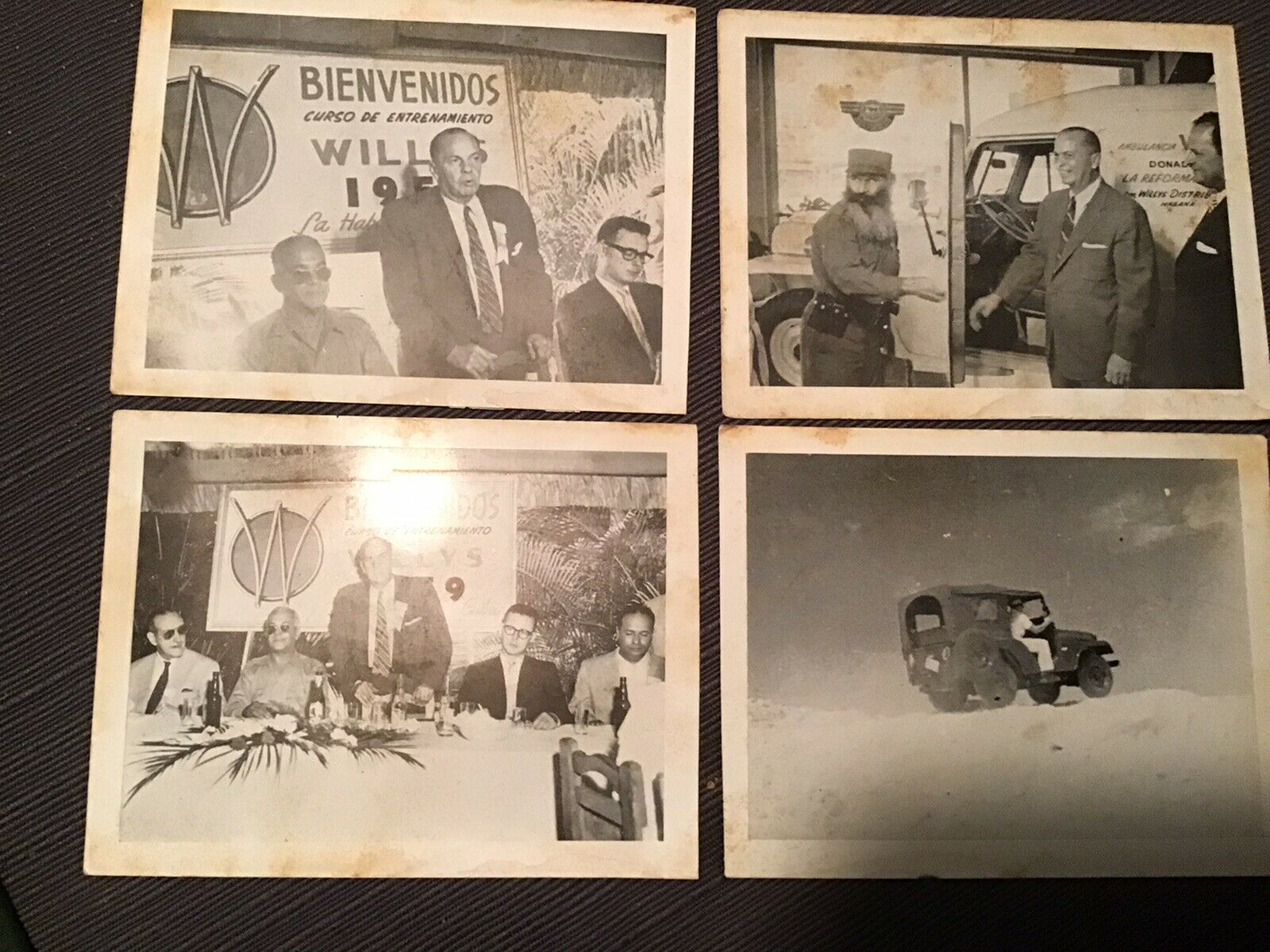
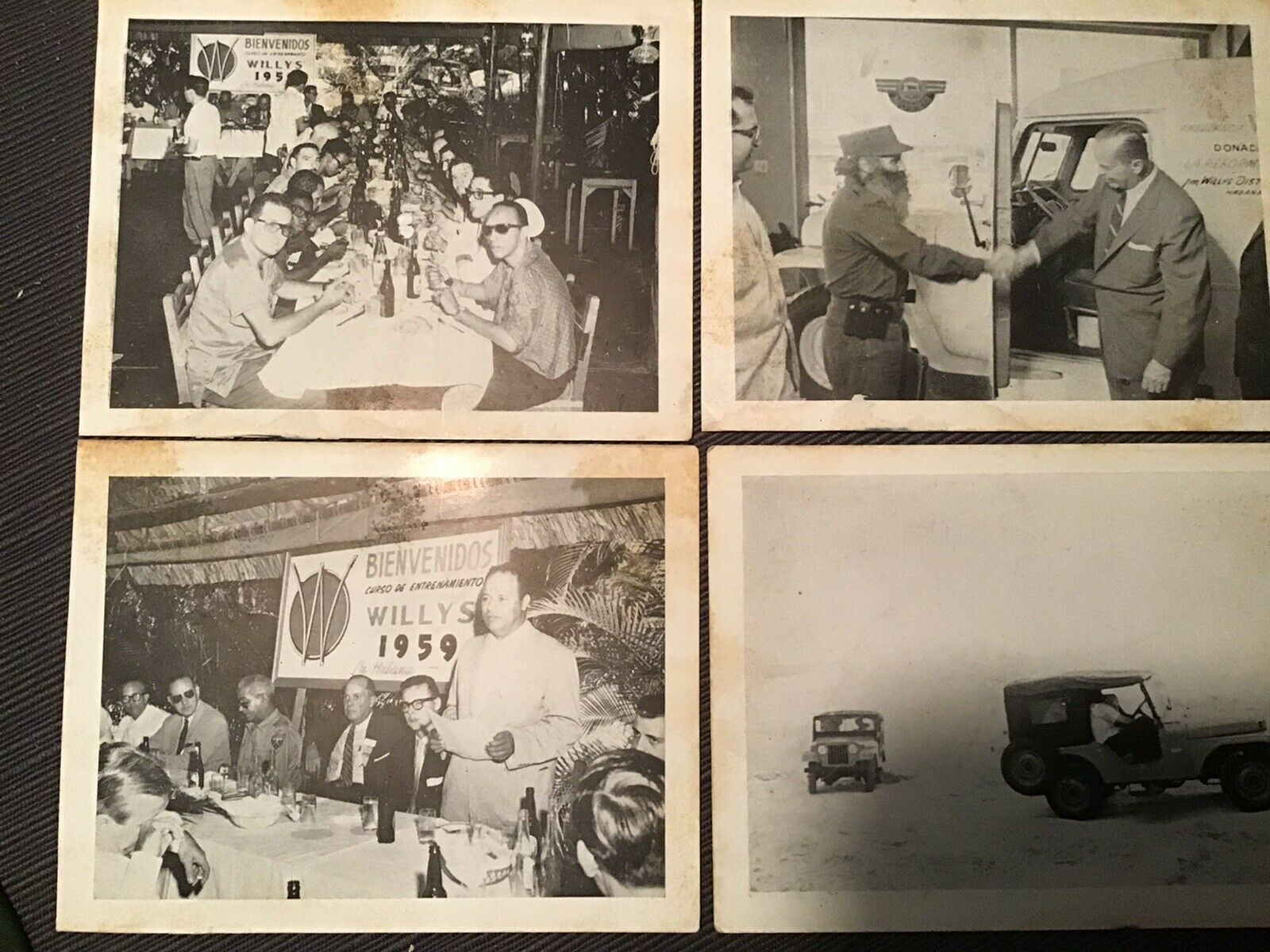
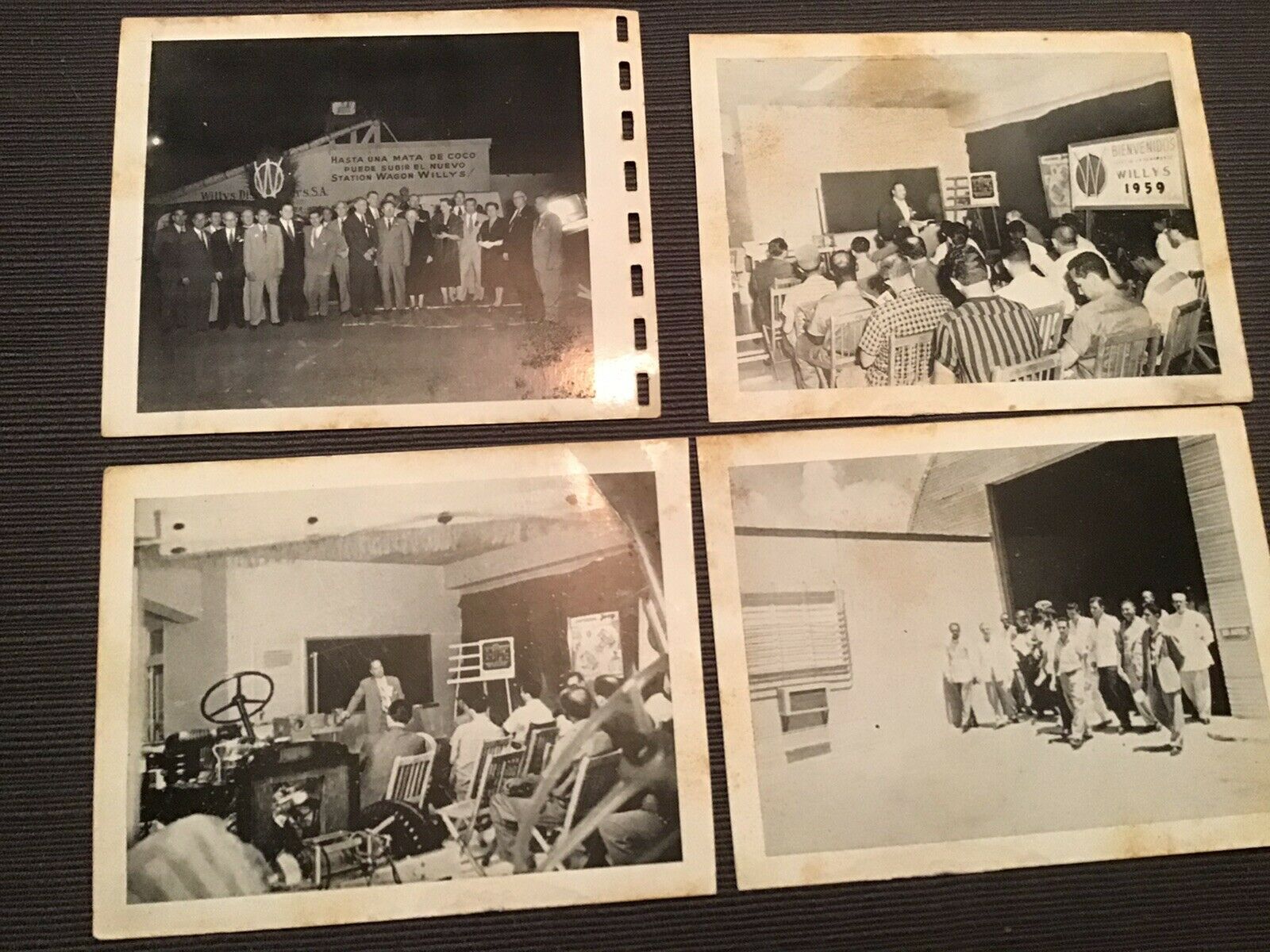
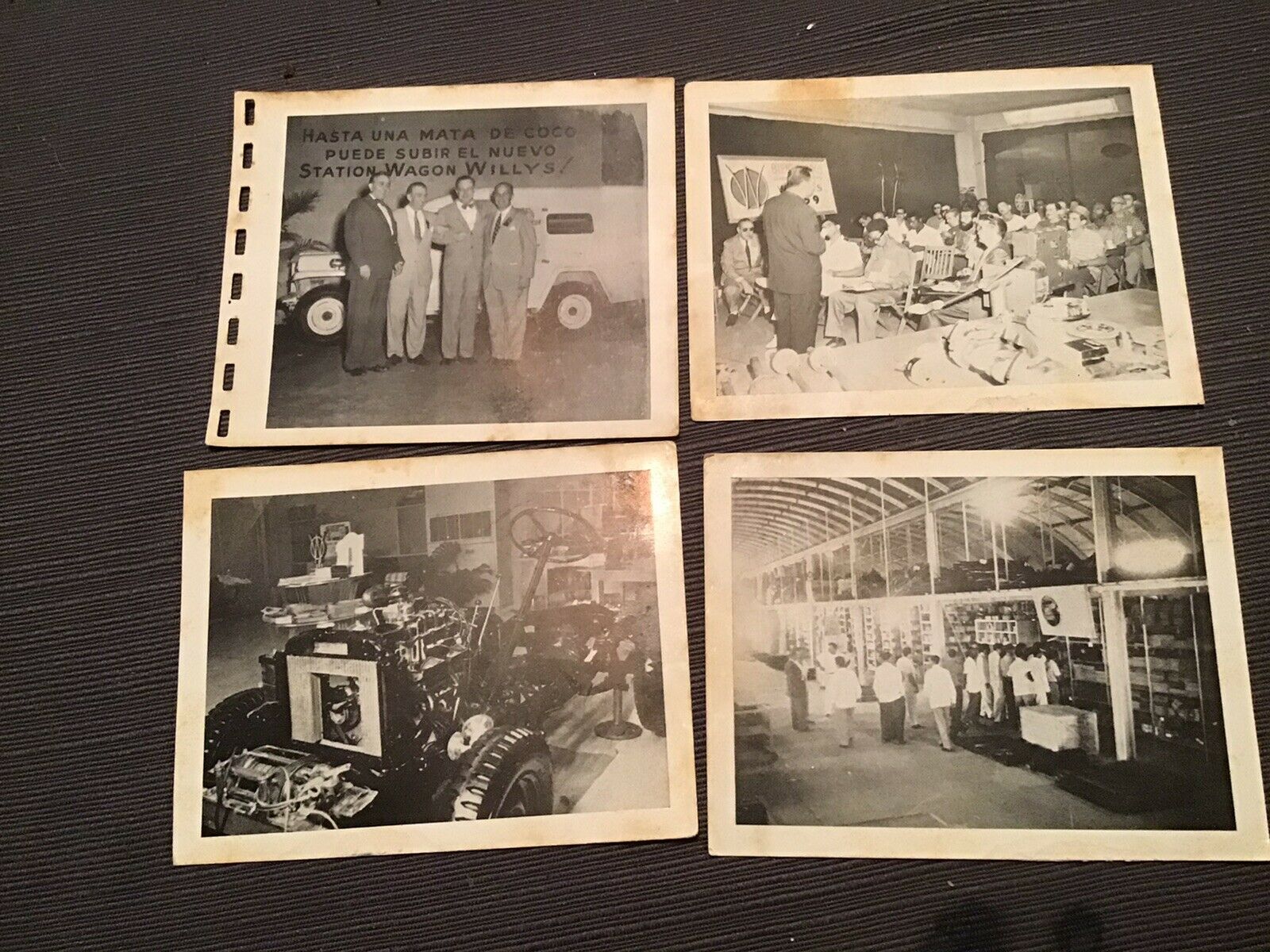
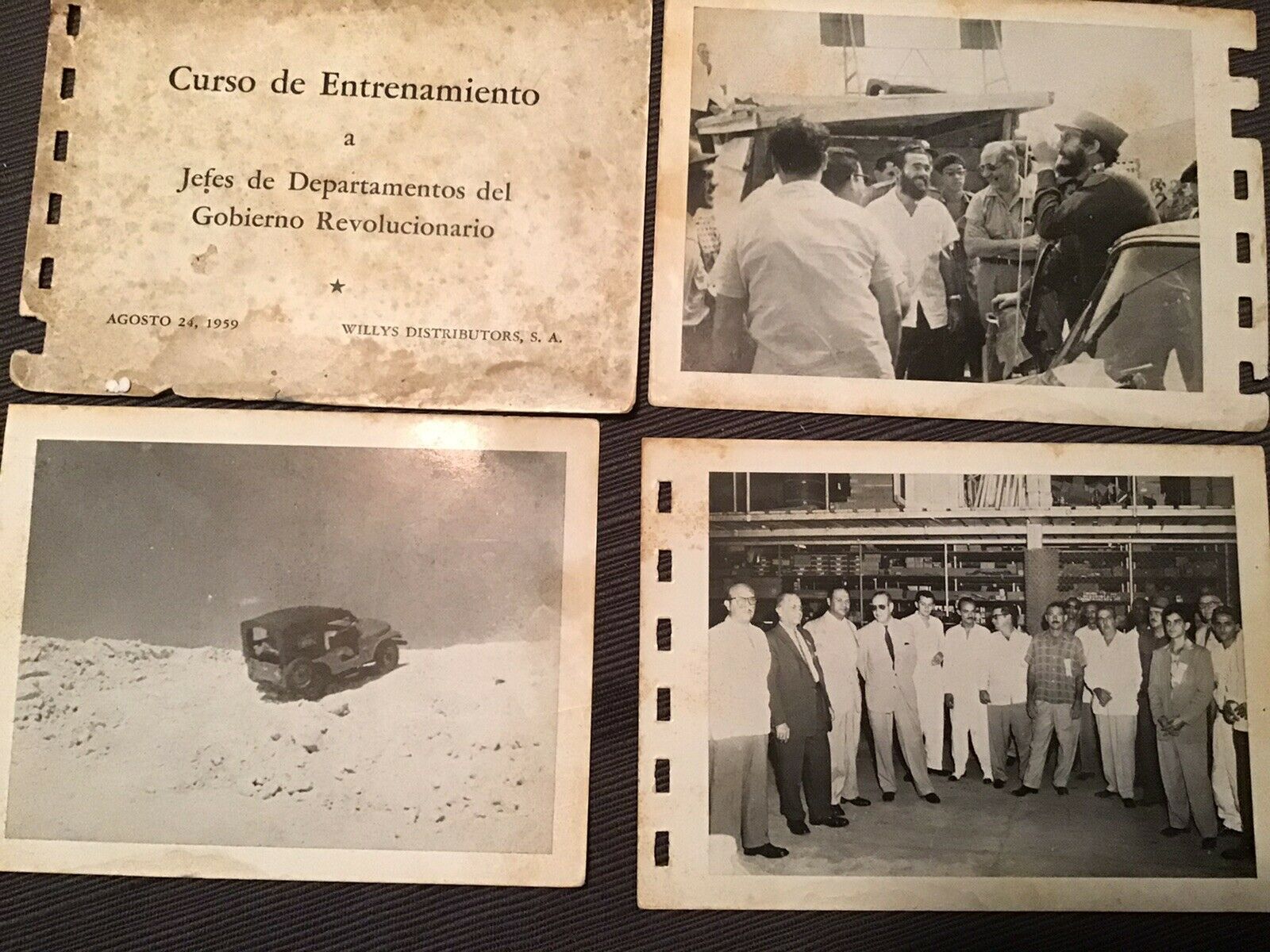
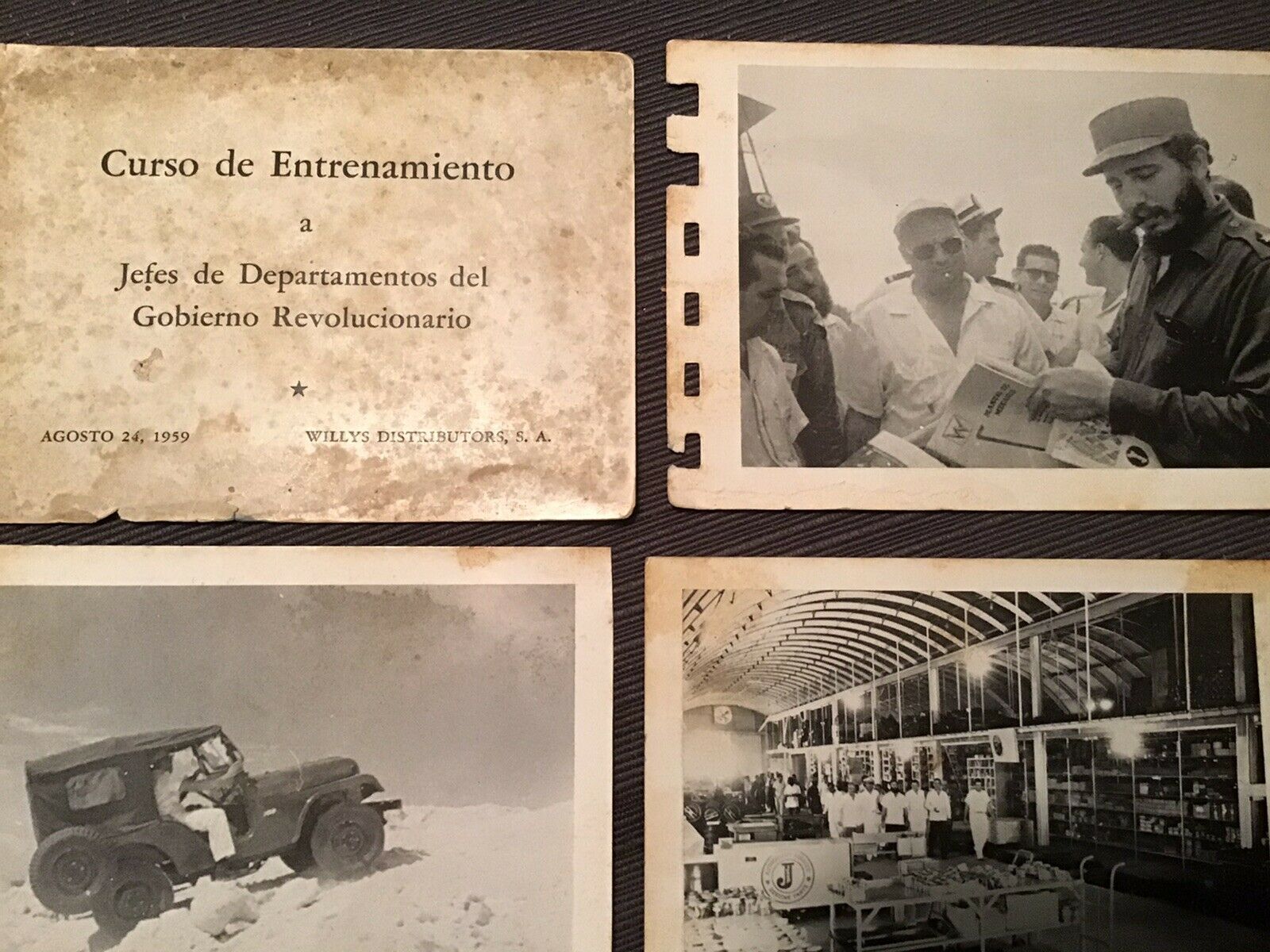
It appears this seller has separated these photos from the August 1959 Jeep convention with Castro in Cuba, listing them in multiple auctions.
“Fidel Castro Willys Jeep 1959 Convention Photos. These are from an original 1959 willys Jeep South American convention folio the year of Castros takeover. A variety of shots,including Castro Holding a Willys manual. Printed 2 sides. App. 31/2” x 5” each.Condition is “Used”. Shipped with USPS First Class”
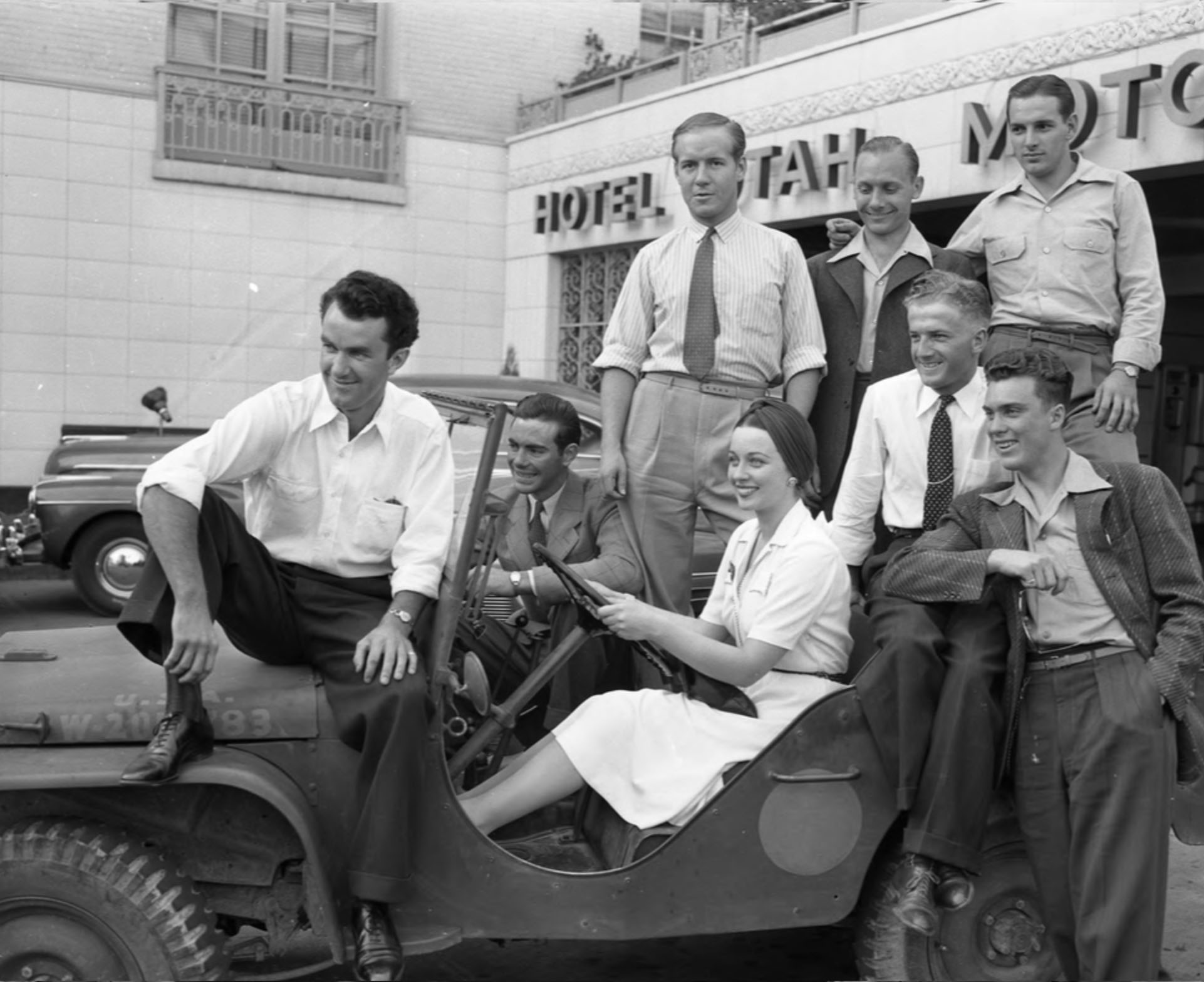
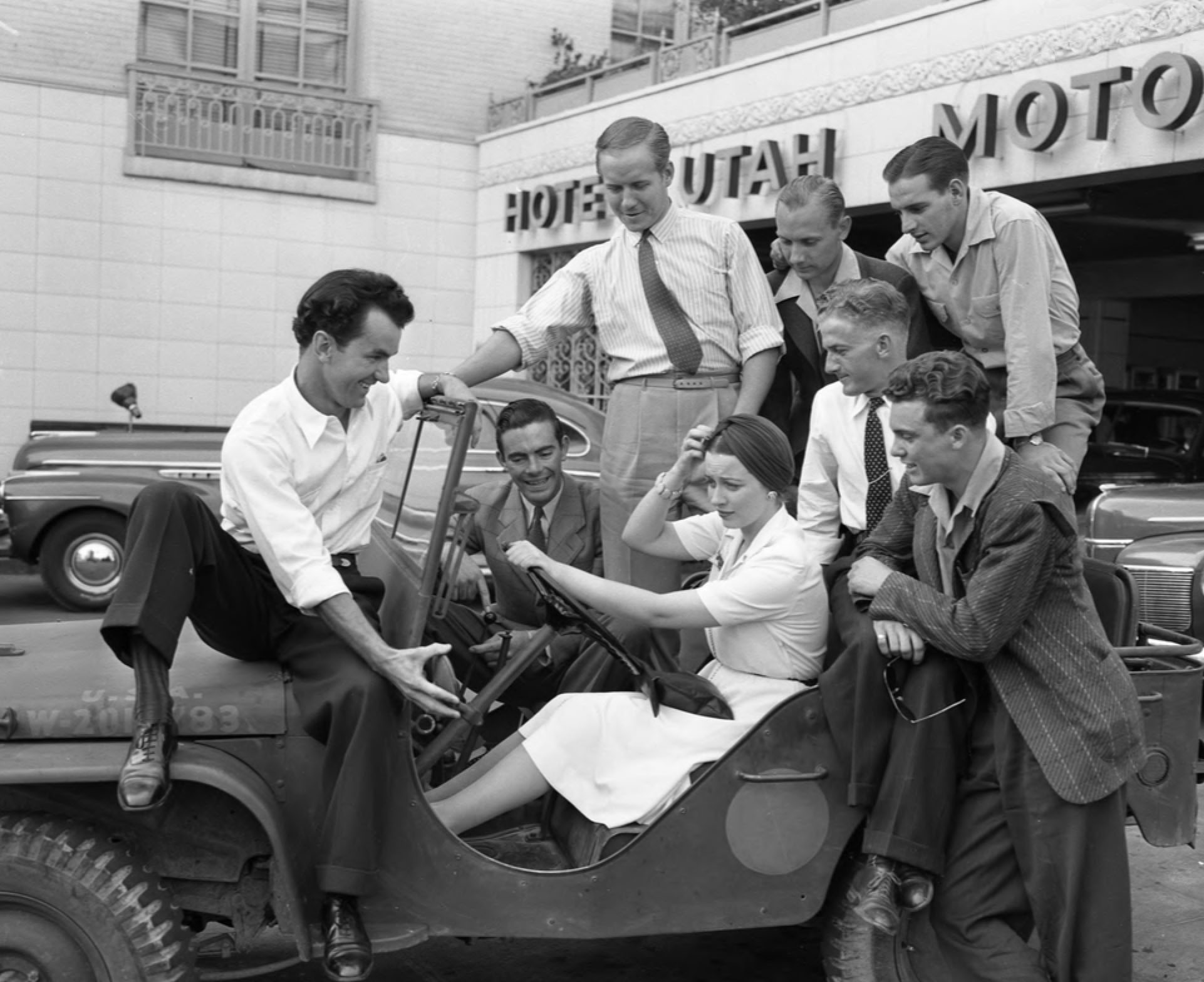
This photo dated July 11, 1941, shows actress Patricia Morrison sitting in a Ford GP, presumably for a photo shoot. In 1942, she joined the USO tour, entertaining troops in Great Britain. I suspect the men around her are fellow actors, but I can’t say for sure.
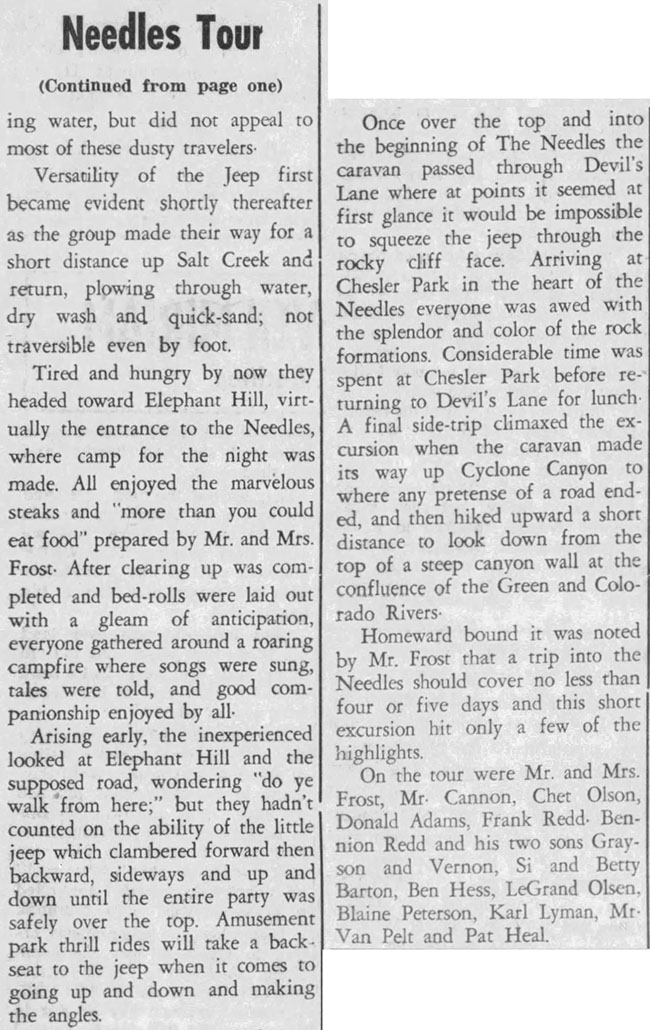
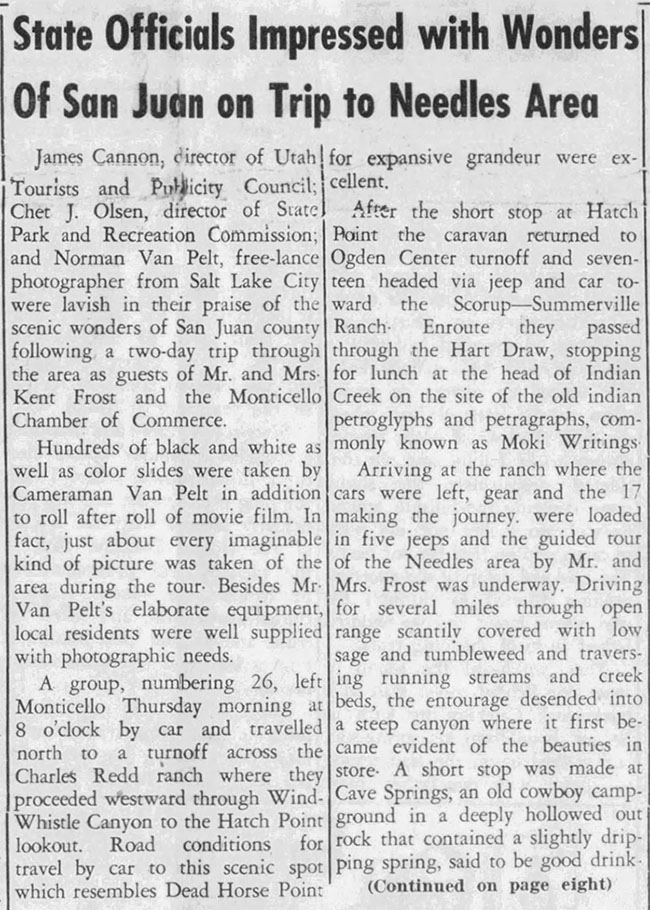
This article featuring a Kent Frost jeep tour through Needles was published on May 2, 1958, in the San Juan-Record out of Monticello, Utah. At the bottom I’ve included an image of the whole paper as I thought the illustrated header of the paper was well done.
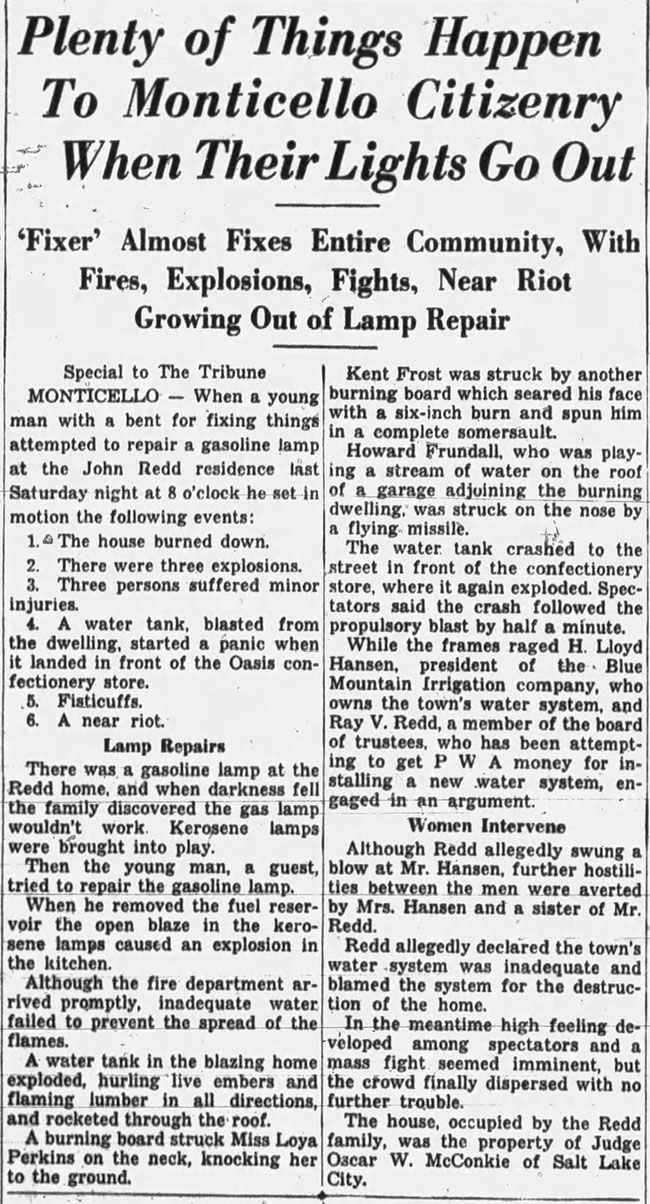
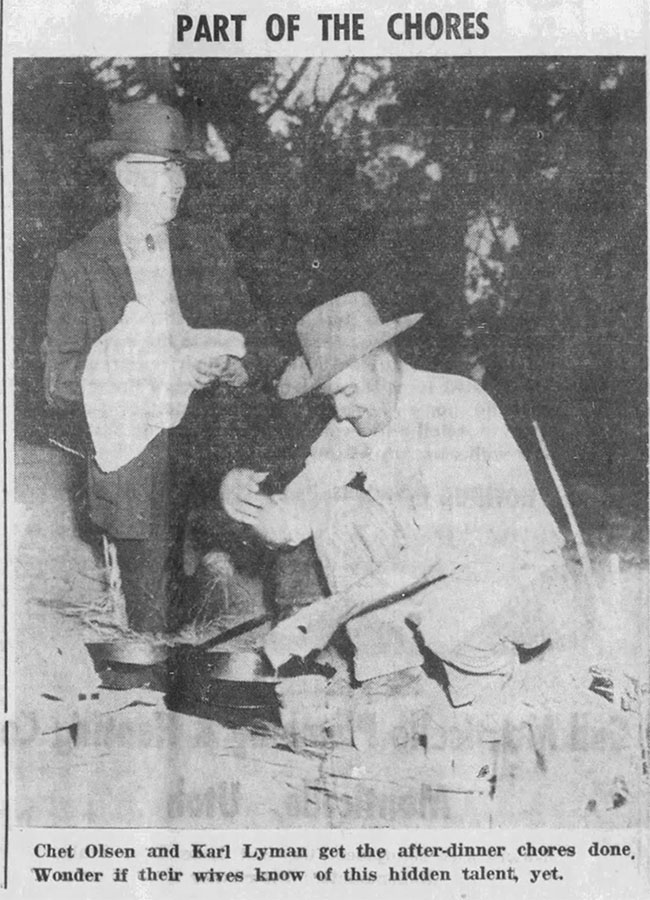
Searching for more information on Kent Frost, explorer by foot and jeep of Canyonland National Park, I found this article about a man who was injured by an exploding water tank in this unusual turn of events in the normally dull town (probably) of Monticello. The instigator of the fire was only try to fix a lamp….
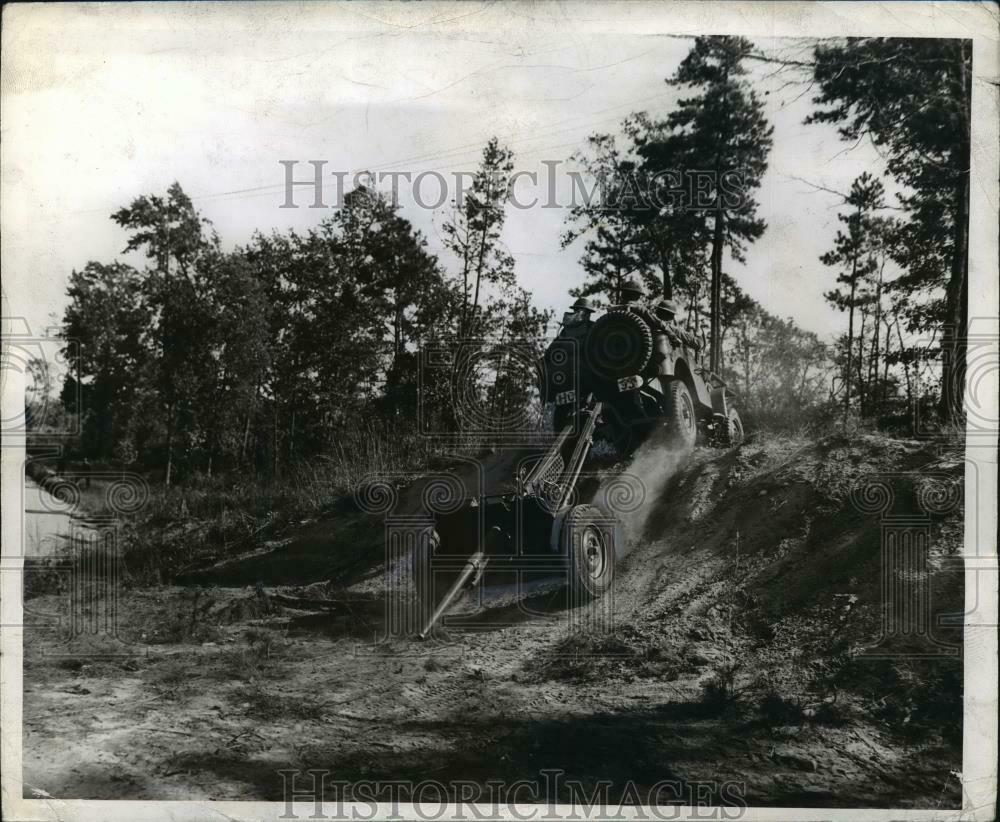
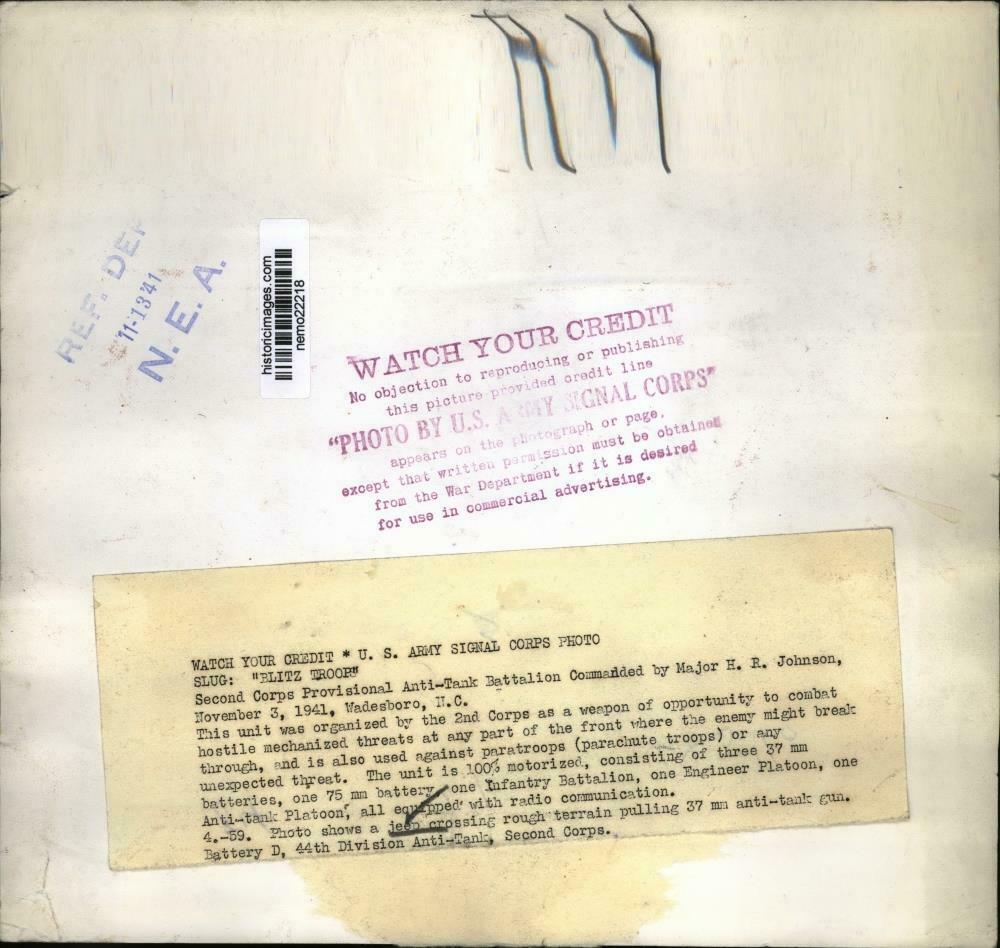
“1941 Press Photo soldiers drive a jeep thru rough terrain pulling anti-tank gun This is an original press photo. This unit was organized by the 2nd Corps as a weapon of opportunity to combat hostile mechanized threats at any part of the front where the enemy might break through, and is also used against paratroops (parachute troops) or any unexpected threat. The unit is 100% motorized, consisting of three 37 mm batteries, one 75mm battery, one Infantry Battalion, one Engineer Platoon, one Anti-tank Platoon, all equipped with radio communication. Photo shows a jeep crossing rough terrain pulling 37 mm anti-tank gun. Battery D, 44th Division Anti-Tank, Second Corps. (Commanded by Major H.R. Johnson, Wadesboro, N.C. Photo measures 10 x 8.25 inches. Photo is dated 11-03-1941.”