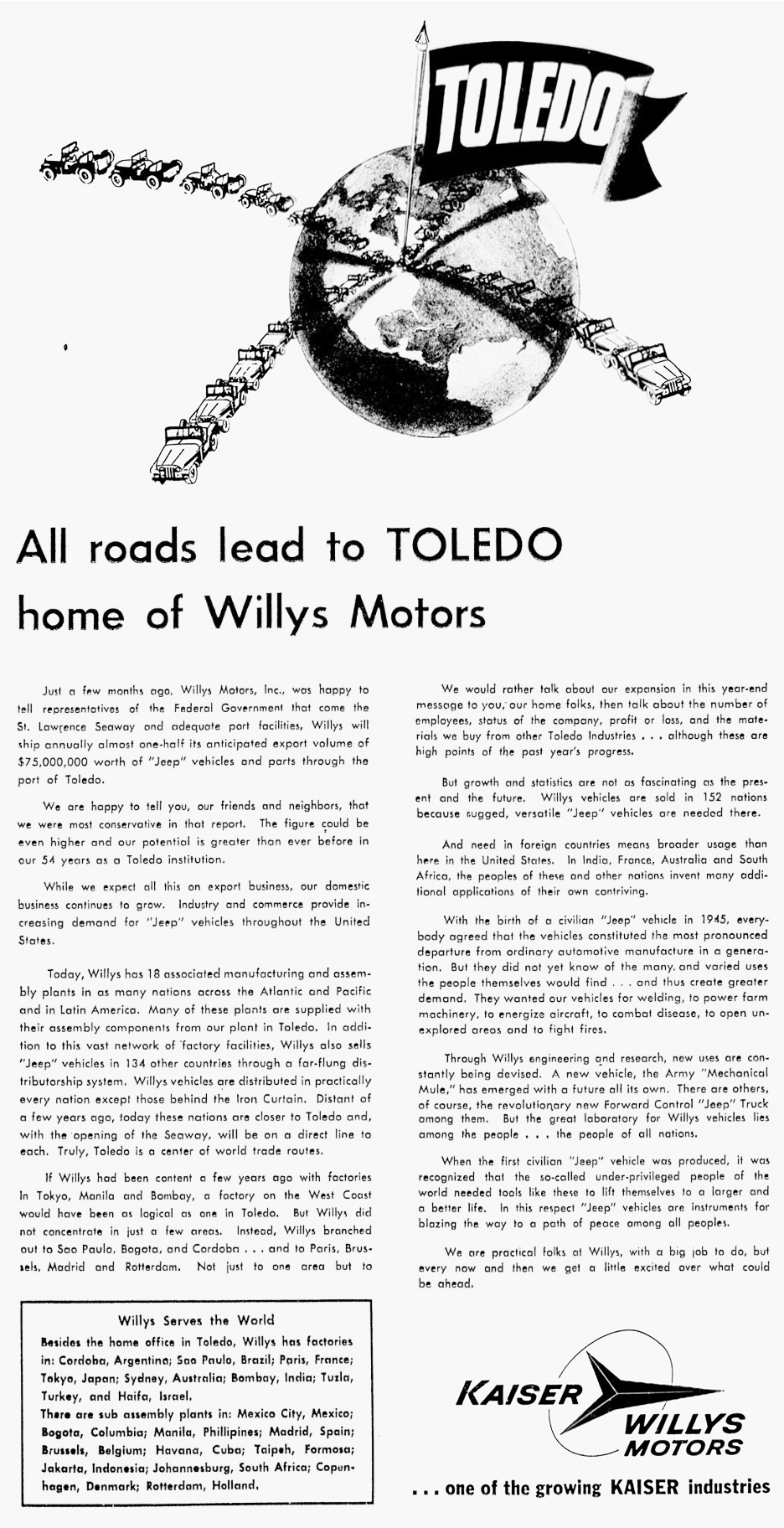
Too bad this isn’t in color. Note the DJ-3A with the convertible top at the lower right. the photo was published in the February 1956 issue of Willys News.
emailNeed to contact me and don't have my email? Click on email button.
Welcome to eWillys.com, a website for vintage jeep enthusiasts. I update this website nearly every day with jeep deals, jeep history, interesting reader projects, jeep related info, and more.
These quick searches can help you find things on eBay. People list in the wrong categories all the time, so don't be surprised to see brochures in the parts area for example. This section used to be split into jeeps, parts and other categories, but recent changes to eBay will require this information to be recoded.
The links to posts below show jeeps grouped by models, condition, and other ways. Some of these jeeps are for sale and others have been sold. If you are unsure whether a vehicle is still for sale or not, email me at d [at] ewillys.com for more info.
There are plenty of interesting, unusual, historic and surprising stories related to Jeeps and their owners. In addition, some of these features have nothing to do with jeeps. This link will display all featured stories starting from the latest.
Looking for parts and not sure where to go? There are a variety of large and small new and used parts sellers both online and offline.
Importantly, the allure of buying a project jeep can be romantic. The reality of restoring a jeep can be quite different, expensive and overwhelming without the right tools and resources. So, tread carefully when purchasing a "project". If you have any concerns about buying a vintage jeep, or run across a scam, feel free to contact me for help, comments or concerns .
Too bad this isn’t in color. Note the DJ-3A with the convertible top at the lower right. the photo was published in the February 1956 issue of Willys News.
On April 20, 1997, the Toledo Blade devoted an entire section of its newspaper to the jeep history, going all the way back to the construction of the Jewel sewing machine factory in 1885. While it isn’t a perfect history (for example Jeep did not copyright the name JEEP in 1946, they tried, and failed, to trademark it at that time), it’s still interesting with some photos and a historical time line.
http://news.google.com/newspapers?id=I2oxAAAAIBAJ&sjid=dgMEAAAAIBAJ&pg=6687%2C7138684
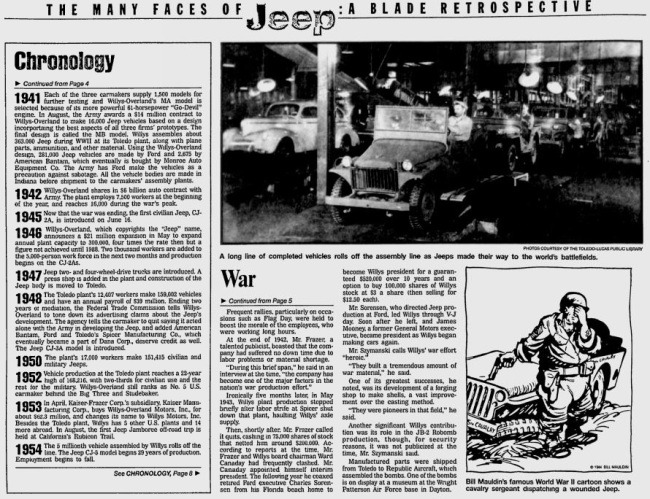
In the photo above Willys MAs are rolling off the assembly line.
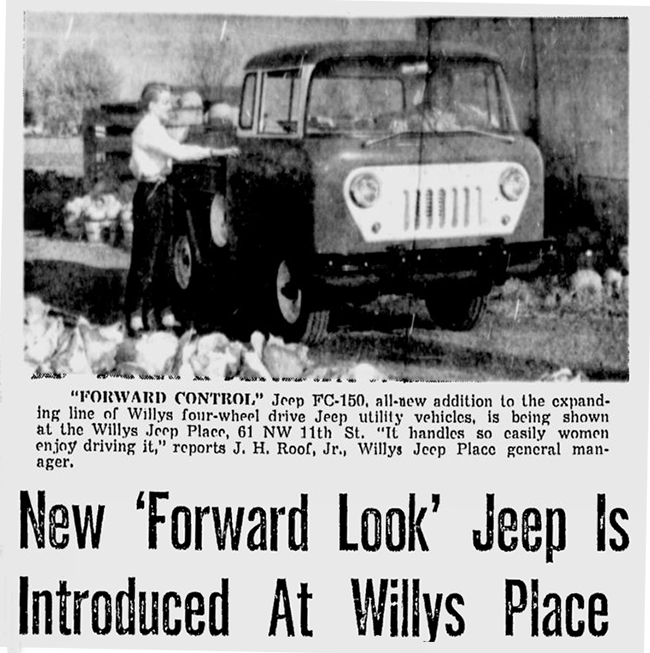
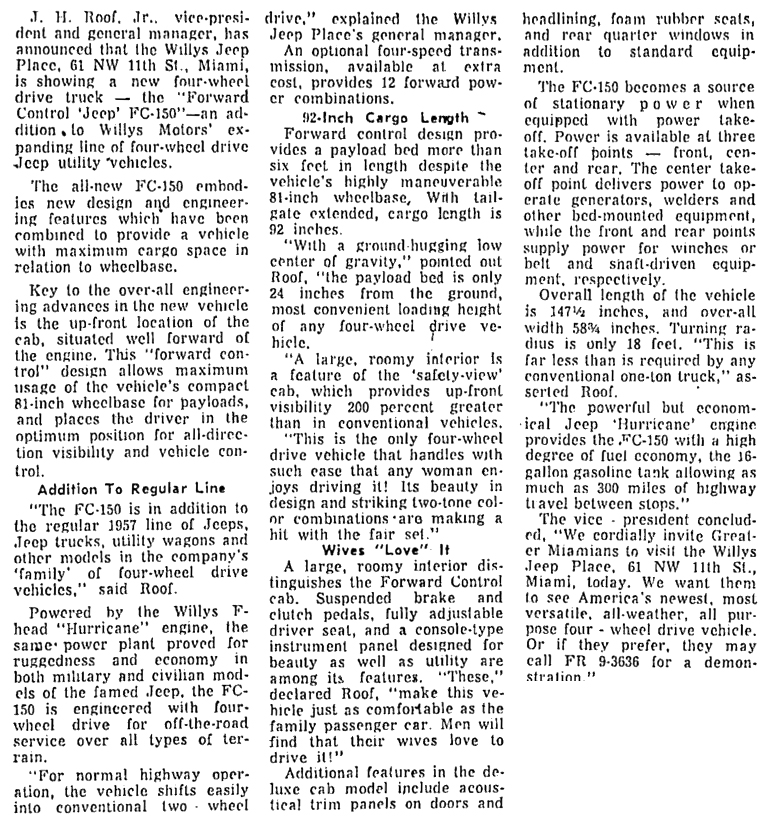
The Miami News reported in 1956 that wives will love driving the new FC-150. I wonder if anyone bothered to interview any wives on that topic . . .
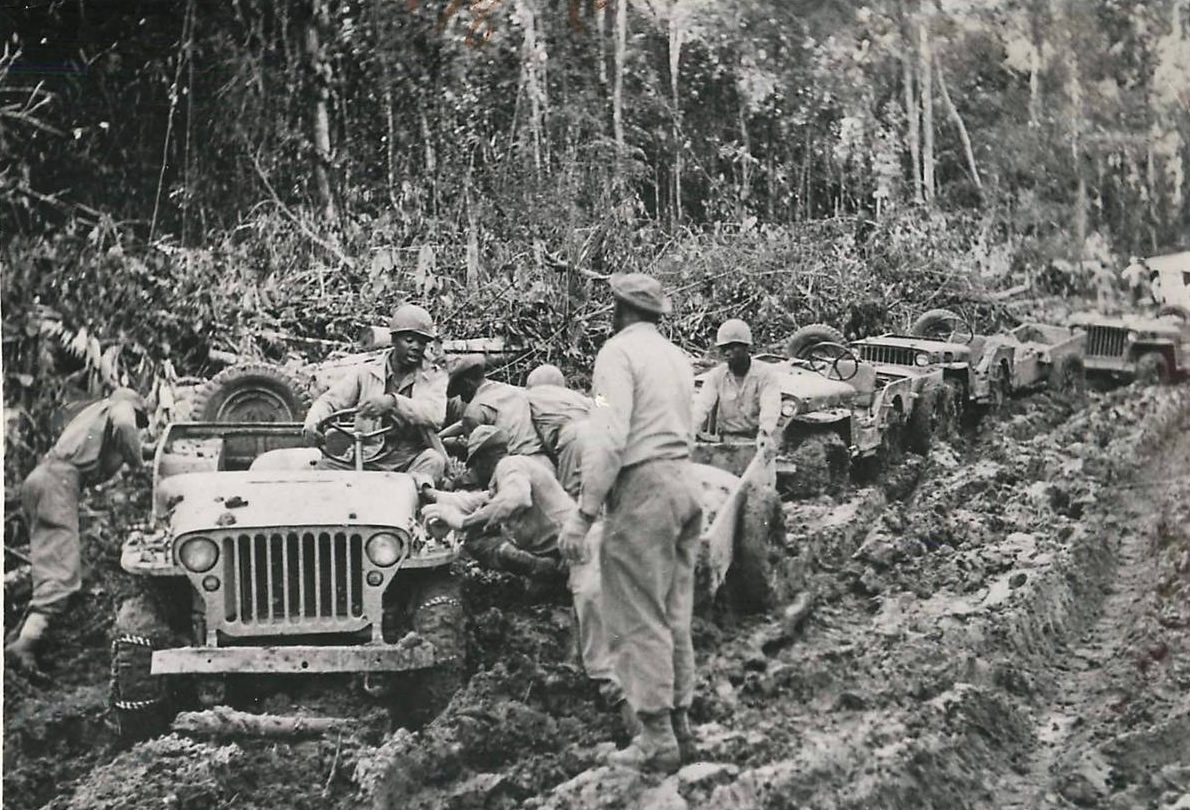
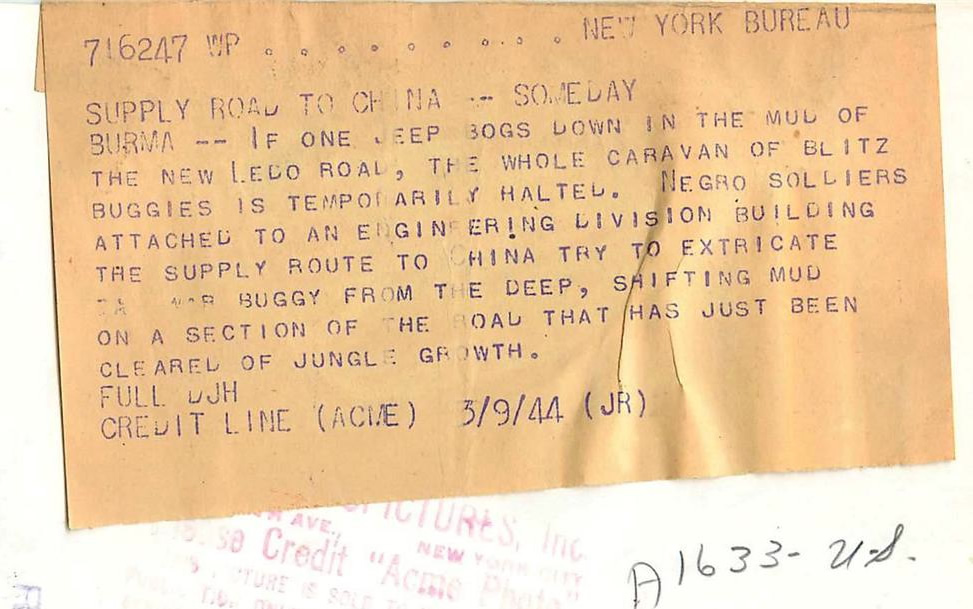
That’s some serious mud!
“WWII Line of U.S. Jeeps Bogged Down in Mud on Ledo Road in Burma Press Photo”
View all the information on eBay
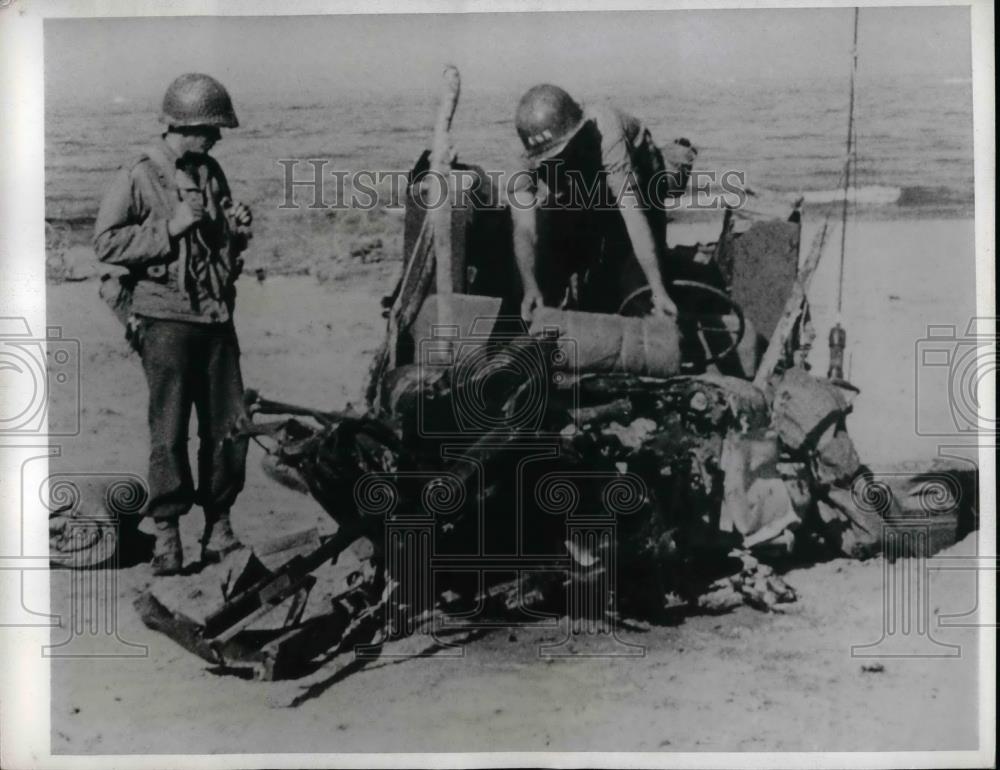
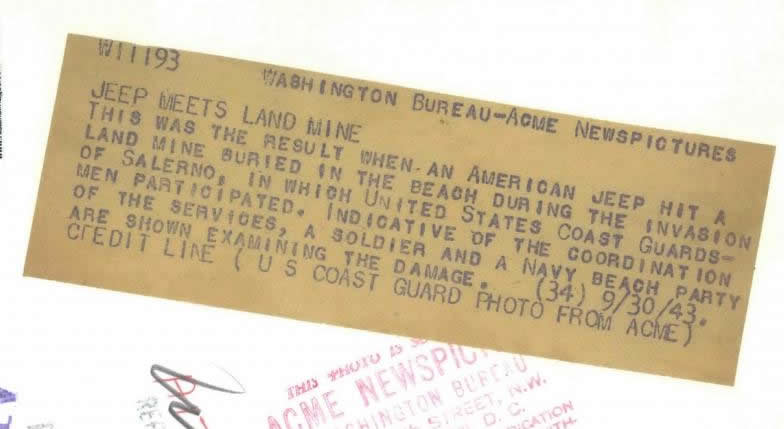
Ouch!
“1943 Press Photo A destroyed American jeep after it hit a land mine, Navy beach”
View all the information on eBay
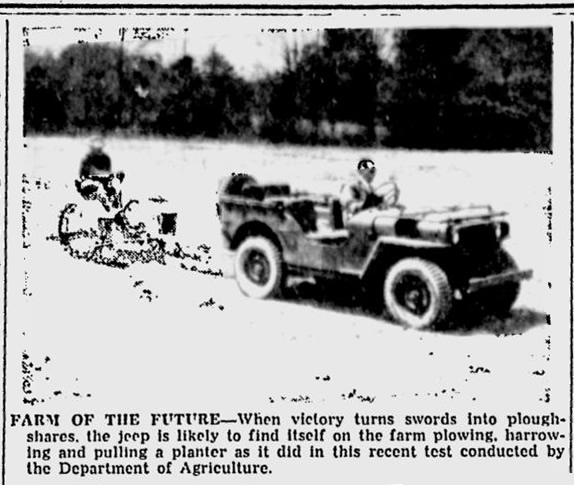
This photo appeared in a September 06, 1943, promoting the jeep as a tractor.
A 1943 an interview with Barney Roos appeared in a Palm Beach newspaper that explored his automotive history. In the article, Roos promoted the jeep as a practical alternative to the standard tractor. Another article in the Milwaukee Journal seconded farmer’s optimism regarding the jeep (there were many articles promoting the jeep as a farm tractor. Here’s a September 06, 1943 article).
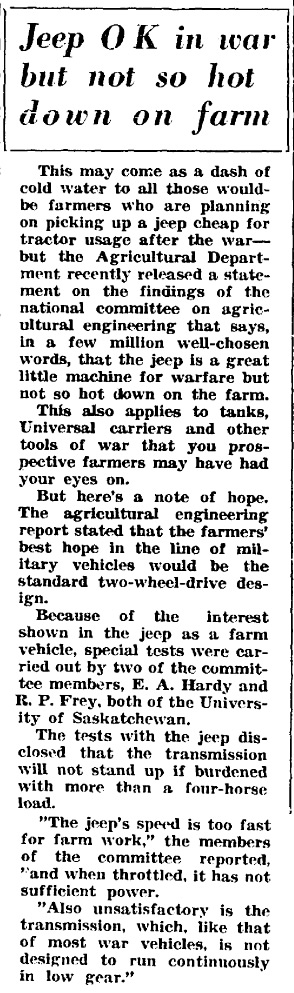
A year later, two Canadian Agricultural specialists were much less confident in the jeep’s potential, suggesting the jeep drove to fast, the transmission was not strong enough, and the jeep lacked power to be a good farm vehicle. Willys Overland must have agreed with those researchers, because they addressed those issues by installing lower gears, which both added power and slowed down the jeep. They also updated the transmission to the T-90.
I’ll begin with the 1944 Canadian article first as that is comparatively short.
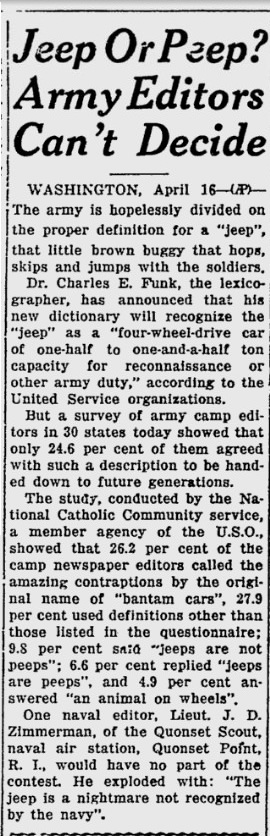
By April 1942 newspaper editors weren’t sure what to call the new fangled quarter-ton bantam-willys-ford invention. The problem was highlighted in this Sarasota-Herald-Tribune article which surveyed editors’ uses of different descriptive words. Note the naval editor’s response at the very bottom of the article.
Eventually, a decision was made. In May of 1942 newspapers announced the armored division officially named the quarter-ton command/reconnaissance car the ‘Peep’, while the half-ton armored car was called the ‘Jeep’. The Milwaukee Journal published two photos to help readers distinguish between the two.
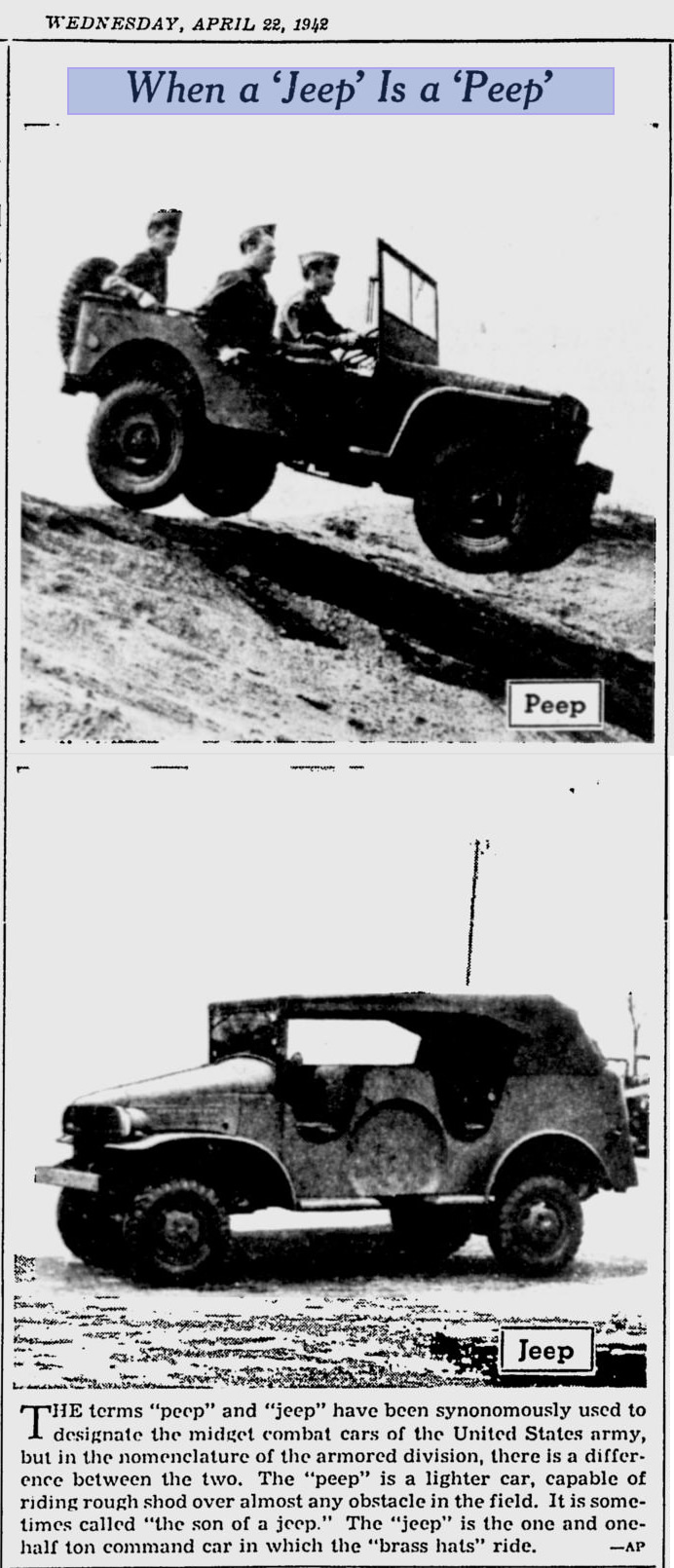
That’s a Ford GP at the top, while at the bottom is what I believe to be an early Dodge Command Car. You can view other earlier examples like the one above at the Command Car site.
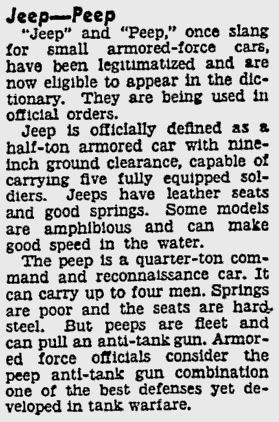
This article in the Pittsburgh Press, in May of 1942 confirms that the names “jeep” and “peep” had been transformed from slang into legitimate words that could appear in dictionaries.
As late as 1984, some WWII vets didn’t know why they called the jeep a peep. According to this article in the Spokane-Review, Patton’s 3rd Army Armored Division continued to call the jeep a peep throughout the war.
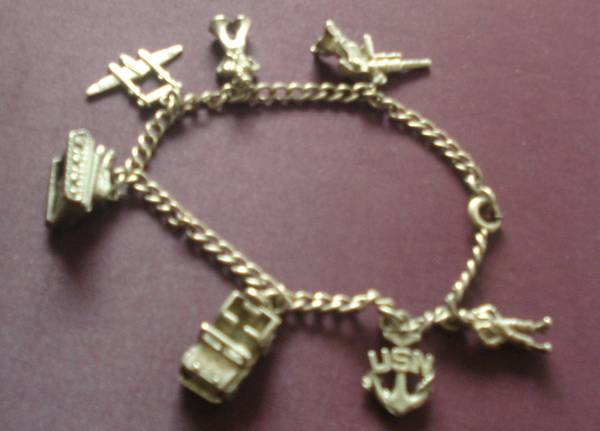
This is interesting. I don’t know how rare it is. One of the charms is a jeep.
“Circa 1940’s-50’s military-themed silver charm bracelet
Willy’s Jeep, tank, USN symbol, plane, machine gun, paratrooper, sailor charms”
http://albuquerque.craigslist.org/clt/4864225571.html
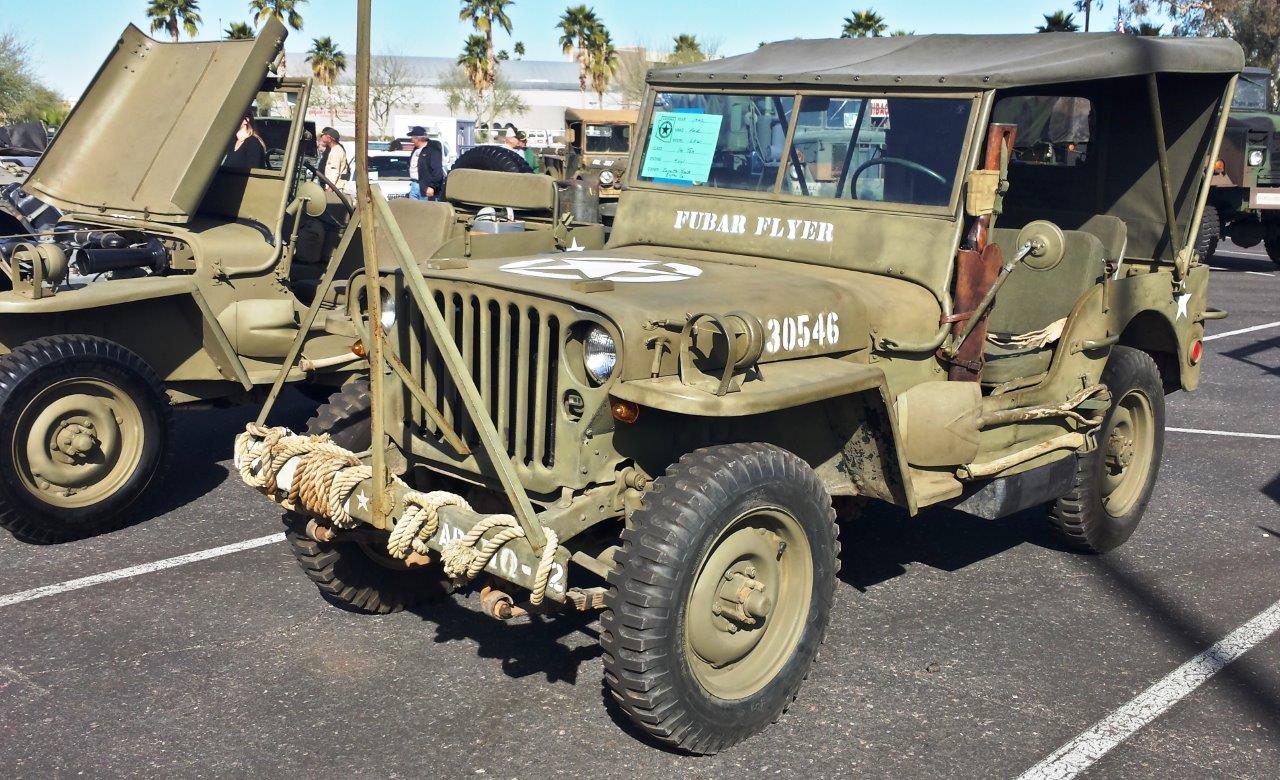
Joe and his GPW attended the 24th Annual Military Vehicle Show held by the Arizona Military Vehicle Collectors Club this past weekend. It looks like he was having plenty of fun!
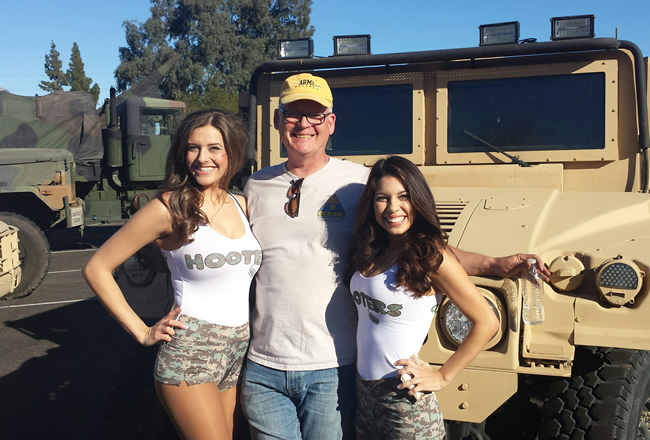
Here’s Joe posing with some new friends.
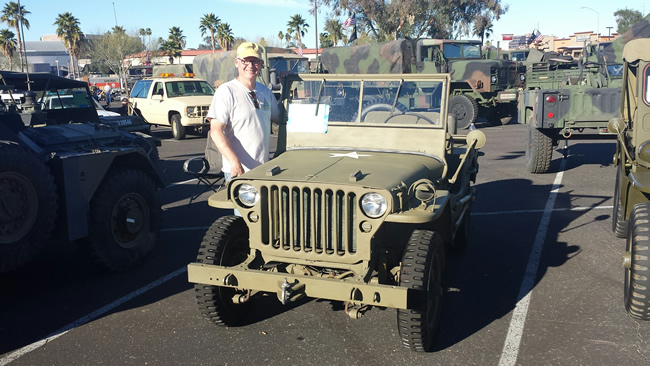
Here’s Joe and his GPW
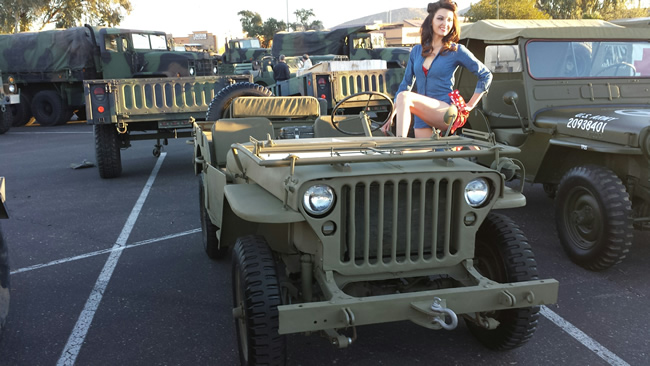
Another new friend Joe?
An ad printed in the December 29, 1957, issue of the Toledo Blade highlighted the number of factories and sub-assembly plants Kaiser Willys had all over the world. They also had dealerships serving 134 countries.