emailNeed to contact me and don't have my email? Click on email button.
About eWillys
Welcome to eWillys.com, a website for vintage jeep enthusiasts. I update this website nearly every day with jeep deals, jeep history, interesting reader projects, jeep related info, and more.
These quick searches can help you find things on eBay. People list in the wrong categories all the time, so don't be surprised to see brochures in the parts area for example. This section used to be split into jeeps, parts and other categories, but recent changes to eBay will require this information to be recoded.
The links to posts below show jeeps grouped by models, condition, and other ways. Some of these jeeps are for sale and others have been sold. If you are unsure whether a vehicle is still for sale or not, email me at d [at] ewillys.com for more info.
Importantly, the allure of buying a project jeep can be romantic. The reality of restoring a jeep can be quite different, expensive and overwhelming without the right tools and resources. So, tread carefully when purchasing a "project". If you have any concerns about buying a vintage jeep, or run across a scam, feel free to contact me for help, comments or concerns .
I don’t think I’ve shared this specific jeep-trailer photo. It was posted by Morihisa Ochi on the G503 Facebook page. He’s posted a number of interesting WWII-jeep photos.
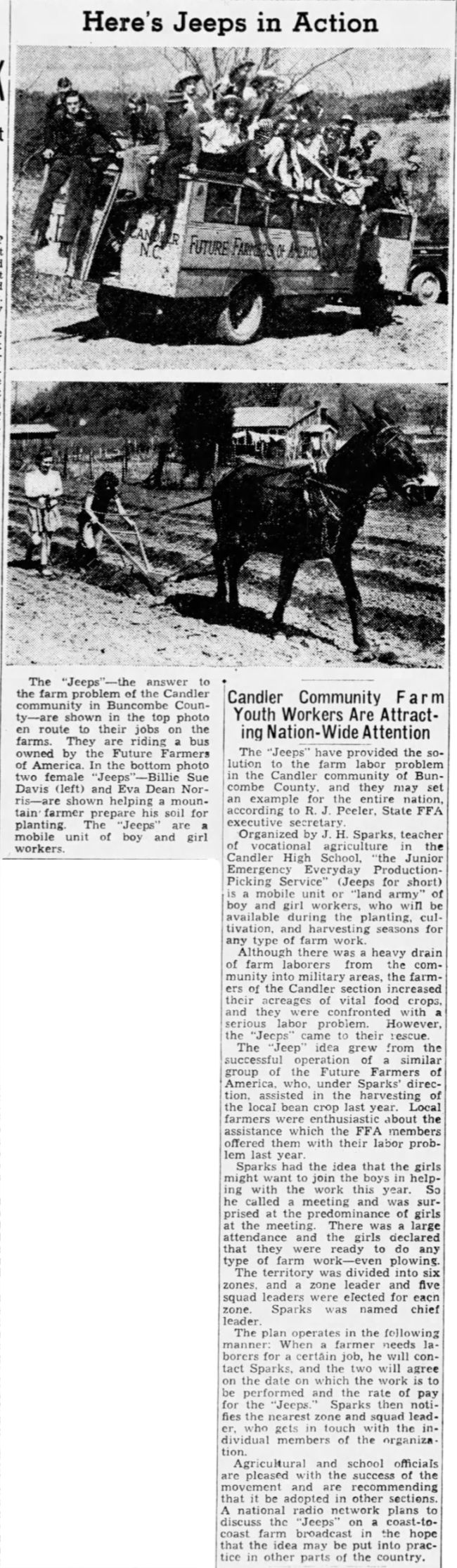
Here’s one of those odd, jeep-related stories that has nothing to do with jeep vehicles. In this case, the April 26th, 1943, edition of the News and Observer out of Raleigh, North Carolina, published an article about the answer to a farm problem: JEEPS. The backronym stands for Junior Emergency Everyday Production-Picking Service, a group of mobile boys and girls who offered to help farmers with various farm tasks.
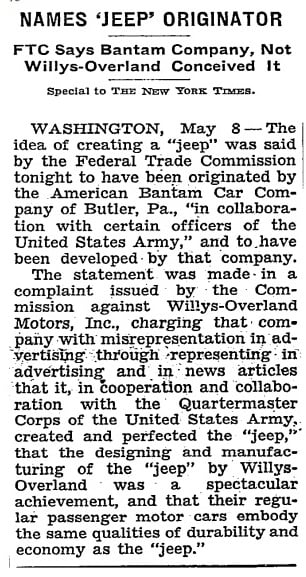
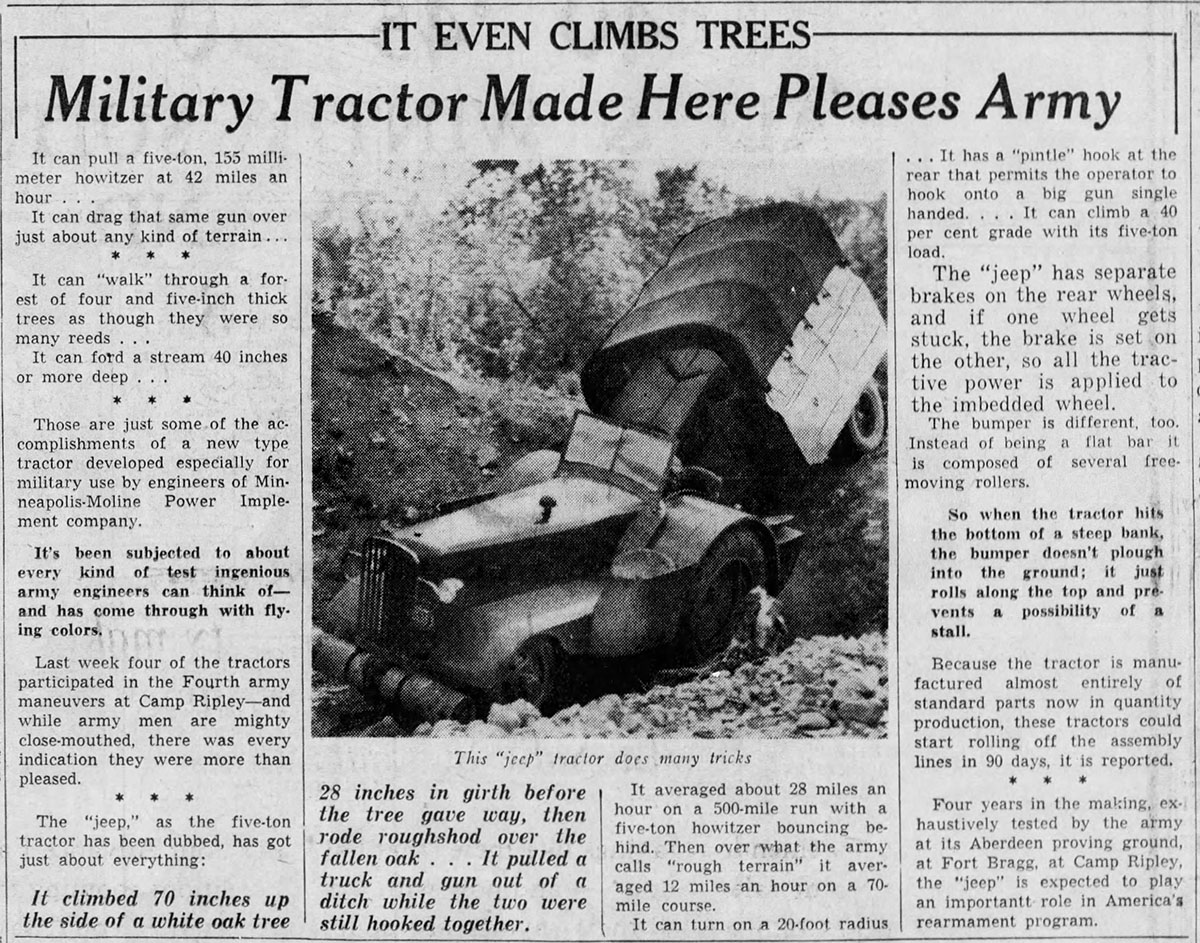
This article discusses the ongoing investigation into the jeep name business. Minnesota had a particular interest in this issue, due to Minneapolis-Moline’s development of a vehicle that was called a jeep prior to the completion of the Bantam BRC in late September of 1940. Unlike Willys-Overland, Minneapolis-Moline had no interest in owning the name; instead, they felt the name jeep belonged to the government.
This first article is from the August 21, 1940, issue of the Minneapolis Star and identifies the new Minneapolis-Moline tractor as a “jeep”:
The second article, dated June 05, 1944, goes into Minneapolis-Moline’s views on the jeep name:
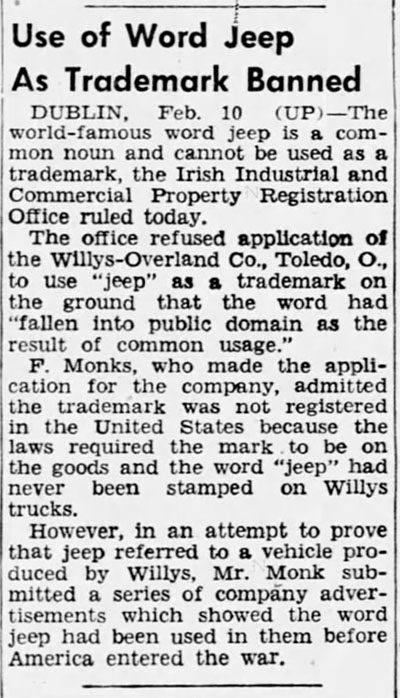
On February 11, 1945, the Pittsburgh Press shared the news that Ireland had ruled that the word Jeep could not be trademarked there. There were two reasons for that decision: 1) the word had not been stamped on the vehicle(s) and 2) the term ‘Jeep’ had fallen into public domain as a result of usage.
Both concerns seem valid. Even today, there’s confusion around the brand in terms of Willys vs. Jeep. However, one could argue that both issues were the result of Willys-Overland’s effort to win a war, thus the company sacrificed normal naming (in terms of vehicle models), advertising, and trademarking issues. So, why should they be penalized?
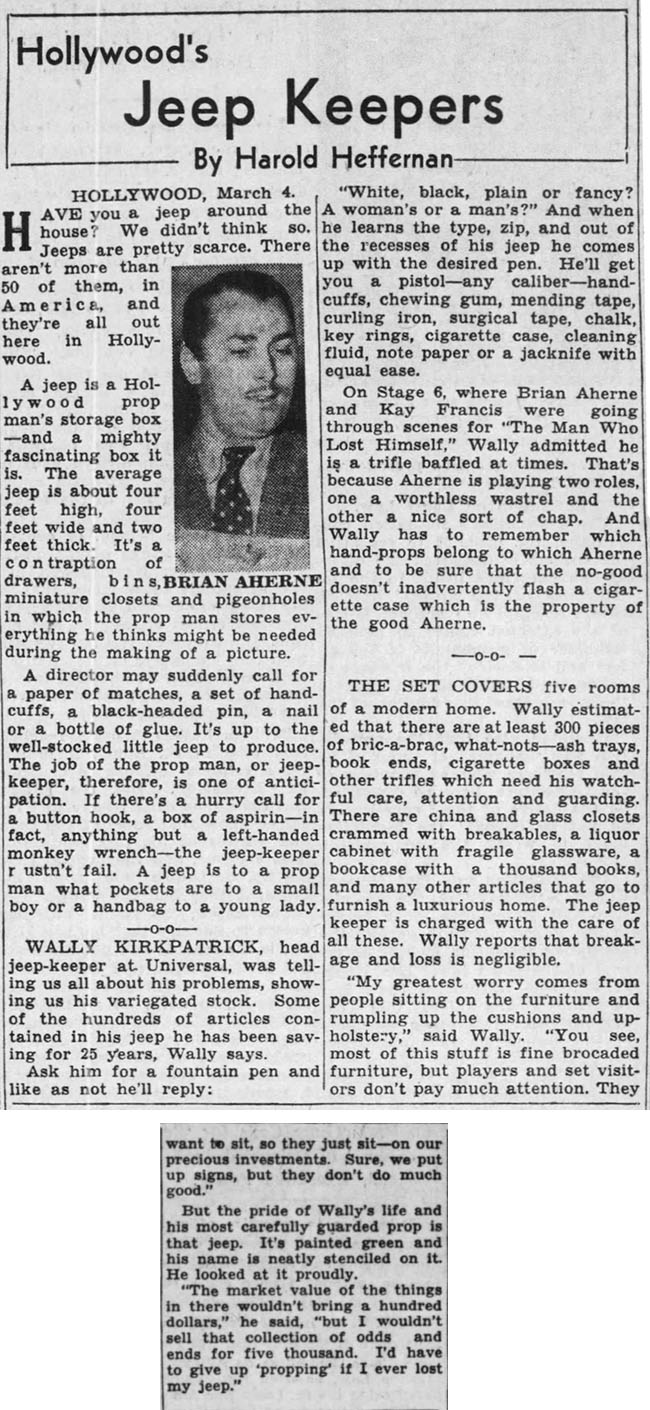
This is the first time I’ve heard the term Jeep applied to a prop storage box. This article appeared in the March 04, 1941, issue of the St. Louis Post-Dispatch.
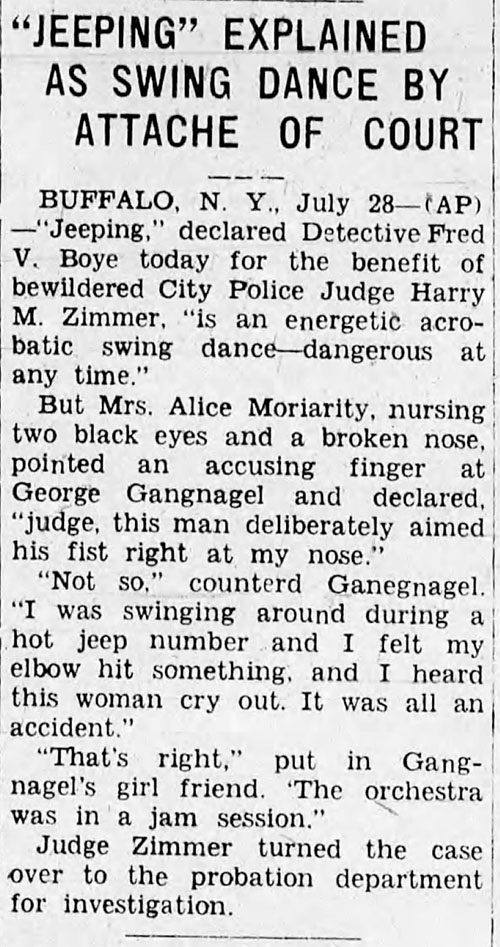
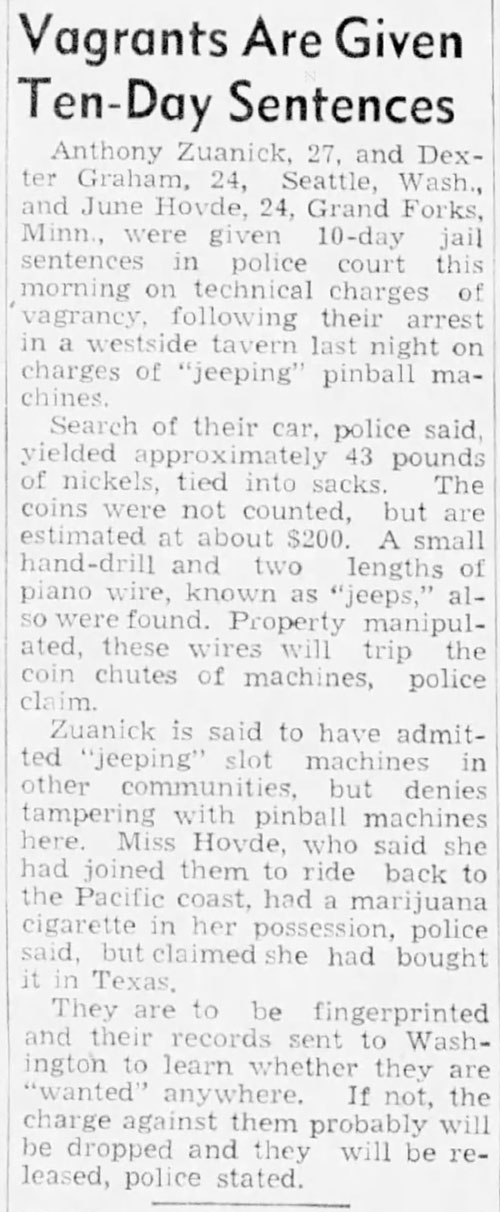
These two pre-1940 news items highlight how “jeep” and “jeeping” already had definitions prior to the launch of Bantam’s prototype.
In 1937, this article on “Jeeping” as a swing dance, as testified in court by Detective Fred V. Boye, was widely distributed among newspapers. I have been unable to isolate exactly what moves define the “jeeping swing dance”. This example article comes from the July 28, 1937, issue of the Park City Daily News out of Bowling Green, Kentucky.
Two years later, in 1939, a couple of Washington State vagrants (no, they aren’t relatives of mine) got caught “jeeping” pin ball machines using a “jeep”. A woman, along for the ride, even had a marijuana cigarette! This article is from the November 29, 1939, issue of the Green Bay Press Gazette:
NOTE: Though this is PART II of Maury and my research into the “J” logo, it mostly predates that article. This should be considered a working draft, as I’m sure we’ll learn new things and make editorial improvements to it. If you spot something in error, email me or comment below.
When Maury Hurt and I were researching the short-lived “J” logo, we found ourselves looking back into Willys-Overland advertising during WWII. That, in turn, led to the development of the large Saturday Evening Post and Collier’s Magazine images showing all the ads Willys-Overland took out during the war so we could more easily compare how Willys-Overland marketing evolved. That work proved quite useful, showing us visually how the pre-war Willys-Overland company became, for all practical purposes, the post-war Willys ‘Jeep’ company.
FRED COLDWELL’S “SELLING THE ALL-AMERICAN WONDER”:
Anyone who has read Fred Coldwell’s excellent book “Selling The All-American Wonder” knows that studying the WWII ads that Willys-Overland published during the war isn’t ground breaking. However, Fred focused his book on the legal challenges Willys-Overland faced when trying to secure the rights to trademark the name JEEP so the company could sell jeeps to the post-war public.
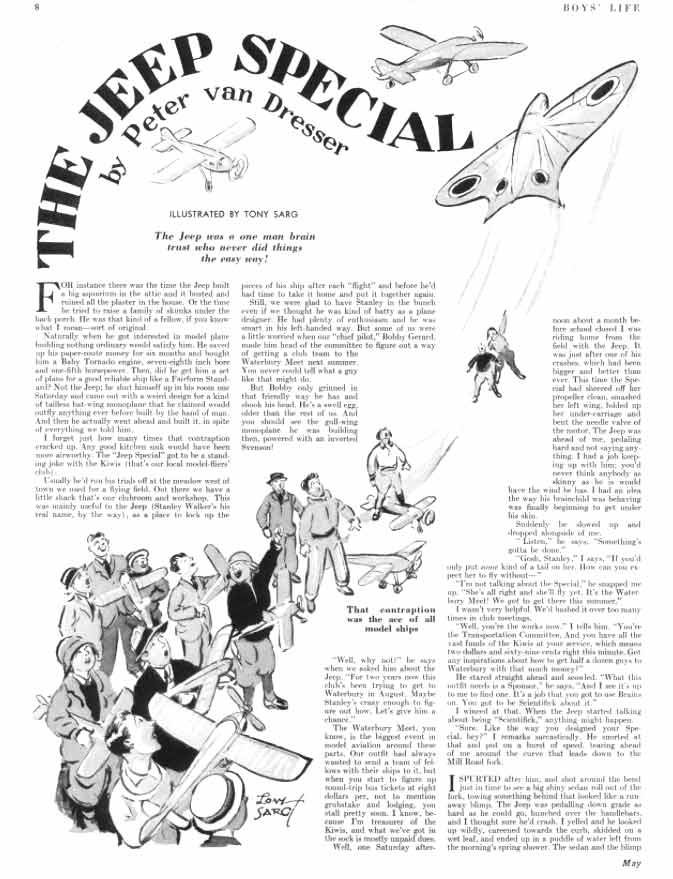
As Fred explained in his book, Willys-Overland faced a huge hurdle to transform the generic word jeep into a Trademark. Prior to the introduction of the Bantam BRC in September of 1940, the term JEEP had been applied to a magical cartoon character in Popeye, to Army grunts, to a type of train, to another category of military vehicle(Dodge Command Car), the MM Tractor, and to a category of planes, as this 1939 Boy’s Life Magazine highlighted (the term would continue to be used for that category of planes in magazine articles and ads throughout WWII.)
Partial look at the 1939 article from Boy’s Life Magazine about the Jeep plane.
By mid-November of 1940, which was after the Bantam BRC and Willys Quad were introduced, both vehicles were already being referred to as jeeps. However, this was prior to the introduction of the Ford Pygmy in late November (which wasn’t being called a FORD GP at that point, nor even by early 1941).
Because of these complexities, Willys-Overland pushed to advertise in major publications during WWII to reinforce to the public the idea that the Jeep was a Willys product. To that end, Fred’s book highlights the type of WWII advertisements used to achieve that trademark goal (and Fred’s full-size reproductions of the ads are excellent and a much cheaper way of finding the ads then by purchasing magazines). Willys-Overland eventually secured the trademark JEEP in 1950.
HOW OUR APPROACH DIFFERED FROM FRED’S WORK:
Our review of the material differed in that we were trying to document how Willys-Overland arrived at the final the logo and text choices the company made.
Let’s not forget the state of the company prior to the war. In 1937, Willys-Overland produced 63,000 vehicles, but a recession wiped out sales the following year and Willys sales declined to a terrible 17,000 cars and trucks. Things were so bad that by 1940 earnings were a negative -$800,000 (read more here). In other words, Willys-Overland, as a car and truck company, wasn’t succeeding. And, like Bantam, Willys-Overland hoped a military contract would rescue the company.
Though Bantam lost out, Willys-Overland’s securing of the military contract for ‘scout cars’ in 1941 led to a significant financial turn-around. That year earnings bounced back, totaling $800,000 in the black. Things were looking up for the company.
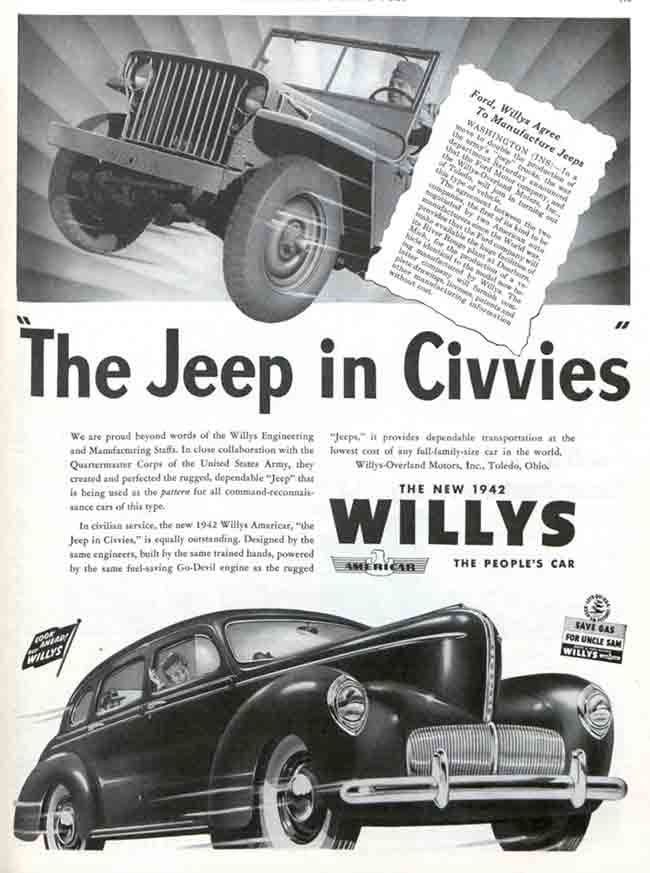
With the new military contract and cash, coupled with an exciting new vehicle (the jeep), Willys started advertising more aggressively. Fred Coldwell notes that the earliest major advertisement, published in the December 13, 1941, issue of the Saturday Evening Post was titled The Jeep in Civvies. This ad promoted both the new army jeep and its connection to the 1942 Americar, Willys-Overland’s new creation led by former Chrysler Executive Joe Frazer.
Saturday Evening Post December 13, 1941, page 117.
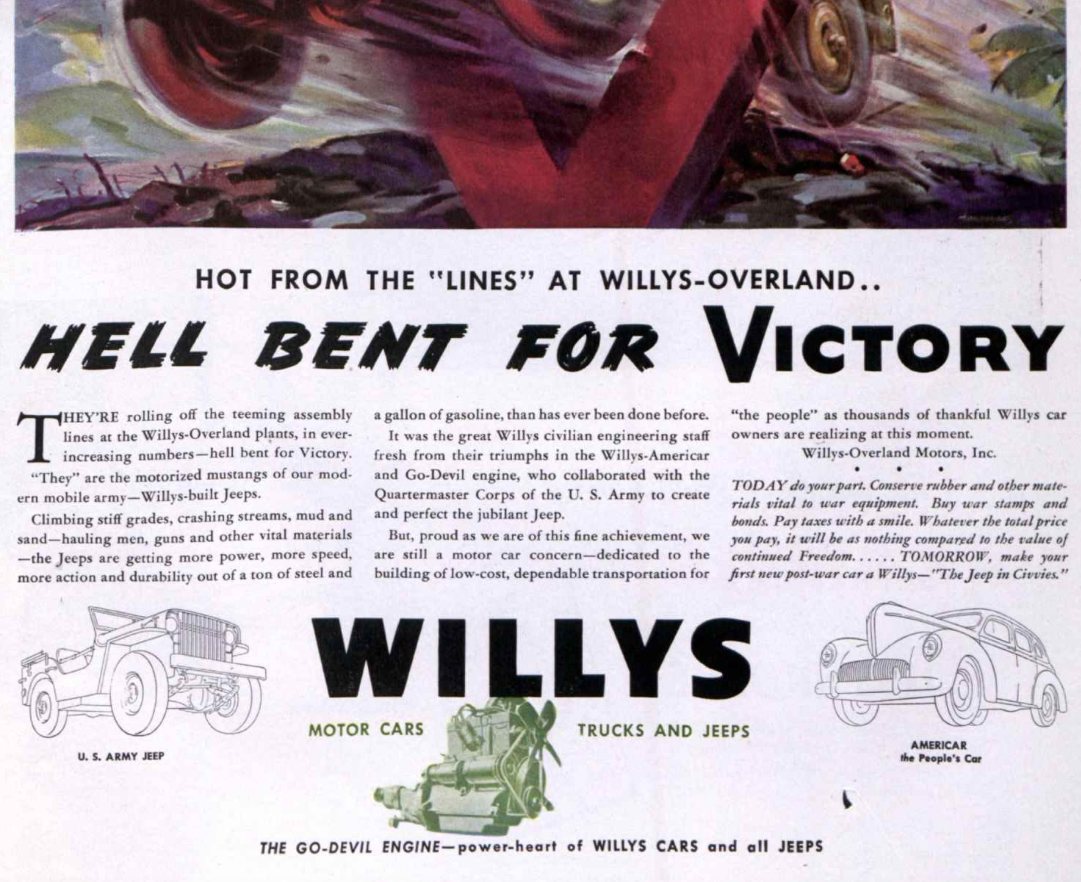
Subsequent magazine ads from Willys-Overland in early 1942 also harnessed the Jeep in Civvies slogan, but added to the advertisements were illustrations of a Willys Americar and a Willys slat grille jeep; in-between the two illustrations was the WILLYS logo in bold and an image of the Go-Devil engine. Underneath the large WILLYS logo was the sub-line: MOTOR CARS [Engine Image] TRUCKS AND JEEPS.
The ad, HELL BENT FOR VICTORY, was published in the June 27, 1942, issue of the Saturday Evening Post. The WILLYS brand is prominent. JEEP is mentioned, but it’s after MOTOR CARS, an engine, TRUCKS.
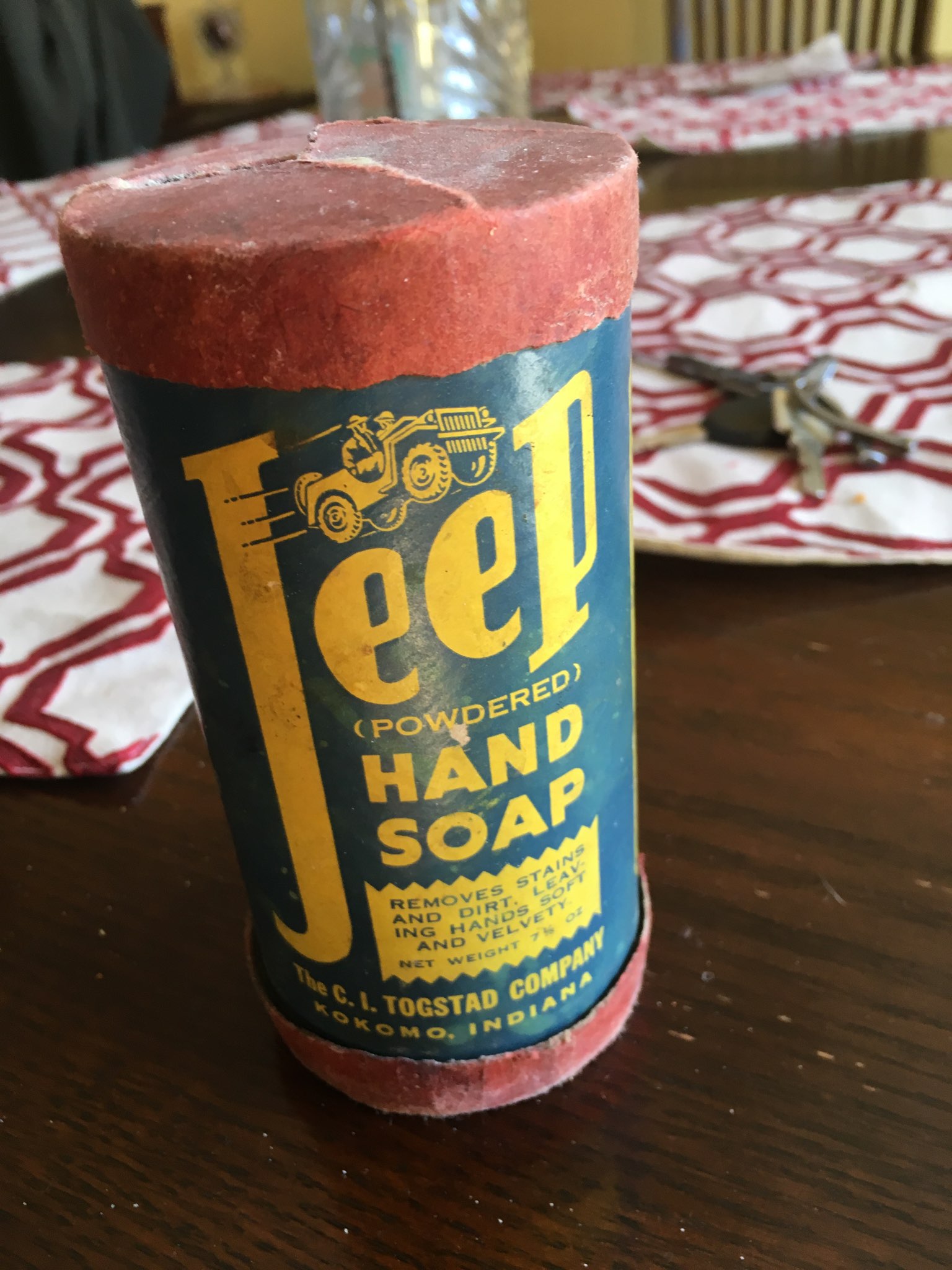
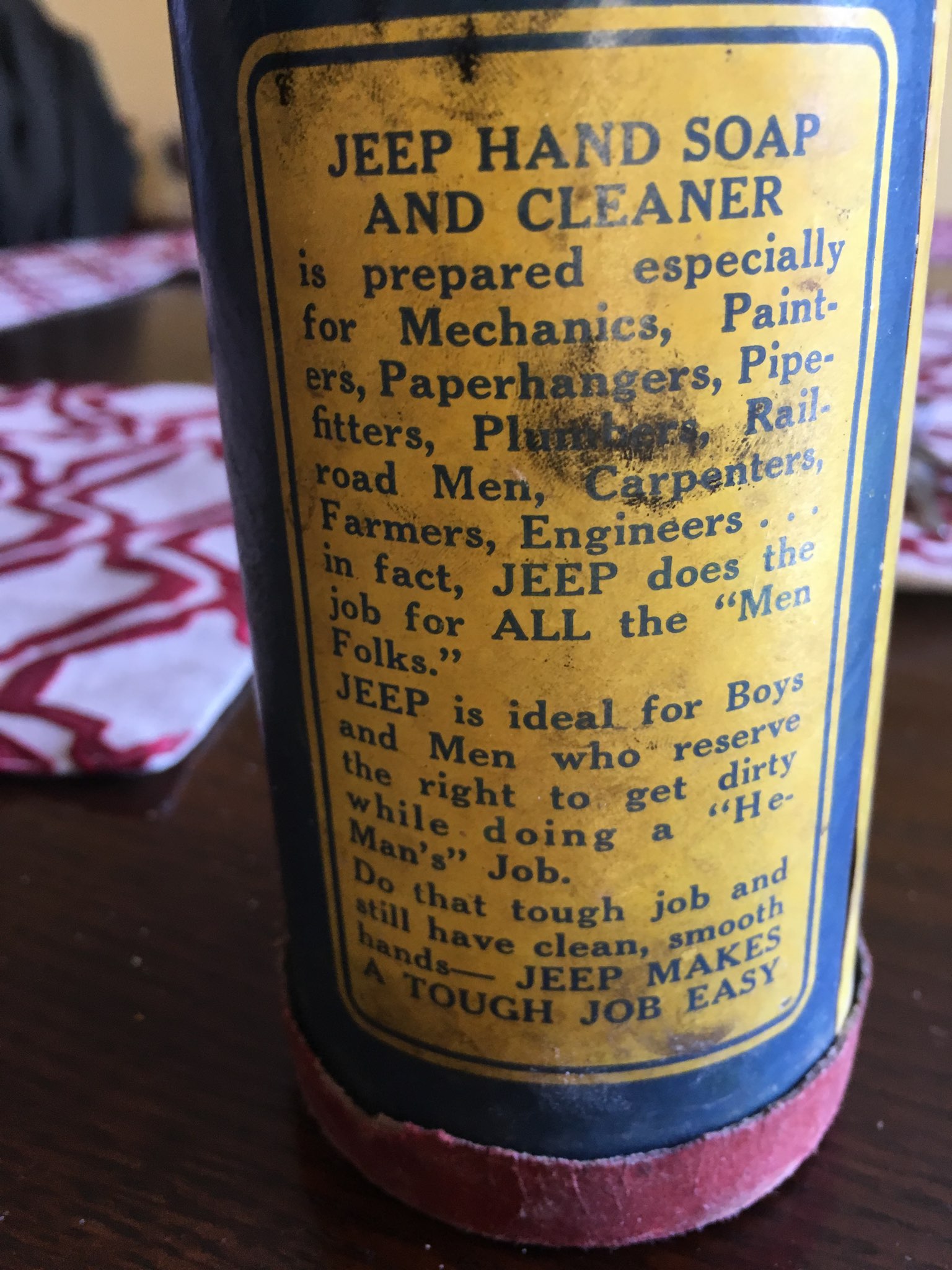
Chris snagged this unusual item off of eBay. I’d really like to know when this was produced, because some of the font details are fairly close to the look of the Jeep font in 1945.
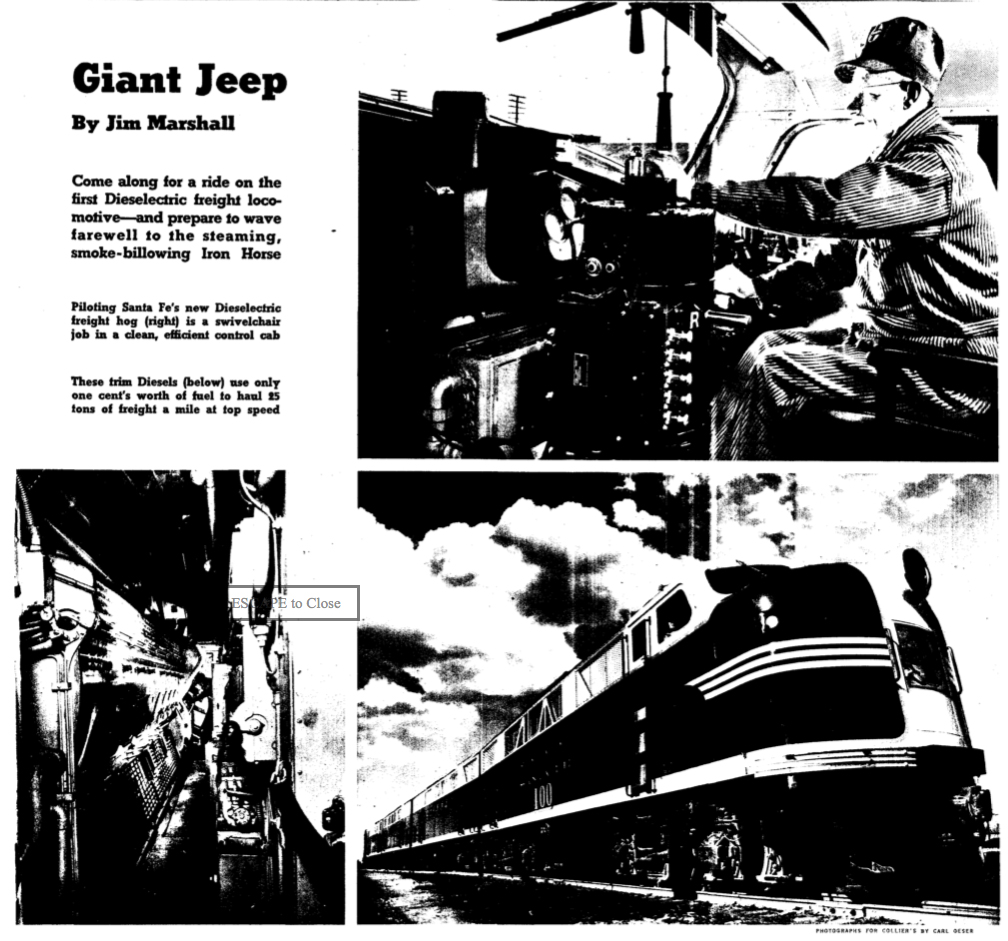
This April 5, 1941, article in Colliers puzzled me. Through it, the author referred to a train as a “Giant Jeep”. I’ve never run across a reference before or after that time of a train being called a jeep. The article never mentions any reference to the newly created 1/4 ton vehicles, whose ‘jeep’ name was still catching on in the press. It also does not indicate where/why the jeep name for the train originated.
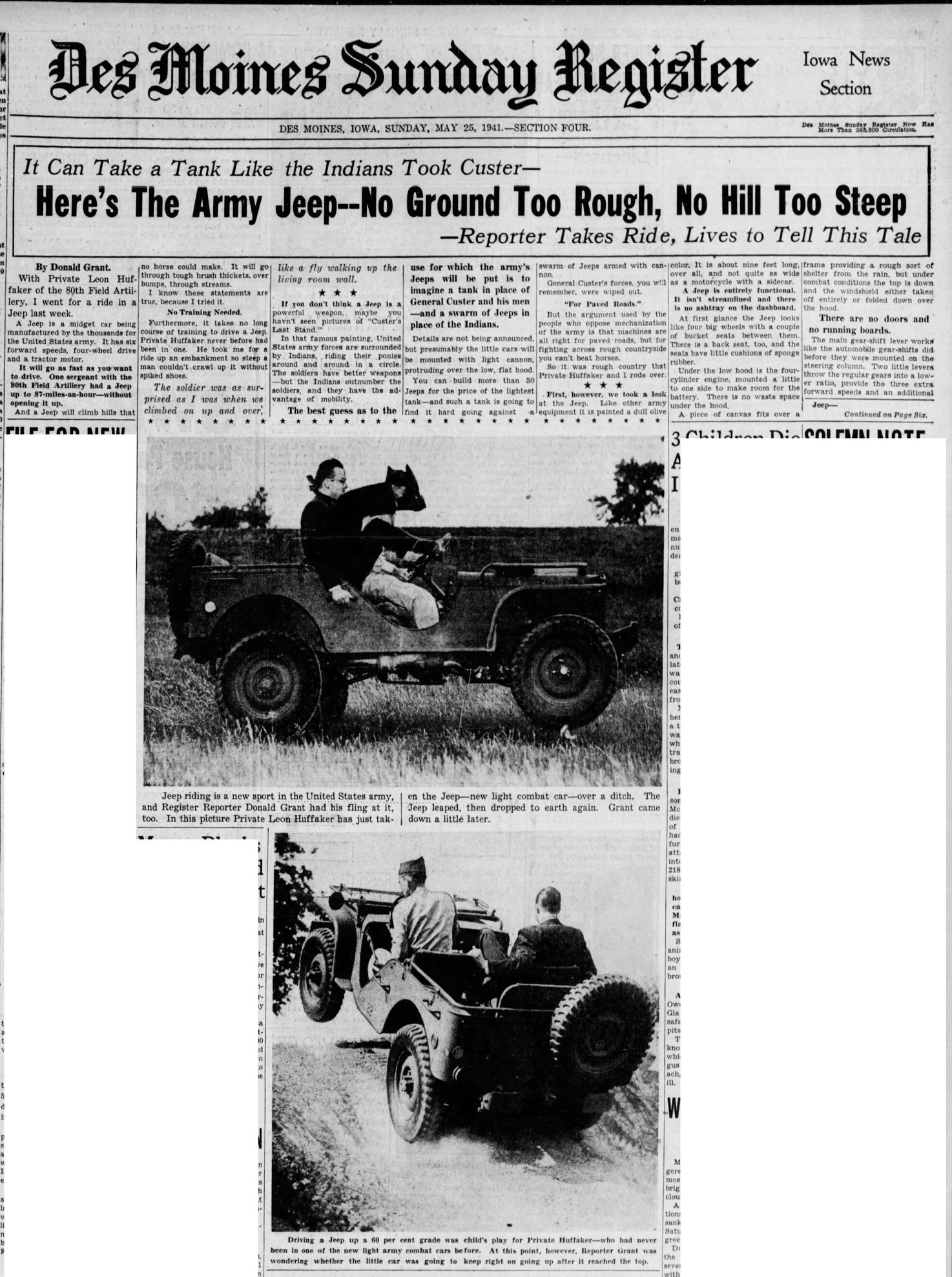
Mario shared this article on Facebook from the May 25, 1941, issue of the Des Moines Register. A report describes his experience riding in one and imagines how it might be used. I find the claim that it would go “87-miles-an-hour–without opening it up” a stretch, but that was likely just a propaganda plug.
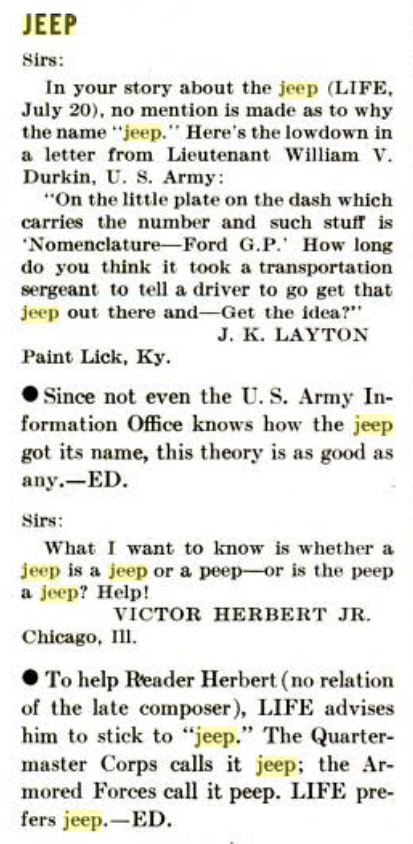
This summer of 1942 article highlights some of the confusion surrounding the jeep name and might be one of the first documented instances of someone claiming that GP became jeep. As I’ve argued, I see no reason to believe that’s the case.
By November 1940, the term “jeep” was being applied to the Bantam jeep (and/or the Willys Quad, delivered in mid-November), according to court records, months before the delivery of the Ford “GP” model in March of 1941 ((the Ford Pygmy was delivered to Holabird near the end of November of 1940).
To me this opens up a question. Was the P=80″ wheel base a chance coincidence? Or was Ford cognizant that the new 4×4 vehicles were being called jeeps, so they purposefully took advantage of that to use the “P” to spell the onomatopoeia-initialism “gp” or “geepee” or “geep” as part of the delivery contract? I suppose Ford had a designation that O=70″ wheel base and Q=90″? If so, I’ve not personally seen those designations documented.
Now, modern articles call the Pygmy the “Pygmy GP-1” (or similar), giving it credit for being the first Ford GP. But, I have yet to see any documentation that Ford or anyone else was calling the Pygmy a “GP”.
In fact, two articles from 1940 indicate the new Ford recon car is called only a Pygmy and that more pygmies will be delivered in the future. See the middle and right column articles on this page (http://www.memorialmuseum.org/displaysmilitary-jeeps/item/ford-pygmy) (note that the 1969 article on the left hand side of the page does designate the vehicle GP-1, but again, that’s a much later article).
My guess is that the GP designation was more strategic than the innocent explanation of G=”Government” and P=80″ suggests. I’d welcome evidence showing the Pygmy was labeled a FORD GP from any kind of article or document from the late 1940s. (maybe this issue has been hashed out previously and I’m late to the party???)