emailNeed to contact me and don't have my email? Click on email button.
About eWillys
Welcome to eWillys.com, a website for vintage jeep enthusiasts. I update this website nearly every day with jeep deals, jeep history, interesting reader projects, jeep related info, and more.
These quick searches can help you find things on eBay. People list in the wrong categories all the time, so don't be surprised to see brochures in the parts area for example. This section used to be split into jeeps, parts and other categories, but recent changes to eBay will require this information to be recoded.
The links to posts below show jeeps grouped by models, condition, and other ways. Some of these jeeps are for sale and others have been sold. If you are unsure whether a vehicle is still for sale or not, email me at d [at] ewillys.com for more info.
Importantly, the allure of buying a project jeep can be romantic. The reality of restoring a jeep can be quite different, expensive and overwhelming without the right tools and resources. So, tread carefully when purchasing a "project". If you have any concerns about buying a vintage jeep, or run across a scam, feel free to contact me for help, comments or concerns .
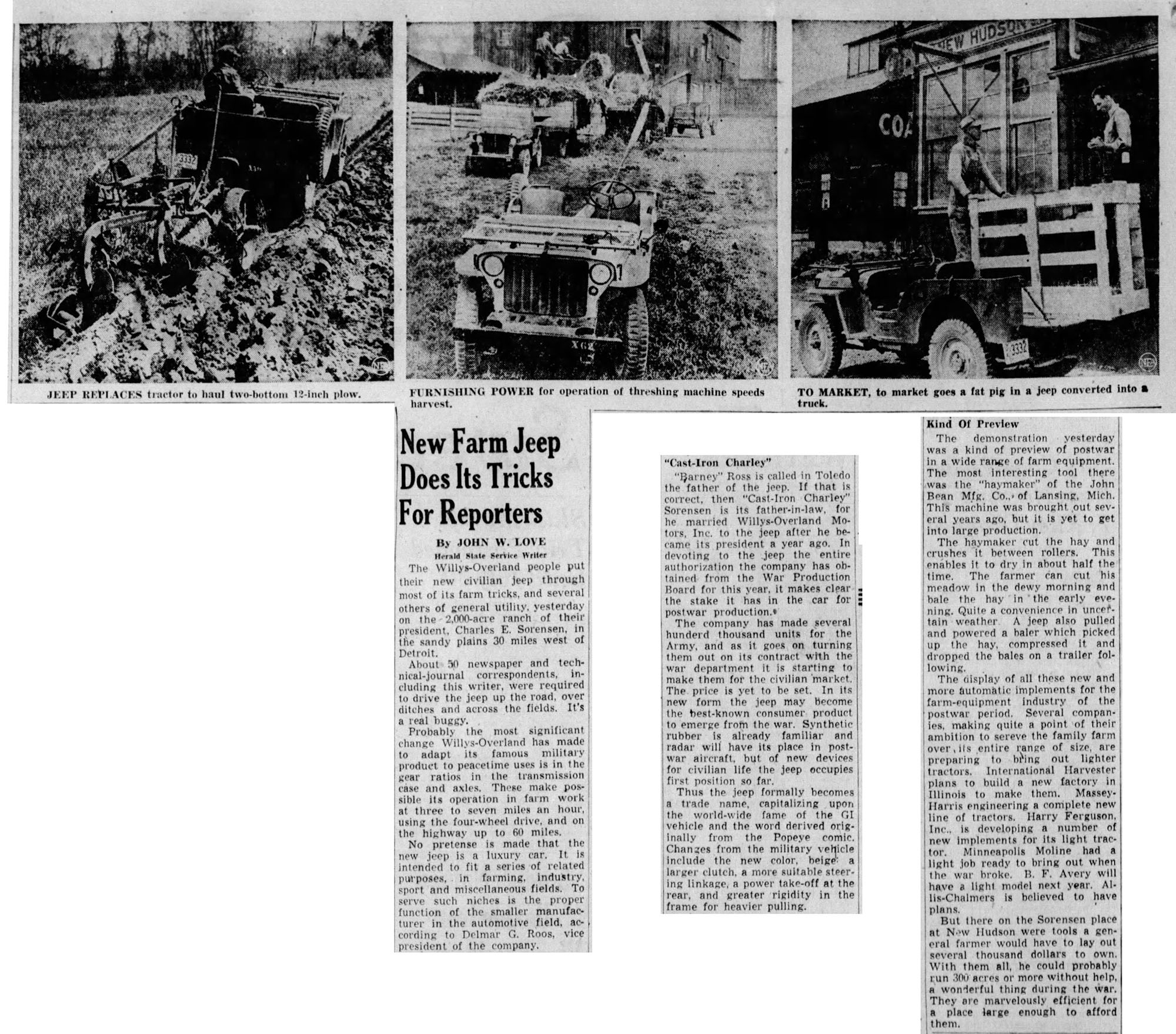
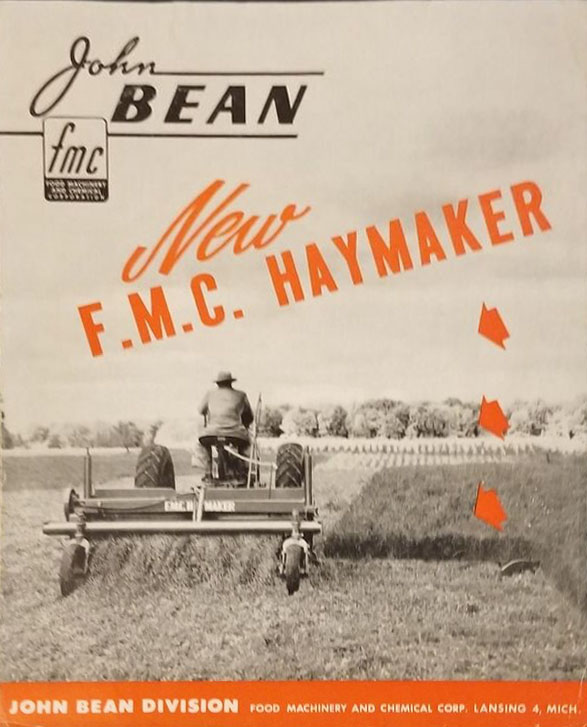
A July 19, 1945, article in the Dayton Herald, out of Dayton, Ohio, covered the jeep demonstration at Charles Sorensen’s farm. Two things about the article stuck out to me. 1) I was surprised to learn that there had been no sales price shared with reports as of the demonstration. 2) The reporter who wrote the article noted that the most interesting piece of equipment was the John Bean Haymaker, which apparently never became a Willys-Overland Special Equipment item, at least not one of which I’m aware. I did find a brochure from a few years later that covered the John Bean Haymaker (see the cover at the bottom of this post).
July 19, 1945, Dayton Herald out of Dayton, Ohio.
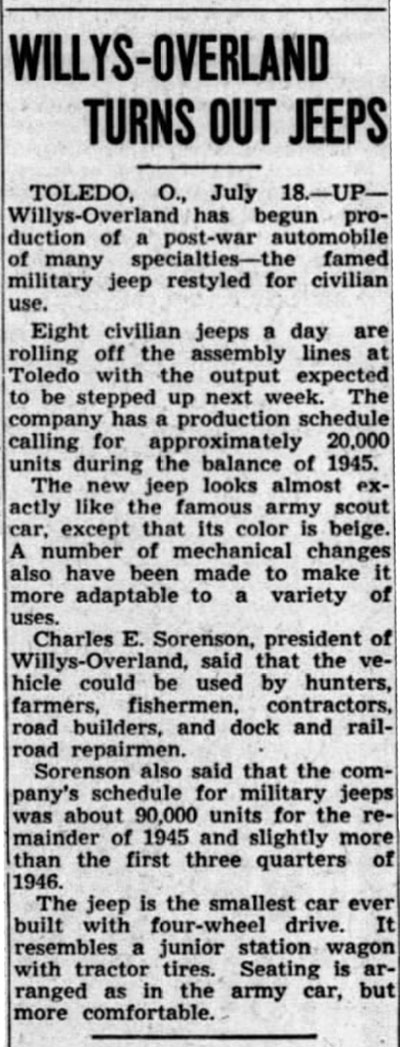
What the above article doesn’t mention is that Willys-Overland had hoped to build 20,000 jeeps over the remainder of 1945, at least according to an article in the Cincinnati Enquirer on July 18th:
July 18, 1945, News Messenger out of Fremont, Ohio.
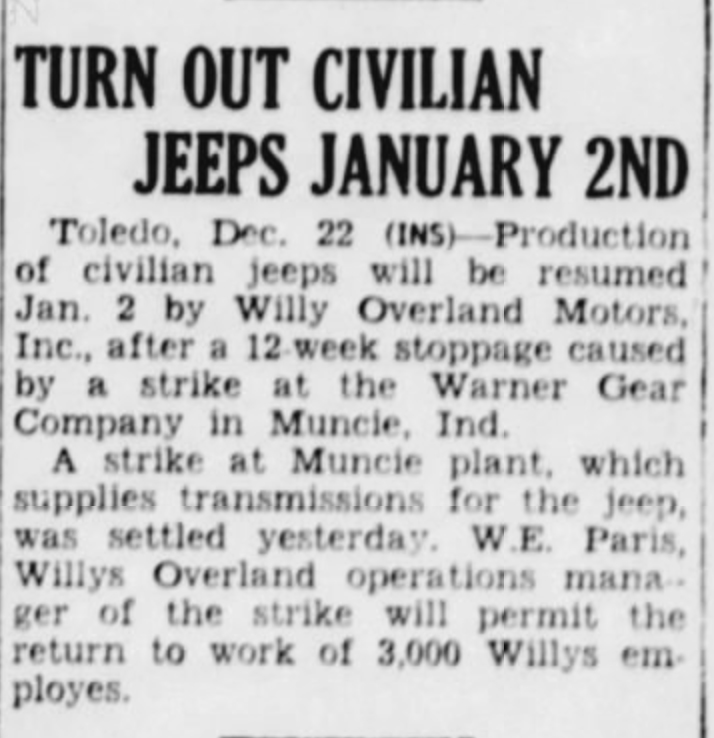
So, why wasn’t the company able to see the 20,000 production figure and instead produced only 1824 CJ-2As? One big factor was that Warner Gear had gone on strike for 12 weeks, stopping production of transmissions that Willys-Overland needed to complete the jeeps. There were probably other reasons as well, but had W-O been able to produce over those 12 weeks what they subsequently manufactured throughout 1946, the company could have come very close to the 20,000 production figure for 1945. In other words, there likely would have been a lot more VECs!
December 22, 1945, Daily Times out of New Philadelphia, Ohio.
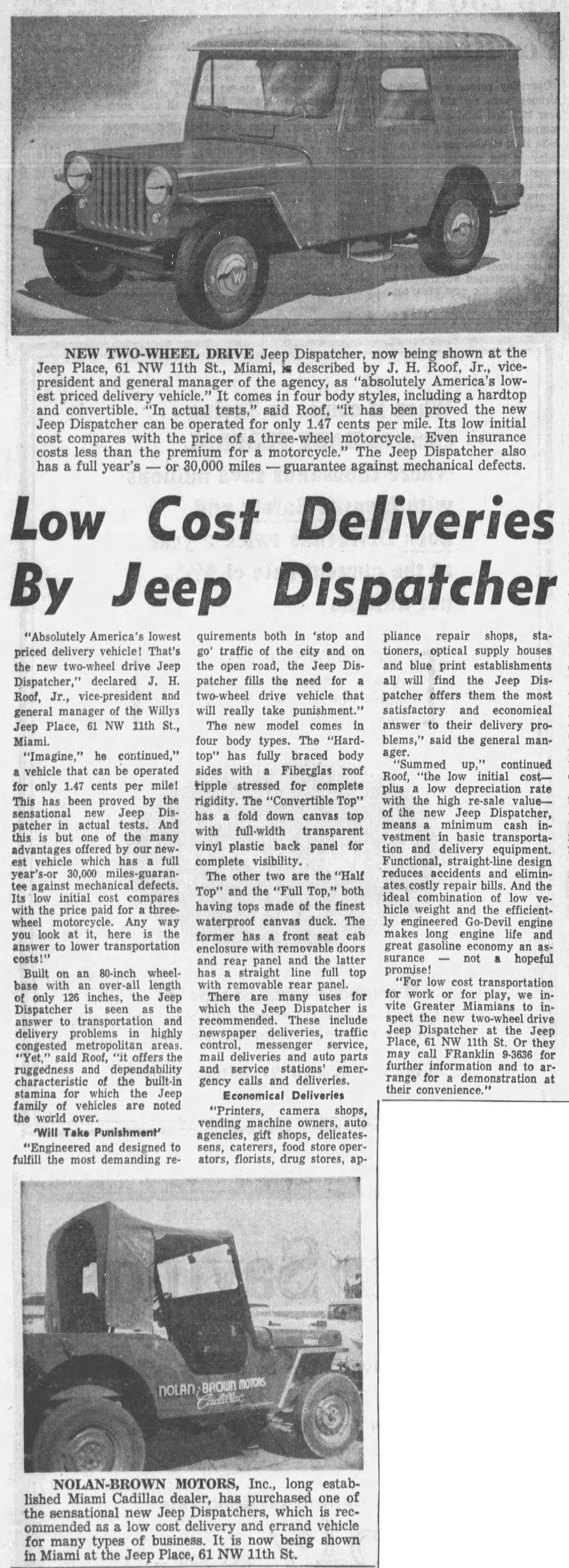
This article appeared in the Miami News on October 09, 1956. That seemed a late date for an “introductory” announcement. The article highlighted the low operating cost, the 30,000 mile maintenance guarantee, the four body styles, and the wide range of duties the new jeep could perform.
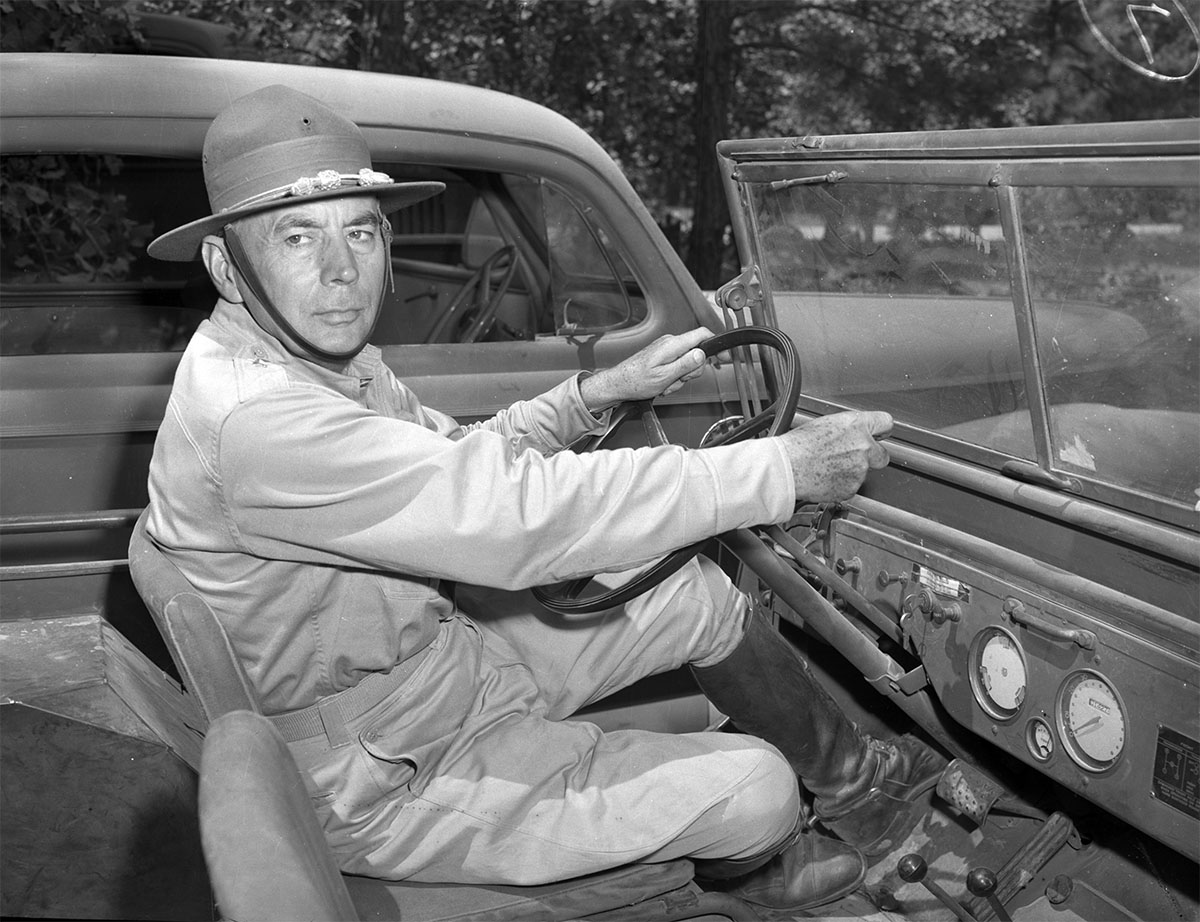
Fort Worth Star-Telegram Collection, University of Texas at Arlington Libraries. 56th Cavalry Brigade war maneuvers. (1941). Retrieved from https://library.uta.edu/digitalgallery-beta/img/20048164 … Brigadier General Walter B. Pyron, of Houston, Texas, commander of the 56th Brigade, shown behind the wheel of a jeep. He is wearing a military uniform and a small brimmed hat. He has his hands on the steering wheel and is looking behind him. Willys MA.
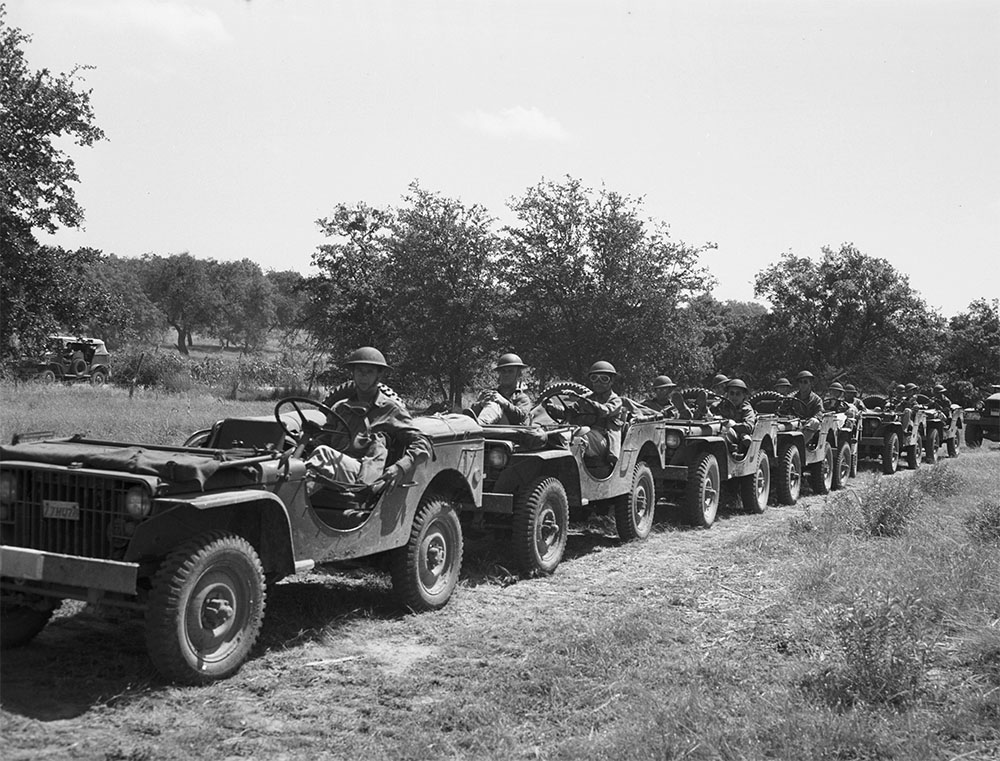
A lineup of Ford GPs:
Fort Worth Star-Telegram Collection, University of Texas at Arlington Libraries. Camp Bowie Army Maneuvers . (1941). Retrieved from https://library.uta.edu/digitalgallery-beta/img/20048968 … The 18th Field Artillery Brigade’s 77th Field Artillery joins in retreating from an attack during a military training exercise at Camp Bowie. The first battalion is lined up for an evacuation, riding on “blitz buggies.” This battalion is from Fort Sill, Oklahoma. The rest of the 77th is stationed at Fort D. A. Russell, Marfa, Texas. The 77th and 142nd infantry are howitzer units of the brigade. Ford GPs.
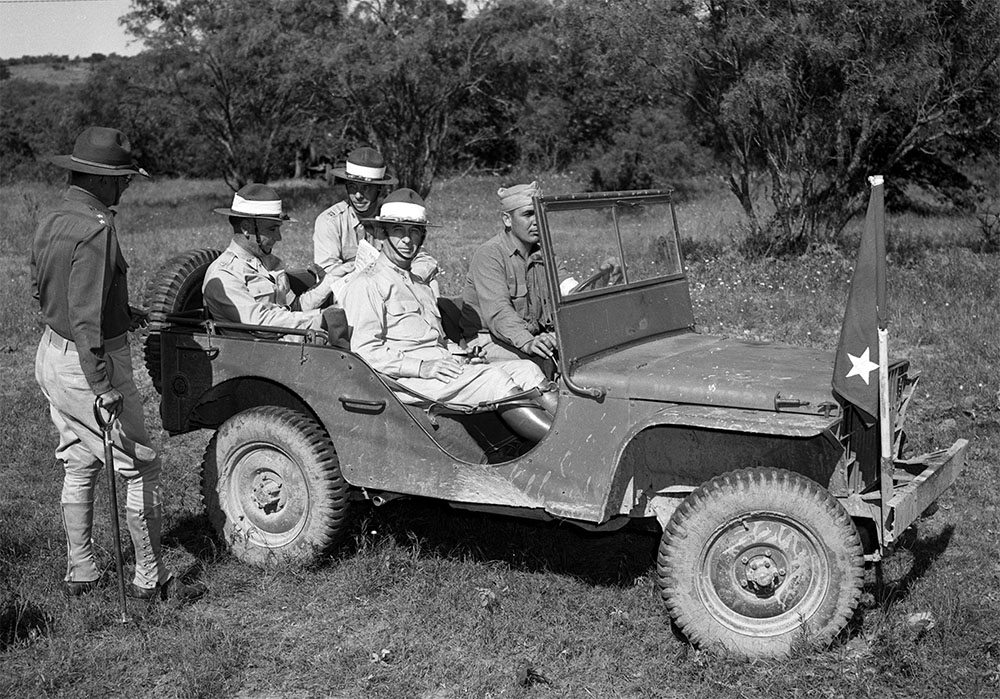
Good side shot of a Ford GP:
Fort Worth Star-Telegram Collection, University of Texas at Arlington Libraries. Camp Bowie Army maneuvers: Lietenant General Walter Krueger with Major General Claude V. Birkhead and others. (1941). Retrieved from https://library.uta.edu/digitalgallery-beta/img/20053219 … Camp Bowie Army maneuvers. Four military officers and one military personnel are pictured here. Lieutenant General (LIEUT. GEN.) Walter Krueger, seated in the front passenger seat, Third Army Commander, was in the field almost as much as the participating troops. Here he’s leaving 36th Division command post after a conference with Major General (Maj. Gen.) Claude V. Birkhead, division commander, standing by the baby jeep. In the rear seat are, foreground, Lieutenant Colonel (Lieut Col.) George R. Barker, Third Army G-3, and Captain (Capt.) R. H. Chard, Krueger’s aid. Driver is Private (Pvt.) Harvey Belote. All are dressed in military uniforms. Published in the Fort Worth Star-Telegram morning edition, June 15, 1941. Ford GPs.
Here’s an early Slat Grille MB:
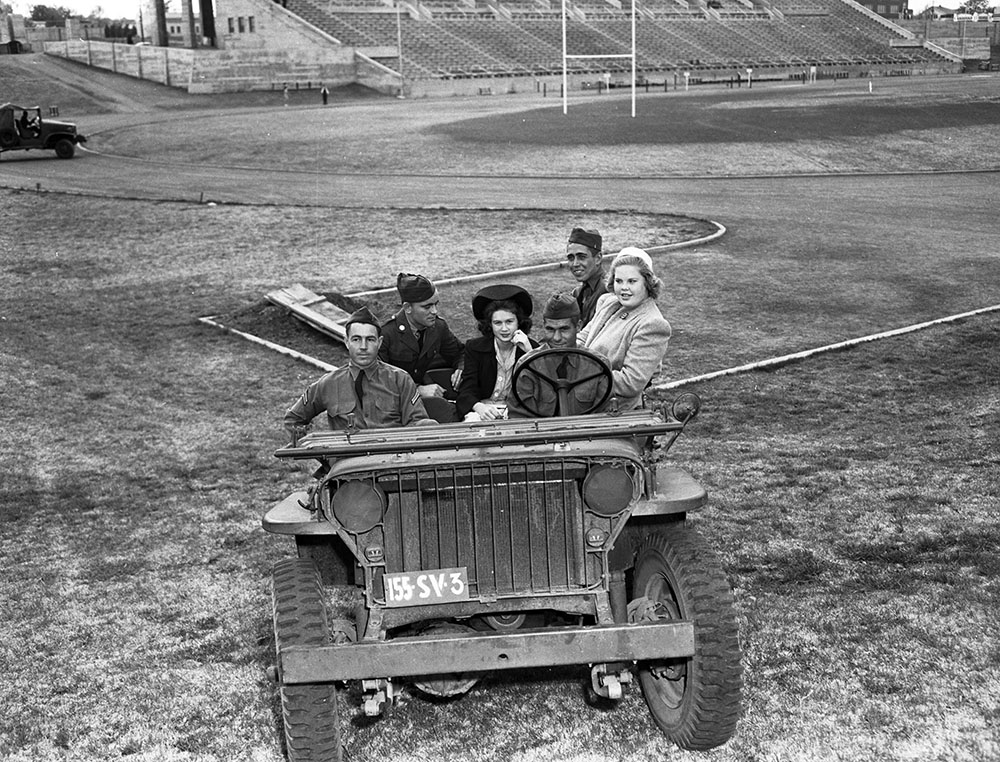
Fort Worth Star-Telegram Collection, University of Texas at Arlington Libraries. Army Day Maneuvers: Rides in Dixie Jeeps. (1942). Retrieved from https://library.uta.edu/digitalgallery-beta/img/20053248 …. Army Day Celebration. Jeep rides were given citizens when the 31st (Dixie) Division held open house here Sunday as part of the observance of Army Day. On this ride at Farrington Field were Alice McDonald (left) and Jaymie Dobbs, both of Fort Worth, Texas. Members of the Service Company, 155th Infantry, in the jeep are, left to right, Corporal (Corp.) J. H. Reeves, Private (Pvt.) Sam Burroughs, Private (Pvt.) Clyde Russell and Private (Pvt.) Hanson Dunegan. The group are riding in a jeep through Farrington Field. Background showing a goal post and stadium bleachers. Published in the Fort Worth Star-Telegram evening edition, April 6, 1942. Willys MB Slatgrille.
Post WWII pic:
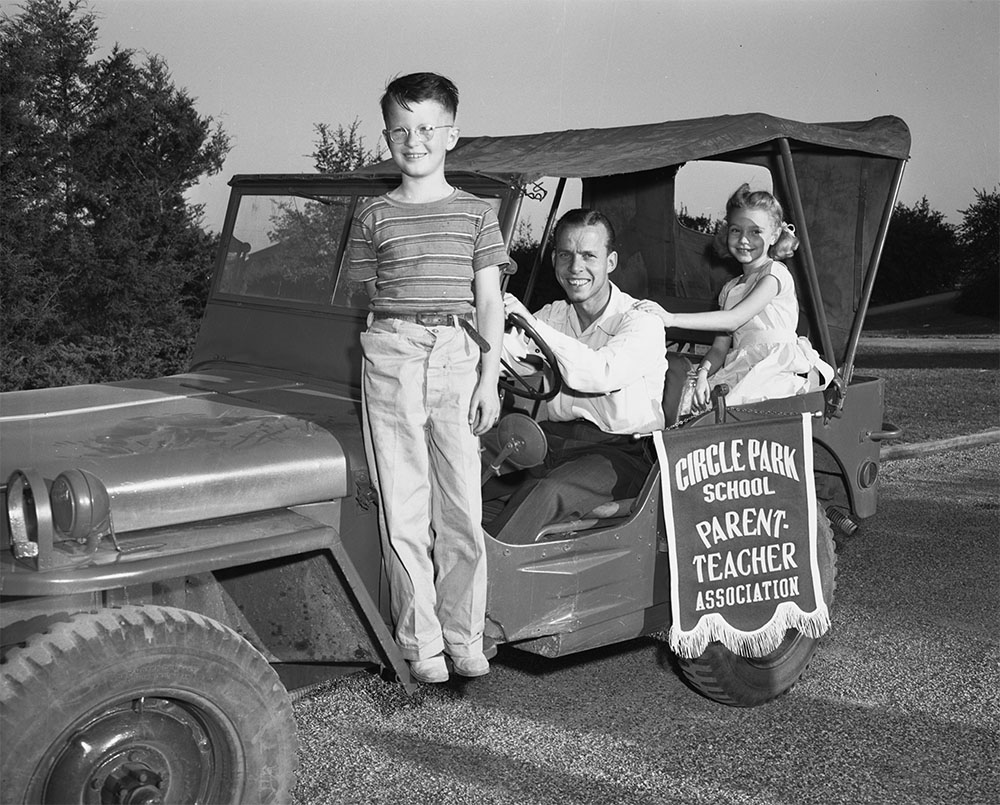
Fort Worth Star-Telegram Collection, University of Texas at Arlington Libraries. Circle Park School Parent-Teacher Association carnival . (1946). Retrieved from https://library.uta.edu/digitalgallery-beta/img/20058866 … Mr. R. M Baxter is giving a carnival preview ride to 2 pupils of Circle Park Elementary School, Donald Eagle, son of Mr. and Mrs. Don Eagle and Beverly Jean Burns, daughter of Mrs. and Mrs. C. A. Burns. Mr. Baxter will run a jeepney-ride concession at the Circle Park Elementary School Parent-Teacher Association annual carnival. His jeep has a banner of the PTA. Published in the Fort Worth Star-Telegram evening edition, October 16, 1946.
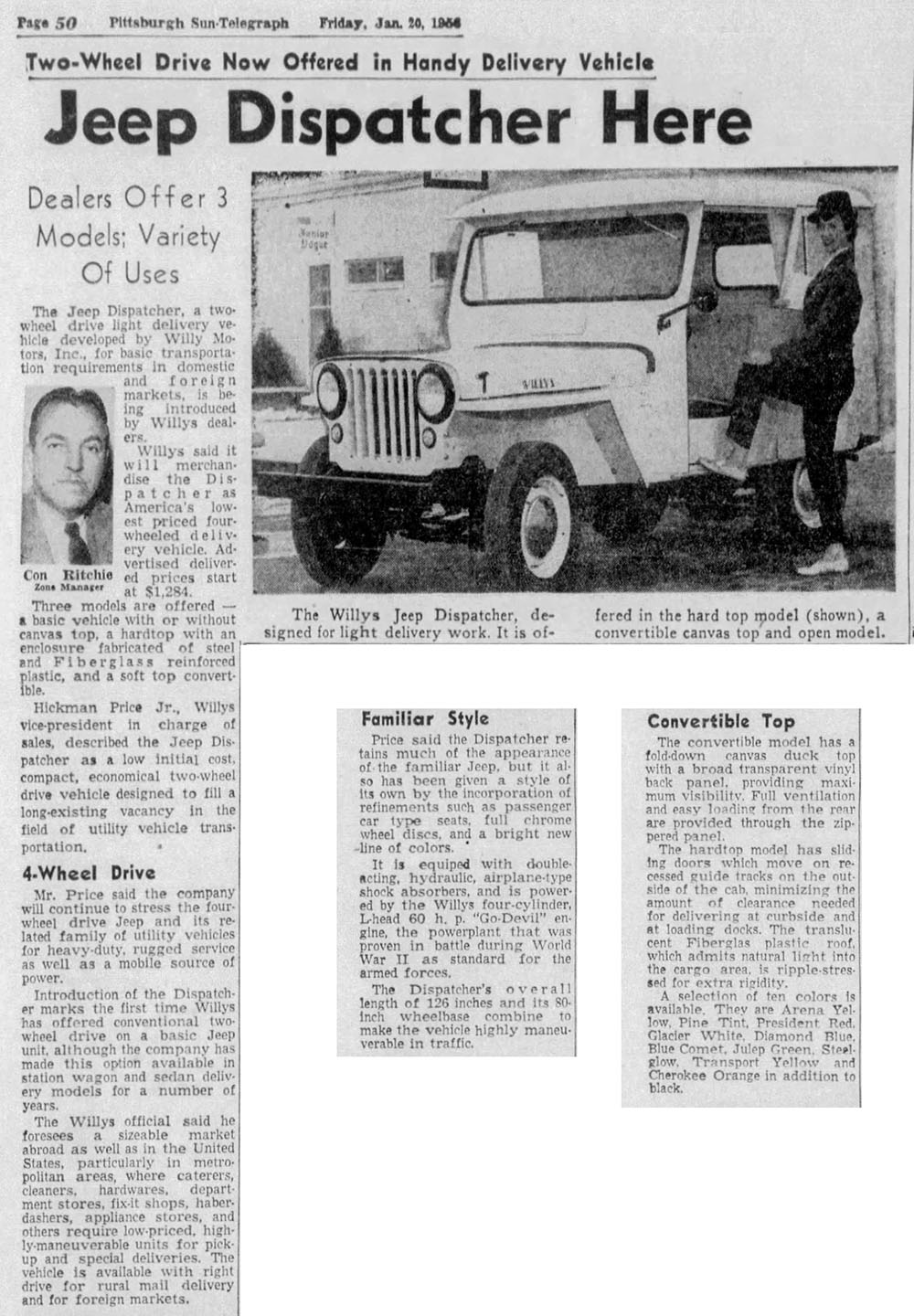
The article suggests that the Jeep Dispatcher only came in three models, with one listed as a “basic model with or without a top”. The marketing department must have decided that the single model with or without a top was better off as two models distinct models.
January 20, 1956, Pittsburgh Sun Telegraph
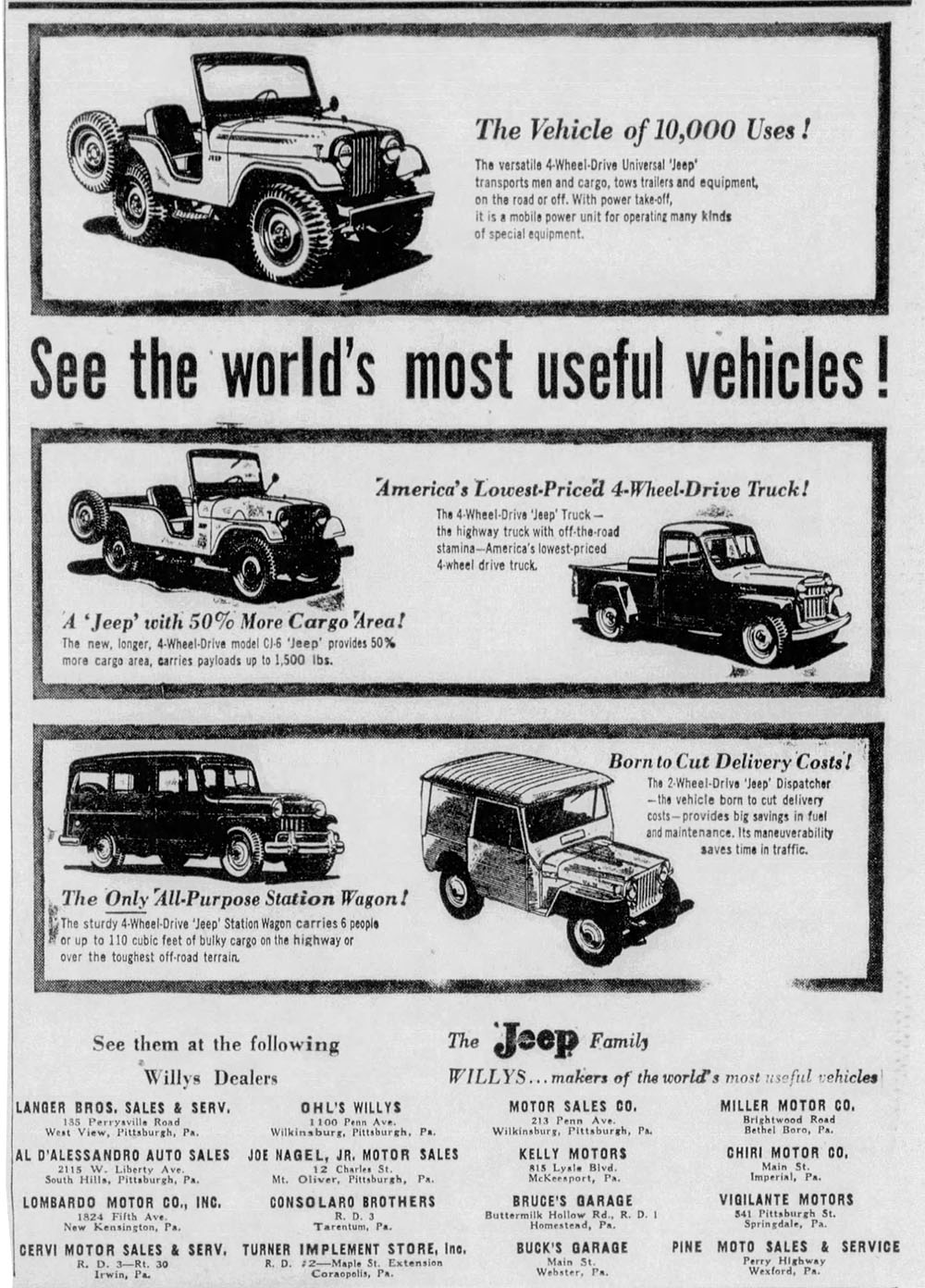
On the same page as the Dispatcher article was an ad for multiple jeep dealers in the Pittsburgh area. The new ad included the DJ-3A with the fiberglass-reinforced hardtop.
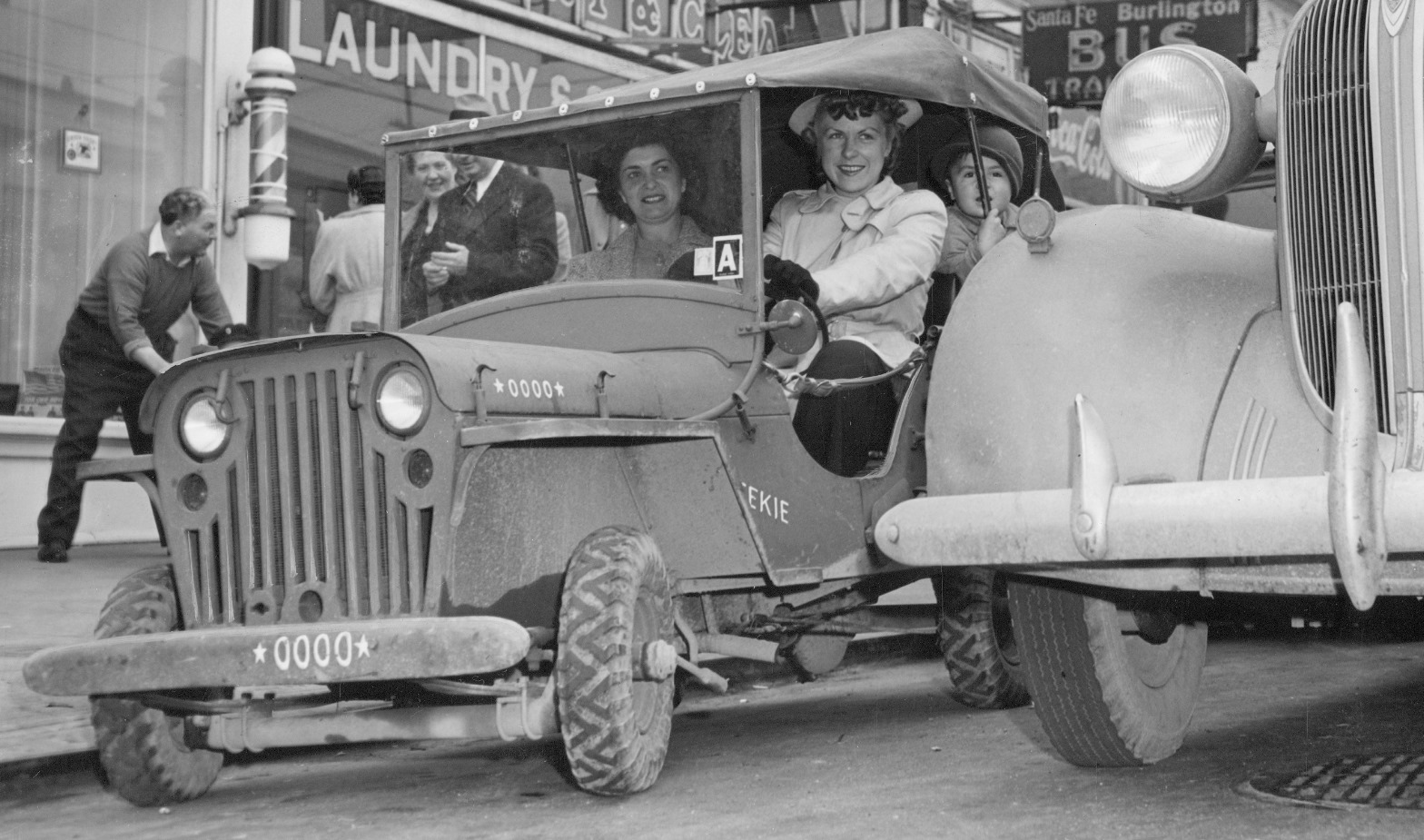
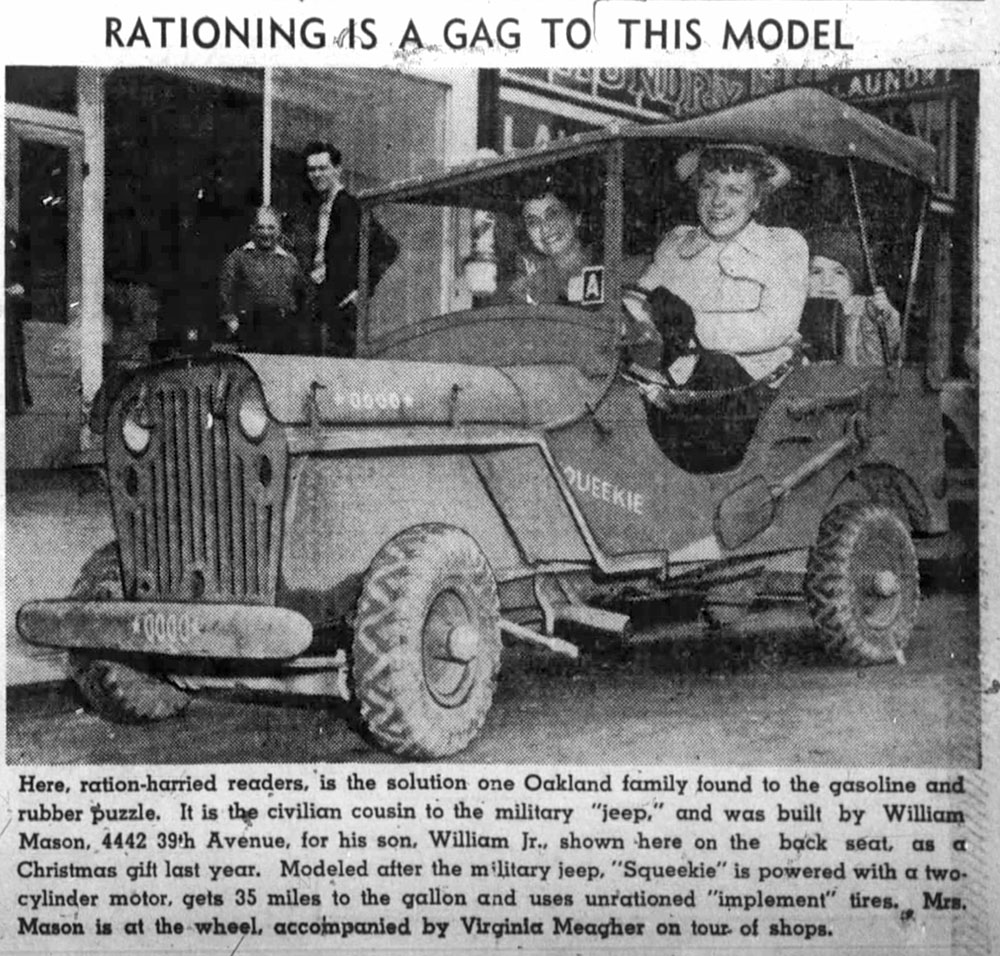
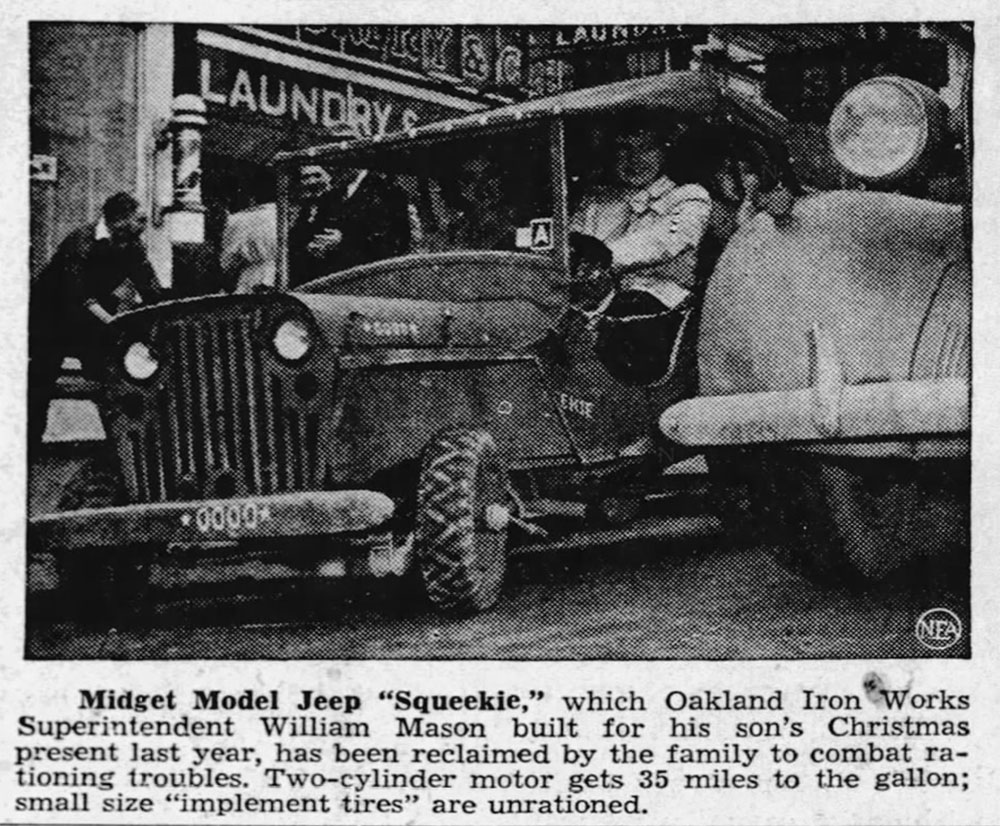
A one-of-a-kind ‘jeep’ named Squeekie was built from photos by William Mason in 1942. In 1943, this press photo was taken, then circulated around the country, two of which can be seen below.
This photo was shared on a vintage photograph Facebook Group by Bob Cunningham. He included the following text, though I’m unaware of where the text originated (maybe based on an original press photo caption?):
Per the Facebook post: “In 1942, William Mason, an iron works superintendent in Oakland, California, used newspaper photographs to create “Squeekie,” his version of the Army’s new wonder car, the “jeep.” Although Mason built the 2-horsepower car for his son, Billy, his wife often used it for ’round-the-town grocery shopping during the days of gas rationing, since it got a thrifty 35 miles per gallon and rolled on unrationed, small sized implement tires. The little “jeep” was once stolen and abandoned in a farmer’s field, and the U.S. Army was notified that one of their prototypes had been found. At the time, most civilians had never seen an actual “jeep,” so the mistake was understandable.”
Here are two newspaper photos and captions:
Published March 13, 1943, in the Oakland Tribune.
Published March 18, 1943, in the La Crosse Tribune, out of La Crosse, Wisconsin.
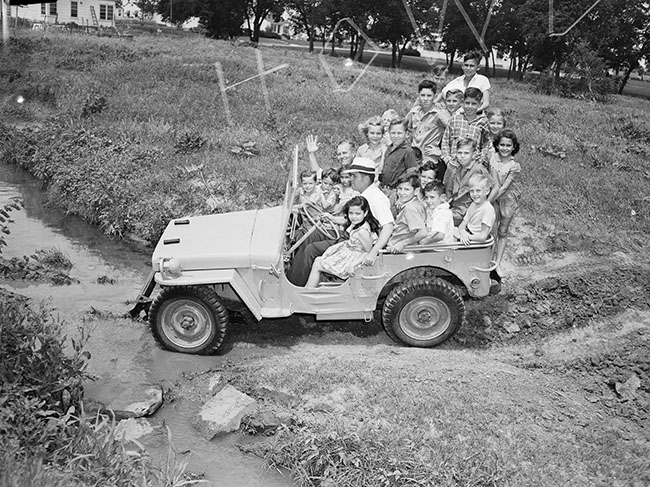
This photograph was published in the April 29, 1946, issue of The Fort Worth Star-Telegram. It’s located in the University of Texas at Arlington’s digital archive library.
Fort Worth Star-Telegram Collection, University of Texas at Arlington Libraries. Brooklyn Heights School jeep “test run”. (1946). Retrieved from https://library.uta.edu/digitalgallery-beta/img/20033476
“Twenty neighborhood children took a “test run” in a jeep to be used for a carnival at Brooklyn Heights School. Driving the jeep is Jack Scott, and sitting beside him is Howard Victry, president of the school Dad’s Club. The children and Mr. Victry are facing the camera and Mr. Victry’s hand is raised. Published in The Fort Worth Star-Telegram Morning Edition April 29, 1946.”
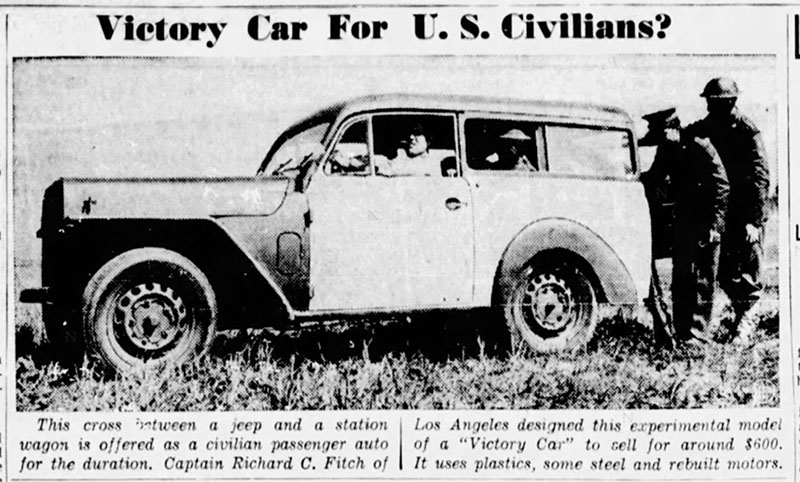
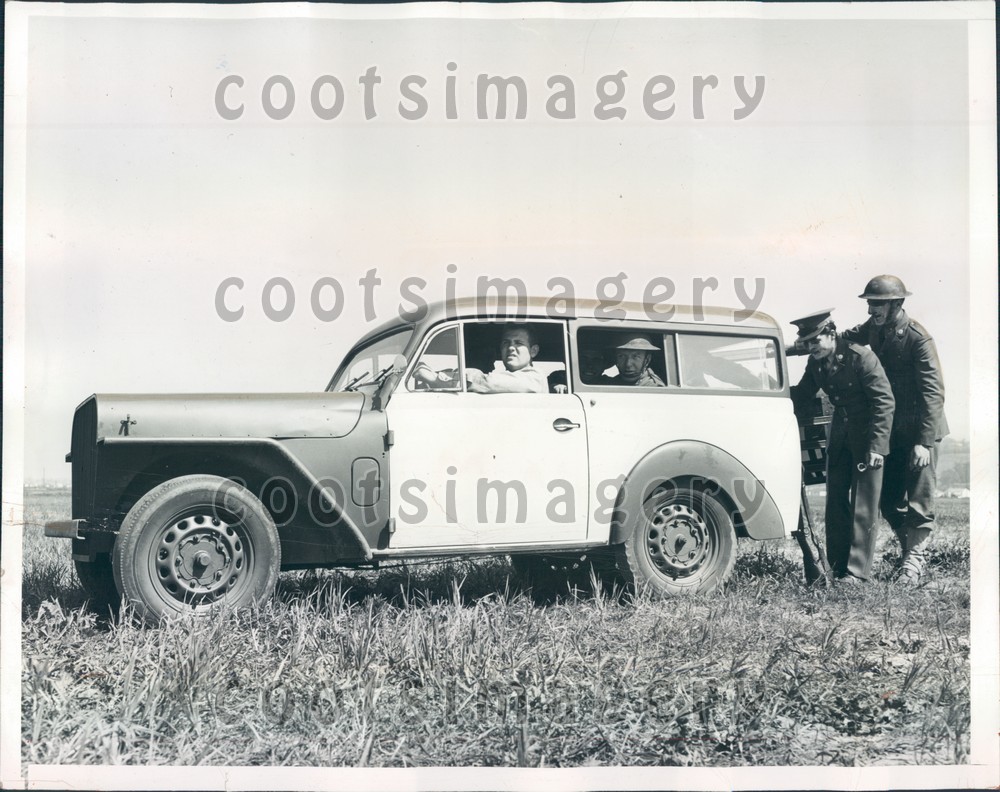
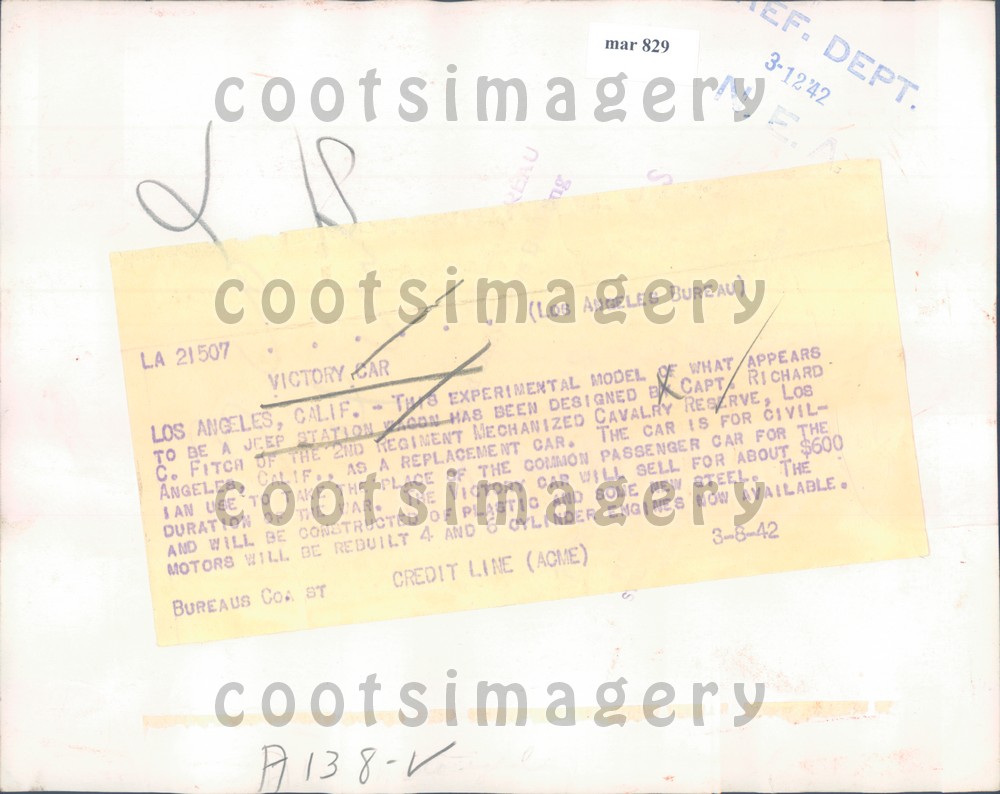
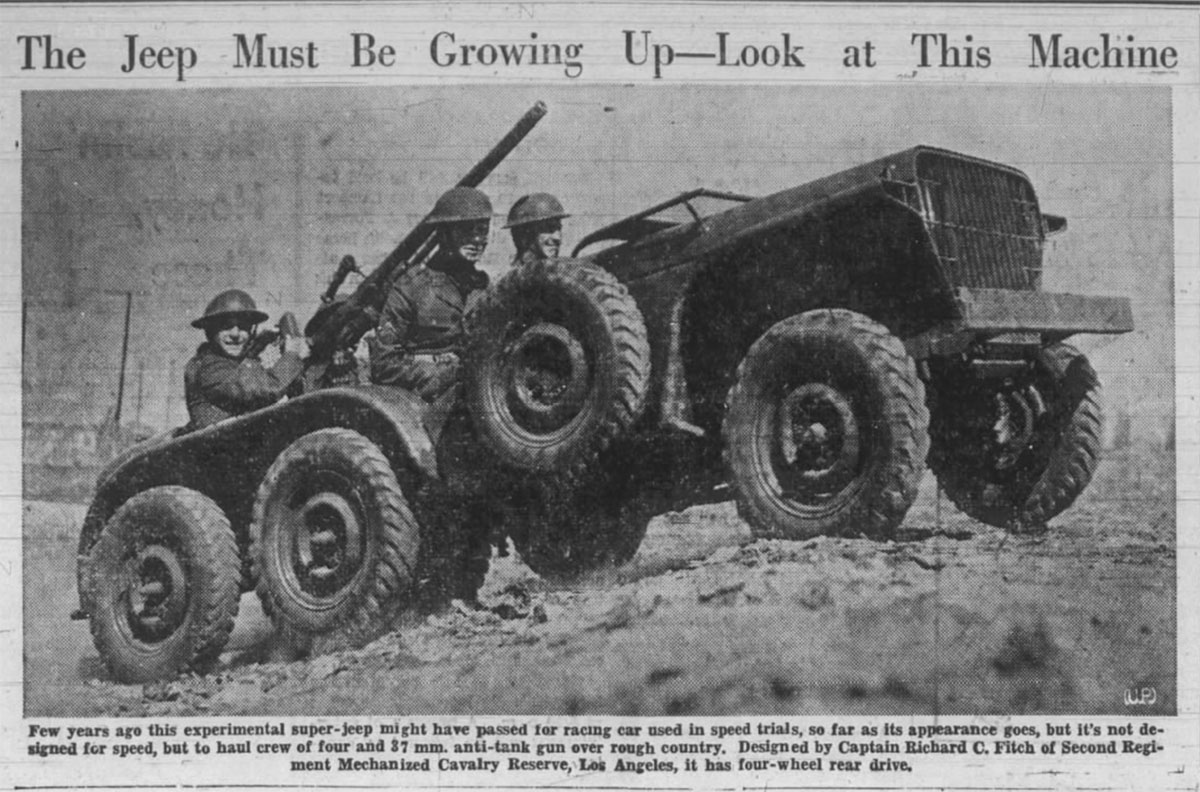
UPDATE: UndiscoveredClassics.com had some additional insights into this vehicle. I tried to learn more about Captain Richard C. Fitch of the Second Regiment Mechanized Cavalry Reserve, Los Angeles, but didn’t have much luck. I did learn he was a design engineer for the Army and was responsible for the MT Tug design (see below post). Below is a photo of how it looked in a newspaper.
March 18, 1942, issue of the Sacramento Bee, page 14.
=======================
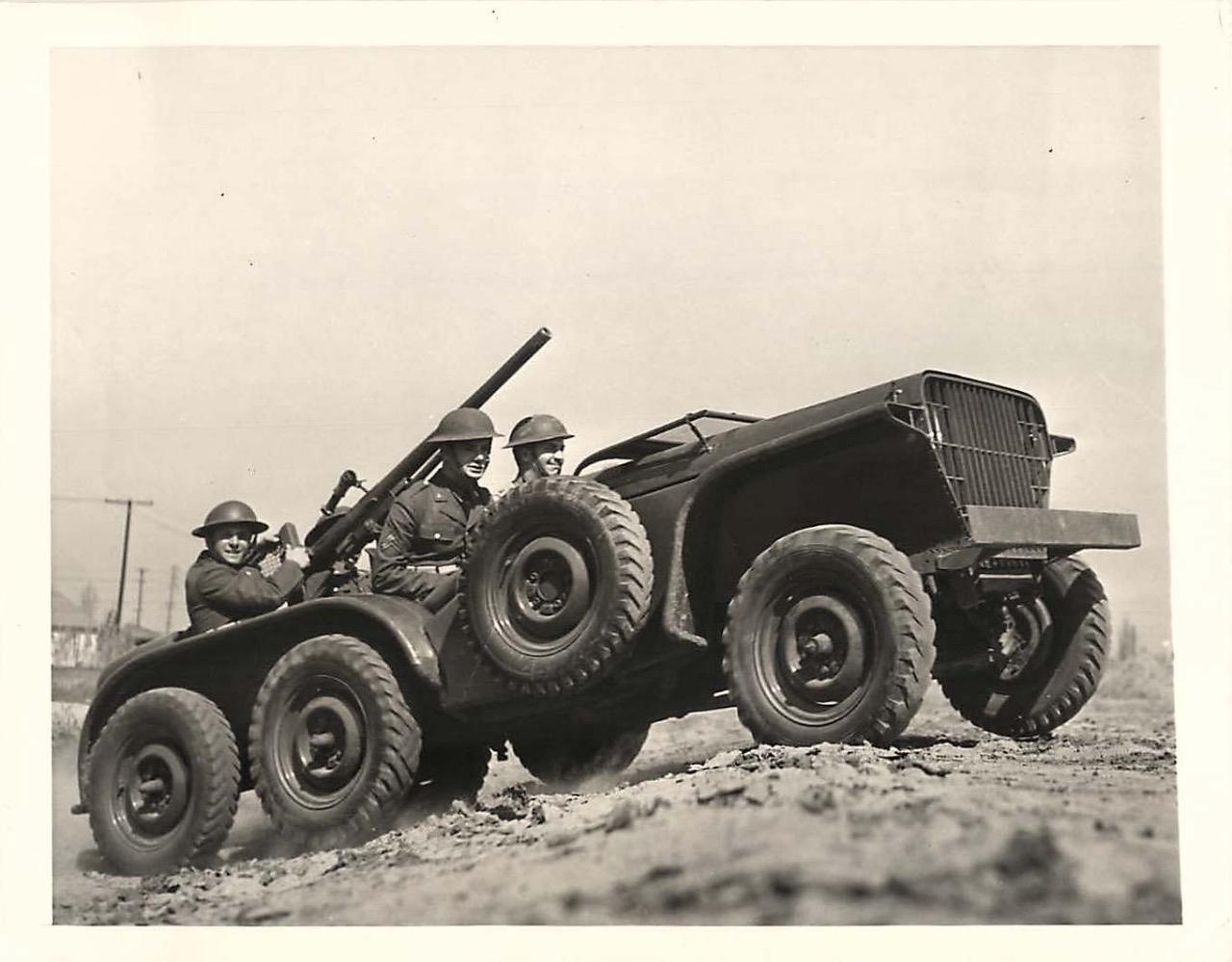
Originally published March 2014: I wonder what ever happened to this prototype? Marc spotted this unusual photo. The vehicle doesn’t seem very jeep-like, except in its compact design and front clip similarity. It doesn’t appear it was four wheel drive.
UPDATE: This photo of an MT Tug (aka “Super Jeep”) with the Ford GP grille was published March 16, 1942, in the Roseville Press out of California. Richard C. Fitch also designed this Victory Car.
=========================
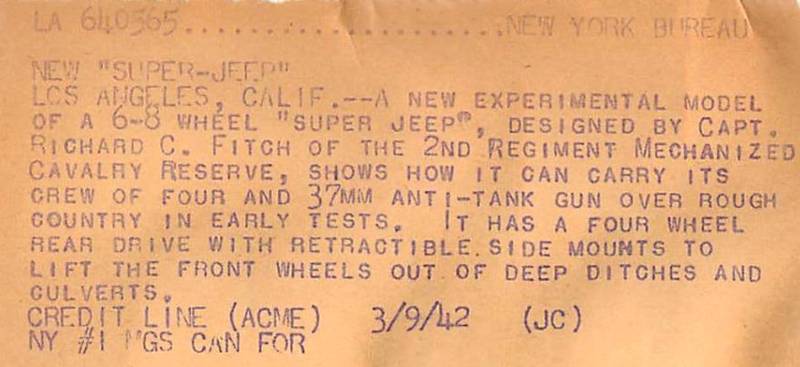
Update Posted on March 2, 2017:Here’s another MT Tug Press Photo. See one sold on eBay in 2014 at the bottom of the post.
“1942- Very rare example of a 6×6 Ford MT Tug “Super Jeep” designed by Captain Richard Fitch of the 2nd Regiment Mechanized Cavalry Reserve. The MT Tug was built in 1941 experimentally for units of the U.S. Army’s Tank Destroyer Command as a light fast vehicle capable of mounting the 37mm anti tank gun..unfortunately series production of this Jeep was not eventually authorized as the gun needed two people to operate it, and the vehicle with gun fitted, could only carry two men so the driver had to act as gunner, which did not make the vehicle a good idea ”
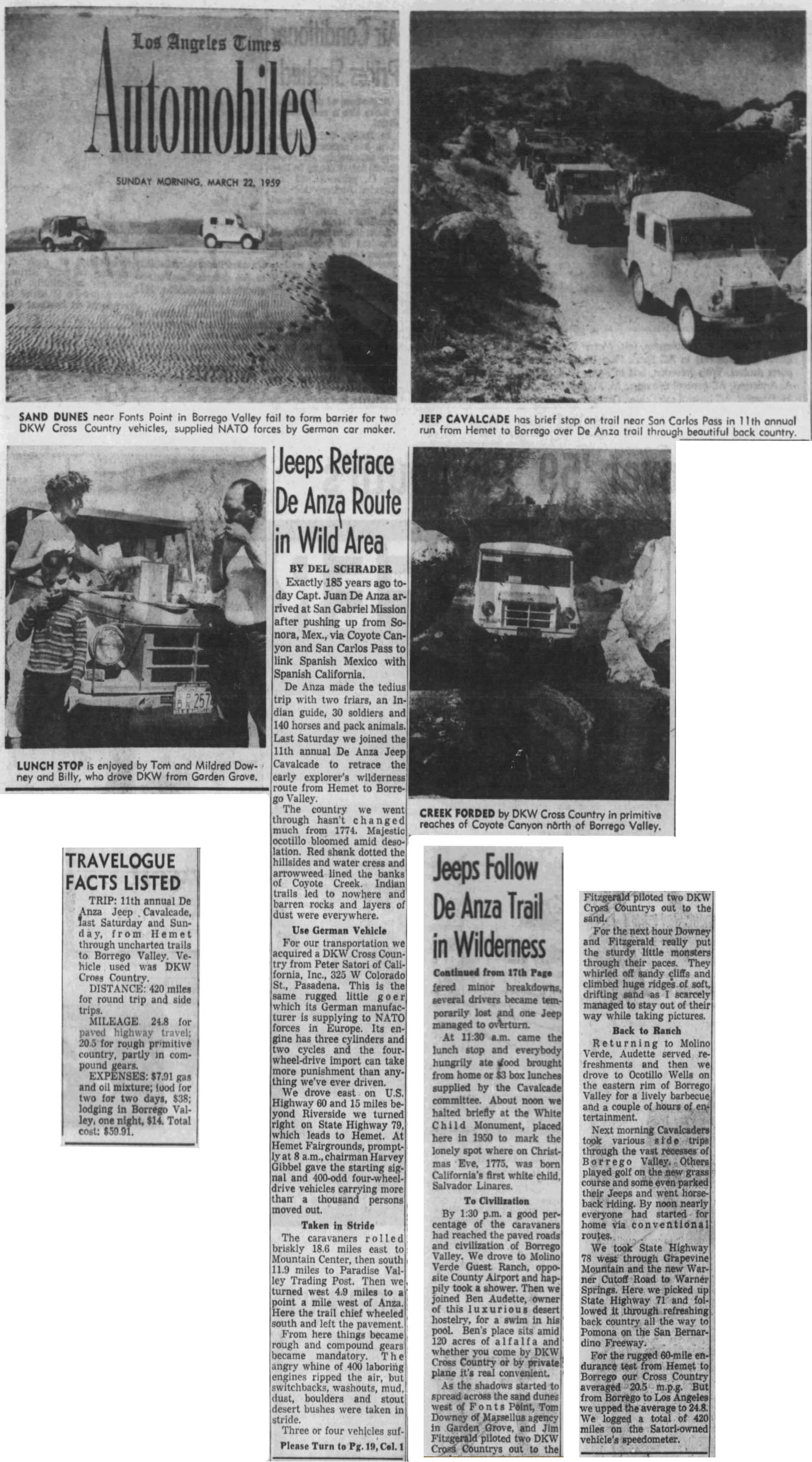
1959 marked the 11th annual Hemet to Borrego via De Anza trail Cavalcade. That year over 400 vehicles joined the adventure. The author and photographer of the below article, Del Schrader, was transported over the trail via two German DKWs. The article was published in the March 22, 1959, issue of the Los Angeles Times.
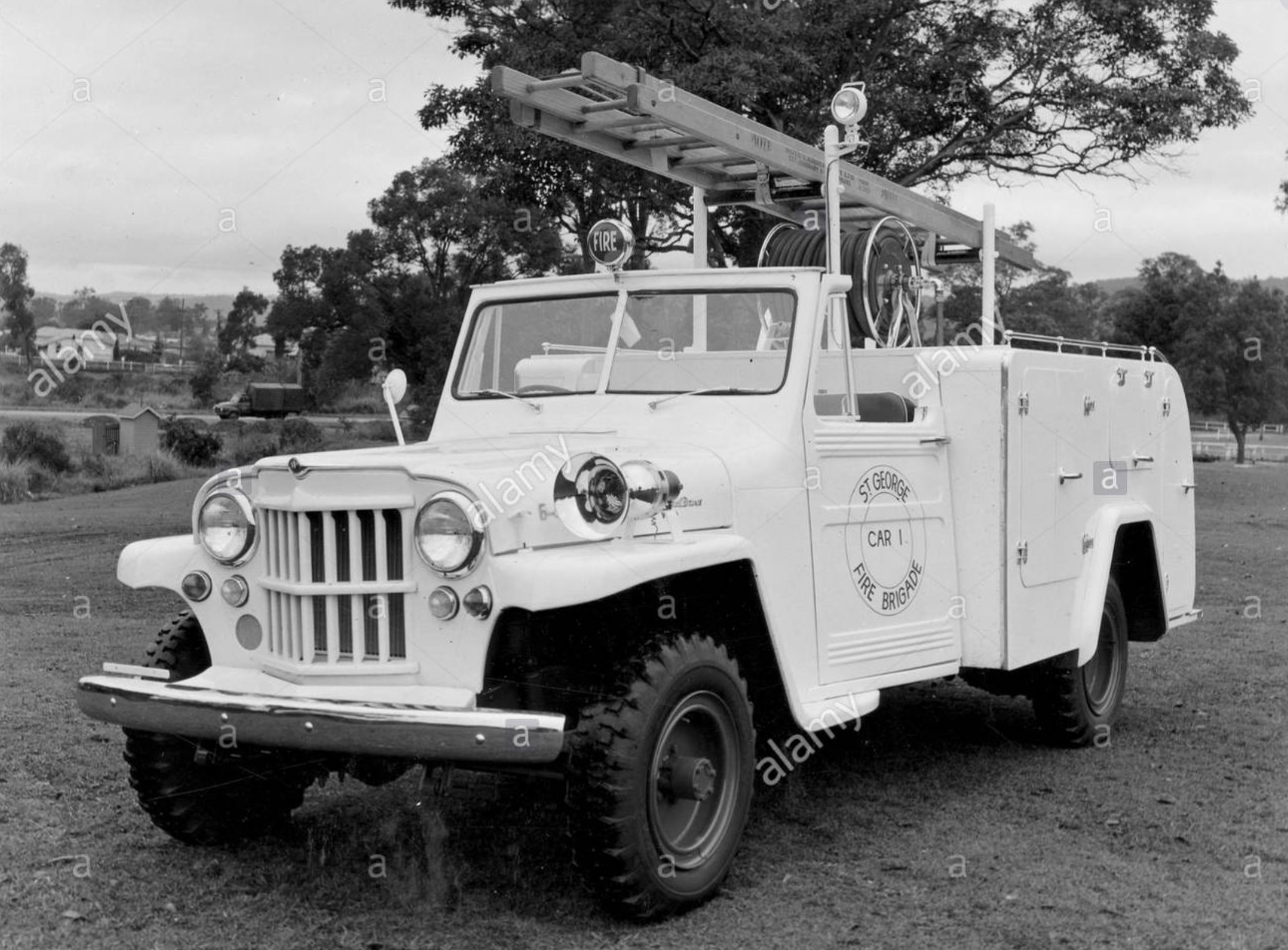
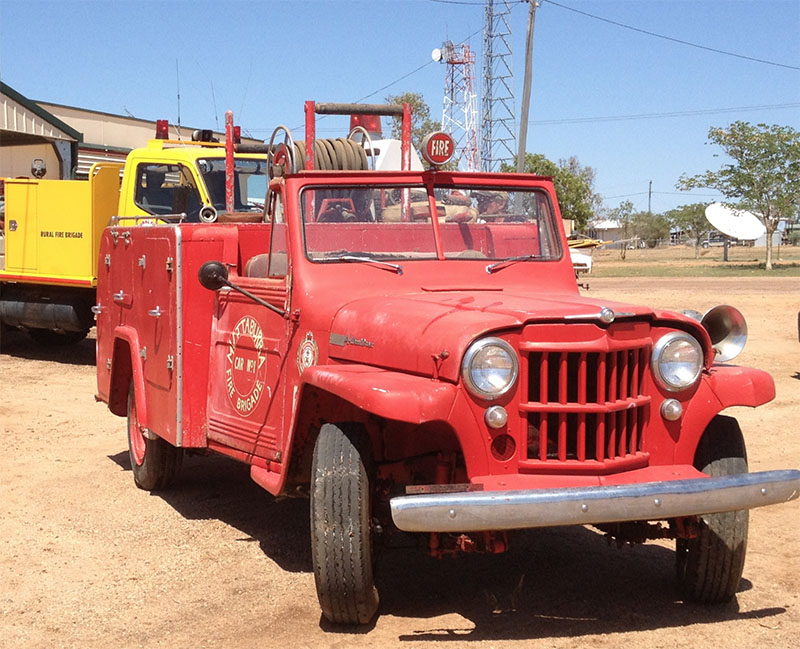
“St George Fire Brigade Car 1, July 1962. St George Fire Brigade’s Car 1 converted from a Willys Jeep Truck. The Queensland Government supplied these units to small rural towns in 1961. The chassis were built by Willys Motors Australia Pty in Brisbane and the bodies by Enoggera Motor Body Works.”
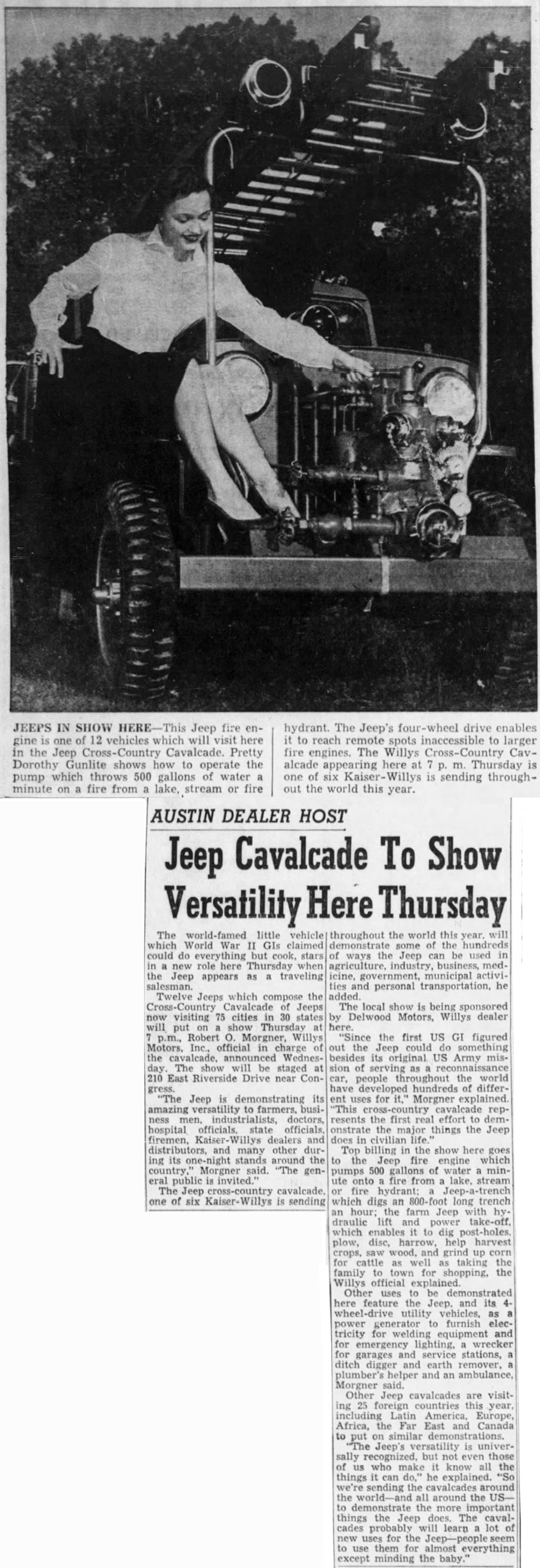
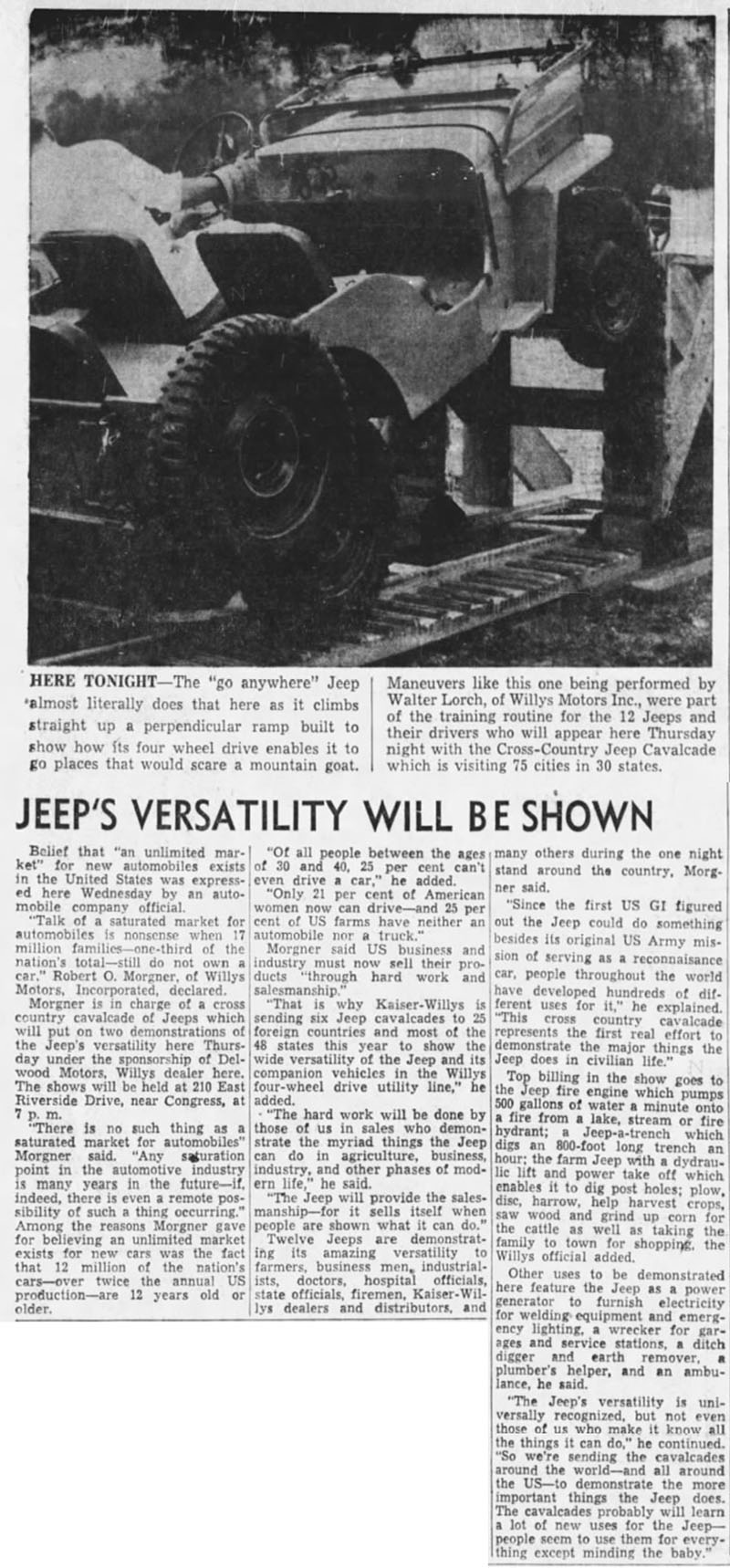
Two articles in the Austin American shared the news, both with a photo,that a calvacade of jeeps would be visiting Austin, Texas, Calvacades were also planned around the world for 1954, with jeeps visit 25 countries outside the United States.
This first article appeared in the April 21, 1954, issue of the Austin American-Statesman and featured a CJ-3B fire jeep:
This second article appeared in the April 22, 1954, issue of the Austin American-Statesman and featured a CJ-3B climbing a vertical wall:
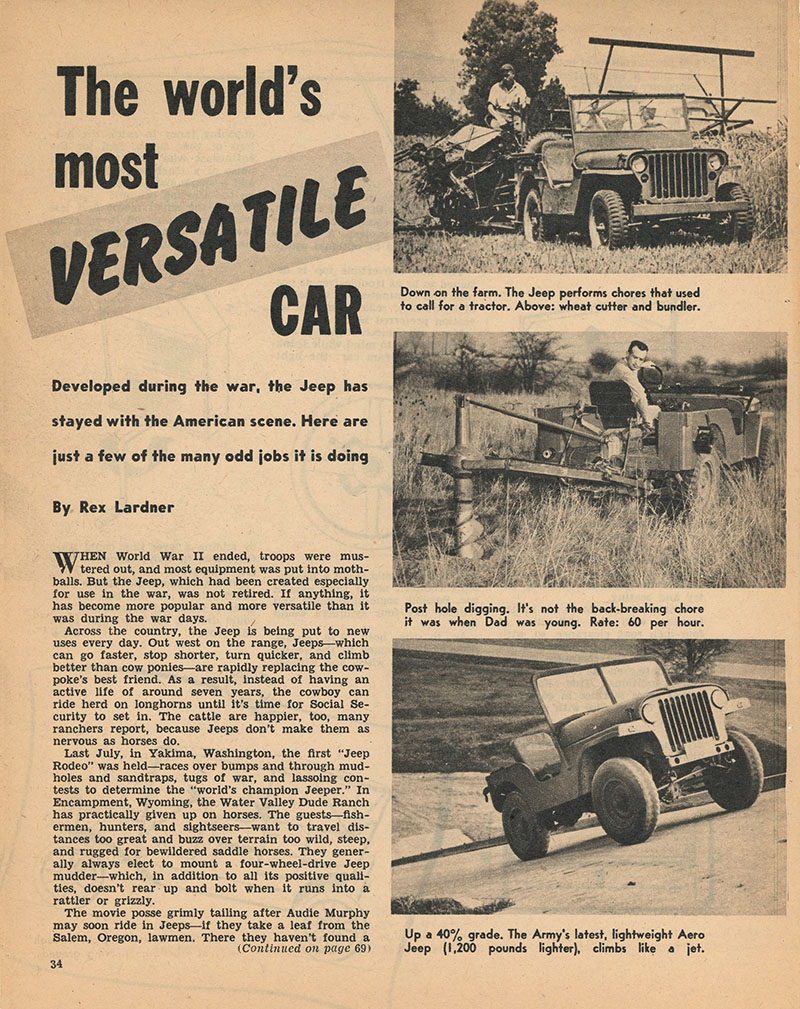
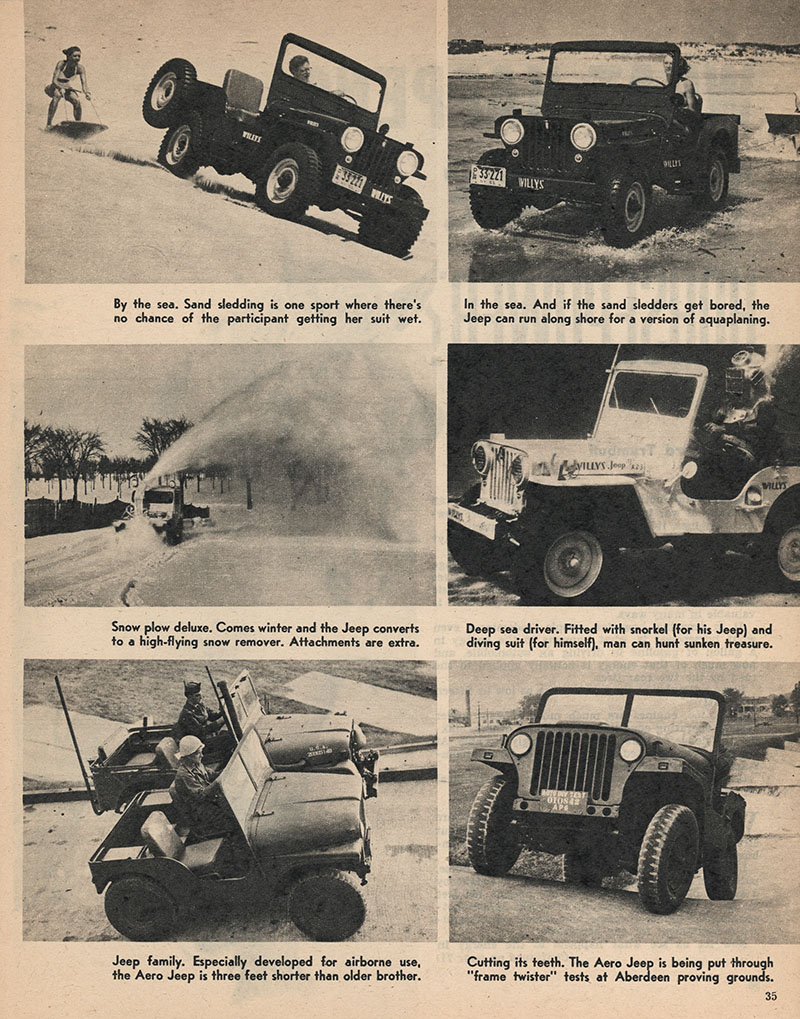
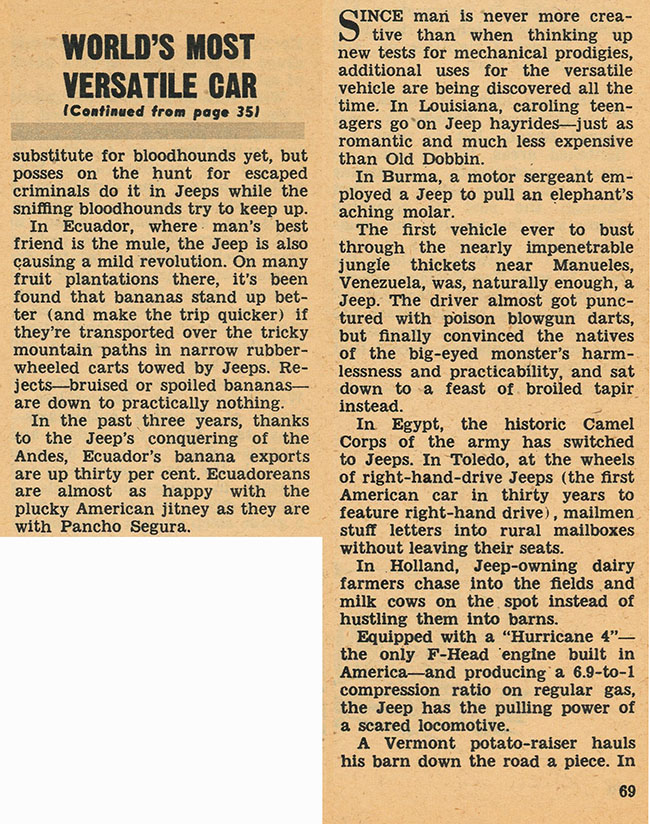
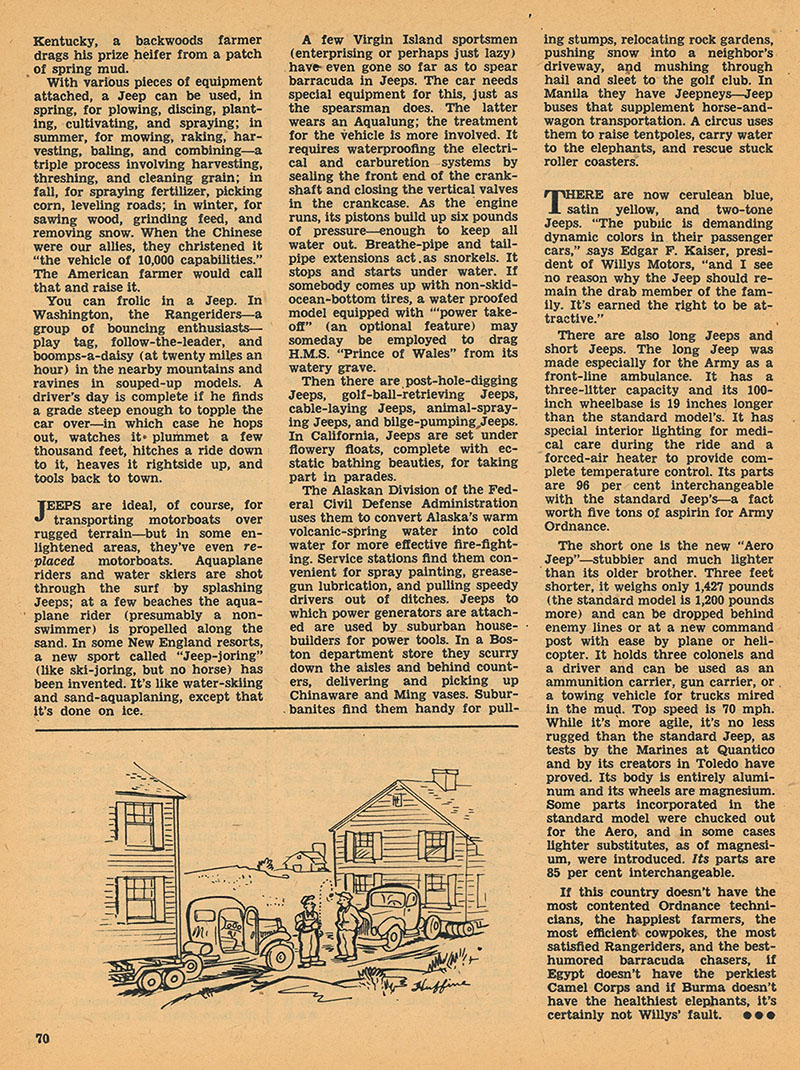
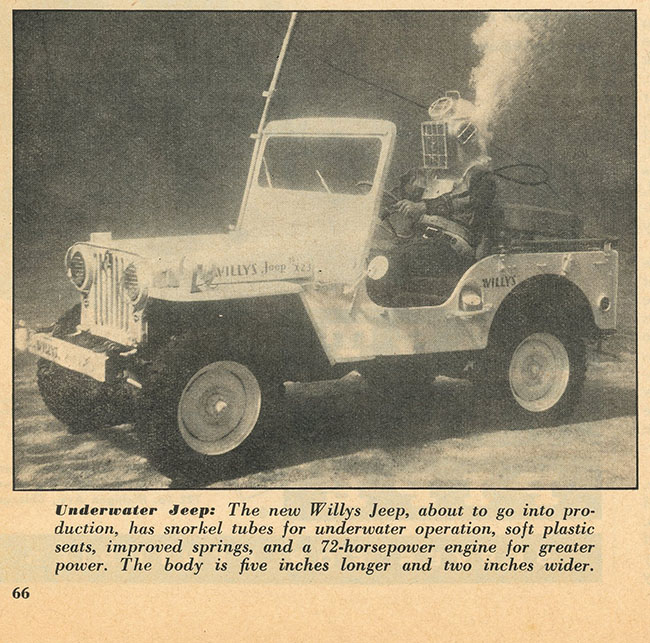
In the January 14, 1952, Newsweek put out an article about the jeep’s versatility. There are some interesting tidbits, such as the Chinese’s nickname for the jeep was “the vehicle of 10,000 capabilities”. The jeep was used to spear barracudas in the Virgin islands, play tag in Yakima, ski via jeep-joring in New England and Ontario, Canada,, and in Burma it was claimed that a jeep was once used to pull an elephant’s tooth.
This photo and caption was also included in a seemingly random area of the magazine, despite the fact that the same image appeared within the article.