History Research Archives

To Top

WWI Four Wheel Drive Star — Nash Quad

• CATEGORIES: Features, Unusual • TAGS: , This site contains affiliate links for which I may be compensated.

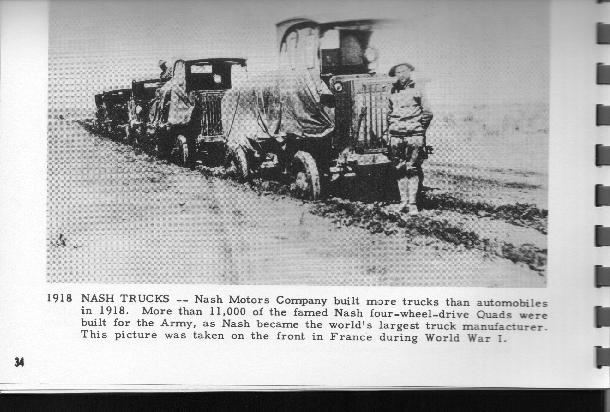
It was one of those days where I was searching for one thing and found another:  The Nash Quad Truck (the truck to the right is a 1919 Nash Quad, Owned by Bruce and Melanie Rice #8880).  These are 4wD with four wheel steering.  (see the video below to see a quad and its steering in action)

It turns out, these were a big hit during World War I.  In the Story of the Jeep, Patrick Foster writes that the Quad ” … dramatically proved it’s worth … and proved the value of four wheel drive …”

Here’s a brief history from the Pioneer Flight Museum:

The Nash Quad was first manufactured in 1914 by the Thomas B. Jeffrey Company, which was located in Kenosha, Wisconsin. It became quite popular during World War I and was used by the armed forces of not only the United States, but also Russia, France and Britain. One of the first motor vehicles to offer four-wheel drive, the Quad proved very suitable to the rough, unpaved roads of the time. In 1916, Jeffrey sold the production rights to the Nash company. Because of its popularity, it was produced in large numbers, including license production by Hudson, National, and Paige-Detroit. Exact numbers aren’t known, but apparently over 11,000 were produced in 1918 alone.

Here’s a video of a Nash Quad being started and driven:
[fb_button]
 
To Top

The Evolution of Water Fording

• CATEGORIES: CJ-3A, Features, Old Images • TAGS: , This site contains affiliate links for which I may be compensated.

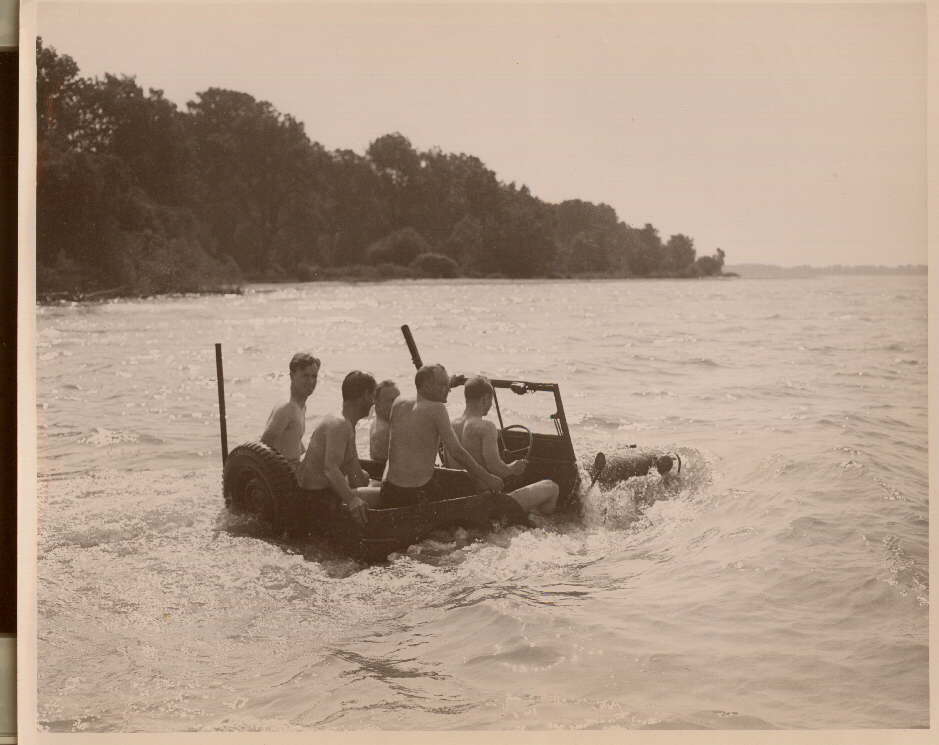
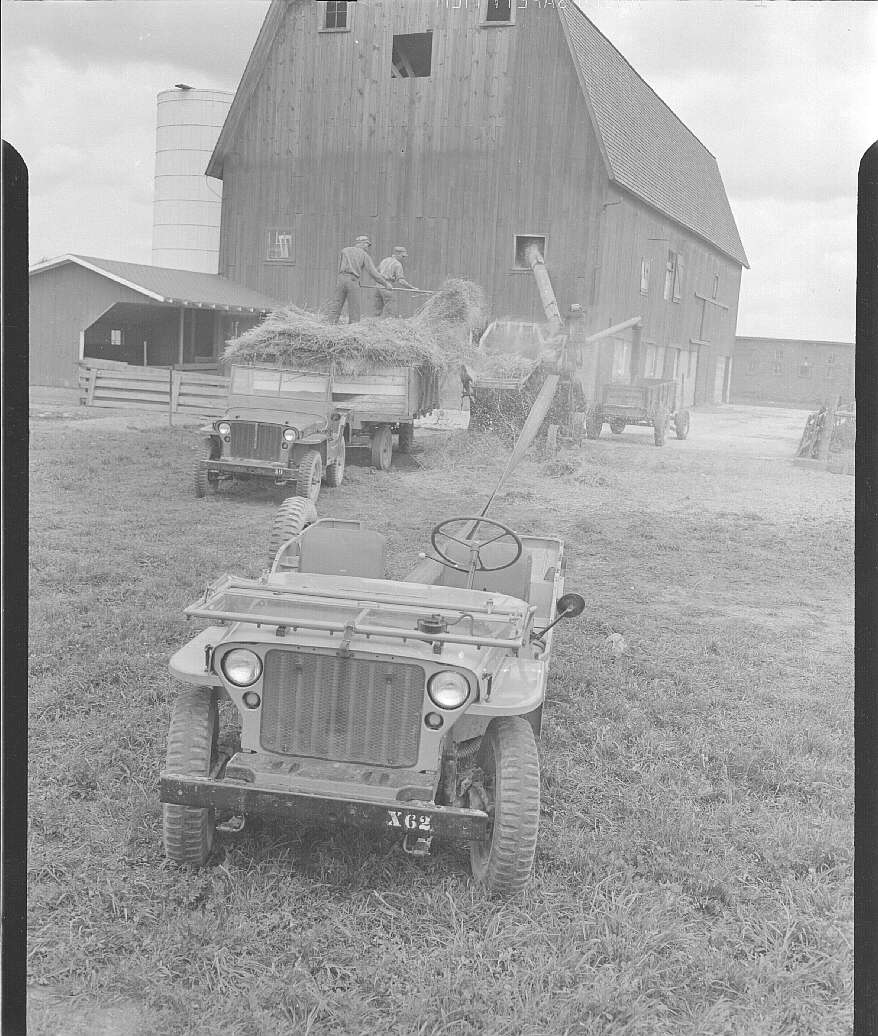
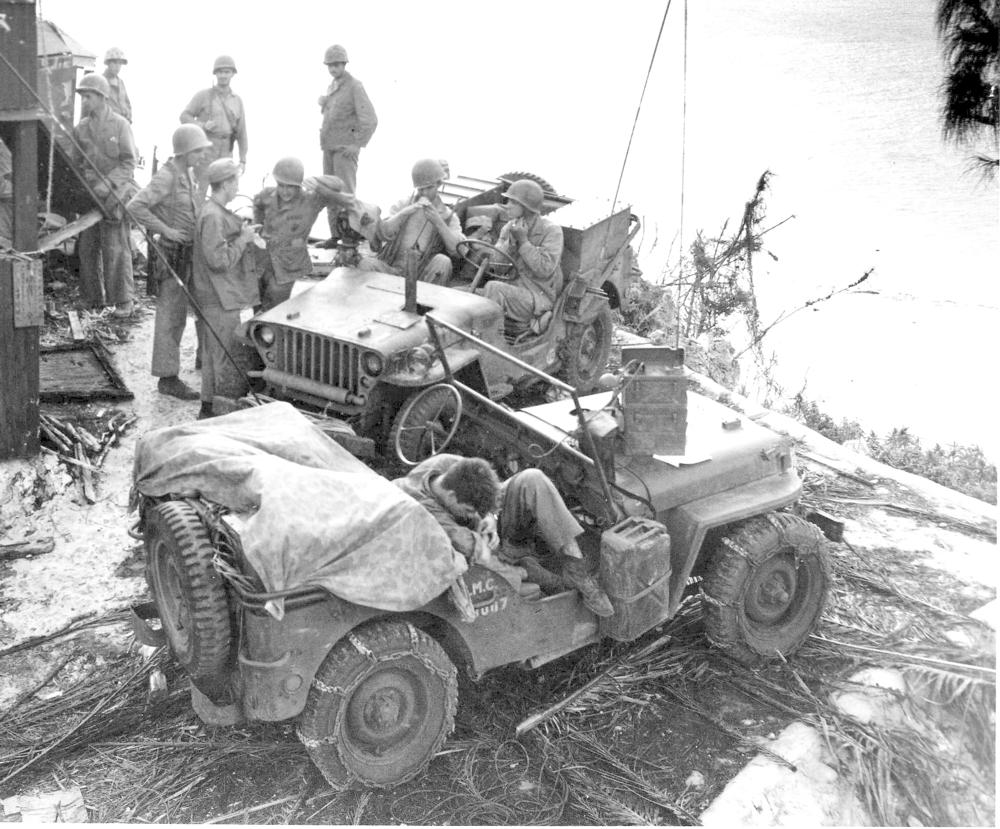
One of the more interesting early modifications for water fording is visible  in the picture below.  Note how the jeep facing the reader has the exhaust vented out the front of the grill with the muffler laying parrallel to the grille.  I can’t say I’d ever seen that before.

The CJ-3A.info page notes: “The recommended maximum fording depth of an unmodified jeep was 21 inches. That is about the height of the fuel pump and transfer case vents. Any deeper and things would start to fill up with water. Even at this relatively shallow depth the Technical Manual (2) advised that the generator brace should be “pulled up to release tension on the fan belt and stop the fan from throwing water over the engine”. That would be important in order to keep water off the ignition system. During a combat landing the 21″ maximum fording depth was not adequate.”

Read more about the Evolution of Water Fording here

[fb_button]
 
To Top

Old Willys Image Archive — Brian finds a treasure trove

• CATEGORIES: Bantam-FordGP-WillysMA-EarlyJPs, Website • TAGS: , This site contains affiliate links for which I may be compensated.

Our eWillys Michigan bureau, lead by Brian (and staffed only by Brian), uncovered a treasure trove of images, most I haven’t seen before, of early jeep demonstrations, publicity images and more.

Brian writes, “the source is the Toledo-Lucas County Public Library and, best of all, it is free!!!   Here is the Search link   http://66.213.36.25/.  To Link to the library image collection explanation, go here http://www.toledolibrary.org/collection/images.asp.  I think one of the best sets are the Farm Jeep trials in New Hudson Michigan..Wow”

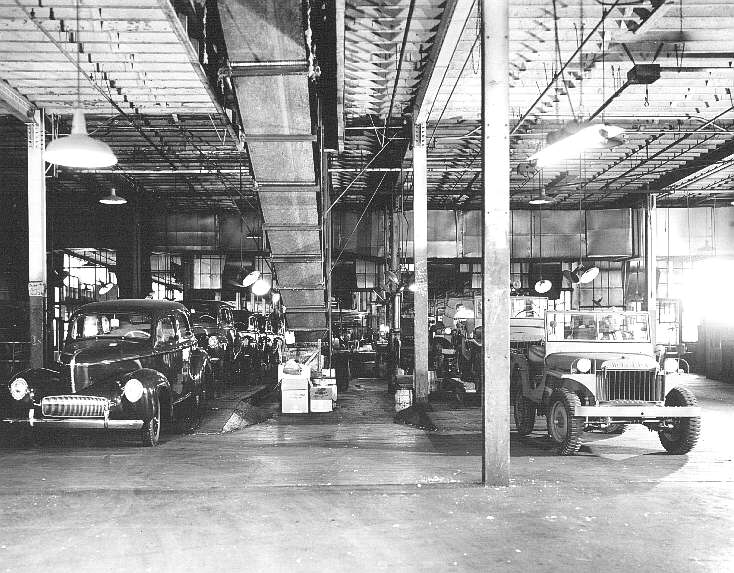
Here is some of the searches he has done: (Willys jeeps) (willys workers) (Jeep automobiles) (farm Jeep) (Willys factory) (Military).

Here’s some of the images found using the search term “jeep” — note that the term search term jeep doesn’t yield other pictures that I saw while surfing this site this morning.

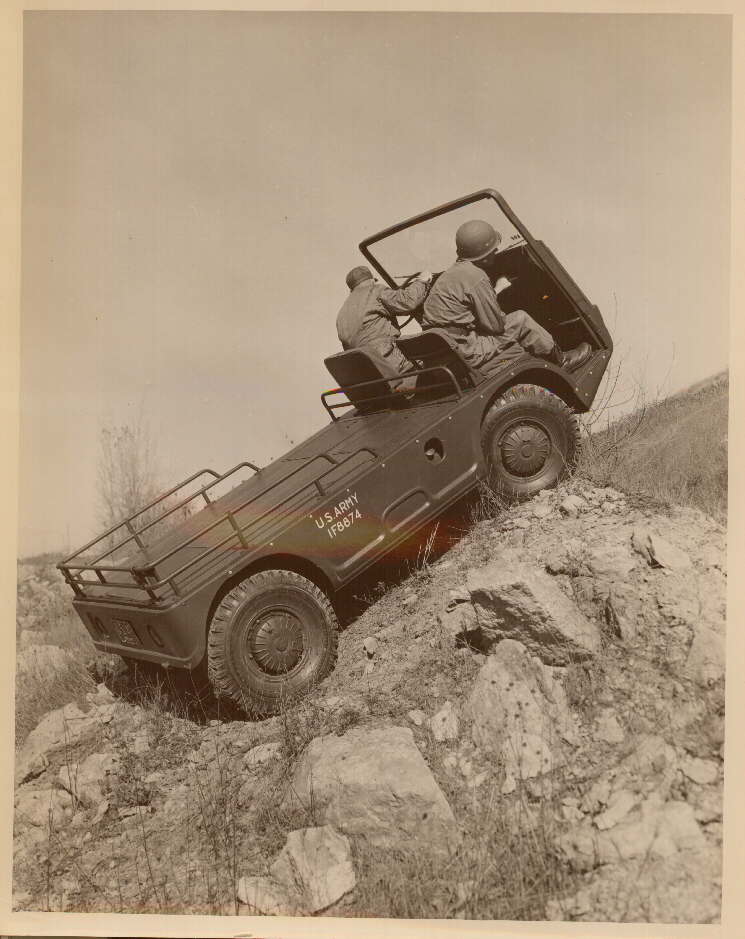
I’m not sure I’d want to be in the vehicle in the pic below….

[fb_button]
 
To Top

Austin 7 — Grandfather of the Jeep?

• CATEGORIES: Bantam-FordGP-WillysMA-EarlyJPs, Features, Unusual • TAGS: This site contains affiliate links for which I may be compensated.

So, I’m doing my best to avoid going out to my parents very cold, damp garage to finish fixing my mom’s car.  Of course, the internet is one of the best avoidance tools ever invented.

FLAT FENDER BABES:
On a lark, I typed in ‘Flat Fender Babes’ into google just to see if anything came up.  While most of the links were garbage, one link lead me to a list of significant production automobiles, created by Angry Stan at AngryStan’s blog.  Naturally, one of the vehicles listed was the Willys MB.  What was interesting about the MB’s inclusion was Stan’s comment that the MB was “very loosely based on the Austin 7”.

Whoa .. news to me.  What you talkin’ ’bout Stan?

Continue reading

[fb_button]
 
To Top

The History MB-CJ3B Willys-Viasa

• CATEGORIES: CJ-3B, Features, International • TAGS: This site contains affiliate links for which I may be compensated.

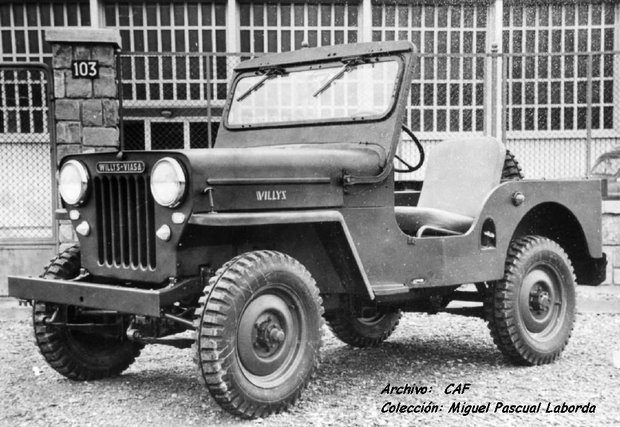
Here’s a good history of the MB-CJ3B Willys-Viasa with a variety of pics.

In the late 50’s, Willys Overland gave the rights to the V.I.A.S.A. firm to allow them exclusively to build the Univesal Jeep in our country. In 1959, the first permit to import parts and machinery is given by the Trade Ministry, in order to assemble the first units  in the V.I.A.S.A’s factory located in Zaragoza. These units weren’t launched until 1960.

It seems that that permit let V.I.A.S.A build the CJ3B model, with different engines and features from the original American model …”

Learn more about the Viasa here

[fb_button]
 
To Top

Fred Smith, Rare Jeep Collector

• CATEGORIES: Bantam-FordGP-WillysMA-EarlyJPs, Features, GPA (SEEP) • TAGS: , This site contains affiliate links for which I may be compensated.

While reading through the extensive history of the half track, I stumbled on the fact that the owner of the rarest of these half tracks was Fred Smith of the UK.  Having recently read that Fred Smith also owned and nicely restored the Ford Budd prototype, I got curious about who Fred Smith is.  At this point, I don’t know anything about him other than he’s got quite the jeep collection.  Here’s an approximate list (this list is a guess based on what I’ve read online):

  1. 1940 Ford Budd Prototype
  2. T-28 Half Track
  3. Willys MT-TUG 6×6
  4. 5 or 6 Ford GPs
  5. Ford GP four wheel steering
  6. Ford GPA (seep)
  7. Willys MA
  8. Willys MB

Not a bad collection!  Apparently, Fred shows these on occasion (or often) at the War and Peace Show at Beltring in Kent, UK.

[fb_button]
 
To Top

The 1940 Buddy (a Ford Pygmy/Budd prototype)

• CATEGORIES: Bantam-FordGP-WillysMA-EarlyJPs • TAGS: , This site contains affiliate links for which I may be compensated.

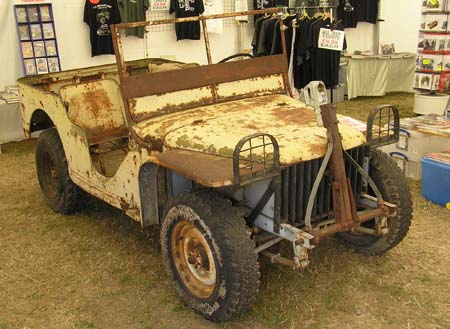
1940_budd_ford8In late 1940, after testing the Bantam prototype BRC (the Mark I) for one month,  the Quartermaster Corp Technical committee was impressed enough to ask Bantam for 70 additional pilot versions to test (these would be the BRC-60 or Mark IIs).  They also asked Willys and Ford to submit prototypes.  While Willys submitted a two wheel Quad for testing (they made another prototype: a 4 wheel steering Quad), Ford built 2 prototypes: one is the Pygmy (still exists) and the other was a Pygmy/Budd prototype called a Buddy. (Note that I attempt to use the same designations for pilot/prototype that Frederic Coldwell uses in his Preproduction Civilian Jeeps book.)

While the Ford Pygmy was submitted to the Quartermaster for testing, the Pygmy/Budd hybrid was not.  The history is hazy, but the original Budd disappeared into the California desert at some point. Miraculously, it was relocated by Jeff Polidoro in 1998.  The rumor is that is sold for $50,000 and was restored in 2005- 2006 by owner Fred Smith. There’s more about Fred Smith and his restoration of this vehicle.  The Buddy is now located in the UK.

The biggest difference between the Pygmy and Buddy, to the best of my information, was that the body was built by the Edward G. Budd Manufacturing and looked fairly different from the Pygmy.  Below are pictures I’ve collected across the internet about the Budd. Apparently, Budd also designed the KubelWagon body prior to WWII.   And, apparently, Budd had a role in designing the M151.

Here’s before and after pics of the Pygmy/Budd that I’ve found across the net:

Before Restoration:

Pic below found here

1940_budd_ford_proto_2

Pic below found here on the CJ-3B site

1940_budd_ford_prototype

Continue reading

[fb_button]
 
To Top

Spicer & Dana: Where did the Spicer 18 come from?

• CATEGORIES: Features, Transfer Cases • TAGS: This site contains affiliate links for which I may be compensated.

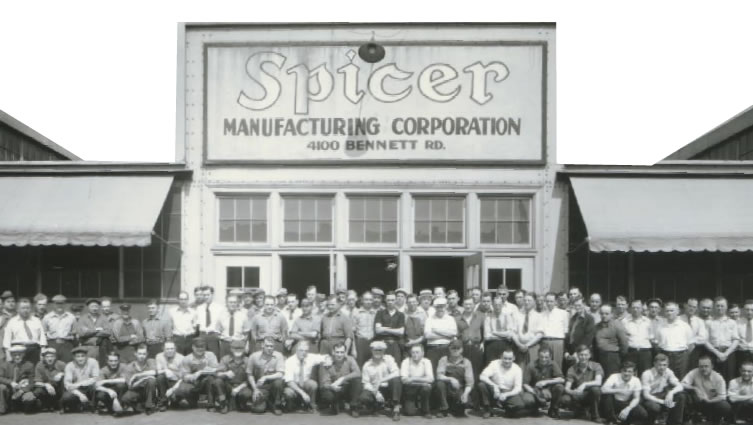
spicer_manufacturingI spent some time earlier to day trying to track down what came before the Spicer 18 transfer case.  Unfortunately, I can’t find anything such as a Spicer 12 or a Spicer 3 anywhere.  If the Spicer 18 was the Dana Corp’s first try at a transfer case, then it’s entirely reasonable to say they hit a homer with it, as it stayed in the jeep (though ratios and other minor changes were made) from 1941 to 1971, when the jeep started using a center pumpkin and the Dana 20 transfer case.

So, here’s some interesting facts I learned during my searches.

  • The Dana Corp was originally founded as the Spicer Corp by Charles Spicer in 1904 when he was 29 to manufacture universal joints.  Here’s an 83 page PDF book of the first 100 years of the company.
  • The Spicer Corp’s success seems to be the result of the industry standardization around their products due to their high quality and competitive pricing.
  • In June of 1940 during a meeting between Bantam, government, Spicer and Timken representatives, Bantam and Spicer worked out the details of the drive train, for which Spicer received 130,000 for the tooling costs. (from the m38a1 site).  The front end was also worked out during this meeting by an engineer from Spicer.
  • While the Willys used the passenger side drop transfer case (a spicer 18), the Ford Pygmy (Ford’s prototype jeep) and the Bantam BRC Mark I (the very first jeep prototype) and the BRC-60/Mark II (Bantam’s 2nd prototype) relied on a driver side drop transfer case from spicer that was also a Spicer 18. (Here’s more about it)
  • I could only find 4 spicer transfer cases.  The Spicer 18, 20, 23 (for Chevrolet 4wd conversions) and 24 (for Ford 4wd conversions) (see Napco history).  There’s likely more, I just didn’t find any info about them.
  • Charles Dana joined in 1913, injecting money into the company.  In a couple years, Charles assumed the presidency.
  • In 1946, the company was officially renamed the Dana Corp, which by that time was a holding company for Spicer as well as Parish, Salisbury, Brown-Lipe and others.  The idea was to continue using the brand Spicer for the drive train products due to the strong brand name.  For some reason, that’s not clear to me, over time the Spicer brand name seemed to disappear in favor of the Dana name.

Here’s some other links about this early history:

[fb_button]
 
To Top

1946 CJ-2A (ex race jeep) Wallowa, OR **SOLD**

• CATEGORIES: CJ-2A, Racing • TAGS: , This site contains affiliate links for which I may be compensated.

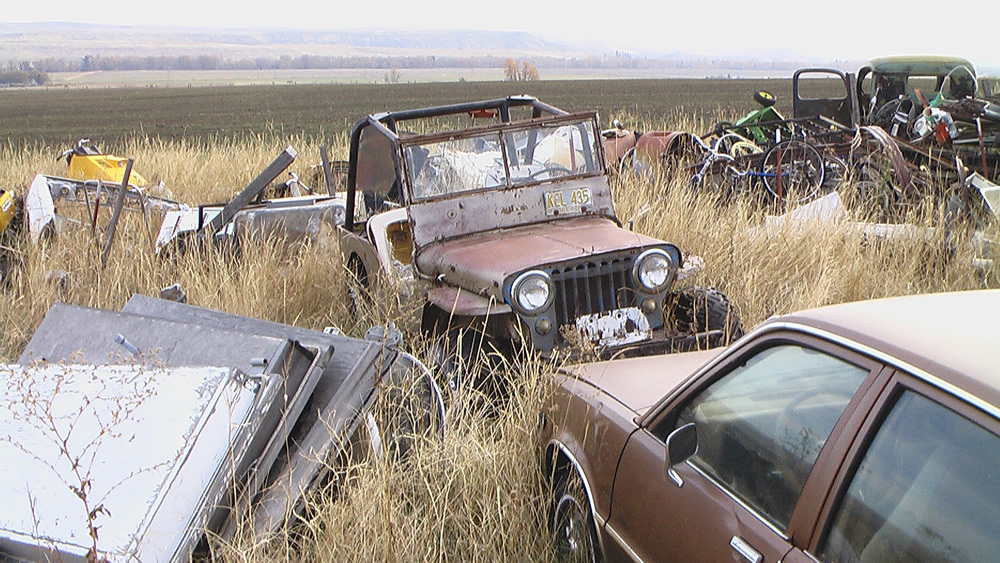
UPDATE:  Since I was heading to Seattle, I decided to stop by and check out this old racer (Also, it was a great excuse to head east out of La Grande, Oregon; Great drive!).

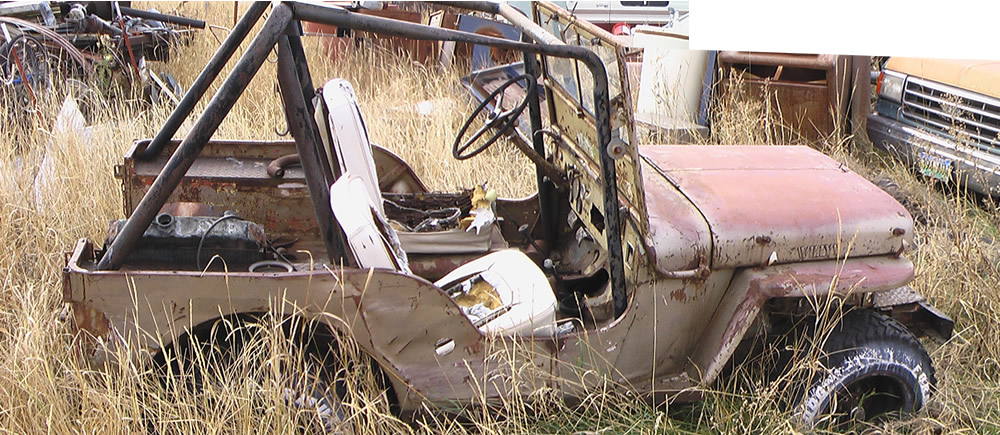
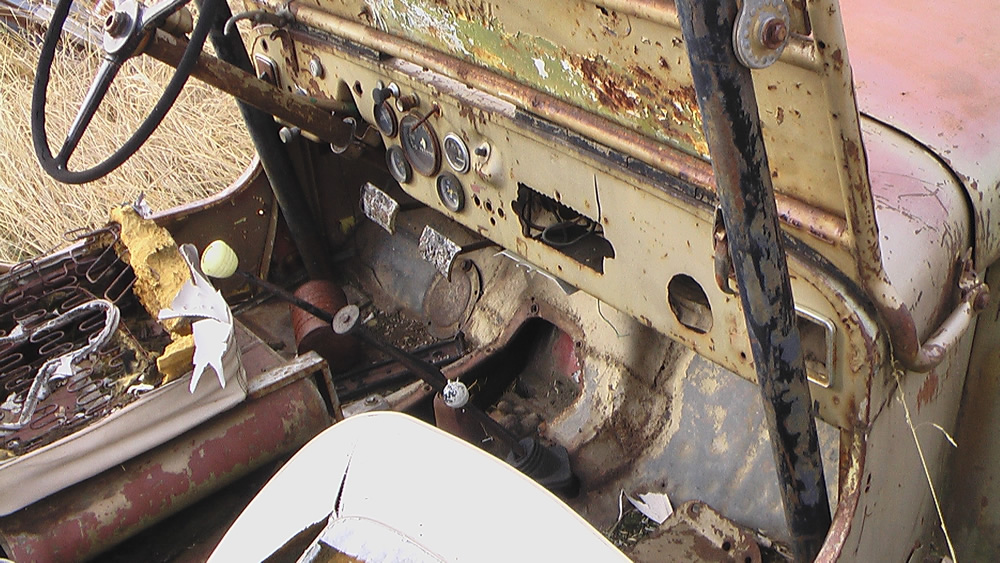
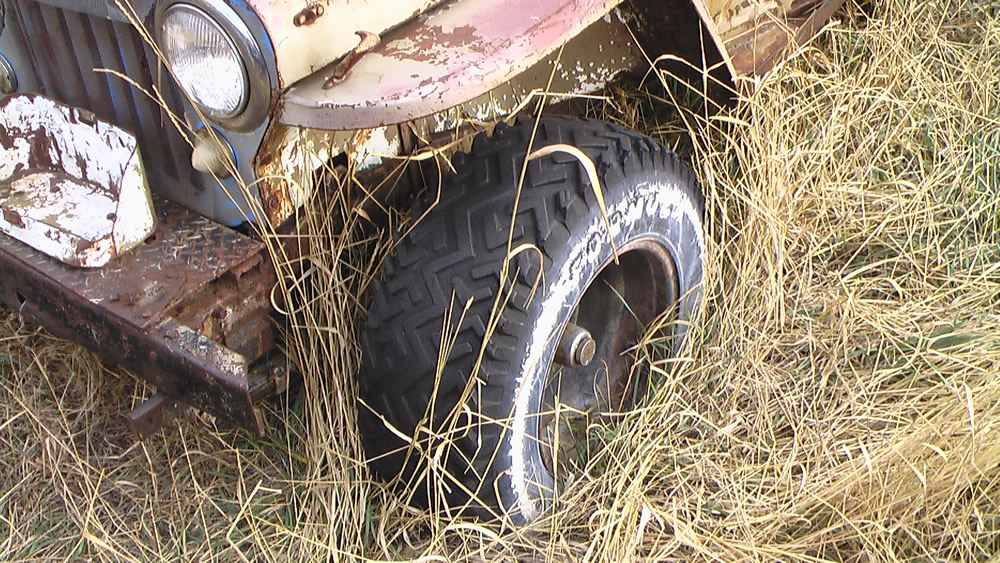
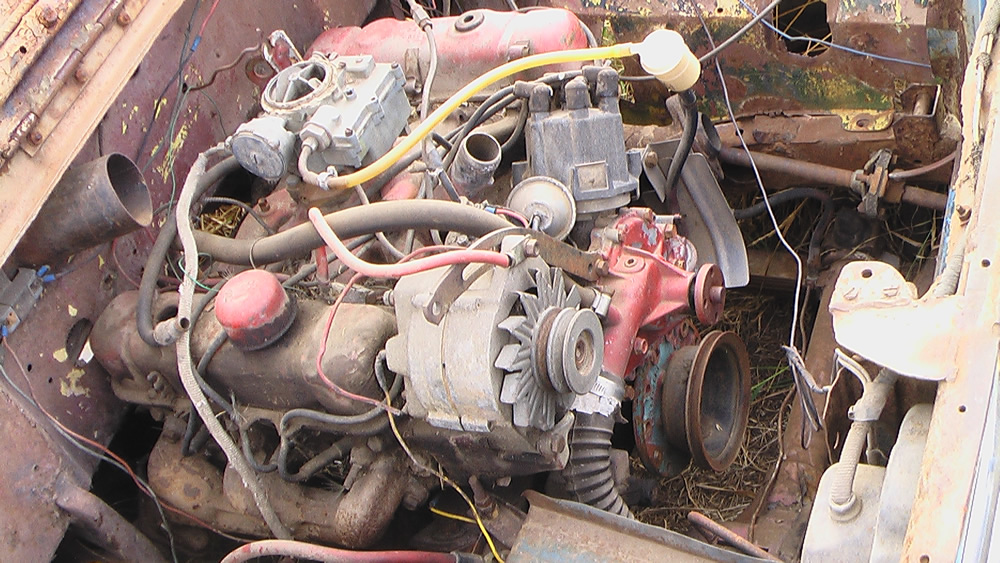
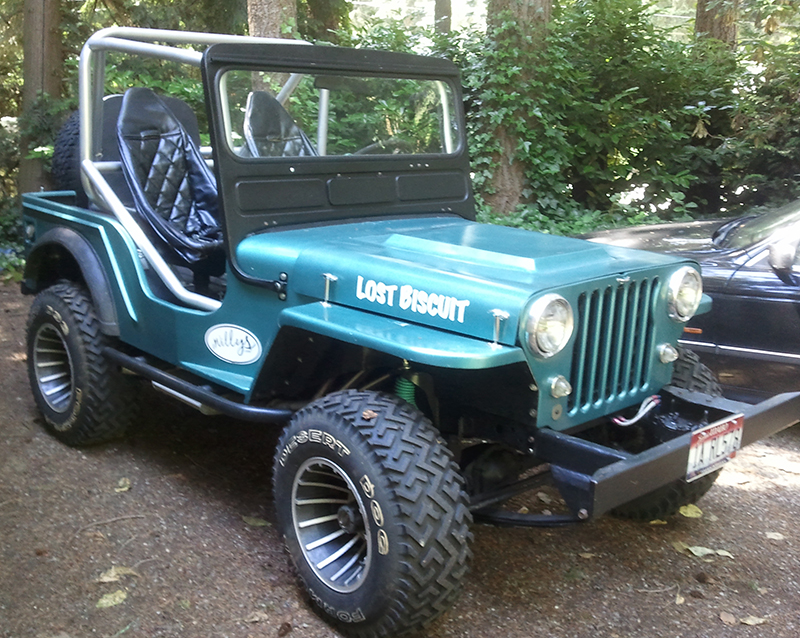
This is a total old school racing jeep.  The builder took a stock jeep, threw on some desert dogs, upgraded the engine with a buick v6 (leaving the stock exhaust manifolds), threw in a roll cage, vented the carb into the cowl, and that’s about it.  The builder’s son felt that there was a dana 44 in the rear that had posi, and maybe the front too, but he didn’t know for sure. Unfortunately, the weeds kept me from being able to get a jack under the jeep to test whether it had posi or not.

fullimage_racejeep


racejeep_dash racejeep_desertdogs racejeep_enginev6 racejeep_front

“46 willys,231 buick v6,full cage roll bar,ex race jeep,needing alot or a wealth of parts $400”

[fb_button]