Paul-M38 Research Archives

To Top

Paul’s Back Playing with his Willys

• CATEGORIES: Features • TAGS: This site contains affiliate links for which I may be compensated.

With the return of cold weather to Alaska, Paul’s back in the garage putting some finishing touches on his long-time project.

Paul writes,
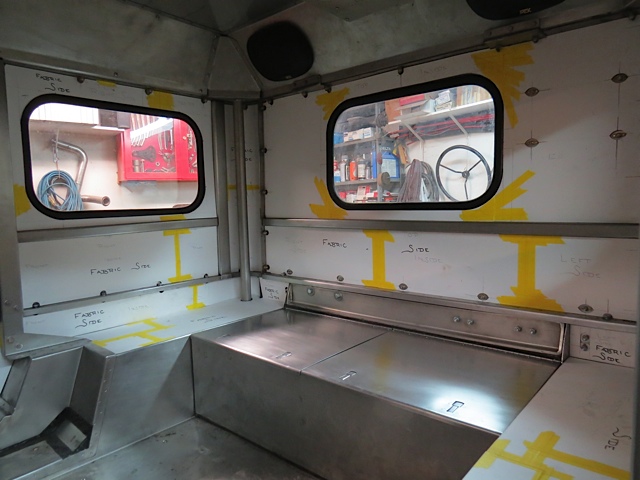
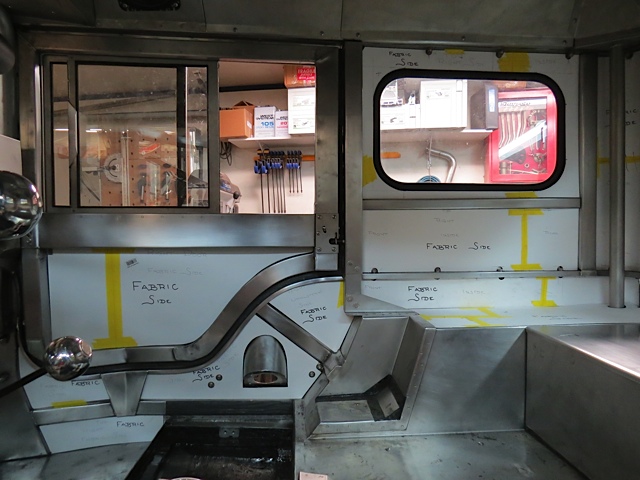
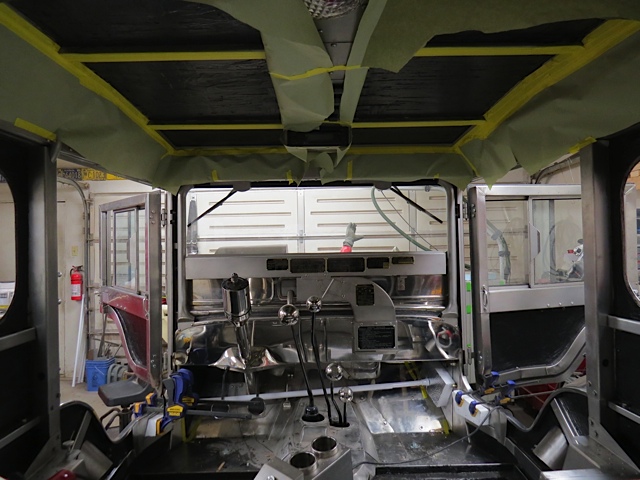
All the wood projects are put away for the winter and I’m back working on the Willys fitting upholstered panels to the interior. Sheets of white high density foam have been cut into the necessary shapes and (depending on their location) either covered with fabric or bonded to .050″ stainless steel. A silver/gray fabric will be used on most of the interior but six panels (three on the left and three on the right) will be attached to metal pieces for extra abrasion resistance in the front seat footwell area. I’ve coated the inside of the Willys with 2 layers of black silicone but I still need to apply the silicone to the open cell interior foam before I can begin installing the upholstery. My plan is to work from the top down so the six overhead panels will be the first fabric covered sections to be installed. Since the silicone takes 24 hours to cure I needed to come up with an easy way to hold these pieces in position while the silicone cured.
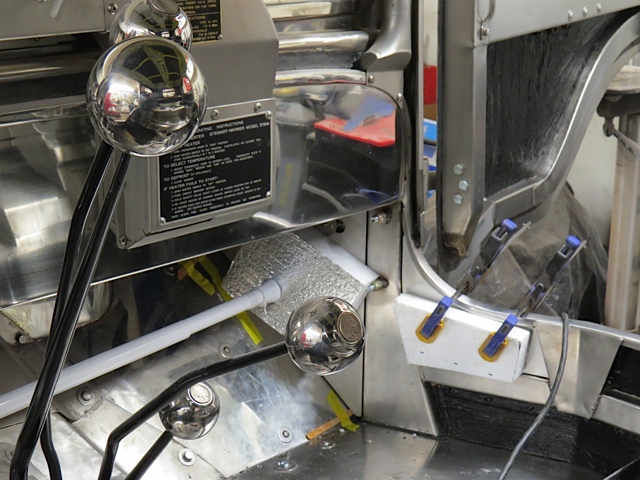
footwell-panels

The shower curtain rod, oops I mean the upholstery clamping fixture is pressing against the foam block holding the kick panel in position.

The Goddess suggested I lay on my back inside the Willys (just aft of the front seats) where I could hold four panels in position using both my hands and feet. She said 24 hours isn’t that long to stay in one position and after all I’d be laying on my back so it’s not like I’m doing any work or anything like that. Even her offer to bring me some food and a blanket for the night hours wasn’t enough to convince me this was a good idea so I attempted to find a different solution. What I wanted was an adjustable length tube where the clamping force could be increased or decreased as necessary and it should be reasonably cheap. Time to visit Lowes and wander the aisles to see what I could find. The solution to my problem was waiting for me in the bathroom fixtures aisle where I saw a fantastic display of assorted length adjustable shower curtain rods. They were designed as shower curtain rods, they were manufactured as shower curtain rods and they were sold as shower curtain rods but now they were Willys upholstery installation tools. The best part of this deal was the low price of each upholstery tensioner allowed me to buy four long ones (44 to 72 inches in length) and three short ones (24 to 48 inches in length) without spending very much money. I was happy and my back was happy.
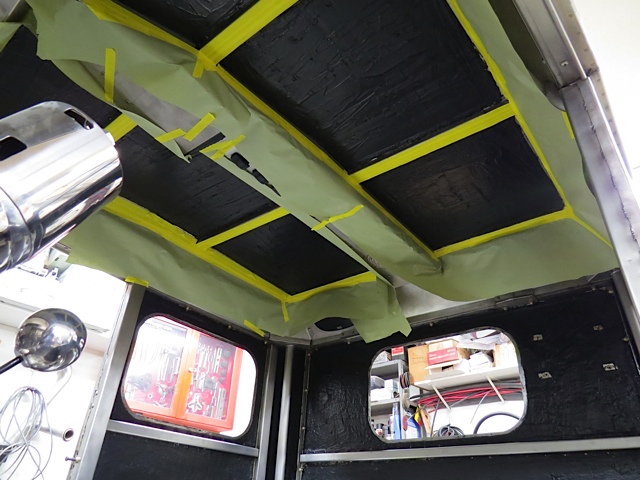
interior-upholstery

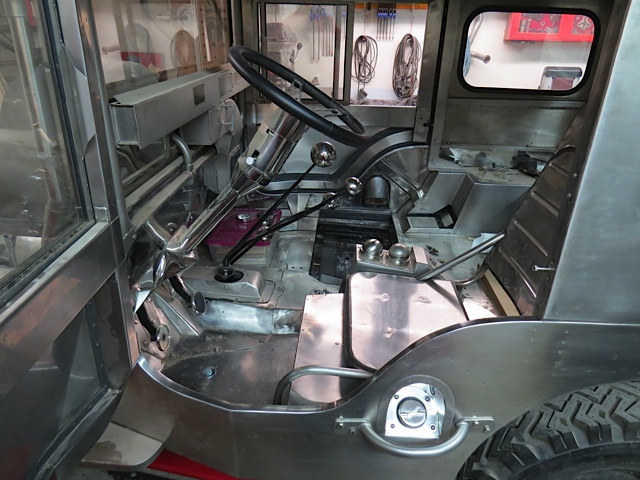
Since I was going to be climbing into and out of the Willys a lot I removed the front seats and the fuel tanks so I’d have more work space.

Today I positioned one of the long tubes from the interior of the left side of the Willys, across the transmission tunnel and over to the right side footwell to provide clamping pressure on the abrasion panel. It worked GREAT! There were two more metal clad panels ready for installation (below the door openings) but here I used adjustable clamps along with some small foam board pieces to spread out the clamping force during installation. I’ll send you pictures to go along with my words so you’ll have a better idea of what I’m doing.
interior-upholstery2

Since I was going to be climbing into and out of the Willys a lot I removed the front seats and the fuel tanks so I’d have more work space.
interior-upholstery3

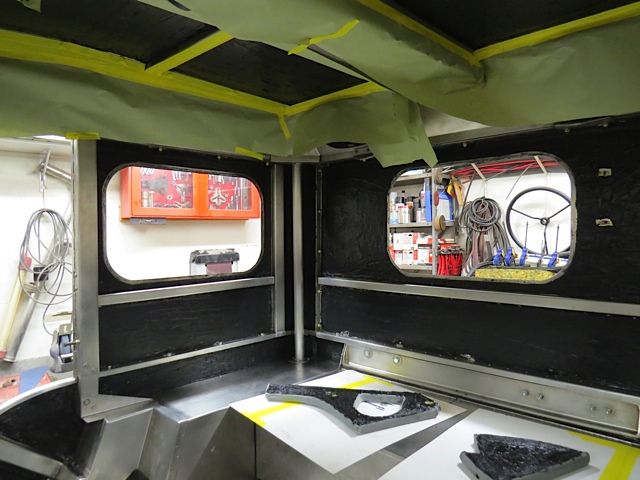
Notice the black silicone trimmed from the edge of the window opening? I still have a little cleaning to do in this area.

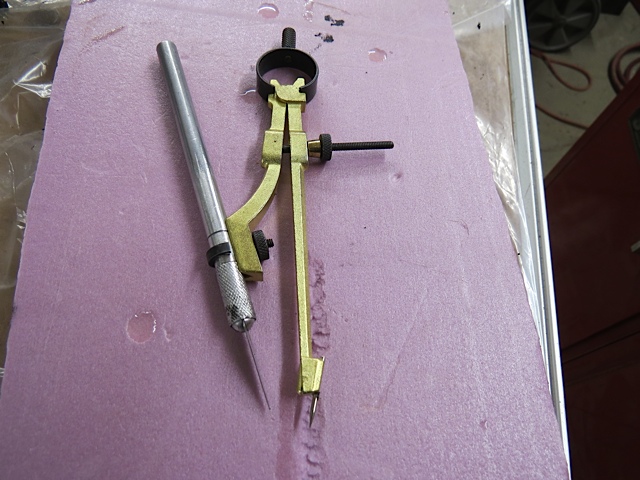
To prevent problems with the upholstery I removed the glass from both side windows and the rear window before I applied the black silicone on the interior of these top panels. Not having the glass installed made applying the silicone much easier but I managed to smear silicone where the rubber H channel (used to hold the glass to the metal panels) grips the metal edge. While I let the silicone cure I thought about how I could carefully trim the unwanted silicone from the window opening on the top panels. I could use a razor blade and make the cut free handed but I was hoping to be a little more precise than that so I dug thru my tool box and I came up with a simple but accurate solution. I found an old compass (the circle kind, not the where are we kind) and after removing the pencil I was able to fit a clone of a small Exacto knife where the pencil would go. Using the center pivot as an edge guide I adjusted the blade position by using the knurled knob so the cut would be made slightly past the edge of the rubber H channel. A quick pass around the window opening and the silicone was trimmed back the needed amount.
special-edge-trimmer

This little cutter worked great, I lucked out and had a cutter that was the same diameter as the average pencil so everything fit together with no problems.
[fb_button]
 
To Top

Knardly Rolls gets Busted — Sort of

• CATEGORIES: Features, Reader Stories • TAGS: This site contains affiliate links for which I may be compensated.

Most of you are familiar with Paul’s stainless M-38 project that’s going on its 26th (?) year (He’s almost done). However, according to the City of Miami, the project is roaming the streets of Florida. I’ll let Paul explain.

For many years my friends have been asking me when the stainless Willys would be back on the road. Thru the years I tried to offer an accurate estimate of when I thought (or hoped) the Willys would be back together but as each deadline passed I realized my completion plans were wildly optimistic. Until today.

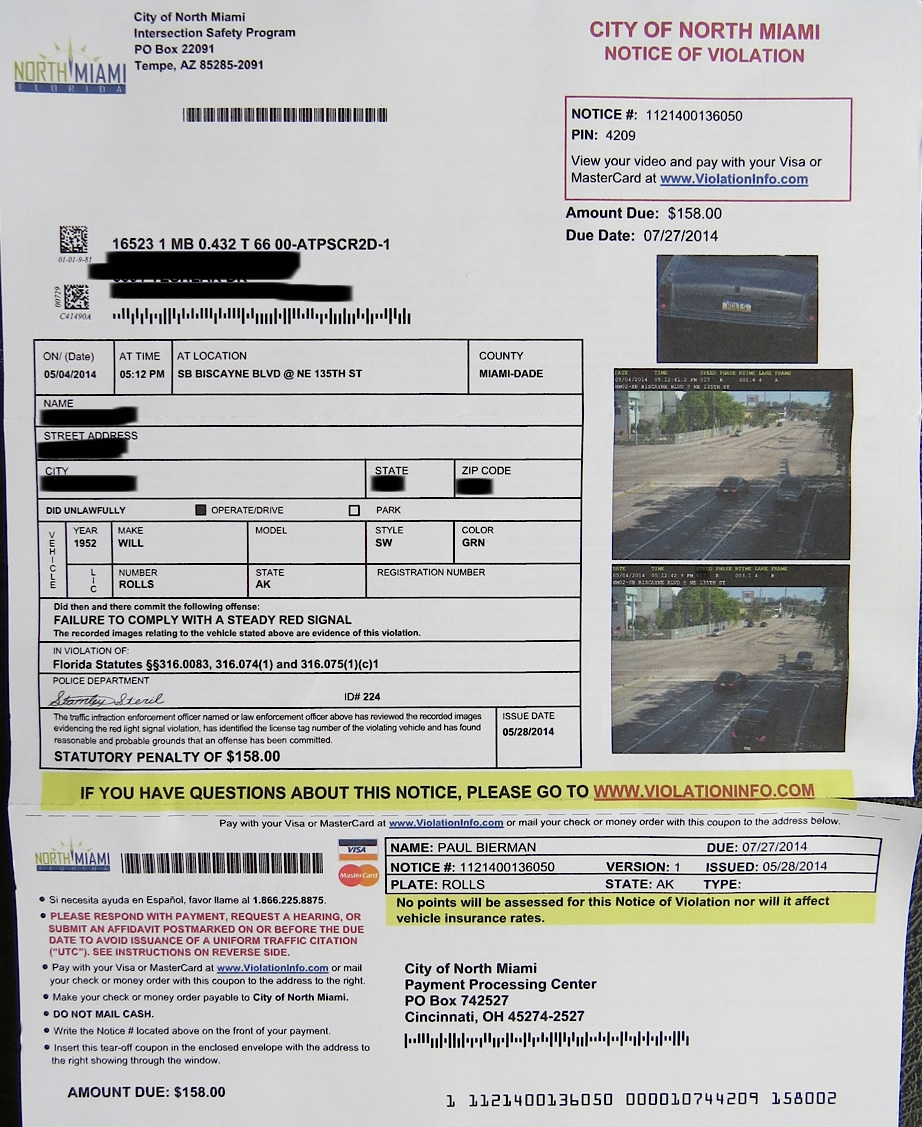
I just received official notice from the United States Post Office that not only is my Willys runnable, but during the first week of May 2014 my Jeep was cruising southbound on Biscayne Boulevard in Florida!

How cool is that? I feel like a putz, I had no idea I was finished with my long term rebuild but I can live with that. What really bothers me is my Willys went cruising without me, geeze after all I’ve done for my Jeep I’m quickly cast aside like a used kleenex when it’s time to play. Unfortunately my Willys had a bit too much fun and ended up running a red light. I know things happen and all that but now the city of North Miami wants me to send them $158.00 just because my little Willys turned renegade. There’s even an official photo recording this illegal event. Zowie!

I’m sure this ticket is real, it’s from: City of North Miami

Intersection Safety Program
PO Box 22091
Tempe, AZ 85285-2091

If that’s not enough to convince you I’m supposed to pay the fine to: City of North Miami

Payment Processing Center
PO Box 742527
Cincinnati, OH 45274-2527

paul-ticket2

And best of all the official driving infraction photo doesn’t show a Willys, the vehicle isn’t green (the old body color was OD but the local DMV called it green) and the license photo shows a different license plate design that what’s on my Willys so what’s an owner to do? I feel so cheap and used. I gave this Willys the best years of my life, I ate the cheap cuts of macaroni so I could purchase the parts necessary for rebuilding my Jeep, I stayed late in the garage ignoring friends just so I could have quality time with my Willys and this is what I get? My innocent Willys has turned Renegade and left me for a good time in sunny Florida so here I sit staring out the window watching fresh snow being deposited on the mountains!

My heart is broken, I’ll never be able to trust my Willys again. Yes I heard the often repeated stories about how your Willys will turn on you, how the good times will roll until someone better comes along but I didn’t believe this. I told my friends my Willys was different, my Willys is loyal and my Willys would never get into trouble. I’m so ashamed my Willys is like all the rest, just out for a good time and forget about everything else.

A word of warning to all who read these words…

Your Willys will get you into trouble!

Thank you

A very sad Paul Bierman

[fb_button]
 
To Top

Update From Paul on His Stainless Flattie’s Progress

• CATEGORIES: Builds, Features • TAGS: This site contains affiliate links for which I may be compensated.

Paul’s made some progress on his Willys. You can read past posts about his jeep, Knardly Rolls, here: http://www.ewillys.com/tag/paul-m38/paul-stainless-jeep-top-1

Paul writes, I’m using thin poster board to make patterns for the interior panels on the Willys. Since the reinforcing structure for the top and doors will be visible from the inside and not covered by upholstery I’ve had to make 33 individual paper patterns so far. After adjusting the fit of these patterns I’ll transfer their measurements to 3/4 inch thick high density foam and then it’s time for the upholstery wizards to work their magic. Fourteen yards of fabric are on order so that should be enough to cover everything but the floor. All of the top and side wall panels will be covered with a silver gray fabric and this same fabric will be used on the seats with the exception of blue insert panels covering the center of the seats. That’s the plan right now. I still need to buy some thick upholstery foam so I can begin cutting out the padding for the seats but I wanted to finish with the patterns first.

paul-stainless-jeep-top-2

More pattern pictures. To have enough room to make the patterns and install the upholstery pieces it was necessary to remove the fuel tanks and both front seats. The more work I can do myself the lower the cost will be to get the upholstery done so I don’t mind constantly climbing into and out of the Willys all day long. Things would be a lot easier if the Jeep was just a little bit bigger or I was just a little bit smaller. Oh well, I guess I need to call a Waaaaaaaaaambulance. Paul

[fb_button]
 
To Top

Always FOLLOW a Half Track . . .

• CATEGORIES: Event, Features, M-38, Reader Stories • TAGS: This site contains affiliate links for which I may be compensated.

Paul forwarded these pics to consider. The moral is, always follow a half track!

Last Saturday I visited the local military vehicle show and I saw an amazing sight.  Among the various military trucks, Jeeps and one half track on display there was a Willys  M 38 which had suffered a bit of body damage when the previously mentioned half track didn’t quite stop soon enough.  I don’t know the reason for the meeting of these vehicles but the attached pictures show the results of contact between one very light and one very heavy military rig.  The poor M 38 got the worst of this bump but the half track also suffered when it received a scratch in the paint on the front drum.  Sad to see but I don’t believe anyone was hurt.”

m38-halftrack-rear-ended1 m38-halftrack-rear-ended2 m38-halftrack-rear-ended3

[fb_button]
 
To Top

Knardly Rolls

• CATEGORIES: Builds, Features • TAGS: This site contains affiliate links for which I may be compensated.

Paul gives an update on his jeep build. (View past posts by Paul here)


2012-10-12-photo1-1

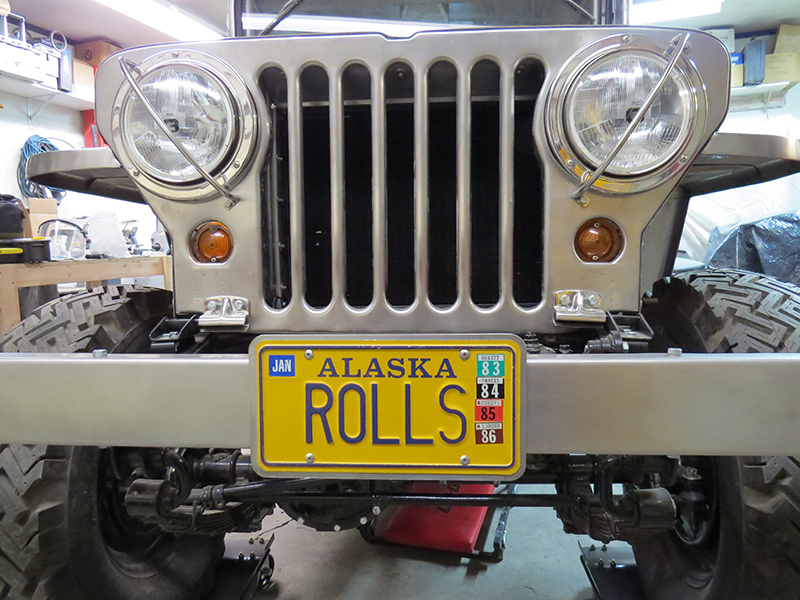
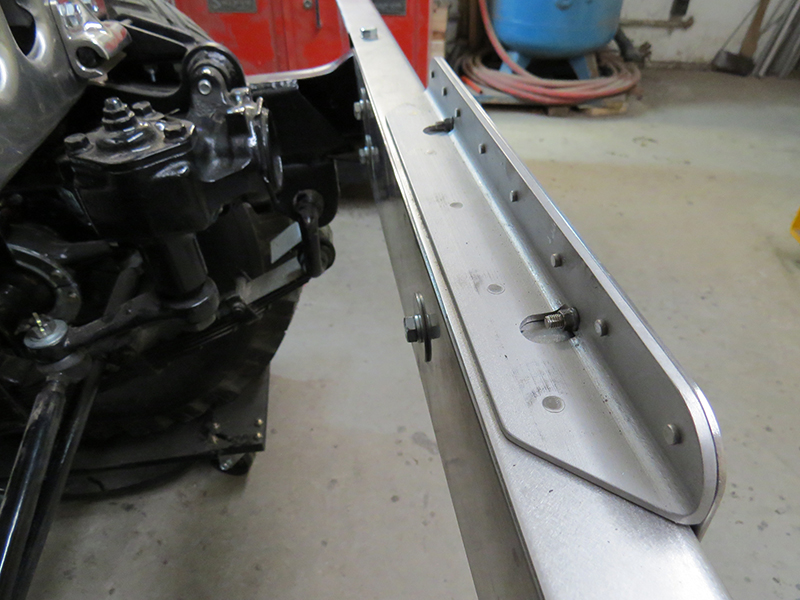
“I’ve been making some progress on the Willys this winter but my wallet can’t keep up with my plans so I’ve had to scale my work back to consist of lower cost but necessary tasks which must be done but aren’t the flashy jobs that get noticed. One of these simple items was fabricating a license plate mount on the front bumper. I didn’t want to mount the plate on the grille where it would restrict the airflow heading toward the radiator and attaching the plate right above the bumper could restrict the visibility of the front turn signals. Hanging the plate below the front bumper would expose the plate to damage by snow piles and make it more difficult to see so I ended up mounting the plate on the center of the front bumper with some 1/8th inch thick angle stainless providing the needed support. These angle sections were cut so they were slightly wider and taller than the plate, the edges were filed and contoured to match the plate and riveted to a 16 gauge stainless sheet which fits just behind the license plate for added support.”

2012-12-26-photo2-1

“With these parts together I riveted this assembly to the upper and lower surfaces of the front bumper. All rivets were flush head style which not only look smoother but prevent interference with the mounting of the license plate. The attach hardware for the license plate ended up being too close to the bumper structure so I had to hand file four openings in the bend radius of the reinforcing angles to allow clearance for the washers and nuts. The license plate mount is pretty sturdy and doesn’t restrict airflow or visibility so I like it. I’ve attached pictures of this mod so you can make sense of what I’m talking about.

By the way, the license Rolls is an old joke which began in either late 1972 or 1973. With the original four cylinder engine and the 5.38 axle ratios this poor Willys was slow. I drove many miles down the shoulder of the roads while faster vehicles (furniture vans, garbage trucks and kids on bicycles) zoomed past me. Naturally, my friends seemed to notice how slow my Jeep was and were often surprised to see a speedometer in the gauge cluster. They thought since the Willys was so slow I’d use a calender to measure my driving speed. Somehow the general opinion came to believe this Jeep was not built by WillysOverland but by a company called Rolls Knardly because the Jeep Rolls down one hill and Knardly make it up the next one. The name stuck and I paid extra to have Rolls as a personalized license plate much to the enjoyment of my friends. I still have the plate and someday I hope to have the all new and improved Rolls Knardly back on the Alaskan roads, I might even try to pass someone!”

[fb_button]
 
To Top

Paul unpacks 60 Year-Old Parts

• CATEGORIES: Builds, Features • TAGS: This site contains affiliate links for which I may be compensated.

Paul wrote to share his experience unwrapping some old parts as he continues his M-38 rebuild.

Paul wrote, “One of the first jobs on my Willys rebuild list from many years ago was to overhaul the axles. Naturally all bearings and races were replaced with new, new ring and pinion gears with 4.27 ratios were installed along with a complete set of 11 inch backing plates and brake drums. Well, sometime during the past 25 or so years the new steering knuckle seals failed due to old age. Geeze, I haven’t even driven this thing yet and now I’m having to replace the replacement parts which are still new but old.

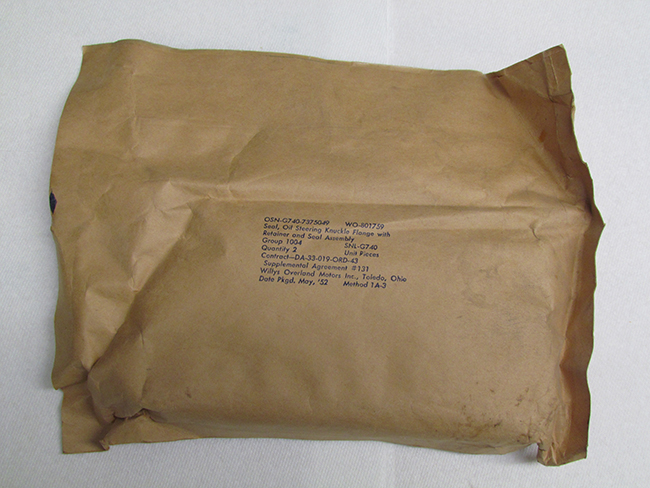
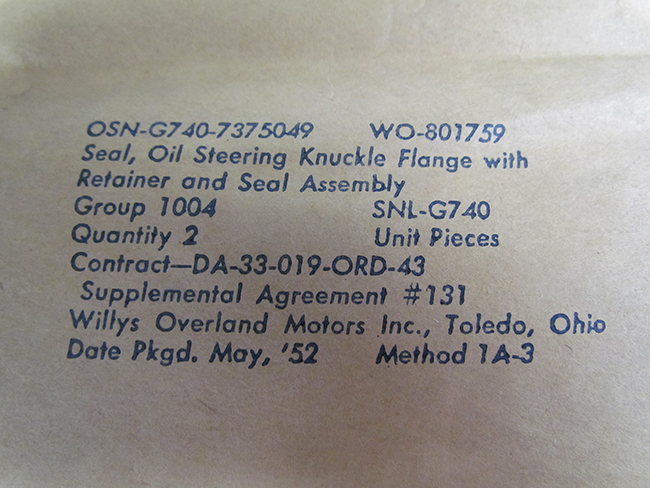
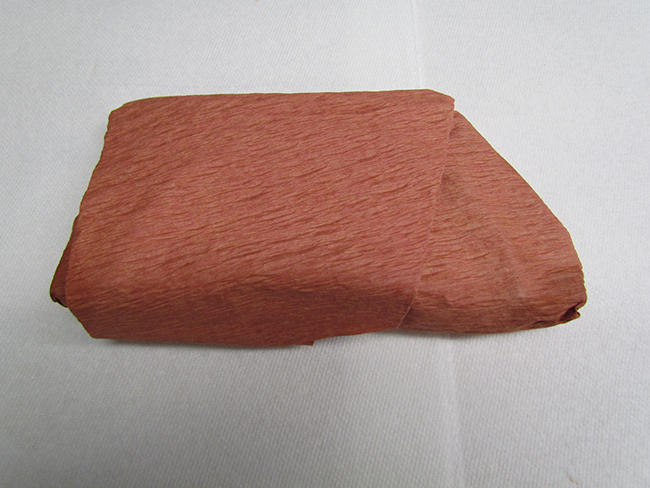
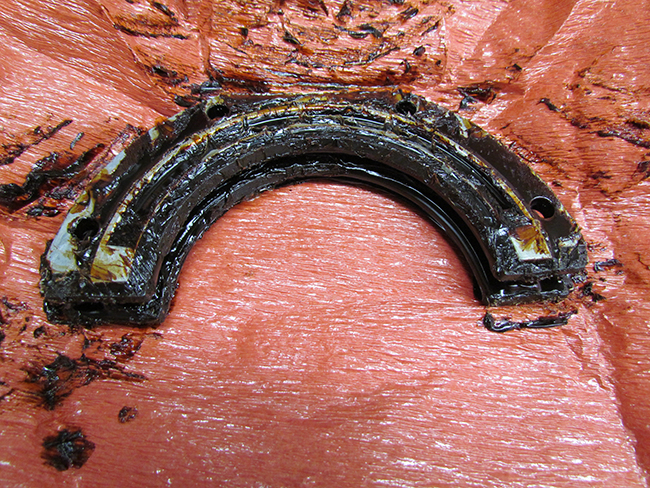
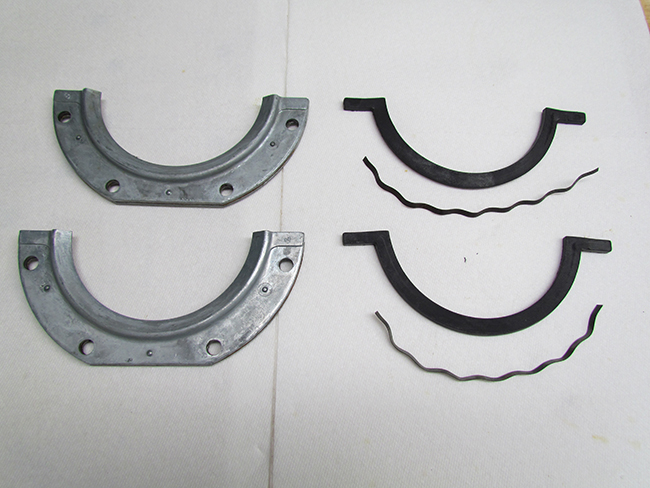
Oh well, it was time to go shopping once again. I was able to purchase a set of heavy duty steering knuckle seals from the local parts store (that can even be rebuilt when necessary) in addition to an extra set of replacement rubber seals for future use. Today I installed one seal kit on the left front knuckle with no problems, everything fit like factory, nothing was missing and the quality was perfect but that’s just what I’d expected. You should understand that these steering knuckle seal kits were packed by Willys Overland Motors for military use in May of 1952. The package had never been opened and all the parts were still coated with a preservative grease like coating, which required lots of paper towels to remove.

I can’t imagine whoever packed these parts so long ago had any idea that 60 years into the future some guy in Alaska would need these parts for his M-38 but I’m sure pleased the packer did such a good job protecting these seal kits. I took pictures of each step as I opened the package and the final photo shows the clean, new parts visible for the first time in over 60 years.”

[fb_button]
 
To Top

Pauls Frame is Finished Baking

• CATEGORIES: Builds, Features • TAGS: This site contains affiliate links for which I may be compensated.

Paul’s been eagerly awaiting the completion of his frame’s powder coating.  I told him that it was too pretty to put under the jeep.  Instead, he ought to hand it in the house.  No response to that idea so far . . .

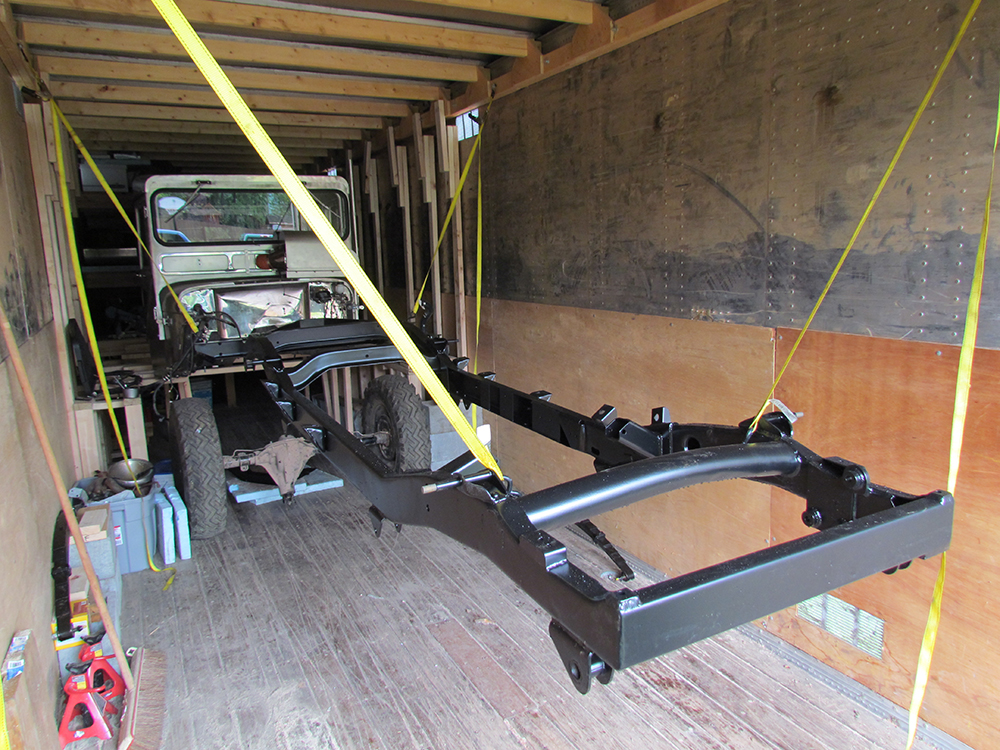
Paul writes, “Early this morning (to retired folks it seemed real early) I traded a fist full of cash to a local businessman and in return I received a beautiful black powdercoated Willys frame fresh from the curing oven complete with that new frame smell. Quickly hauling it home I positioned the frame inside the connex slightly ahead of the body while leaving enough room to safely install the springs and axles. I needed to somehow support the frame high enough to allow the axles to fit underneath while not damaging the new coating and still allow the frame to be easily raised and lowered. Did I mention this proposed support structure had to be cheap?

While the connex is incredibly strong the metal roof is way weaker than the weight of the snow we receive during a normal winter so years ago (to prevent the roof from collapsing) I reinforced the roof structure with full length headers bolted to the connex sides and 2X4 doublers positioned right below the original roof bows. With all this structure just waiting for me to use I attached the ends of four ratchet straps to the headers and hooked the opposite ends to the Willys frame. By adjusting the tension of the straps I was able to position the frame level and at the height necessary for clearance of the wheel and axle combination. I normally carry four ratchet straps in the truck (you never know when you’ll run across something that’s just too good to pass up so I’m ready to load it up, cinch it down and head for home at a high rate of speed before anyone changes their mind) they were quickly removed and became the Poor Folk Deluxe Adjustable Lift. This worked GREAT! Total cost…nothing!”

[fb_button]
 
To Top

The Earth Moved Under Paul’s Feet

• CATEGORIES: Builds, Features • TAGS: This site contains affiliate links for which I may be compensated.

Paul sent this to my inbox today. A couple days ago he removed his stainless steel body from his frame so he can complete the work on his frame.  It’s a good thing he listened to his intuition!

“I spent a few hours yesterday in the connex cleaning up my mess and double checking the security of the Willys body resting on the 2X4 support framework.  For the most part I felt the body was safely held three feet above the floor but my mind kept coming back to the thought “Would it stay in position during an earthquake?”  Since it’s much faster and easier to add additional support structure than it is to repair damaged stainless body panels I fitted eight more bracing legs to the existing body holder.  I really didn’t think any additional strength was necessary but I’d sleep easier with this bit of overkill engineering and the cost in time and money was negligible.  

While taking a shower this morning I was surprised when the house started rocking back and forth as several sharp jolts announced the arrival of an earthquake.  The quake was a small one, only about 4.6 but it was close to Anchorage (about ten miles away) and it was over quickly.  After getting dressed I hurried to the connex, opened the door and viewed a beautiful sight. The Willys body was safely resting on the framework undamaged and perfectly aligned on the supports.  

I realize rebuilding Jeeps can be an experience in frustration when money and time conflict with dreams but I really could do without adding earthquakes into the mix.  I’m slow enough as it is, I don’t need Mother Nature increasing my heart rate with exciting special effects.  On the other hand I’m happy the Willys is safe, the body support held and I don’t have to repair any damaged body panels.  Now all I have to do is to hurry to get the frame work accomplished and reattach the body to the chassis before anymore earthquakes visit my workspace.”

[fb_button]
 
To Top

Paul’s Jeep sees the Daylight (For a little while)

• CATEGORIES: Features, stainless/jewels • TAGS: This site contains affiliate links for which I may be compensated.

Like a bear emerging from it’s cave after a long winer, Paul temporarily removed his custom M-38 from its Alaskan lair.

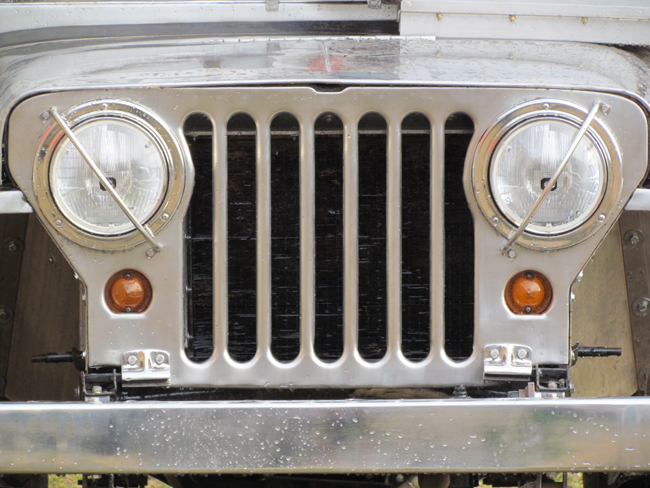
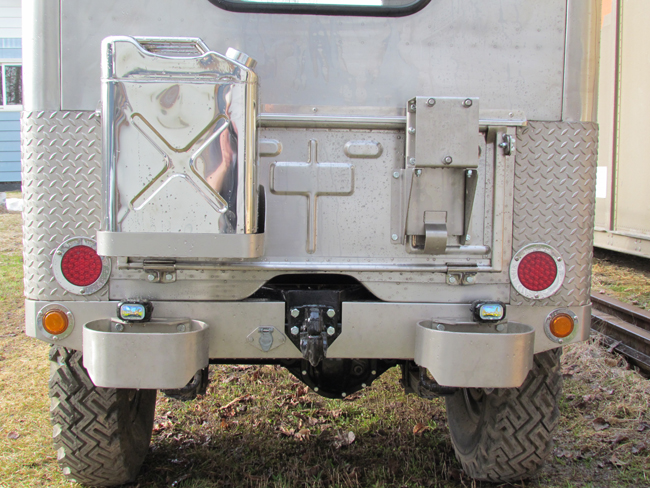
He writes, “The garage was opened and the Willys was pulled out into the early morning light today.  The poor Jeep was coated with sanding dust which I removed by blasting the body with high pressure air and followed that with a water rinse so you’ll notice the water droplets clinging to the sheet metal.  Anyway, with all the glass installed, the stainless wiper arms and blades mounted and most all of the major work done this project is looking pretty good to me.  I need to work on the frame welding up the extra holes, finish the radiator mount and double check everything before the frame gets sandblasted one more time before getting powder coated glossy black.

When my new sheet metal brake arrives I’ll finish remaking the fuel tanks, I wasn’t happy with the first set I built so I scrapped them and started over with a slightly different design.  Viewing the Willys outdoors from a distance is so different from the usual close up view in a packed garage I’ve become accustomed to and I get a better idea of what the finished Willys will look like.  I think this Jeep will cause people to stop and take a second look but that might be wishful thinking on my part.  Either way, I’m happy with the progress (I’ll admit I’ve taken much longer than I’d originally planned) and there’s more to do but I’m still a happy guy.

Over 4,000 hours of fabrication time to get to this point and still many more hours of work are necessary to complete this rebuild but I’m not tired.  I’ve learned a lot along the way and I’m reasonably pleased with my quality so far.”

[fb_button]
 
To Top

Want to Ditch that Mechanical Speedometer?

• CATEGORIES: Features, How To, Tips & Tricks • TAGS: This site contains affiliate links for which I may be compensated.

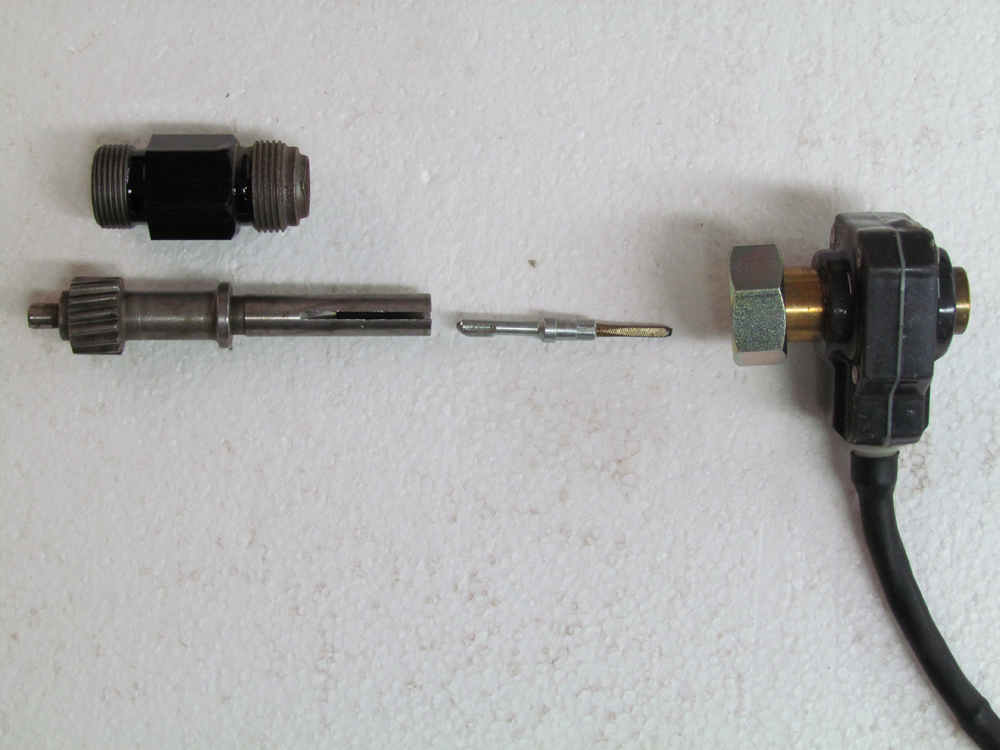
UPDATE: Paul forwarded a pic of the parts for the speedometer:

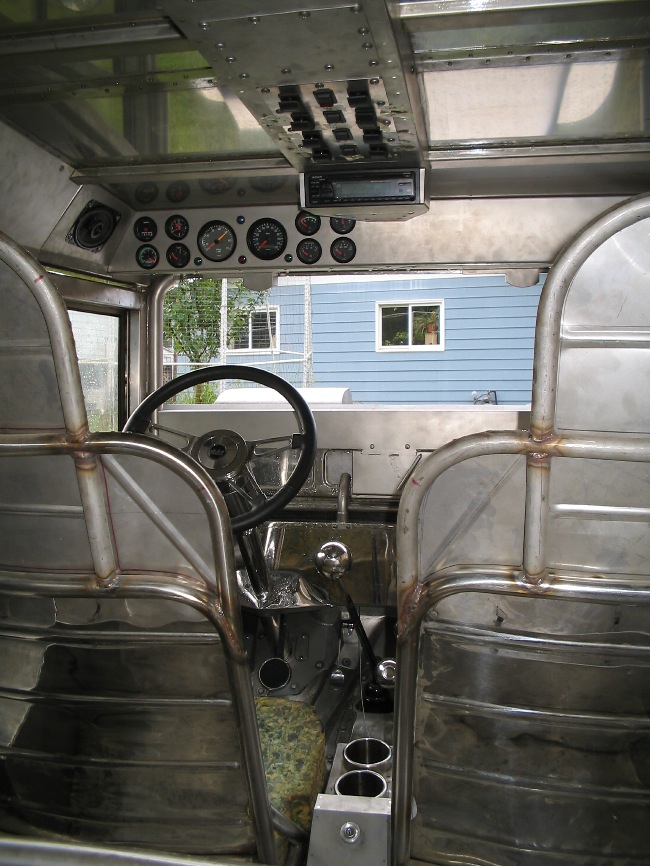
I’ve included a pic of Paul’s topside dash as an illustration of Paul’s dilemma/solution. You can read all of Paul’s adventures here.

inside2

Paul writes, “I recently hit a bit of a snag with the speedometer sending unit and I thought other Willys modifiers might be interested in the problem and solution.  Since I repositioned the instrument panel above the windshield (the hard top will not be removed and the windshield is not a folding unit) I realized there would be a problem with the mechanical speedometer.

The speedometer drive cable would have to have many tight bends as it snaked it’s way from the rear of the speedometer, down the windshield post, behind the dash and under the body where it would screw into the drive unit on the transfercase.  Taking into account the numerous tight bends, the length of the drive cable and the space necessary for the drive cable routing I figured it would be much easier to use an electric speedometer.  This way I’d only have to string some wires from the speedometer to the sending unit (a hall effect device) attached to the drive gear in the transfercase.

Really rather simple but I discovered the original Willys speedo drive unit was made for a flanged drive cable and the electrical sending unit was made for a square drive cable.  The stub cable supplied with the electrical sending unit is only two inches long but both ends are square so this wouldn’t work with the original shaft in the transfercase.

A friend of mine suggested I talk with the local marine diesel parts guys because he remembered the Detroit diesel engines used similar adapters as tach drives and they might have something which would work.  Less than five minutes after I explained my adapter problem and showed the items I wanted to connect, Jim (the parts guy) found a two inch long flex shaft with a square drive on one end and a round, flanged end on the other.  Not only was this the exact part I needed, the right length, and the right ends, but it was also the right price …FREE!

I realize most of the eWillys folks are keeping their Jeeps closer to stock when it comes to the instrument location, but it’s something to keep in mind if you do decide to go with an electrical speedometer.  Jim sure saved me hours of work since I won’t have to build what I need; I believe a few dozen donuts delivered early in the morning are necessary as a special thanks.  THANKS JIM !!!”

[fb_button]
 
To Top

Paul Re-plates His Plates

• CATEGORIES: Features, How To • TAGS: This site contains affiliate links for which I may be compensated.

Paul continues to make progress on his build, though he does have a habit of becoming side-tracked with wood projects (if I am a Foodie,  he is a Woodie).

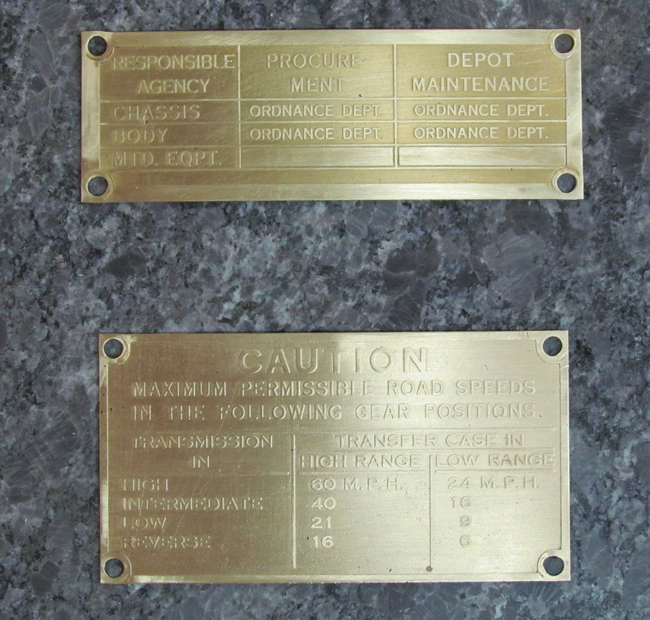
Paul writes, “The local exotic wood store has been letting me pick over the wood shipments right after they’re unloaded and this has caused some trouble with overheating my credit card.  While I’m still making progress on the never ending Willys project, money has been in short supply so many of these projects have to be low buck items.  One of the cheaper but necessary jobs was to repaint the brass data plates (a total of six plates) originally installed on the M 38.  While I really wasn’t looking forward to working on these plates ( lots of trouble for very little progress) I felt the appearance of the Willys would be improved by having bright and shiny data plates installed on the heater duct below the base of the windshield.

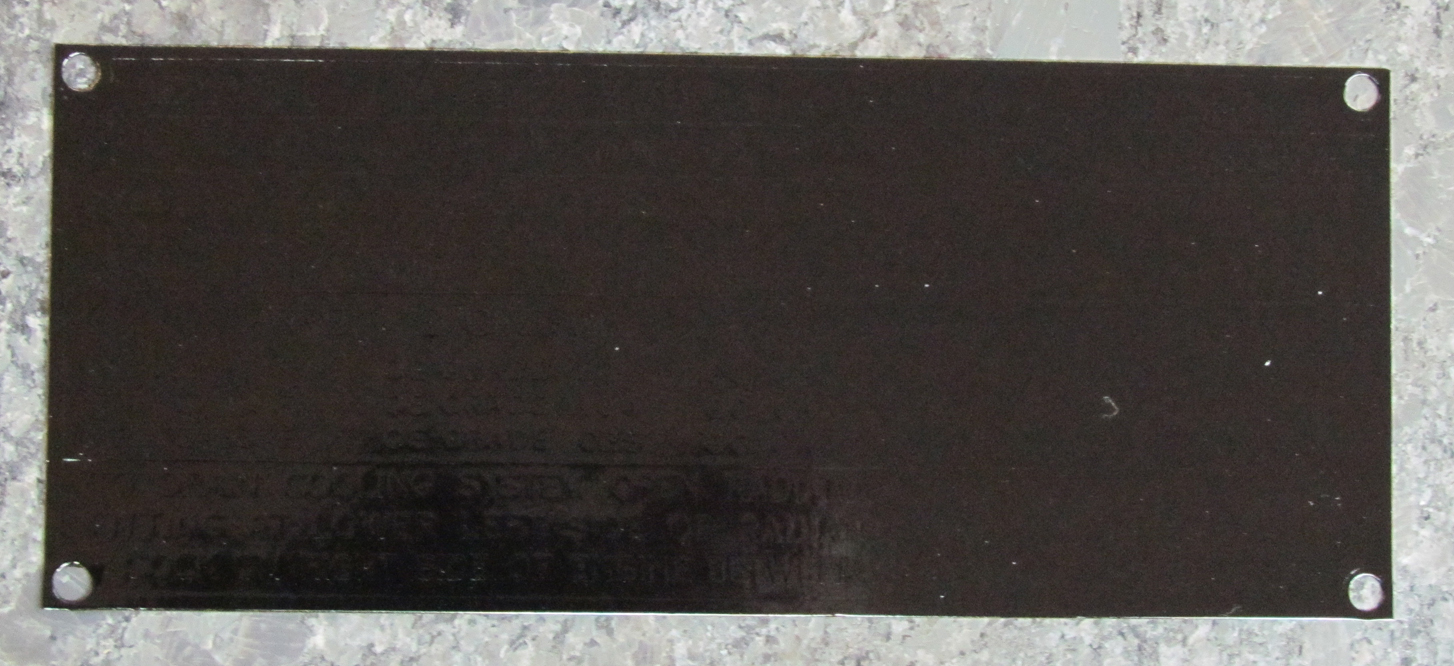
I use a really strong liquid paint stripper to remove the original black paint from the data plates. After the paint is gone I do a chemical wipe with lacquer thinner then gently rub the bare brass with a fine grade scotch pad before doing another chemical wipe followed by the spray can black. Cheap, easy, and quite time consuming but the finished plate looks pretty good.

While it isn’t difficult to redo these data plates it is real easy to screw up the paint (once the new paint is applied) while cleaning off the lettering and then have to start all over again.  I’m using rattle can glossy black spray paint to apply two light coats on each plate and I let them dry for one day after the second coat.  After the paint is dry I very carefully block sand the plate with 400 grit sandpaper with the plate supported on a thick, flat surface.  I’m using a 3/4 inch thick slab of granite (it’s flat and cheap) so if I didn’t damage the paint during the sanding process I spray a very light coat of clear over the data plate and let it dry for another day.  Don’t spray a heavy coat of clear, it lifts the black paint which results in more clean up time and then you have to start all over.  I figured this out the hard way so you wouldn’t have too.  Geeze, what a guy!

Anyway, if things went well you should have a new appearing data plate to attach to your Willys.  I’m still working on the remaining four plates because I got a little careless while sanding  but the first two plates look pretty good.  I’ve attached three pictures showing the stages of data plate repainting.

1. Cleaned Plates with paint removed.

2. After paint is applied.

3. After paint is lightly sanded off.

[fb_button]