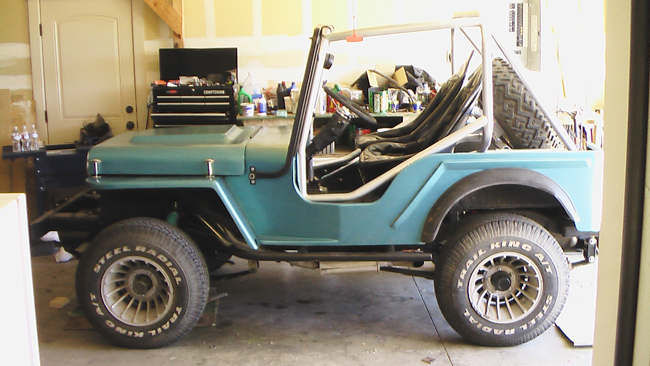
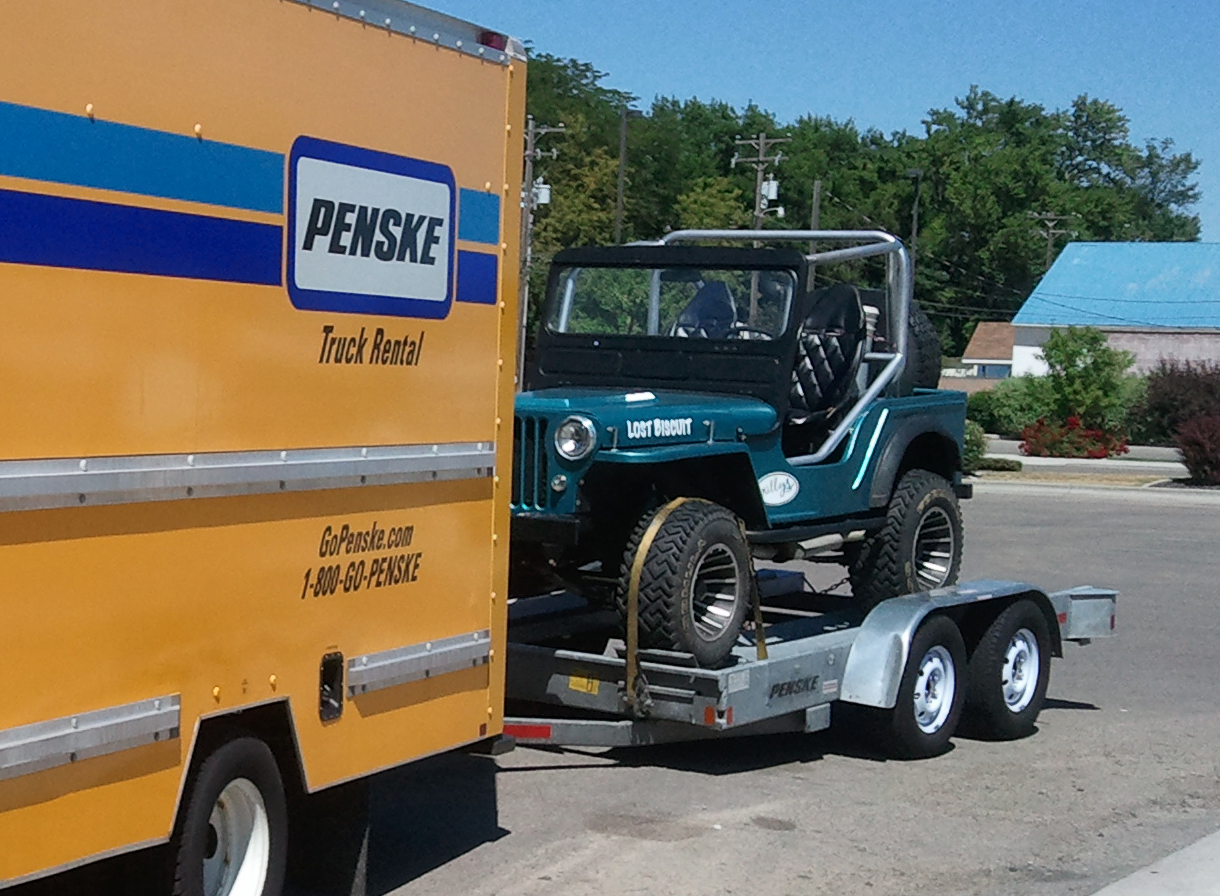
I guess the pic says it all. Biscuit got plenty of looks as I cruised northward from Boise. I’m still catching up on both emails and postings and it will probably still take a couple of days to get back into the swing of things.
emailNeed to contact me and don't have my email? Click on email button.
Welcome to eWillys.com, a website for vintage jeep enthusiasts. I update this website nearly every day with jeep deals, jeep history, interesting reader projects, jeep related info, and more.
These quick searches can help you find things on eBay. People list in the wrong categories all the time, so don't be surprised to see brochures in the parts area for example. This section used to be split into jeeps, parts and other categories, but recent changes to eBay will require this information to be recoded.
The links to posts below show jeeps grouped by models, condition, and other ways. Some of these jeeps are for sale and others have been sold. If you are unsure whether a vehicle is still for sale or not, email me at d [at] ewillys.com for more info.
There are plenty of interesting, unusual, historic and surprising stories related to Jeeps and their owners. In addition, some of these features have nothing to do with jeeps. This link will display all featured stories starting from the latest.
Looking for parts and not sure where to go? There are a variety of large and small new and used parts sellers both online and offline.
Importantly, the allure of buying a project jeep can be romantic. The reality of restoring a jeep can be quite different, expensive and overwhelming without the right tools and resources. So, tread carefully when purchasing a "project". If you have any concerns about buying a vintage jeep, or run across a scam, feel free to contact me for help, comments or concerns .
I guess the pic says it all. Biscuit got plenty of looks as I cruised northward from Boise. I’m still catching up on both emails and postings and it will probably still take a couple of days to get back into the swing of things.
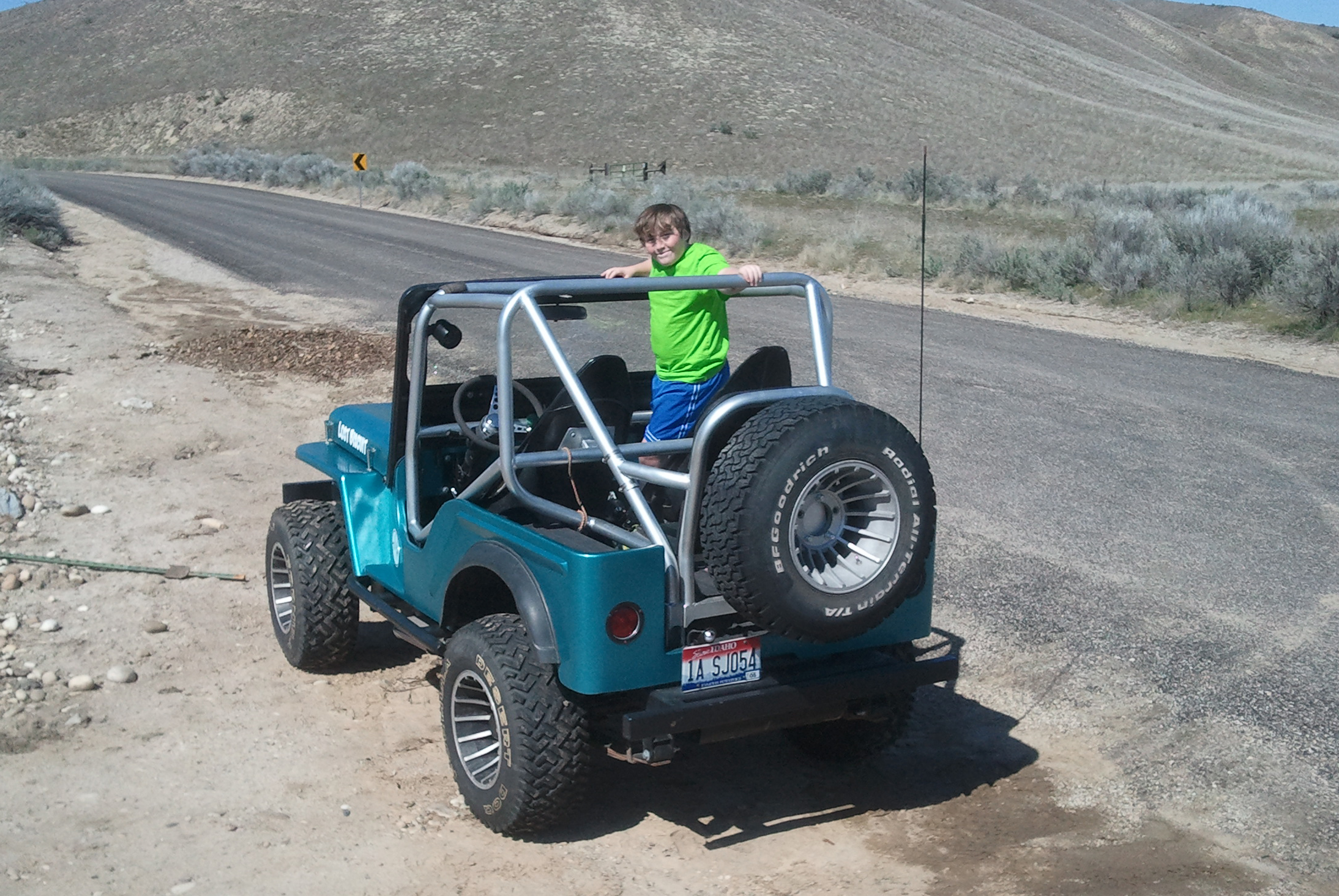
It was a sunny (finally), but cold day yesterday. So, Colter and I took a quick drive into the hills to smell the coming spring. Here are a couple snapshots.
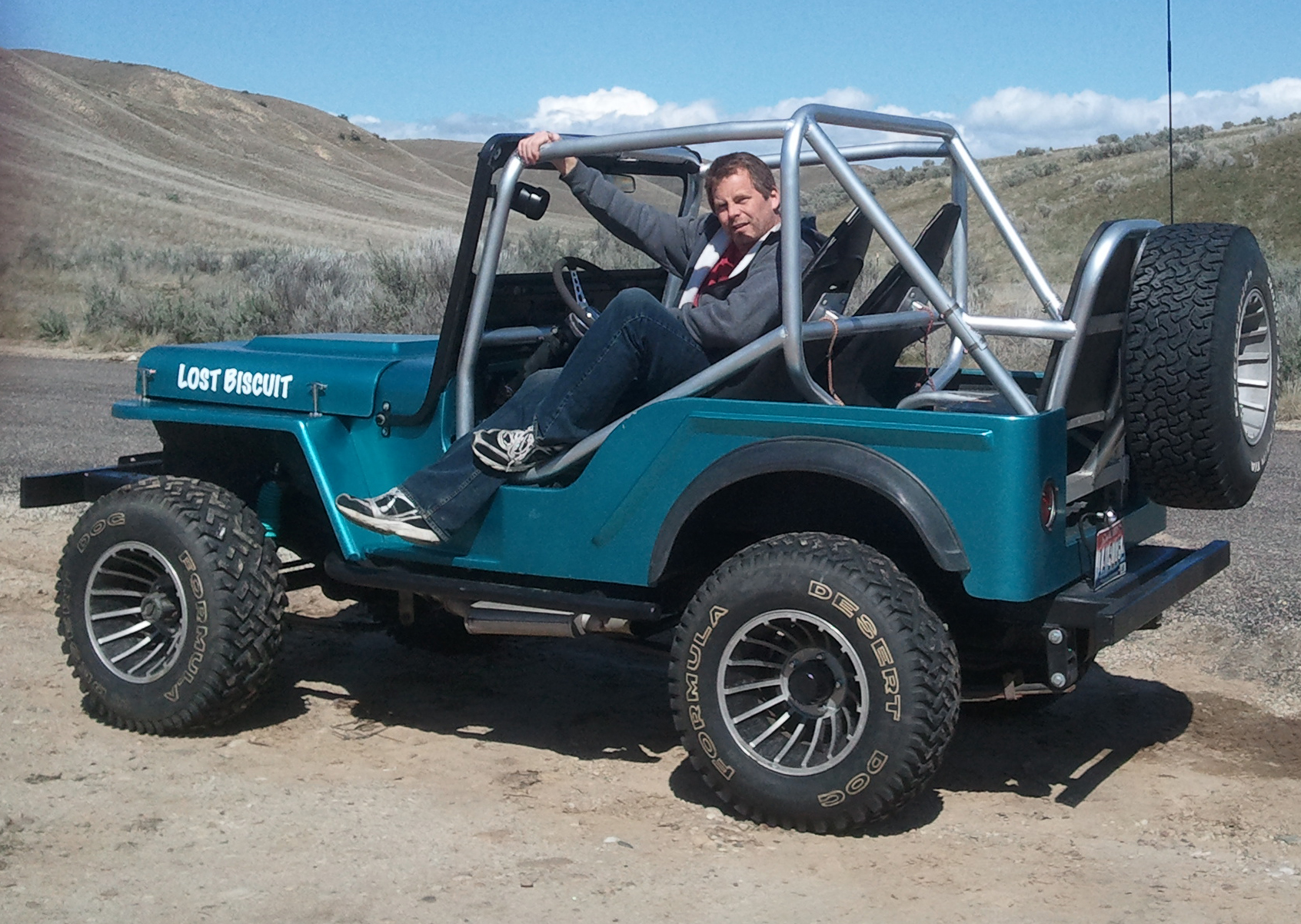
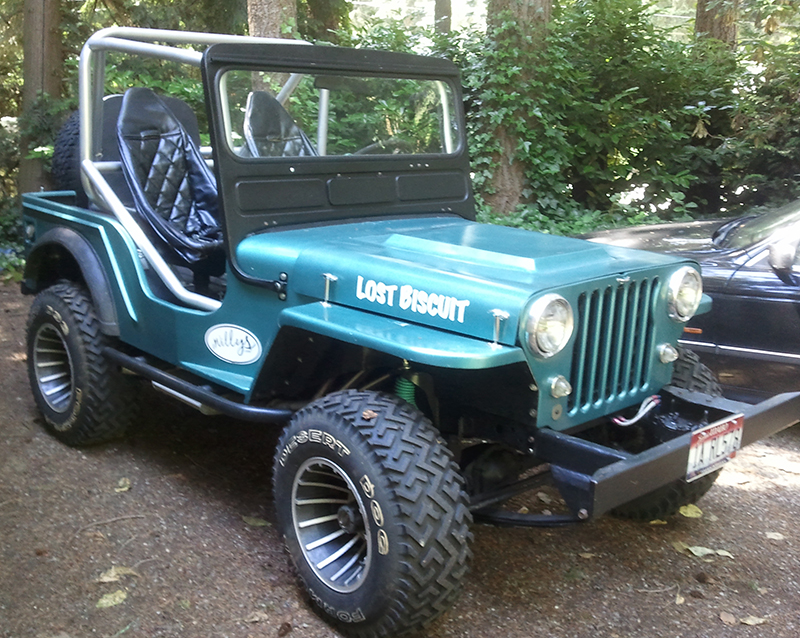
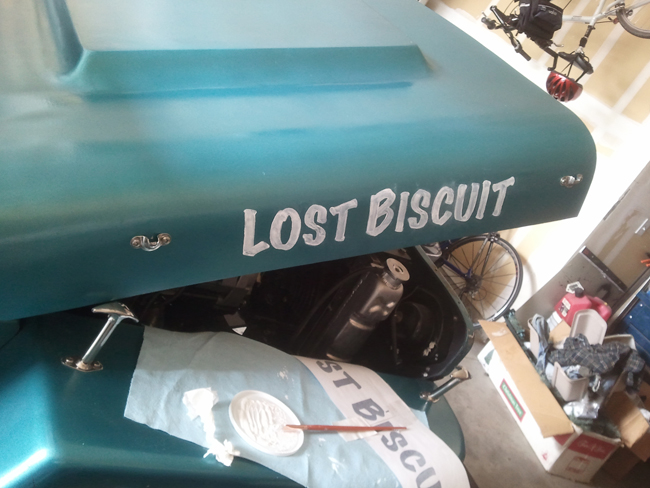
It was sometime around mid-summer of last year (maybe earlier) when I started the project to place ‘Lost Biscuit’ on the hood of my jeep. It took a little longer than expected, but I finally did it.
First I had to decide which font to use. Fortunately, I got some very helpful input along the way from Dexter (thanks) and eventually decided upon the Marker Felt font. Okay, that was pretty easy.
Now, how to get the name on the hood. After hmming and haaaing over how I wanted to attach the name (hand drawn, stickers, stencils, pay someone else … ), I finally decided I would do it myself using paint. But, I knew my freehand drawing and painting skills froze around the 2nd grade, so this wasn’t something I could improvise. Since I had no immediate solutions, I decided to put the project on hold (which explains the delay).
One day this past December I was watching American Restoration on the History Channel. The American Restoration show is a spinoff of sorts from the Pawn Stars show and follows various restoration projects from Ricks Restoration out of Las Vegas. In one of the episodes, called Buttered Up (you can view it here), Rick restores an old popcorn machine.
To repaint the front of the popcorn machine, the painter used a technique that dates back centuries called pouncing. Pouncing? My ears perked up!
Pouncing? Never heard of that. As usual, my computer was on my lap so I instantly googled pouncing. I learned,
Pouncing is where pounce — loose graphite or charcoal — is rubbed through a series of small holes punched in a paper pattern to transfer the design to an item to be decorated
Well, I thought that would work for Biscuit’s name. After some more research, I found out that quilters use pouncing for some stitch patterns. So, the next day I hit some quilt stores. As you can imagine, the conversation went something like this,
“Hi, I’m here because I want to paint a name on my jeep,” says I.
Blank stare from cashier, “what do you need?”
“I need stuff for pouncing” says I, remembering now that I probably had not shaved, maybe, not even showered, and most likely wasn’t quite dressed like customers they normally help (however, to my credit, I didn’t have on my garage jeans).
Another blank stare, “you want to do what?” I think she even had her finger ready to dial ‘9’ (and then ‘1’ ‘1’)
It turns out, not everyone knows what pouncing is, even at the quilt stores. Eventually, after visiting a couple quilt stores, I found what I needed (you will see my pouncing supplies in a picture below).
Here’s the synopsis of this project.
1. Design and Print the template. Then, since I didn’t have a good awl, I created my own awl out of tape, a chopstick and a long push pin.
2. Next, I attached the template to a piece of cardboard. Then, I poked holes around the outer edge of all the letters.
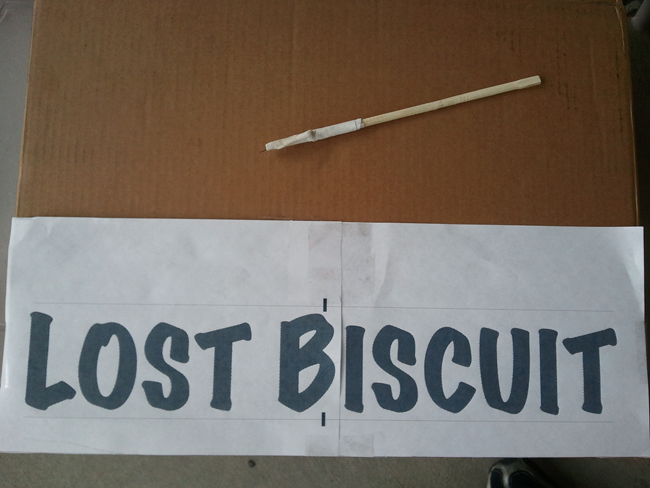
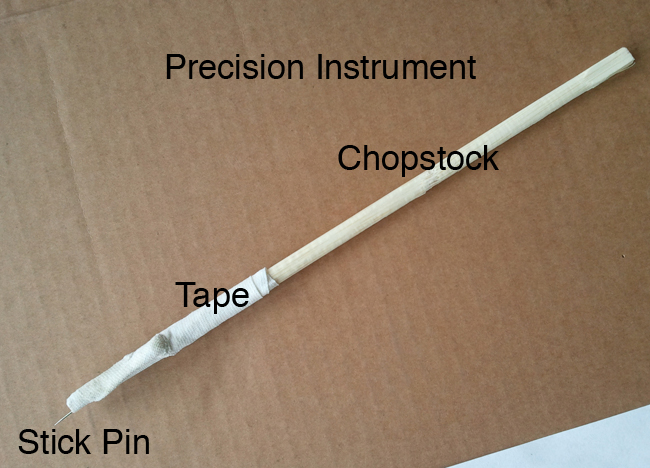
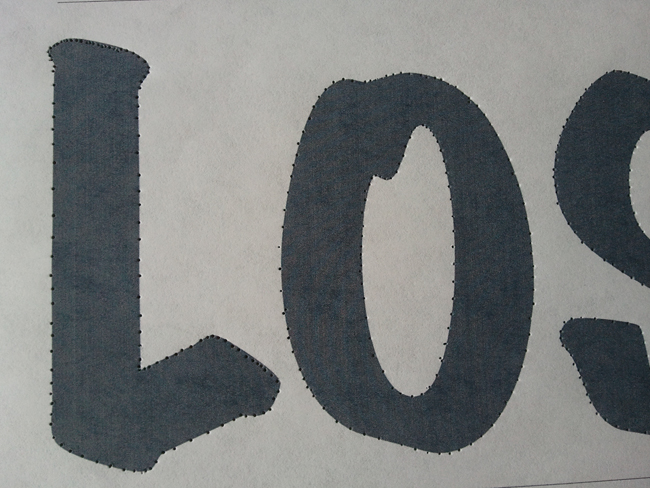
3. With the letters outlined, I tested out the template on different materials to make sure it worked. It turns out pouncing is pretty easy!
4. Selecting paint was the next step. So, I visited my local art supply store and explained to them what I wanted. They directed me to an Acrylic Titanium White Tube from Windsor Newton. Along with the paint, they also suggested an acrylic spray on sealer and finisher from Americana. I took the paint home and tested it on different materials. At first, I didn’t like it, because it wasn’t as smooth as the typical oil based house paint I had expected. Instead, it had texture like a canvas artist would want. But then, after staring at it a bit, I warmed to the texture, because it gave the name a hand generated feel.
5. Yesterday, with the weather a little warmer, it was time to paint the name. I got out my template, my paint, and my pouncing supplies. I taped the template to the hood and prepared to pounce.
Over the course of my tests, the technique I found most successful for pouncing was not tapping the pouncer, but rather dragging it slowly across the holes. This kept the paper from popping up and blurring the dots underneath.
The pouncing equipment consists of a pouncer with a ‘handle’ on one side and a soft side on the other. There’s also a plastic container that can hold pounce. Lastly, there is the white chalk.
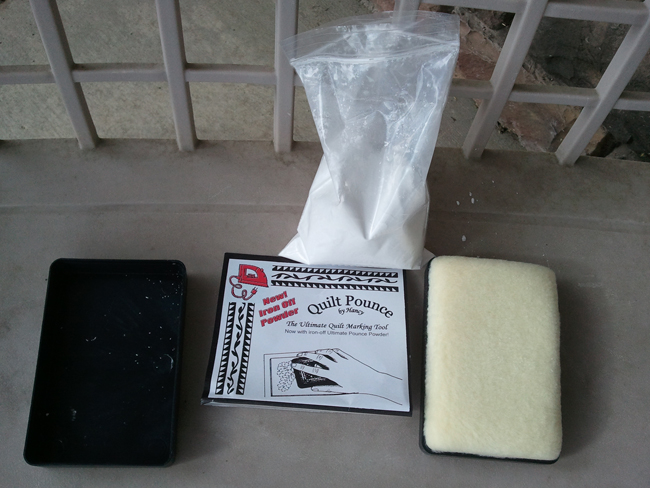
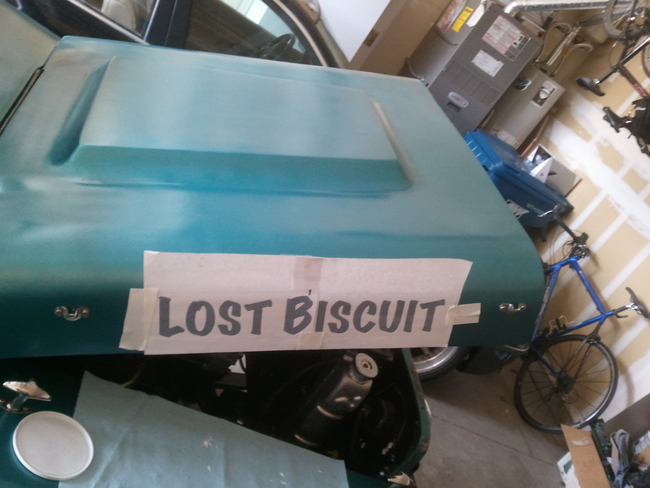
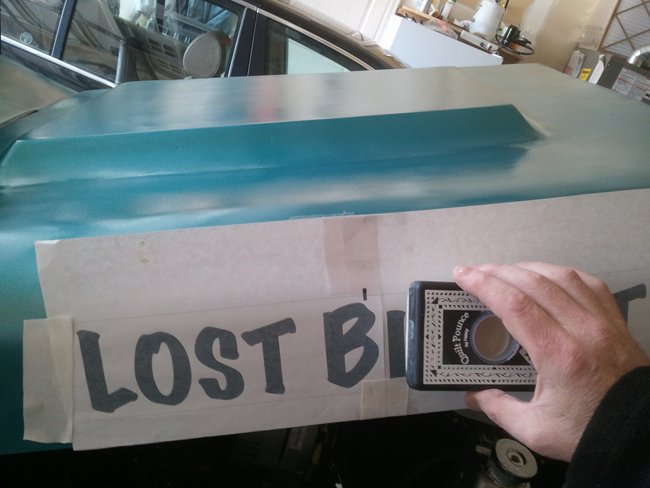
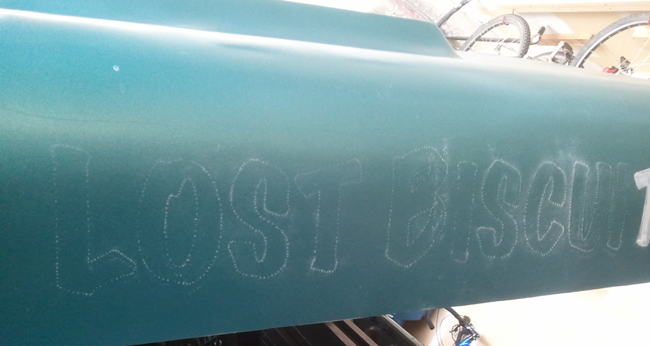
6. Now it’s time to paint. I put three coats on each side. This image was taken after the first coat.
This is after three coats.
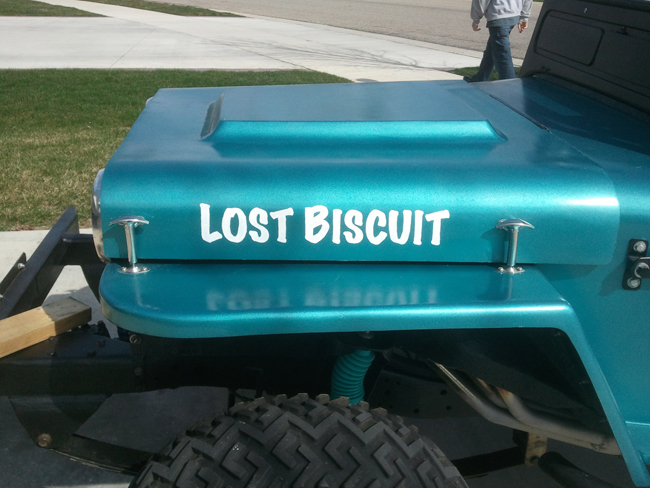
There is still some small edges that need cleaning up. Once I do that, I’ll spray it and hopefully that will protect it!
The plan was simple, fool proof, and, best of all, idiot proof. But, alas, not Dave proof. The goal, attach my new ‘ewillys’ stickers to plates and attach them to the sides of Biscuit.
Step One: Have stickers made — CHECK.
Step Two: Cut and shape Ovals out of a street sign (note: not snagged from the subdivision down the street, but from a metal yard) — CHECK.
Step Three: Drill plates for mounting holes — CHECK.
Step Four: Attach stickers — FAIL … well, they are ‘stuck on’, but they have bubbles. That’s $50 down the drain — do over time.
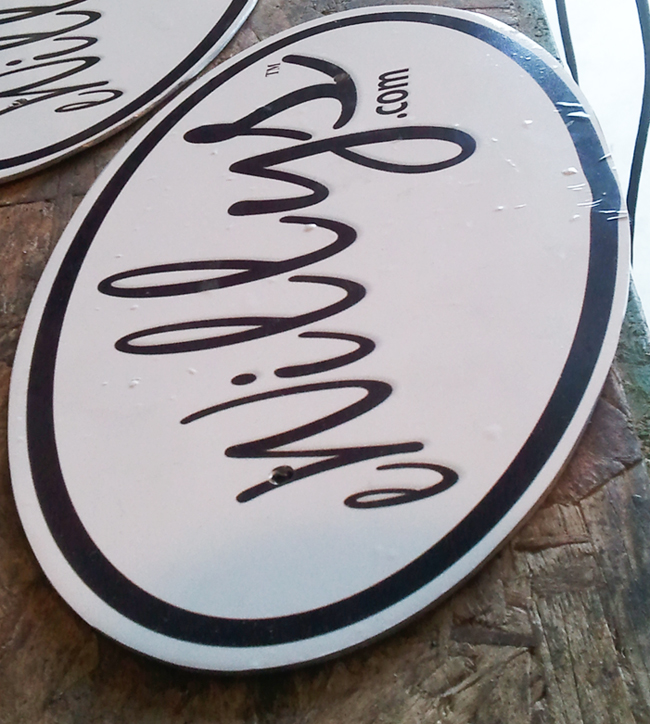
See, had I made step Four “Check the internet on mounting vinyl stickers”, I would have been ok. But nooooooo, instead, I cleaned the plates with a degreaser (should have used soap and water), wiped them dry, and then stuck the stickers (should have sprayed some water and a little soap onto the plate and then squeegeed the sticker onto the plate).
Ok, lesson learned. So, I bolted the stickered plates onto Biscuit, just for kicks. I stepped back and took one look and knew I had screwed up, again — twice in one day! See, I thought that hiding the allen bolts, which are black, along the black lines of the ewillys’ script would hide them. But this didn’t happen. Instead, they disrupt the eye as you read the logo, both close up and from up to 20ft away. So, now I’m really ticked. So I mounted the plates to teach myself a lesson — don’t presume to know what you don’t, check the interet first!
When I cool down, I’ll get some new stickers printed, properly attach the stickers, and widen the bolts left and right.
Below is a blurry pic of the attached sticker. I’ll replace it with a better one tomorrow …. Hopefully, I’ll keep someone from making the same mistake 🙂
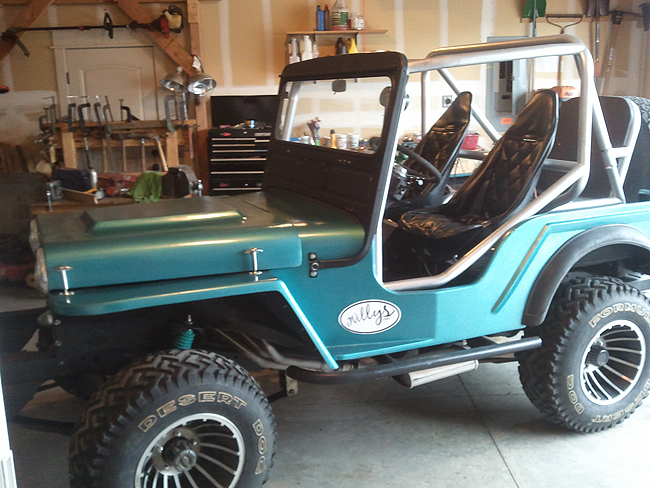
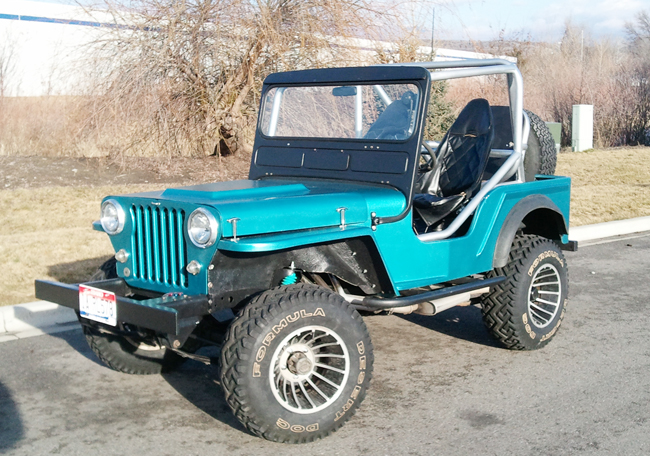
The last time I got a set of offroad tires mounted on a set of rims was 27 years ago. Those too were desert dogs. I had inner tubes added to the tires so that the air pressure could be dropped to 10 – 15 lbs when jeeping; using inner tubes was a very normal thing to do.
So, now you will understand that when I pulled up to Les Schwab Tires (btw, Les Schwab, the company founder, was an early fan and seller of the Desert Dogs) and told the guy at the counter what I wanted to do, I didn’t think much of it. He walks out, looks at the rims, looks at the tires, and tells me he doesn’t think the tires will actually fit the rims. Frankly, he was looking at me like I just dropped in from planet Mars. Fortunately, I’m used to people looking at me like that. I told him that Les himself would have mounted Dogs to rims similar to what I had. He took it all in and seemed to think that maybe my request was possible. So, I asked him for an estimate to mount the tires and add inner tubes.
He gave me an estimate ($91 to mount and balance them) and said he didn’t know if he could get some inner tubes, because running inner tubes on tires like that would cause them to heat up and explode (the inner tube explode that is). Now it was my turn to look at him like he was from Mars.
However, to his credit, he was courteous the entire time and spent extra time attempting to locate inner tubes, finally finding four tubes at a cost of $38 …. that’s $38 a piece. After some quick addition I concluded that would cost me almost $160 just for tubes!! I told him thanks, I would see what else I could find for inner tubes.
So, I left, went home, and hopped on my beloved internet, hoping I could find a better price. After a half our of searching the internet and finding nothing, I had an idea. I would call Bucks, a local 4×4 shop, to see what they used. They said they rarely use inner tubes. The last time they used them, they got the tubes from Commercial Tire.
It turns out, in a world of tubeless tires, the use of tubes, once standard practice, has evaporated. Worse, no one told me!
My next step was to call Commercial Tire and see what they could do. The guy on the phone was helpful and said tubes would probably cost about $23 for my tire size, however I’d need to check the stem size of the rim as the tube price he was quoting was for a tube with a thick stem.
I figured I had nothing to lose, so I drove over to Commercial Tire and asked for some tubes. They looked at my stem size and determined I needed a rare inner tube. Several employees started making calls and one finally found four tubes at a warehouse somewhere and that was all they could find. The price would be $35 a piece.
I still thought that was crazily high, so asked them to just give me a quote on mounting the tires. They said they wouldn’t mount them because they were older than 6 years. So, my trip to Commercial Tire was a waste of time; and it confirmed that the world of tires had changed while I had been away from jeeps.
I left Commercial Tire and made the decision that I would mount the tires without tubes and give that a try. Since Les Schwab was willing to mount the tires, I decided to just take the tires back to them and get them mounted. Then, I took the mounted tires home and put them on the jeep.
So, maybe putting 18 year old shoes on Biscuit isn’t the smartest decision, but I couldn’t resist. They probably have 5000 miles of road wear left, maybe a little more. However, I had to do this to complete my image of what Biscuit would be: a fiberglass flattie with an old school look.
Here are a couple images of the new, old tires. I do prefer the pure aluminum color of the other rims, rather than having the black within the splines. So, I plan to polish the rims at some future point and take off that black.
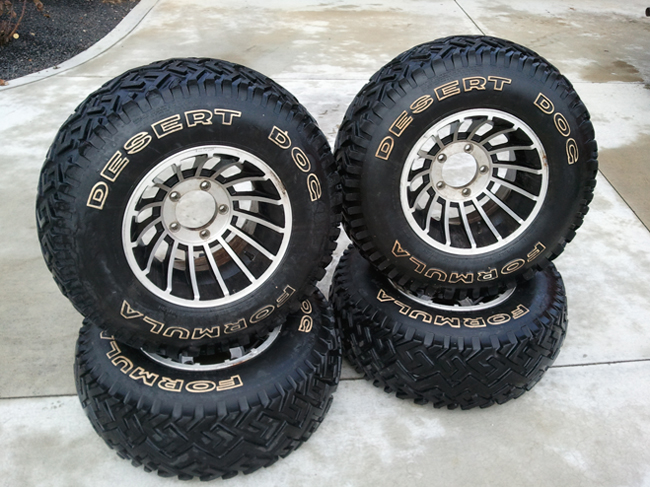
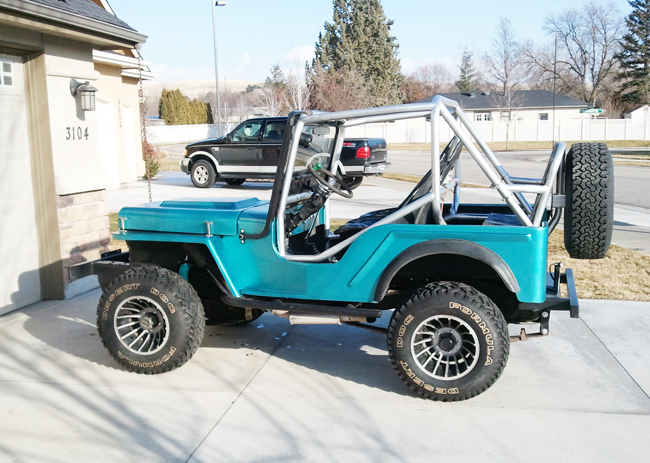
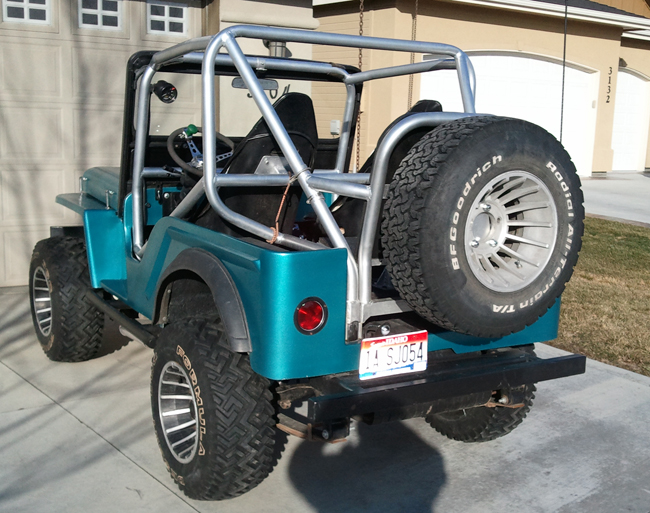
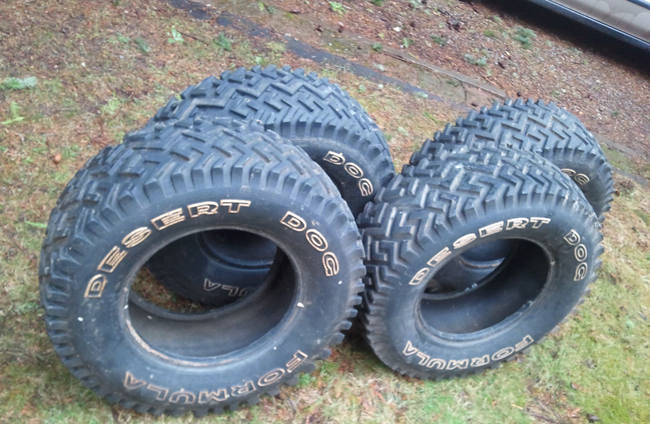
The main reason for my trip to Seattle this weekend was to pick up a set of Forumla Desert Dog tires from Mitch with some good tread still left that I can use as offroad tires. I have four more hurricane rims just aching for these tires, so I can’t wait to get them mounted. This should really make Biscuit ready for summertime explorations. Thanks Mitch!
When I built my first jeep, I used the gas pedal from a CJ-5. It was fine for driving around on flat smooth roads, but when I hit a bump, my foot tended to flop against it, which meant I would accelerate unintentionally. It was just too sensitive an arrangement (dad used a CJ-5 pedal in his CJ too and had the same problem).
Eventually, I found a solution to the pedal problem. However, it took a bad day of racing to get there ….
Early in the Spring of 1985 I was at a PNW race competing in a team relay event somewhere north of Everett, Wa. I remember the conditions clearly: It was cold, it was damp, and it was rainy.
Jim, Tim, and Steve Carter and I teamed up for the relay event. Between us we had three jeeps (my jeep, Otis and Priority I — or maybe II or III — I can’t keep track of all the Priority versions …).
It seems to me we advanced to the first round with no issues. However, during the second round, things went awry. Frankly, the precise details of how the rest of the race played out have faded with time. What I do remember is this; First, my front driveline broke as I made my way around the course. Then, when driving Priority, I broke its front drive line. Finally, when driving Otis, I was trying to drive carefully as I REALLY, REALLY didn’t want to break another driveline. At one point I got a little stuck (it was really muddy) and thought I had broke it (ugh!). Fortunately I didn’t … I was perfectly happy to stop racing that day (we got eliminated in the 3rd round I think).
I tell this story, because while racing Otis, I noticed that my foot didn’t bounce and nor did the pedal no matter what bumps I encountered. It was solid, yet the pedal depressed when necessary.
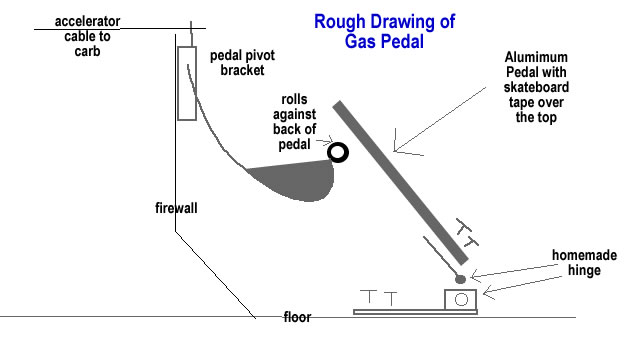
Later in the day, after racing, I looked at Otis’ pedal and discovered Jim had set it up so that the there was a roller behind the pedal. While more complicated than the normal pedal, it really improved the ability to keep driving and accelerating smoothly over bumps.
So, I implemented that in my first build and loved the results. I had hoped to implement the same thing in Biscuit using a classic foot shaped pedal like the Moon Aluminum Pedal. However, I couldn’t justify the cost (read here that my budget was getting tight), so I implemented what I call Version 1.0 of the pedal.
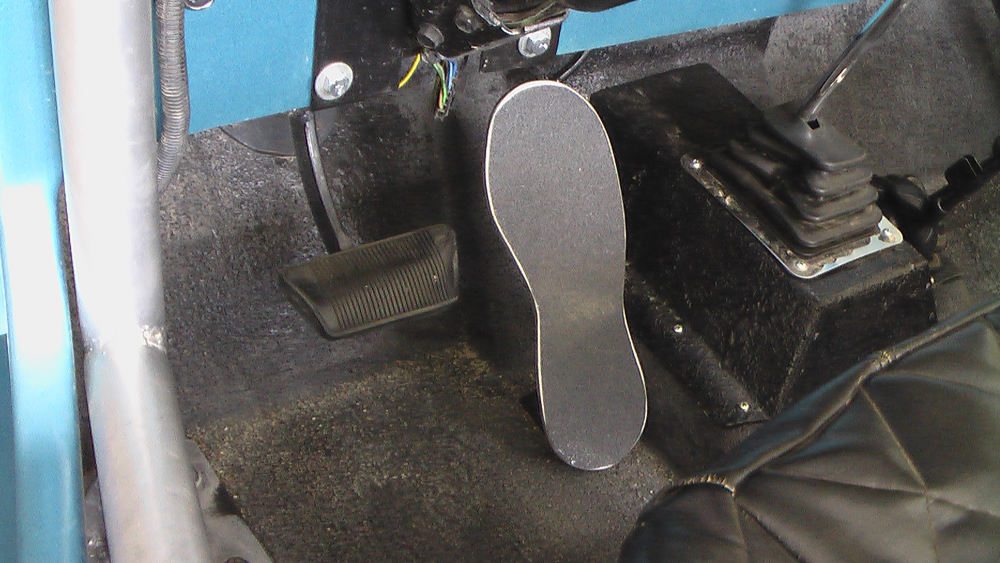
Using some aluminum plate I already had, I drew the shape of my foot onto the plate, cut it out, and then shaped it with my grinder. Then, I went down to a locate skateboard shop and purchased some skateboard covering (sandpaper-like on the front and sticky on the back). I cut the covering into the shape of the foot and stuck it onto the plate. It isn’t beautiful, but it works well.
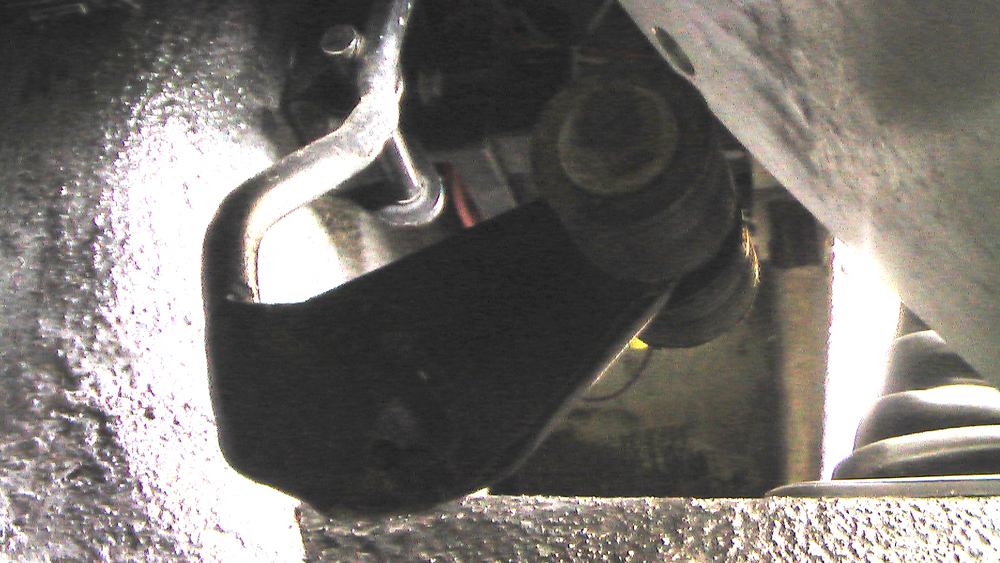
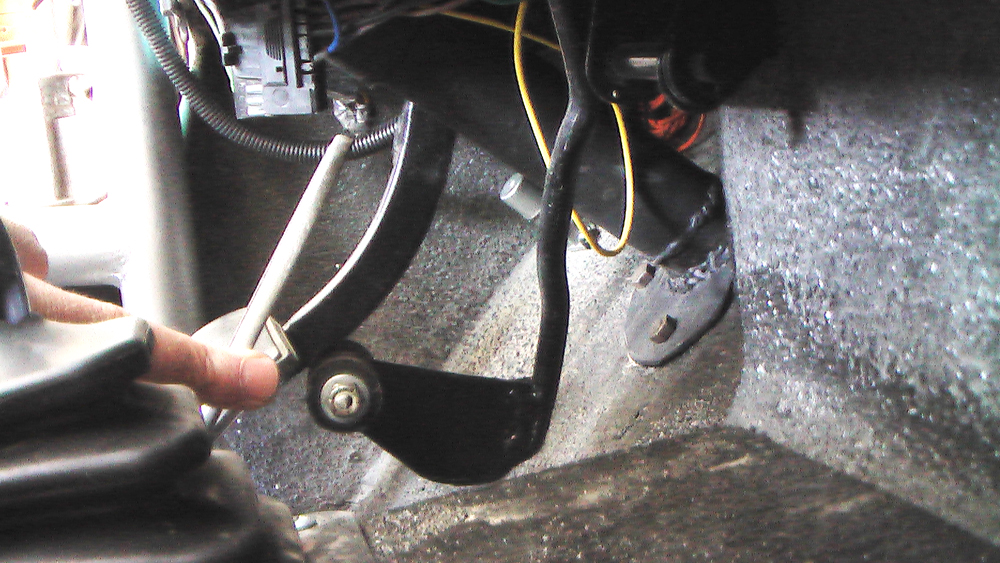
I’d like to clean up some of the rough edges in Version 2.0. Below are some pics and a highly(?) technical schematic.
BTW, that race was the last day I broke a driveline. I’ve never had a problem since.
It all seemed simple enough. I’d pull off the front, driver’s side tire, pull off the front brake drum, adjust the brakes (The front right was pulling some on braking, so I needed to adjust the front left), and put everything back together … easy enough, yes?
Well, that was last night. This morning, I hopped in the jeep and drove down to the local gas station to get some gas, before heading to the local home/garden shop (Zamzow’s).
As I exited the station, my pedal suddenly drops to the floor. Hmm .. not good. I jump out, lift the hood, and, sure enough my accelerator cable connector had come loose. I re-attached the cable and drove back home to more permanently fix the solution.
So, I’m back on the road, heading to Zamzows again. Life is good. I drive about 2 miles and I start hearing a tinging; “an odd sound,” I think to myself …. I listen more closely; “That is coming from the front left side.”
And then it hit me, “had I tightened the lug nuts from my brake work the night before?” Crap, I couldn’t remember.
At just that moment, when the grip of dread descended upon me that I might have forgotten to tighten the nuts, I was looking down at the driver’s tire, driving about 35 mph, when a silver bullet shot from the wheel and landed in the grass divider (never did find it). Holy shit! That was a lug nut! I pulled over into the median (it’s a rural road with a grass median) and checked out the situation.
After doing some accounting (yes, that MBA of mine really came in handy about now), I concluded the situation was not good. 1 lug nut missing. 2 lug nuts loose. 2 lug nuts holding on the rim. 0 tools … and 1 idiot standing there (yes, that would be me).
What to do? Head back home very slowly. Every 1/4 mile or so I stopped, jumped out, hand tightened the lug nuts, got back in, and kept going. Drive another 1/4 mile & repeat. You get the idea!
I finally did make it home, tightened everything back up, PACKED MY TOOLS, and took off again. No more problems the rest of the day … whew!
However, to add insult to injury, my adjustments still didn’t fix the pull to the right I have! Just know that I won’t be forgetting to double check my lug nuts in the future!!
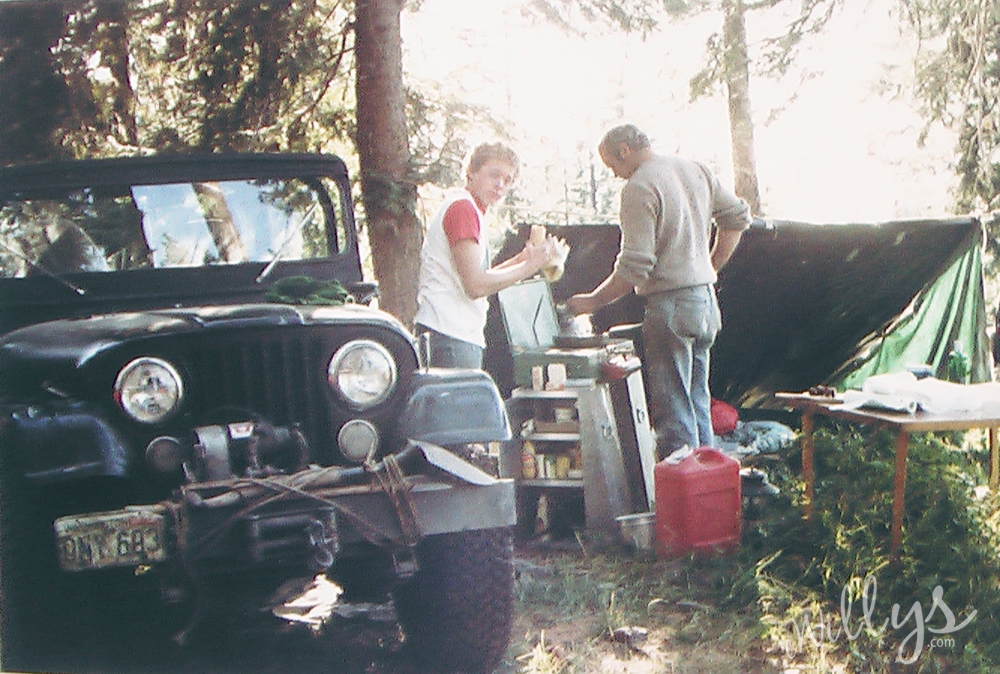
From the scrapbook archives comes this image of Dad and I readying ourselves for another day of jeeping. I believe this was in 1982 (which would make me 17 and dad 49). I remember the overnight at Milk Lake because we slept in the lean-to (see the blue tarp in the background), which was the first time I can remember doing that.
In the pics you can see the aluminum storage units with some supplies in them. Dad built those from Boeing Surplus leftovers, rivets and a rivet gun. They were light, easy to pack, and stored over the wheel wells, between the roll cage bars, so they were accessible on the trail as well.
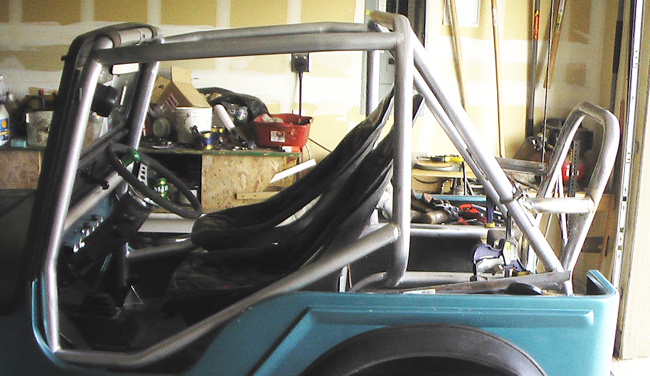
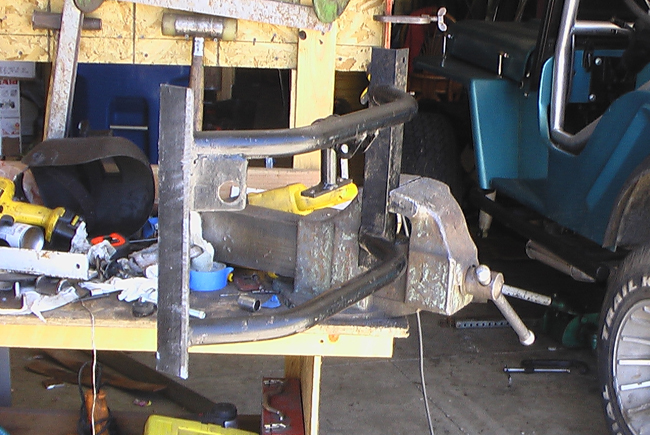
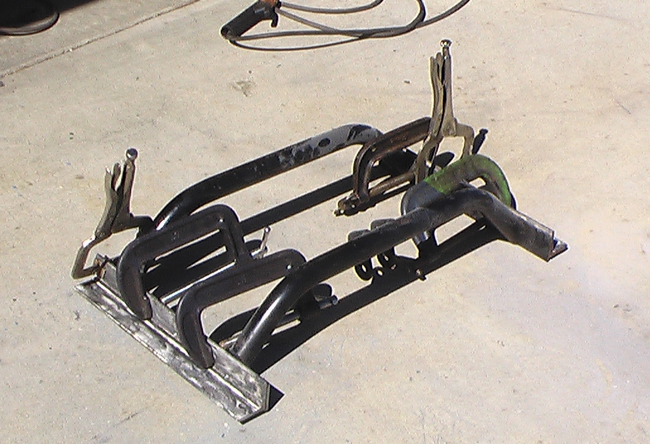
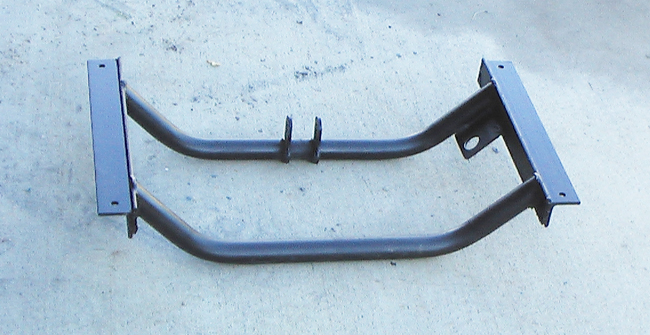
With the kids coming up to visit, I wanted to add a backseat that would allow more than two people to go jeeping. My goal was to combine the seat with a new tire carrier and have the entire unit easily installed and removed. This current setup doesn’t allow for a tail gate; however, I don’t care about that right now. In fact, I could create a back that is permanent with this unit at some later time if I wanted a tailgate.
So, here are some pics of the process:
I started with a couple brackets that bolted to each side of the rear portion of the roll cage that were connected by a heavy piece of angle iron (I have lots of heavy angle iron).
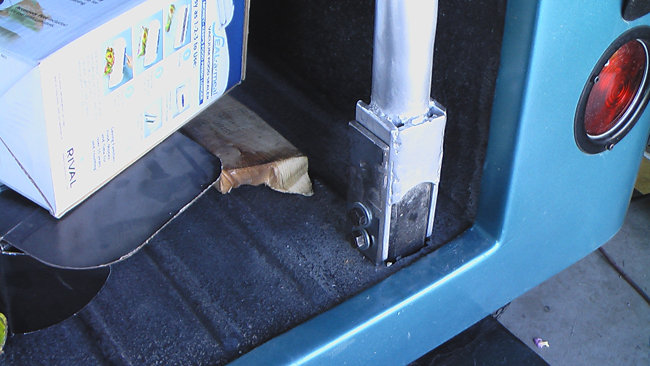
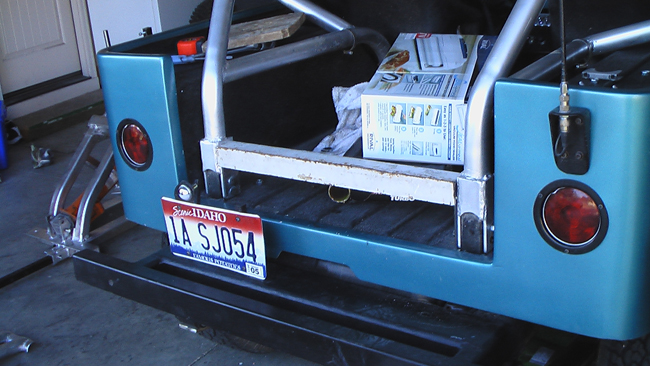
Next I bent a loop from some roll bar tube and then welded it to the angle iron (you can see that I needed to trim a bit from the bottom of the loop). Then, I added a left and right arm that I attached to half-tubes which I clamped to the roll bar. The loop leans backwards at the same angle as the front loop angle leans backwards.
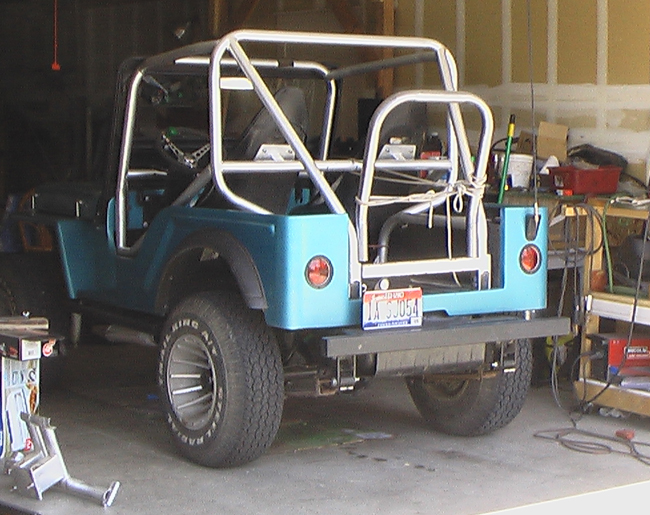
The next step was to add an attachment for the rear tire carrier. I welded a piece of tubing to the top of the loop and a bent piece of tubing to the angle iron. In between, I welded a piece of rectangular tubing.
Then, I added a platform for the bottom of the seat.
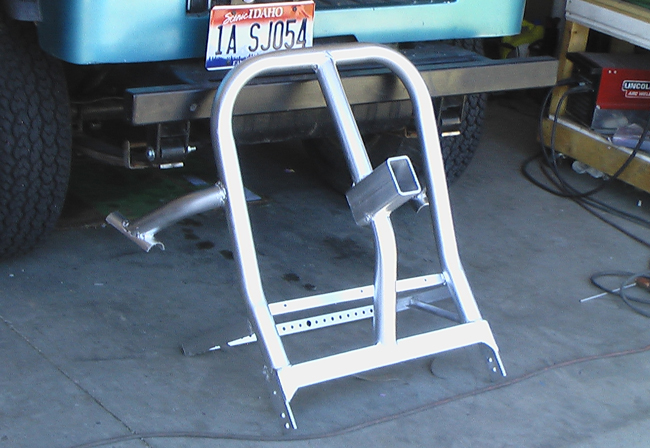
After creating a template for the plate that will hold the spare tire, I cutout a piece of heavy metal, drilled three holes, inserted the studs, and welded them in place. Then, I welded the plate onto the until. Here, Karson is doing some spray painting.
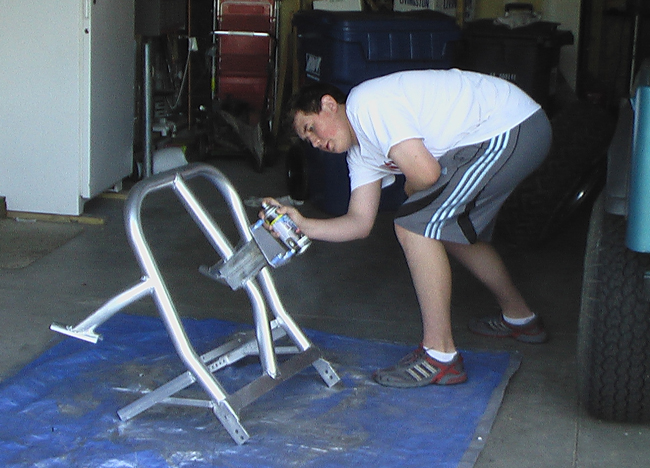
Next, I added a strip of metal across the back loop so I could bolt on the back of the seat (made from wood). The bottom is also wood and bolts in place. Both still need to be padded. The final pics below show the entire unit in place (though I have since painted the wood black and the strip across the back the color of the tubing). This is nothing fancy and, though not as wide as I’d like, will meet my needs for now. And, we tested it out today and the kids love riding back there 🙂
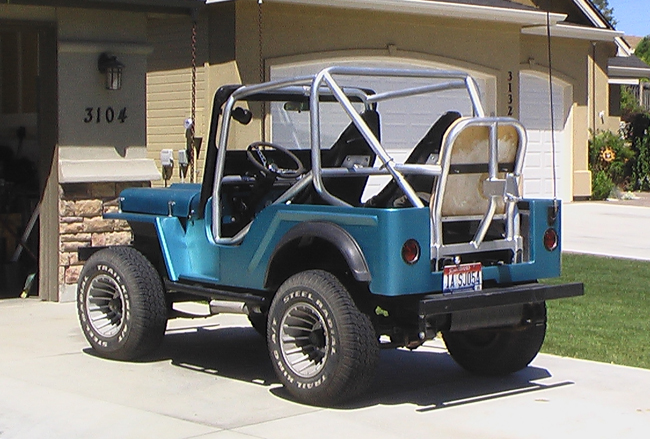
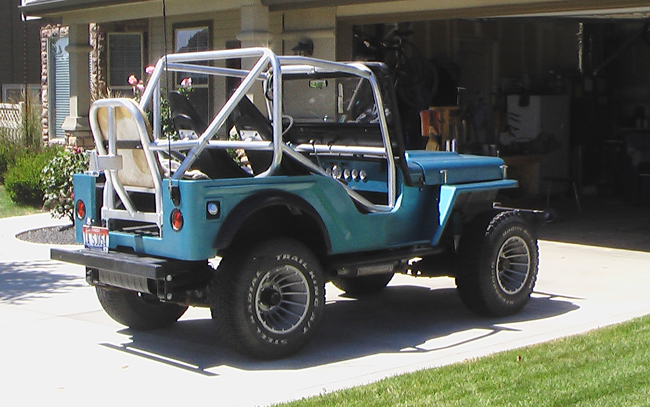
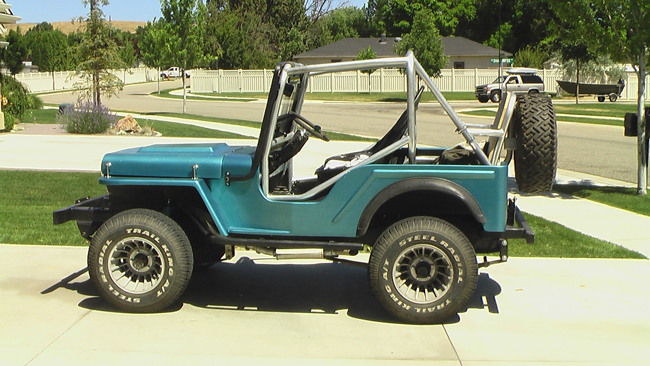
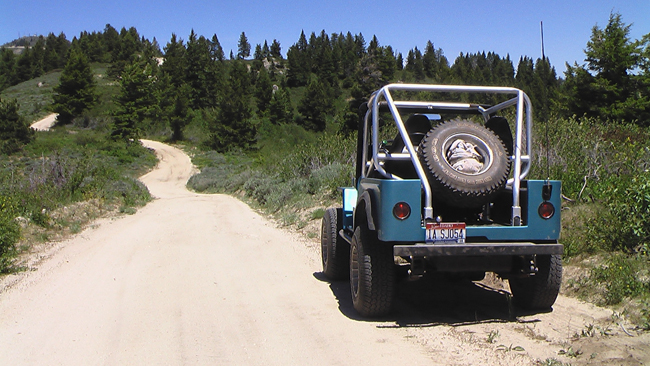
For the Fourth of July, I celebrated by heading back to the formerly snow bound roads near Boise’ only ski area, Bogus Basin. As you can see in this pic, the snow is gone (see snow pics here), the mountains are now in bloom, and more progress was made. More on that tomorrow ….
A 1950 CJ-3A: Today, Darrel had to talk to me. So he stopped next to me, while I waited at a stop light, rolled down his window, and started asking me questions — what year was my jeep, who did my roll cage, and more …
Now, I had no idea who Darrel was. However, in the time it took for the stop light to finally change colors, Darrel had explained through his passenger side window that he A) liked what I had built, B) had a 1950 CJ-3A, C) wanted his jeep rebuilt for his daughter, D) had his jeep nearby, and E) wanted me to follow him there. If I learned that much at a stop light, I wondered how much I would learn about him once we stopped to see his jeep.
True to his word, he lived very close and had a 1950 CJ-3A that needed some work — hadn’t been run in 15 years. It had a V-8 conversion, solid body, rotted top and plenty of potential. And, to my surprise, based on my jeep, he asked me to do the work (and will pay me). I don’t have pics of this just yet. I’ll share more about this if we go forward with the project.
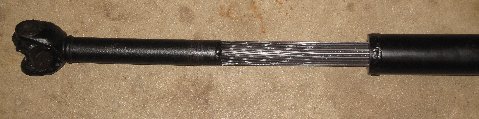
Brian wrote to me late last week to share a sad tale. As a part of the continued testing with his new build, he learned the hard way what happens if the oil in the front pumpkin housing gets too low AND the 4wd somehow gets accidentally shifted into gear (how that happened is still a mystery to him). The result: his front pinion started freezing up, resulting in some ugly sounds and a twisted driveline. See the pics to the right.
The good news is that everything else continues to behave well.
I blame my mother.
Had she not very kindly given me some cash to do ‘whatever’ I wanted for my birthday, I wouldn’t have gone to the Jungle Jims on my birthday. I wouldn’t have pulled those springs off the truck. I wouldn’t have installed the springs, that lead to the vibrations, that drove me crazy all month, that forced me to pull apart Biscuit’s entire rear end and redo everything – spring pads, shock mounts, and the transmission undercarriage.
So, a simple 1.5″ lift thoroughly disrupted my entire month. How’d this happen?
I blame the recent emergence of geometry. You see, 20+ years ago geometry didn’t exist. Or maybe it did, but somehow, in someway, my 1st jeep was enveloped in a geometrically-free zen-like zone where geometry didn’t apply, because I never had the problems I encountered this month, despite the fact I set up everything else nearly the same.
What am I rattling on about? I’m talking driveline geometry 101. Unfortunately, I was busy the day they held that class. So, I set up my driveline in the same manner I did my old one: My driveline angled straight out from my pumpkin (with the pumpkin angled at the transfercase like the way it should be done when a CV joint is used), with the only angle at the transfercase. I probably put 10,000 miles on my last jeep without issue. So, why would I do anything different with the new jeep?
Well, everything worked on Biscuit, until I put the 1.5″ lift. But, that little change caused the angles to change enough that the driveline was vibrating my socks off at certain speeds, which is a pretty good trick since I normally wear shoes while driving. So, as I detailed a couple weeks ago, I thought I had solved the issue by using an angle shim to adjust the angle of the pumpkin. However, after driving it a few times, i realized this wasn’t a fix at all.
So, last week I decided it was time to do it right, to tear off the old spring pads and start from scratch and change the angling of the transfercase output shaft and the input shaft of the pumpkin to make them the same. Here were the steps.
1) Remove rear end and remove old spring pads and shock mounts and then drink beer.
2) Build new spring pads. More beer.
3) Connect everything back together to test the driveline angle. Uh oh, I discovered the driveline angle was 30 degrees (ouch), which allowed for almost no flex — not a good thing. Breathe. And Breathe some more.
5) After hmmming and hawwing, I decided I needed to drop the transfercase/transmission just over an inch. So, I removed the undercarriage. Get energy drinks ….
6) Redo the tranny/tc undercarriage — I had to cutoff the angle piece and weld a new piece onto it. More Beer
7) Reattach the tranny/tc — this resulted in an improved angle, with the tc sloping down 7 degrees. Skip beer and drink water.
8)Then, I rotated the pumpkin upwards 7 degrees. More water.
9)Next, I pulled everything apart so I could weld the pads. Margarita to celebrate potential success.
10) Finally, I slipped the rear end underneath and connected everything back together. The result was the driveline now angled 24 degrees. While not ideal, I can live with this for the time being. More beer …
Today, I finally got Biscuit back on the road. I have to say, I wasn’t entirely sure that all this work would to solve the problem, but I am HAPPY to report that not only are all vibrations gone, but also the noise I was getting during deceleration has disappeared as well. So, next week I’ll be heading back into the hills. The heat is finally here in Boise and all the snow should be gone from the trails.
Now, while I blame mom for a torturous month, it motivated me to fix everything correctly. Thanks Mom! And apologies to Robert Pirsig for the blatant theft of his book title .. Zen and the Art of Motorcycle Maintenance.
Here are a few pics (honestly, I was so mad about having to tear all this stuff apart that I didn’t document this too carefully).
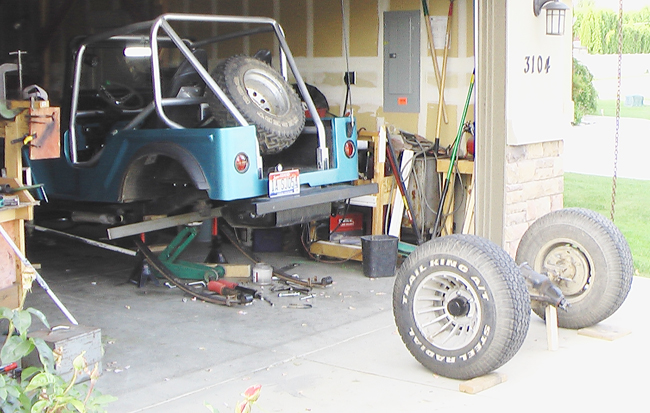
Here is a pic of the rear end pulled. I’m about ready to remove the spring pads:
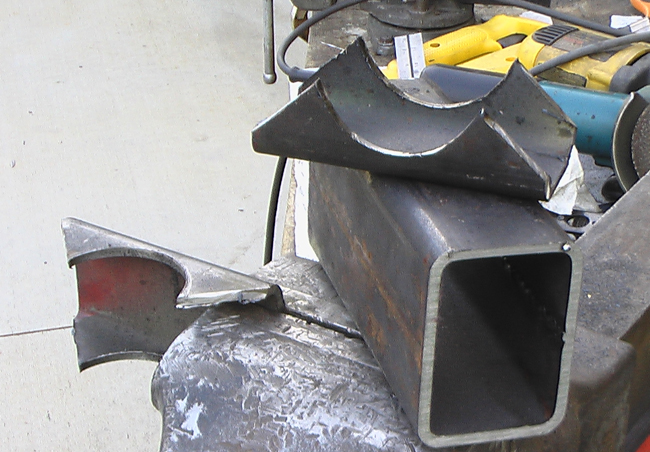
These are the new spring pads made from 3″ x 2.5″ tubing.
Here’s the undercarriage before I cut off the angles. You can see the replacement angle sitting on top of the carriage.
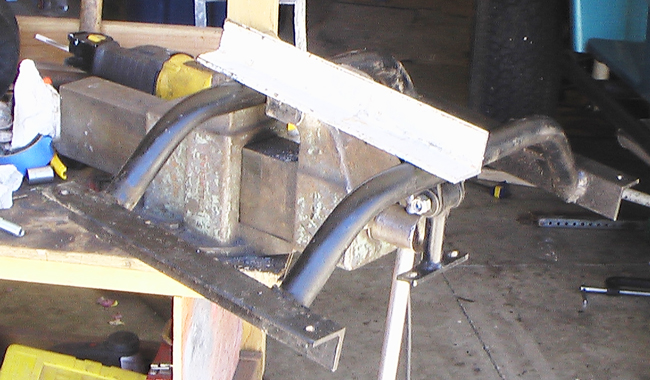
Here I’ve cut off one side.
Here it is complete. The result is the undercarriage drops everything just over an inch.
And, here it is finally back together :-). And the body leveled out just where I want it. Who would have thought a simple lift would cause soooo much trouble!