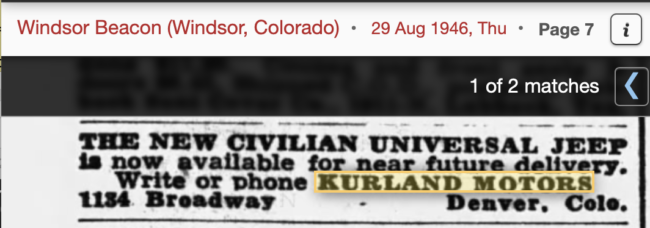
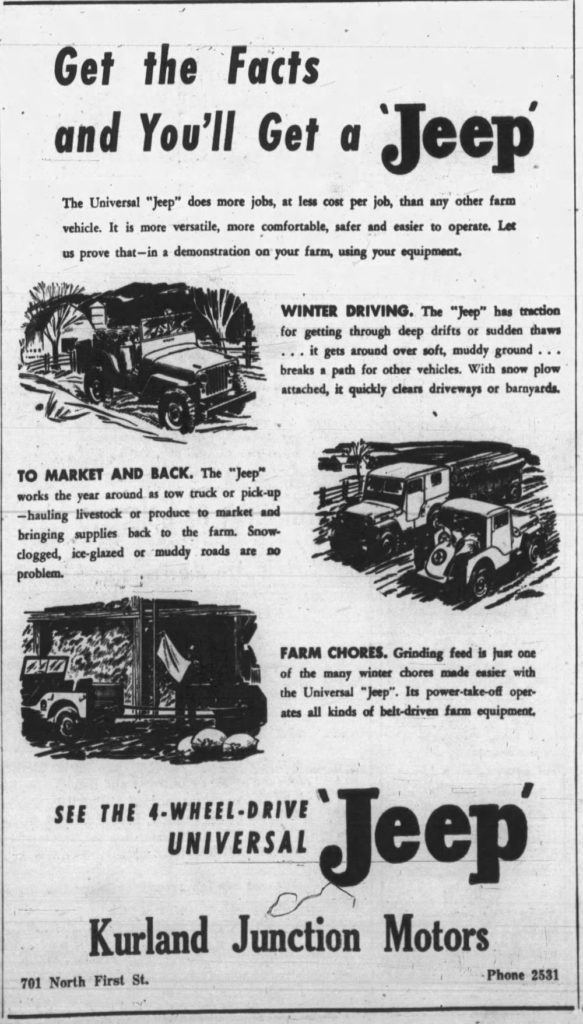
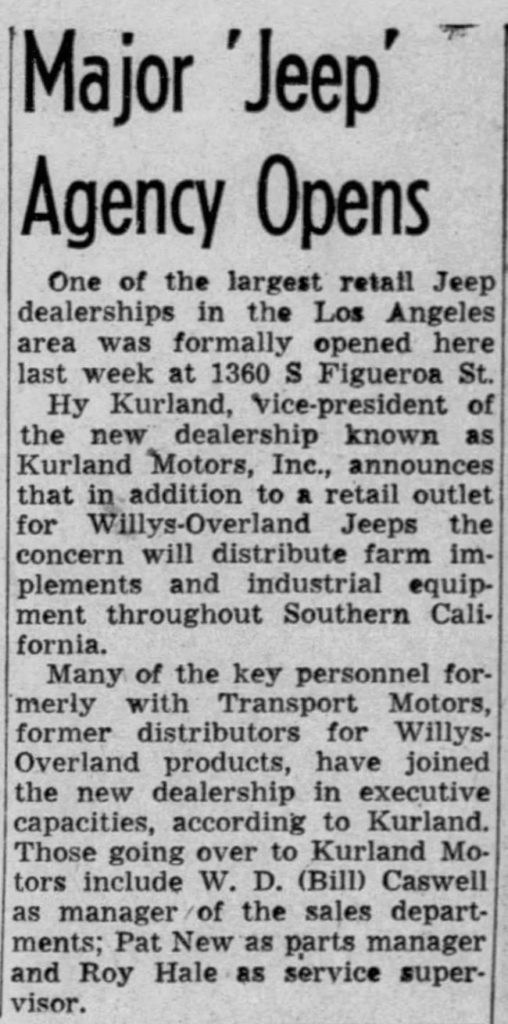
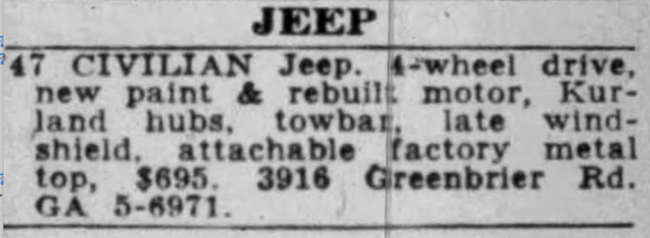
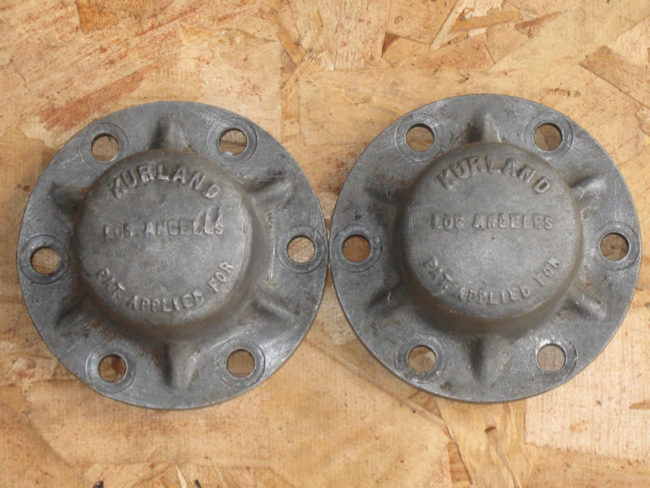
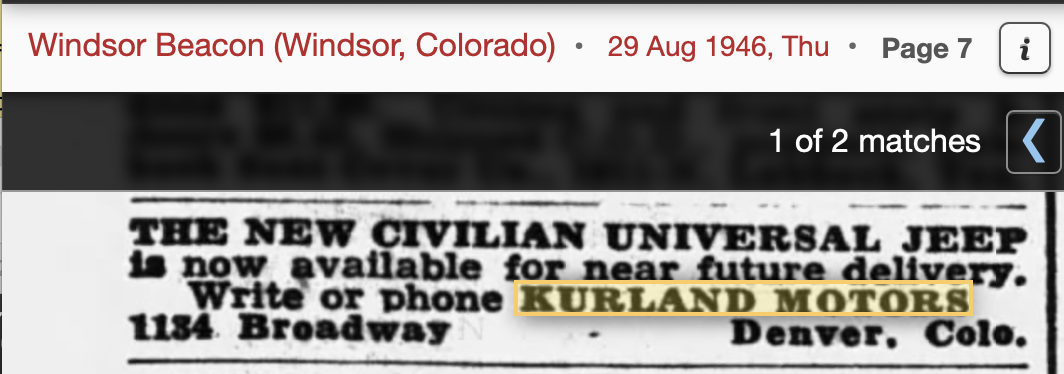
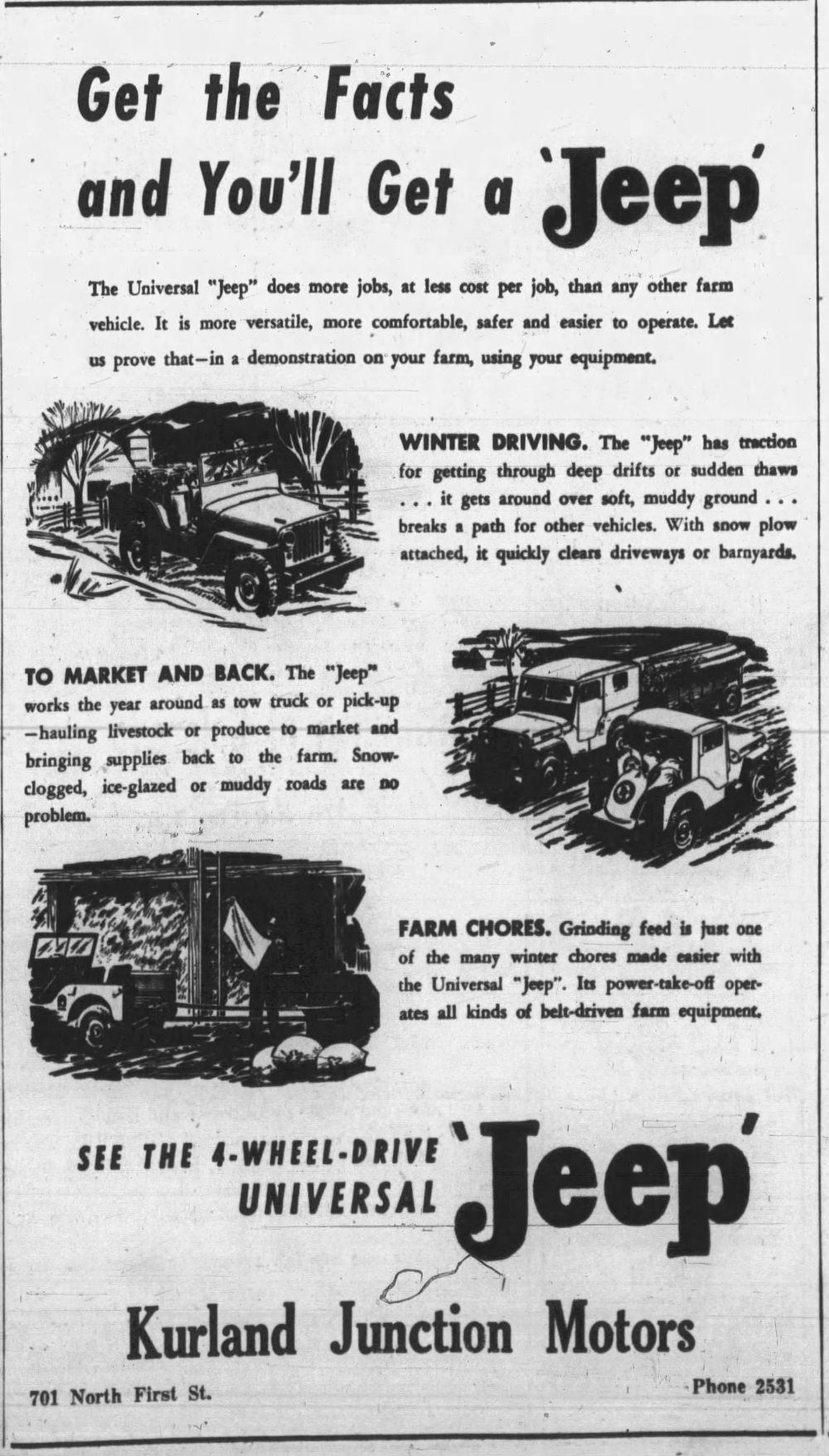
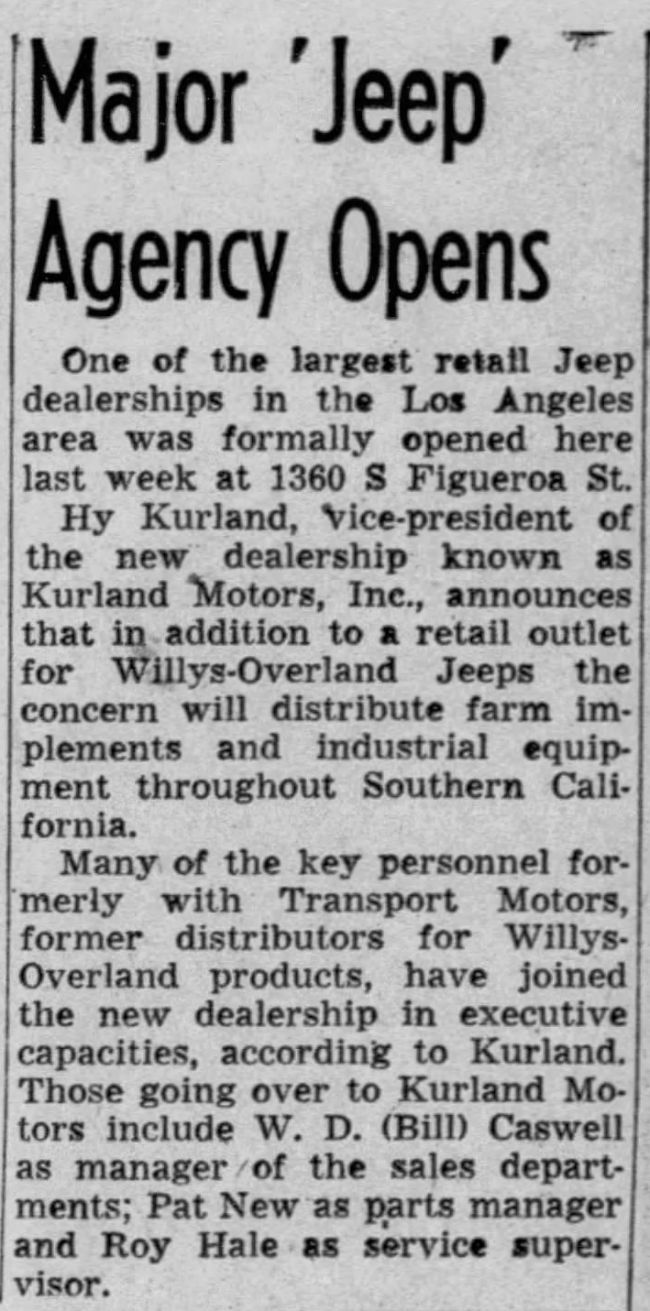
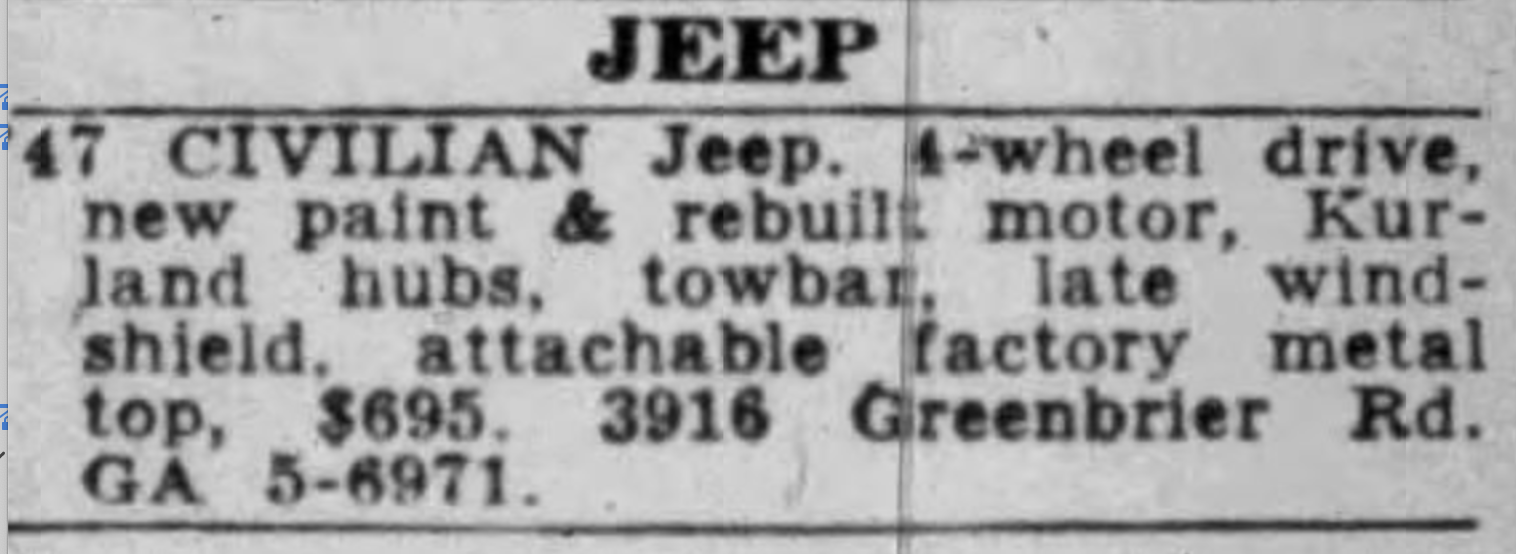
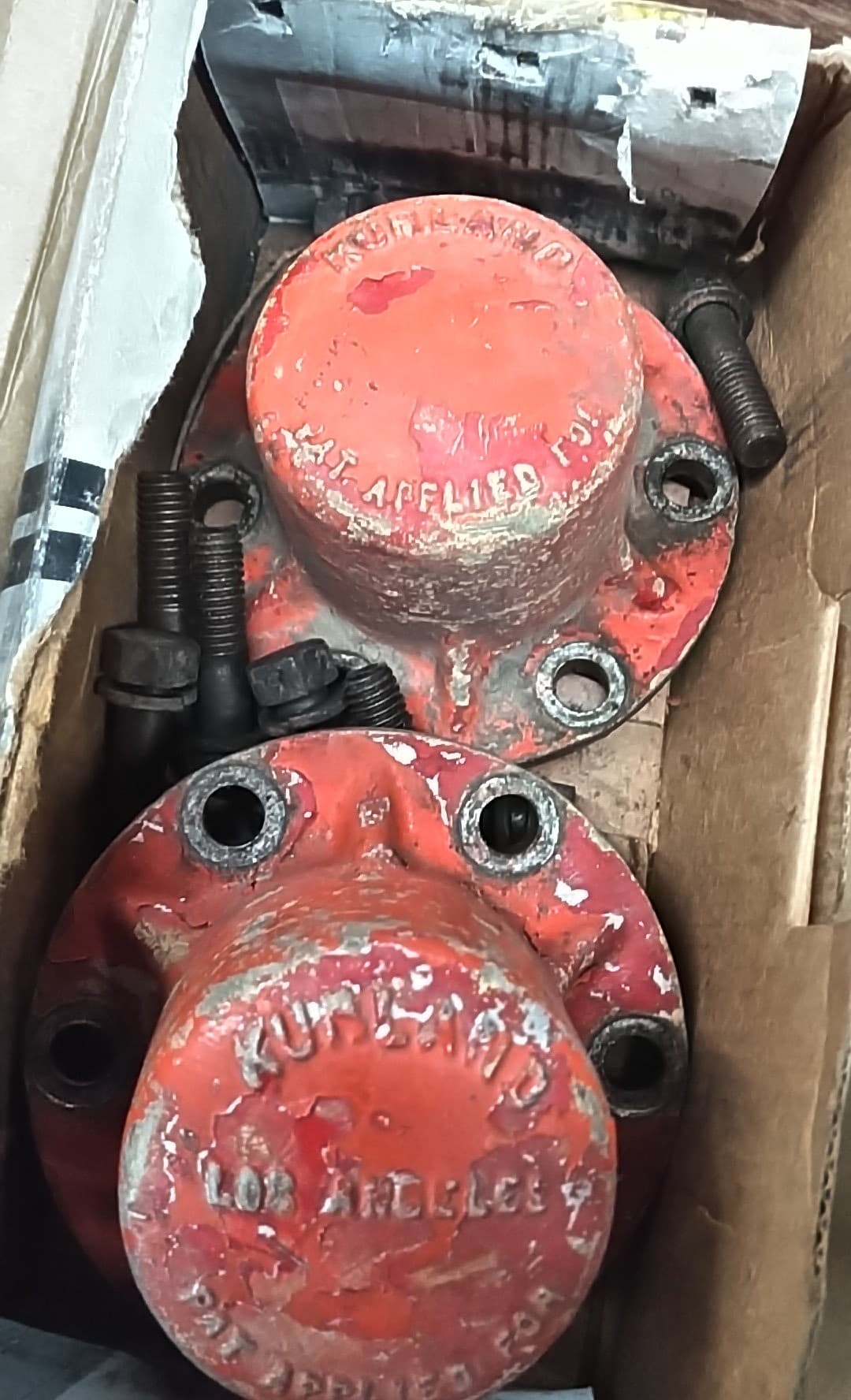
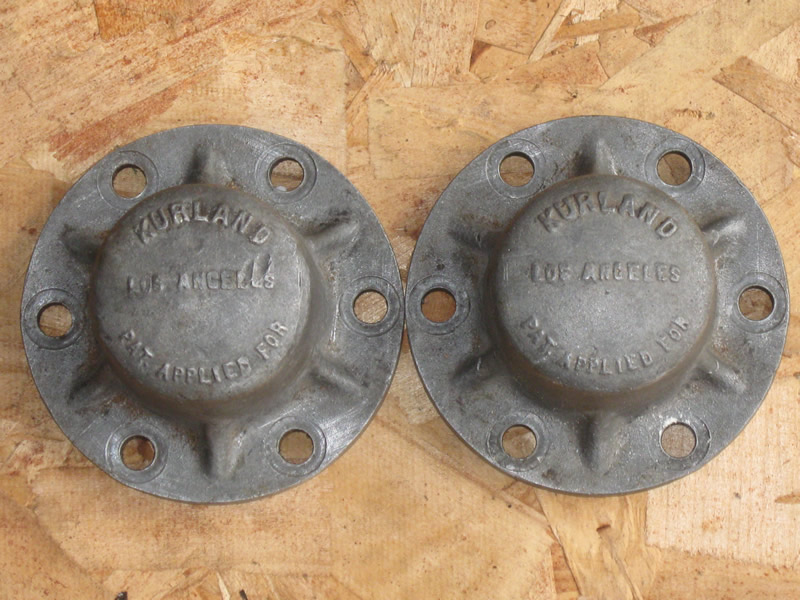
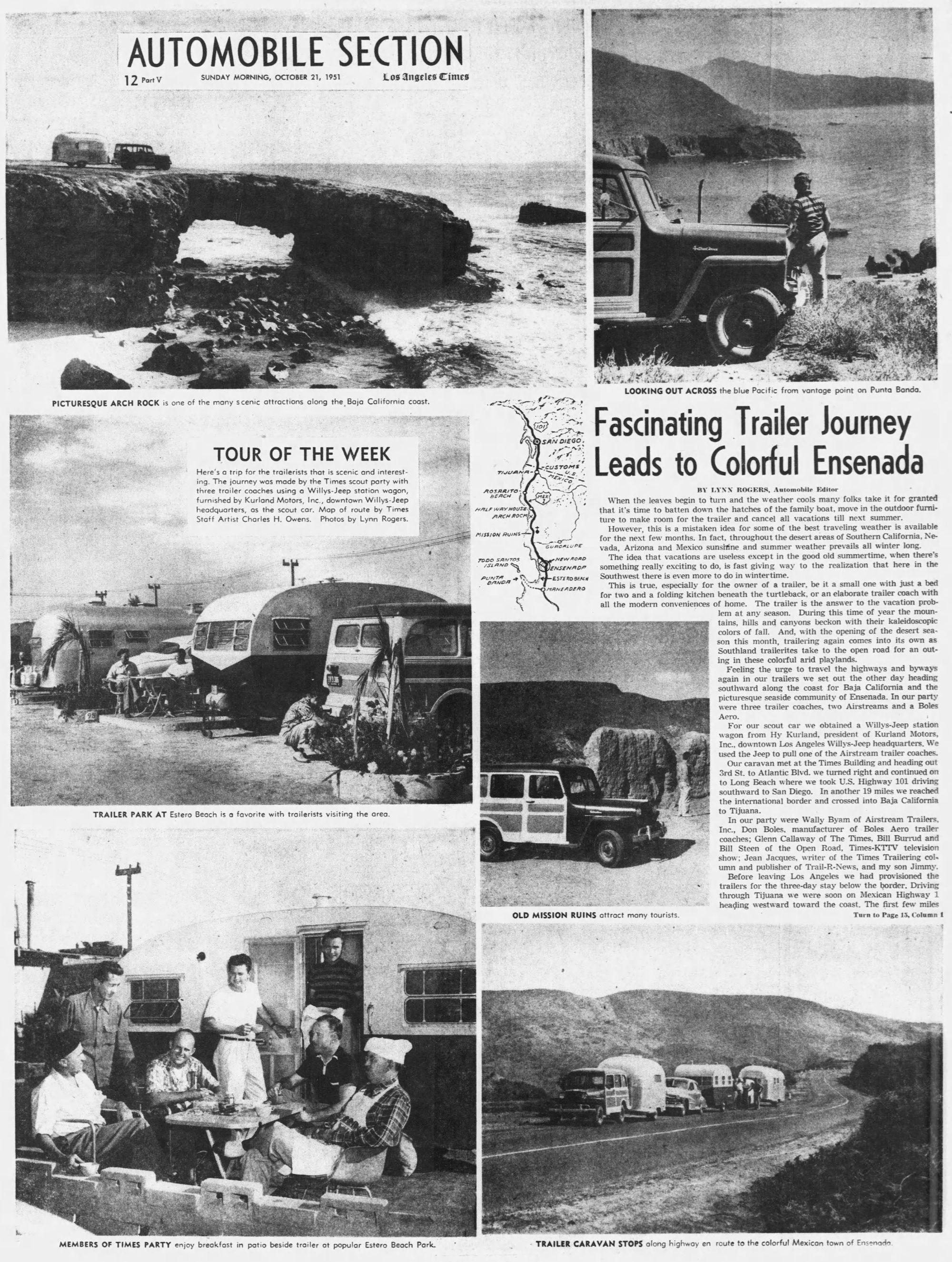
In 1951, Kurland Motors provided the Los Angeles Times automobile editor, Lynn Rogers, a wagon for a journey down to Ensenada, Mexico. A description of the trip was printed in the October 21, 1951, issue of the Los Angeles Times.
Features Research Archives
Reviving a 1959 CJ-3B
Bill shared a video via Autorevolution.com that highlights the saving of a locked-up CJ-3B.
Video: Saving a 1946 CJ-2A
Thanks to Chuck for sharing this video about saving a CJ-2A.
Overdrive Differences
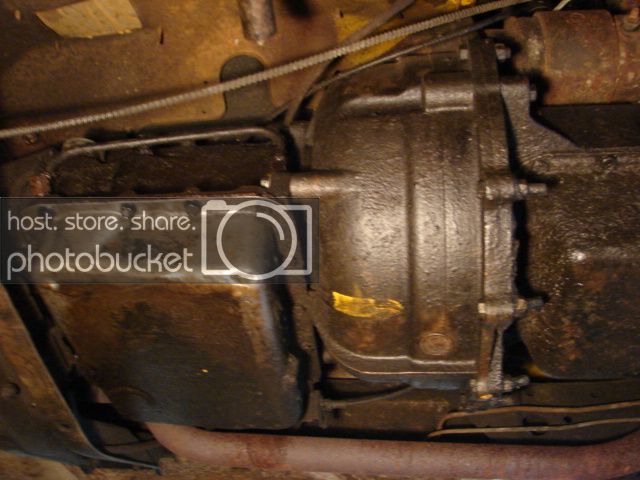
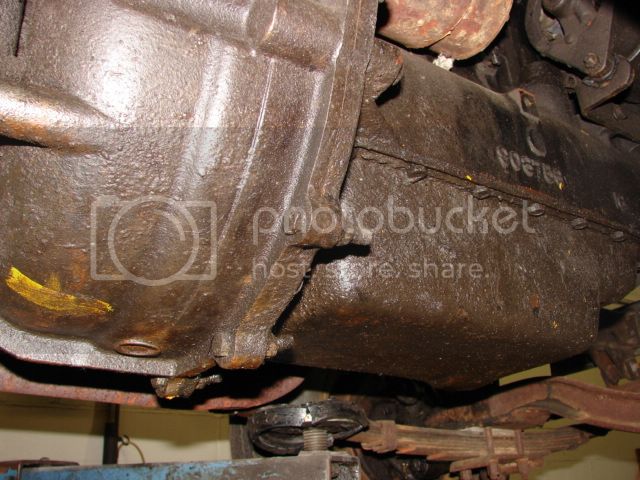
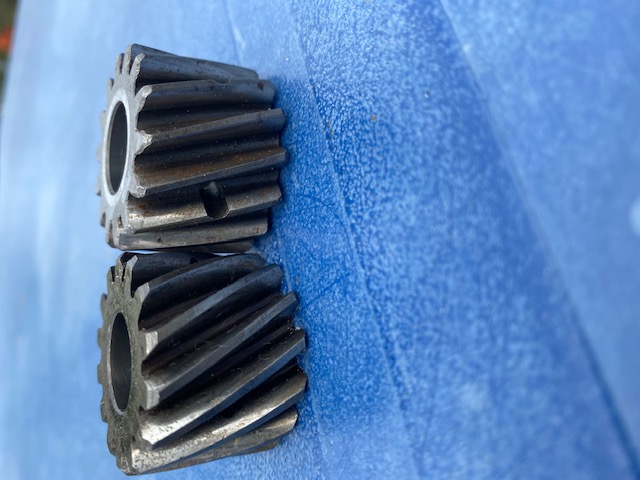
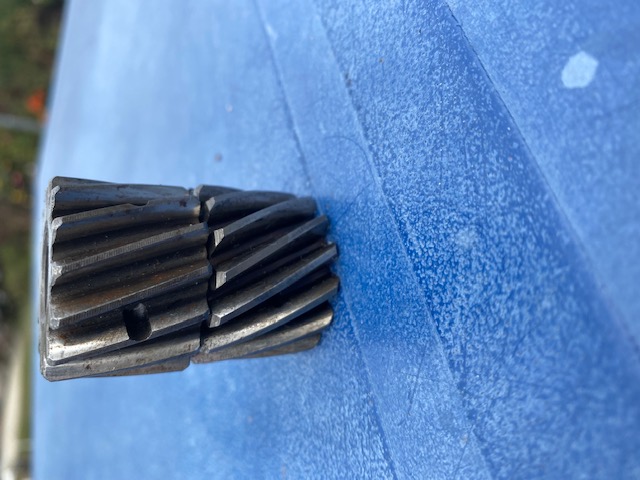
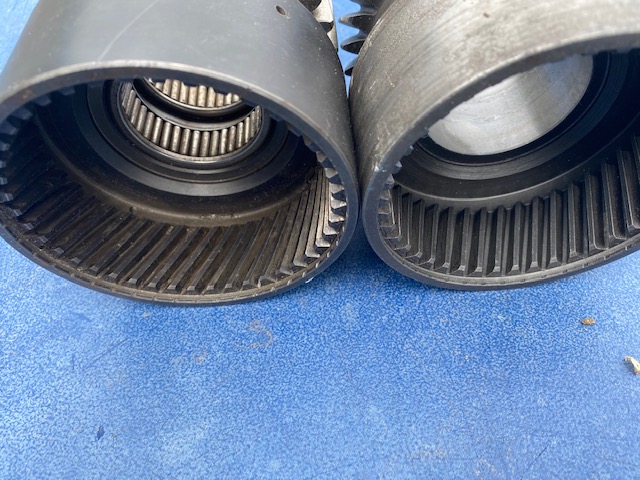
Will shared pics that show some of the differences between a Warn overdrive with a Husky overdrive. Regarding finding Husky parts, my best guess for parts would be Herm Tilford.
Will writes, “A little while back there was a discussion on the different overdrive units. There where several different units produced and maybe others but the ones I’ve seen are Warn, Dualmatic, Saturn, Husky and ATV overdrives that all looked similar. Saturn is a direct decedent of the Warn as Advance Adapters purchased the tooling from Warn to make the Saturn. I don’t know much about the Dualmatic or ATV except ATV is still produced as is Saturn.
In 1957-58 4 Italians Drove to Toledo the Long Way
UPDATE: This was first posted in August of 2016.
This September 13, 1958, article from the Toledo Blade told the story of four italians who drove what appears to be a WWII jeep a distance of 80,000 miles from Italy to Toledo. The men, all newspapermen, planned to drive another 15,000 miles back to Italy. What a trip! I wonder if their counterparts in 2013 knew of their countrymen’s adventure?
Re-Grading the Little House Lawn
In another of the series of why-I-am-not-working-on-jeeps-right-now posts, the warm weather has allow me to get busy the last couple of days regrading the lawn next to the guest house. The previous owner had put a garden next to the shop. We wanted that to go, because it was in the shade most of the time and because it didn’t make sense for us in that location. In addition, there was a negative slop into the south side of the guest house. Finally, we want to add a walking path along the lawn side of the shop and install some new sprinklers (line were laid for this area, but, we have discovered, the growth of the lean-to-structure (at back) and the construction of the guest house a few years ago appear to have been built, in some cases, over the original lines. So, we are having to locate this sprinkler line as we go.
Here’s what it looked like when we bought the place:
All those issues led me to regrade the area this weekend. Pulling up the grass turned out to be the most difficult part. So, I used my fork-lift forks to stab, then lift the grass. The result was this jumbled mess.
Eventually, I got all the area roughed out, with the sod and dirt piled in one big pile.
With the roughing-out completed, today I will spend some time using a level to see what other work needs to be done, mark the future walk-way path, and layout some additional lines and sprinklers.
Now I just have to find a place for all that dirt!
Anyone Recognize this Seat?
Dave’s been trying to figure out some wagon seats he has, but he’s got one seat that he can’t identify (he isn’t sure it belongs to a wagon).
He writes, “I do have one seat that I don’t know about.
Thinking it’s a jeep seat as I got with other jeep stuff but that’s no guarantee.
32” wide. Non folding. Some of original brackets cut.
Believe that part of rear bracket is original. Threaded holes into uprights.”
Meanwhile, Dave was investigating wagon seat differences in general. Neither of us could locate a good source of information on the differences through the years. However, using some of his wagons, he was able to surmise the following. Can anyone provide additional details on the seat differences or point to a good source??:
Per Dave, “Drivers seats are approximately 32” wide, on sliders. Early wagons did not fold (I only have a ’49 with which to compare). Some slightly later wagons driver seats do fold, but I don’t know when that stopped.
Passenger seat seems fairly consistent all throughout, about 15″ wide, long legs fold and tumble. Intermediate or rear narrow seats also about 15” wide, shorter legs fold and tumble.
Wide rear or intermediate seats as stated in parts book, 25” wide. Early ones were non folding, rear legs stab into floor brackets. Maybe also before mounting change became folding. Later fold and tumble.”
Dec 1942 Foreign Service Mag Cover
I ran across this magazine on eBay. Given the cover, I couldn’t resist buying it, though there was no other jeep pics or illustrations within it.
1953-1955 Kaiser’s Attempt to Standardize Marketing
UPDATE: II: Barry Thomas has updated his thoughts on this video at his Farm Jeep site:
https://www.farmjeep.com/2021/08/01/a-jeep-movie-that-was-never-released/
====================
UPDATE I From July 11/2021: This video was shared by the Goddess herself, Deborah. It used the 1954 Willys Export Company’s brochure as the lens through which is shows the variety of jeeps in this movie clip (in color no less). You can learn more about the various forms of this brochure below. This brochure did not have a form number.
=========================
Originally posted January 12, 2020: As noted by Edgar Kaiser in 1955, one of the key reasons Kaiser bought Willys’ assets was that Kaiser didn’t feel Willys-Overland was pursuing the consumer market aggressively enough. As a part of Kaiser’s strategy to move that direction, the company created a wide variety of brochures, folders, direct mail pieces, product booklets, post cards, a Jeep family 16mm movie, and other merchandising materials.
Much of these documents have been scanned and available on the internet, but no one (that I’ve seen) has assembled them together to see what items were available at the time the CJ-5 launched.
So, consider this a draft towards that goal, as I still have some more scanning and locating of documents so I can interlink everything together.
To begin, here is one of the earliest examples of the Kaiser Willys team creating a standardized family of similar brochures that highlight each of the models. Nearly all the first wave of documents were created in 1954. How do we know this? Because the January 1955 Kaiser Willys Sales and Dealer News highlighted these merchandising aides:
Note that other brochures mentioned in this Kaiser Willys Newspaper include the upcoming Jeep in Public Service (24 pages), the Jeep in Industry (24 pages, might have ended up this one?), and the Jeep in Agriculture (unclear to me which this is). I do have the brochure shown in the lower right, but it’s in Spanish. So, we can conclude that those were all published in 1955 (there are no publish dates on them).
Here’s an order form from 1955. It’s form numbers for the ‘vehicle folder’ brochures match those shown in the photo below this order form.
Here’s a photo from an ebay post that shows all the vehicle ‘folder’ brochures together (the form numbers I have for the vehicle brochures below match the numbers on the order form above). I only have 7 of the 10 brochures, or I’d take a photo of my own like this.
Form #s for 9 of the brochures in the pic above, and one not included (w-221-6): CJ-5 (W-239-5), CJ-3B (W-201-5), 1 Ton Truck (W-205-5), 4WD Station Wagon (W-221-5) (see W-221-4 here), 4WD Sedan Deliver (W-227-5), 2WD Utility Wagon (M-221-6), Cargo Personnel Carrier (W-215-5), 4WD Field Ambulance (W-228-5), 4WD Utility Ambulance (W-230-5), Jeep Fire Engine (W-229-5), and the Commando Fire Truck (W-240-5).
Below are some various brochure covers from the twenty-plus page brochures ….. (Note, one promotional document not listed in the order form was the Willys Story, 1950-1954).
1954 Willys 4-Wheel Drive Form W-1772:
1954 Jeep Specialized Vehicles and Equipment, Spanish Version, No form or document number on the brochure:
1955 updated version of the Willys Specialized Vehicles and Equipment Brochure (again, does not have a Form #):
1955 Willys Jeep in Public Service, Form W-991-5:
MotorTrend Article on a CJ-2A M-38 …
Bill shared this article that describes this custom build as a 1948 M38. However, it’s appears to be a modified CJ-2A. It’s an interesting build, but calling it one of the “greatest flat fenders ever built” is a stretch (in my opinion).
https://www.motortrend.com/features/willys-m38-flatfender-rock-spider-soni-honegger/
“Fans of the War Wagon, the Scorpion MK1, and this apocalypse-ready toy hauler might already be familiar with this Willys M38 (the military version of the civilian Jeep CJ-3A) built by Soni Honegger. It’s been called the “Slickrock Spider” for its remarkable ability to articulate its way over and through some of the hairiest obstacles known to four-wheel drive vehicles, especially with Soni at the helm. Let’s take a look at what makes this machine one of the greatest Flatfenders ever built.”