emailNeed to contact me and don't have my email? Click on email button.
About eWillys
Welcome to eWillys.com, a website for vintage jeep enthusiasts. I update this website nearly every day with jeep deals, jeep history, interesting reader projects, jeep related info, and more.
These quick searches can help you find things on eBay. People list in the wrong categories all the time, so don't be surprised to see brochures in the parts area for example. This section used to be split into jeeps, parts and other categories, but recent changes to eBay will require this information to be recoded.
The links to posts below show jeeps grouped by models, condition, and other ways. Some of these jeeps are for sale and others have been sold. If you are unsure whether a vehicle is still for sale or not, email me at d [at] ewillys.com for more info.
Importantly, the allure of buying a project jeep can be romantic. The reality of restoring a jeep can be quite different, expensive and overwhelming without the right tools and resources. So, tread carefully when purchasing a "project". If you have any concerns about buying a vintage jeep, or run across a scam, feel free to contact me for help, comments or concerns .
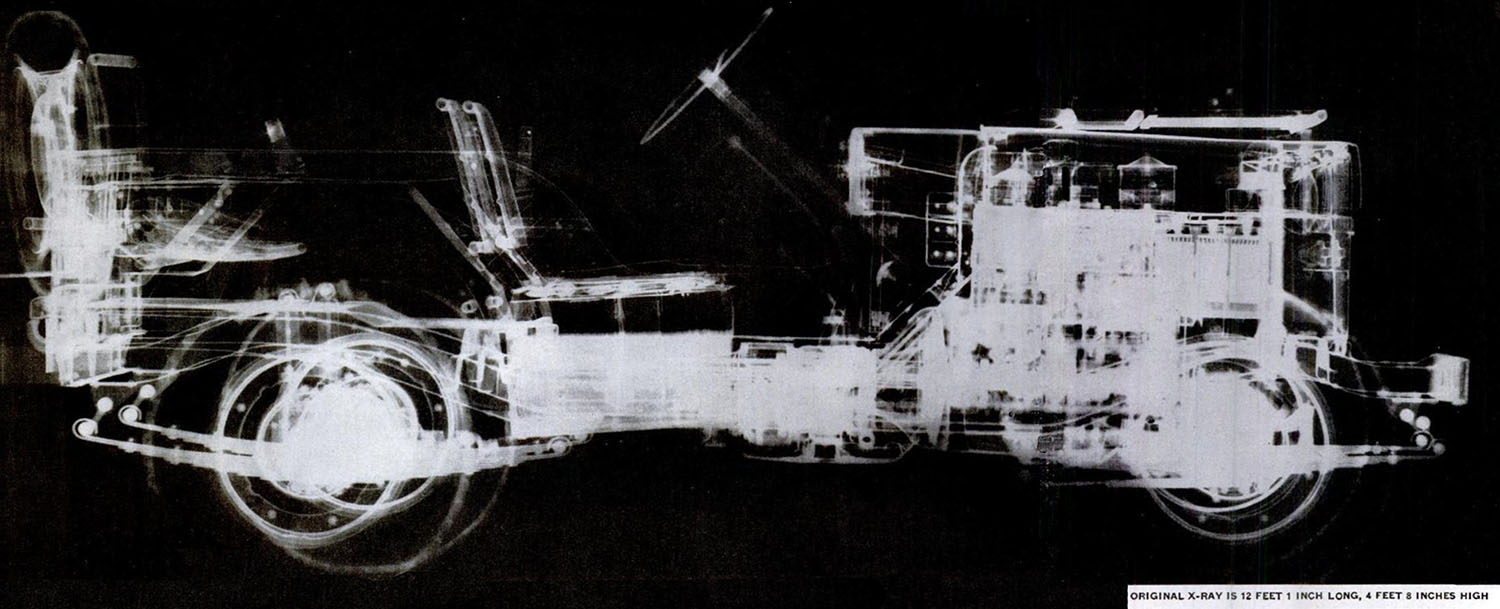
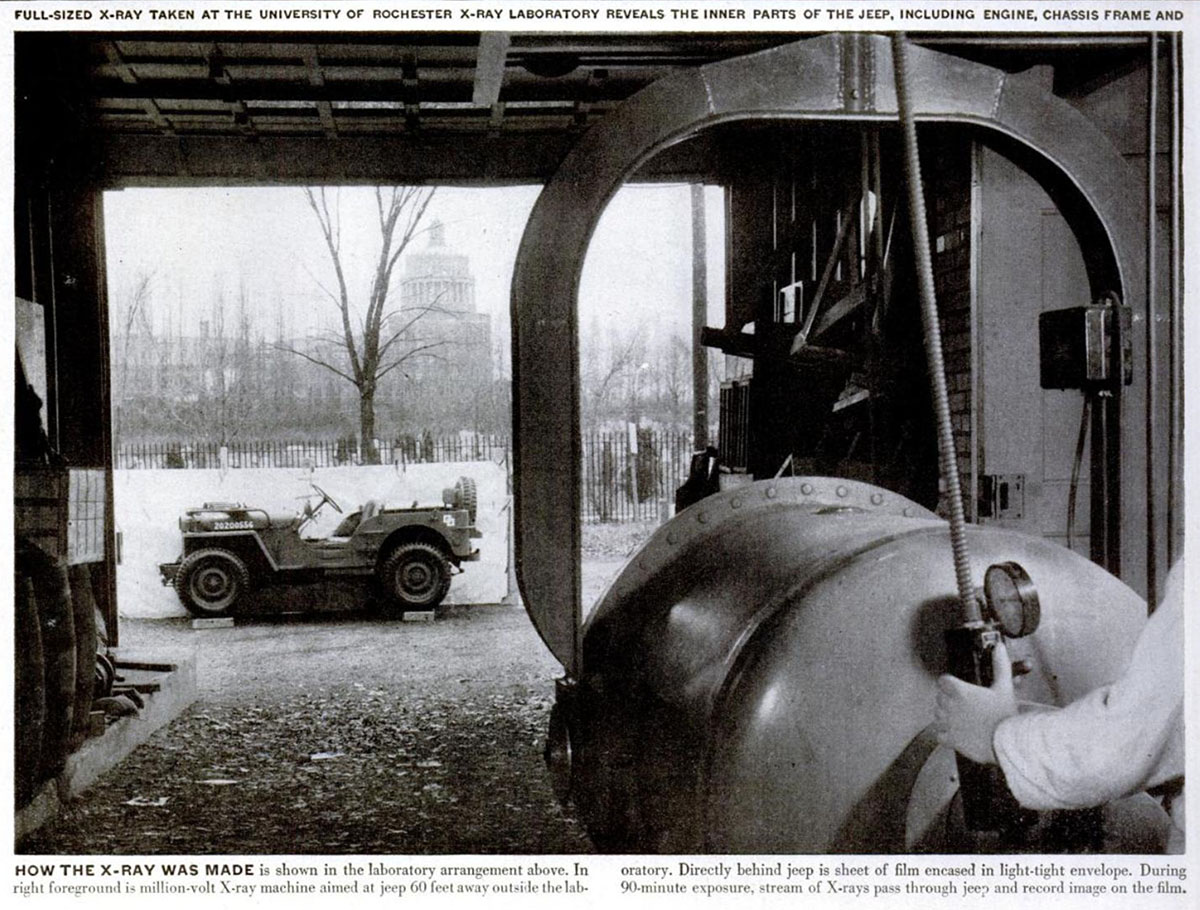
This is a real X-ray of a real jeep developed as a life-size image. Life Magazine, March 25, 1946.
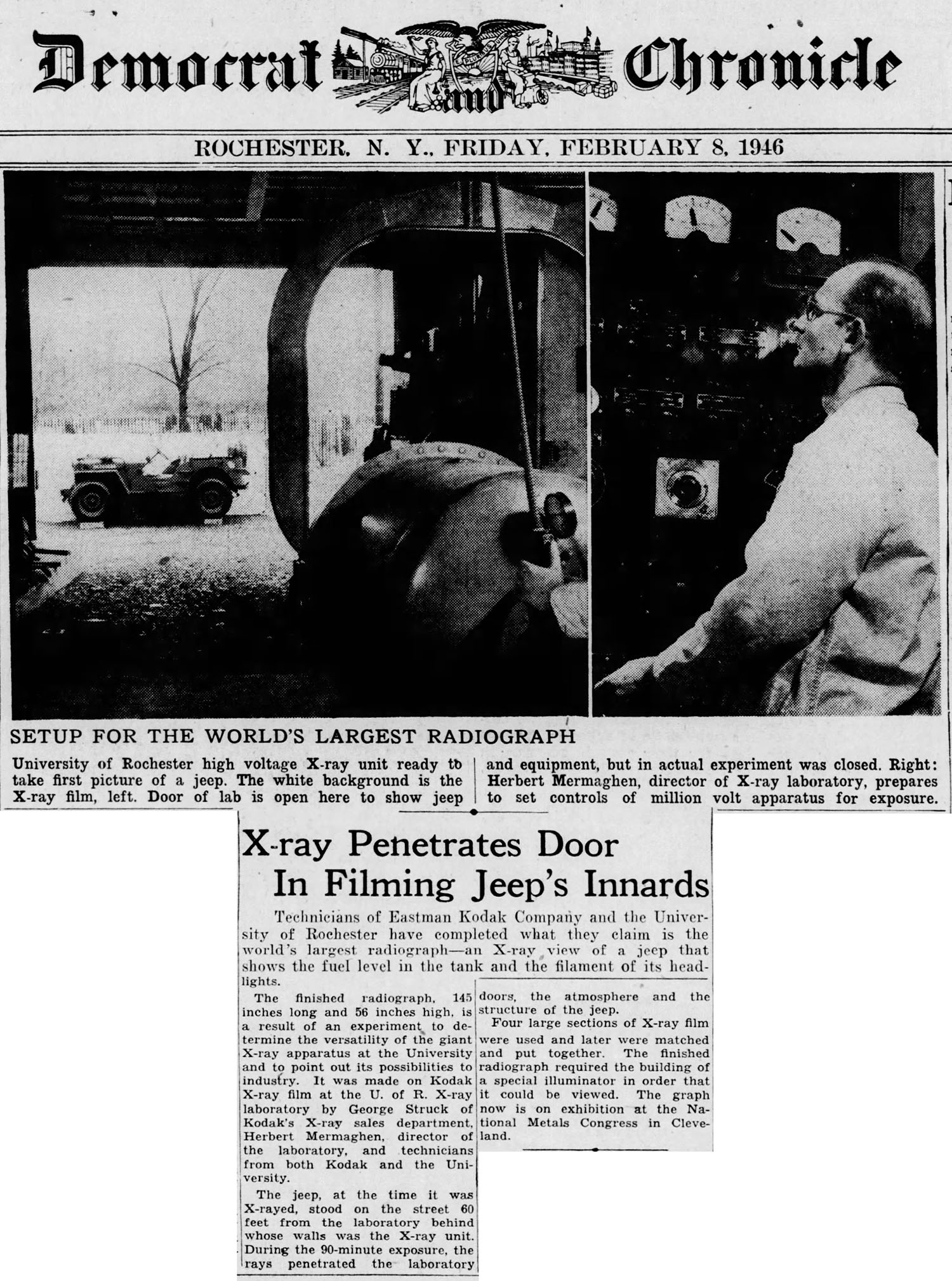
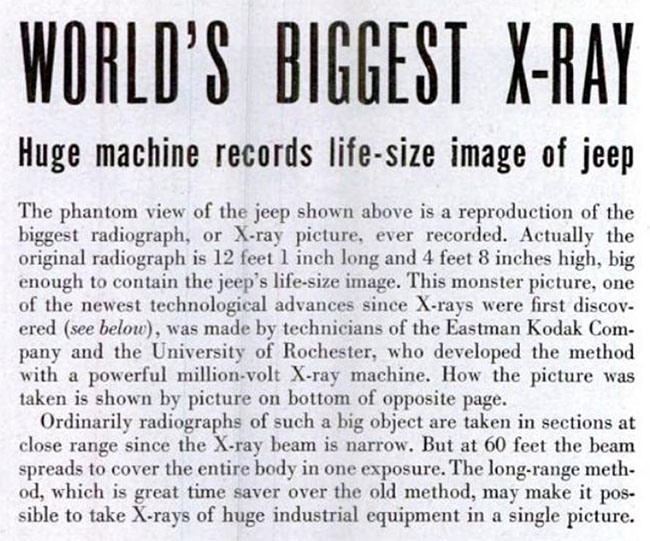
In 1946 the wiz kids at the University of Rochester, NY, and Eastman Kodak built the world’s largest radiograph, one that could create an X-Ray photo of a large machine, say a jeep, which is precisely how they tested it. In the jeep’s case, the team used the million-volt x-ray machine to create a radiograph 12′ 1″ long by 4′ 1″ tall, or large enough to contain a life size jeep. The larger goal was create the ability to X-Ray large machinery.
The February 8th, 1946, issue of Rochester Democrat Chronicle shared the story:
The next month, Life Magazine also ran the story, this time with a copy of the X-ray photo (seen at top):
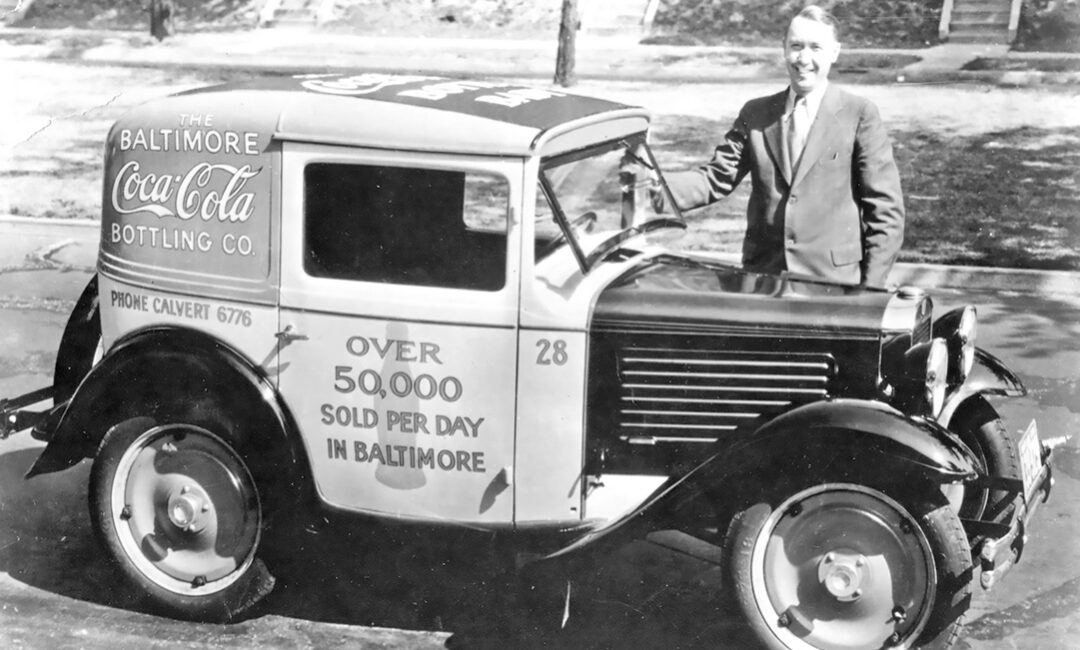
This story doesn’t relate much to jeeps, but theOldMotor website published a piece of Robert Cunningham about that tells the story of Bantam’s effort to participate in the cola wars. However, their effort to patent a carton-shaped truck capable of carrying six packs of beverages was interrupted in the summer of 1940 by a shift in priorities towards the new BRC recon vehicle (aka the jeep), along with the advent of WWII.
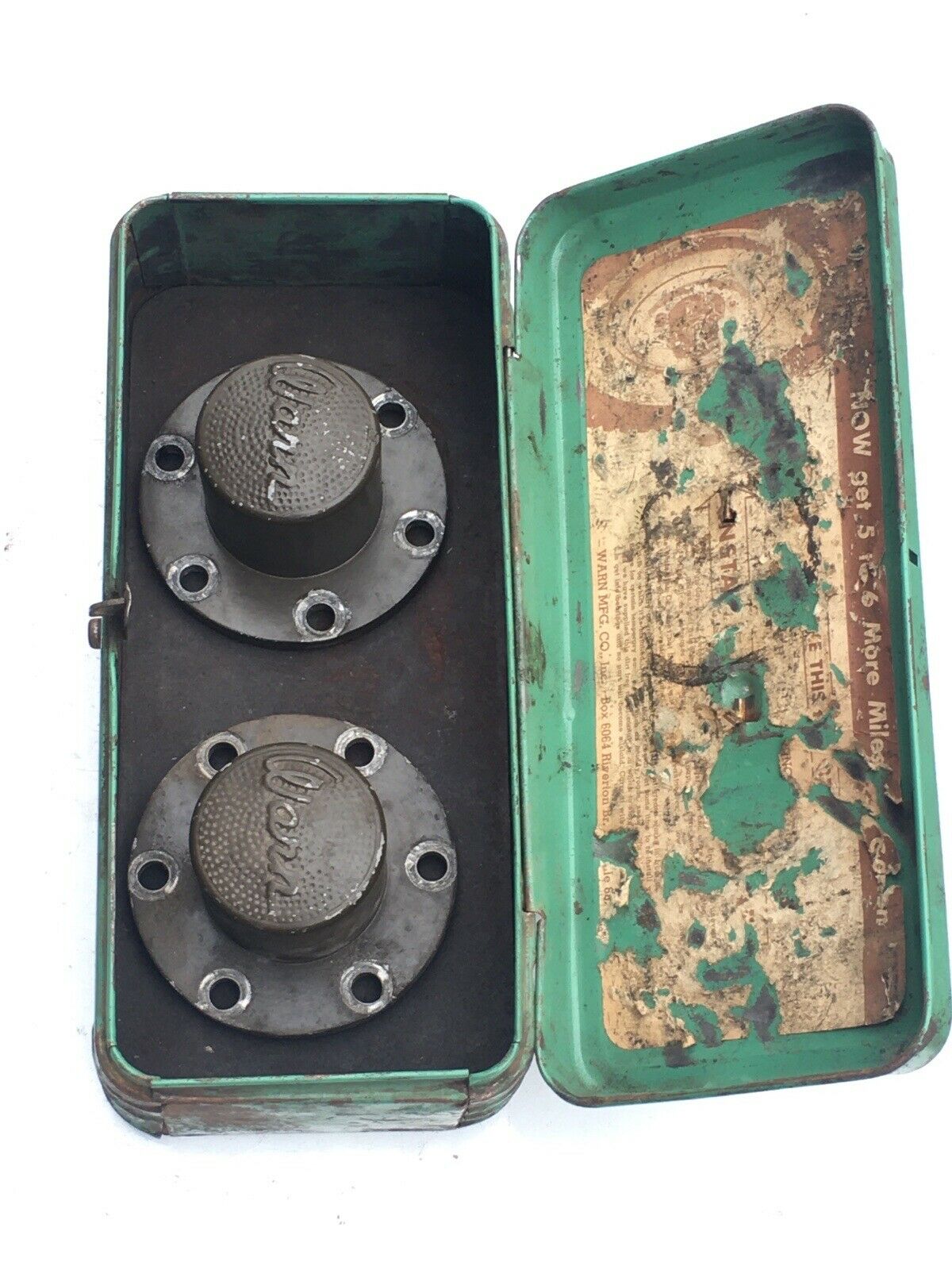
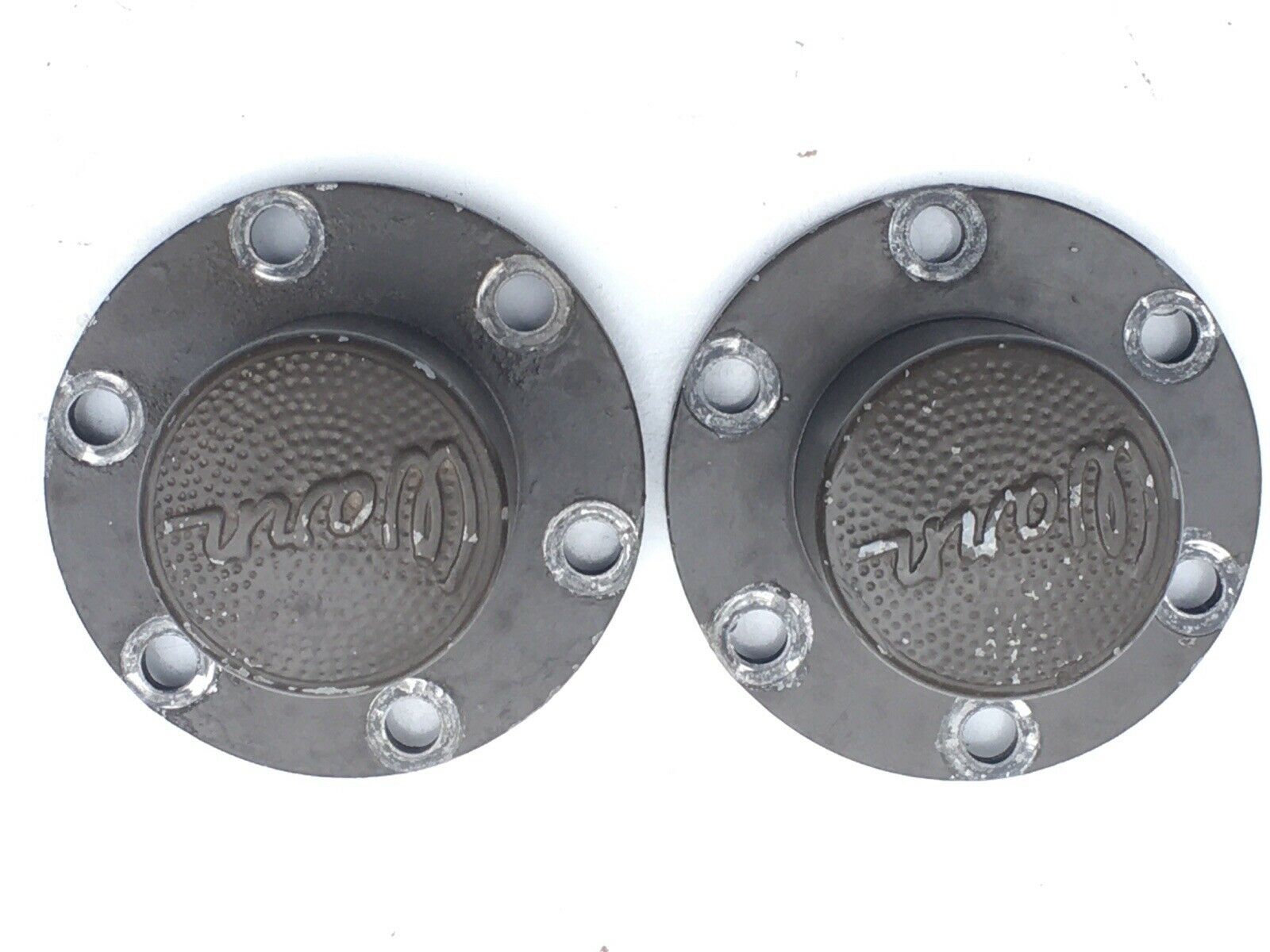
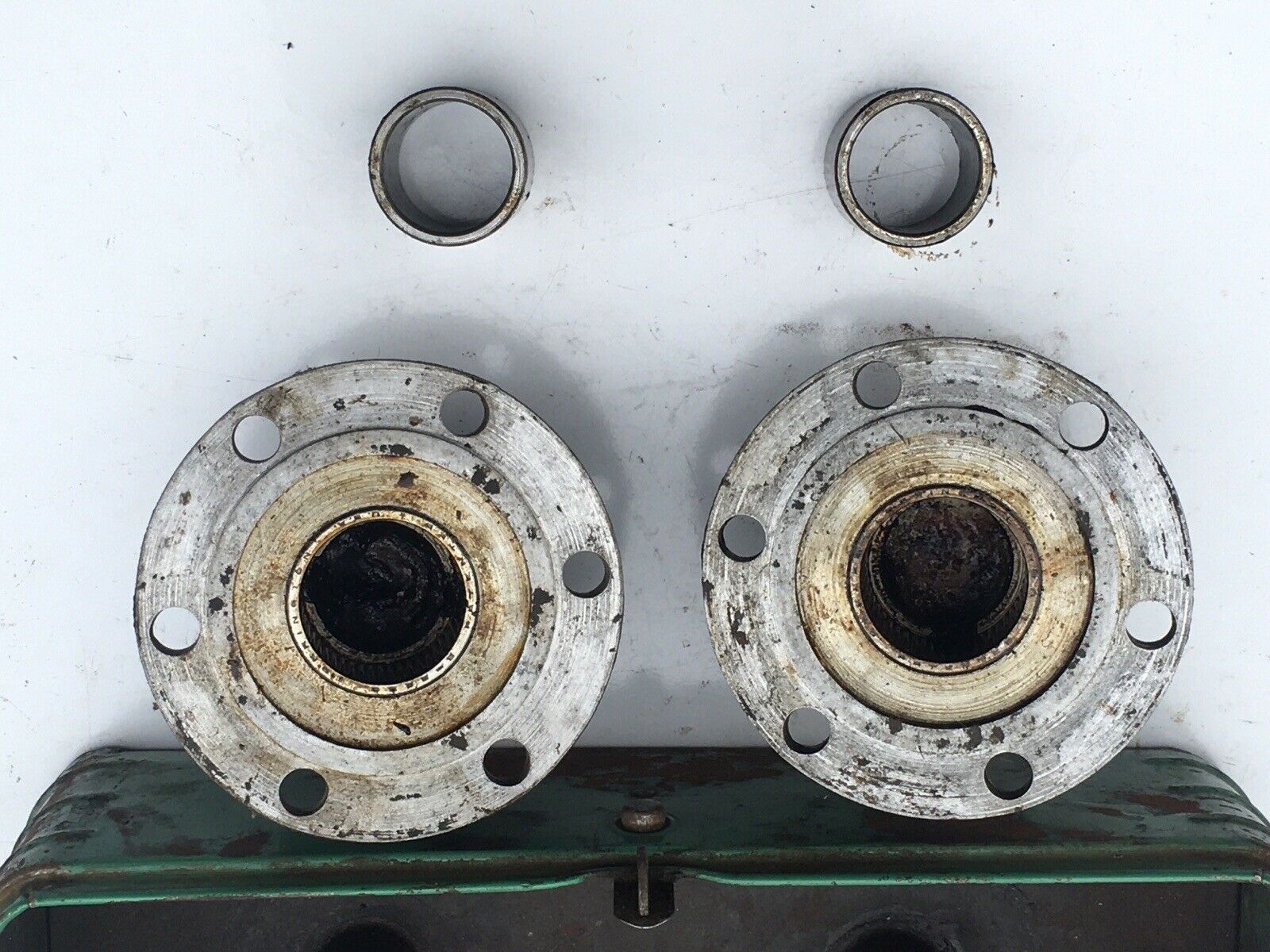
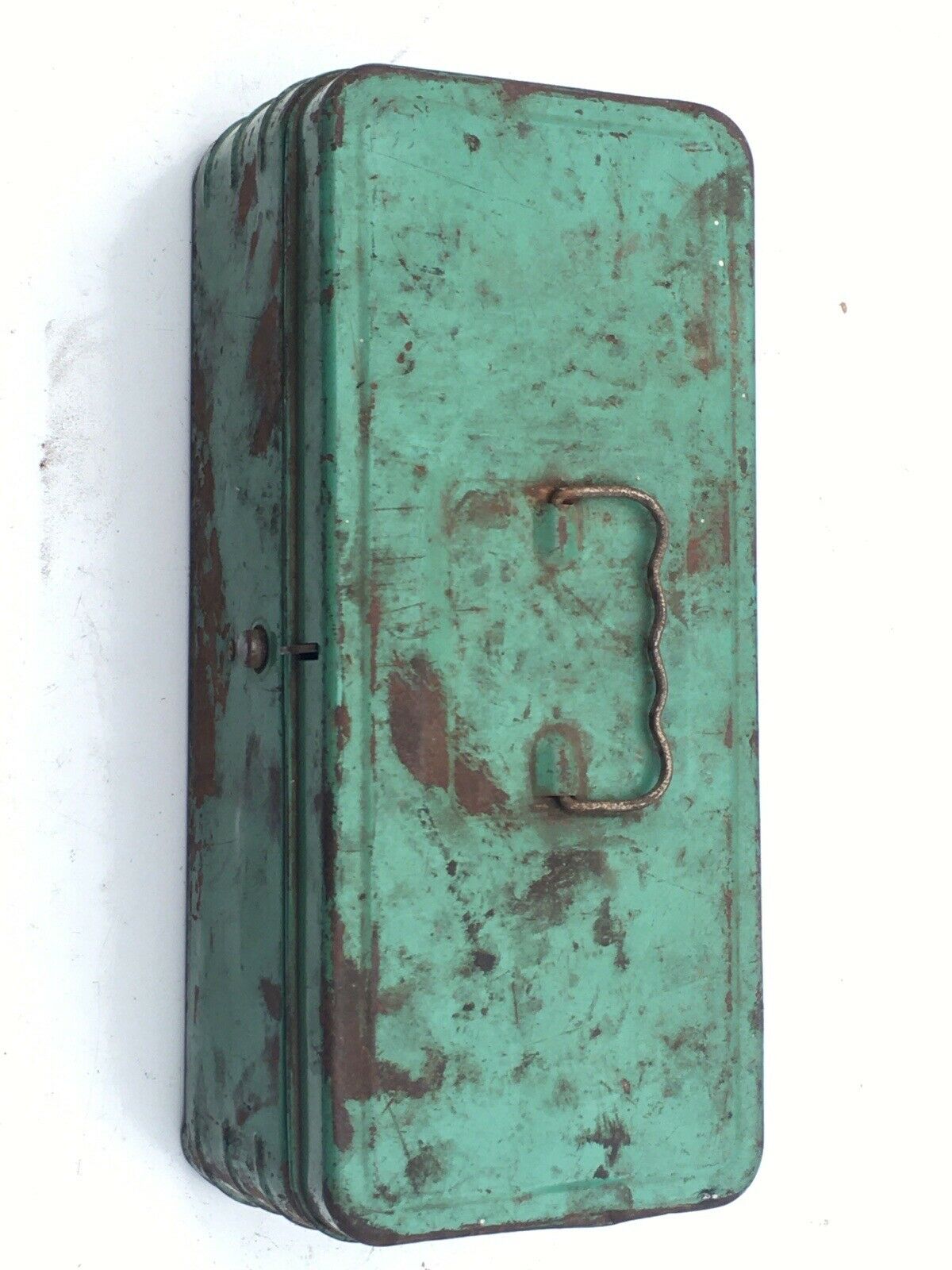
Ted’s got these dimpled Warn summer hubs for sale. The dimpled versions are the second gen summer hubs; the first were the waffle style. The OEM green container is particularly rare.
“Willys Jeep CJ2A CJ3A Early Column Shift CJ3B CJ5 Warn Summer Hub Universal Jeep. Condition is “Used”.
This is a very nice set of Willys Jeep Warn brand Summer Hubs with original carrying case.These Summer Hubs were a very popular aftermarket item introduced by the Warn manufacturing company and used to help eliminate uneven tire wear,wear and tear on front axle joints,differential gear bearings, Pinion and front drive shaft.
Basically, these Summer Hubs made the Willys Jeep Two Wheel Drive when Four Wheel Drive wasn’t needed for long lengths of time. They would be installed very easily be removing front drive flanges and mounting hubs.They would also give the jeep better gas mileage.
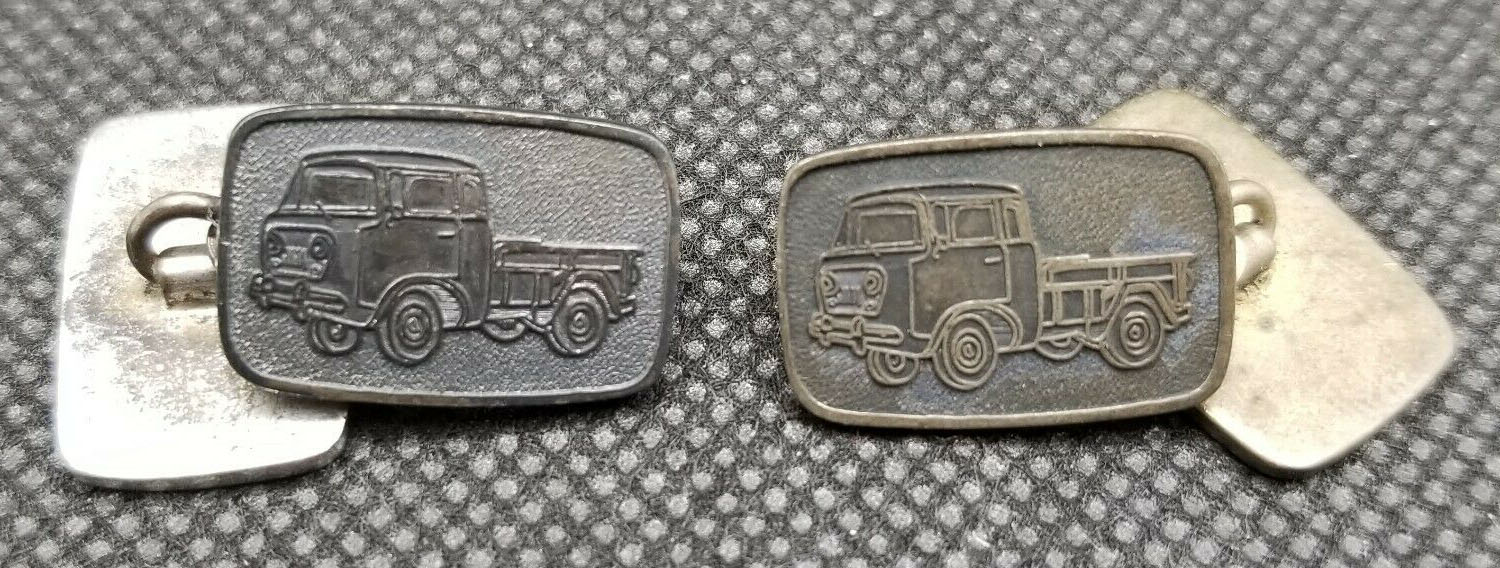
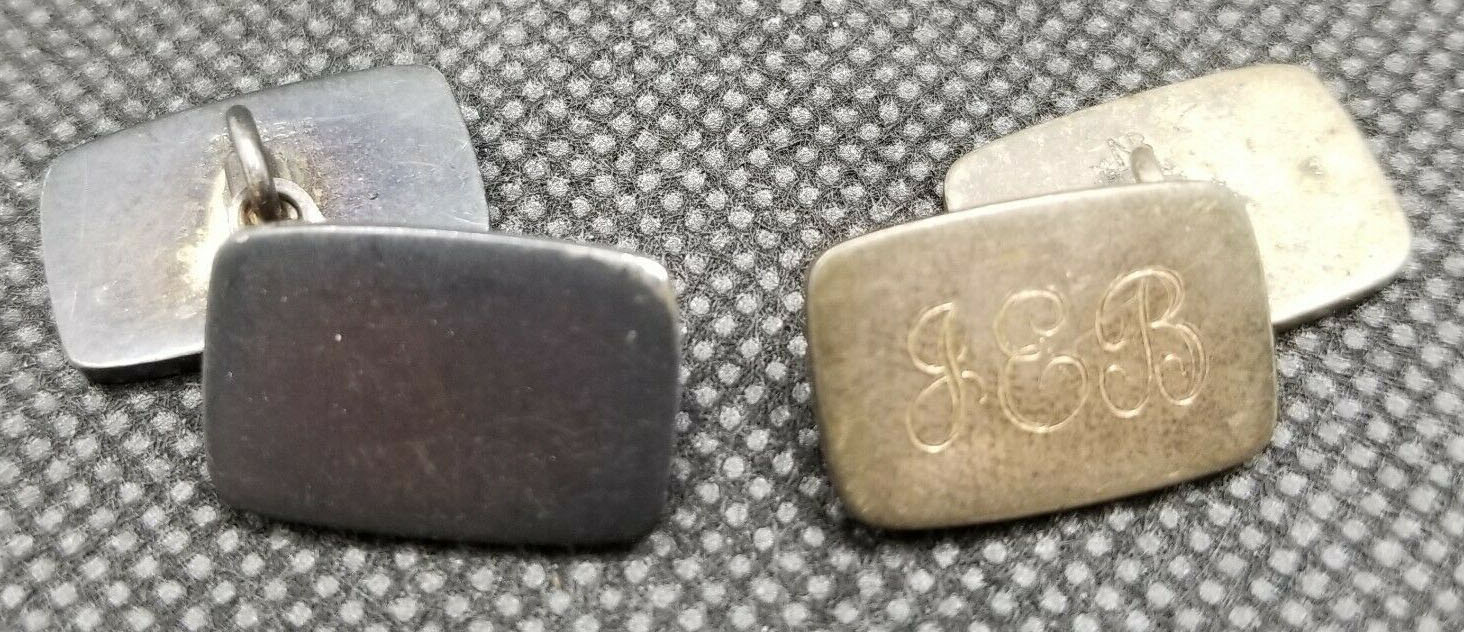
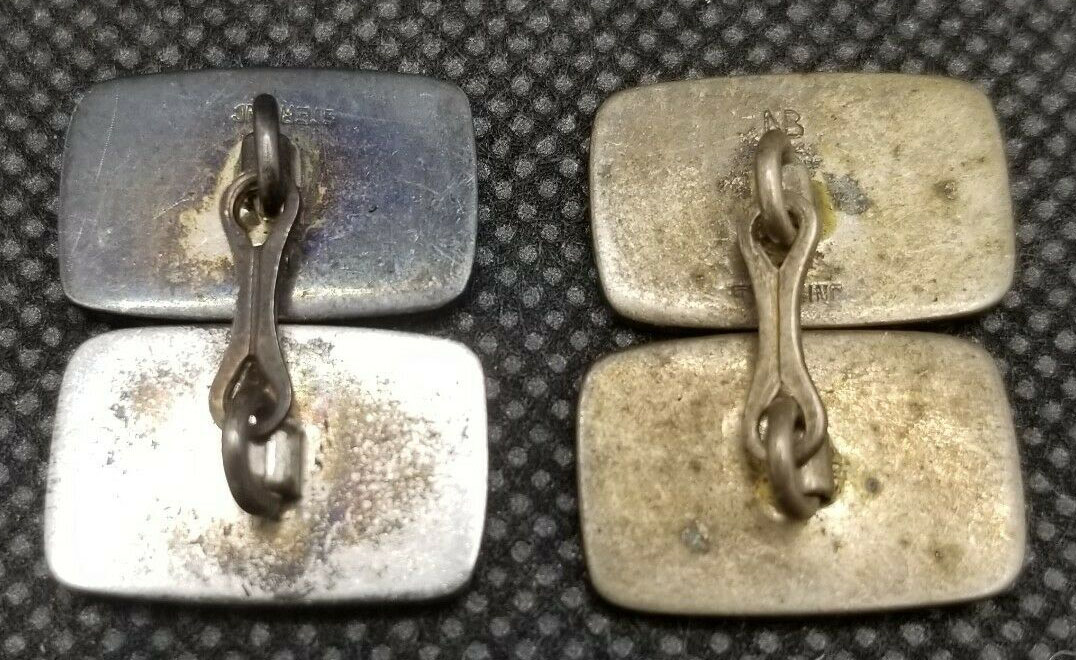
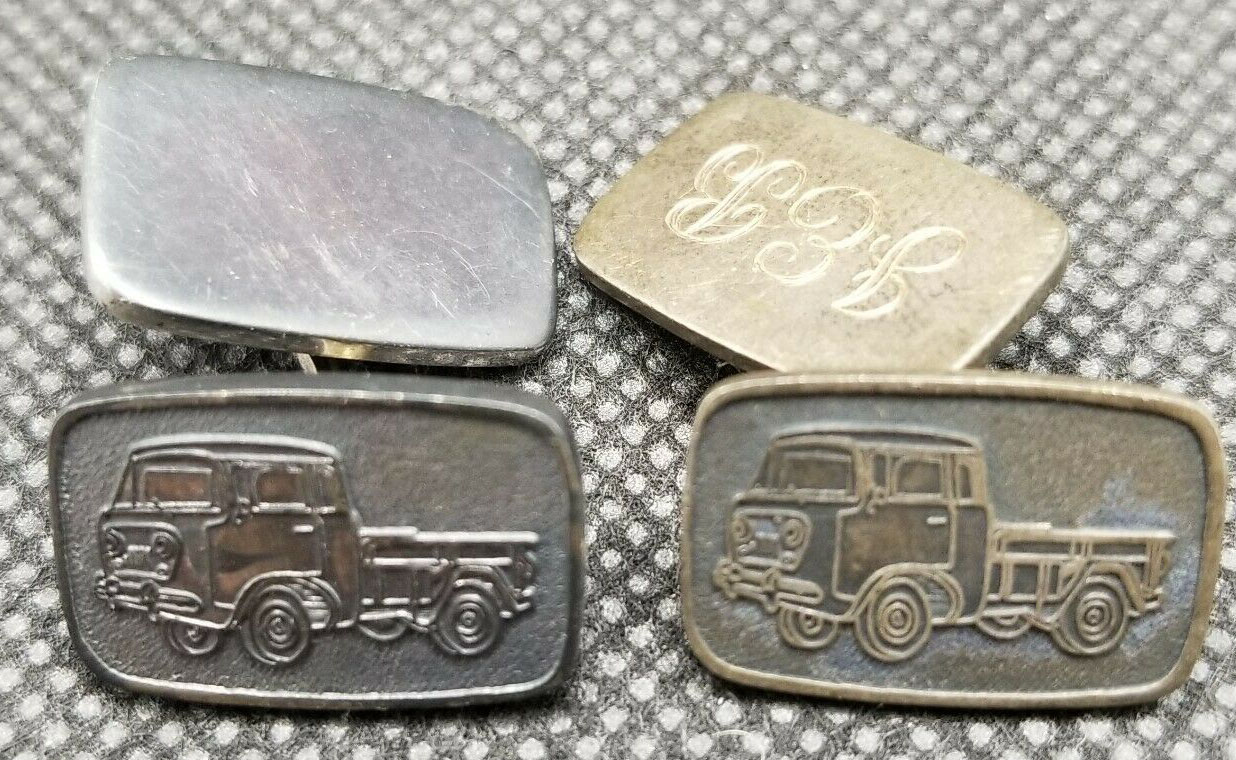
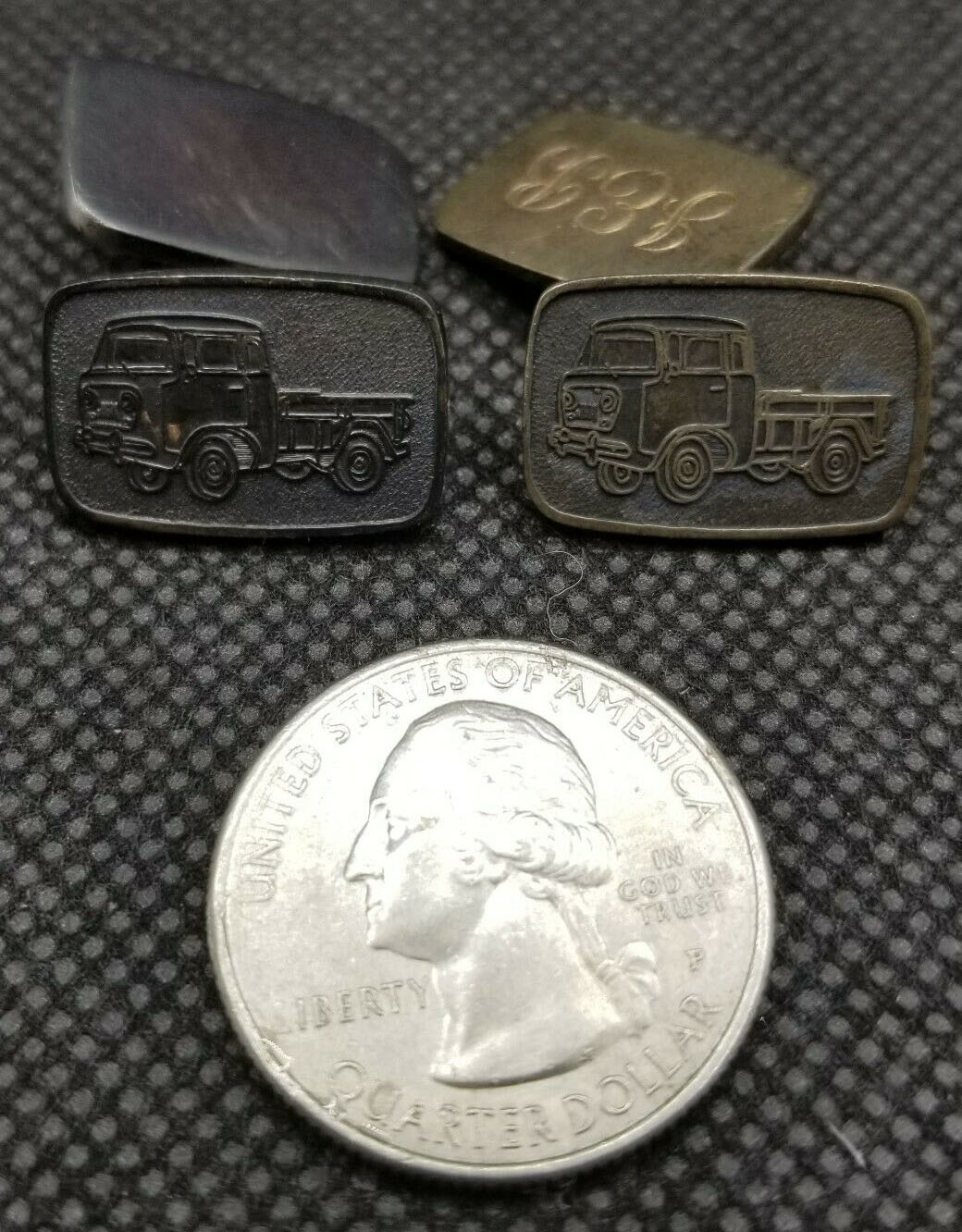
“Very Rare Vintage late 1950’s / early 1960’s Silver Willys FC-150 Cufflinks in Tarnished but Very Good Used Condition. Stamped “NB” and “STERLING” on the inside surface of both backings.
The Jeep Forward Control is a truck that was produced by Willys Motors, later named Kaiser Jeep, from 1956 to 1965. It was also assembled in other international markets. The layout featured a cab over (forward control) design.
The Forward Control models were primarily marketed as work vehicles for corporate, municipal, military, as well as civilian use. Regular pickup box beds were standard, but customers were offered a large number of “Jeep approved” specialized bodies from outside suppliers. These ranged from simple flatbeds to complete tow trucks, dump trucks, and fire trucks. The vehicles were also manufactured under license in India and Spain.
My Father obtained these cufflinks while working in fleet sales for Willys in the Caribbean and Central & South America in the 50’s and early 60’s.”
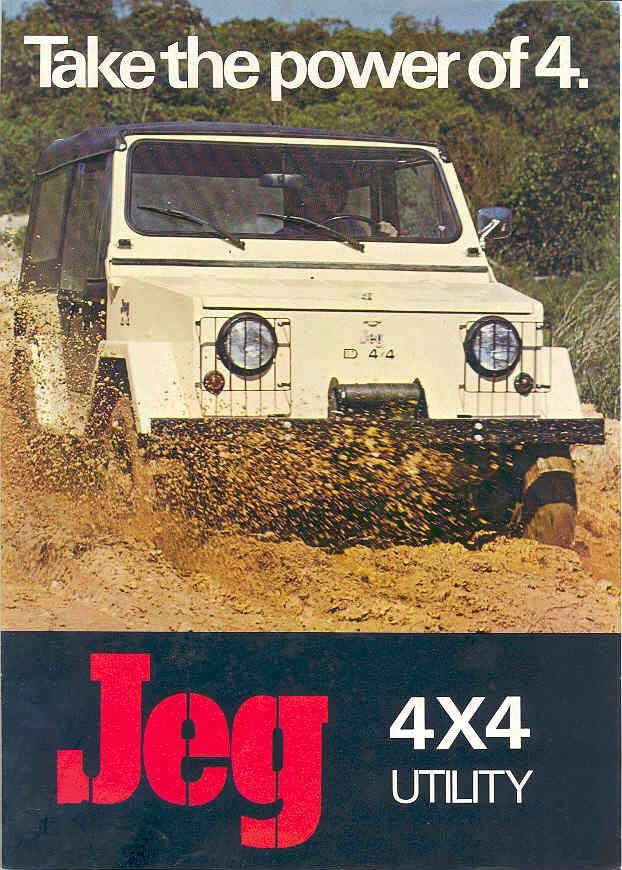
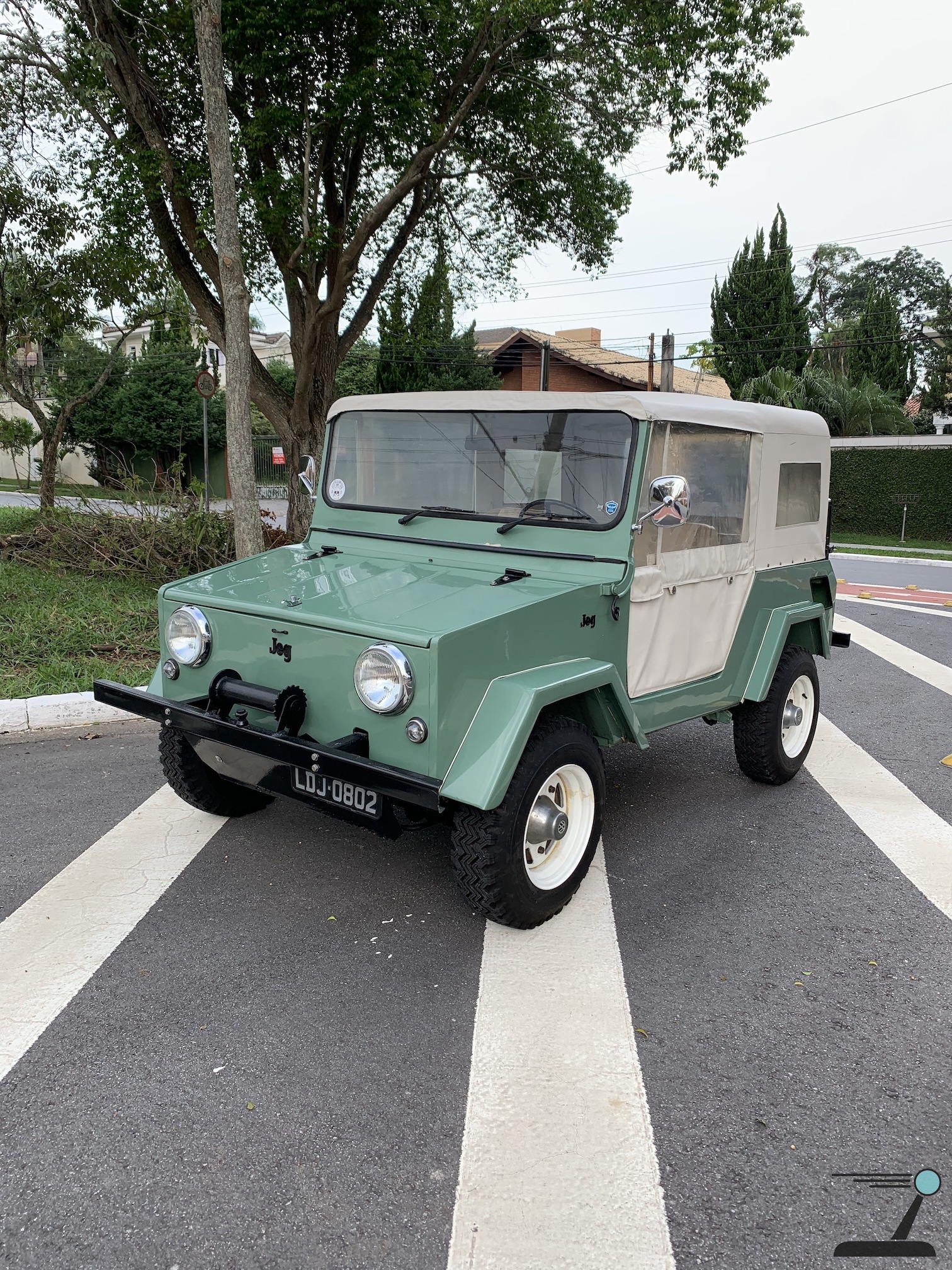
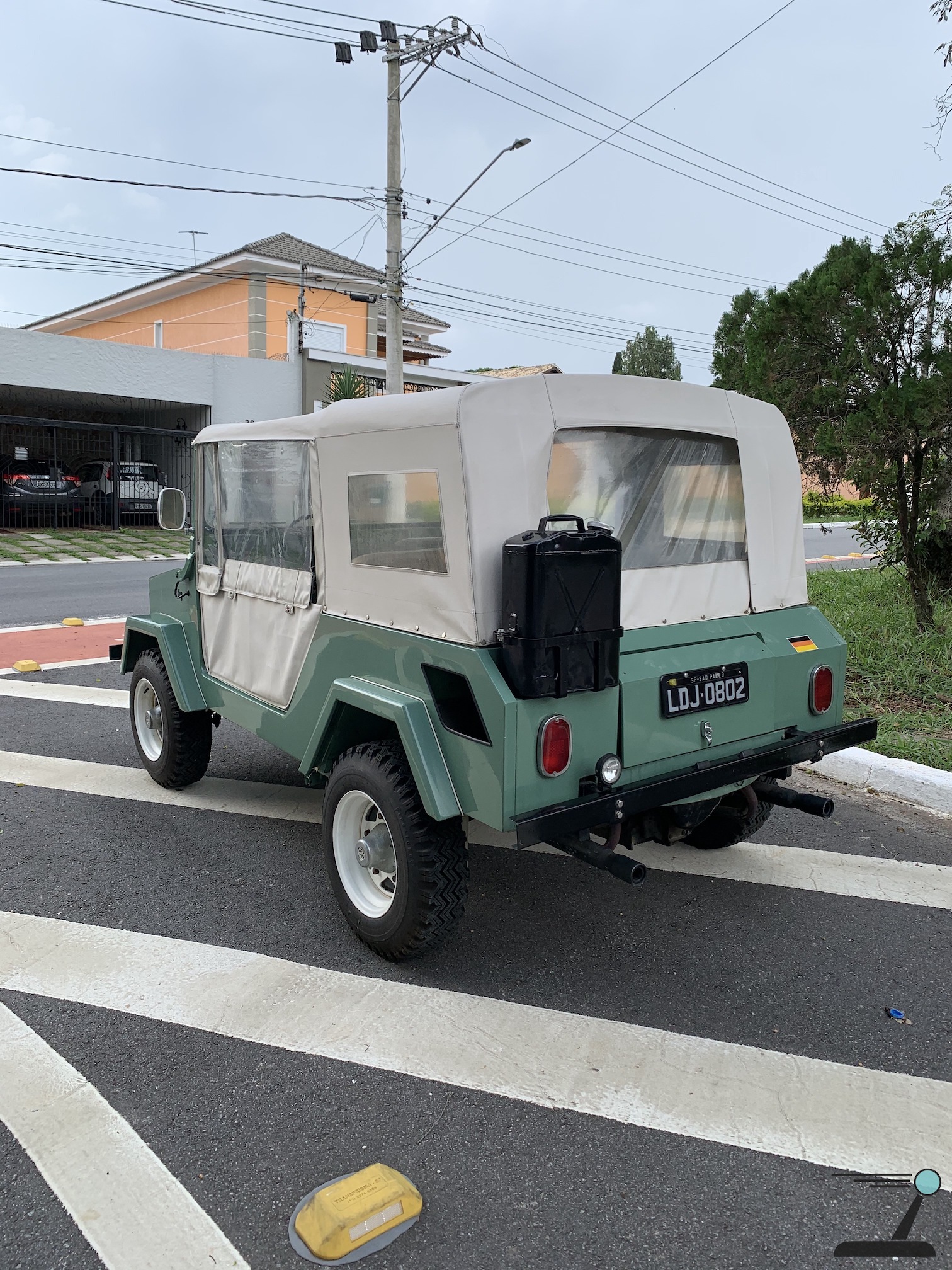
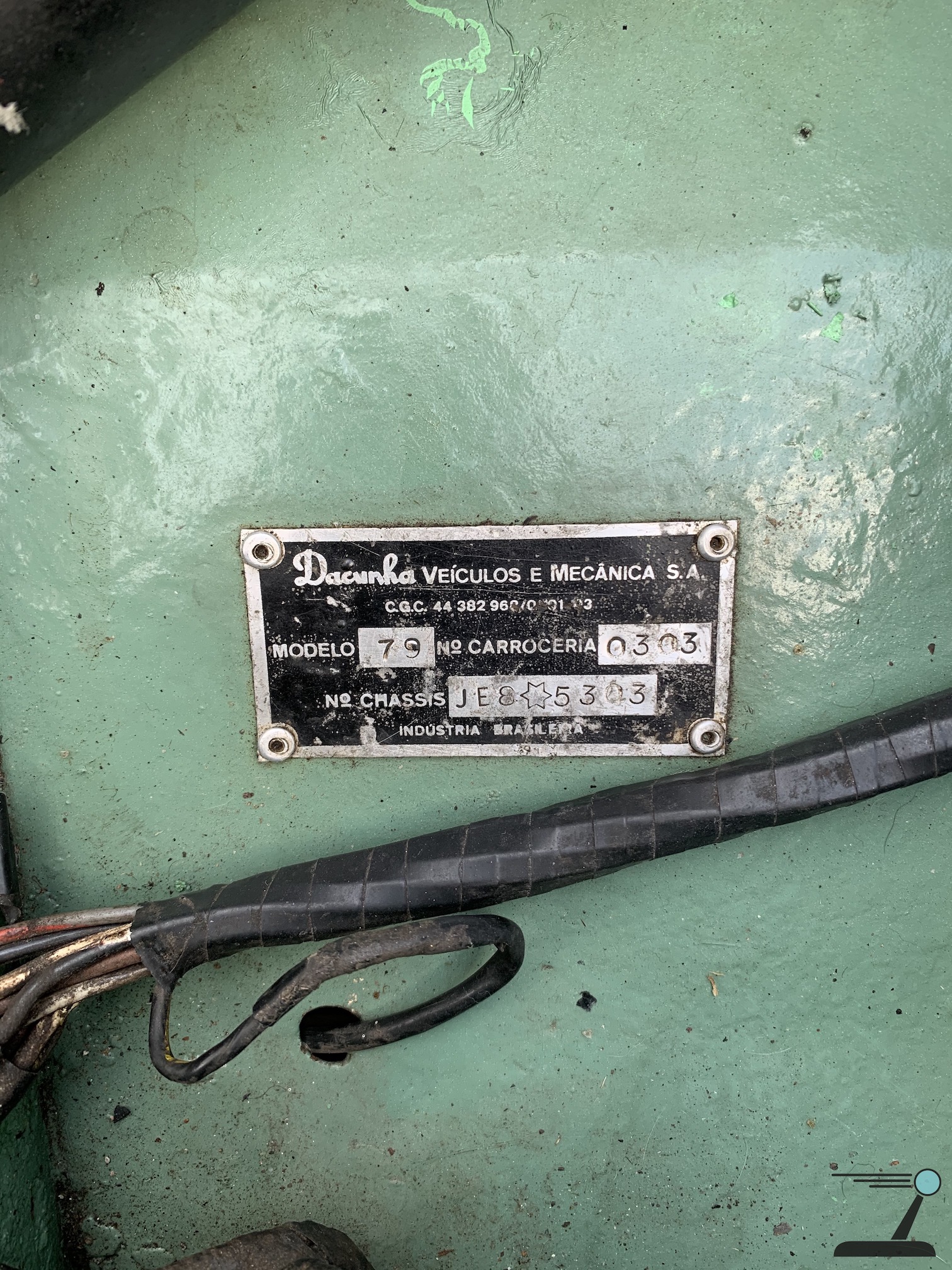
TJ shared this rare offload VW-based Brazil vehicle with 4WD that’s up for auction. It’s located in Brazil, but shipping is available to Europe. There are ton of pics of the Jeg that’s up for auction along with pics of related brochures.
“In the 70s, VW Brasil tried to join the Brazilian army with the VW VEMP. Two prototypes were created (one 4X4 and one 4X2), the car was created entirely in straight and simple lines for easier maintenance.
The engine would be 1600 already used by cars of other VW models. After the project was rejected for political reasons (cars with a rear engine would no longer be accepted by the army) the two prototypes ended up being used internally by the factory.
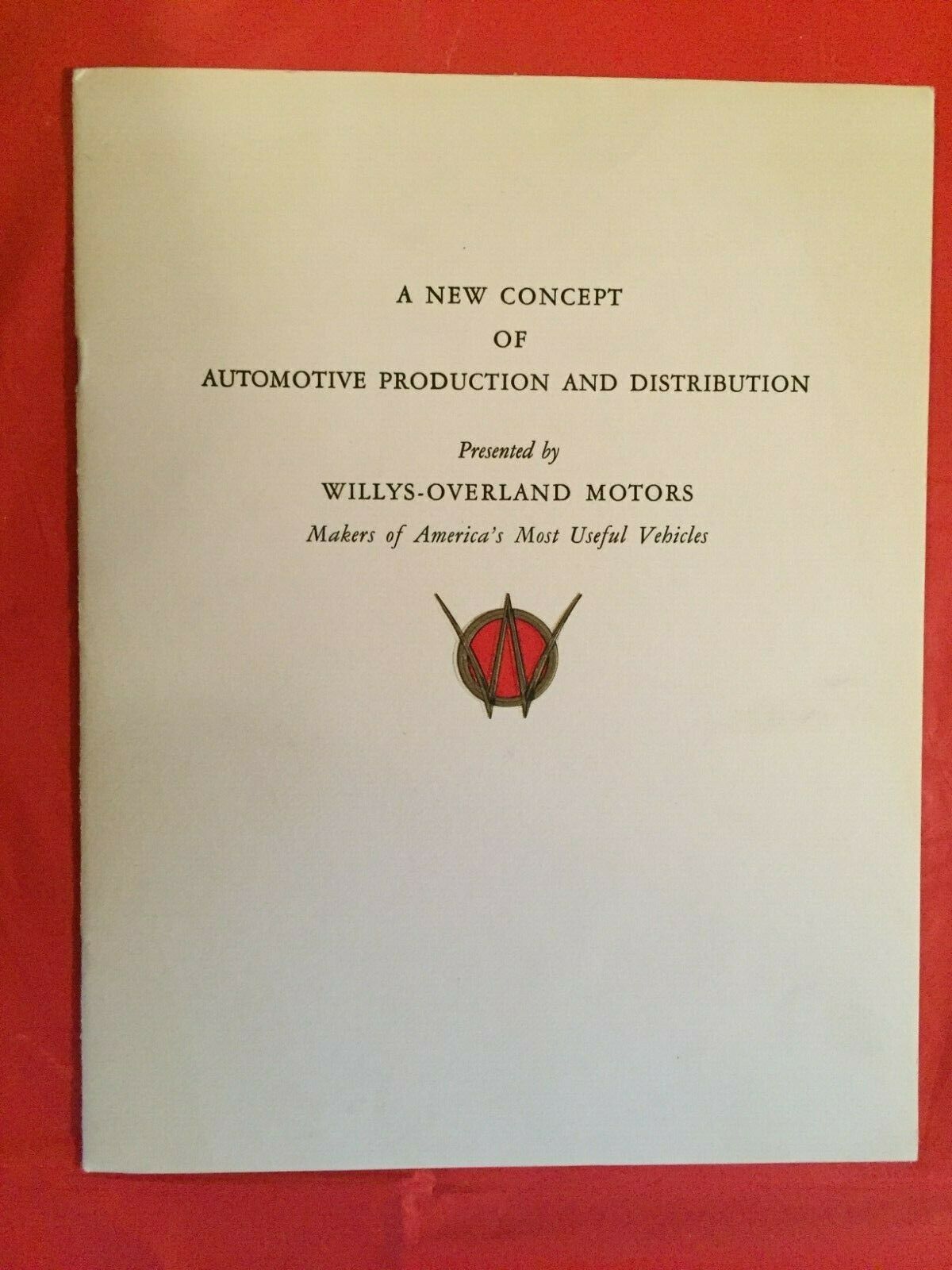
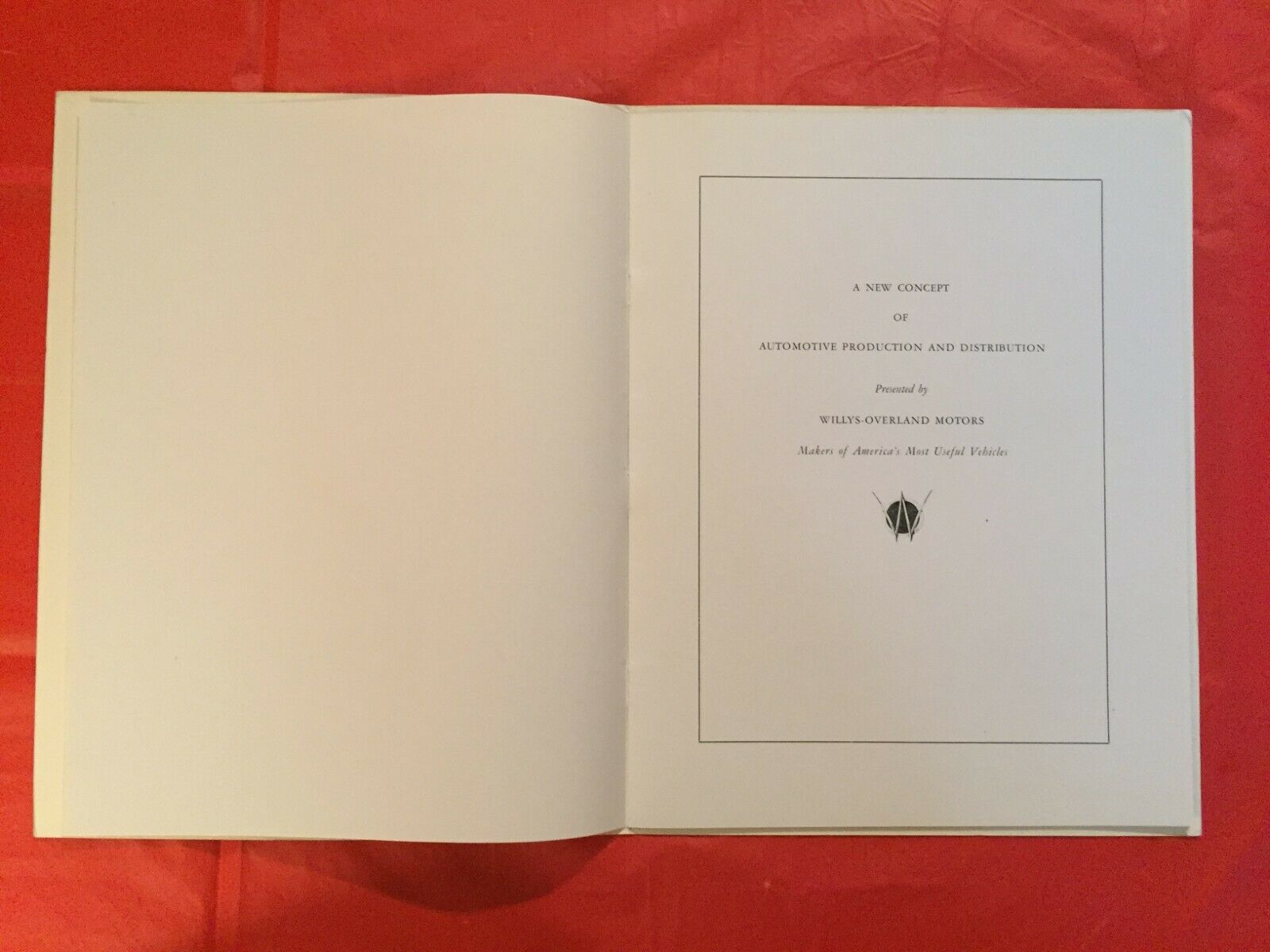
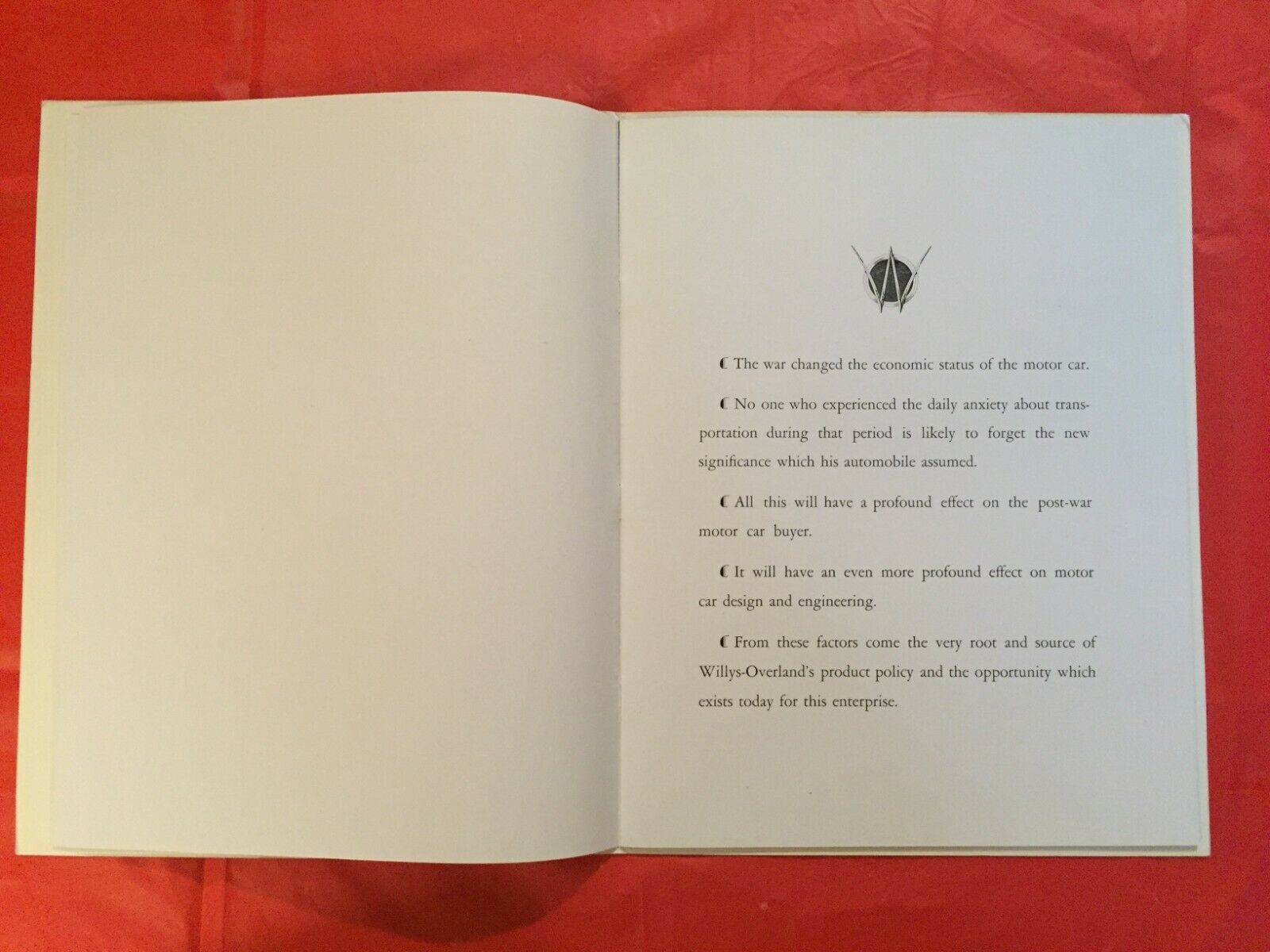
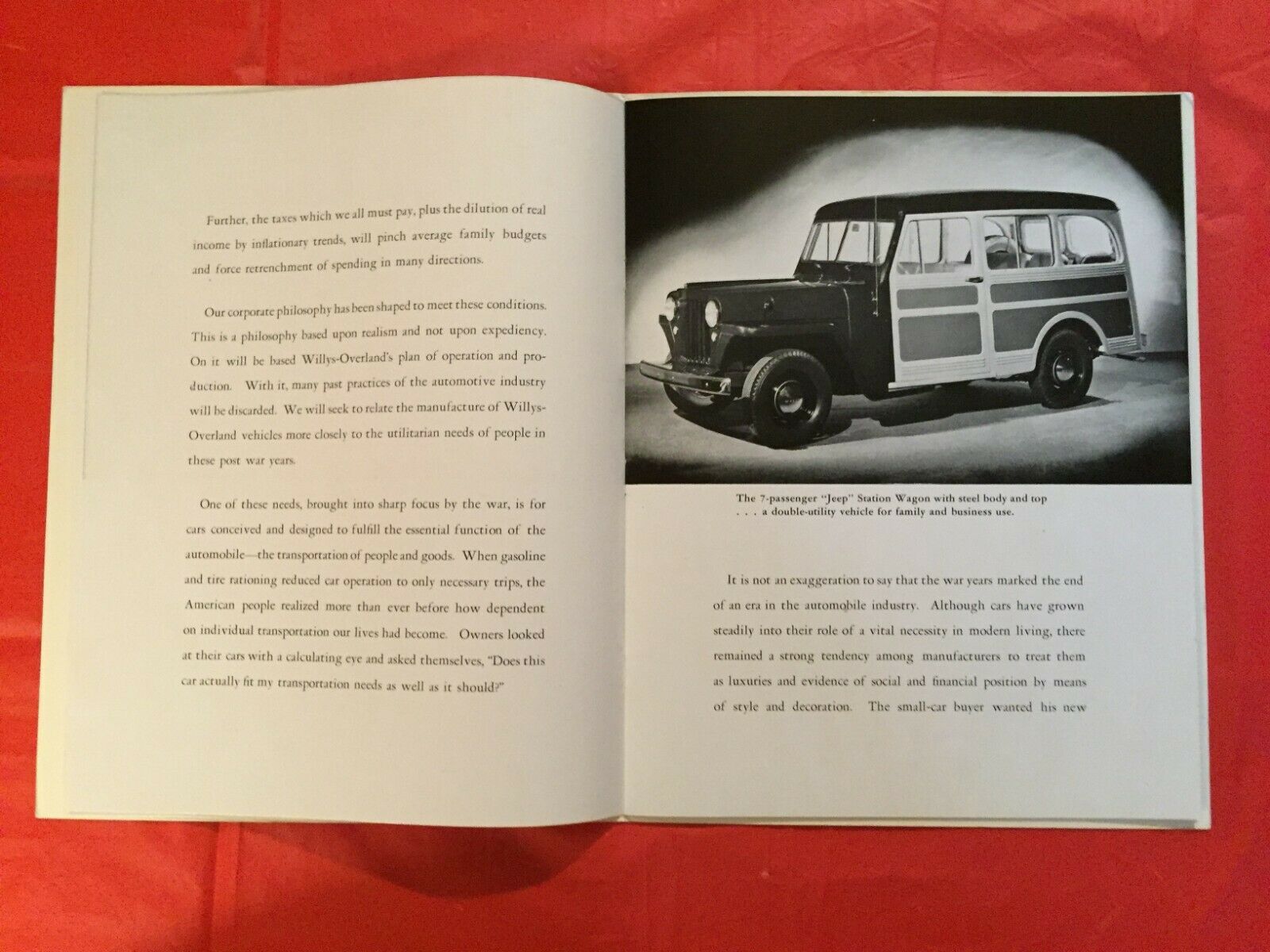
I missed out on this fascinating document yesterday on eBay. My high bid of $52.50 wasn’t quite enough, but at least we have pics of the entire document.
It’s not clear to me who the audience was for this document. The fact that it mentions the upcoming trucks suggests to me it was published in early 1947, prior to the introduction of the trucks in the summer of 1947. Maybe the document was for shareholders? Maybe it was for dealers (or prospective dealers)?
Titled “A NEW CONCEPT OF AUTOMOTIVE PRODUCTION AND DISTRIBUTION“, the document makes the argument that prior to WWII the automobile was a luxury item for most folks. As such, bigger, longer, and faster, along with yearly innovations, were necessary to attract consumers with disposable income.
However, after the war, argued Willys-Overland in the document, the automobile would become a critical part of everyone’s everyday life. As such, offering consumers an affordable vehicle, one that didn’t change dramatically every year and one that cost less to maintain, was a the vision that Willys-Overland planned to follow. This meant simple vehicles that responded to customer needs, along with lesser tweaks to each model to insure the company could keep costs down (don’t have to redesign dies, fewer factory shutdowns for model changes, etc).
So, the company’s production ideas meant simple designs catered to consumer needs rather than the latest streamlined designs. That makes sense as a strategy; but, in regards to the DISTRIBUTION portion of the document’s title, I could find nothing stating how the company’s strategy would change the distribution side of things. This document probably would have been more accurately titled, “A NEW CONCEPT OF AUTOMOTIVE PRODUCTION”.
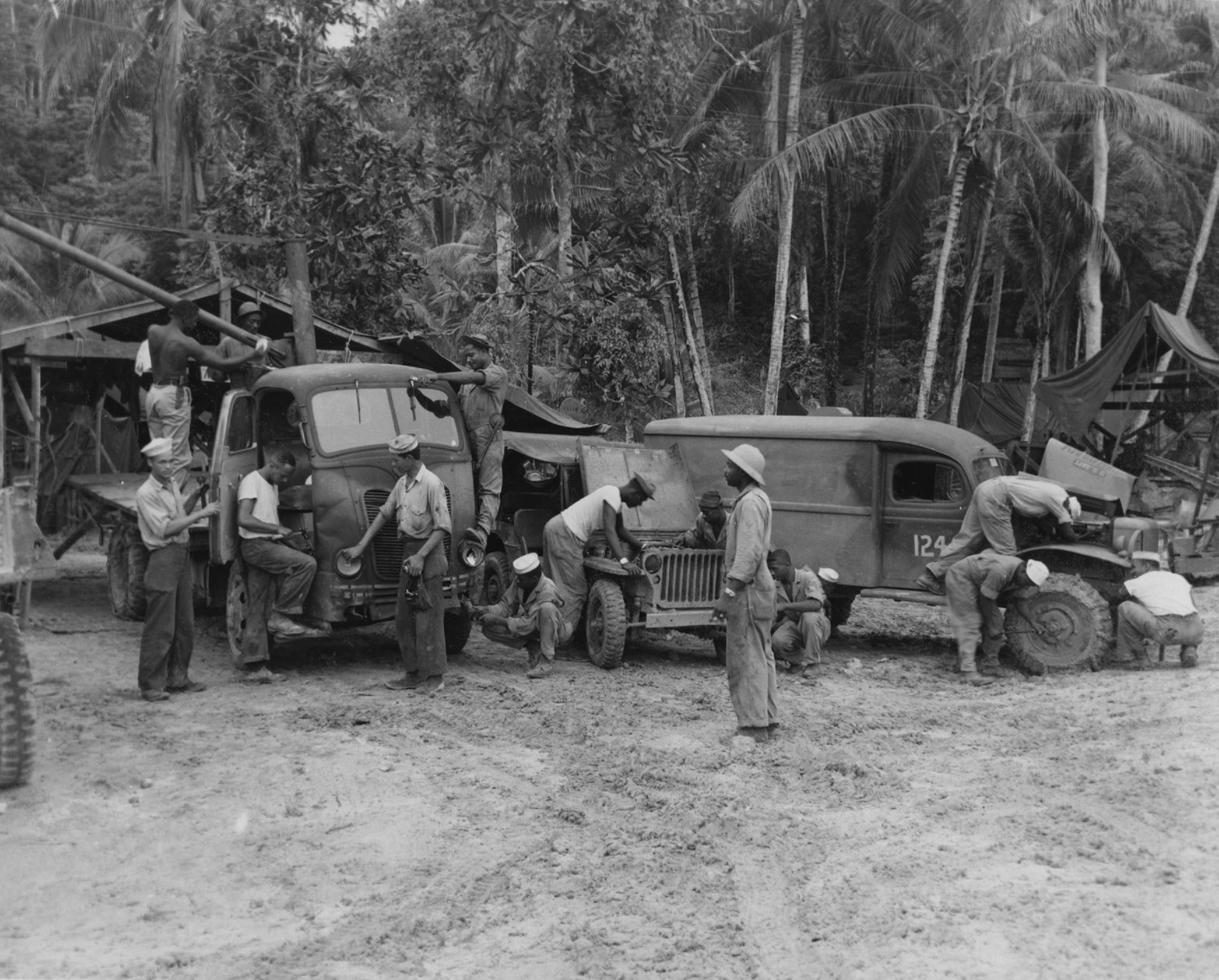
Gayland shard this photo posted on the Navy Seabee Museum site that features Seabees working on a jeep and some other vehicles. The Navy’s Seabee website has done a good job of organizing its digital collections based on multiple factors (time period and location in most cases).
If you haven’t ever visited the museum, it’s located in Port Hueneme. We had a chance to visit back in 2014 while it was undergoing updates. I’m sure it’s even better now.
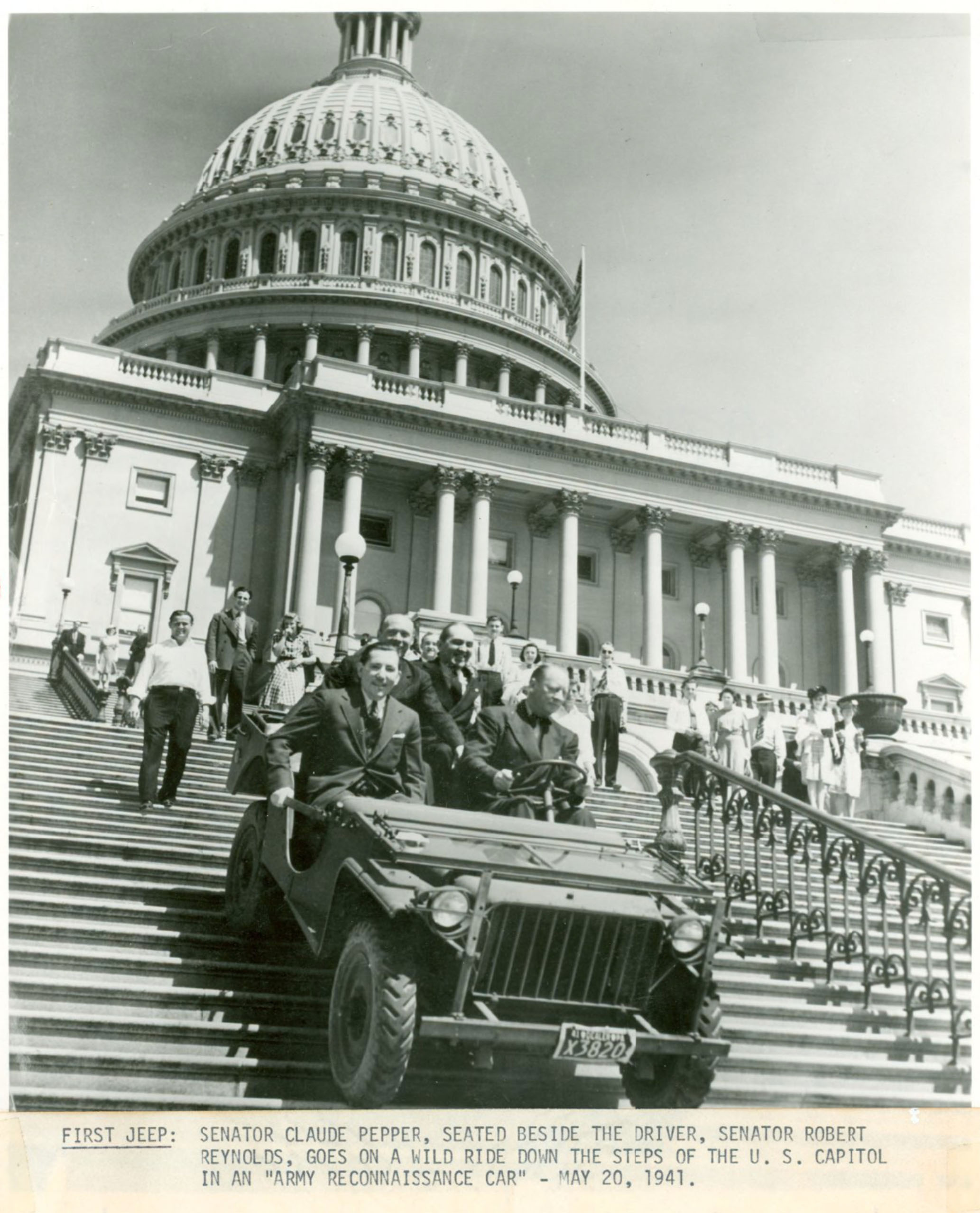
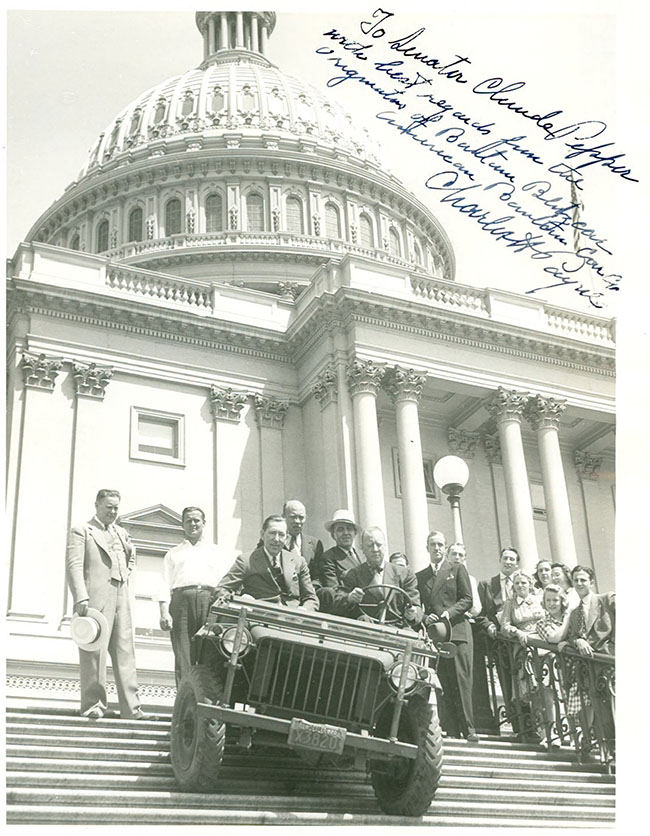
Published March 28, 2021: Here’s another, earlier jeep photo, including a dedication by Charles Payne, related to Senator Claude Pepper in a Bantam BRC-40. According to the Florida State University Digital Archives, Senator Robert Reynolds is driving the jeep, Senator Claude Pepper is in the passenger seat, and Charles Payne and Harold Crist are seated in the back. The photo is dated May 1941.
Also, according to a June 02, 1968, column by Larry King in the Miami Herald, there was a video taken of Senator Pepper riding up the steps and it was to be shown on TV on June 30, 1968. I was unable to find the video on the internet.
===================
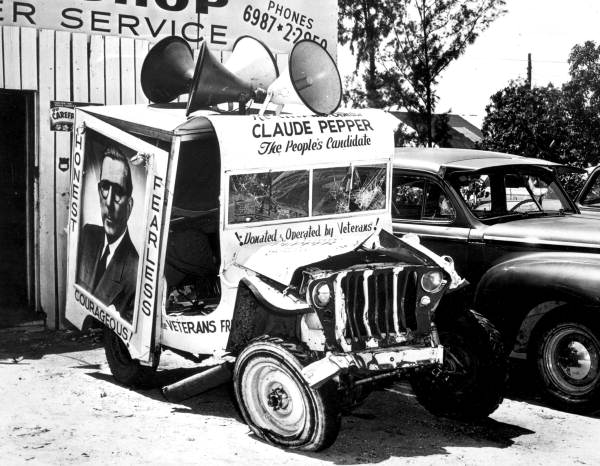
ORIGINALLY POSTED DECEMBER 09, 2012: This pictures tells the tale of Senator Claude Pepper‘s bid for re-election as a Senator from Florida in the 1950 race. Like his jeep, Senator Pepper’s campaign crashed that year as well.
PHOTO CREDIT: State Archives of Florida, Florida Memory, http://floridamemory.com/items/show/36090 CAPTION: Addressed to George Smathers from his friend Carl L. Hahn, an accompanying note says, “Here’s what is left of the Pepper machine in Palm Beach County – Souvenir of your successful 1950 campaign.”
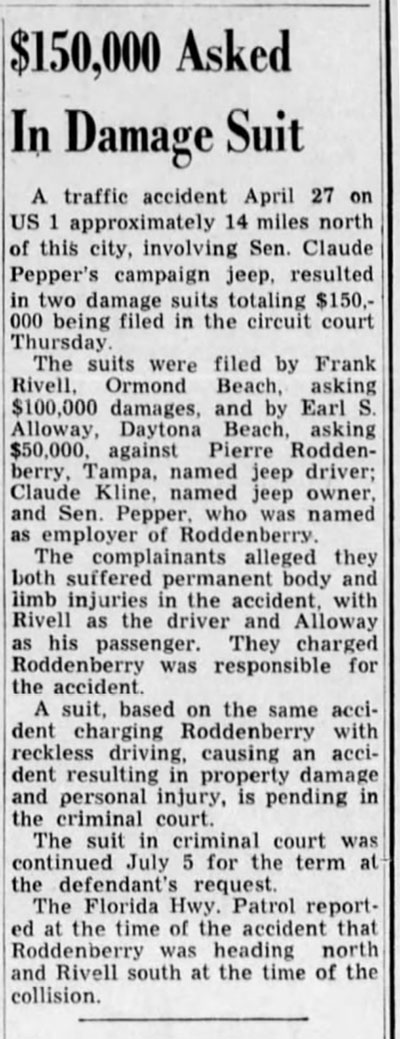
The accident led to a lawsuit against the driver and Senator Claude Pepper. The appeared in the August 04, 1950, issue of the Palm Beach Post:
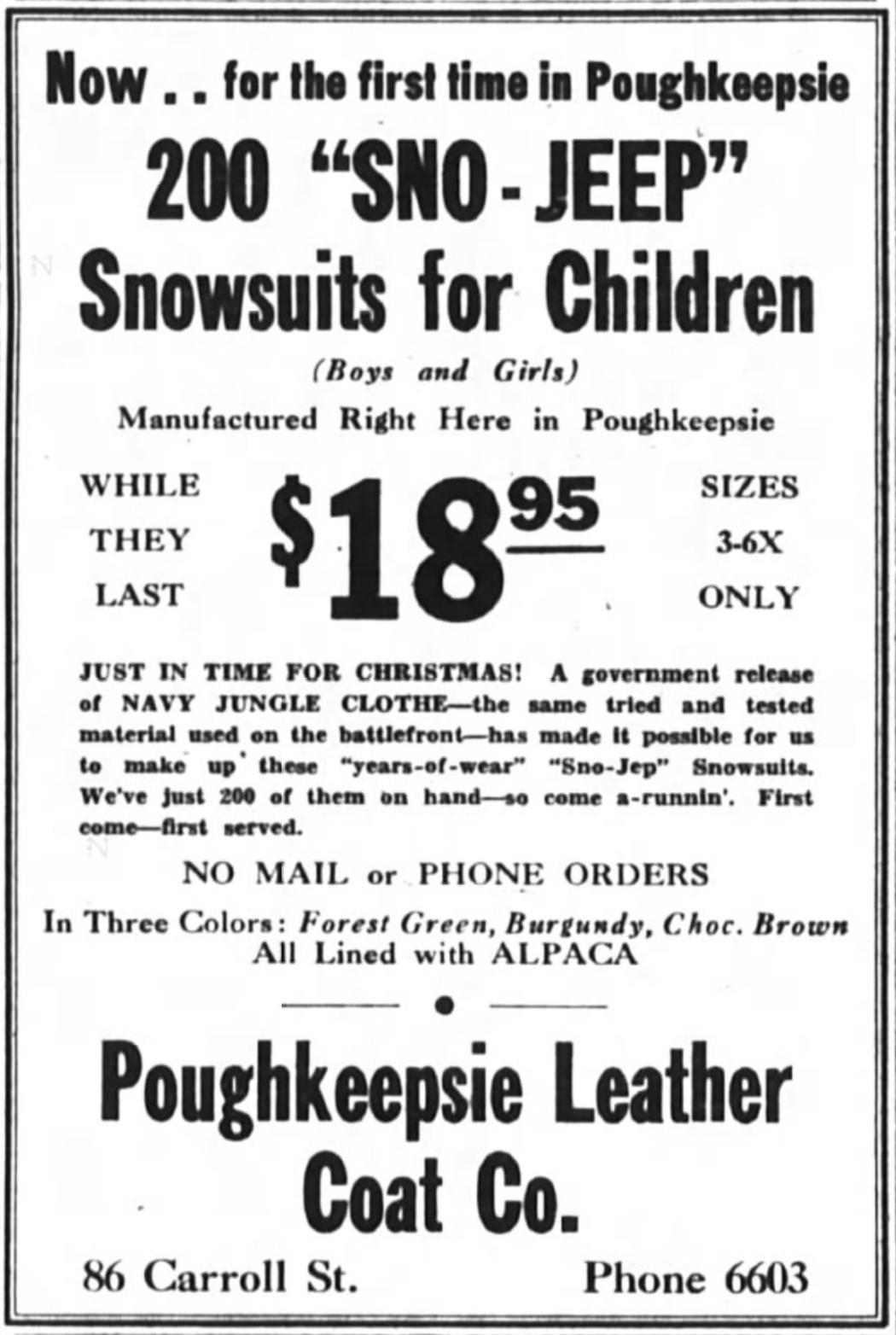
This unusual ad appeared in the December 18, 1945, issue of the Poughkeepsie Journal. I guess marketers figured adding the “jeep” name to most anything was a good bet for increasing sales?
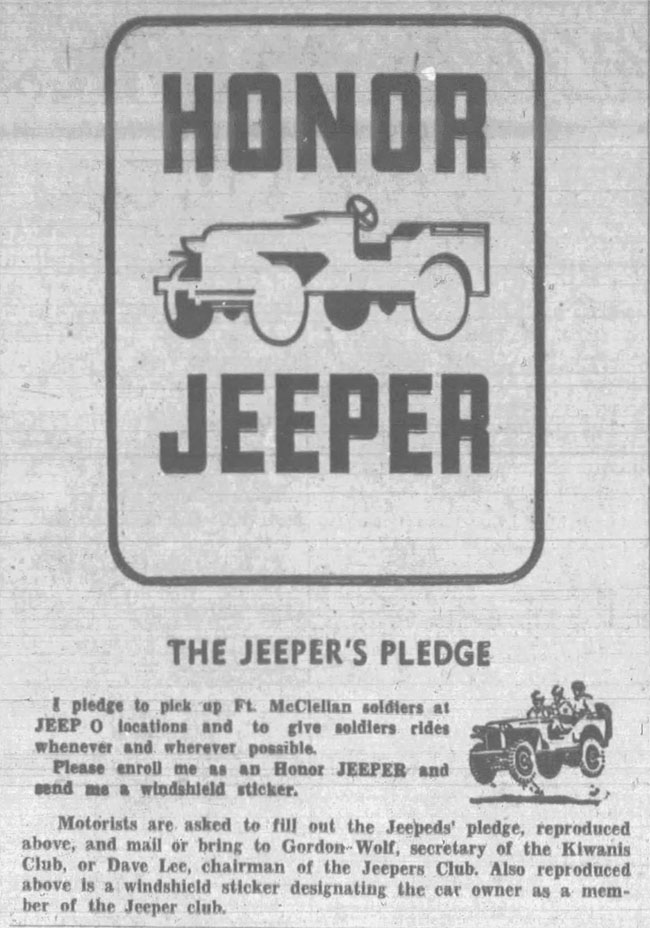
This pledge for Jeep-O club drivers was published in the July 07, 1943, issue of the Leaf Chronicle out of Clarksville, Tennessee. This pledge appears to have been unique to the Clarksville area.
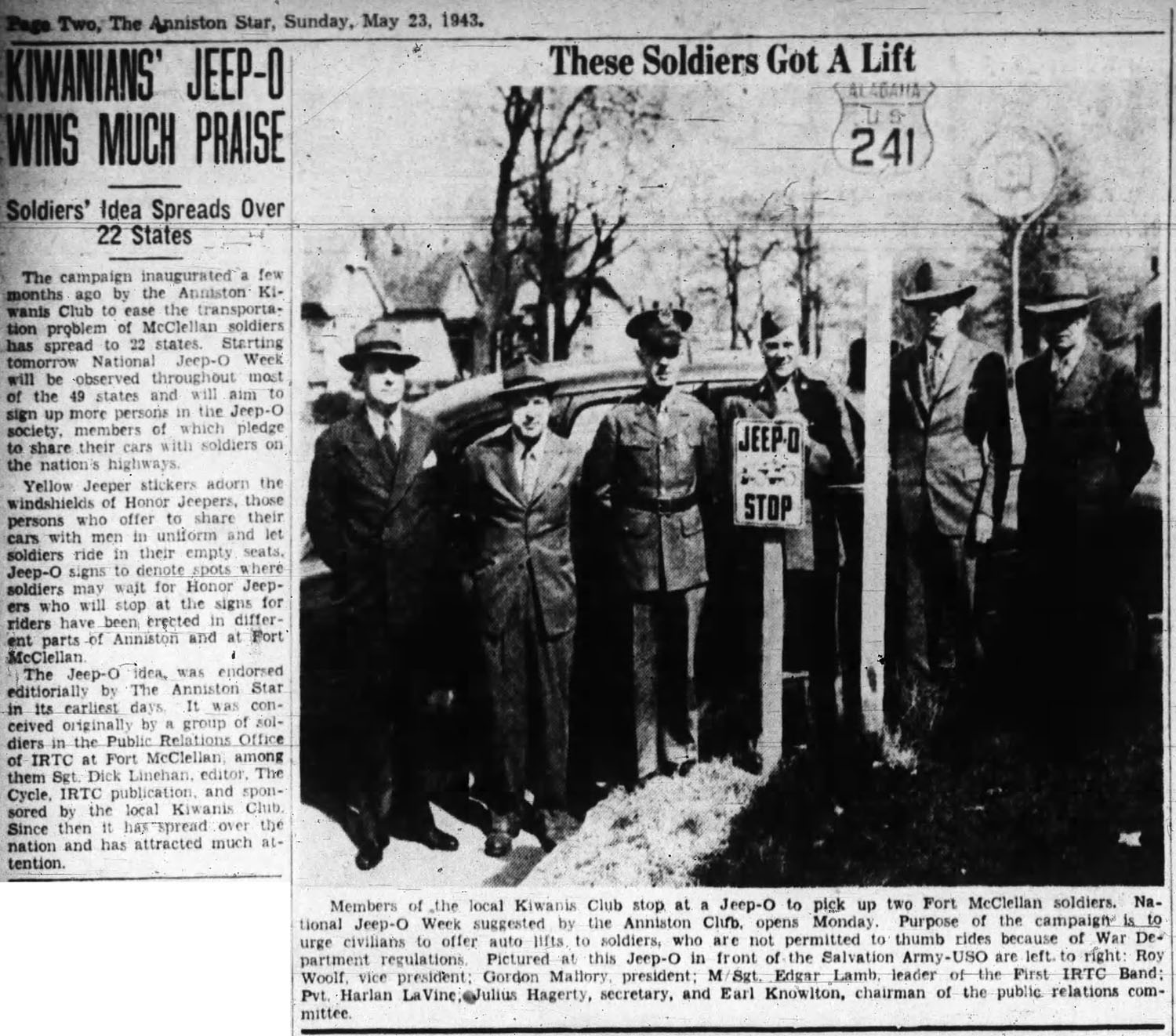
In April of 1943, the Kiawanis Club of Anniston, Alabama, started the Jeep-O Club, an effort to alleviate the transportation problem facing soldiers by pledging to give rides in their vehicles to soldiers who needed one. It was an early Uber system, only with volunteer drivers.
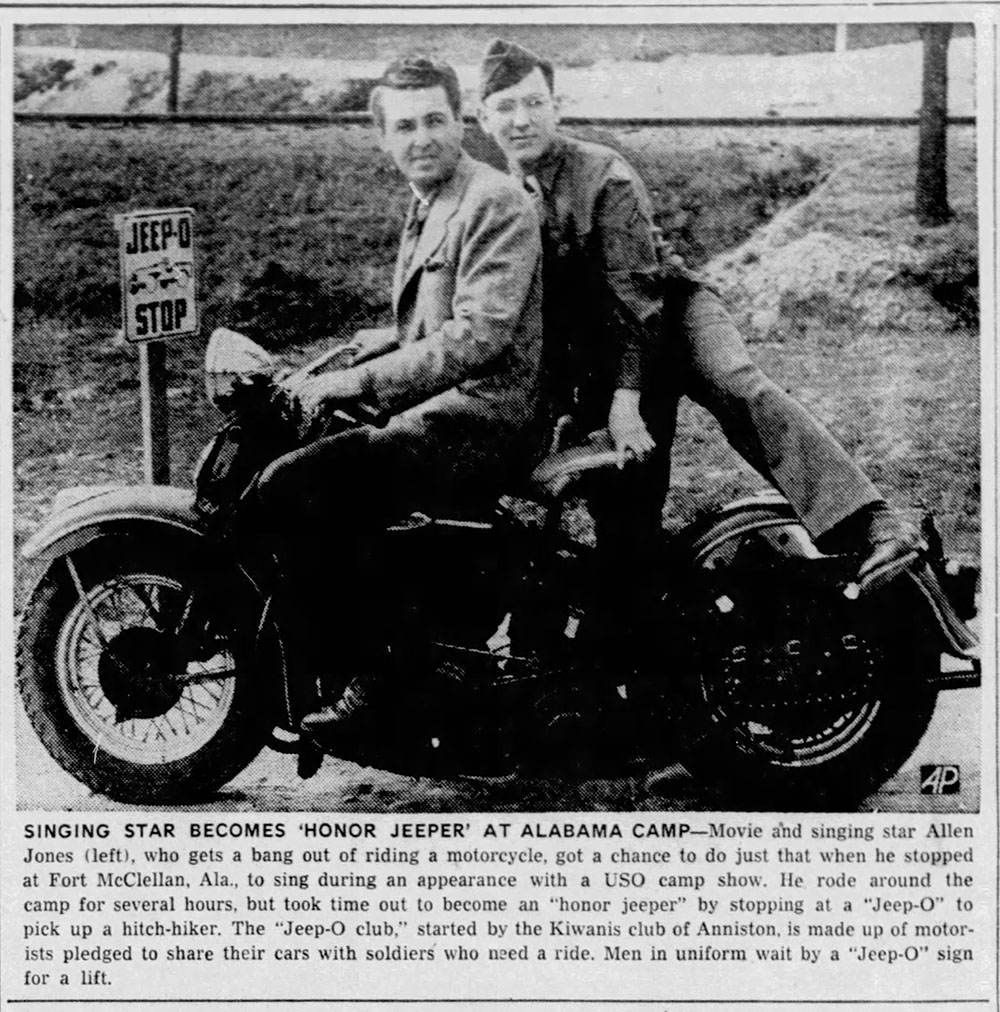
This photo shows an actual Jeep-O stop. It appeared in the April 15, 1943, issue of the Huntsville Times:
By May, the Jeep-O club idea had already spread to 22 states:
A couple months later, in the July 07, 1943, issue of the Leaf Chronicle out of Clarksville, Tennessee, the paper reported how a Jeep-O club was staring up there: Continue reading →
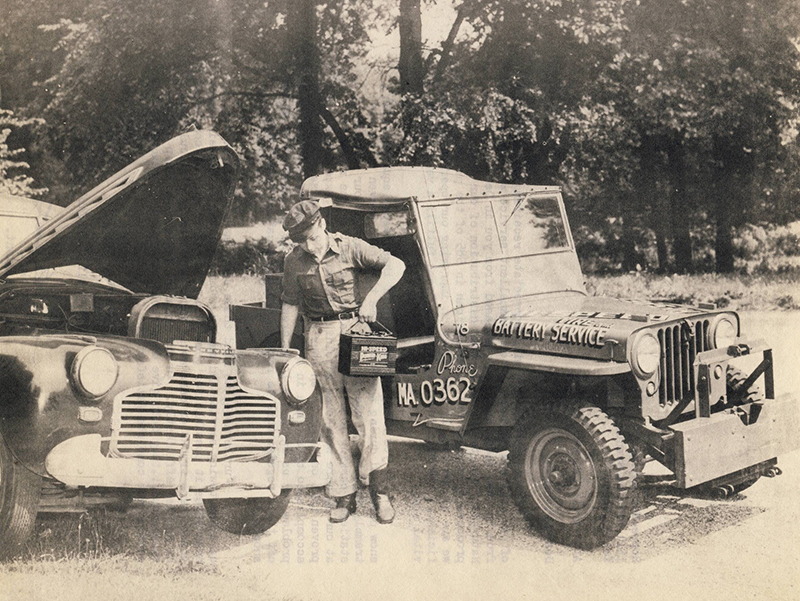
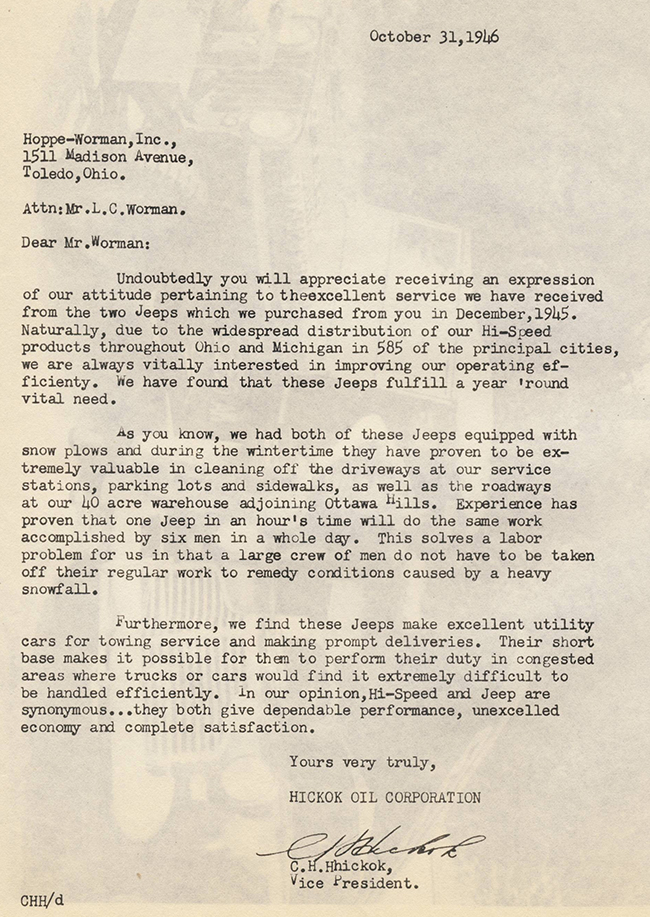
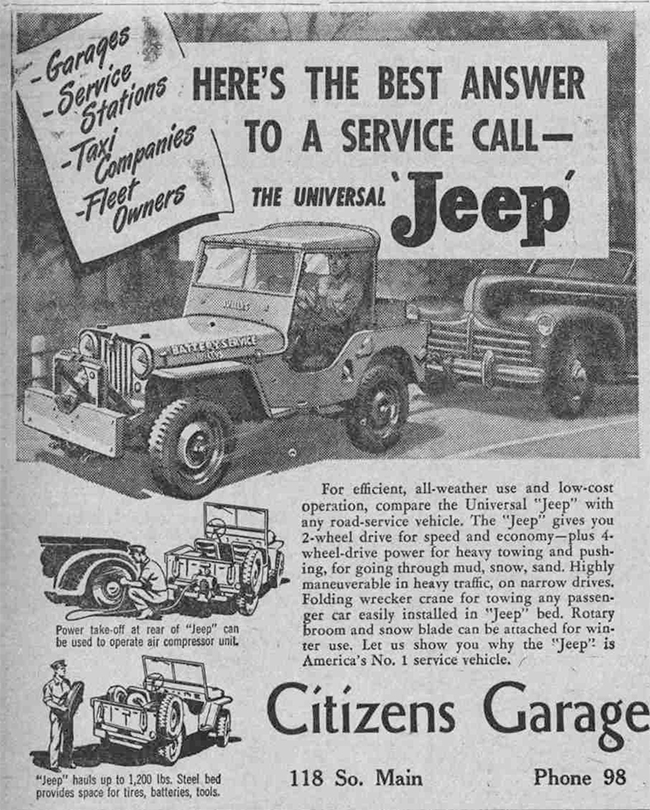
UPDATE: The other day I realized that the jeep in this photo from a collection of early jeep information published in 2014 looks very similar to an illustrated jeep that appeared in a 1947 newspaper ad. Here’s the image and it’s associated testimonial:
Here’s the advertisement from the June 3, 1947, ad published in the Sullivan Daily Times, out of Sullivan, Indiana, that highlights the ability of the jeep to be an efficient, low-cost option as a road-service vehicle.