emailNeed to contact me and don't have my email? Click on email button.
About eWillys
Welcome to eWillys.com, a website for vintage jeep enthusiasts. I update this website nearly every day with jeep deals, jeep history, interesting reader projects, jeep related info, and more.
These quick searches can help you find things on eBay. People list in the wrong categories all the time, so don't be surprised to see brochures in the parts area for example. This section used to be split into jeeps, parts and other categories, but recent changes to eBay will require this information to be recoded.
The links to posts below show jeeps grouped by models, condition, and other ways. Some of these jeeps are for sale and others have been sold. If you are unsure whether a vehicle is still for sale or not, email me at d [at] ewillys.com for more info.
Importantly, the allure of buying a project jeep can be romantic. The reality of restoring a jeep can be quite different, expensive and overwhelming without the right tools and resources. So, tread carefully when purchasing a "project". If you have any concerns about buying a vintage jeep, or run across a scam, feel free to contact me for help, comments or concerns .
John found this video which shows a pretty cool shot of a jeep being unloaded (begins at the 2:12 mark). Now that’s the way to exit a ship!
“Various shots of large battleship in dock. Shots of warships off shore. Several shots of HMS ‘Invincible’ making her way up the estuary. People watch from the shore. Shots of the ship docking. A crane lifts a jeep from the deck of the ship to the shore. Several shots of crew members walking down steps to the shore. M/Ss of the Captain (?) giving speech (no sound).”
Maury shared this eBay ad. The price is $65, but the seller will consider offers. The “Jeep Means Business is from 1954”, the “Public Service” is from 1955, as is the “Completely New” CJ-5 brochure. The DJ-3A brochure is from 1956.
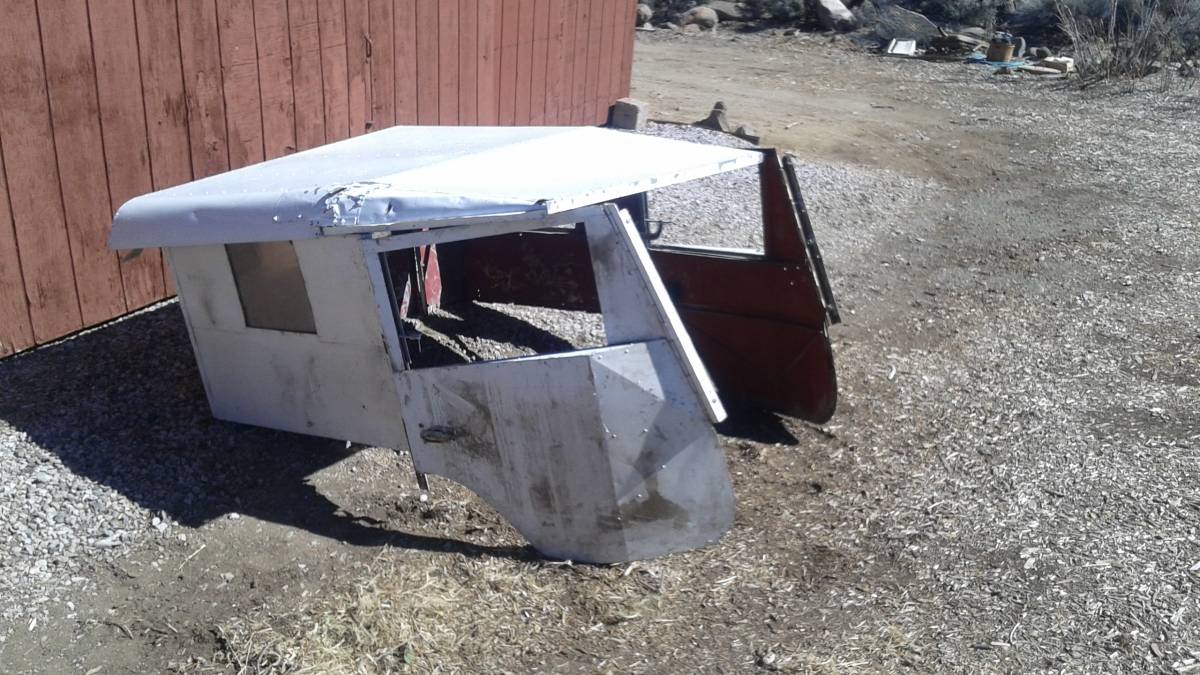
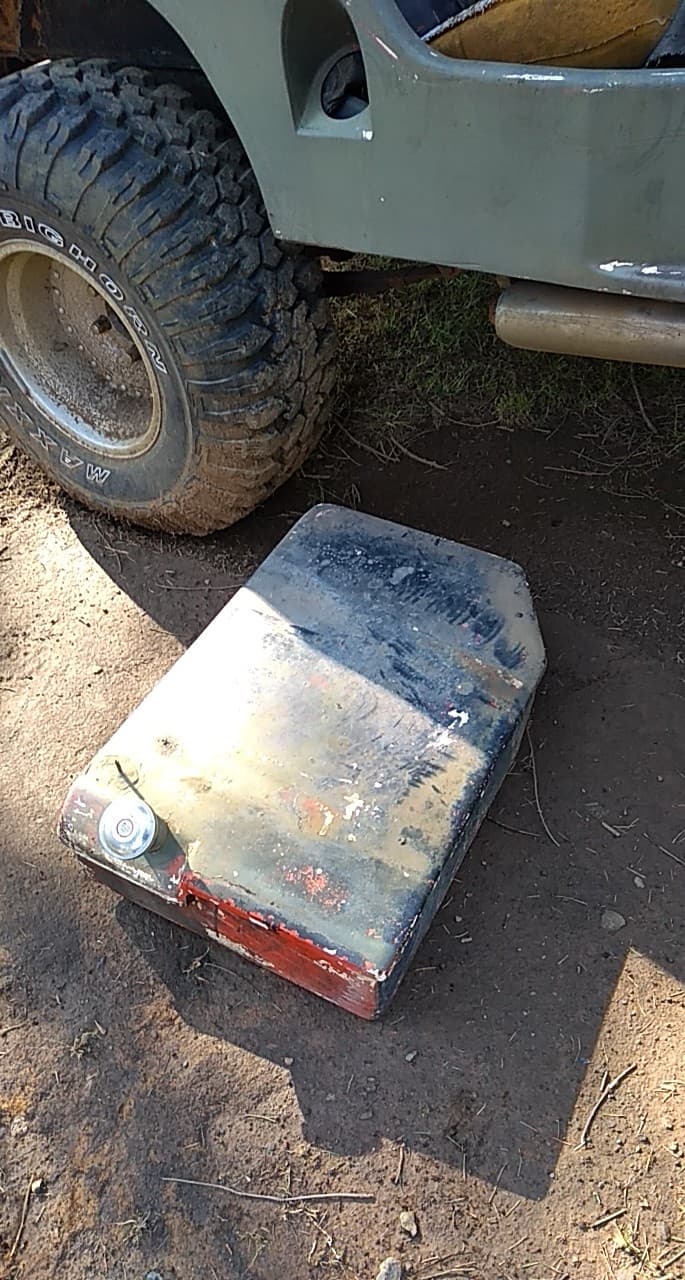
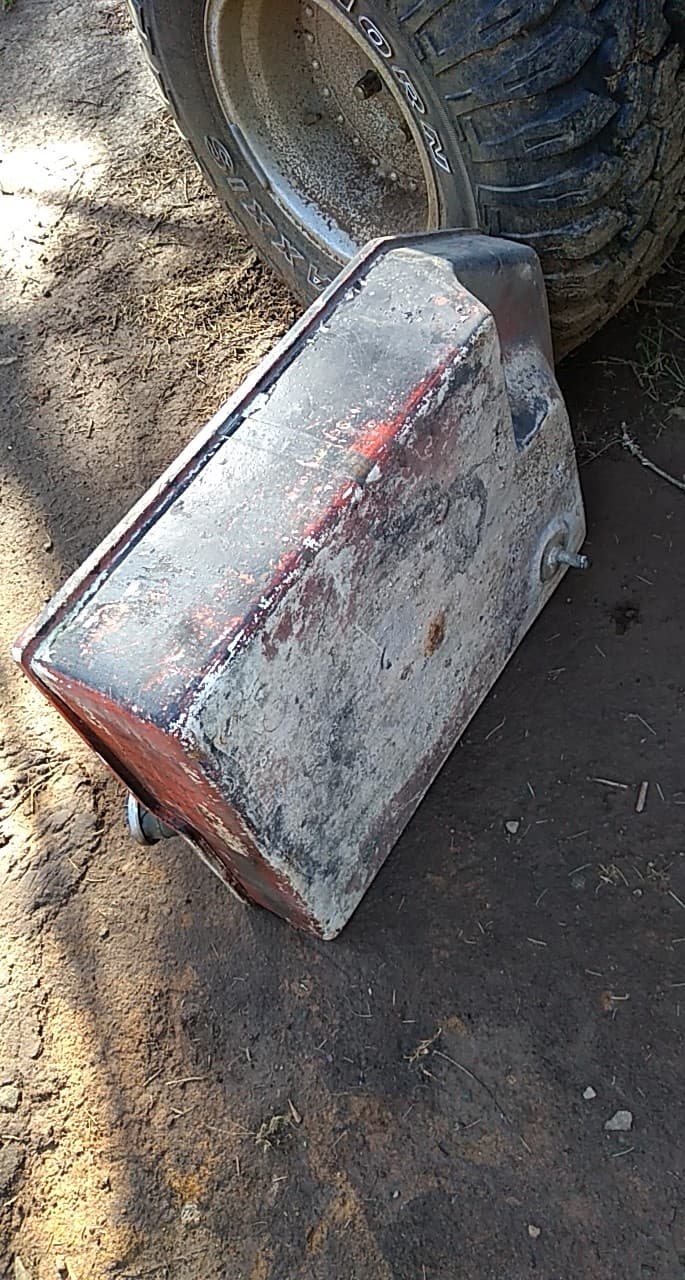
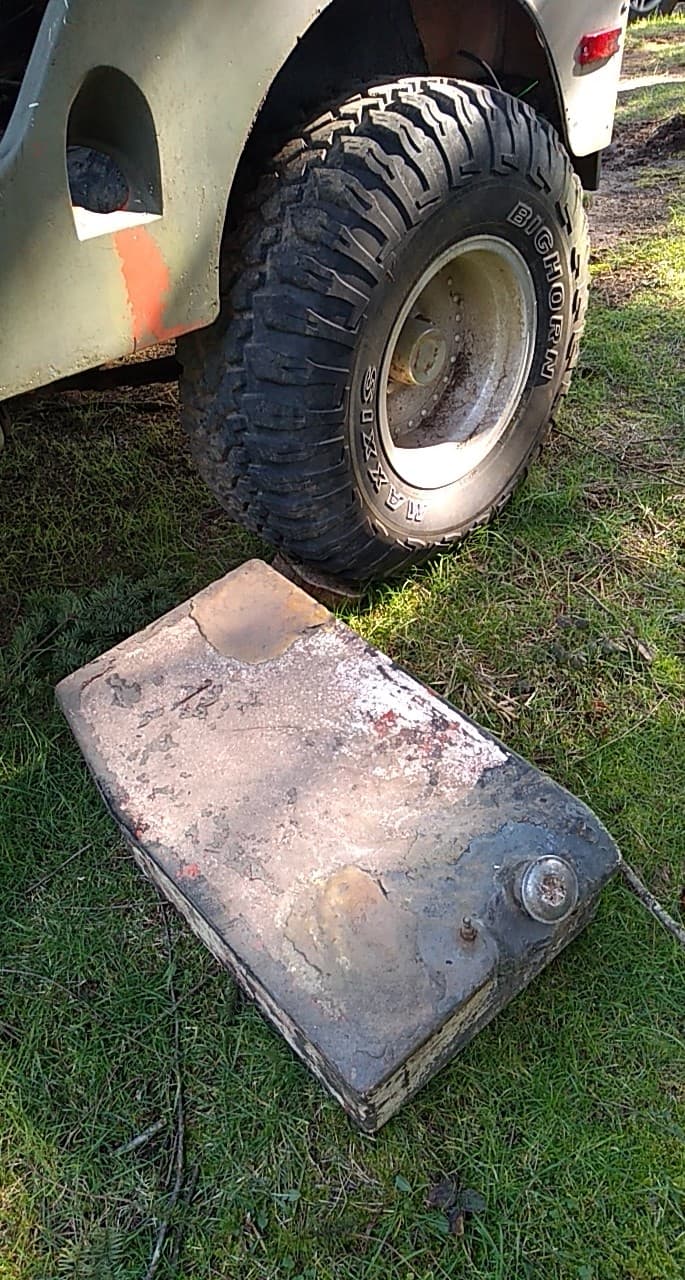
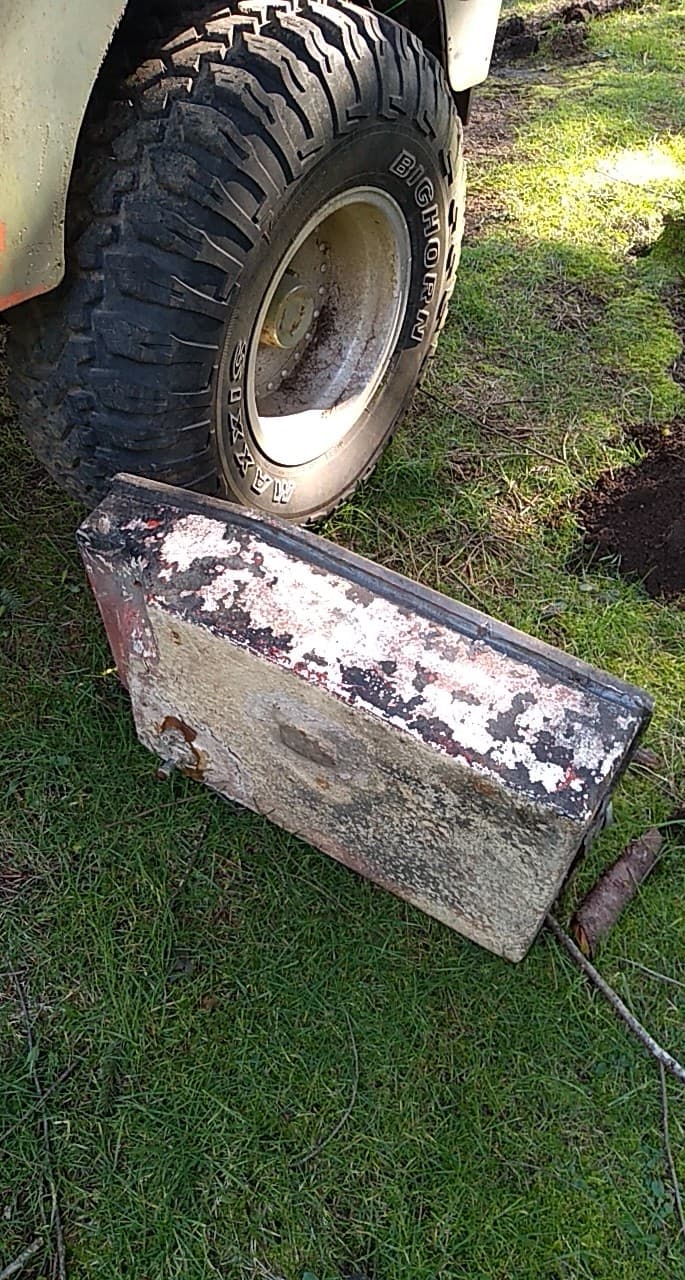
UPDATE: Richard Darr from Washougal Classic Jeeps owns a Bobcat body that still had a pair of the fiberglass gas tanks. Here are two pics of each tank. He told me they fit really well inside the bobcat body. He’s working on reproducing the tanks in aluminum for himself.
Here are the pics of the passenger side tank. Above you can see a Bobcat body.
This is the top of the passenger tank.
This is the bottom of the passenger tank.
Here is the driver’s side tank:
This is the top of the driver’s tank.
This is the bottom of the driver’s tank.
===================
Published March 17, 2021: For a great price, I bought some 1973 issues of Four Wheeler off of eBay. In turns out that the July 1973 issue of Four Wheeler Magazine had a special section devoted to new fiberglass products. Even better, Fred Weis’ Bobcat business introduced three new products in that issue, answering a couple questions that I had.
Before I begin, there are several posts about Bobcat bodies and the related Parkette bodies. At some point I will combine them into a longer narrative, but, for now, here’s a quick timeline:
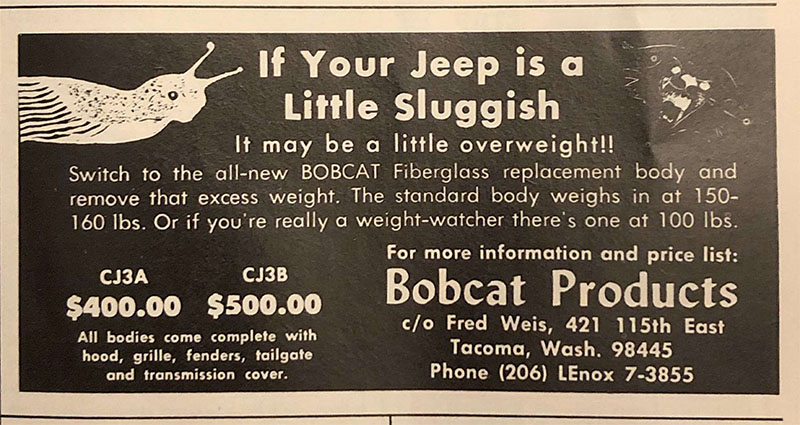
1969– The First Bobcat body: Fred Weis built his first body, an approximately 150lb body using plywood for strength, per this February 1970 article in Four Wheeler Magazine. 1970– Lighter Race Body: Fred builds a lighter body design more for racing, dropping the body weight to around 100lbs. One these first bodies was used successfully by Roy Williams during the 1970s for racing. (This weight info comes from a September 1973 ad shown below):
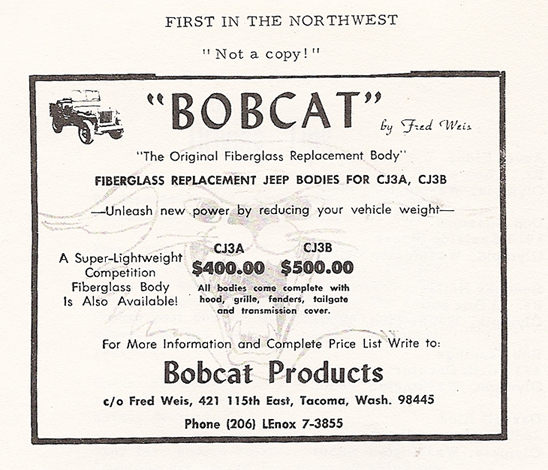
1971- Announces the CJ-3B Body: An Advertisement in the PNW4WDA’s Region 1 contact booklet included an ad from Fred indicating he was making CJ-3A AND CJ-3B bodies.
It might seem strange to see the “Not a copy!” phrase at the top of the ad, followed by “The Original Fiberglass Replacement Body” within the ad. I believe this reflects Fred’s frustration at Paul Parker rebranding the Bobcat body with side stripes and calling it a Parkette body. Assuming that explains the inclusion of the phrases, this puts the introduction of the Parkette body around 1970. The 1970 timeline also fits the purchase of a Parkette by Jim Carter, which must have happened around 1971 or 1972.
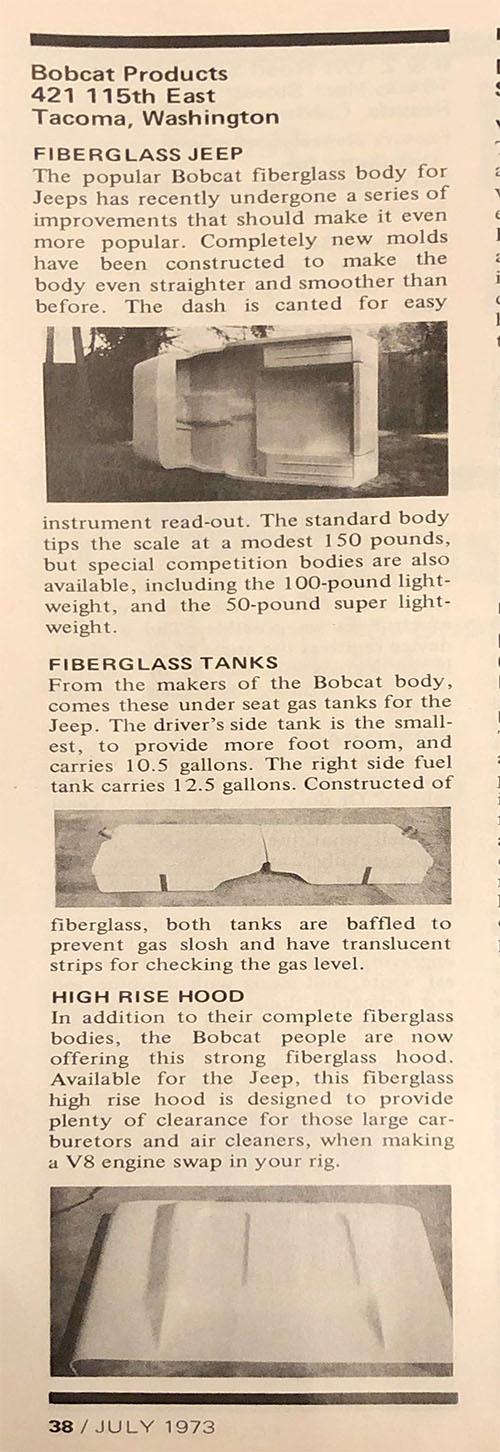
Now for our current post. In 1973, Fred introduced perhaps the most iconic item he ever produced, the Bobcat hood. I don’t know how or why he designed it the way he did, but it became a signature piece. Below is the July 1973 listing in Four Wheeler Magazine.
First, you can see that Fred was experimenting with a new type of body style. It appears he increased the size of the lip around the edge of the body’s rear, perhaps to strengthen it so he could lay thinner glass. It’s likely that this was the style of Bobcat body I bought back in 2008:
The fiberglass gas tanks were a surprise to see. I’ve never run across these. They likely failed to hold gasoline safely. It would take a special resin compound to be effective over the long term, at least that’s according to this motorcycle thread.
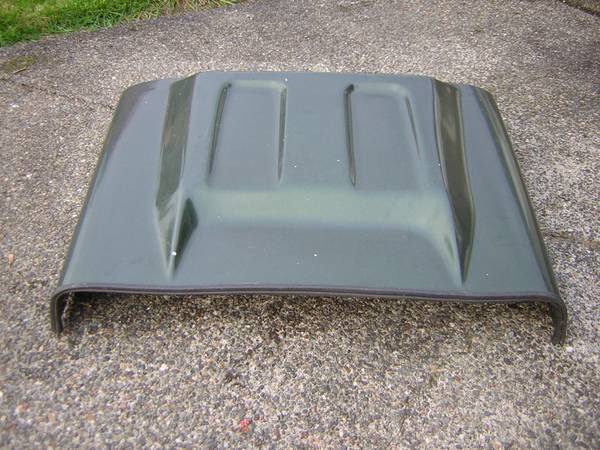
Finally, we have the brand new fiberglass Bobcat hood. Whether this came before or after the Bobcat teardrop hood isn’t clear, but it would seem to me that the teardrop is so much less sophisticated of a design that I could imagine he made some of those first before creating the classic Bobcat hood. Here’s a great example of the hood: (see more examples of the low hood and high hood versions of this iconic hood)
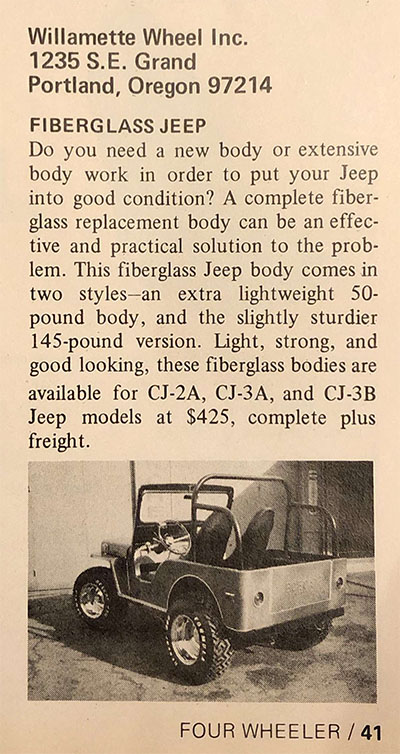
Also included in the July 1973 fiberglass section was this ad. It seems Willamette Wheel was offering the Bobcat body for sale, without labeling it as such in the ad. However, a close look at the tailgate clearly shows it is a Bobcat tailgate.
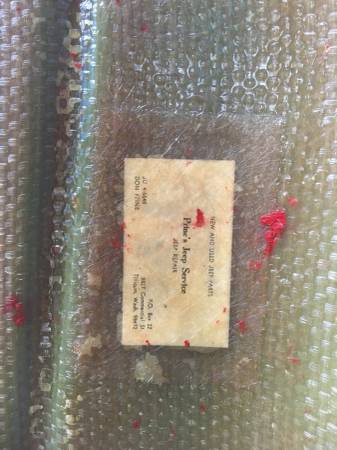
It’s not clear how many other parties were working with Fred, but at least one, Don Prine, managed to get his business card inserted into a CJ-3B version of the classic hood:
As I collect more 1970 Four Wheeler magazines I hope to learn more about the Bobcat and Parkette timelines, though I’ve yet to find anything printed about the Parkette body (no ads or articles yet).
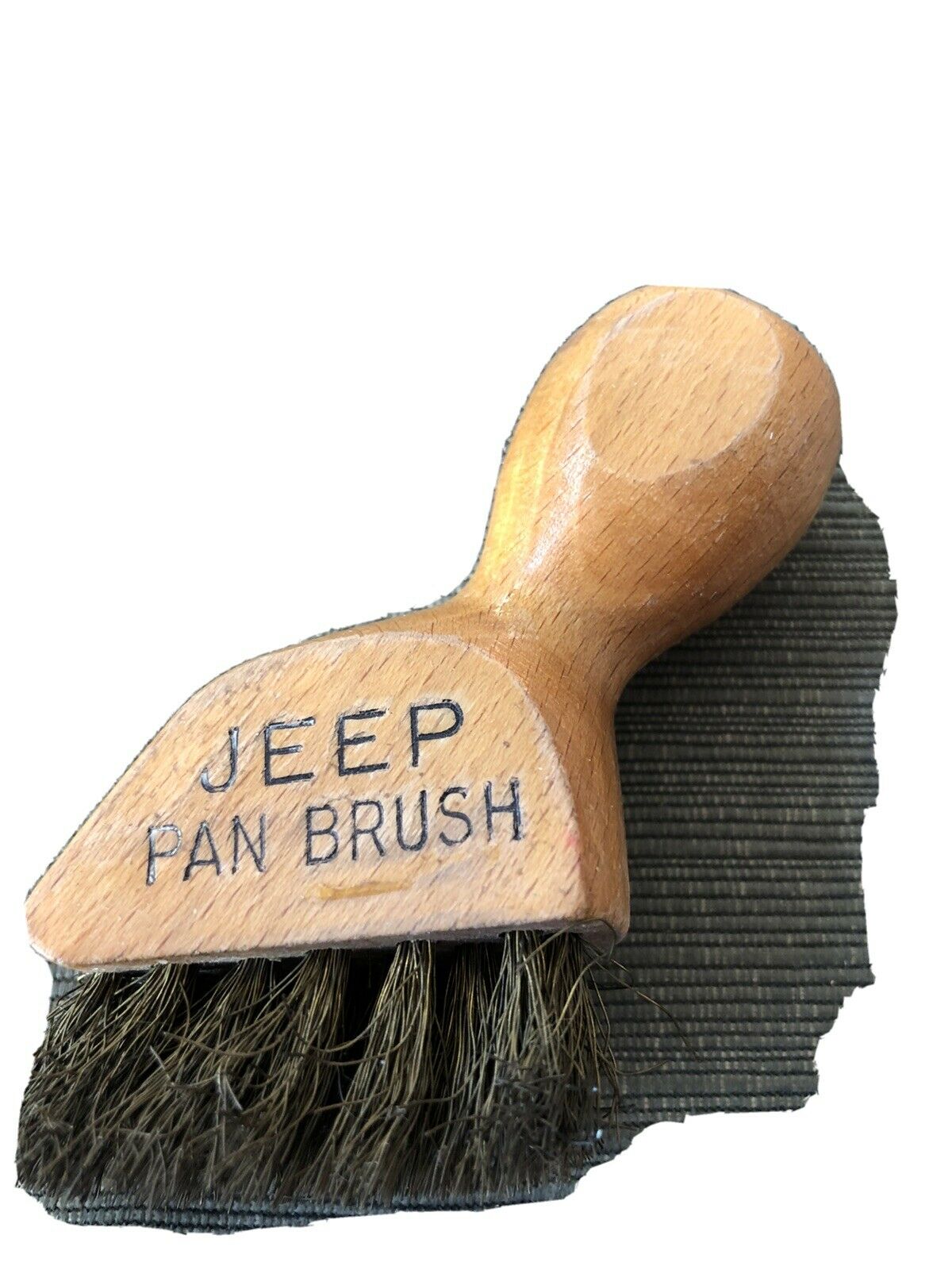
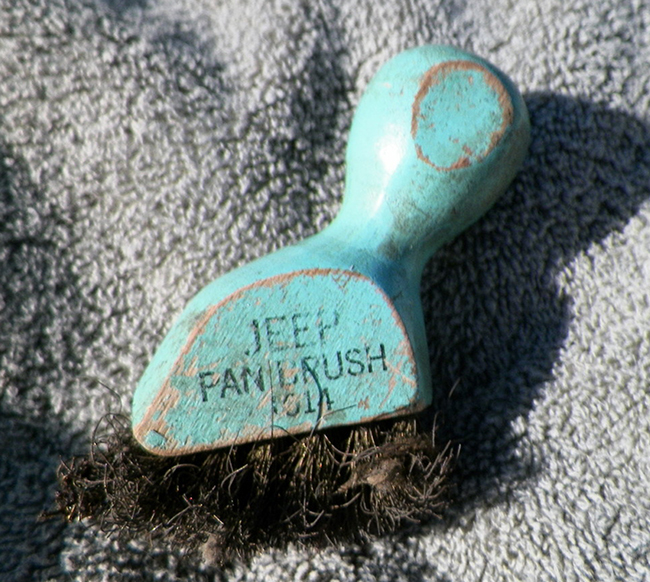
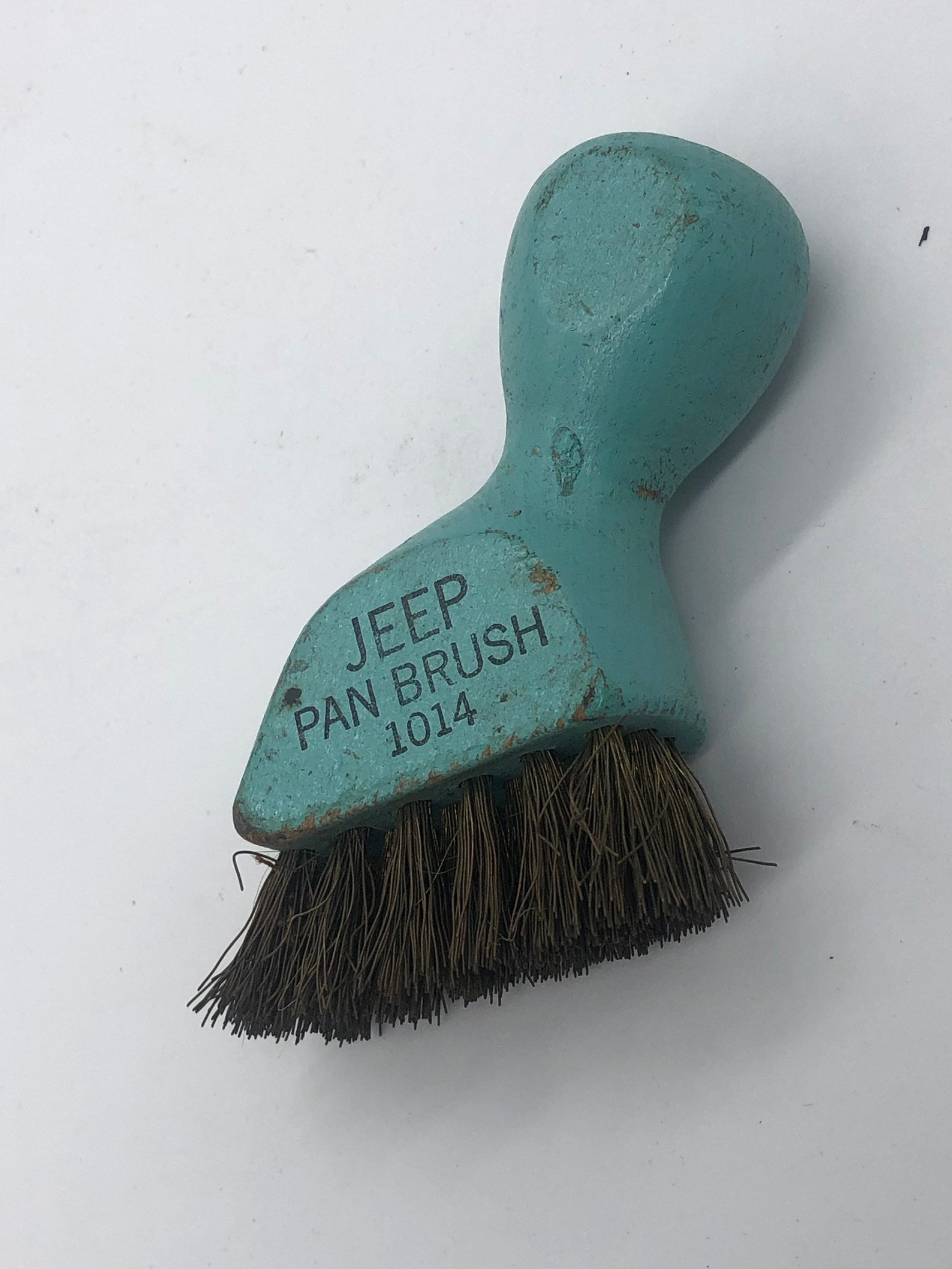
Maury shared this link to another Jeep Pan Brush that’s available on eBay. This item doesn’t seem to be related to Willys-Overland or jeeps in any way that we can tell, other than you could clean jeep parts with it.
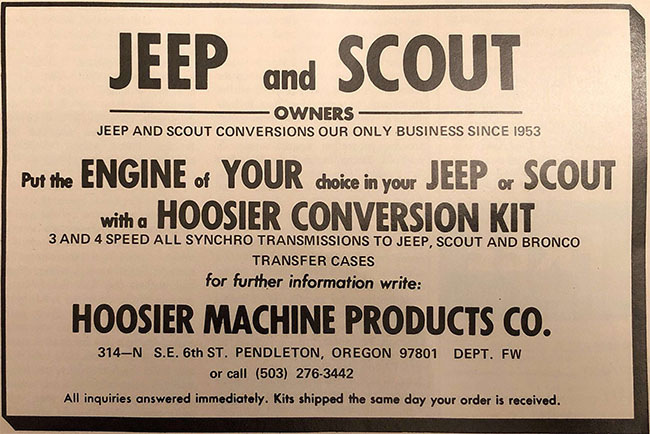
UPDATE: I was surprised to see that Hoosier advertised in Four Wheeler Magazine for several months during 1973 (possibly longer).
===================
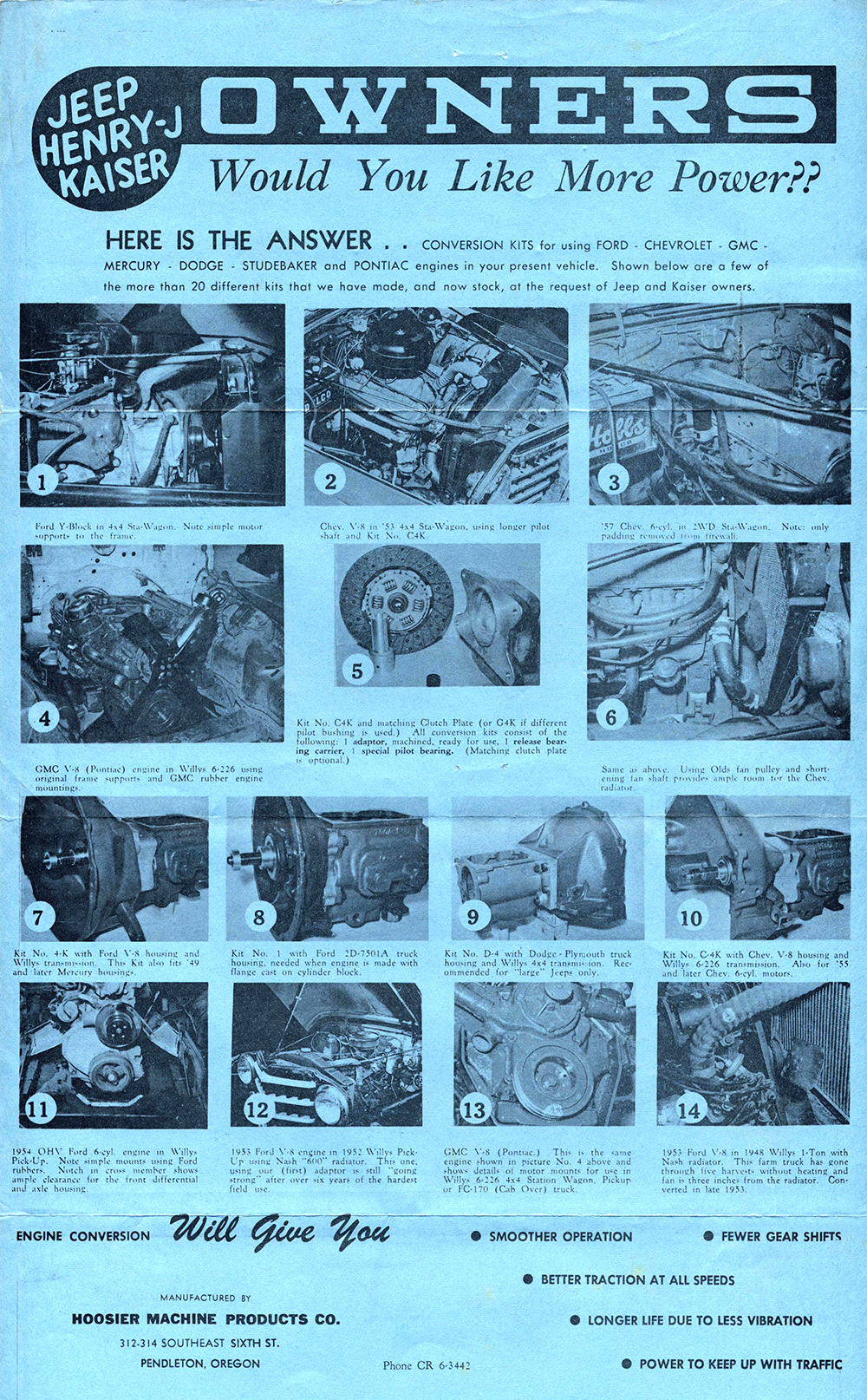
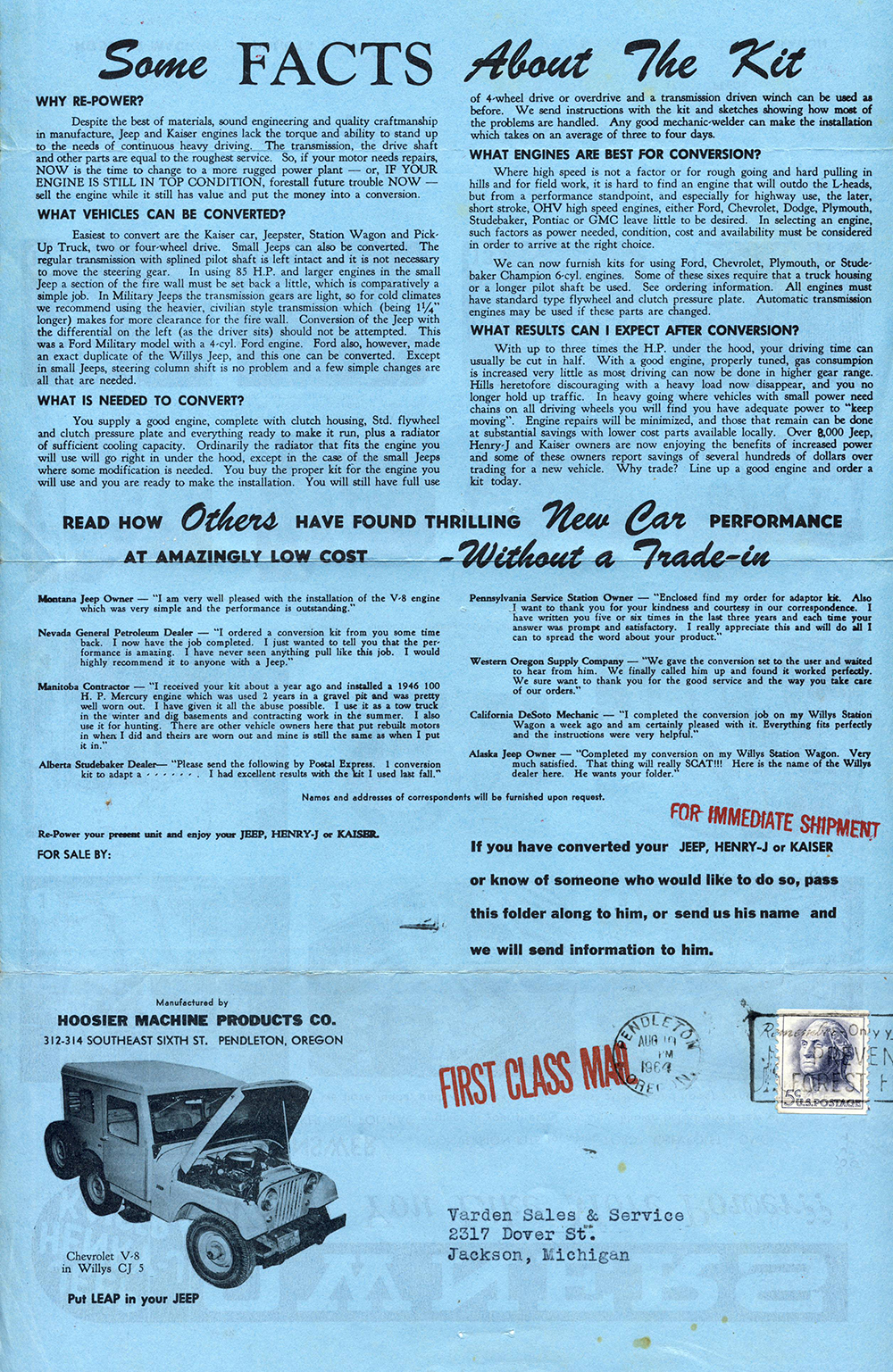
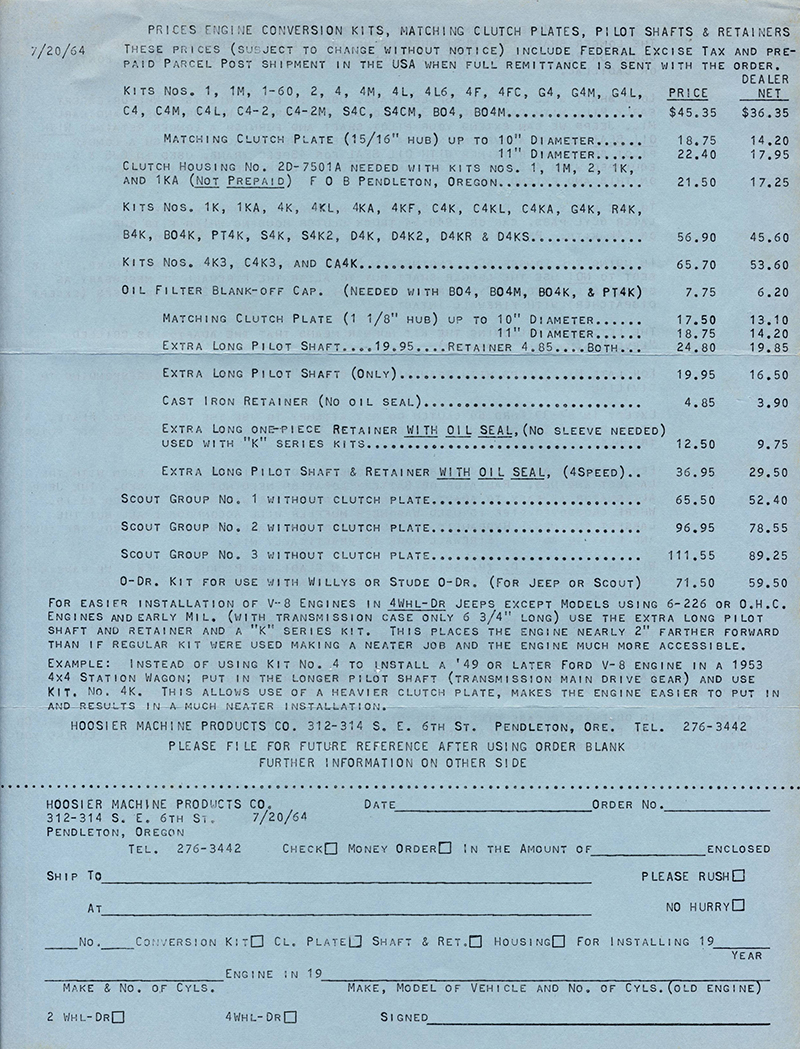
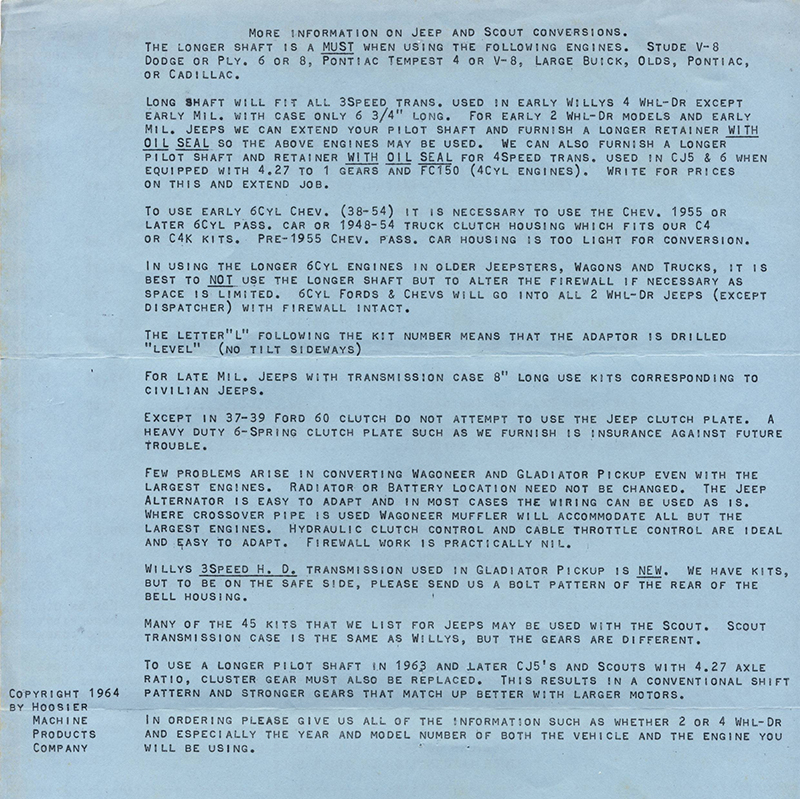
ORIGINALLY PUBLISHED JUNE 6, 2019:In the early 1960s, Hoosier Machine Products out of Pendleton, Oregon, (just an hour south of me) began selling conversion kits for jeeps. The company’s kits allowed the repowering of jeeps using Ford, Chef, GMC, Mercury, Dodge, Studebaker and Pontiac engines. That’s a pretty impressive, wide range of options, especially for a company out of Pendleton, which was pretty remote at the time. But, given the long distances Pendleton owner’s jeeps had to travel to reach other towns and the existence of the nearby, steep Blue Mountains, which provided endless jeeping possibilities, perhaps there was a reason Pendleton jeeps need more power?
Also, a big thanks go to Maury for spotted this brochure for me!
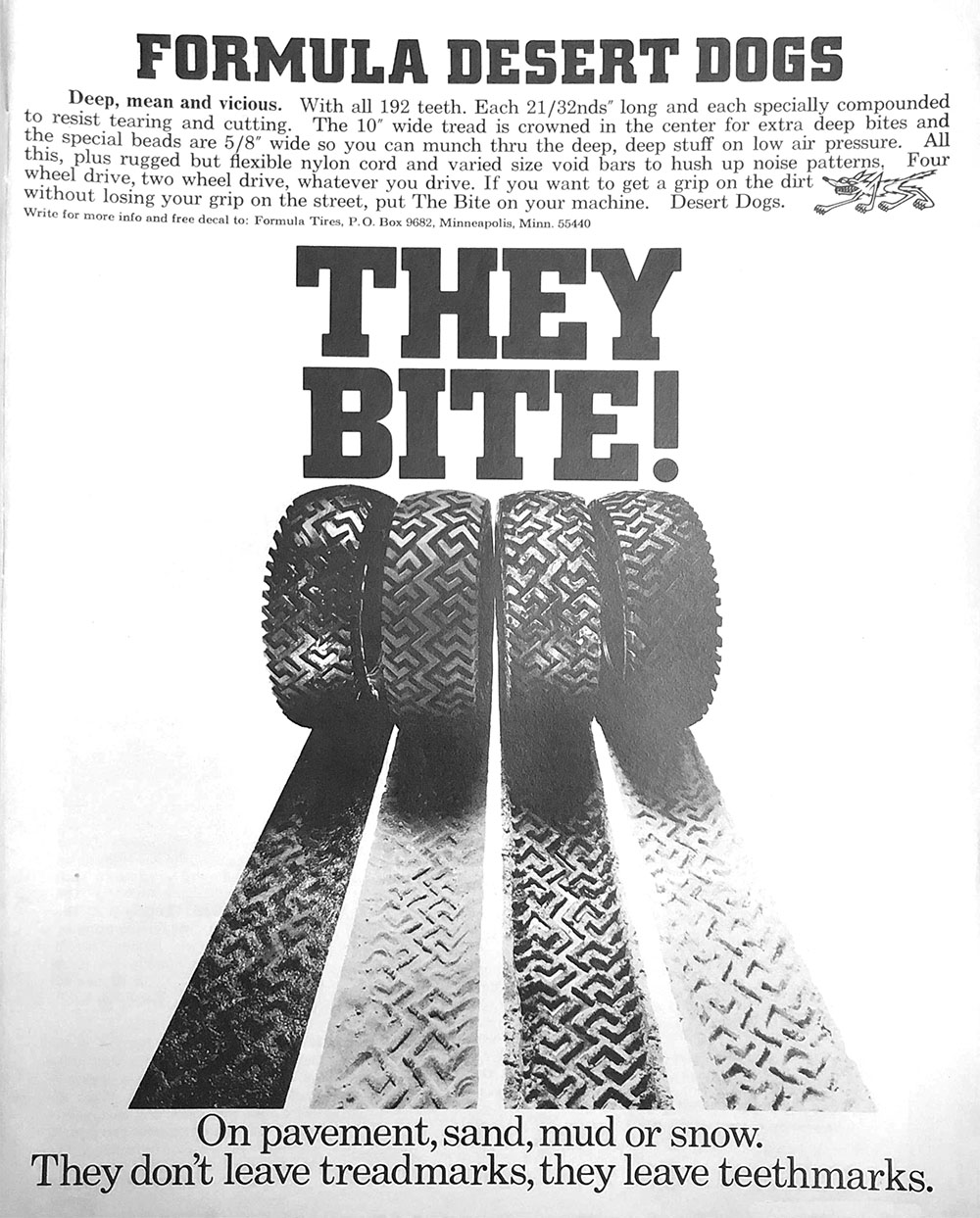
UPDATE: After spotting an ad I hadn’t published yet (seen below), I realized that there was Desert Dog history that existed among various posts. So, this combines all that into more of a narrative.
==========================
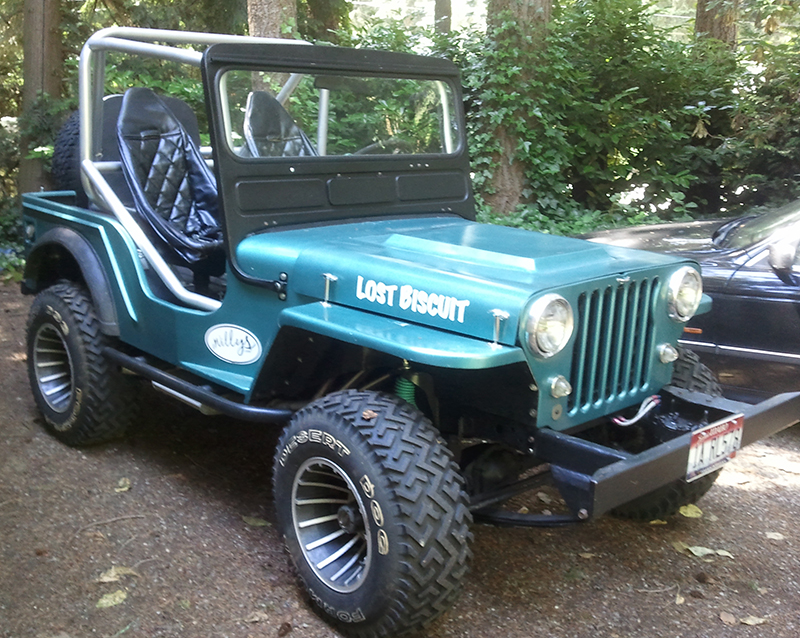
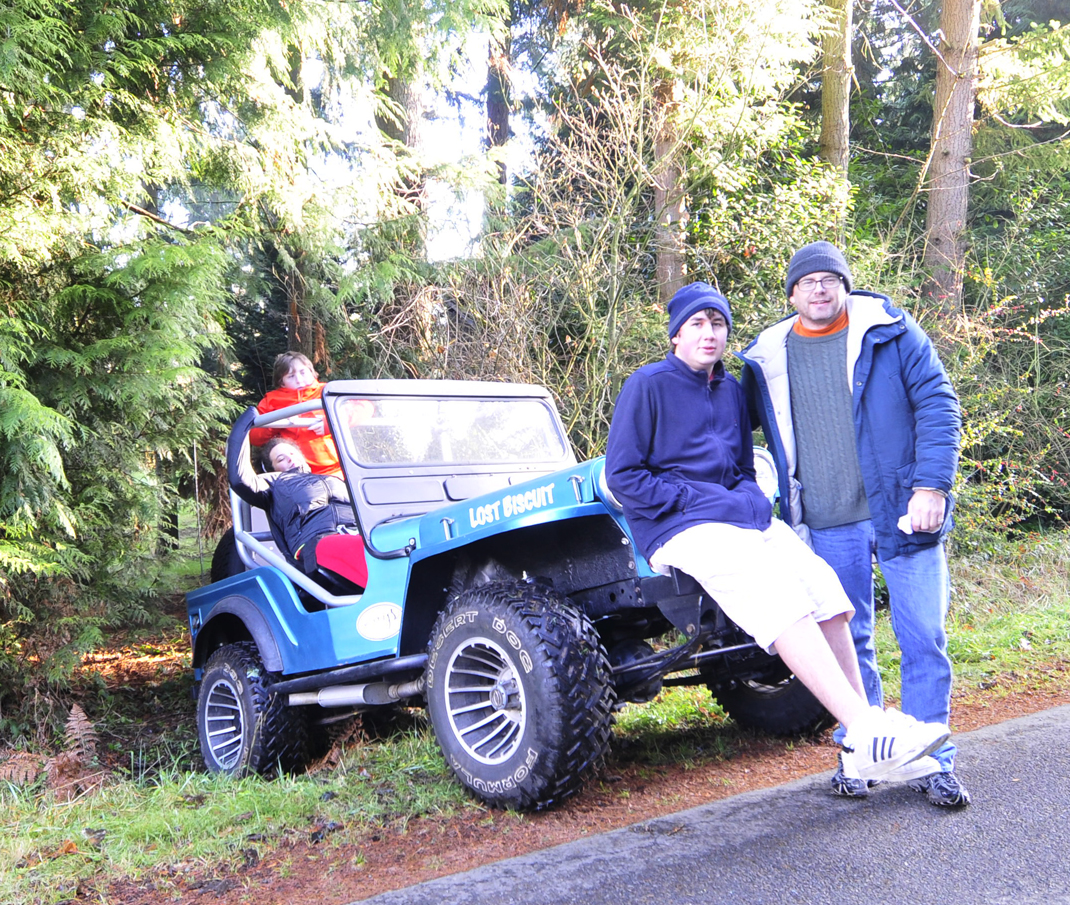
If you have read eWillys for any length of time, you know I’ve been a fan of Desert Dog tires for years. I still have eight desert dogs, some solid lettering and some outlined, as shown in the pic below:
According to Louis Larson, the Desert Dog tire was launched in 1970. He knows this, because in 1970 he became the first person to test out the new style of tires (see the bottom of this CJ-3B Page article). The tires were given to Louis for testing and photographing.
David Maxwell, a former Formula tires salesman, reported that the tires were always made by Armstrong, but marketed through the Formula brand, the president of which was a friend of David’s (see David’s comment and many others on this post). The company made a large number of retreads, so a number of tires also had Firestone on the side, too.
The tires proved popular quickly. Les Schwab was a big fan of them and ran them on his jeep (jeeps?). He also sold both new and retread tires out of his main shop in Prineville (see Les Schwab’s biography here).
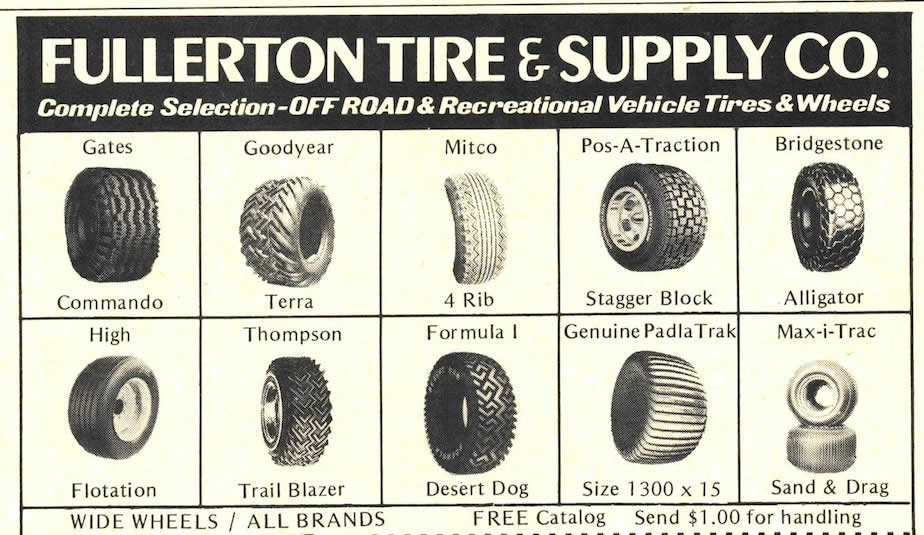
For PNW jeepers, the tires were a perfect blend for racing and for jeeping and the varied terrains of the PNW (sand, gravel, rocks, mountain sides, mud, etc … as Joe1148 highlights in his comment here .. though I can attest to it as well). On the downside, their road life was short (some estimate about 10k miles) and they tended to be noisy. The tires’ popularity gained them prominence, and soon they were added to charts showing tire options, such as this January 1972 ad:
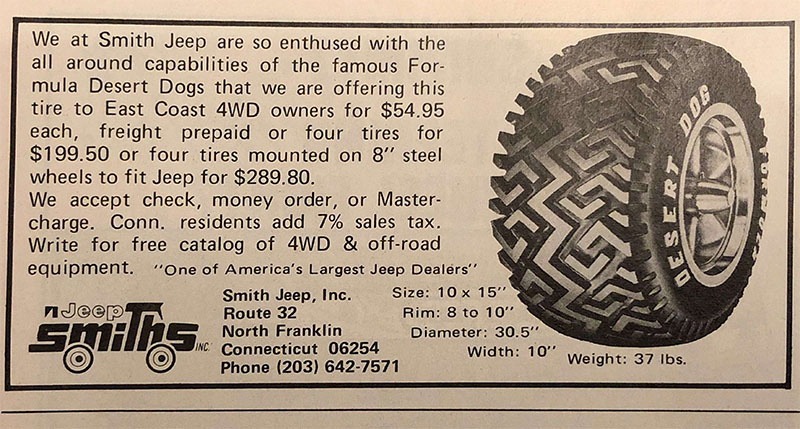
By 1973, Desert Dogs were being advertised in Four Wheeler Magazine (ads at the bottom of this post) and sold across the country. This Smith Jeep, Inc. ad from North Franklin, Connecticut, in the July 1973 issue of Four Wheeler Magazine is one example of an East Coast offering:
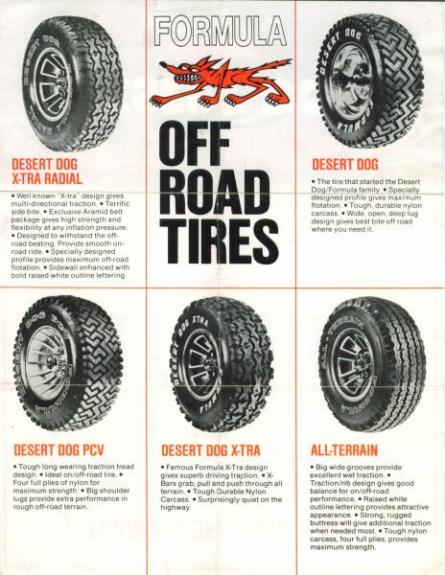
Eventually, the Formula brand expand its offering. I don’t know when each of these tires was introduced (I think this ad is from 1975, but have to confirm it), but Formula was soon offering more tires choices:
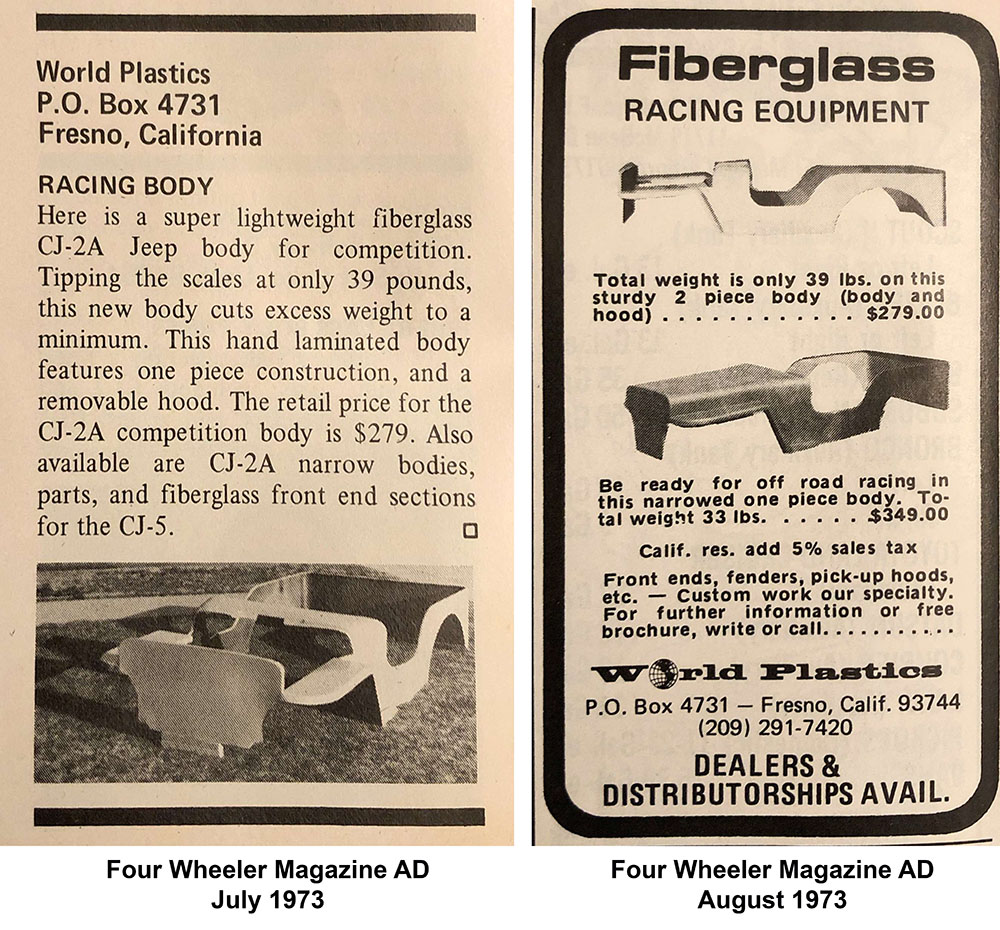
The July 1973 and August 1973 issues of Four Wheeler Magazine included these two ads for fiberglass racing shells. I’m not sure when World Plastics began advertising in the magazine, but I doubt it had been for very long. The ad on the right shows a full-body size flat fender shell, while the ad on the right shows a narrow body shell (both Bobcat and Parkette also produced racing shells).
I don’t know how long these were offered, what happened to the shells, or what happened to the World Plastic’s company.