emailNeed to contact me and don't have my email? Click on email button.
About eWillys
Welcome to eWillys.com, a website for vintage jeep enthusiasts. I update this website nearly every day with jeep deals, jeep history, interesting reader projects, jeep related info, and more.
These quick searches can help you find things on eBay. People list in the wrong categories all the time, so don't be surprised to see brochures in the parts area for example. This section used to be split into jeeps, parts and other categories, but recent changes to eBay will require this information to be recoded.
The links to posts below show jeeps grouped by models, condition, and other ways. Some of these jeeps are for sale and others have been sold. If you are unsure whether a vehicle is still for sale or not, email me at d [at] ewillys.com for more info.
Importantly, the allure of buying a project jeep can be romantic. The reality of restoring a jeep can be quite different, expensive and overwhelming without the right tools and resources. So, tread carefully when purchasing a "project". If you have any concerns about buying a vintage jeep, or run across a scam, feel free to contact me for help, comments or concerns .
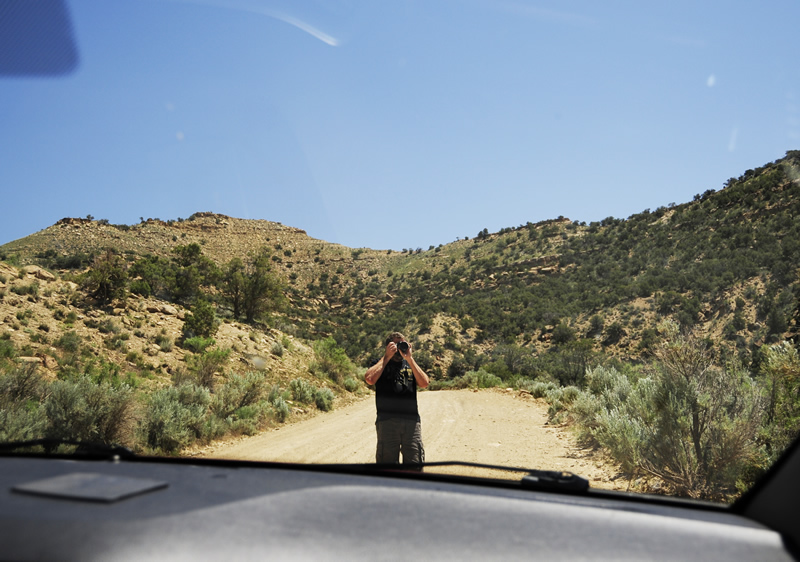
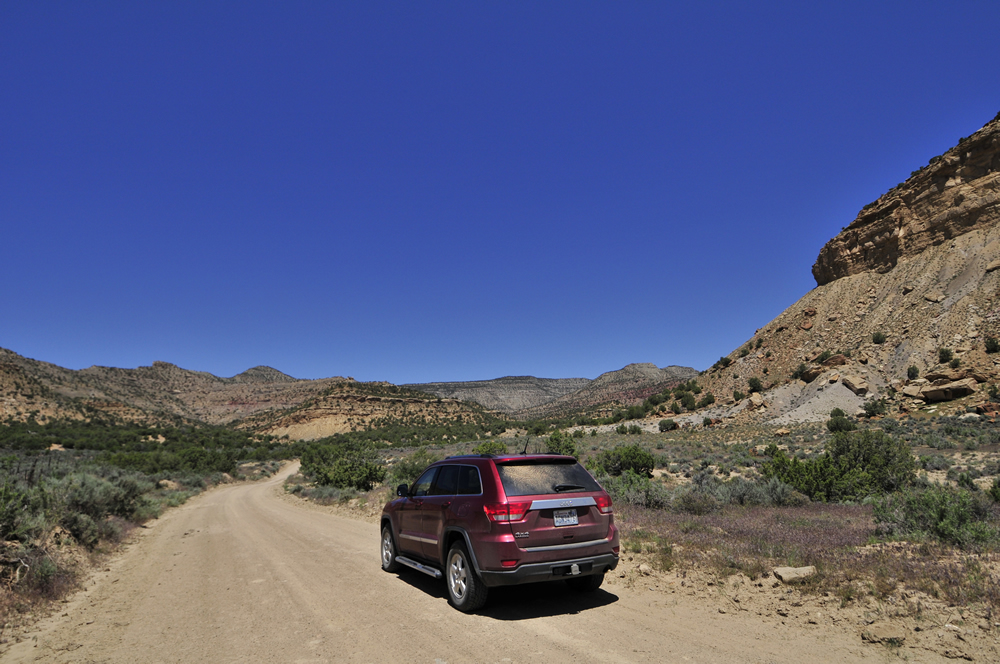
There’s an area of eastern Utah just north of I-70 called the Book Cliffs that has remained pretty remote. On Tuesday, I decided to go from I-70, north along dirt roads through the Book Cliffs, in hopes of reaching State Highway 40, which crosses Utah from Salt Lake City to Vernal. The biggest problem I had was that my 50-page Utah map marked non-paved roads with dashes and the dashes, as they intersected at odd angles, made the map’s roads tough to read. In addition, the roads weren’t marked well on the map. So, I expected it might be a challenge.
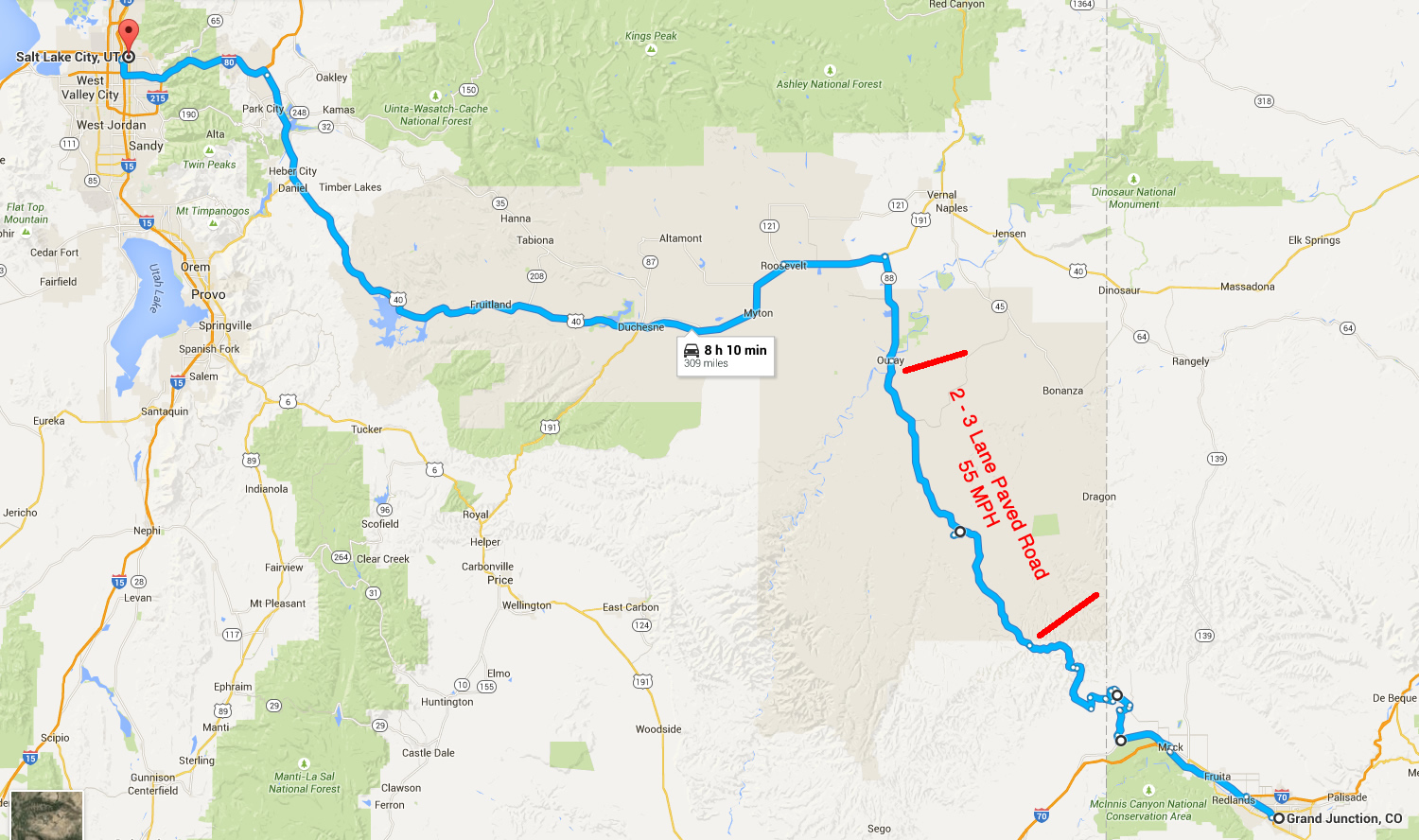
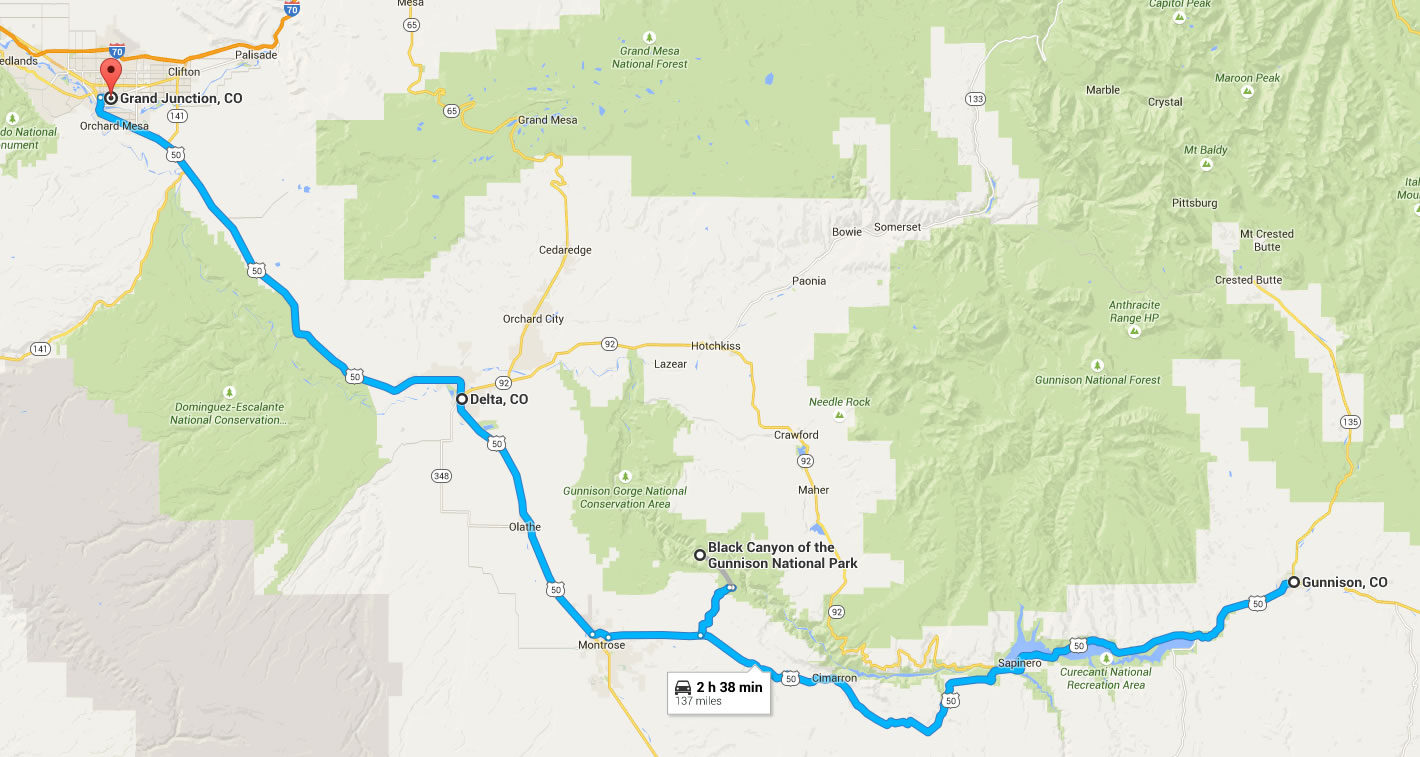
Overall route.
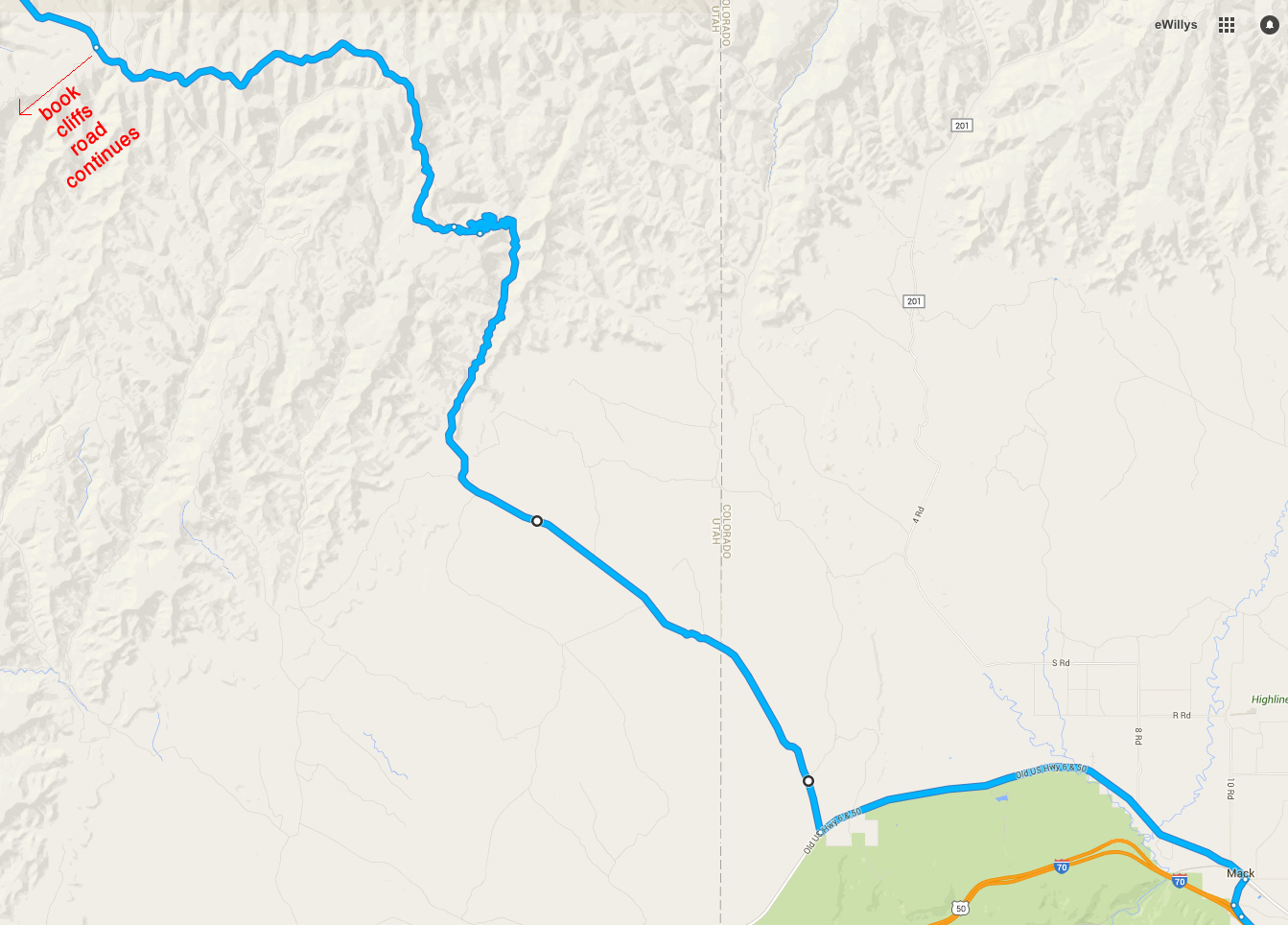
Closeup of our route across the remote planes and up the book cliffs.
On Tuesday we left later than planned, due to my sleeping in. We traveled west on I-70 from Grand Junction until we reached the exit for Mack, Colorado. From there, we followed State Highway 6 hoping to find a road called the Book Cliffs Ridge Road, which we never found because Colorado didn’t mark the road that way. Instead, they used some number that didn’t appear on any of the maps we had. Still, by process of elimination, we figured out which road was the Book Cliffs Ridge road.
Saturday May 30th we spent in Colorado Springs. On Sunday, May 31st, we began our trek westward. My goal for the day was to get a better sense of the family mines so that I can write the imagery correctly for my upcoming book.
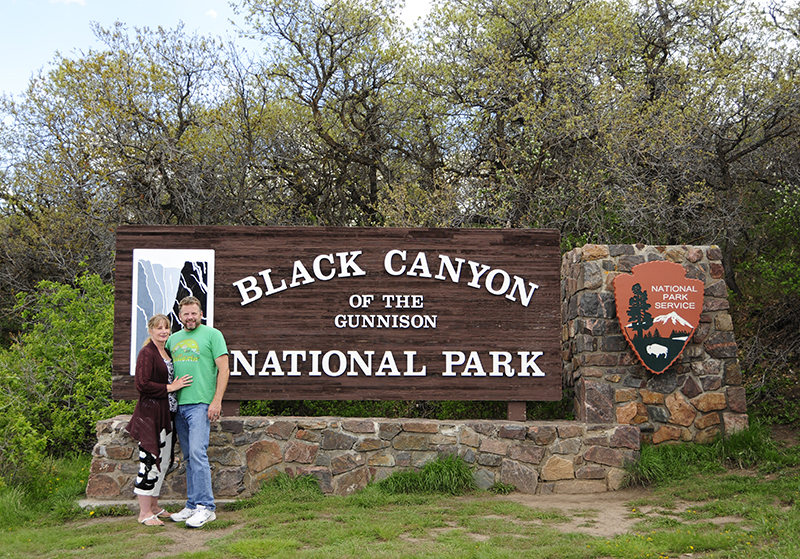
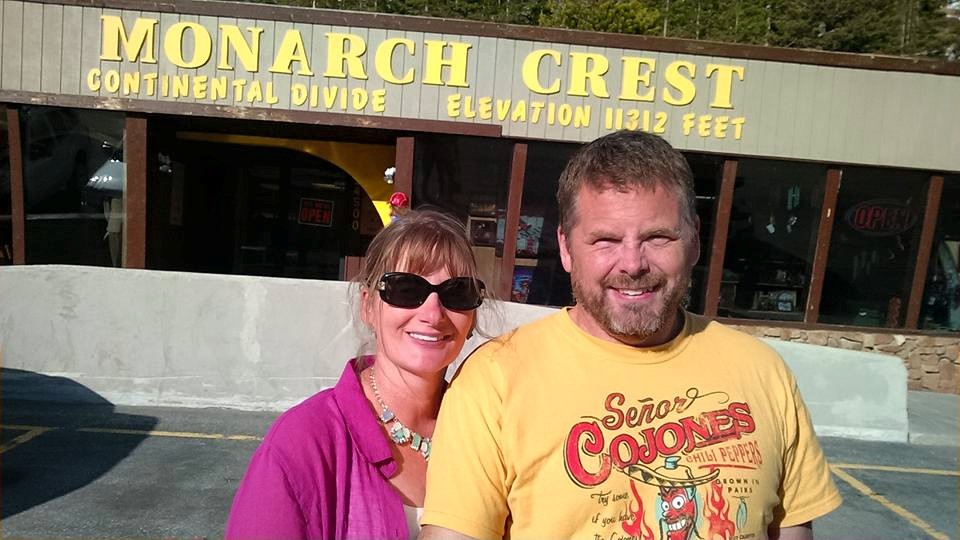
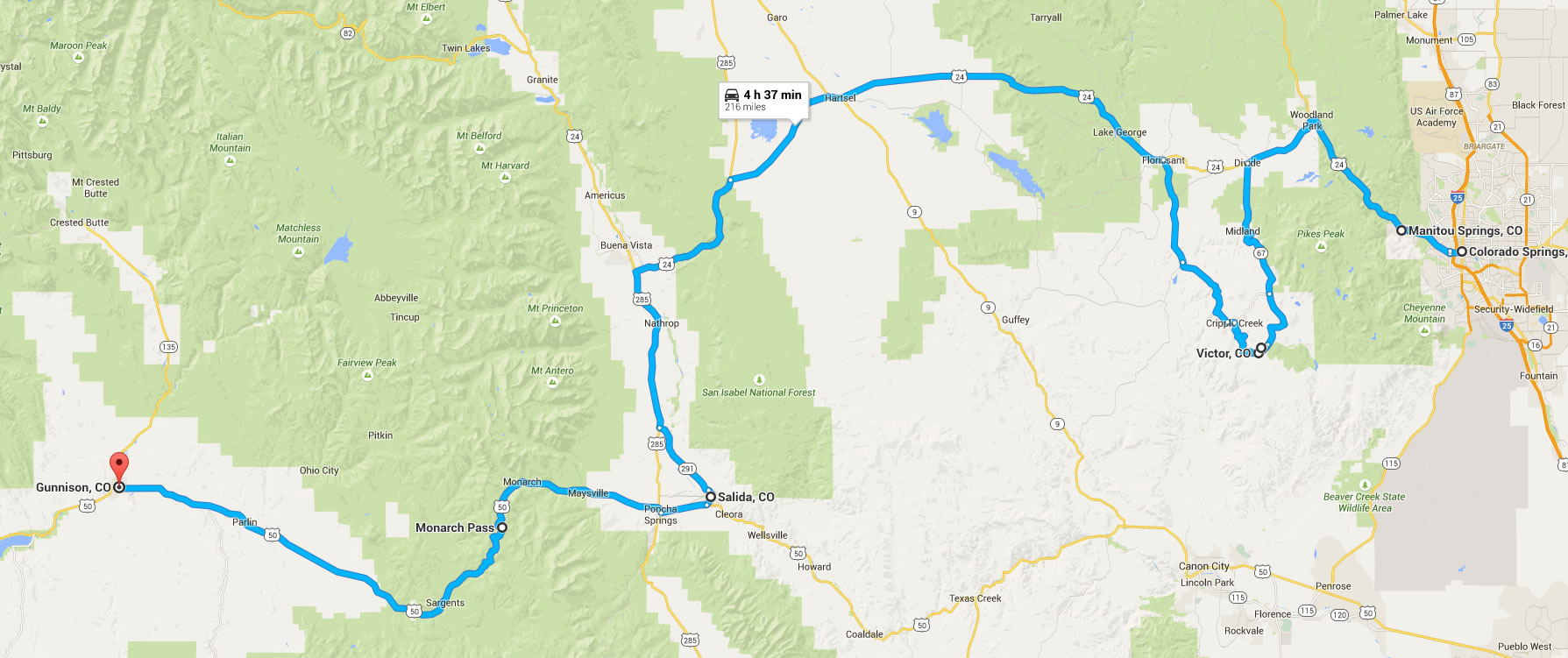
Today we drove from Colorado Springs to Gunnison.
Our first quest of the day was for fudge. Not just any fudge mind you, but salted carmel fudge. My wife has been pining for some well-made salted carmel fudge ever since we bought some from the Alamo in San Antonio. I thought it was time to find some for her, so the first stop of the day was at Goldminers Nuts and Candy in Manitou Springs. Their fudge turned out to be pretty good, but the salted carmel wasn’t quite as good as the Alamo’s. Still, we’ve been enjoying it :-).
After the fudge stop, we began our climb into the mountains. Colorado Springs is around 6500 feet, while the small mining town of Victor is around 10,000ft. So, up, up, up we drove. The one problem we encountered on the climb was that the closer we got to Victor the more threatening the rain clouds became.
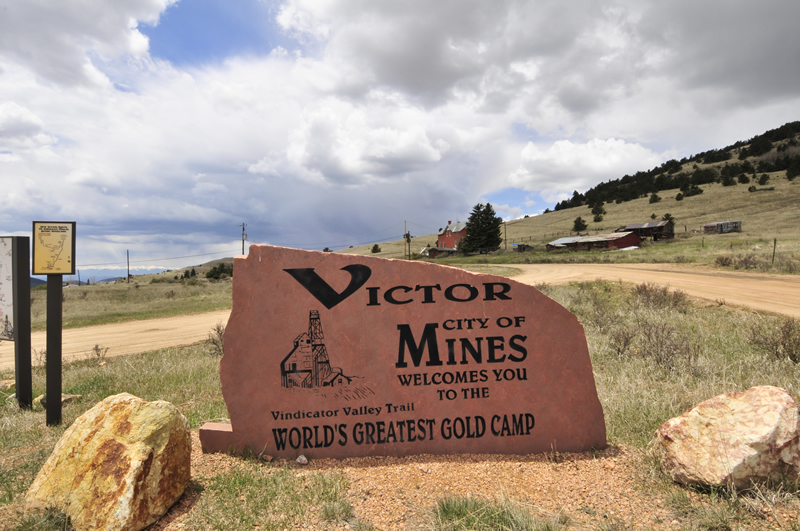
As we approached Victor from the north, we came upon the entrance to the American Eagles Overlook and Historic Mine. The entrance isn’t obvious, but if you look for the entrance in the photo below you’ll be at the right place.
This rock marks the entrance to the American Eagle Mine overlook.
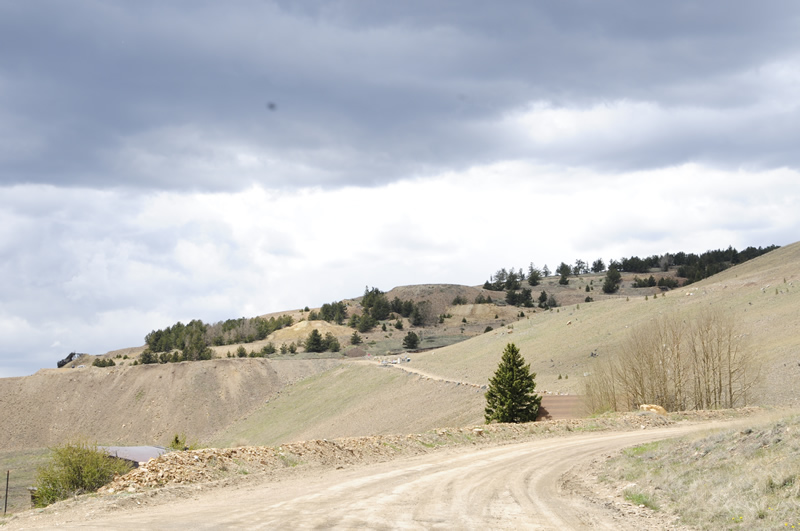
Follow this road to the very end. There, you will find a guard and a small shack. Give them your name and you can drive up to the overlook.
For years West Coast Willys published a quarterly newsletter called the Dispatcher. Recently the organization turned over publishing responsibility to Norris-Banonis, the same organization that publishes those great Holy Toledo Calendars. They have upgraded the Newsletter into a Magazine, complete with high quality photos, accurate technical articles, and well-researched history.
There first issue was published in March of this year. I got a chance to read through it and I was really impressed. There simply isn’t another vintage jeep magazine out there that rivals what Norris-Banonis have created. The articles I read were interesting and informative. For example, not too many people know that automatic transmissions were tested in M-38s, let alone know the details about those transmissions.
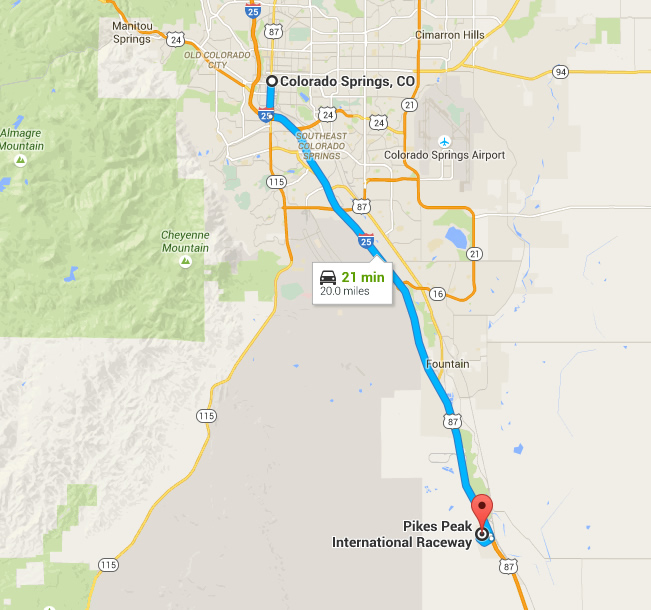
PPIR began life as a horse racing track. In 1996, the facilities were transformed from hosting horses to hosting automobiles. The track subsequently closed in 2005, but reopened in 2008 when Guy and some partners purchased it. Eventually they brought aboard Bob as president.
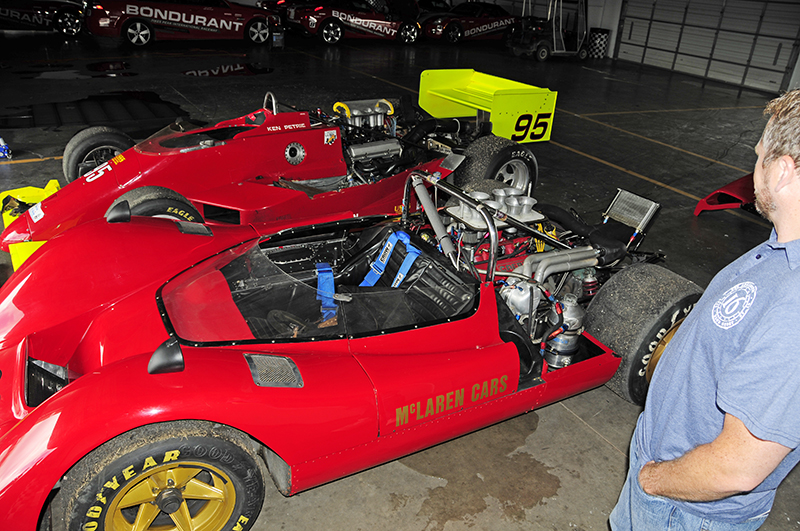
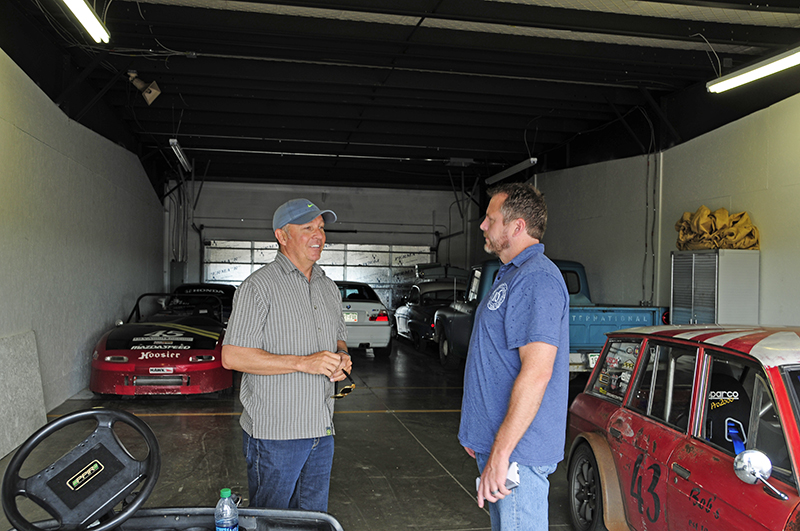
Bob’s to the left. His collection of cars in is the background. He owned a Willys wagon until recently.
We arrived at the track at 1pm. We found Bob busily racing around on his golf cart. Almost the instance we jumped aboard his cart for a ride around the facilities it started to rain. The average rainfall in Colorado Springs in May is 2″. This year it has rain 10″!
Despite some intermittent drops, we got a quick tour. Bob pointed out some racing semi-trucks and explained that a new semi-truck racing circuit had formed in the US as a result of the success similar truck racing was enjoying in Europe. For some reason, more Europeans are showing up for truck races than for Formula One or other races. So, Bob and other track owners in the US hope to attract a similar following.
I asked Bob how he got started in racing. Bob’s told me his father was a racer who was involved in bringing Honda dealerships to the United States. Along the way he became the first to build and race a Honda car. That 1974 Honda is now in this Honda Museum. Bob began racing in 1982 and has enjoyed a successful career. You can see his eyes light up when he talks about cars. He loves them. Bob’s sons have followed in his path, becoming good racers themselves.
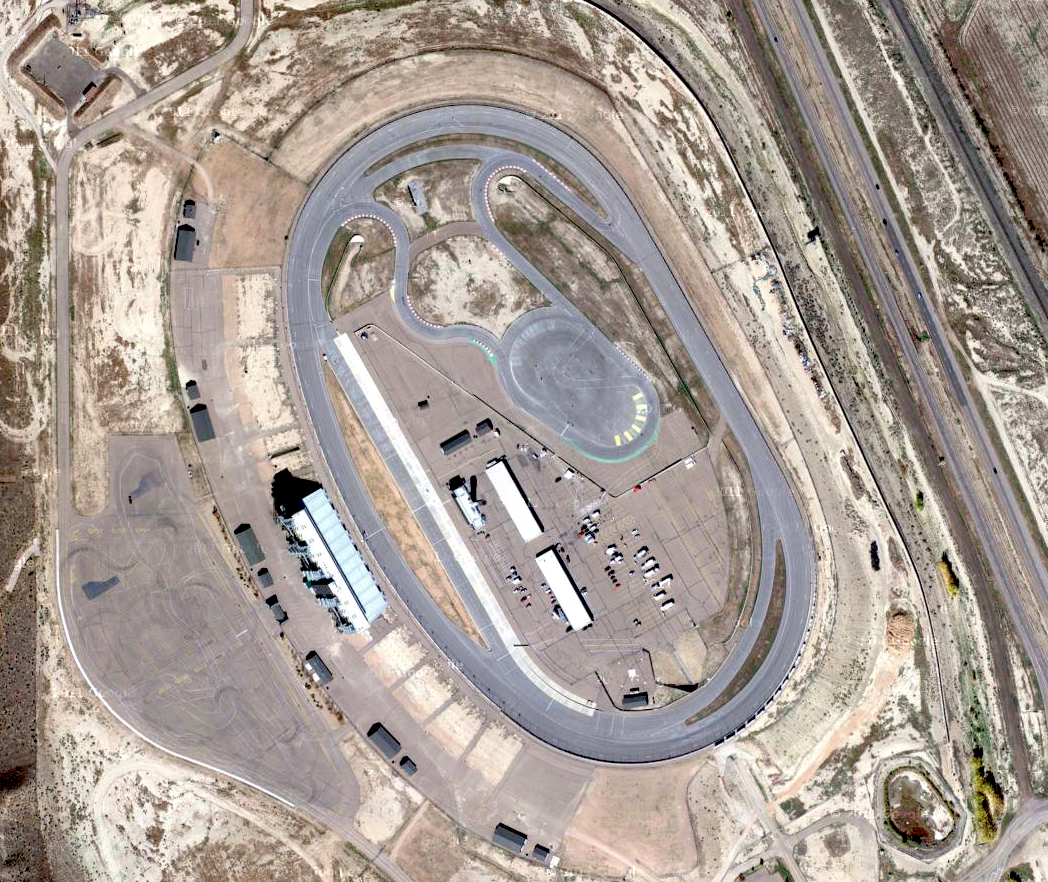
Overview of PPIR track that I found on the internet. the stands are on the left. I believe the photos is a few years old.
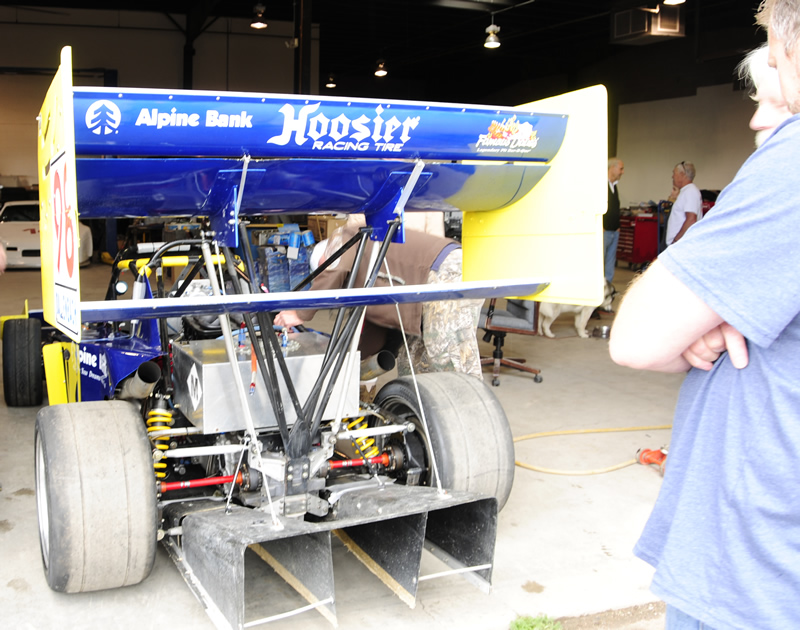
About this time during our visit the rain became pouring rain, so Bob wisked us to his office to show us an overview of the property. They have areas north and south of the track that they may use for off road racing or other group events. Then he showed us the race car that will likely win the Pikes Peak Climb this year. In 2014, it won all the practice runs. However, on the day of the race they discovered the frame was cracked, so they couldn’t race.
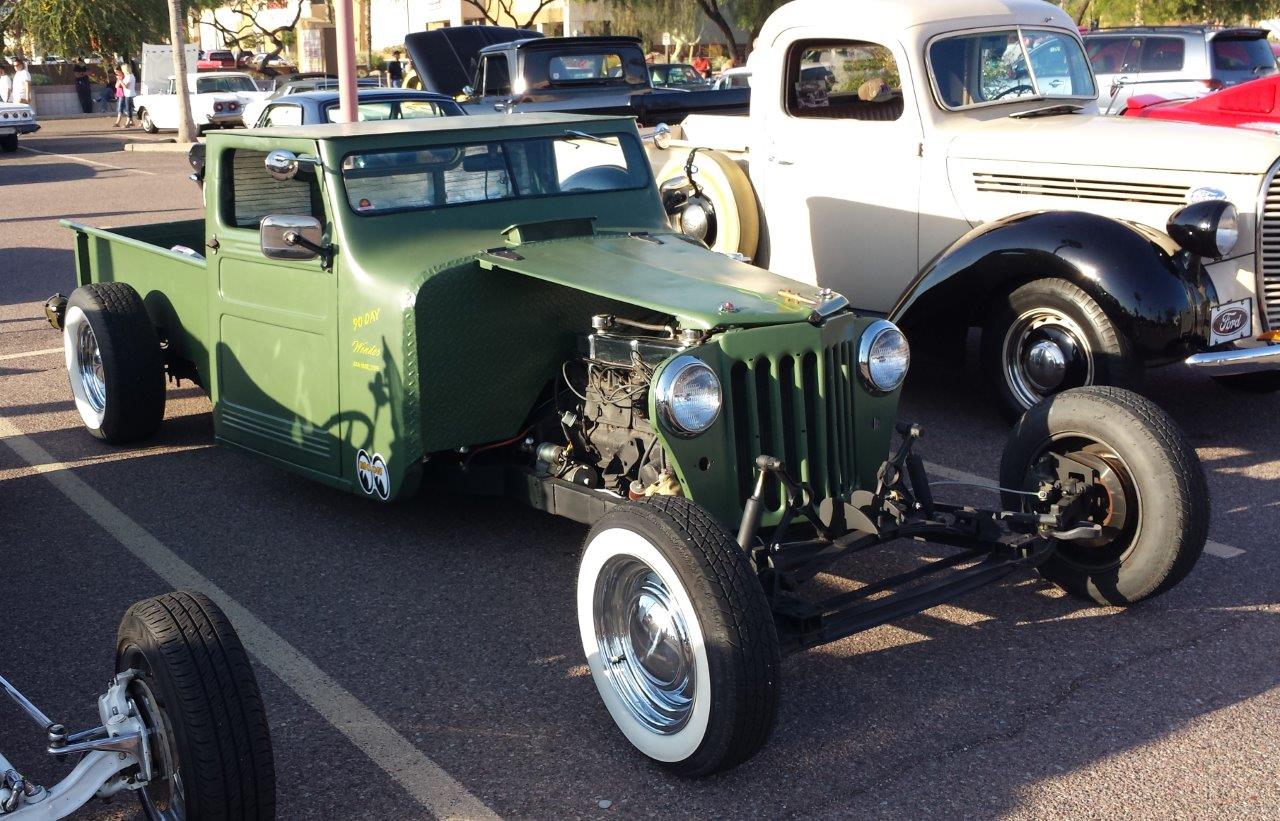
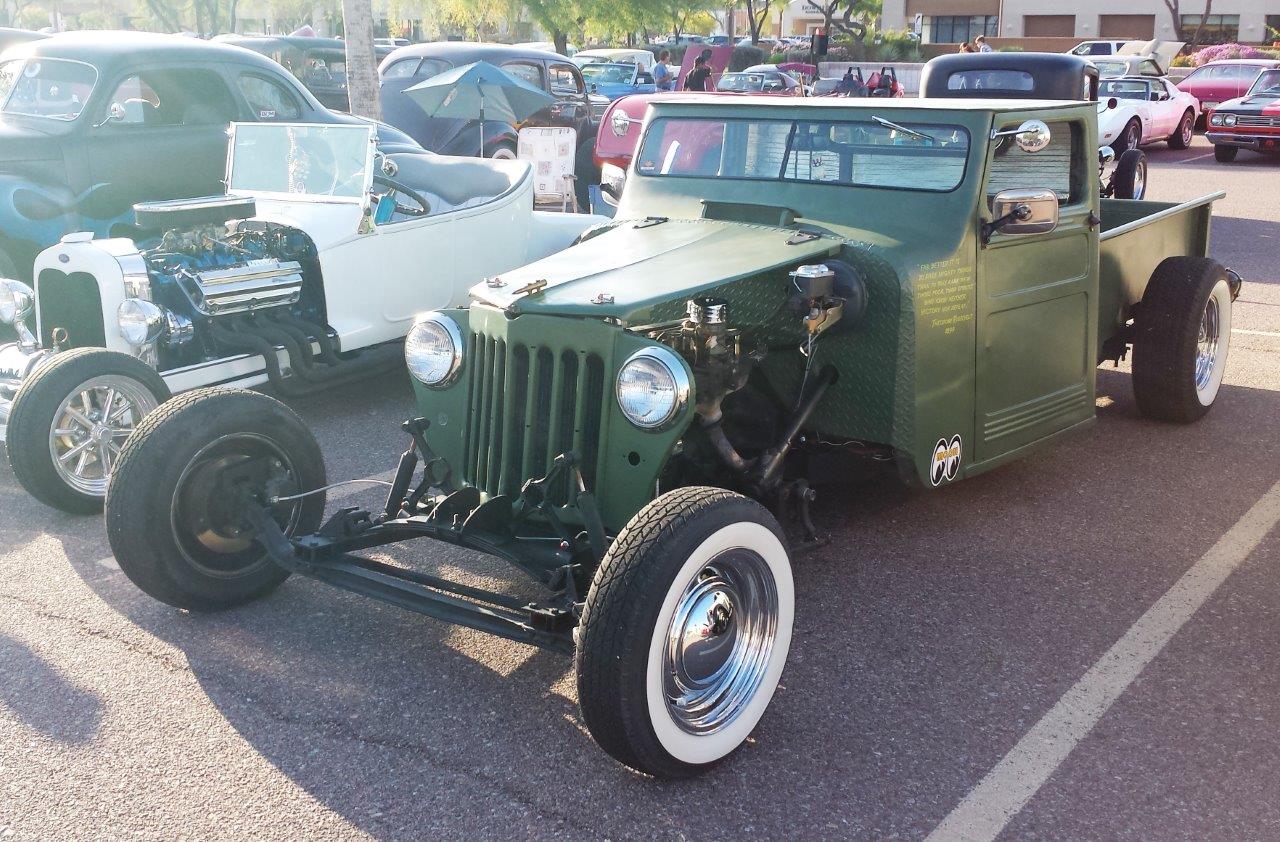
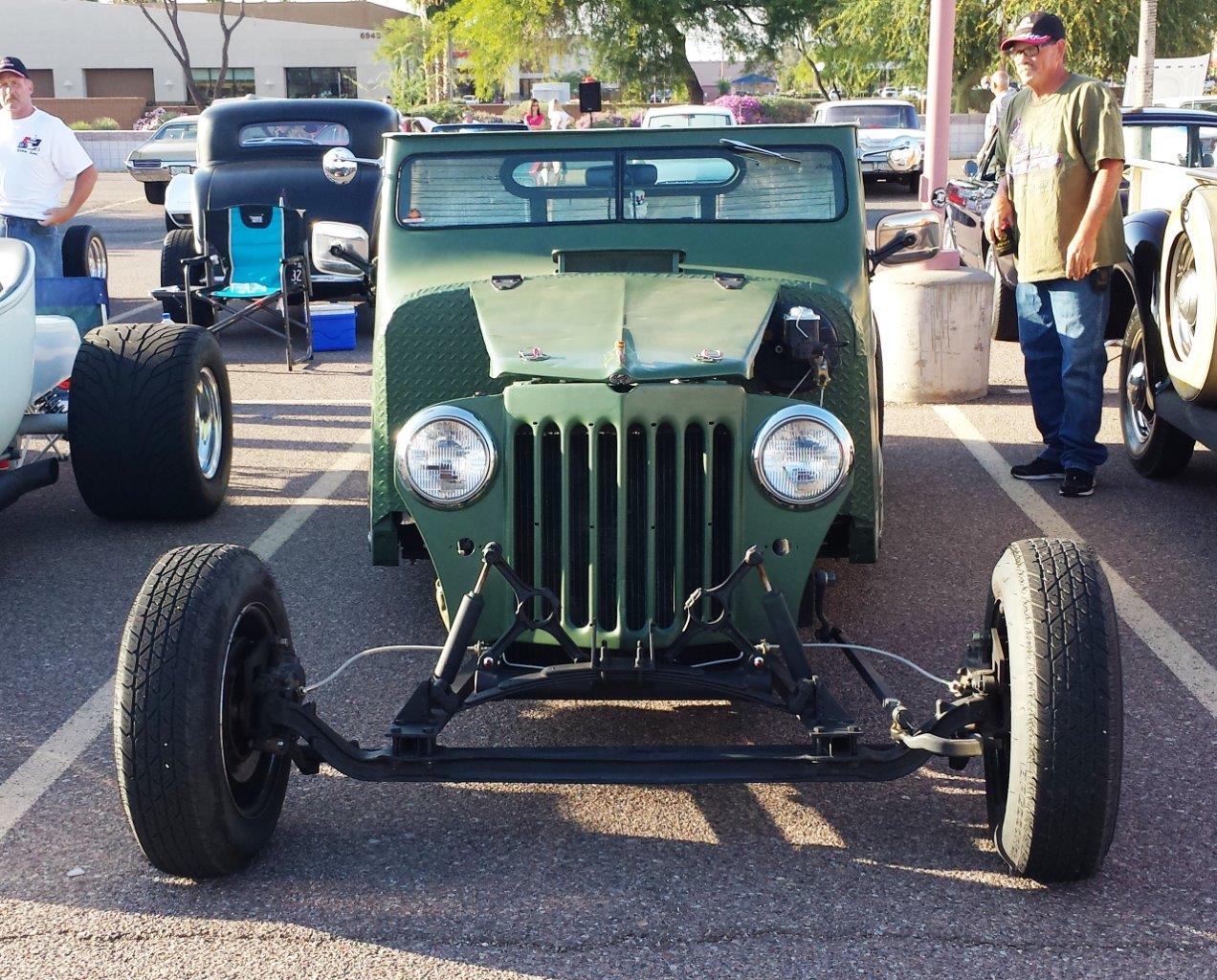
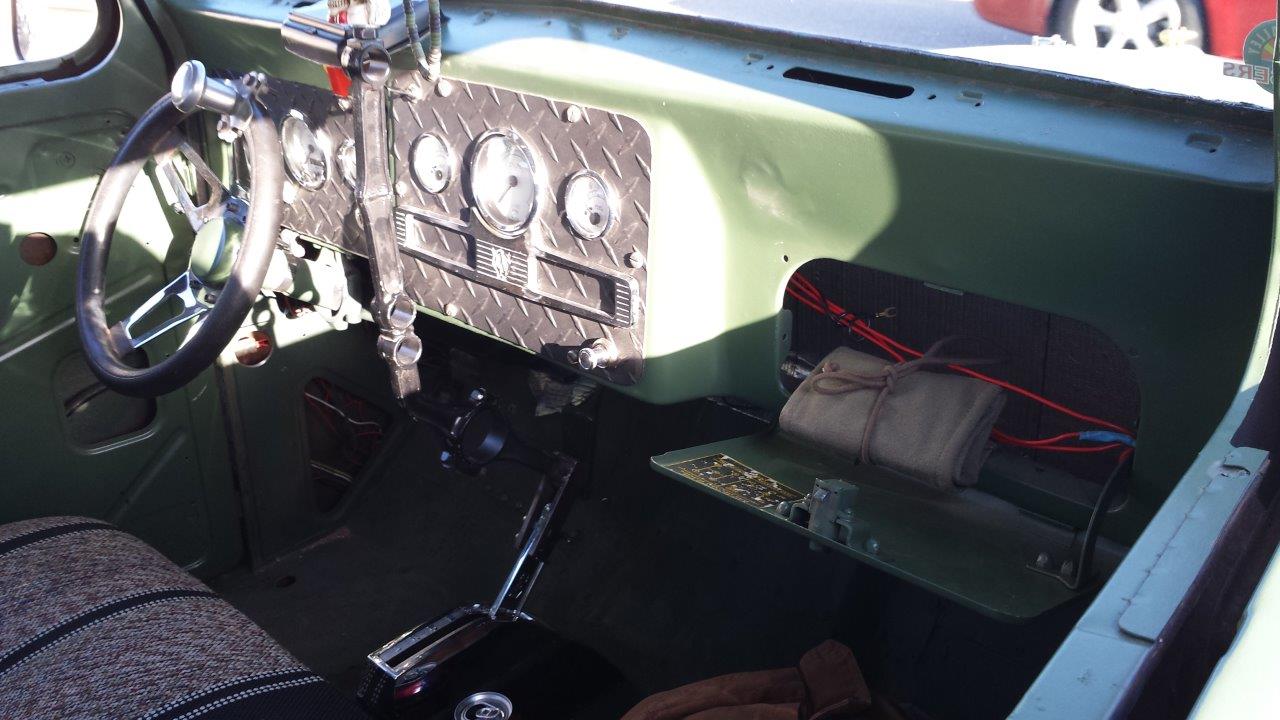
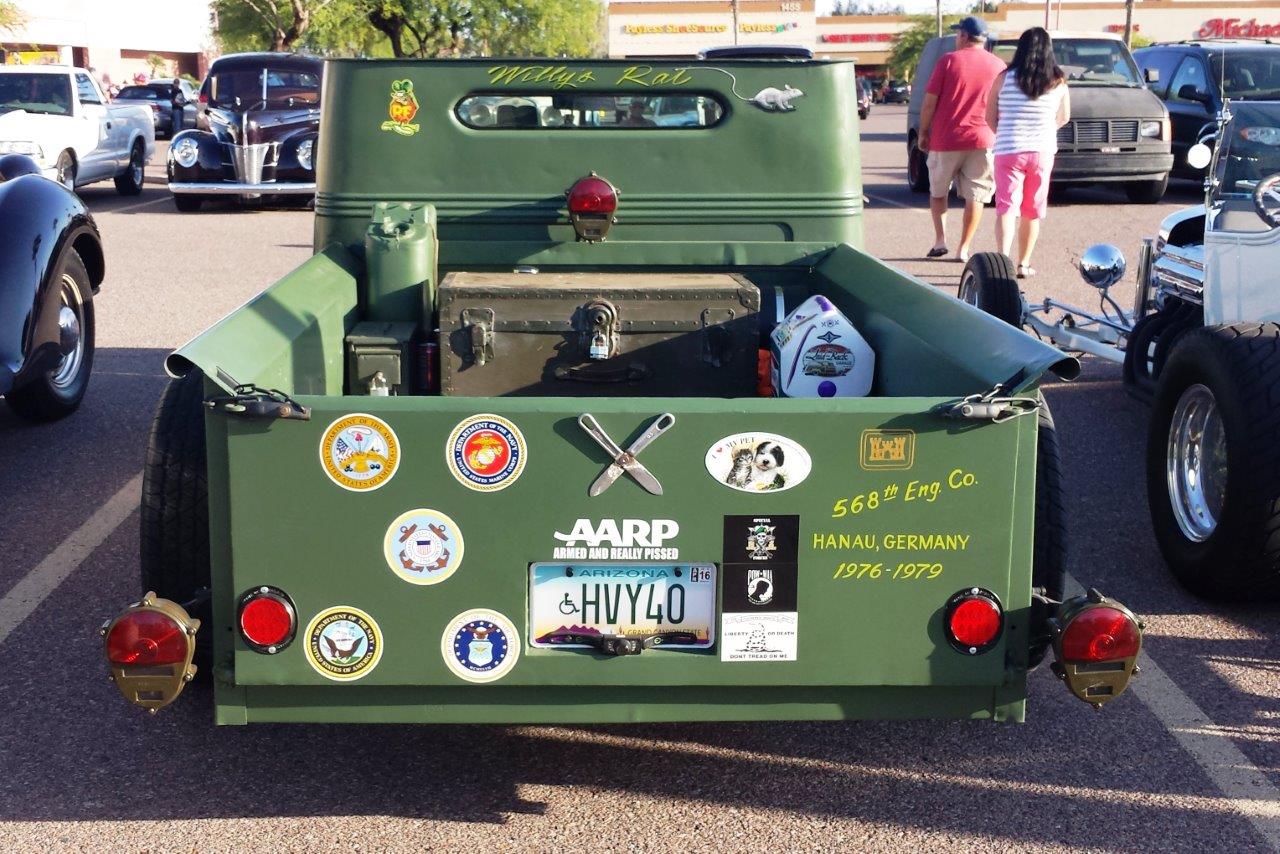
Joe in Mesa shared these photos of a jeep he saw at the local Kmart Cruise Night. I really didn’t know there were any Kmarts left!
He writes, I spoke to the owner who told me the cab was 50(?) Willys, front grill from a different Willys, 55 Chevy front axle, and 55 Ford pickup bed. I like the military theme and the graphics, sayings, and stickers. Nice guy, too. I told him about eWillys.com and said I’d be sending you the pics and info. He suggested the pic of the interior since he still kept the original shift pattern sticker inside the glove box.
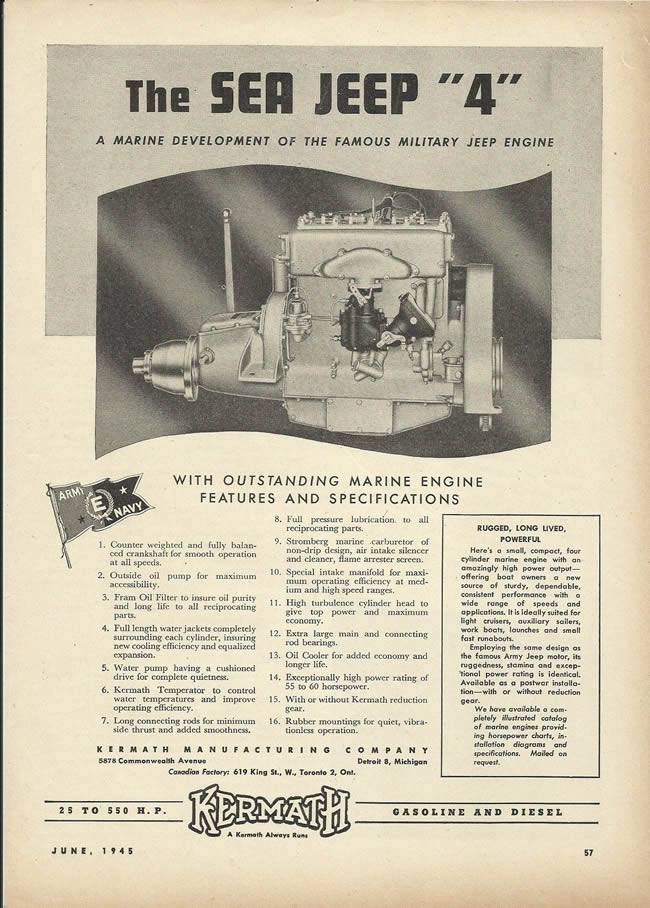
Maury shared this rare ad for an upgraded marine-purposed engine. The date on the ad indicates these motors were built starting at least in 1945, which means they were probably using surplus engines (even though fighting wouldn’t end int the Pacific Theatre for a couple months.)
I’ve assembled this approximate history based on a few sources. .Kermath began selling boat motors as early as 1913, according to this article. By 1930 they were the largest seller of boat motors in the world, based on their own advertising. Sometime in the 1940s Kermath added the jeep engine to its line of marine motors. After the war, Kermath sold Ford, Mercury, and Jeep engines for use in boats. The company folded in the late 1950s.
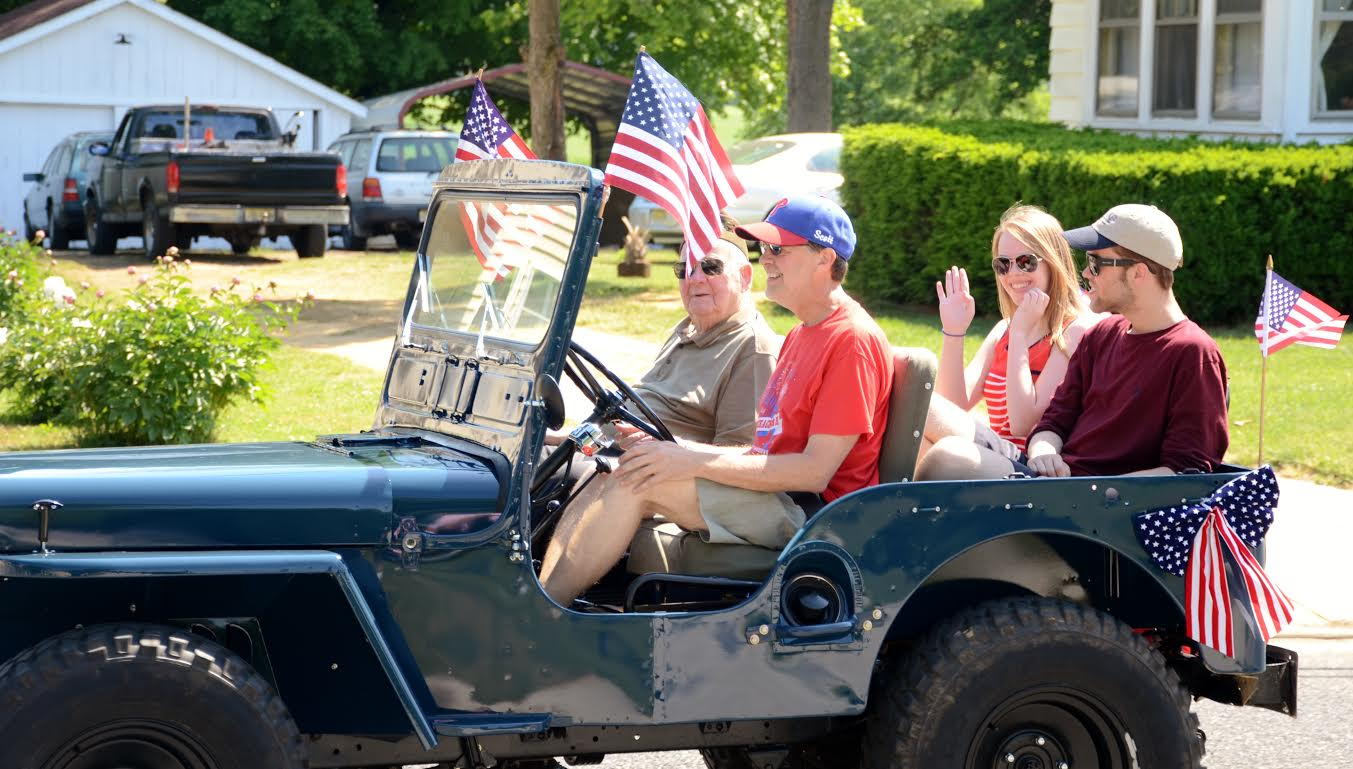
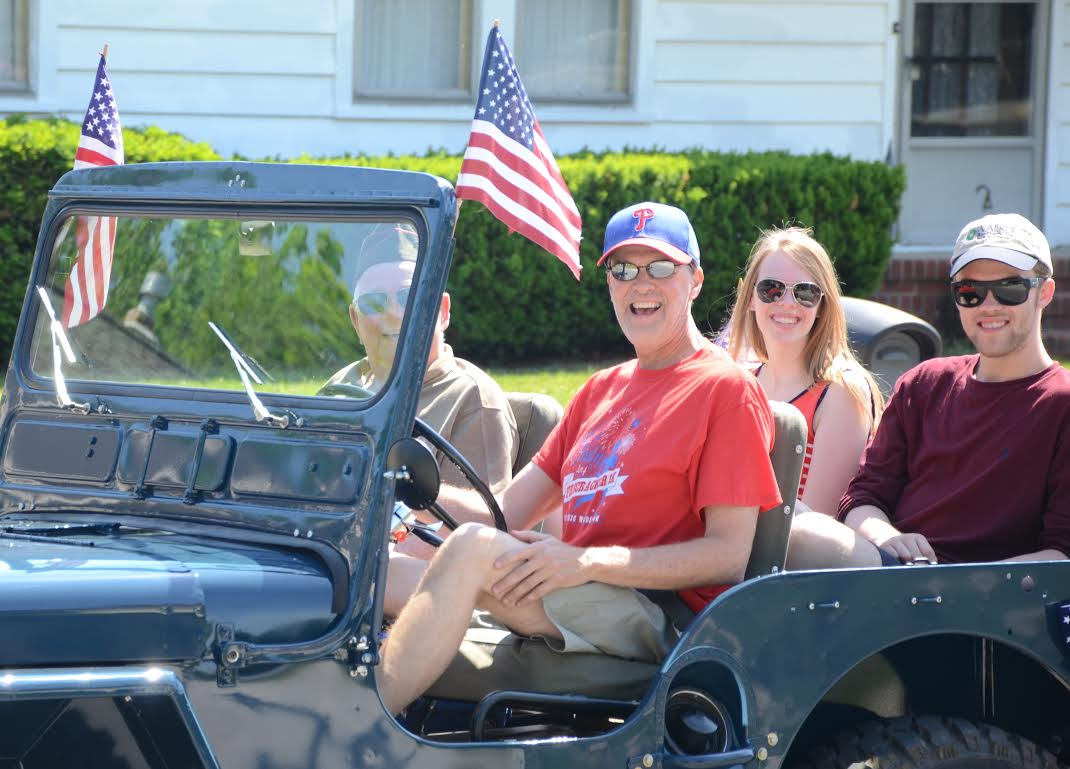
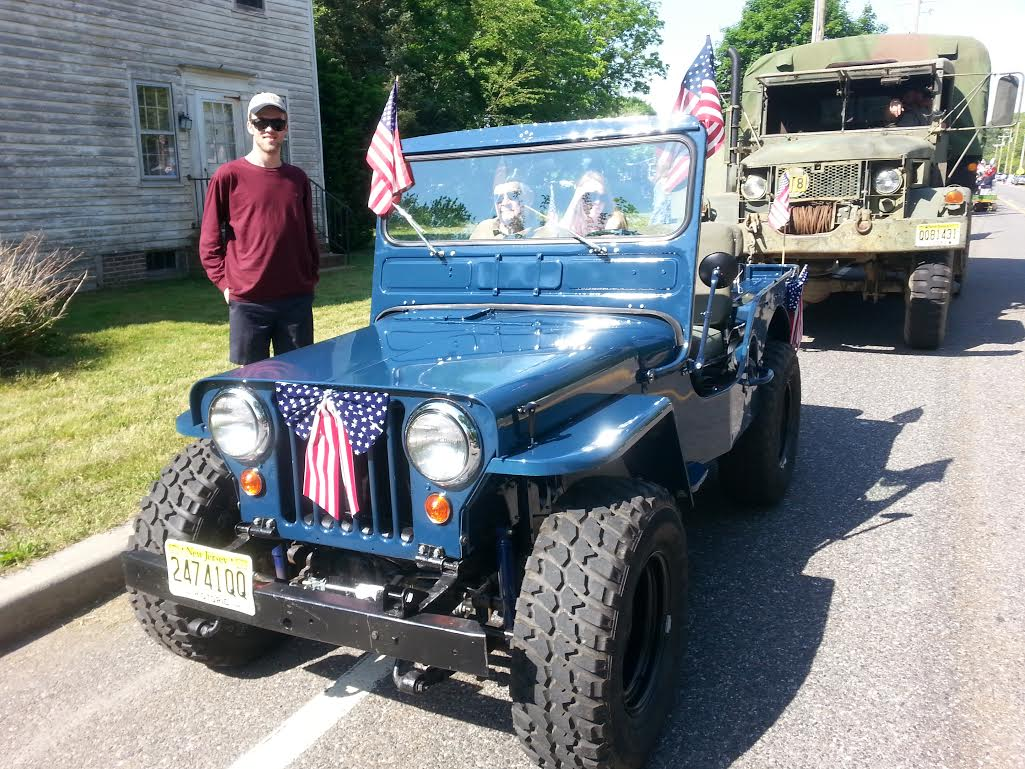
Scott drove his 1951 M-38 in Elmer, New Jersey’s, memorial parade. He was accompanied by his father – Sam Walker, son – Andy Walker and daughter – Jessie Walker. Of all places, he visits Pasco regularly, so we hope to meet in person soon.
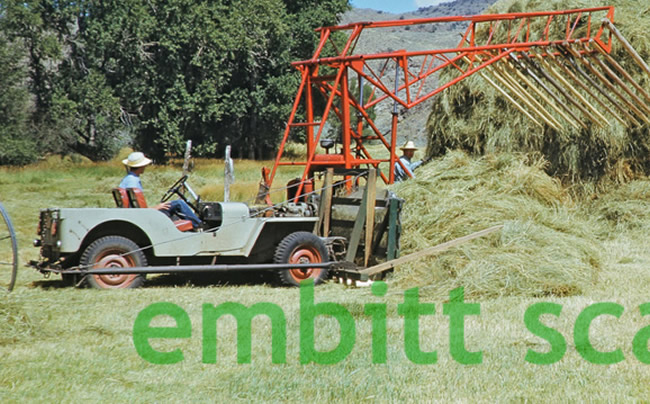
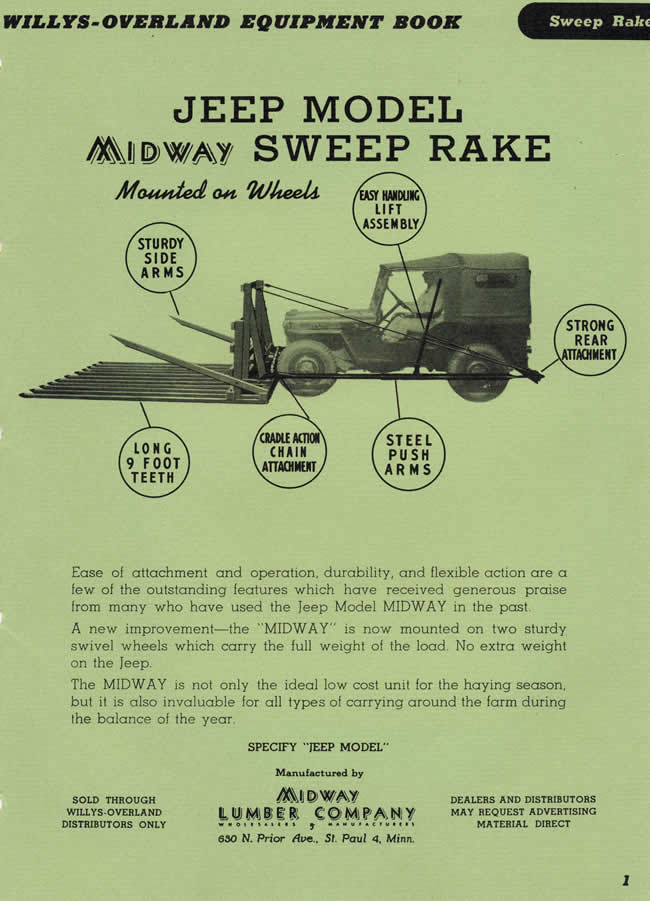
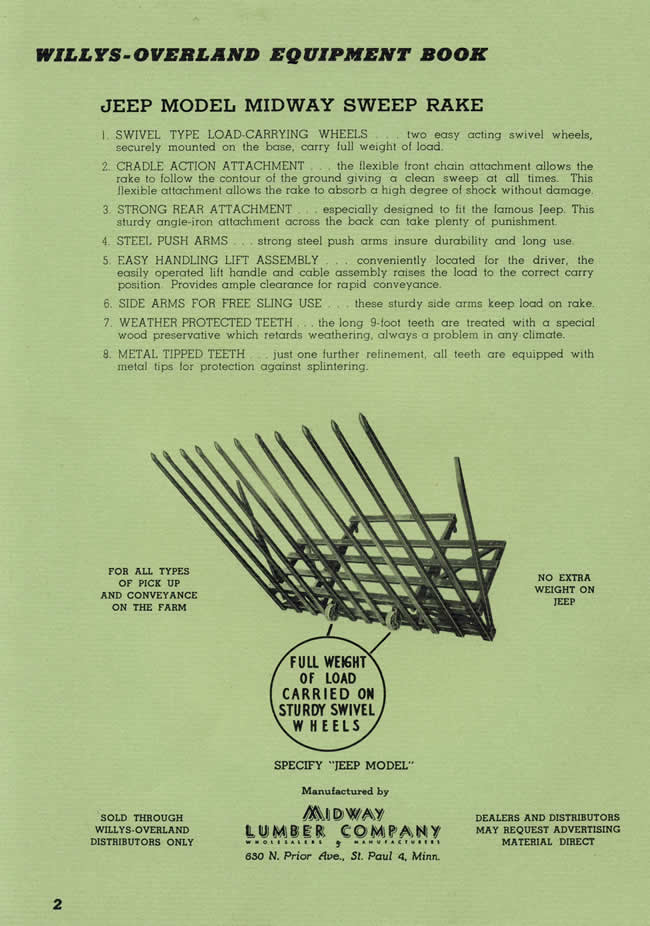
Marc spotted this photo. The jeep appears to have a rare Midway Sweep Rake attached to it (most of the rake is buried under the hay. I’ve attached a brochure for comparison.
It would be great to have some photos of this from a few different directions.
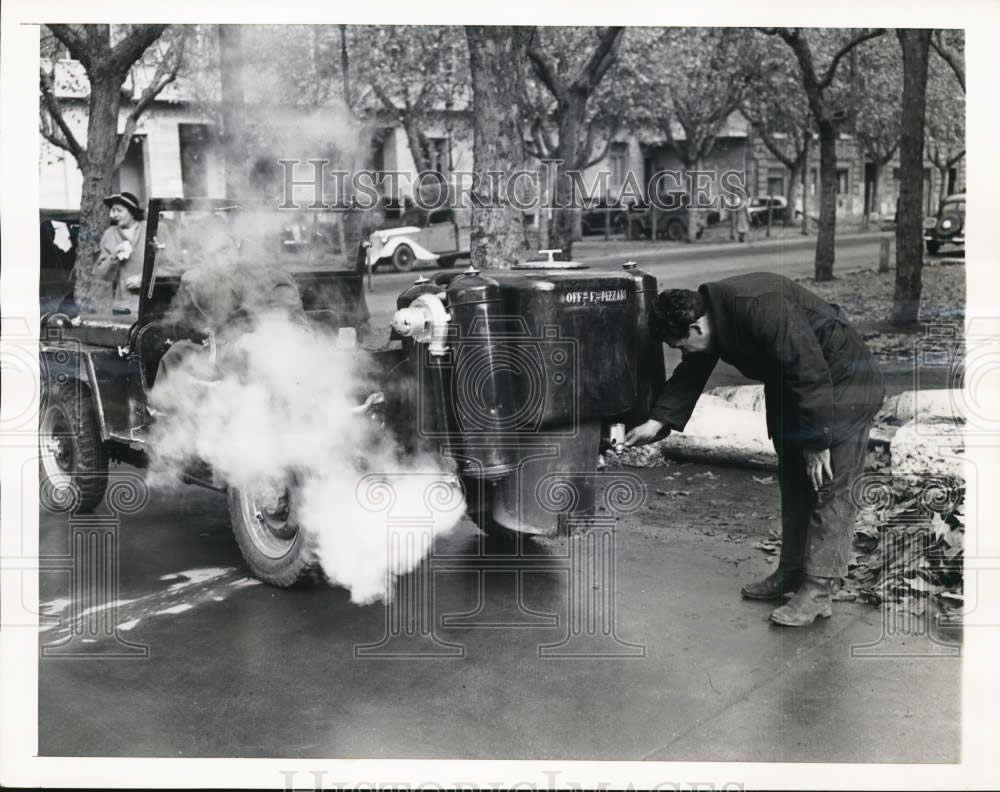
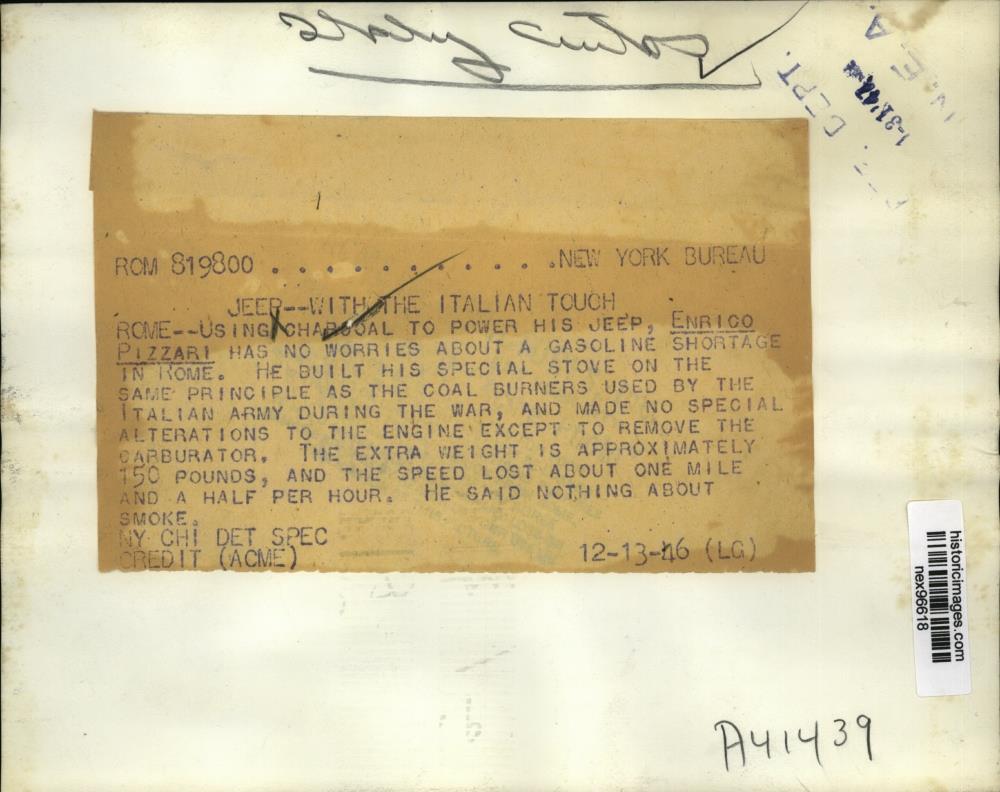
“1946 Press Photo Enrico Pizzari Runs His Jeep With Coal in Rome -This is an original press photo. Photo measures 9 x 7inches. Photo is dated 12-13-1946.”
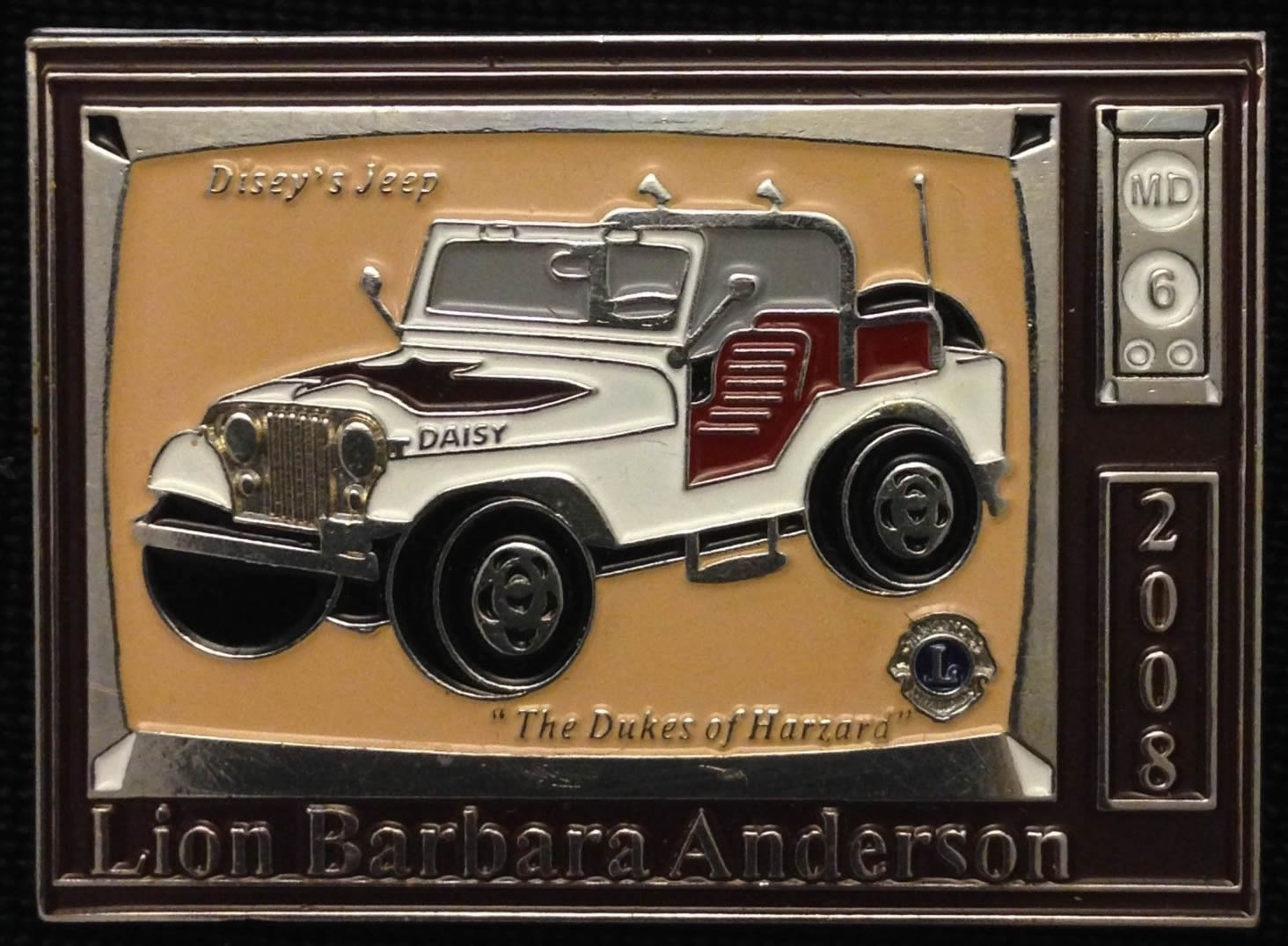
Seth spotted this one. When I looked at it closely I realized that both at the top left corner ‘Daisy’ is spelled ‘Disey’ and at the bottom right ‘Dukes of Hazzard’ is spelled ‘Dukes of Harzard’.