emailNeed to contact me and don't have my email? Click on email button.
About eWillys
Welcome to eWillys.com, a website for vintage jeep enthusiasts. I update this website nearly every day with jeep deals, jeep history, interesting reader projects, jeep related info, and more.
These quick searches can help you find things on eBay. People list in the wrong categories all the time, so don't be surprised to see brochures in the parts area for example. This section used to be split into jeeps, parts and other categories, but recent changes to eBay will require this information to be recoded.
The links to posts below show jeeps grouped by models, condition, and other ways. Some of these jeeps are for sale and others have been sold. If you are unsure whether a vehicle is still for sale or not, email me at d [at] ewillys.com for more info.
Importantly, the allure of buying a project jeep can be romantic. The reality of restoring a jeep can be quite different, expensive and overwhelming without the right tools and resources. So, tread carefully when purchasing a "project". If you have any concerns about buying a vintage jeep, or run across a scam, feel free to contact me for help, comments or concerns .
Jeeps filled magazines in various ways. Some magazines reported on brand new ‘Blitz Buggy’ and other important develops about the jeep during WWII. Others reported on the changing models during its civilian life. Still others showcased how jeeps were used and the modifications done to them.
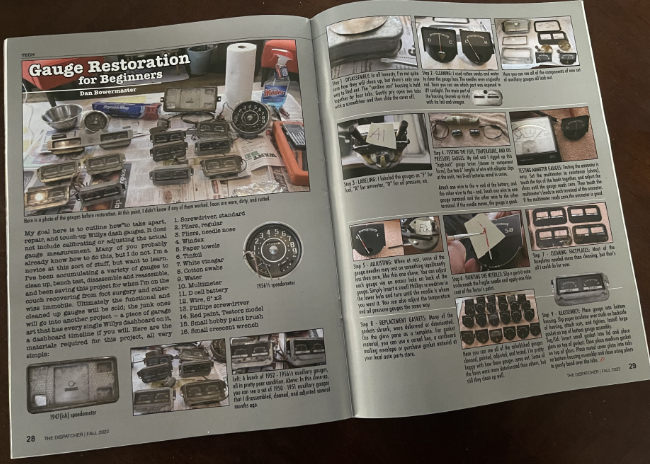
The newest edition of the Dispatcher Magazine arrived in my mailbox yesterday. One article in particular caught my eye: Dan’s gauge restoration. I could have used this a few years ago! Thanks for that writeup Dan!
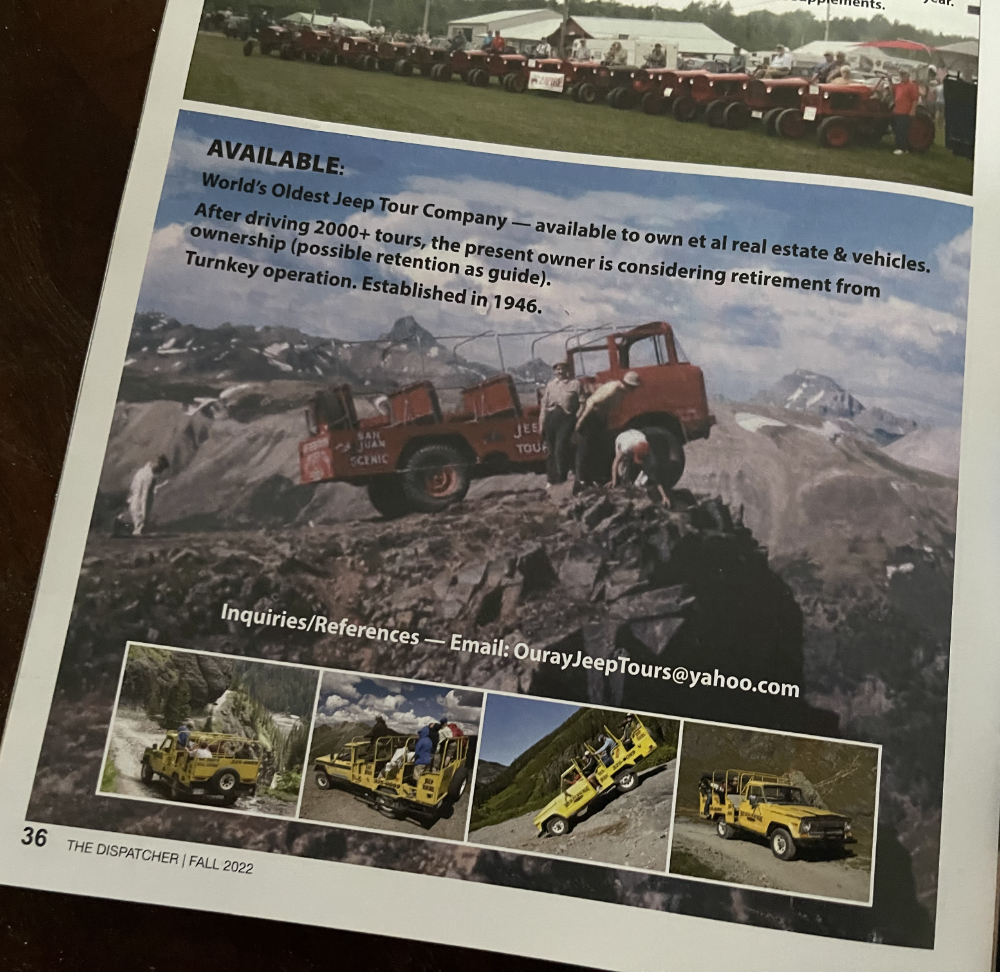
Also, note the classified ad at the end of the magazine: the San Juan Scenic Jeep Tour business is for sale (and has been for at least a little while).
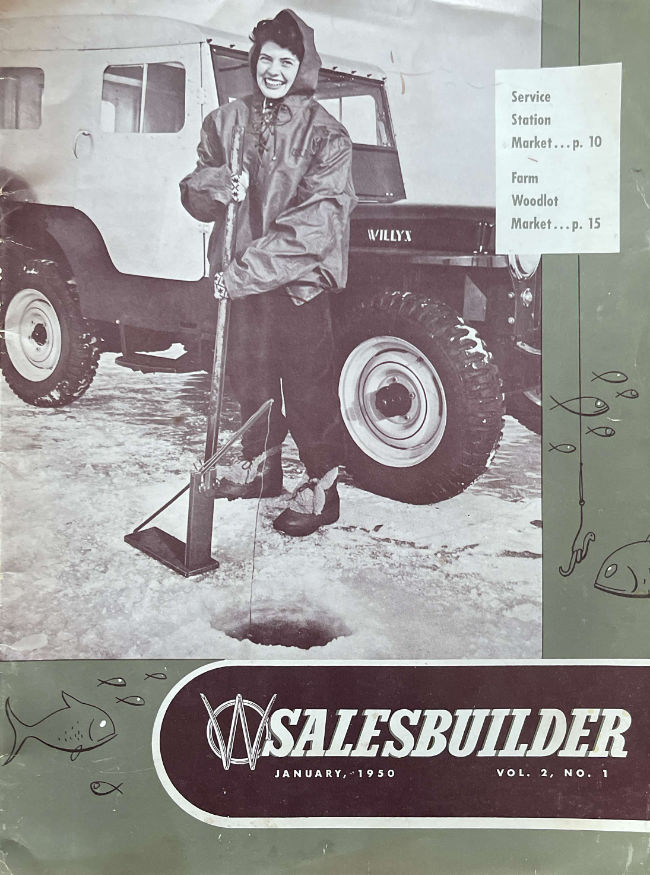
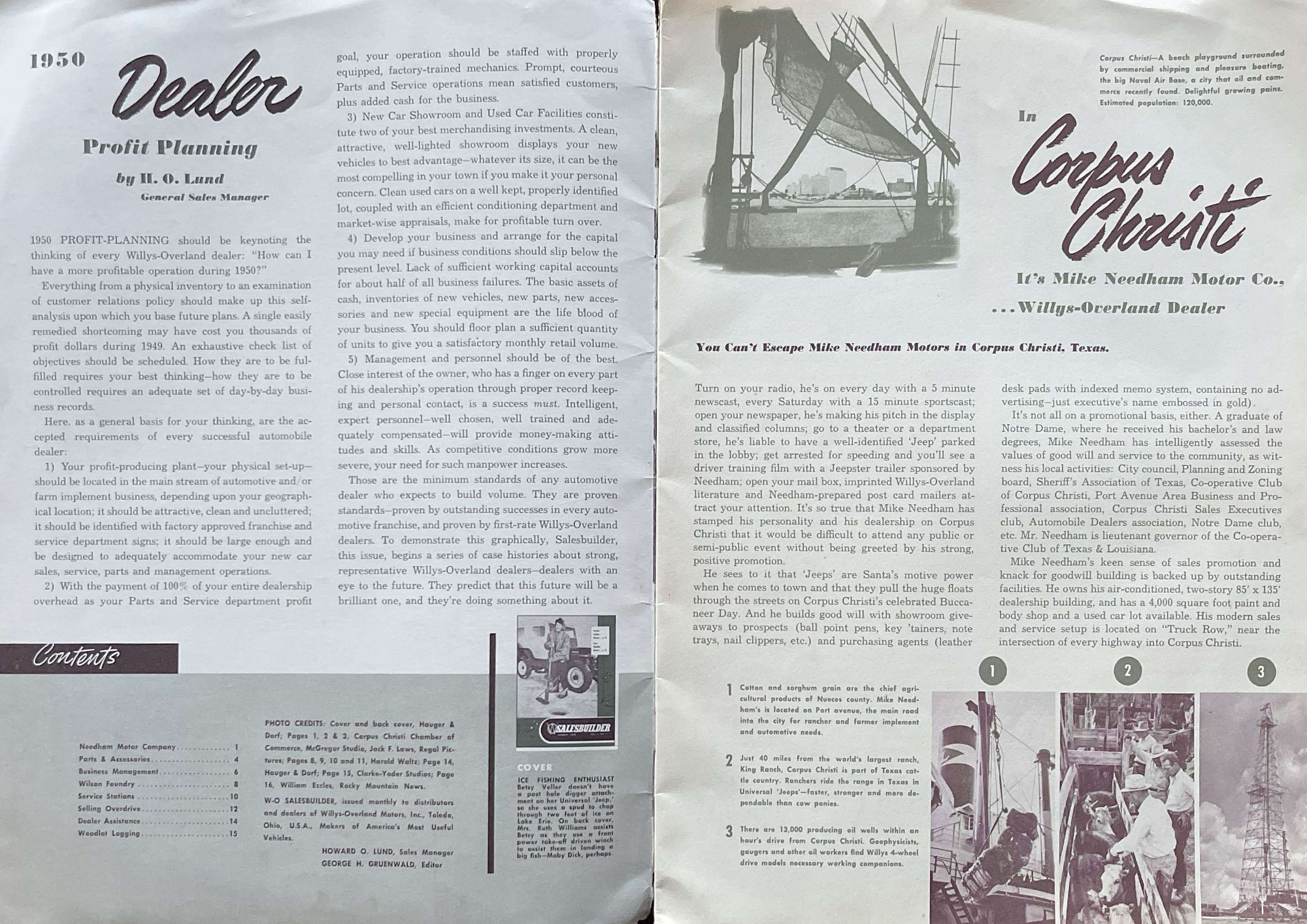
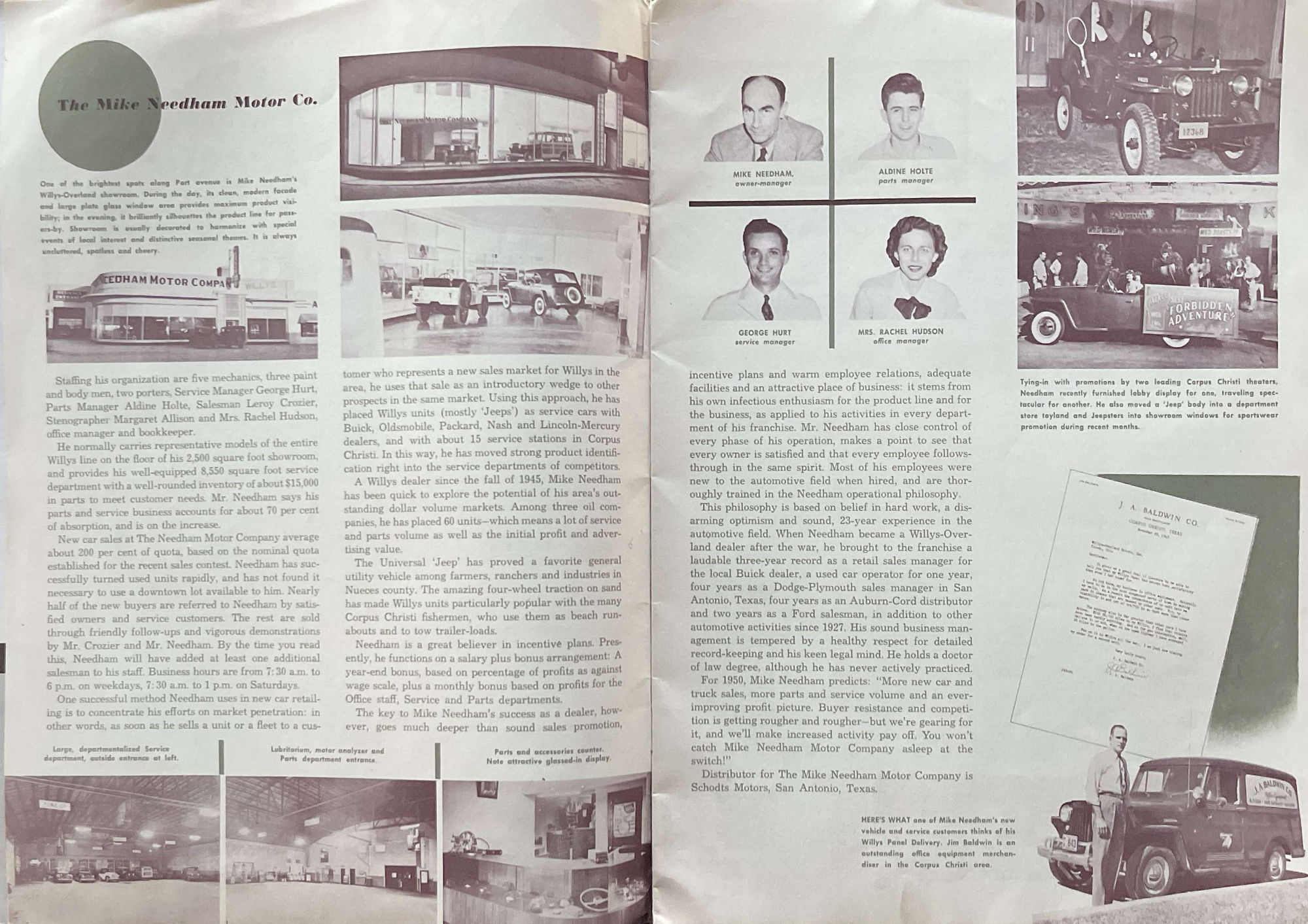
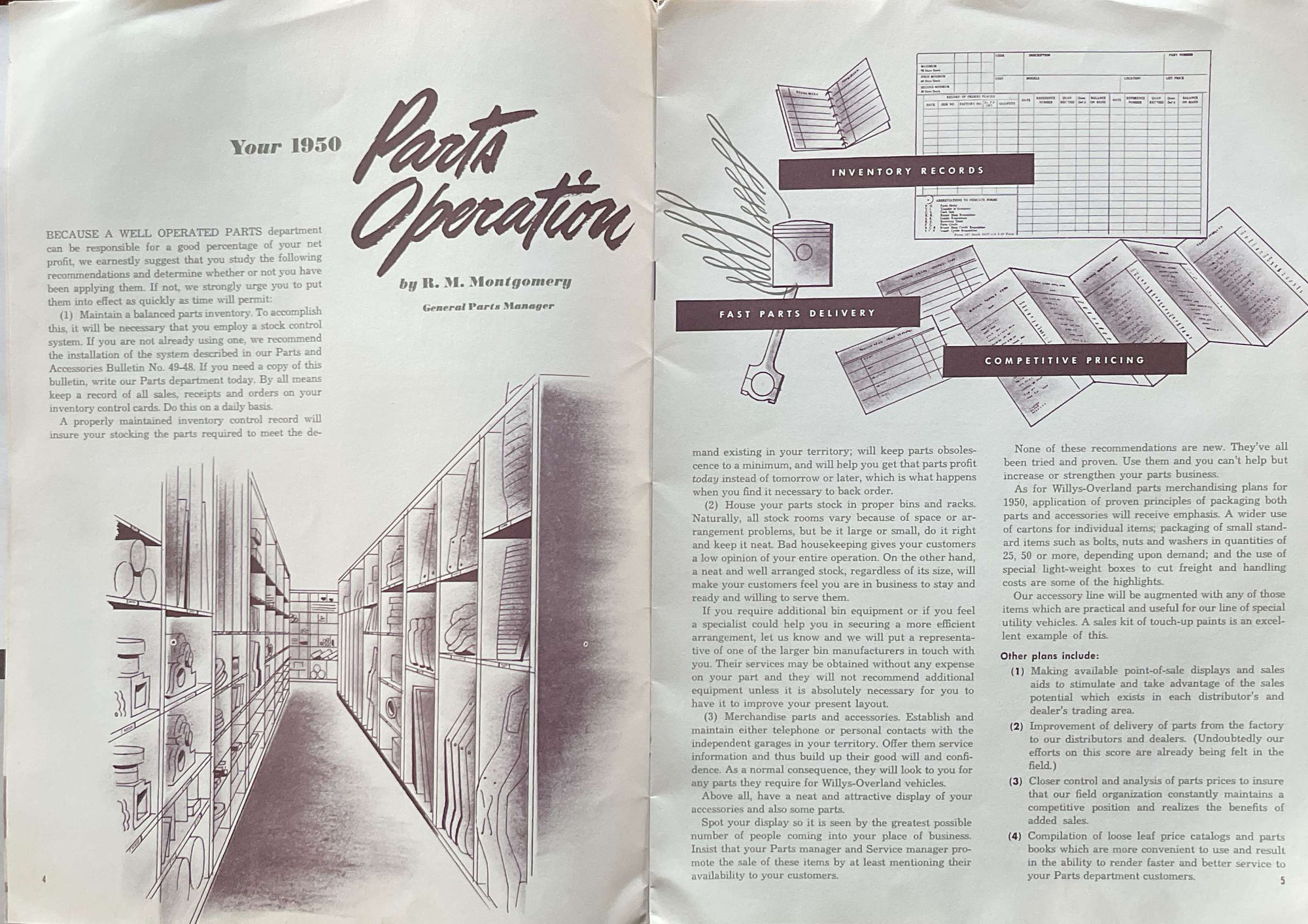
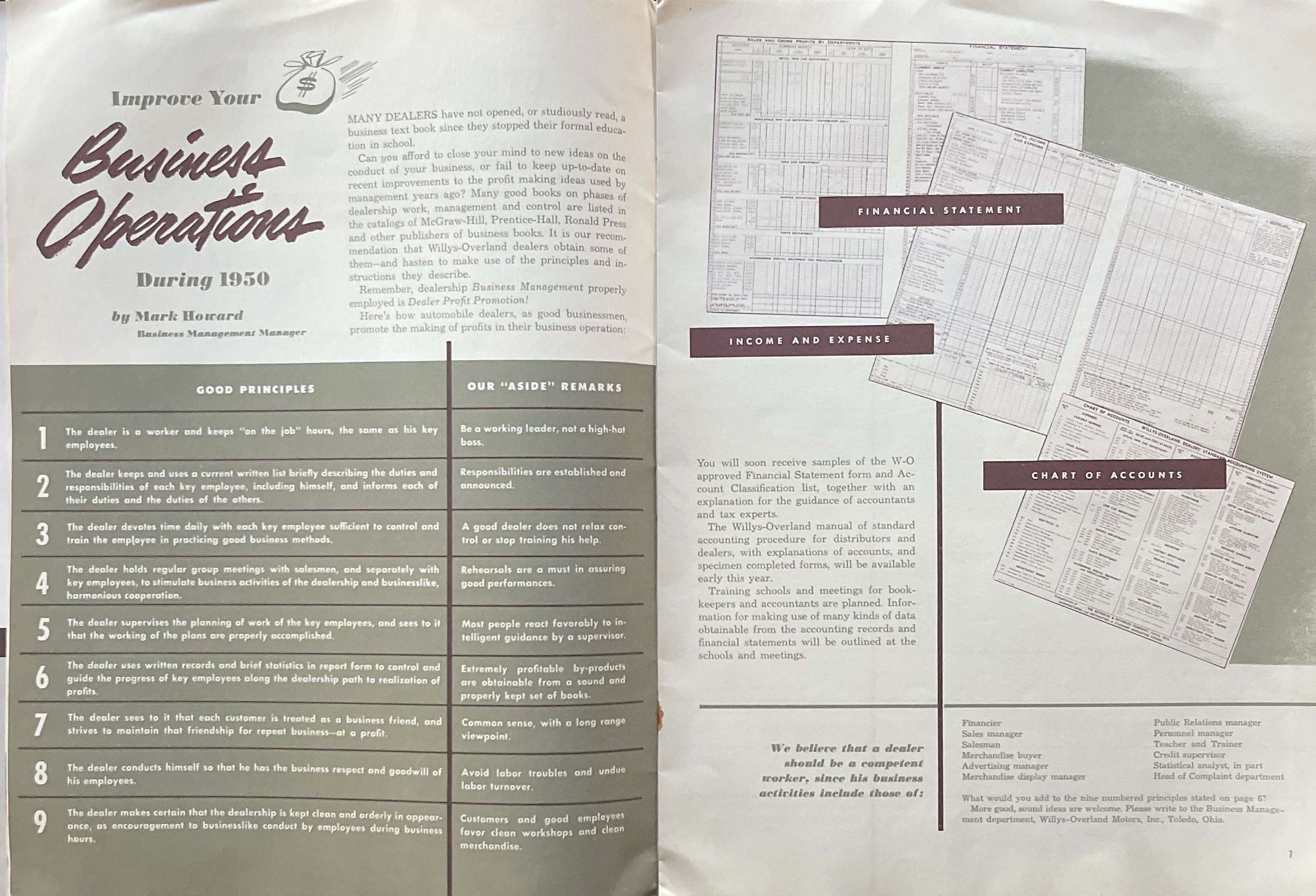
Finally, another Salesbuilder landed on eBay. This one is from January 1950. One of the interesting things to me was the 12-postcard campaign shown on page 17; I’ve only documented a handful of the postcards.
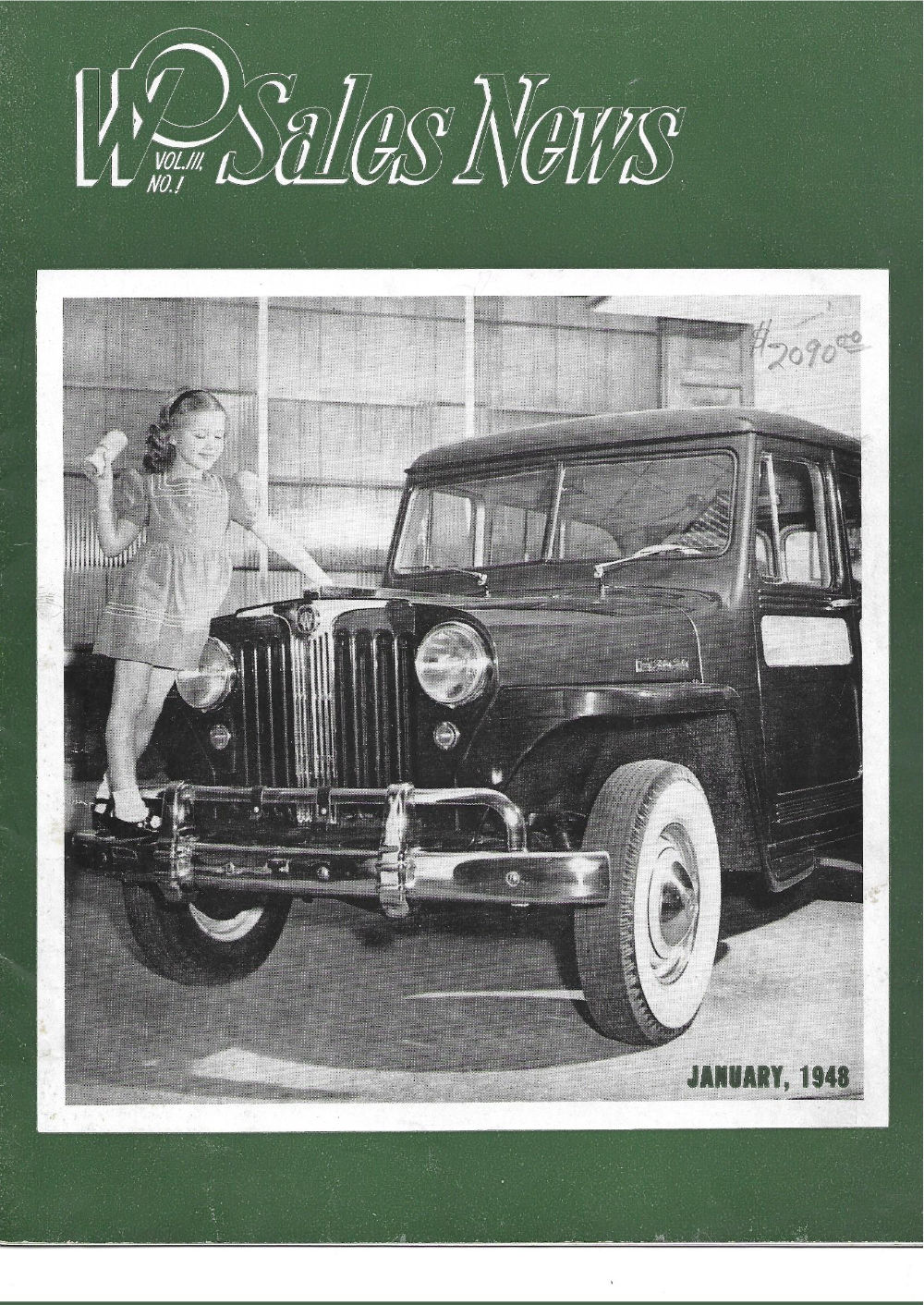
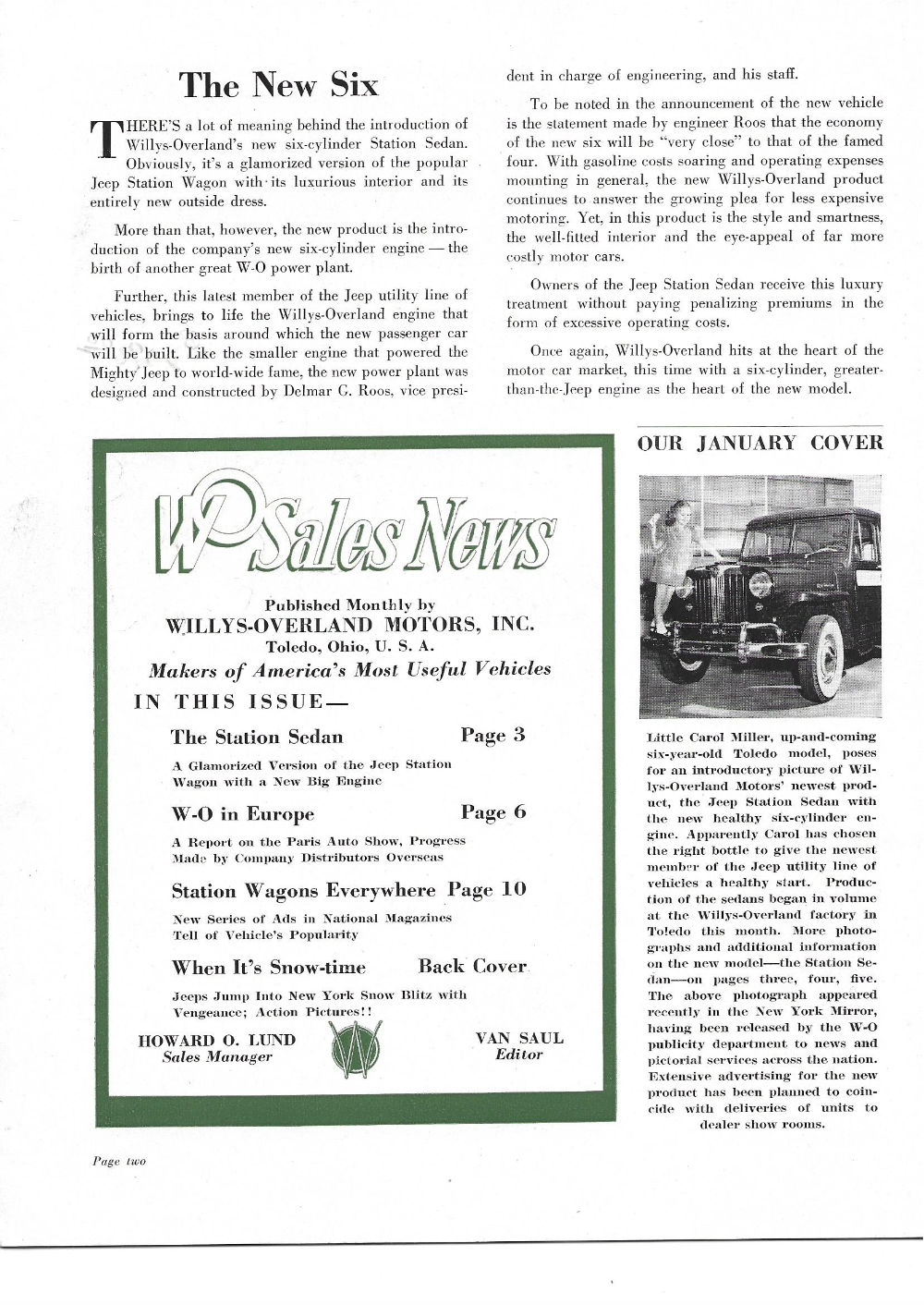
Here’s another wonderful early Sales News document saved and shared by Jan. Many thanks to him for these early pieces.
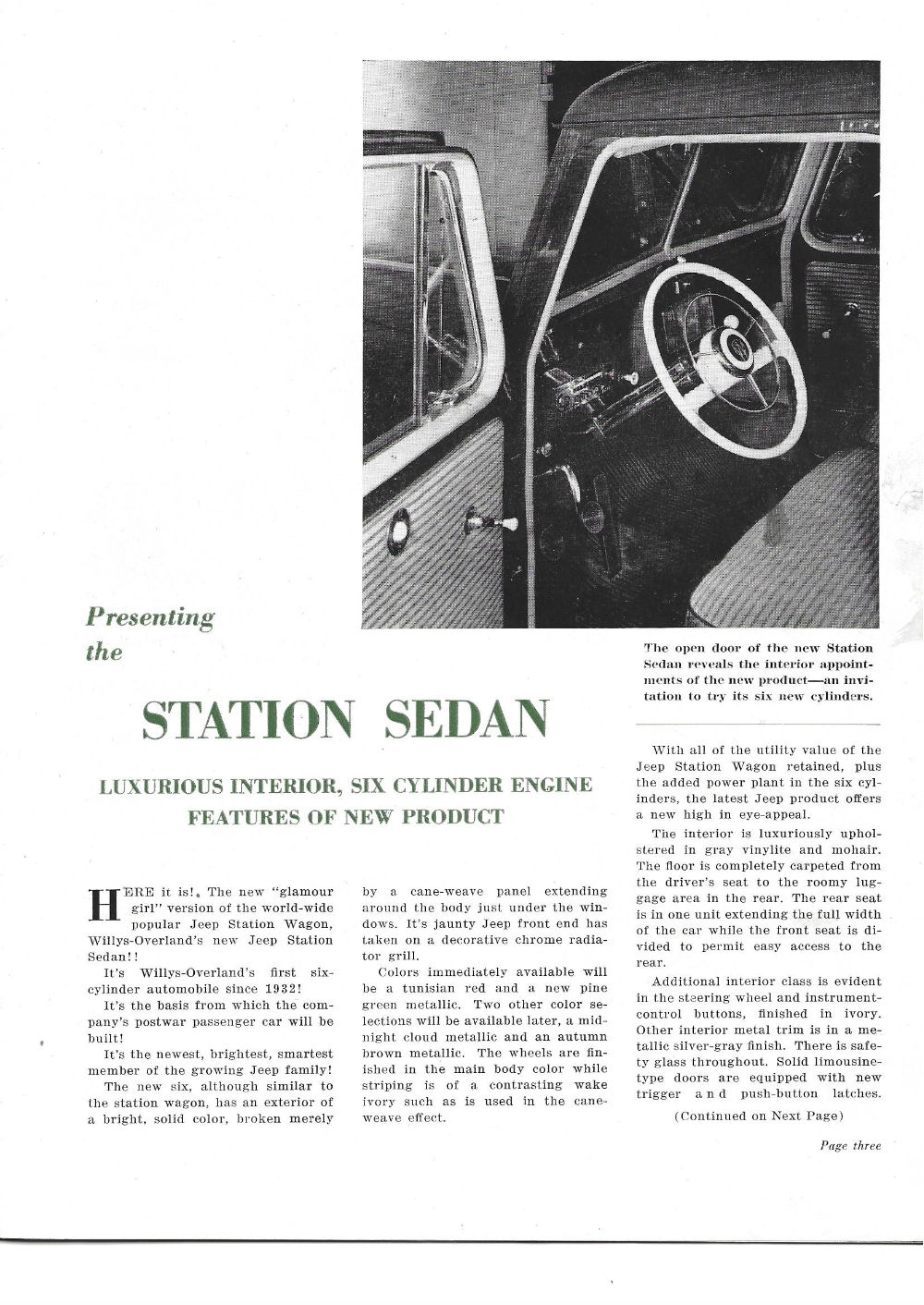
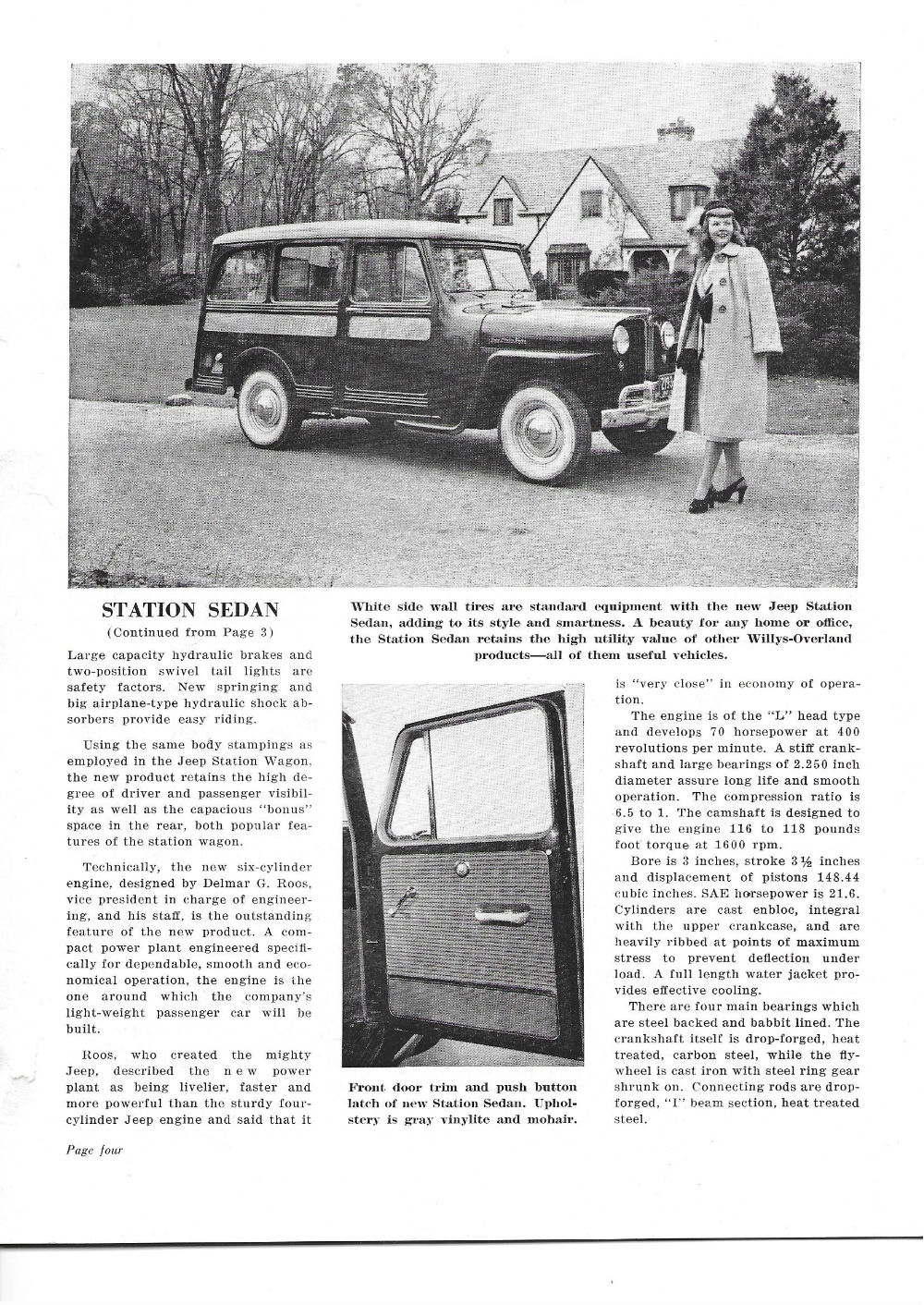
The initial article on the Station Sedan provides some additional history about it’s release and it’s position in Willys-Overland history (first six cal sold since 1932).
Page 7 shows a photo from the Paris auto show with a CJ-2A sporting a unique hardtop. Page 8 includes highlights the aluminum and steel hardtops from Worman. Page 10 introduced the City and City campaign and highlights W-O’s impact in the station wagon market. Page 16 has a photo in the lower-left corner that shows what may be a Woodie Top in action.
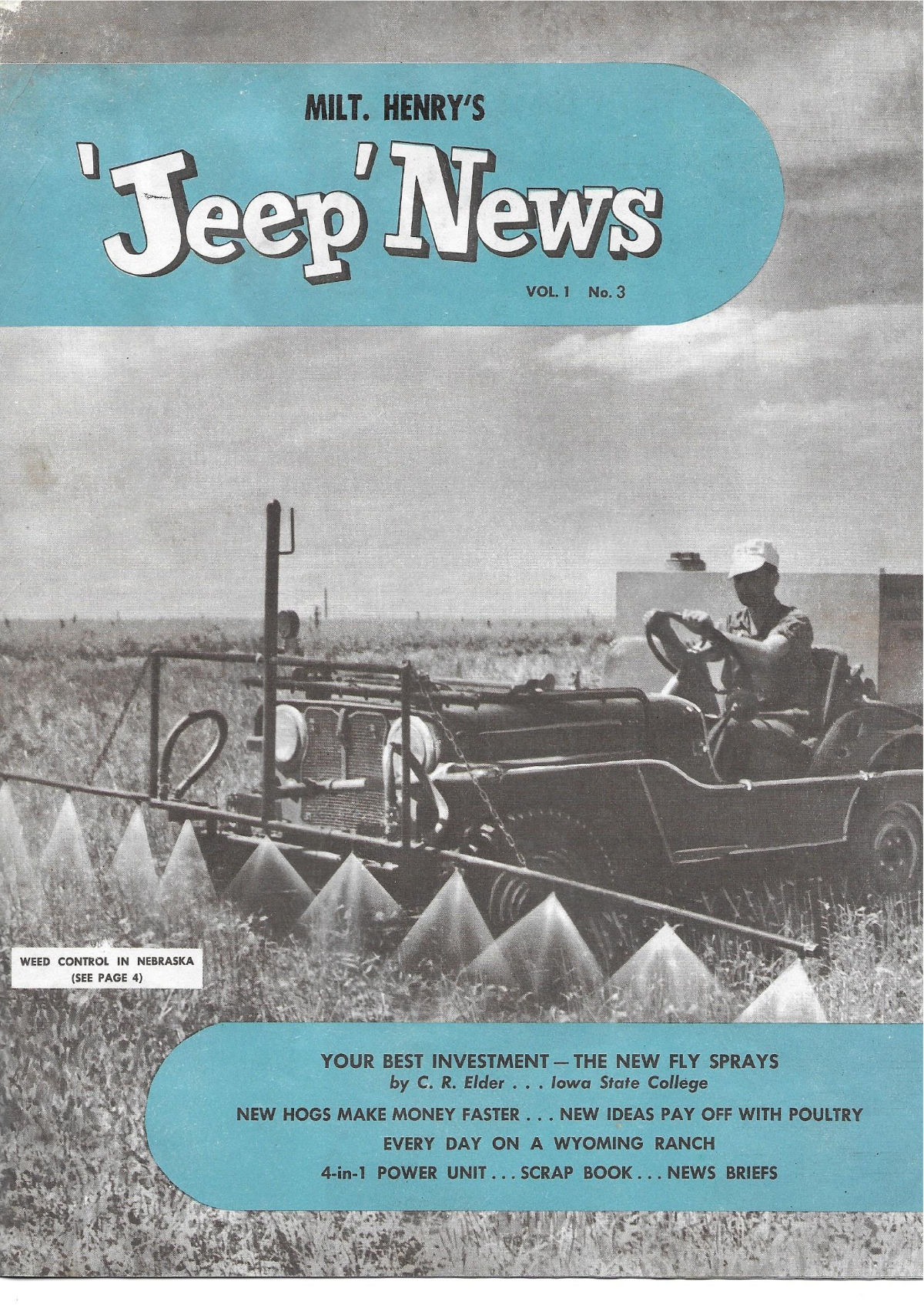
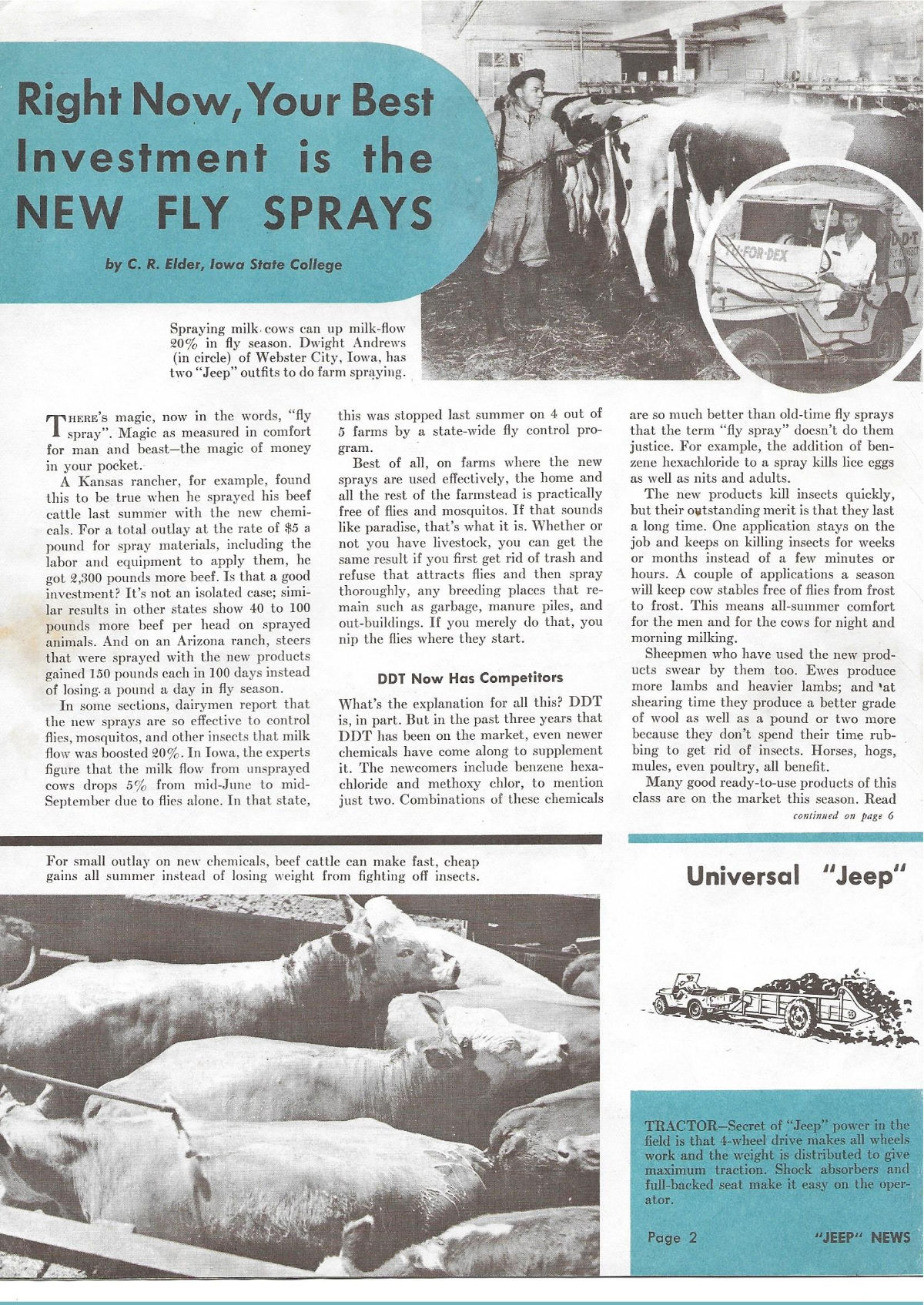
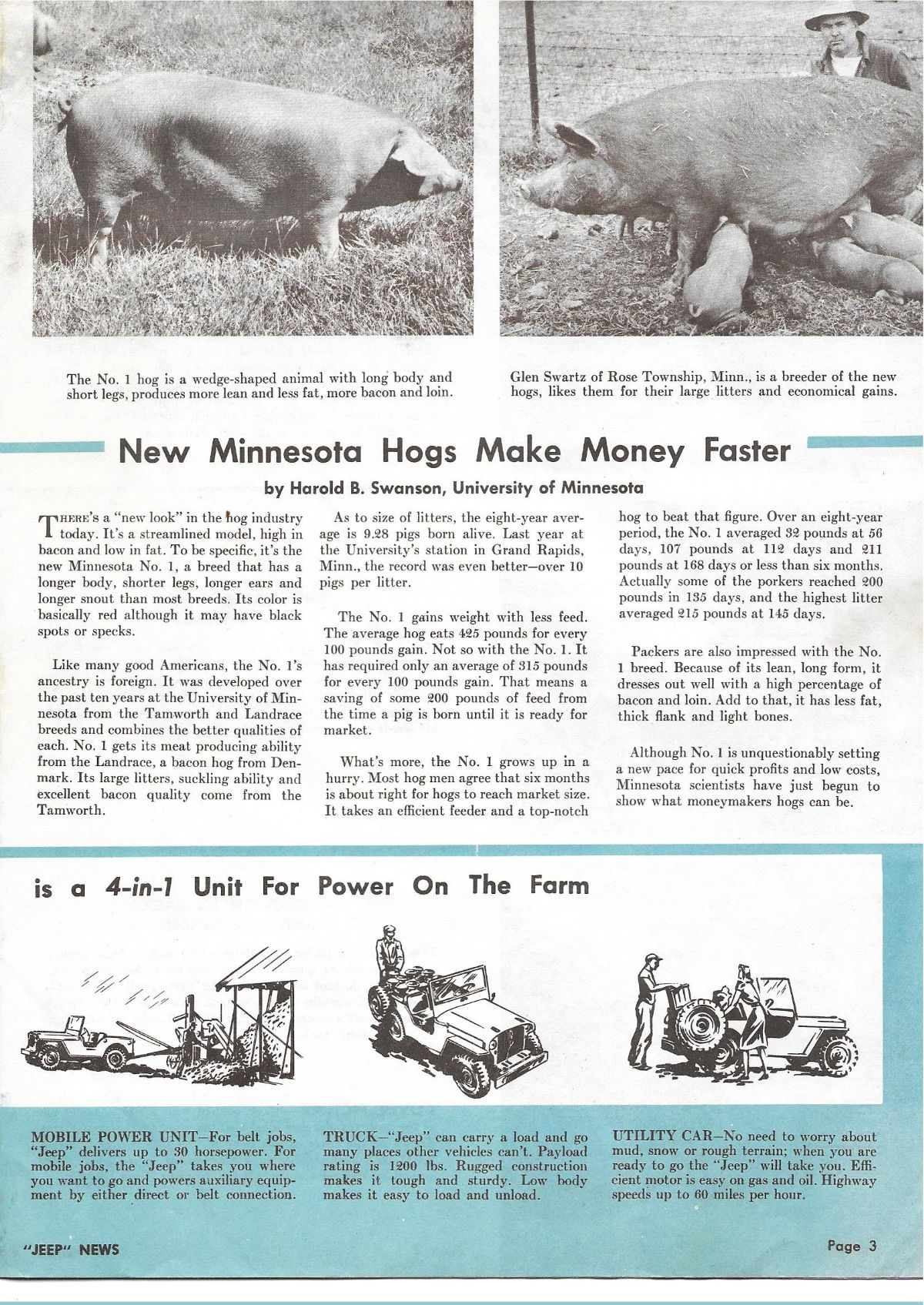
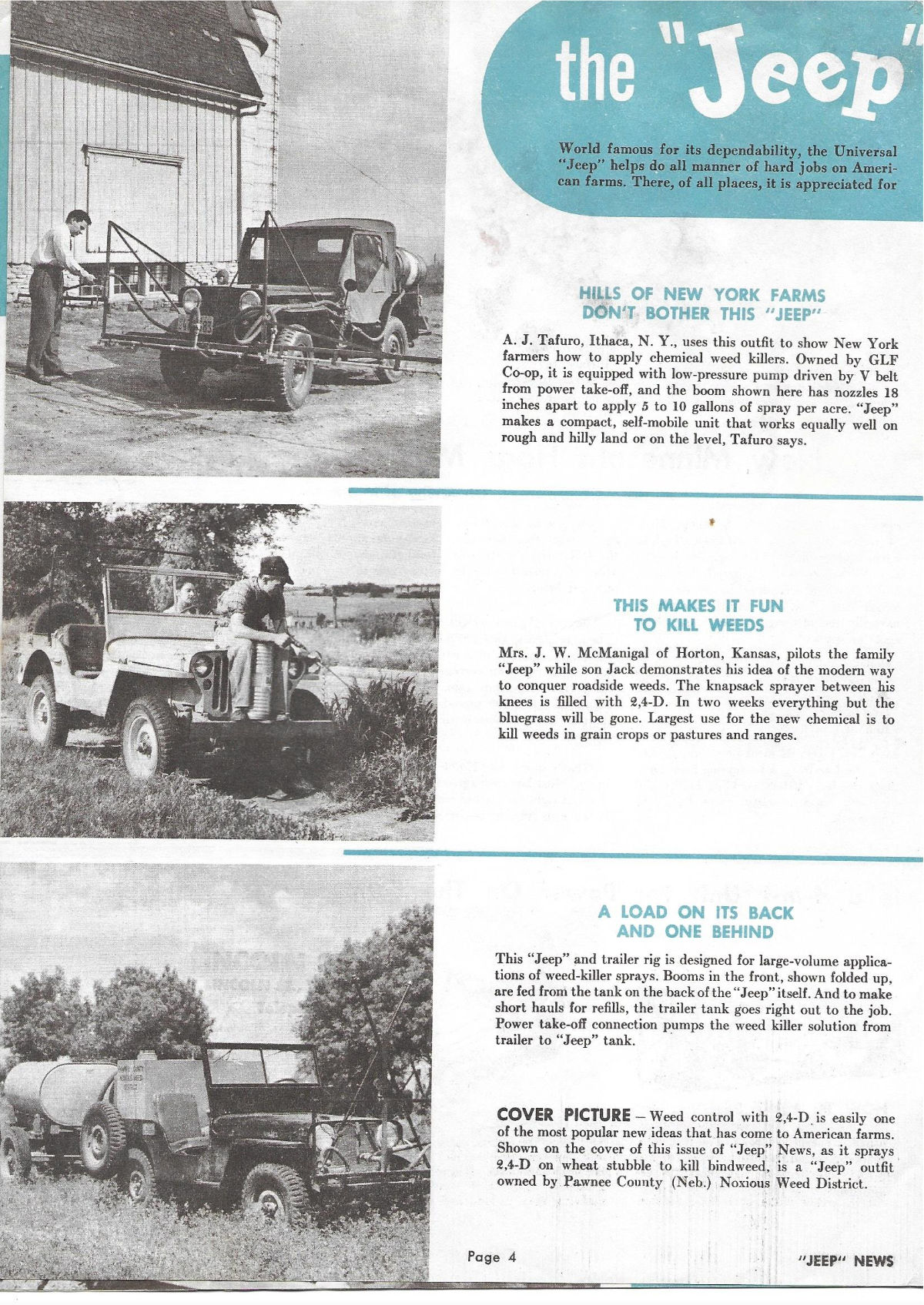
Thanks again to Jan for sharing another early Jeep News magazine. This one is titled Milt. Henry’s ‘Jeep’ News. There is a reference to a jeep bought in early 1947, so my guess is that this was published sometime in mid 1947. The jeep-related company advertised on the back of this issue is Lincoln St. Garage, 7 Lincoln St., West Medway, Massachusetts.
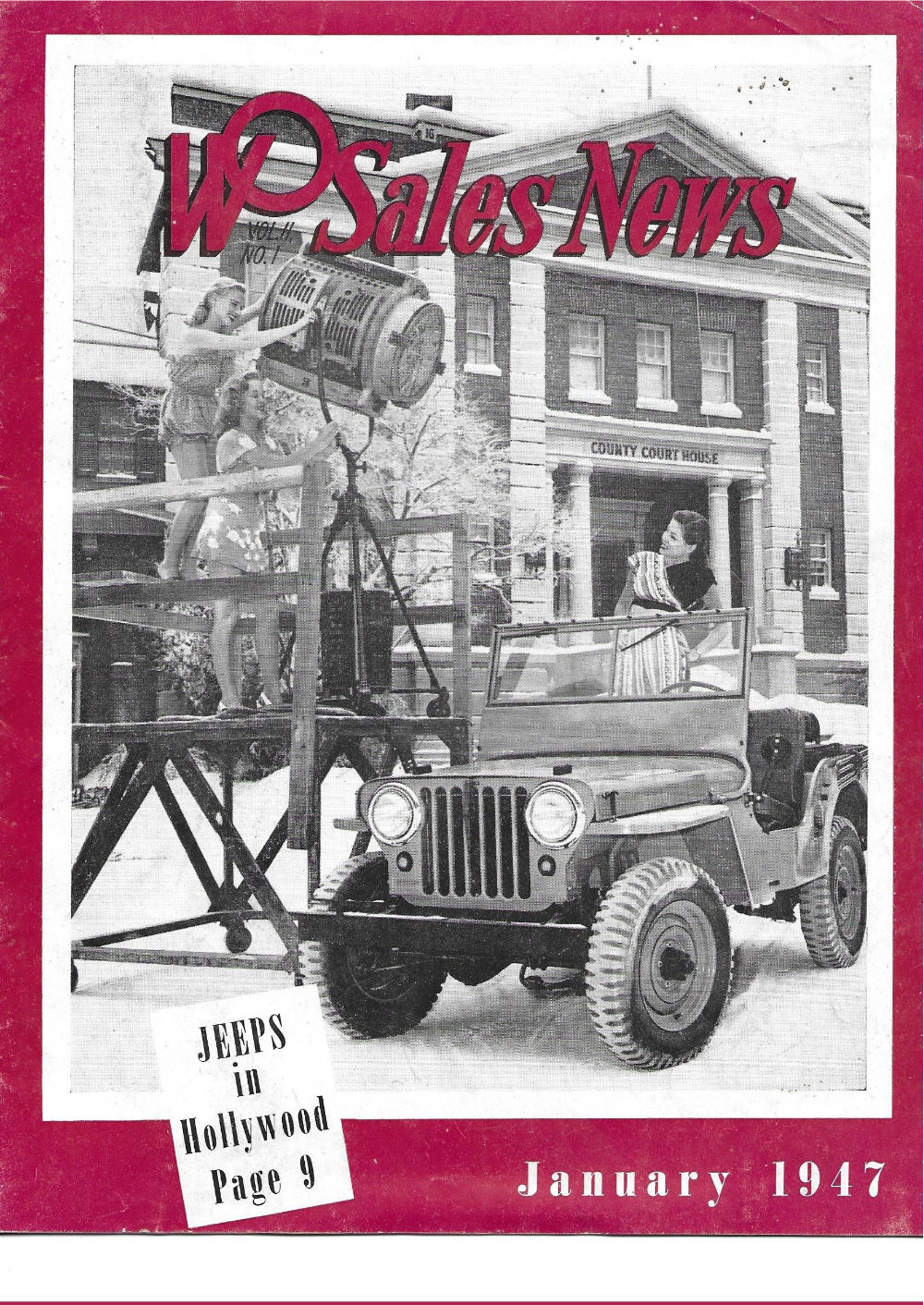
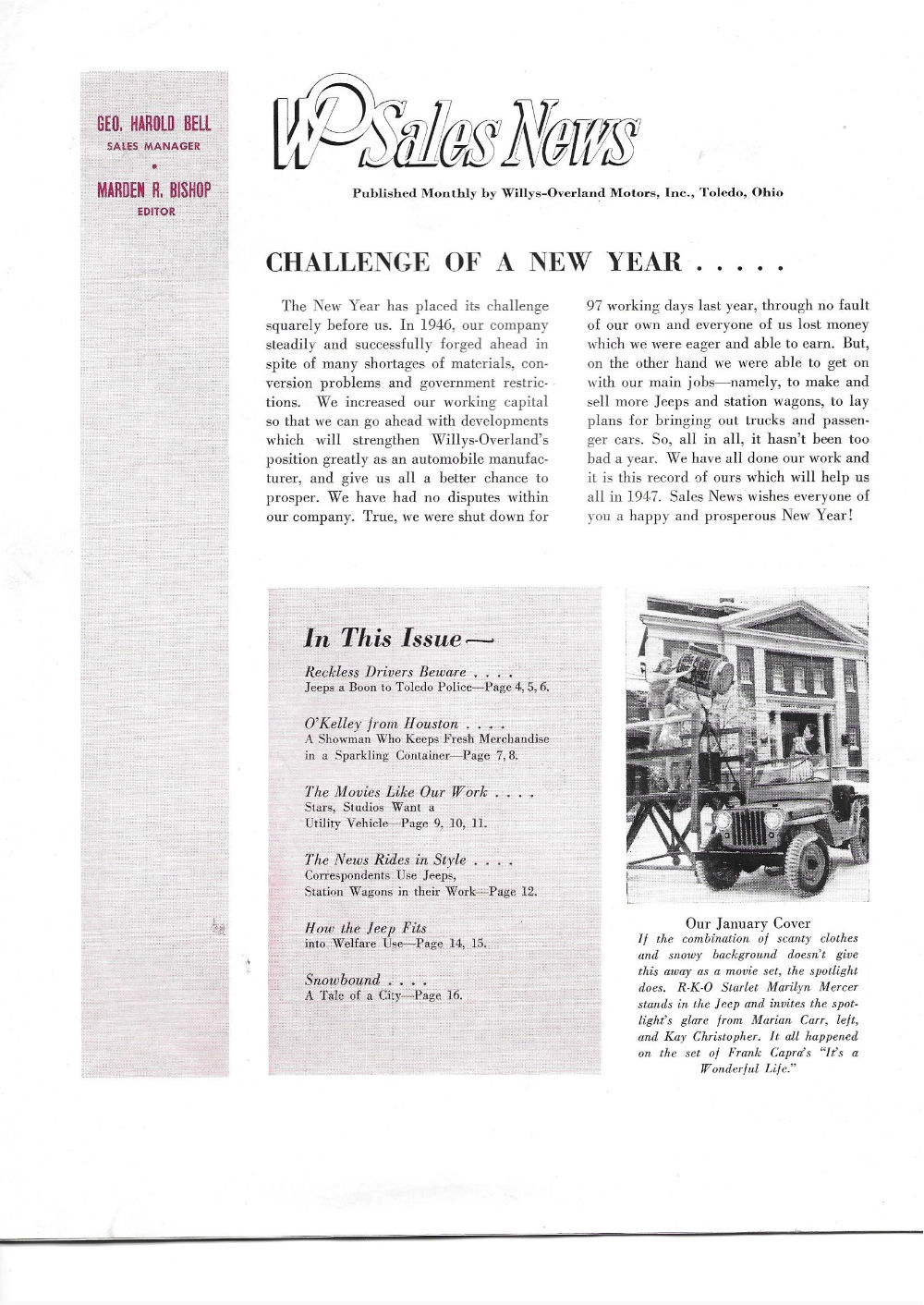
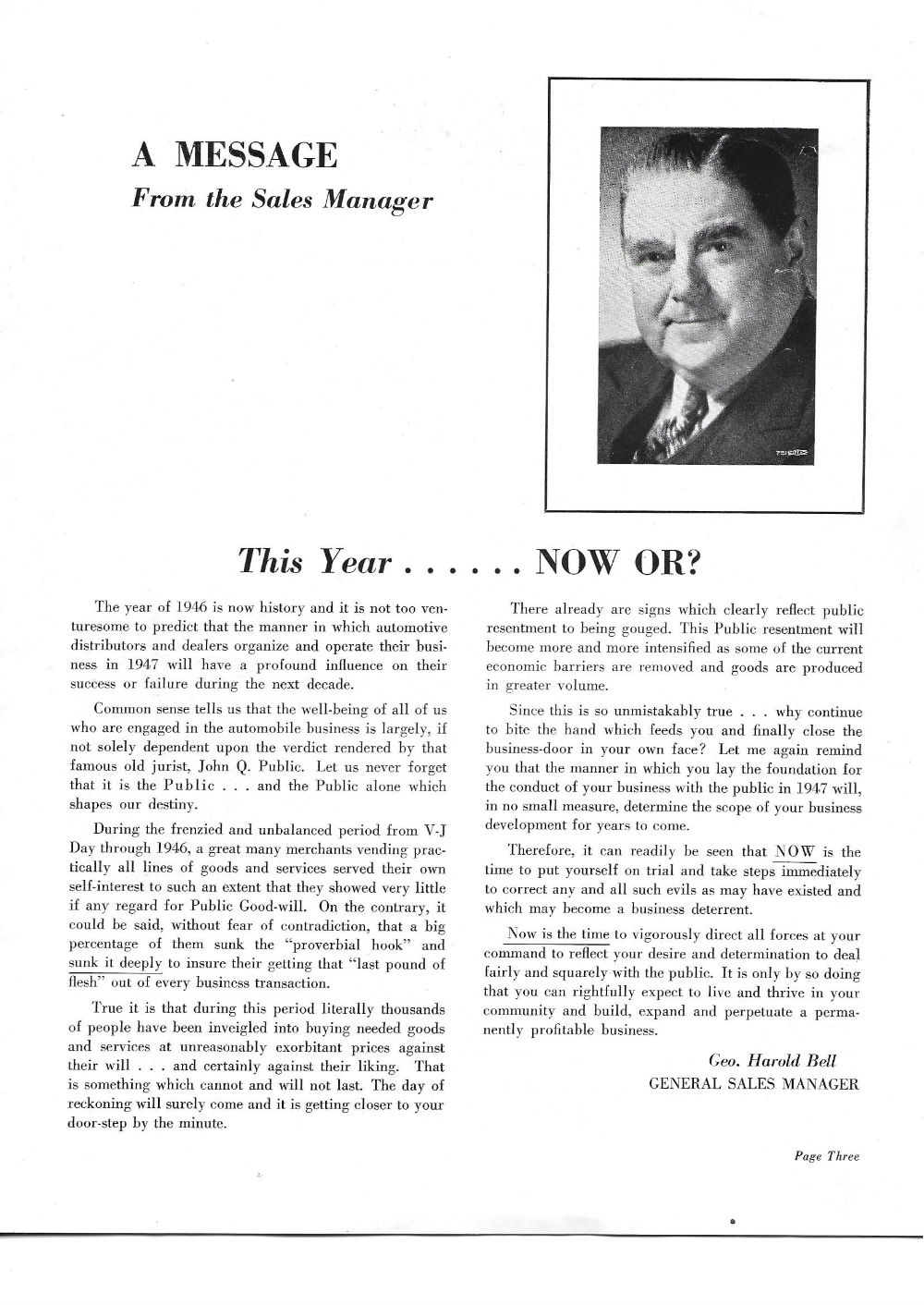
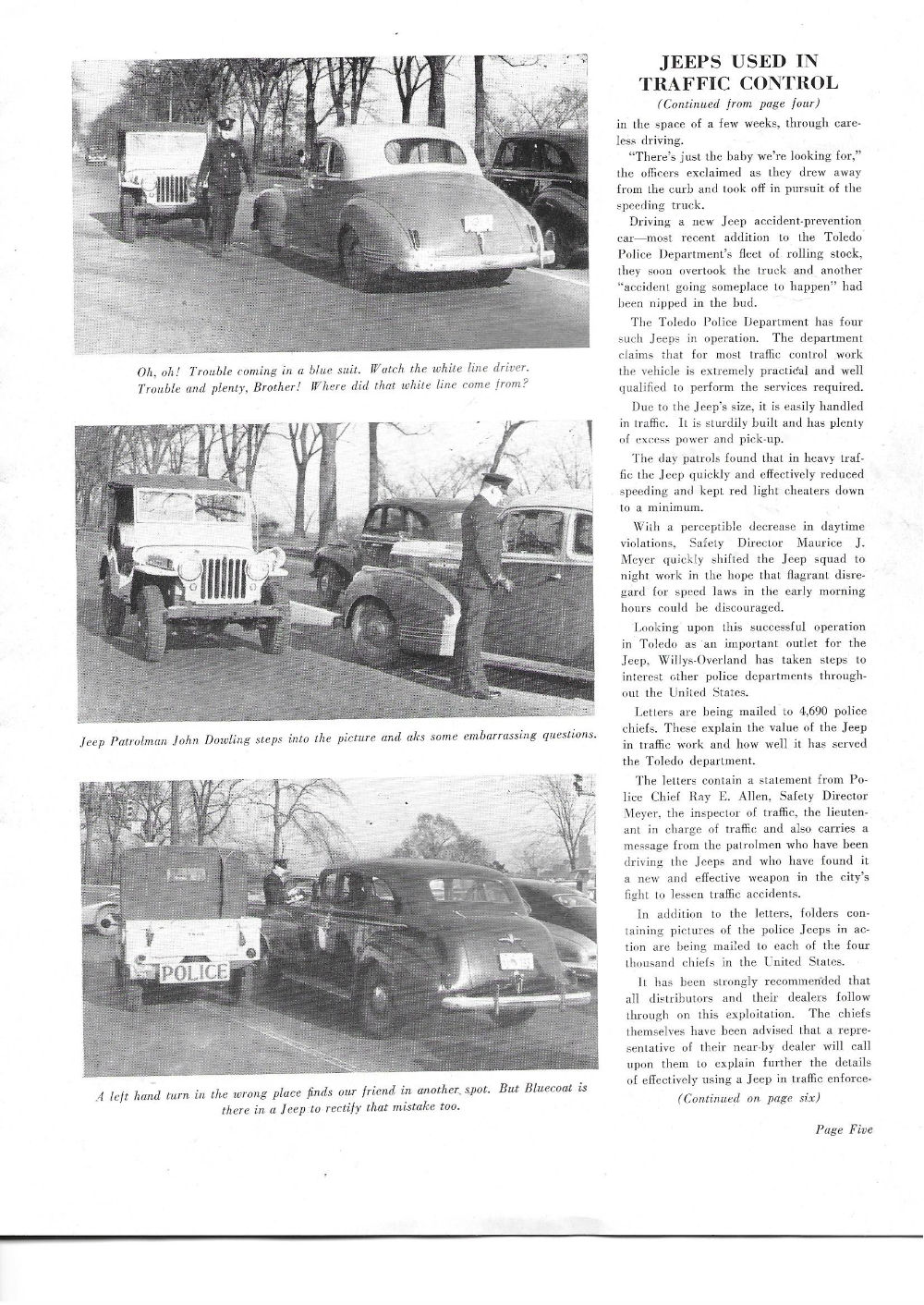
Thanks to Jan for sharing this rare sixteen-page January 1947 issue of Willys-Overland Sales News!
I’m not very familiar with these nor do I know how many issues were released, but I assume this style of magazine was discontinued once the Salesbuilder magazines were created in mid-1948.
UPDATE: This post was published on eWillys November 15, 2014. I don’t normally post whole articles, but there is a great deal of interesting information within it. I’m reposting this today because there is some additional information about Mr. Clement Miniger and his Auto-Lite company leading a syndicate to buyout John North Willys’ stock in 1929 (Learn more about Miniger And Willys Light here).
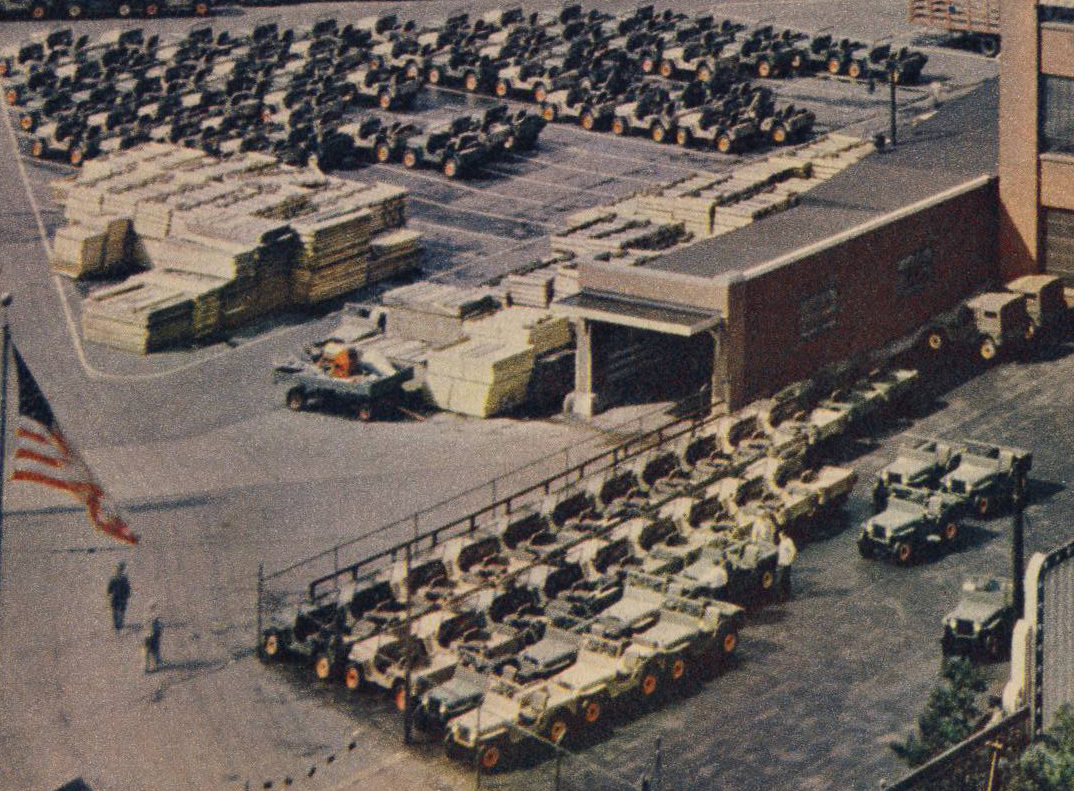
A variety of pre August 1946 CJ-2As in different colors waiting to be shipped from Willys-Overland’s Toledo plant.
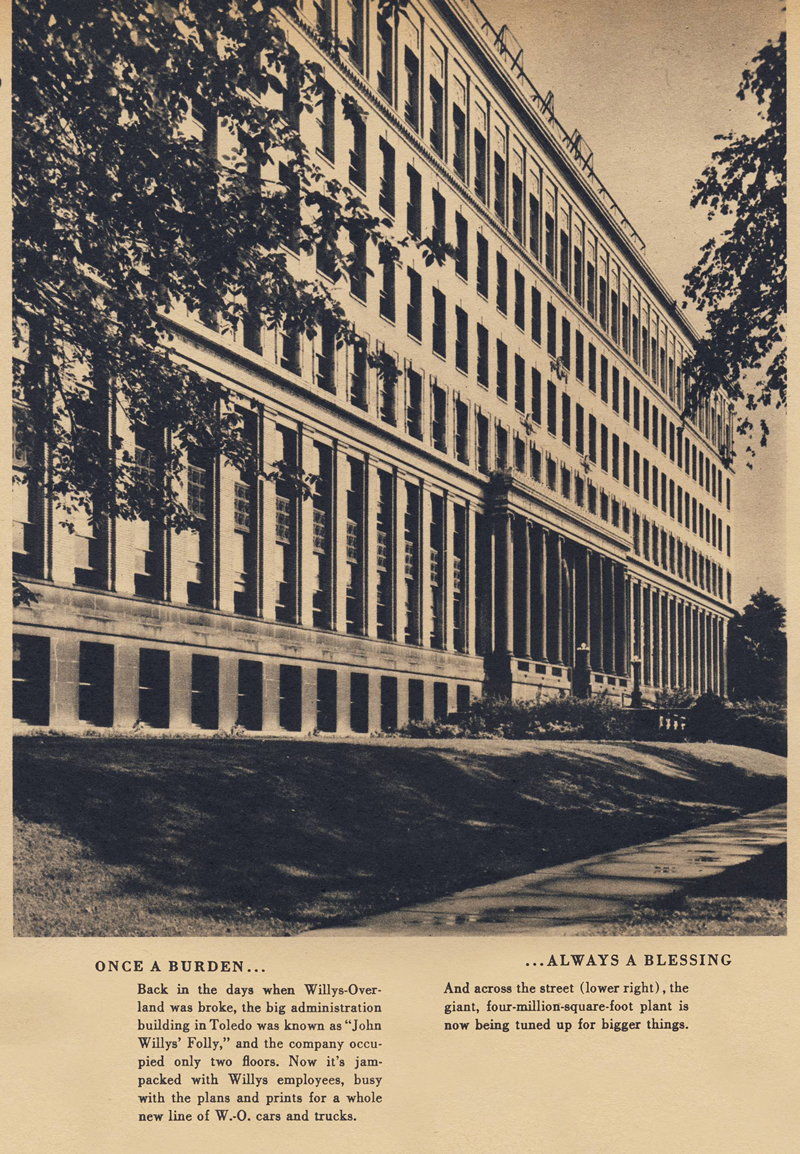
This fascinating article was published in the August 1946 issue of Fortune magazine. It’s a LONG article that covers the history of Willys Overland Corporation from it’s bankruptcy in the early 1930s to it’s post-war market positioning. There is not much information specifically about jeeps, nor many jeeps photos. But, if you want to understand how the corporate structure evolved, it’s a good article.
One particular chart published in the article was Willys’ research on paved roads. The company felt that jeeps would be very popular in outer countries, due both to the brand and the lack of paved roads. To meet that demand, Willys planned to export 25% of all jeeps.
WILLYS-OVERLAND
THIS JEEP-RIDING AUTO INDEPENDENT IS TAKING NEW LEASES ON LIFE AND ITS OWN REAL ESTATE • THE BOYS IN THE BACK ROOM ARE DOING FINE
ln the years between the depression and the second world war, the once great Willys-Overland Co. clung by its nails to a niche in the U.S. automobile market. Gamely, it tried to sell the public a mousy little car, with a tough, four-cylinder engine, which was the cheapest thing on the road to run. Itself battered into receivership and reorganization by the depression, Willys had the patently sensible idea that such a car, guaranteed to get people from here to there at a minimum expenditure for fuel and upkeep, would be a blessing to a hard-pressed public that had not been similarly served since the demise of the models T and A Ford. But the public was proud, if poor, and more conscious of the millinery than the engineering of a car. When it had to buy cheaply it found the used-car market much more tempting. During most of those years Willys’ production ranged below the break-even point. bln 1940, a mere 27,000 cars were built. Now Willys-Uverland is coming up for the postwar round with a product line still topped by a light passenger car-with a four or a six-cylinder engine, buyer’s choice. It will probably be as cheap to buy, give or take a few dollars, as any 1947 car on the market, and possibly less expensive to operate and support than any of its competitors. And though it will be considerably more stylish, inside and out, than the prewar Willys, it will have, at most, simple good looks rather than breath-taking beauty. If that were the whole story, one might wonder why some people think Willys-Overland is an exciting proposition among the auto independents today, and why some mighty big boys in the automobile industry appear to be sparring for position in the peculiar, complicated Willys-Overland hierarchy.
Unquestionably Willys has fresh charms. To name four:
1) The tough, four-cylinder motor that was the bread-and-butter item in the prewar Willys is the same motor that powered the Army Jeep, which became an international byword during the war. As the largest producer, by far, of the Jeep, Willys-Overland became the beneficiary of this enormous, war-born prestige (and also added a tidy sum to its treasury). Ten days after V-J day, Willys was in production on its civilian or Universal Jeep, of which it had sold around 28,000 by June 1, despite plant shutdowns totaling eighty-three days owing to strikes in suppliers’ plants.
2) Under way at its giant Toledo plant is a Jeep-inspired line of Willys utility vehicles including (a) an all-steel, all-purpose station wagon, (b) a sedan delivery truck, and (c) a low-weight, medium-duty truck with a combination four and two-wheel drive. All are powered by an improved four-cylinder Jeep engine and feature the Jeep snub nose and square fenders. All will be produced in 1946, and can be run through the same assembly line if necessary.
3) Because the rugged, lightweight vehicles in the Willys line are peculiarly suited to the exigencies of foreign motoring, in which the paucity of paved roads and the steep price of gasoline are forbidding factors, the company has decided to throw 25 per cent of its production into export. The development of a foreign market of such proportions is steadying to the seasonal economy of an automobile company. And Willys’ new top management is richly experienced in the export field.
4) Finally, many an economist, foreseeing an era of inflation, high taxes, and high gasoline costs, will agree that the hour in the oiiing is ripe for an automobile that places operating economy above fashion appeal. Willys is confident that its traditional economy car is, at last, accurately attuned to the times, and that its 1947 passenger model can bite into a solid and sustained market, both here and abroad.
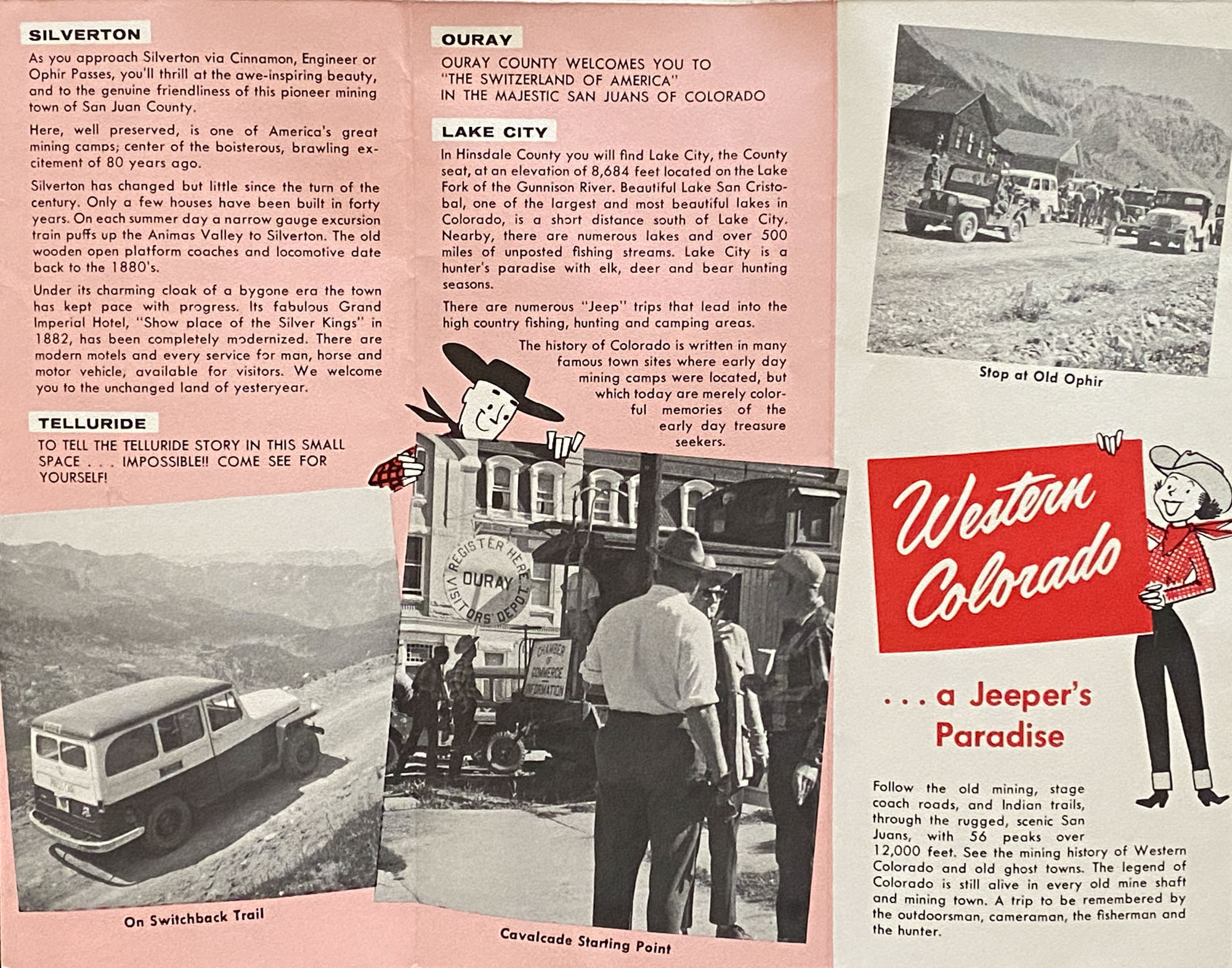
This image shows the back of the brochure when fully opened:
============================
Originally Posted October 18, 2018:
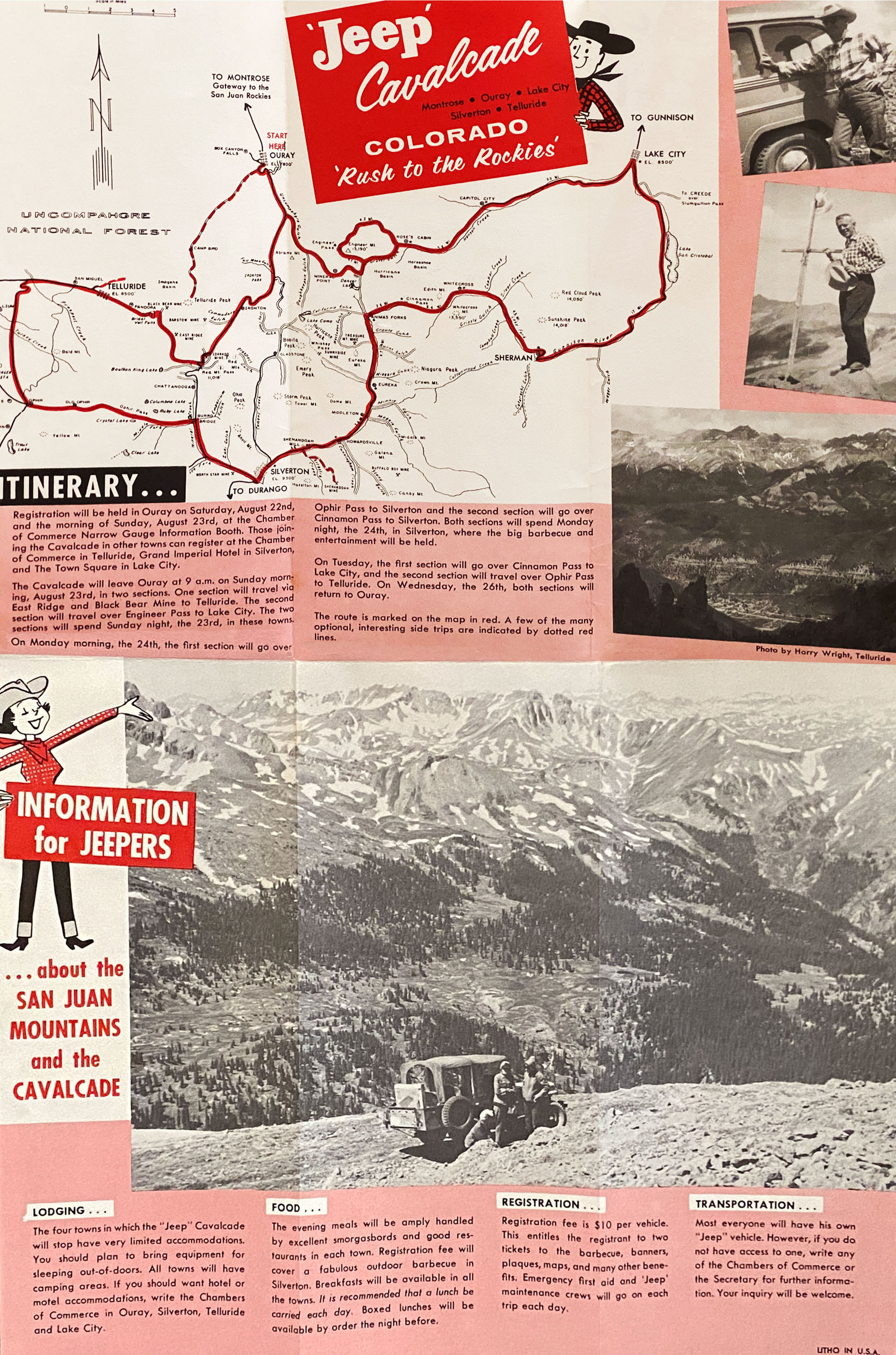
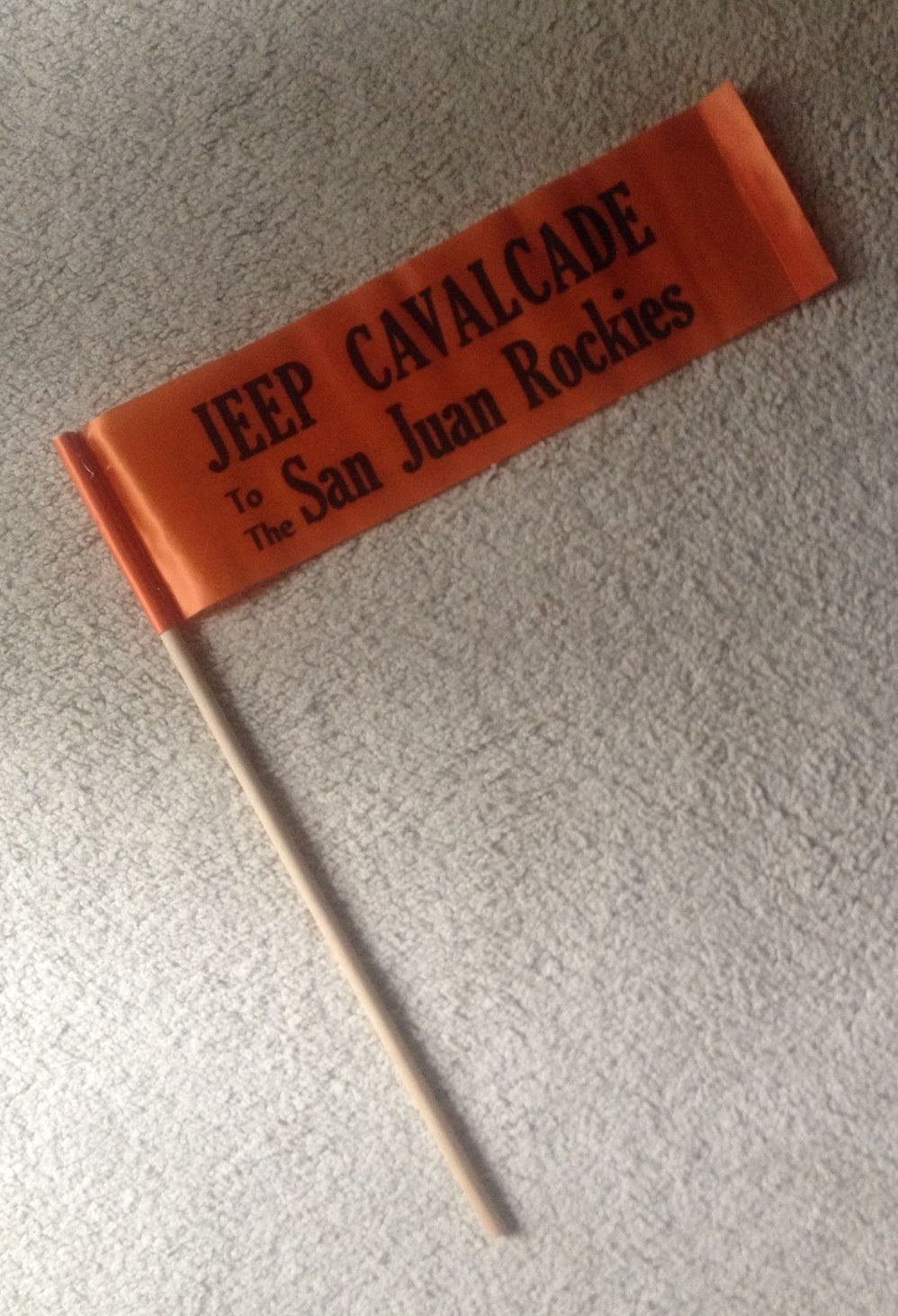
This information covers the 1959 Jeep Cavalcade “Rush to the Rockies” Centennial. The 1959 Cavalcade was part of the 100th anniversary of the John Gregory’s Central City May 1859 strike, which led to a wave of hopeful miners descending upon what would become the Denver area. The Centennial was celebrate throughout Colorado through a variety of celebrations and merchandise (like these bottles and this Centential booklet).
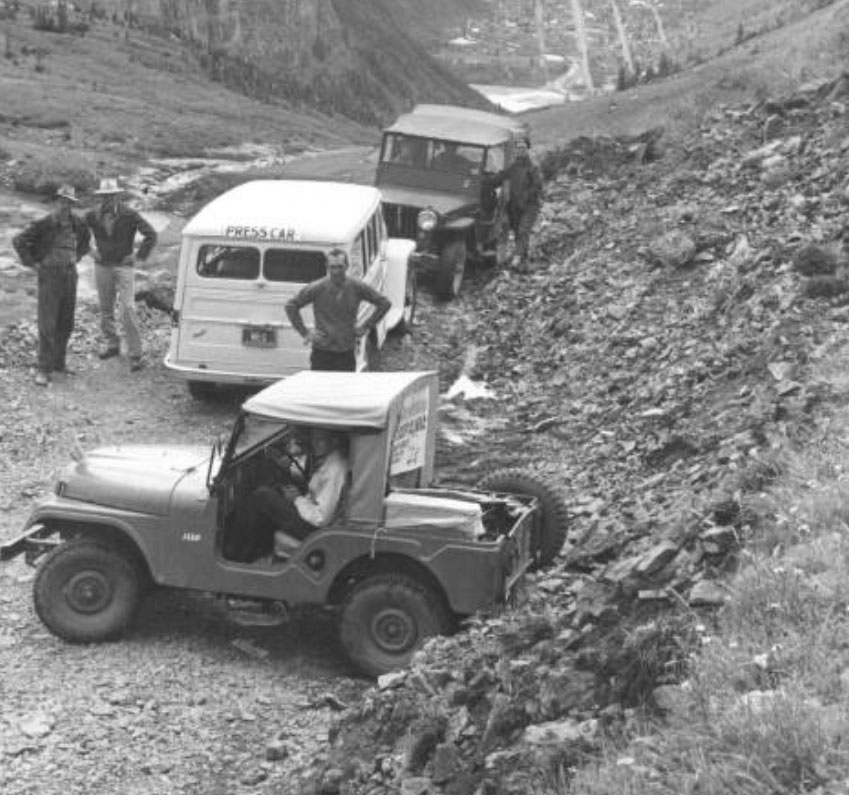
Photo from the Denver Post. Both Life Magazine and the Denver Post covered the event. Note the white wagon above. It appears in a couple of the color photos below.
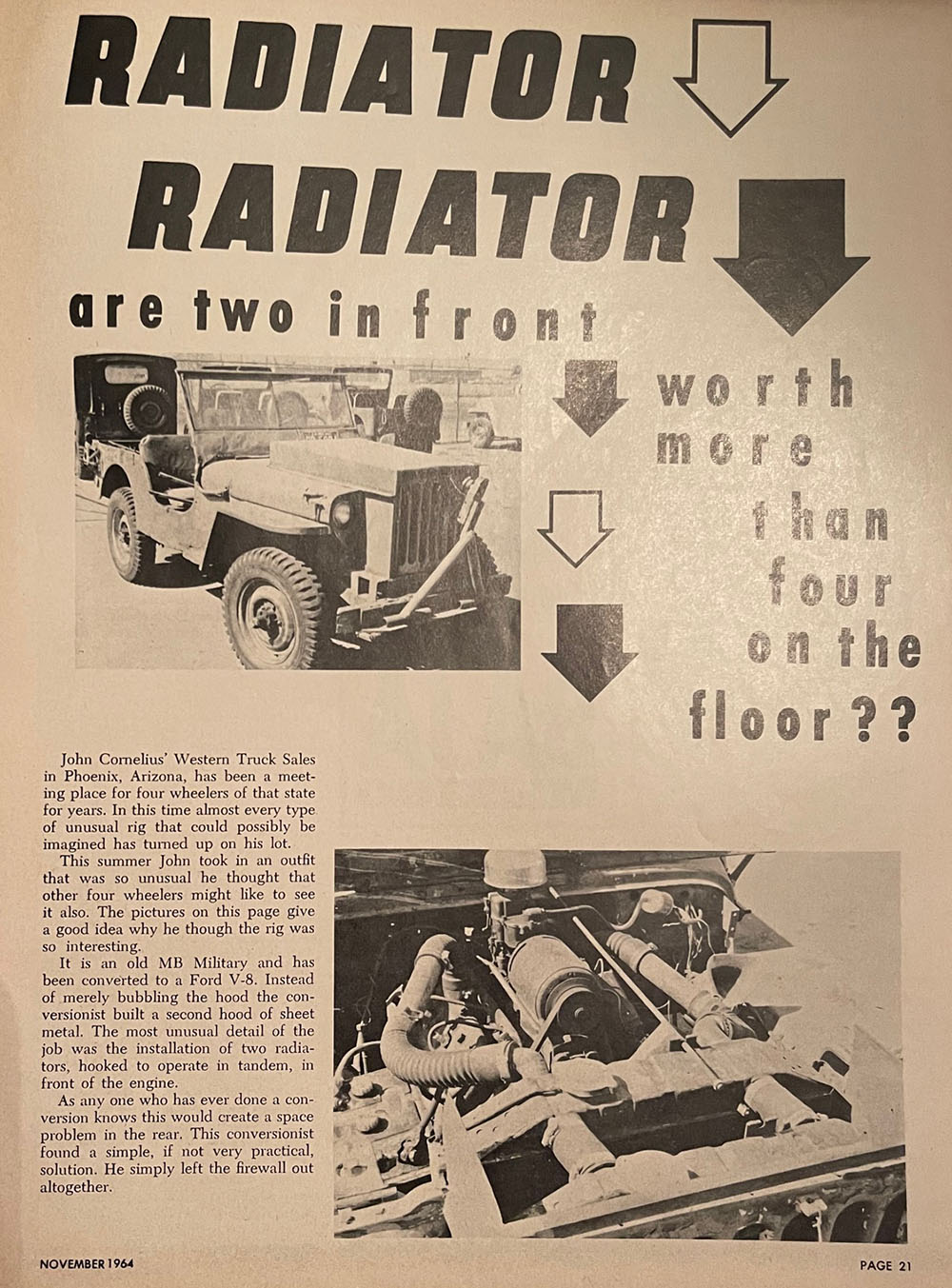
This unusual build appeared in the November 1964 issue of Four Wheeler Magazine. The build has two radiators, built in-line. I figured you all would enjoy this oddity.
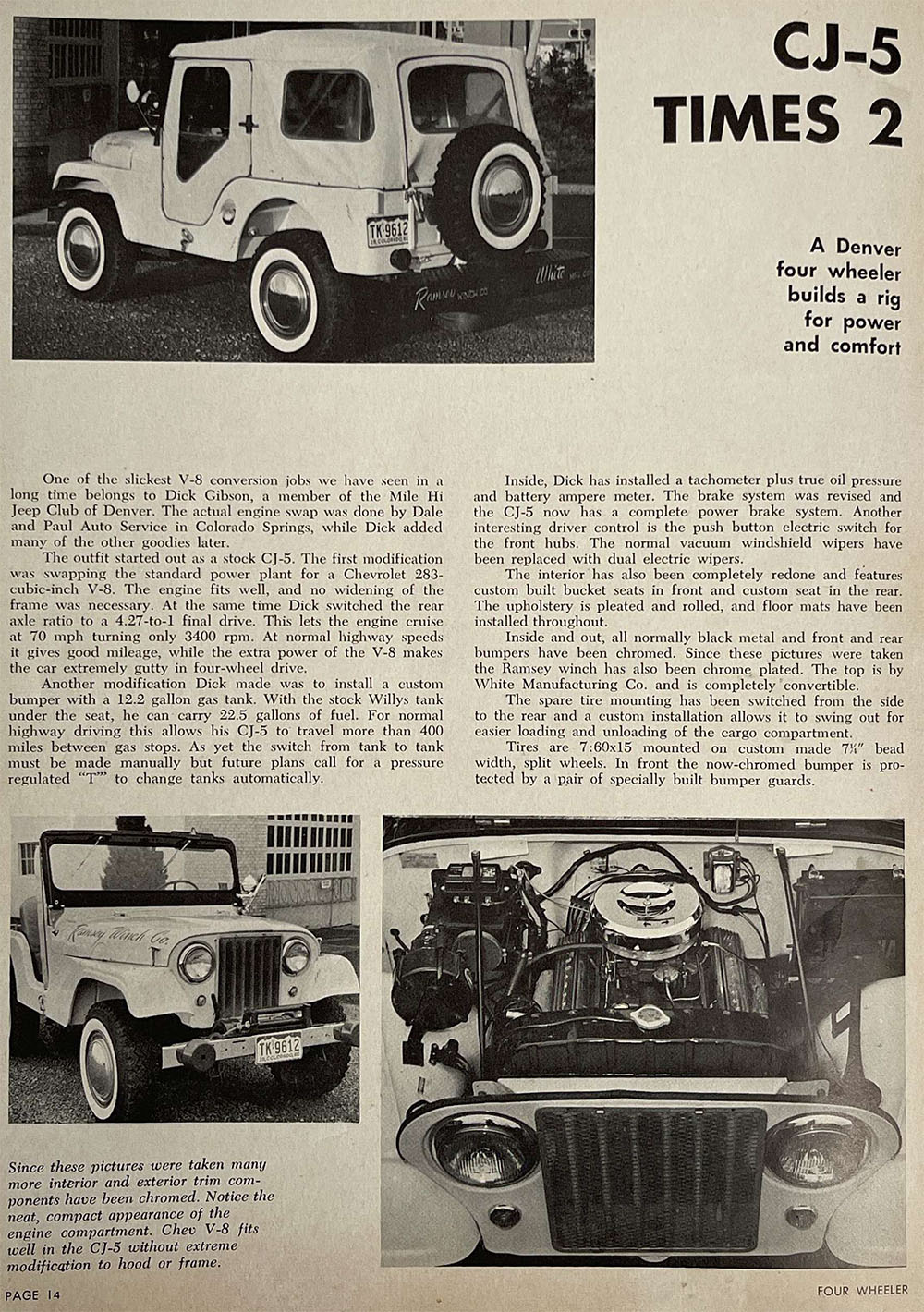
This May 1962 article in Four Wheeler magazine highlighted a few things. First, it’s a really clean build. I wish the pics were in color, as it’s deserving of some great photos.
Second, if I understand correctly, the rear bumper is actually a gas tank. I’m not sure I like that plan so much.
Third, given this jeep is near Colorado Springs, it probably has the Thor Electro-matic hubs, which allow a push button engaging of the front hubs. And, because they are short hubs, the front wheel covers can be placed over them.
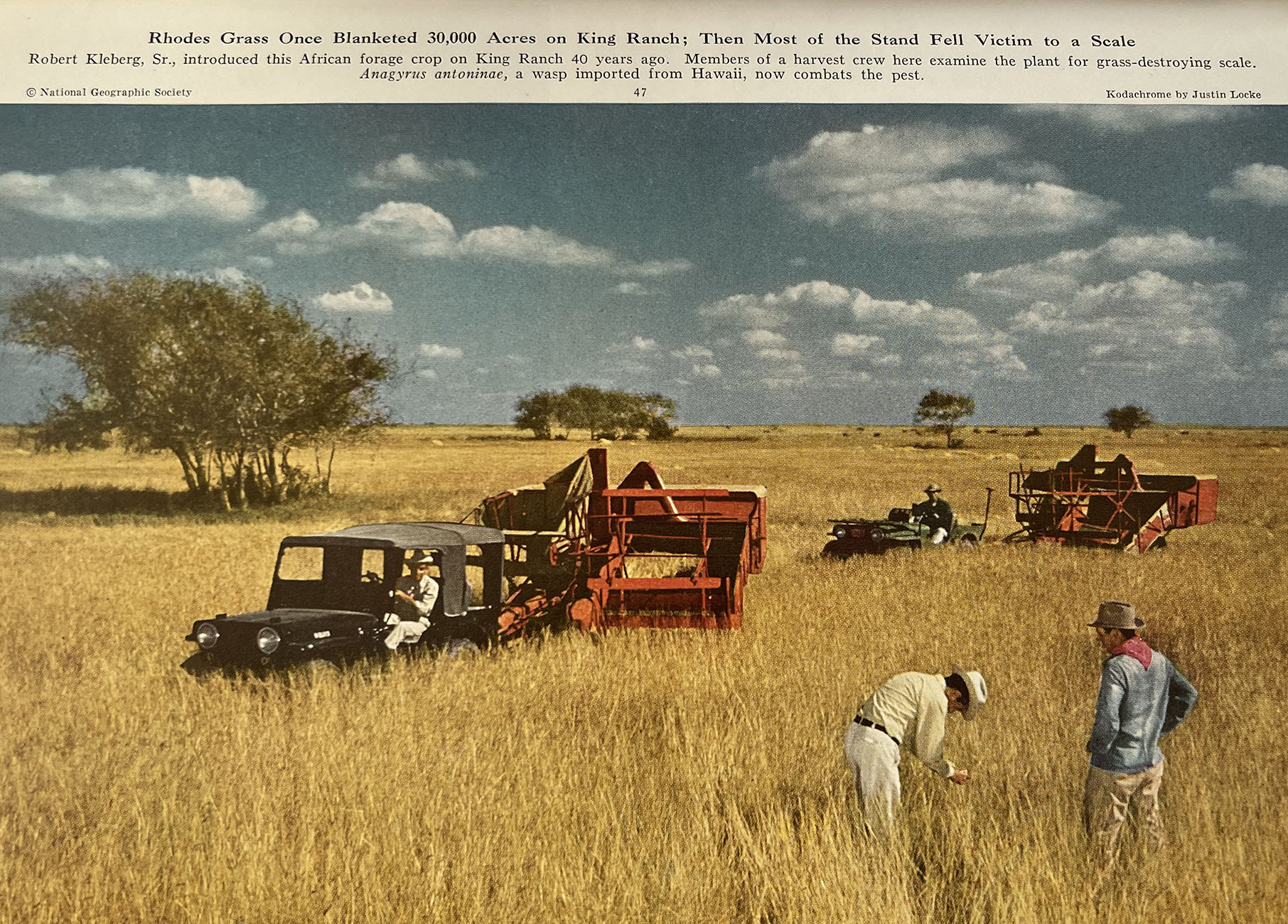
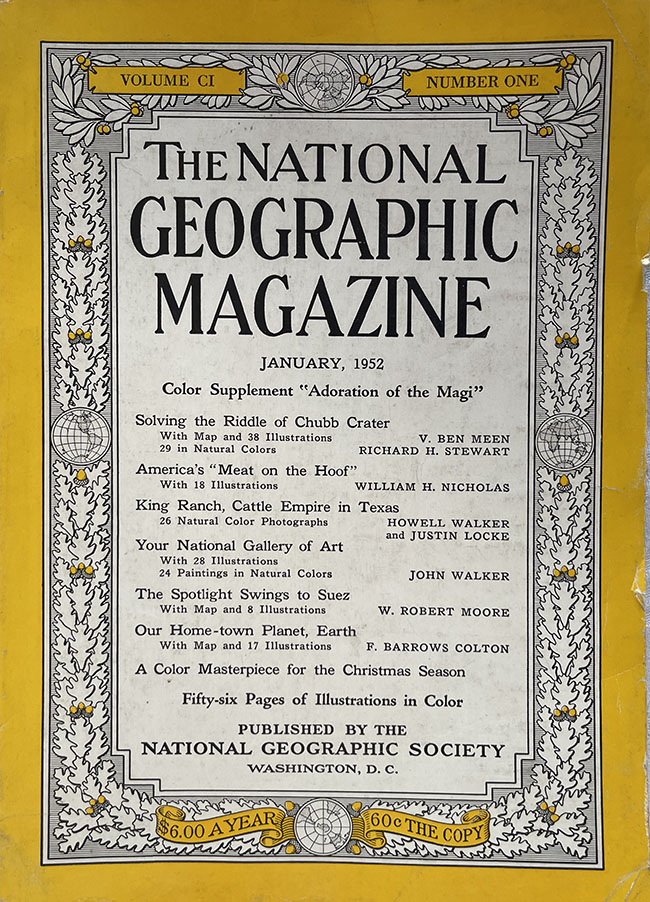
The January 1952 issue of National Geographic included an expansive article on the King Ranch in Texas, which at the time was America’s largest ranch. One of the photos included in the article showed a CJ-3A (in black) and a CJ-2A (in green) towing farm implements.