emailNeed to contact me and don't have my email? Click on email button.
About eWillys
Welcome to eWillys.com, a website for vintage jeep enthusiasts. I update this website nearly every day with jeep deals, jeep history, interesting reader projects, jeep related info, and more.
These quick searches can help you find things on eBay. People list in the wrong categories all the time, so don't be surprised to see brochures in the parts area for example. This section used to be split into jeeps, parts and other categories, but recent changes to eBay will require this information to be recoded.
The links to posts below show jeeps grouped by models, condition, and other ways. Some of these jeeps are for sale and others have been sold. If you are unsure whether a vehicle is still for sale or not, email me at d [at] ewillys.com for more info.
Importantly, the allure of buying a project jeep can be romantic. The reality of restoring a jeep can be quite different, expensive and overwhelming without the right tools and resources. So, tread carefully when purchasing a "project". If you have any concerns about buying a vintage jeep, or run across a scam, feel free to contact me for help, comments or concerns .
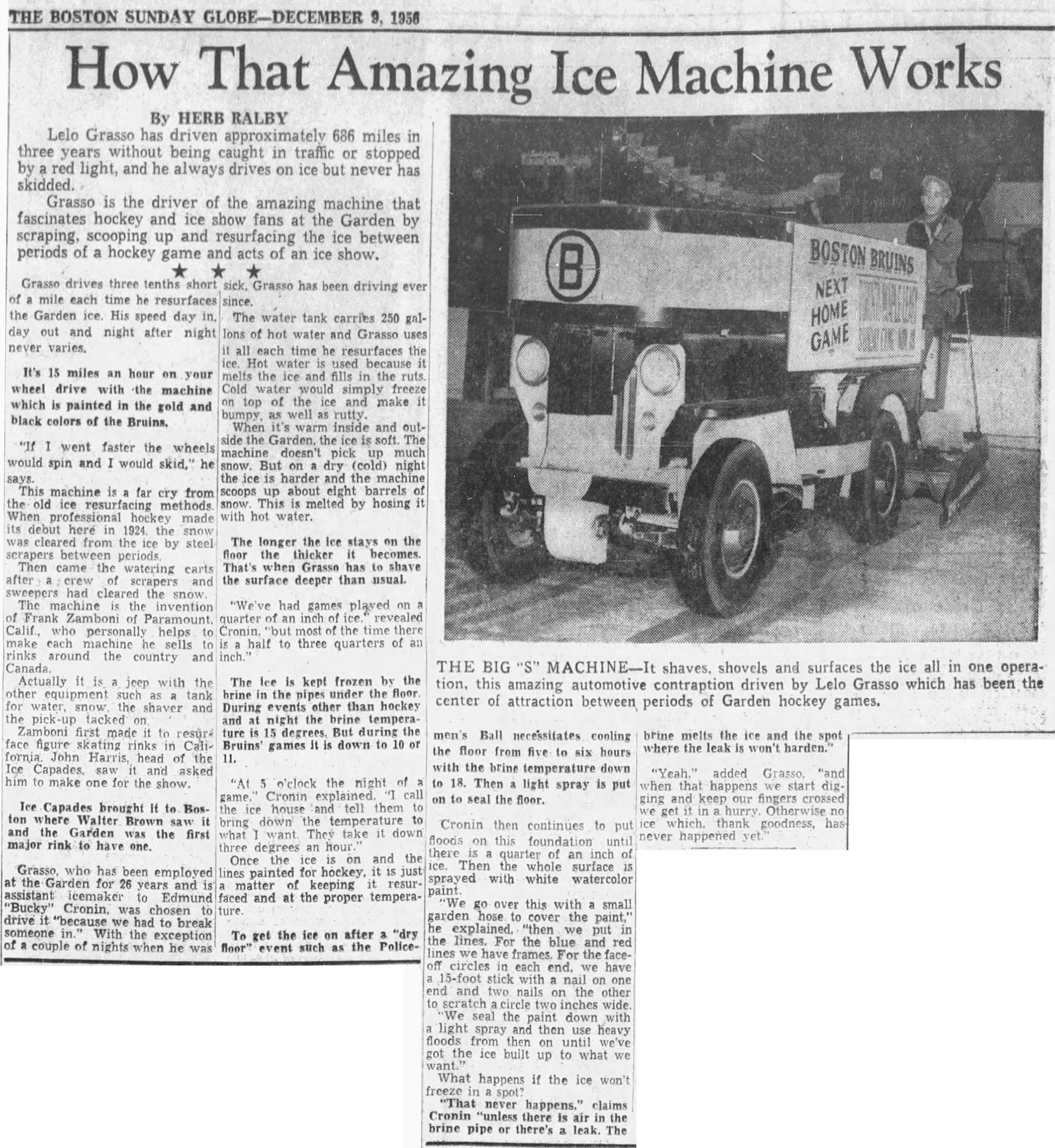
MODEL E CJ-3B Version: Based on the ice-delivery-chain-system design on the front, I’d say this is a CJ-3B version of Model E. You can learn more about the CJ-3B versions here.
December 09, 1956, Boston Sunday Globe.
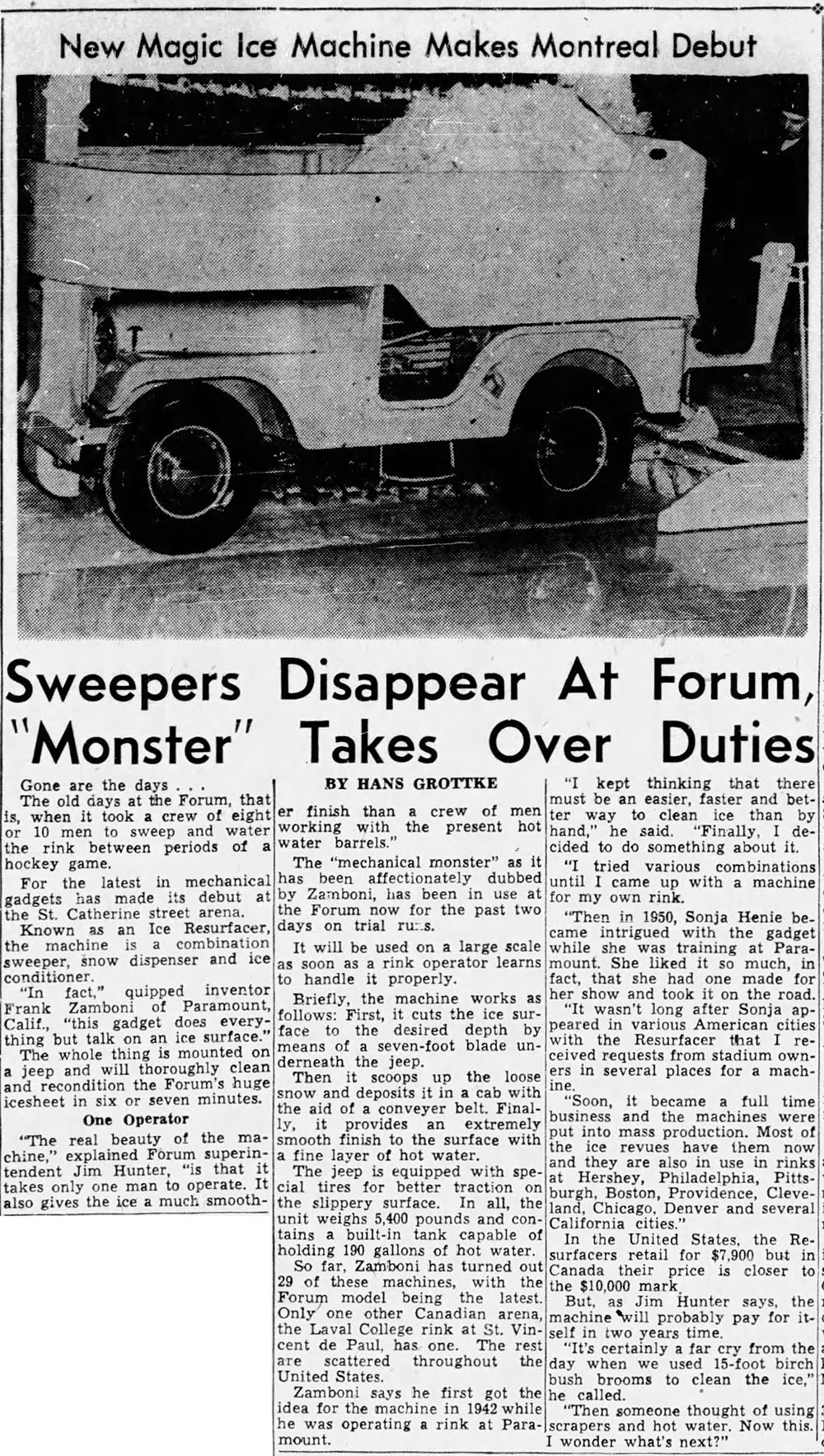
MODEL E CJ-5 Version: This model was the last one to include the jeep body, in this case a CJ-5 body.
March 09, 1955, The Gazette out of Montreal, Canada.
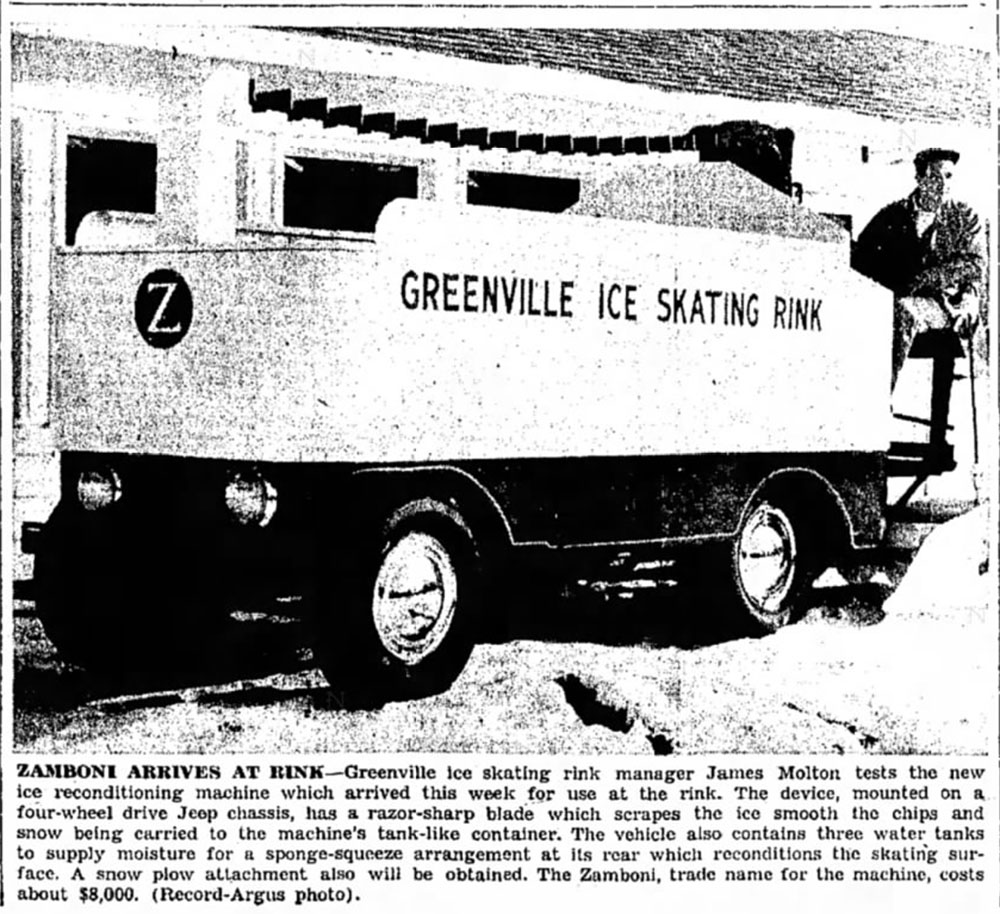
MODEL F: This photo and caption shows a good example of the final jeep-related Zamoni Ice Resurfacer.
December 06, 1957, The Record-Argus out of Greenville, Pennsylvania.
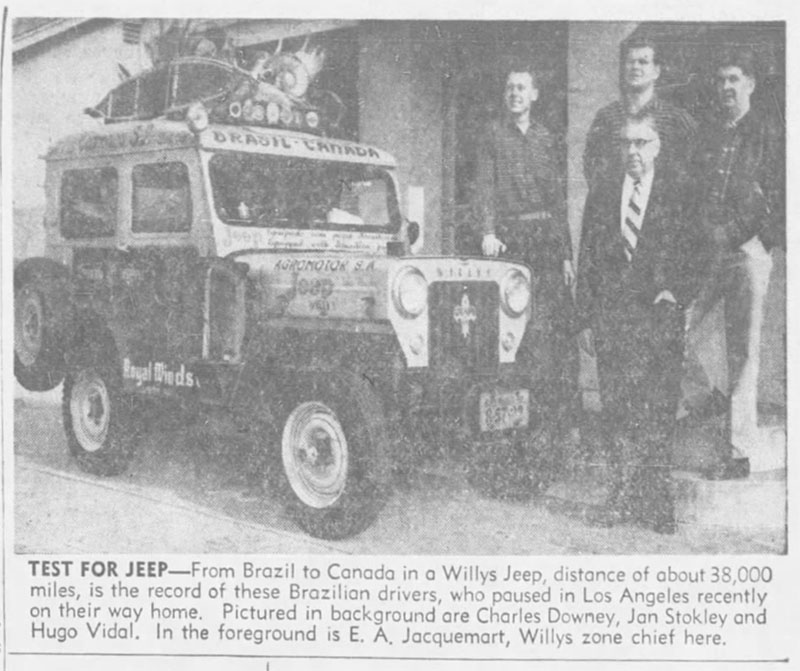
April 22, 1956, Los Angeles Times. Strangely, this photo was published months after arriving in Los Angeles (they were likely here in late December 1955 or early January of 1956). See map below.
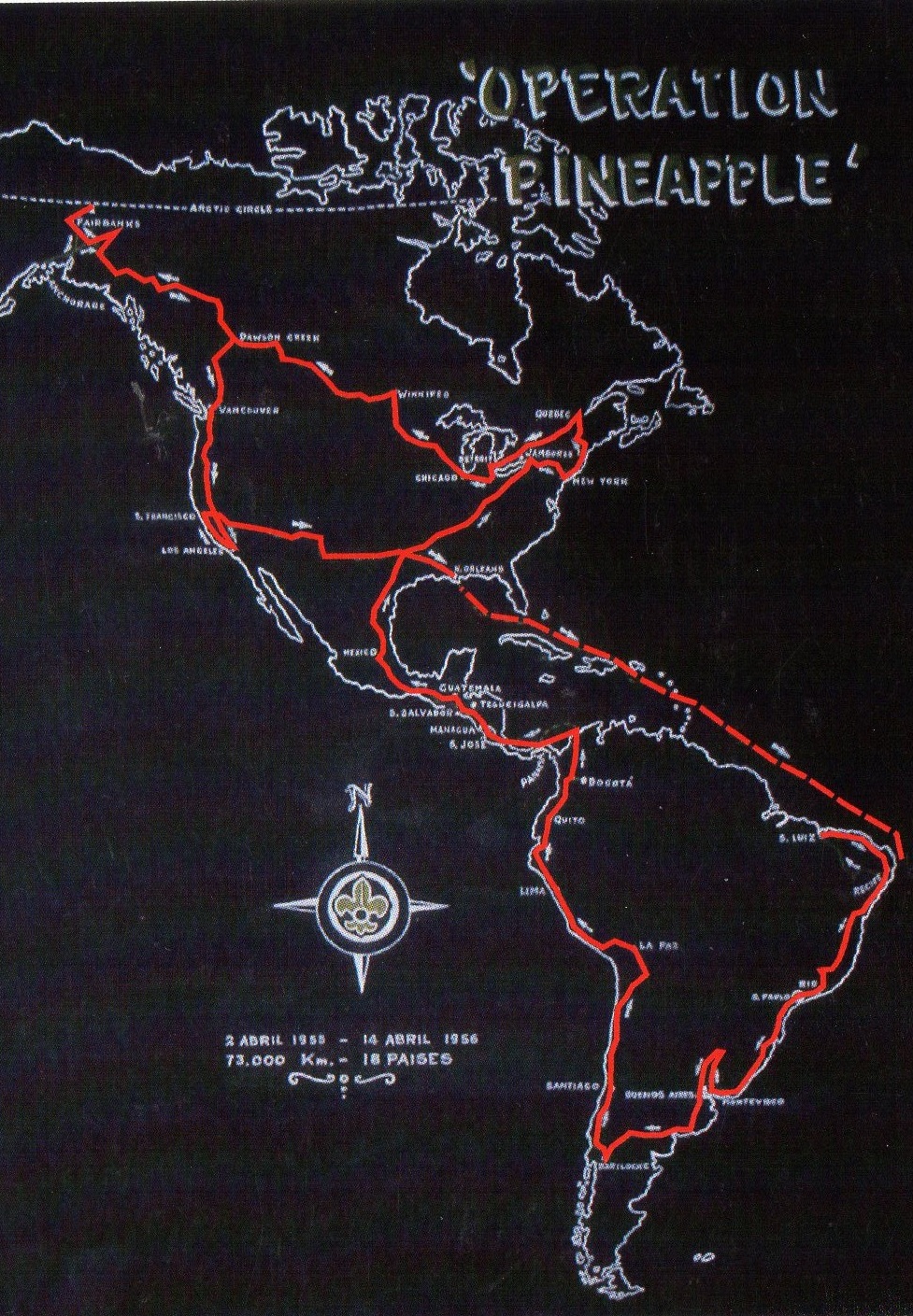
The trio began and ended their trip in San Paulo, Brazil. This map shows that they passed Los Angeles on their way home, then headed east towards New Orleans, the trio’s last stop in the United States.
Most folks are already familiar with this trip, but I wanted to add these news reports to the database of Operation Pineapple information. One of the articles noted that the three travelers did not try an American hamburger, because hamburger was fed to dogs in Brazil.
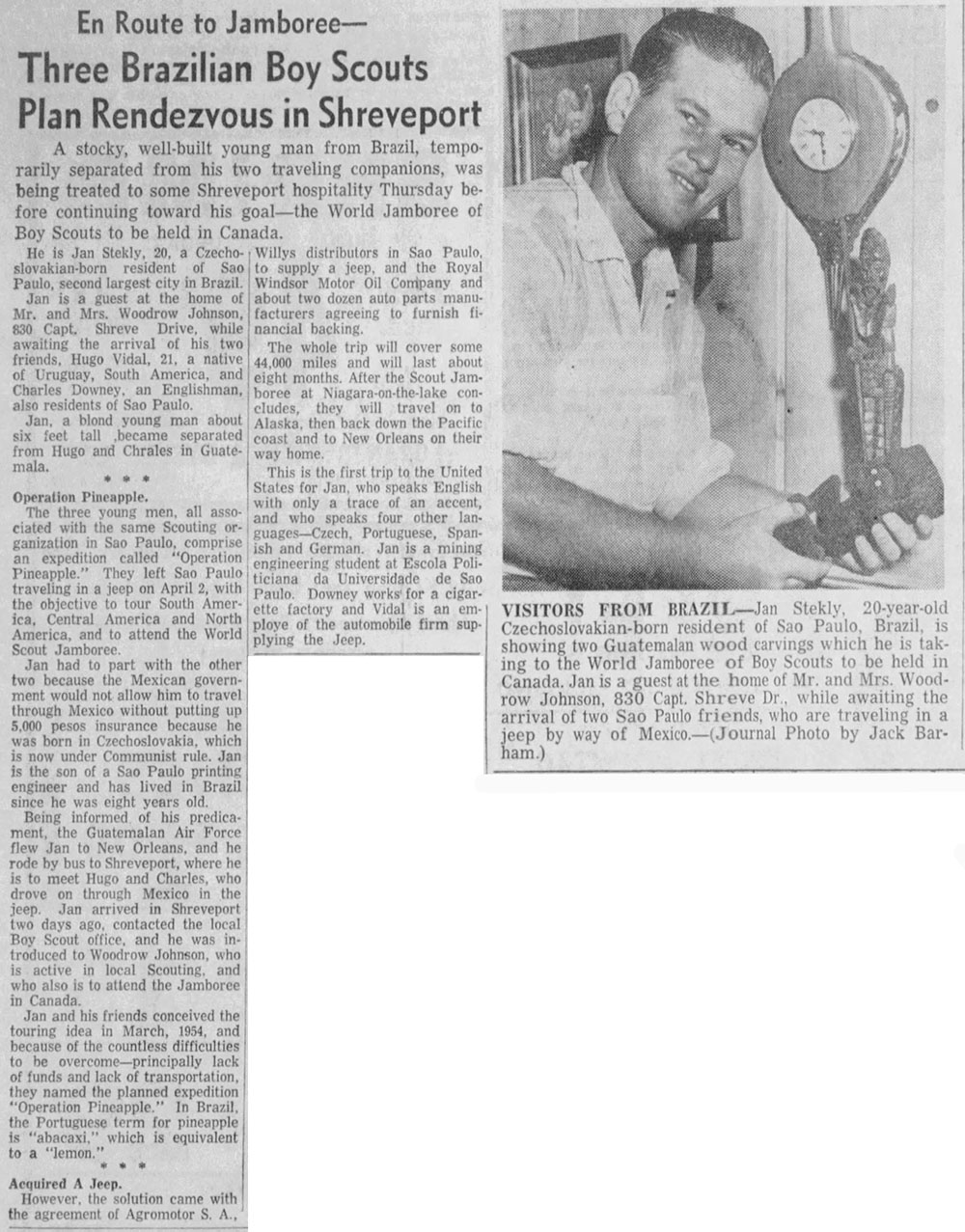
This first article was published shortly after Jan Stekly arrived in New Orleans, because he wasn’t allowed to travel through Mexico. It was published in the August 11, 1955, issue of the Shreveport Journal:
August 11, 1955, issue of the Shreveport Journal. Jan Stekly is shown in the photo.
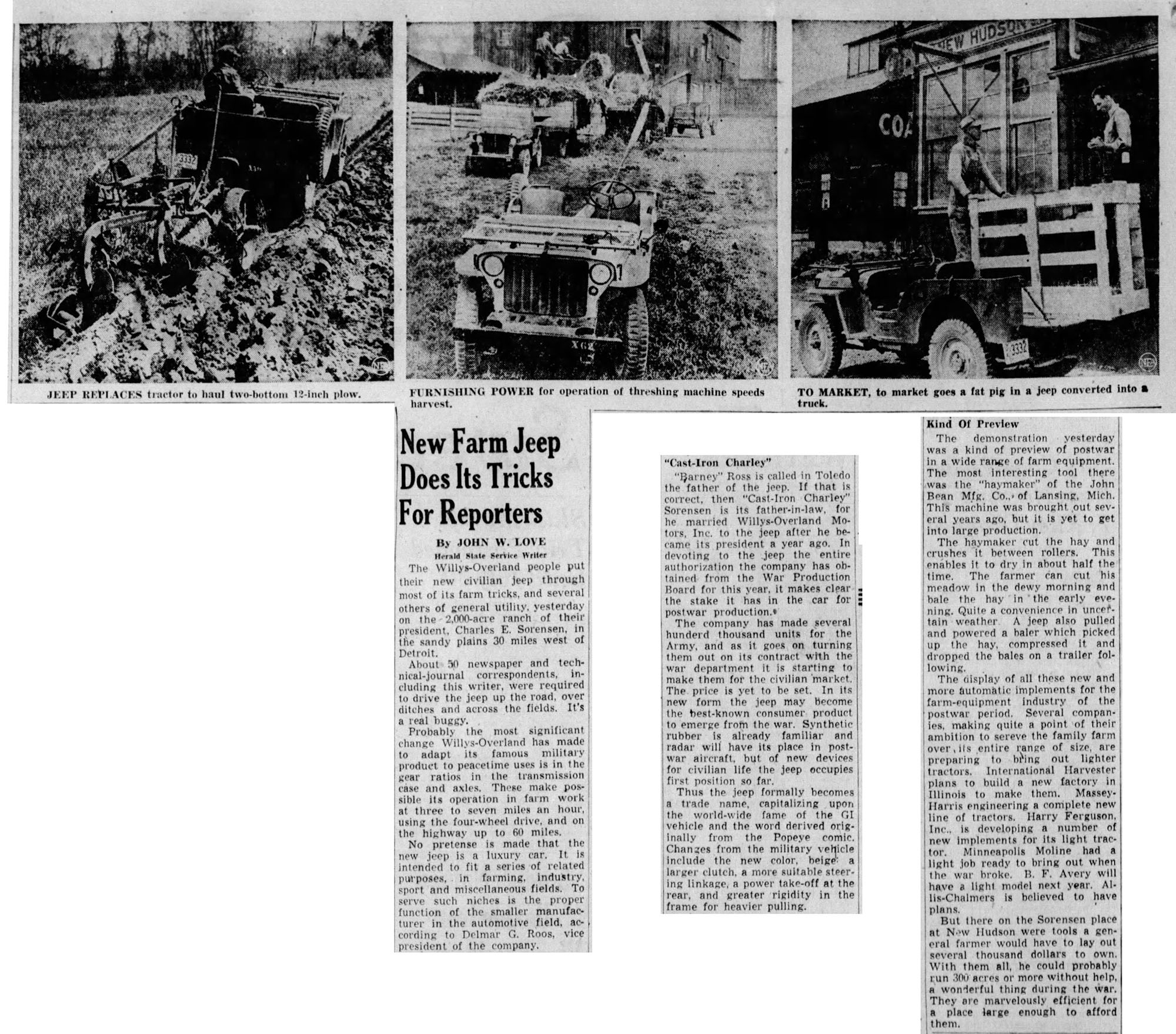
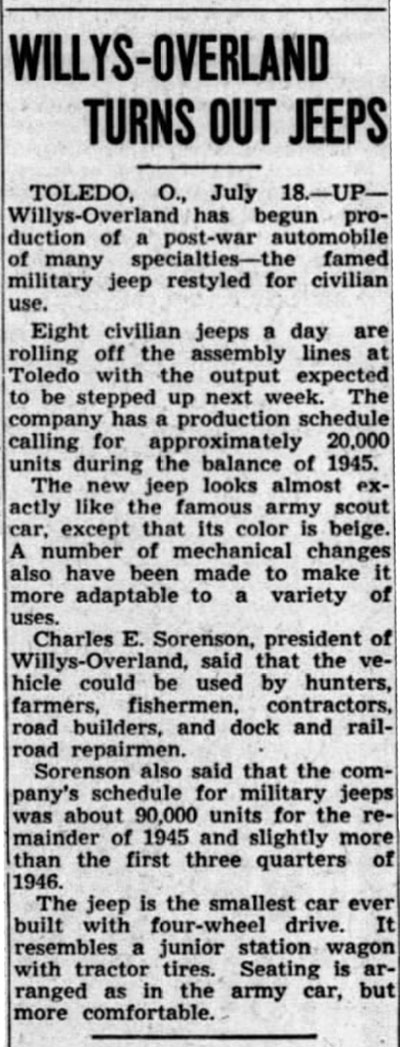
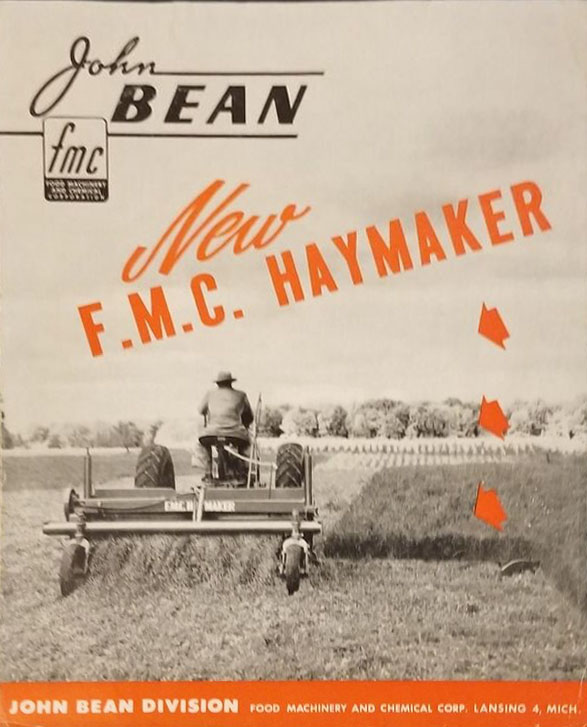
A July 19, 1945, article in the Dayton Herald, out of Dayton, Ohio, covered the jeep demonstration at Charles Sorensen’s farm. Two things about the article stuck out to me. 1) I was surprised to learn that there had been no sales price shared with reports as of the demonstration. 2) The reporter who wrote the article noted that the most interesting piece of equipment was the John Bean Haymaker, which apparently never became a Willys-Overland Special Equipment item, at least not one of which I’m aware. I did find a brochure from a few years later that covered the John Bean Haymaker (see the cover at the bottom of this post).
July 19, 1945, Dayton Herald out of Dayton, Ohio.
What the above article doesn’t mention is that Willys-Overland had hoped to build 20,000 jeeps over the remainder of 1945, at least according to an article in the Cincinnati Enquirer on July 18th:
July 18, 1945, News Messenger out of Fremont, Ohio.
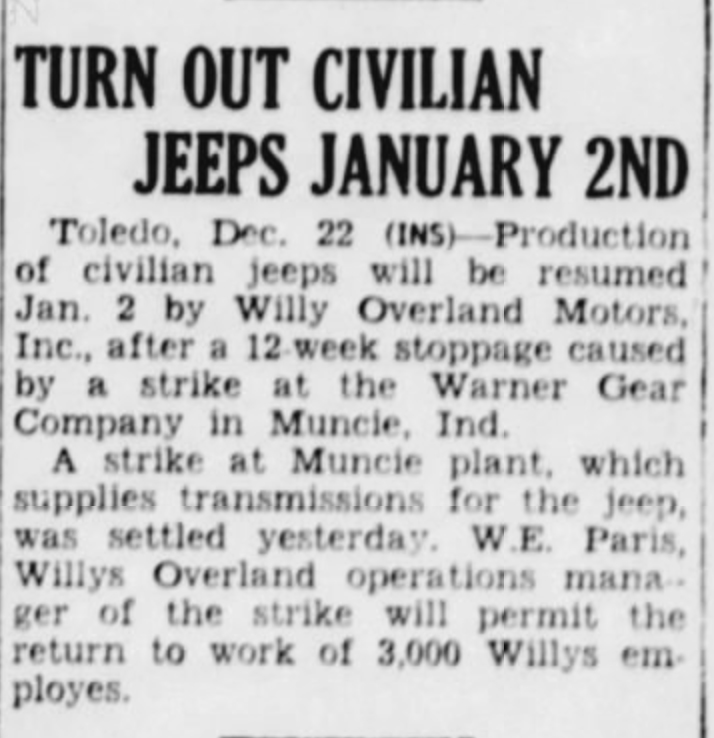
So, why wasn’t the company able to see the 20,000 production figure and instead produced only 1824 CJ-2As? One big factor was that Warner Gear had gone on strike for 12 weeks, stopping production of transmissions that Willys-Overland needed to complete the jeeps. There were probably other reasons as well, but had W-O been able to produce over those 12 weeks what they subsequently manufactured throughout 1946, the company could have come very close to the 20,000 production figure for 1945. In other words, there likely would have been a lot more VECs!
December 22, 1945, Daily Times out of New Philadelphia, Ohio.
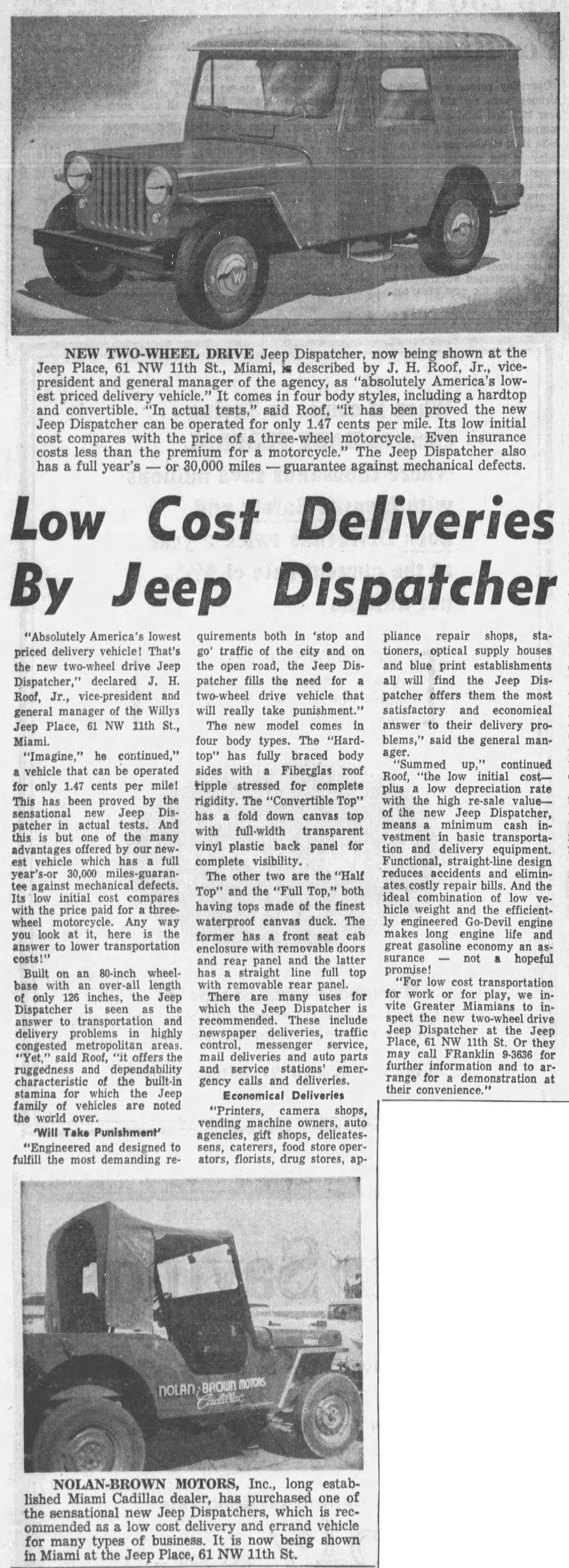
This article appeared in the Miami News on October 09, 1956. That seemed a late date for an “introductory” announcement. The article highlighted the low operating cost, the 30,000 mile maintenance guarantee, the four body styles, and the wide range of duties the new jeep could perform.
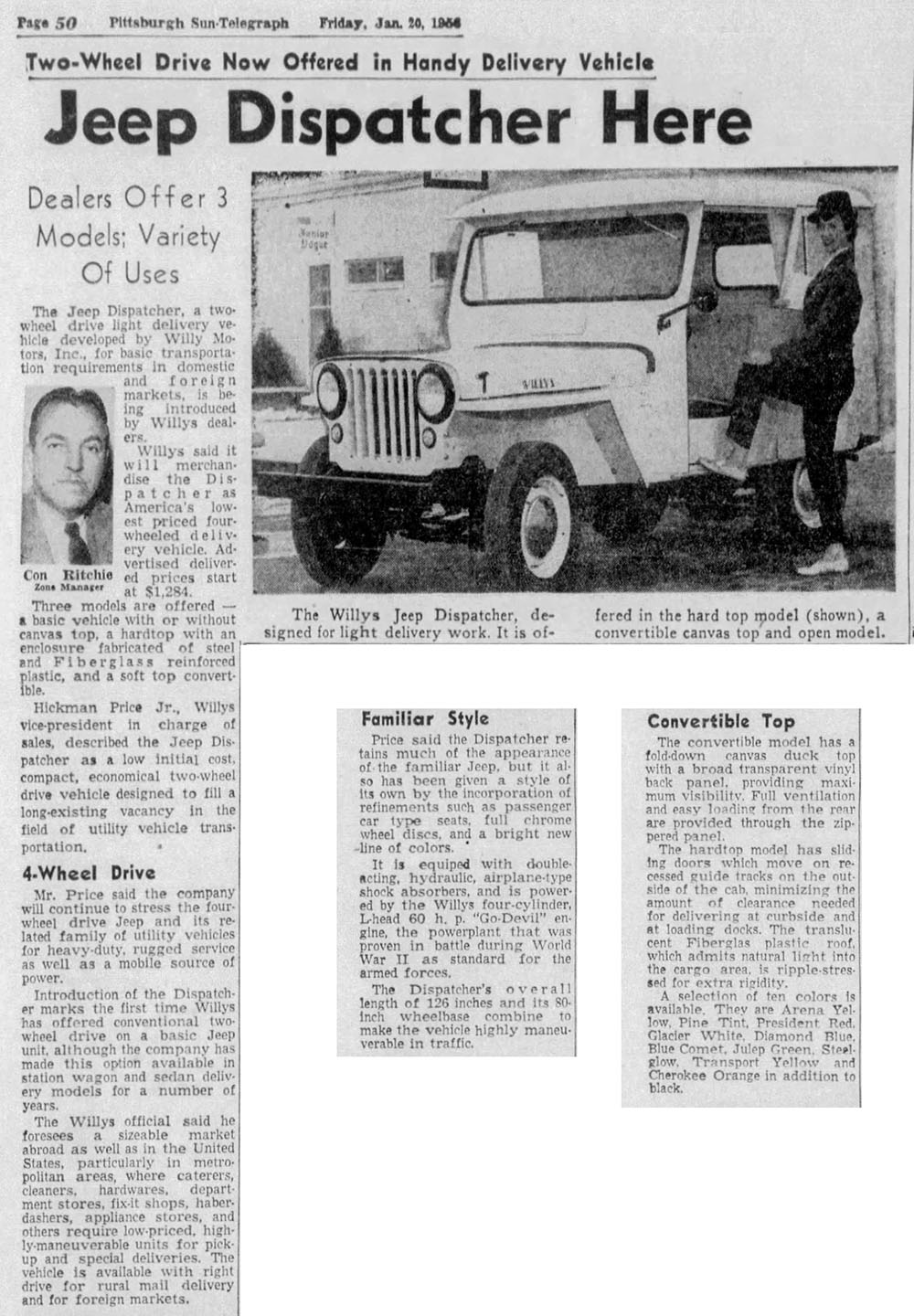
The article suggests that the Jeep Dispatcher only came in three models, with one listed as a “basic model with or without a top”. The marketing department must have decided that the single model with or without a top was better off as two models distinct models.
January 20, 1956, Pittsburgh Sun Telegraph
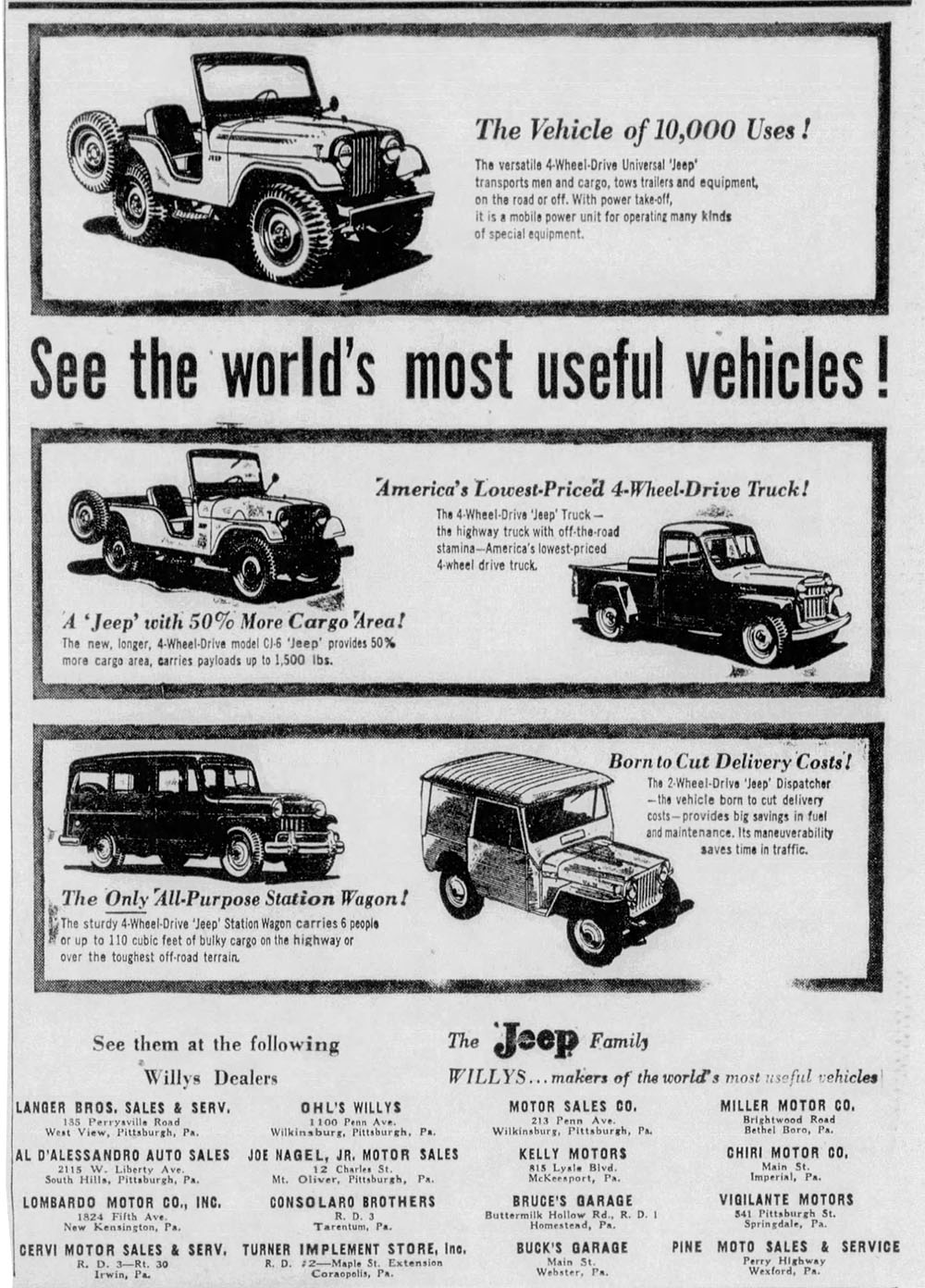
On the same page as the Dispatcher article was an ad for multiple jeep dealers in the Pittsburgh area. The new ad included the DJ-3A with the fiberglass-reinforced hardtop.
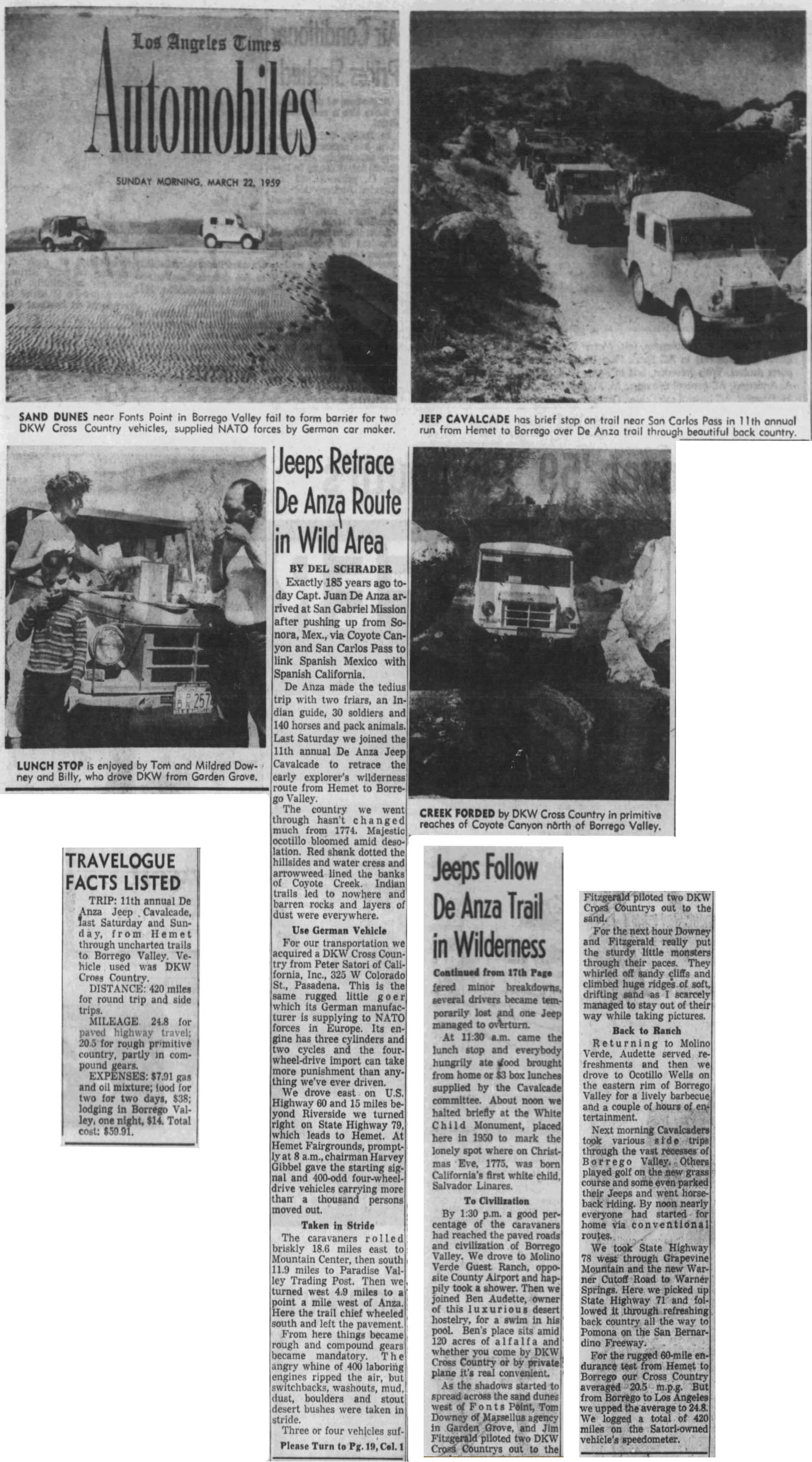
1959 marked the 11th annual Hemet to Borrego via De Anza trail Cavalcade. That year over 400 vehicles joined the adventure. The author and photographer of the below article, Del Schrader, was transported over the trail via two German DKWs. The article was published in the March 22, 1959, issue of the Los Angeles Times.
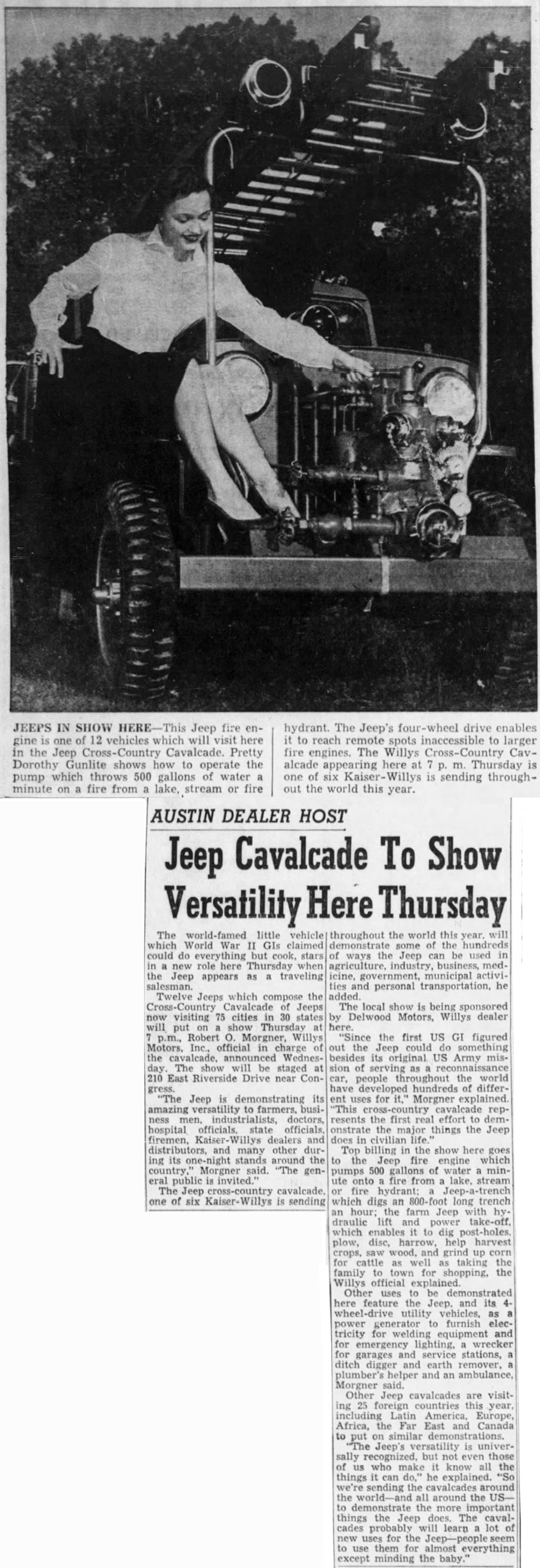
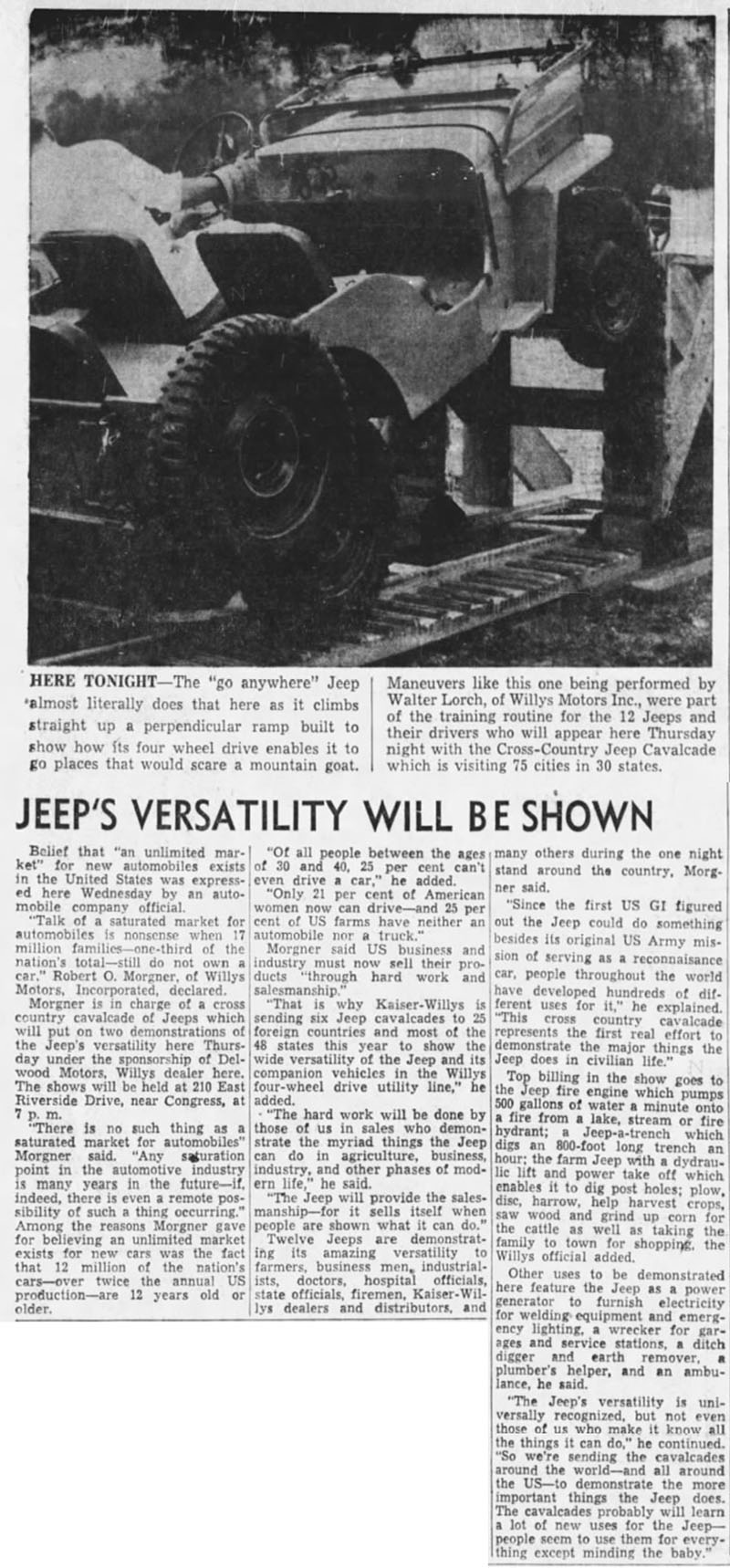
Two articles in the Austin American shared the news, both with a photo,that a calvacade of jeeps would be visiting Austin, Texas, Calvacades were also planned around the world for 1954, with jeeps visit 25 countries outside the United States.
This first article appeared in the April 21, 1954, issue of the Austin American-Statesman and featured a CJ-3B fire jeep:
This second article appeared in the April 22, 1954, issue of the Austin American-Statesman and featured a CJ-3B climbing a vertical wall:
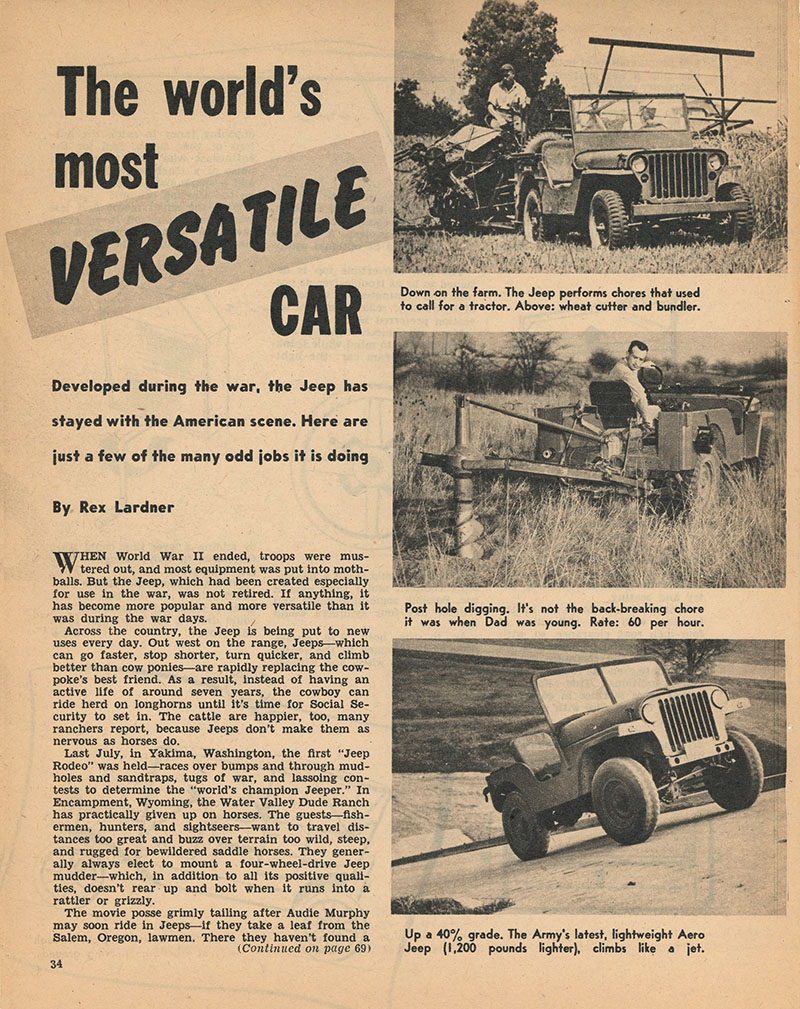
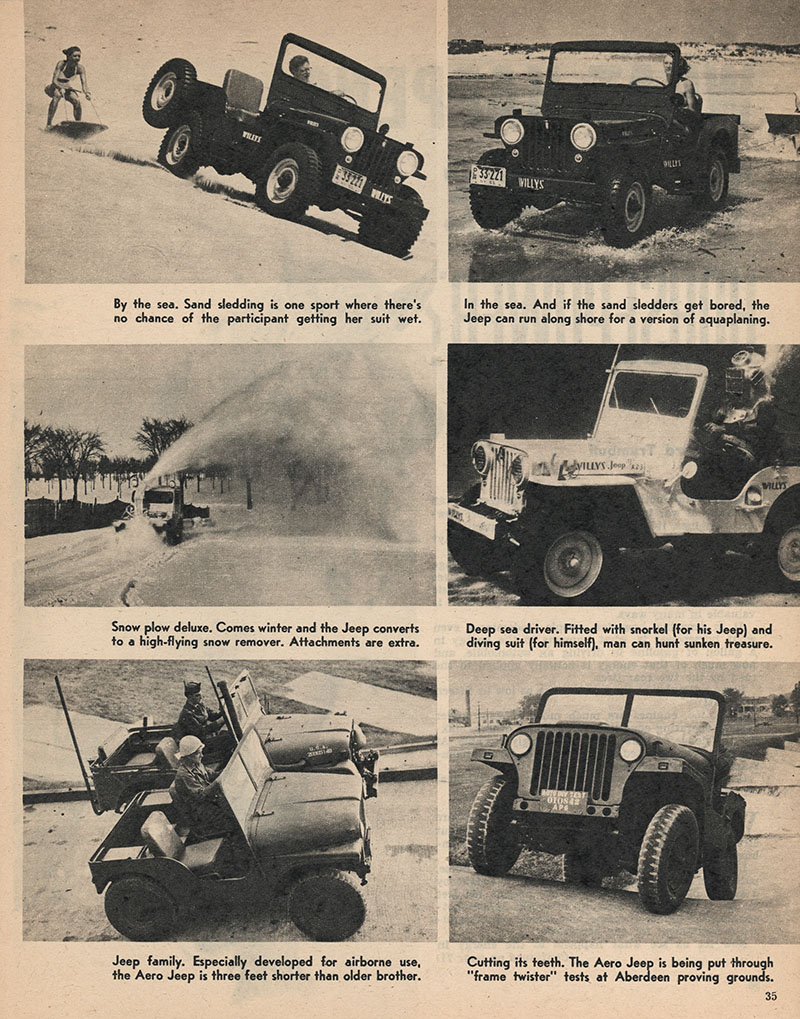
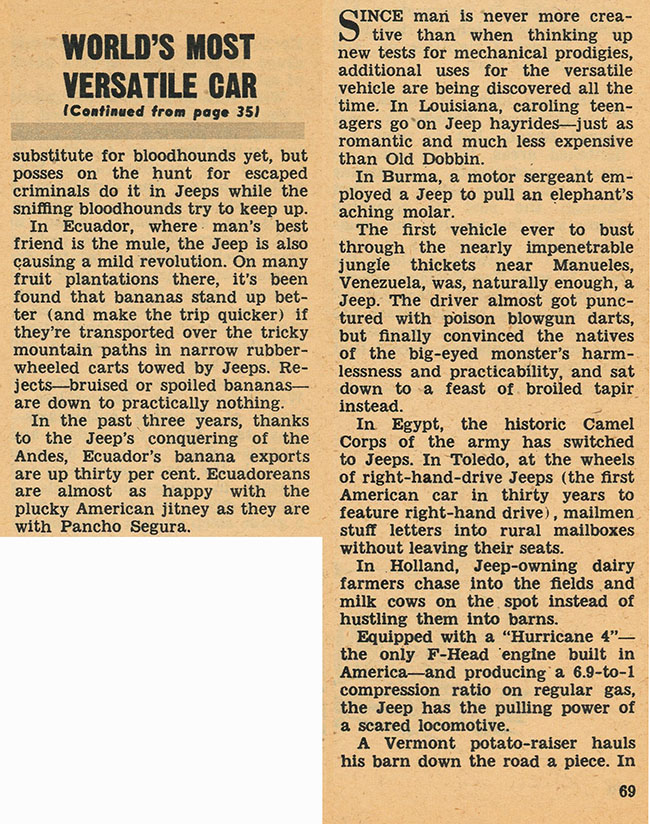
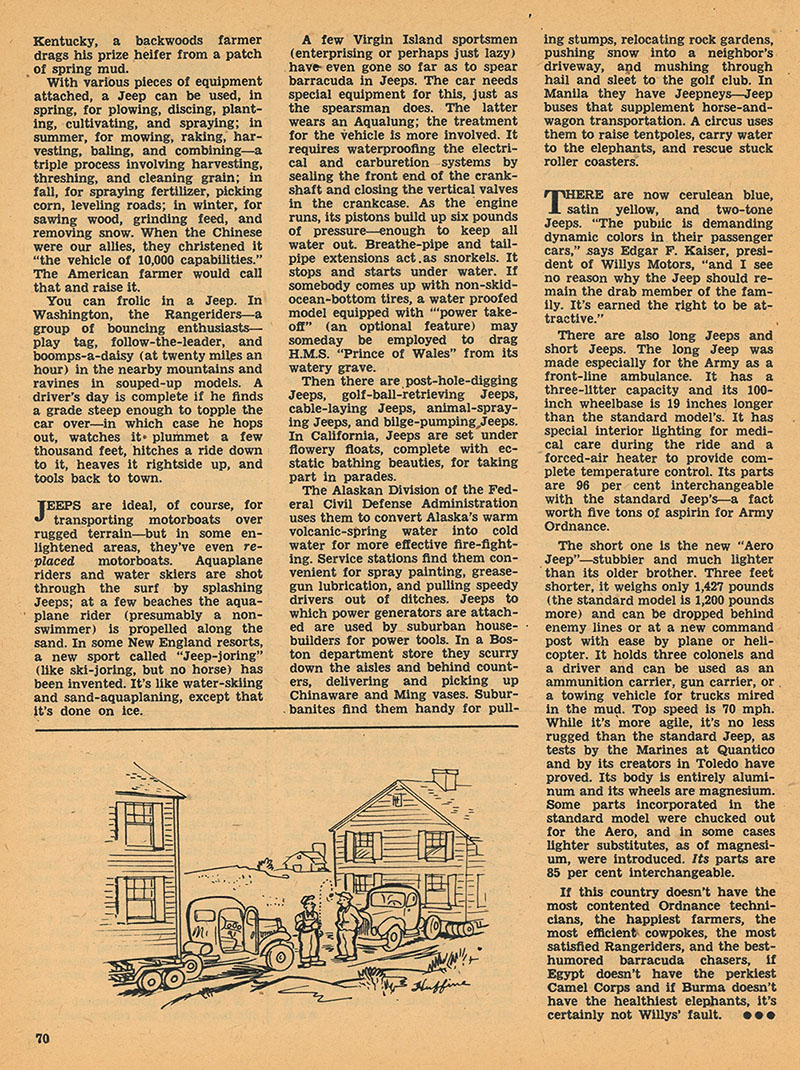
In the January 14, 1952, Newsweek put out an article about the jeep’s versatility. There are some interesting tidbits, such as the Chinese’s nickname for the jeep was “the vehicle of 10,000 capabilities”. The jeep was used to spear barracudas in the Virgin islands, play tag in Yakima, ski via jeep-joring in New England and Ontario, Canada,, and in Burma it was claimed that a jeep was once used to pull an elephant’s tooth.
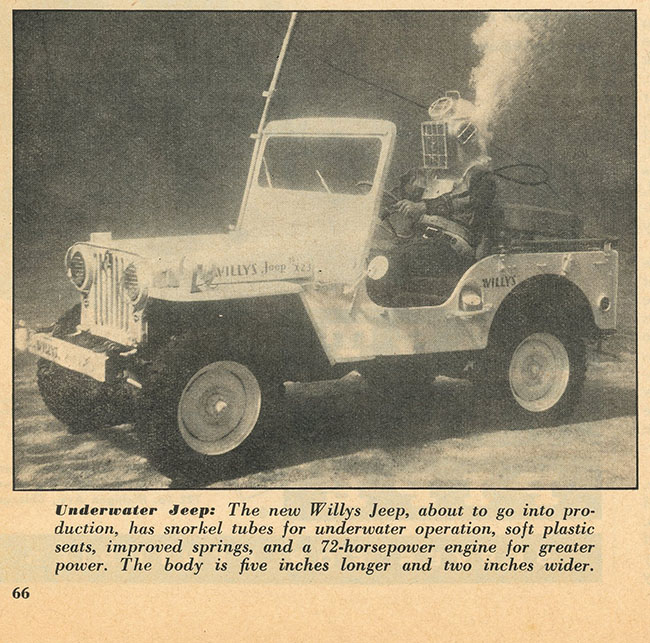
This photo and caption was also included in a seemingly random area of the magazine, despite the fact that the same image appeared within the article.
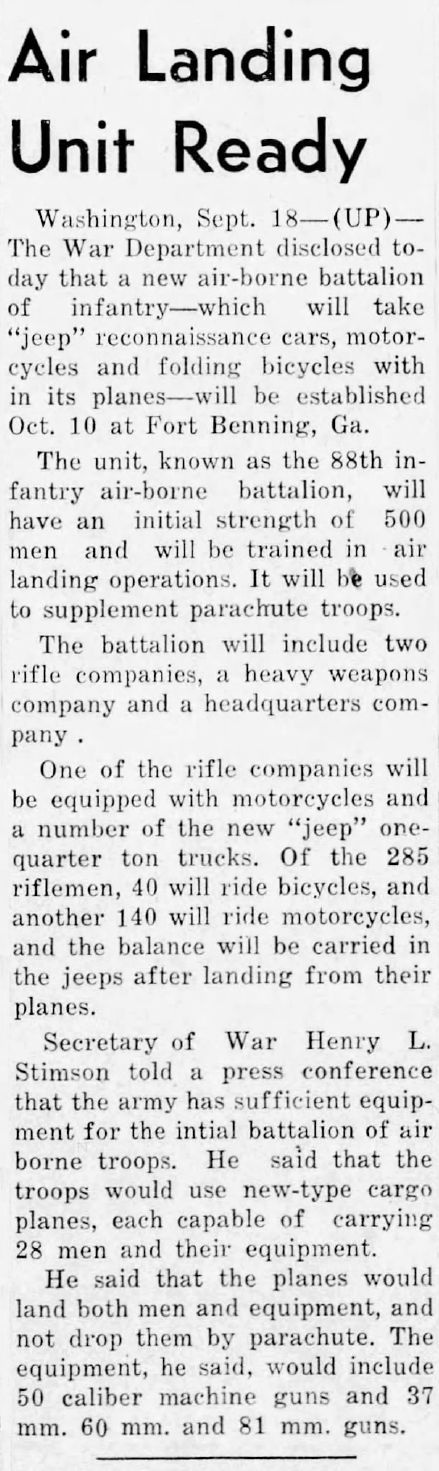
This September 18, 1941, article in the Petoskey News-Review introduced readers to the new Air-Borne Battalion. The new battalion would be trained in air landing operations and include two rifle companies. One of those two companies would be equipped with riflemen on bikes (40), motorcycles (140), and jeeps (105).
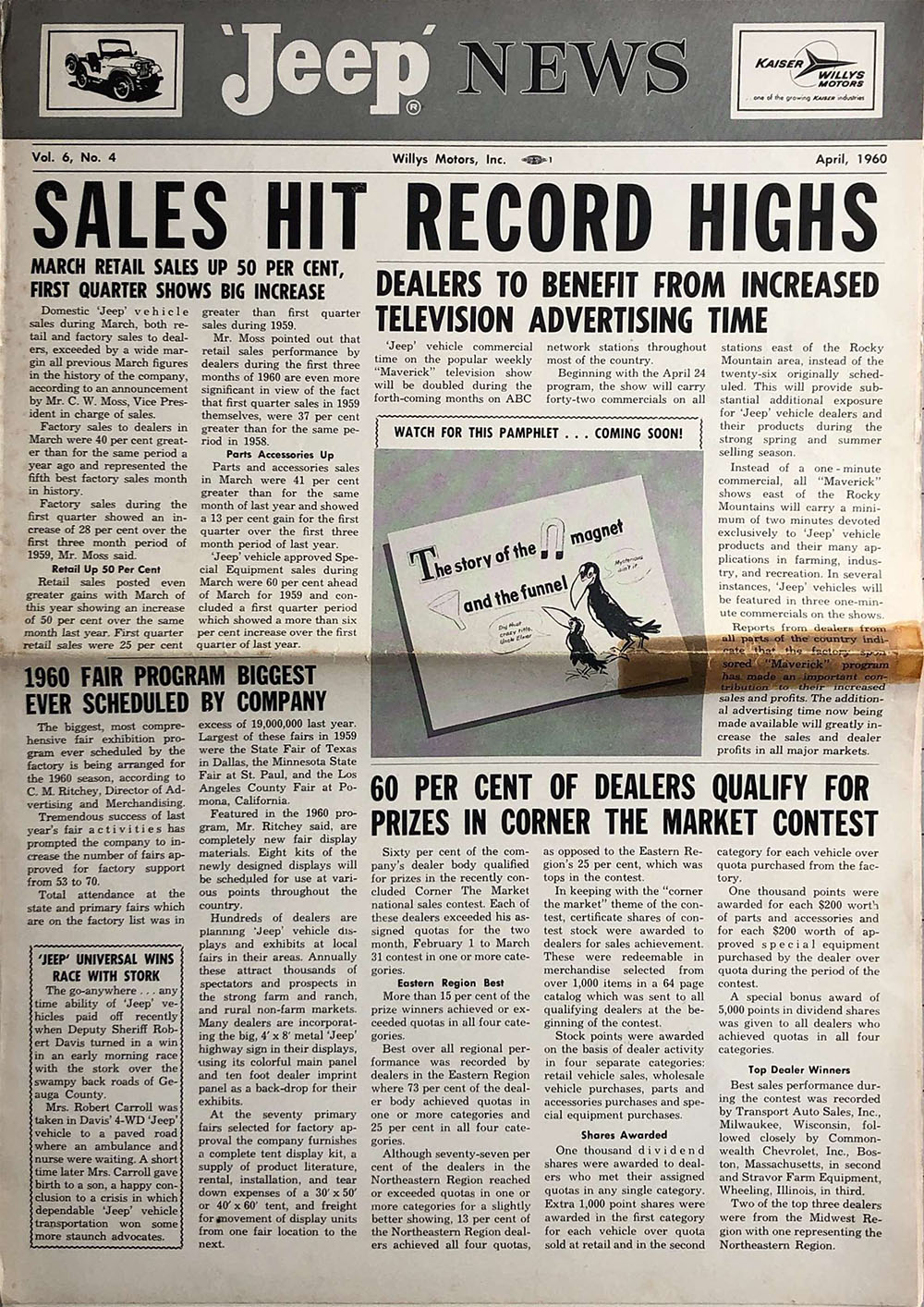
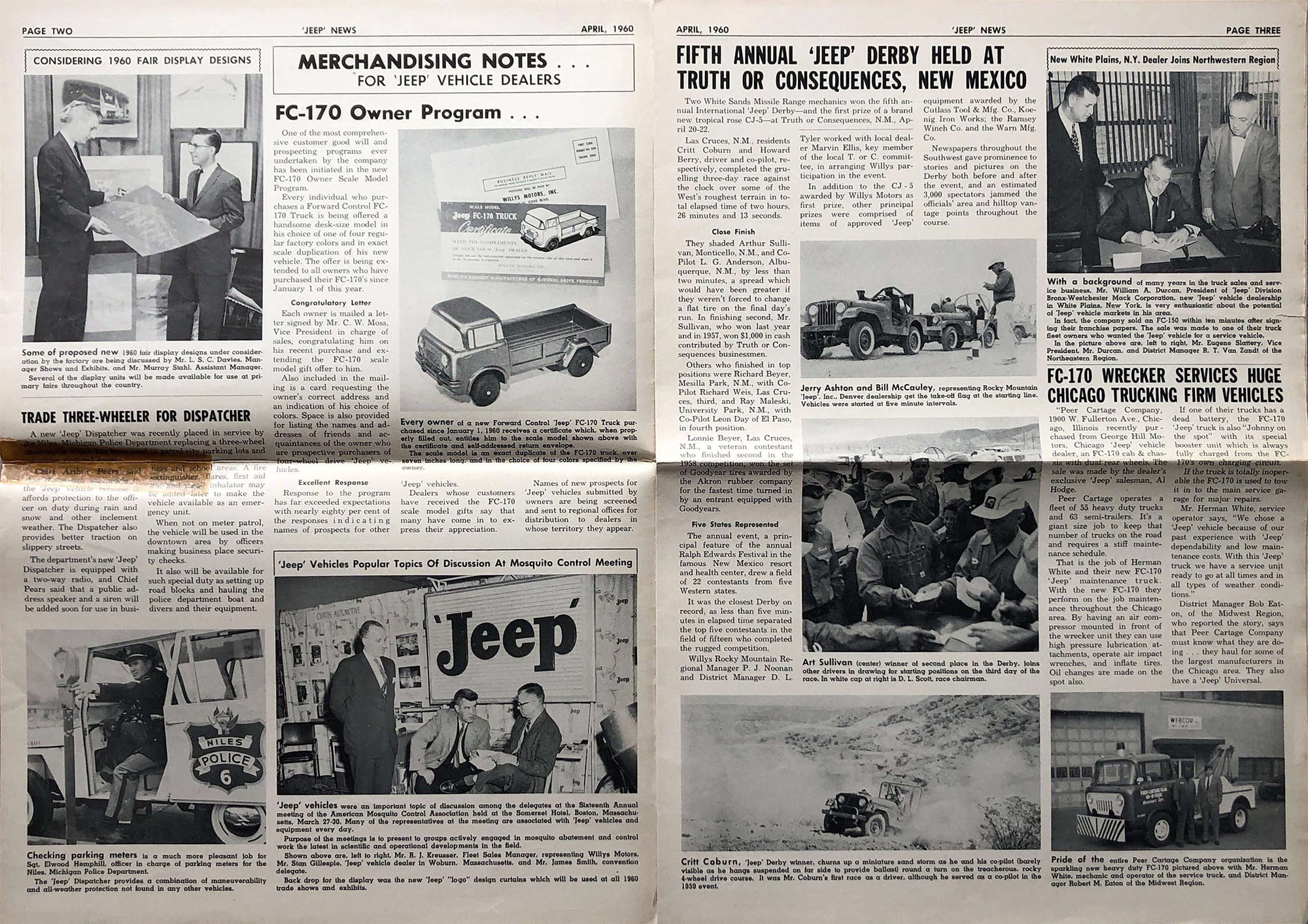
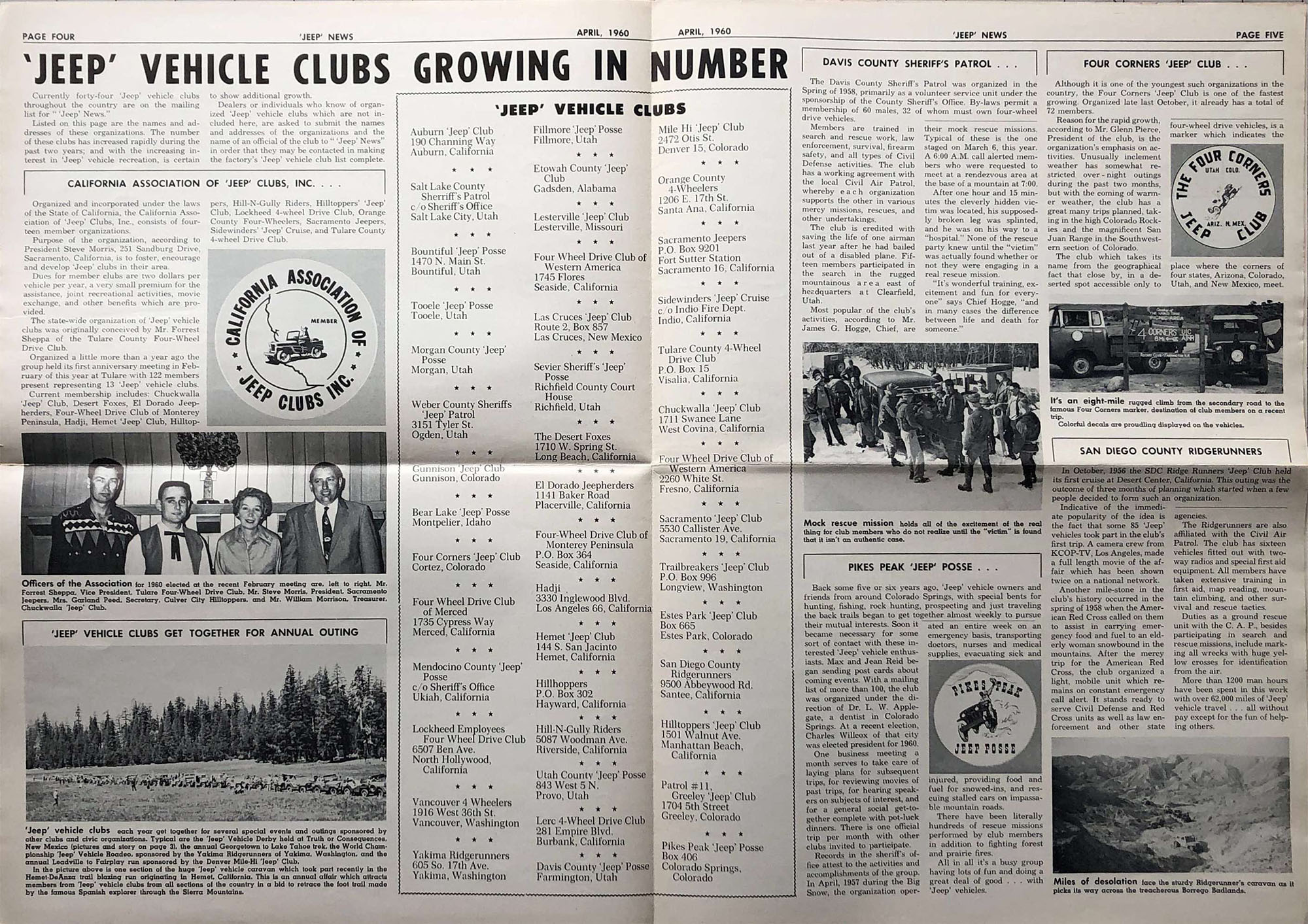
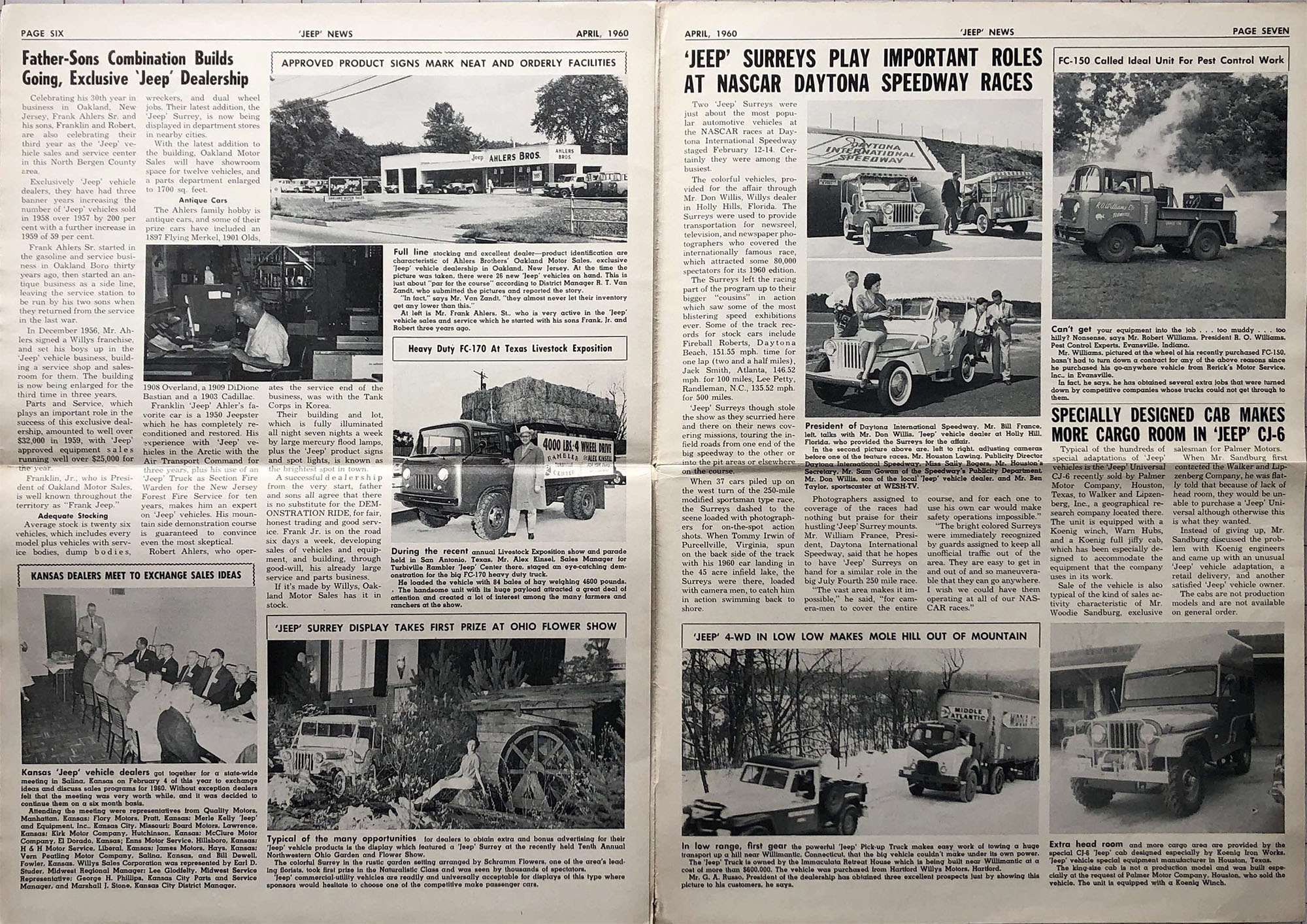
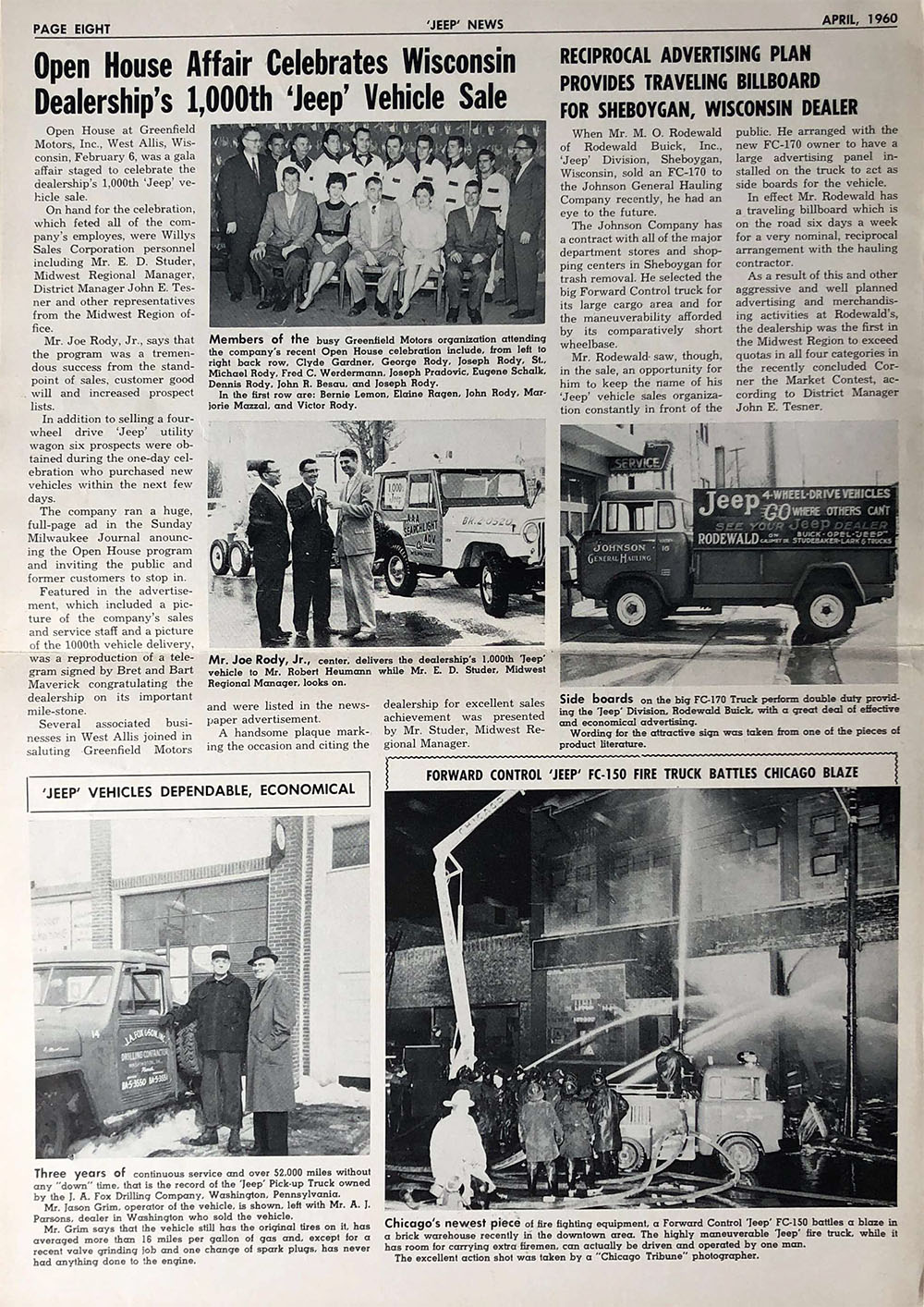
This issue of Jeep News is interesting in that the whole middle section focuses on the rise in jeep clubs. It isn’t an exhaustive list, but rather simply a list of clubs in contact with Jeep News, with a heavy emphasis on western clubs.
Note the CJ-6 hardtop on page 7. It’s a custom top built by Koenig. I don’t have it in my records, so keep a watch for it. It’s probably still out there somewhere, most likely still in Texas. Note also the scale model FC-170 giveaway and certificate with each FC-170 purchase on page 2.
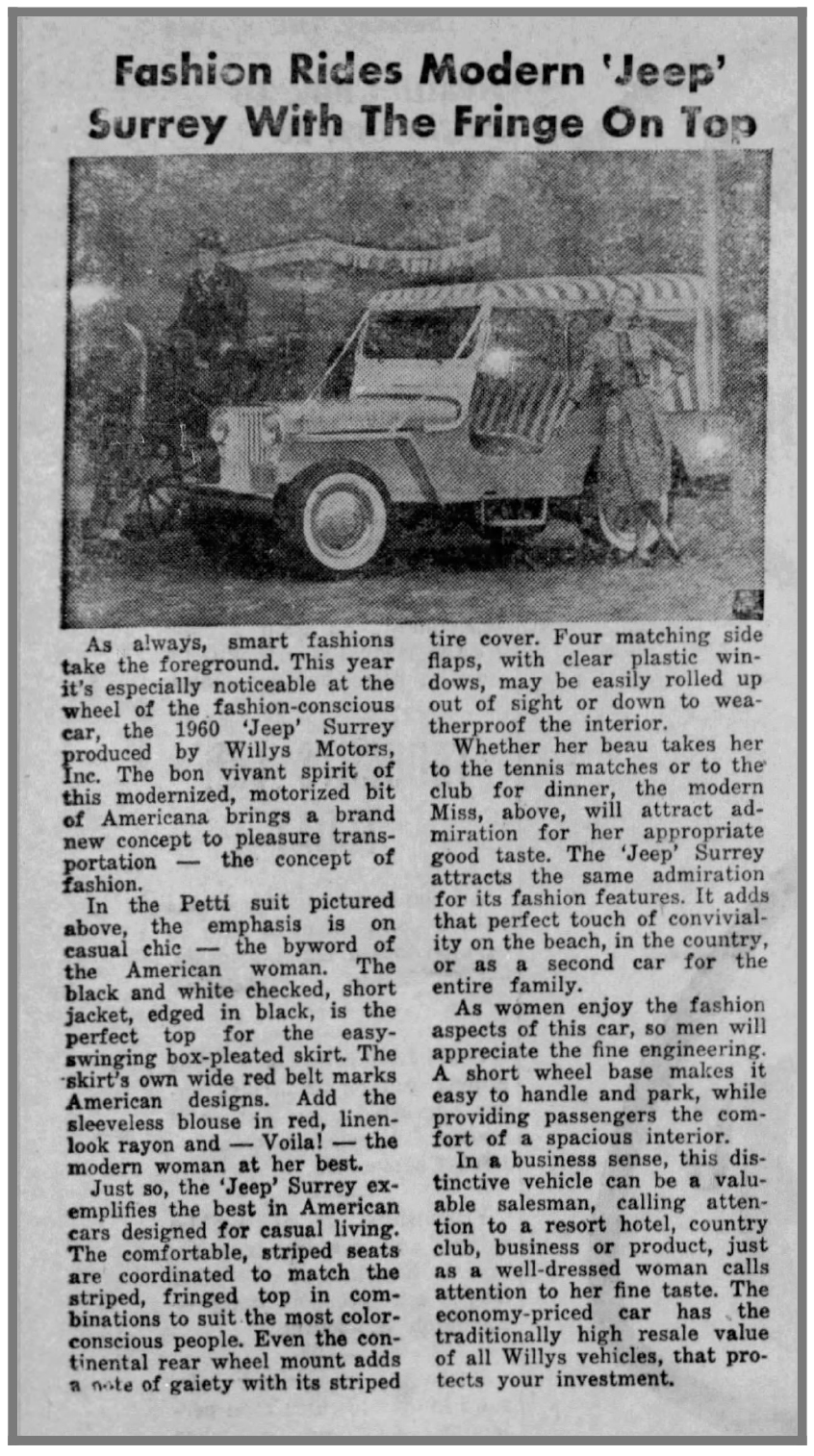
UPDATE: Here are a couple more articles introduction the Jeep Surrey. The first one notes that women will like it for its fashion while men will like it for its fine engineering. I’m less convinced that the term ‘fine-engineering’ should be applied to any of the DJ-3As.
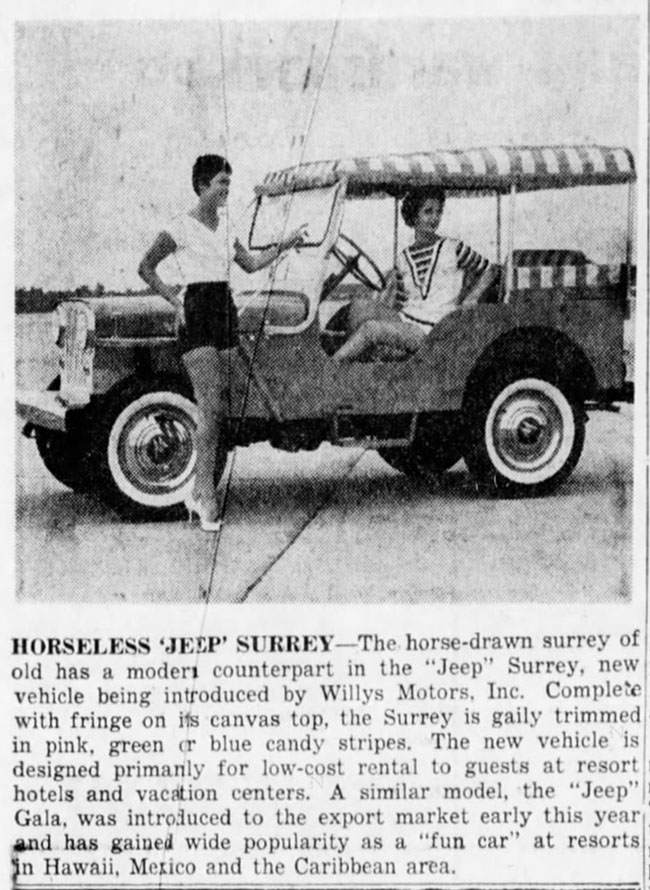
The second was widely disseminated in various arrangements and reminds us that “A similar model, the “Jeep” Gala, was introduced to the export market early this year .“ This documents that the Gala was the export model and the Surrey the domestic model.
This first article was published October 08, 1959, and comes from Utah’s Orem-Geneva Times:
This October 04, 1959, article published in the Cincinnati Enquirer.