emailNeed to contact me and don't have my email? Click on email button.
About eWillys
Welcome to eWillys.com, a website for vintage jeep enthusiasts. I update this website nearly every day with jeep deals, jeep history, interesting reader projects, jeep related info, and more.
These quick searches can help you find things on eBay. People list in the wrong categories all the time, so don't be surprised to see brochures in the parts area for example. This section used to be split into jeeps, parts and other categories, but recent changes to eBay will require this information to be recoded.
The links to posts below show jeeps grouped by models, condition, and other ways. Some of these jeeps are for sale and others have been sold. If you are unsure whether a vehicle is still for sale or not, email me at d [at] ewillys.com for more info.
Importantly, the allure of buying a project jeep can be romantic. The reality of restoring a jeep can be quite different, expensive and overwhelming without the right tools and resources. So, tread carefully when purchasing a "project". If you have any concerns about buying a vintage jeep, or run across a scam, feel free to contact me for help, comments or concerns .
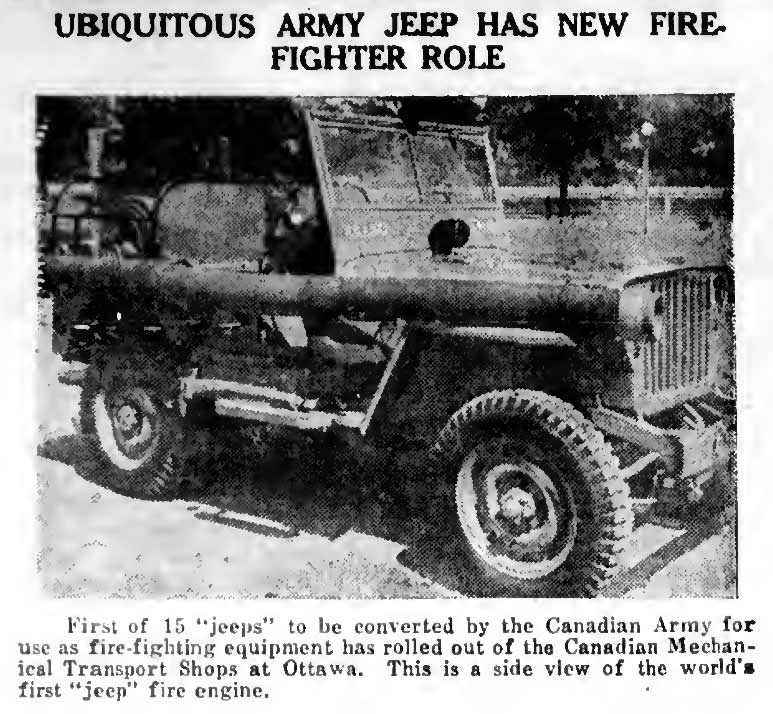
UPDATE: Originally I listed this as a 1941 article, based on a database date stamp. Richard pointed out the stamped grill would make this unlikely. It’s a good point! Additional research suggests the paper was from the 1942-43 time frame.
This photo documents one of fifteen jeeps transformed by the Canadians into fire jeeps. I don’t have a date on the newspaper, but it was published in an issue of the Flesherton Ontario Advance Newspaper.
Good news. The site is back up! Explanation on what happened to come ….
I haven’t had a chance to add posts from the recent few days, but this photo is from the April 1956 issue of Willys News. This CJ-3B certainly has an unusual crew setup!
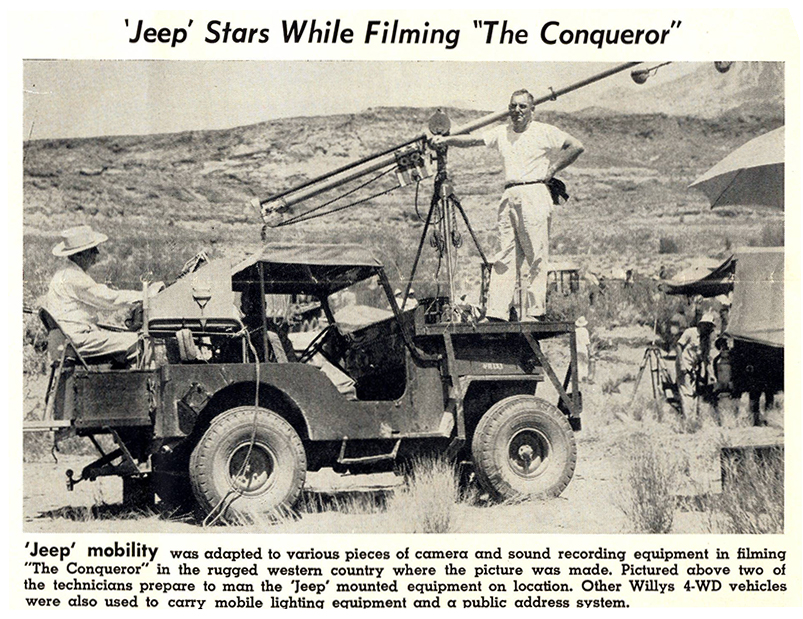
Most folks don’t remember the movie the Conquerer, starring John Wayne and Susan Hayward. It was a Ghenghis Khan theme-movie, as it was a huge bust. The Conqueror movie was filmed in Utah locations such as Snow Canyon, St. George, Harrisburg, Warner Valley, and Hurricane during a 13-week stretch in 1954-1955 (source).
Unfortunately, what the movie is best known for is the unusually high percentage of deaths of the crew from cancer. The crew used some high powered fans to blow sands to simulate rough conditions. A documentary I watched suggested that disturbing the sand might have exacerbated the potential exposure to radiated materials.
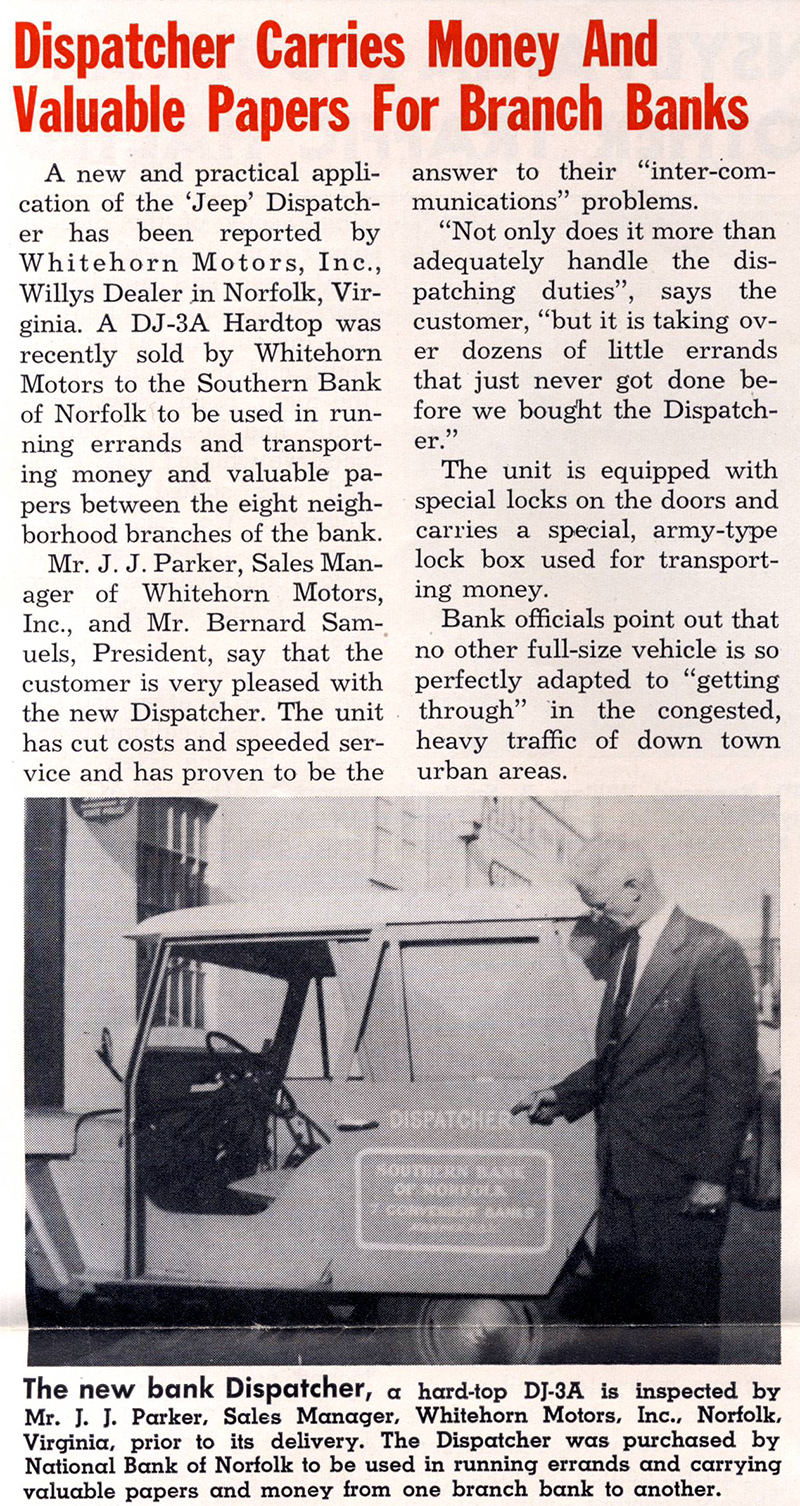
The Southern Bank of Norfolk in Virginia thought the DJ-3A would make an excellent bank vehicle. Despite being outfitted with special locks and an ‘army-type’ lock box, the dispatcher did not look like a high security bank vehicle. Moreover, the bank might have been smarter not to put the bank’s name on the jeep. I would have liked a picture of the lock box. The article below was published in the June-July 1956 issue of Willys News.
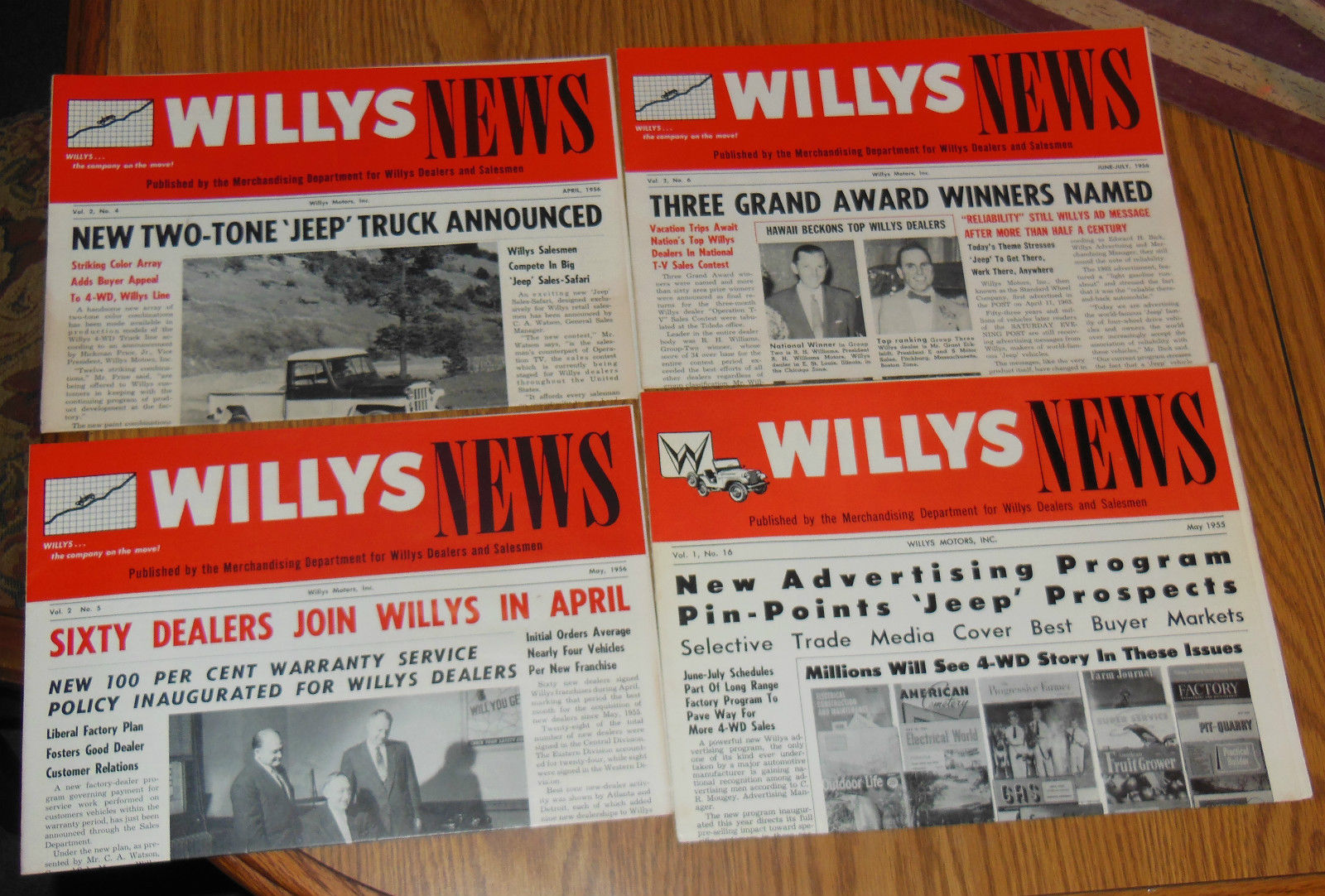
Today the four 1956 Willys Newspapers in the mail I won on eBay arrived. There is lots of great stuff, both photos and interesting stories. I’ll be sharing them all in the coming weeks.
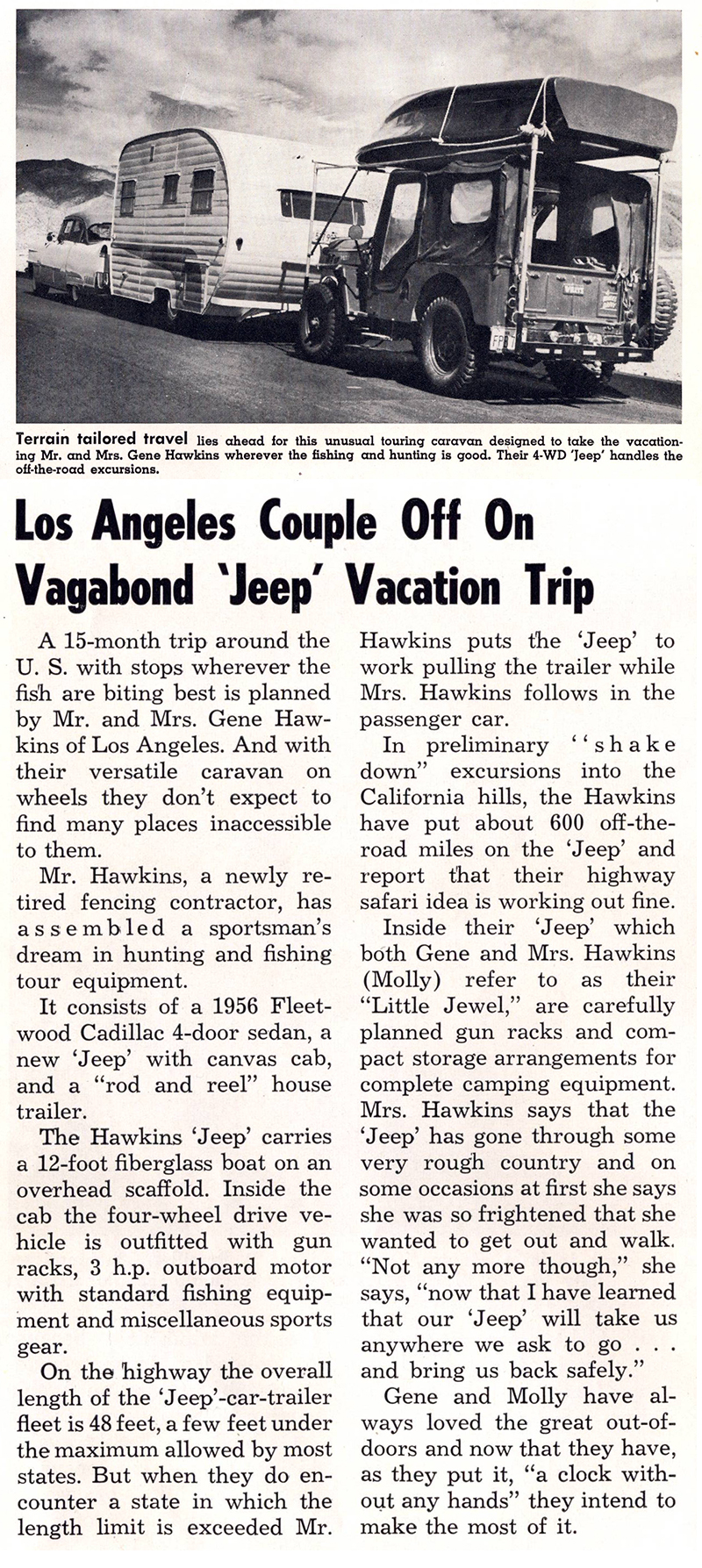
This first article from the page seven of the June-July 1956 issue tells the story of a retired couple by the name of Hawkins who readied a caravan for some cross country exploration. At the head of the caravan is a Fleetwood Caddillac. It pulls a camper-trailer that pulls a CJ-3B carrying a boat. Looks like they were ready for anything!
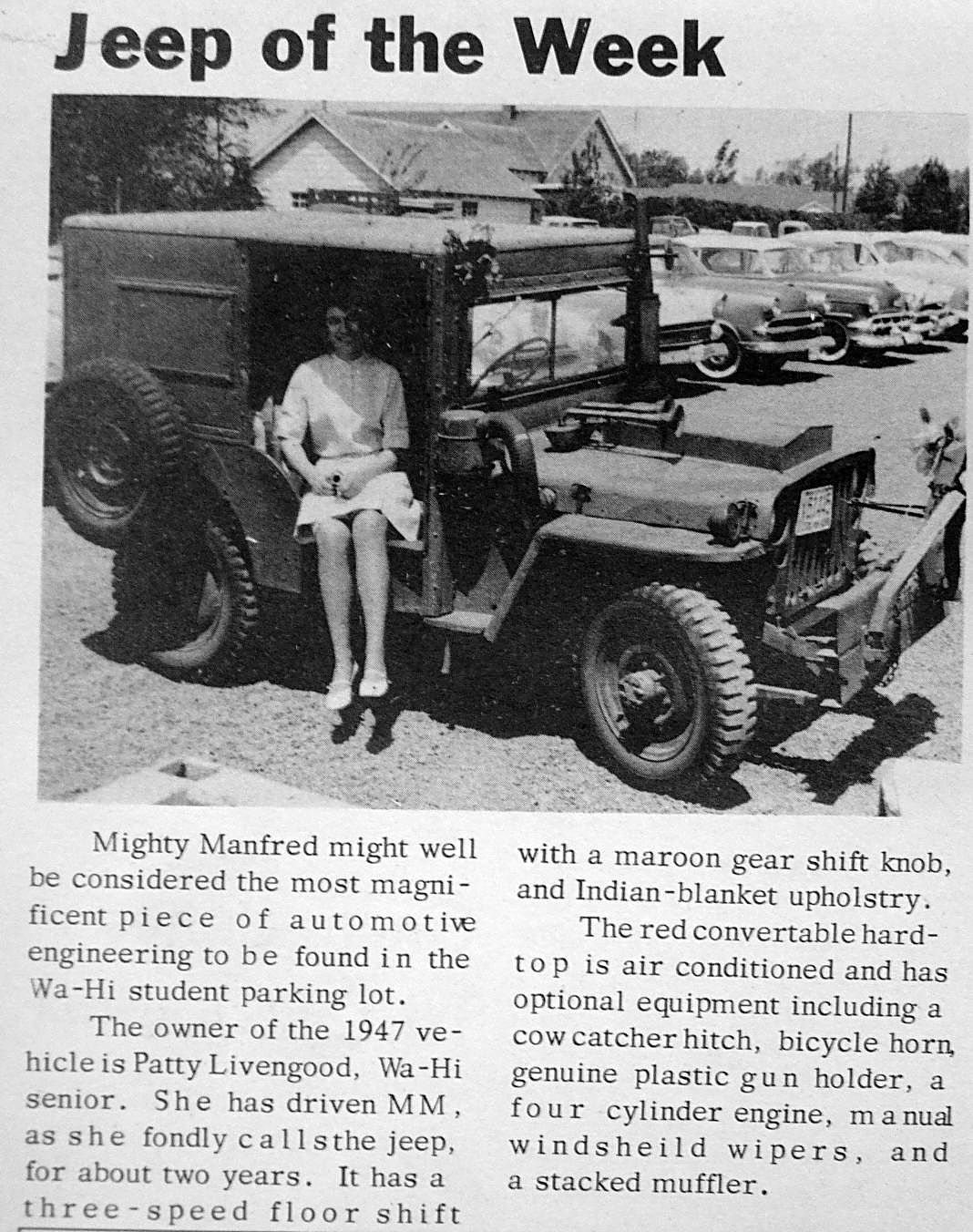
I stumbled upon a website that celebrates old articles from the town of Walla Walla, Washington, just forty-five minutes east of me. At some point the local newspaper ran a series of articles titled “Heap of the Week”. However, one week they changed the title to “Jeep of the Week”.
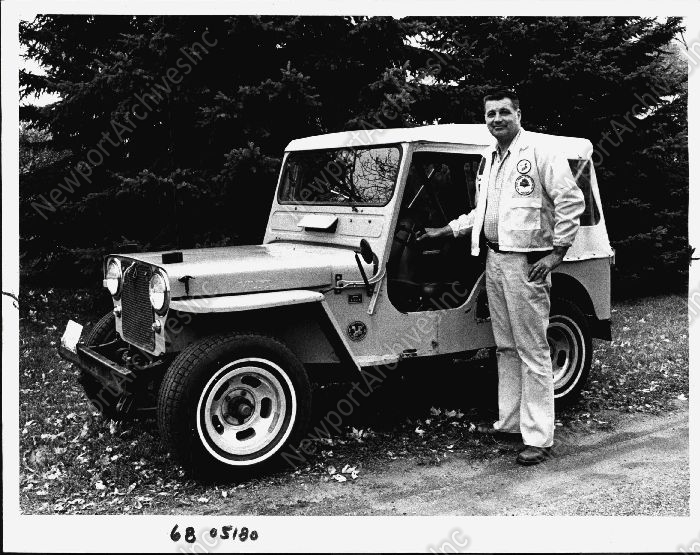
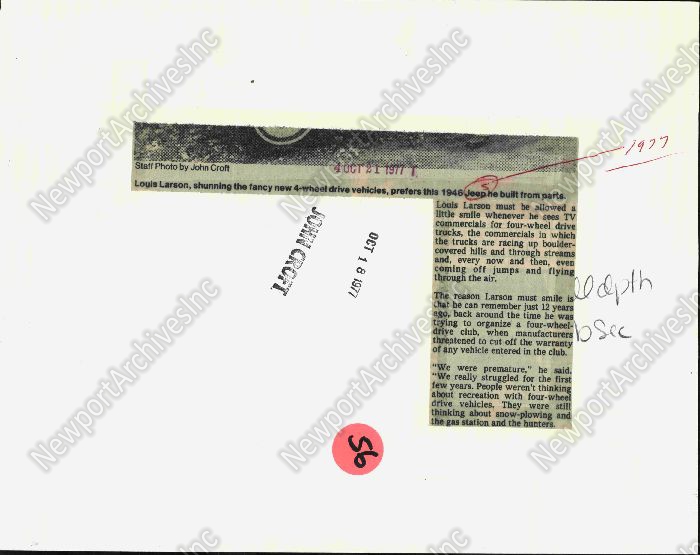
This story is interesting. Larson was involved in starting a jeep club in the mid 1960s. Apparently, manufacturers threatened to cut off warranties for any vehicles that entered a club. I’d never heard that.
“1977 LOUIS LARSON Next to his New 4 Wheel Drive Jeep he Built Press Photo”
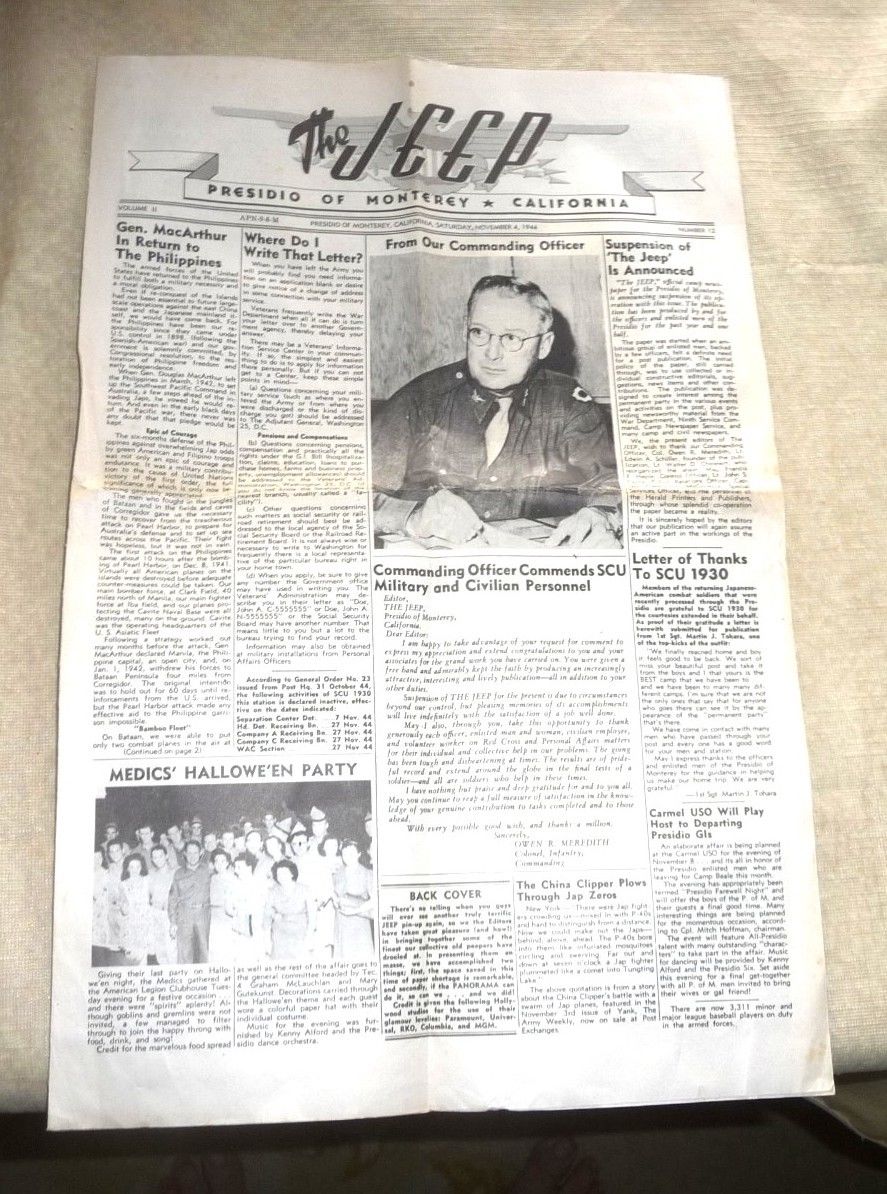
The Jeep was a newspaper published at the Monterey Presidio in California. The Defense Language Institute in Monterey has a collection of issues from 1943-1944. The one below was published November 4, 1944, and is supposed to be the last one.
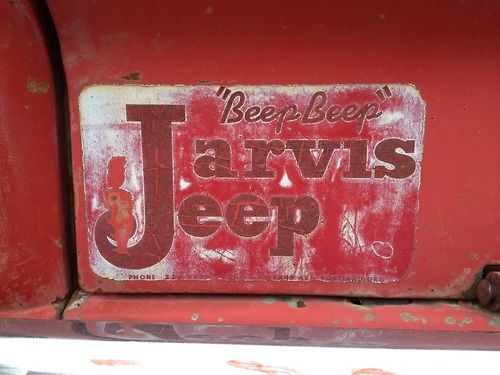
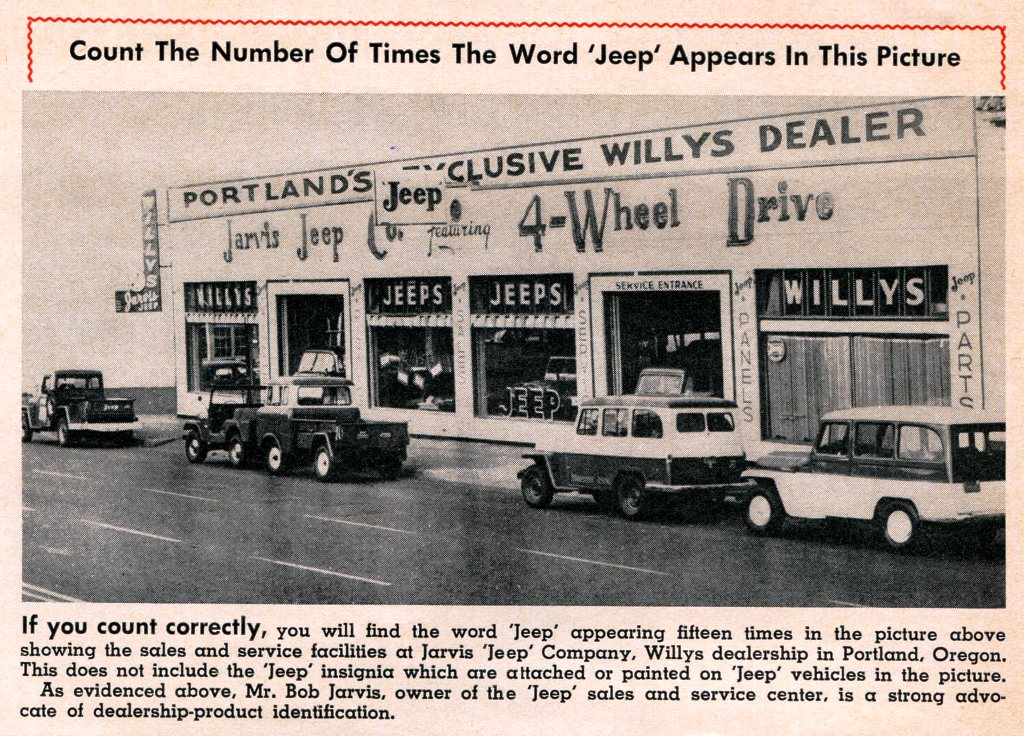
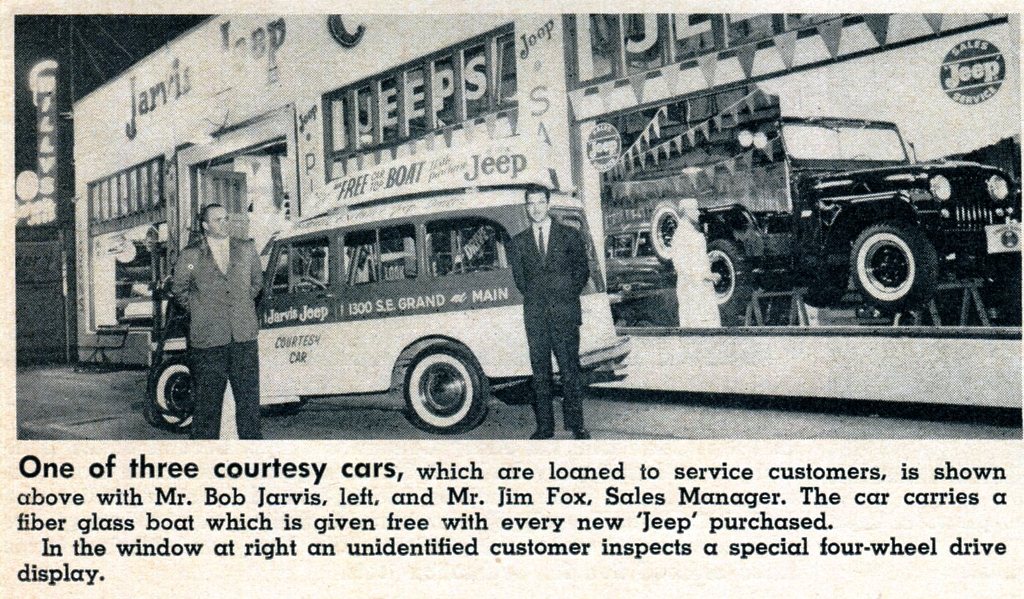
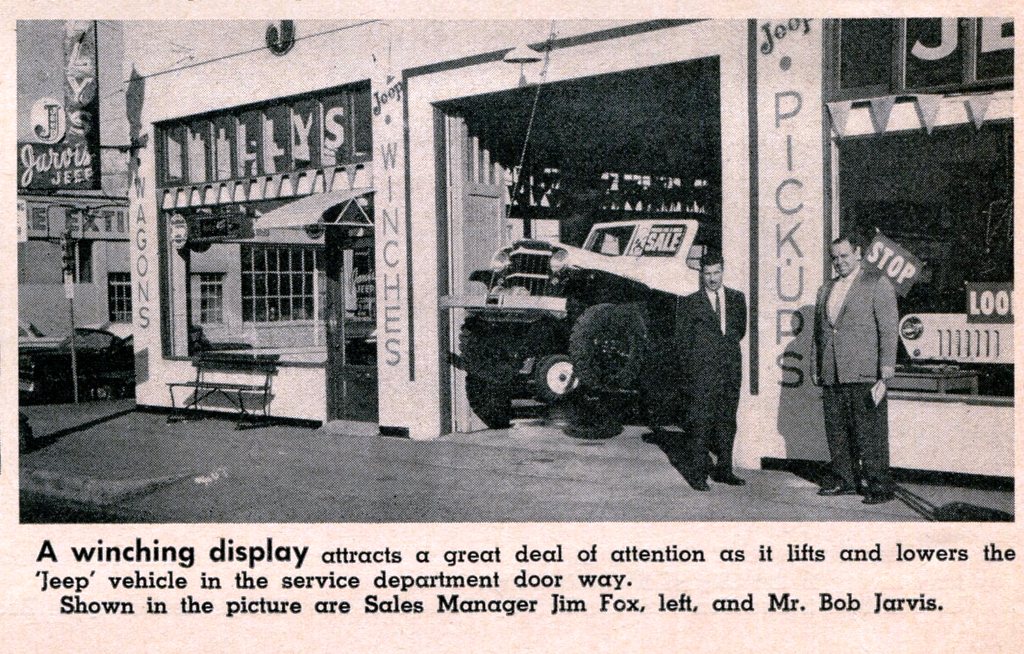
UPDATE: In a comment below Claudia mentioned that Jarvis Jeep had a very catchy jingle: Beep Beep Jarvis Jeep. Apparently, that jingle was played a lot in Oregon as a variety of folks from Oregon have mentioned it on the internet. I tried to find a commercial with jingle, but no luck. Also, at one time Jarvis Jeep was the largest jeep dealer in the nation. If I’d realized Robert Jarvis was still alive I’d have tried to contact him. Unfortunately, he passed away this past April.
Apparently, he was quite the character and boxer. According to the article in this magazine, during a boxing tournament in 1946 Rocky Marciano broke his hand on Bob’s head. After which, they became life long friends. (go here to learn more and then search for ‘Jarvis’.)
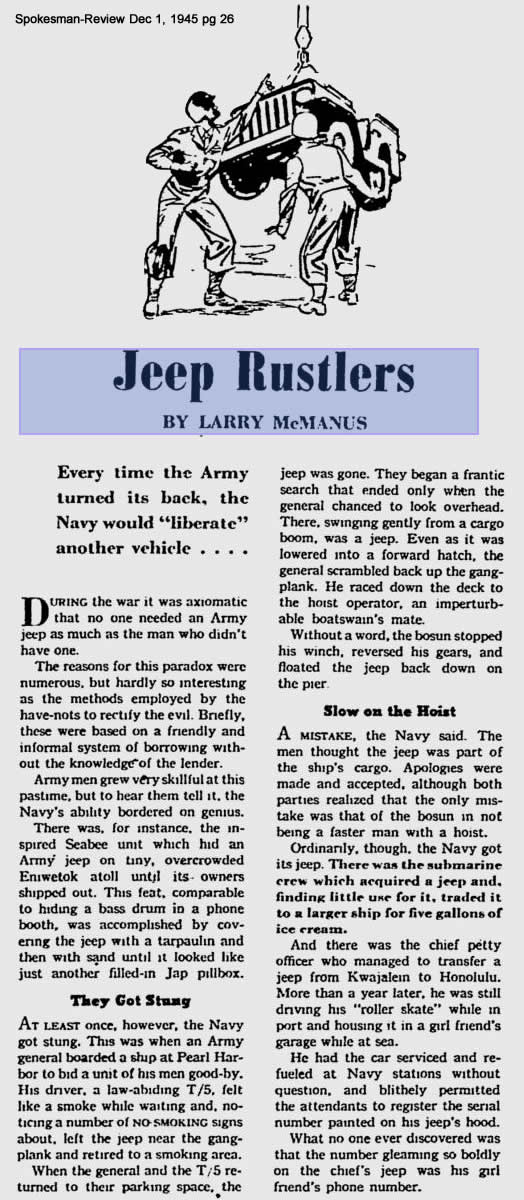
This article shares some of the jeep rustling that went on during WWII. One of protections against rustling that I’ve encountered is that driver’s would grab the rotor from the distributor to keep other military folks from stealing their jeeps.
Note that the ice cream story from yesterday has expanded to five gallons!