emailNeed to contact me and don't have my email? Click on email button.
About eWillys
Welcome to eWillys.com, a website for vintage jeep enthusiasts. I update this website nearly every day with jeep deals, jeep history, interesting reader projects, jeep related info, and more.
These quick searches can help you find things on eBay. People list in the wrong categories all the time, so don't be surprised to see brochures in the parts area for example. This section used to be split into jeeps, parts and other categories, but recent changes to eBay will require this information to be recoded.
The links to posts below show jeeps grouped by models, condition, and other ways. Some of these jeeps are for sale and others have been sold. If you are unsure whether a vehicle is still for sale or not, email me at d [at] ewillys.com for more info.
Importantly, the allure of buying a project jeep can be romantic. The reality of restoring a jeep can be quite different, expensive and overwhelming without the right tools and resources. So, tread carefully when purchasing a "project". If you have any concerns about buying a vintage jeep, or run across a scam, feel free to contact me for help, comments or concerns .
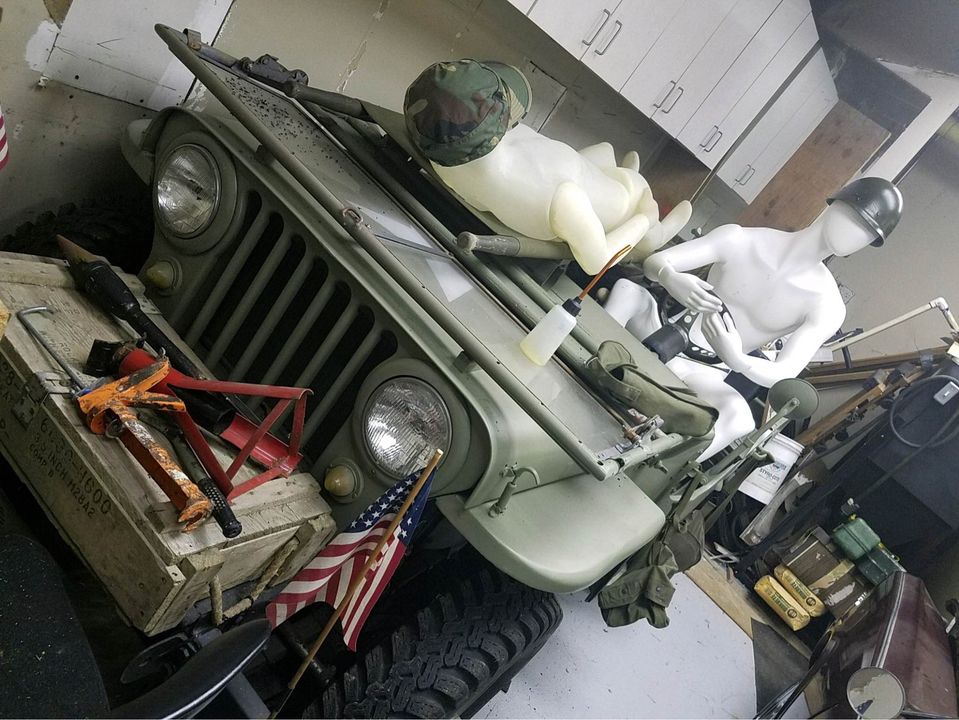
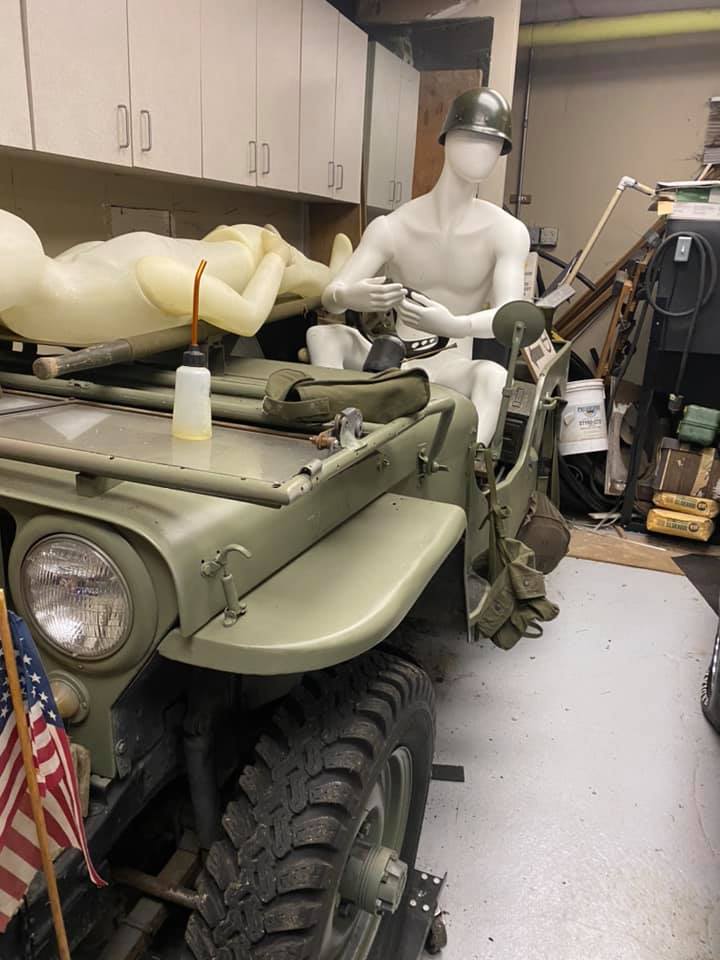
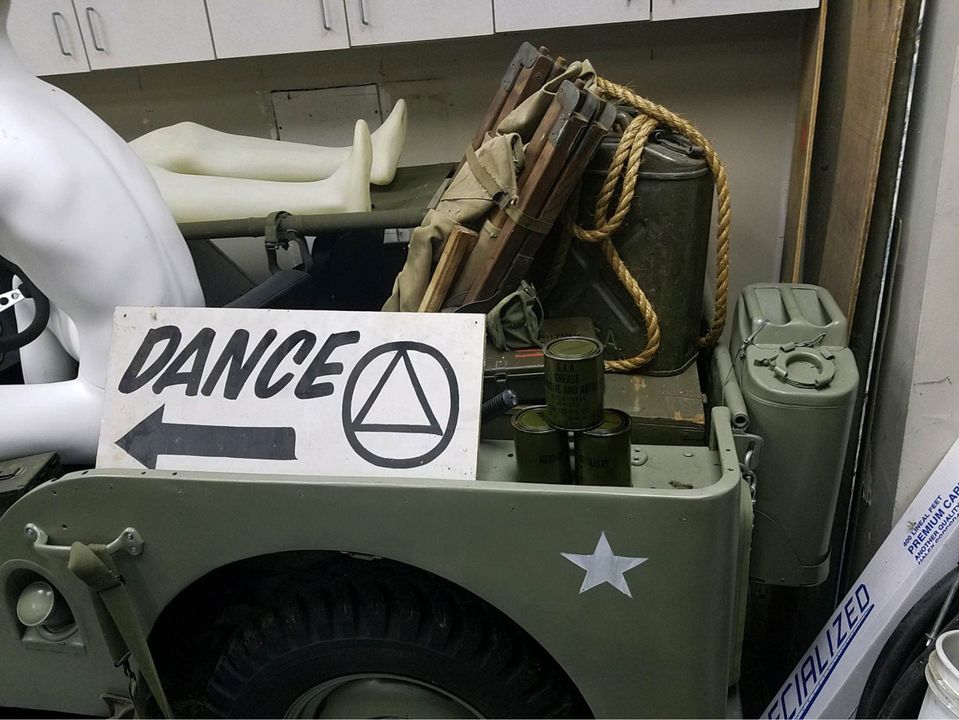
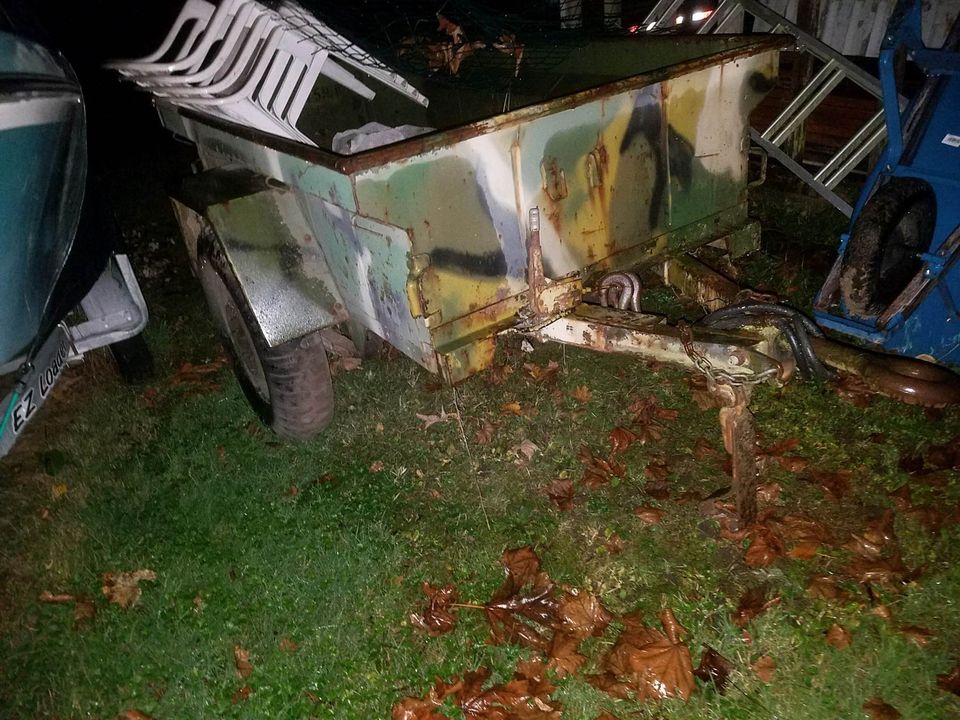
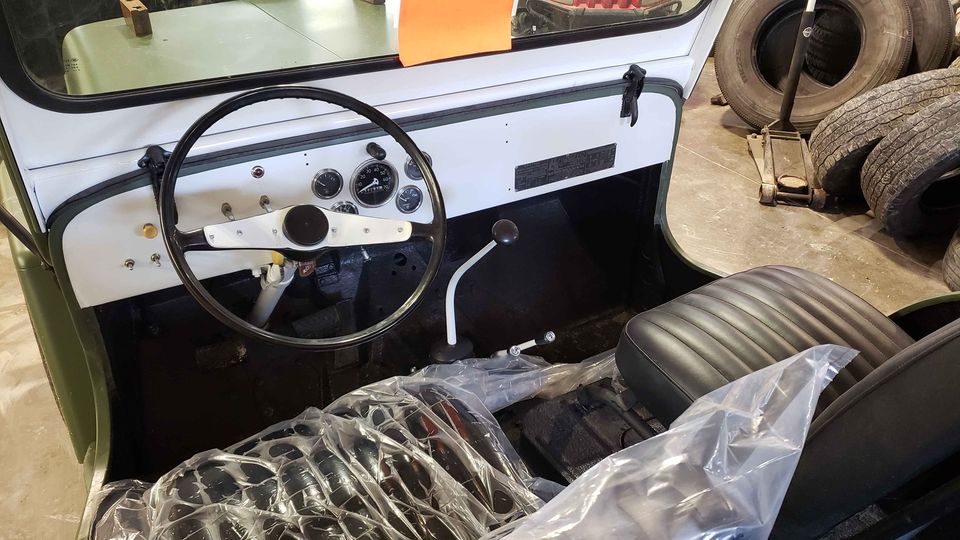
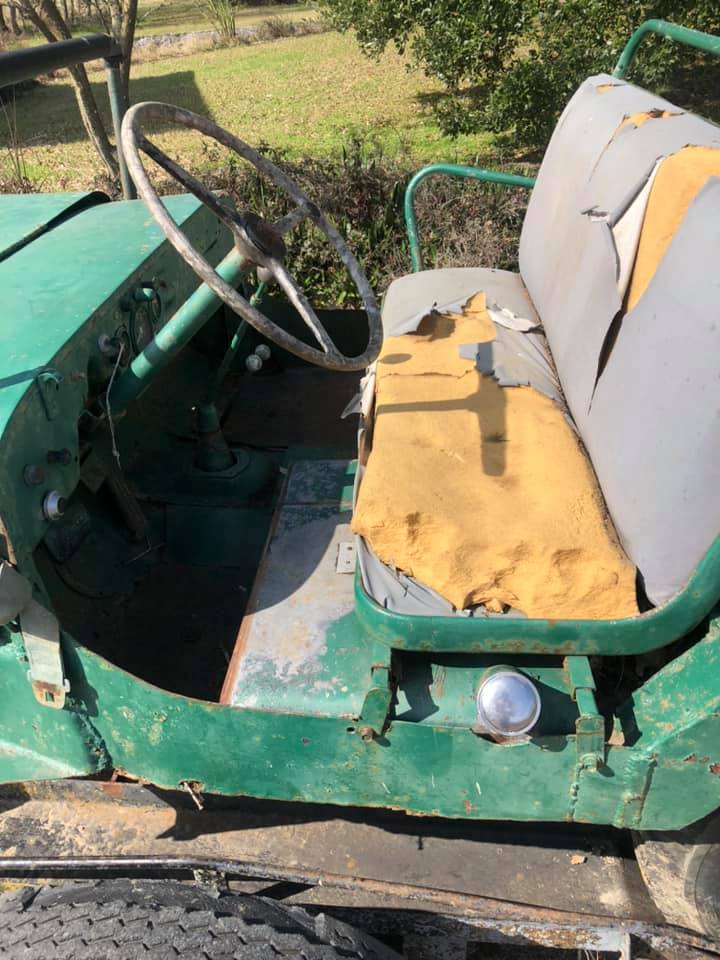
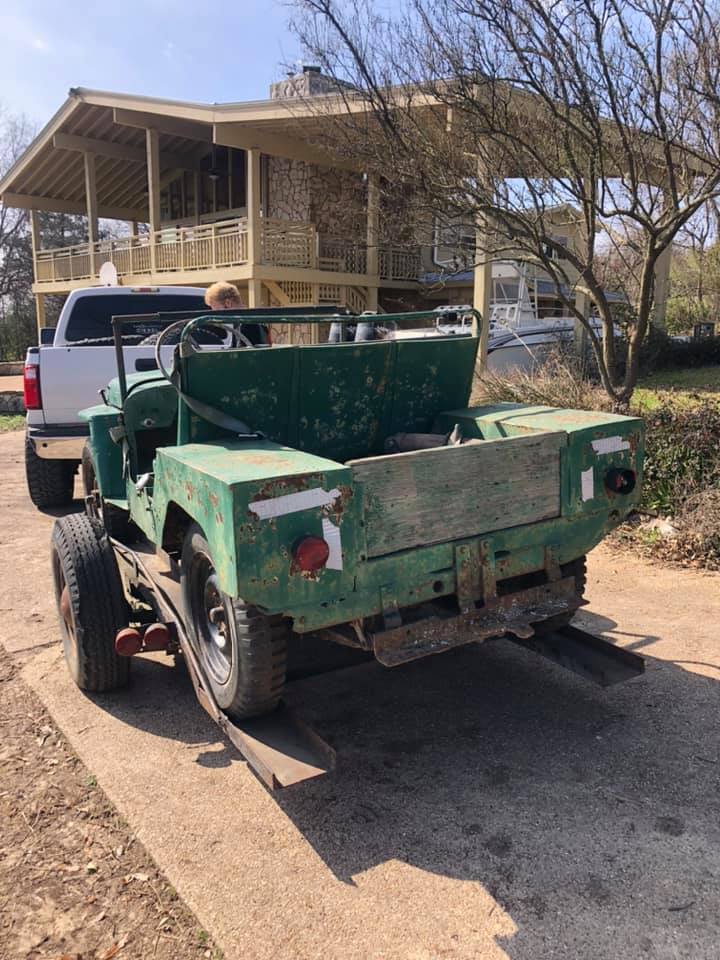
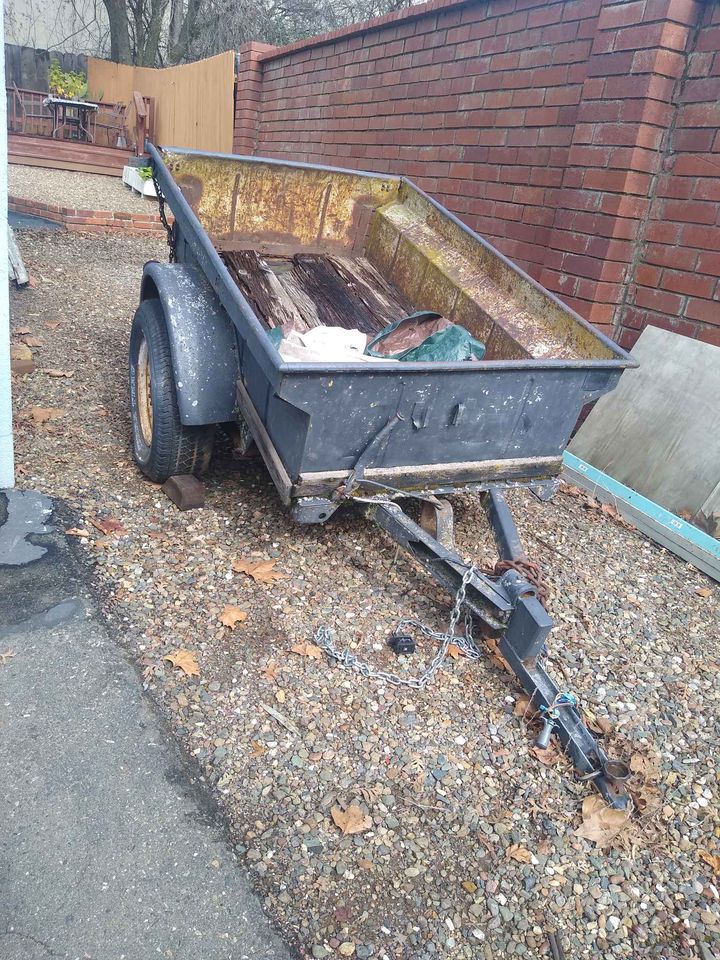
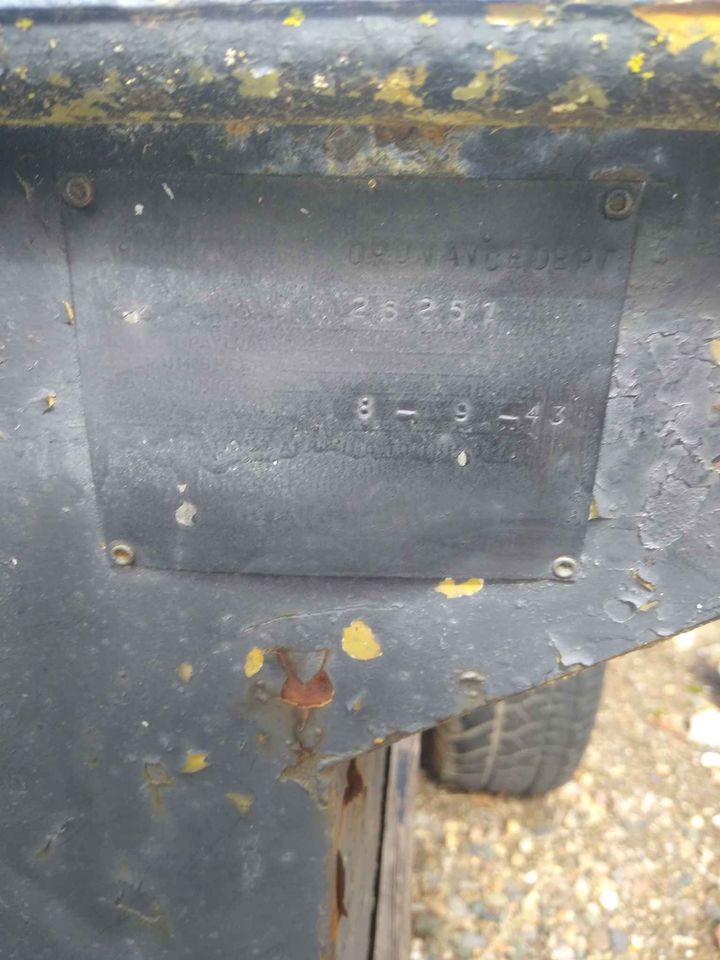
This militarized CJ-2A includes an M-416 trailer as James notes in his comment, not an M-100.
“This is located in Renton Washington. Price on this is very firm this includes the M- 100 mule trailer and a lot of military accessories. It is a great buy at this price and will be firm. I will not be answering any questions on this post as all will be directed to Scott (the owner)”
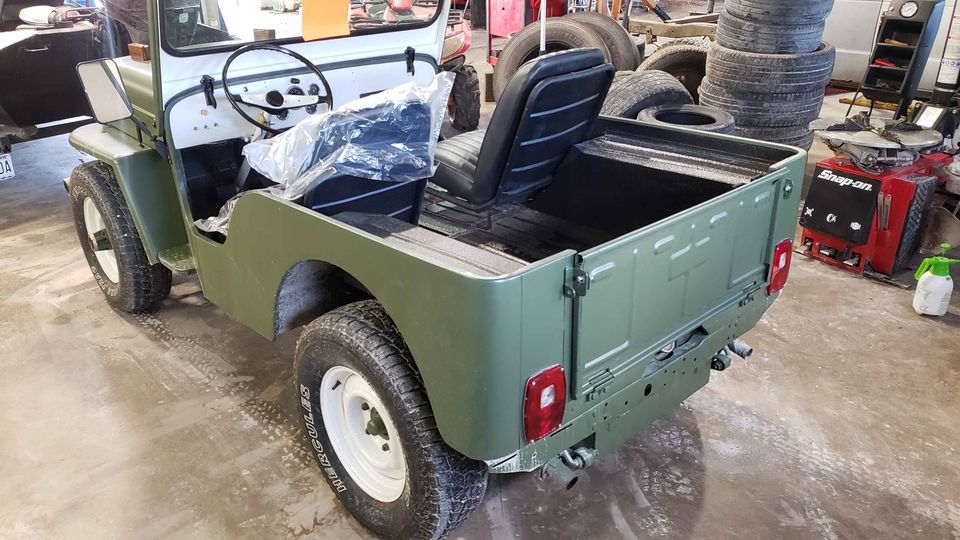
“1949 Jeep Willys with a Buick V6 swap. The body is straight, no rust/no bondo -New tires -New hubs -Complete new brake system -Freshly upholstered seats, etc. If you have any questions please call [hidden information] and speak to Grant as I’m listing this for my father who doesn’t have Facebook.”
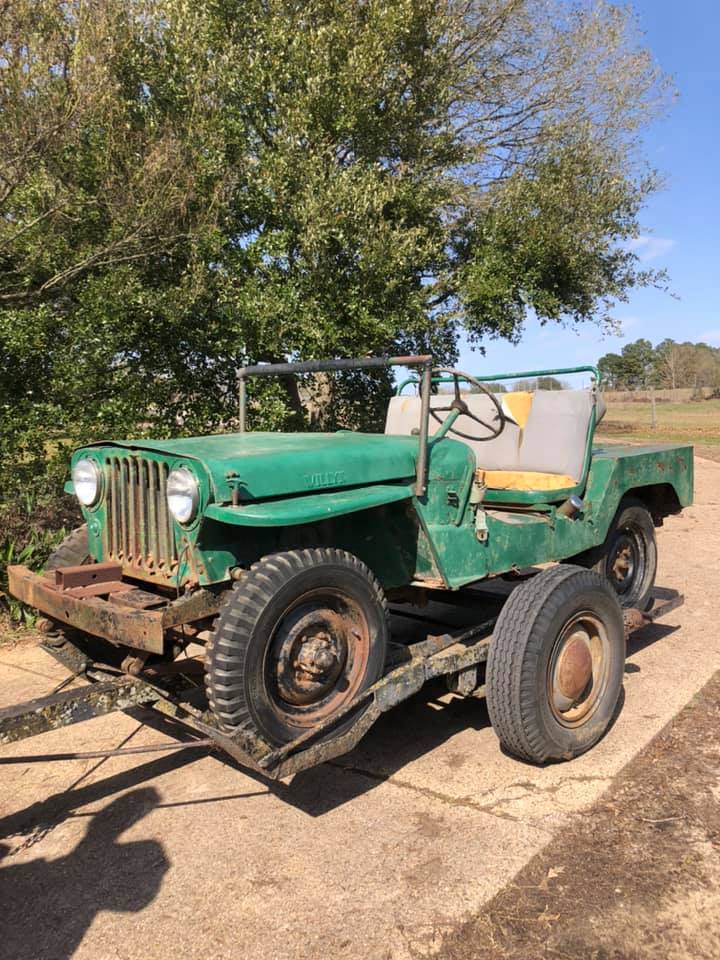
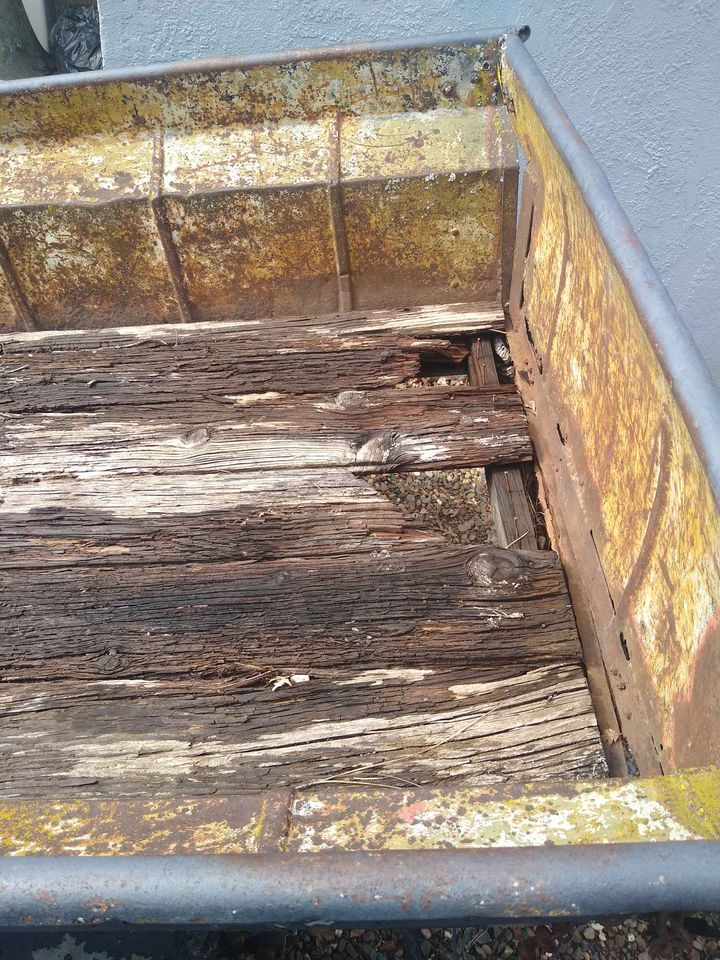
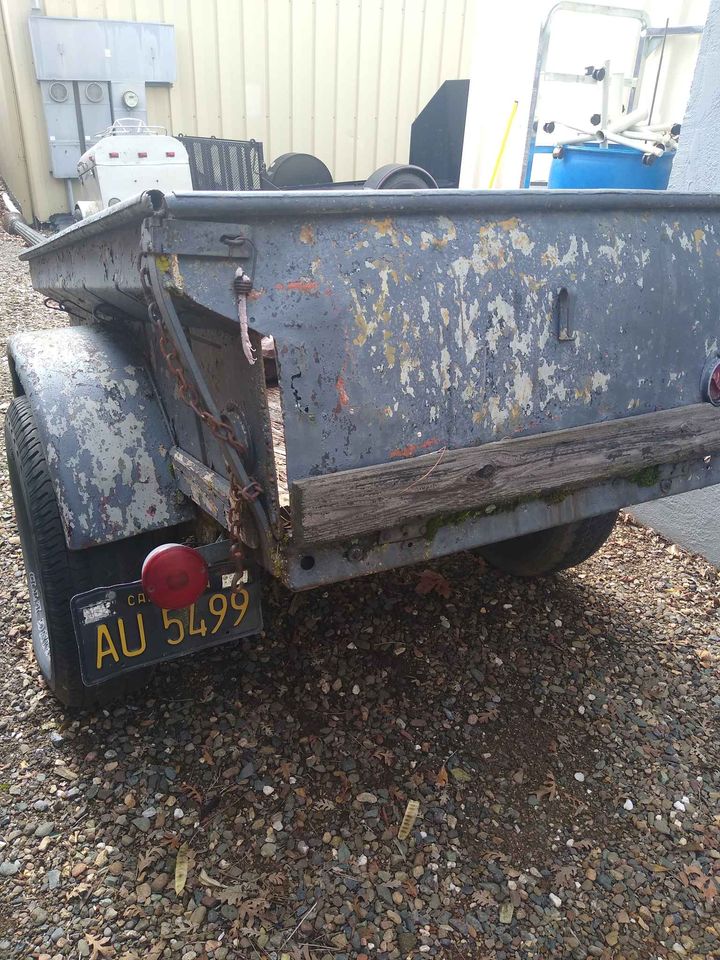
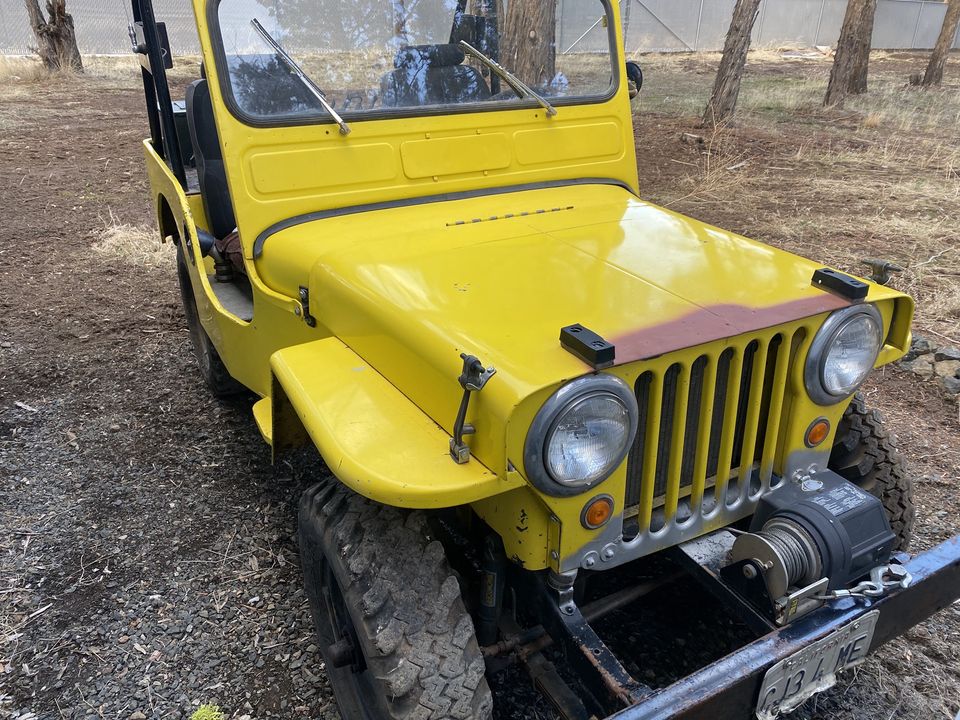
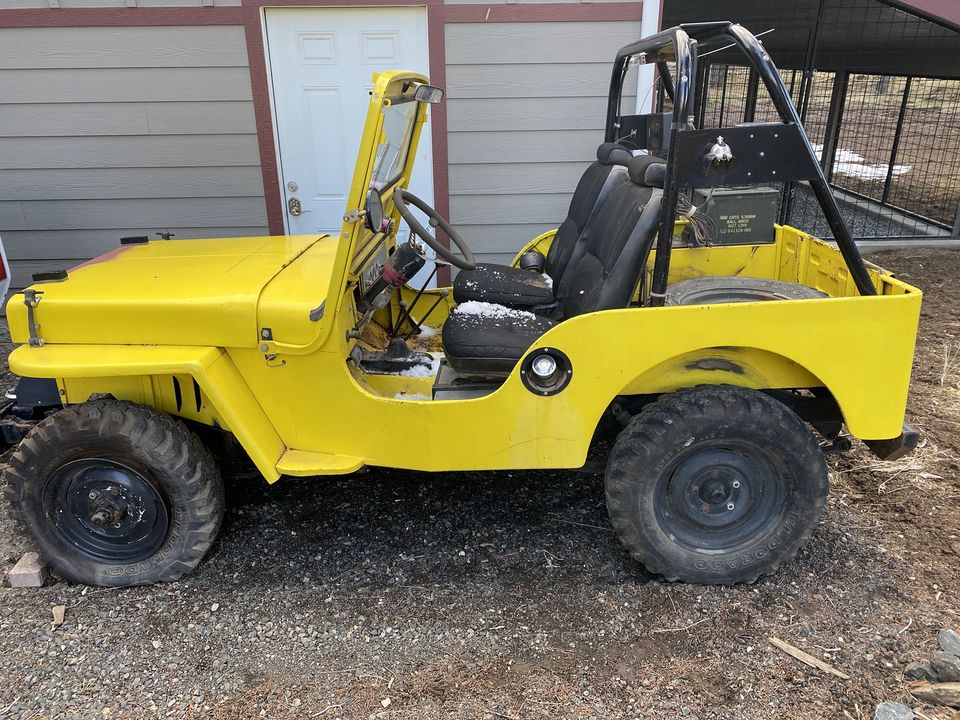
“Selling this classic and it’s trailer Hasn’t ran in 3 years Brand new tires on the Jeep. Everything to do with the Jeep is tight, brakes work, clutch, steering, etc”
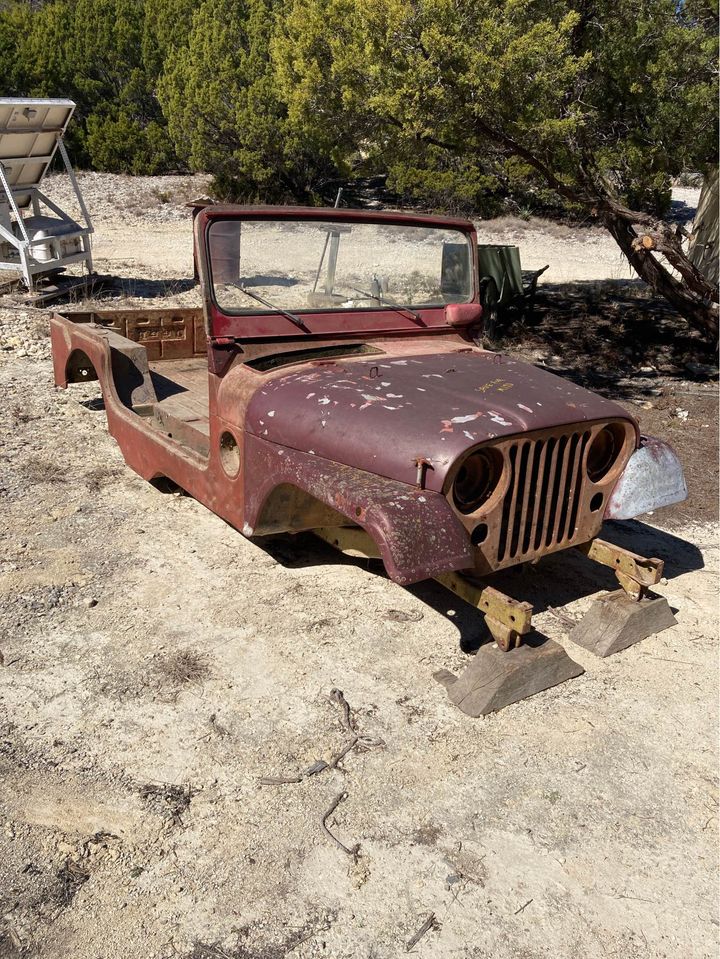
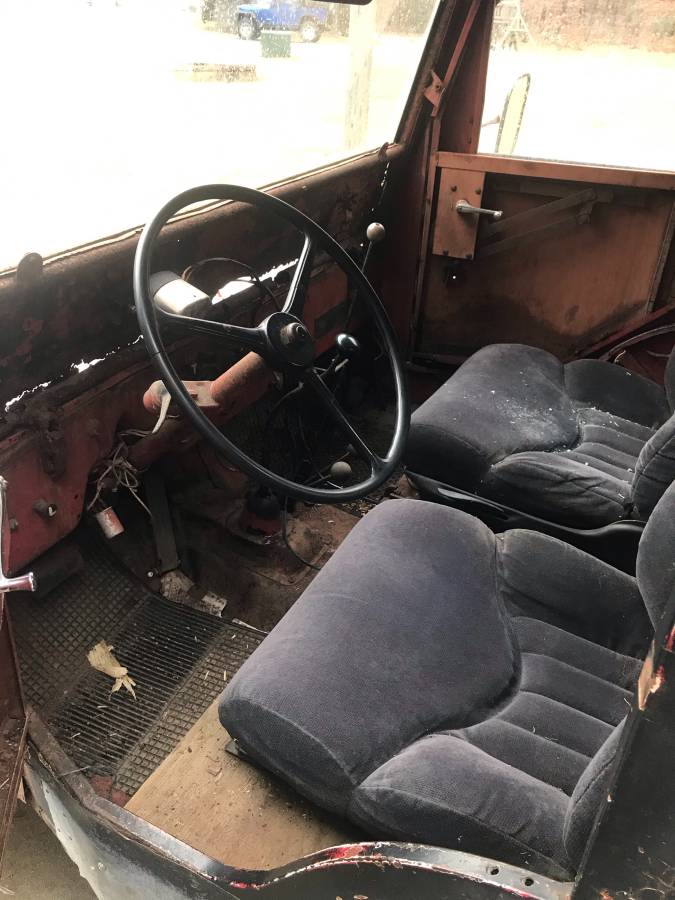
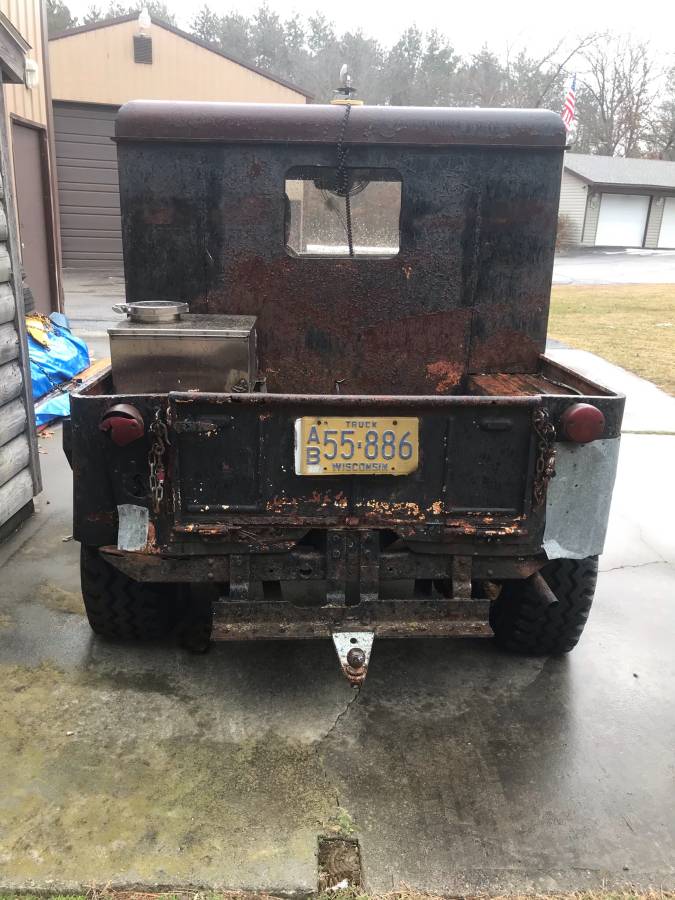
The lack of a script tailgate and hood, the driver’s side custom gas inlet hole, the dash with the glove box, and the M-38-like grill are all hints that this may be a replacement body and front-clip.
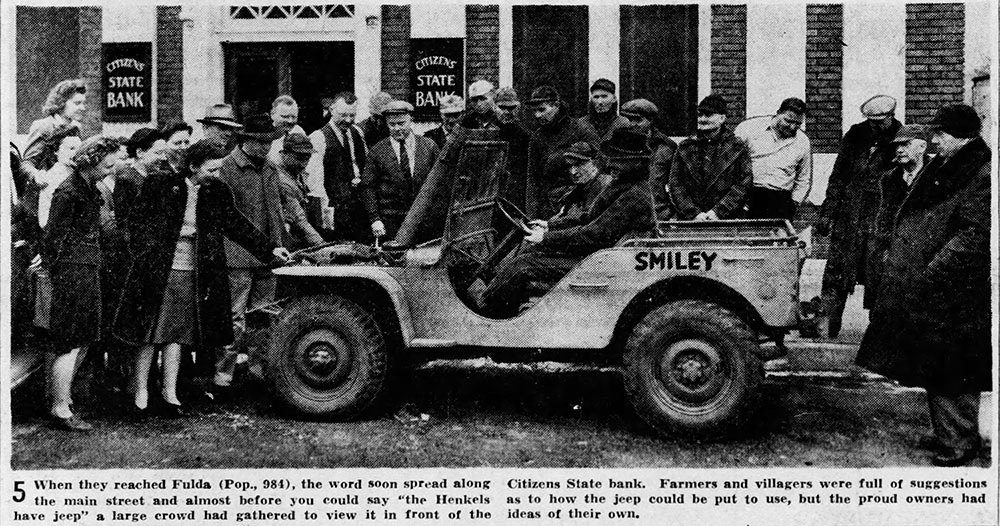
A side photo of Smiley, John Henkels ‘new’ Ford GP.
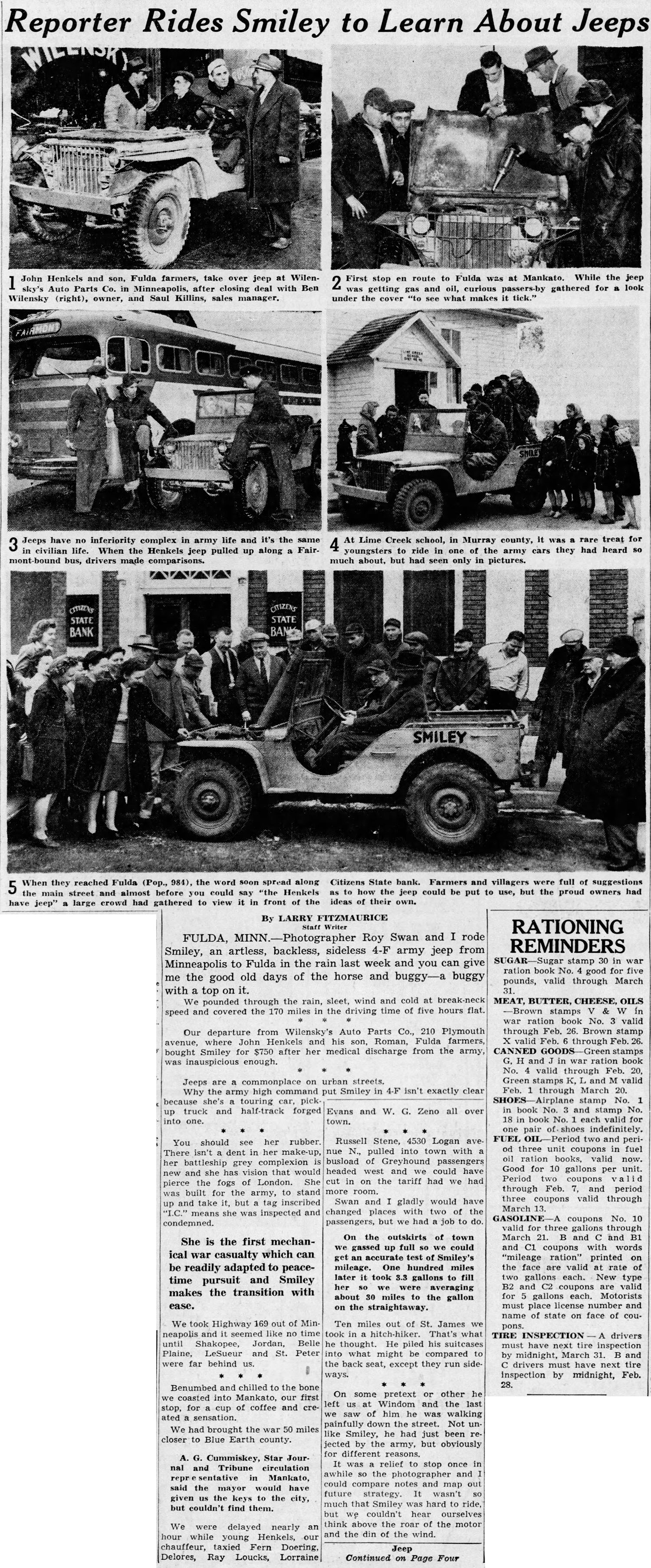
The January 30, 1944, Sunday issue of the Minneapolis Star-Tribune made John Henkels and his son front page news for the purchase of their 1941 Ford GP from Wilensky’s auto parts. What a cold drive back to Fulda, Minnesota, that must have been!
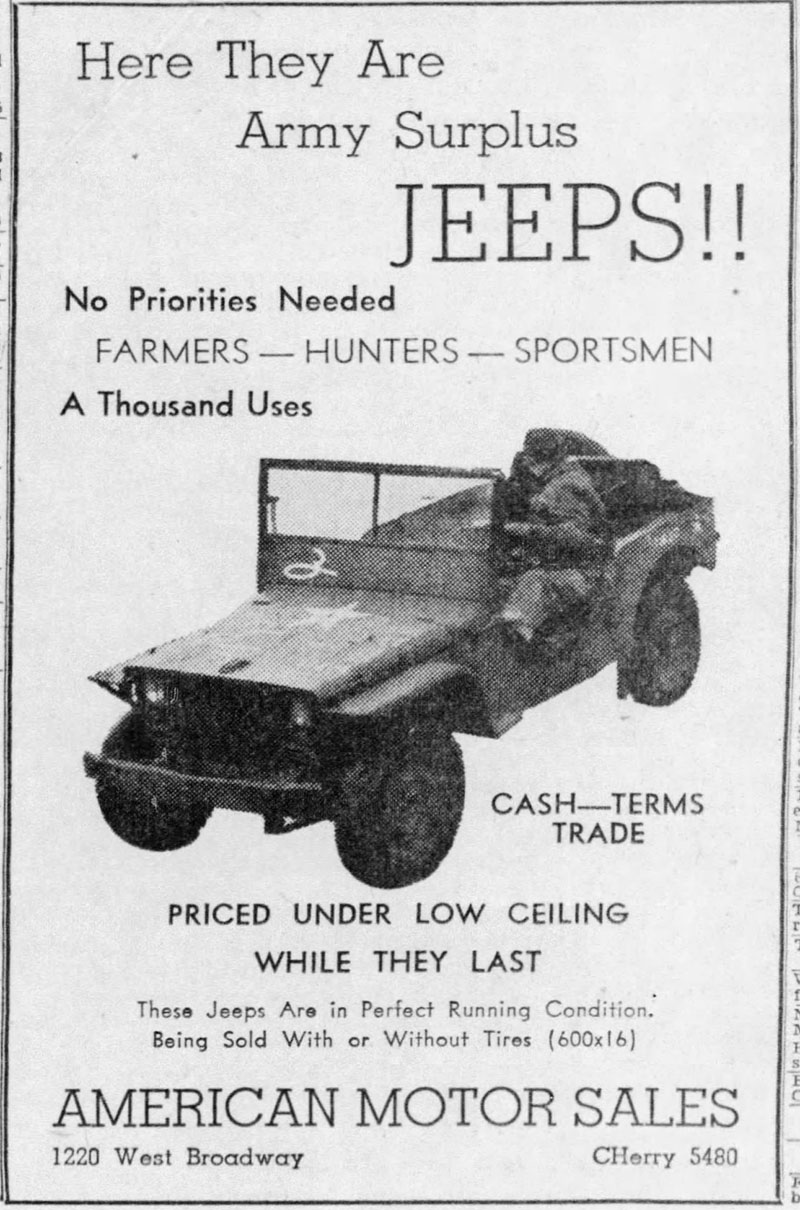
This ad appeared within the classified ad section of the October 04, 1946, issue of the Minneapolis Star. It was posted by American Motor Sales, which was located at 1220 West Broadway. Whether the company actually had Ford GPs for sale isn’t clear; most likely, it was just standard MBs or GPWs.
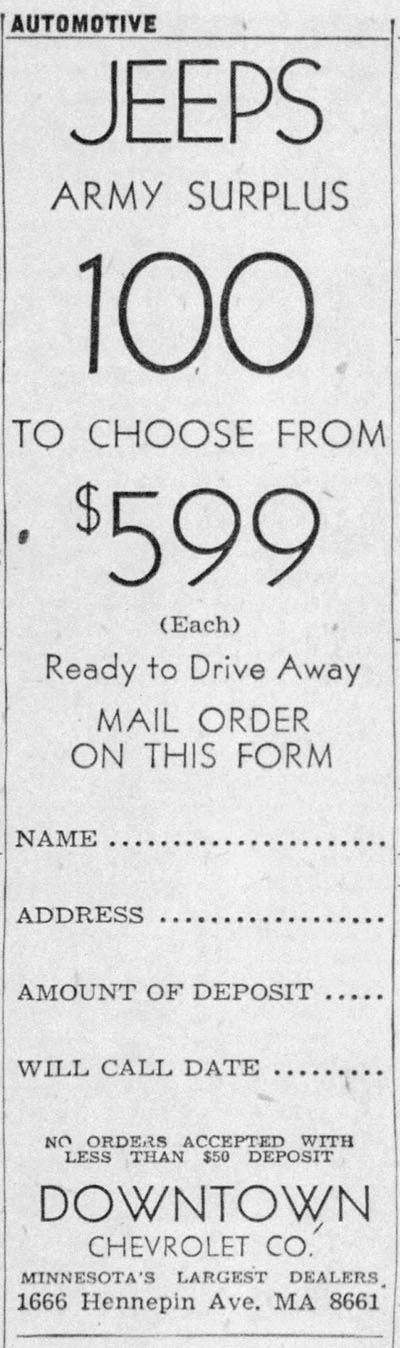
A few days later, the Downtown Chevrolet Company advertised in the October 09, 1946, issue of the Minneapolis Star that they had 100 surplus jeeps available for customers:
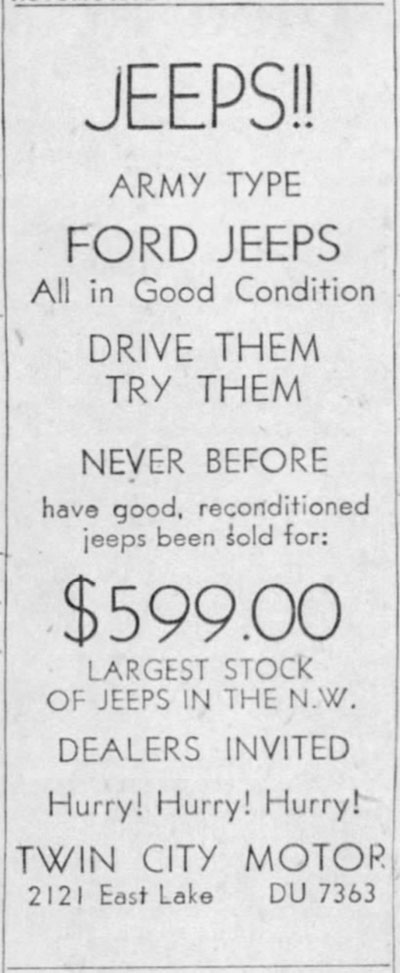
Subsequently, an ad was placed by Twin City Motors, which also claimed to have jeeps (either GPWs or FORD GPs or both):
So, how did these companies obtain the jeeps? As we saw yesterday, there were some bidding opportunities that allowed Hyman Berg and others the opportunity to purchase multiple prototype jeeps. So, perhaps these Minneapolis-based companies also scored some prototypes that way?
What we do know is that the government was selling jeeps to veterans (previous stories highlight sale in Hawaii and California). And, those jeeps sold pretty quickly.
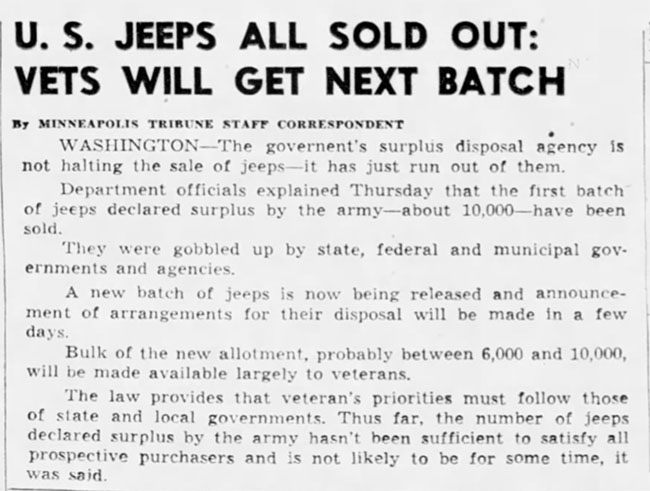
For example, in late 1945, the government’s War Asset group put 10,000 jeeps up for purchase by veterans. Those 10,000 jeeps were promptly sold (November 30, 1945, the Star Tribune):
A month later, an article from the Dec 08, 1945, issue of the Minneapolis Star, announced that another batch of 10,000 jeeps had been made available as of December 1945: Continue reading →
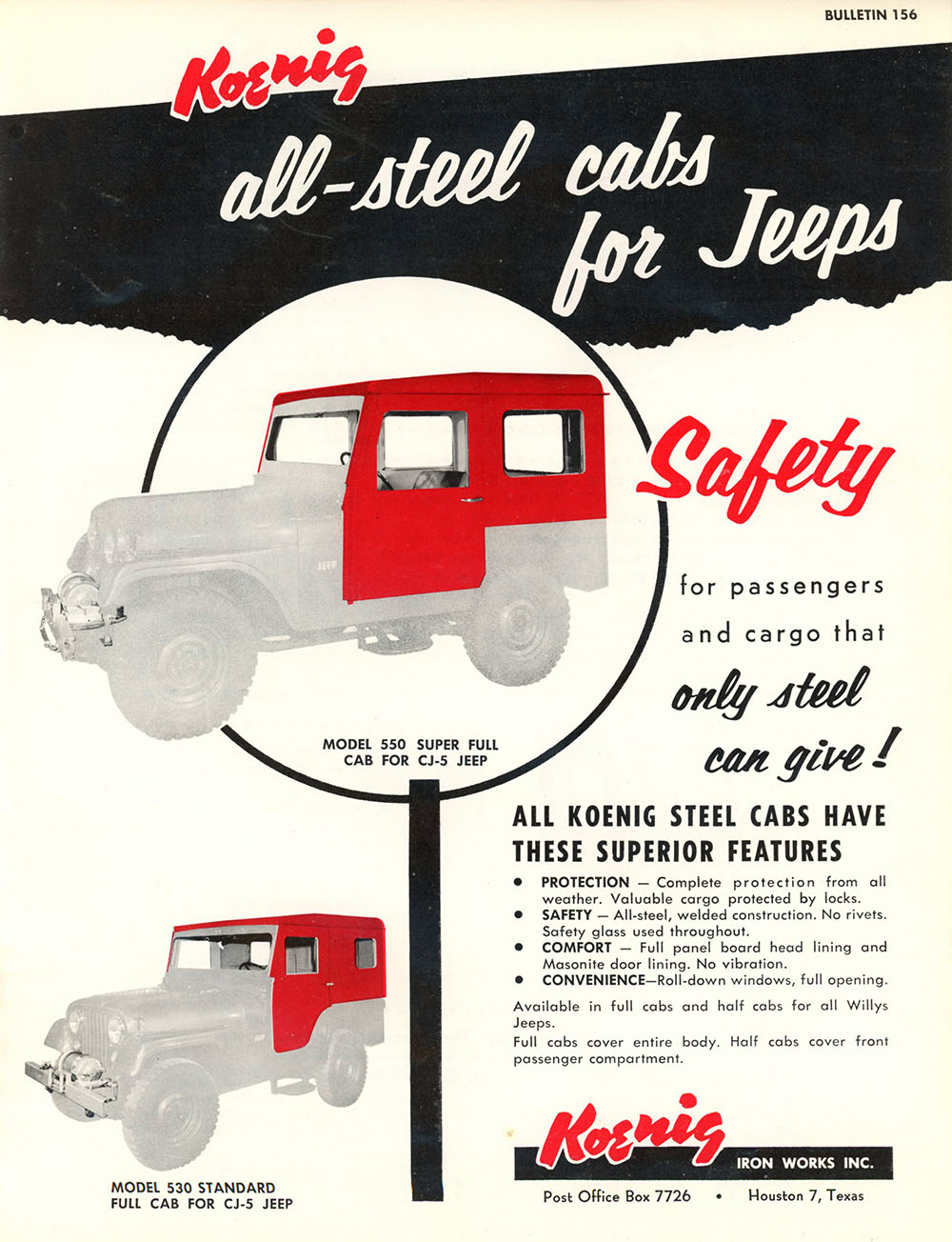
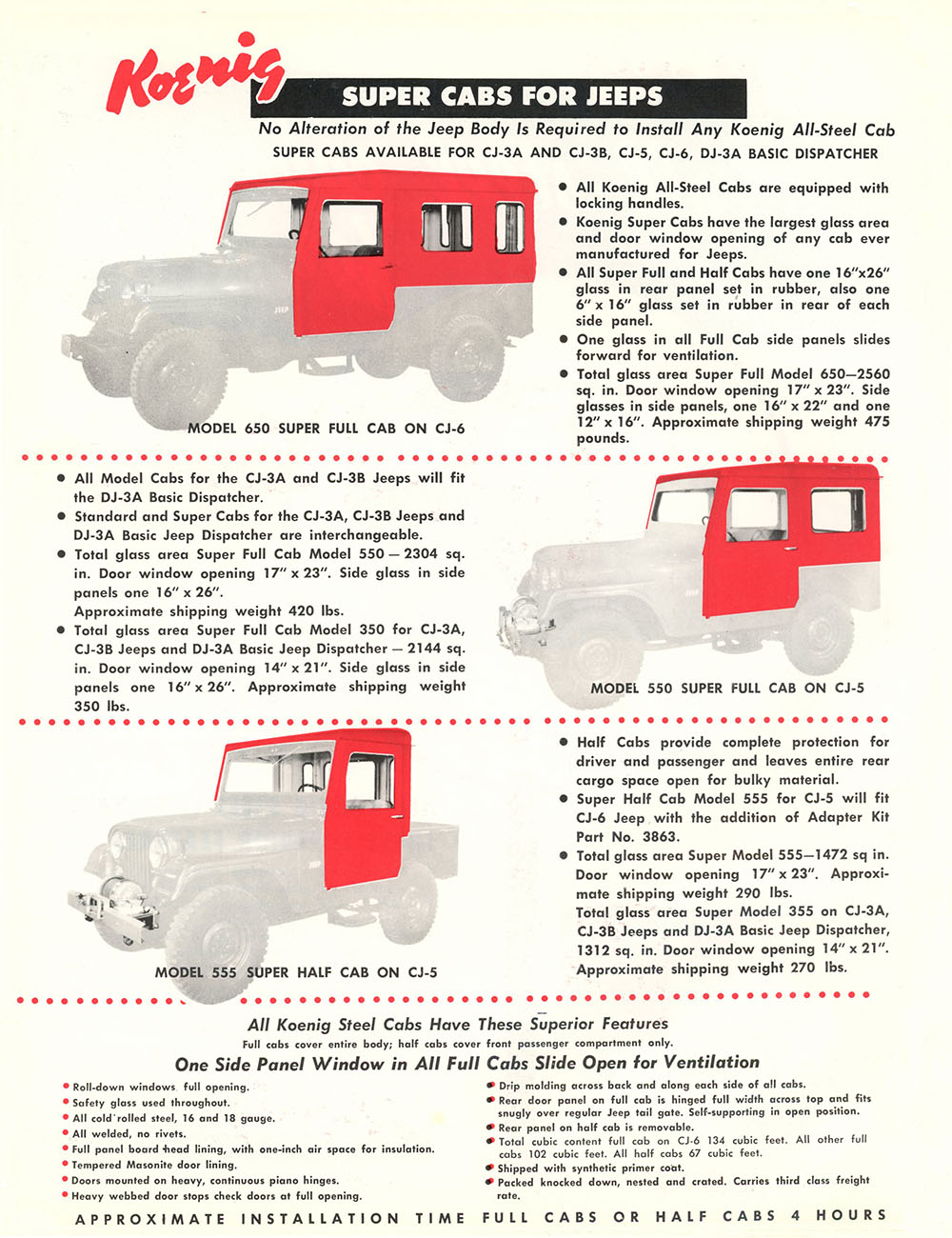
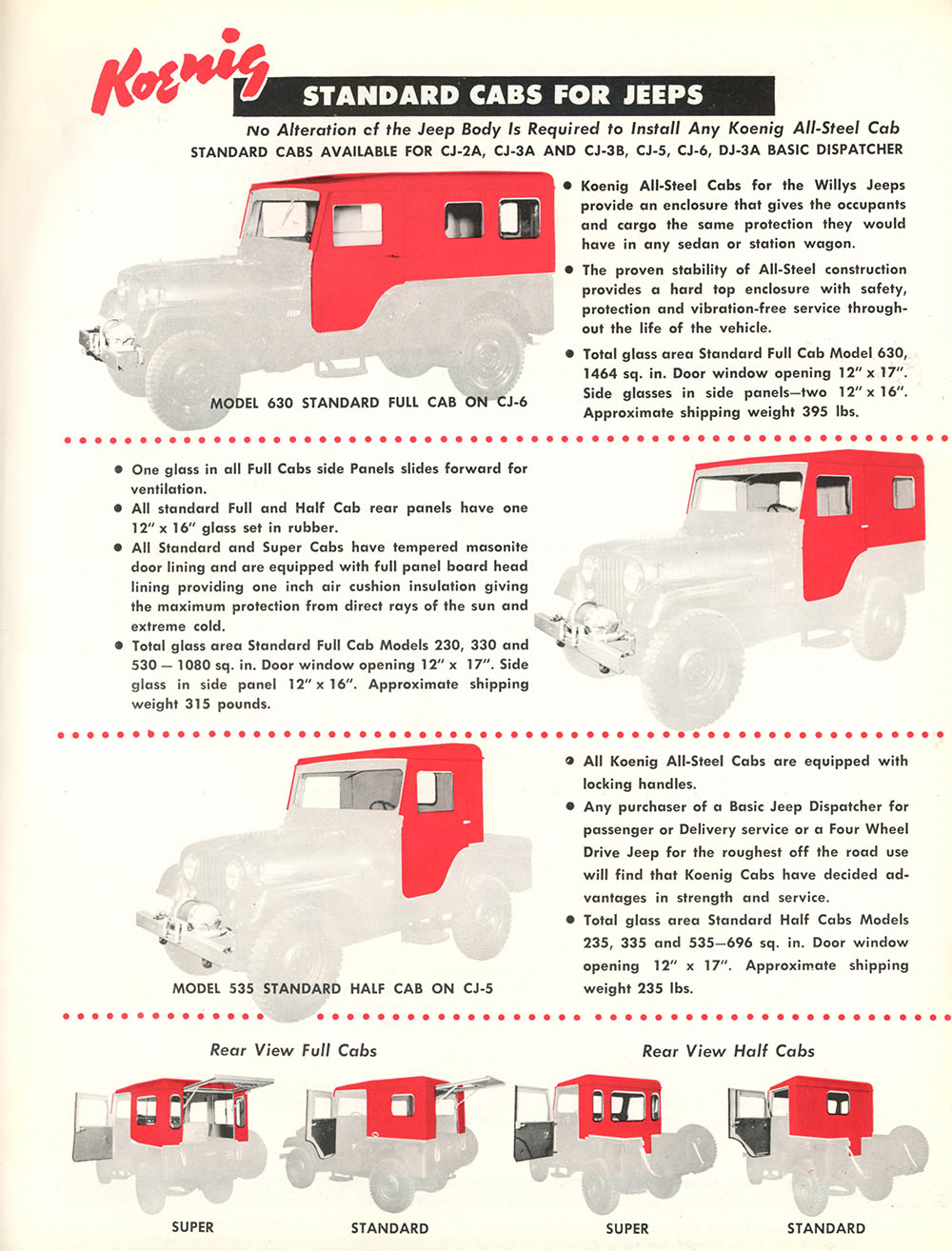
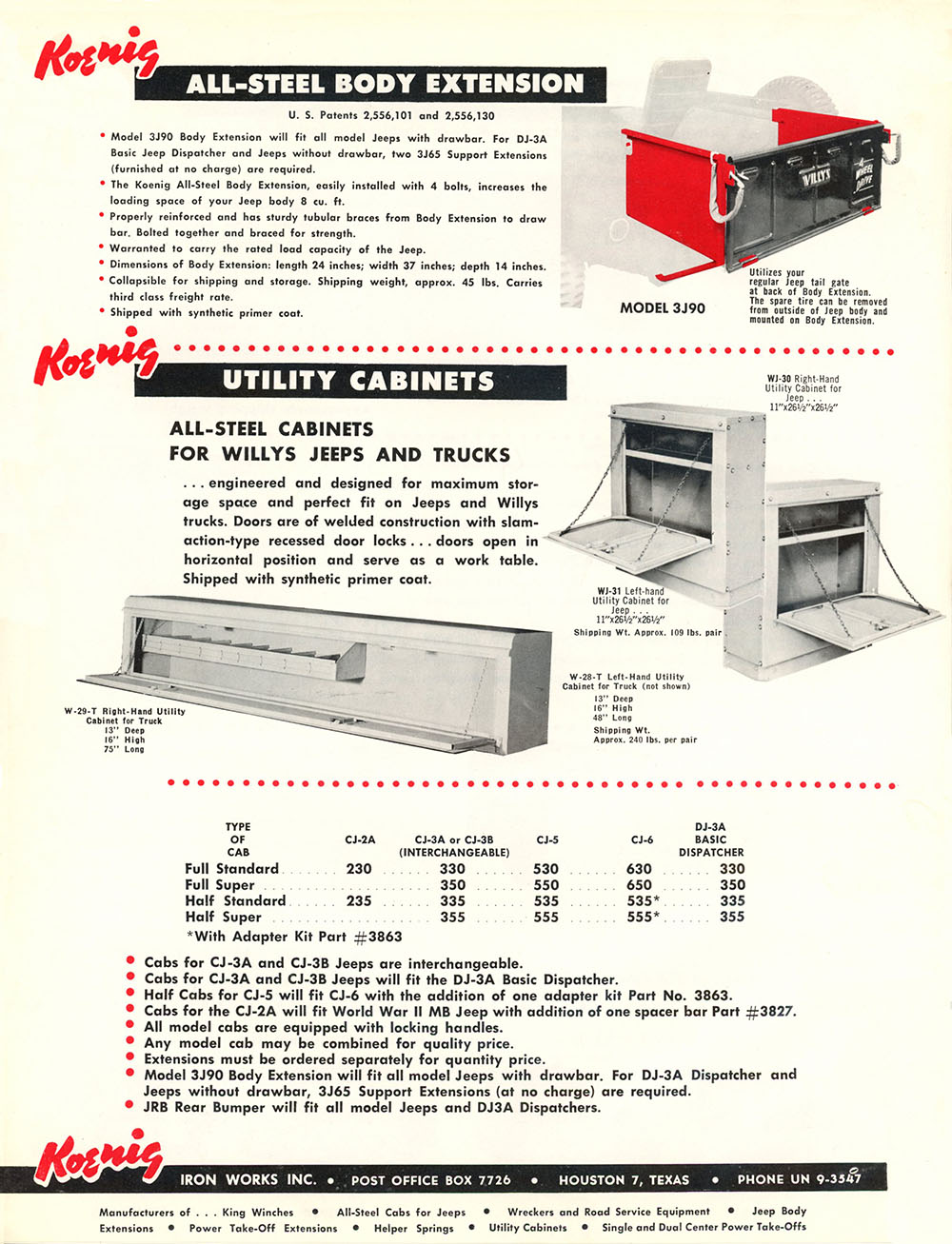
This is Koenig bulletin #156, one that I finally purchased and scanned. This brochure marked a change in model numbers from Koenig’s 1955 brochure; the “-5″s were eliminated in favor of individual hardtop numbers (which I imagine was easier for consumers to understand). See a Koenig hardtop brochure history here.