emailNeed to contact me and don't have my email? Click on email button.
About eWillys
Welcome to eWillys.com, a website for vintage jeep enthusiasts. I update this website nearly every day with jeep deals, jeep history, interesting reader projects, jeep related info, and more.
These quick searches can help you find things on eBay. People list in the wrong categories all the time, so don't be surprised to see brochures in the parts area for example. This section used to be split into jeeps, parts and other categories, but recent changes to eBay will require this information to be recoded.
The links to posts below show jeeps grouped by models, condition, and other ways. Some of these jeeps are for sale and others have been sold. If you are unsure whether a vehicle is still for sale or not, email me at d [at] ewillys.com for more info.
Importantly, the allure of buying a project jeep can be romantic. The reality of restoring a jeep can be quite different, expensive and overwhelming without the right tools and resources. So, tread carefully when purchasing a "project". If you have any concerns about buying a vintage jeep, or run across a scam, feel free to contact me for help, comments or concerns .
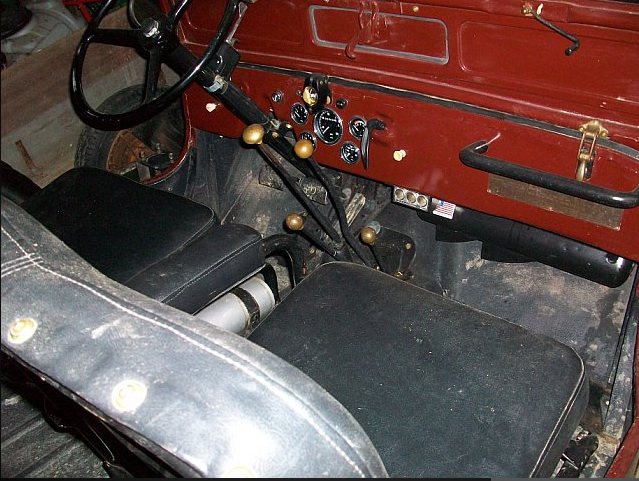
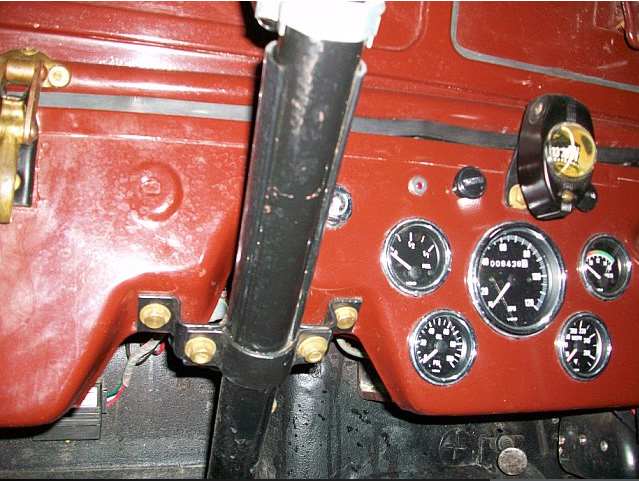
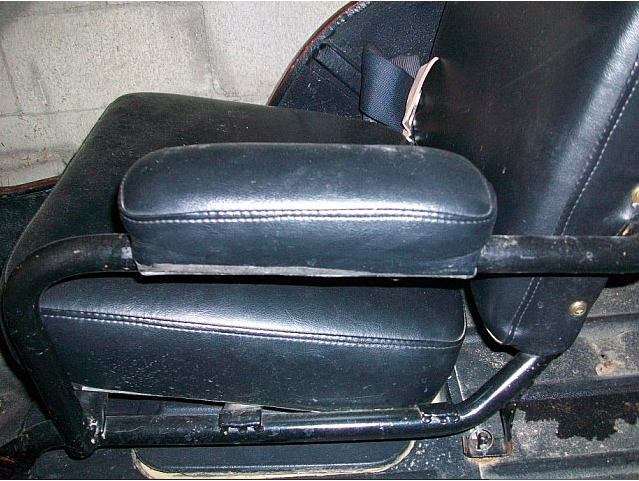
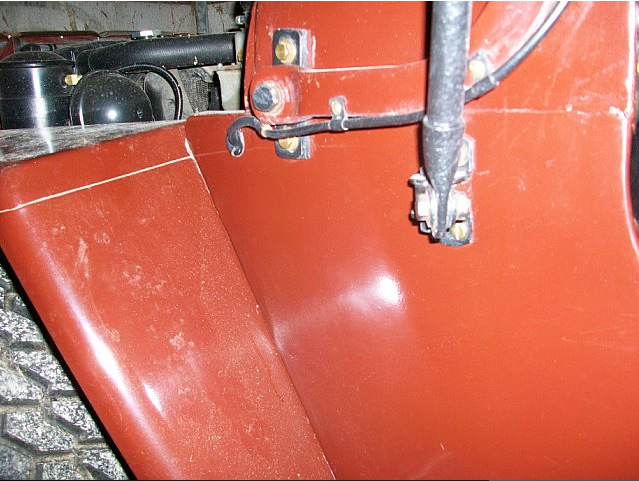
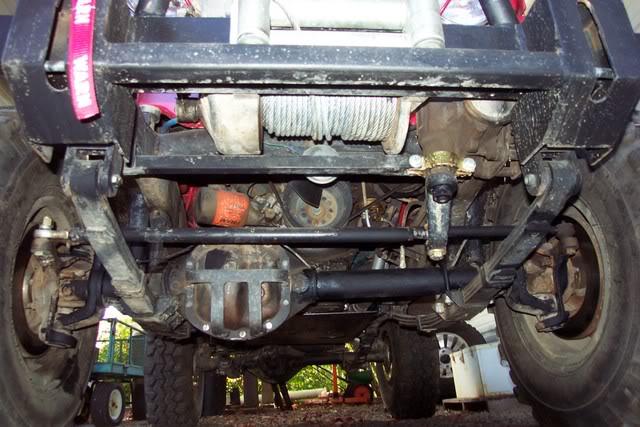
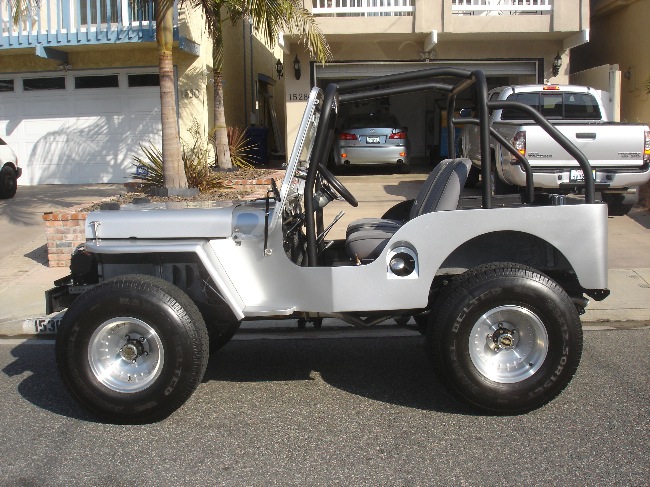
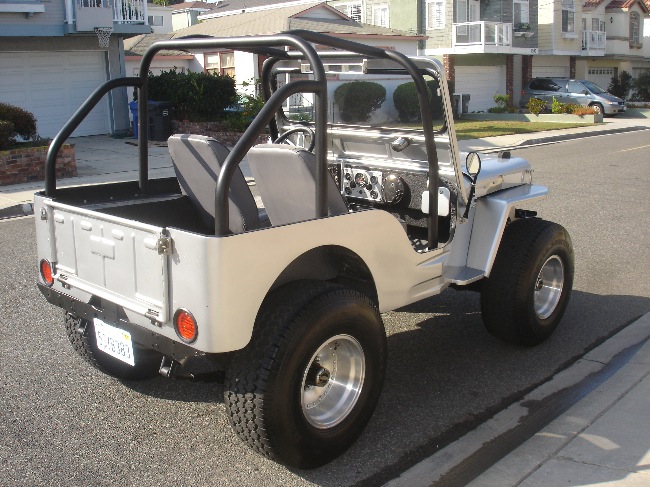
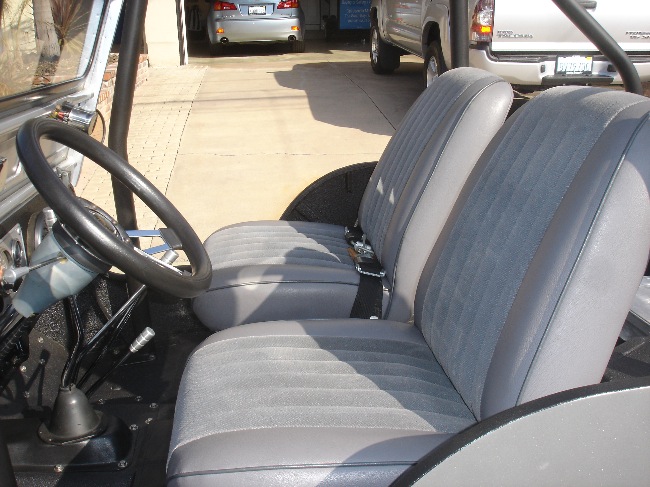
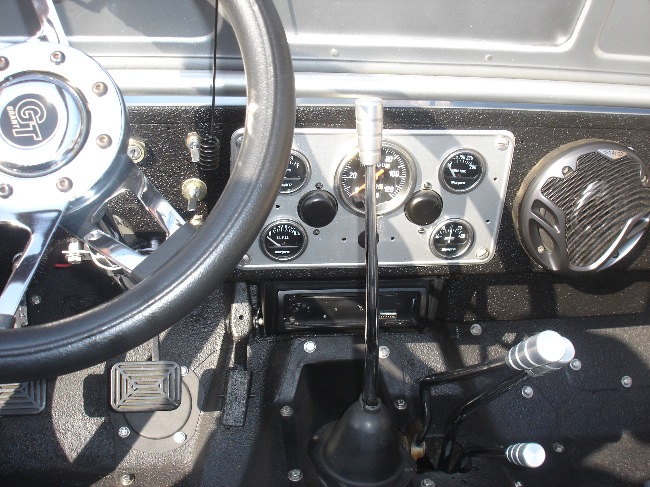
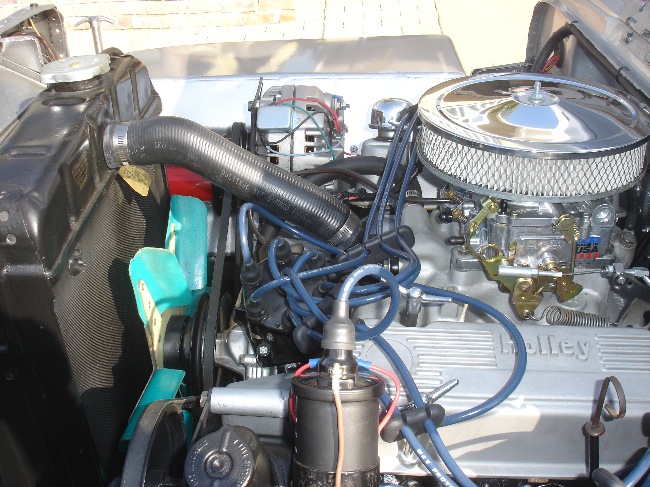
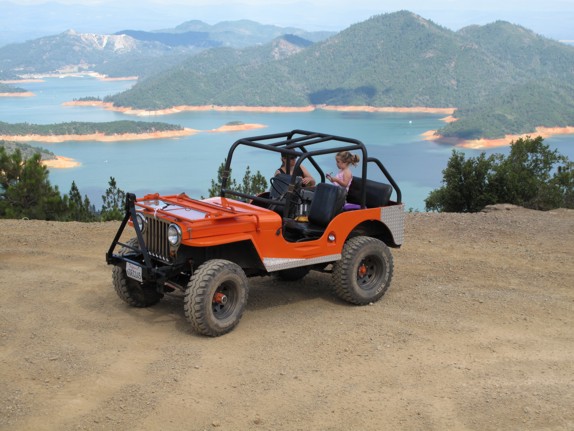
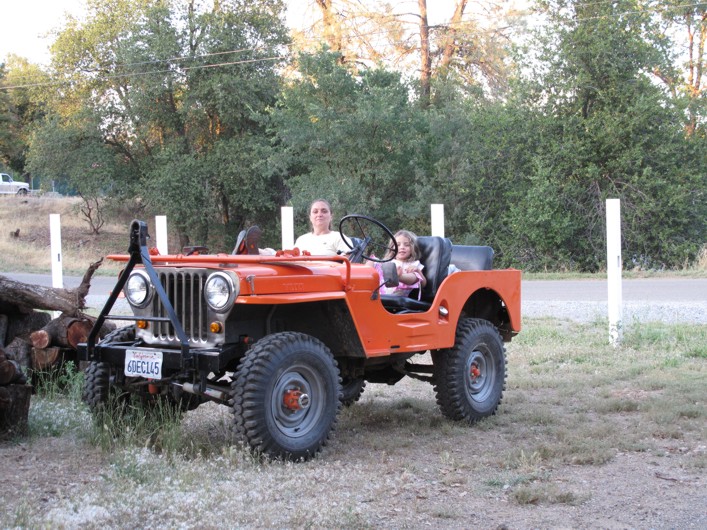
He writes, “Here are a few pictures of my 1947 Willys CJ2A. It has had a ground up restoration several years ago. I bought it out of Kansas and now it is in the California Sierra Nevada Mountains where I use it at our cabin.
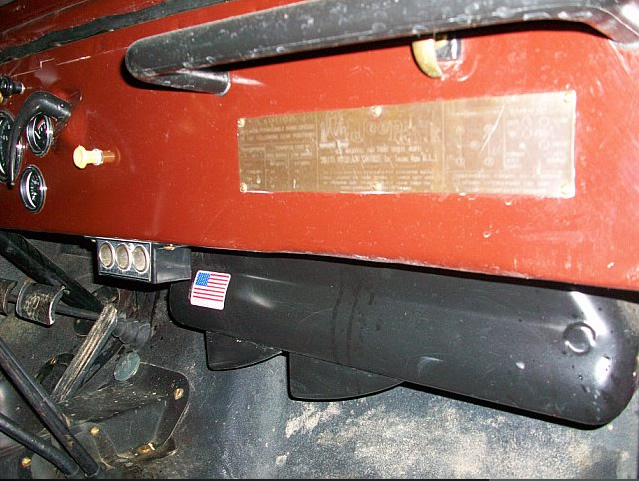
The Willys has a new tub body but original hood and tail gate. It has all the original plaques and auto numbers. All other parts reflect the period except a roll bar and a steering stabilizer. The engine runs like a sewing machine.
I am still working on it to make it better and original. The paint job also reflects the year. If I could find a restored flat fender with the original body and in this good of shape I might jump ship. Meanwhile I enjoy driving this vehicle where everything works like it did 63 years ago, which by the way is my age!”
With winter descending on Alaska, the time has come for Paul to direct his focus back on his beloved, shiny, stainless steel M-38. One exciting difference between this year and the previous 24 years is that he is almost done — But no pressure Paul! Click on the pic to see the original post and followups.
Last spring, Paul reported that after some investigation, he discovered a M-151 radiator would fit perfectly into his engine compartment. Recently, he took over an auto parts store (ok, maybe just a hose booklet in the store) to figure out a hose solution. With that problem solved (it took 2 different hoses and a tube to link them), he now must figure out a fan solution.
With that background, take it away Paul …..
The Fan and Shroud
Paul writes, “After talking with the folks at Spal concerning their electric fans I ordered a 13 inch puller fan with straight blades along with a fan relay/installation kit. The crazy part about this deal is when the Spal people wouldn’t sell me a fan over the phone, I would have to hang up and order on the internet and best of all I would pay over $50 dollars more for the fan and temp sensor/wiring kit than a Spal dealer in California was charging for the exact same items. For some unknown reason The Fan Man (California dealer) sells lots of these fans at quite a discount and these are brand new fans. No factory seconds, returns, or rebuilt units.
Anyway, the fan arrived last night undamaged and it looks great. Thank you Fan Man! The total fan thickness is slightly under two and a half inches and I have a little over three inches between the aft side of the radiator and the waterpump shaft. Sweet!
The shroud on the M151 radiator has a 16 inch diameter circle for the fan so I bought a ten dollar piece of thin sheet steel, cut out a 16 inch diameter circle and tack welded this piece to the shroud. After finishing with the tack welds I rough cut a 12 inch diameter slightly offset circle to allow for the correct placement of the new fan. I didn’t have a compass large enough to layout a 12 inch diameter circle so I used a stir stick for paint and drilled a pivot hole in one end and another hole 6 inches away and large enough to hold the tip of a sharpie marker. It worked slick. Tomorrow I’ll finish welding the insert to the shroud, clean up the welds and trim the inner circle for a more precise fit to the fan assembly before I attach the fan to the shroud.
Things are looking good. I really didn’t need the relay kit since I’d wired in a fan relay in the electrical box behind the passenger seat but it was cheaper to get the kit with the temp sensor and I could doublecheck the Willys wiring against the Spal wiring so I could identify any potential problems before mean old Mr. Electricity messes something up.
The Fuel Line
Today I received a 25 foot coil of copper/nickel 5/16th fuel line along with the needed fittings to attach the fuel line to the carb. This is the same tubing I used on the brake and clutch systems (just a different size) and it’s a pleasure to work with. The 3/16th tubing is flexible enough to be bent back to back 180 degree bends (with a one inch bend diameter so the tube now looks like the letter S) with no kinking, flattening or any defects at all. Jeeze, I really like working with this stuff. Check out the fedhillusa.com website, it’s amazing. This latest batch of tubing should be more than enough to do all the fuel delivery and return lines with enough left over to cover any mistakes I might make along the way.
Modifying the Skid Plates
The local metal fabrication shop cut and bent an eighth inch thick skidplate for the V6 oil pan. After drilling a one inch diameter hole for the drain plug (that’s the only size hole saw I have) I hand filed the hole to one and a half inch diameter before welding the skid plate to the pan.
I had to do a little work on the transmission/transfercase skid plate also. When I welded up the exhaust assembly I included a joint below the tranny so the right exhaust pipe could be removed without touching the left side or the rest of the exhaust system. What I forgot to figure in was the thickness of the clamp holding the exhaust pipes together at this joint so the skid plate had to be slotted to allow the clamp to protrude slightly. To prevent rock damage (like I’m going to go bashing this thing thru boulders) I welded up a small deflector from eighth inch steel and welded this to the skid plate over the slot. Just another little OOPSIE which needed to be worked around.
Mark recently hit the 1 year anniversary with “Her Royal Highness” (That would be his Jeepster, not his wife). He’s been updating her throughout the year. Here he comments on his rear seat find.
Mark writes, “Halloween night marks the end of Year one for the 49 Jeepster I named “Her Royal Highness”. I’m a middle-age crazy rookie that knew very little about rebuilding an auto when I started (some strong arguments that I still don’t) [ed note: some days, I don’t feel to smart either!]. I decided to leave the aged patina Windsor green paint for now because there’s very little rust and it doesn’t look that bad. She’s a great runner and a fine Sunday truck.
I wanted to put in tan leather buckets to improve comfort and to be able to call her the original “King Ranch Willys”. A few days ago I saw an ad for 1999 Mitsubishi Eclipse seats, ‘$20 bucks and wife wants them out of my garage’. So, I went over to check out the seats. I discovered the buckets were trash, but the back was practically new. I bought it and carted it home.
Wouldn’t you know, that back seat fit into the back of the Jeepster like it always belonged! A couple of cleats, some zip ties, a little leather remnant from the fabric store over some 3/8″ ply and here you go. The seat backs fit on the original back frame with a little ingenuity. Folded down it makes for a convenient map table. The front buckets are still in my cross hairs and they will be found eventually, but who knew that backseat would fit so nicely, 50 years later!”
Pete, who operates the OldWillysForum, contacted me the other day to let me know he lives just down the road from me near Hailey, Idaho. When not working on cars, Pete designs beautiful homes. Check them out at andersonarc.com!
Pete and his kids have been doing some work on a wagon that they recently made road worthy. He shared a video with me that you can view below. It’s always great to see a wagon on the trail, but the best part of the video are the short, funny comments made by his son.
Buttercup has come home again. Here is the story as told by Buttercup’s current steward.
William writes, “I would like to introduce you to “BUTTERCUP” a 1946 CJ2A. My father “Skip” Taylor bought her in 1973 for $150.00 and brought her out to our family house on Clarks Island in Plymouth Mass.
Out there he put plywood floors in, added yellow paint(out of a can) and named her Buttercup after a cow that was once on the property. For 20 years she was our tractor and stuff hauler. I learned to drive her when I was 10. Sometime in the 80’s Skip added the wire wheels and had a trailer built. By 1990 it was decided that she was getting tired and was replaced by a John Deer tractor.
After a while she was sold to a gentleman with the agreement that my father would get “right of first refusal” if she was ever put up for sale. Well, 3 winters ago that man kept his word and sold Buttercup (painted red) back to us with new floors and a rebuilt original motor.
She is now back on the island, going back together once again. She has new brakes, a tune up, the wire wheels(off a 35 ford) and her bright yellow paint (out of a can). Buttercup is running great and driving the property cleaning up branches and taking the kids out for rides. She is a part of our family and hope to keep her going for another sixty years.”
I asked William about the wire wheels and he said his father had the centers of some jeep rims cut out and welded into the 35 ford rims. Not road safe but good for an island.
Here are some pics of Buttercup. Thanks for sharing William!
Kevin writes, “I Finally got good help on my ’62 Willys Wagon rebuild…it didn’t hurt either to wear my “Big Daddy Roth” – Rat Fink t-shirt for inspirational artistic talents…and yes, in tradition of an old time build, I’m painting it outdoors.”
Gerald and I were exchanges some emails and he mentioned that his brother and he rebuilt a Mitey Mite a few years back. I think he was trying to inspire me with the Champs? Here are a few pics.
Gerald wrote, “My brother did a Mity Mite a few years back. Toughest project we ever worked on. It was a basket case literally.”
There have been some outstanding eWillys reporters filing stories from all areas of world, but none were more intrepid nor braver than the Head of the eWillys Bureau in Afghanistan, Lt. Buck. His report from the front lines (or close enough) on Willys in a field in May of 2009 from Afghanistan marked a gold standard in reporting.
The fact is, rumor has it he even joined the Army to get there, because the penny pinchers at eWillys corporate wouldn’t buy him a plane ticket. Now that’s dedication!
I am extremely happy to report that Buck made it safely back to Montana and, I hope, has found some well deserved peace. Since he’s been home, he managed to complete his CJ-2A build, which he put together as a vehicle to explore the central Montana plains and do some hunting. What better use for a jeep is there than that! Congrats and Thanks Buck!
Buck writes, “Well, I’m happy to say that I’m back home and my jeep is finally done after 10 years of on again off again work. Attached are photos of my dog Uncas and me out hunting grouse in the vast wheat fields of central Montana. I never wanted a museum piece, but a functional piece of history.”
I’ve seen them in old pictures, but Kim is the first owner of a Long Range Desert Group S.A.S. Willys to contact me and share pics. Of course, you can’t but help but think of the old Rat Patrol shows when you see these vehicles. After reading through the LRDG.org website, one of the things I’ve learned is that there was plenty of thought, research and recon work that went into the supplies these jeeps and truck would need to carry with them as they sailed long, desolate seas of sand.
Kim writes, “The jeep I bought is mechanically perfect. The previous owner put all his money into the motor, brakes and trans. The body on my jeep needs some help and eventually I will replace the rear and floor sections of the tub as there is some rust. Fortunately, It came to me painted in the proper color and had many extras including a Bagnold sun compass.
As a special addition to this jeep, I re-built a WW2 Italian de-milled M37 machine gun and converted it into a gas gun M.G. simulator. It sounds like a M.G. but no blanks are needed and it can not shoot a projectile. That is mounted on the front cowling. As I have been a machinist and tool maker for 30 years I machined a set of Twin Vickers machine guns out of aluminum for the rear mount. These are strictly dummies with no moving parts.
I did not buy this jeep to be a Trailer Queen. This is a re-enactment jeep and as far as I am concerned it looks like it just got back from Kufra Oasis and that is exactly what I want. My ultimate dream is to have 2 WW2 jeeps. The S.A.S (which is not street legal) and an American OD jeep that is licensed and ready to drive to work.”
And a couple pics of the Twin Vickers Kim made. In this pic, some basic outlines and contours have been created in the aluminum stock.
Another project Colin wanted to share with readers was this CJ-3A he restored. As I understand it, this was his project before he purchased this DJ-3A Surrey. After purchasing the Surrey, he turned the CJ-3A project over to his son who seems to be doing just fine with it.
Colin writes, “Here are some photos of our CJ3A project. It is actually by serial number a 1952, but wasn’t sold until 1953, so was titled as a 53 (Pretty typical of Willys products). I bought it in late 2006 and it hadn’t run in about 6 years. After getting it running, I decided to do a body off restoration on it. The mechanicals were pretty good, with a new engine with less than 500 miles on it, and it had been upgraded to 12 volts and larger 11 inch brakes. It had a CJ2A windshield on it, which I prefer over the CJ3A style. It was yellow and my wife is not fond of yellow. I found the original Luzon Red paint underneath the dash, so decided to paint it Luzon Red to match the Luzon Red of our Jeepster. Work progressed and I took a break from it and in December 2009, I found the Surrey for sale. At that point, I couldn’t pass on the Surrey and our oldest son, Lee said he would take over the CJ3A, but he wasn’t going to paint it red. I had already powdercoated the wheels and put new NDT 600×16 tires on the rolling chassis. There was still some body work that needed to be done before painting. Lee finished up the bodywork and we got the paint done 3 weeks ago. We started putting it back together and now we only need to do some of the small details and the wiring to be done. The latest photos don’t give a true color, but it is sort of a Butternut yellow or beige.”