emailNeed to contact me and don't have my email? Click on email button.
About eWillys
Welcome to eWillys.com, a website for vintage jeep enthusiasts. I update this website nearly every day with jeep deals, jeep history, interesting reader projects, jeep related info, and more.
These quick searches can help you find things on eBay. People list in the wrong categories all the time, so don't be surprised to see brochures in the parts area for example. This section used to be split into jeeps, parts and other categories, but recent changes to eBay will require this information to be recoded.
The links to posts below show jeeps grouped by models, condition, and other ways. Some of these jeeps are for sale and others have been sold. If you are unsure whether a vehicle is still for sale or not, email me at d [at] ewillys.com for more info.
Importantly, the allure of buying a project jeep can be romantic. The reality of restoring a jeep can be quite different, expensive and overwhelming without the right tools and resources. So, tread carefully when purchasing a "project". If you have any concerns about buying a vintage jeep, or run across a scam, feel free to contact me for help, comments or concerns .
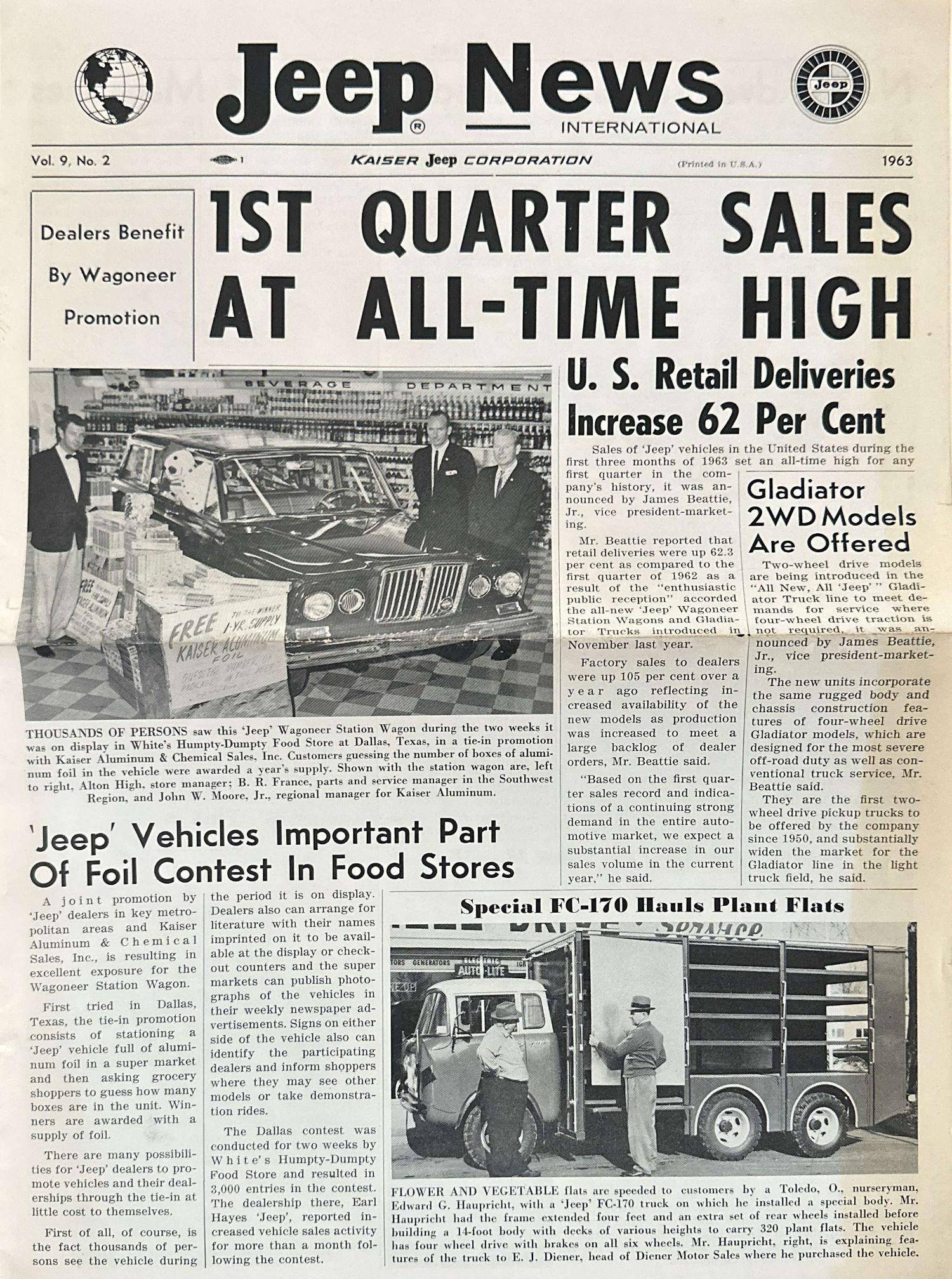
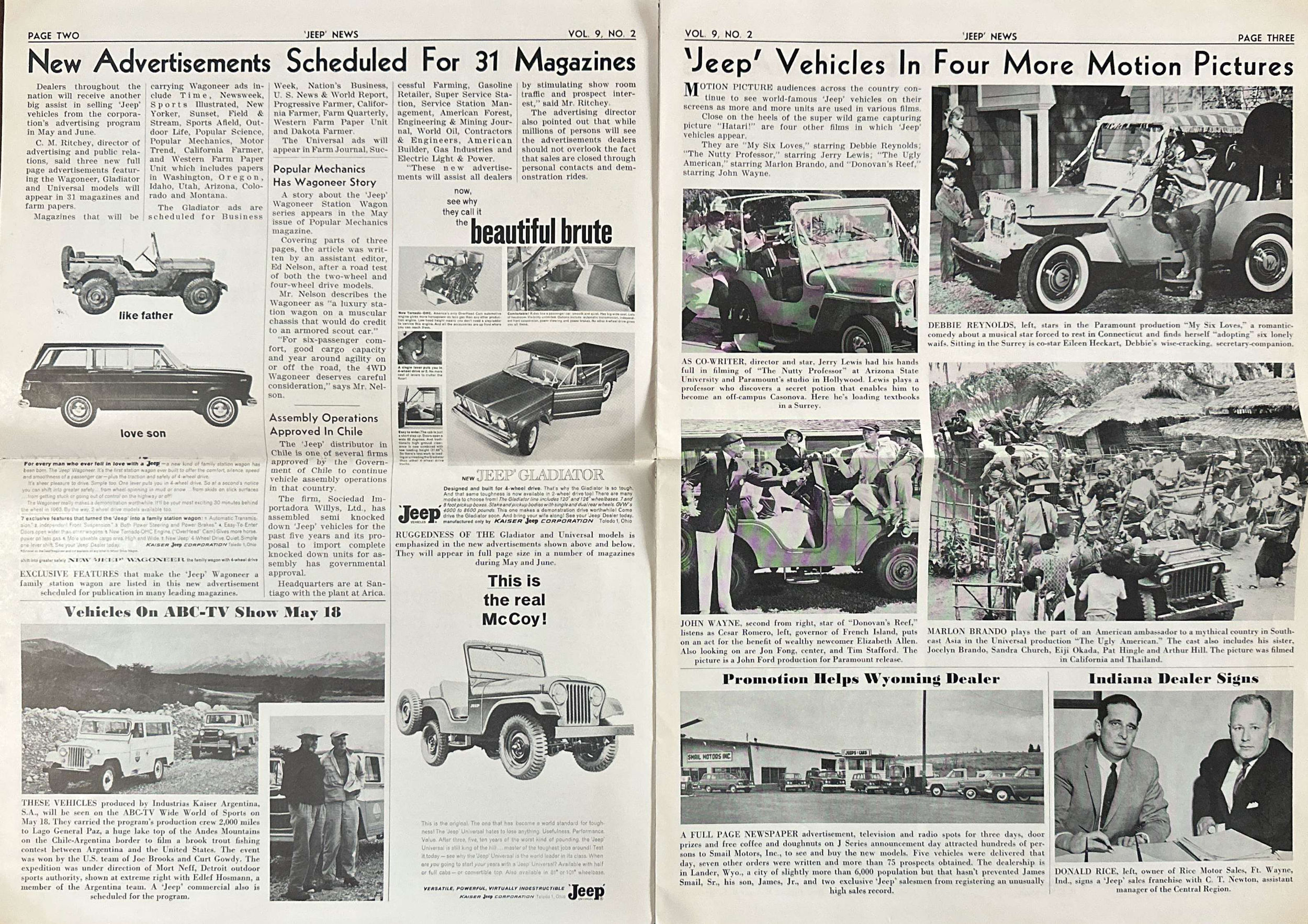
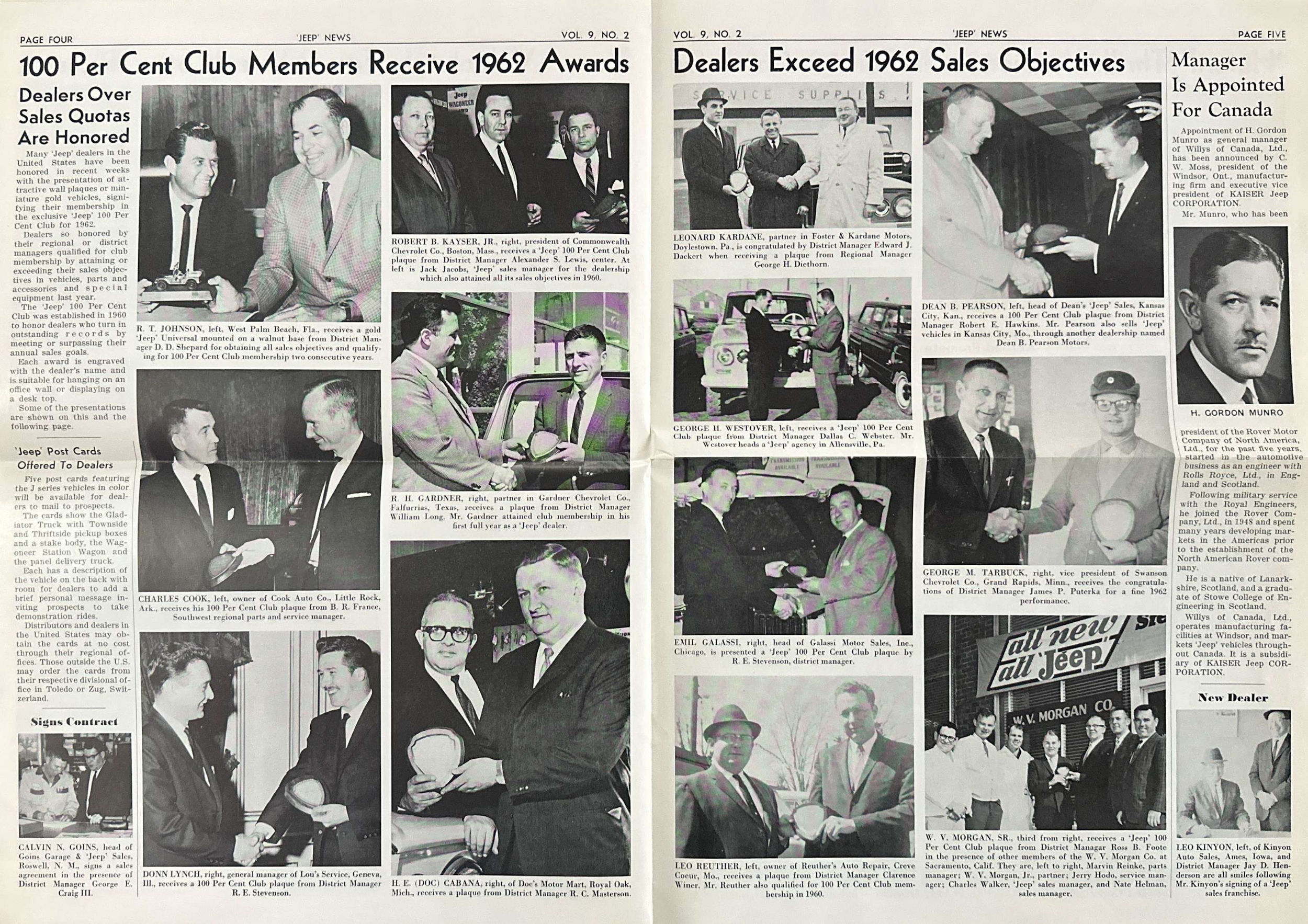
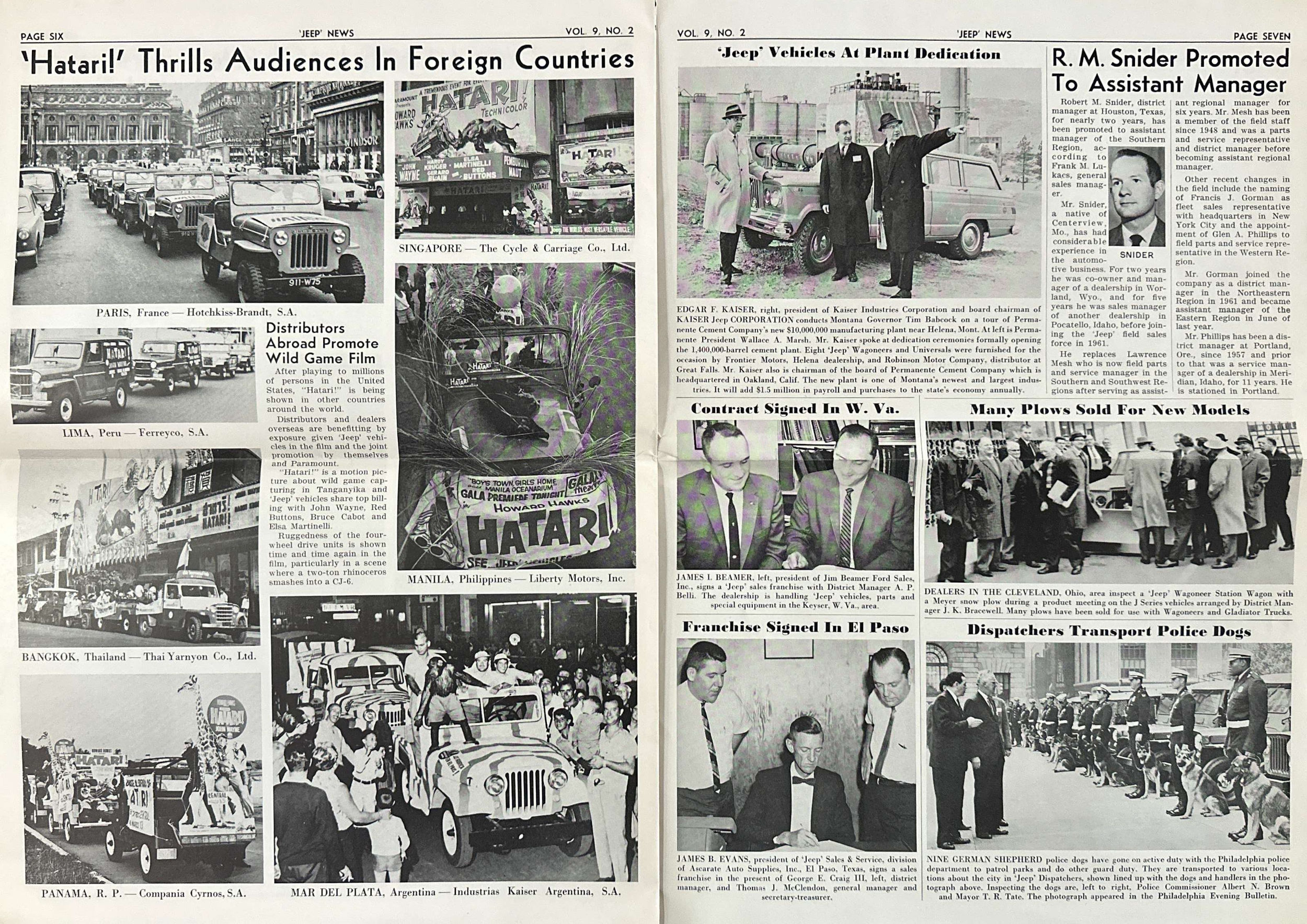
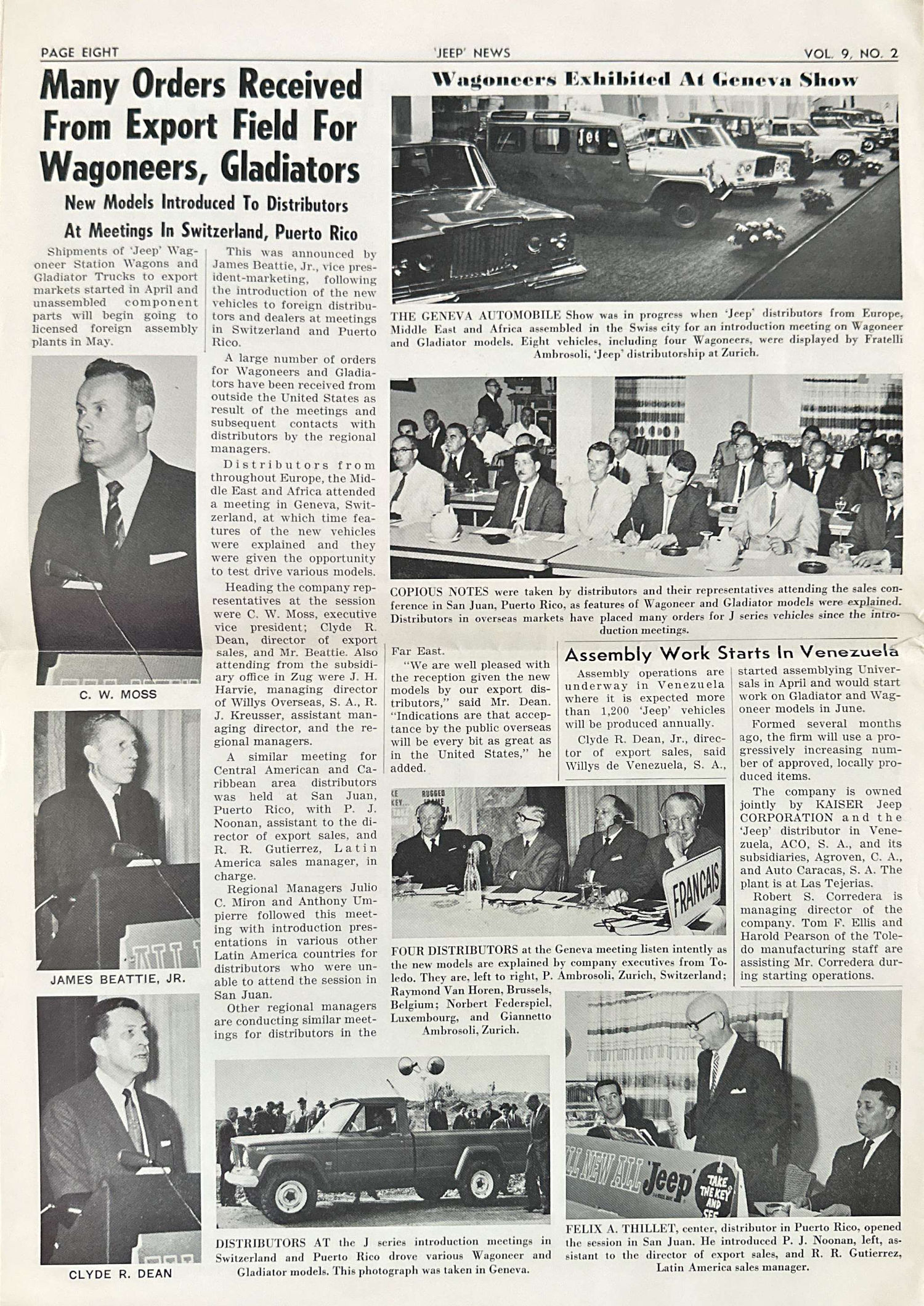
At some point in 1963, Jeep News stopped adding a month to the printings, so we must use volume and numbers to delineate the various Jeep News issues. This issues, volume 9, Number 2 in 1963 is eight pages.
Page one has a neat photo of an FC-170 with an extended rear and an extra axle. That looks pretty handy! Page two contains some upcoming ads, along with a nod to some Argentinian jeeps. Page three shares the news of more jeeps in more movies, including “The Nutty Professor”, The Ugly American”, “Donavan’s Reef”, and “My Six Loves”.
Pages four and five contain dealer news. Page six continues the coverage of the Hatari! movie, this time internationally. Page seven shows police and police-dogs lined up in front of DJ-3As purchased by the Philadelphia police. Page eight covers some international updates.
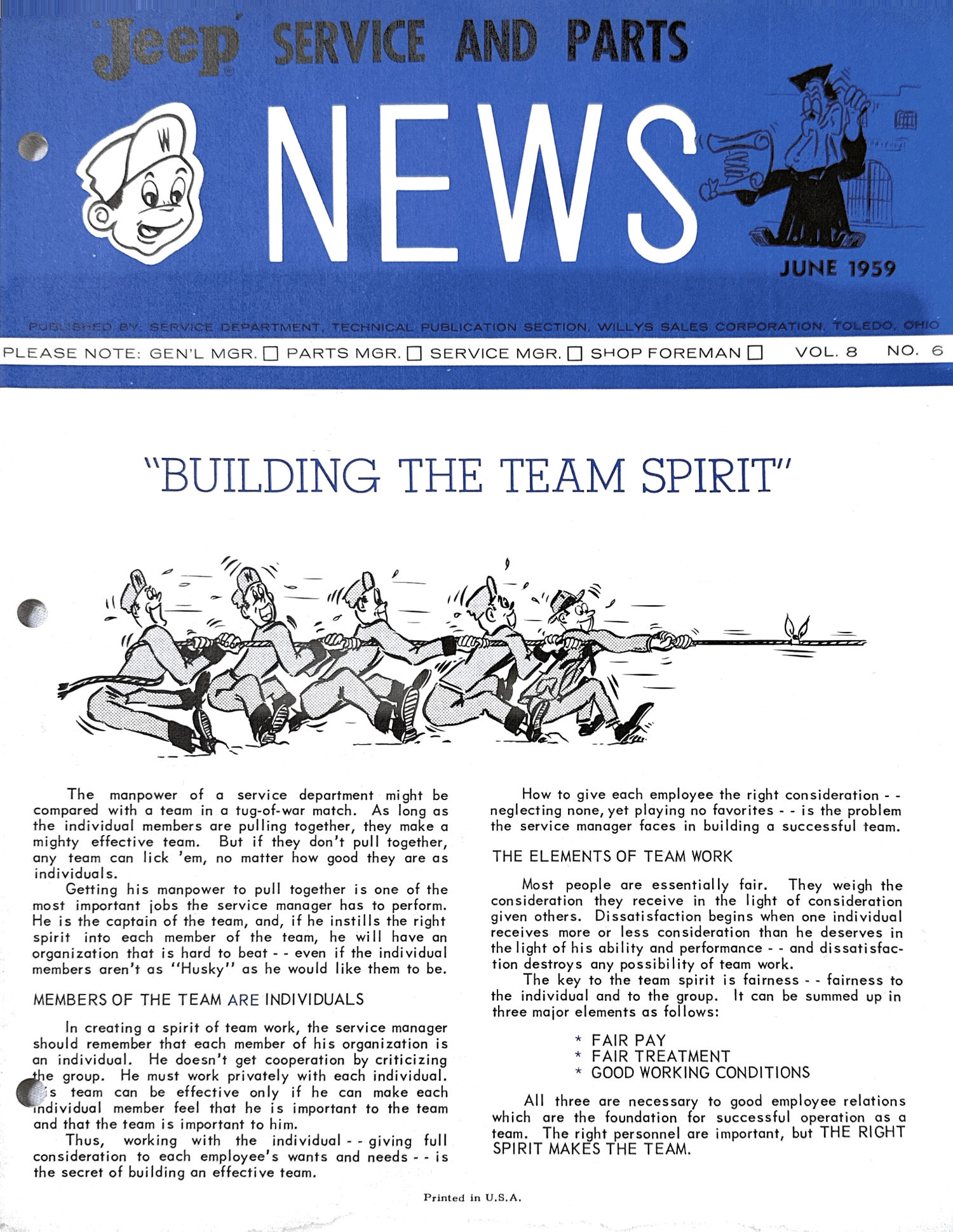
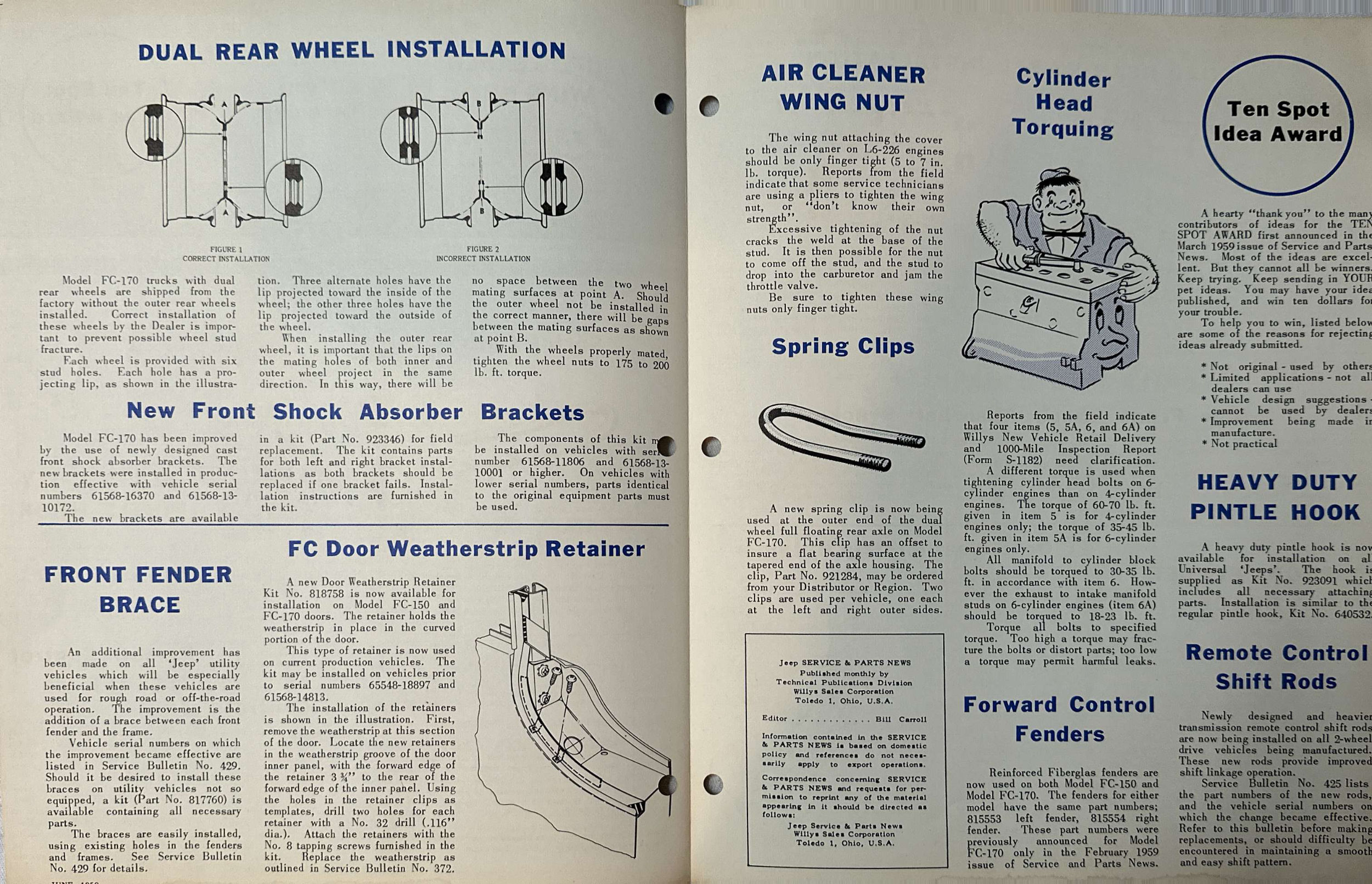
This issue of Jeep Service and Parts News is one of about twenty issues I obtained. This is the earliest one I have. I am unsure when these bulletins began, but given this is volume eight, then this must have started someone around 1953? These likely were tossed or destroyed pretty quickly.
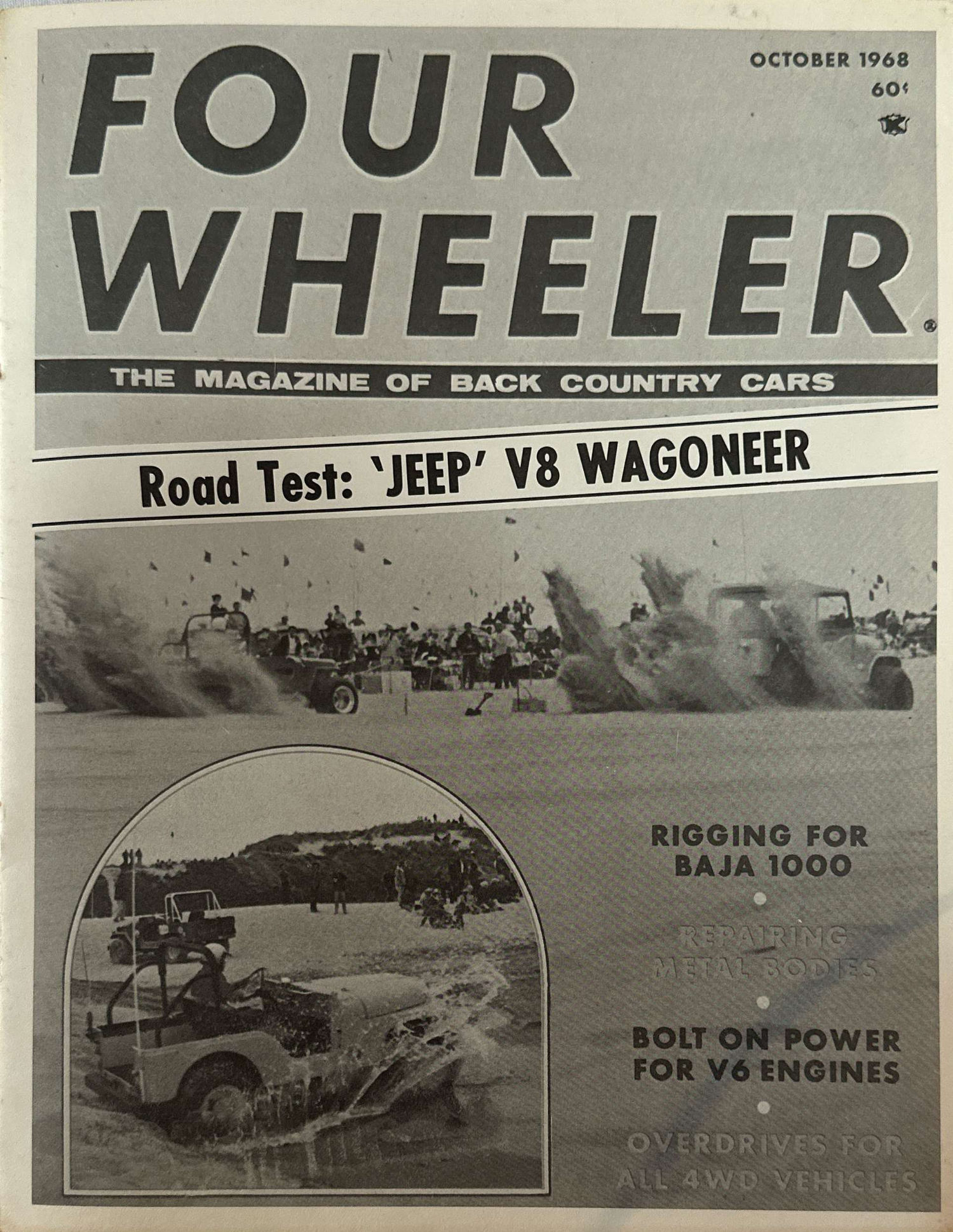
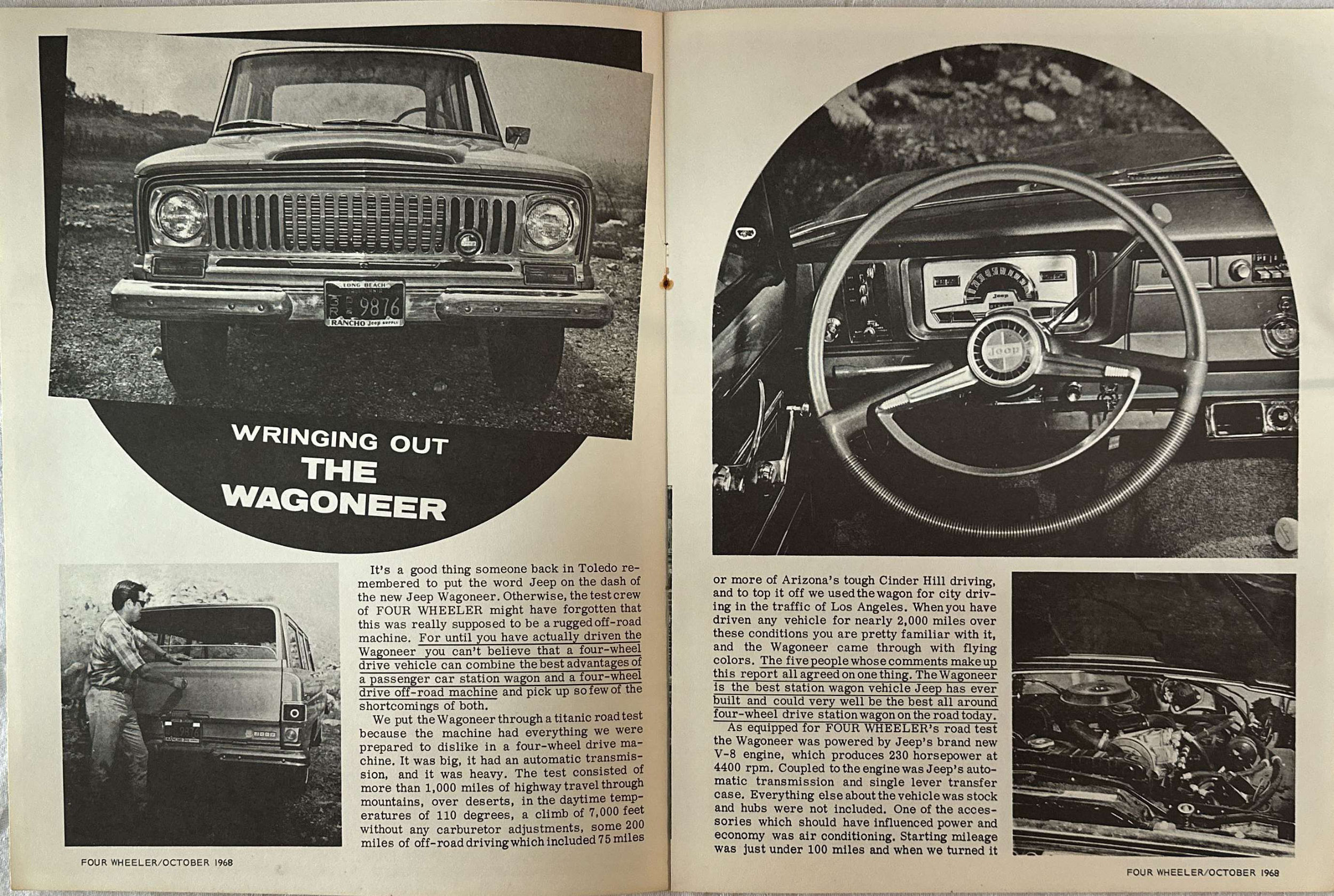
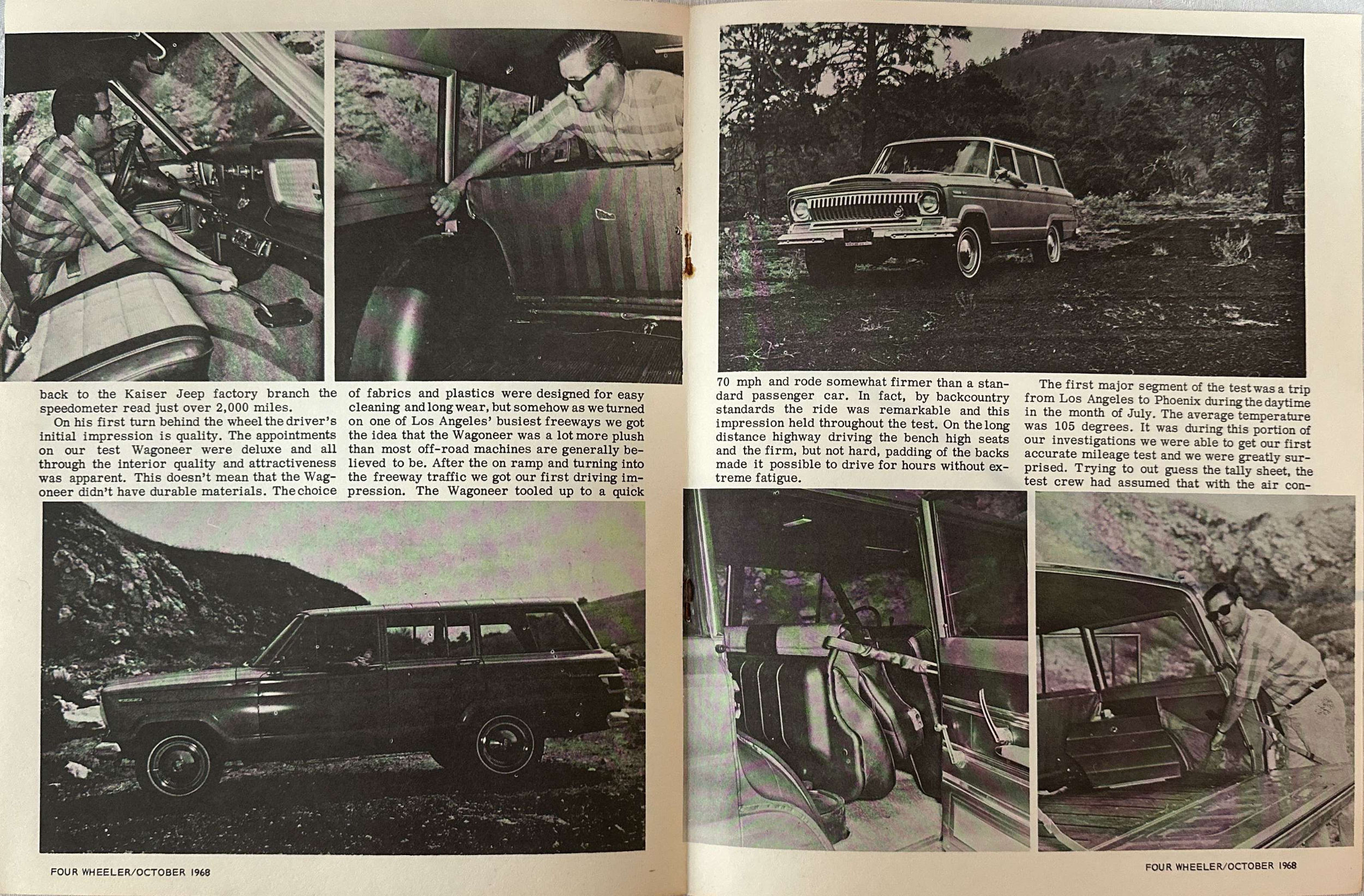
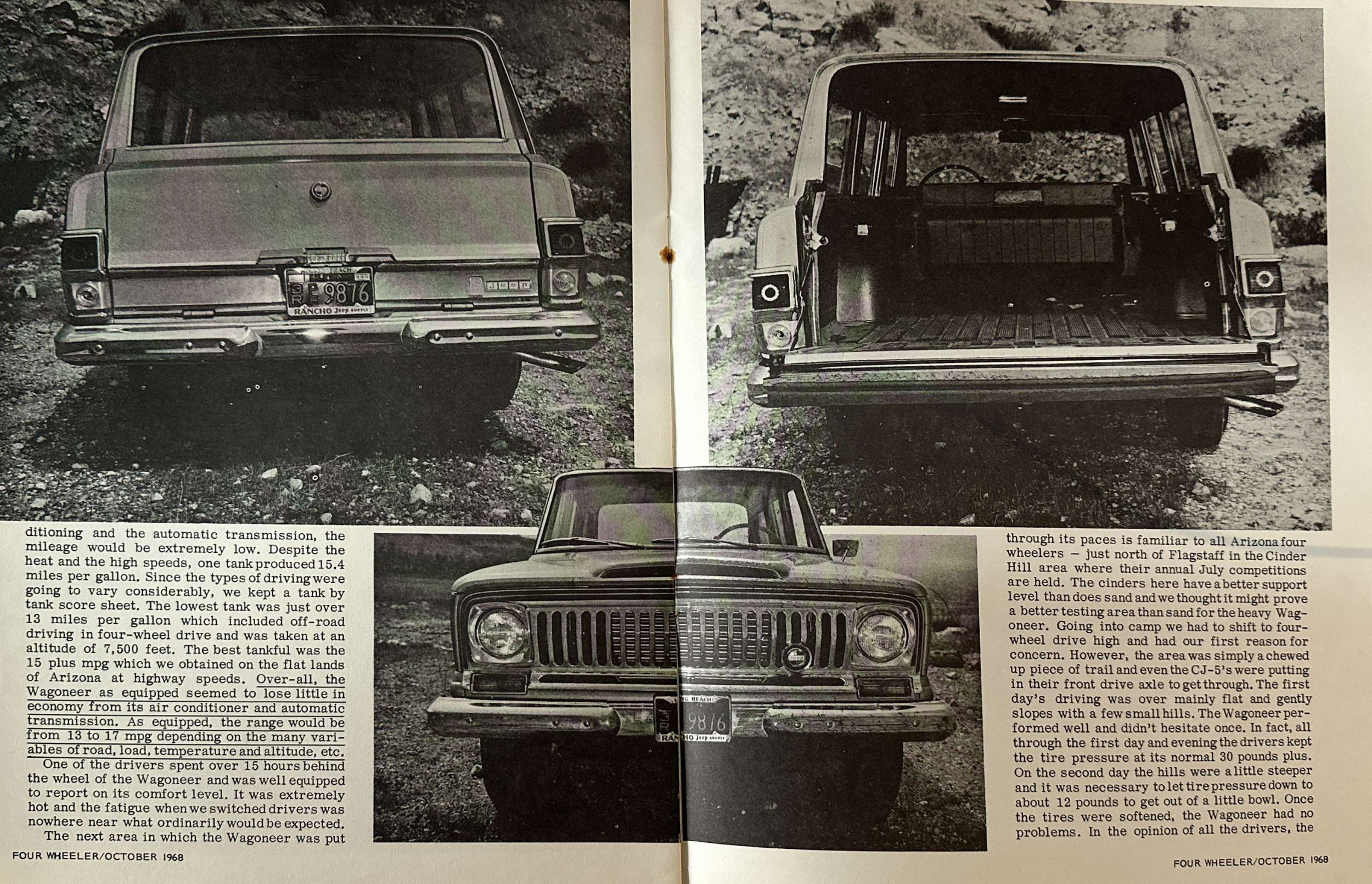
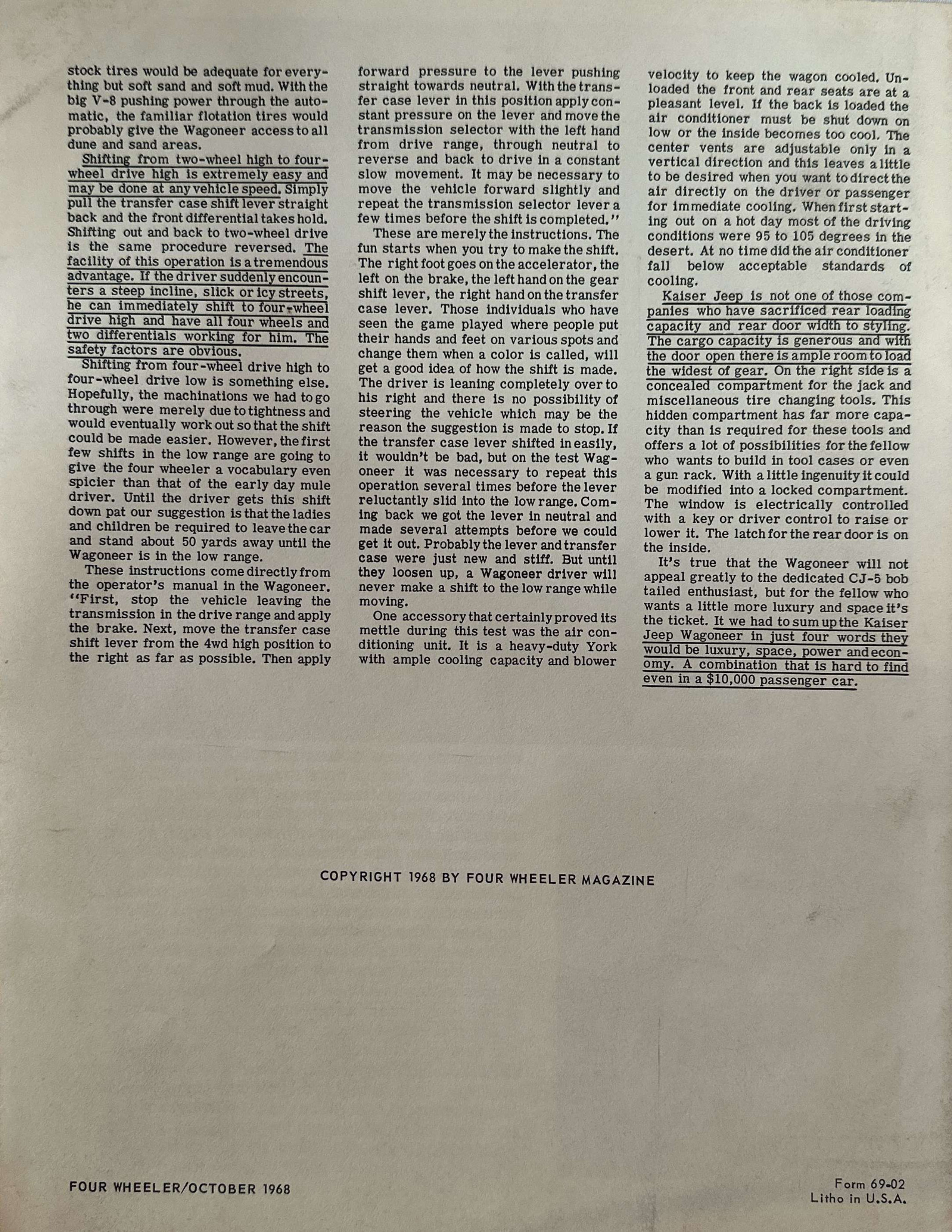
Kaiser-Jeep must have arranged to have this article, originally printed for Four Wheeler Magazine, printed as a stand-alone ad piece for dealers and prospective customers. It’s printed in black and white, rather than color, and is eight pages. The form number is 69-02, suggesting this run was printed in Feb of 1969.
Kaiser-Jeep must have arranged to have this article, originally printed for Four Wheeler Magazine, printed as a stand-alone ad piece for dealers and prospective customers. It’s printed in black and white, rather than color, and is eight pages. The form number is 69-02, suggesting this run was printed in Feb of 1969.
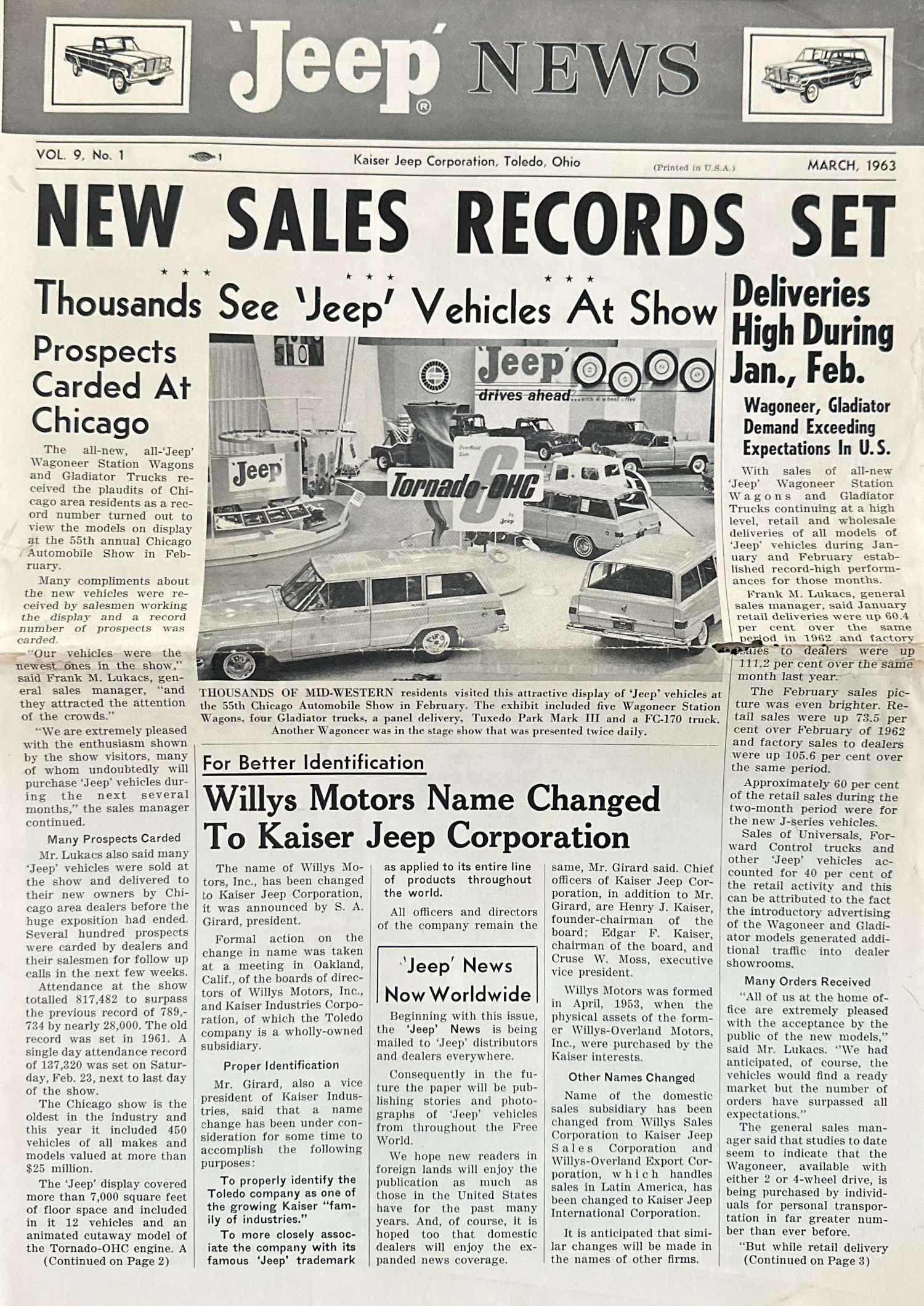
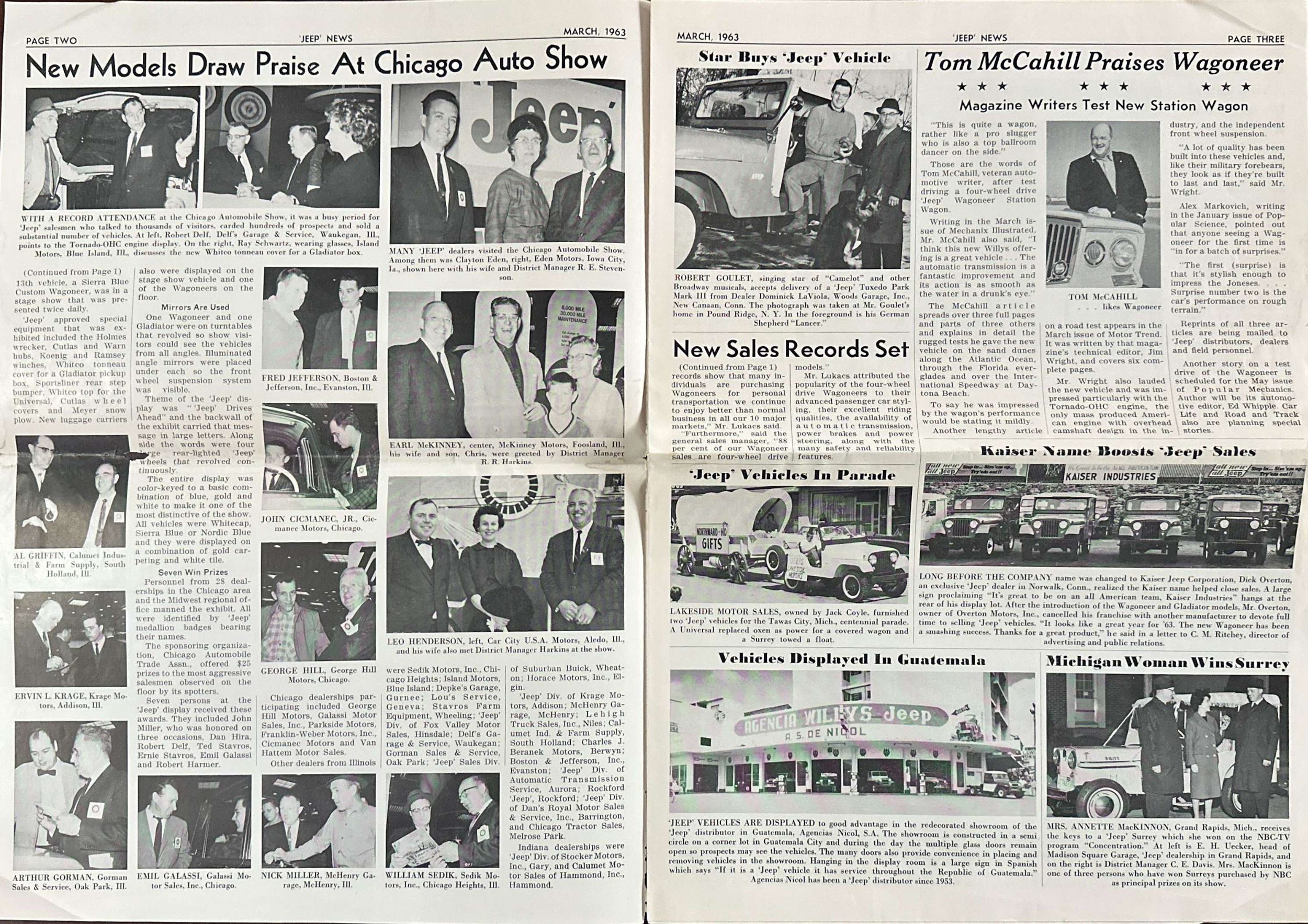
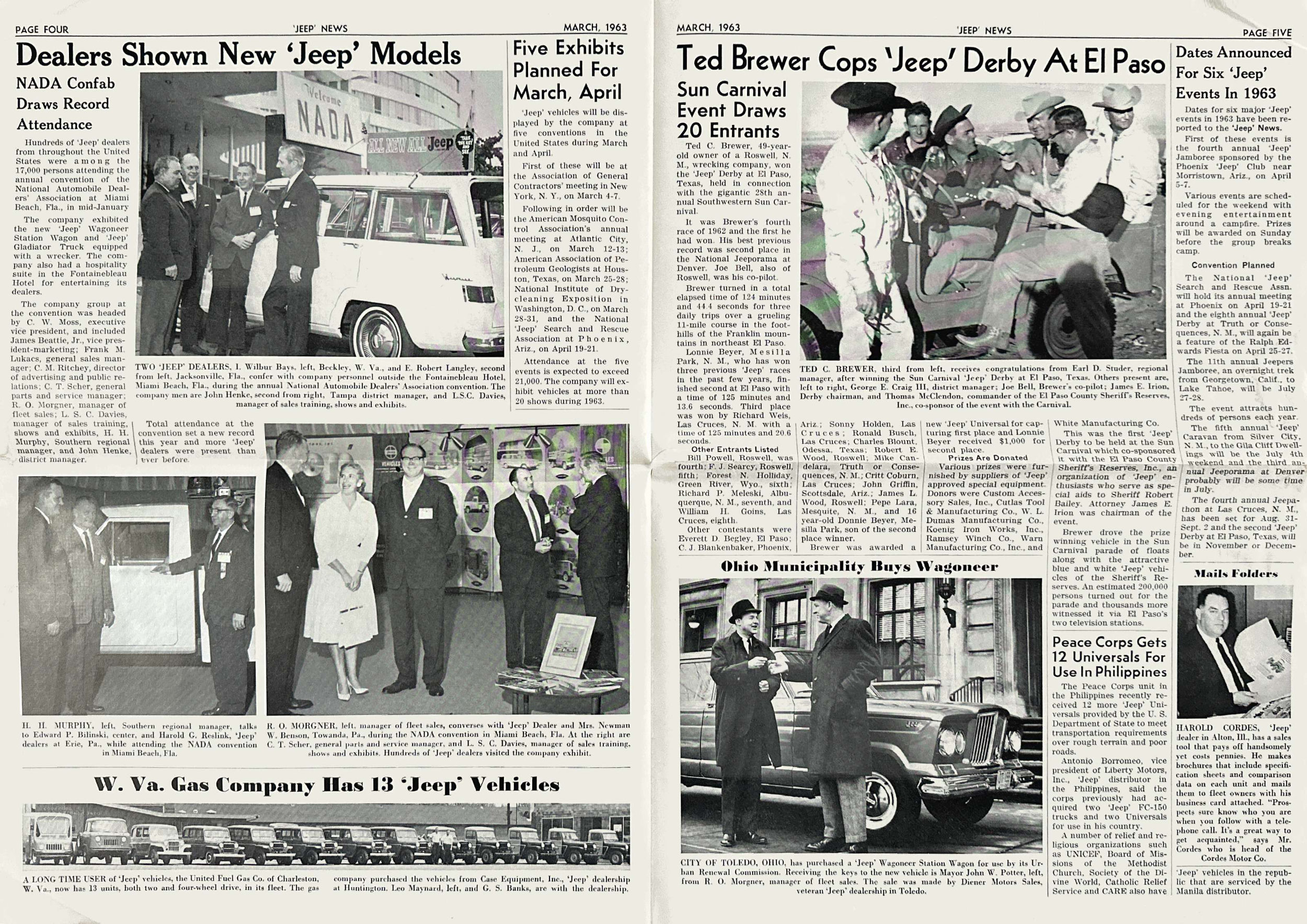
This March 1963 issue of Jeep News is once again eight pages. Page one announced the name change, with the company shifting from Willys Motors to Kaiser Jeep, while the Willys Sales Corporation was changed to Kaiser Jeep Sales Corporation and Willys-Overland Export Corporation changed to Kaiser Jeep International Corporation.
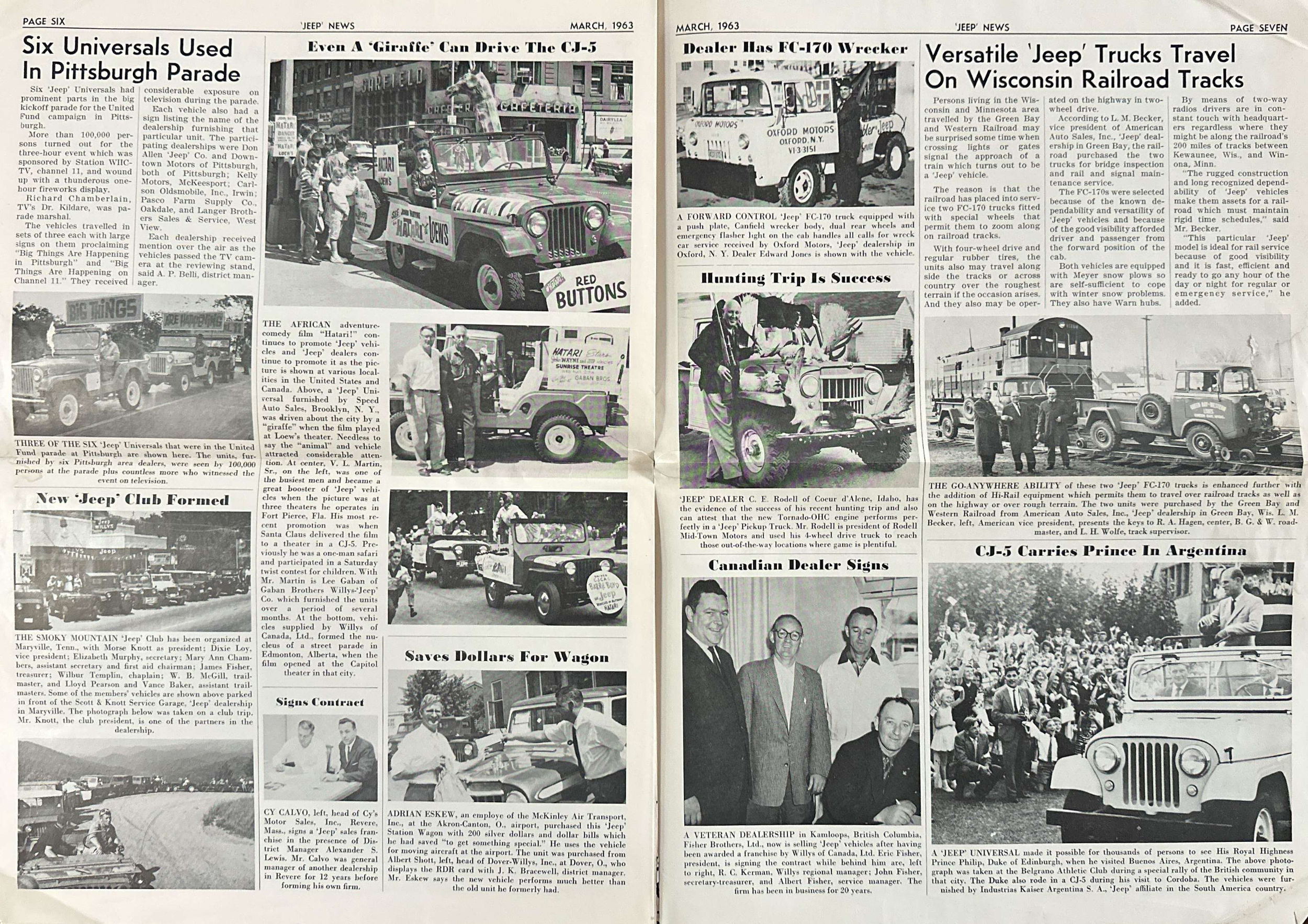
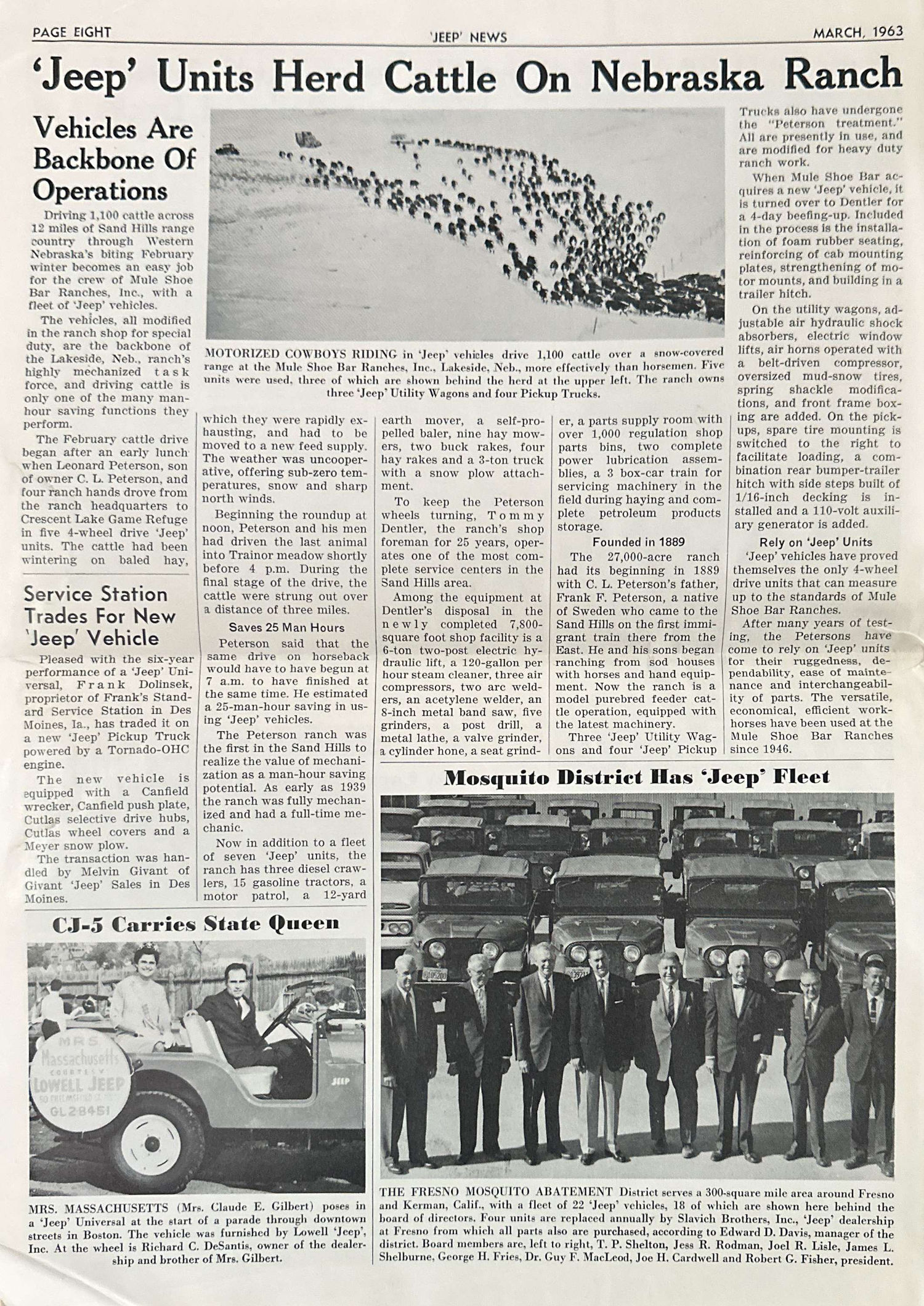
Page four has more about the new models. Page five discusses the results of the Sun Carnival race in El Paso, Texas. Page six shows the continuing efforts to market Hatari!. Page seven contains several FC-related images. Page eight tells the story of using jeeps on a 27,000 acre ranch in Nebraska.
“Before Canyonlands Was a Park” is a story built around a presentation given by Alan “Tug” Bates in 2014 and published January 07, 2024, by the Canyon Country Zephyr. It includes a variety of jeep photos from the Canyonlands area.
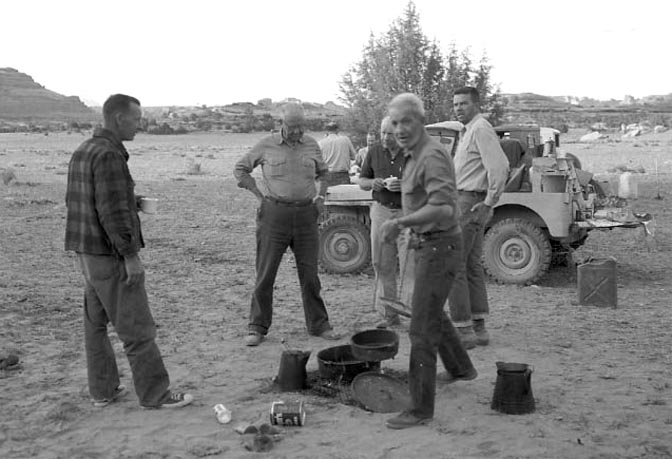
Kent Frost (L), Bates Wilson (Second from right) and friends in the late 1950s. (Photo Credit: NPS)
One excerpt is particularly interesting:
“In the first 10 years of exploring what would become Canyonlands National Park, we encountered a total of five people: We encountered one party of two in 1952; Dad gave them directions to find what later became known as Angel Arch, the icon of Canyonlands. Once, in 1953, we came across a lonesome cowboy, on his way from the West fork of Salt Creek to Cave Springs. And finally, in the fall of 1958, we met up with Kent and Fern Frost. They were in their green jeep, in Horse Canyon, checking out the area for future tours. But that was it…. FIVE.”
When my ex-wife and I moved to Utah thirty years ago (Yikes!!) in the summer of 1994 the population was 1.9 million (by comparison, as of 2021, the population was 3.38 million and the state is still one of the top five growing states). Lacking a jeep at that time, I got to explore southern Utah when you could still hike Desolate Arch in Arches NP and not see anyone! The experience Bates describes was mine at times. There were no signs stopping me from unrolling a sleeping bag on a piece of slick rock outside Moab and spending the night (now, lots of no-camping signs), which I did several times, with stars so bright I didn’t need a flashlight. And, if off the beaten path, you were guaranteed to feel all alone in desolate country.
Thirty years later, the Utah I experienced has changed dramatically. The restaurants are way better, the culture more diverse, the events more varied, but the resulting traffic and the crowds have become, at times, too much for my tastes. I guess I am getting old!!
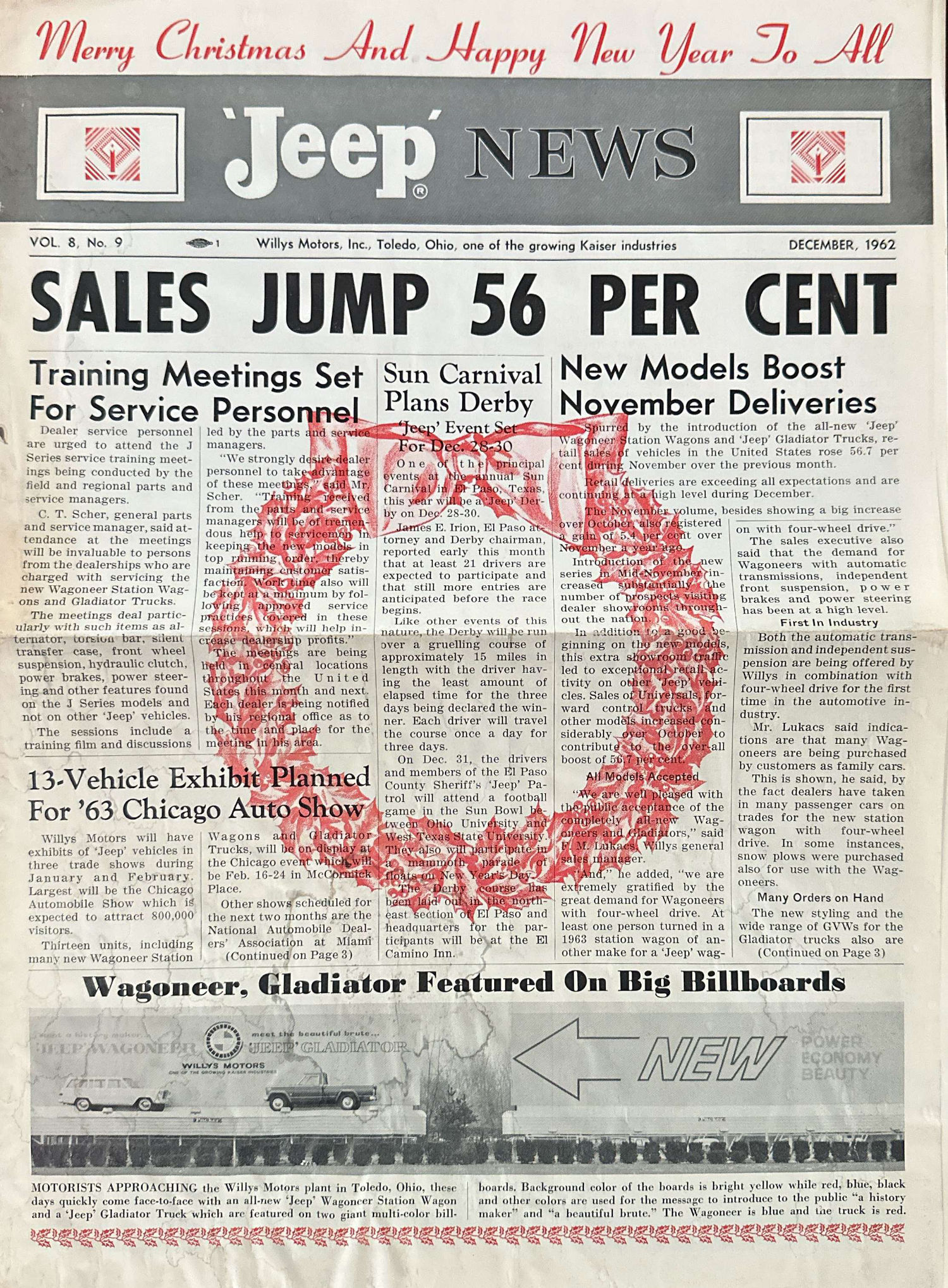
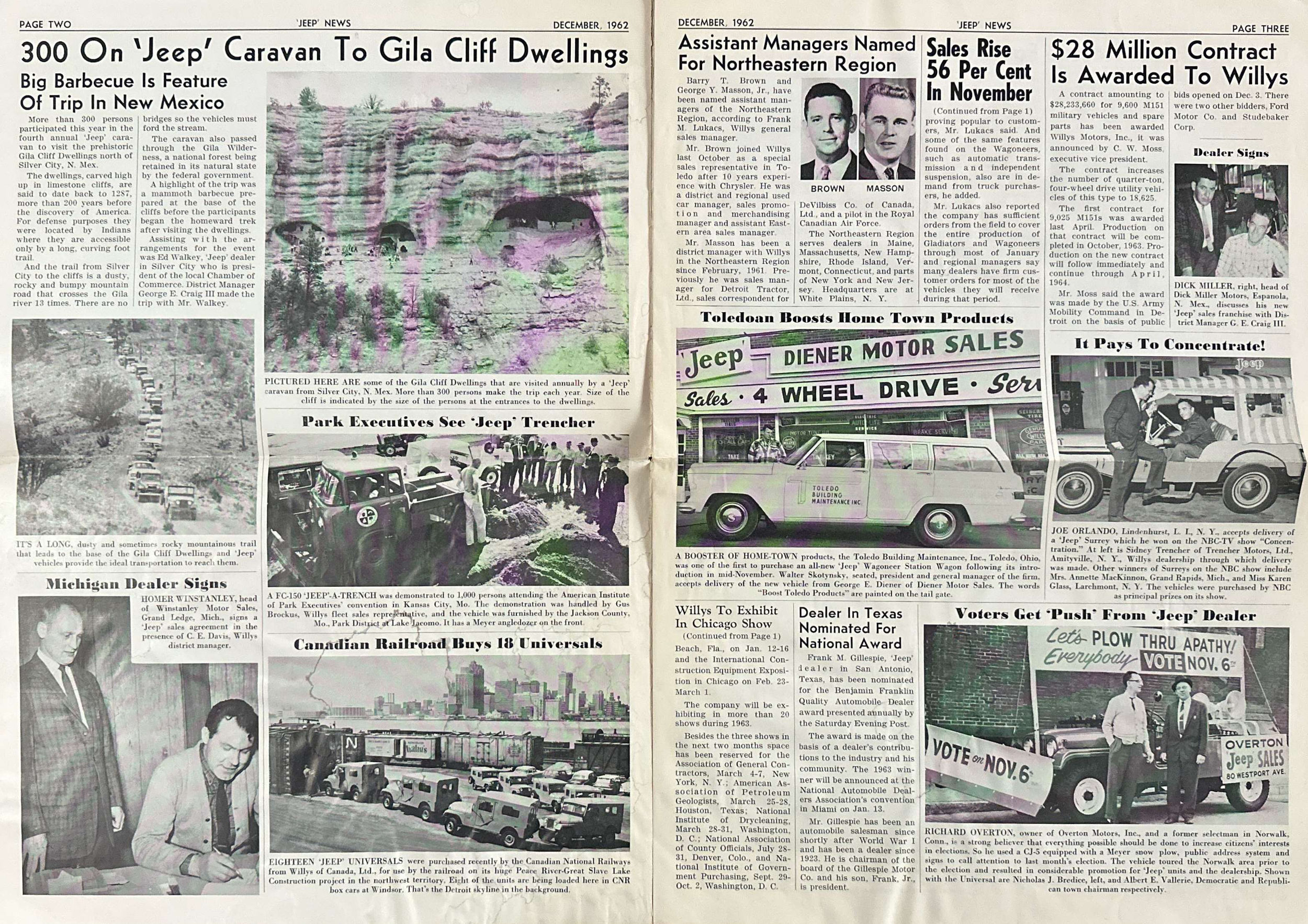
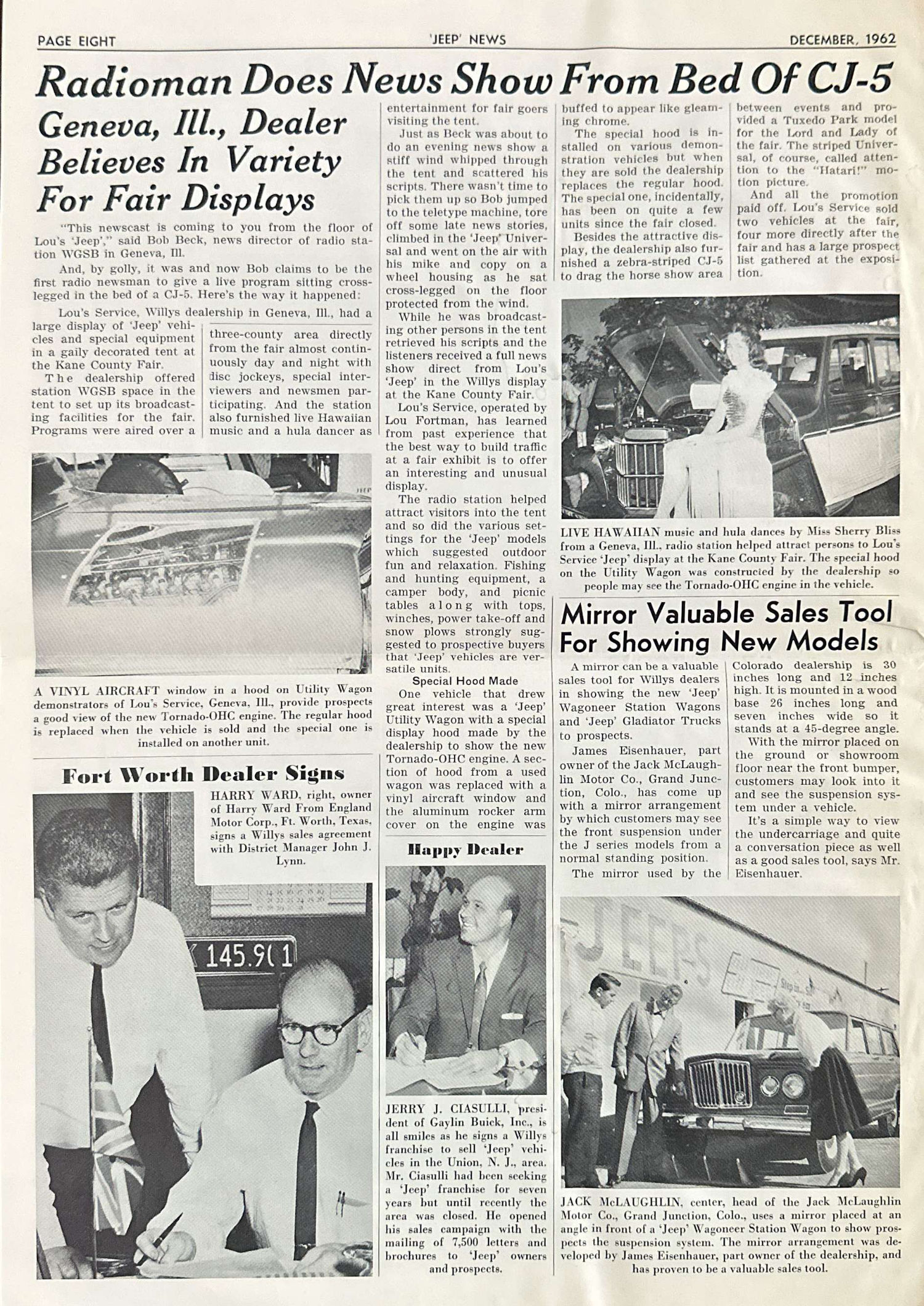
The December 1962 issue of Jeep News was eight pages. Page one shares the news that sales jumped 56 percent, thanks in part to the new jeep models. Meanwhile in El Paso, Texas, organizers of the Sun Bowl planned to host a Jeep Derby as part of the Sun Bowl festivities. Page two shares some photos from a 300-person jeep caravan to Gila Cliff Dwellings National Monument (created in 1907).
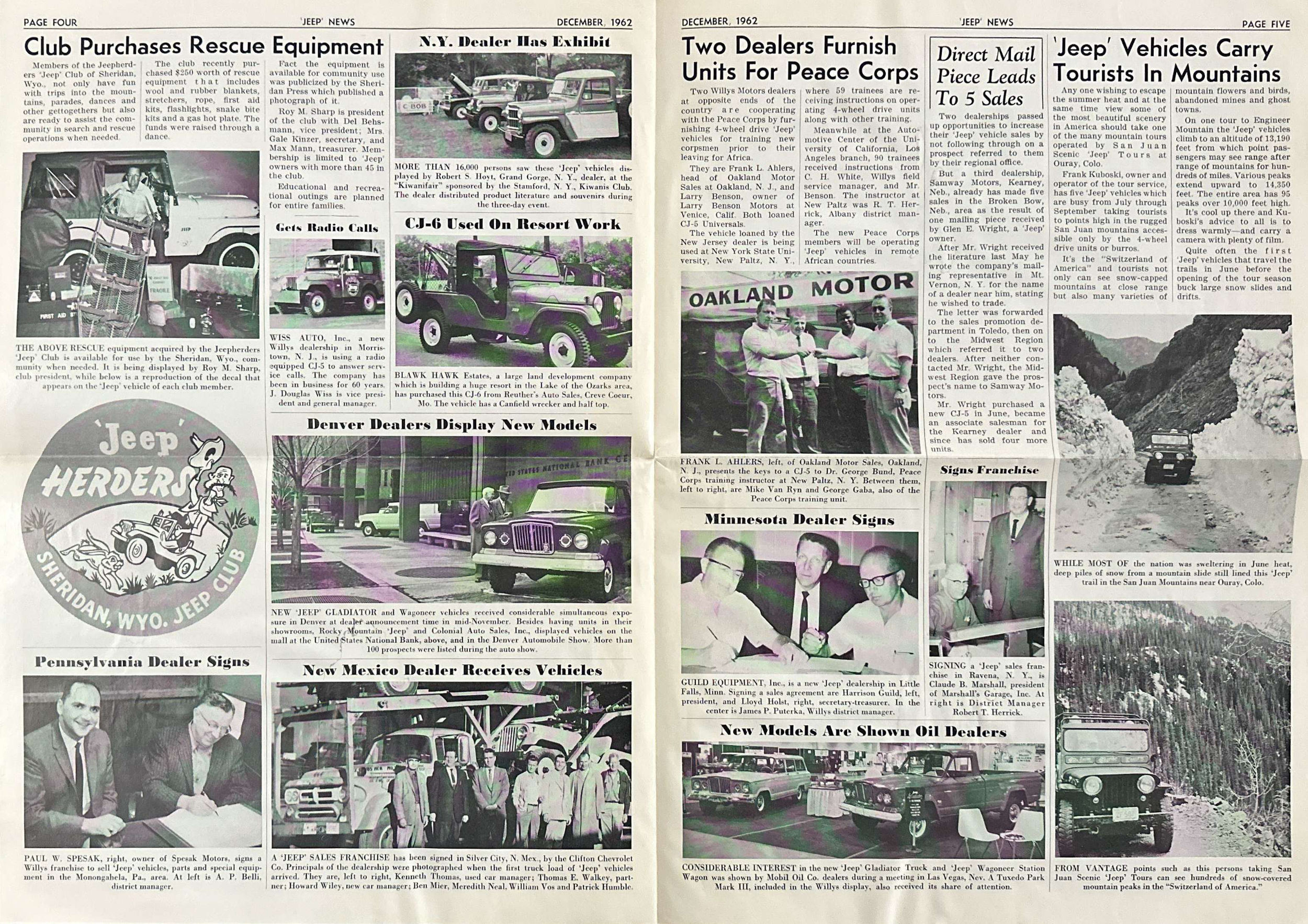
Page three contains a variety of miscellaneous stories. Page four includes a great example of the Jeep Herders logo. The club was located in Sheridan, Wyoming. Page five shared the story of Frank Kuboski and his San Juan Scenic Tour Jeep business operating out of Ouray, Colorado (editor’s note, Ouray is pronounced “Your-ay”, as my son likes to remind me .. I always mess it up!).
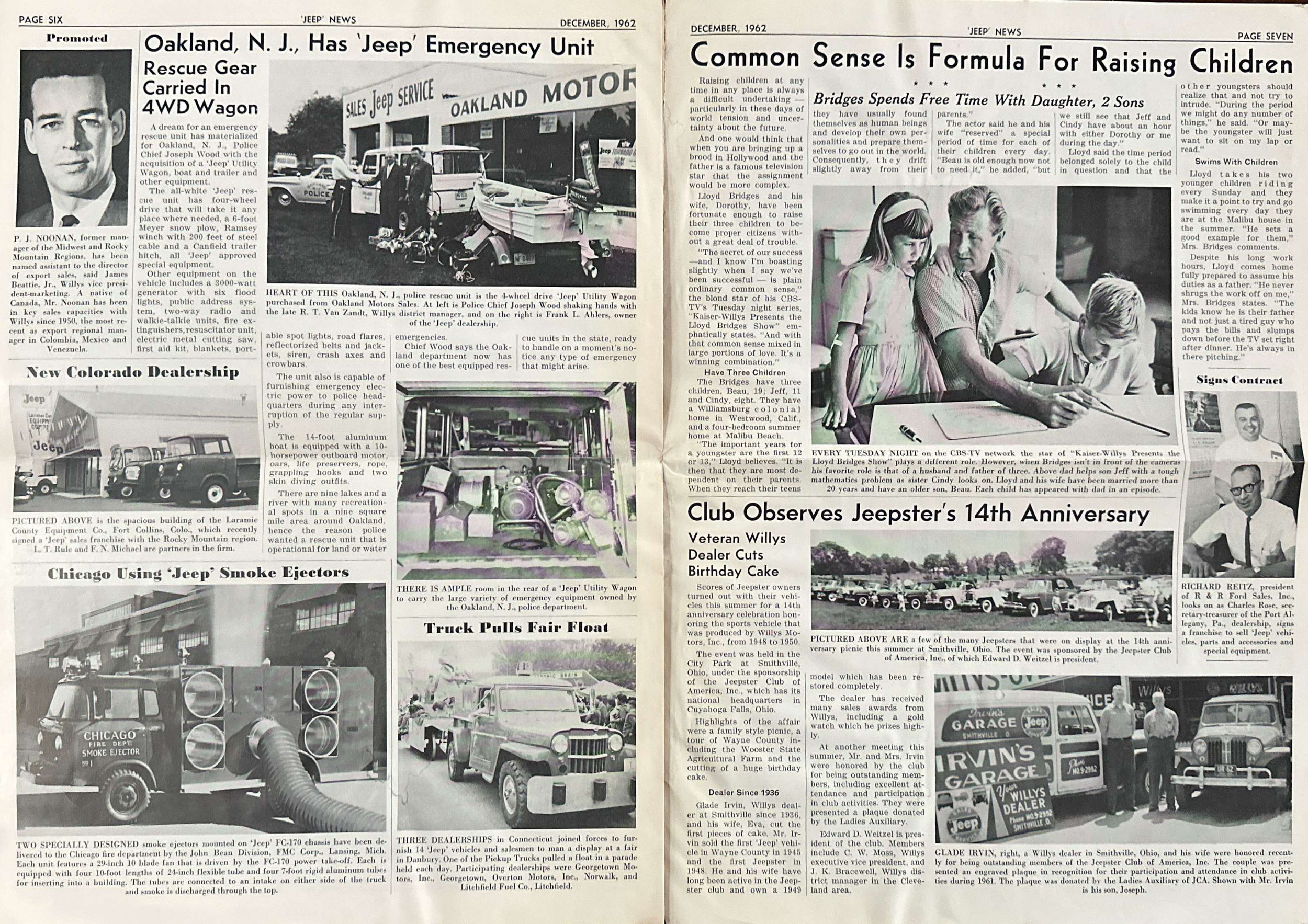
A highlight from page six was the announcement that Oakland, NJ, Police Chief purchased a wagon with a matching boat and trailer for rescue work. An unusual article on page seven explored Hollywood’s Lloyd Bridges’ views on raising kids, while lower on the page the Jeepster Club of America celebrated their fourteenth anniversary. Finally, on page eight, came the report of a radio newsman delivery his show from the bed of a CJ-5.
And, finally, after the jeep Kam drove e a Landcruiser. Here’s a short video of Kim at work:
===================================
Originally posted December 18, 2012:
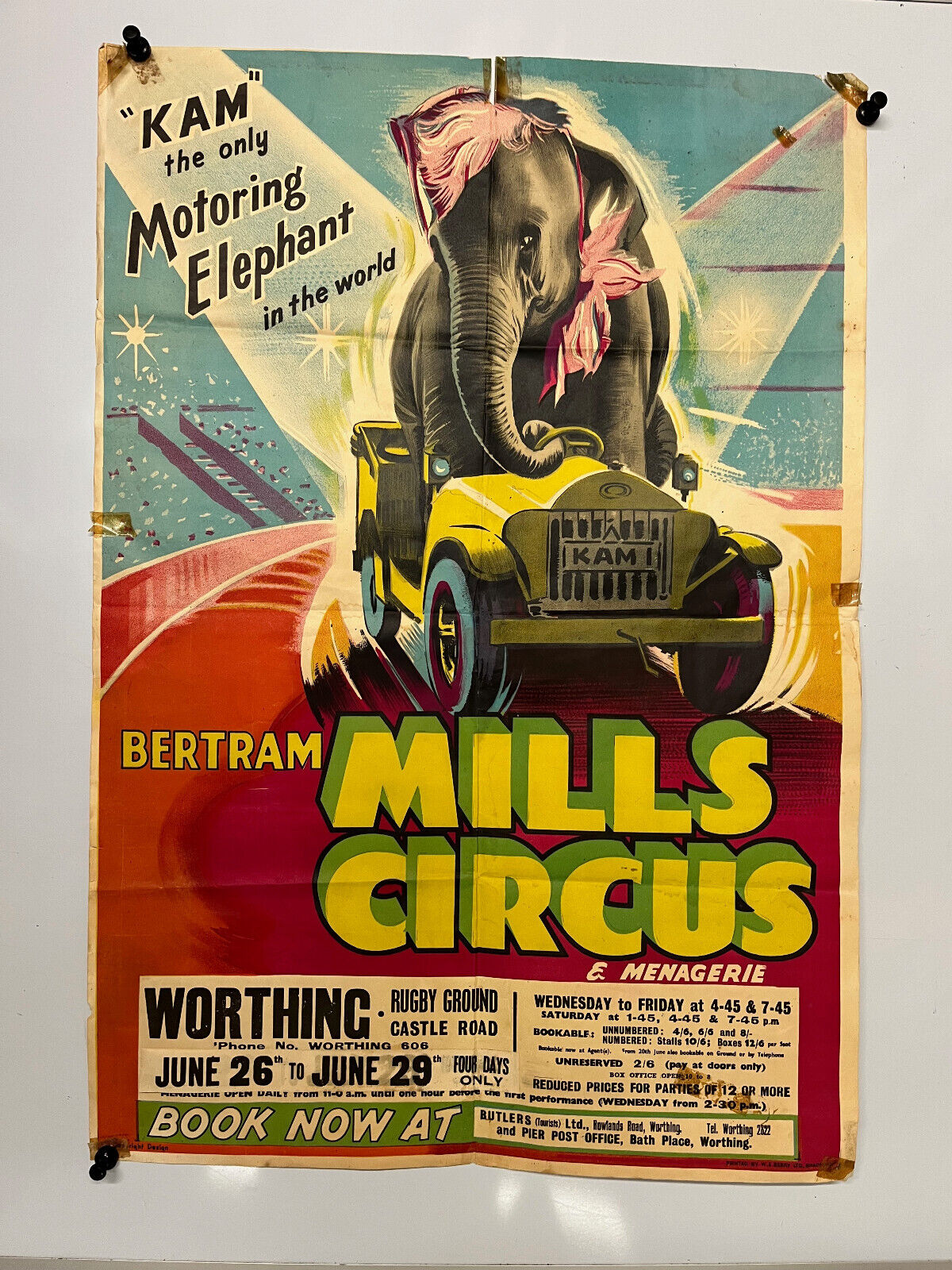
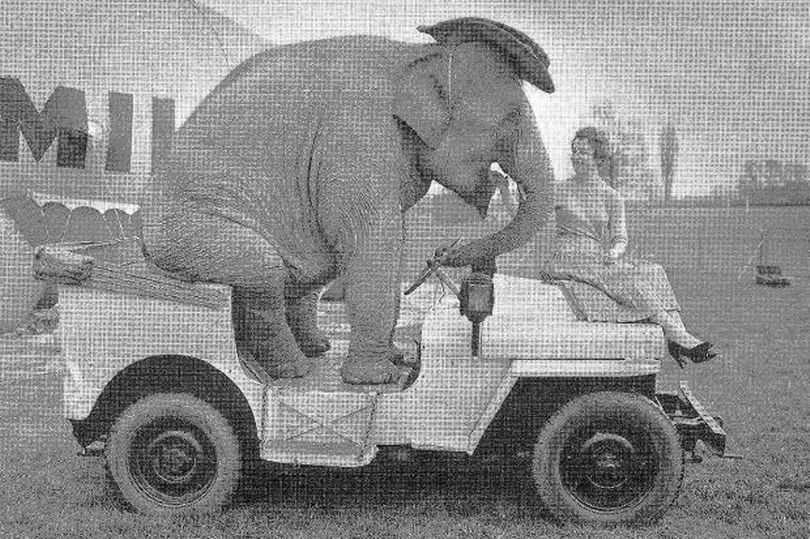
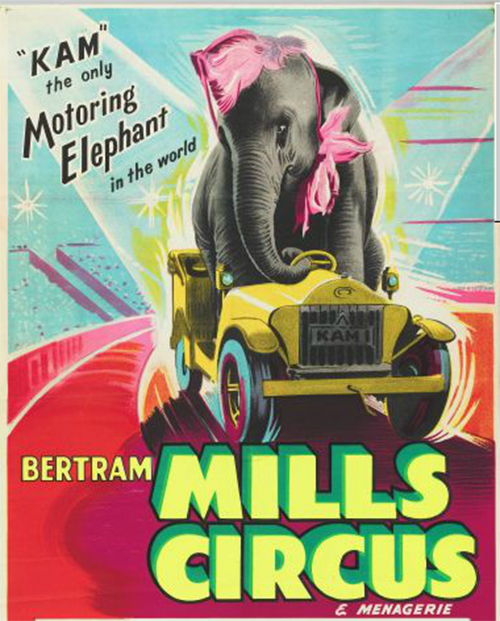
Kam the elephant starred for the Bertram Mills Circus during the 1950s and into the 1960s. Initially, Kam drove a modified MB/GPW. It looks like it had an updated motor. Unfortunately, the only images I have found of Kam on the jeep are from the above poster and from page 240 of “The Jeep” book (a black and white photo which I don’t show). In the photo, as in the poster, there is a hump in the hood, which I assume is the result of the engine swap. The jeep has the usual WWII attributes: tool indents, rear floating hubs and other details. Unlike the poster, the photo shows the fenders were left stock and flat, rather than rounded as shown in the poster.
Eventually, according to the site Silodrome, the circus bought a 1959 Series 1 Land Rover and modified it with a “central steering wheel and a huge, padded seat over the rear axle”. The picture below is also from Silodrome. Here is a very short video of him driving it. Kam’s customized Land Rover has been found and is being rebuilt.
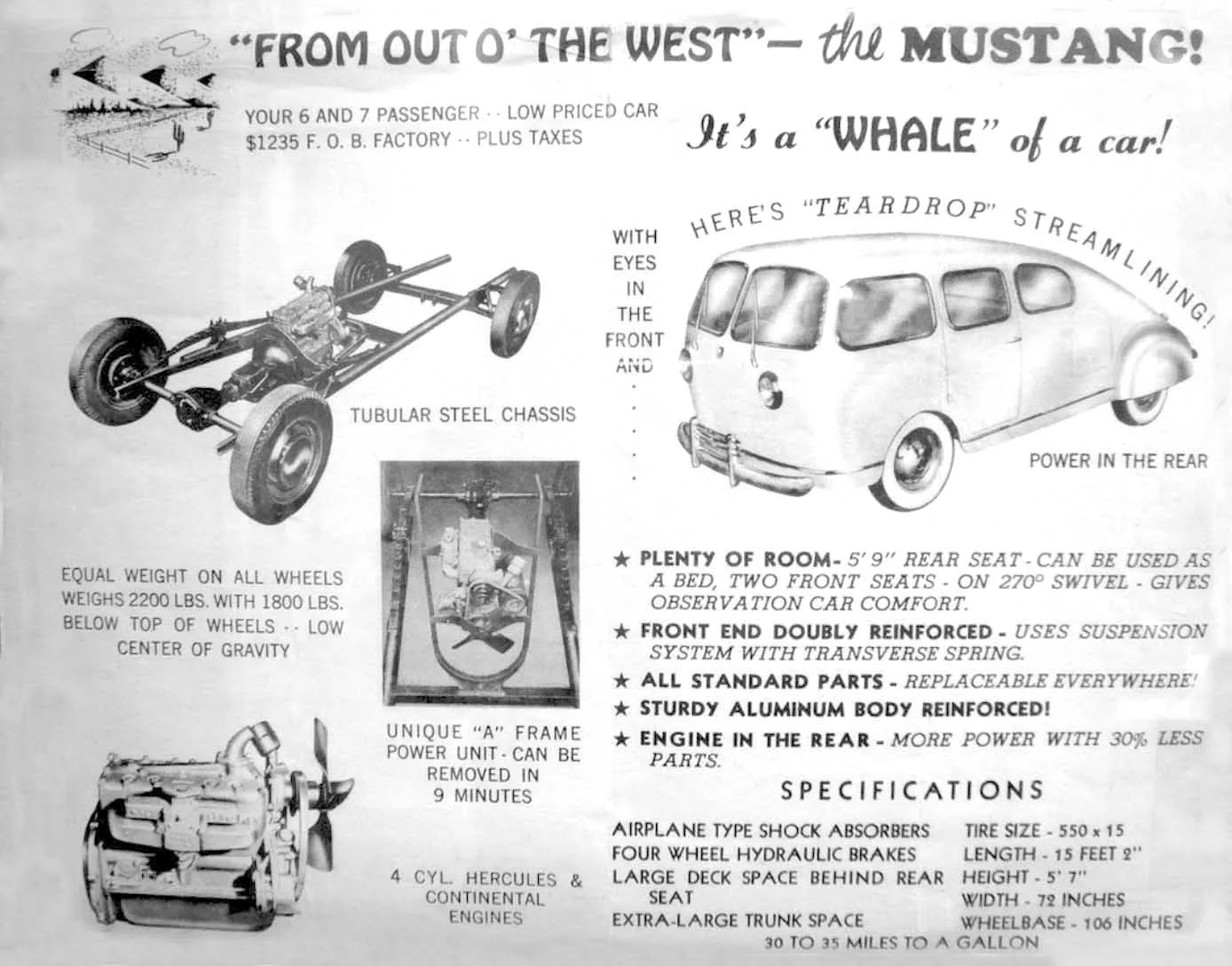
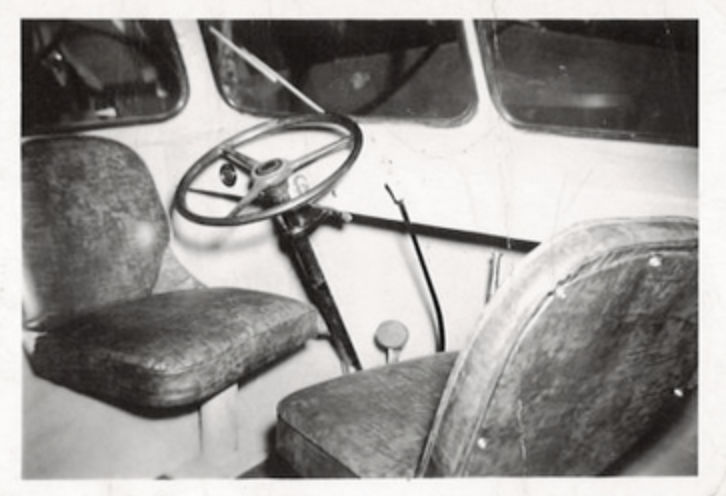
Blaine also shared these links for the teardrop Mustang, developed in the late 1940s. While many of us have seen these pics, what I didn’t realize was that the Mustang utilized some jeep steering parts. As this MotorBiscuit article notes, “McCarty wanted to build his car with existing components adapted to his unique vision. He decided that the steering from a Willys Jeep, a Continental or Hercules engine, and Spicer rear axles would be the basis for his car.”
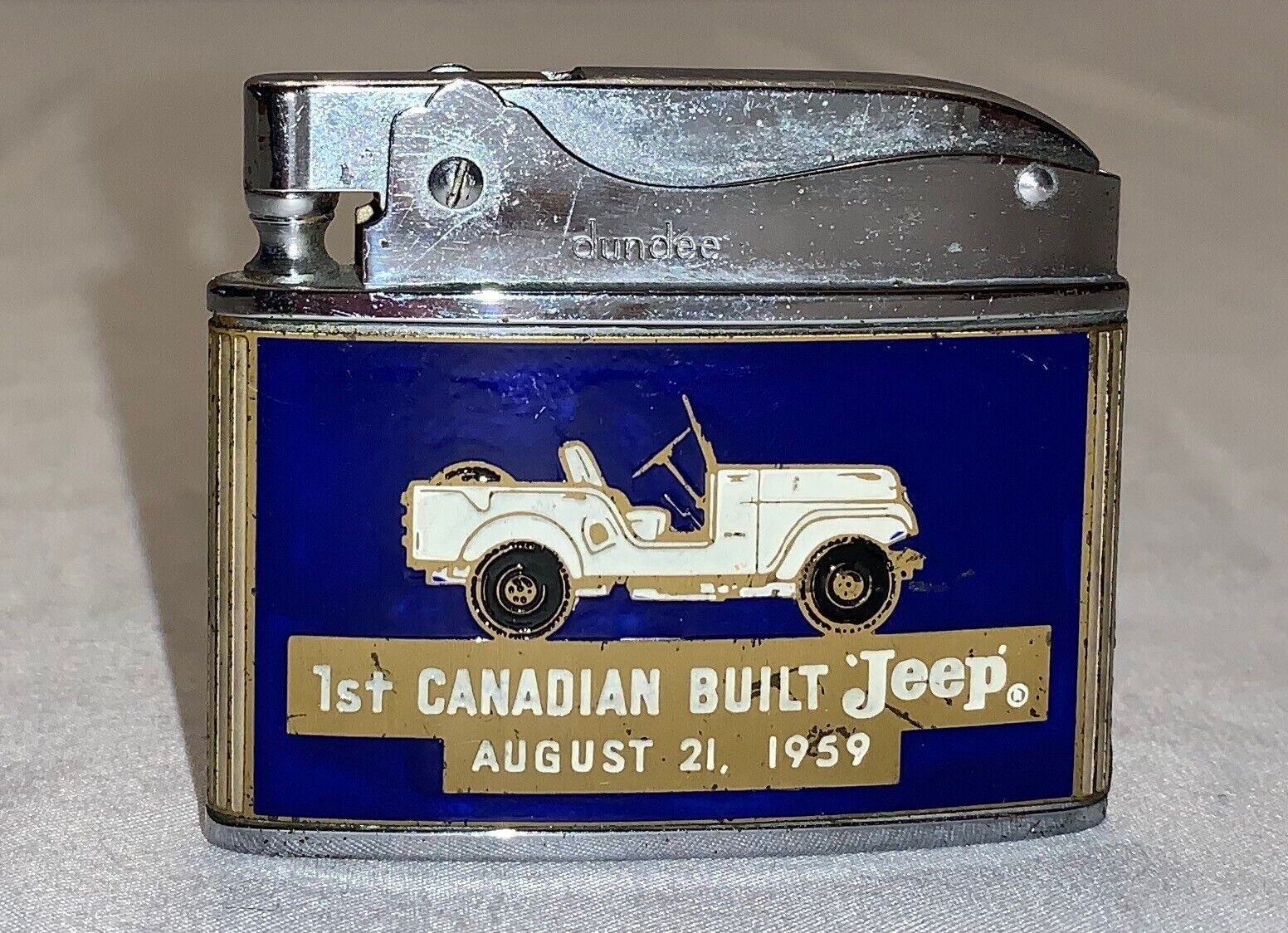
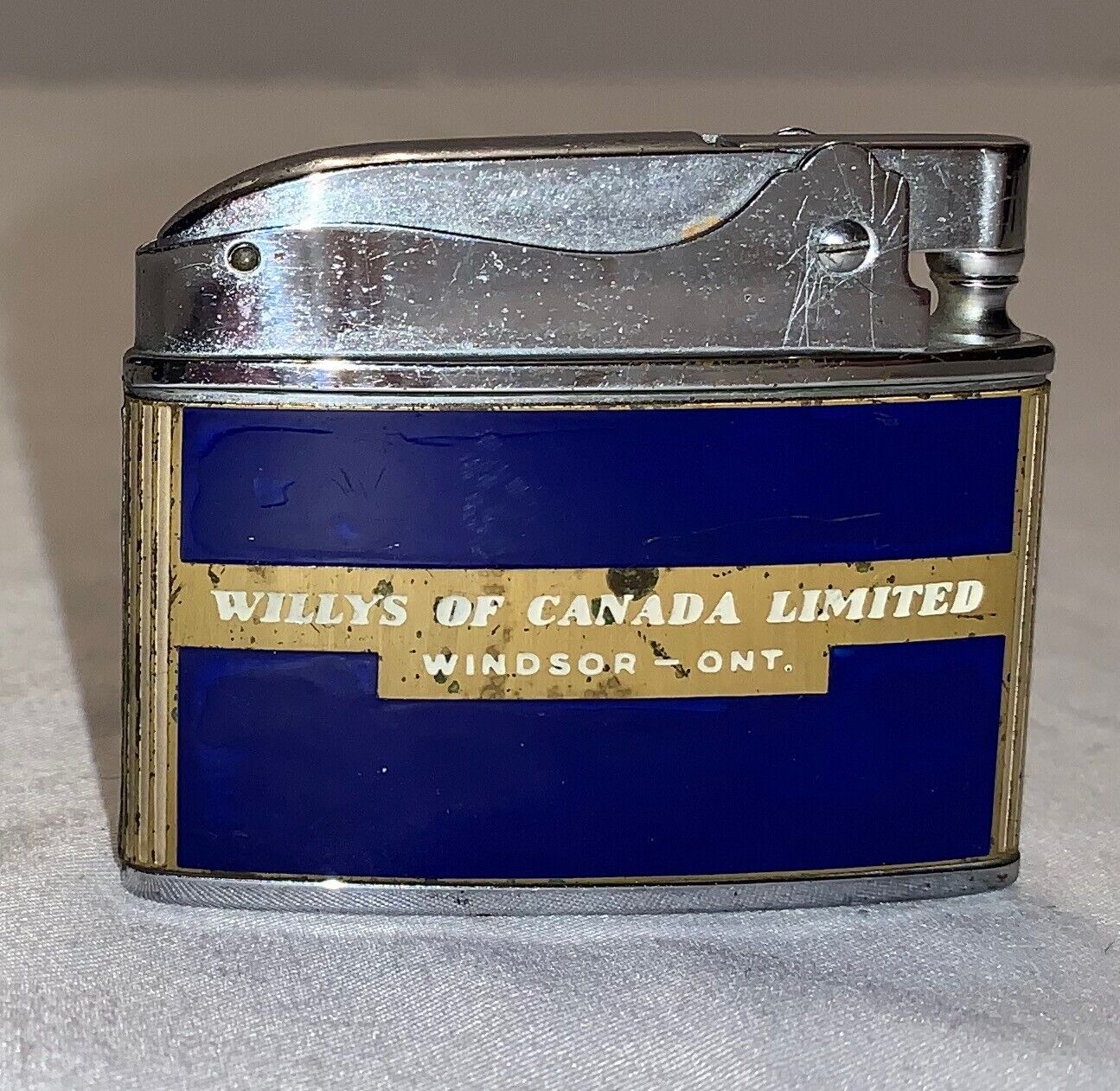
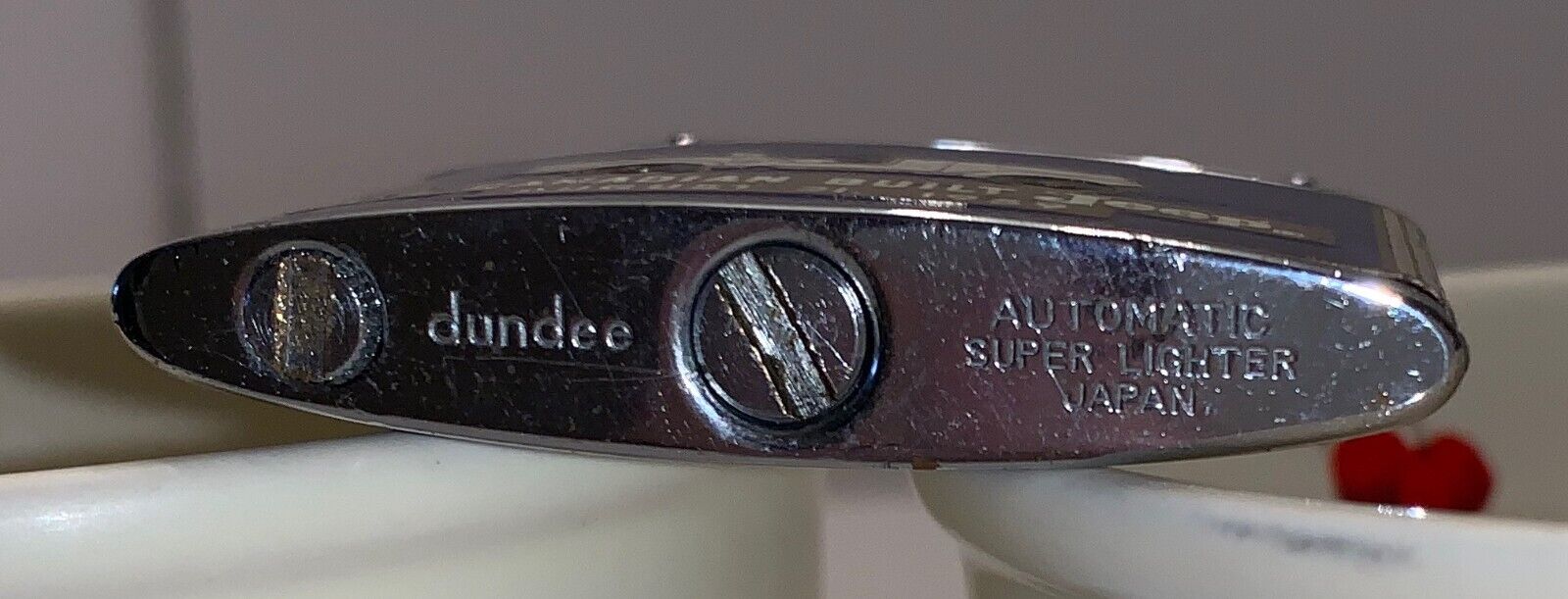
“1959 Dundee Lighter promoting the FIRST CANADIAN BUILT JEEP® August 21, 1959. Back reads: WILLYS of CANADA Ltd, Windsor, Ontario. Scratches from storage. Blue, white and black enamel shows very little if any wear. Needs a cleaning. Being sold “As Is” as we didn’t have any fluid or flints to test.”
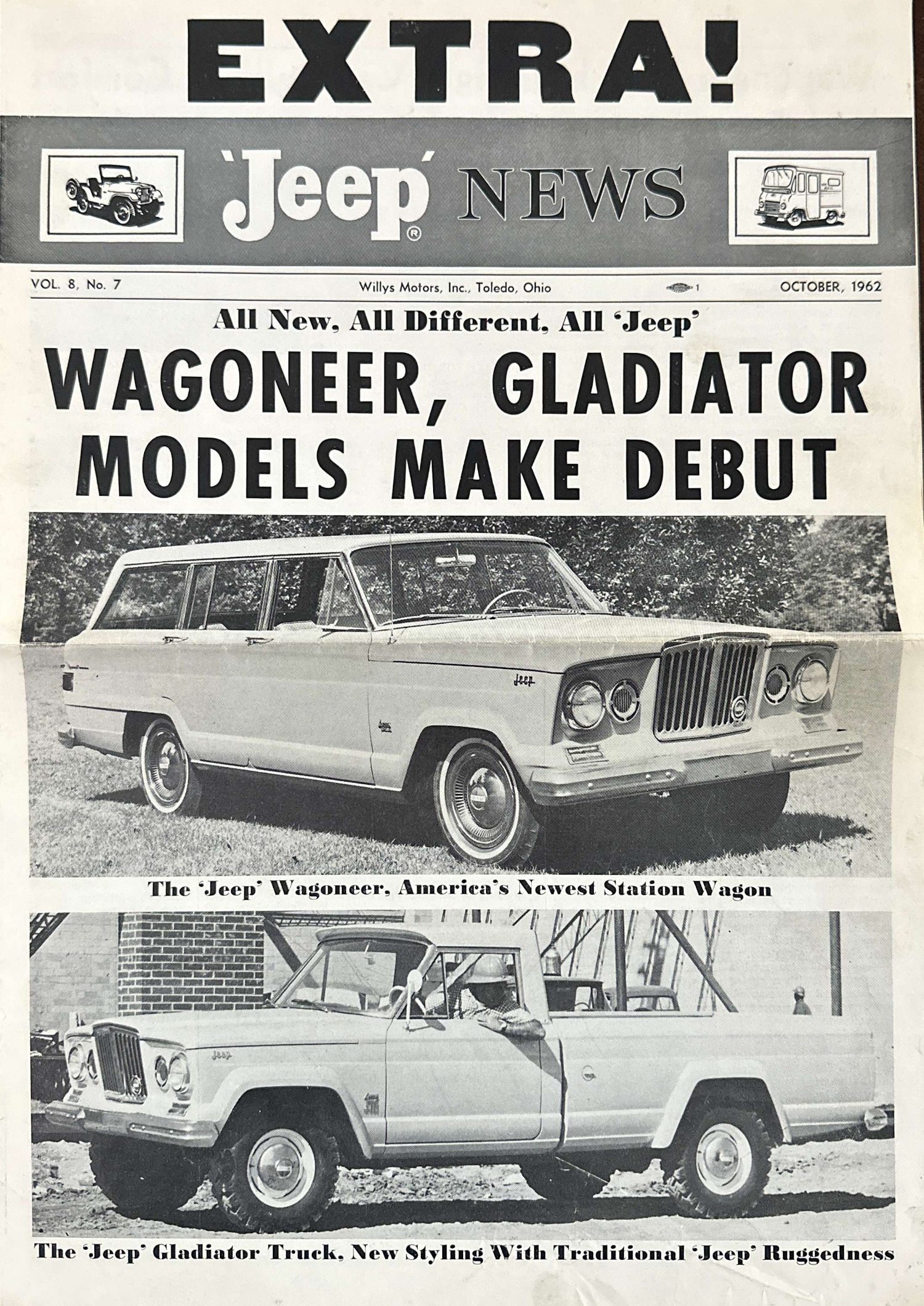
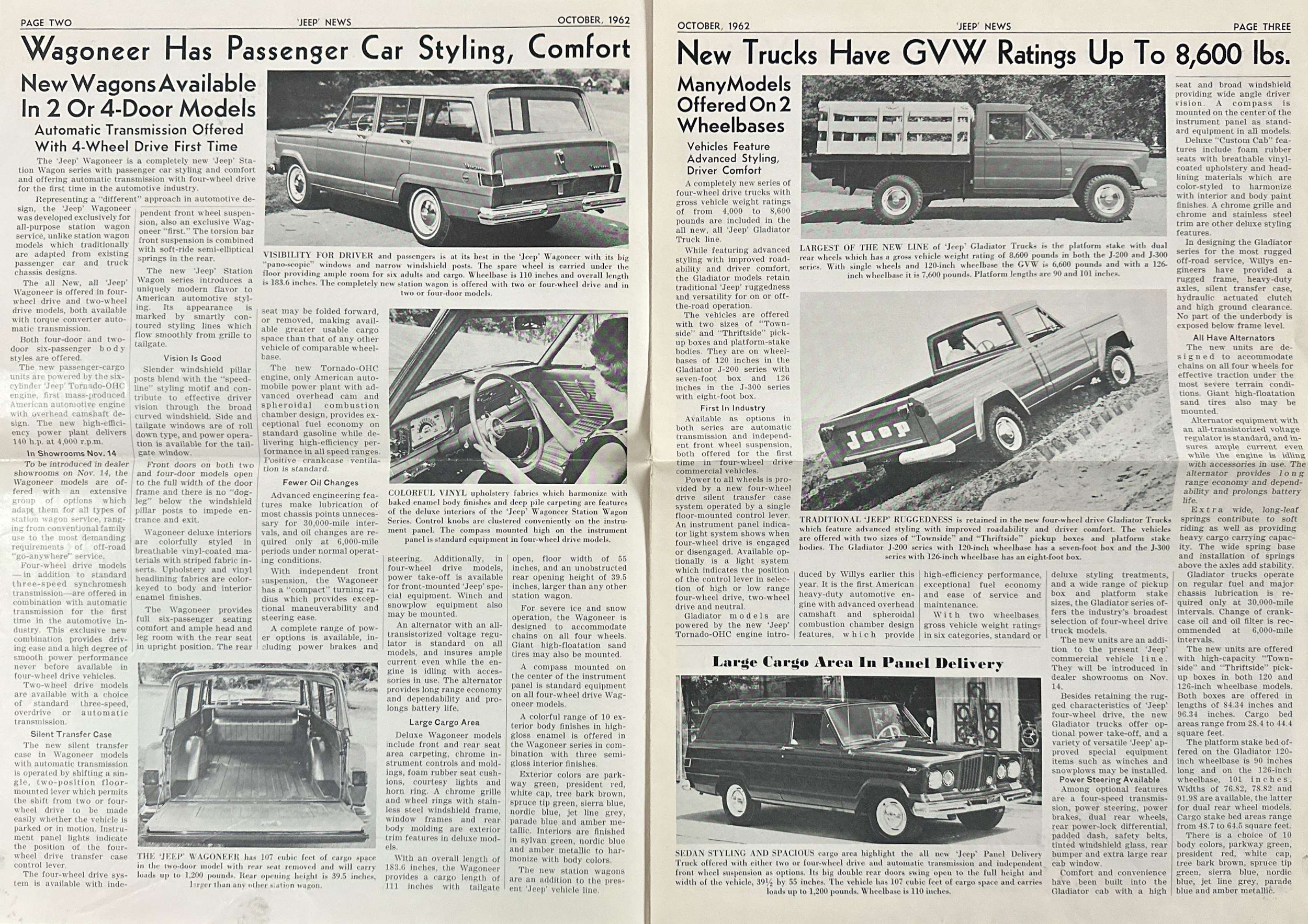
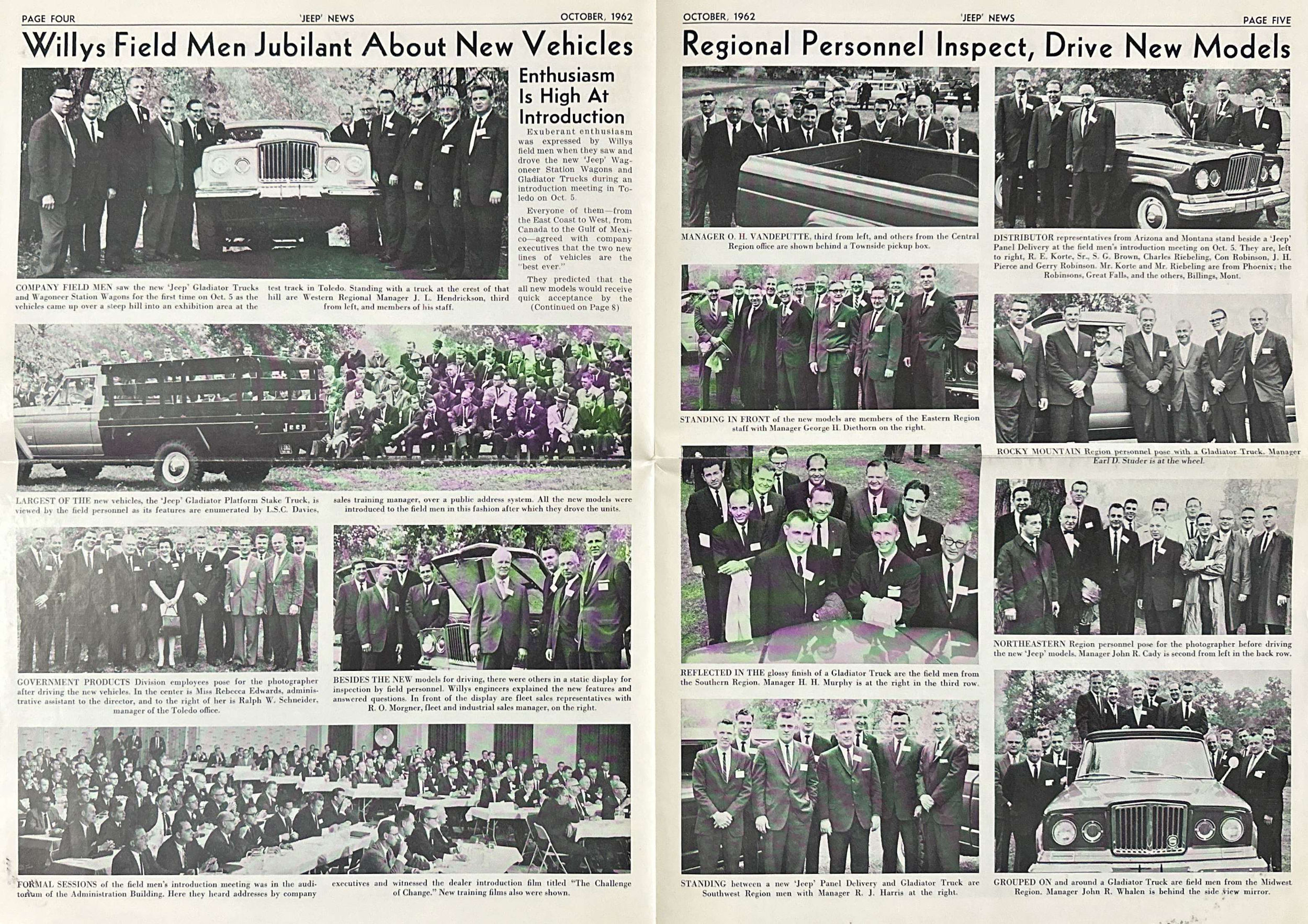
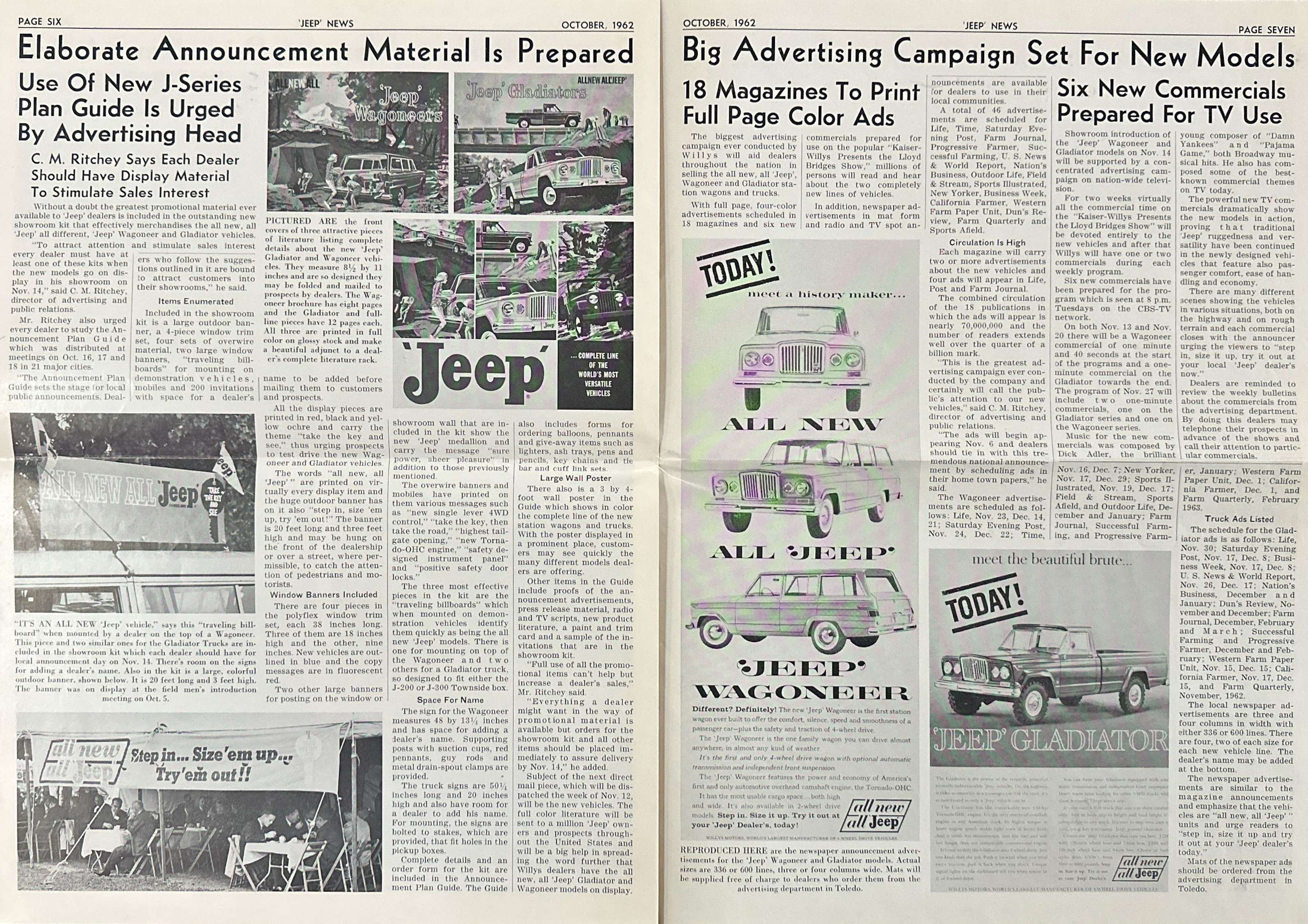
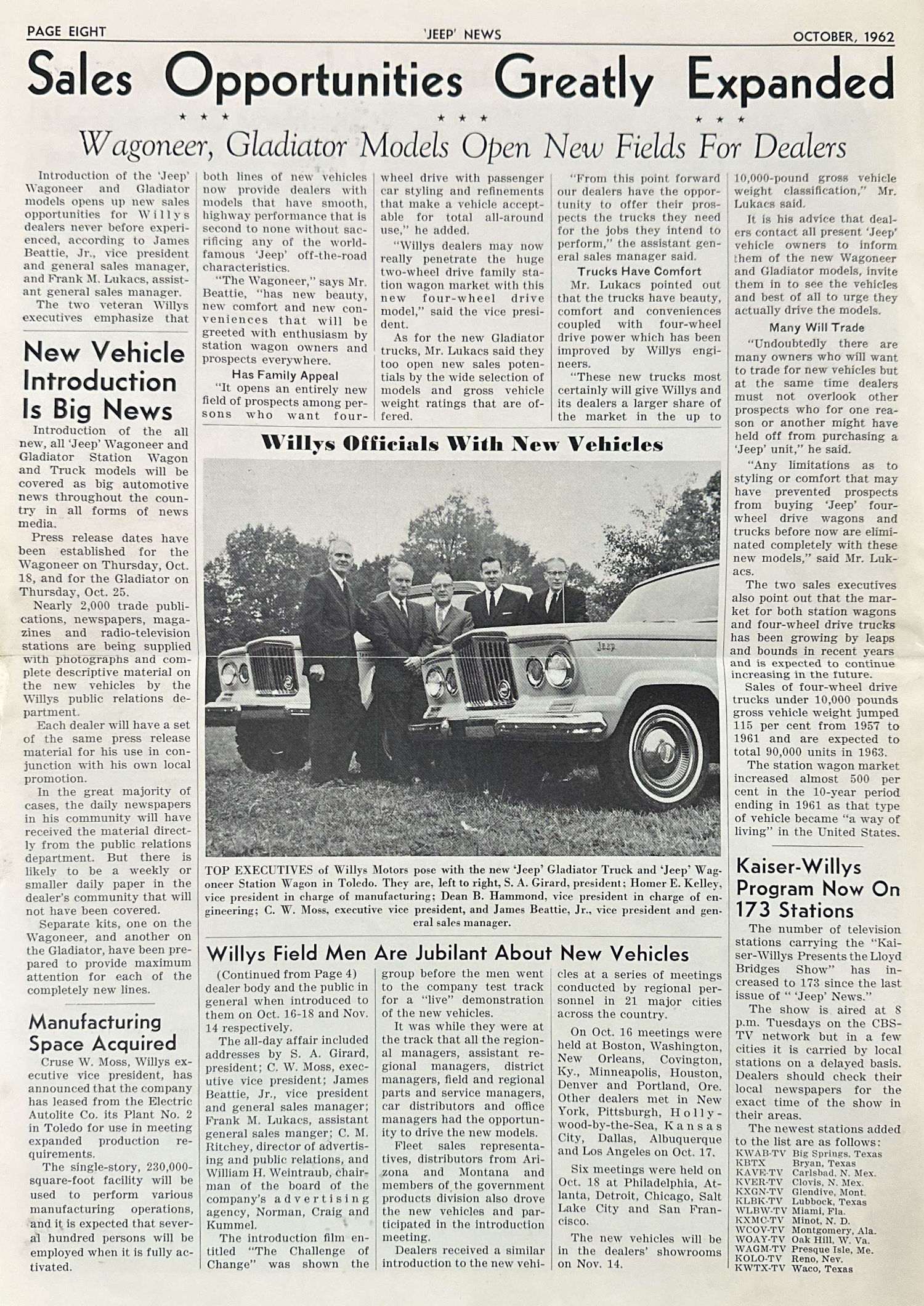
This eight-page October 1962 issue of Jeep News introduces the Gladiator and Wagonneer. So, it may not be too surprising that this entire issue covers these new jeeps.