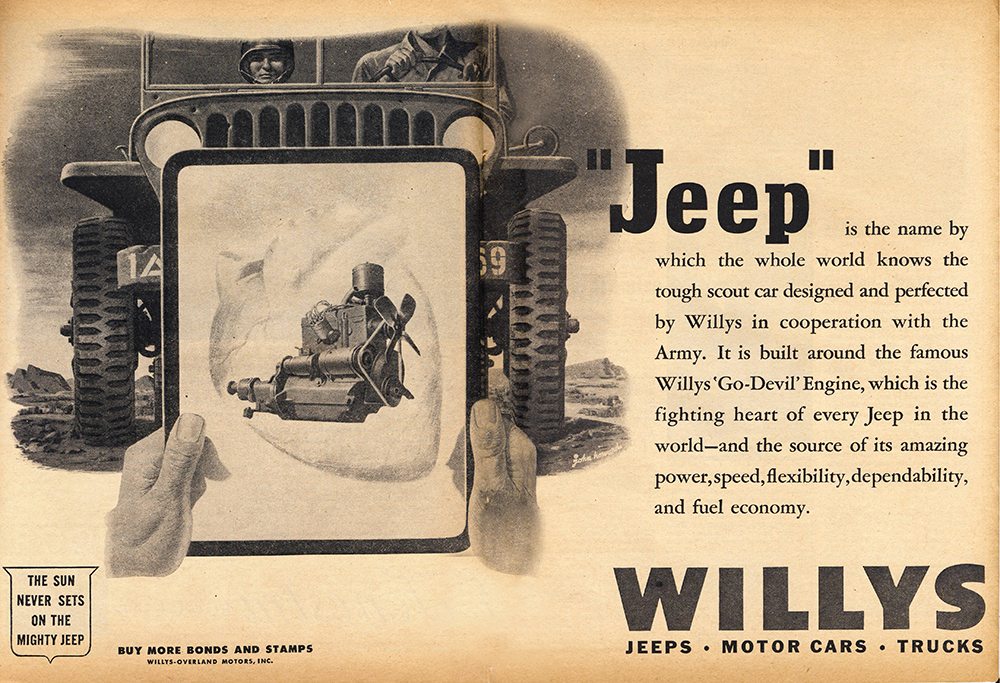
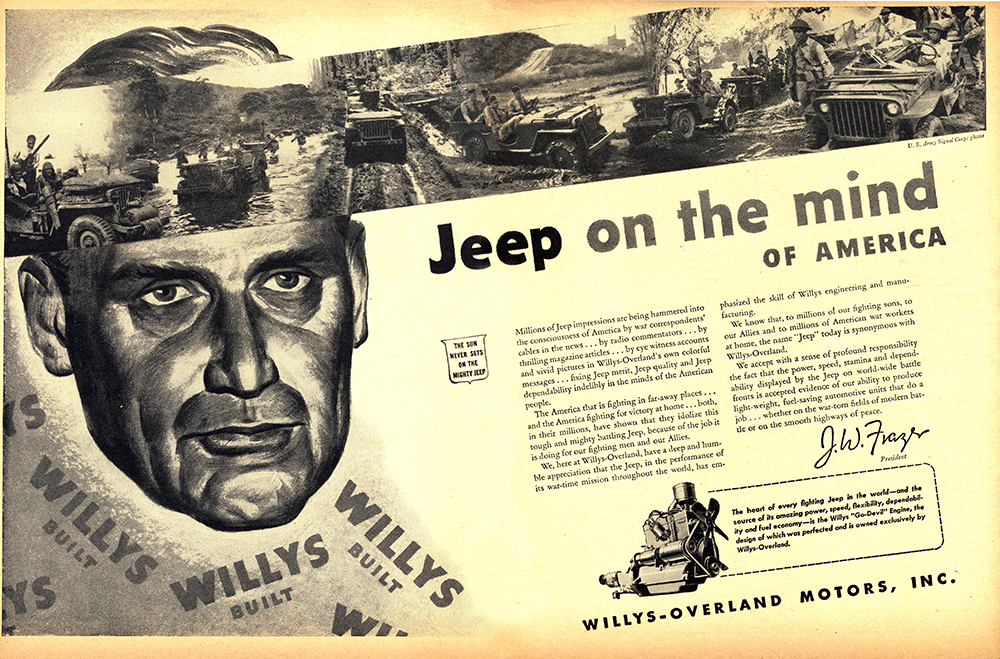
Here’s another Newsweek Ad from 1943. I will have to fill in the issue information later, as I don’t have it with me. This was a two page ad in the center of the magazine.
emailNeed to contact me and don't have my email? Click on email button.
Welcome to eWillys.com, a website for vintage jeep enthusiasts. I update this website nearly every day with jeep deals, jeep history, interesting reader projects, jeep related info, and more.
These quick searches can help you find things on eBay. People list in the wrong categories all the time, so don't be surprised to see brochures in the parts area for example. This section used to be split into jeeps, parts and other categories, but recent changes to eBay will require this information to be recoded.
The links to posts below show jeeps grouped by models, condition, and other ways. Some of these jeeps are for sale and others have been sold. If you are unsure whether a vehicle is still for sale or not, email me at d [at] ewillys.com for more info.
There are plenty of interesting, unusual, historic and surprising stories related to Jeeps and their owners. In addition, some of these features have nothing to do with jeeps. This link will display all featured stories starting from the latest.
Looking for parts and not sure where to go? There are a variety of large and small new and used parts sellers both online and offline.
Importantly, the allure of buying a project jeep can be romantic. The reality of restoring a jeep can be quite different, expensive and overwhelming without the right tools and resources. So, tread carefully when purchasing a "project". If you have any concerns about buying a vintage jeep, or run across a scam, feel free to contact me for help, comments or concerns .
Here’s another Newsweek Ad from 1943. I will have to fill in the issue information later, as I don’t have it with me. This was a two page ad in the center of the magazine.
How about this great ad from the August 9, 1943, issue of Newsweek. I’ll be posting a different one from Newsweek tomorrow. This is pieced together from two different pages.
I spotted and purchased it on eBay today. There were three other issues, but I got outbid with a few seconds to go on the rest.
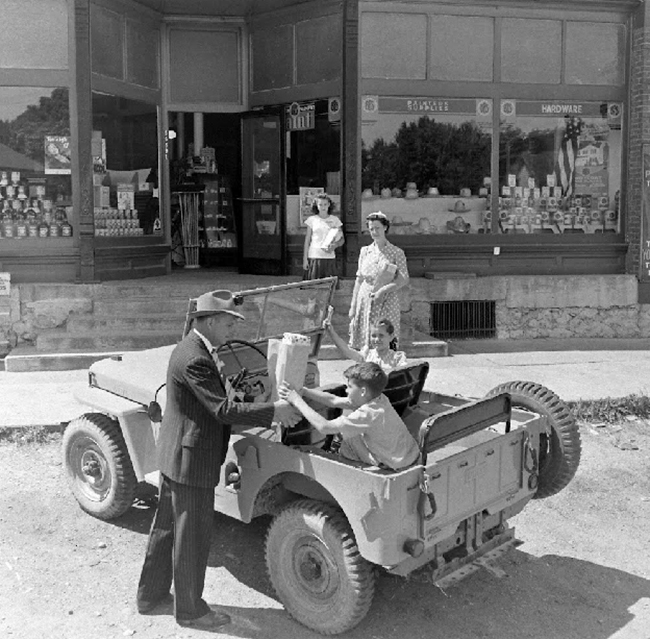
Robert spotted this great link of Life Magazine Photos. The photos range across the decades, including black/white and color ones. This was photographed by Myron Davis for the July 1945 issue.
http://www.google.com/culturalinstitute/browse/jeep?hl=en
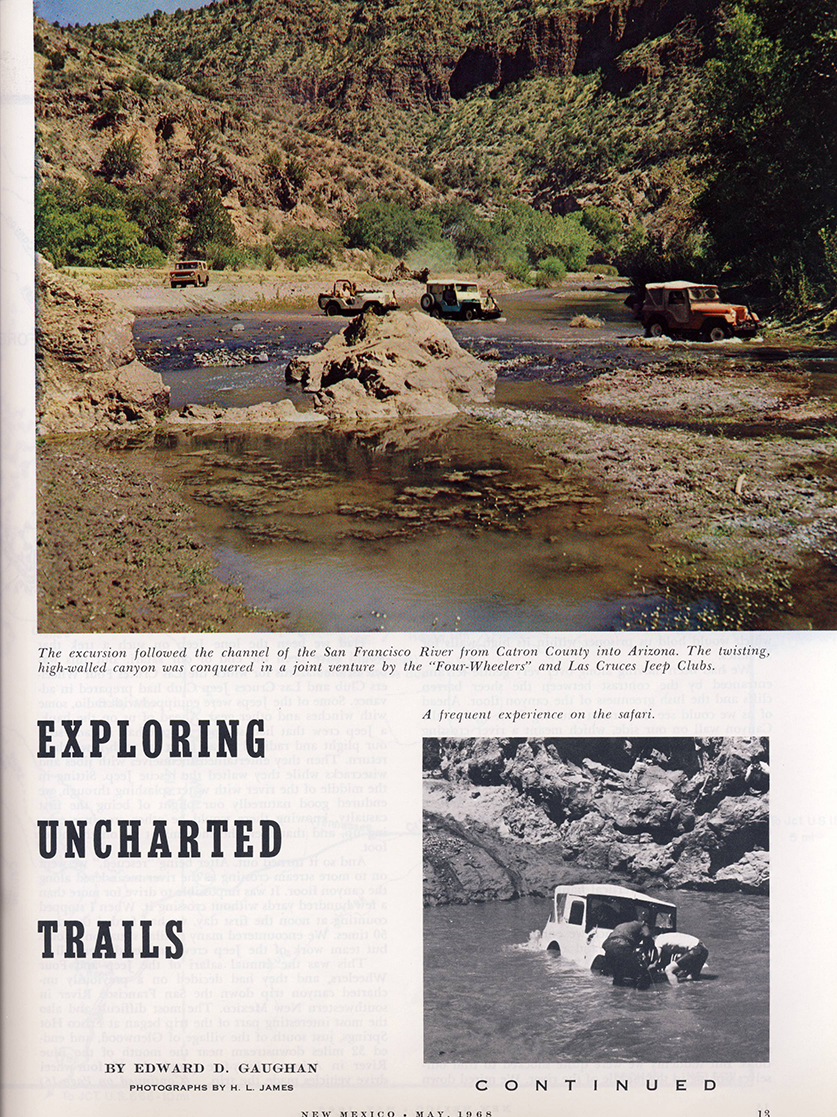
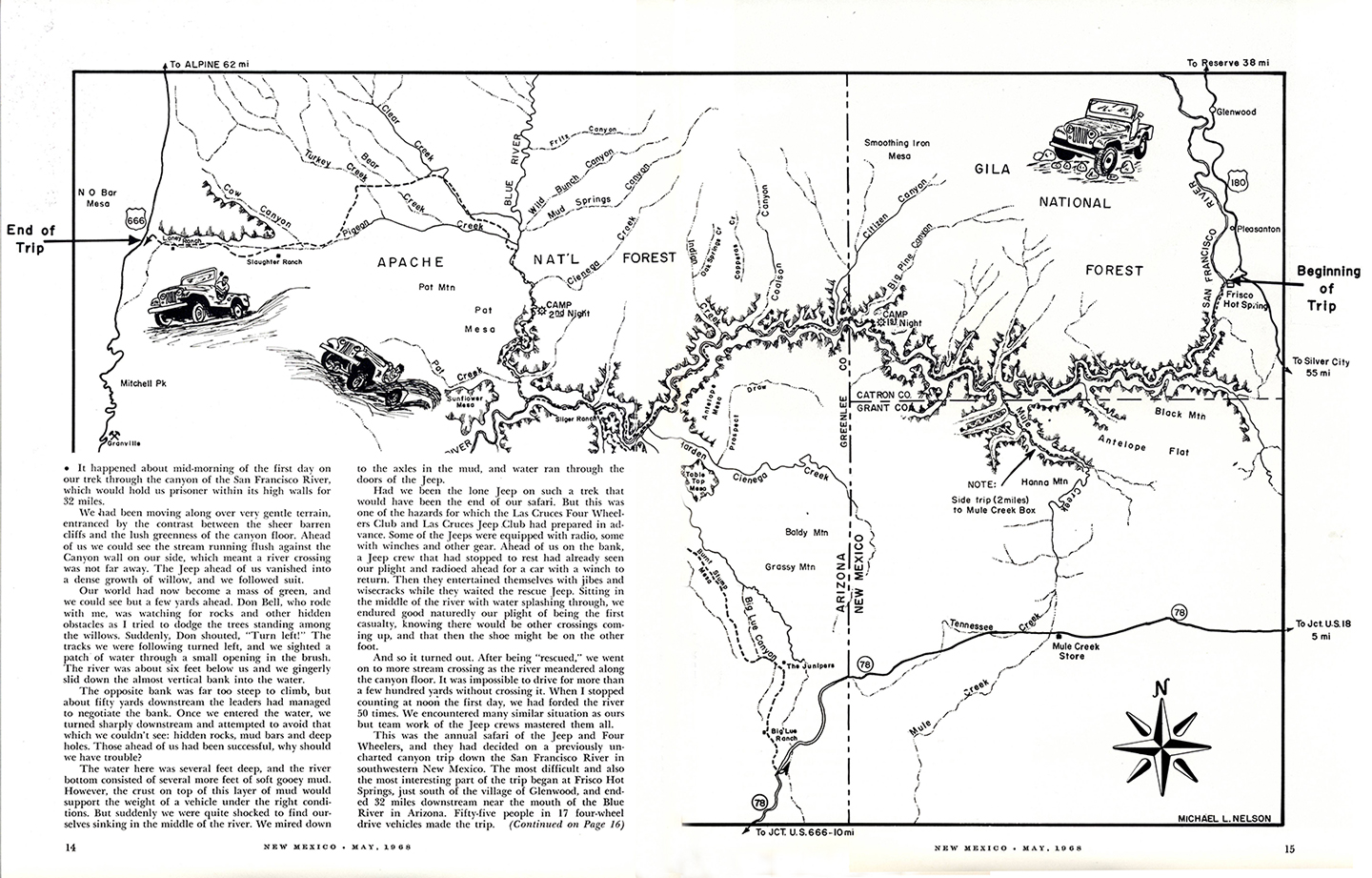
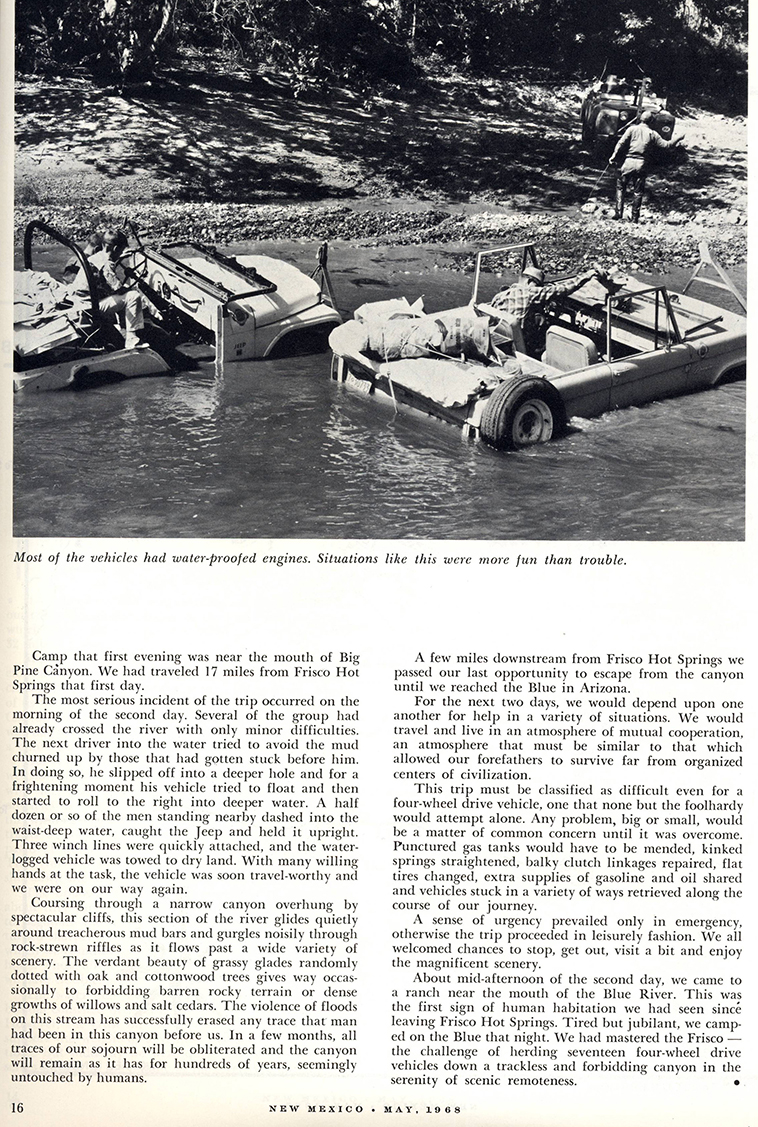
The May 1968 issue of New Mexico Magazine has a good story and pictures on an annual jeep trip by the Las Cruces Four Wheelers and the Las Cruces Jeep Club. Fifty-five people in 17 four wheel drive vehicles, including at least one Landrover, Scout, Bronco, Flatfender and CJ-5 (several of these), made the 32 mile trip through a portion of the San Francisco River.
The article includes a map, pictures, and tales of their exploits. As you can see from the pictures, they spent plenty of time deep in water, crossing the river back and forth. The article begins on the map page (page 2). It’s a pretty large picture.
Steve spotted this great article about a jeep owner who decided to build a teardrop trailer for his rig. Alan Johnson wrote the article as part of the premiere issue of Cool Tears and Tiny Campers Magazine, a magazine devoted to small campers.
The more I look at these, the more one of these might be a good solution for our trip back east. I guess I’ll need to share this idea with my wife.
You can read the entire story from Cool Tears here
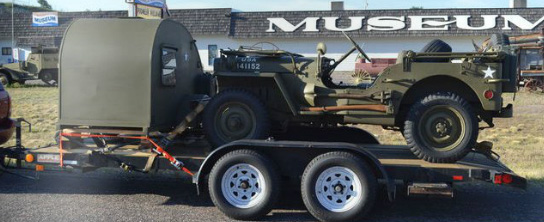
You can see the trailer loaded in front of the jeep — Cool Tears Magazine
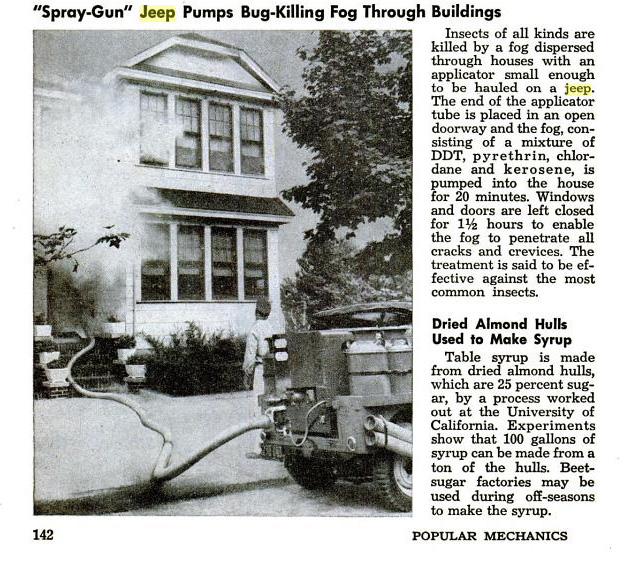
This short blurb about a fumigator on the back of a jeep was published in the January, 1948, issue of Popular Mechanics and available for free at Google. It doesn’t indicate whether this is a custom unit or an aftermarket fumigator available for the jeep. I see no indication it is powered by the jeep; it may be self contained.
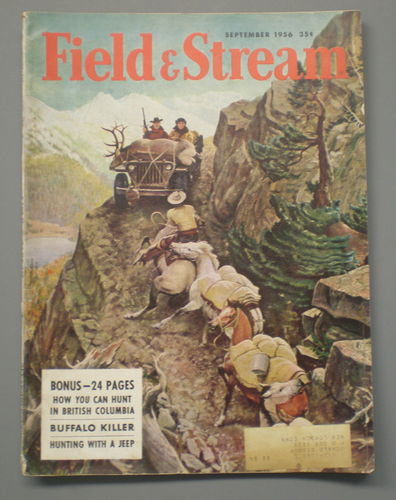
UPDATE: Other than this cover, there are no jeeps inside the magazine.
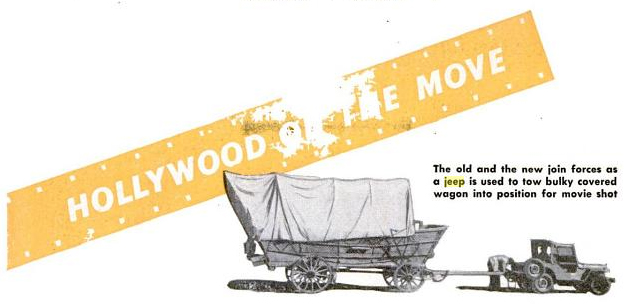
A December 1947 article in Popular Mechanics highlights the role support groups play in post-war remote Hollywood movie locations. Included is the below image of a jeep pulling a wagon. The article is pretty interesting.
UPDATE: Howard found this photo at warttimepress.com on the front of the October, 23, 1944 issue of Junior Scholastic.

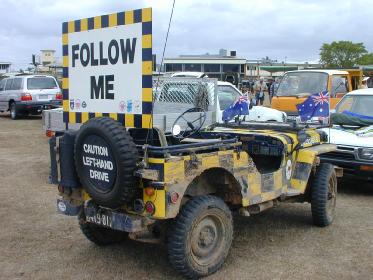
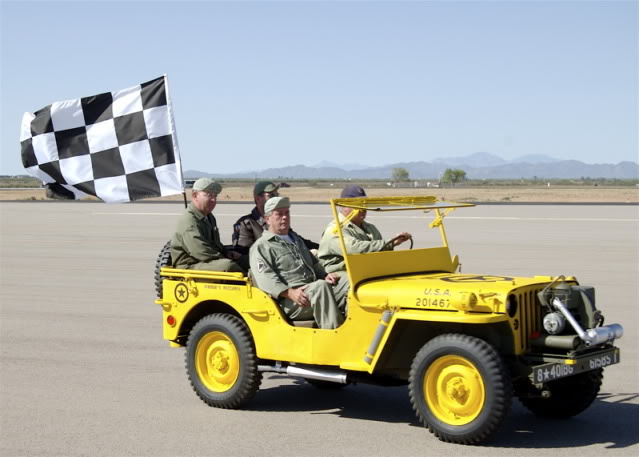
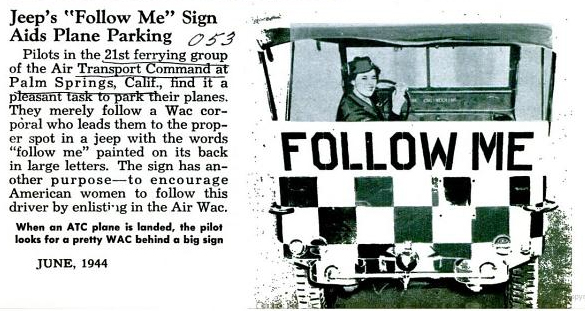
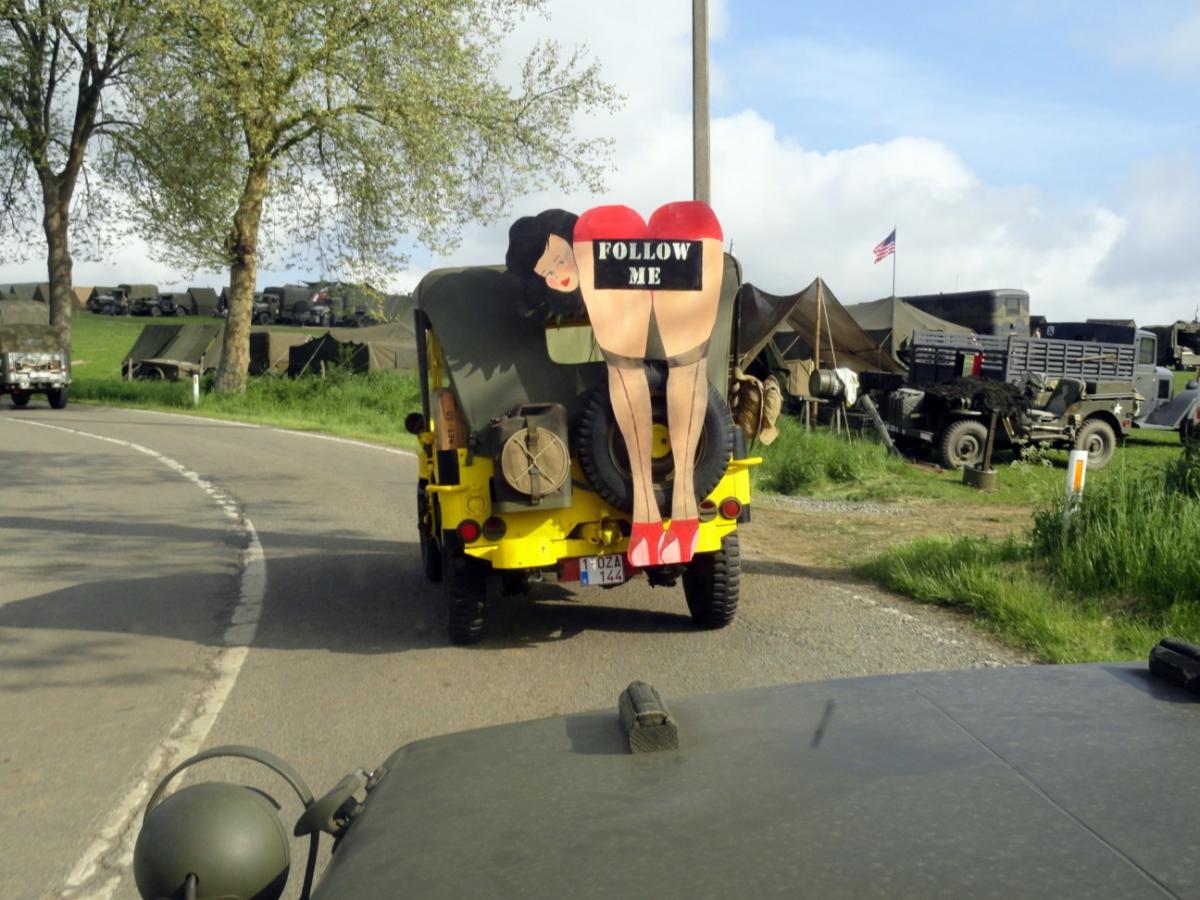
Leo was cleaning up his files and ran across this unusual “Follow Me” Jeep photo. He couldn’t remember where he found it, so if you happen to know a source, let me know.
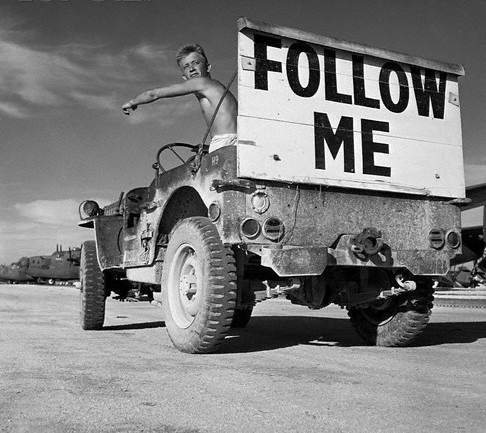
As I looked for an originating source, I found a bunch more photos. I also learned that sometimes incoming gliders were moving too fast for the ‘follow me’ jeeps. In one case, instead of hitting the jeep, a glider tipped its wing upward to pass over the jeep, probably to the jeep driver’s surprise or relief. Here they are:
This was posted at the RAF Forum:
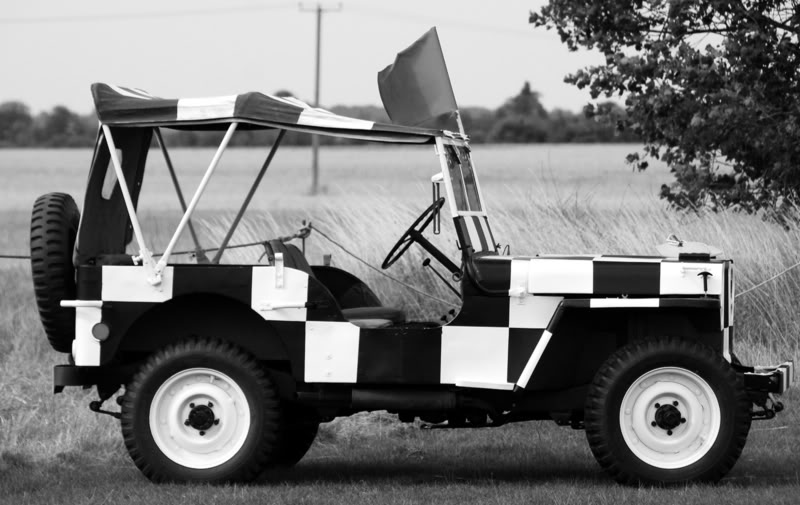
Here’s one taken last summer and posted on Flickr from the Duxford Military Vehicles Day
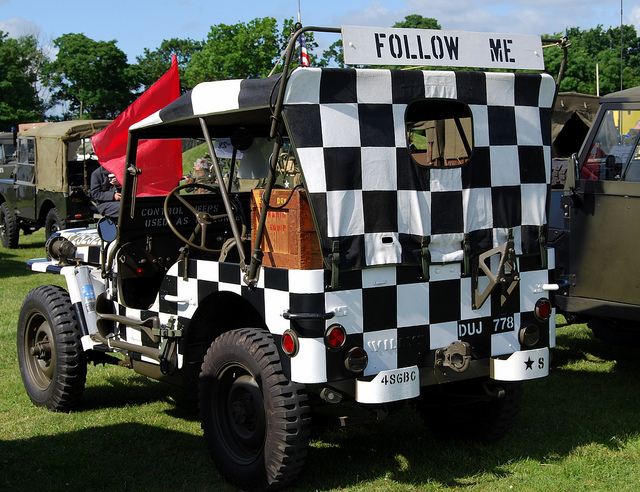
This one appeared at a 2004 Military Jeep Club of Queensland Swap Meet in Australia. This page is full of military jeeps, seeps, and more.
This follow me jeep was posted at 20th century GI. There are more links to different shots of it.
This photo and article was published in the June 1944 issue of Popular Mechanics.
Ant then, there is this priceless one from the Belgian MIlitary Vehicle Trust:
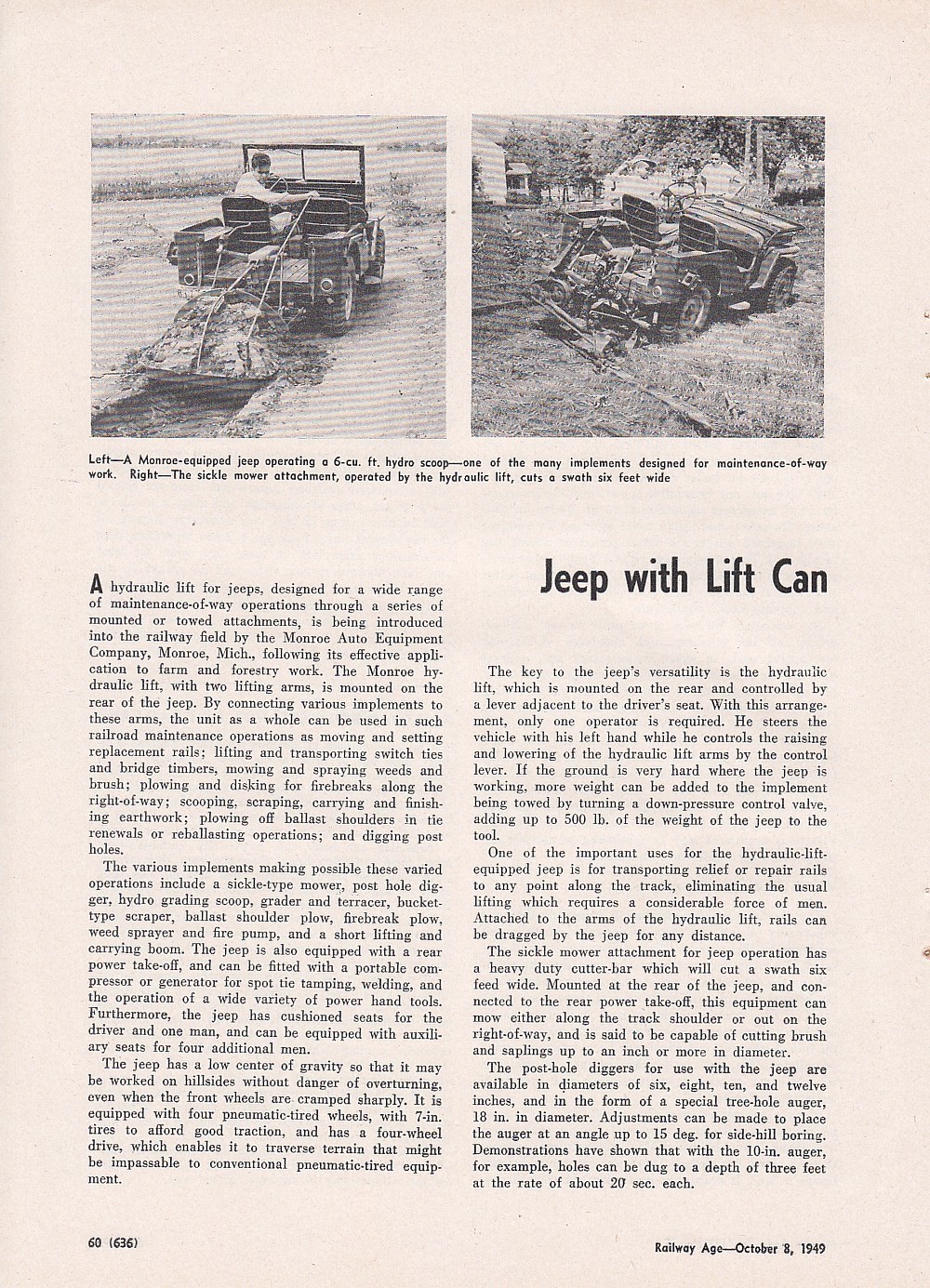
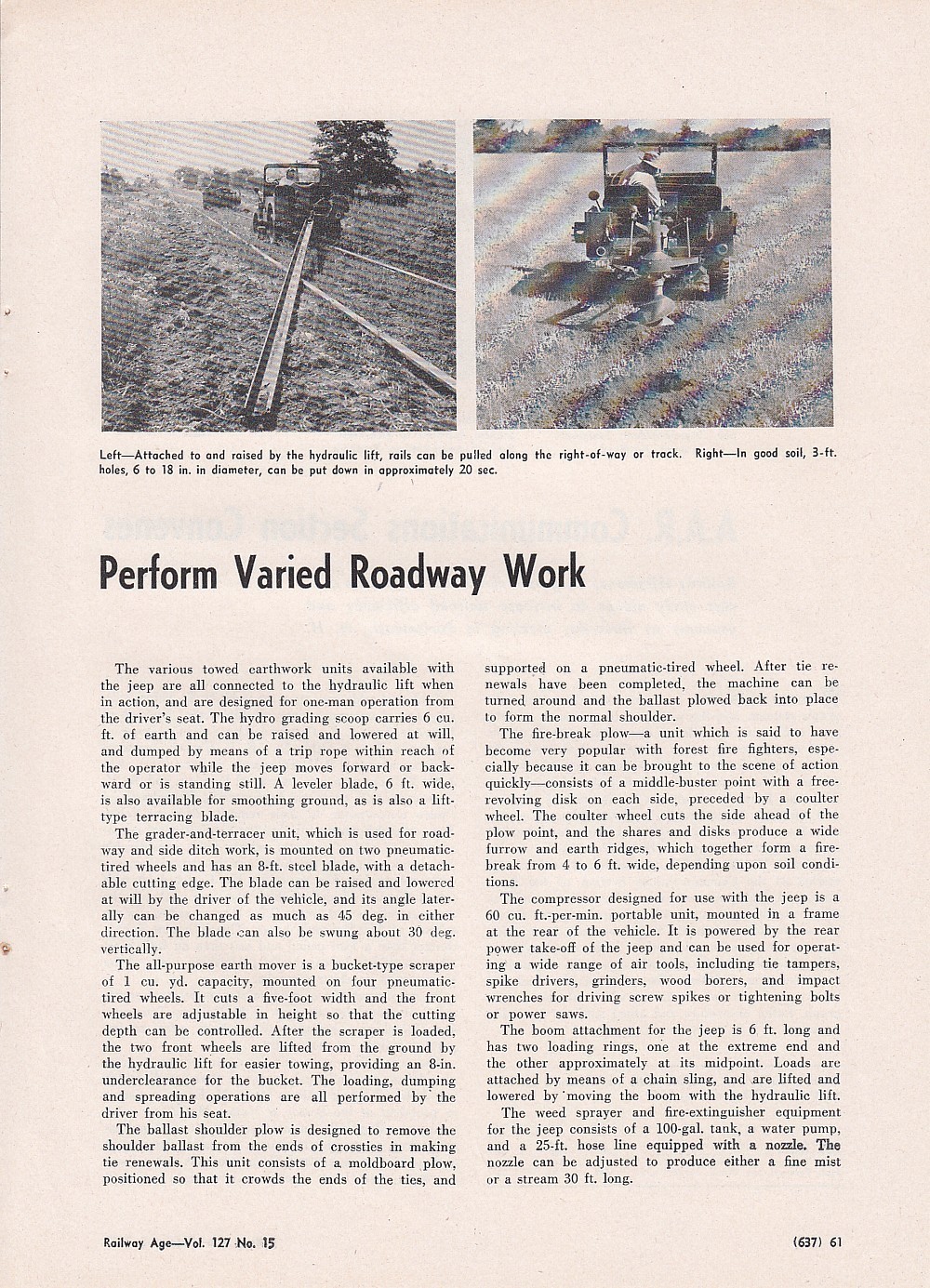
This article for sale on eBay comes from the October 9, 1949, issue of Railway Age. It shows four different pictures of a jeep doing different railroad related tasks.
View all the information on eBay
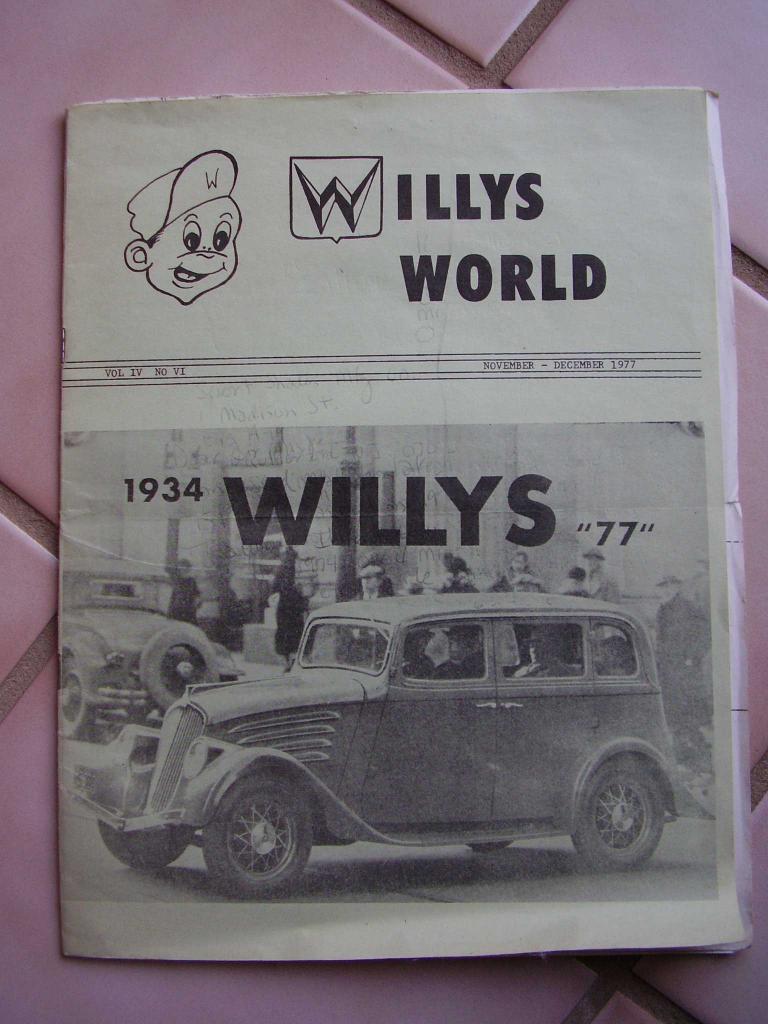
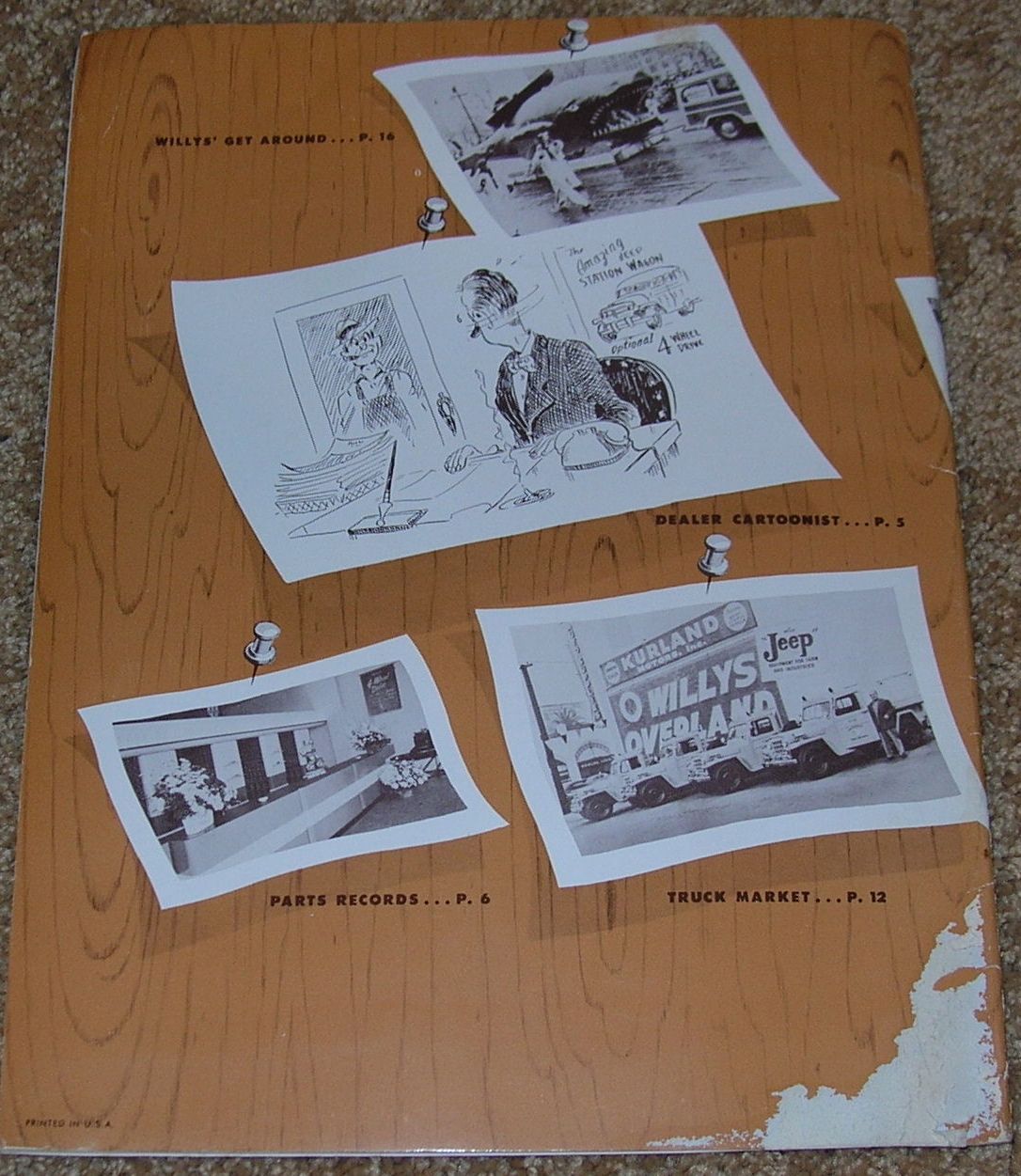
This rare Willys World Newsletter was on eBay.