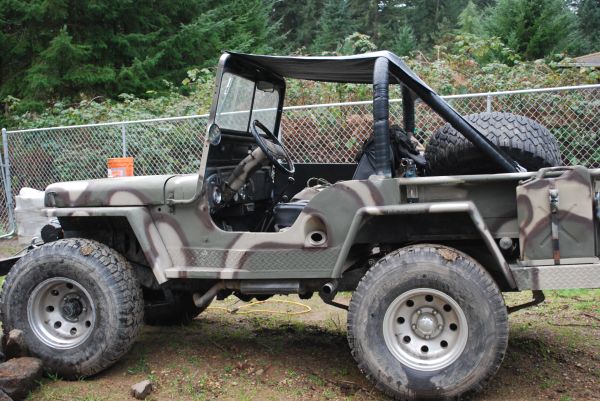
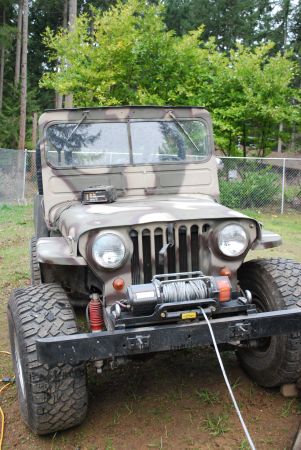
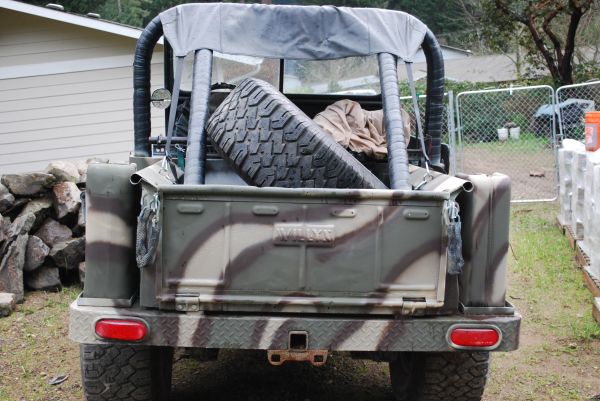
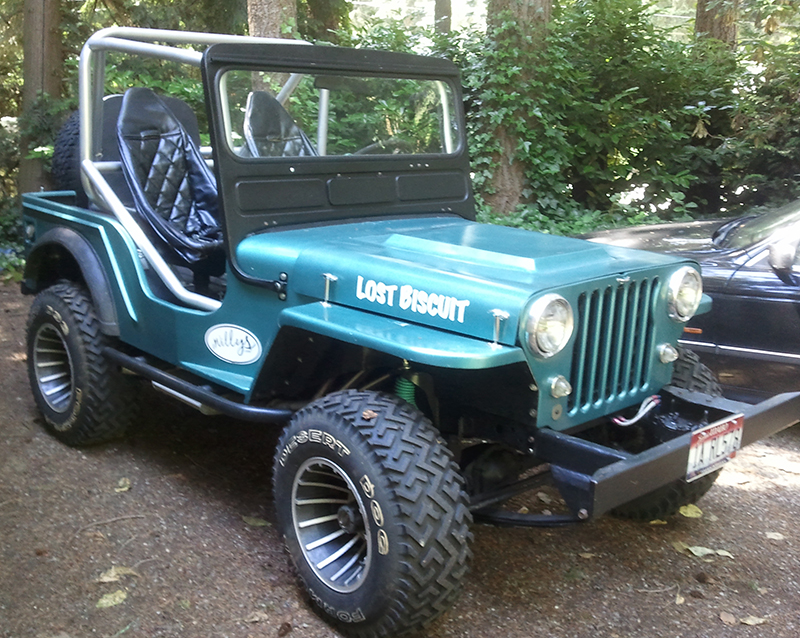
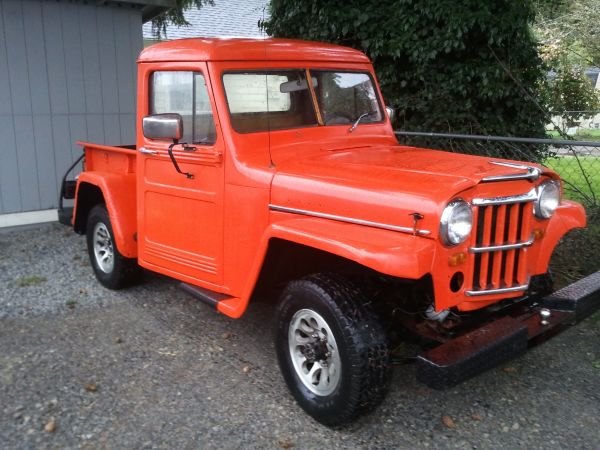
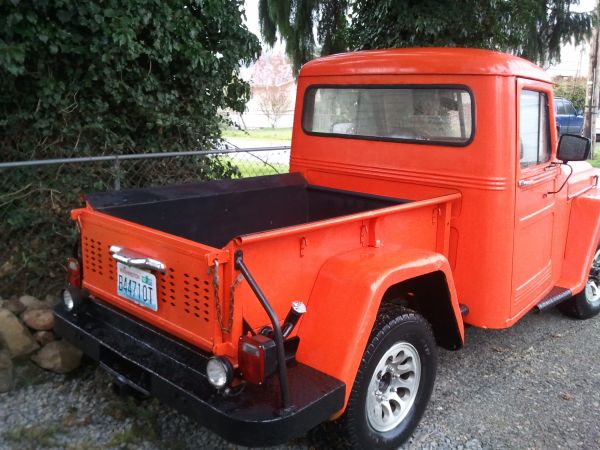
This is an odd combo — CJ front and Truck rear?
“1958 Willys Jeep. 3 Speed, 302 V8, Dana 44 rear end, Model 30 front end. Cash only. No payments, no trades.”
http://seattle.craigslist.org/tac/cto/2966303770.html
emailNeed to contact me and don't have my email? Click on email button.
Welcome to eWillys.com, a website for vintage jeep enthusiasts. I update this website nearly every day with jeep deals, jeep history, interesting reader projects, jeep related info, and more.
These quick searches can help you find things on eBay. People list in the wrong categories all the time, so don't be surprised to see brochures in the parts area for example. This section used to be split into jeeps, parts and other categories, but recent changes to eBay will require this information to be recoded.
The links to posts below show jeeps grouped by models, condition, and other ways. Some of these jeeps are for sale and others have been sold. If you are unsure whether a vehicle is still for sale or not, email me at d [at] ewillys.com for more info.
There are plenty of interesting, unusual, historic and surprising stories related to Jeeps and their owners. In addition, some of these features have nothing to do with jeeps. This link will display all featured stories starting from the latest.
Looking for parts and not sure where to go? There are a variety of large and small new and used parts sellers both online and offline.
Importantly, the allure of buying a project jeep can be romantic. The reality of restoring a jeep can be quite different, expensive and overwhelming without the right tools and resources. So, tread carefully when purchasing a "project". If you have any concerns about buying a vintage jeep, or run across a scam, feel free to contact me for help, comments or concerns .
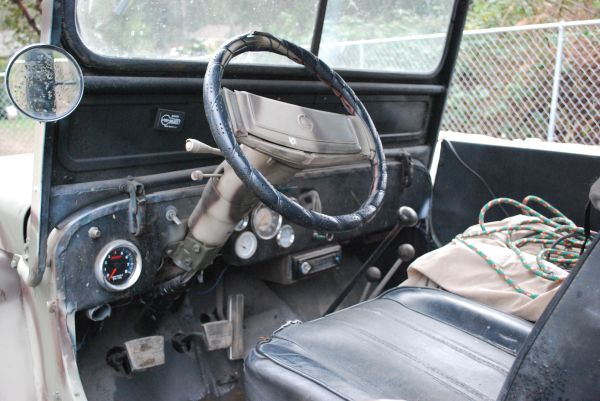
This is an odd combo — CJ front and Truck rear?
“1958 Willys Jeep. 3 Speed, 302 V8, Dana 44 rear end, Model 30 front end. Cash only. No payments, no trades.”
http://seattle.craigslist.org/tac/cto/2966303770.html
UPDATE: **SOLD** Was $800
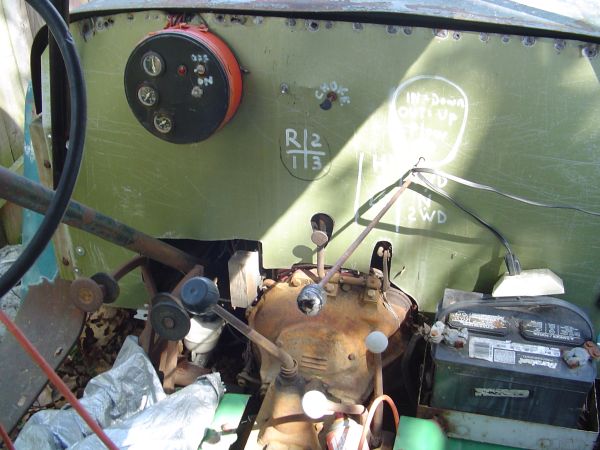
This runs. I love the shifting pattern drawn on the ‘dash’.
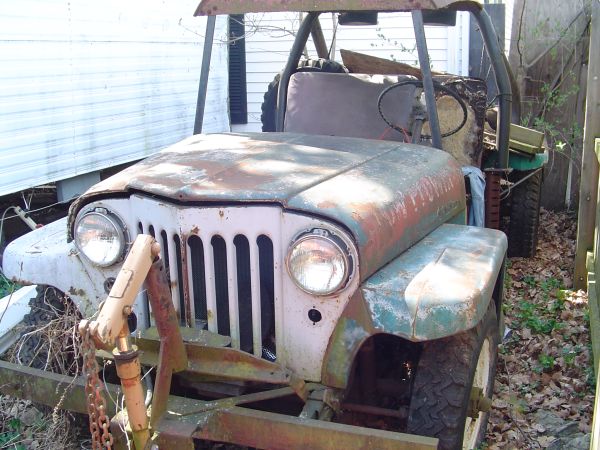
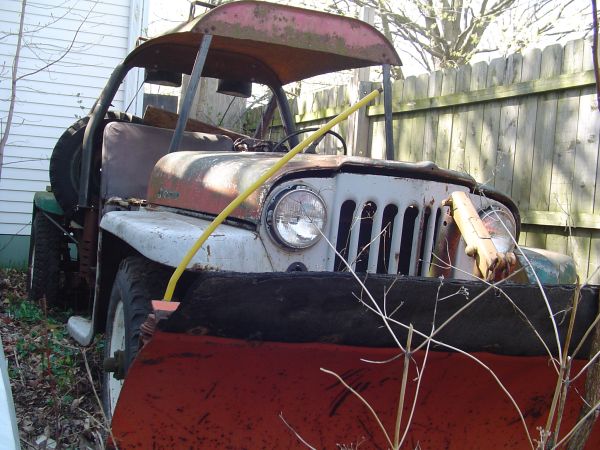
“Hi – what I have is a CONTRAPTION that used to be a 48 Willys Pickup – it is not roadable – however it is a good PLOW/UTILITY vehicle for personal or neighborhood use …
I removed the cab from the pickup – and made a roof – it still has the original jeep front end , fenders and hood … It has a make-shift flatbed … a roll bar , etc …
The truck has a usable frame/chassis – it would be a cool project frame to put under an El Camino 4X4 project , etc … currently it has a good running (original) 4 cylinder engine … 3 speed manual trans … 4X4 in good shape – old tires have plenty of tread – never got it stuck , but they are severally dry rotted … has a good radiator …. – converted to GM 12V system …
Has a hydraulic pump operated plow … that works good – fixed position – just up or down …
Havent started it for awhile – battery probably shot …. points may need to be cleaned …. but when these things are attended to , starts and runs very good …
I want to sell the whole thing as is … but I will remove the plow if you just want the truck – the truck will be 600.00 and I’ll charge the same for the plow if I have to seperate … better deal if you just but the whole contraption as is … I did have to gusset the frame where it was rusty on one side , but did a good job …”
Bob forwarded a picture from the IMCDB.org of what appears to be a CJ-5 on an episode of The Lucy Show. Both he and I tried to find additional photos, without luck. Note both the odd headlights and the use of alternative fenders.
http://www.imcdb.org/vehicle_467022-Jeep-CJ-5.html

UPDATE: Status Unknown. Was $5500.
(02/07/2011) Looks nice.
“Hello I have a 1947 jeep Willys for sale its a complete rebuild it has the original motor and transmission in it its a cool turquoise color and new seats with new fabric… you wont find a Willys this clean and original in new Mexico! !!”
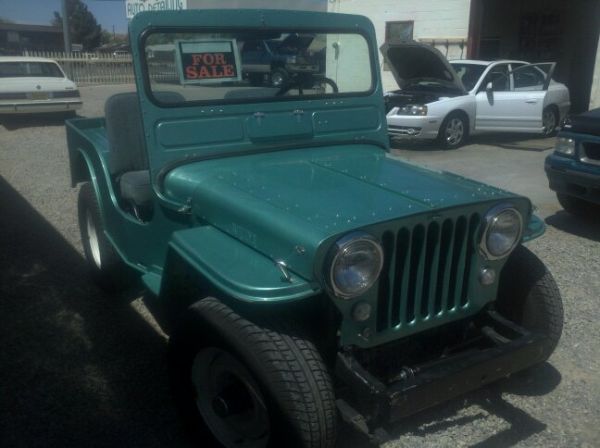
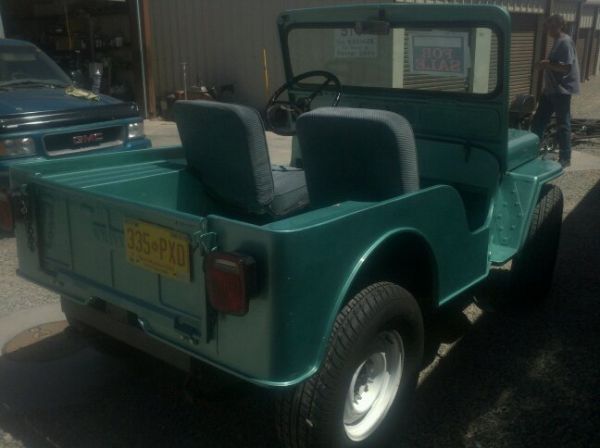
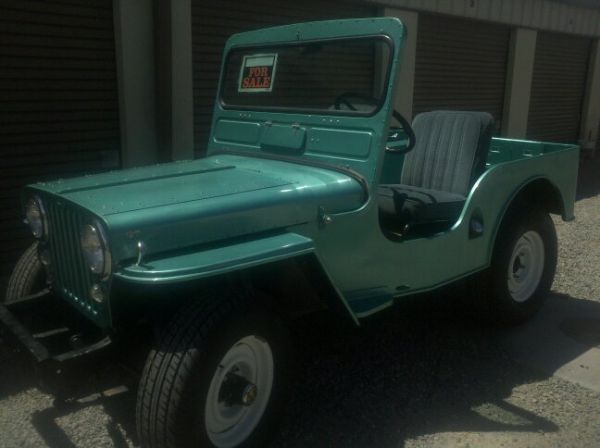
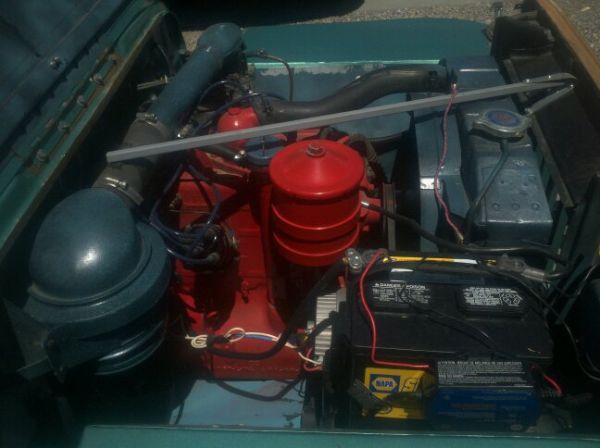
UPDATE: **SOLD** Was $500
It ran when parked. What a great, funky vehicle. Maybe was a CJ-3B?
“The Jeep ran fine when I parked it. I also have an extra transmission/transfer case for it.”
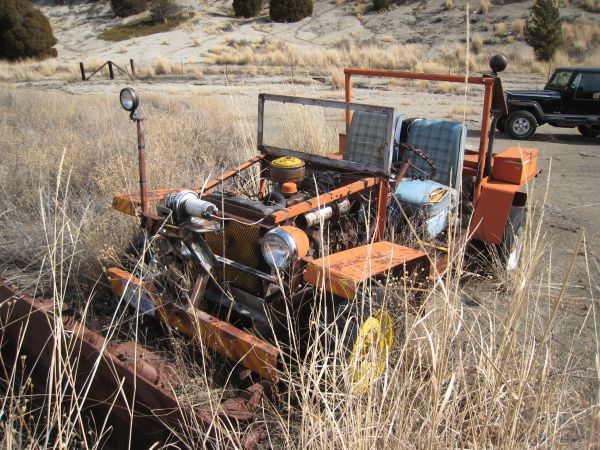
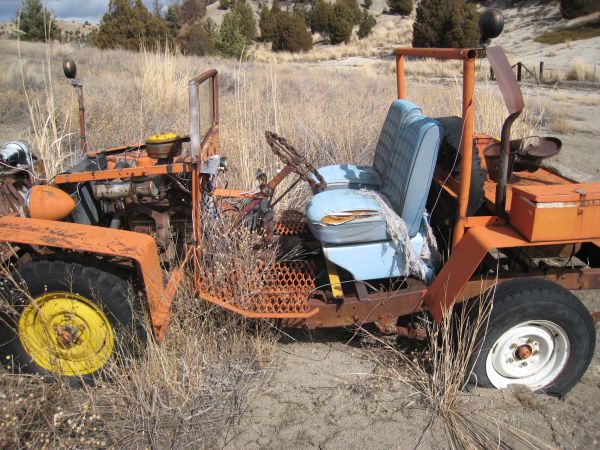
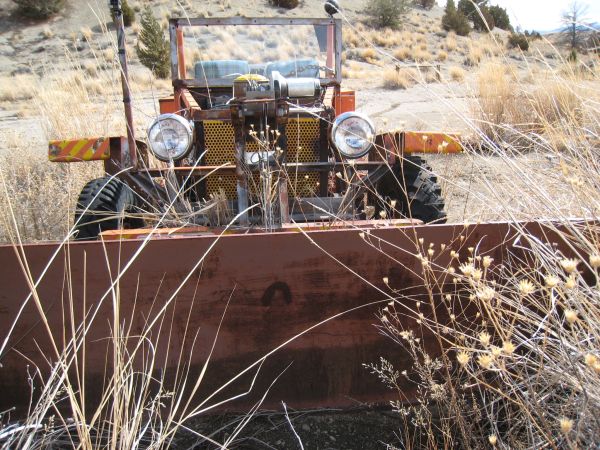
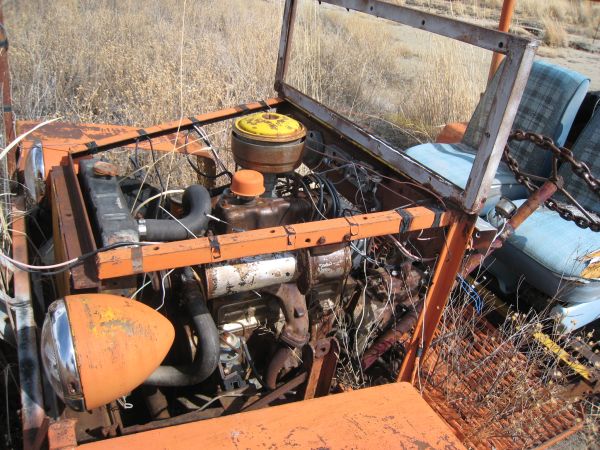
Each of these posters is purchased separately from three separate eBay ads. This unique top is not something I remember seeing. Anyone know anything about it?


This looks like a nice customization.
“I have a 1950’s Willys pickup, that is on a 1978 4×4 Chevy luv.. Cool project truck. Runs and drives .Could use a new clutch. has CD player, cruise control, very fun to drive. Just lost interest in the project. No more points, switched to a electronic distributor. 4 speed manual. Please call or text (360)560-4028…. $2450 OBO cash or $2800 valued trade.. Have more pictures i can send via phone”
http://portland.craigslist.org/clk/cto/2952588249.html
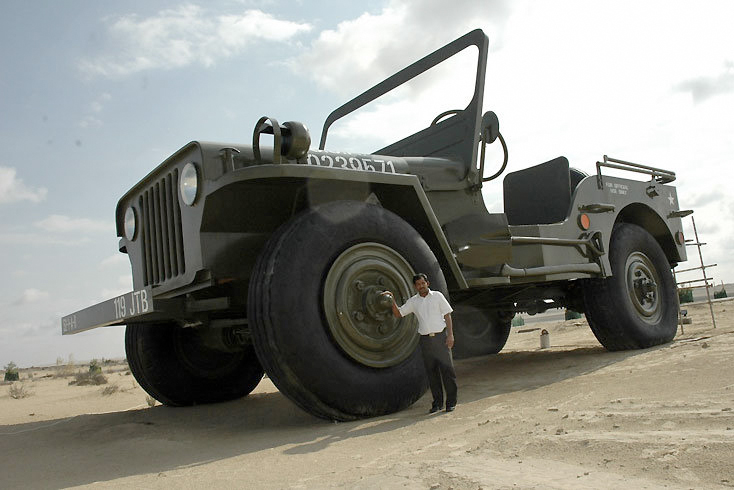
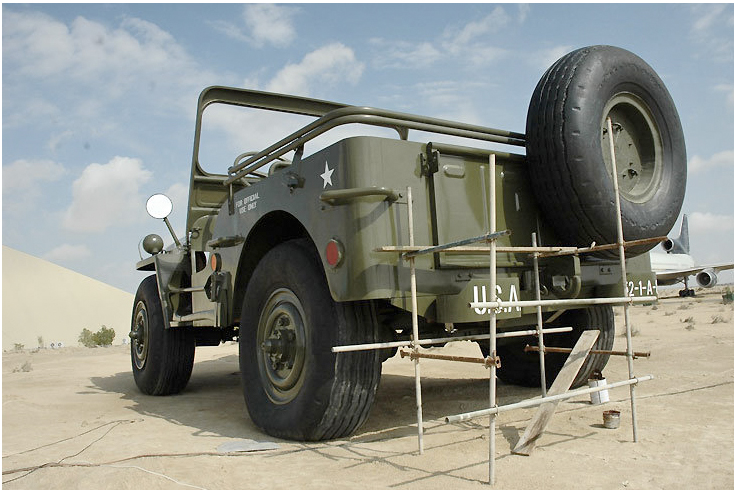
UPDATE: Mark pointed out that Jalopnik has updated the pictures shown below with background information about how why the “Chuck Norris of the Middle East” built the world’s biggest jeep.
(Originally Published 04/10/2010) Thanks to Rich for finding this information on Jalopnik! We saw an early pic regarding this jeep, but here’s the final product. Note the other large 4x4s as well. Ahhhh, the life of a sheik .. so much money, so little time!
FEATURED SEPTEMBER 2010
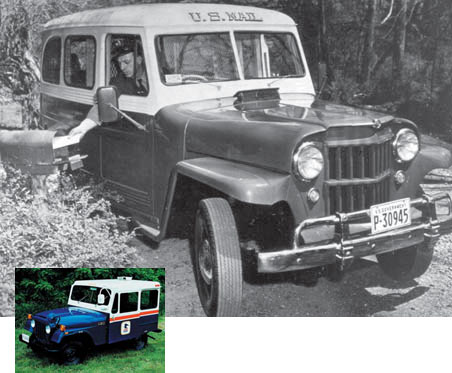
I didn’t know they made Willys postal right hand drive wagons! The Smithsonian’s Postal Museum Exhibit has some great images of early original vehicles used to deliver mail.
From the website, “In August 1953, the first postal jeeps rolled off the Willys Motors assembly line. The model, the first U.S. car in three decades to have right-hand drive, was soon being tested on postal routes around the country.
Carriers used these right-hand drive vehicles to save delivery time on their routes. They were able to more easily reach the mailbox without having to park and go around their cars, or reach over the passenger’s seat to deliver the mail.”
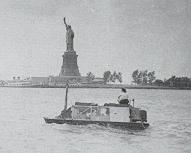
The next time you are in Perth, Australia, make sure you stop by and see Ben Carlin’s SEEP named Half Safe. Ben Carlin and his wife navigated their SEEP around the world back in the 1950s. I found two website’s that chronicle the adventure: David Brooks shows pictures along with the story and Leisure Wheels has a large article with a single pic. Below is the beginning of the story and below that are a few pictures. Ben Carlin also wrote two books about his adventure “Half Safe” and later ““The Other Half of Half-Safe”.
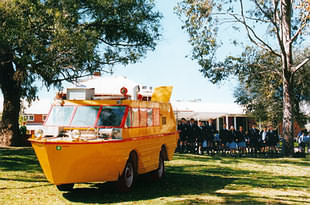
>>CLICK HERE TO READ MORE OF THE STORY<<
Half Safe Pages
SEEP Pages:
FEATURED IN MAY 2009
UPDATE: I found a long discussion, details and the pic below at this website:
From this website, vectorsite.net, I’ll put some of the content just to make sure it isn’t lost.
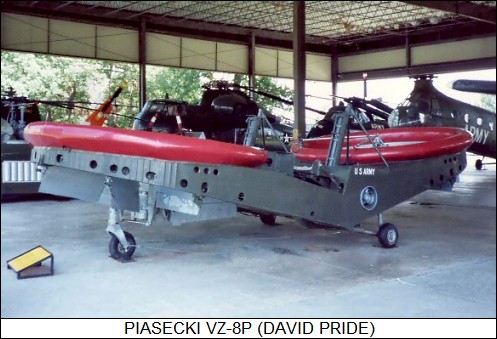
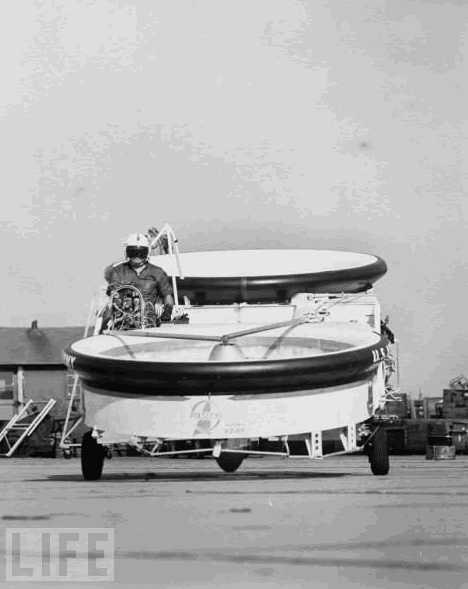
“The AirGeep was first flown on 12 October 1958. Apparently it proved grossly underpowered, barely able to fly over a fence, and it was sent back to the shop, where the piston engines were replaced by a single 317 kW (425 HP) Turbomeca Artouste IIB turbine engine. The upgraded AirGeep flew in late June 1959. It weighed 1.1 tonnes (2,500 pounds) and could carry a payload of 550 kilograms (1,200 pounds), including the pilot.
The AirGeep was put through trials for both the Army and the Navy over the next few years. The engine was upgraded again to a Garrett / Airesearch 331-6 engine, which had a higher power-to-weight ratio. For Navy trials, which began in June 1961, the rotorcraft was fitted with floats, and redesignated the “PA-59 SeaGeep”.
* Piasecki wanted to build a bigger and better AirGeep, and the Army Transportation Research Command obliged them by issuing a contract for what Piasecki called the “Model 59K” and what the Army called the “VZ-8P(B) AirGeep II”, which made its first flight in the summer of 1962.
The AirGeep II was similar to the AirGeep, except that the aircraft was “bent” in the middle so that the rotors were tilted fore and aft, it seems to improve forward flight characteristics. The AirGeep II used twin 298 kW (400 SHP) Turbomeca Artouste IIC turboshaft engines, once again linked so that if one failed the other would drive both rotors. One engine could also be coupled to the landing wheels to drive the machine on the ground. The increased power allowed a maximum take-off weight of 2.2 tonnes (4,800 pounds). The pilot and observer had “zero-zero” ejection seats, allowing safe escape if the machine was on the ground and standing still, and there were apparently seats for additional passengers.”
As we learned, the rotabuggy was a bit of a failure. However that didn’t stop the military from investigating some type of ‘flying jeep’. Now, I don’t know if the military really called it the Aerial Jeep or whether it was Life Magazine’s attempt to sell magazines, but the result is a pretty unusual flying machine:
I ran across a story on G503 about the creation of a Nuffield Airborne Jeep in Australia. The details of the build are great!
Link to g503 story: http://www.g503.com/forums/viewtopic.php?f=4&t=188540


You can view another Nuffield Gutty on my post about lightweight jeeps.