emailNeed to contact me and don't have my email? Click on email button.
About eWillys
Welcome to eWillys.com, a website for vintage jeep enthusiasts. I update this website nearly every day with jeep deals, jeep history, interesting reader projects, jeep related info, and more.
These quick searches can help you find things on eBay. People list in the wrong categories all the time, so don't be surprised to see brochures in the parts area for example. This section used to be split into jeeps, parts and other categories, but recent changes to eBay will require this information to be recoded.
The links to posts below show jeeps grouped by models, condition, and other ways. Some of these jeeps are for sale and others have been sold. If you are unsure whether a vehicle is still for sale or not, email me at d [at] ewillys.com for more info.
Importantly, the allure of buying a project jeep can be romantic. The reality of restoring a jeep can be quite different, expensive and overwhelming without the right tools and resources. So, tread carefully when purchasing a "project". If you have any concerns about buying a vintage jeep, or run across a scam, feel free to contact me for help, comments or concerns .
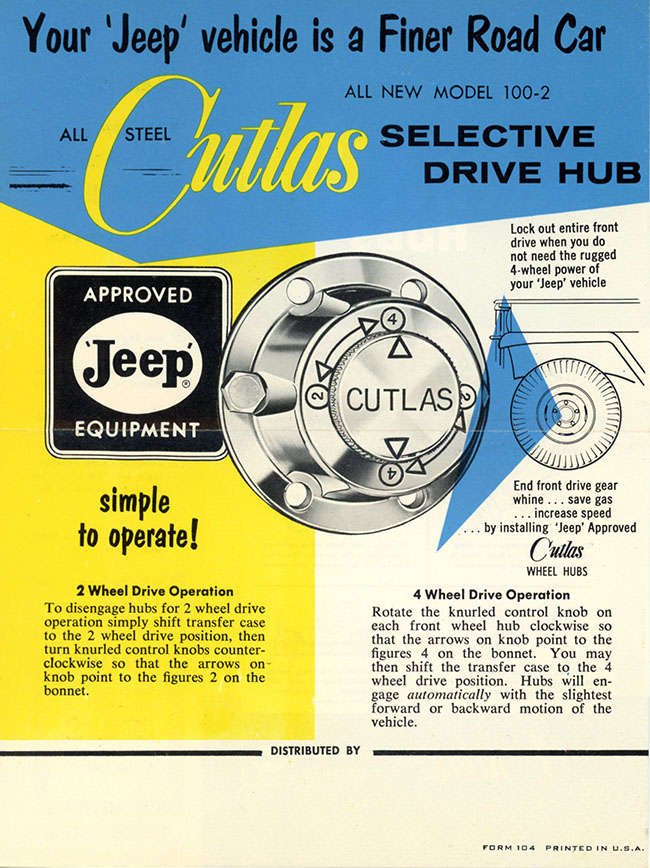
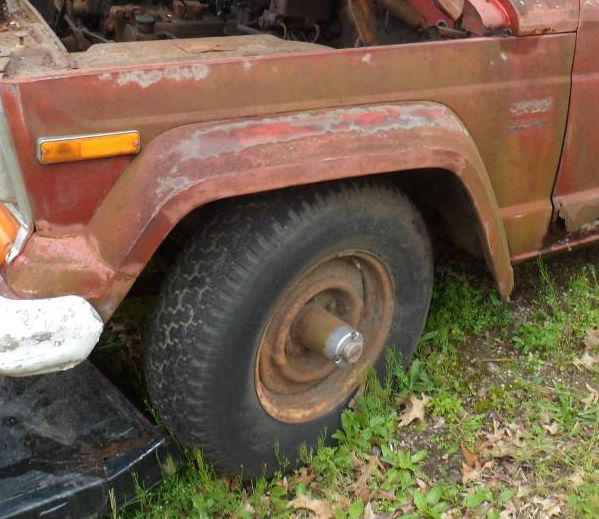
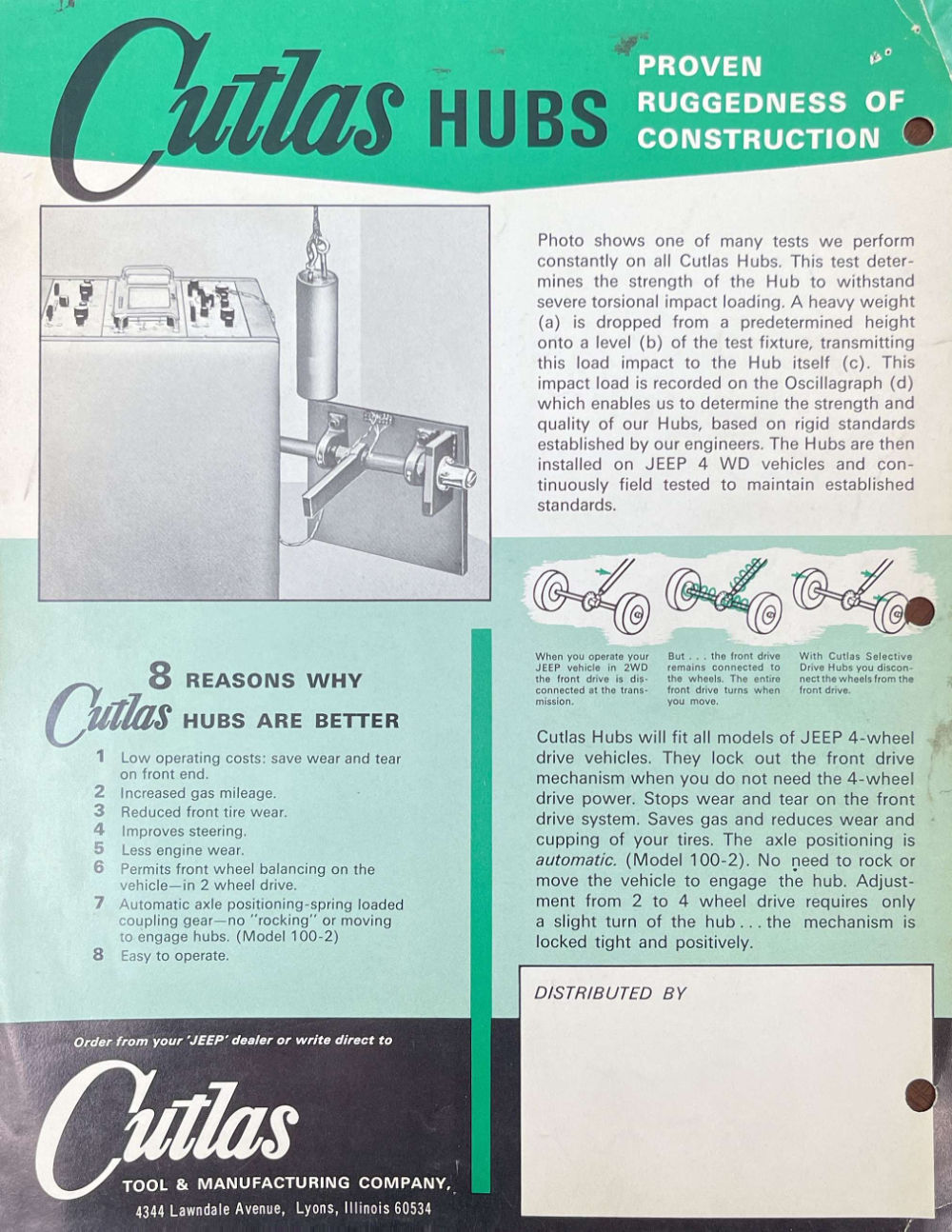
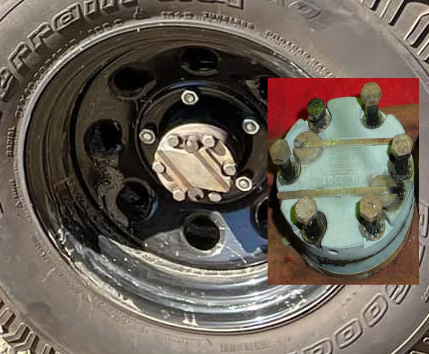
Bob shared the photo at the bottom that appeared on a Craigslist Ad for a 1977-J10. It shows what appears to be a Cutlas hub, but it’s a design I don’t have documented. Let’s review the Cutlas Selective Drive Hubs:
The first design was model 100-2 and had no slot:
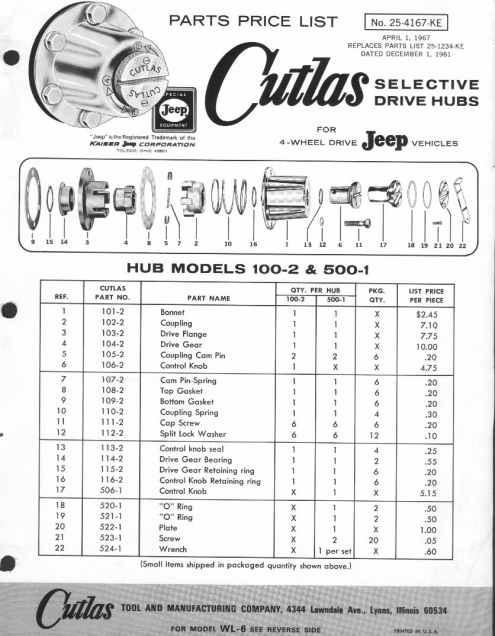
Later, Cutlas came out with the slotted form of the hub. Note that the slated knob has a “506-1” part number, suggesting that this whole hub was model 500-1.
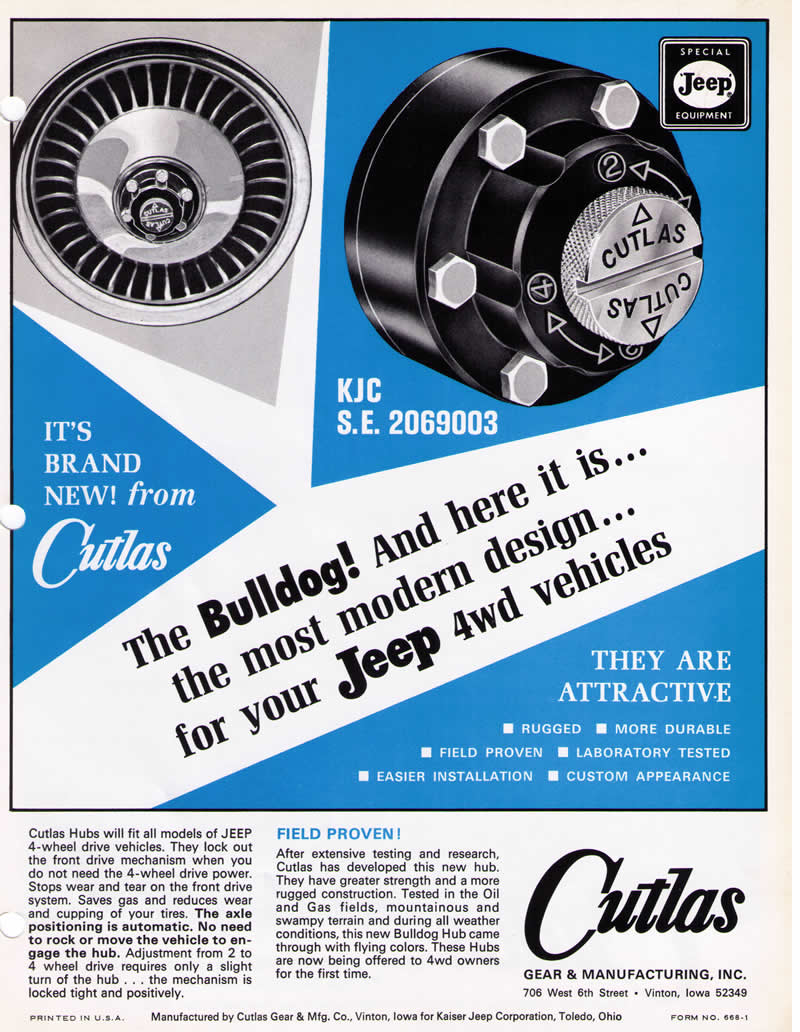
Arguably, the Bulldog was the next iteration of this general design. It too has the slotted knob, but lacks a model number:
The hub Bob spotted was on a later model jeep, so maybe Cutlas offered this version of the hub for a short time? It seems to be an further iteration of the Bulldog; unfortunately, I have no brochures that document it.
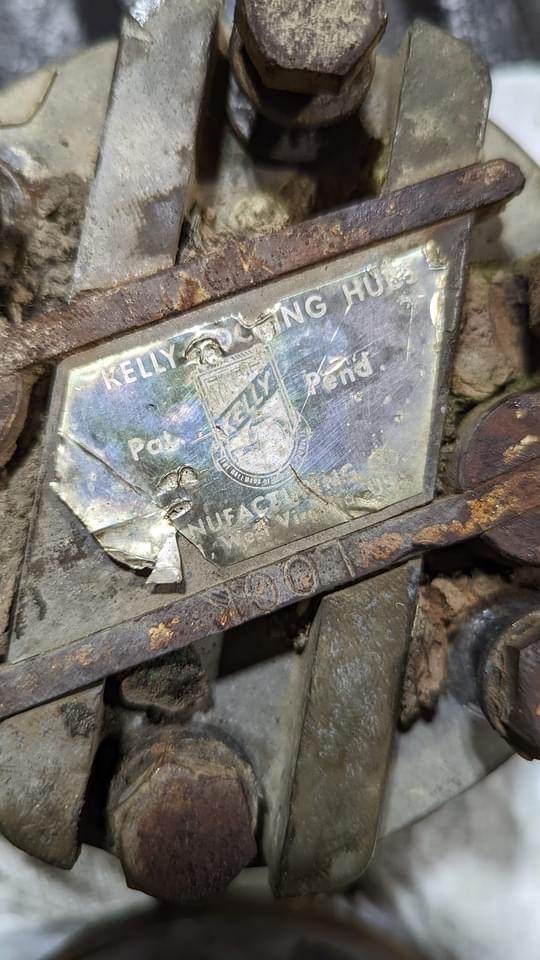
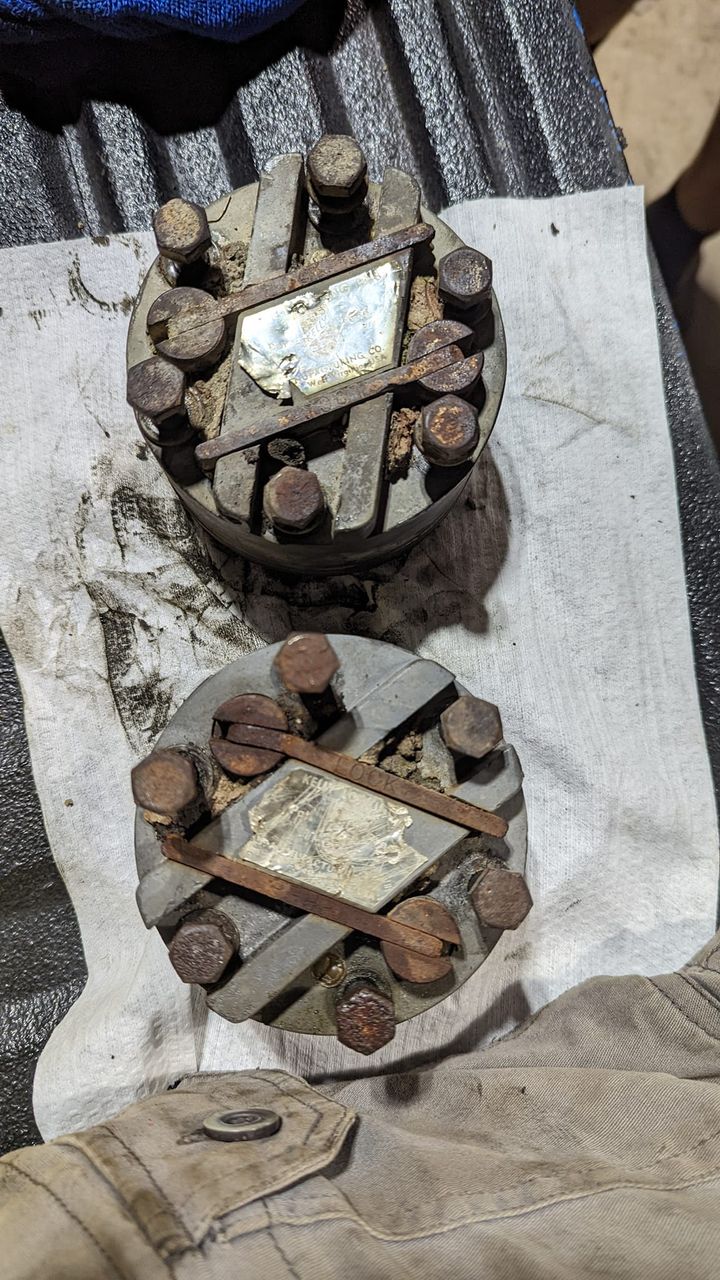
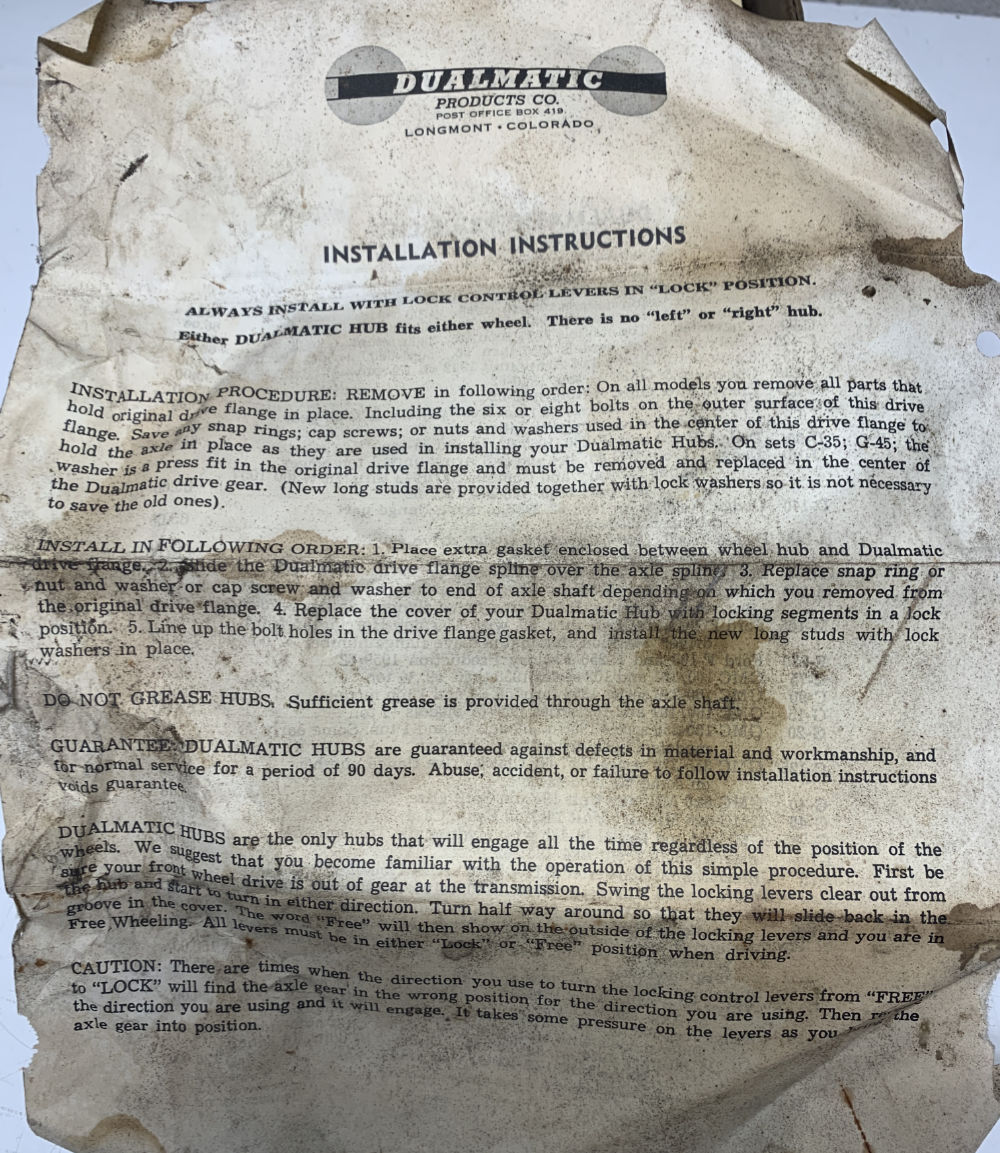
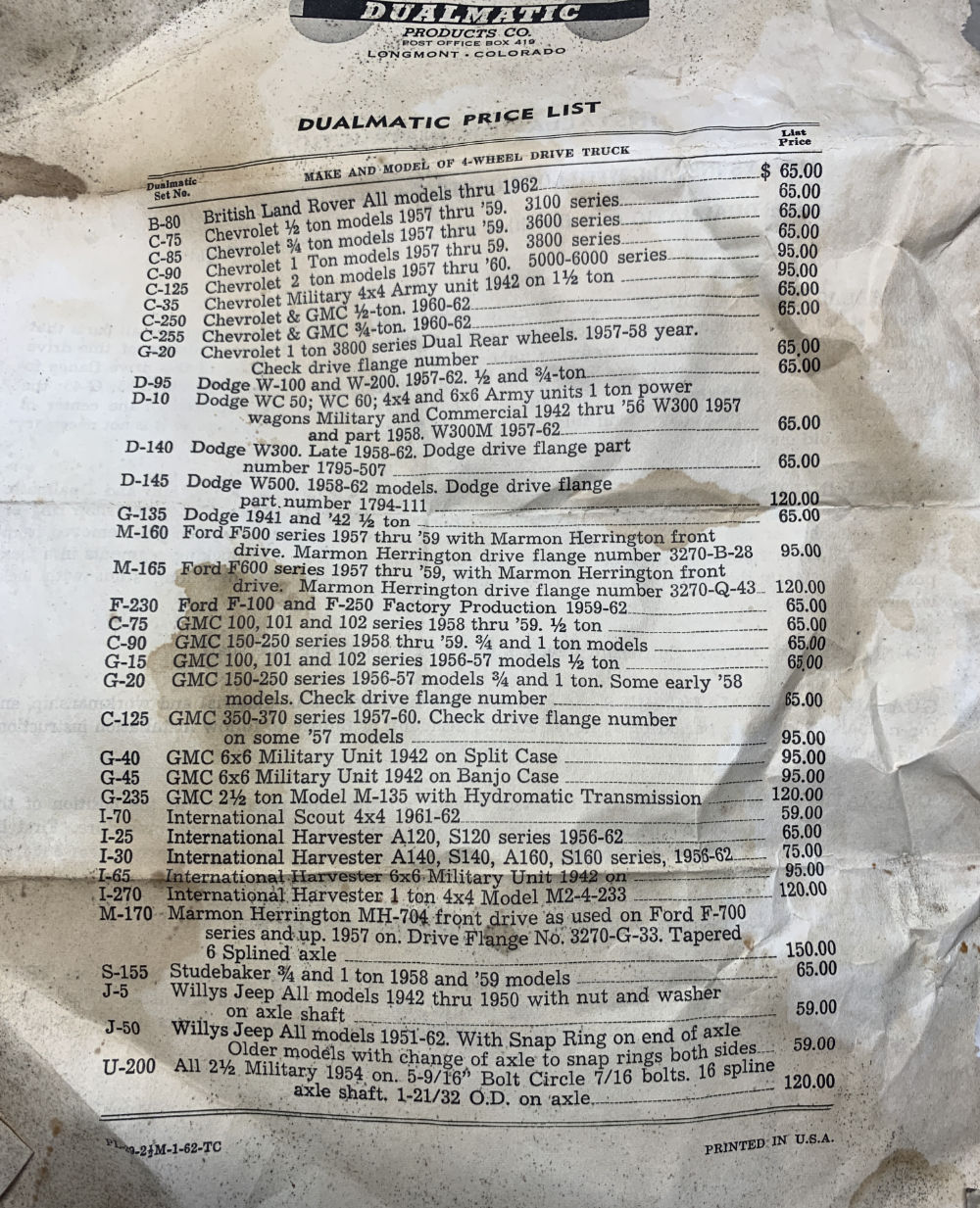
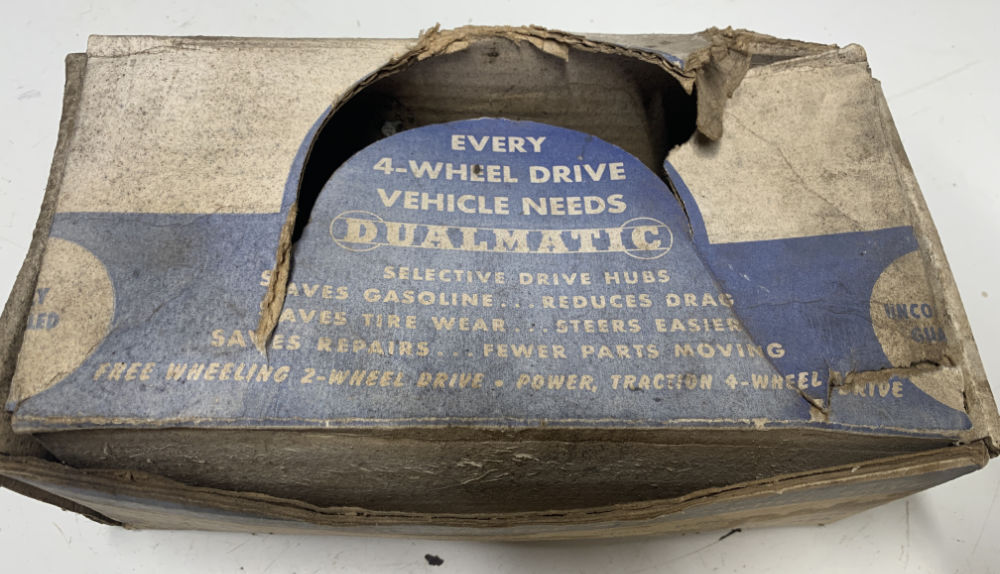
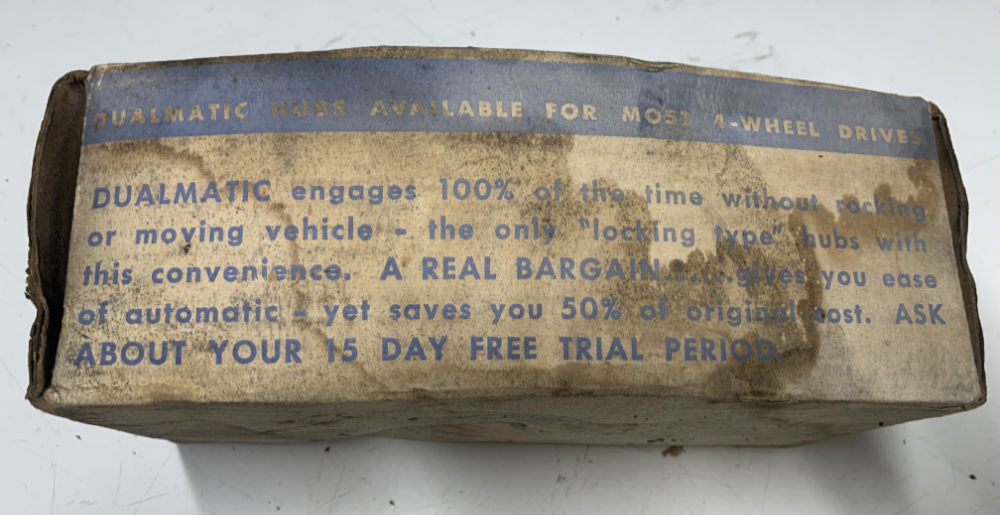
A set up Dualmatic-style two-lever hubs appeared for sale on Facebook the other day. What made this set unique was that the hubs were private labeled for Kelly Manufacturing. It’s the first set I’ve seen with Kelly’s information on it. I doubt there are many other hubs bearing these stickers.
This shouldn’t be too big of shock, as Kelly also private labeled Kayline tops for sale in the late 1950s. And, of course, Dualmatic was offering to private label their hubs for Sears, Allstate, and other entities.
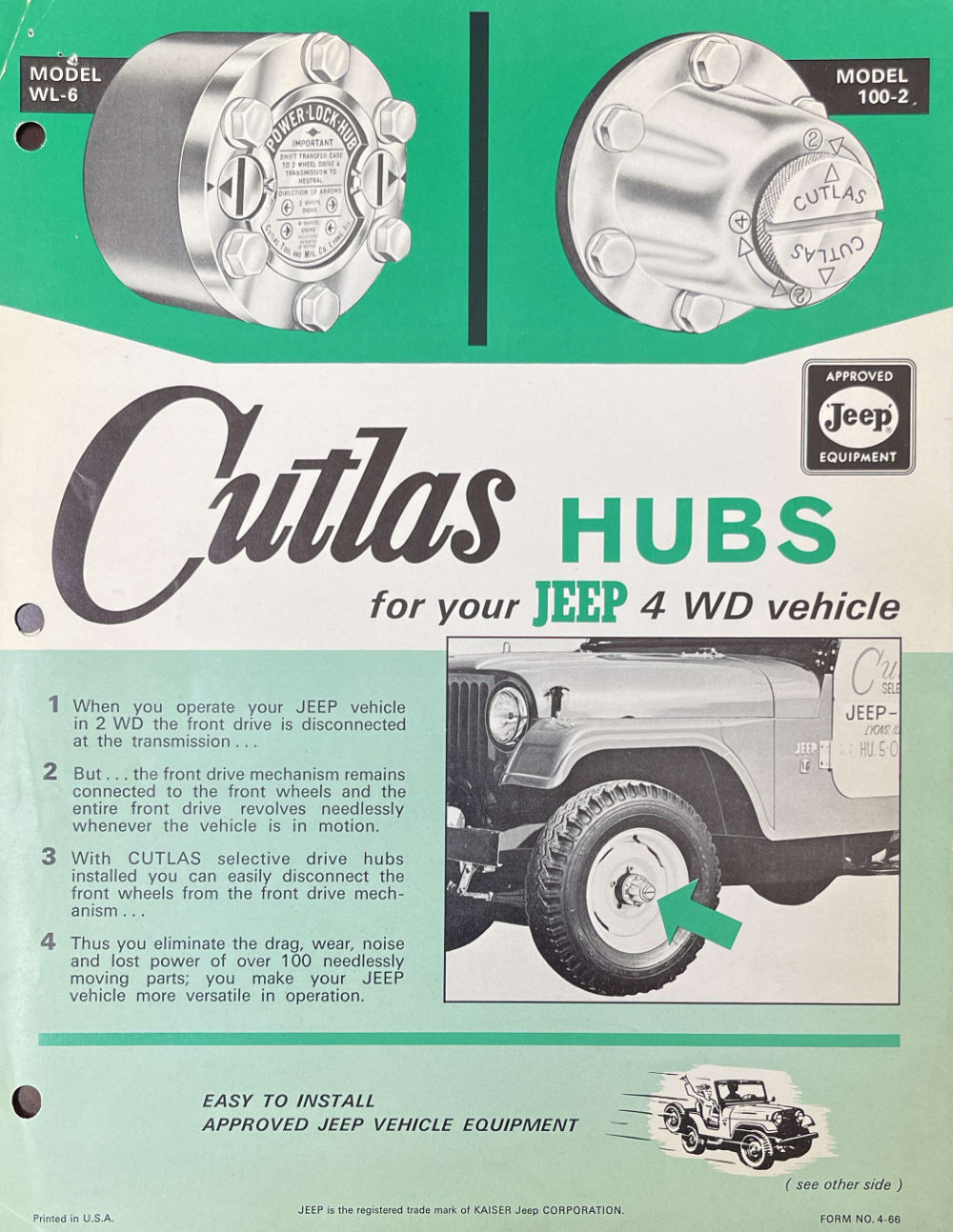
I found this brochure on eBay. It’s the first time I’ve seen this version. The form number is 4-66, which I believe means it was published in April of 1966.
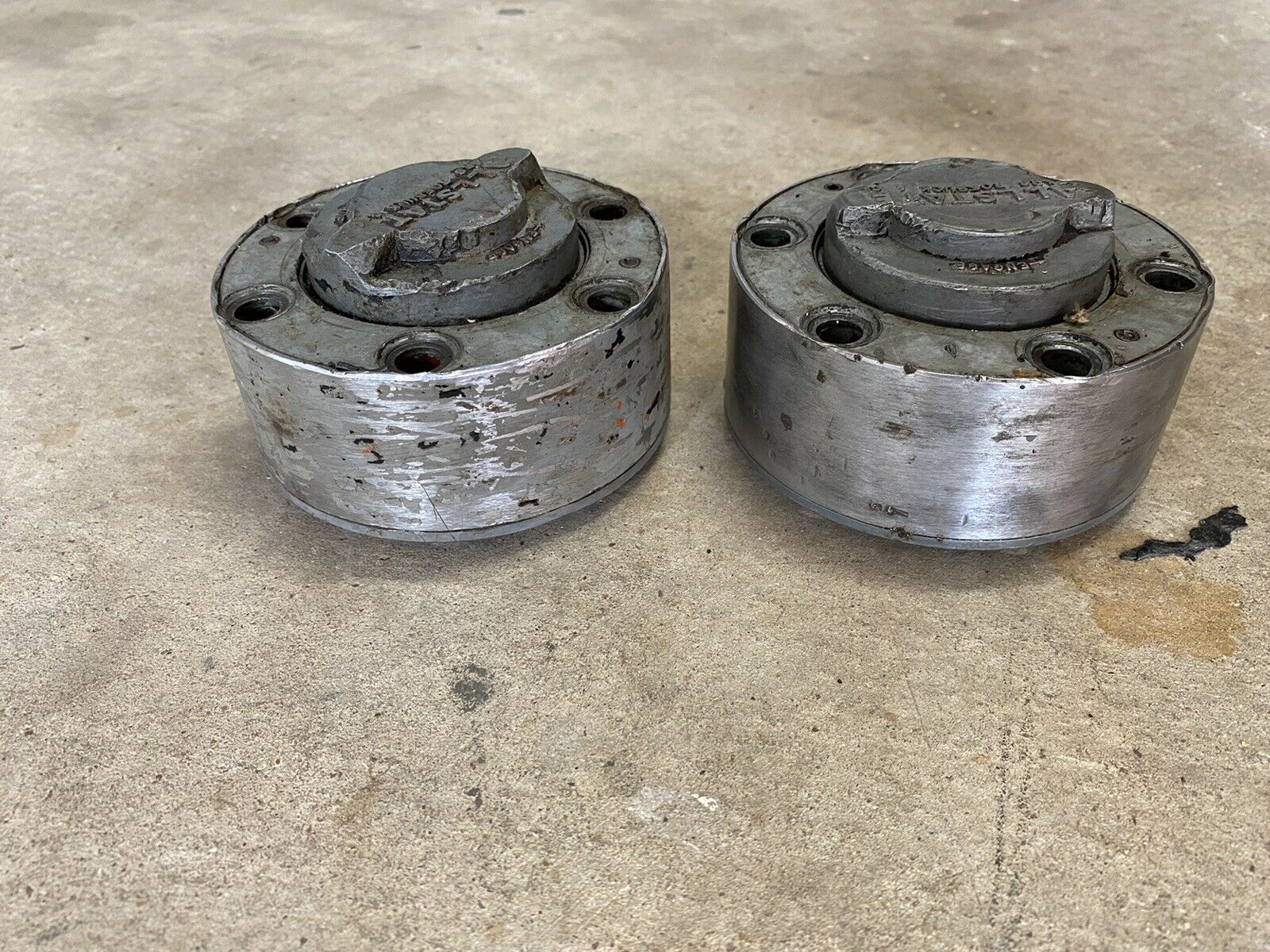
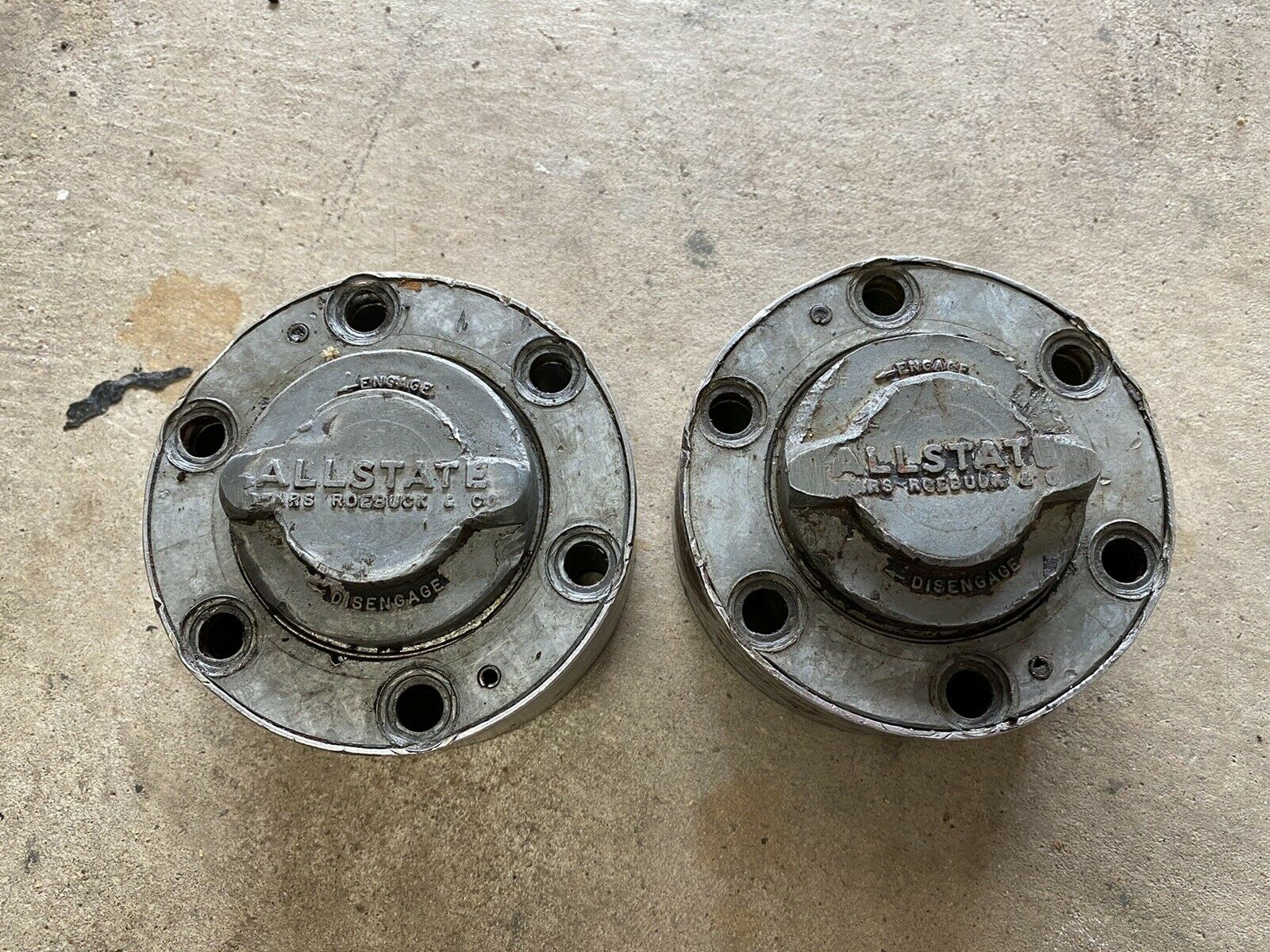
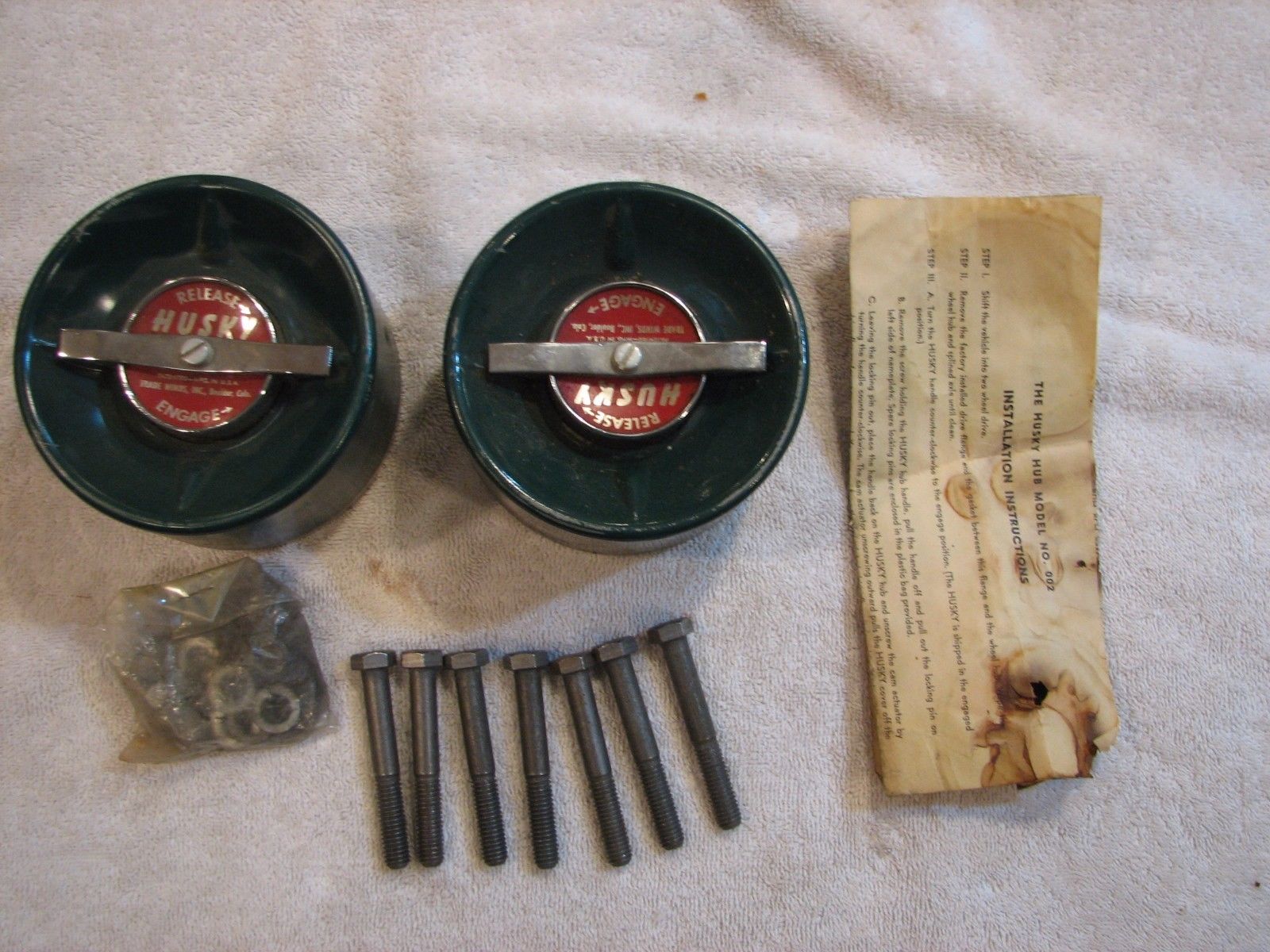
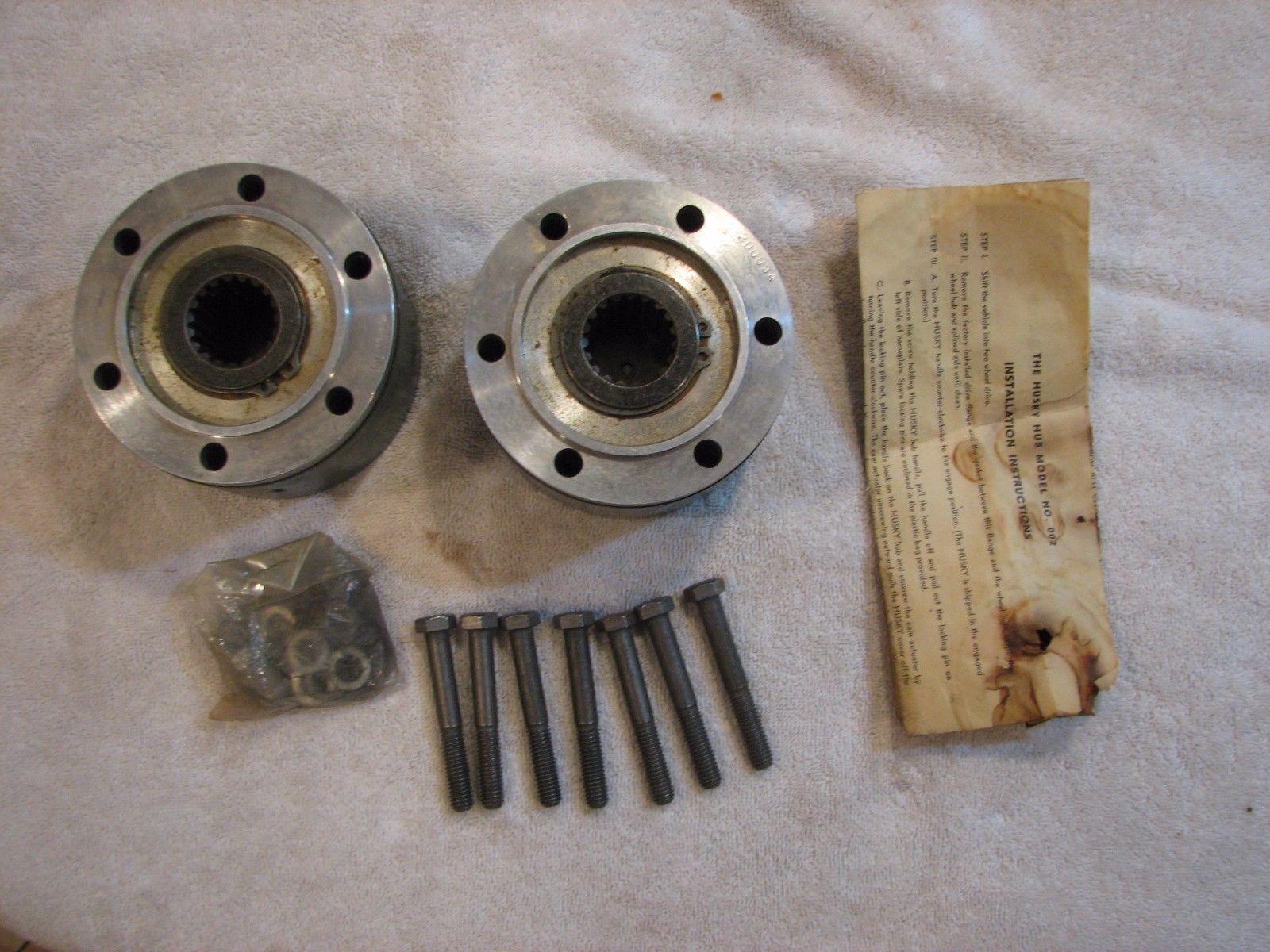
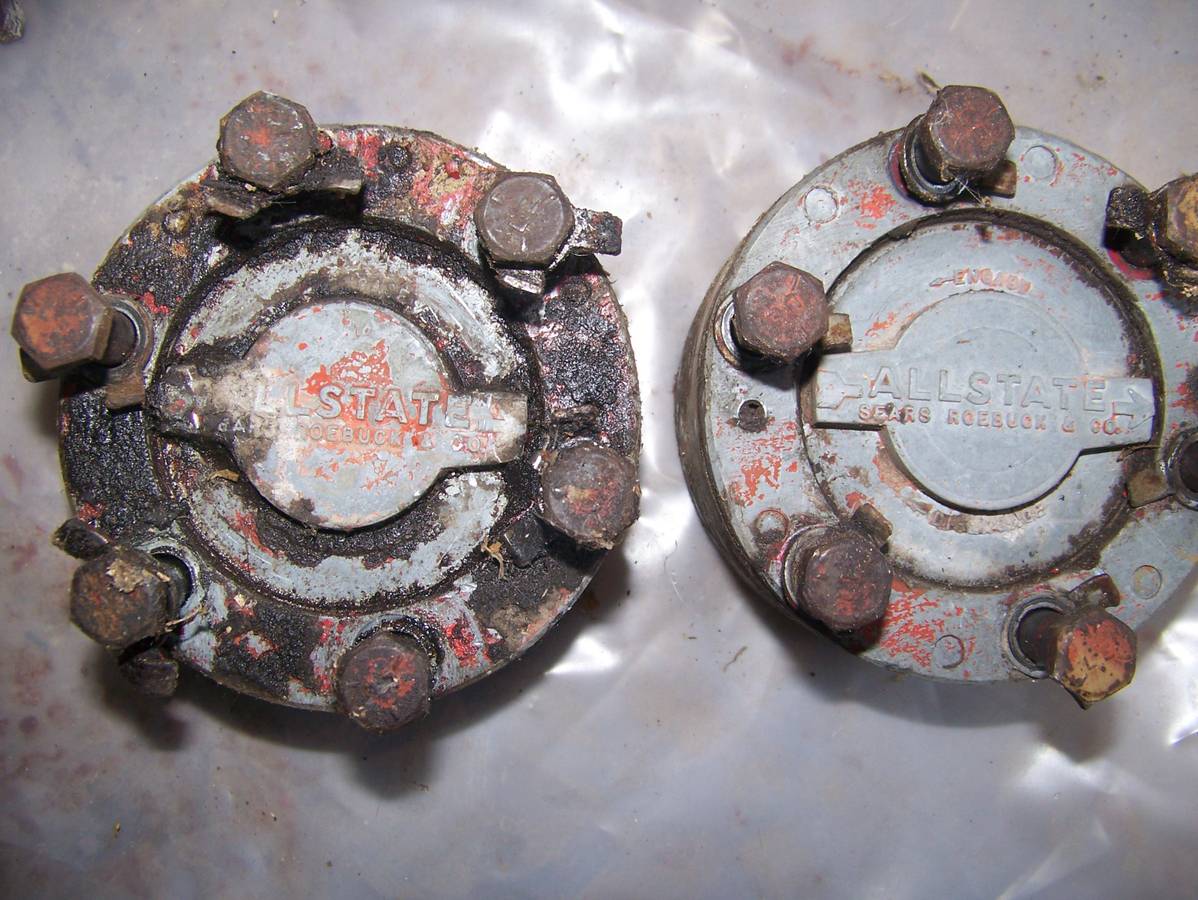
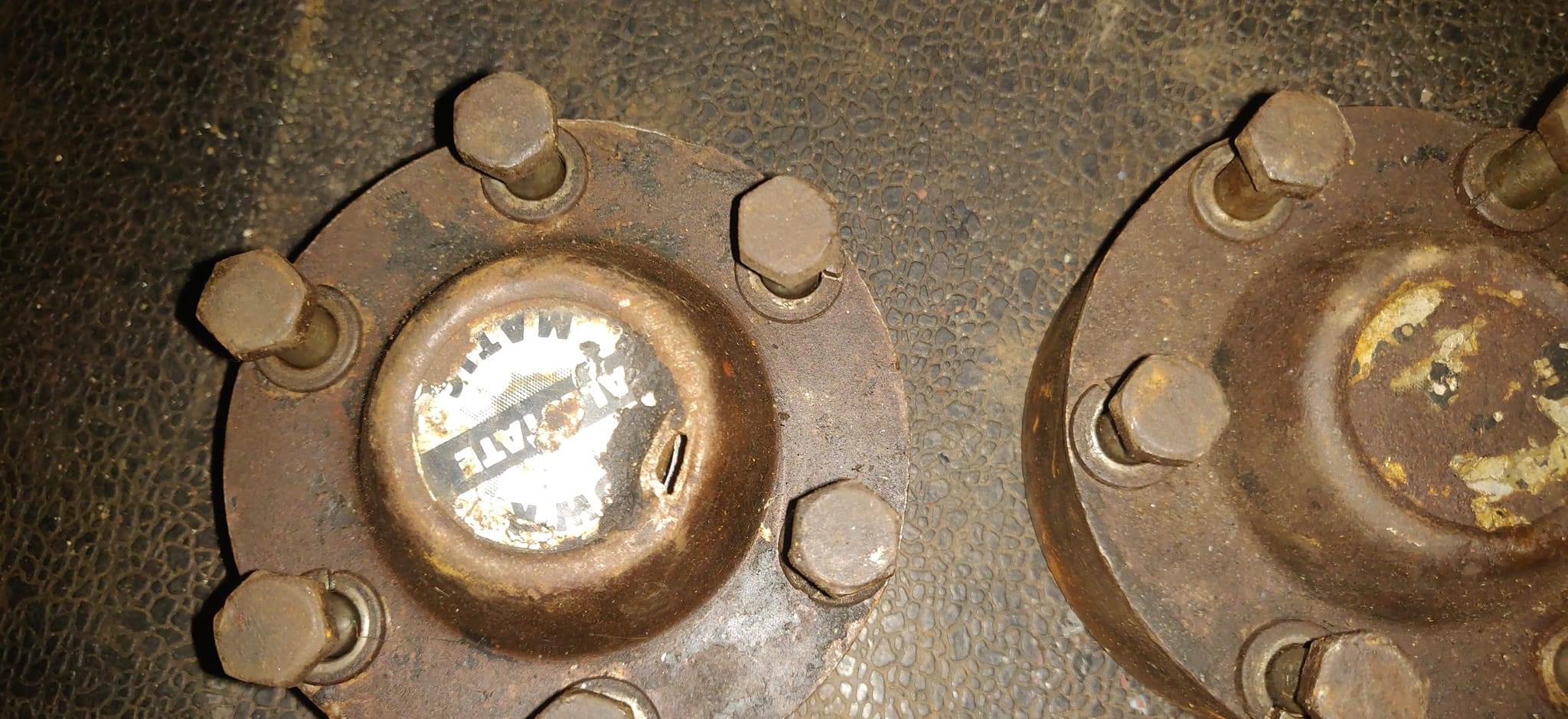
These hubs have seen some serious wear on their faces. Evidence suggests it was Husky that private labeled this hub for Allstate (more on Husky history here).
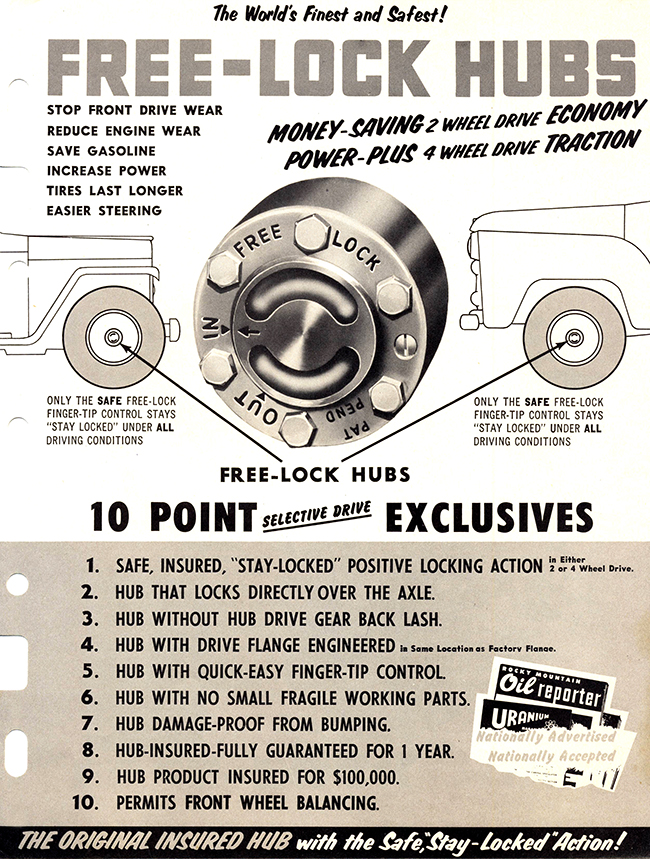
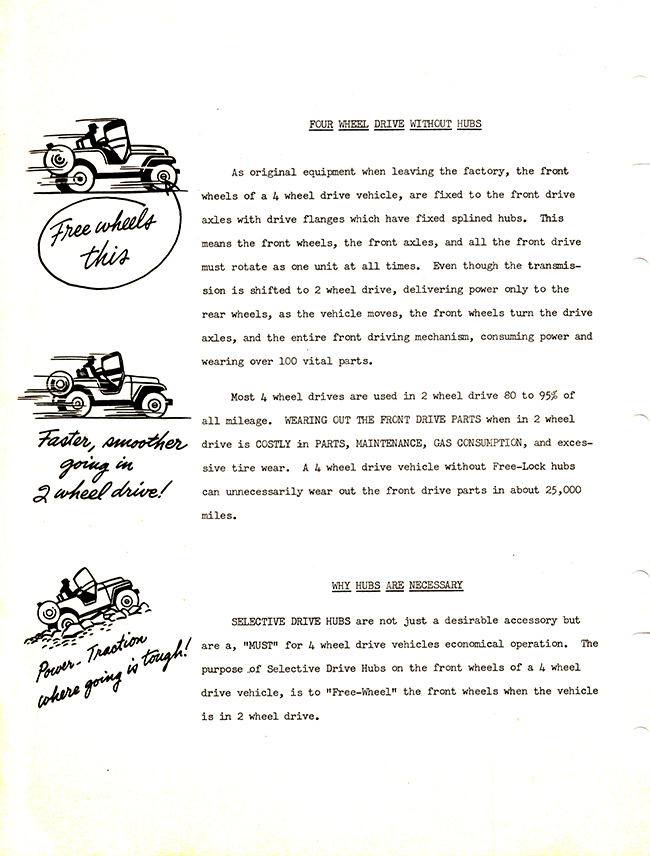
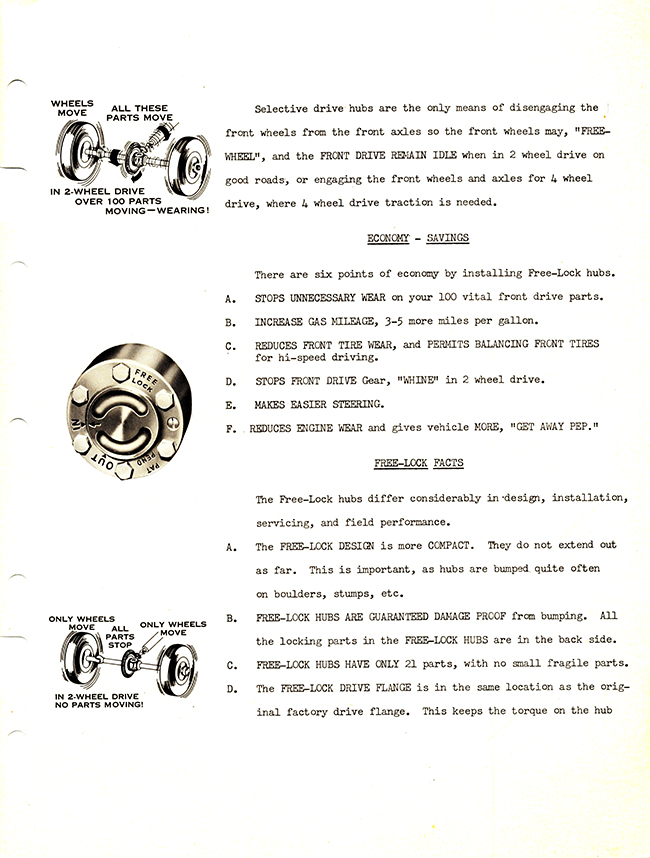
What is interesting to me is that the back side of this hub looks identical to the backside of the early Husky, Dualmatic, and Free-Lock hub, too. I don’t have enough information to compared the eternals of each of these, but I suspect that some of the Husky and Dualmatic hubs reflect evolutions (or copies) from the early Free-Lock hub.
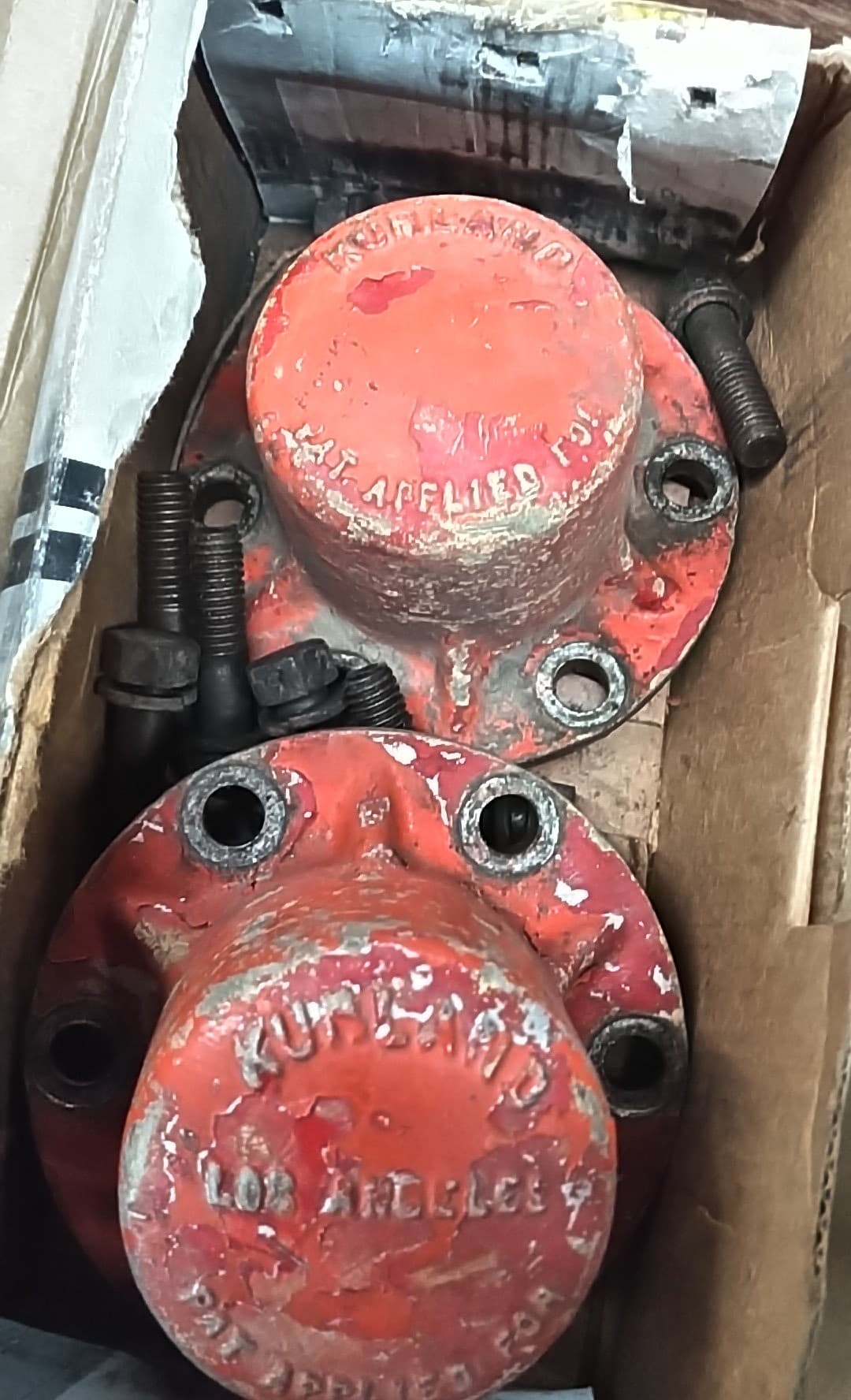
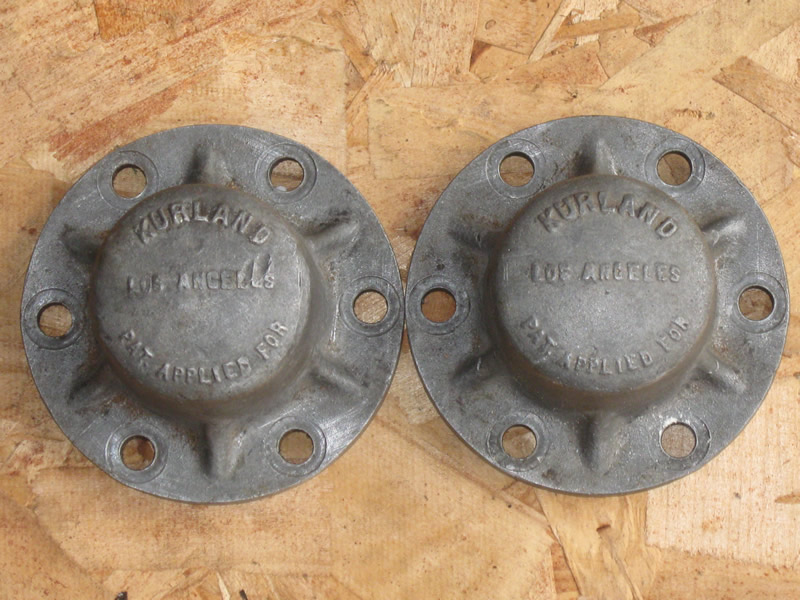
One of the rarest type of jeeps hubs are the Kurland hubs. I’ve only had one pic of these hubs (thanks to Ted Jordan) until yesterday when Richard Darr forwarded me a photo of a set of hubs he acquired. This led me to a quick dive into the internet, which yielded the following.
A variety of searches related to “Kurland” and “Kurland Motors” yielded results in both Los Angeles (a city whose name appears on the hub) and Denver. In fact, there were Kurland Motor companies in Los Angeles, Denver, and Grand Junction, Colorado (also known as Kurland Junction Motors).
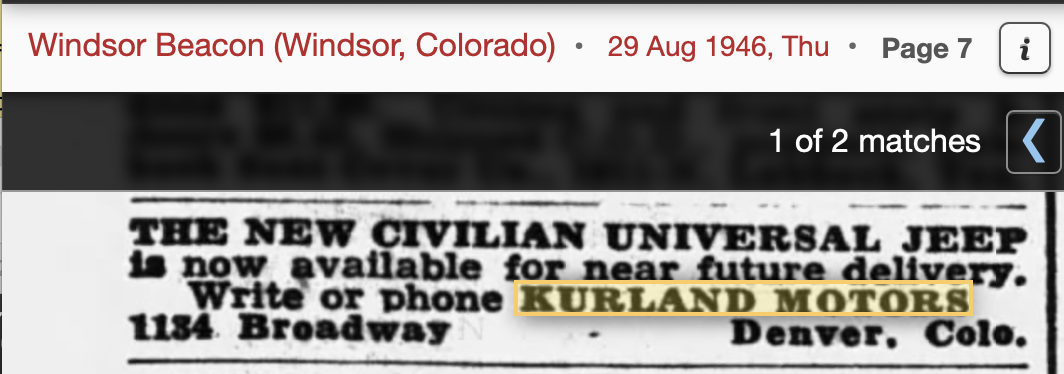
The Denver location was opened as early as August 1946, as an ad in the Windsor Beacon out of Windsor, Colorado, mentioned the new Universal Jeep arriving for delivery (soon).
I couldn’t location much information about this Denver Willys distributor, other than Kurland Motors was instrumental in the launch of the Mile High Jeep Club in 1956 and that Kurland Motors, at least for a short time, marketed Kurland-branded bumpers about that same time.
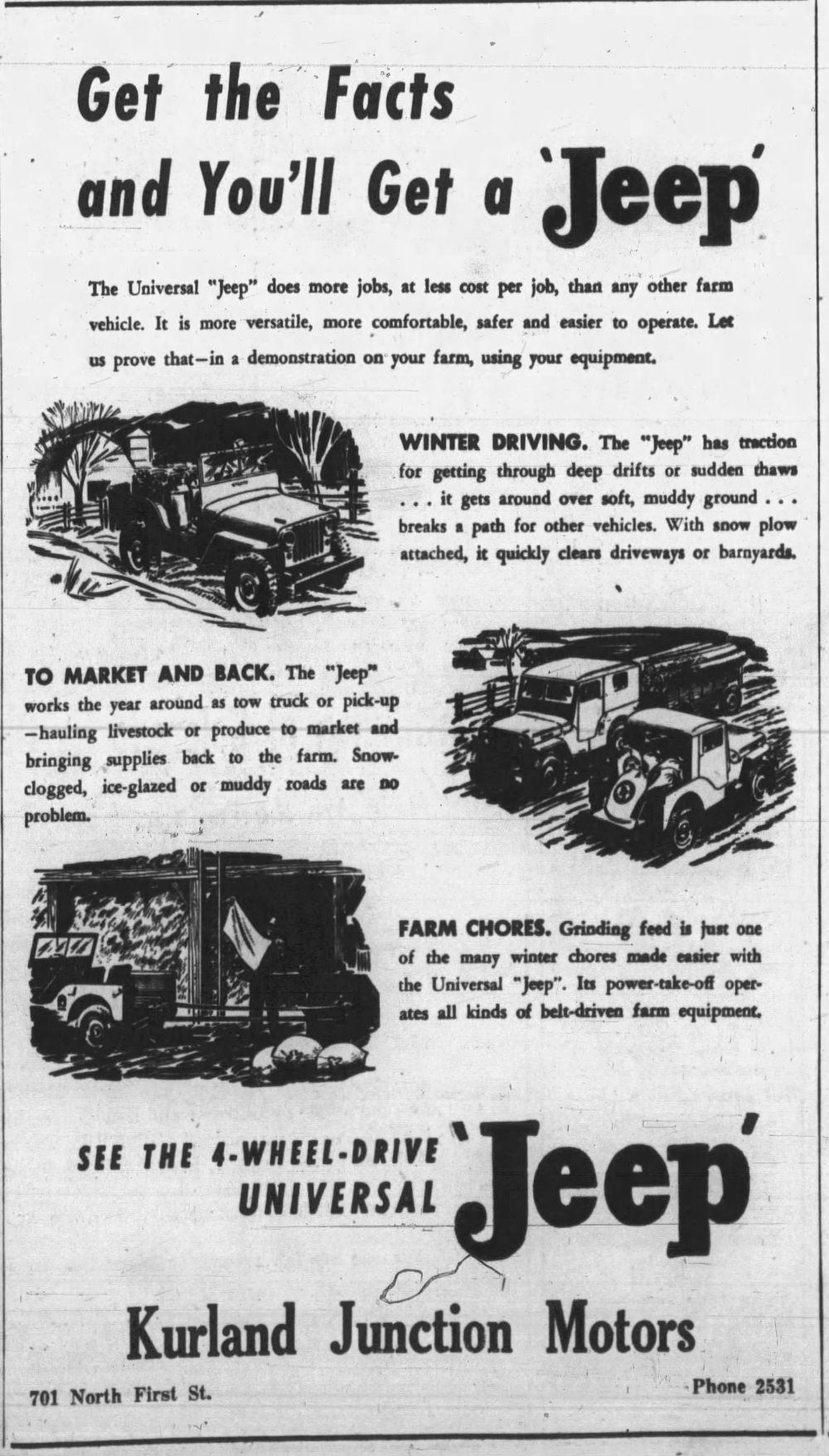
Regarding Kurland Junction Motors, I was able to locate this ad from February 22, 1948, (The Daily Sentinel, GC, CO):
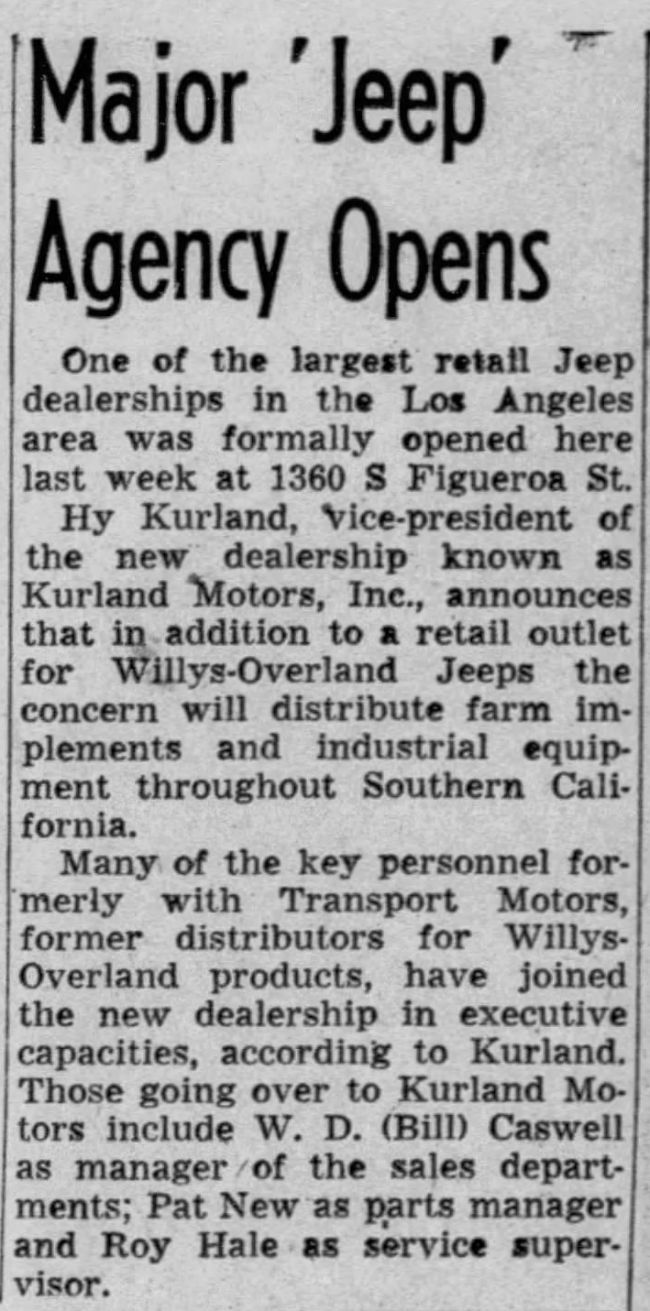
Now, were the Denver/Grand Junction Kurland dealers connected to the Kurland Motors of Los Angeles that also sold Willys-Overland vehicles? If they were related, I have yet to find a connection. But, at least I was able to unearth more information about the LA Kurland.
CREDIT: December 05, 1948, issue of the Los Angeles Times
As the article suggests, the Transport Motor Company lost some key personnel. Perhaps Transport Motors had decided to exit its Willys-Overland relationship?
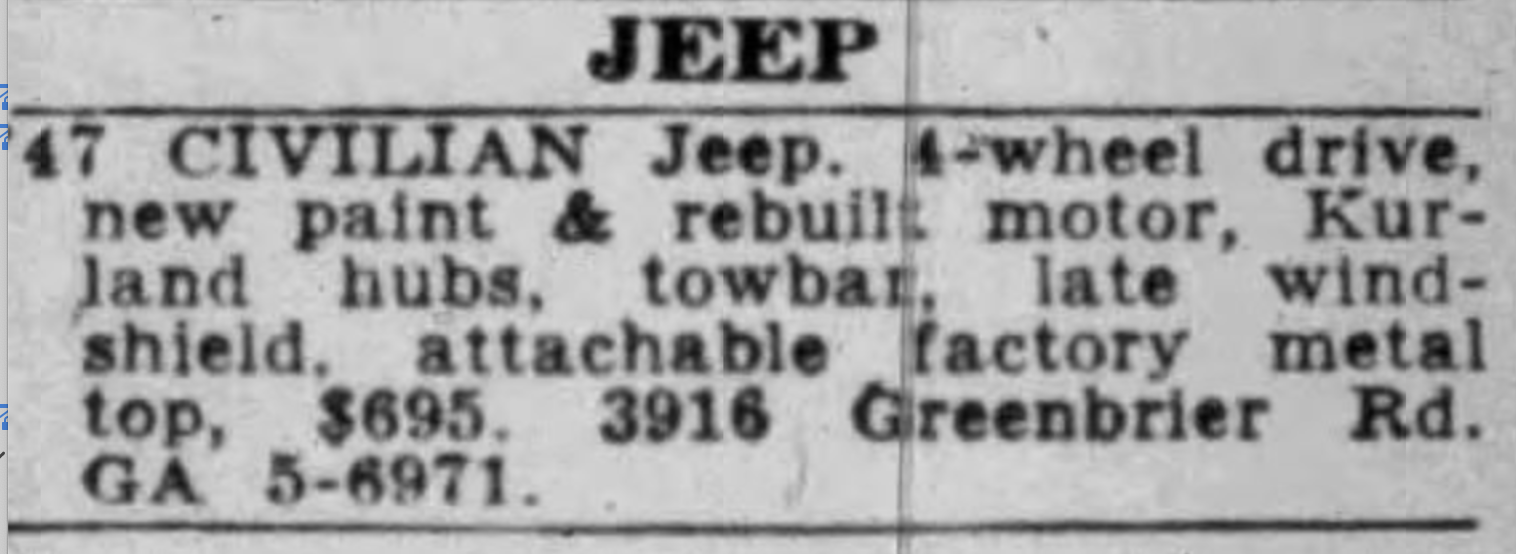
At some juncture, it appears Kurland launched a line of free-wheeling hubs. These hubs were stamped with 1) KURLAND, 2) Los Angeles and 3) Patent Pending. Unfortunately, I could find no patents related to the hubs. In fact, the only information I could find related to the hubs was a reference to a CJ-2A being sold with a set of the hubs.
November 10, 1955, Independent News, Long Beach, CA.
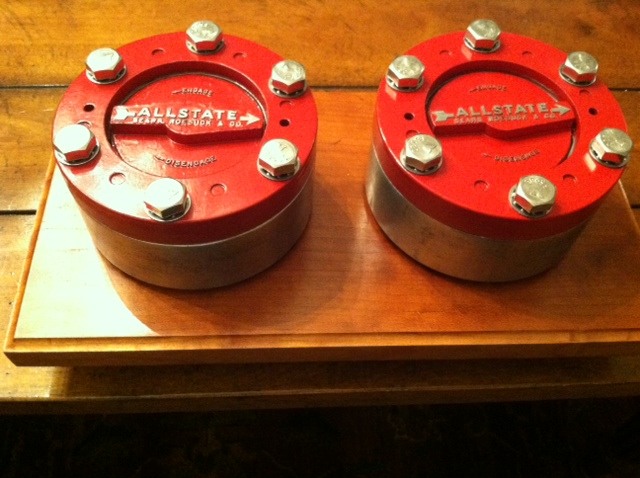
Maury shared these hubs for sale. They are Allstate hubs and, likely, a very early set. My guess is the these were likely built by Husky/Dualmatic, but I am not familiar enough with hub innards to say for sure. I can’t quite find a brand-name hub with the cover that looks quite like this.
“These hubs are all complete and turn freely. The dial is heavy case aluminum. These only work with threaded axles ends. I tried putting them on the later snap ring style axle and the snap groove does not protrude out. Outer case was chrome originally. They seem like a really well built early twist lock hub. Asking $150 obo plus shipping. I also have a picture of how the innards went when I took them off the axle.”
This hub appeared in a Facebook photo posted by Josh. It appears to be a Watson hub (may have been private labeled through Sears), but part of its case was either 1) cast differently or 2) modified. Given The Jeep has spent its life in California, it’s likely some form of the Watson hub, but I’ve not seen one quite like this.
The odd hub is on the left and the Watson hub is on the right, itself a derivation of a Dualmatic hub (and having the same patent number as a Dualmatic).
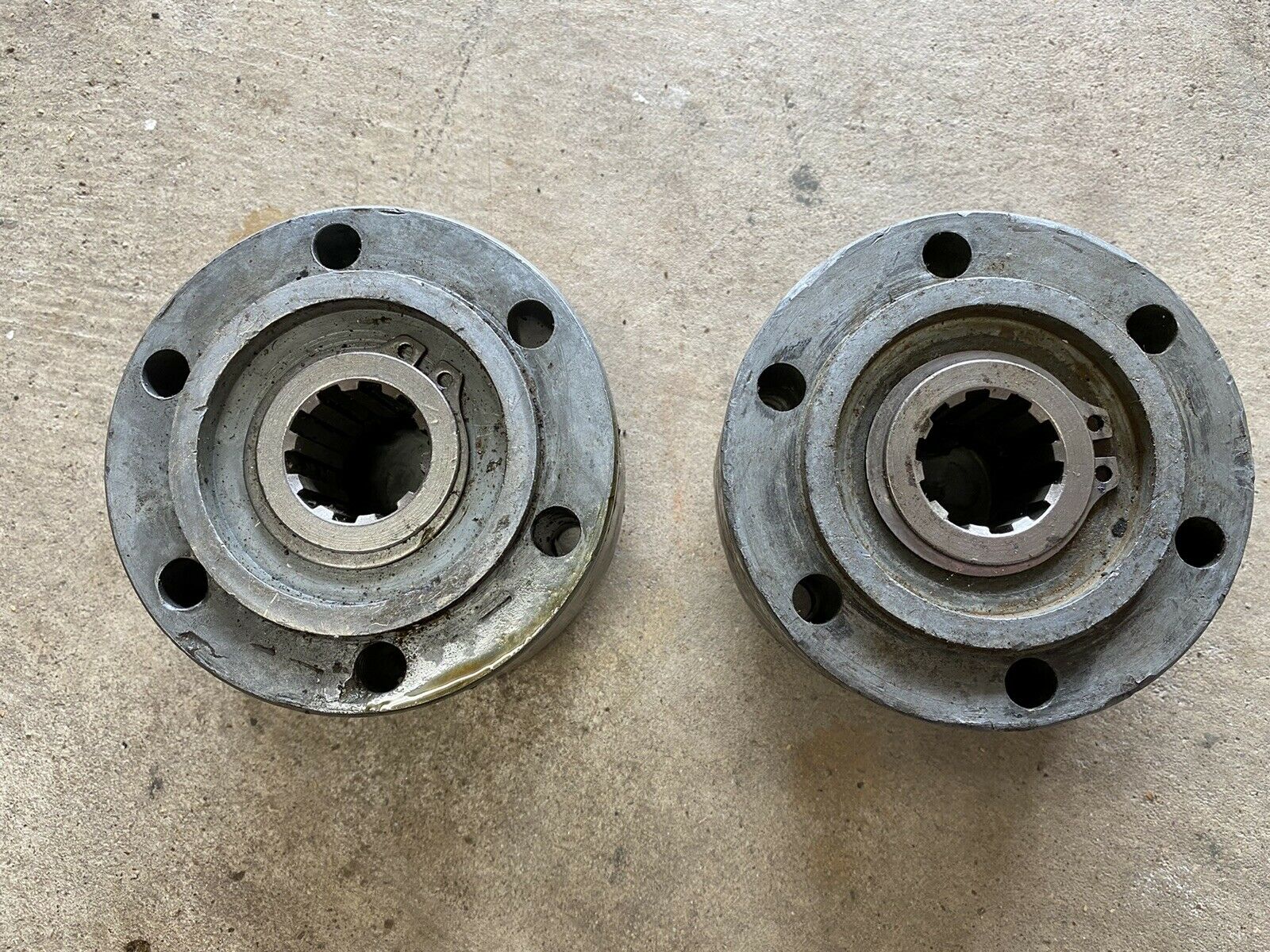
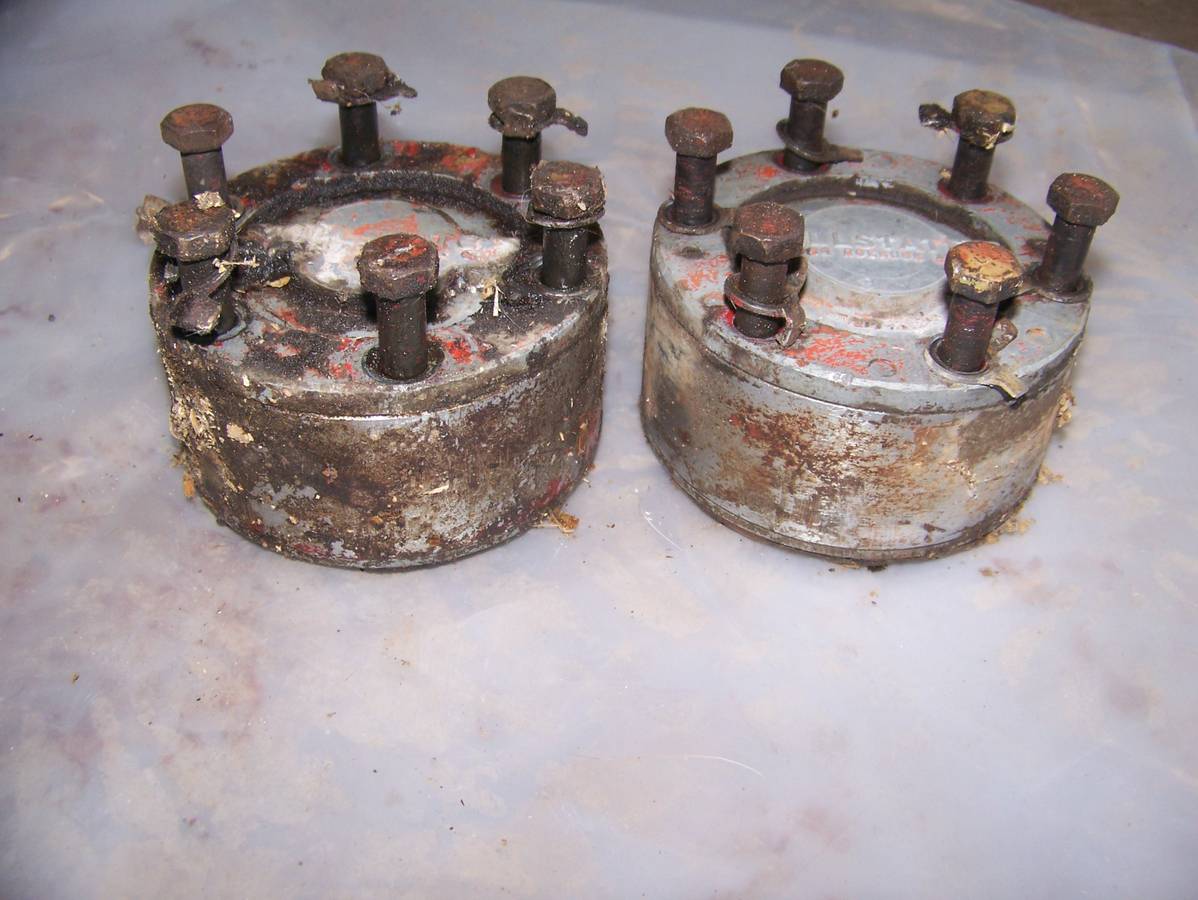
“Surplus to my needs are a set of 2 matching Allstate locking hubs that came off of a 1947 Willys jeep flat fender. I do not know much about them other than the brand shown on them. They appear to need some cleaning, but I assume they work as they are supposed to. You be the judge of that.”
UPDATE VI: I located a set of Free-Lock hub instructions that are a pre-view for a later set of near identical Dualmatic instructions. This is clear documentary evidence that Dualmatic was linked to Free-Lock.
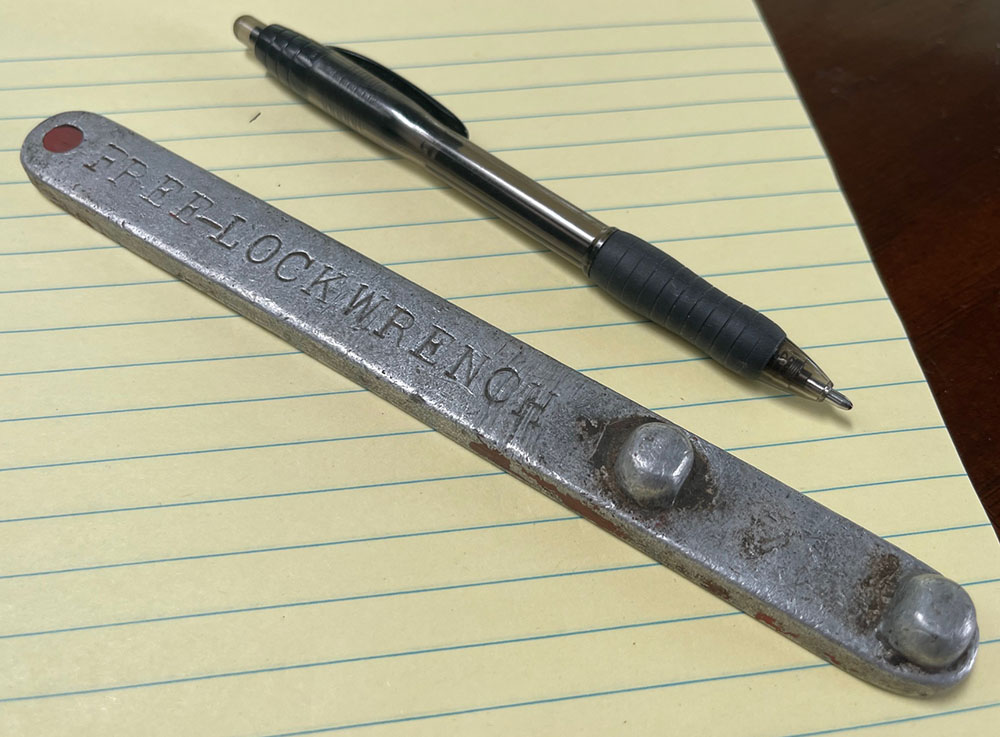
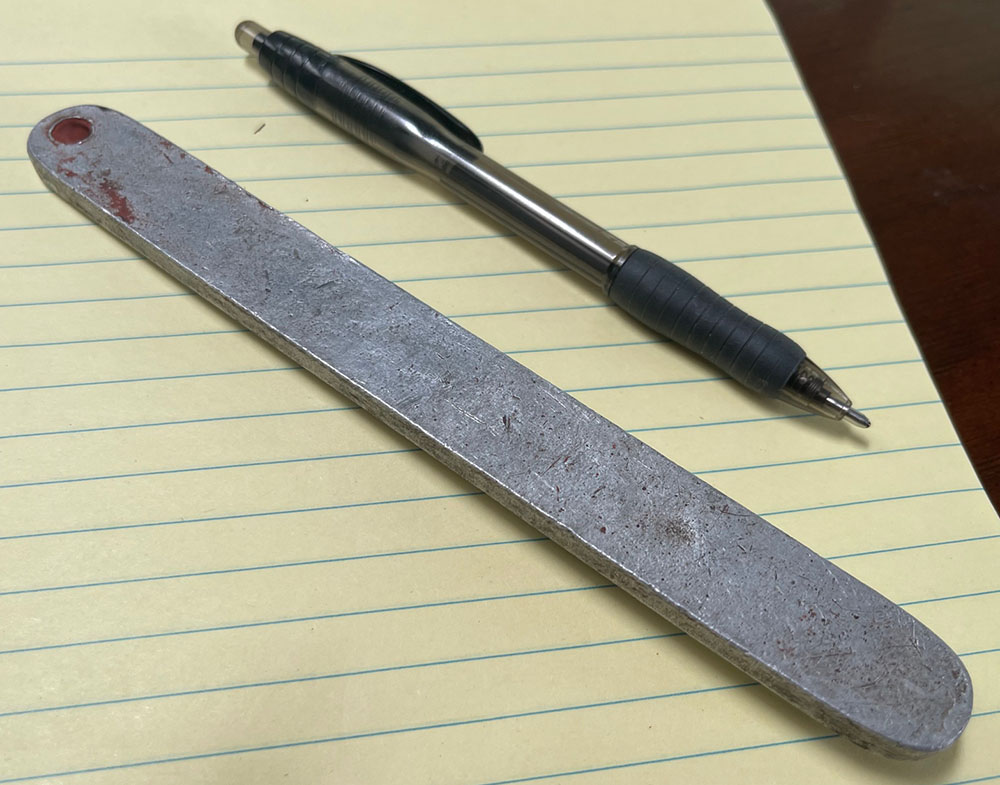
UPDATE V: I recently packed many of my father’s tools to bring them back to Prosser. I was a regular user of them when working on my bicycles, then my jeeps. So, I thought I knew them pretty well. That is why I was so surprised and did a double take when I removed this tool from a drawer and read the name stamped on it: FREE-LOCK WRENCH …
What??? Where’d that come from? I once asked Dad about Free-Lock hubs, but he didn’t know anything about them. So, I don’t know how he obtained it.
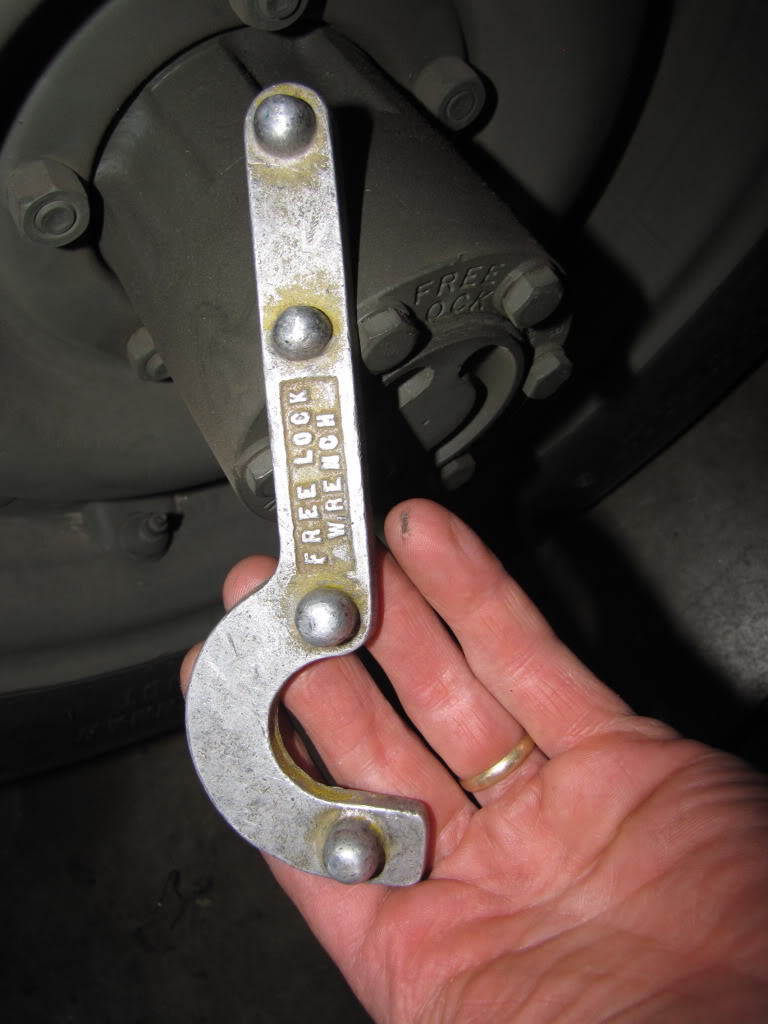
Anyway, given the primitive nature of it, I’d have to guess it was a first generation version of the wrench. As seen below, a second, more elegant curved-design with a better branding stamp was likely introduced after this version.
Here’s a reminder of the other version of the Free Lock Wrench:
UPDATE III: Thanks to Steve, we’ve discovered an additional version. It is now number 5, which seems to be an evolutionary step between 4 & 6.
UPDATE II: Thanks to Frank Day and his grandfather Merton, who saved this rare piece, here is a scan of an eight page brochure related to the Free-Lock corporation.
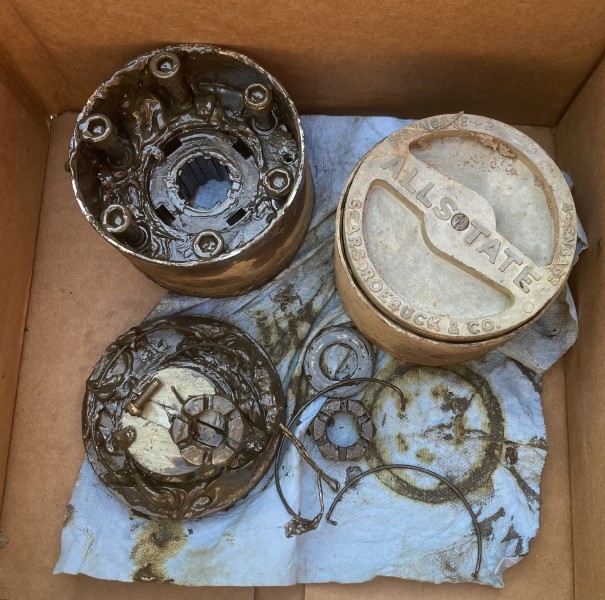
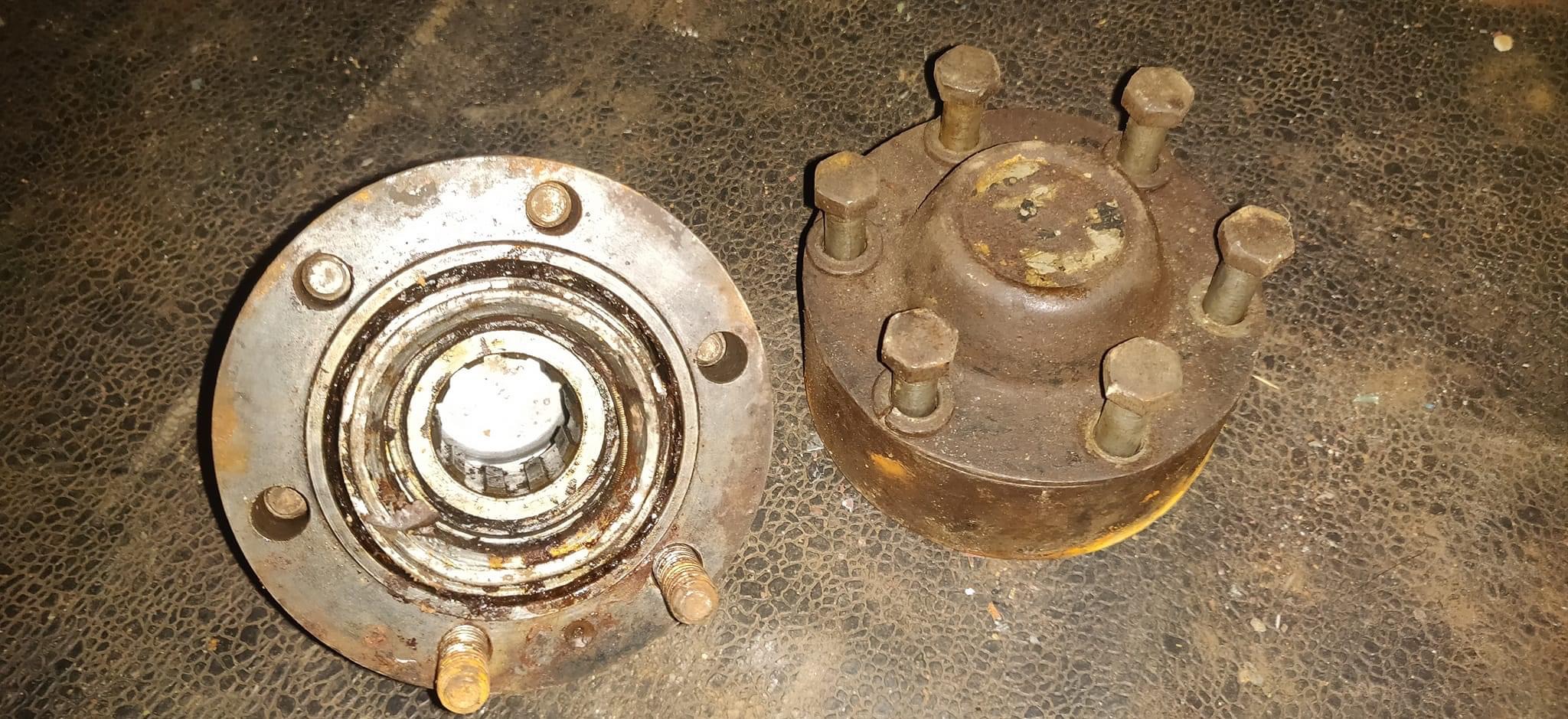
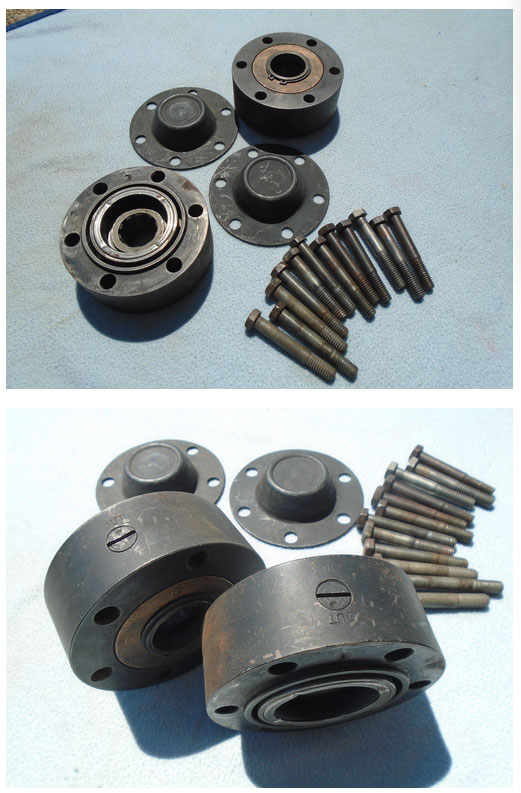
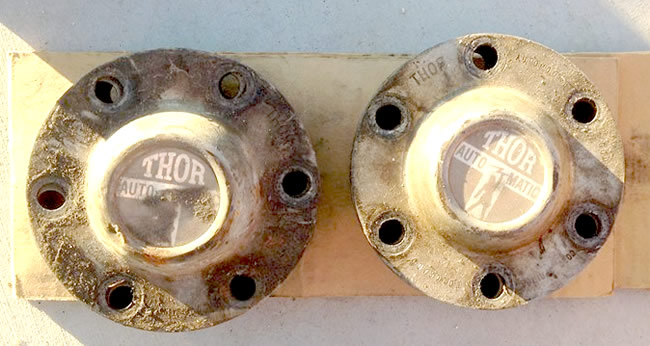
UPDATE II: Dinesh obtained these Thor-Automatic looking hubs, but on the cover they read Allstate Power Matic rather than Thor. I suspect they are Thor hubs rebranded for Allstate. Here are some pics:
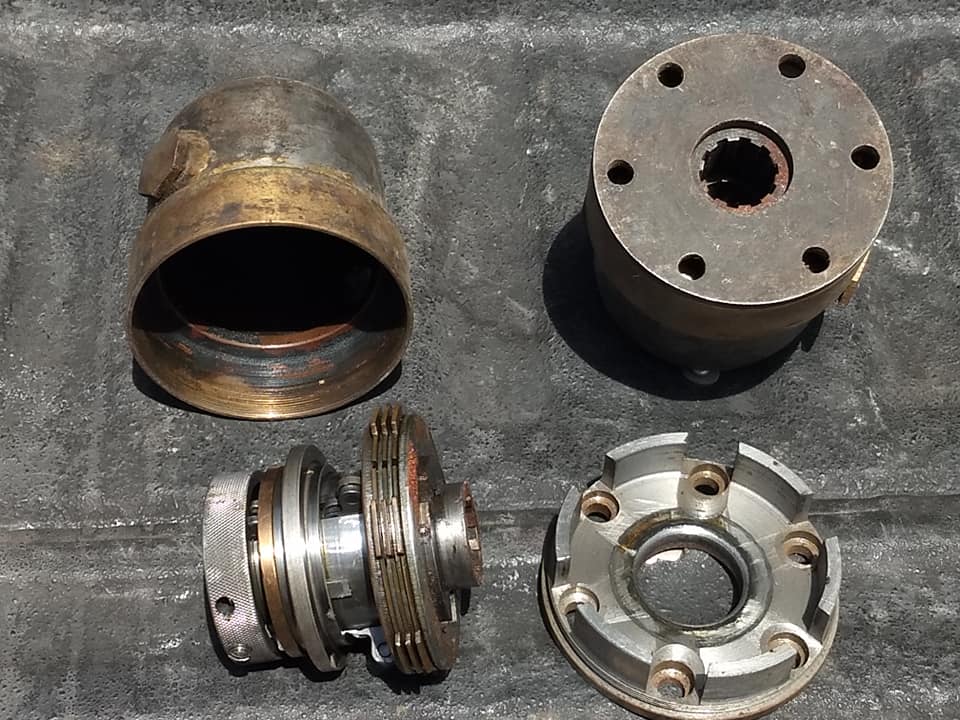
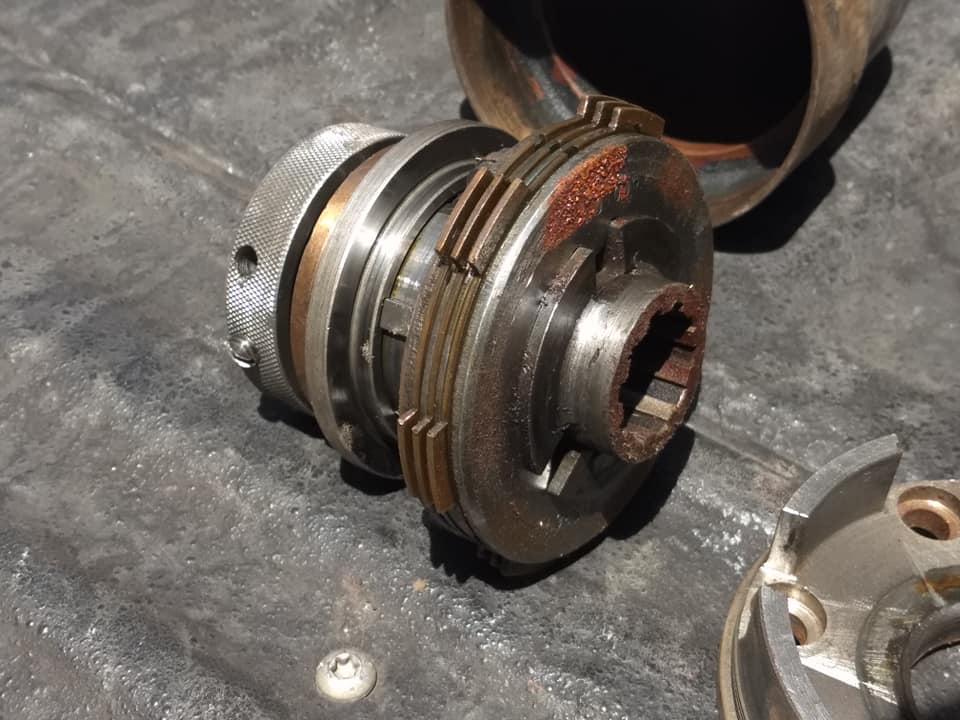
Here is a the interior portion of a set of Thor hubs:
=========================
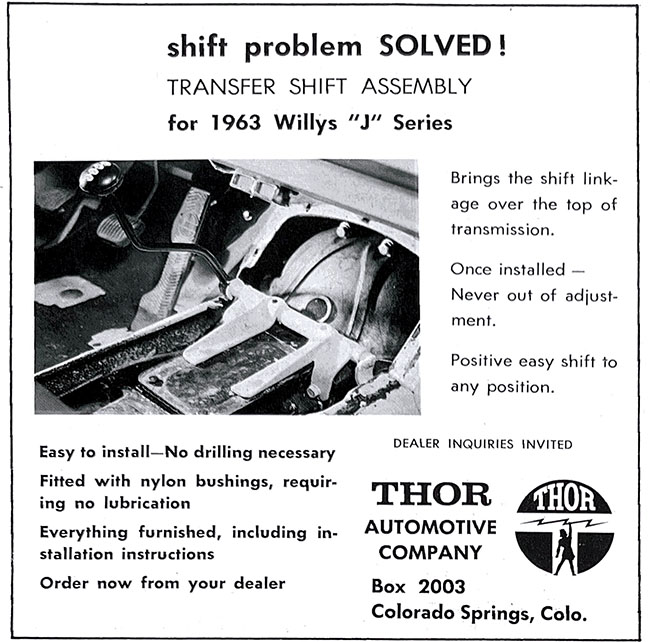
UPDATE (May 24, 2021): The October 1963 issue of Four Wheeler Magazine include this Thor-designed product to make shifting the transfercase more convenient. It moves the shifter from the passenger-side of the transmission to the driver’s side. I imagine there are few, if any, of these shifters out there.
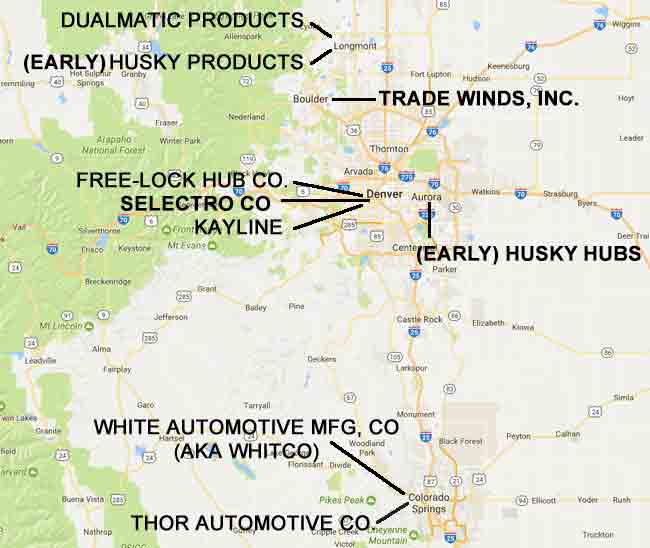
White Manufacturing Co. (also known as White Automotive and Whitco over time) was started in the late 1950s by Richard T, Bingman and partners. The company progressed at a modest level making, among other things, aluminum floral display stands. Eventually, White allied with Kaiser and began making tops. White filed for incorporation in 1959. One of the company’s earliest products was a white soft top for jeeps.
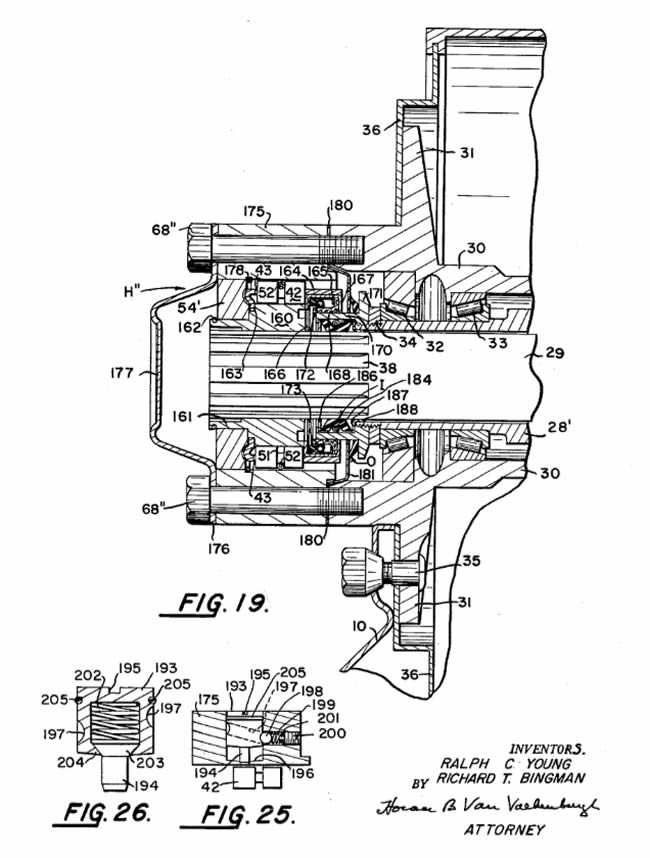
The next year, in 1960, Richard T. Bingham filed a patent for a pair of locking hubs. One set would automatically shift into gear when it sensed the axles were being powered (i.e., when the transfercase was shifted into four wheel drive). The second set of hubs added a dash-mounted button to allow for control of the hubs from the driver’s seat (assuming I have interpreted the patent correctly!).
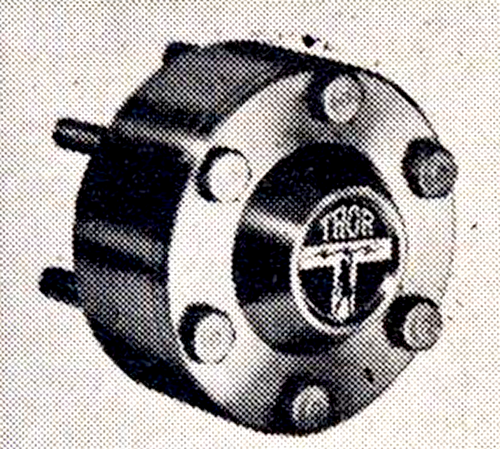
The interesting thing is that Bingham never assigned the patents to the White Automotive Company. Instead, the patents and hubs ended up being used by Thor Products, which also operated out of Colorado Springs (though sometimes the address is Manitou Springs, a small town just west of Colorado Springs).
This suggests that Bingham had some time of relationship with Thor, but his exact connection to Thor isn’t known at this time (my guess is that it was a subsidiary or sister company of White).
1. The Thor auto-matic hub patent vs. the finished device: Continue reading →
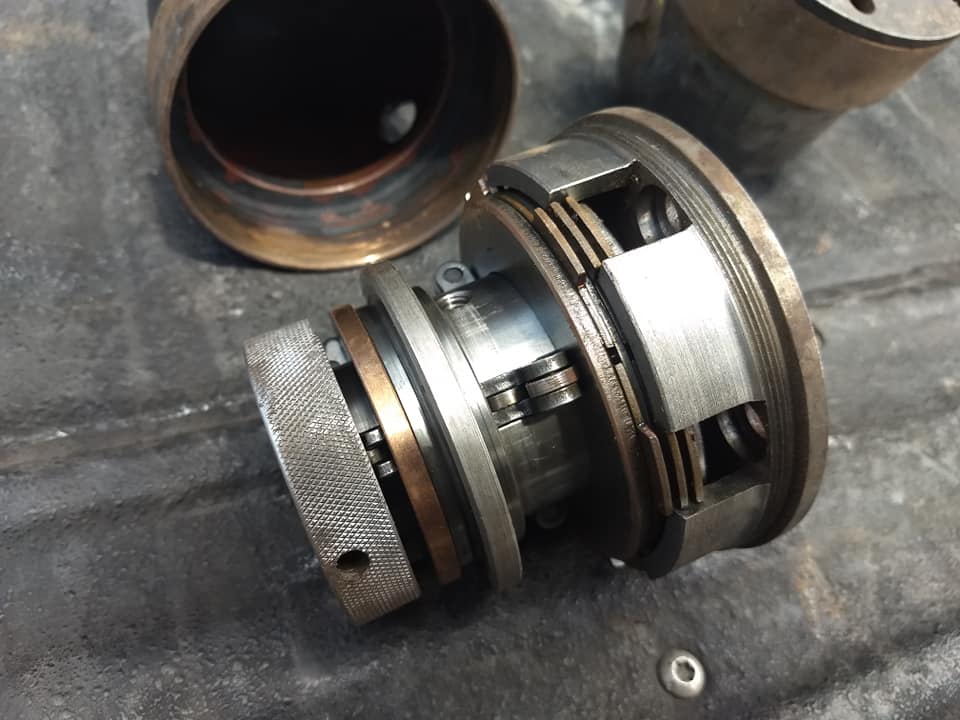
Brian posted these pics of a hub he has to FB’s Flatfendering Aficionado Monthly group. It’s not something I recognize. The work looks good enough to have been a prototype hub that never made production. It may have been an auto-engaging hub? Some commenters suggested a type of limited slip hub, where when a wheel begins to slip it auto-engages.
Brian wrote, “Has anyone ever seen these locking hub contraptions? Were these produced or is it a one-off? It appears to use 3 clutch plates and the ring in the center moves down over the roller cams to apply pressure to the plates. The covers look to be welding bottle caps that have 2 access holes to pry the collar from the outside.”