emailNeed to contact me and don't have my email? Click on email button.
About eWillys
Welcome to eWillys.com, a website for vintage jeep enthusiasts. I update this website nearly every day with jeep deals, jeep history, interesting reader projects, jeep related info, and more.
These quick searches can help you find things on eBay. People list in the wrong categories all the time, so don't be surprised to see brochures in the parts area for example. This section used to be split into jeeps, parts and other categories, but recent changes to eBay will require this information to be recoded.
The links to posts below show jeeps grouped by models, condition, and other ways. Some of these jeeps are for sale and others have been sold. If you are unsure whether a vehicle is still for sale or not, email me at d [at] ewillys.com for more info.
Importantly, the allure of buying a project jeep can be romantic. The reality of restoring a jeep can be quite different, expensive and overwhelming without the right tools and resources. So, tread carefully when purchasing a "project". If you have any concerns about buying a vintage jeep, or run across a scam, feel free to contact me for help, comments or concerns .
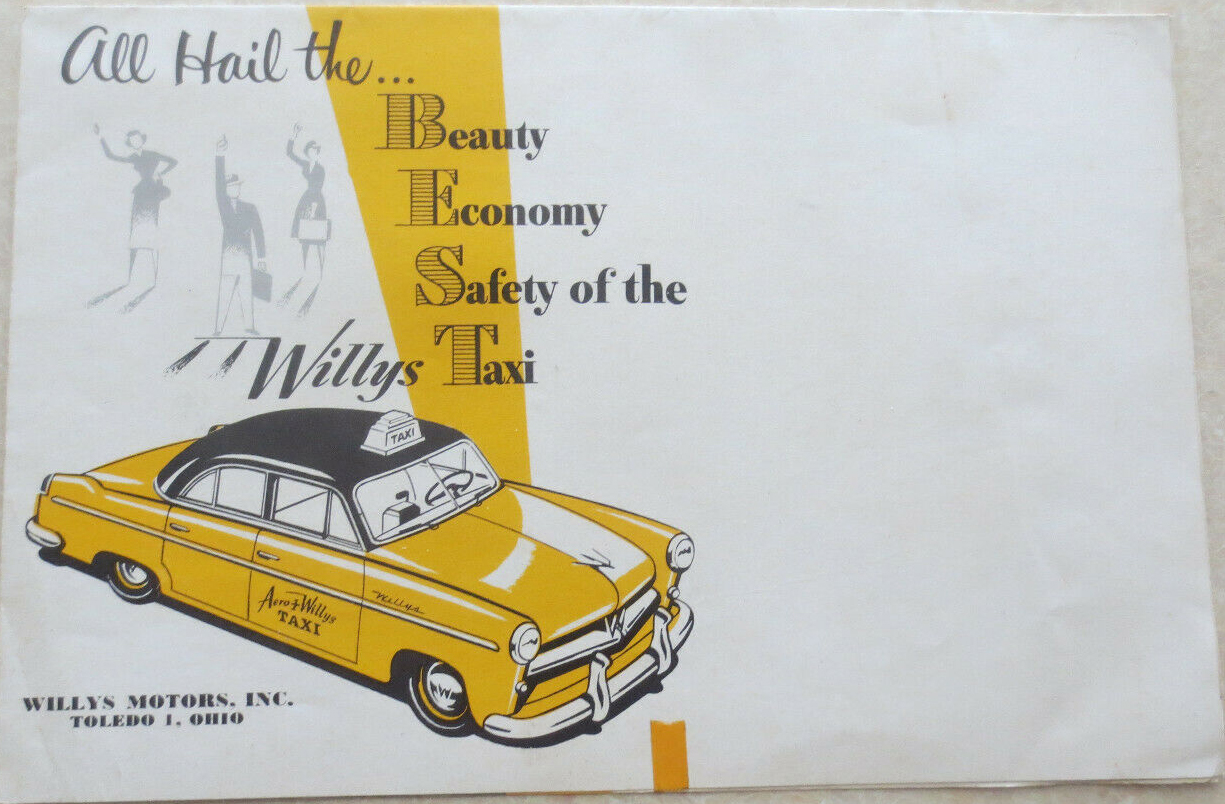
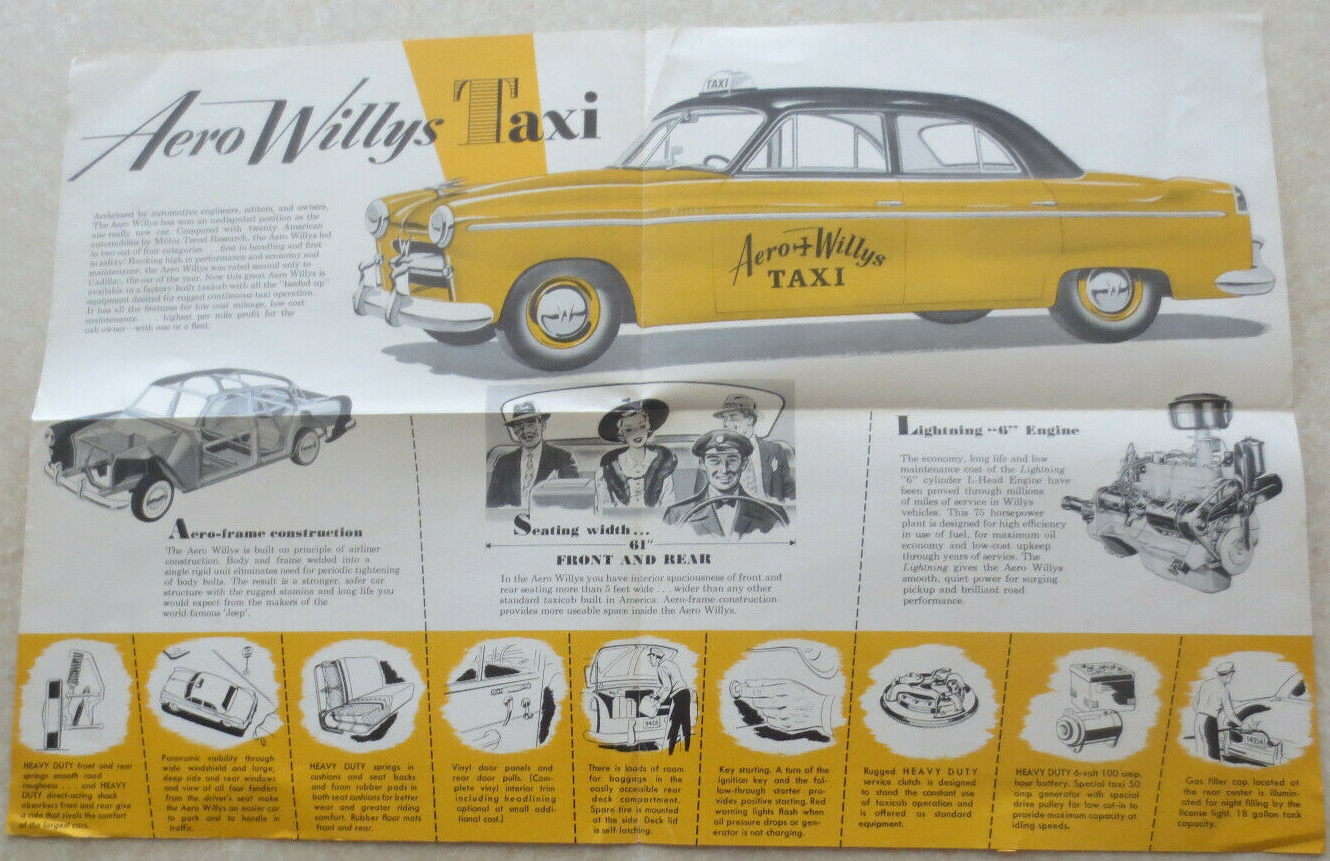
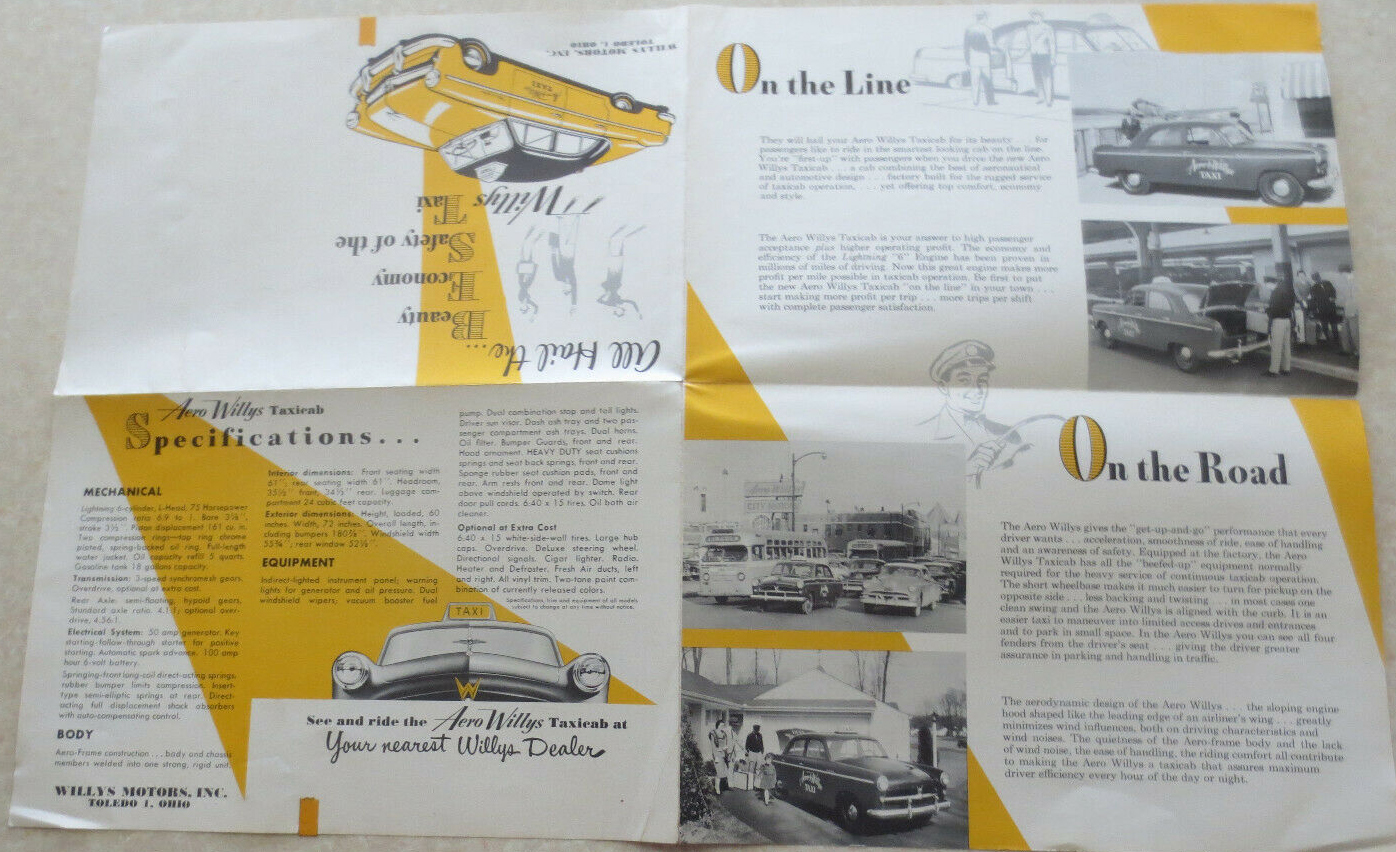
This “All Hail the … Beautiful Economy Safety of the Willys Taxi” brochure isn’t jeep-related, but I found it interesting. I wouldn’t have guess that the Willys Aero car was ever marketed as a Taxi. Maybe it was only advertised that way internationally (this brochure hails from Australia)?
“An original 1950s Willys-Overland advertising brochure for the Willys Aero Taxi car. This interesting fold-out brochure describes the main features of this Willys Taxicab with a range of illustrations. It was published by Willys-Overland in Toledo Ohio in the USA.”
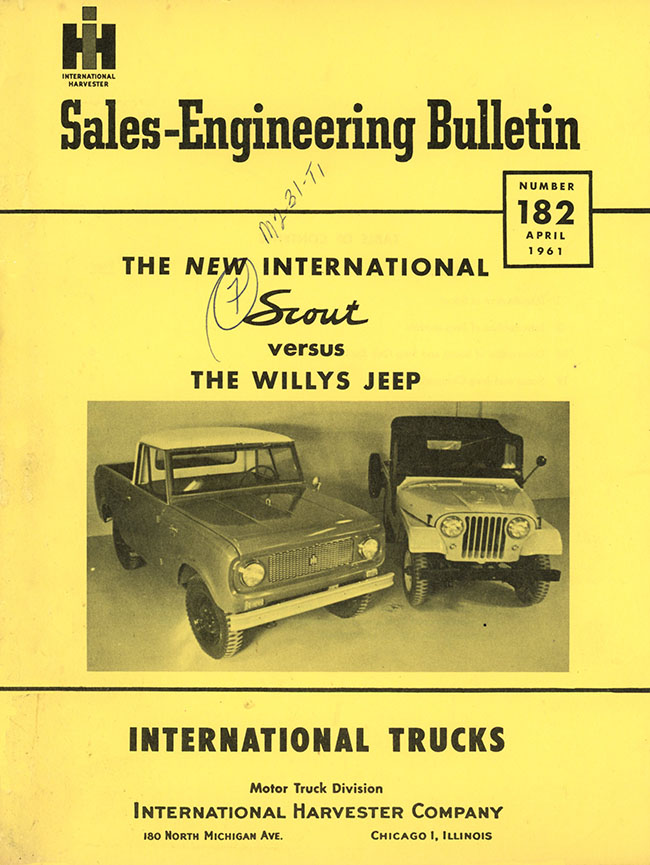
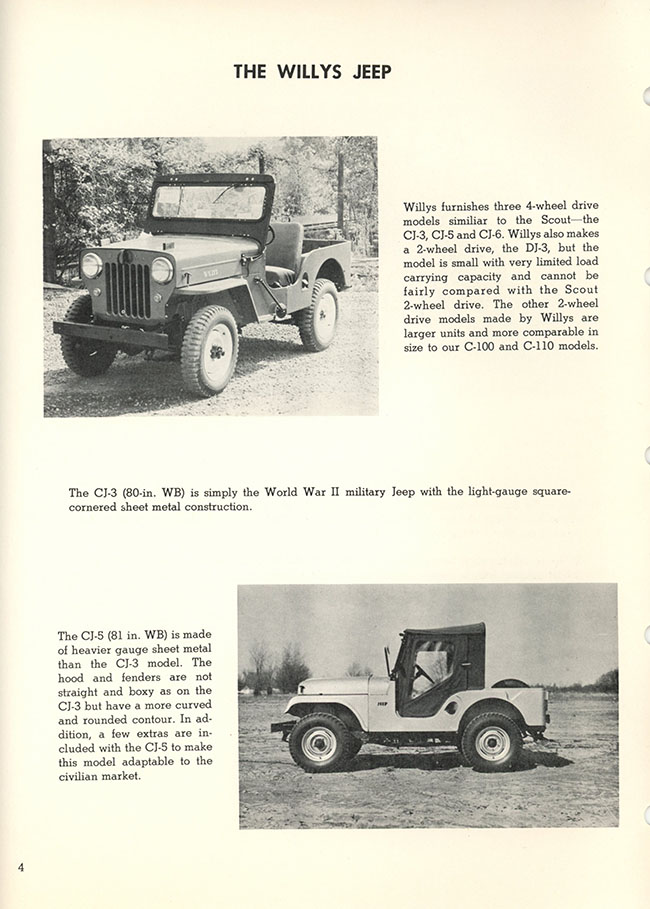
In March of 1961 it appears that Willys Motors released a 4-page brochure that compared the jeeps vs. the International Harvester Scout. The IH Scout made it’s debut in late 1960, so Willys didn’t waste much time in producing the document in response to the Scout’s release.
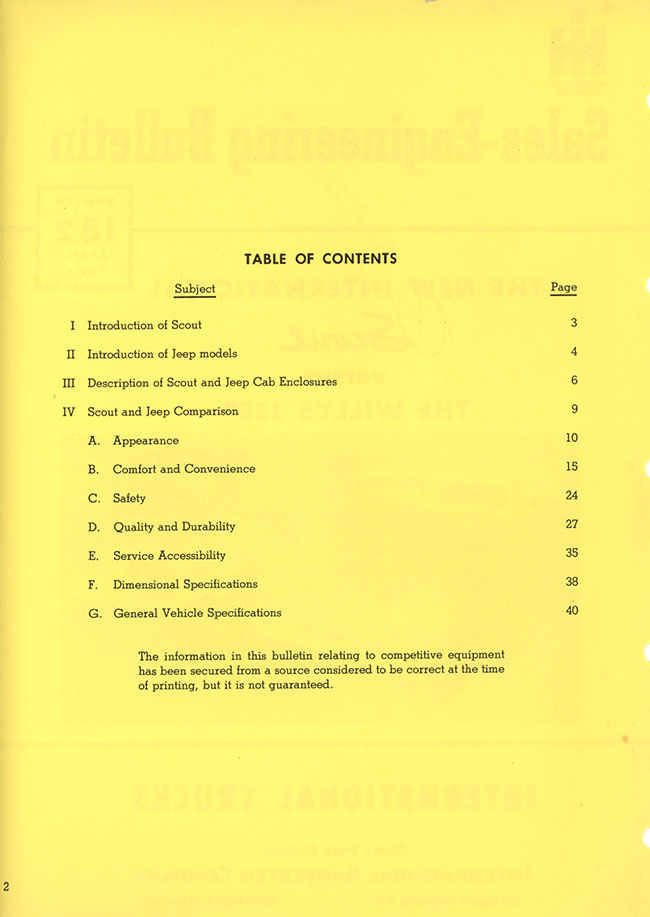
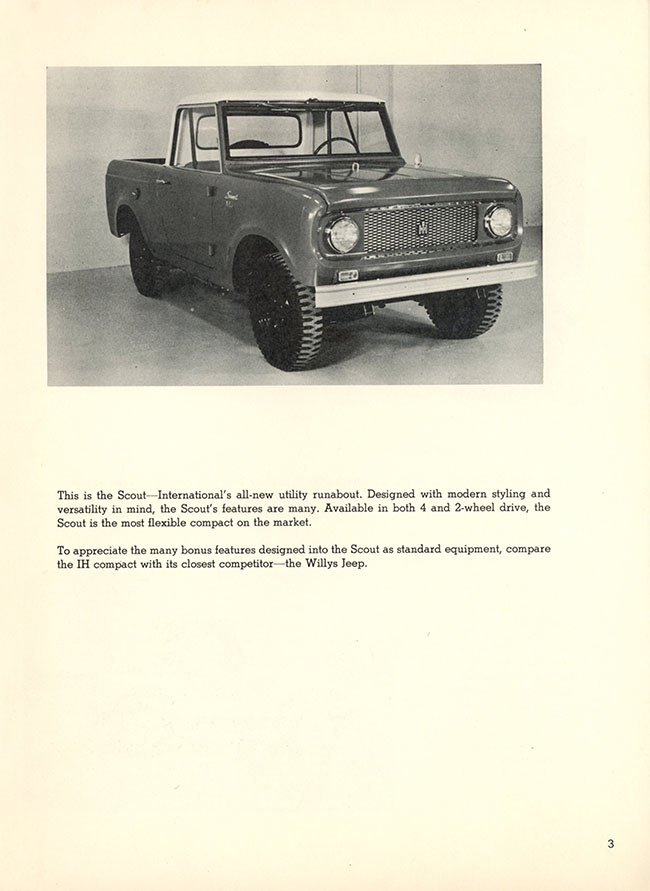
In turn, IH didn’t waste time in publishing it’s own comparison with a technical booklet over 40 pages long. I’m not entirely sure for whom this document was intended, engineers? Sales force? Management? For Marketing so it could distill the information for the sales force?
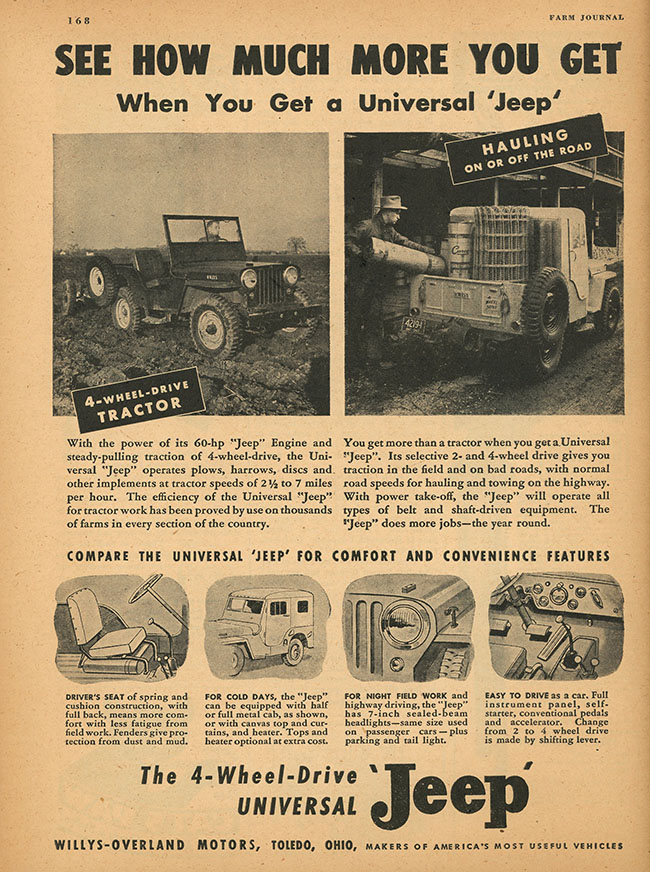
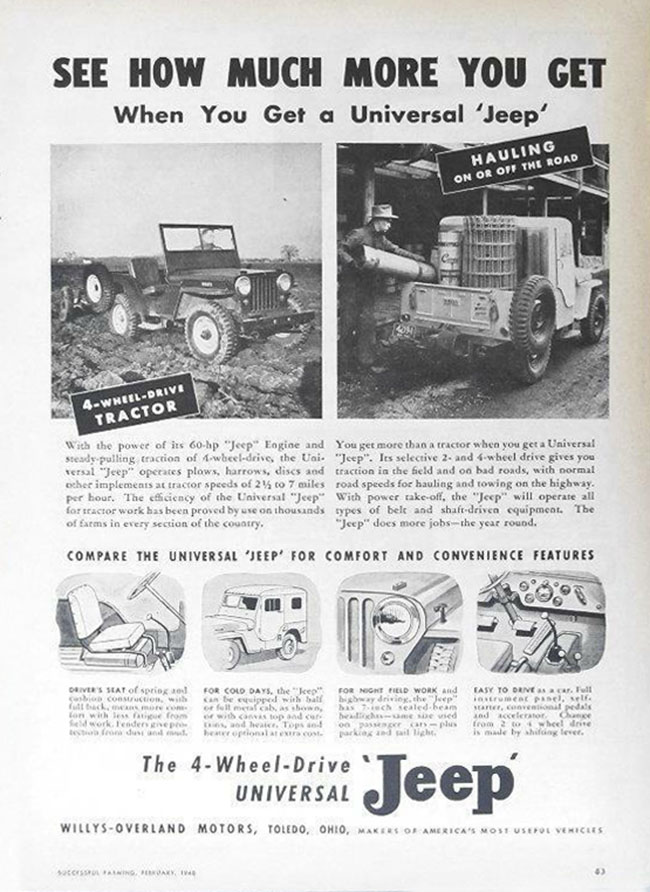
This “See How Much More You Get” advertisement appeared in the February 1948 issue of the Farm Journal. It measures 8.5″ x 11″. Both the half and full version of the top appear to be Worman tops.
UPDATE: This post has been merged and reworked after I figured out that the two tops were actually related.
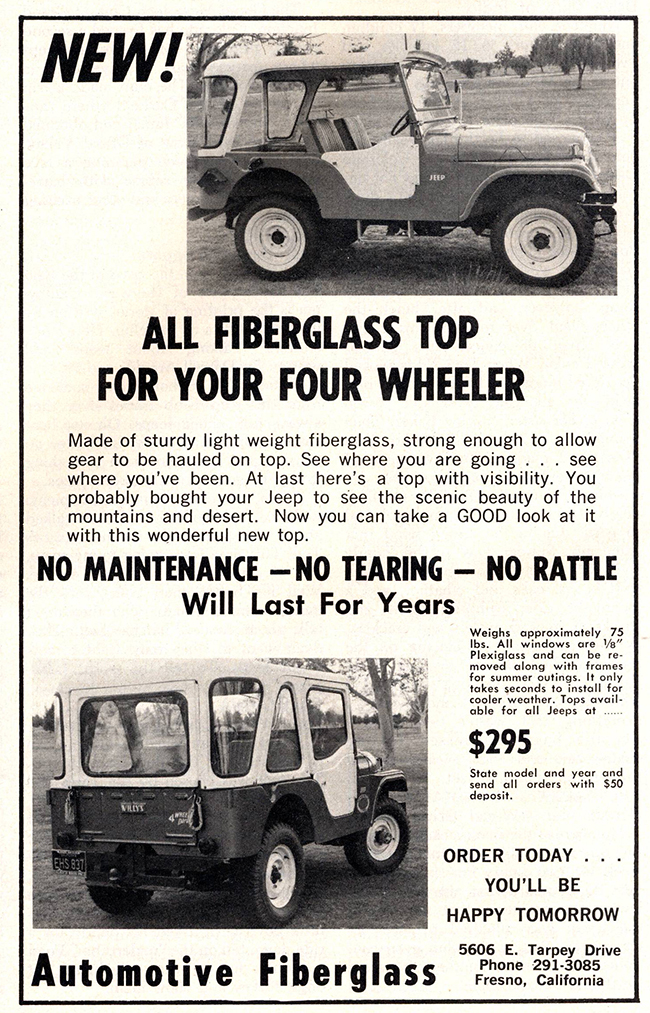
In July of 1963, Fresno-based Automotive Fiberglass Company placed an advertisement in Four Wheeler magazine for its new fiberglass hardtop. I wonder if the builder of this top was also a member of the Fresno Jeep Club?
This is the 1963 ad:
July 1963 Ad from Automotive Fiberglass
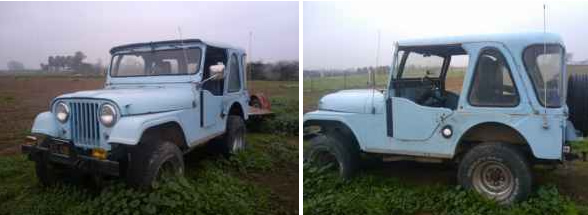
This Automotive Fiberglass top appeared on a CJ-5 for sale in Fresno in 2010. It is the only jeep I’ve seen with an Automotive Fiberglass Top:
CJ-5 with 1963 fiberglass hardtop from Automotive Fiberglass.
TIMELINE —
July 1963: Automotive Fiberglass places ad in Four Wheeler Magazine; November 1963: Top King Manufacturing files design patent for an altered version of the Automotive Fiberglass top; February 1964: Top King top is advertised in the Four Wheeler Magazine; September 1964: A more detailed ad is placed in Four Wheeler Magazine.
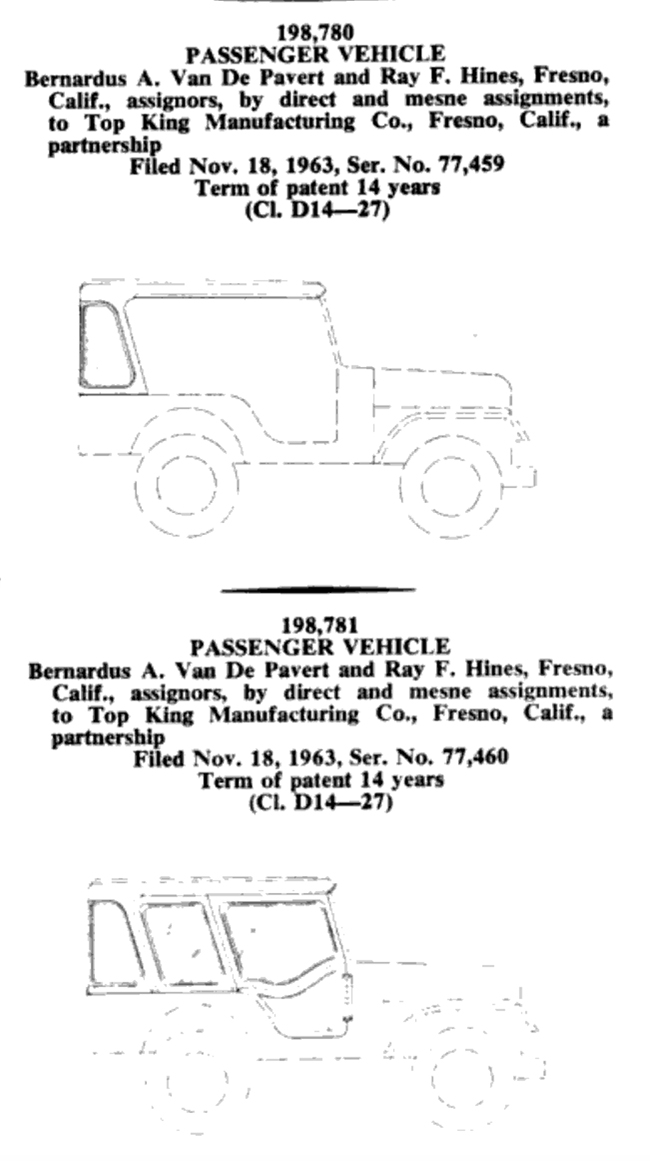
A few months after the Automotive Fiberglass advertisement, two design patents were filed and assigned to Top King Manufacturing. You’ll note that the rear side-angle has been reversed. The mid-section insert piece for the side was also changed, altered from a triangle shape to a rhombus shape. Here’s the design patent information from the Official Gazette of the United States Patent Office:
November 1963 Design Patent filing for Top King. Note that I haven’t had the time to investigate the designers mentioned in the patent.
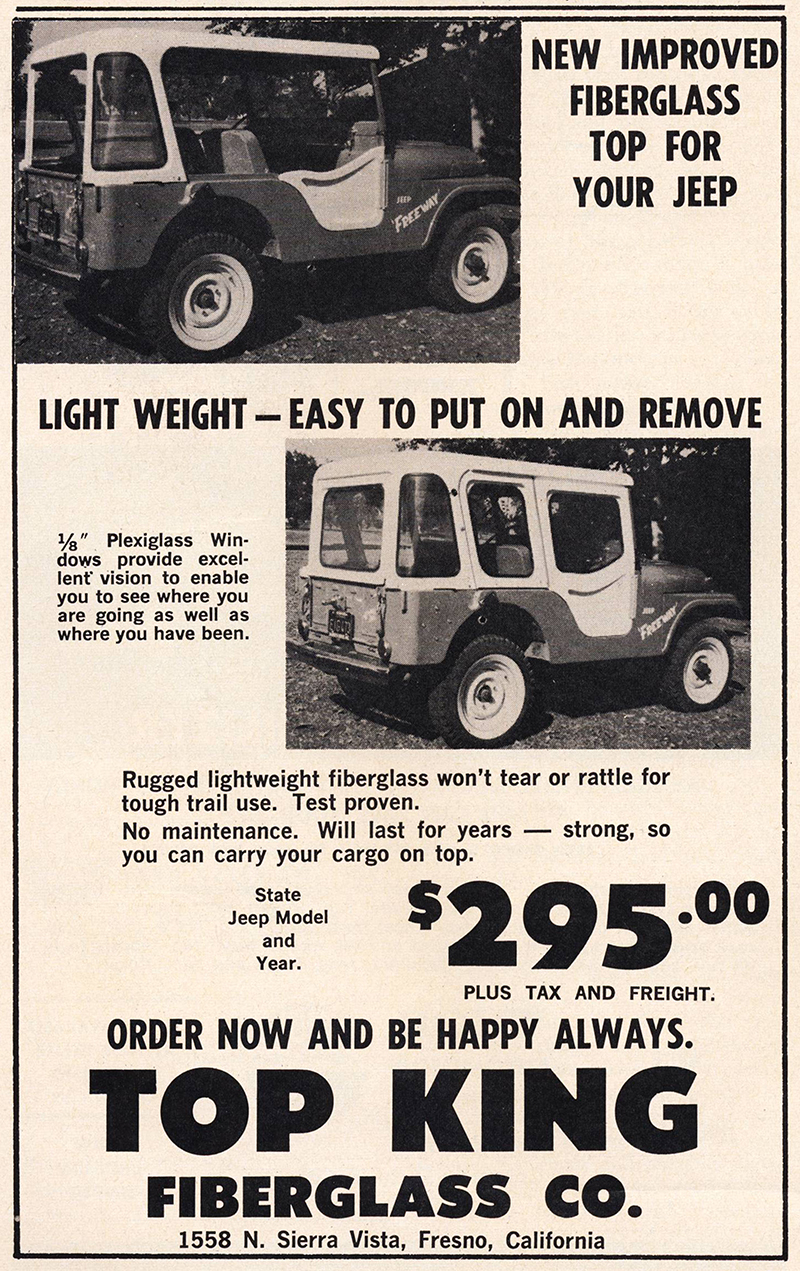
By February 1964, King Top was advertising the newly redesigned top in Four Wheeler Magazine. Curiously, the company listed its name as the Top King Fiberglass Company rather than Top King Manufacturing (could be a relic from the Automotive Fiberglass company days):
February 1964 Ad from Top King.
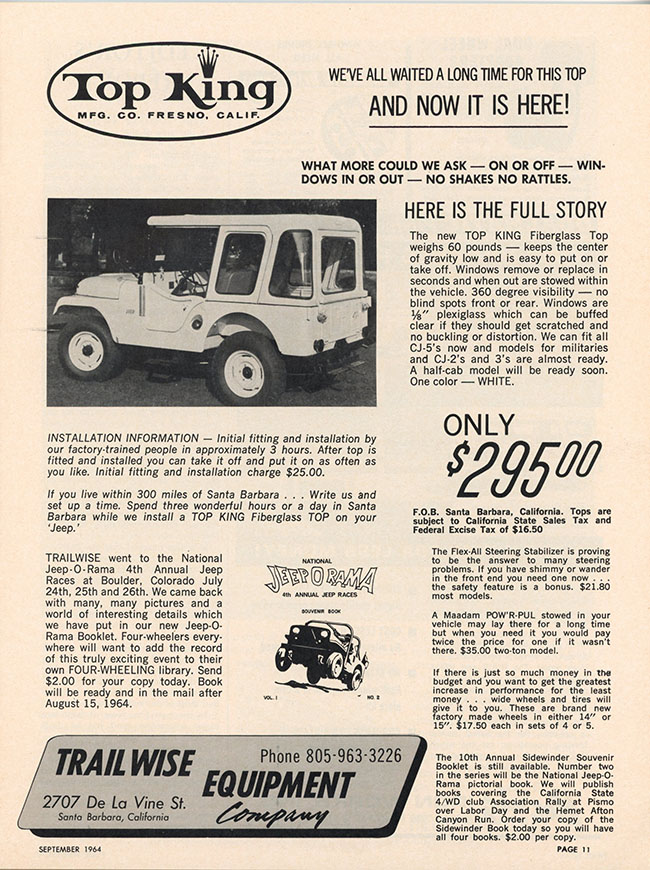
Seven months later, this second ad was placed in the September 1964 issue of Four Wheeler Magazine. The company had corrected its name for the ad back to Top King Manufacturing. Additionally, Top King announced it would soon have flatfender versions of the top available, along with a half cab version. Have any of these survived?
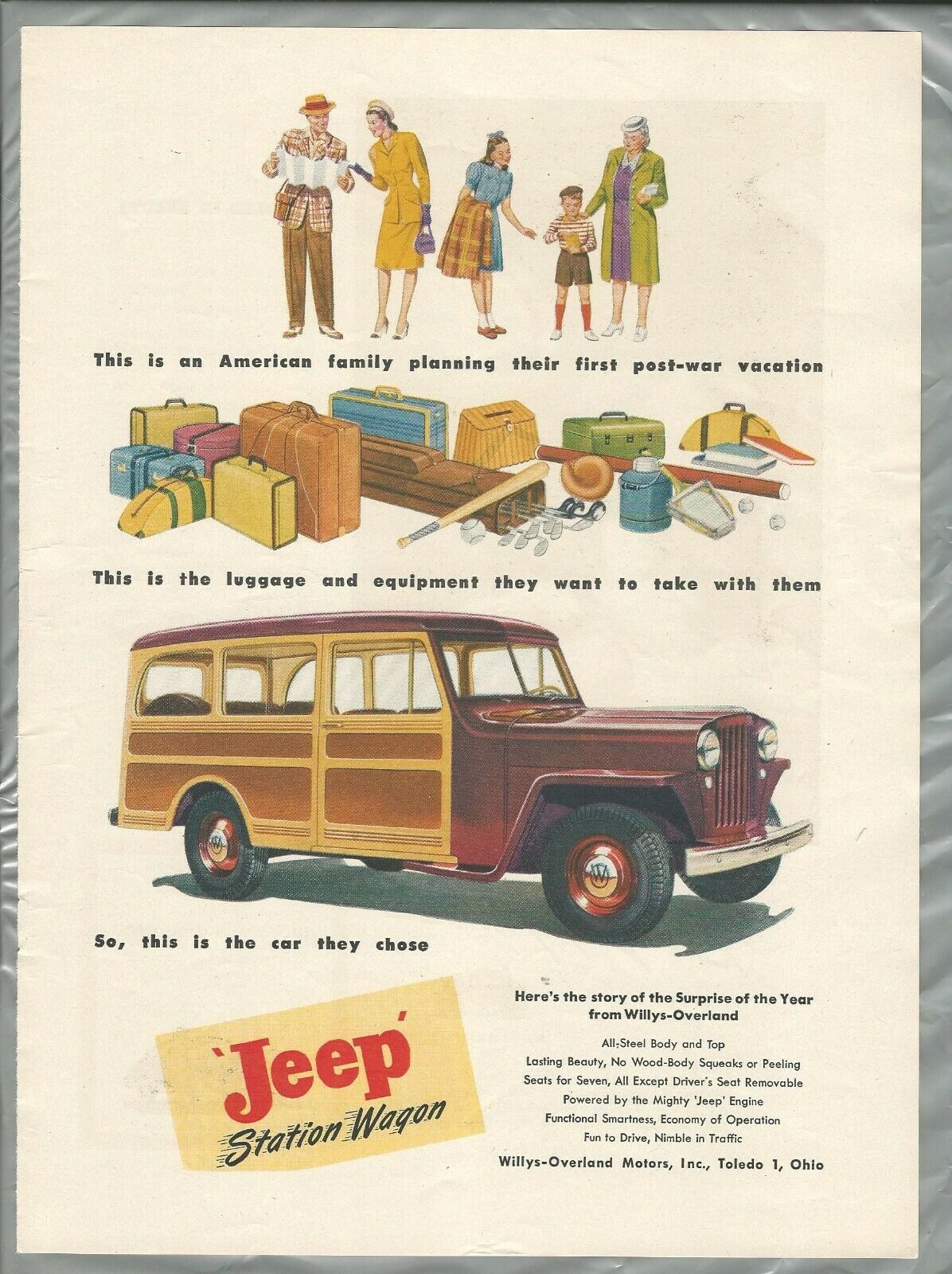
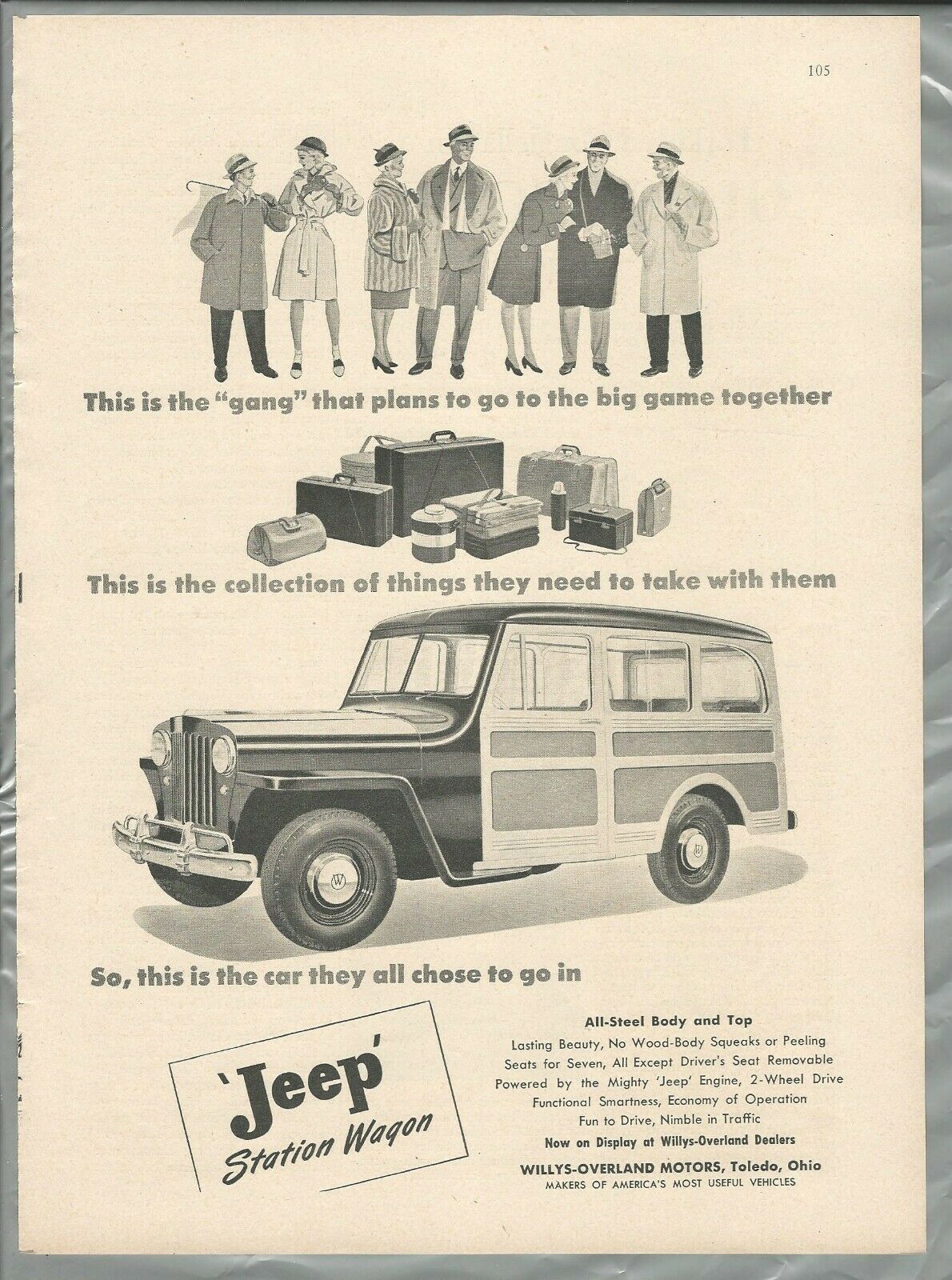
This second one is from 1946, but the publisher is unknown. This ad includes less luggage for the group’s trip to the ‘big game’. You can view all the information on eBay:
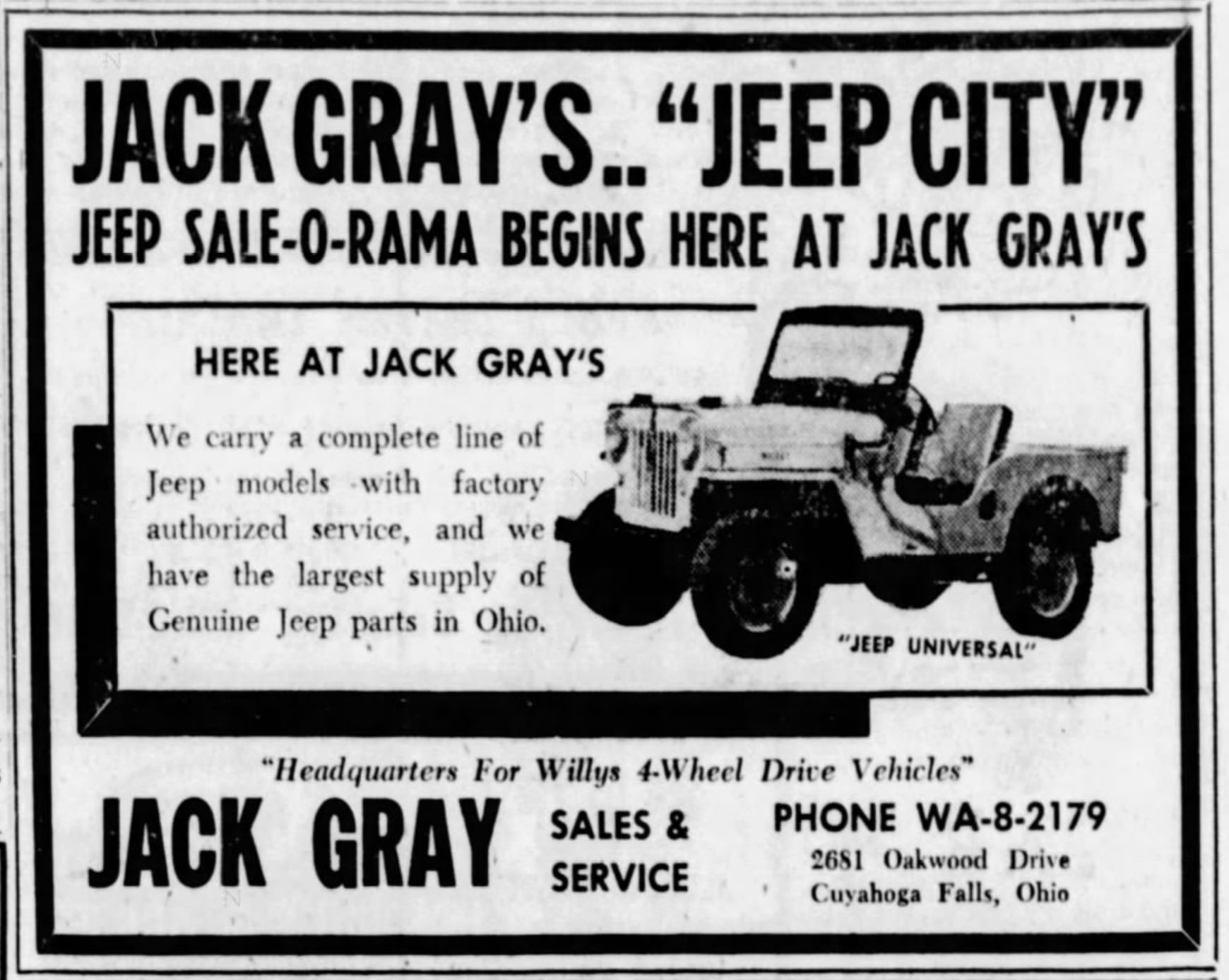
This ad for Jack Gray’s “Jeep City” for his Jeep Sale-O-Rama was published in the Akron Beacon on February 26, 1961. Anyone old enough to remember Jack? Was it truly the largest jeep parts supplier in Ohio?
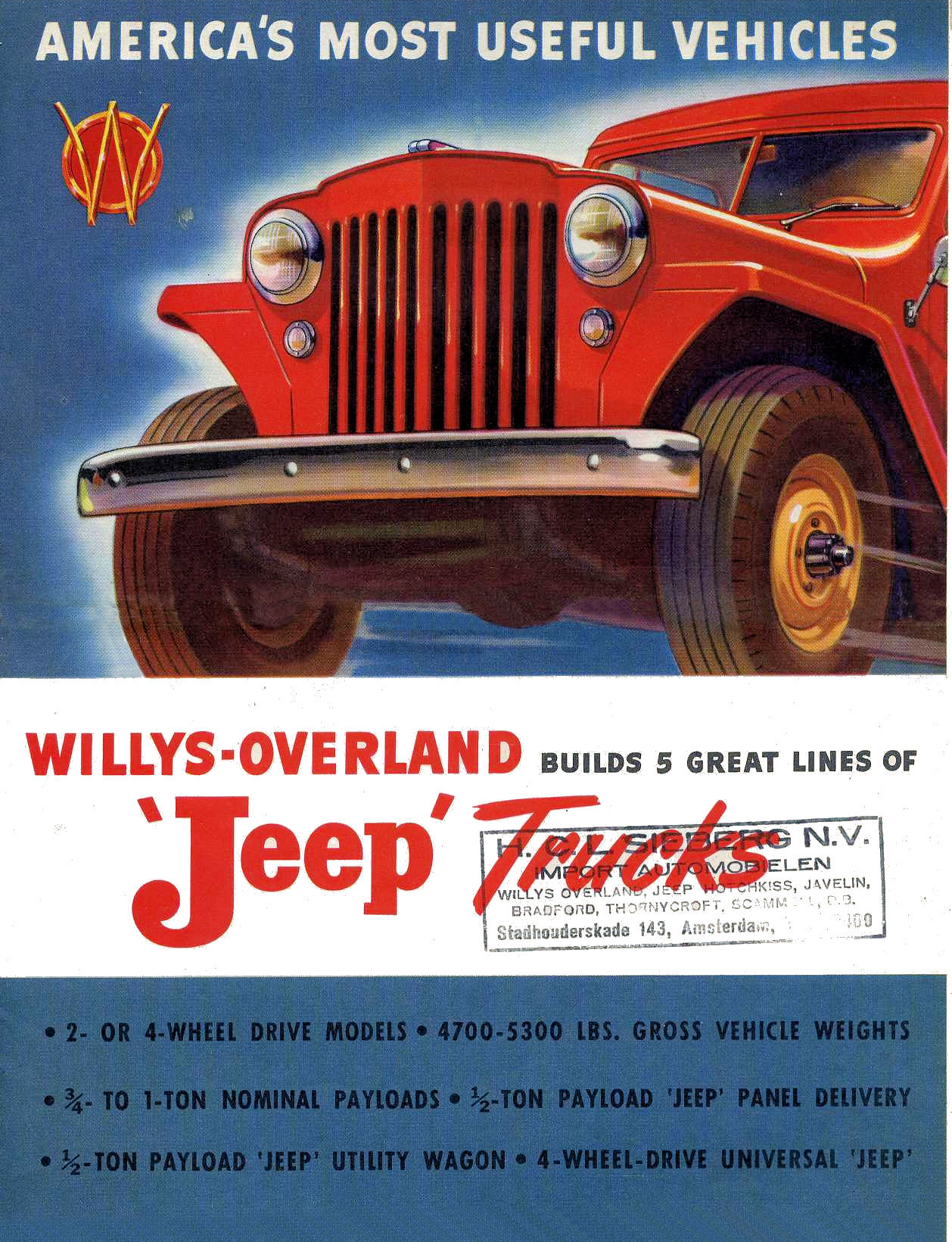
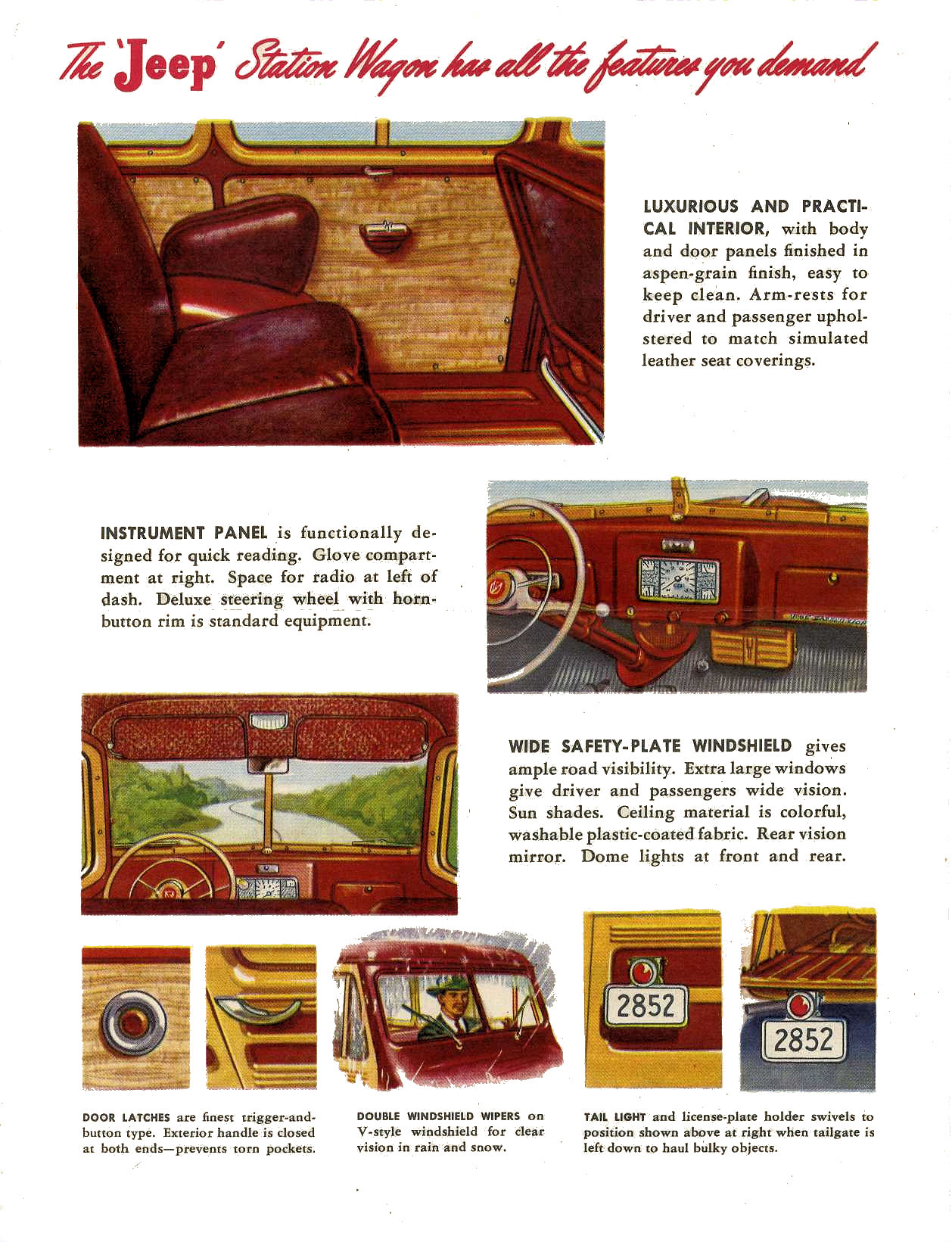
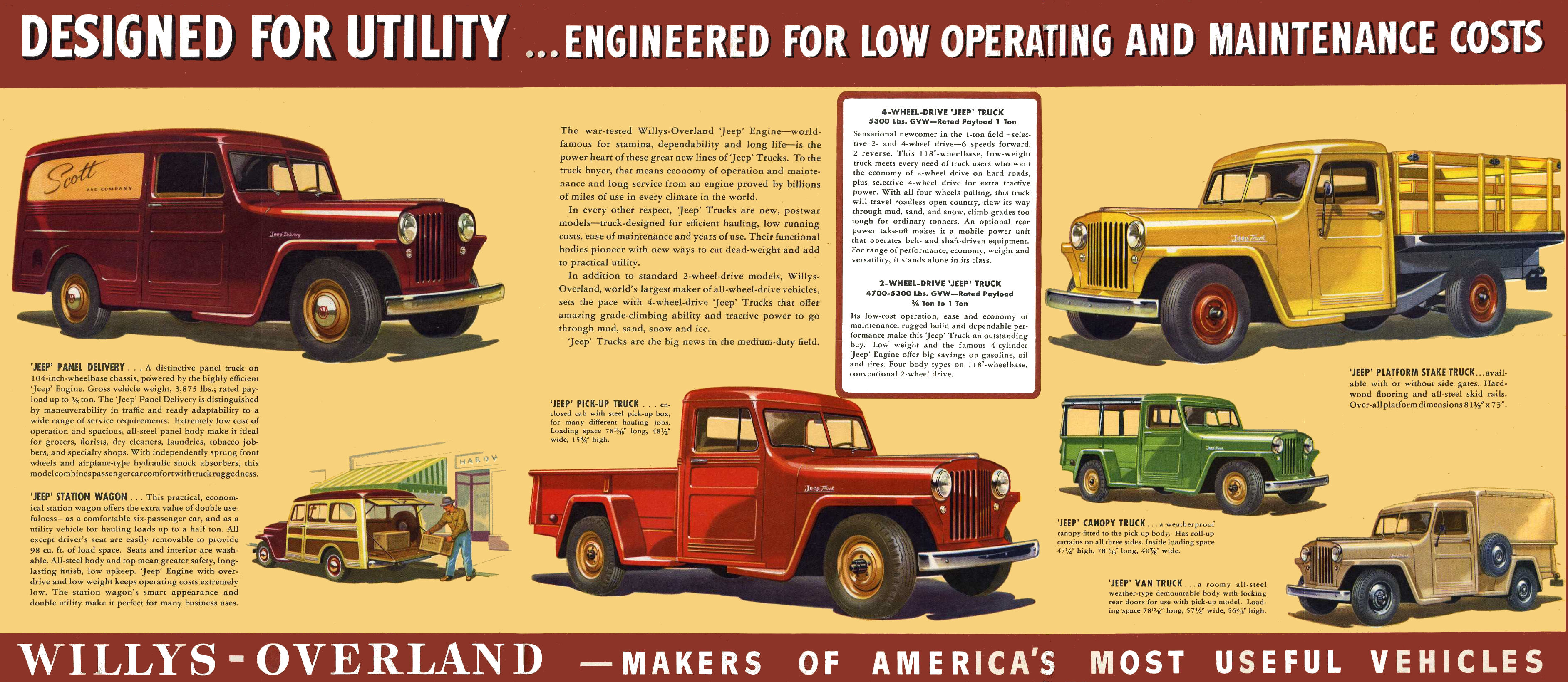
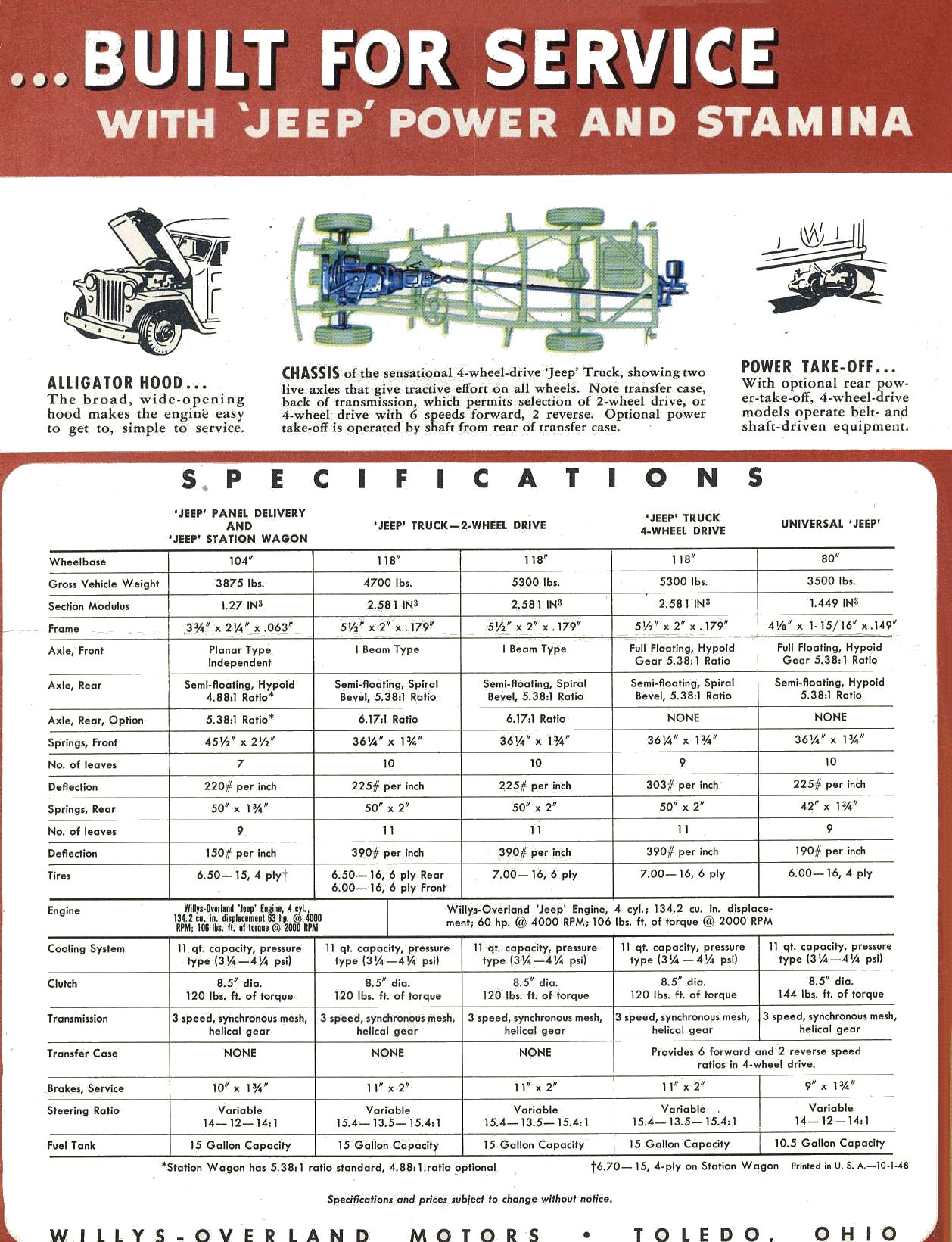
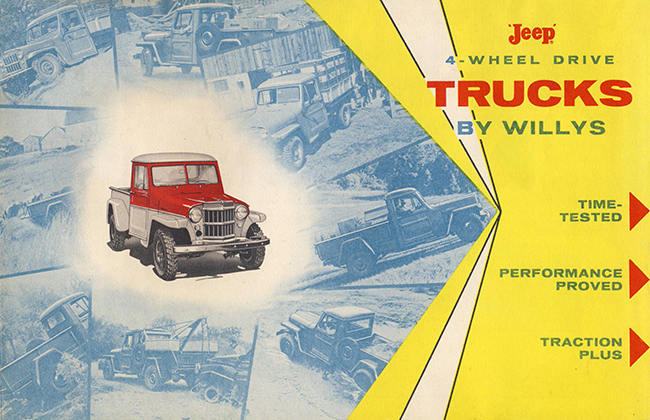
This 1948 Willys Truck brochure is dated October 01, 1948, and highlighted the five different models of trucks available for purchase. These scans were posted to the oldcarmanualprobject.com website by Eddy Jeijer.
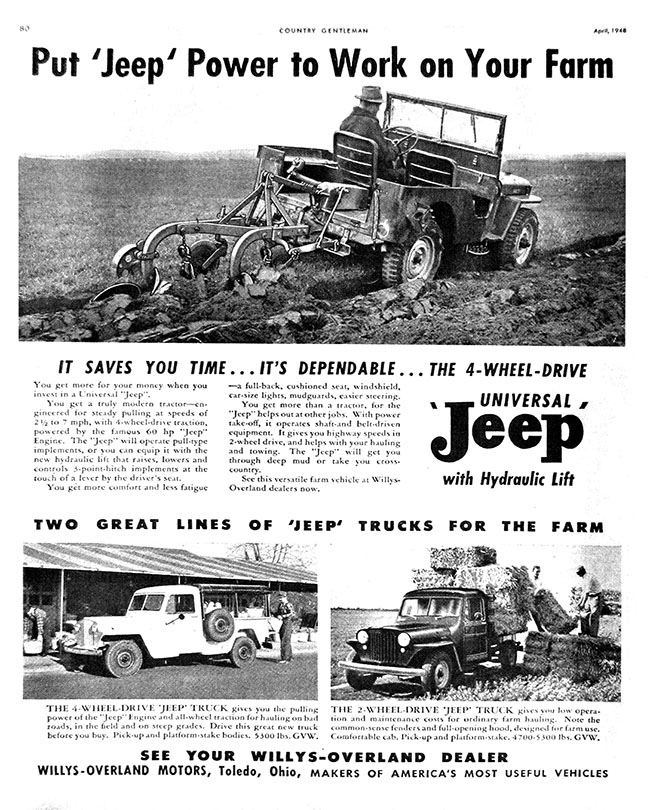
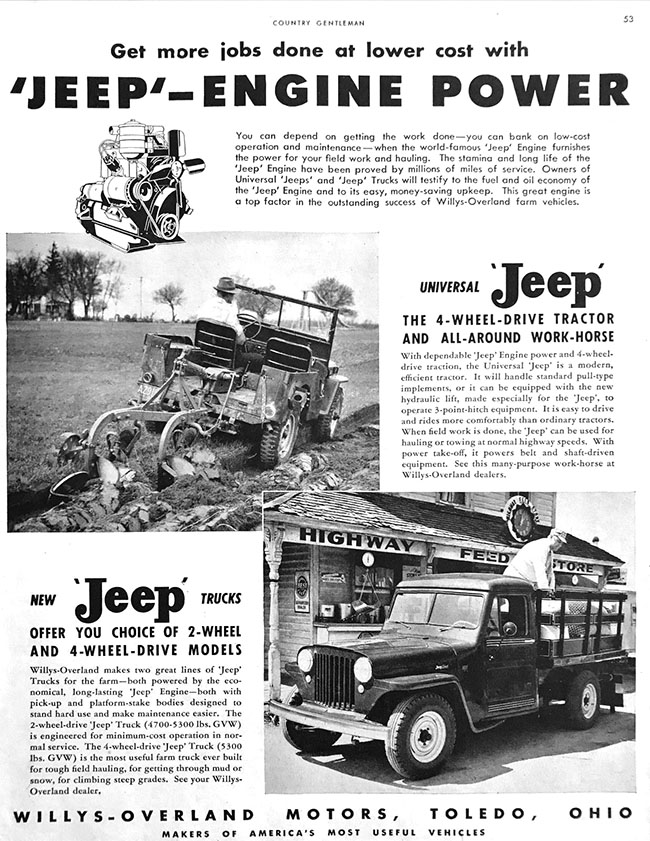
This April 1948 “Put Jeep Power to Work on Your Farm” advertisement appeared in the Country Gentleman magazine. It also appeared in the May 1948 issue of the Farm Journal.
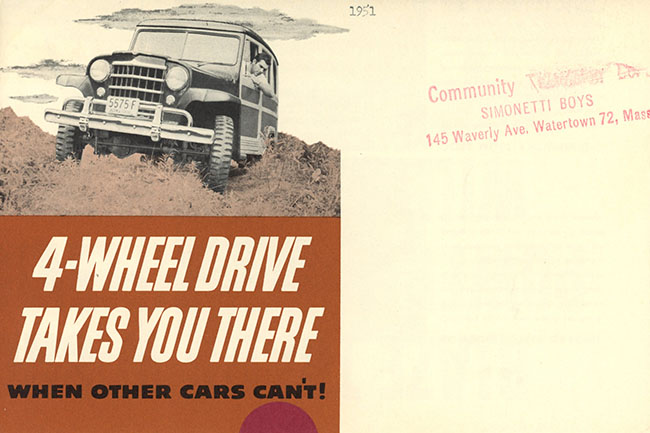
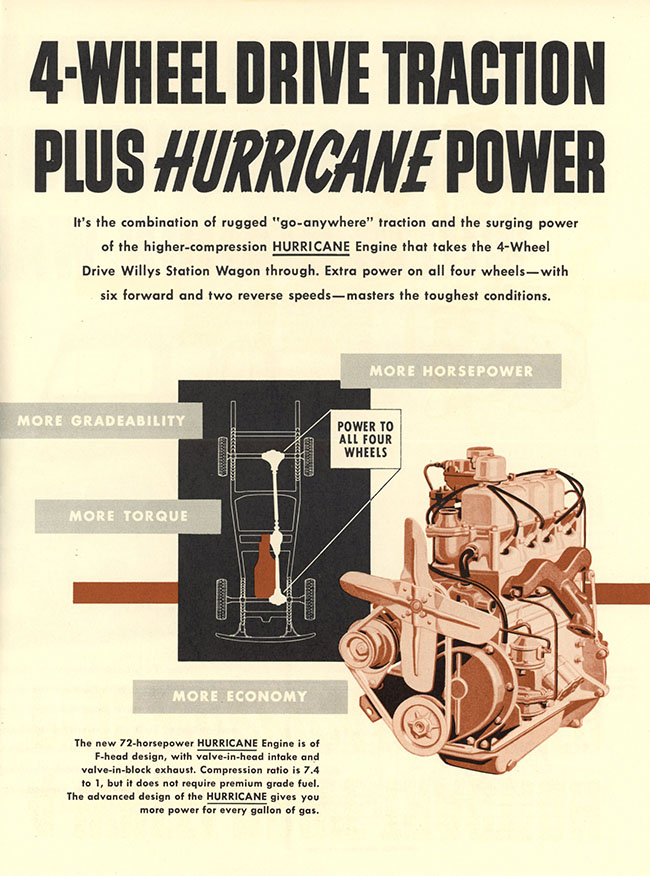
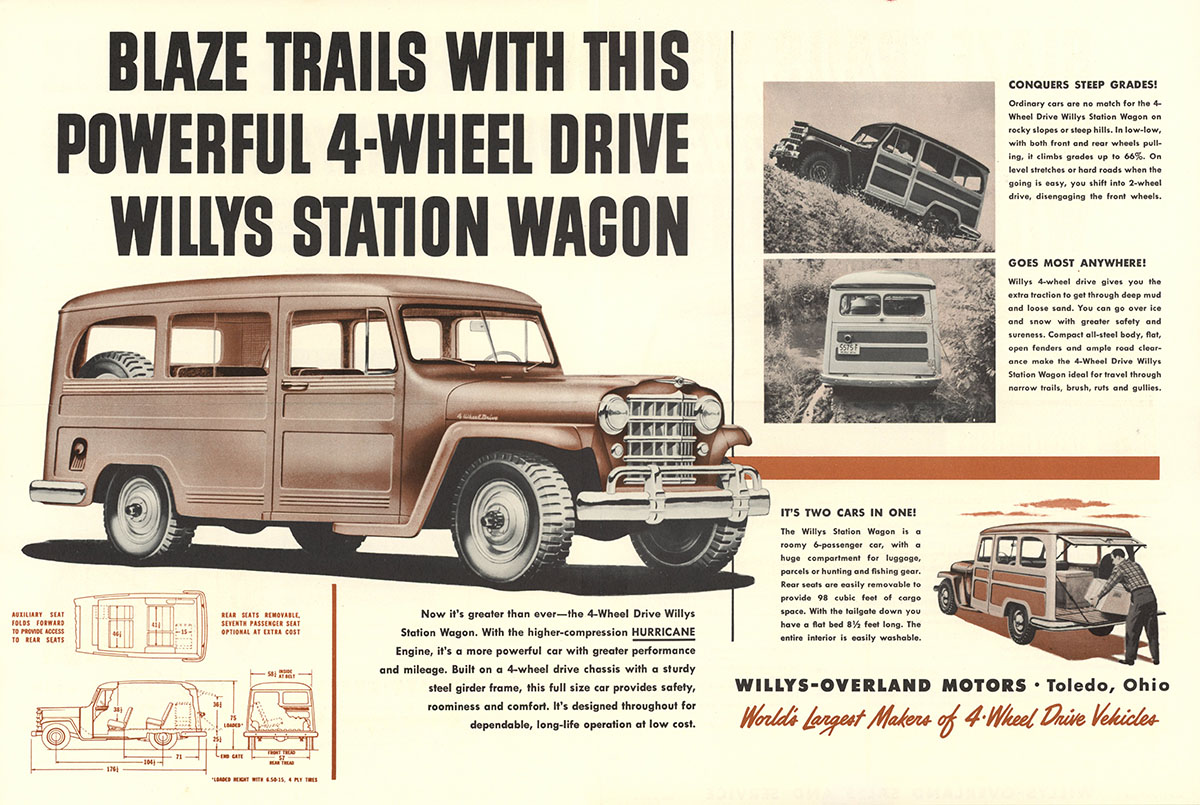
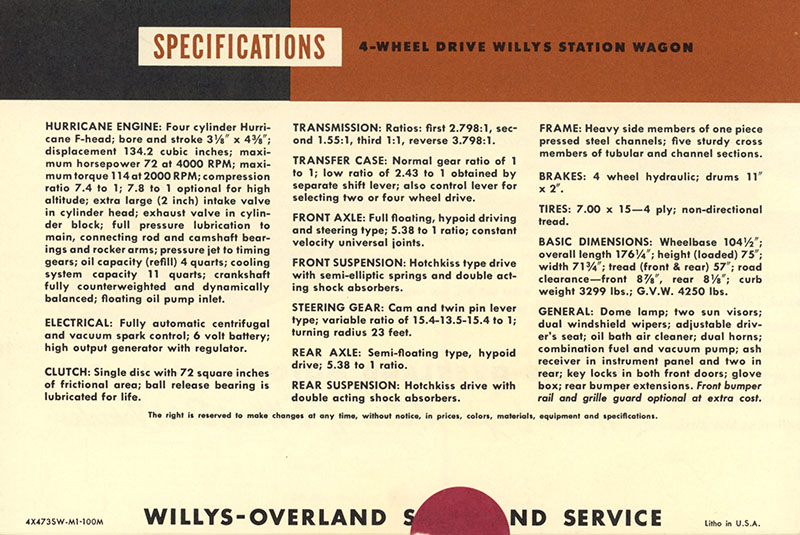
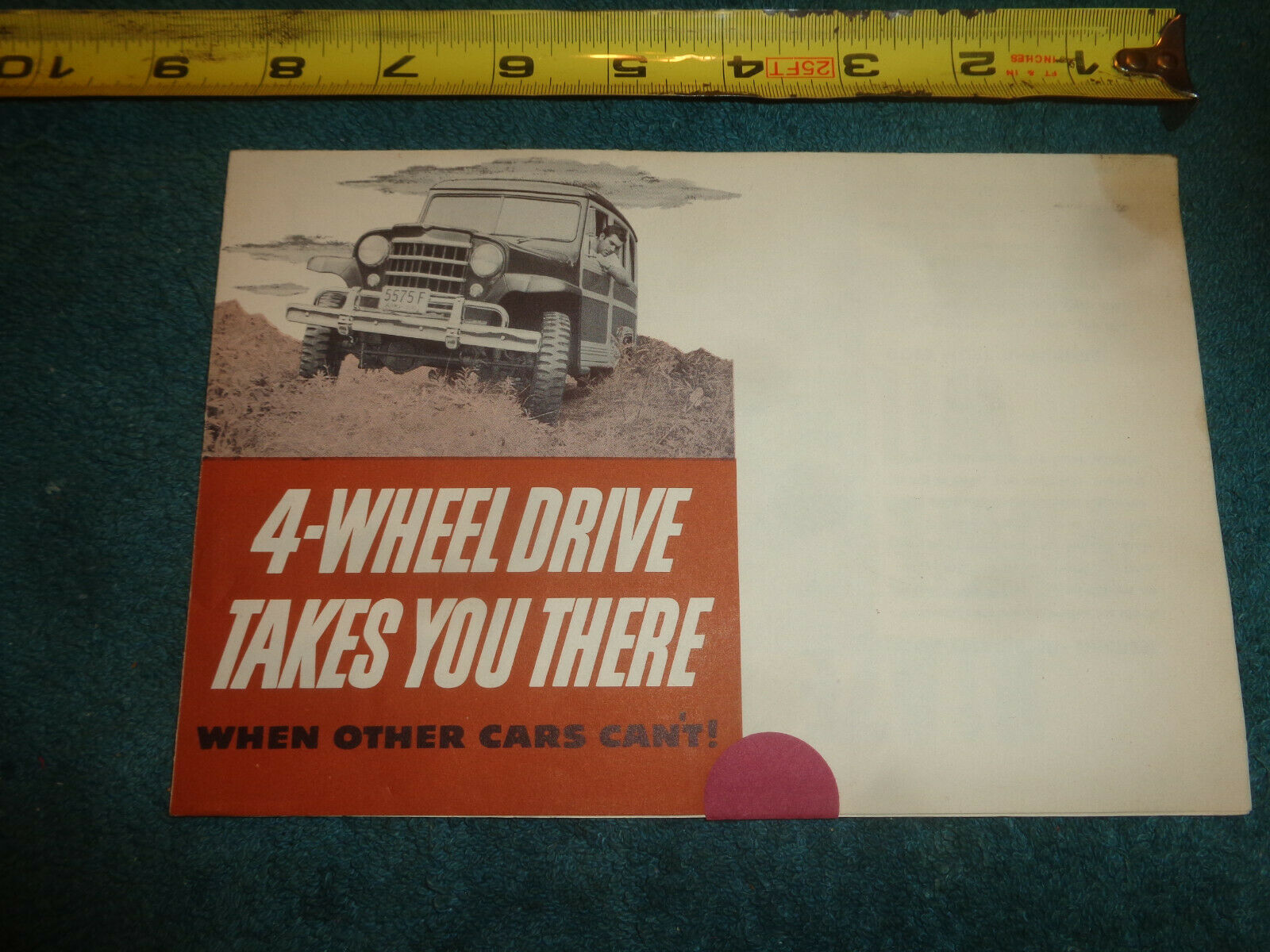
In 1951 Willys-Overland launched a “4-Wheel Drive Takes You There brochure” for the Willys Wagon. Subsequently, there appear to have been two additional versions of the brochure, numbered differently, but with seemingly no additional substantive text changes. Each form folds out to a 17″x11″ large format brochure.
The first example of this brochure is burdened with an unusually long form identifier: Form 4X4735W-M1-100M, a number which leverages the wagon-model-type (4x473SW) as part of the numbering system.
This second version of the brochure is available on eBay. Given the grille style doesn’t change for this iteration, I can only assume that this version of the brochure was also printed in 1951. It has the updated form name of 4X4735W-M2-100M-251. It is possible the “251” at the end of the form number means it was printed in February of 1951.
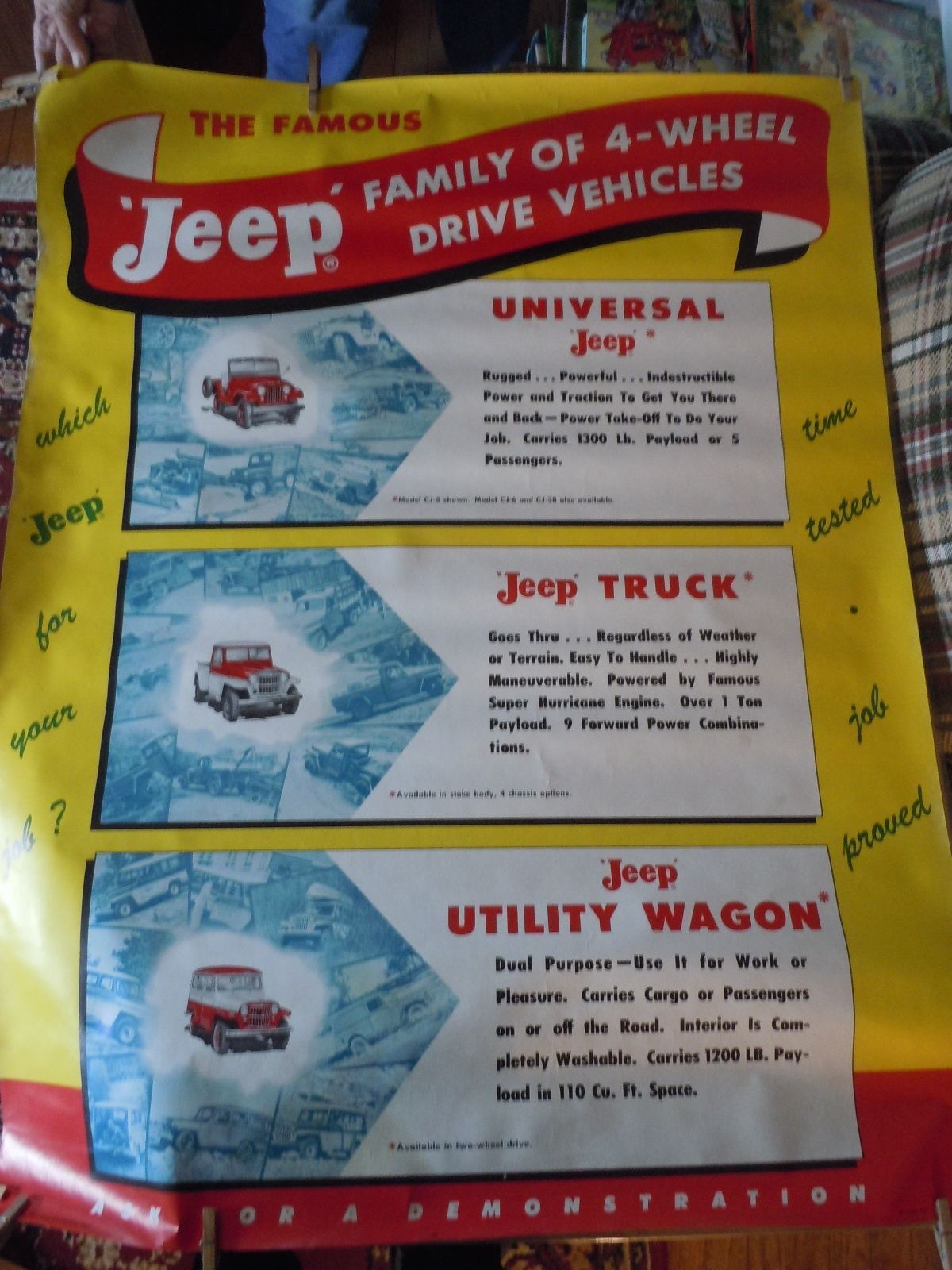
UPDATE II: This poster was based on the 1956 W-25X-6 brochures. This also seems to confirm that there was never any Form W-251-6 brochure (which had been a lingering question of mine).
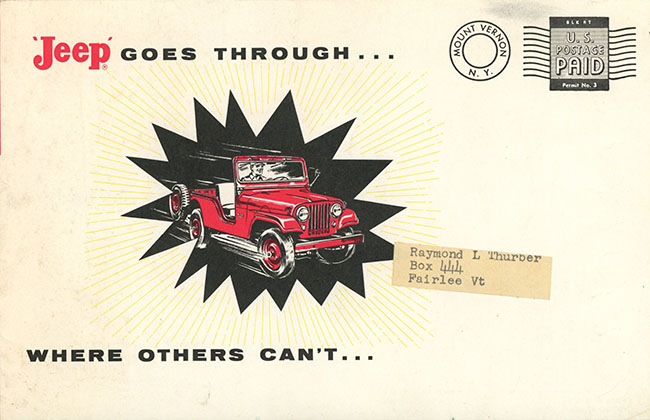
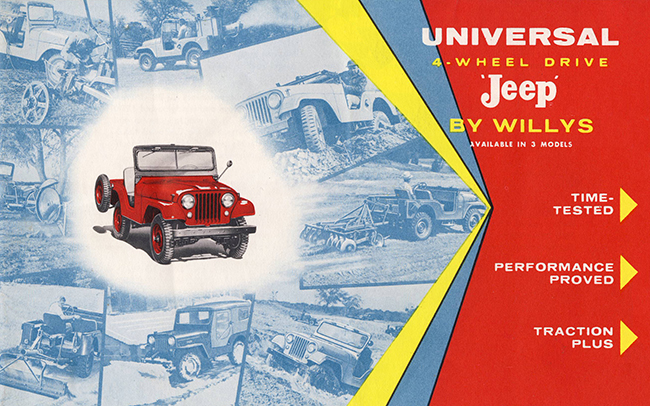
Original Post From Feb 17, 2020 (but with all new text): Below are the front pages from a series of 1956 brochures. I think I’ve got everything sorted out …