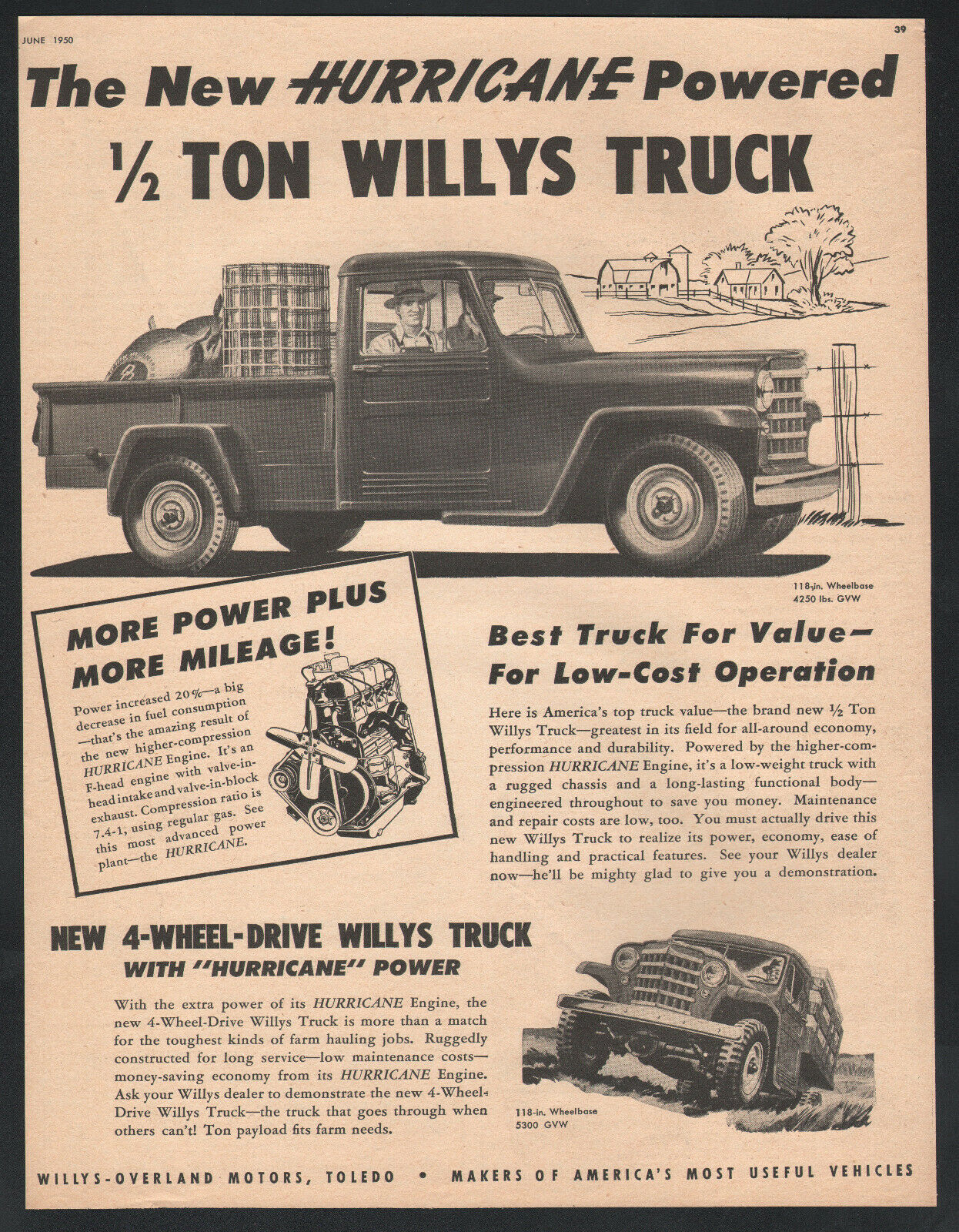
This June 1950 Ad highlights the new Hurricane Powered half-ton truck from an unknown magazine.
View all the information on Ebay
“Original magazine advertisement measures 10 X 13 inches (approx.).”
This June 1950 Ad highlights the new Hurricane Powered half-ton truck from an unknown magazine.
View all the information on Ebay
“Original magazine advertisement measures 10 X 13 inches (approx.).”
UPDATE: After spotting an ad I hadn’t published yet (seen below), I realized that there was Desert Dog history that existed among various posts. So, this combines all that into more of a narrative.
==========================
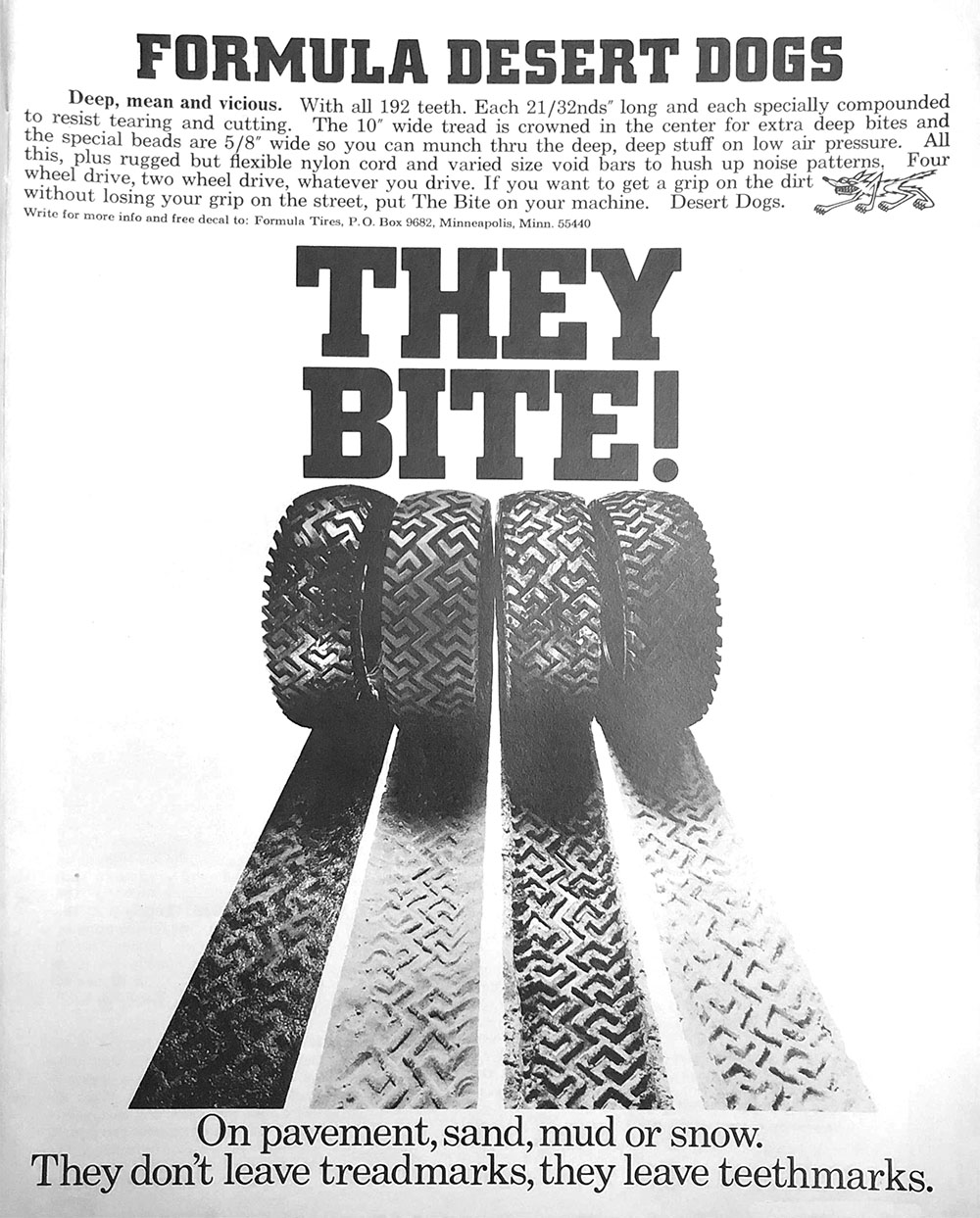
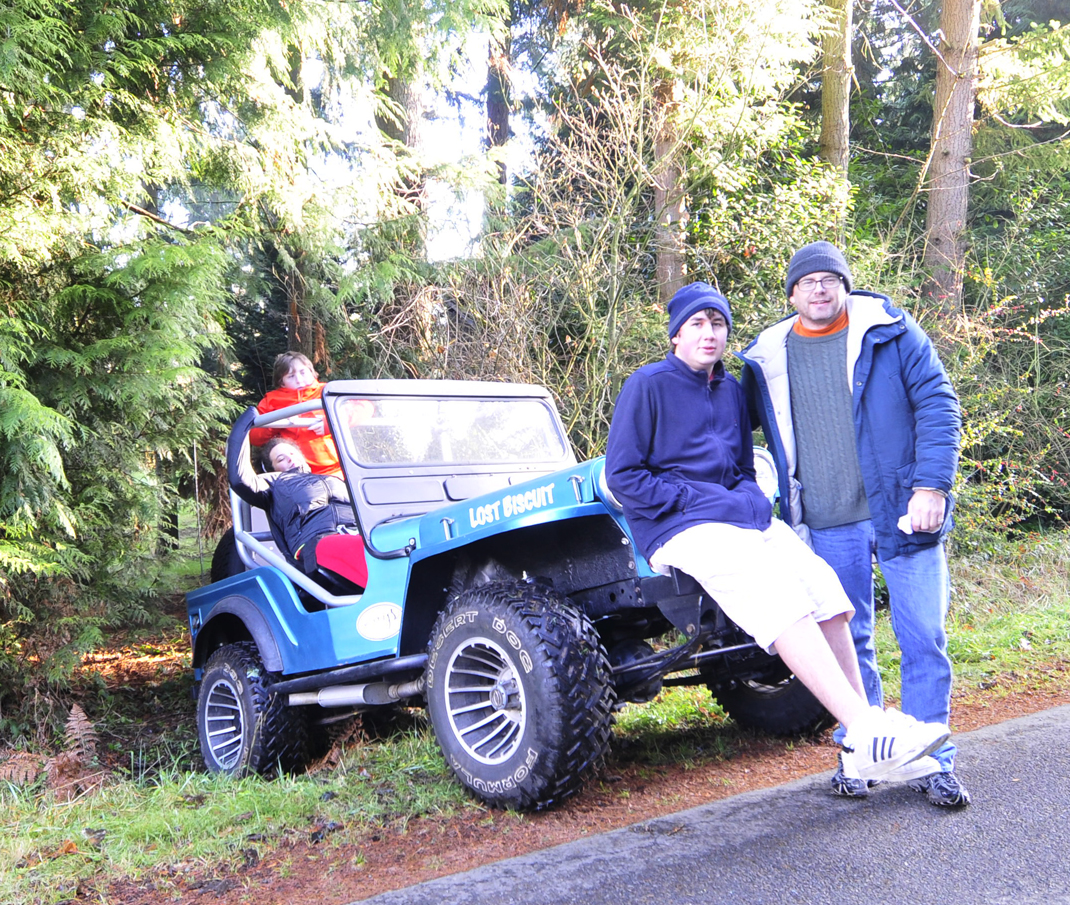
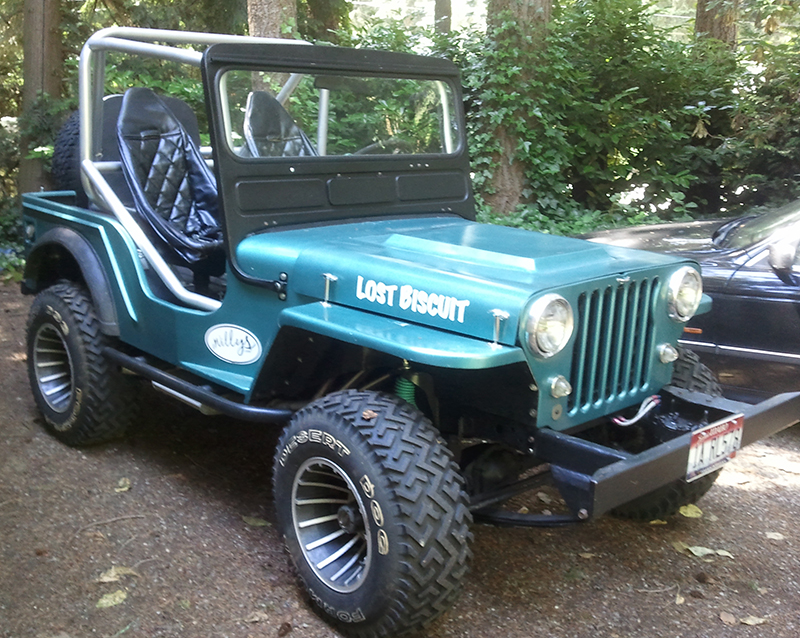
If you have read eWillys for any length of time, you know I’ve been a fan of Desert Dog tires for years. I still have eight desert dogs, some solid lettering and some outlined, as shown in the pic below:
According to Louis Larson, the Desert Dog tire was launched in 1970. He knows this, because in 1970 he became the first person to test out the new style of tires (see the bottom of this CJ-3B Page article). The tires were given to Louis for testing and photographing.
David Maxwell, a former Formula tires salesman, reported that the tires were always made by Armstrong, but marketed through the Formula brand, the president of which was a friend of David’s (see David’s comment and many others on this post). The company made a large number of retreads, so a number of tires also had Firestone on the side, too.
The tires proved popular quickly. Les Schwab was a big fan of them and ran them on his jeep (jeeps?). He also sold both new and retread tires out of his main shop in Prineville (see Les Schwab’s biography here).
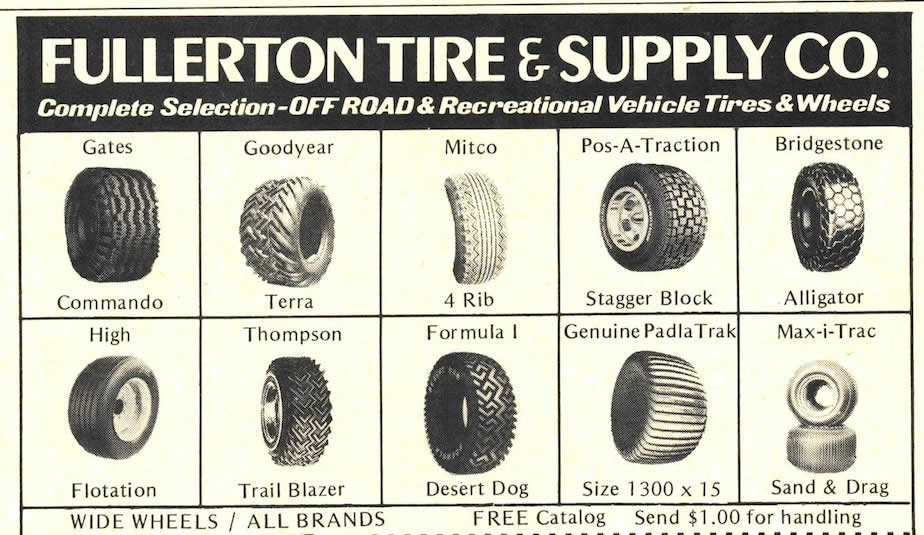
For PNW jeepers, the tires were a perfect blend for racing and for jeeping and the varied terrains of the PNW (sand, gravel, rocks, mountain sides, mud, etc … as Joe1148 highlights in his comment here .. though I can attest to it as well). On the downside, their road life was short (some estimate about 10k miles) and they tended to be noisy. The tires’ popularity gained them prominence, and soon they were added to charts showing tire options, such as this January 1972 ad:
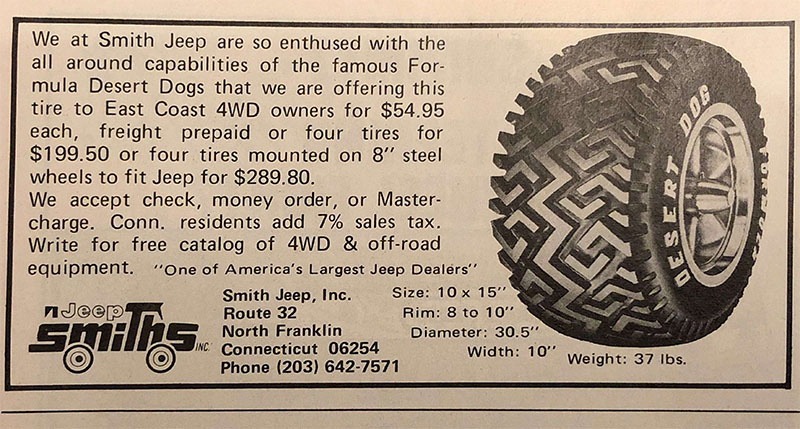
By 1973, Desert Dogs were being advertised in Four Wheeler Magazine (ads at the bottom of this post) and sold across the country. This Smith Jeep, Inc. ad from North Franklin, Connecticut, in the July 1973 issue of Four Wheeler Magazine is one example of an East Coast offering:
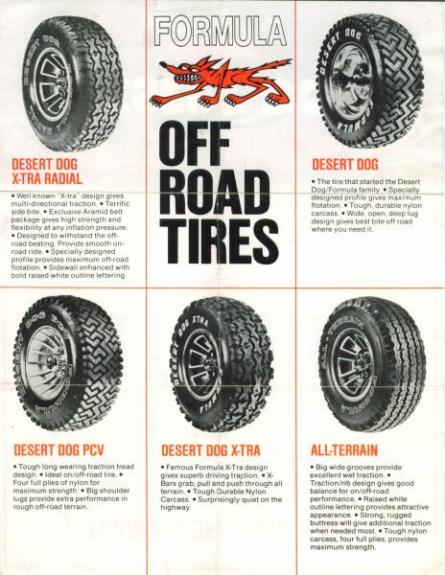
Eventually, the Formula brand expand its offering. I don’t know when each of these tires was introduced (I think this ad is from 1975, but have to confirm it), but Formula was soon offering more tires choices:
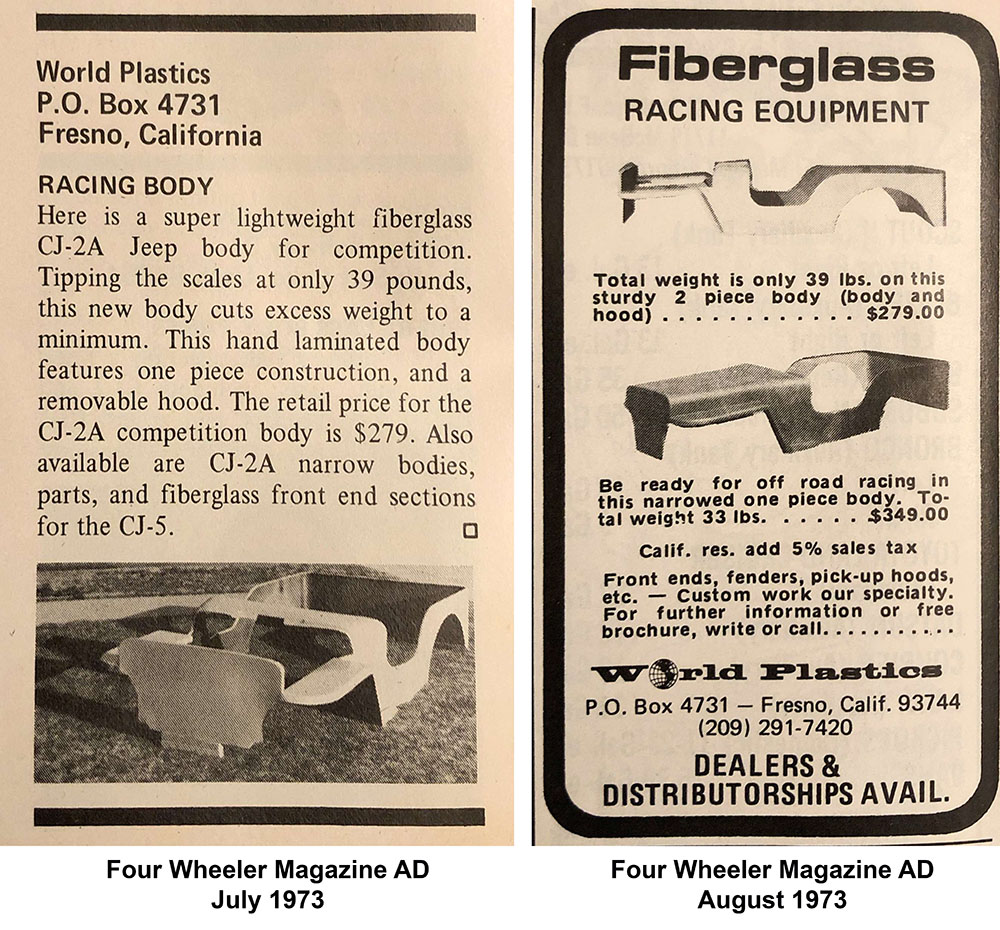
The July 1973 and August 1973 issues of Four Wheeler Magazine included these two ads for fiberglass racing shells. I’m not sure when World Plastics began advertising in the magazine, but I doubt it had been for very long. The ad on the right shows a full-body size flat fender shell, while the ad on the right shows a narrow body shell (both Bobcat and Parkette also produced racing shells).
I don’t know how long these were offered, what happened to the shells, or what happened to the World Plastic’s company.
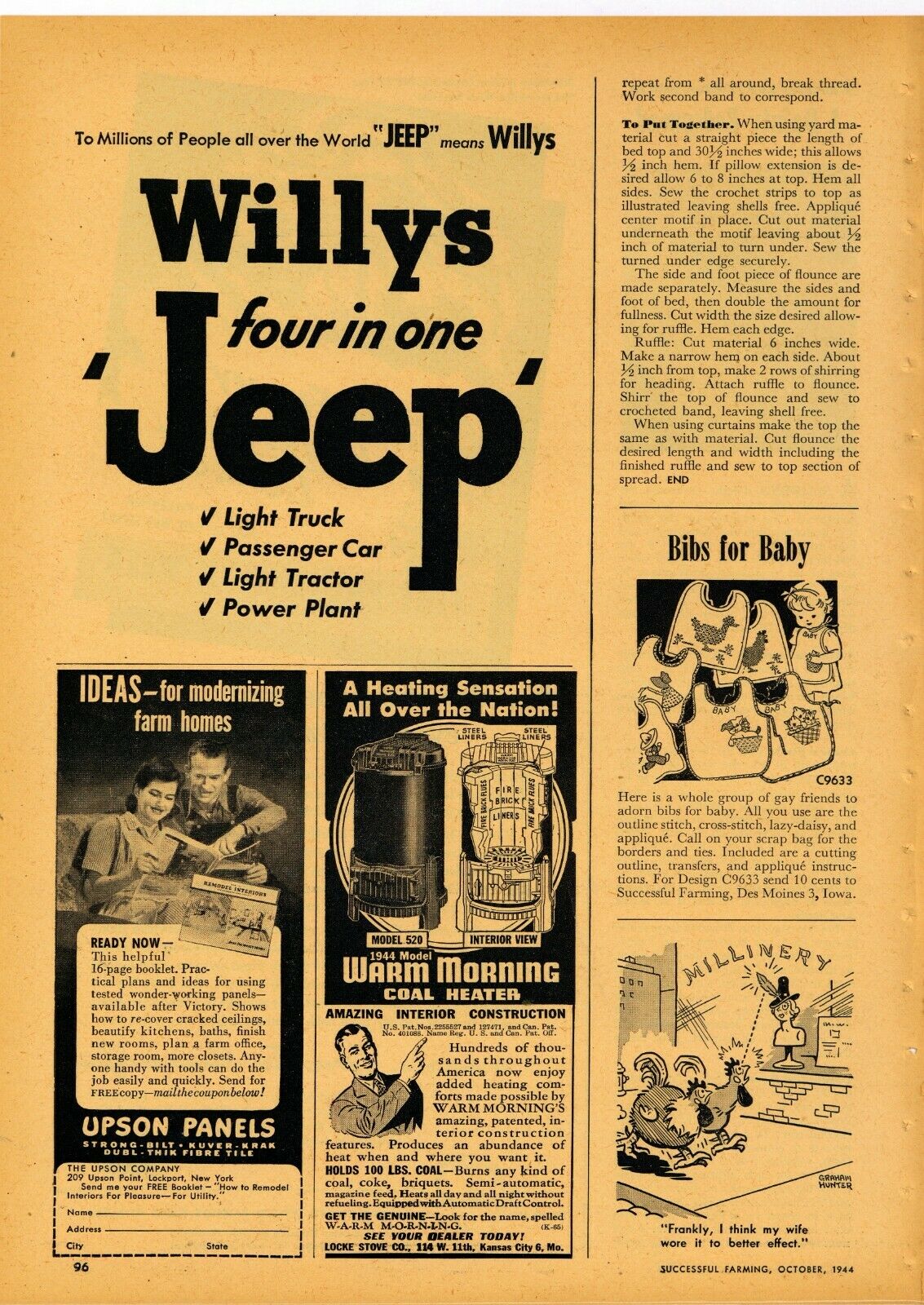
UPDATE: Maury shared a magazine page on eBay that contains a similar ad to the one shown at the bottom of this page. It’s almost identical, except that Jeep now appears with single-quotes.
The use of single quotes outside of a set of double quotes is uncommon. One editor summed it up best by describing it’s use this way: If a phrase or a word is uncommon or you are highlighting it to the reader for a particular reason – for example, as a neologism or a conscious use of jargon – use single quotation marks. Any punctuation sits outside single quotation marks. Thus, I suspect Willys-Overland felt they could defend the use of ‘JEEP’ by describing it’s presence as a descriptive use of jargon, rather than an attempt to back into the trademarking of the name. However, backing into the trademark using single quotes was exactly what the company was doing.
To answer the question I asked in the original post (was the bottom ad a local dealer or national corporate campaign), given these two ads appeared in two different national magazines, it seems likely this simple ad construction was part of a national campaign by Willys-Overland to begin prepping the public for post war jeep sales, This particular ad appeared in the October 1944 issue of Successful Farming.
This page is for sale on eBay:
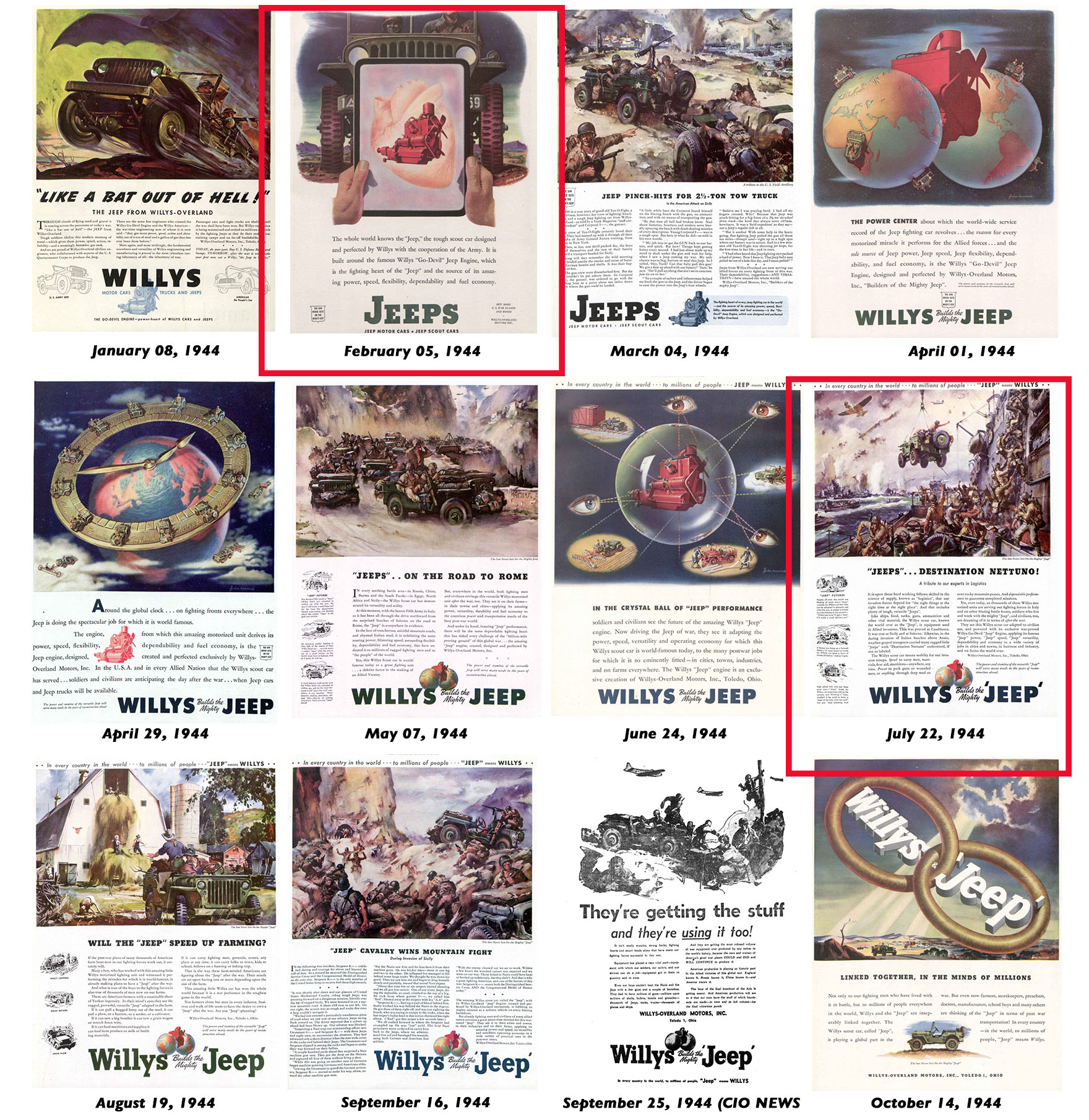
The purposeful addition of the single quotes reflects a similar change seen in the iconic Saturday Evening Posts during 1944, as demonstrated in these ads. The first highlighted ad of February 05, 1944, was the first time Willys-Overland replaced the prominent WILLYS stamp on the Post ads with JEEP (or in this case JEEPS) with no single quotes.

See all the Willys-Overland WWII ads 1941-1946 here: http://www.ewillys.com/2019/03/10/willys-overland-ads-in-the-saturday-evening-post-1942-mid1946/
What isn’t quite the same is that the Midland Journal ad below without the single quotes lasted longer (through October 6 1944) than the Saturday Evening Post ads. Perhaps Willys-Overland purchased several months of ads beginning in June of 1944 right before the addition of the single quotes too place? However it happened, what the ad above shows is that Willys was correcting the single quotes’ issue across its advertising.
Why did the company ad the single quotes in the first place? As I argued in this long post on Willys Overland’s changing identity during WWII, I believe it stems from the 1944 congressional inquiry into the company’s efforts to trademark the JEEP name.
========================
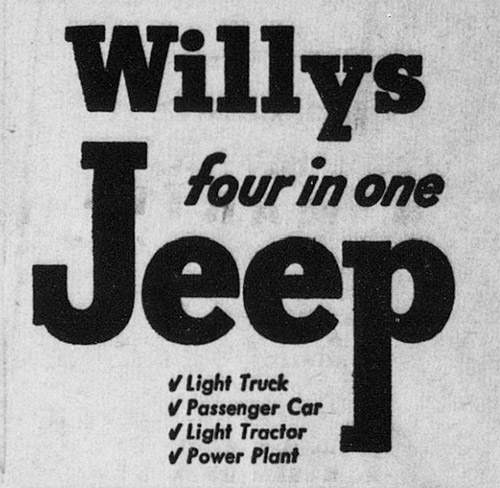
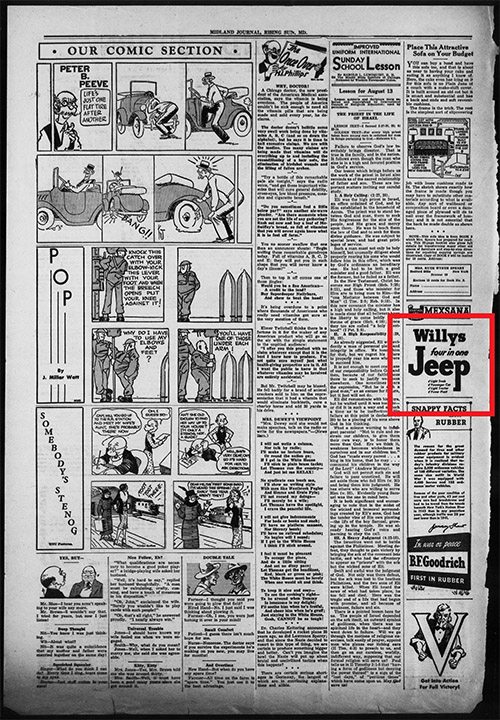
Originally published March 29, 2020: Here’s an unusually small and succinct ad that appeared seven times in the Midland Journal out of Rising Sun, Maryland, from June 30, 1944, through October 6, 1944. I’ve yet to run across this specific ad elsewhere.
One thing to note is that in July of 1944, Willys-Overland began using single quotes around the word Jeep like this ‘Jeep’ major magazine ads, yet that was not done in any of the newspaper ads in the Midland Journal, as shown below. (Ed note …. Yeah, I know, not earth shattering news, but I never know when little details like this will add up to some insight).
The ad shown below was in the August 11, 1944, issue of the Midland Journal:
This shows how small the ad was within the newspaper page.
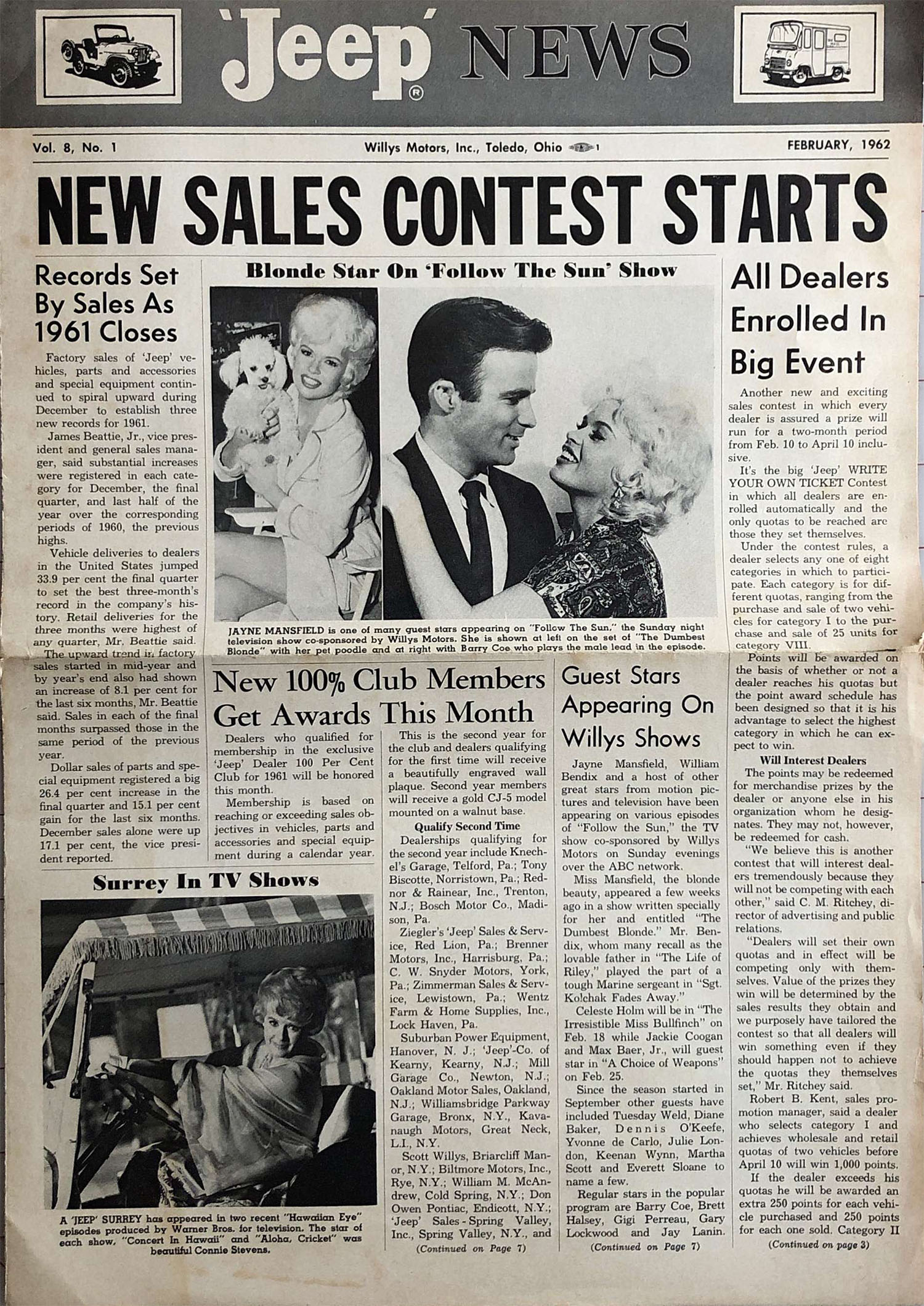
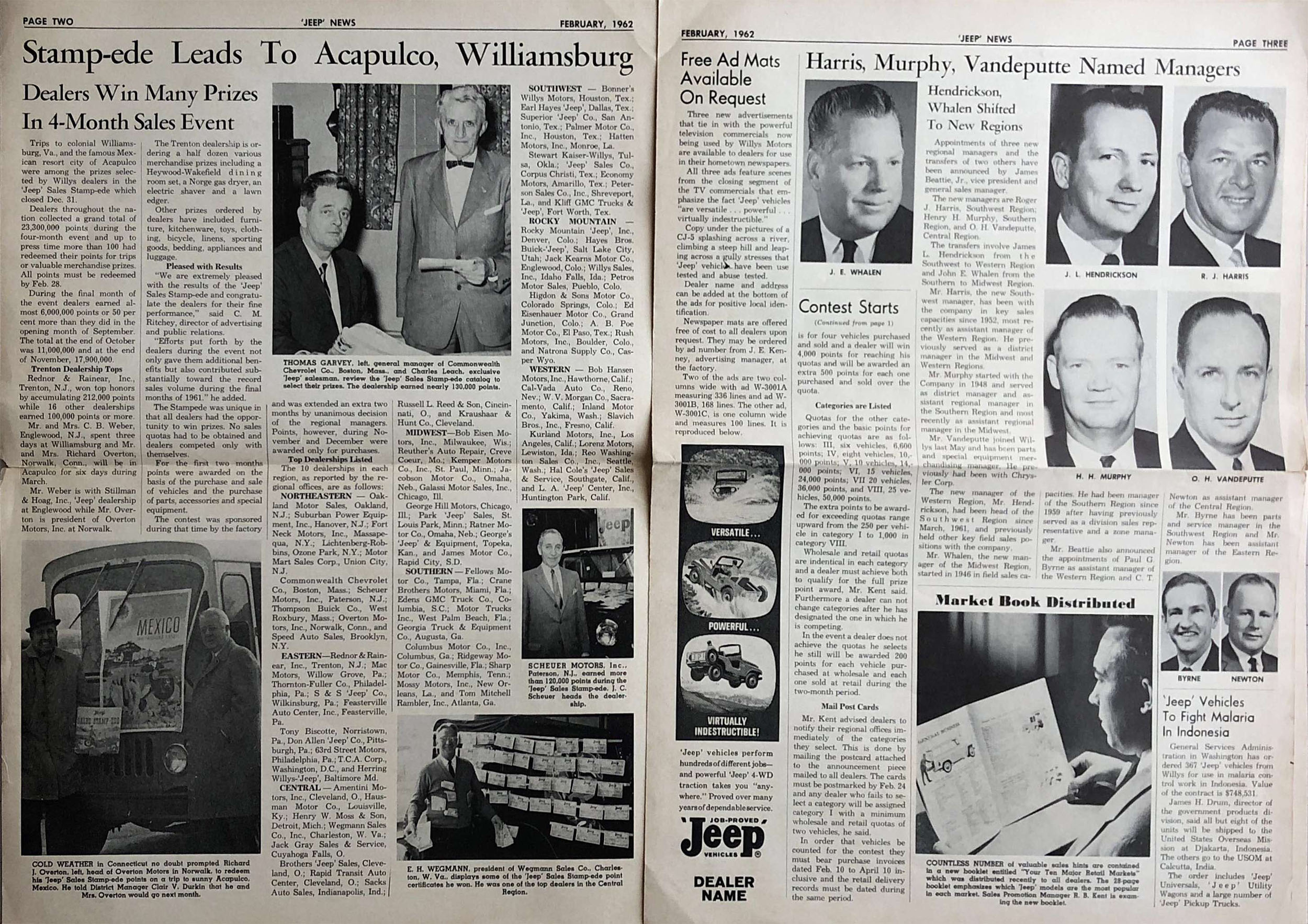
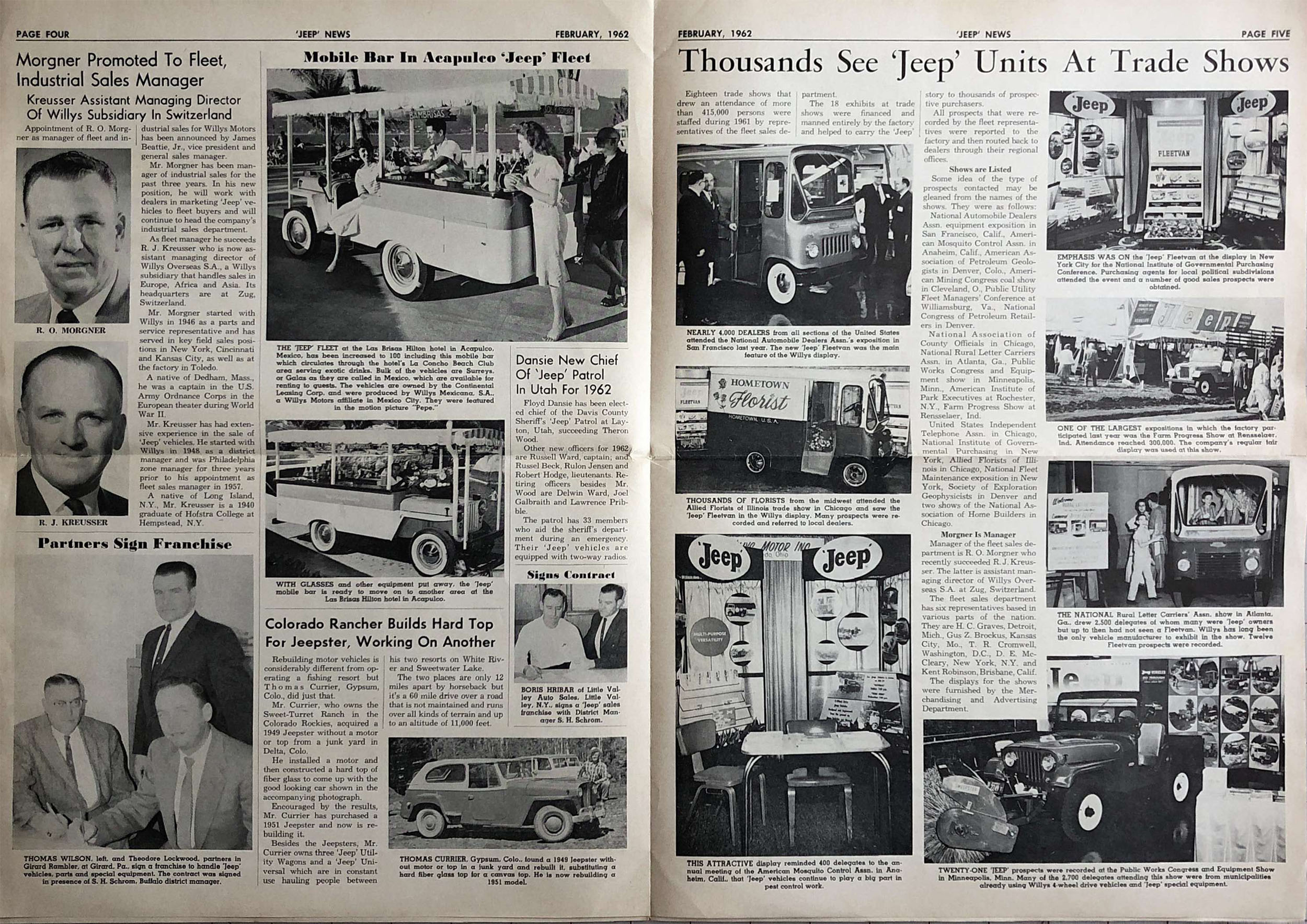
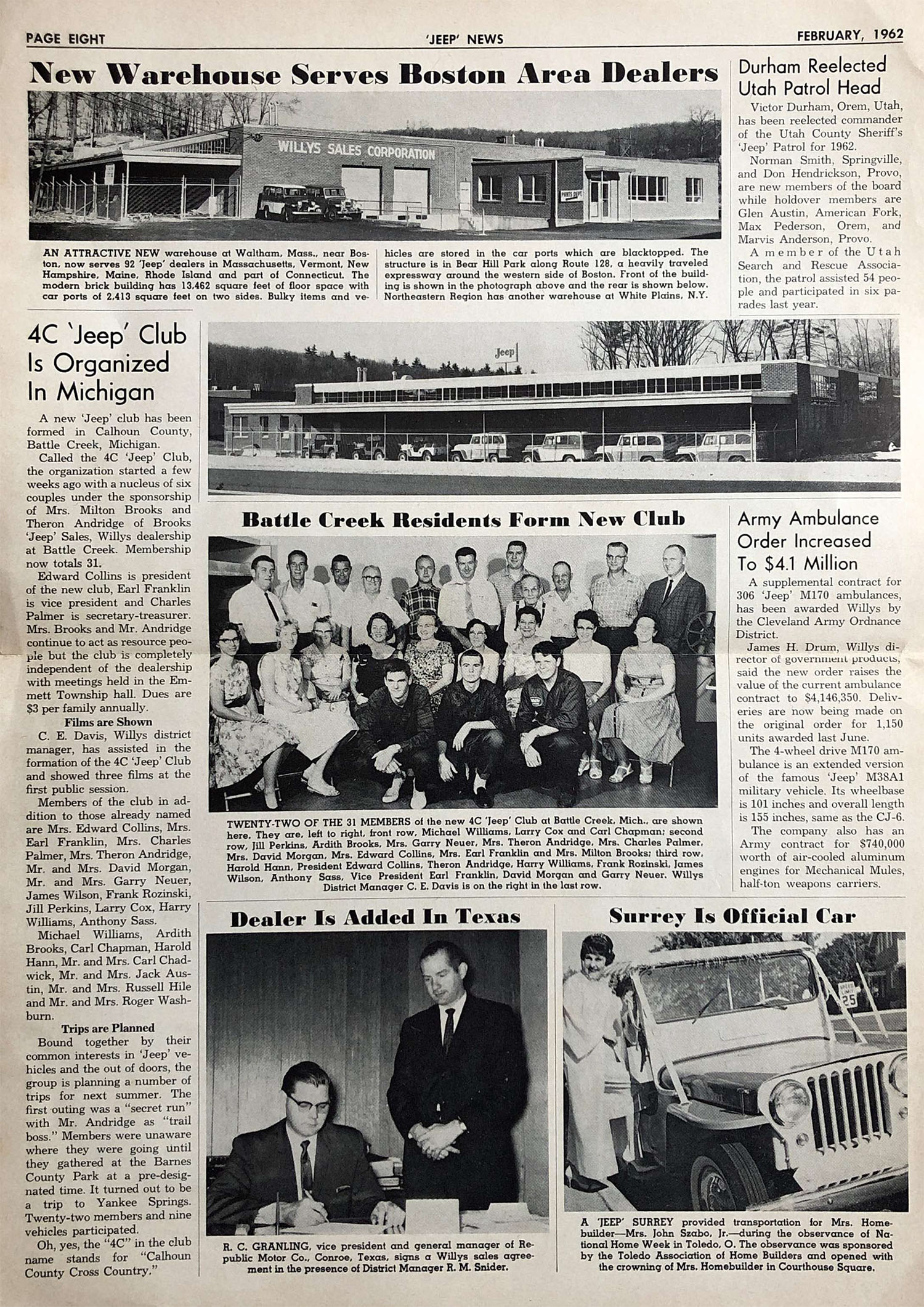
This February 1962 issue of Jeep News includes two good photos on page four of the DJ-3A-based mobile bar that was at the Las Brisas resort in Mexico. I have a color photo of that, too. It might be fun to recreate one of those.
Page three shares a little info on a twenty-eight page dealer booklet entitled, “Your Ten Major Retail Markets”. That’s a book I’ve yet to see anywhere.
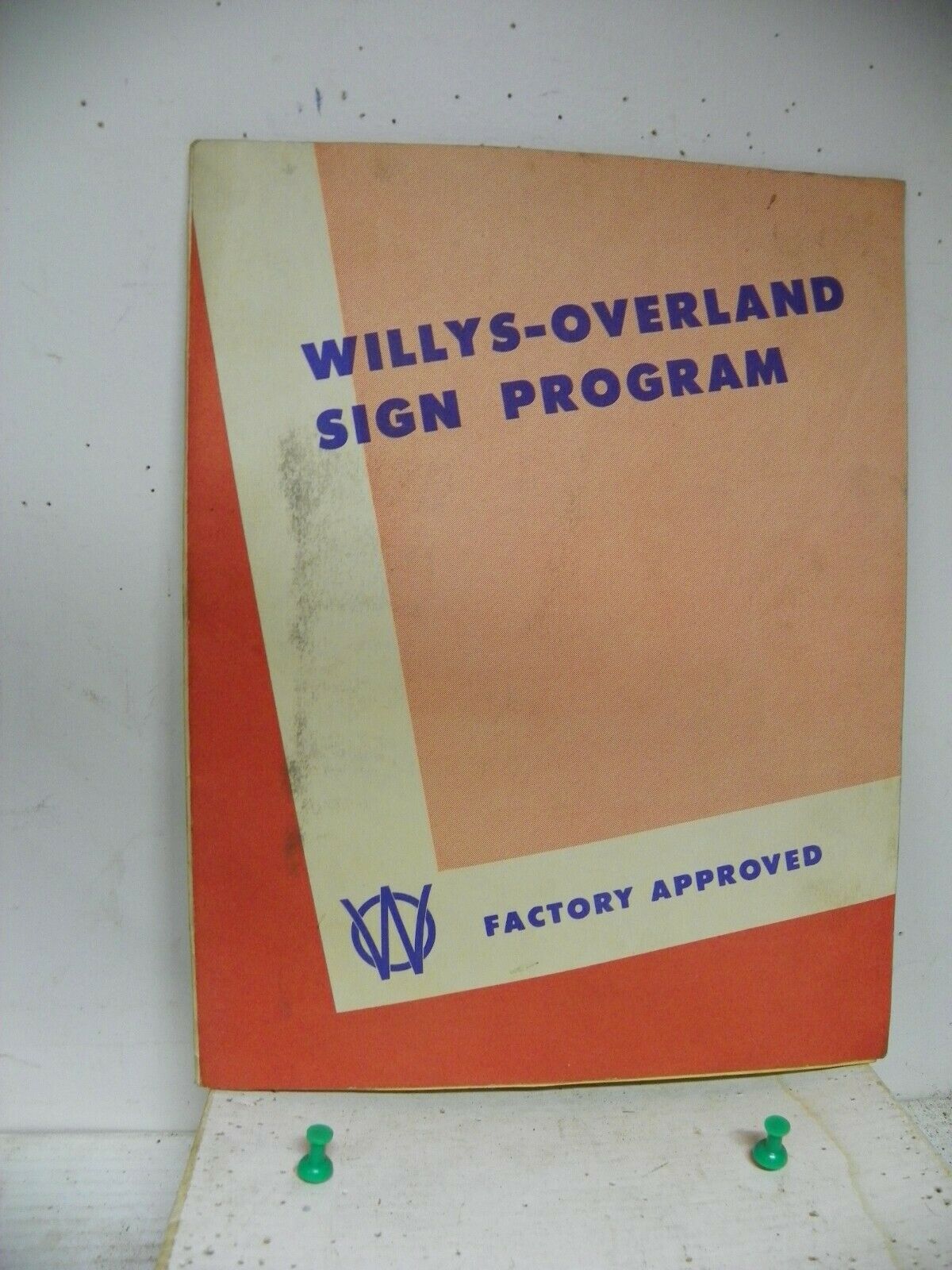
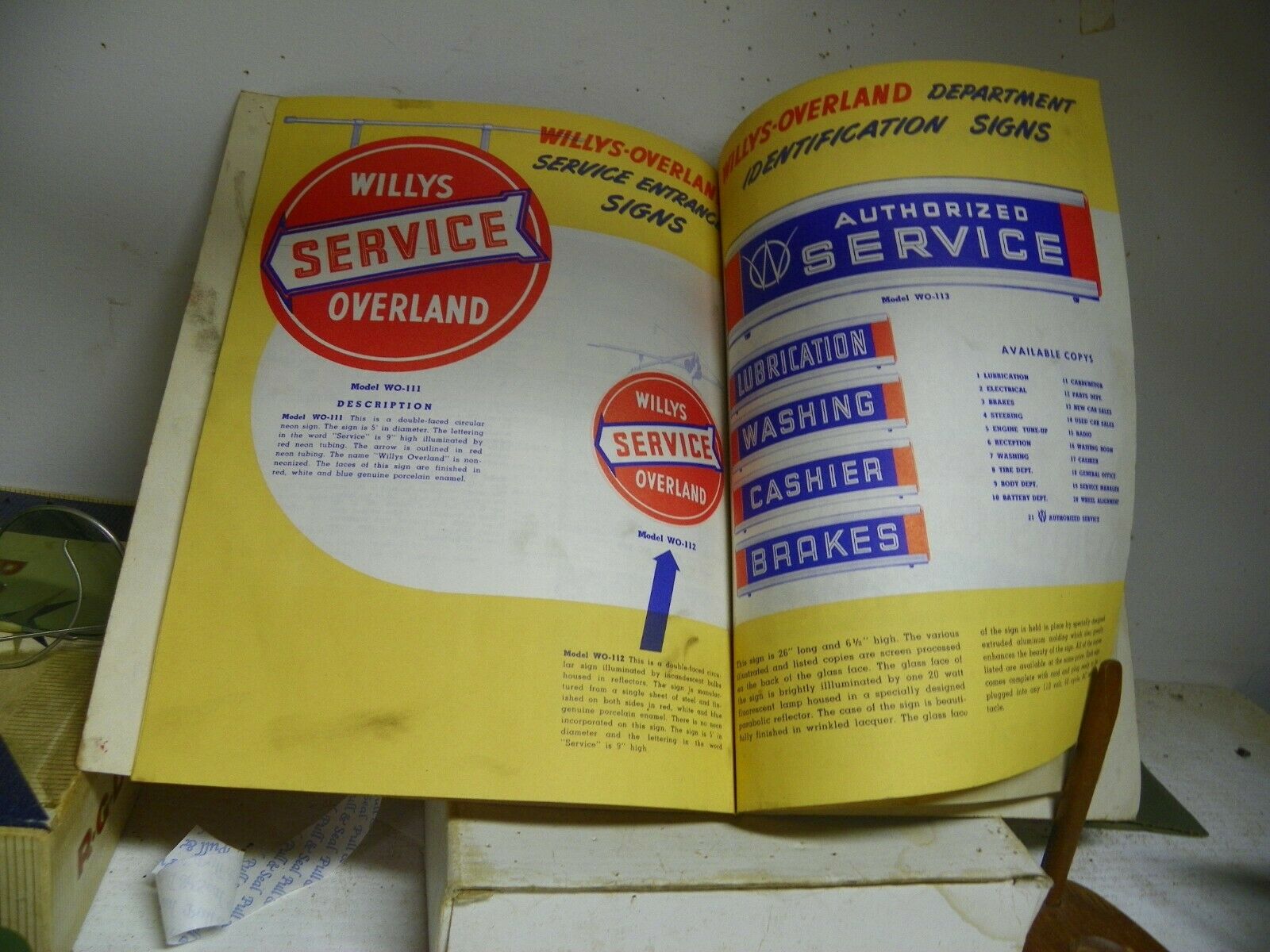
This eight-page Willys-Overland Sign Program sold on eBay for $38 (plus $4 shipping) late night. The seller only provided two pics, so I was unsure if this would be worth the money. Given the front-page design of the brochure, I’d guess this was produced around 1949. The design is reminiscent of other Willys-Overland catalogs of the era (see examples at the bottom).
“This is a 9 X 11 8 page brochure of WILLYS -OVERLAND SIGN PROGRAM FACTORY APPROVED shows products offered to dealers from Neon Products of Lima Ohio some slight scuffing on the covers…also has a order blank”
A 5-foot version of the Willys Service Sign sold out of Buda, Texas, for $400 back in 2014. It was likely sign model #WO-111 (the large sign pictured on the left side of the left page). These are the only two interior pages that were included in the auction ad:
====================
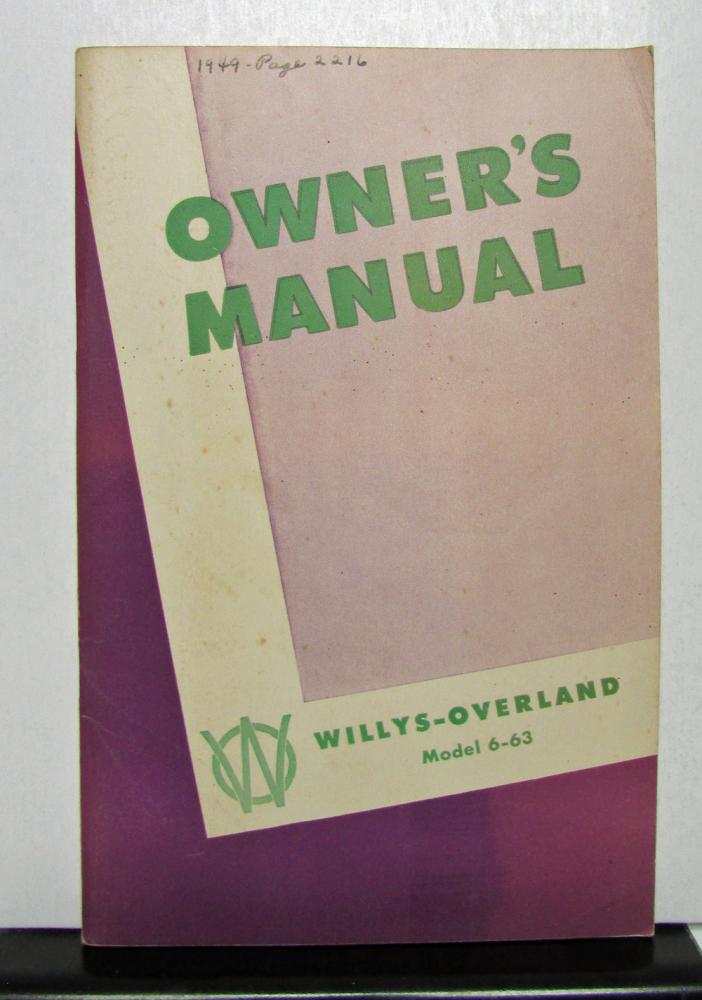
Similar covers from 1949 that have the style AND the WO logo. For example, Barney has this 1949 Parts List catalog listed on eBay:

There’s this 1949 Jeepster owners manual:

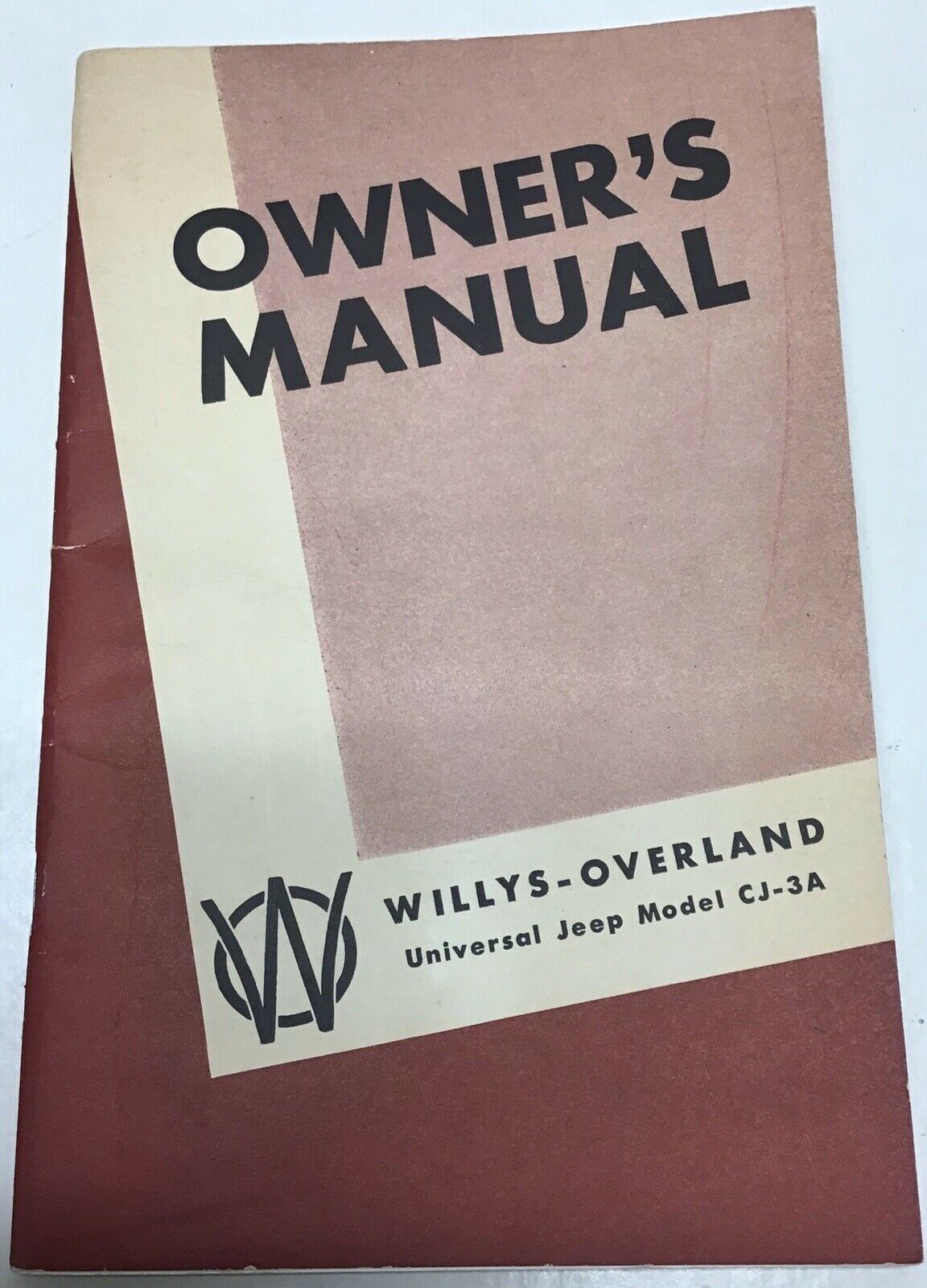
And, this is a 1948 CJ-3A Owners Manual on eBay:

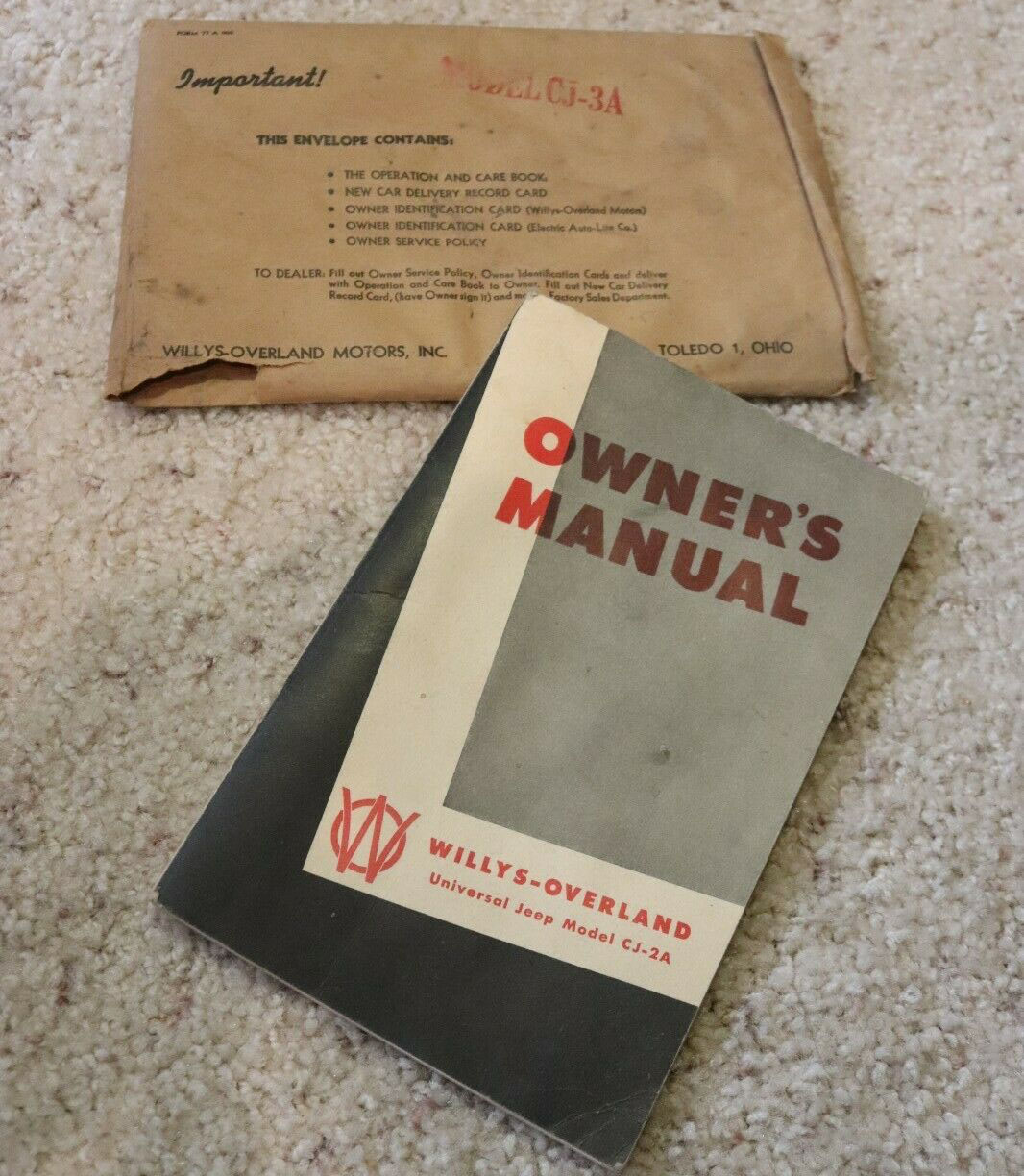
And this 1948 CJ-2A (with envelope) owner’s manual on eBay:
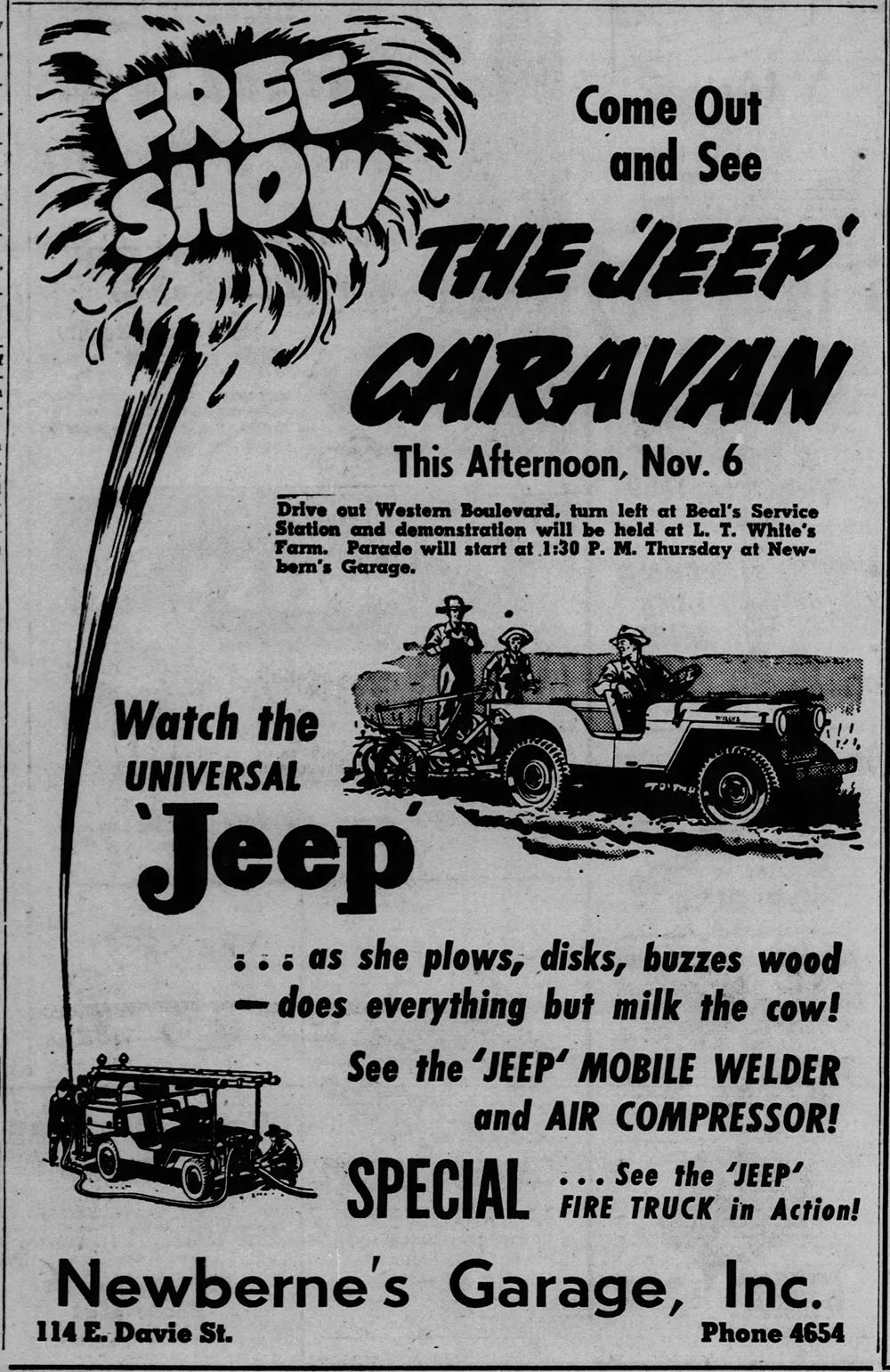
This is a great vintage ad for the Jeep Caravan ‘Free Show’. That’s a nice touch with the fire jeep shooting water up the side of the ad. This appeared in the November 6, 1947, issue of the News and Observer out of Raleigh, North Carolina.
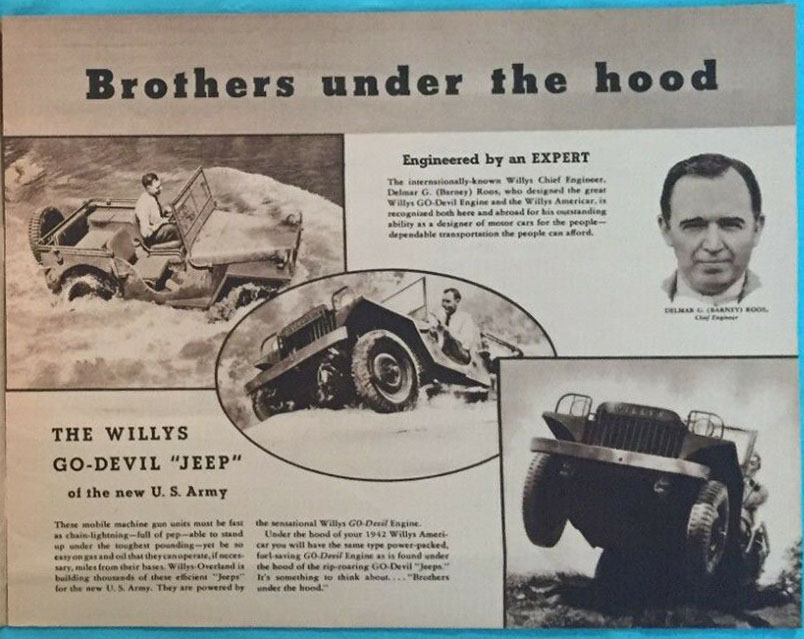
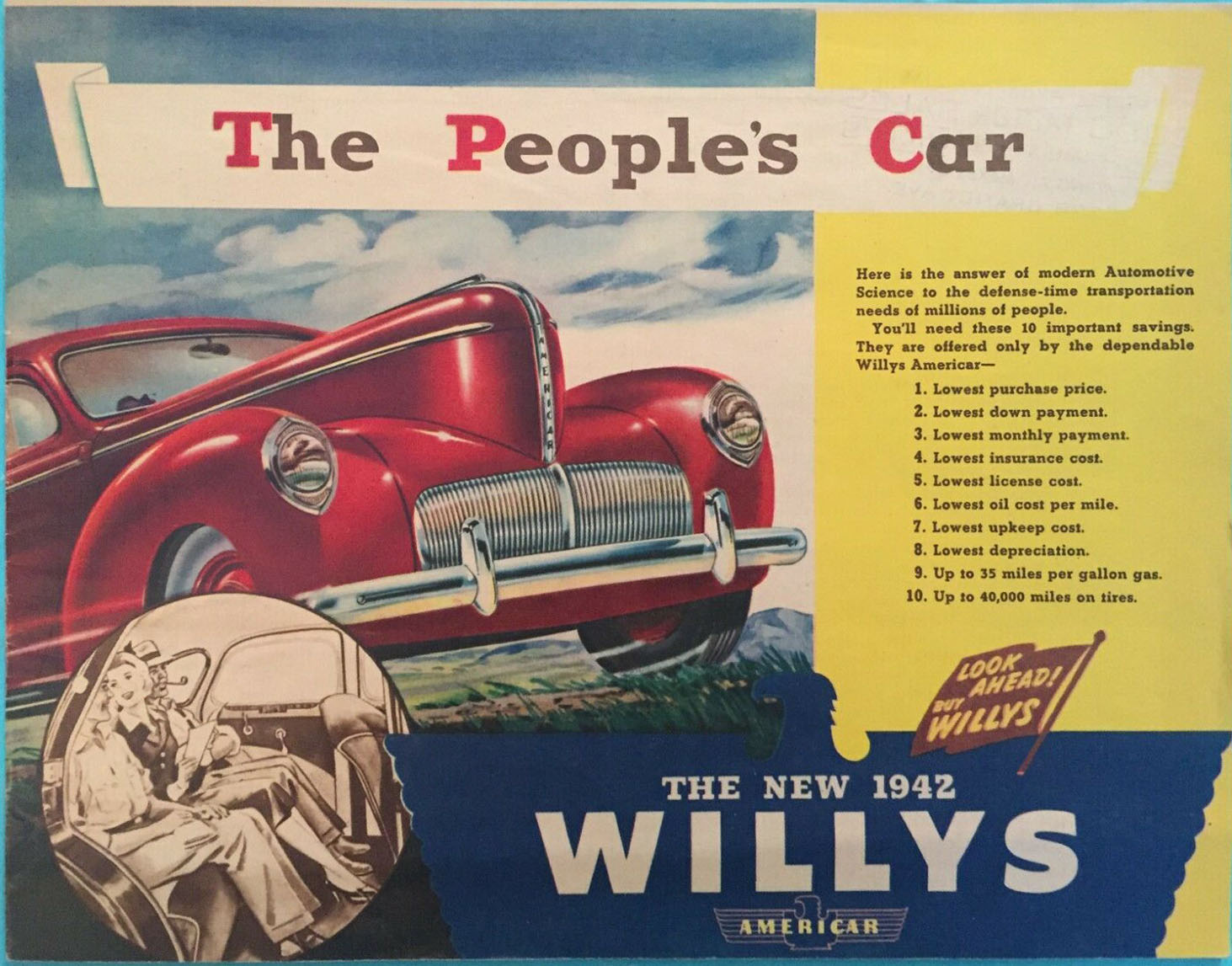
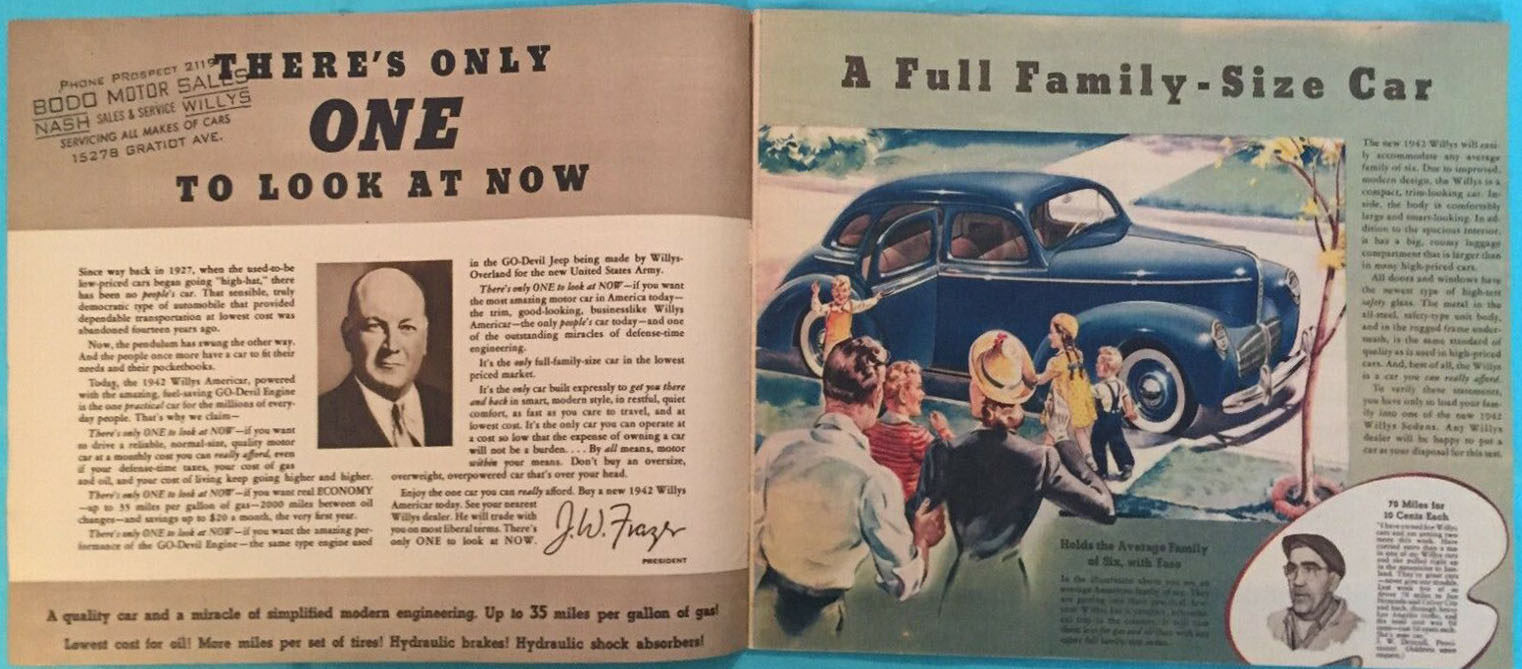
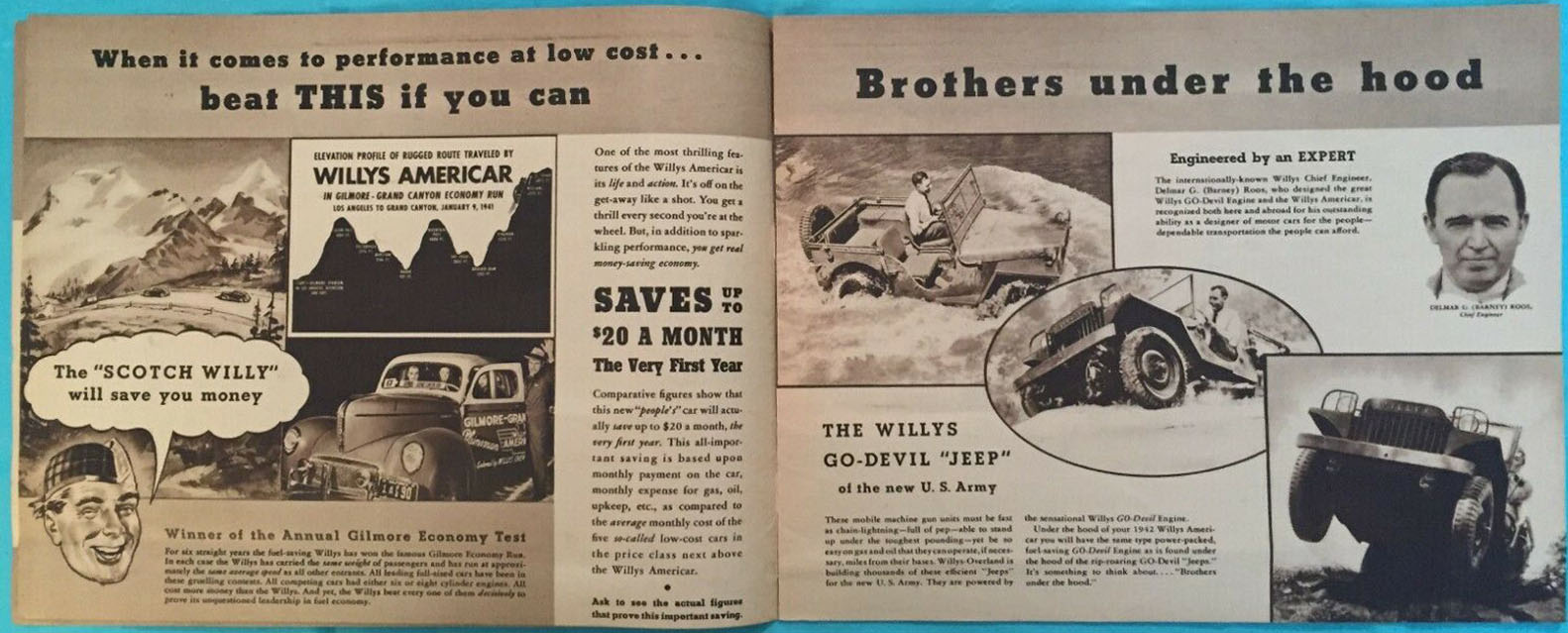
This 1942 Americar Brochure includes a page that shows the Willys MA. I dropped out of the bidding at $30. I’ll keep my eye open for a cheaper version of this brochure.
Here’s the page with the MAs on it.
The following images might show the entire brochure in the correct order. Note the page showing the Americar’s “Willys Chassis” … anyone know how similar this was in size to the wagon chassis?
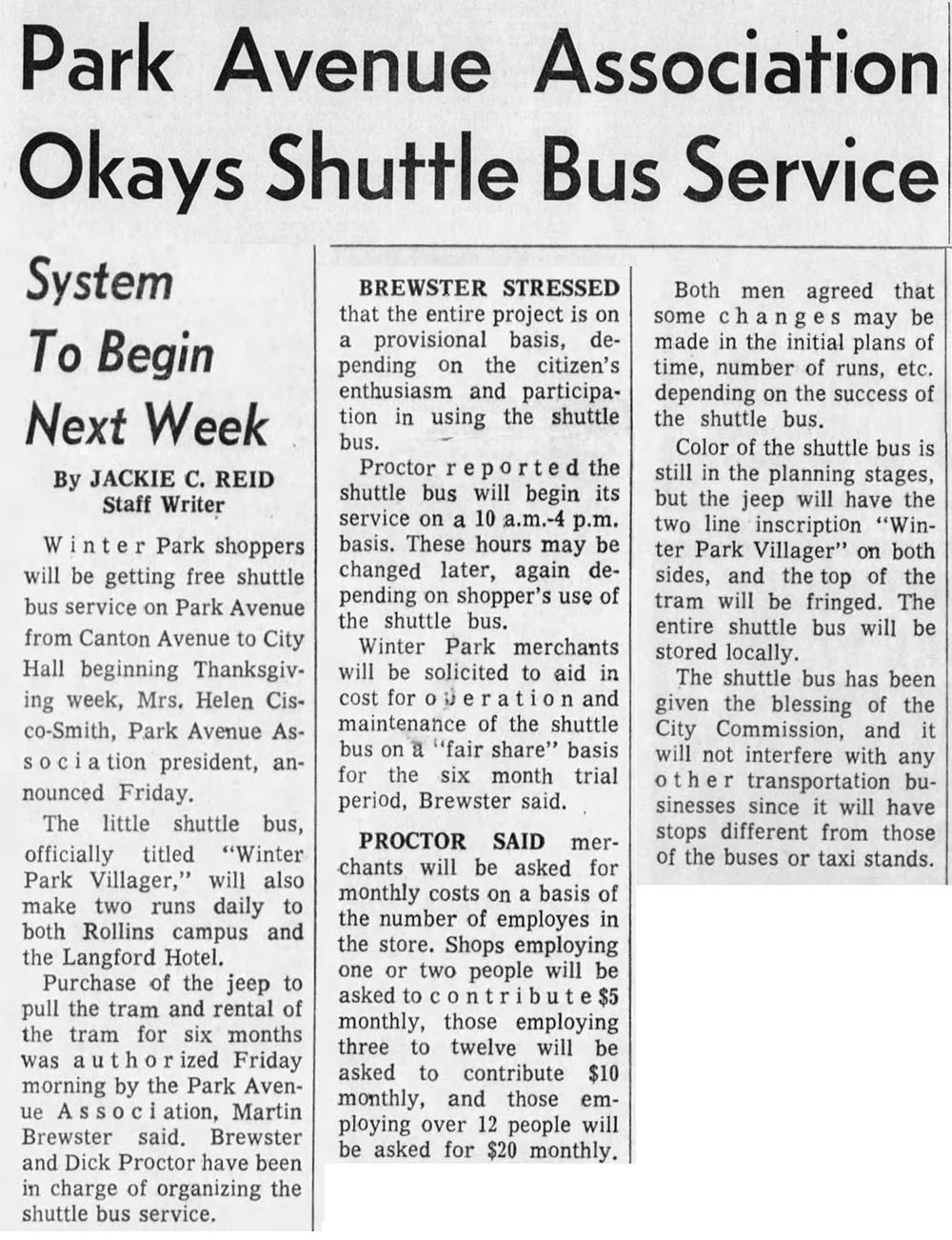
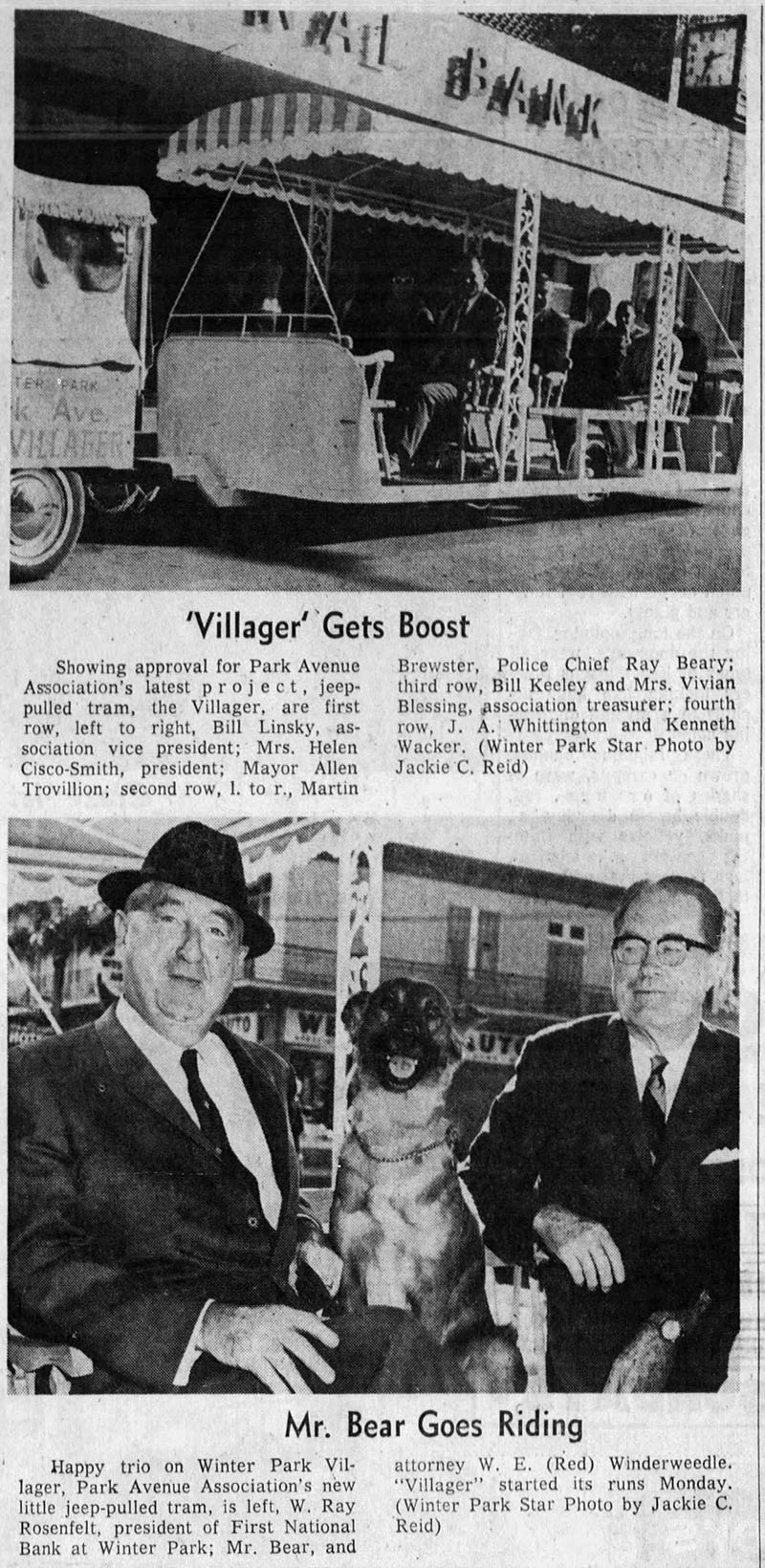
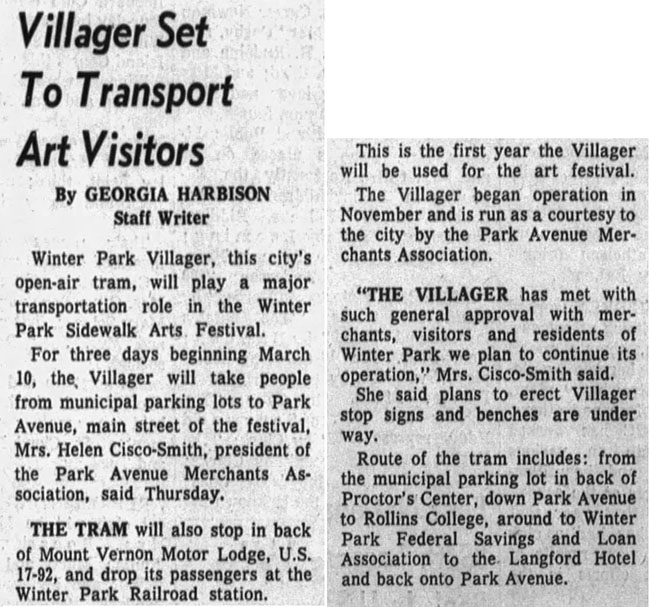
UPDATE: The two post cards at the bottom of this post were on eBay several years ago. I recently came across some newspaper clippings that give background about the Winter Park Villager tram’s purpose. The service began November 28, 1966, but I could not find an end-date.
This first article discusses the jeep tram’s beginnings:
This next article notes that Monday, November 28th, as the launch date for the jeep tram service.
This short article from March of 1967 describes some of the tram’s stops:
= = = = = = = = = = = = = = = = = = = = = = =
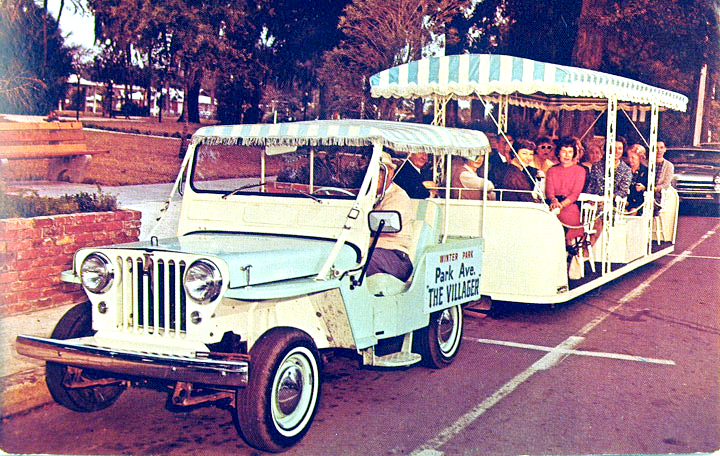
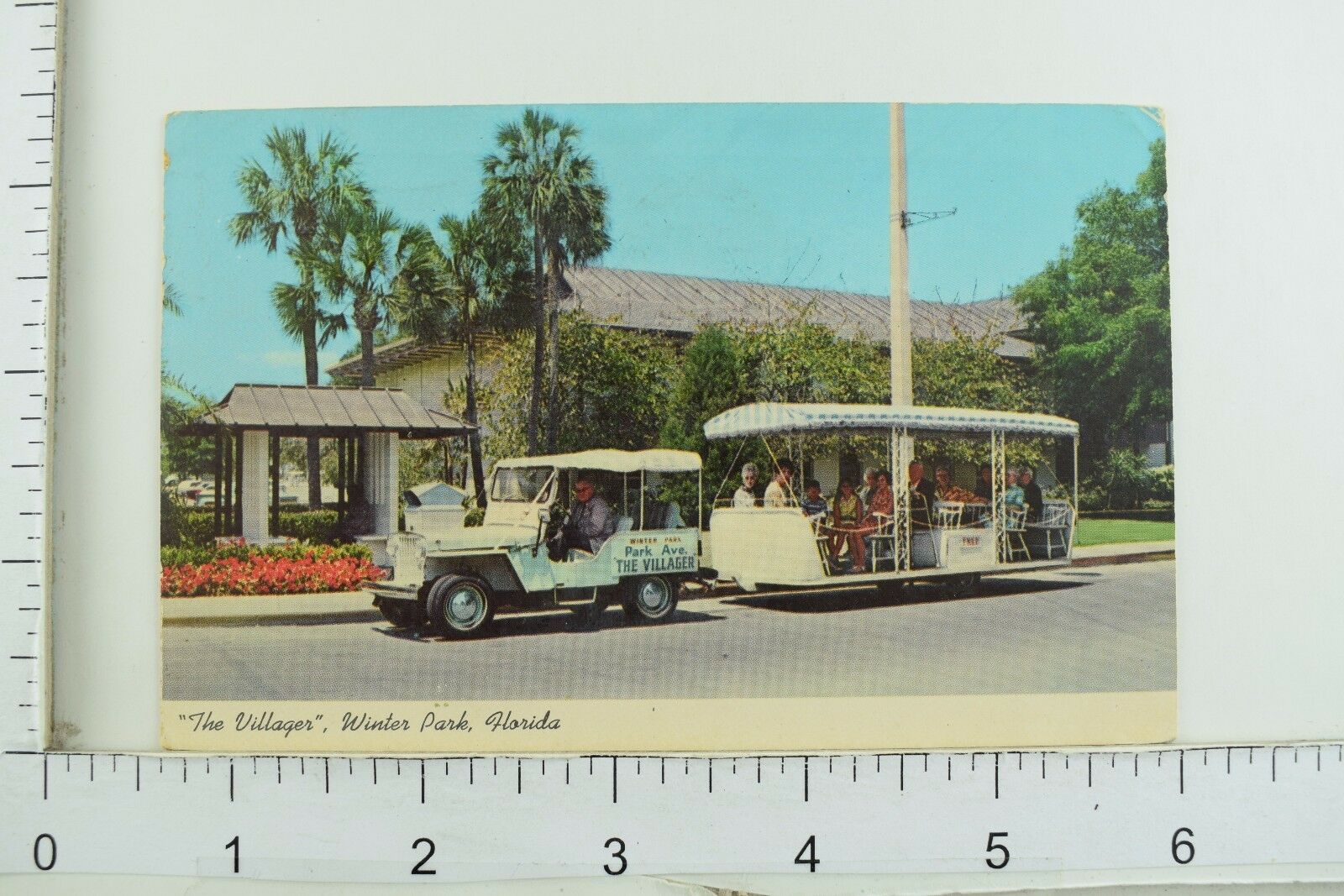
This Winter Park Villager shows a DJ-3A Surrey pulling a matching trailer in Winter Park, Florida. One of these postcards is currently on eBay.
= = = = = = = = = = = = = = = = = = = = = = =
Here’s another view of the same combo. One of these postcards is currently on eBay
This sold yesterday on eBay for $51 +shipping. I gave up bidding on it, because I couldn’t tell how many pages there were. I was concerned there were only four and didn’t want to get into a bidding war over it (I got another cool brochure instead).
This undated Siebert Willys Ambulance brochure was probably produced in 1954-or 1955, based on the grille design on page 4. There is no form number on it. Within the brochure the company describes three different ambulance options.
Derek provides more information on the Siebert Ambulances and has additional pics on the CJ-3B page.
Maury forwarded this “JEEP” pin that’s available on eBay. Does anyone have any history on the slogan “Joint Effort Extra Pay”? It would be easy to jump to the conclusion that this was some kind of Willys-Overland or Willys-Motors factory worker incentive program, but I’d want more evidence before concluding that.
View all the information on eBay
“Vintage, JEEP FACTORY PIN (Joint-Effort-Extra-Pay) 1-1/2 x 3/4 Inches”
A web search yielded a second item with the same logo, except this time on an ashtray with the an accompanying “A W” logo.