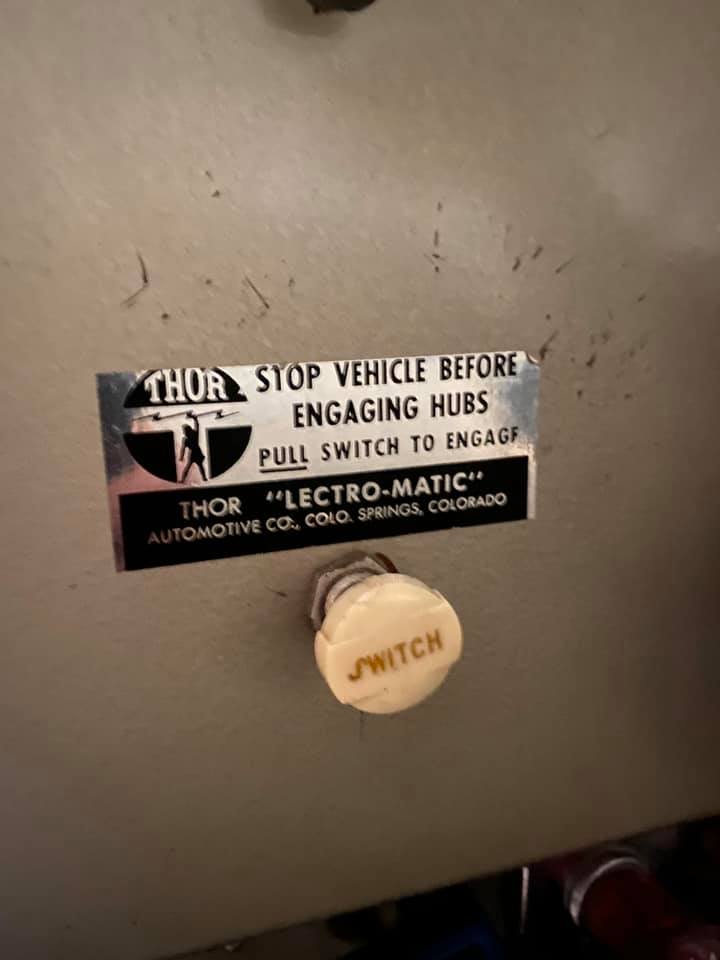
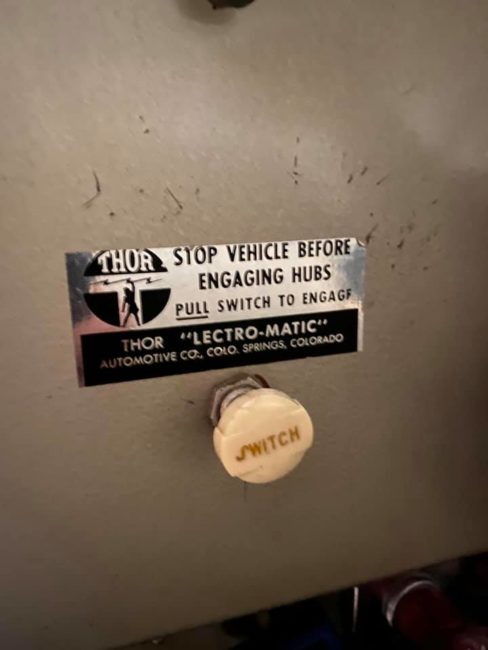
UPDATE: I posted this Thor post over a decade ago (how times flies). Below is a look at the switch used to engage the Thor “Lectro-Matic” Hub, which came from this post. Since the below post was first published, there’s also been some history about Thor Products on a shared on another post.
==========================
Originally posted January 2010:
Dan dropped this into my inbox this evening. It’s a detailed look at the Thor “Lectro-Matic” Hub (or lectromatic hub). Dan completed this 18 page document, with disassembling the hubs and discussing each step. You can download the PDF here. Great work Dan!
Dan writes, The Thor “Lectro-Matic” hubs off of my 1955 CJ-5 were a bit of a mystery. These must have been some of the first “push button” 4WD systems to come out. There was little to no information on them so I decided to take them apart and see just how they work. Here is what I have learned.
When my Dad said that they were electric, I assumed that they had a little motor that would “spin” them in or out of engagement. What I realized was that they were more like a solenoid or electromagnet.
There is a coil of wire on the wheel side of the hub. When power is applied to the coil it becomes a magnet and draws itself to the axle side of the hub. There are little “teeth” machined into the facing sides of the hub. These teeth engage and the axle side of the hub turns the wheel or magnet side of the hub. A wire is ran through the back of the backing plate through a hole and provides the electricity to the magnetic coil. A contact mounted on a spring transmits this electric power through a slip ring inside the brake drum to the hub.
I imagine that the hubs could be engaged while the vehicle is moving, but I think this would cause the teeth to slip for a moment and lead to premature wear of the teeth. A toggle switch or a maintained push button could be used to turn the hubs on and off. One could even use a limit switch on the 4WD lever of the transfer case to automatically turn them on when the vehicle was shifted into 4WD. The hubs would only remain engaged as long as power is applied to the magnetic coil. If you left the switch on and had run power directly off of the battery to the switch, it would eventually drain your battery after the engine is shut off. If you ran power from the ignition switch to the on/off switch, your hubs would automatically disengage as soon as you shut off your engine.
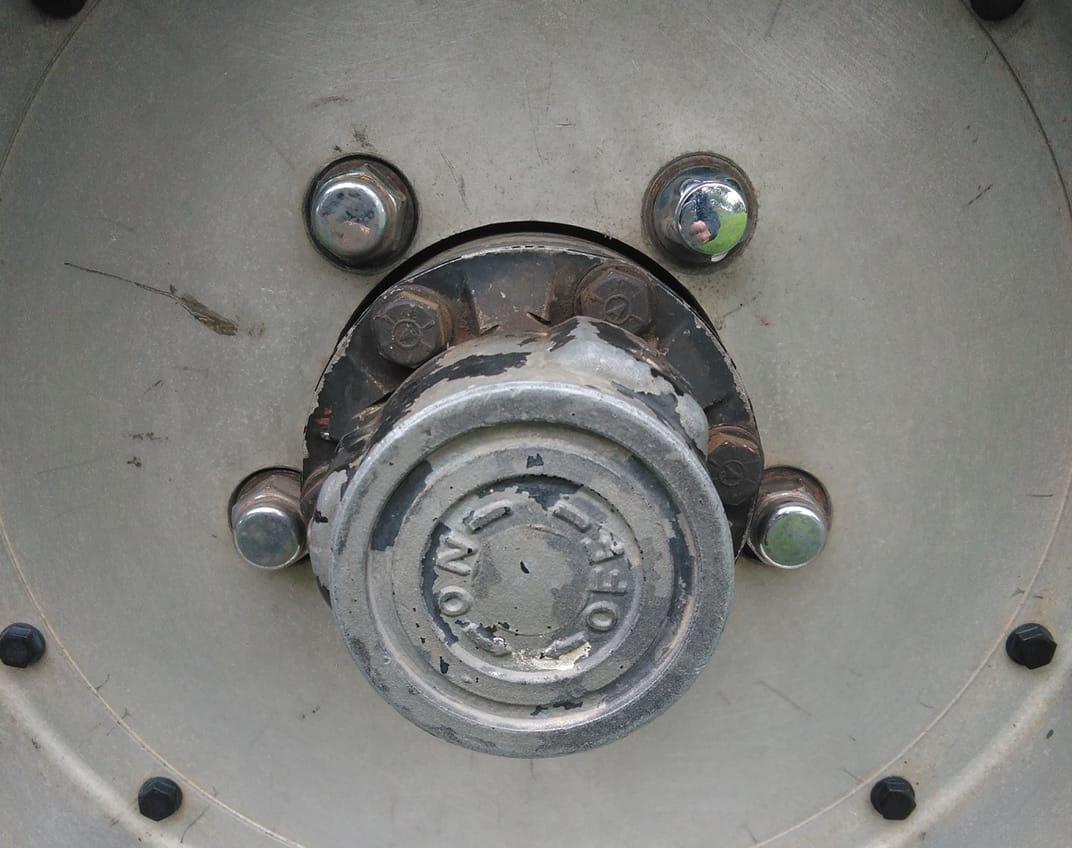
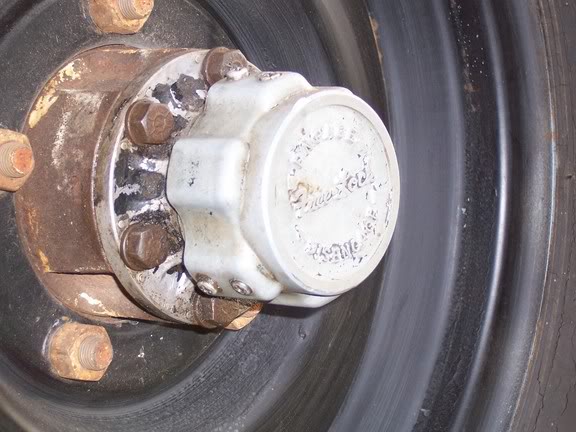
If for some reason they didn’t want to work, there was a little screw on the outside face of the hub that you could turn to manually engage or disengage the hubs (as you can see below).
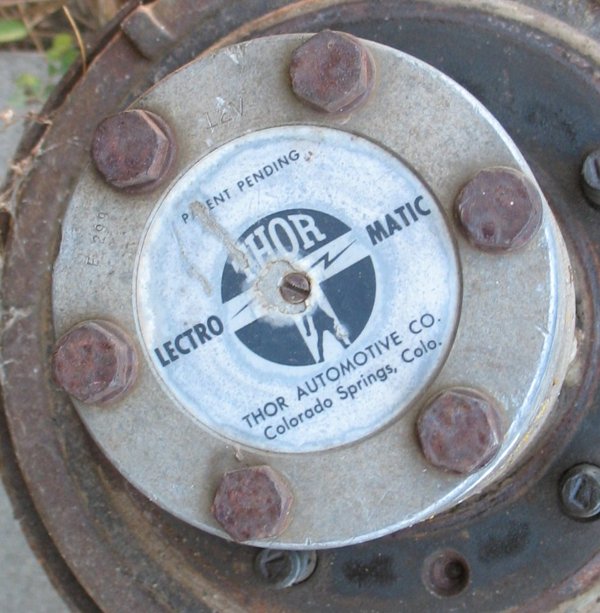
On the top of the hub you can see the wire that passes through the brake drum to power the magnetic coil.

Download and read the entire document here
[fb_button]