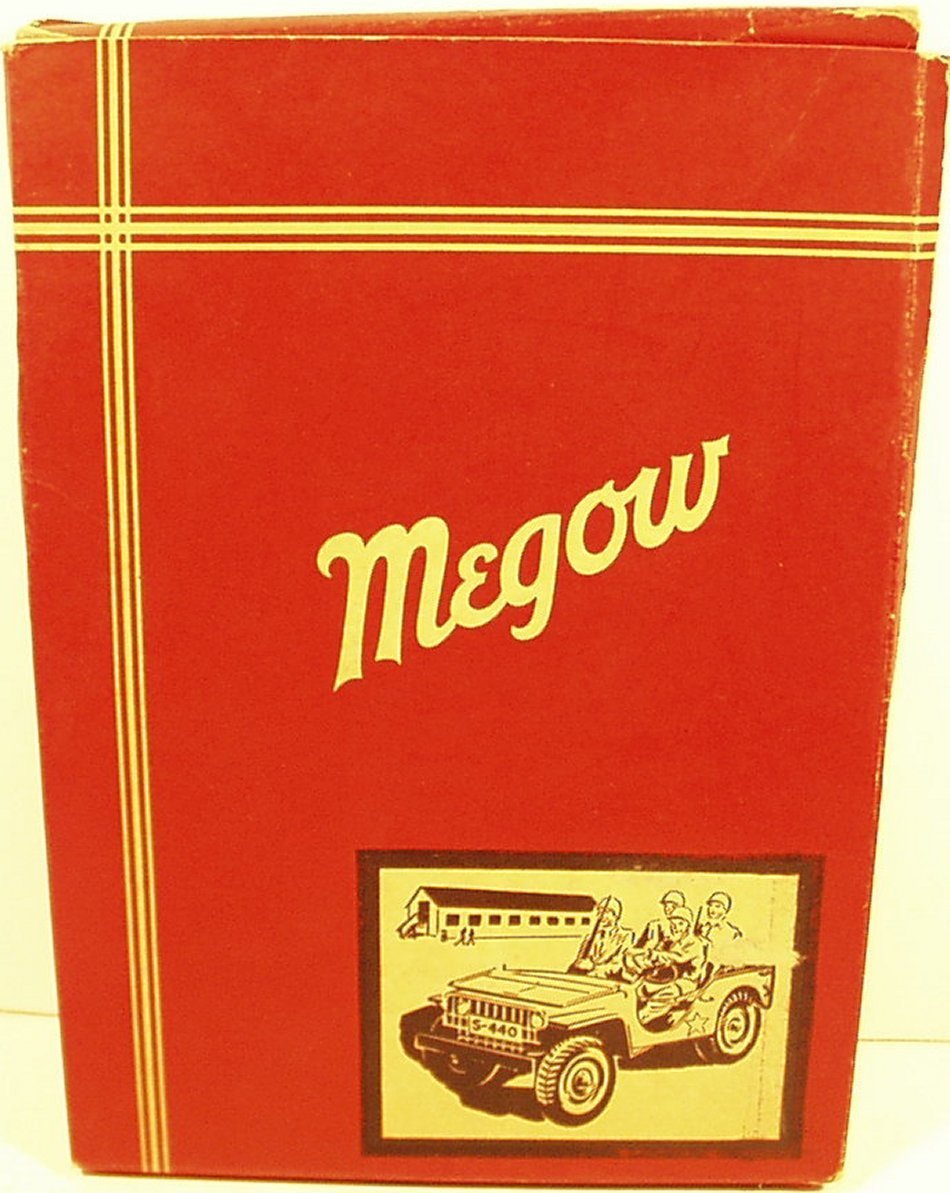
The cover of this box shows a Ford GP, so it might be a Ford GP model.
“Mego model kit, builds wooden US Army Jeep M-10, 1944, box is 8-1/2 in. x 6-1/8 in.”
View all the information on eBay
emailNeed to contact me and don't have my email? Click on email button.
Welcome to eWillys.com, a website for vintage jeep enthusiasts. I update this website nearly every day with jeep deals, jeep history, interesting reader projects, jeep related info, and more.
These quick searches can help you find things on eBay. People list in the wrong categories all the time, so don't be surprised to see brochures in the parts area for example. This section used to be split into jeeps, parts and other categories, but recent changes to eBay will require this information to be recoded.
The links to posts below show jeeps grouped by models, condition, and other ways. Some of these jeeps are for sale and others have been sold. If you are unsure whether a vehicle is still for sale or not, email me at d [at] ewillys.com for more info.
There are plenty of interesting, unusual, historic and surprising stories related to Jeeps and their owners. In addition, some of these features have nothing to do with jeeps. This link will display all featured stories starting from the latest.
Looking for parts and not sure where to go? There are a variety of large and small new and used parts sellers both online and offline.
Importantly, the allure of buying a project jeep can be romantic. The reality of restoring a jeep can be quite different, expensive and overwhelming without the right tools and resources. So, tread carefully when purchasing a "project". If you have any concerns about buying a vintage jeep, or run across a scam, feel free to contact me for help, comments or concerns .
The cover of this box shows a Ford GP, so it might be a Ford GP model.
“Mego model kit, builds wooden US Army Jeep M-10, 1944, box is 8-1/2 in. x 6-1/8 in.”
View all the information on eBay
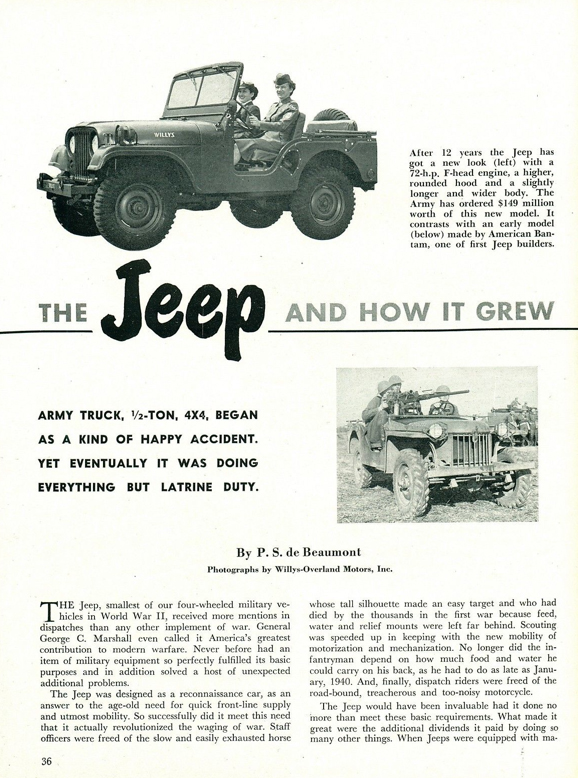
The January 1953 issue of “Modern Man” magazine featured a story about the jeep’s history. However, given the M-38A1 prominently displayed at the top of the page, I can’t help but wonder if this was part public relations and part history piece.
View all the information on eBay
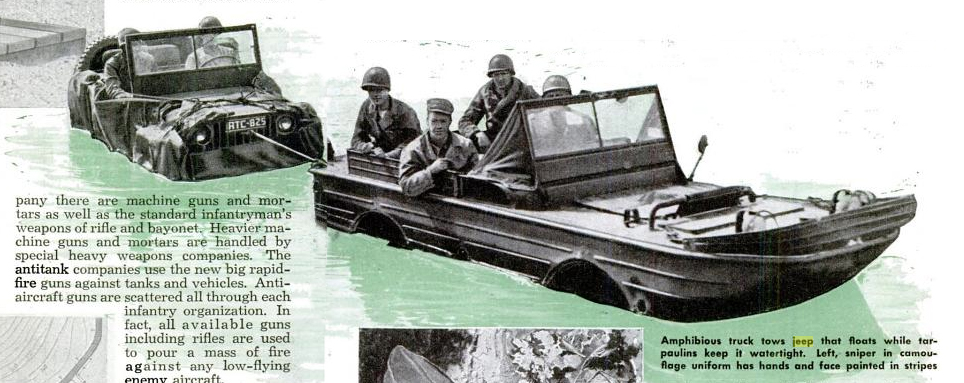
Marc pointed out an article in the 1944 issue of Popular Mechanics. I didn’t realized it, but this issue has a bunch of jeep-related articles. Some of these you’ve probably seen.
The largest illustration shows a Ford GPA SEEP pulling a MB Slat Grille (pages 84 and 85). For some reason, the wheels were removed (photographically speaking) from the GPA.
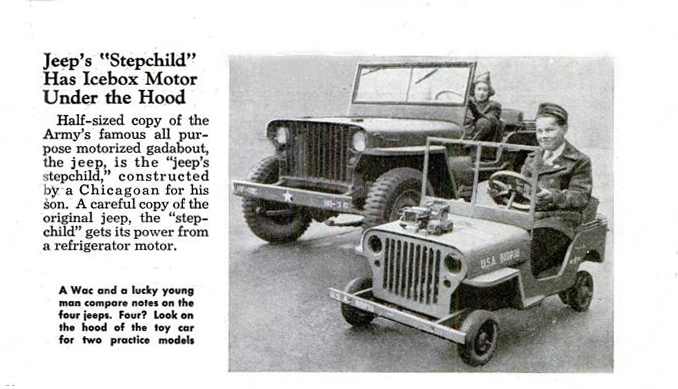
Page 87 shows of a half-sized jeep that utilizes an icebox motor for power. I featured this picture back in April.
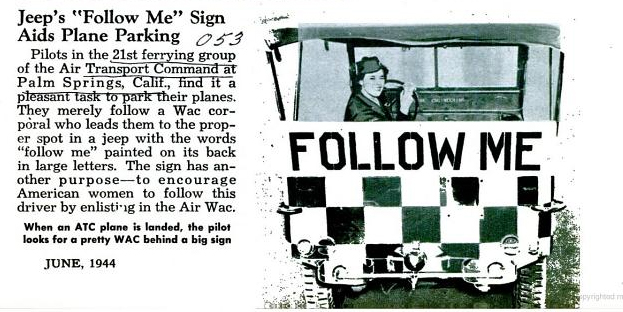
Page 71 shares the “Follow Me” paint markings with the world.
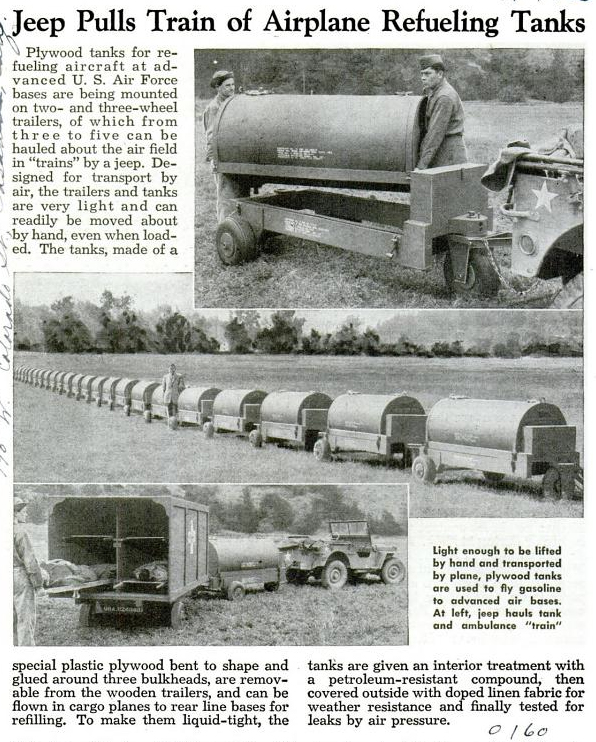
Page 6 Describes how jeeps can be used to pull refueling tanks or ambulance cars in a train.
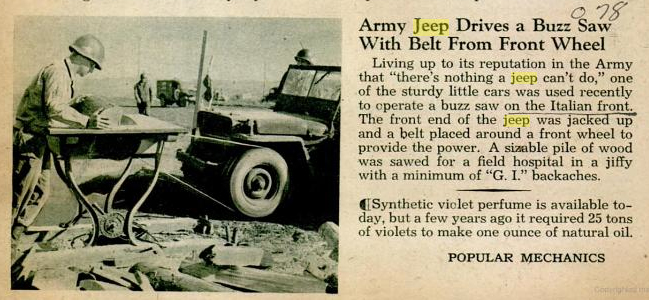
Page 80 shows off the limitless capabilities of the jeep by picturing a soldier cutting wood from a jeep powered buzz saw in Italy.
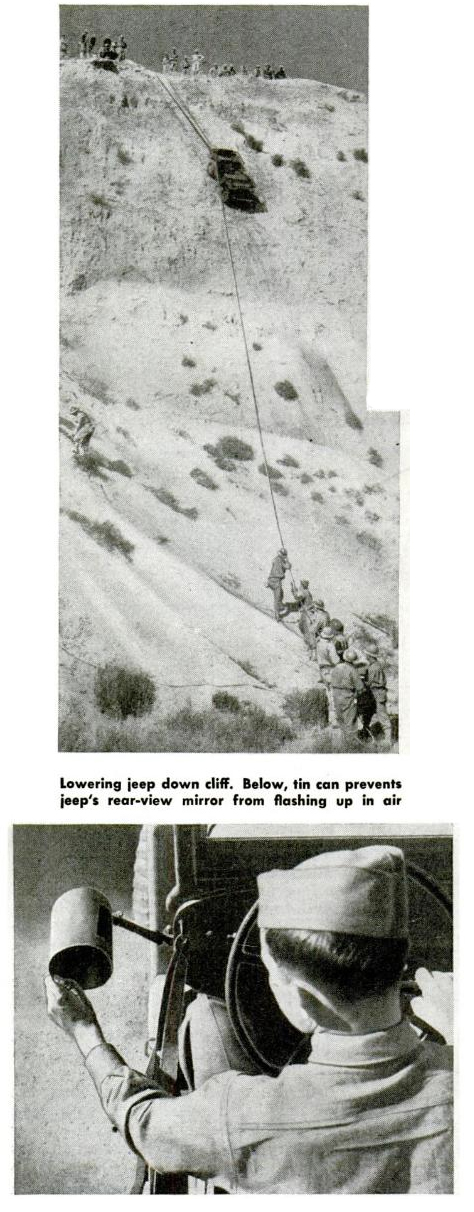
Page 86 discusses the finer points of dropping a jeep over a cliff, including the installation of a can over the driver’s mirror to prevent flashing.
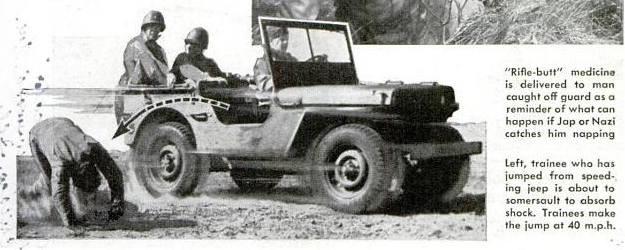
 Finally, on page 63 we learn about a “Finishing School for Killers” where soldiers learn how to jump from a jeep while it is traveling at 40mph.
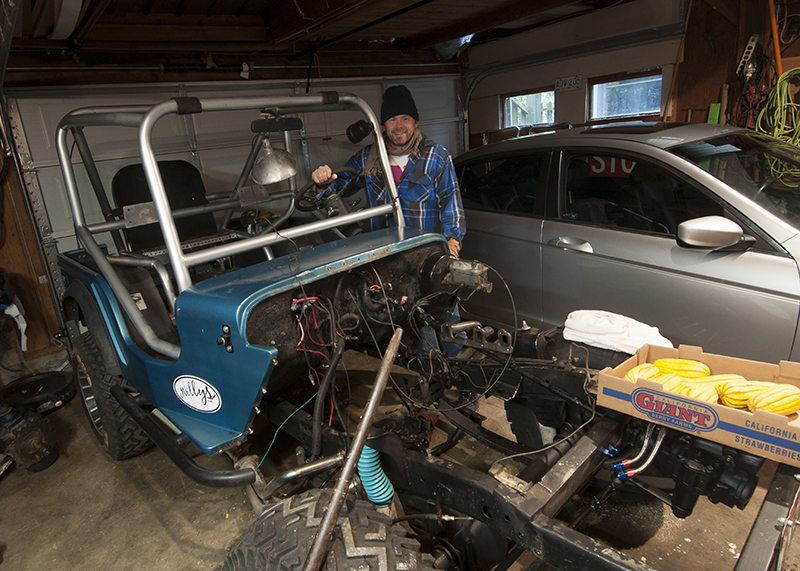
Self Portrait . . . let the unbolting begin! Note what happens when I leave the jeep in my parents garage. It becomes a squash storage facility.
I’ve spent the last couple days moving and reorganizing parts and things so I could make enough room to start disassembly (see pic below). Today I finally got to begin the breakdown process.
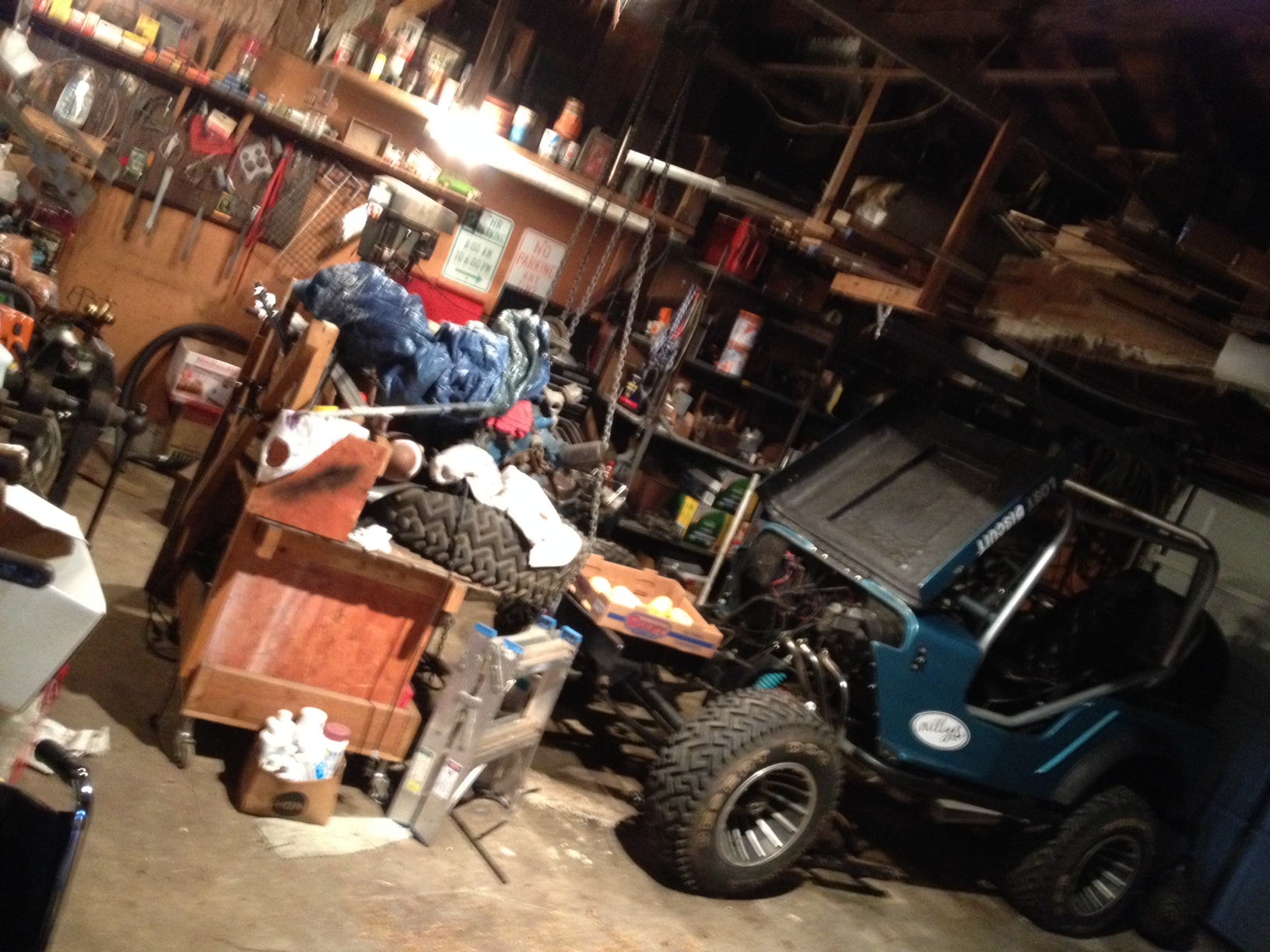
As you can see, it was a bit of a mess.
One of my strategies during assembly was to make the body as easy to remove as possible. So, for example, nothing is wired or attached to the fenders. In addition, the wiring along the underside only attaches to the frame in one spot (a ground). It all worked well . . . great when a plan works!
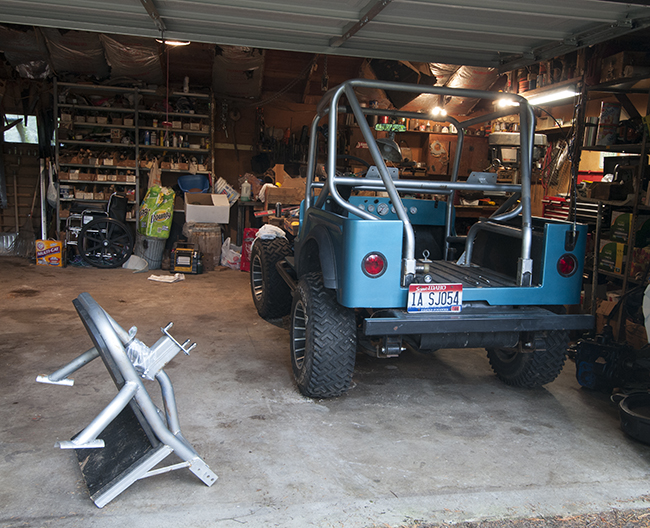
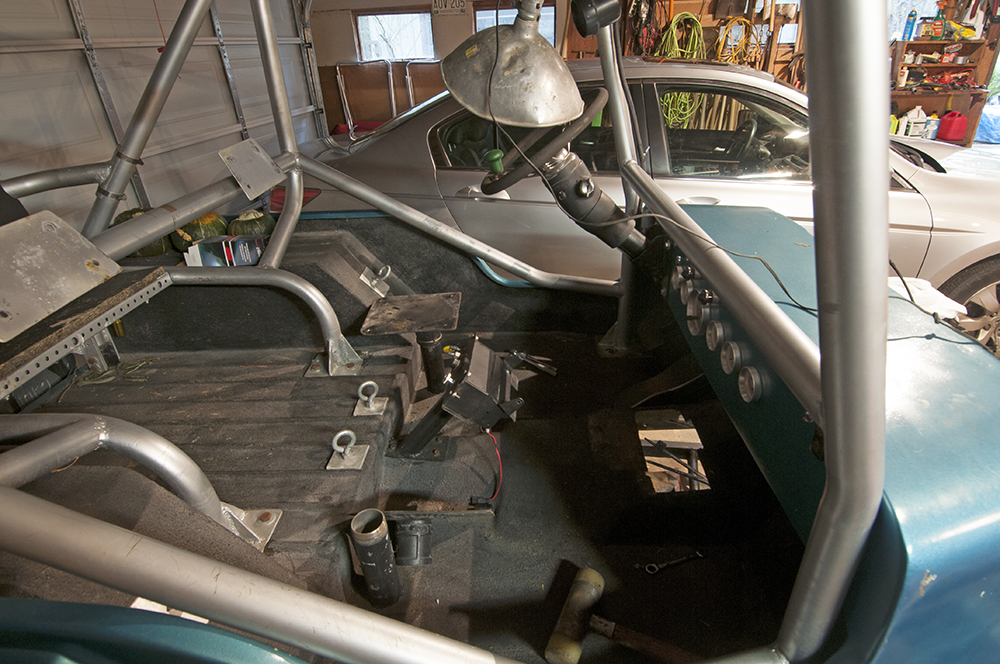
I also removed the seats. Posts welded to the frame stick up through the body (holding the body in position). Seat plates are screwed onto the body. The seats are bolted to the plates. Here the passenger seat plate has been removed and is sitting next to the post.
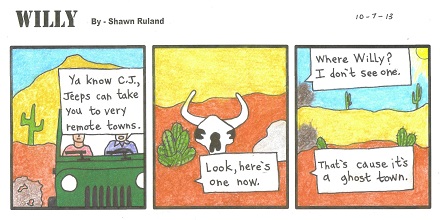
Mark posted this over at sellajeep.com. The illustration was done by Shawn Ruland, an artist that does some work for SellAJeep.
Paul found this special government-ordered CJ-6 with a little extra traction.
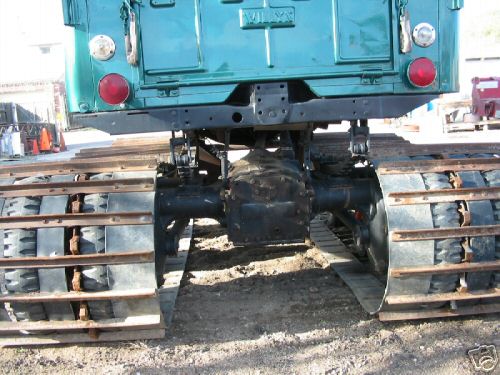
According to the website usual locomotion, “Sno-Ball Jeep CJ6 Snowcat, 1956. Contract between Jeep and Sno Ball Corp. created this vehicle to transport crews over deep snow. They were provided to the US Forest Service and the FAA. 20 were built in 1956 and only one is remaining. Tracks are rubber belted and the grousers are in steel. This Sno-Ball Jeep stayed in Colorado and was sold in 2004. The Snowcat used a Jeep engine, transmission and cab in 1956. Original wheels and axles could be mounted back but there was an extra frame lift.”
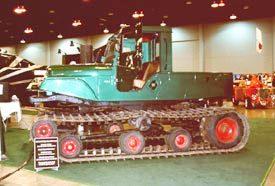
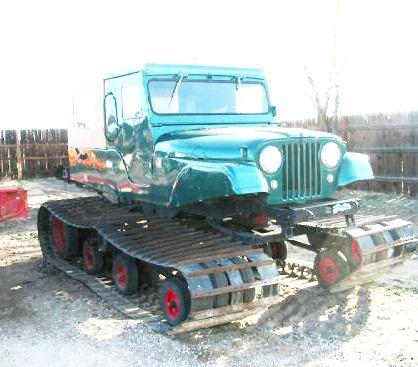
You can see all kinds of photos of an original Snowcat that appeared on eBay in 2004:
http://boyink.com/cj6/sno-ball-jeep-cj6-snowcat/
Leo found this video that compares a jeep to a Gator.
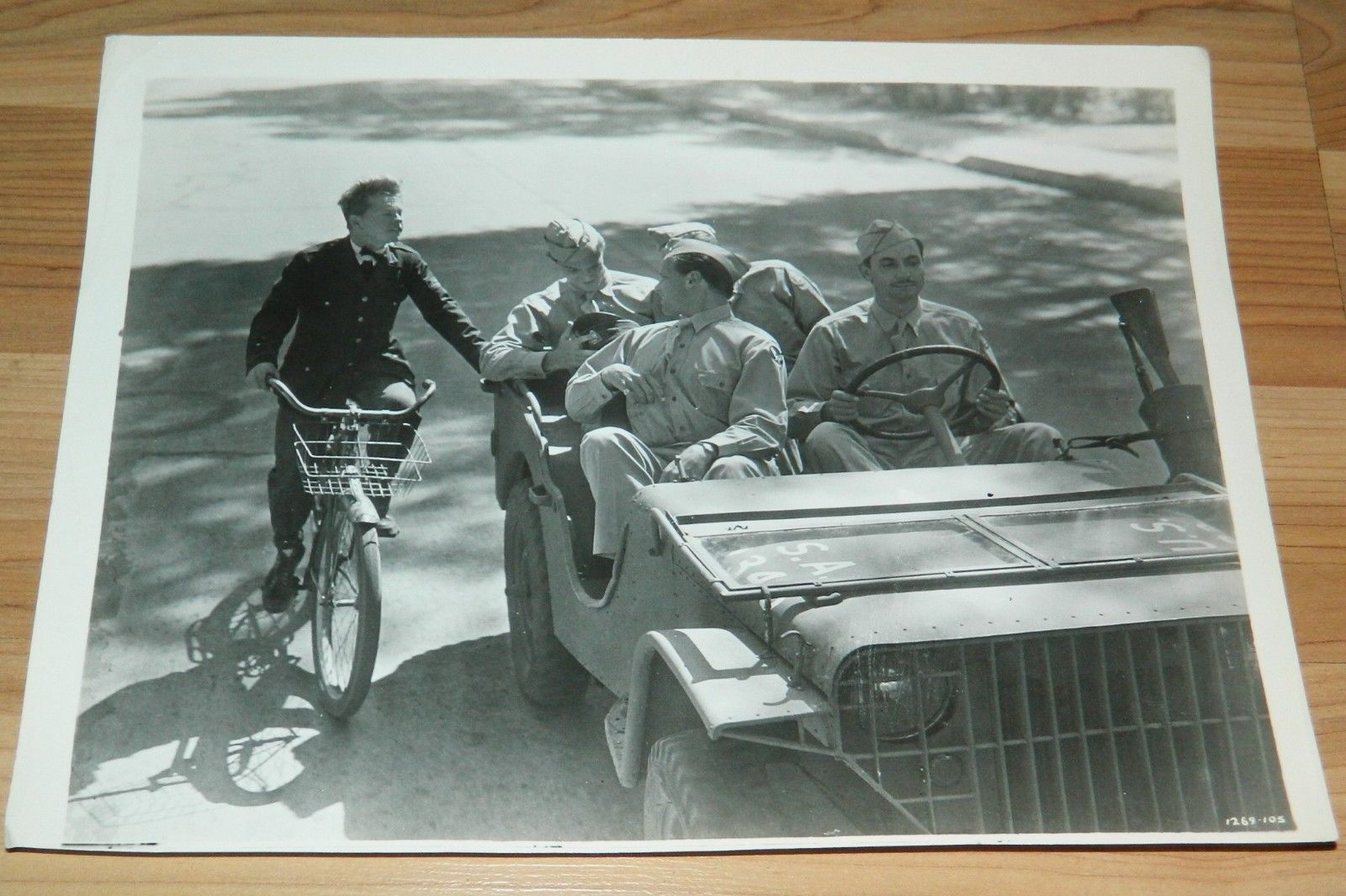
Here’s a 1942 Photo of a Captain’s Wedding: A Bride & Groom hitch a ride behind a jeep.
View all the information on ebay
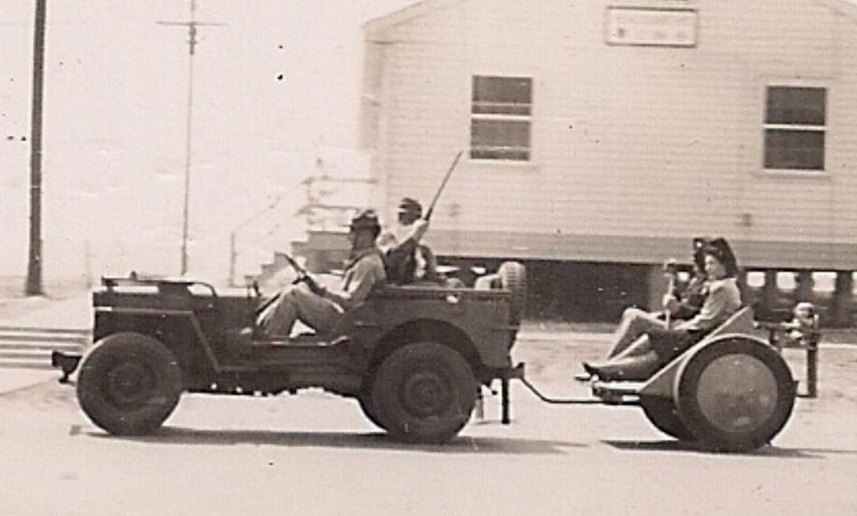
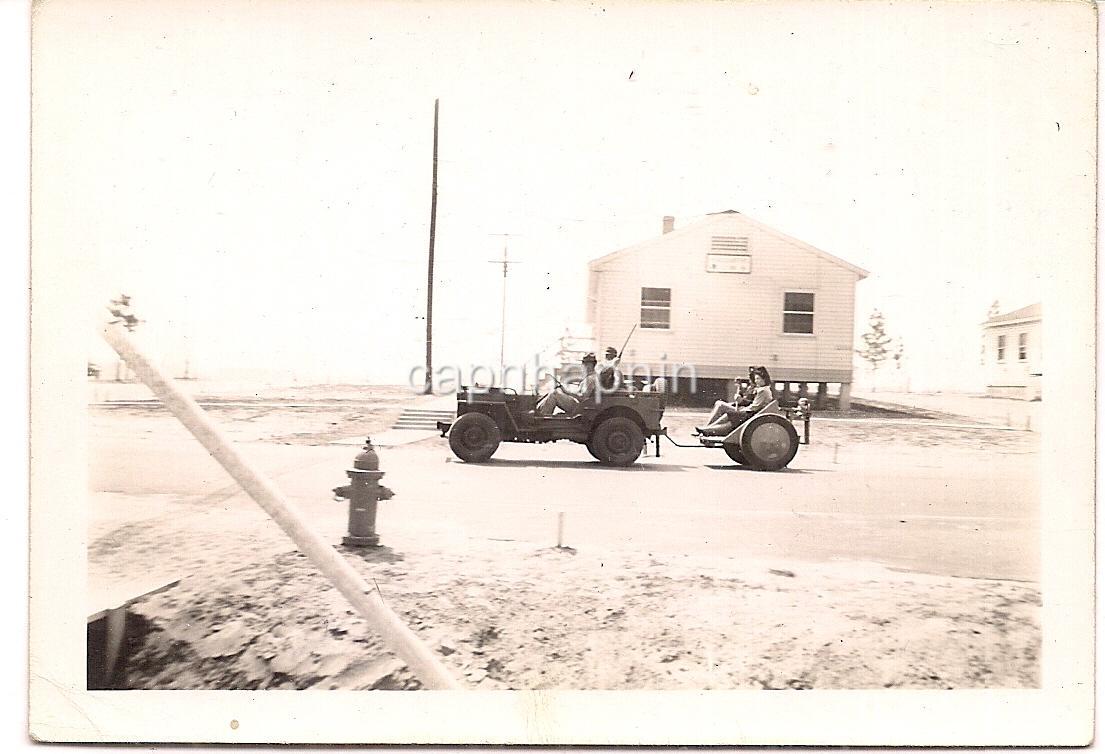
UPDATE: This photo was on eBay.
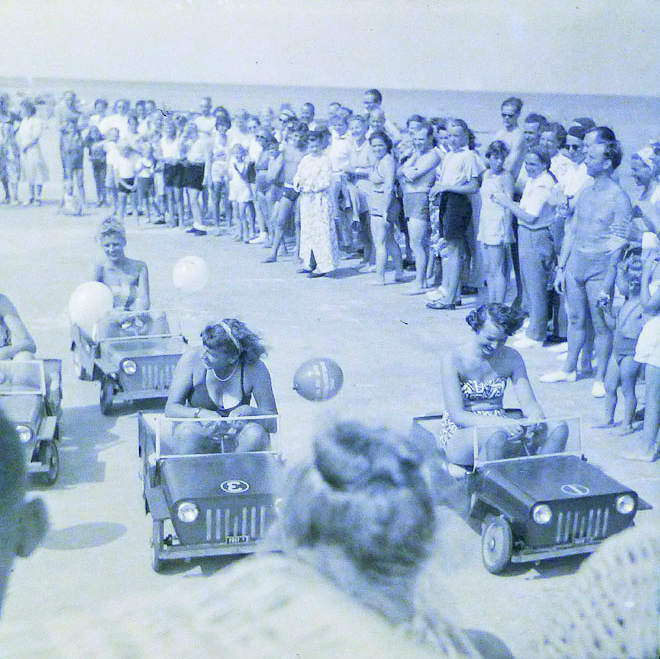
Here’s an interesting photo. Must have been a pedal jeep race of some type.
“vintage NEGATIVE photo BEACH GIRLS IN PEDAL CARS JEEP CAR 1950s
Condition: VERY GOOD (Please Note: condition is as shown above.)
Size: approx. 2½ x 2½ inch (35mm)(1 inch = 2.54 cm)
100% original | no copie or Reproduction!”