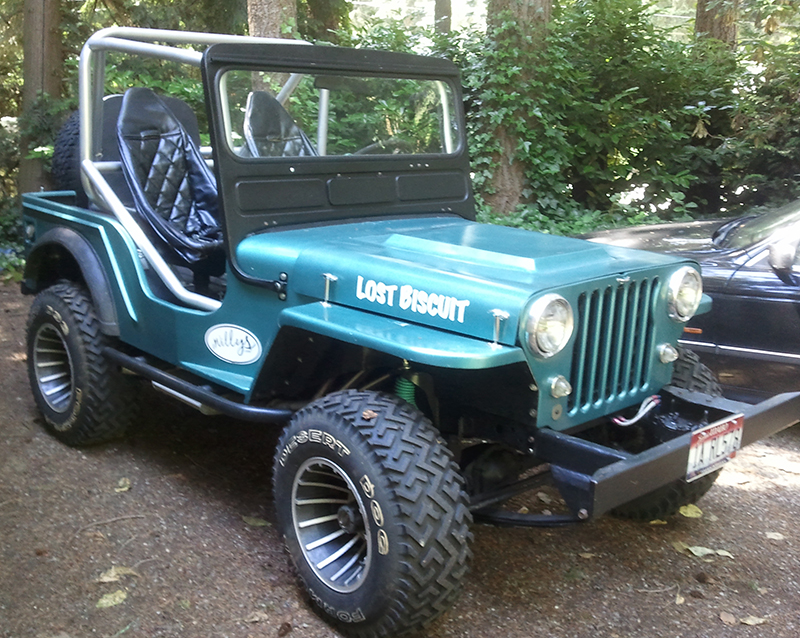
I’ve never been a big fan of the DJ-5s (just not my thing), but I think this might be the best use of a mail jeep since they stopped delivering mail!

emailNeed to contact me and don't have my email? Click on email button.
Welcome to eWillys.com, a website for vintage jeep enthusiasts. I update this website nearly every day with jeep deals, jeep history, interesting reader projects, jeep related info, and more.
These quick searches can help you find things on eBay. People list in the wrong categories all the time, so don't be surprised to see brochures in the parts area for example. This section used to be split into jeeps, parts and other categories, but recent changes to eBay will require this information to be recoded.
The links to posts below show jeeps grouped by models, condition, and other ways. Some of these jeeps are for sale and others have been sold. If you are unsure whether a vehicle is still for sale or not, email me at d [at] ewillys.com for more info.
There are plenty of interesting, unusual, historic and surprising stories related to Jeeps and their owners. In addition, some of these features have nothing to do with jeeps. This link will display all featured stories starting from the latest.
Looking for parts and not sure where to go? There are a variety of large and small new and used parts sellers both online and offline.
Importantly, the allure of buying a project jeep can be romantic. The reality of restoring a jeep can be quite different, expensive and overwhelming without the right tools and resources. So, tread carefully when purchasing a "project". If you have any concerns about buying a vintage jeep, or run across a scam, feel free to contact me for help, comments or concerns .
I’ve never been a big fan of the DJ-5s (just not my thing), but I think this might be the best use of a mail jeep since they stopped delivering mail!
UPDATE: I suggested that the Surrey owner hadn’t gone full out with the Pepsi theme, as the racer below had. Lester correctly points out that the Surrey represents an older color scheme (which was before my time). If you look through these images, you’ll see the Surrey has the earlier, full color scheme of light blue, red, yellow and white colors. Thanks Lester!
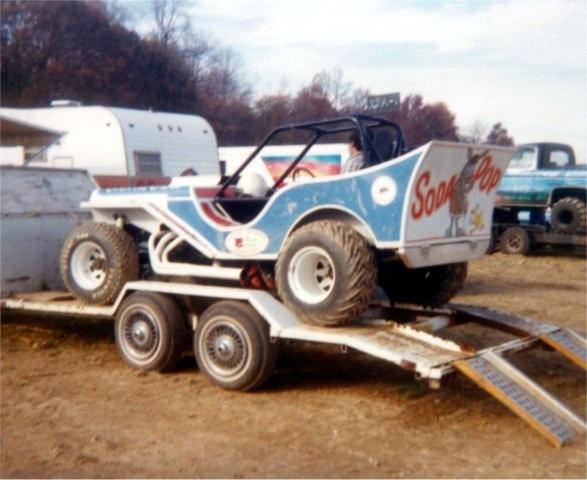
I’m sure the pepsi folks wouldn’t want to be left out, so here are 2 different pepsi jeeps.


I think this builder couldn’t decide between Coke or Pepsi. I found it at jeepfan.com.
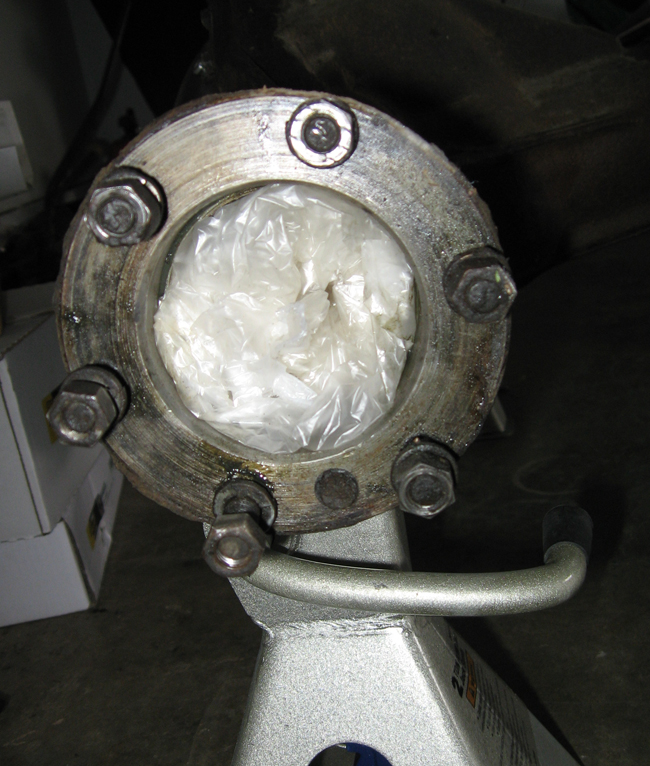
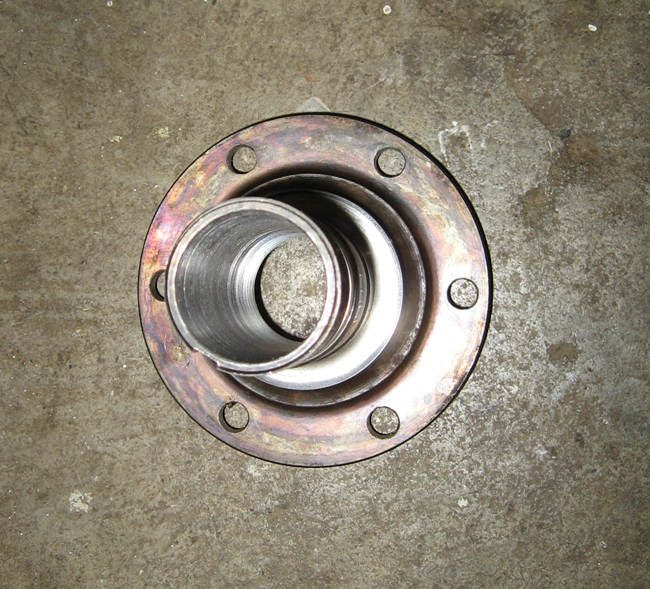
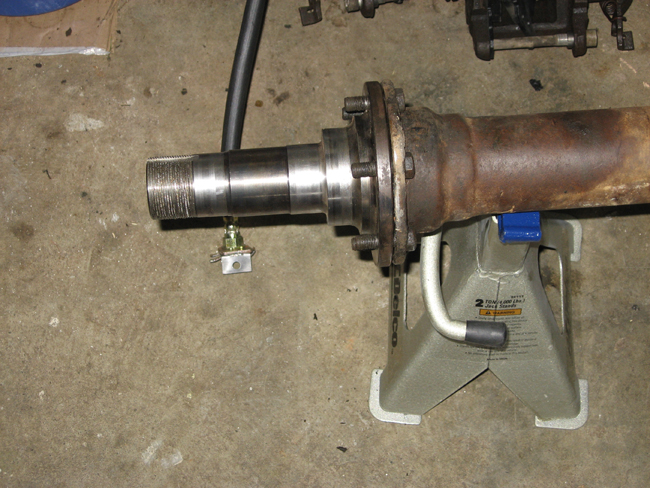
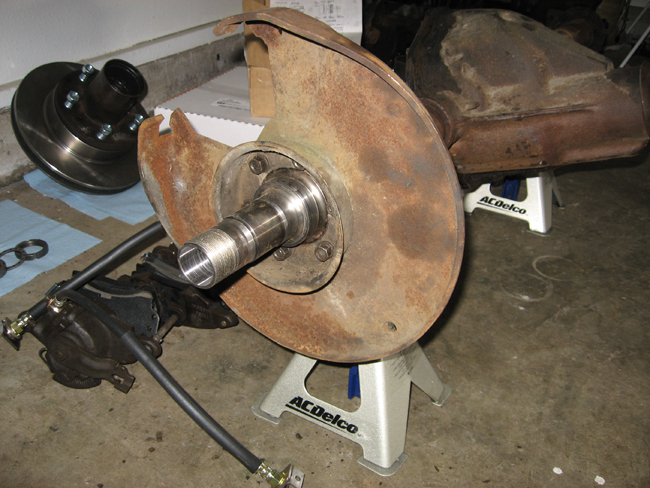
UPDATE: I initially had this as a front axle modification, which was clearly incorrect (the lack of a stearing knuckle should have been my first clue!)
Thanks to John for putting together the narrative and the images!
“Thought some other folks might find this interesting, especially those that have swapped to the D44 rear axle.
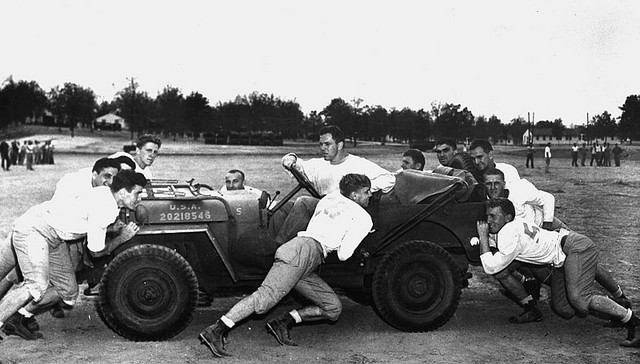
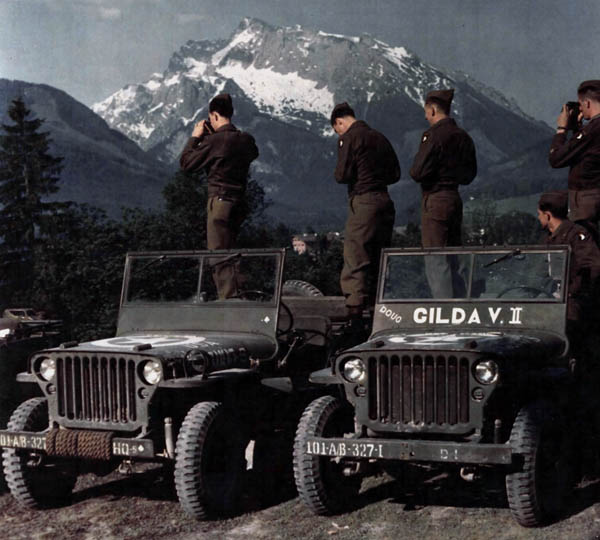
Bob forwarded some links to jeeps from the WW2 In Color website and the Lone Sentry Site.
FROM WW2INCOLOR:
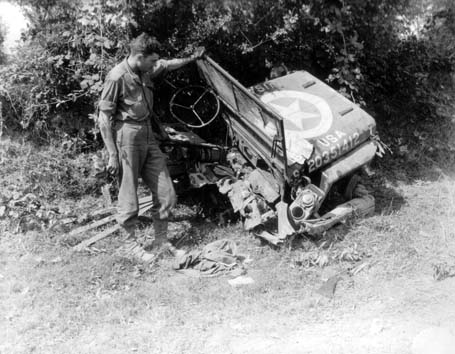
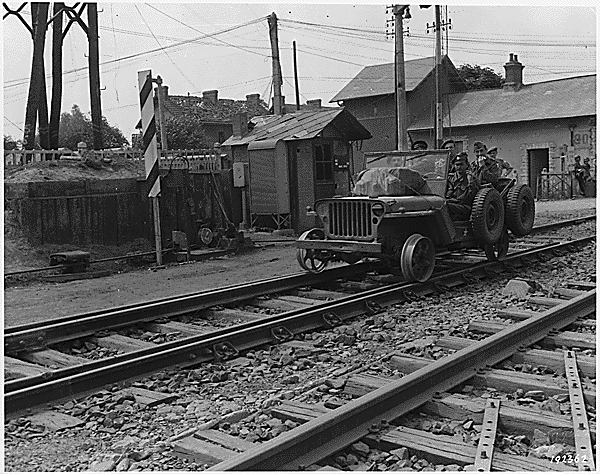
FROM LONESENTRY:
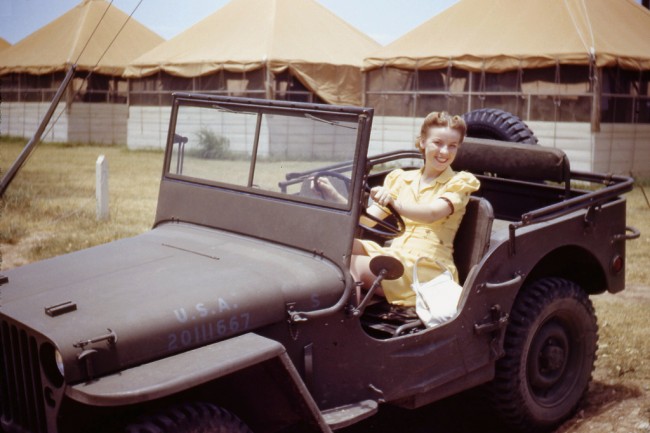
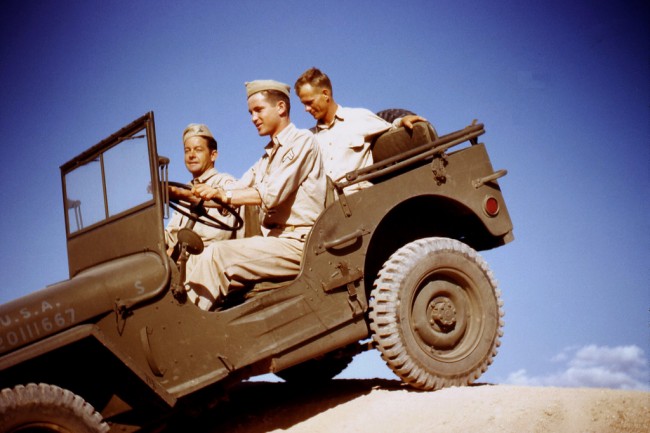
Bob pointed me to these two images taken by SFC W.E. Duggar while stationed at Fort Sill, OK, in 1942 as part of the 1st Infantry Division – Dixie Division, 167th Infantry, 3rd. BN. The first one is particularly wonderful.
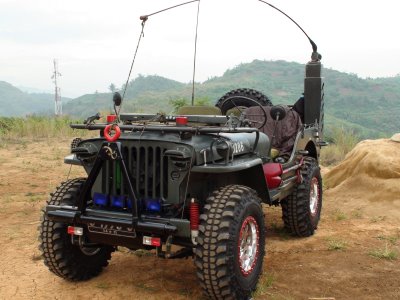
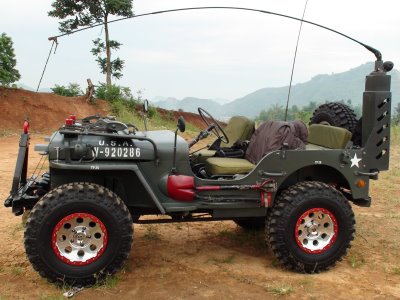
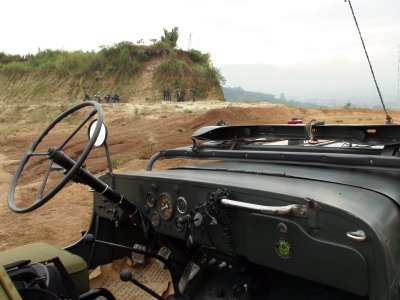
Rudolf has found a variety of interesting jeeps for sale in Bali. Here are pics of an unusual GPW.
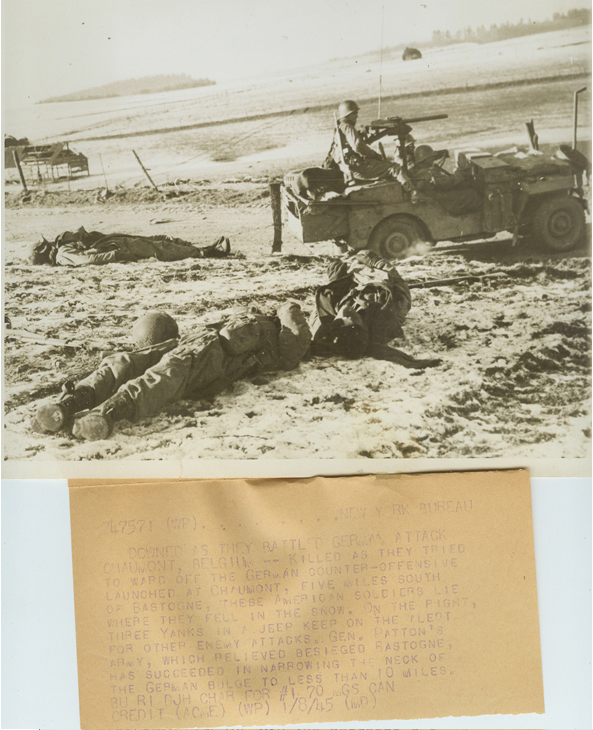
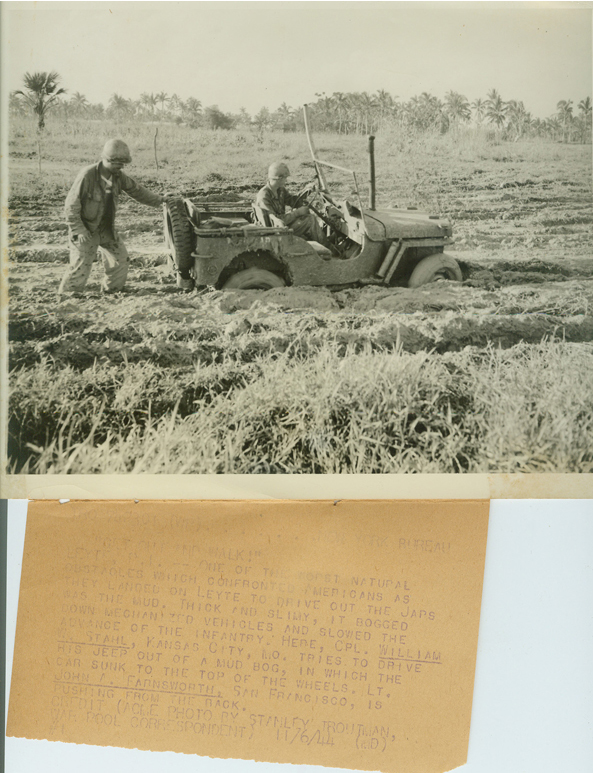
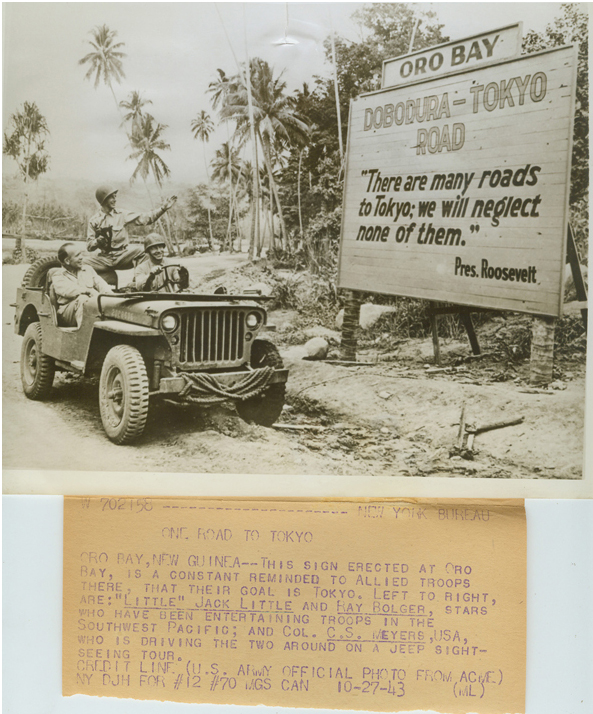
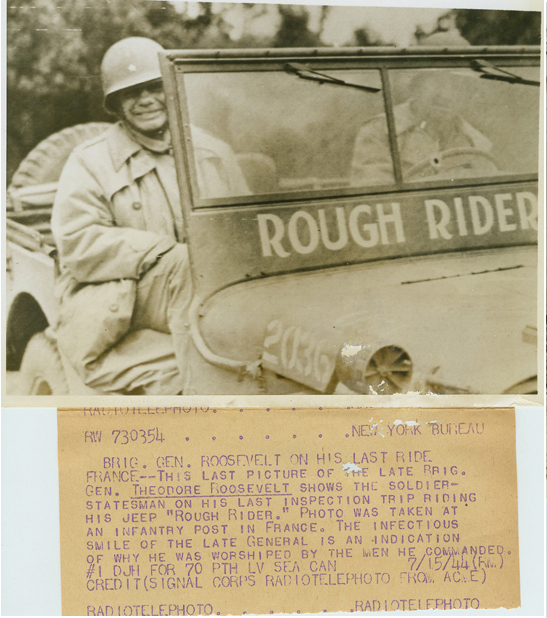
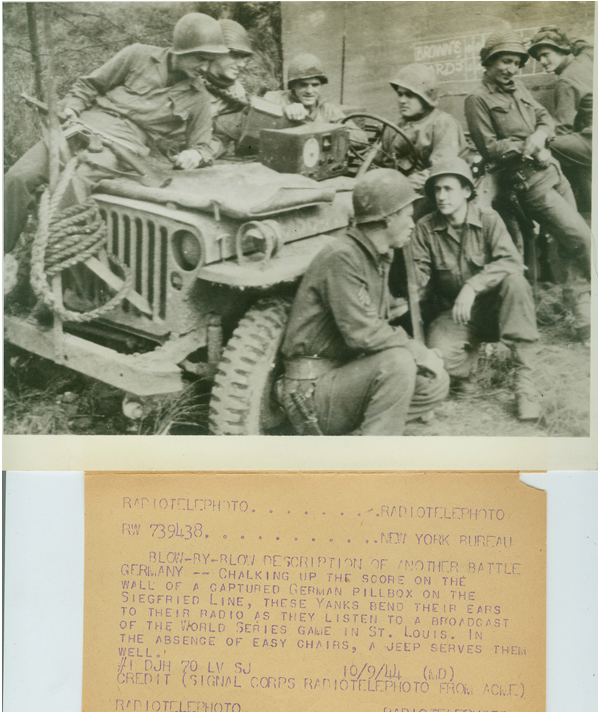
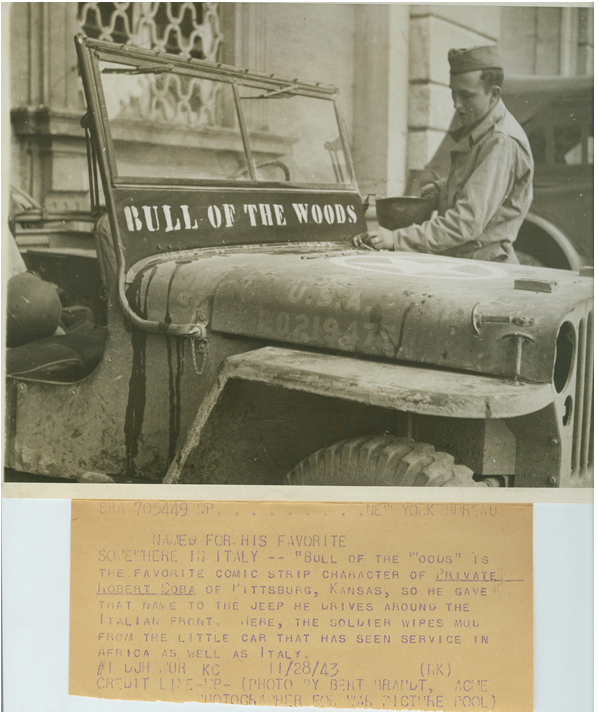
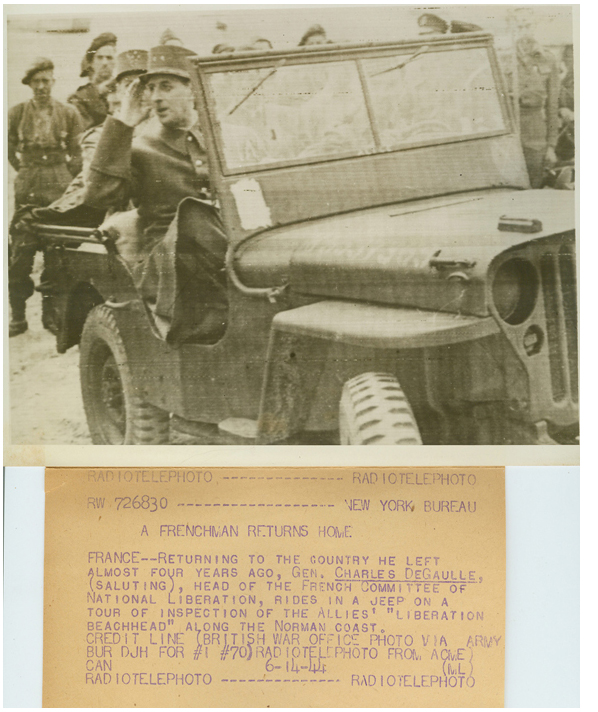
You can view the first group of images here and learn more about their history. he MacArthur Museum of Arkansas Military History in Little Rock, Ar, only exhibits one jeep (shown below), but they do have a variety of WWII Jeep photos in their archive, many of which include captions. Here are 9 of them. The photos are part of the Allison Collection of World War II Photographs, the captions of which come from the ACME wire service.
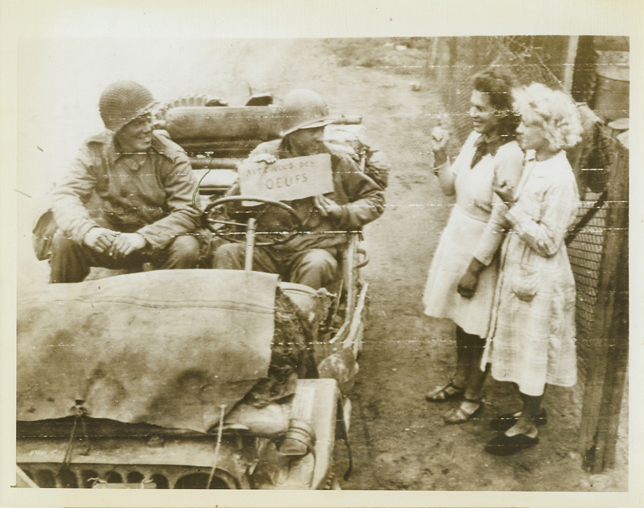
The caption for the image below is: Yanks Hunt Eggs (CQ) in France
France—Holding a lettered board written in French and meaning “have you any eggs?” two Yanks ride in a Jeep and hope for a positive answer from French girls in the city of Rumegies, France. Driver and sign holder is Pvt. Maury Sanders of Corinth, Miss. The other Yank, Pvt. Albert Frank, Burlington, VA., looks on. Credit: Army radiotelephoto from ACME.
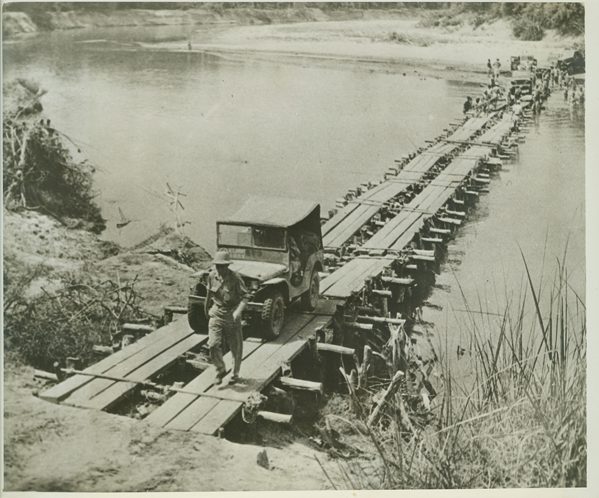
The Caption for the image below is: On one of the most dramatic journeys recorded in the annals of the war, so far, Lt. Gen. Joseph W. Stillwell, at the head of a band of 114 Americans, Burmese nurses, Chinese, Indians, Britons and Anglo-Indians, covered 140 grueling miles on their retreat from Wuntho, Burma, which began on May 4th, 1942. For days the band struggled through the torturous heat of the dense malaria-infested swamps and jungles of Burma, to reach the banks of the Uyu River, where they were forced to abandon the few Jeeps and trucks they had, to proceed on home-made rafts, down the river to the Chindwin and Thenge to Imphal on the Indian frontier. They arrived at their destination, Dinjan, India with only a few cases of malaria and heat exhaustion. Considering what they had been through, their journey was remarkably successful. Here, in a series of 25 official U.S. Army photos, just arrived from India, the story of the retreat is graphically presented. New York Bureau
This bridge was repaired by the Chinese on time, and Major General Franklin C. Sibert, starts ahead of the first Jeep in the column.
Credit: (U.S. Army Photo from ACME)
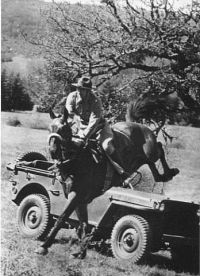
A writer, and ‘recovering ranch girl’, named Tamara Linse wrote a nice bit of history about the 115th Cavalry Horse Mechanized, which was a National Guard unit from Wyoming that served in WWII.
She notes that early resources were scare. She writes, “The 115th Cavalry was activated nine months before war was officially declared. The entire 115th Cavalry Regiment, all 1,086 men, was inducted into federal service on February 24, 1941, the day they boarded a train for Fort Lewis, Washington.
Like all wartime training facilities, Fort Lewis was unprepared for the influx of soldiers. The men trained with stove pipes for cannons, sticks and brooms for rifles, and jeeps marked “TANK” for enemy armored vehicles. Aircraft used sacks of flour for bombs.”
She also mentions that while some soliders were excited to see the new jeeps, motorcyles, and other mechanized vehicles, other soliders would only give up their horses when you pulled their reins from their (I hesitate to say cold, dead) hands.
In the article, she includes an image, courtesy of the Wyoming State Archives, which shows a horse jumping a jeep. You can check out the entire article here. You might also like to read why/how Men are Like Plants.
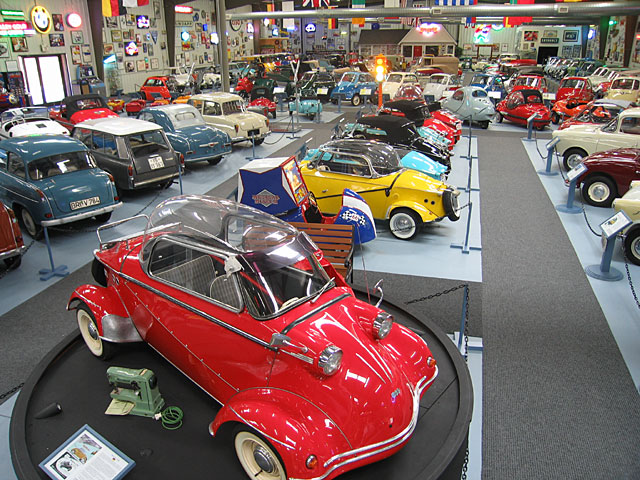
While looking up this Crosley (which I’m not quite sure is a Crosley), I discovered the largest Mircocar Museum in the world. The bad news is that it appears closed until Fall 2011 for renovations. However, you can look through the virtual tour to see the types of cars owned by the museum.