Features Research Archives

To Top

Drag Jeeps

• CATEGORIES: Features, Racing • TAGS: This site contains affiliate links for which I may be compensated.

UPDATE: An update on Rapid Transit

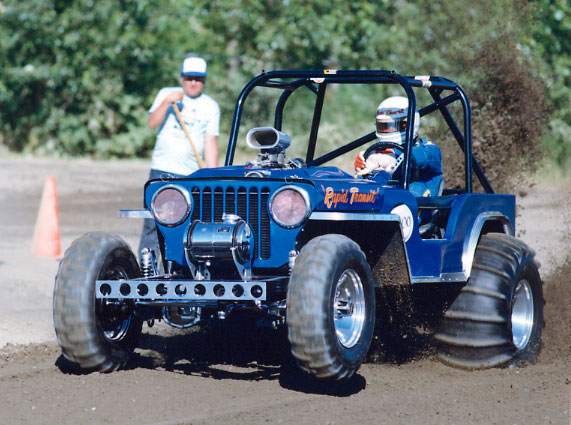
Jeff and I were exchanging emails about drag jeeps the other day.  We were both sharing our memories about Roger Monson’s drag jeep, Rapid Transit. As Jeff notes, it certainly had its own sound!

Jeff wrote “it had an actual belt driven blown 4cyl pontiac motor in it.  A small 471 blower, insane RPMs and crazy loud! If ya didn’t cover your ears when it came by it HURT.  I saw it run @ the old firemountain drag strip @ washougal in the mid 1980s”

I’ve included a pic of it below.  Wes has collected a variety of old school Sand Drag vehicles at offroadracecanada.  Check it out!

[fb_button]
 
To Top

Builds: David’s ‘New’ Wagon

• CATEGORIES: Builds, Features This site contains affiliate links for which I may be compensated.

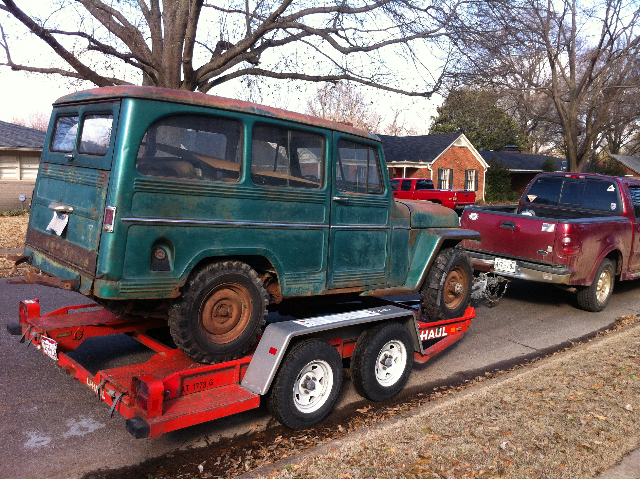
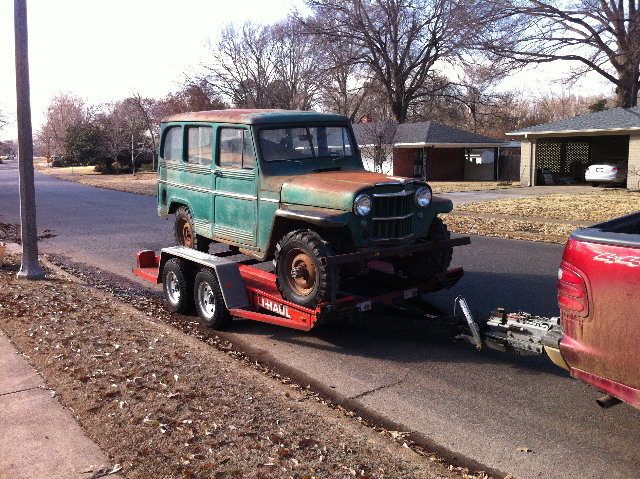
David wrote to me today to tell me about his first wagon project.  He got a great deal on it, especially for an eastern wagon, and has a restoration plan in place.

He writes, “My rough plan is sort of a rolling resto on a budget at first. Specifically, get motor running first…then brakes. Next will be things that need to be done for safe driving (signals, lights, windows fixed, emergency brake etc.).

After that I’d like to sand/blast to metal the worst of the unprotected areas (hood, roof paint pretty much gone) and epoxy paint and primer them, then gradually work on other issues. But first things first, have to get running and driveable cuz the wife is not gonna be very tolerant of it taking space in the garage if I can’t move it easily, lol.

On down the road I’d like to do a frame off. I’m not one of those chop em up and put a v-8 in it kinda guys, but not opposed to some mods like a brake upgrade or electric wipers to improve driveability. My overall goal of restoration will be to keep it as original as possible but I plan to use and drive it, not restore to mint or show condition (but who knows what the future will hold? I don’t plan to change anything that couldn’t be changed back to 100% original easily)”

Best of luck David!

[fb_button]
 
To Top

Hubert’s Must-See Jeep Family Site

• CATEGORIES: Artists/Drawings, Features, Website This site contains affiliate links for which I may be compensated.

Craig dropped me a note today about an old friend of his.

Craig writes, “I was doing a little web surfing and found an old lost friend, Hubert Cossard.  I had been in contact with Hubert some 9 years ago about some awesome drawings he had made of Forward Control Jeeps.  There were definite communication barriers back then as I am a little behind on foreign languages (even known to destroy my own language a bit!) [ed note: you aren’t alone!] but was in total awe of Hubert’s detailed drawings.  Like many internet sites, there one day and gone the next,  Hubert’s site disappeared.

Though I lost contact with Hubert years ago, by accident I just found his new, greatly expanded site.  On the Jeep Family link there are drawings of just about every Jeep ever built or thought of.  It’s a gotta-check-out-site!”

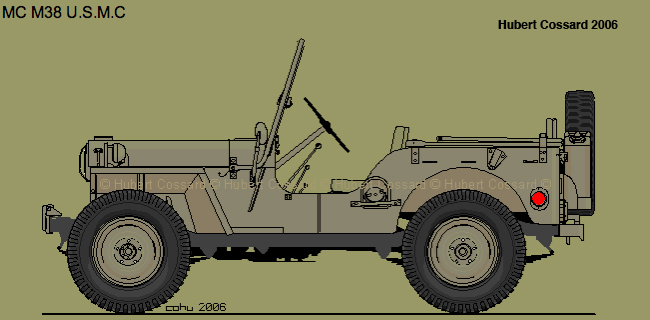
One quick trip to the site and I can only second Craigs description of the drawings.  I couldn’t say for sure if they are scale-exact drawings, but they sure have the detail of someone who knows their jeeps.  The site is in French, so if you need to translate anything, you might try Google Translate.

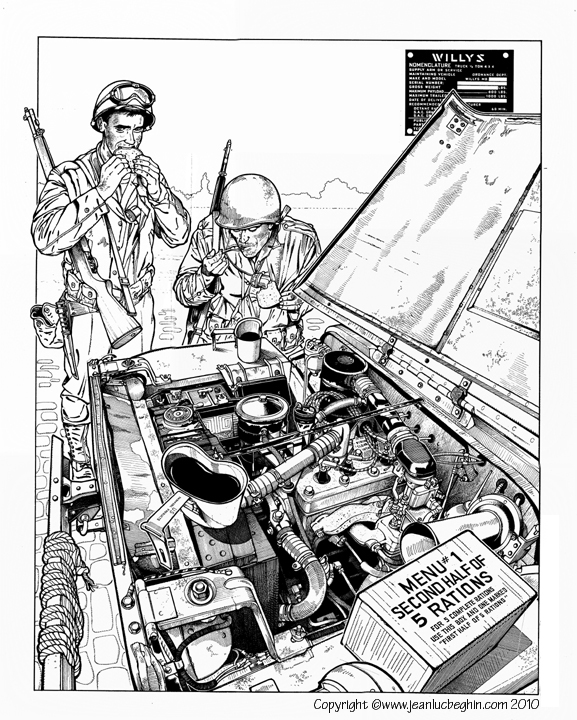
Here is an example of Hubert’s work below.  Check out all of them here.

[fb_button]
 
To Top

Devon’s Power Steering Setup

• CATEGORIES: Features, How To This site contains affiliate links for which I may be compensated.

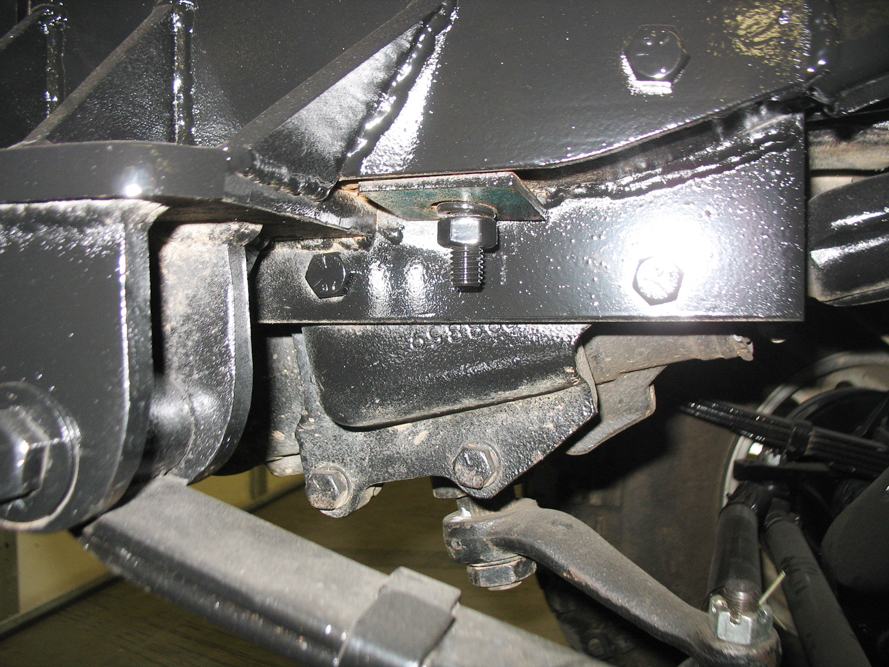
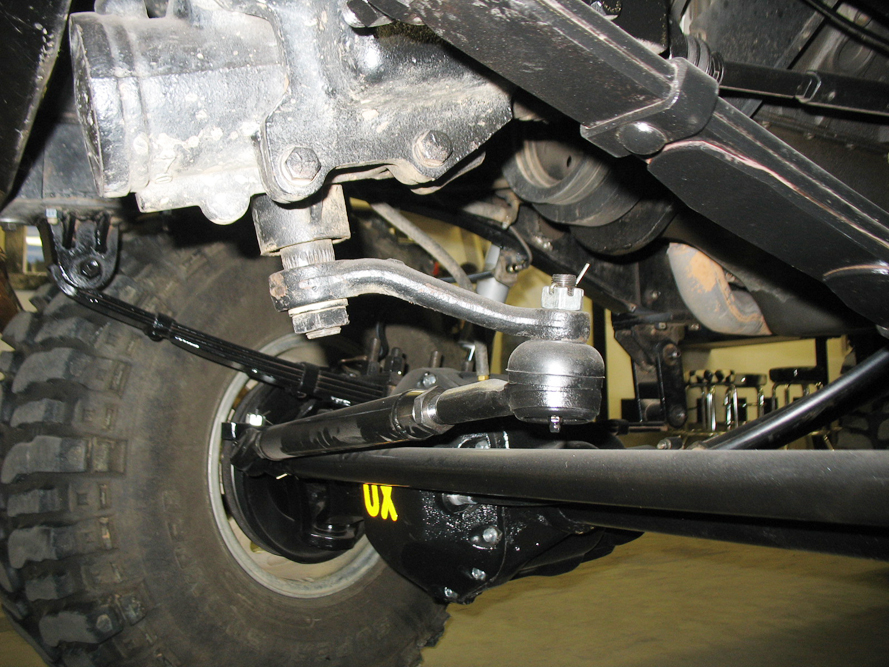
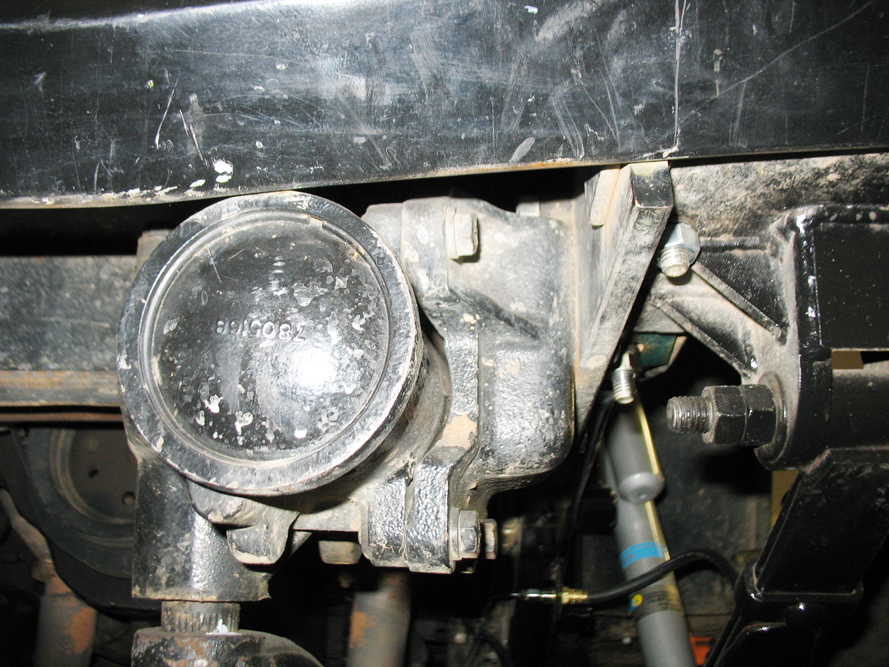
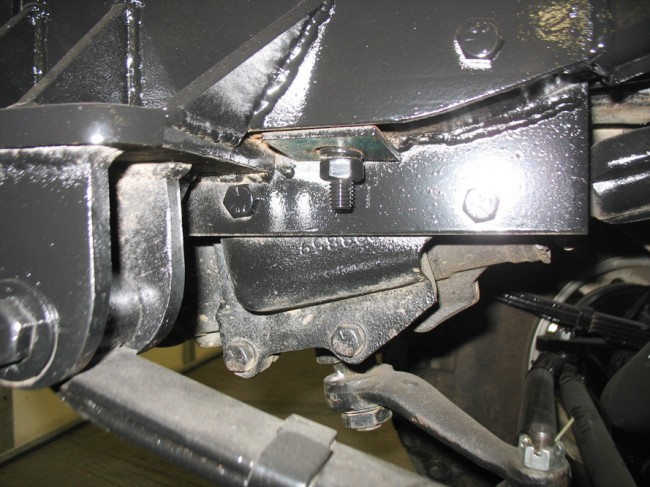
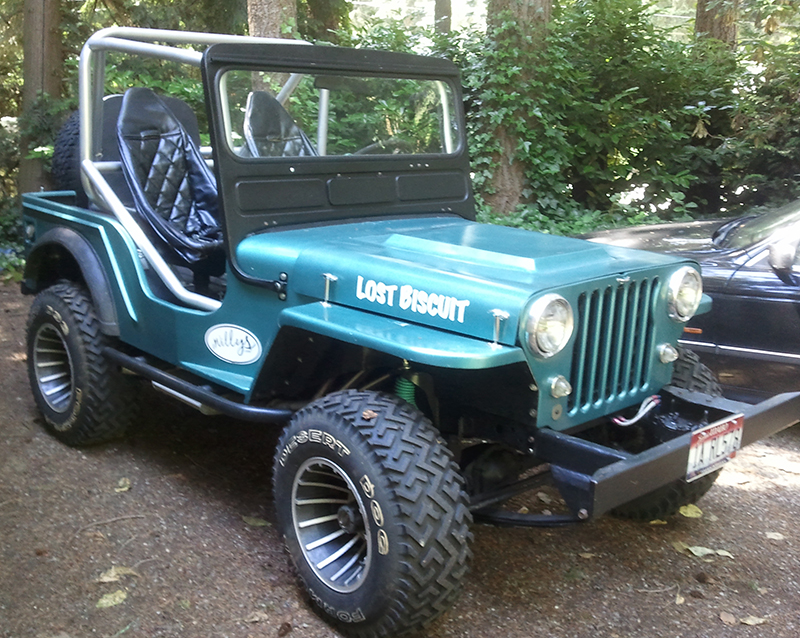
Greg asked for a few pics of the Steering combination on the Eller’s Jeeps, so Randy climbed under Devon’s Jeep to snap a few for us. Thanks Randy!

Here is Randy’s description, ”

I took a few pictures of the Saginaw steering setup in Devon’s MB but they were mostly taken from below because of his winch plate covering the top.  It is a little unclear just how it all works without the top view.

Dusty will be bringing his CJ2A back up here in a few weeks and I think it will be easier to get good pictures from his Jeep.  It still has the stock column in it which is what Greg is interested in.  I might have a spare steering box mount to take pictures of as well.

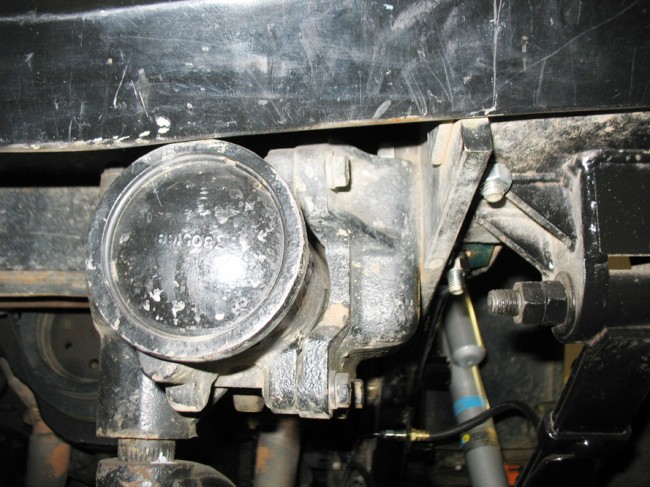
Picture 1 was taken from the driver’s side tire.  The frame was plated on the inside with ½ inch steel and protrudes an inch or so below the frame rail.  The outside plate is 3/8 and is what the spring mounts are also welded onto (the Scout II axles require outboard spring mounts).  3 of the 4 steering box mount bolt heads are visible; the 4th bolt was welded inside the frame rail because I wasn’t certain if it would interfere with the spring mount if it passed all of the way through.  The 2 bottom bolts from the steering box mount to the steering box are also visible; the 3rd bolt is visible in picture 005 on the top-front of the steering box.
Picture 2 shows how the steering box mount lowers the steering gear and in conjunction with the drop pitman arm almost eliminates bump steer even though this Jeep has probably 7 or 8 inches of lift.
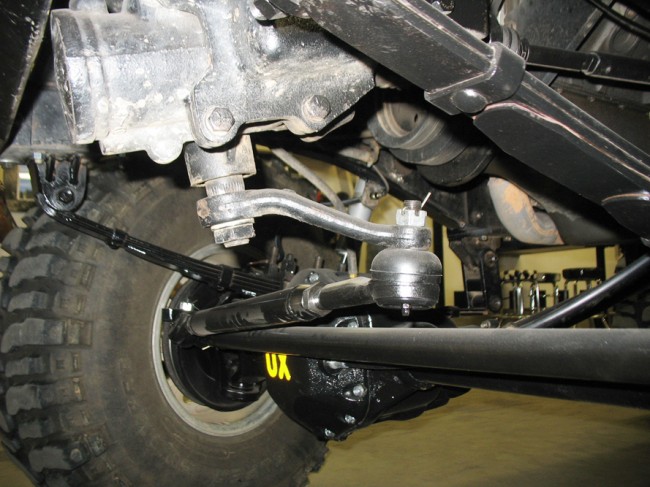
The long bolt that protrudes down through the frame rail is one of the winch plate bolts and the other one you can see in Picture 3 ties the bumper and spring mount together.  It is a pretty sturdy assembly with the plated frame rails, spring mounts, steering box mount, winch plate and bumper all tied together.  The frame horns had to be cut off to plate the frame rails; the passenger side frame rail was also plated inside and out.  This mount allows the steering arm to pass underneath the stock round crossmember and it works well with aftermarket motor mounts.”
[fb_button]
 
To Top

The Story of the Bantam BRC … A Movie?

• CATEGORIES: Features This site contains affiliate links for which I may be compensated.

UPDATE: Paul Bruno (aka the History Czar) provided a nice response to this post about his movie effort.  Please check it out.

Some of you might remember the video I posted back in 2009 of the recreated, original BRC (if you haven’t, check it out here).  It seems that the Bantam and its owner, Duncan Rolls, have been touring a bit, landing in an interview with the History Czar in August of 2010 (both the History Czar, seated, and Duncan are pictured below from Nov 2010).

In December of 2010, the Czar blogs about “his and his wife’s 11 year odyssey, along with Max Freedman these past 5 years, to have a feature film made about the creation of the first Jeep, the Bantam Reconnaissance Car (BRC),  in Butler, PA USA during the summer of 1940.”  So, the Czar seems to have a real passion for the Jeep story.

You can go here to check out their facebook page and follow their journey to make a movie:  http://www.facebook.com/pages/manage/?act=39829251#!/pages/The-Jeep-An-American-Triumph/110738008090

Read more about the premise and synopsis here.

I read through the premise and synopsis.  Personally, I’d take a little different tack with the story.  I would place the true story of the original jeep as the background for telling another, fictional story about some type of relationship (love story like the Titanic, father/son, coming of age, etc).

I’ve thought a lot about this because I too have wondered about developing a jeep themed movie, though it would be about the heyday of jeeping/trail riding/clubs/racing of the 70s.

A good example of how such a story, like the Bantam story, doesn’t work as a stand-alone story line can be seen in the Tucker movie.  While I enjoyed the movie, because it was a story about the struggle to make a cool car, most people weren’t all that compelled to go see it, because of the same reason — it was only about the struggle to make this cool car.

That’s just my 2 cents, which might not even be worth that much.

[fb_button]
 
To Top

Hard to Find NOS Willys Parts out of Alaska

• CATEGORIES: Features This site contains affiliate links for which I may be compensated.

Paul writes, “Many years ago I went thru the front and rear axles on my Willys, changed the ring and pinion gears from 5.38s to 4.27s, replaced all bearings, seals and races with new before repainting the housings and attaching new springs.  For some reason the steering knuckle seals came loose from the metal attach covers so today I went to the local military surplus yard (E. A. Patson Parts and Equipment 907 333-5682) in search of new replacement parts.  I was able to purchase new old stock knuckle seals, differential cover gaskets and the speedometer drive gear for what I felt was a very reasonable cost.

Both the buildings, land and the surplus parts are all for sale so this fantastic source of old Jeep parts is going to go away soon.  I just thought I’d mention that all these old military vehicle parts are for sale, they have lots of parts for some types and some parts for lots of other types.

So, if anyone out there reading EWILLYS is looking for a hard to find part they might want to give Rod a call.  He’s pretty sharp on the old stuff and he understands the idea of repair instead of replace.

I’ve attached a photo of the knuckle seal packaging (unopened) with the packing date from Willys Overland Motors.  I think it’s pretty neat.”

[fb_button]
 
To Top

Identifying A Strange Looking Engine Block

• CATEGORIES: Engine, Features, How To This site contains affiliate links for which I may be compensated.

Brian wrote me asking if I knew what type of engine this was.  He pulled it out of a old WWII Jeep and didn’t recognize it.  He wrote that the Head cast was #634816 and the block casting#630282. In particular, he noted the exposed cylinder tubes.

I told him I didn’t know what it was, and confessed that I had never worked with any MB/GPW motors, but I would do my best to figure it out (I do enjoy a good internet hunt). After searching through various images I could see it was similar to a MB and GPW motor, but was also different.

For example, you can see examples of GPW heads here at Dino’s site and though it looks similar, it’s missing various features.  Here is an example of MB block.  In fact, if you go here, you can review all kinds of WWII engines.

After trying various keyword images searches, I tried typing in the casting numbers and that is when I discovered that the head was a pre war head from a Willys Model 37. So, then I looked at prewar Willys.  On this page http://clubs.hemmings.com/clubsites/wocv/willywilly/willywilly.htm on the fourth pic down, you can just make out, just below the distributor, similar indentations on a 1938 Willys.  Here is a better look at a prewar block.

[fb_button]
 
To Top

Bill Shares a Great Old Pic

• CATEGORIES: Features, Old Images This site contains affiliate links for which I may be compensated.

Bill bought this original photograph a decade or more ago.  It depicts what appears to be a Ford GP. I’m kind of wondering if this photo was of a civilian, as that looks like a license plate on the front?  Bill, can you make out that plate on the grille from the original photo?

Bill writes, “On the front (of the image) is a great pic of a soldier, obviously proud of a Jeep he is driving.   The best part is the note he wrote in pencil on the back of the photo to his family or friends back home….   it reads:   “This is what is called a jeep.   It will seat 4 men & go like hell

Thanks for sharing Bill!

[fb_button]
 
To Top

Paul Re-plates His Plates

• CATEGORIES: Features, How To • TAGS: This site contains affiliate links for which I may be compensated.

Paul continues to make progress on his build, though he does have a habit of becoming side-tracked with wood projects (if I am a Foodie,  he is a Woodie).

Paul writes, “The local exotic wood store has been letting me pick over the wood shipments right after they’re unloaded and this has caused some trouble with overheating my credit card.  While I’m still making progress on the never ending Willys project, money has been in short supply so many of these projects have to be low buck items.  One of the cheaper but necessary jobs was to repaint the brass data plates (a total of six plates) originally installed on the M 38.  While I really wasn’t looking forward to working on these plates ( lots of trouble for very little progress) I felt the appearance of the Willys would be improved by having bright and shiny data plates installed on the heater duct below the base of the windshield.

I use a really strong liquid paint stripper to remove the original black paint from the data plates. After the paint is gone I do a chemical wipe with lacquer thinner then gently rub the bare brass with a fine grade scotch pad before doing another chemical wipe followed by the spray can black. Cheap, easy, and quite time consuming but the finished plate looks pretty good.

While it isn’t difficult to redo these data plates it is real easy to screw up the paint (once the new paint is applied) while cleaning off the lettering and then have to start all over again.  I’m using rattle can glossy black spray paint to apply two light coats on each plate and I let them dry for one day after the second coat.  After the paint is dry I very carefully block sand the plate with 400 grit sandpaper with the plate supported on a thick, flat surface.  I’m using a 3/4 inch thick slab of granite (it’s flat and cheap) so if I didn’t damage the paint during the sanding process I spray a very light coat of clear over the data plate and let it dry for another day.  Don’t spray a heavy coat of clear, it lifts the black paint which results in more clean up time and then you have to start all over.  I figured this out the hard way so you wouldn’t have too.  Geeze, what a guy!

Anyway, if things went well you should have a new appearing data plate to attach to your Willys.  I’m still working on the remaining four plates because I got a little careless while sanding  but the first two plates look pretty good.  I’ve attached three pictures showing the stages of data plate repainting.

1. Cleaned Plates with paint removed.

2. After paint is applied.

3. After paint is lightly sanded off.

[fb_button]