Features Research Archives

To Top

Leigh’s Trip Through Australia Part III

• CATEGORIES: Features This site contains affiliate links for which I may be compensated.

This is Part III of Leigh’s trip across Australia in a 1944 Ford GPW. Read Part II here.

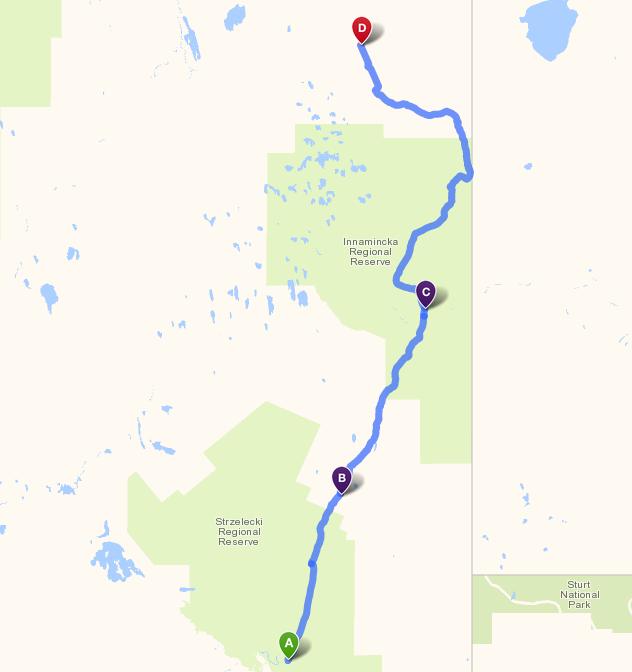
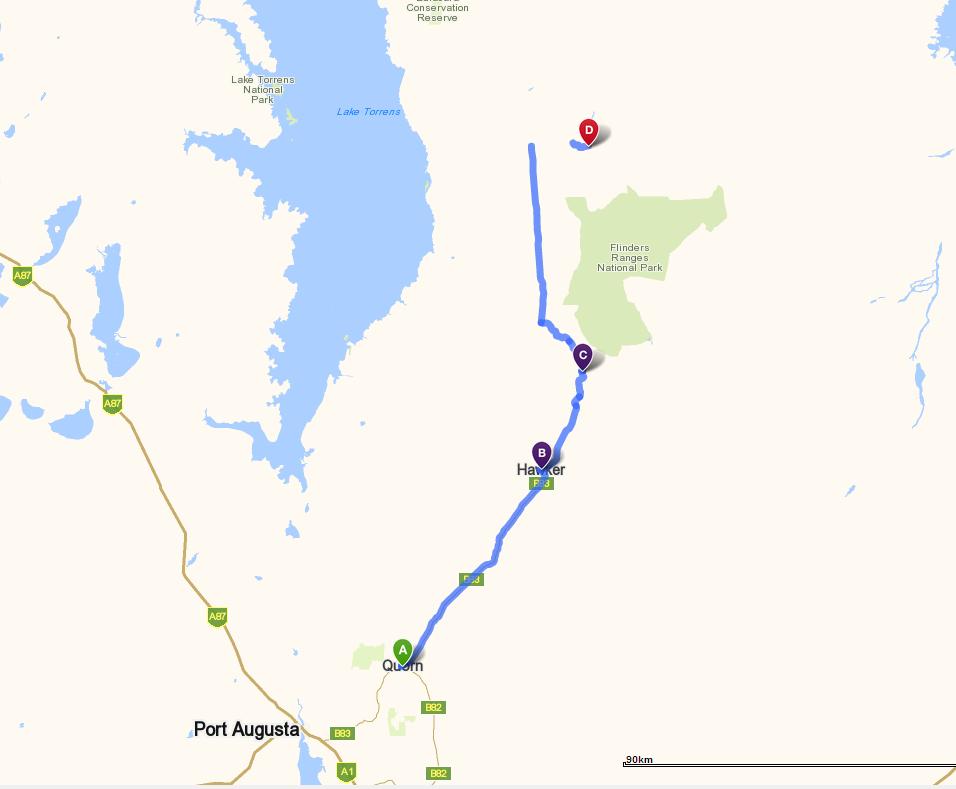
Map 3

Map shows the Billman to Montecollina leg of their journey.

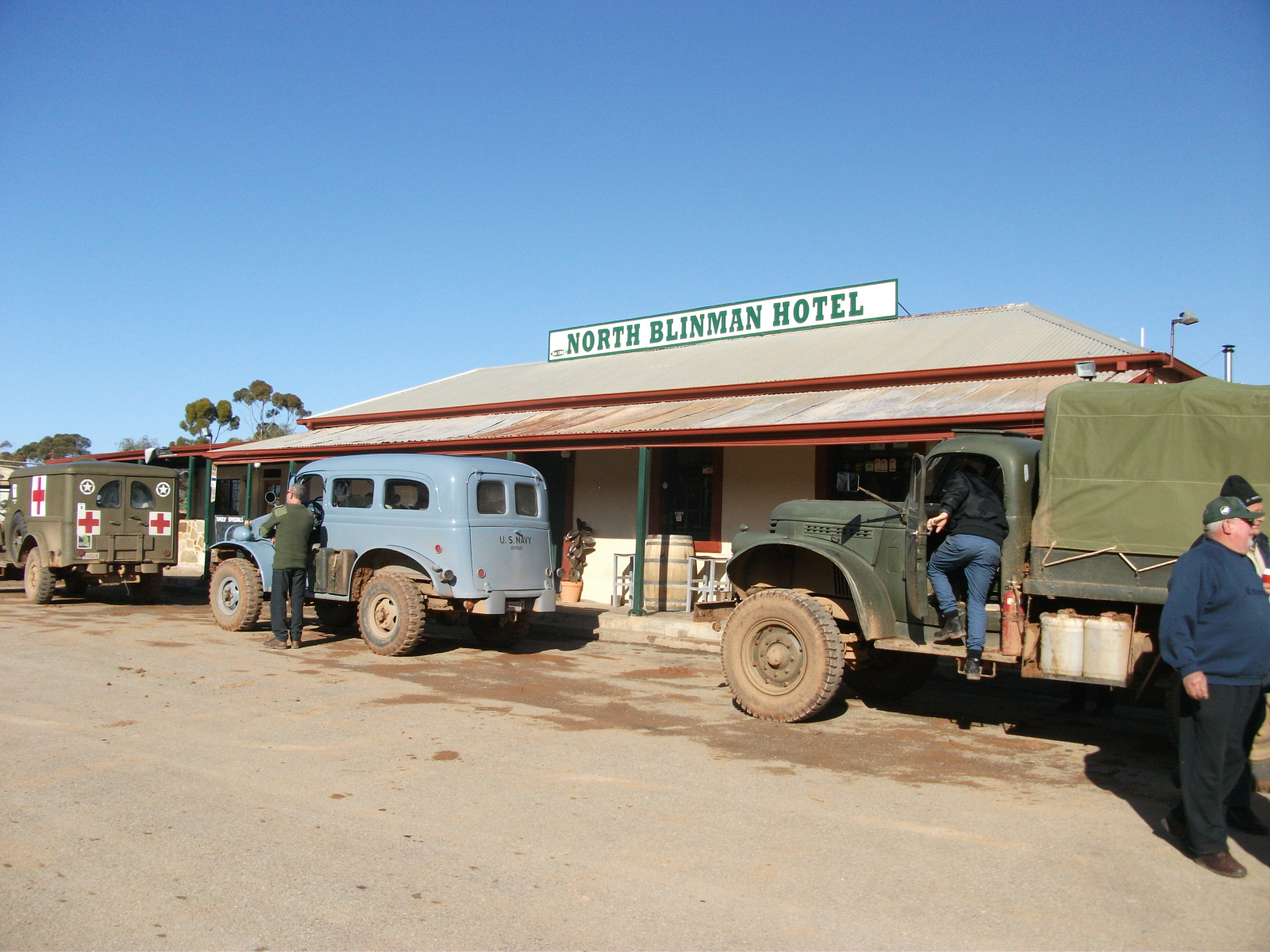
Next morning we awoke to a clear sky – finally, and set of for the small town of Blinman, the town began with the discovery of Copper in 1859 and at its peak had a population of over 1500. today this peacful settlement has a permanent population of just 22, plus residents of the surrounding pastoral properties. It “boasts” a General store, Post Office and Hotel.

Blinman Hotel

Blinman Hotel. Nothing but the finest hotels for the intrepid travelers!

After our first machine made coffee for nearly a week we moved on toward our next stop, Leigh Creek (cannot lie, it is named after me!) in brilliant sunshine, everyones spirits had clearly lifted. Stopping briefly for a break at historic Beltana, now a semi-ghost town which has important links with the Overland Telegraph, Transcontinental Railway, Australian Inland Mission and Mining.

Historic Ghan Railway - Beltana Siding

Historic Ghan Railway – Beltana Siding

Reaching Leigh Creek around lunch time most took the opportunity to have a store bought meal and yet another coffee, such luxury, additional supplies and fuel were purchased as this was to be the last opportunity to do so until we reached Innaminka in four days time.

Leaving Leigh Creek the road deteriorated rapidy which was a sign of things to come with truck size corrugations in some sections and a surface like broken bricks in others playing havoc with seventy year old Jeep suspensions and drivers nearly as ancient! The three Mercedes Unimogs on the other hand weren’t feeling a thing!

Corrugations & Big sky!

Corrugations & Big sky!

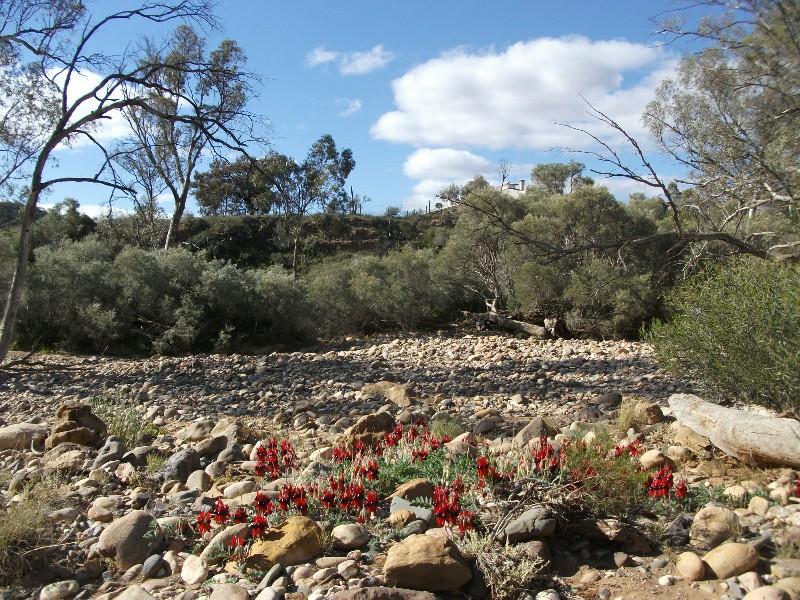
Sturt's Desert Pea - Balcanoona

Sturt’s Desert Pea – Balcanoona

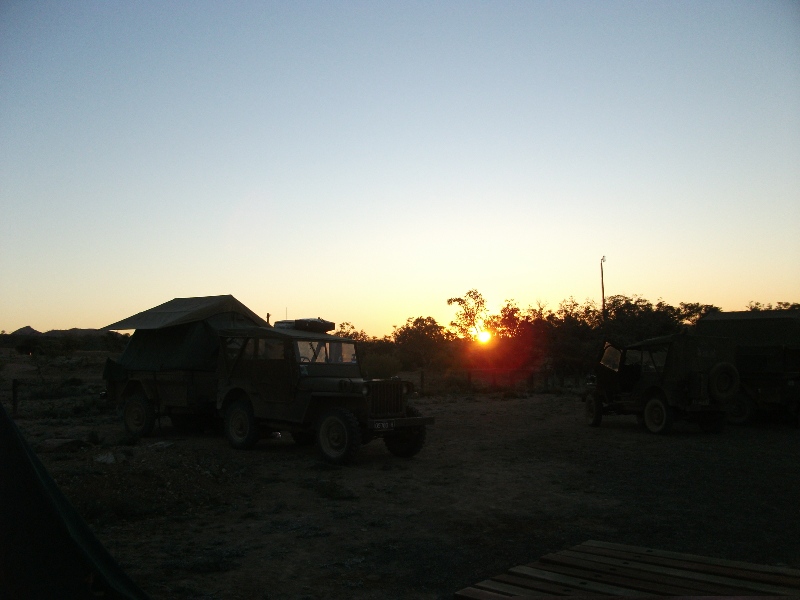
Camping that night at Balcanoona Station in the Gammon ranges we could witness for the first time this trip, the stars, as can only be done in Central Australia – brilliant.

Sunrise at Balcanoona

Sunrise at Balcanoona

As the next day was a lay day many of us decided to visit the iconic Arkaroola before heading to Montecollina Bore via Moolawatana Station where Australias version of the Great Wall of China crosses the track, the Dingo or Dog fence as it is commonly known, a six foot high 5614 km (3488 mile) long fence that was built in the 1880’s to keep the Dingo, Australias only native wild dog, out of the fertile south-east part of the continent to protect sheep flocks. It is the worlds longest fence stretching from Jimbour near the Queensland coast to end on the cliffs of the Nullabor Plain in South Australia.

Dogfence

The Dog / Dingo Fence

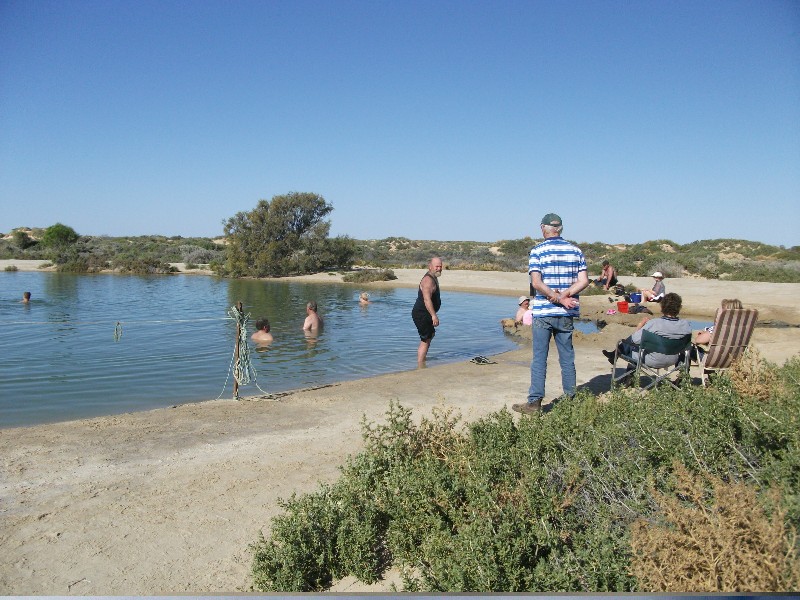
Arriving at Montecollina, the only known bore to be sunk for the watering of stock on the Strezlecki Track many took the opportunity of a dip in the warm waters. Today it is a popular campsite for outback travellers however apart from water has no facilities.

Montecollina Bore

Montecollina Bore

Tomorrow onward to Innaminka with the weather improving all the time.

Read Part IV Here

[fb_button]
 
To Top

Leigh’s Trip Through Australia Part II

• CATEGORIES: Features This site contains affiliate links for which I may be compensated.

This is Part II of Leigh’s trip across Australia in a 1944 Ford GPW. Read Part I here.

Map 2

Map shows the trip from Terowie to Alpana Station.

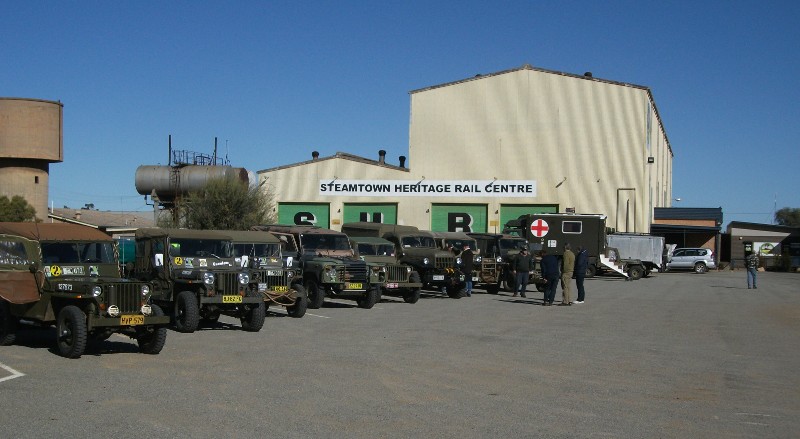
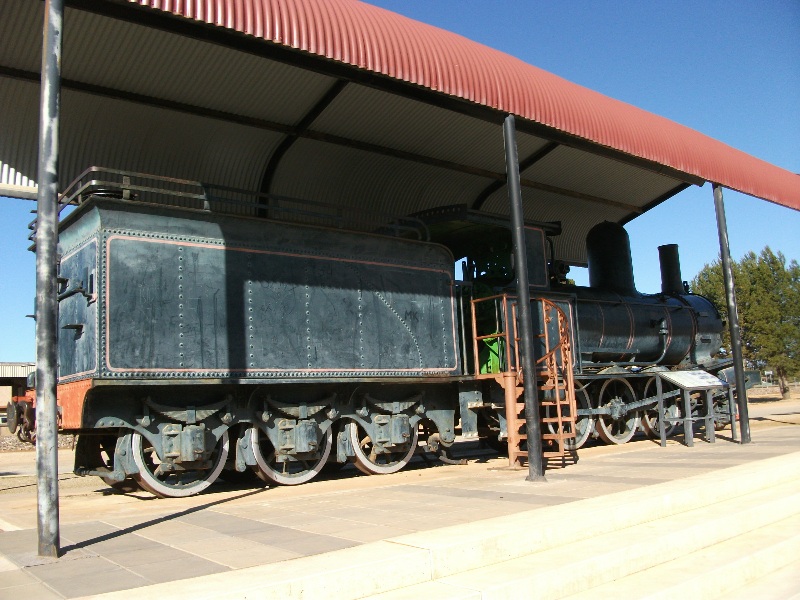
Leaving early we travelled to Peterborough in the southern Flinders Ranges. Peterborough developed from a small country town to a major regional centre with the coming of the railways in1881 and was the largest railway depot outside Adelaide, with huge workshops, a 23 bay roundhouse and a 3 gauge turntable, sadly increasing motorisation led to the demise of the railways and after the closure of the line in the early 1990’s all that remains is the Steamtown Heritage Rail Centre housed in the original workshops and depot.  www.steamtown.com.au

Steamtown

The convoy parked in front of Steamtown.

Steamtown 2

Steam town engine display

Once again the weather was best described as “ordinary” as we travelled through the small townships of Orroroo and Wilmington to arrive at Quorn in the late afternoon where  we camped in dismal conditions at the Town Oval  and had our evening meal supplied by the Community Sporting Assoc.

That night was spent clinging to our mattress as un-seasonal gale force winds and driving rain hammered the campground, fortunately it cleared slightly by morning and we set off damp and weary for Alpana Station. (station in this instance is the equivalent of an American Ranch) Established in 1878, Alpana spans 60,000 acres however can only support around 3000 Merino sheep due to the arid nature of the country.

Entering Brachina Gorge

Entering Brachina Gorge

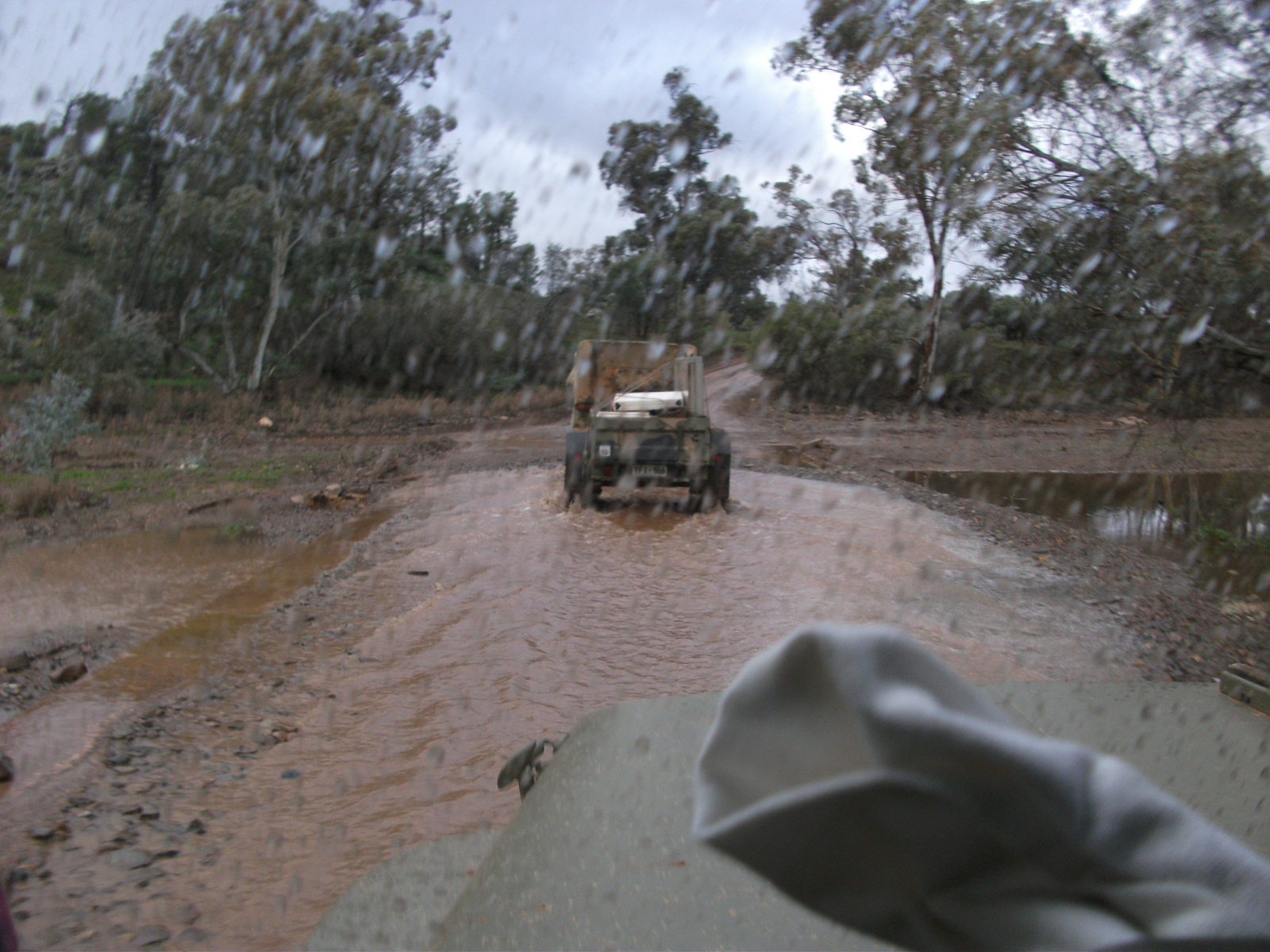
The route taken was via Kanyaka ruins and Brachina Gorge where once again it rained heavily and made conditions difficult, so much so that in the evening the road was officially closed to traffic.

Brachina gorge

Driving through the rain and mud in Brachina Gorge.

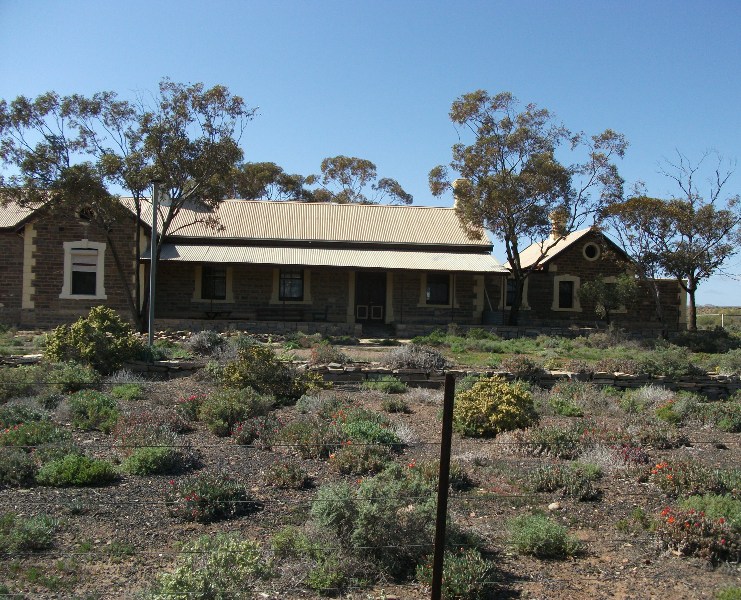
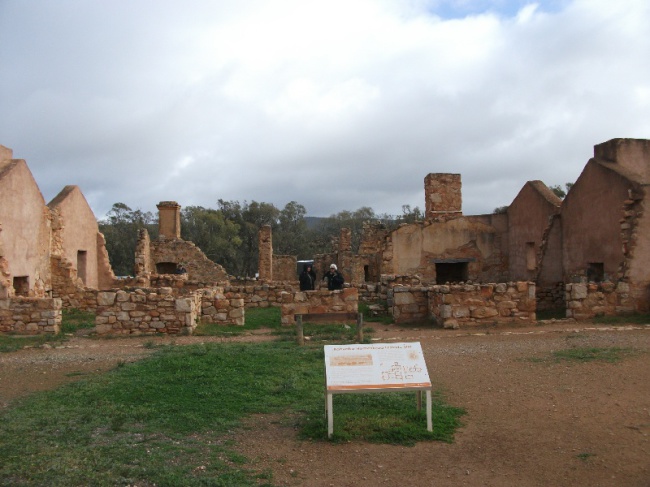
Kanyaka Station was established as a cattle station in February 1852 by Hugh Proby. The Flinders Ranges is very dry country, so it is both tragic and ironic that on 30 August 1852, Proby drowned when he was swept from his horse crossing the swollen Willochra Creek while trying to herd a mob of cattle during a thunderstorm.Under subsequent owners, the station grew in size until it was one of the largest in the district with 70 families living and working there. Because of the difficulties of transport, the station had to be very self-sufficient and Kanyaka station grew to include a large homestead, cottages for workers, workshops, huts and sheds, mostly built from local stone due to limited supplies of workable local timber. Severe droughts resulted in massive losses of stock and eventually the station was abandoned. Due to its stone construction, many of the buildings survive today as ruins and are a popular tourist attraction.

Kanyaka homestead

Kanyaka homestead

Once again camp was set up in the rain at Alpana Station, tomorrow on to the small settlement of Blinman.

Read Part III Here


[fb_button]
 
To Top

Ranch Tour Via Jeep in Julian, CA

• CATEGORIES: Features • TAGS: This site contains affiliate links for which I may be compensated.

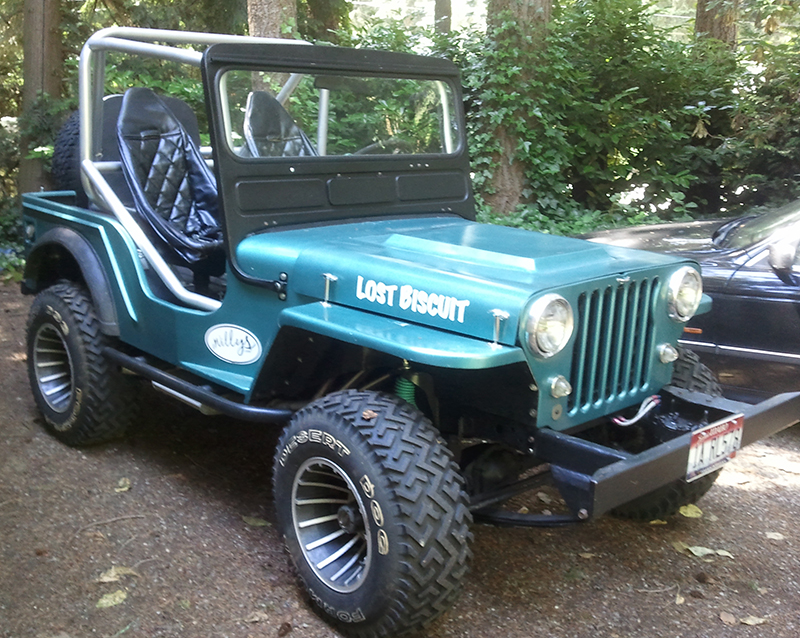
I ran across this ad for a jeep tour in eastern San Diego County, California.

“Hello there! I am here to tell you theres a new adventure in eastern San Diego. It takes place on a very private ranch on the outskirts of Julian. We are offering private weekend jeep tours, to discover an unseen landscape not before explored. This is the first year it is ever being done. We will travel through select areas of julian, to wine taste, have a delicious lunch, or even to the local brewery. We will then travel through the oldest apple/pear orchard in Julian. Then the last stop to view old growth trees and views of the ocean from the mountain with which most the wildlife will be seen. There will be a daytime tour and an evening tour in your choice of Jeeps! Give us a call/email or text for more information, we look forward to hearing from you!”
http://sandiego.craigslist.org/esd/for/5217399750.html

private-tour-sandiego2 private-tour-sandiego

[fb_button]
 
To Top

Leigh’s Trip Through Australia Part I

• CATEGORIES: Features This site contains affiliate links for which I may be compensated.

Leigh and his wife Cheryl drove their 1944 GPW 4200 miles across Australia. Leigh documented his trip with some pics and descriptions. Below is part I. Thanks to Leigh for taking the time to put this together!

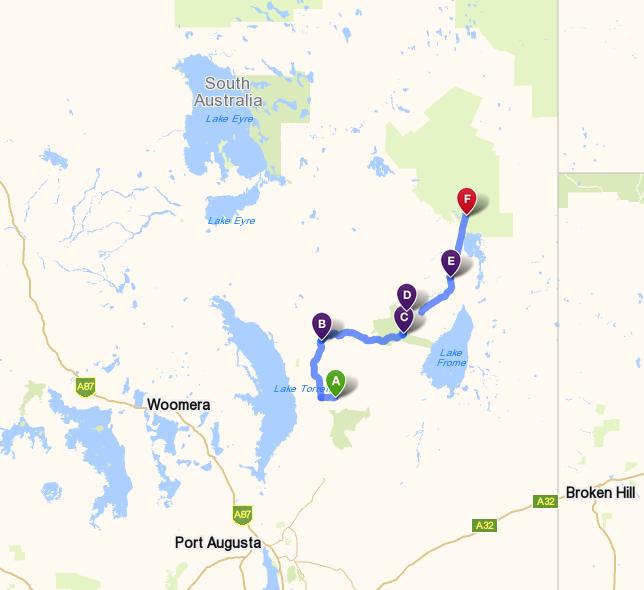
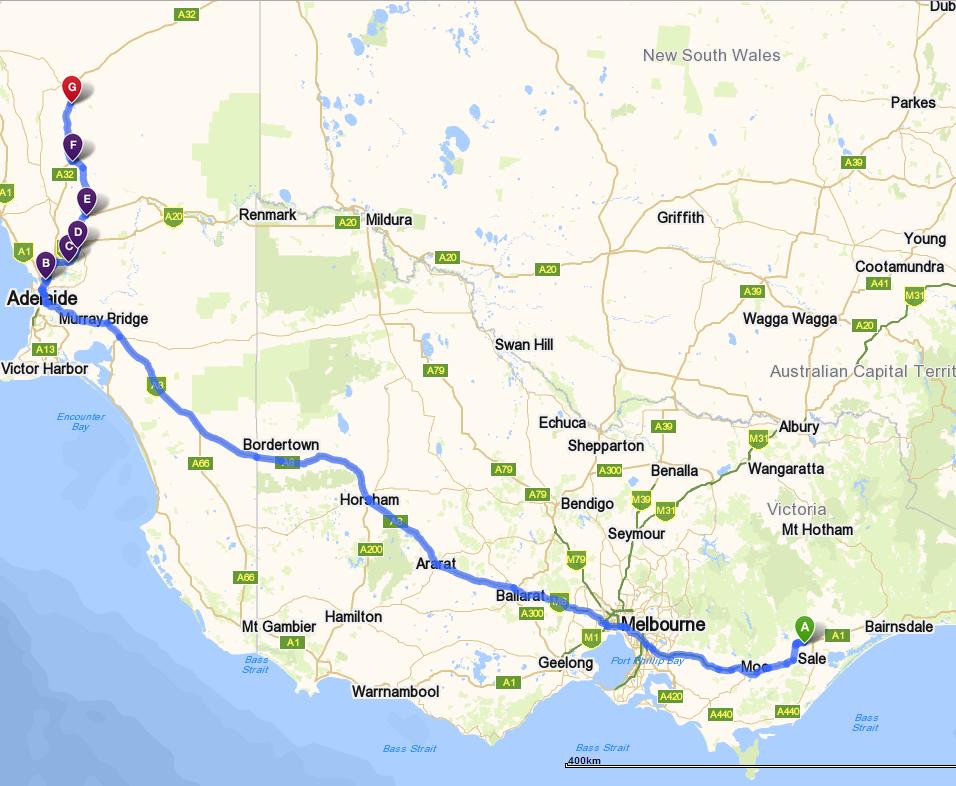
map

Leigh and Cheryl started at point A, east of Melbourne. They drove through)rain northwestward to Adelaide (B), where they joined the group. Together, the caravan started northward, reaching Terowie (G on the map).

The seeds for this trip were actually sown in 1995 when a group of Military vehicle enthusiasts organised a run from Alice Springs to Darwin to commemorate th 50th anniversary of the end of WW2, they would re-enact the supply convoys that ran between these citys during this conflict.
Enthusiasts from all states of Australia and several from overseas responded and over eighty vehicles participated with the Australian Army supplying a further fourteen support vehicles. They also took charge of the convoy that was spread over several miles.

As a result of the success of this event it was decided that a similar event, but on a smaller scale be run every five years starting from a different state every year.

This year was South Australias turn with the convoy of 40 vehicles including 5 – MB/GPW’s, 1 – 1954 Jeep Truck and 1 – 1974 Mitsubishi built Jeep meeting at the National Military Vehicle Museum in Adelaide (who have an MB and a GPA.) For us in south east Victoria this was a 600 mile journey in appalling weather (heavy rain & squalls) before the official start. After two days battling a head wind my long suffering wife, Cheryl and I finally arrived at the start point in our 1944 GPW & Australian Army Jeep trailer, (slightly different to the US trailer) here we had a lay day to meet the other participants and do any minor repairs/gather last minute supplies as we were about to head into country where there are little in the way of services and generally no phone coverage.

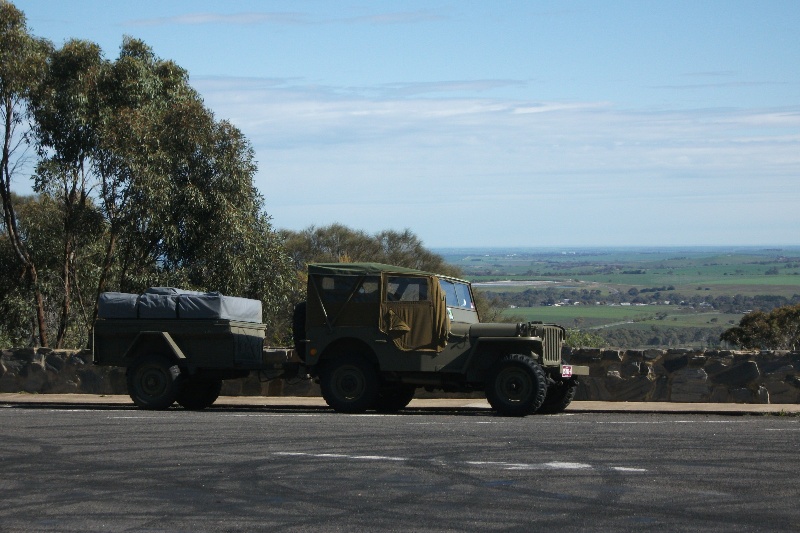
Overlooking Barossa Valley

Overlooking Barossa Valley

Next morning we set off through the Adelaide Hills and the wine making region of the Barossa Valley on mostly sealed roads to get us accustomed to travelling in convoy, to end up on the Worlds end Hwy (it wasn’t really that bad) at Burra Gorge where we camped for the night.

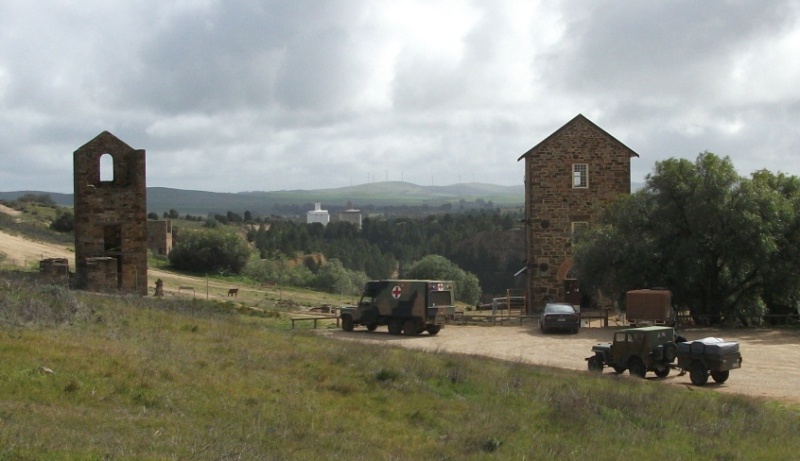
Burra copper mine Circa 1870

Burra copper mine Circa 1870.

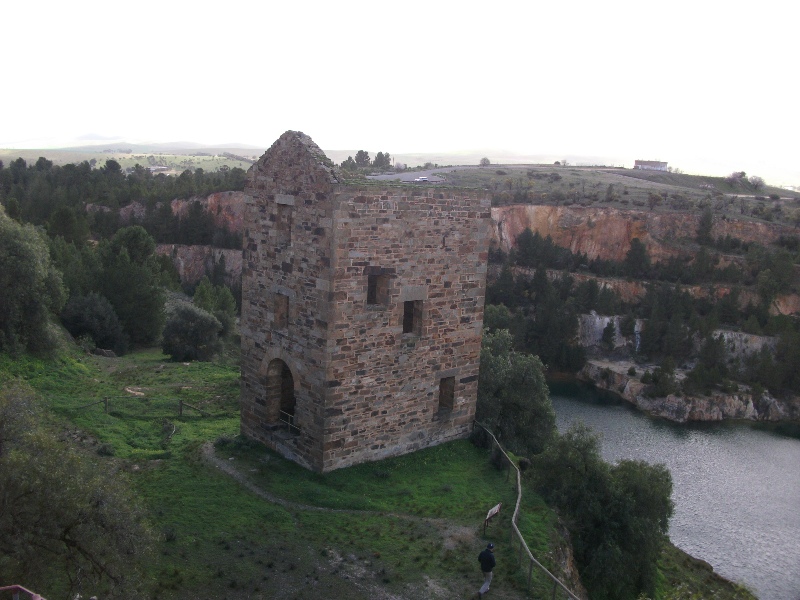
Burra Mine engine house

Burra Mine Engine House.

The following day Mon. Aug. 10th we travelled on to the sleepy town of Terowie, (population 145) where the local Citizens Assoc. supplied us with a BBQ dinner and free camping on the local oval, again it was windy and freezing.

Terowie MacArthur Monument

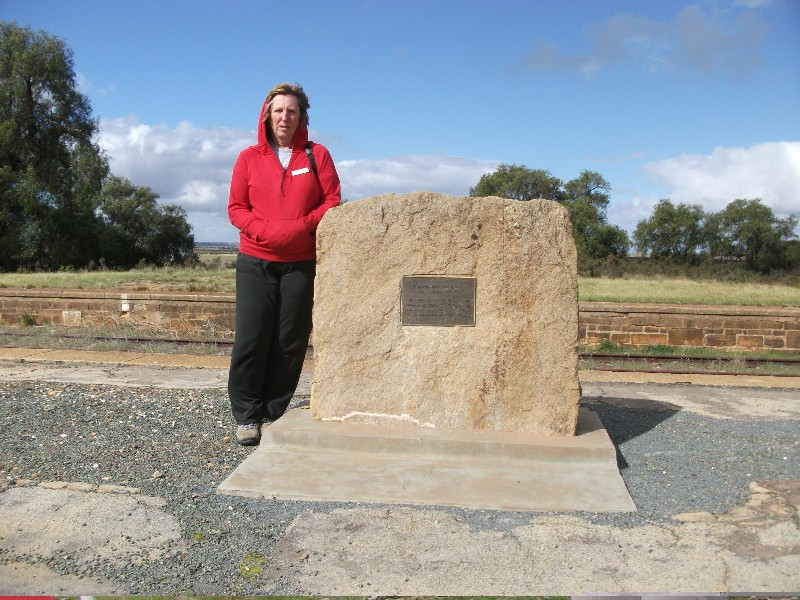
Cheryl next to Terowie MacArthur Monument.

Terowie was a busy staging camp during WW2 and while transferring trains here on 20th March 1942 General Douglas MacArthur made his famous speech regarding the battle of the Philippines in which he said “I came out of Bataan and I shall return”. He subsequently repeated the line “I shall return” in a number of speeches. The event is commerated by a plaque on the now disused railway platform.

Camp at NMVM Adelaide

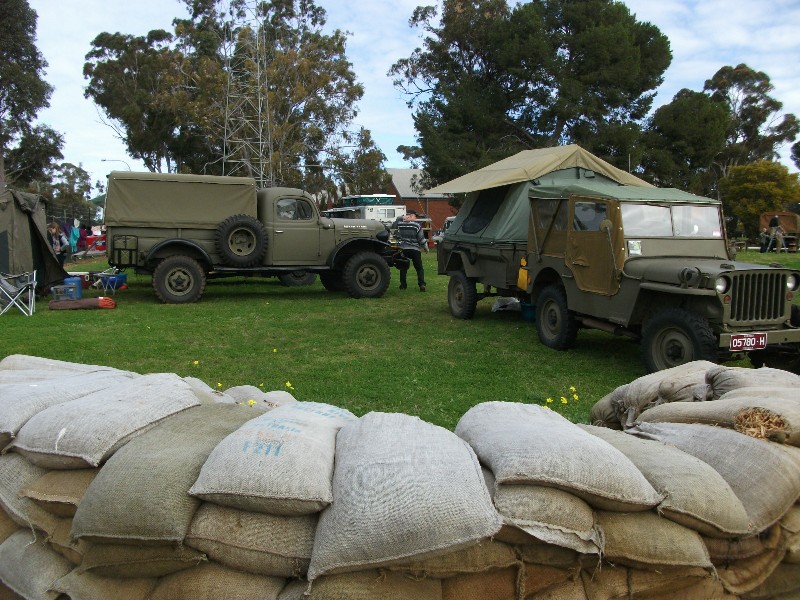
Setting up camp at Terowie

Tomorrow its on to Quorn in the picturesque Flinders Ranges. Read Part II here (scheduled for Sat morning)

[fb_button]
 
To Top

1957 Article about the Schreiders

• CATEGORIES: Features, GPA (SEEP), Old Images, Old News Articles • TAGS: This site contains affiliate links for which I may be compensated.

This article appeared in the June 9, 1957 issue of the Tuscaloosa News. The photo shows Frank and Helen Schreider , their dog Dinah, and their Ford GPA, La Tortuga. The report covers the period after their Pan American trip. Because of the journey, the Shreiders were elected to the Explorers Club. In the article they tease about going to Indonesia, which of course the eventually did.

1957-06-09-tuscaloosanews-schreider-fareast

[fb_button]
 
To Top

1959 Photo of CJ-5 and FC in Moscow on eBay

• CATEGORIES: Features, Old Images This site contains affiliate links for which I may be compensated.

This is a neat photo.

“You are bidding on an original 8 x 10 press photo of Moscow Russia Wayne Hall, Thomas Kridler in Jeep at US Exhibit. The attendants were meeting visitors from Russia while seated in the first Jeep truck ever to be seen in Russia. Hall was from Cincinnati OH, Kridler of Columbus OH. Photographer Unknown. Dated 8/5/1959. The following stamps are on the back of the photo: Cleveland Press”

View all the information on eBay

1959-moscow-cj5-fc2 1959-moscow-cj5-fc1

[fb_button]